Powered by

-
Car Reviews
Latest reviews
-
Car News
Latest news
-
Car Comparisons
Latest comparisons
- Chasing Deals
Latest reviews
Latest news
Latest comparisons
Six years after the death of the much-loved, monocoque-bodied Pajero 4WD, Mitsubishi attempts to revive its spirit in a luxurious successor, starting at $68,490
The Toyota Prado and Ford Everest better watch their tails because Mitsubishi will reintroduce a flagship Pajero to its line-up in December – this time in direct competition with these premium body-on-frame, off-road capable SUV wagons, rather than occupying the lower-grade territory of the outgoing Pajero Sport (and now-defunct Toyota Fortuner).
Offered in three trim levels from launch, the fifth-generation Pajero 4WD starts at $68,490 (before on-road costs) for the five-seat GLS, followed by a seven-seat GLS for $1500 more ($69,990), the seven-seat Exceed at $79,990, and a seven-seat GSR at $84,990.
An entry-level GLX is expected to be introduced at a later date.
That compares to a price range of $58,990-$82,917 (before on-roads) for the Ford Everest and $73,200-$94,330 for the Toyota Prado.
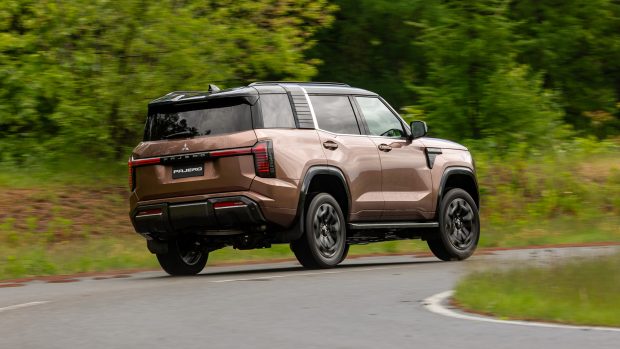
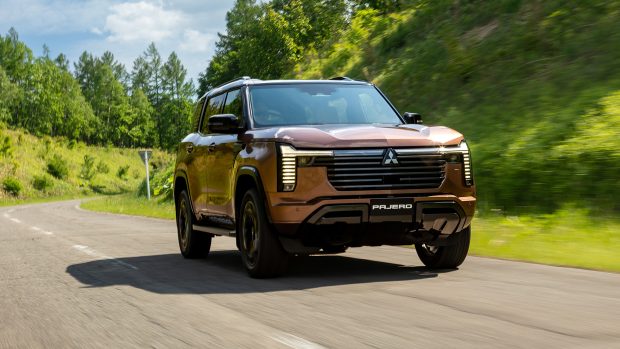
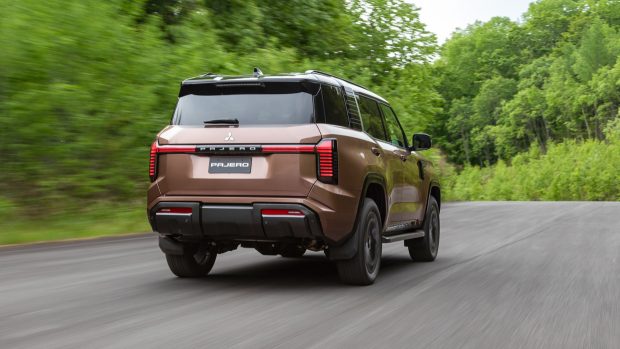
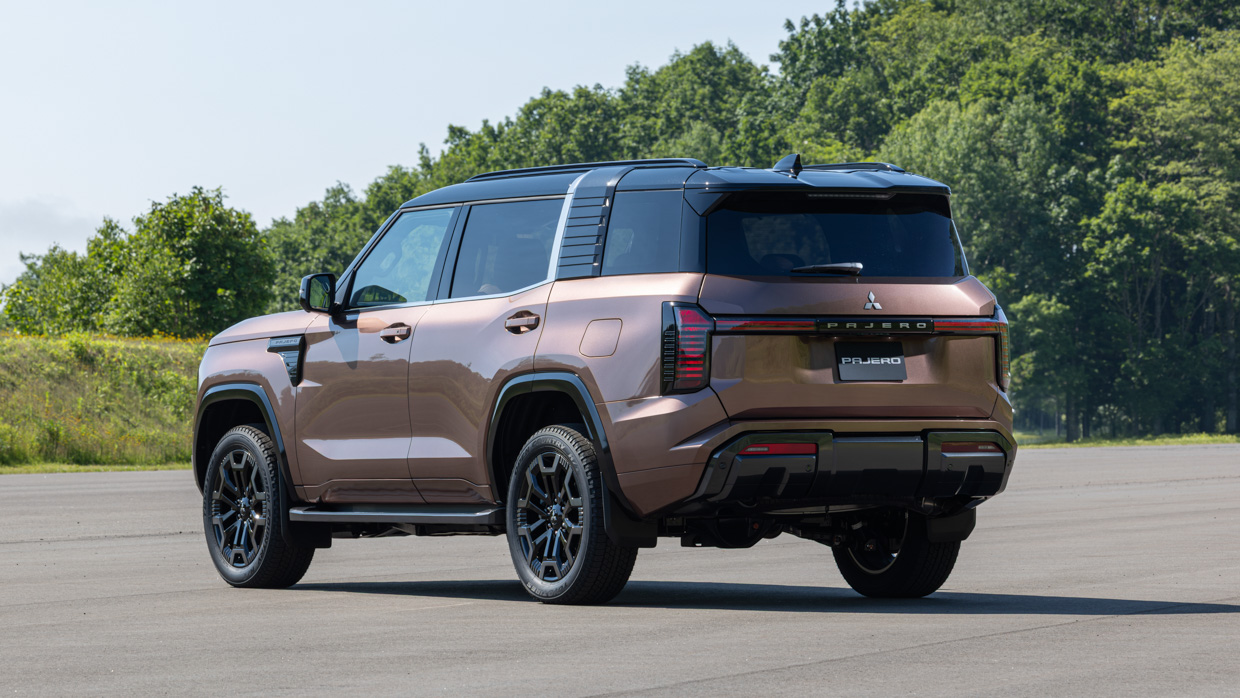
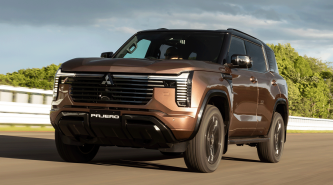
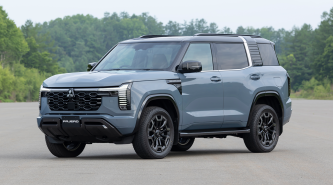
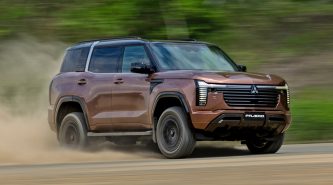
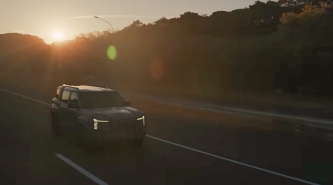
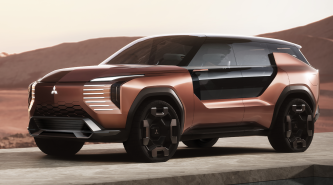
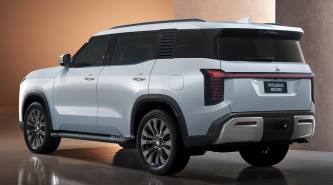
Note: Read more about the new Pajero below; images shown are of the overseas model.
Mitsubishi expects the new-generation Pajero to reach Australian showrooms in December 2026 and will provide a comprehensive outline of its Australian-developed accessories prior to launch.
It says over 3000 pre-registrations have already been received from Australian punters, despite no official imagery, tech details or pricing having been revealed – until now – so what do you get for the cash?
Kicking off with the GLS grade, the Pajero is equipped as standard with 18-inch wheels, side steps, LED headlights / tail-lights, roof rails and rear privacy glass.
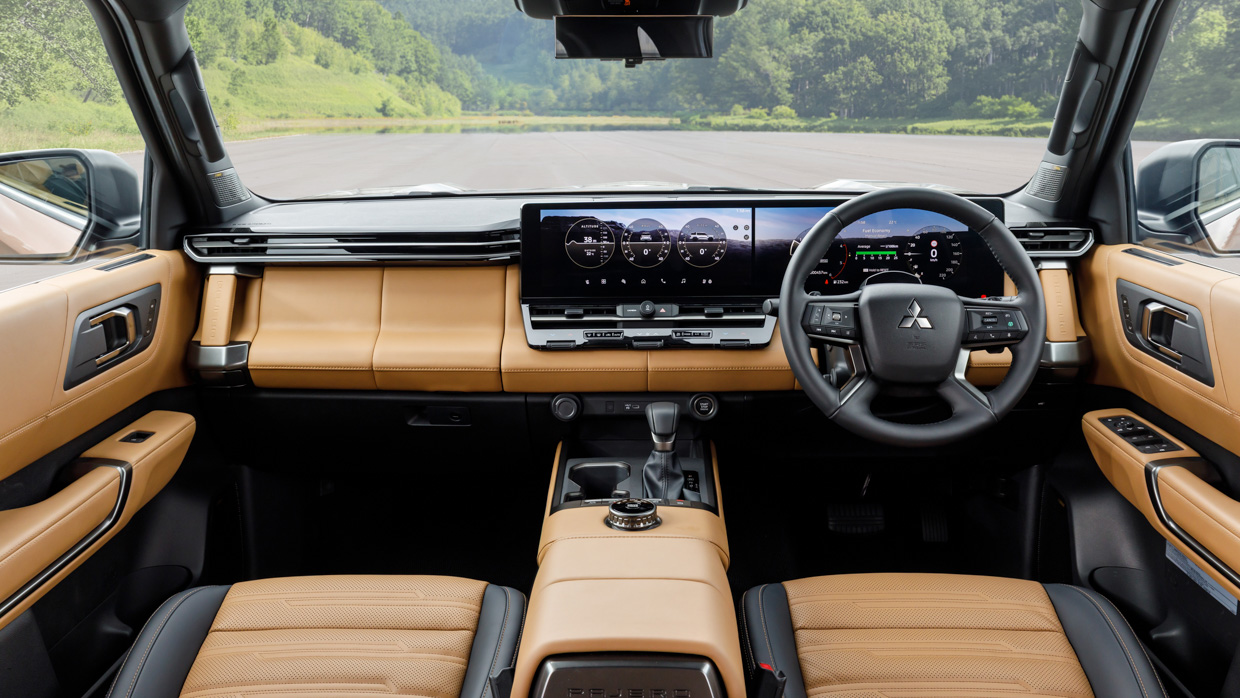
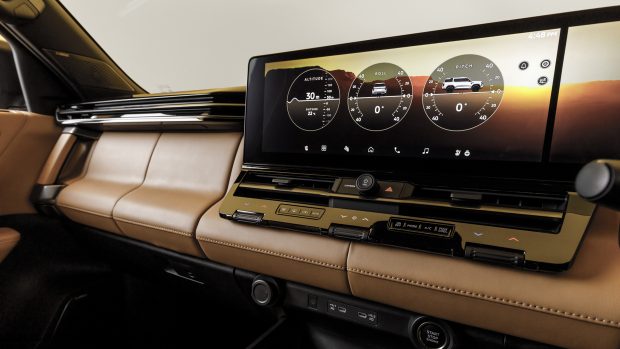
Inside, the cabin features twin 12.3-inch screens, a six-speaker audio system, wireless phone charger, dual-zone climate control, black fabric trim with grey stitching, manually adjustable front seats with power lumbar control, an auto-dimming rear-view mirror, a heating steering wheel with paddles and power tailgate.
Off-road enthusiasts will also appreciate the inclusion of standard centre and rear locking differentials, along with a tyre-pressure monitoring system, rear 220V AC power outlet plus other high-powered USB C and 12v charging points around the cabin.
Additional equipment on the Pajero Exceed 7-seat over the GLS includes:
Additional equipment on the Pajero GSR 7-seat over the Exceed includes:
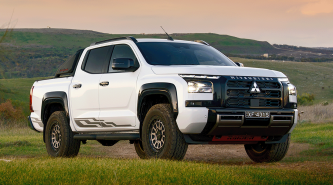
Derived from the Triton ute but with extensive refinements to make it quieter and more sophisticated, the fifth-generation, body-on-frame Pajero swaps out the Triton’s leaf-sprung live rear axle for a coil-sprung, five-link arrangement – much like the Toyota and Ford do when adapting Hilux/Ranger underpinnings to suit a jack-of-all-trades wagon application.
Mitsubishi says the new Pajero’s frame is significantly stiffer than a Pajero Sport’s, supported by wider tracks, upgraded dampers/anti-roll bars and electric power steering to hopefully elevate new Pajero’s dynamics well beyond the outgoing Pajero Sport’s agricultural ropiness.
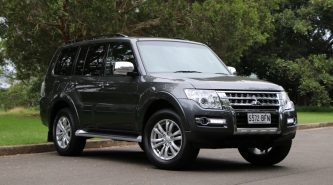
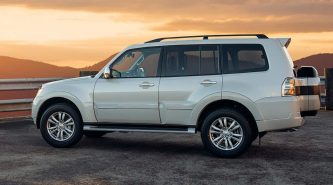
Given the last big-daddy Pajero – a cutting-edge monocoque design introduced in 1999, lightly reskinned in 2006 and discontinued in 2021 – was really impressive to drive right to the end of its life, Mitsubishi’s aim is to revive that degree of dynamic excellence in the new Pajero, befitting its status as the brand’s flagship vehicle.
The Australian-market Pajero will feature a global suspension tune from launch – not a locally developed set-up by Premcar like the recent MY26 upgrade introduced to Triton.
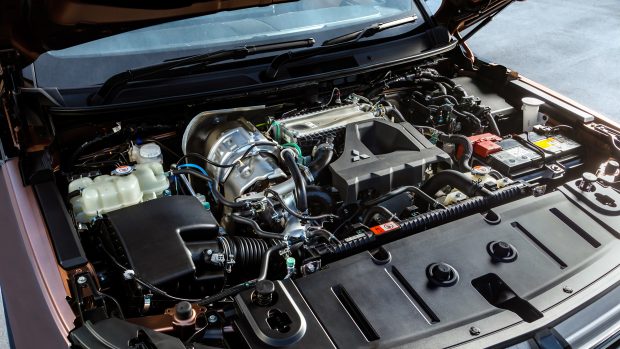
While the engine is derived from the Triton’s 2.4-litre ‘4N16’ turbo-diesel four-cylinder, the Pajero version has been refined to improve driveability, response and efficiency, while meeting a stricter Euro 6d emissions standard via the adoption of AdBlue exhaust treatment.
Featuring a “latest-generation” variable-geometry single turbocharger rather than the Triton’s twin-turbo set-up, as well as a water-cooled intercooler, the Pajero’s upgraded donk punches out the same 150kW as the Triton but bolsters torque slightly to 480Nm.
Pajero also gets an eight-speed automatic transmission (instead of Triton’s six-speed), just like the outgoing Pajero Sport, which Mitsubishi says offers a broader ratio spread as well as a weight reduction. It has been calibrated to deliver smooth gearshifts combined with smooth constant-throttle driving and incorporates a rev-matching facility to smooth downshifts.
Every new Pajero features Mitsubishi’s well-liked ‘Super Select II’ shift-on-the-fly 4WD system, as well as ‘Super All-Wheel Control’ and ‘Active Yaw Control’ chassis electronics, plus a low-range transfer case and a rear diff lock. Seven drive modes cover Eco, Normal, Gravel, Sand, Mud, Snow and Rock configurations.
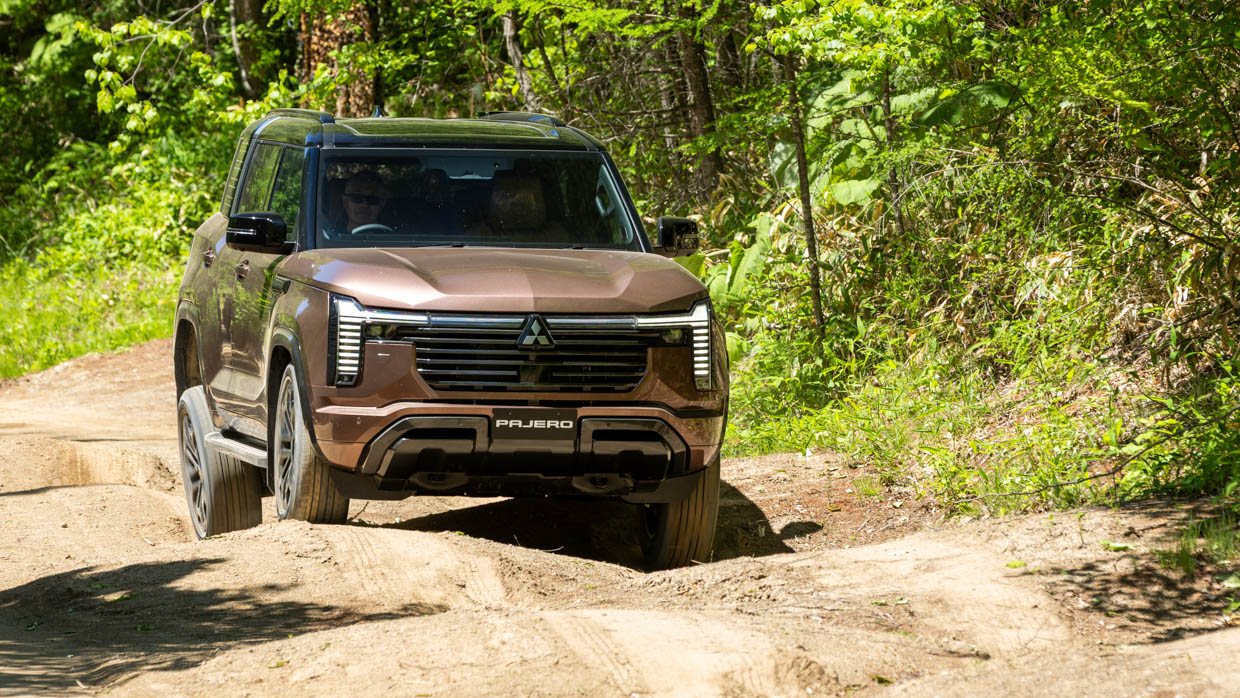
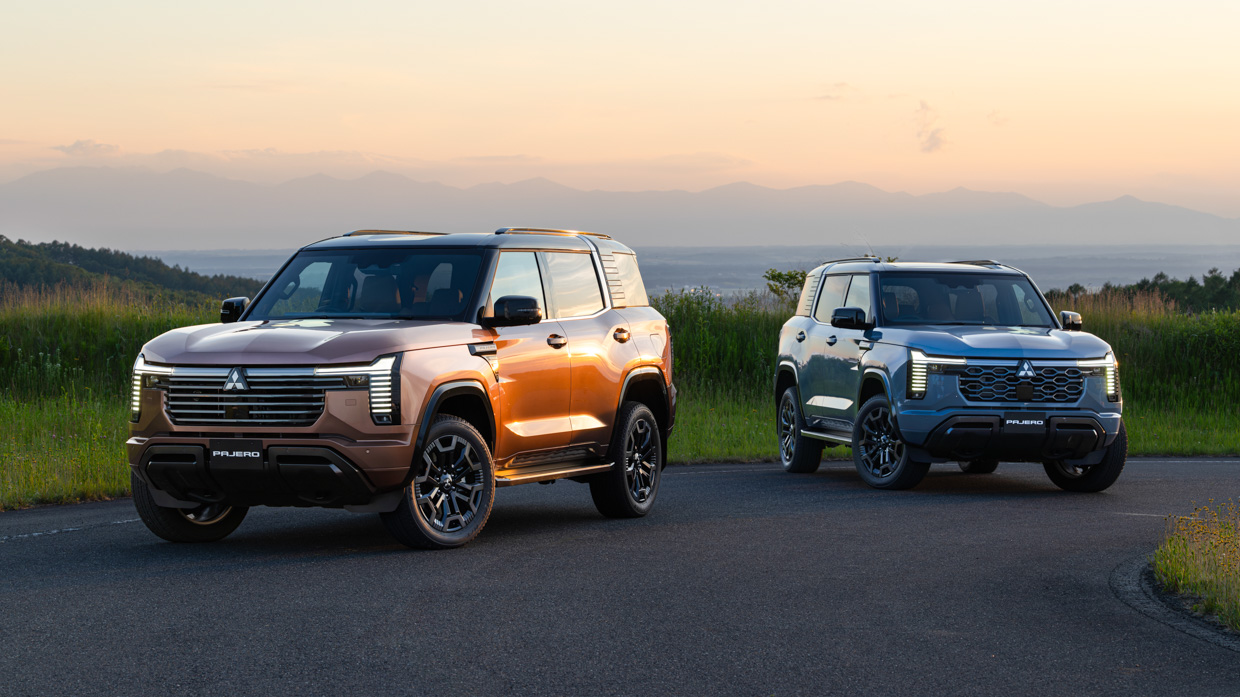
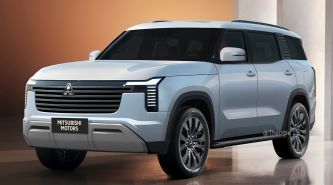
As for the styling, it’s vastly more elegant and classy than the overwrought Pajero Sport. Mitsubishi’s catchphrase for the new look is “Grand Charisma” which is intended to imply premium craftsmanship and quality, as well as solidity.
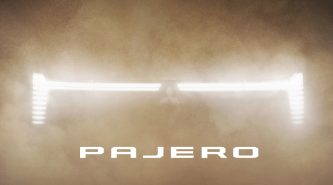
Lighting is all LED, with the front-end’s T-shaped lighting signature further enhanced in the range-topping GSR via an animation when unlocking that is meant to evoke the vehicle coming to life.
While the overall design aesthetic exudes contemporary restraint, Mitsubishi says the ‘roll-bar’ C-pillar treatment is designed to pay homage to the original 1982-91 Pajero three-door’s B-pillar, though the connection is tenuous.
Eight colours will be offered – solid White, White Diamond, Black Mica pearl (GLS only), Black Diamond (Exceed/GSR only), Blade Silver metallic (GLS/Exceed only), Graphite Grey metallic, Armour Copper (Exceed/GSR only) and Phantom Blue – with the GSR also featuring a black roof.
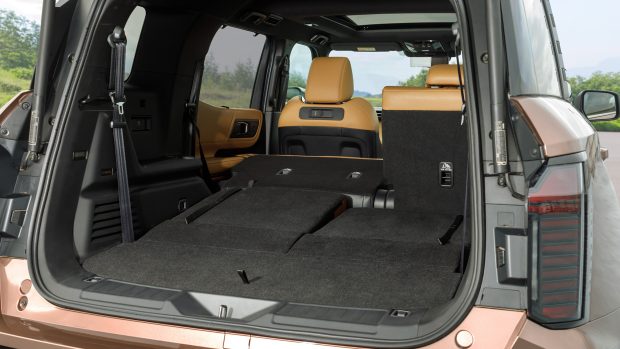
Inside, the exterior’s horizontal flavour continues, along with rally-inspired seat bolstering, electric lumbar support on all variants, and a sliding second-row seat with a 150mm range. Mitsubishi says the upright A-pillars deliver “class-leading headroom”, while the boot offers 519 litres of luggage space with the third row folded, plus another 10 litres beneath the floor.
To lift the new Pajero’s perceived quality, the cabins of flagship variants feature soft-touch leather surfaces, exposed stitching and stitched detailing on the dashboard and door trims – and no faux-leather cheapness for the seat upholstery.
All prices listed are before on-road costs.
Latest news
About Chasing cars
Chasing Cars reviews are 100% independent.
Because we are powered by Budget Direct Insurance, we don’t receive advertising or sales revenue from car manufacturers.
We’re truly independent – giving you Australia’s best car reviews.