Powered by

-
Car Reviews
Latest reviews
-
Car News
Latest news
-
Car Comparisons
Latest comparisons
- Chasing Deals
Latest reviews
Latest news
Latest comparisons
An electric version of our long-time favourite diesel dual-cab isn’t here to win over tradies – it’s a specialist ute designed for mine sites, with obvious real-world limitations
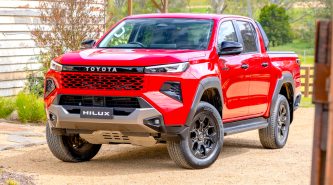
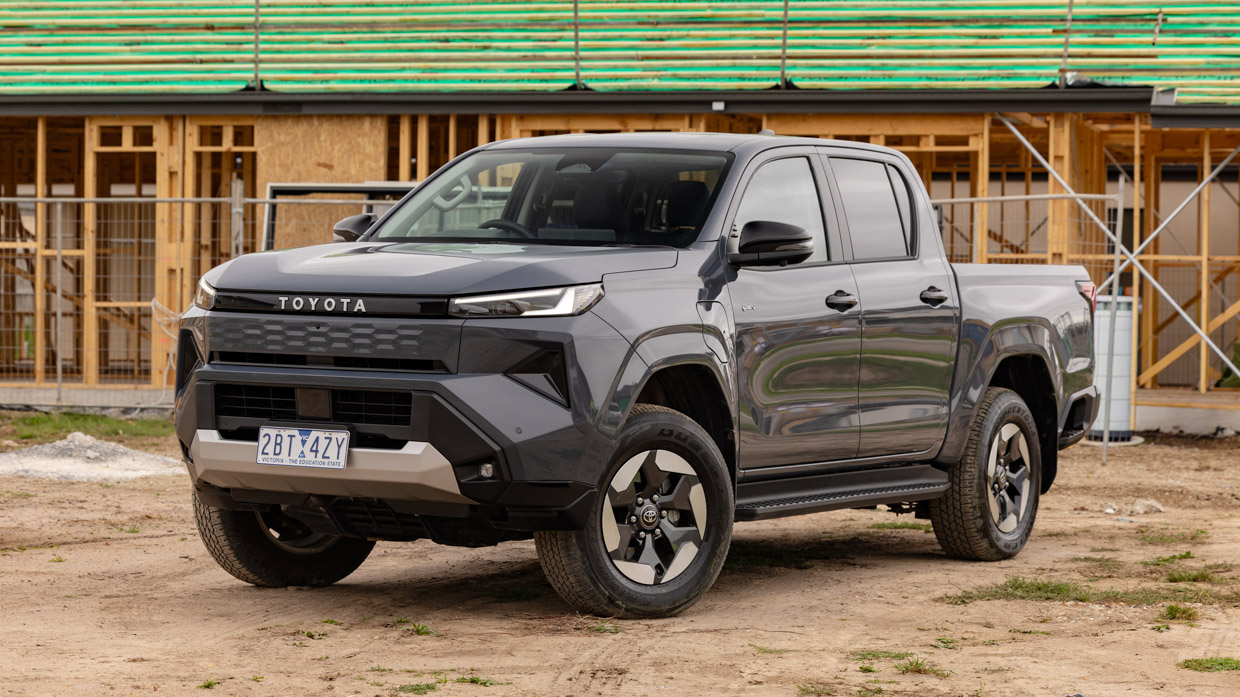
If you judge everything on face value, the Hilux BEV (for Battery Electric Vehicle) is an easy vehicle to dismiss.
Glance over its stats and you might need to double-check it’s not April Fools – 245km of WLTP range, only 144kW of power, a 300kg weight explosion, a 1500kg reduction in braked towing capacity, and a $17K increase in price. Sheesh.
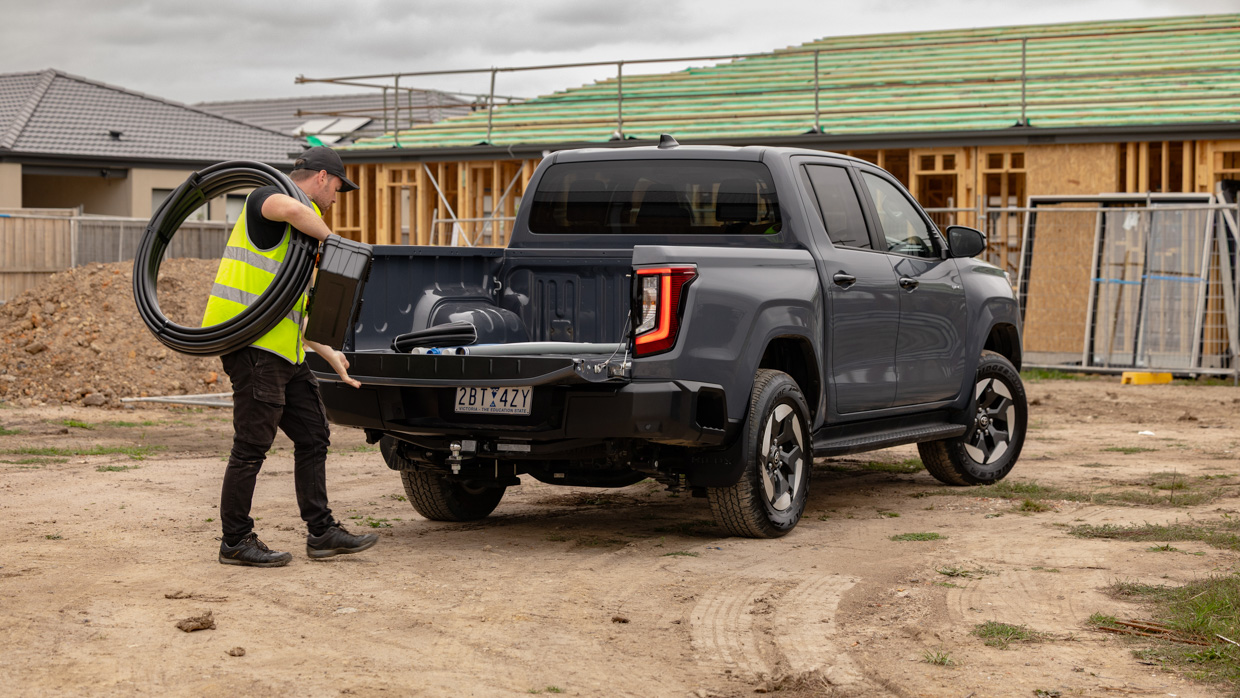
Toyota Australia acknowledges that an electric Hilux isn’t for everyone and says it has been clear with dealers and potential customers about the limitations of the Hilux BEV.
It’s a specialist vehicle, not a substitute for the diesel heavy-hitter, and is being targeted at a very specific customer type – namely mining and energy companies.
Toyota claims it has already taken over 300 orders, the vast majority being from BHP, Newcastle Coal, Acciona and Essential Energy.
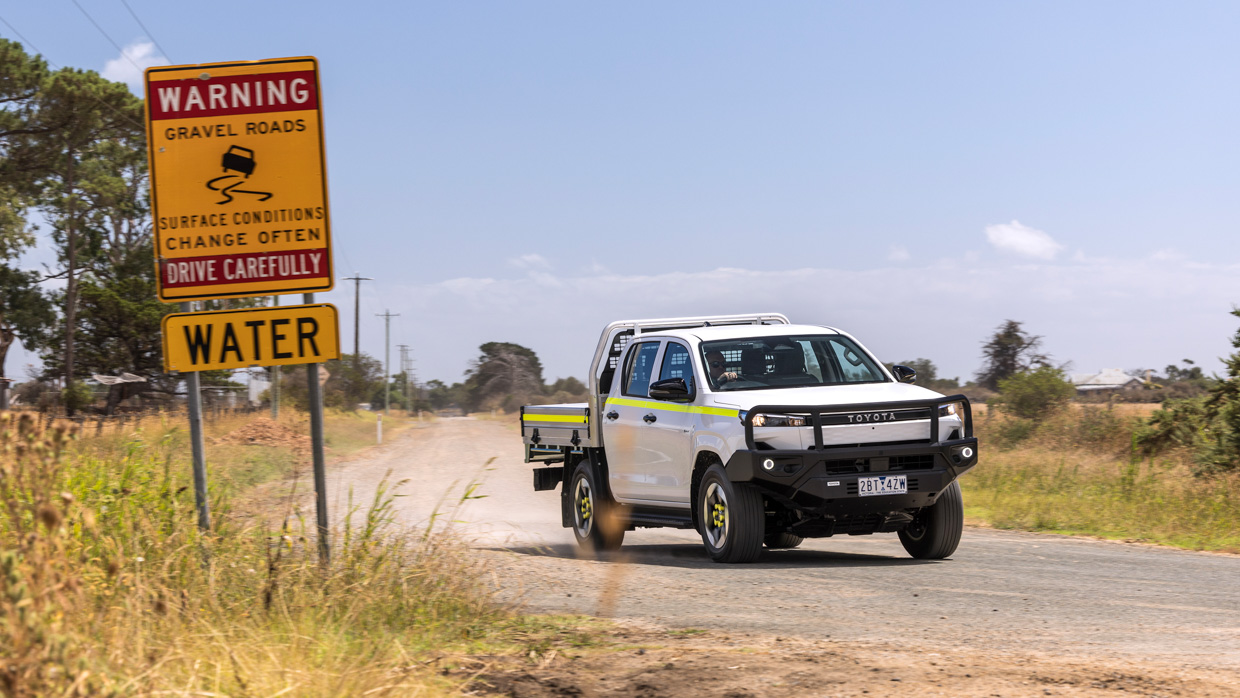
It says the big construction and mining fleets need to decarbonise, and they now have an electric Hilux option that’s been extensively tested in the field, and which is designed for very hot, very dusty and very humid conditions.
So with that in mind, what’s the Hilux BEV like to drive? Is it as slow and useless as the haters say it is?
According to European data (it’s sold throughout the EU, though only in pick-up form), the BEV is good for 0-100km/h in 9.0 seconds and tops out at 140km/h.
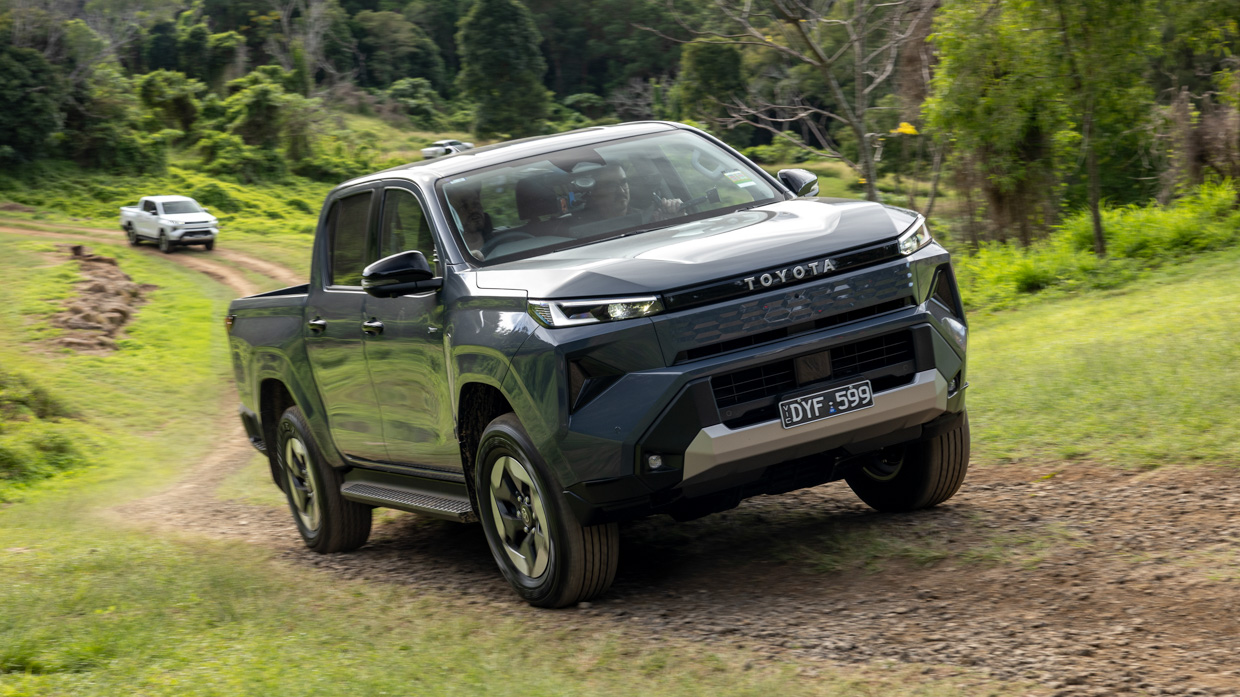
Acceleration is smooth and seamless, though there isn’t much of a torque kick off the line – more a brisk gathering of momentum.
Yet there’s something delightful about not having to endure the constant grumble of Toyota’s 1GD-FTV turbo-diesel.
At the heart of the matter is a 59.2kWh lithium-ion battery housed between the chassis rails, which have been strengthened and feature additional crossmembers to protect the battery, combined with a battery subframe that’s designed for flexibility so it can tolerate high levels of torsional input when off-roading.
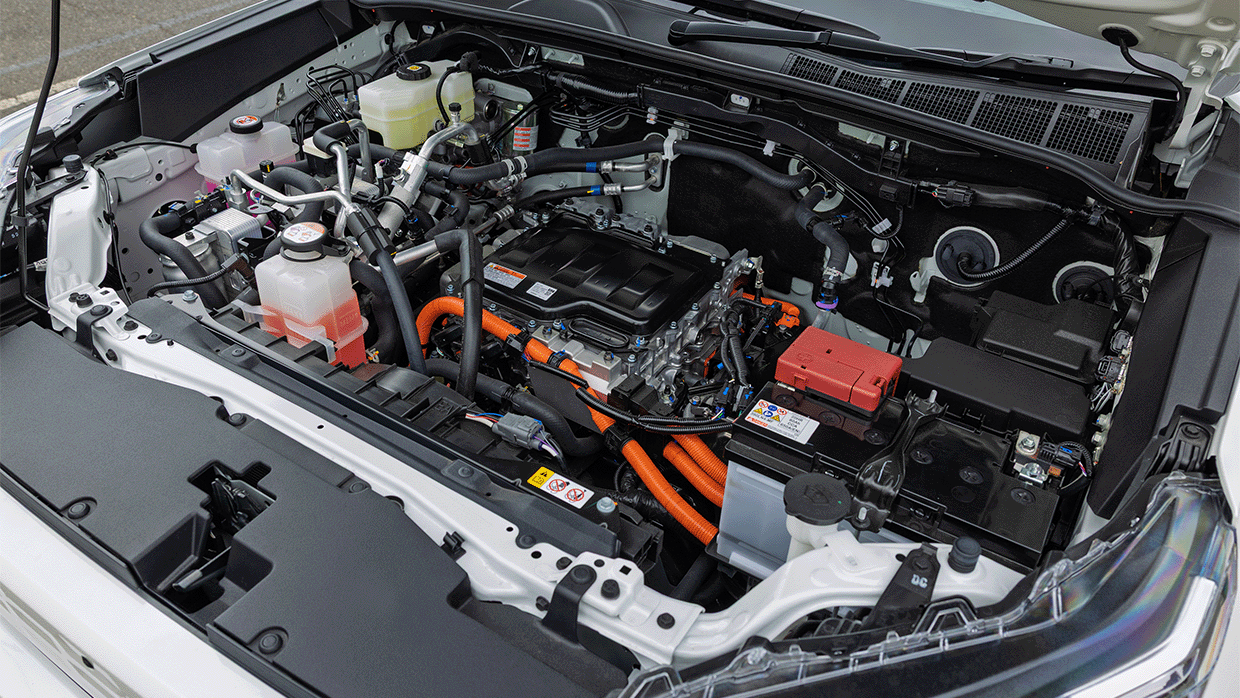
The front electric motor produces 82.2kW and 205.5Nm, while the stronger rear electric motor punches out 129.3kW and 268Nm – resulting in 144kW of total system power. EU data hints at a maximum torque of 474Nm, though Toyota Australia doesn’t quote a torque figure.
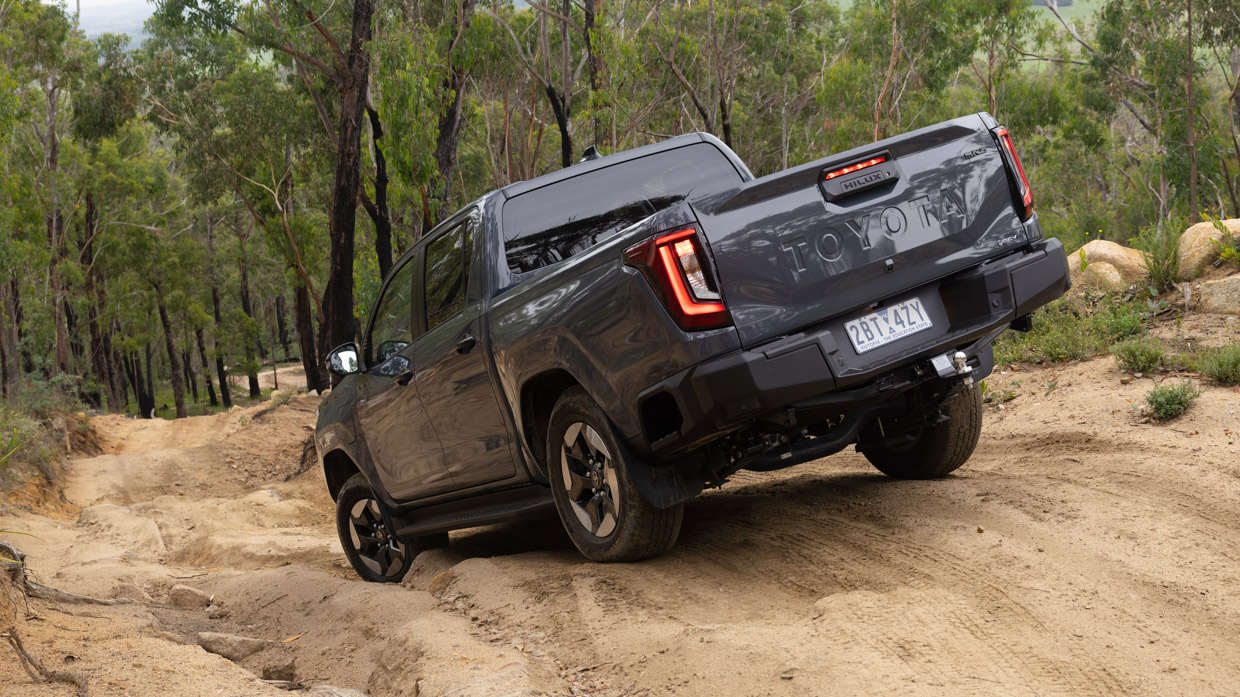
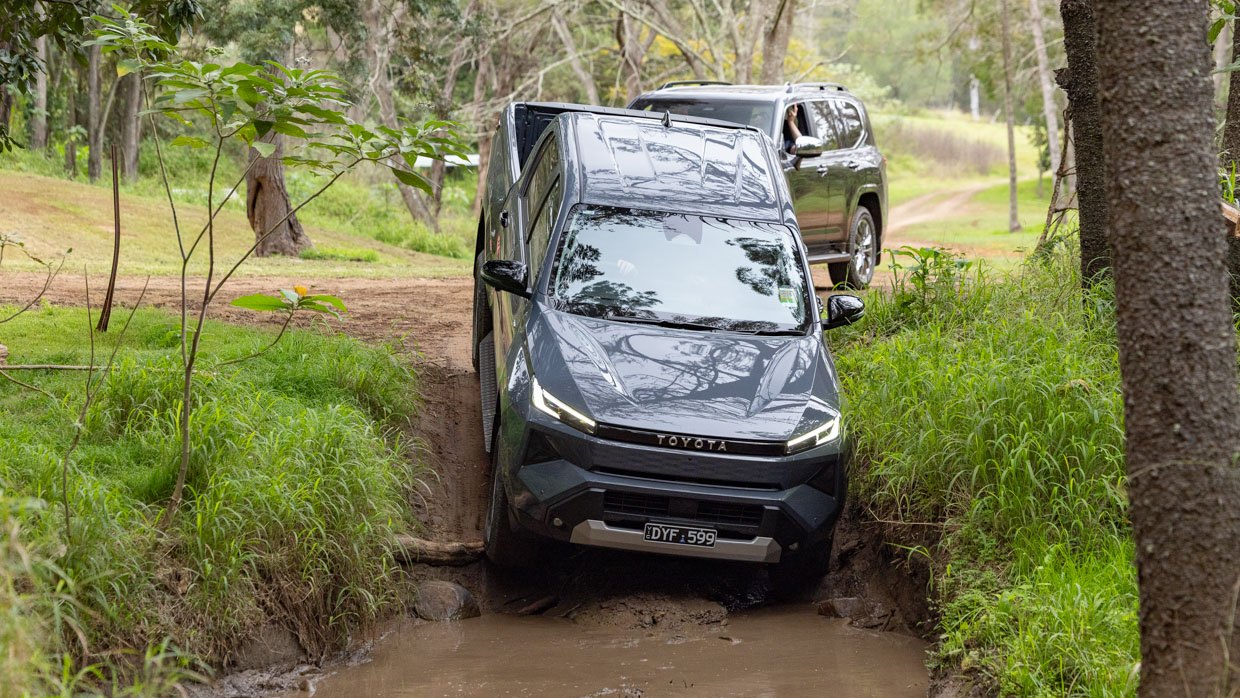
Where the linearity in the Hilux BEV’s low-end torque delivery works well is off-road. It’s a relatively easy vehicle to modulate in tough going, with the only real limitation being its ride quality. In challenging off-roading, the Hilux BEV is uncomfortably abrupt and abrasive, to the point of being tiresome.
The BEV’s hill-descent control works well and its full-time AWD system can send up to 100 percent of drive to either the front or rear axles.
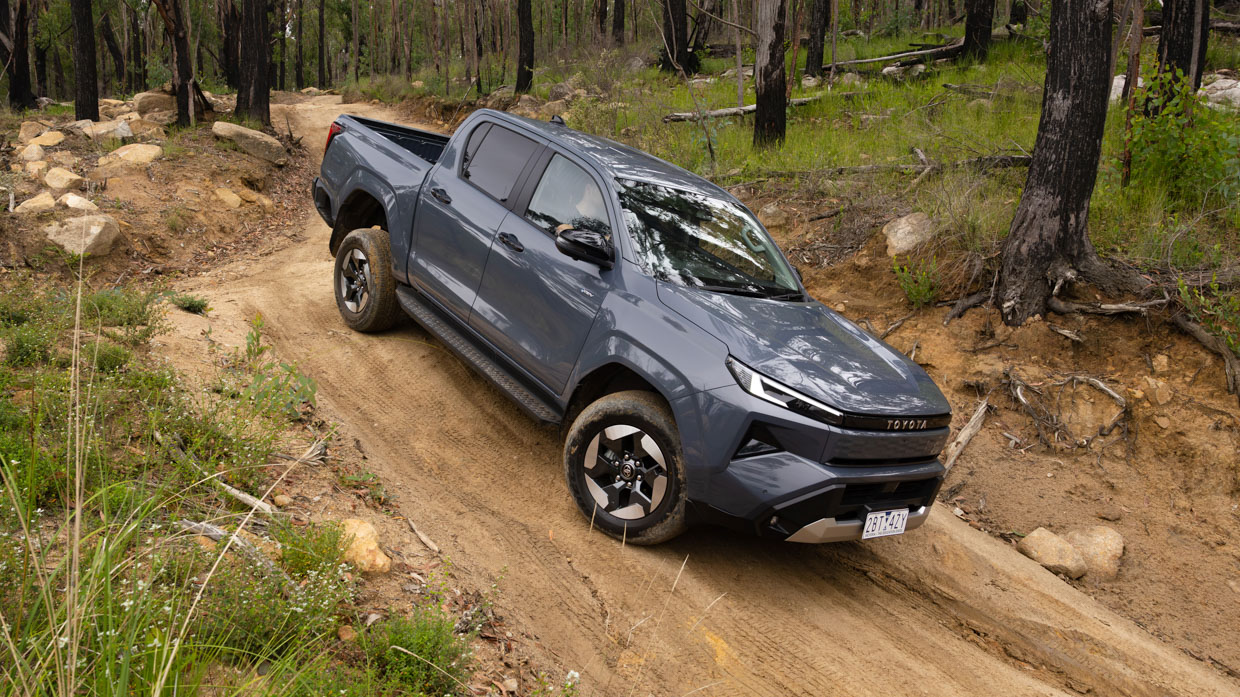
There’s also a six-mode Multi-Terrain Select with auto, dirt, sand, mud, mogul and snow modes, so in theory the BEV should be as broadly capable as any Hilux in the rough, though we’ll need our 4WD test hill to confirm that for sure.
On the bitumen, the BEV is arguably less uncomfortable, though saying it “rides like a Hilux” isn’t exactly a positive.
Due to its electric rear axle, it does have a different leaf-sprung rear suspension arrangement – a De Dion-type set-up with the transaxle mounted on the chassis frame to reduce unsprung weight – though that doesn’t really make it handle better.
A steadily guided BEV will howl its front tyres as cornering limits rise (265/60R17 Bridgestone Dueler A/Ts), betraying a kerb weight of almost 2.5 tonnes, though the electric steering of the latest Hilux generation is less laborious than before and possesses a degree of crispness.
General braking seems reasonably agreeable from its large all-disc brakes (338mm ventilated front, 335mm solid rear), though the only form of (modest) regenerative braking is by pulsing the radically different (for a Hilux), Lexus-shared gearlever from D to B.
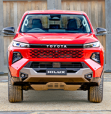
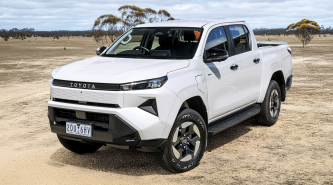
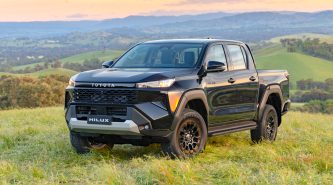
Offered in two trim levels (SR and SR5), the Australian Hilux BEV is uniquely also offered in cab-chassis form (SR only). All BEVs wear stylish 17-inch “aerodynamically tuned” alloy wheels and feature a filled-in front grille and a charging-port flap on the front left-hand side.
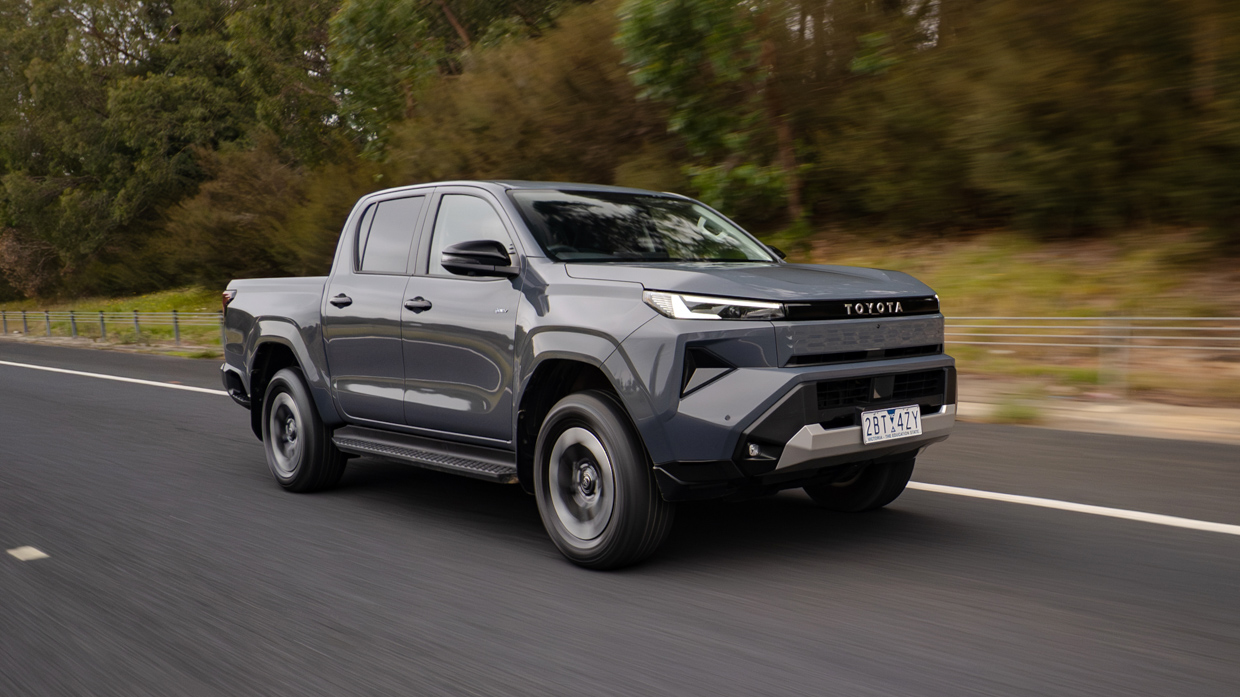
The SR5 is differentiated by its silver lower front garnish plate, LED DRLs/tail-lights and front/rear fog lights, plus rear privacy glass.
Inside, all BEVs get a unique 12.3-inch digital instrument cluster, a three-pin 220V/1500W AC outlet in the centre console box and the aforementioned electronic shift lever, as well as keyless entry/start, dual-zone climate control, and a 12.3-inch touchscreen with wireless Apple CarPlay/Android Auto.
The SR5 swaps out the SR’s cloth seats for leather facings, the vinyl flooring for carpet, a four-speaker stereo for eight speakers, and gets power-folding heated mirrors, heated front seats with an eight-way electric driver’s seat, heated leather steering wheel, soft door trims and armrests, and a wireless phone charger.
During on-road testing, our Hilux BEV SR5 pick-up averaged 24.5kWh/100km, which calculates to a real-world range of 220km (based on a useable battery capacity of 54.0kWh).
Toyota’s WLTP range for the BEV pick-up is 245km, whereas the unrealistic NEDC or ADR81/02 official figure is 315km.
Because the BEV cab-chassis isn’t offered in Europe, it doesn’t need to claim a WLTP range figure – now the accepted standard for realistic comparison. Its NEDC/ADR figure is 245km, pointing to a limited WLTP range of around 190km.
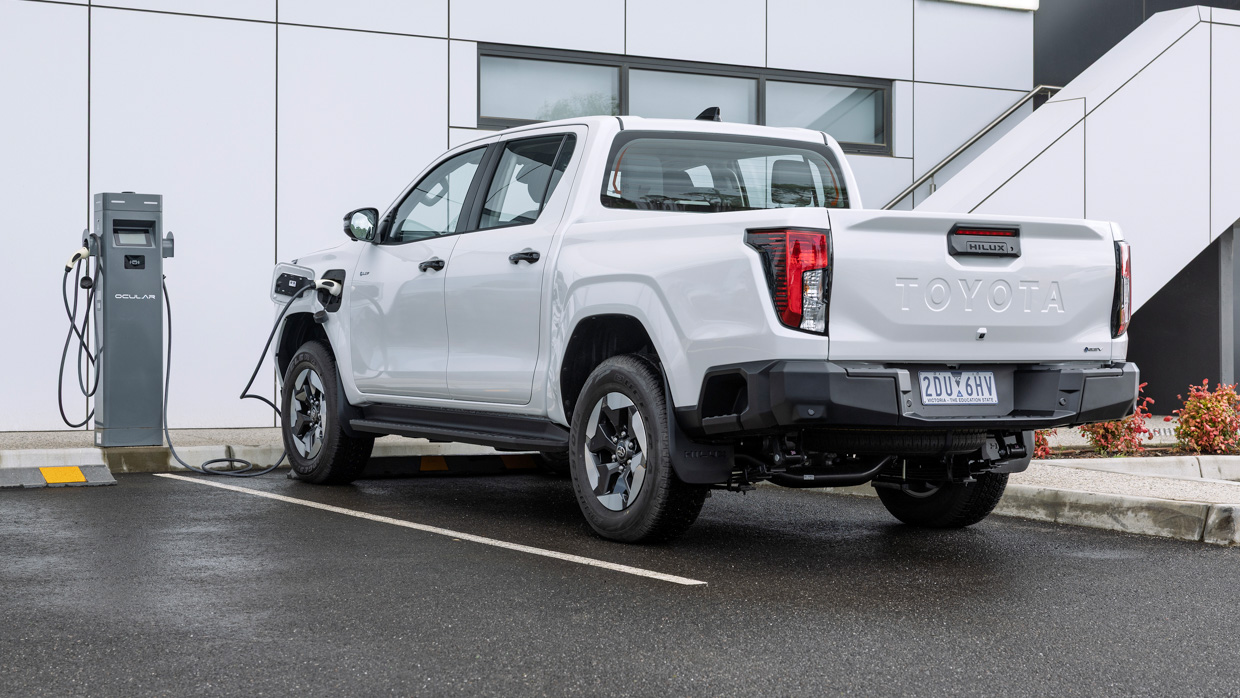
Maximum DC charging rate is 125kW, meaning a Hilux BEV can go from 10-80 percent battery charge in 30 minutes, which is acceptable. A 10-100 percent AC charge (at 10kW) takes 6.5 hours.
What may be harder to swallow is the price premium being charged for the Hilux BEV – roughly $17,000 more than an equivalent 2.8-litre mild-hybrid turbo-diesel automatic. The SR cab-chassis is $74,990 (before on-road costs), the SR pick-up $76,490 and the SR5 pick-up $82,990.
Yet for all its obvious limitations, there are two things about the electric Hilux that are hugely refreshing – its lack of noxious diesel fumes and its quietness.
Driving behind one while off-roading, you can leave your windows down and just inhale the smell of nature. And not having to listen to a hoary old diesel is an unexpected joy, given how accustomed we’ve become to Australia’s diesel ute obsession.
The electric Hilux will likely never be a wholesale replacement for its diesel counterpart – mainly because housing a battery big enough to give it decent range between its chassis rails appears unviable for now.
But for specific applications such as urban commuting between building sites, or living permanently on the premises of a mining site, it’s a long-overdue enviro’ option for the commercial sector.
About Chasing cars
Chasing Cars reviews are 100% independent.
Because we are powered by Budget Direct Insurance, we don’t receive advertising or sales revenue from car manufacturers.
We’re truly independent – giving you Australia’s best car reviews.
The estimate provided does not take into account your personal circumstances but is intended to give a general indication of the cost of insurance, in order to obtain a complete quote, please visit www.budgetdirect.com.au. Estimate includes 15%^ online discount.
^Conditions Apply
Budget Direct Insurance arranged by Auto & General Services Pty Ltd ACN 003 617 909(AGS) AFSL 241 411, for and on behalf of the insurer, Auto & General Insurance Company Limited(ABN 42 111 586 353, AFSL 285 571).Because we don’t know your financial needs, we can’t advise you if this insurance will suit you. You should consider your needs and the Product Disclosure Statement before making a decision to buy insurance. Terms and conditions apply.
Indicative quote based on assumptions including postcode , 40 year old male with no offences, licence suspensions or claims in the last 5 years, a NCD Rating 1 and no younger drivers listed. White car, driven up to 10,000kms a year, unfinanced, with no modifications, factory options and/or non-standard accessories, private use only and garaged at night.
^Online Discounts Terms & Conditions
1. Discounts apply to the premium paid for a new Budget Direct Gold Comprehensive Car Insurance, Third Party Property Only or Third Party Property, Fire & Theft Insurance policy initiated online on or after 29 March 2017. Discounts do not apply to optional Roadside Assistance.
2. Discounts do not apply to any renewal offer of insurance.
3. Discounts only apply to the insurance portion of the premium. Discounts are applied before government charges, taxes, levies and fees, including instalment processing fees (as applicable). The full extent of discounts may therefore be impacted.
4. We reserve the right to change the offer without notice.