Powered by

-
Car Reviews
Latest reviews
- Car News
-
Car Comparisons
Latest comparisons
- Chasing Deals
Latest reviews
Latest comparisons
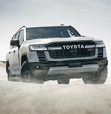
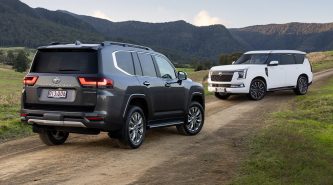
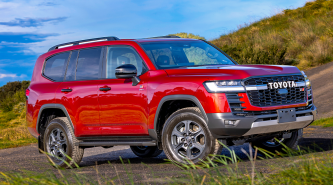
If the Tundra’s ‘performance hybrid’ twin-turbo V6 powertrain in a LandCruiser 300 series sounds like a match made in heaven, your prayers have been answered
Despite the obvious fuel-economy benefits of running a turbo-diesel engine in a large 4WD, not everyone wants diesel. Sticky, stinky and increasingly expensive, at the height of this year’s fuel-price surge it would’ve cost over $300 to fill the Toyota LandCruiser V6 diesel’s dual fuel tanks.
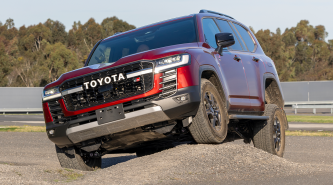
Yet the point of this ‘Performance Hybrid’ version of the LandCruiser 300 series – a twin-turbo petrol V6 with an electric motor sandwiched between the engine and transmission – is providing buyers with options…providing you’re in the market for a top-spec, $150K-plus GR Sport or Sahara ZX and not the massively cheaper LC300 GX or GXL.
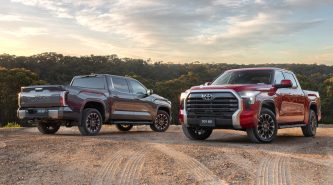
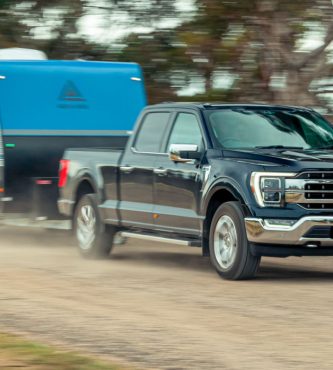
Charging a $9K premium for the Performance Hybrid variants of the LC300 will likely ensure that this powertrain won’t make up a huge percentage of sales. But it’s both enjoyable to sit behind and should be familiar to anyone who has experienced the US-built, Walkinshaw-converted Toyota Tundra full-size pick-up.
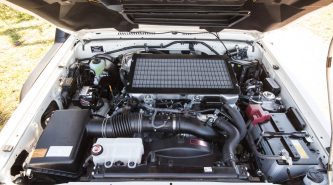
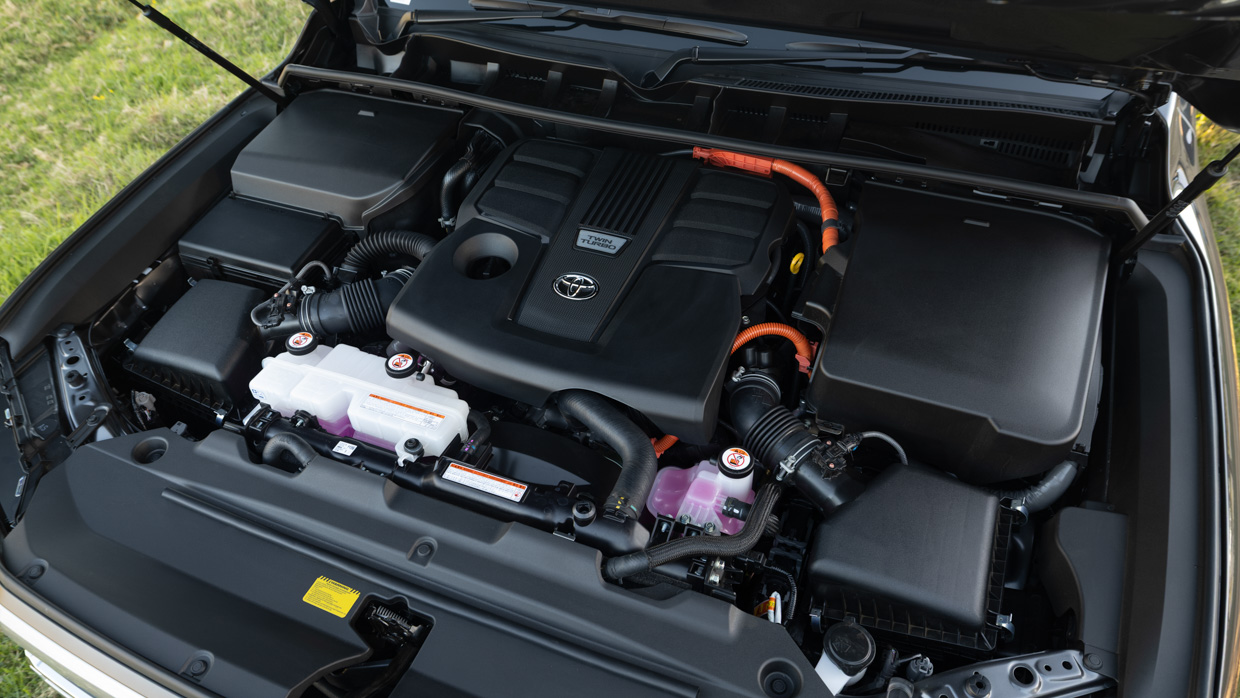
As in the Tundra, this petrol-hybrid powertrain is branded ‘i-Force MAX’ and is based around a V35A-FTS 3445cc twin-turbo petrol V6 (producing 305kW at 5200rpm and 650Nm at 2000-3600rpm in the LandCruiser – slightly more than the Tundra), supplemented by the same 36kW/250Nm electric motor housed between the engine and a 10-speed auto gearbox.
There’s also a 1.87kWh nickel-metal-hydride battery for the parallel-hybrid system – installed in a waterproof, high-strength tray beneath the luggage area – that powers the supplementary electric motor, resulting in total system outputs of 341kW and 790Nm in the LC300 (Tundra has the same torque but 326kW). This also means these hybrids are five-seat only.
While the ‘Performance Hybrid’ LandCruiser weighs 115kg more than its twin-turbo diesel V6 equivalent (clocking a beefy 2715kg), output gains of 114kW/90Nm mean it earns its title – particularly for the way it sounds.
The LC300 V6 diesel is actually quite refined and pleasant to listen to, but the petrol alternative has a higher rev ceiling and produces a whirring wall of noise that implies effortless grunt.
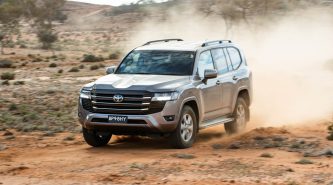
This powertrain sounds more sophisticated in the LC300 than it does in the Tundra – both for refinement and for quality of sound – and if you compare Sahara ZX Hybrid against Tundra Platinum, the 4WD wagon wins by 15kW and 119kg. So when it comes to top-shelf dynamism in Toyota’s full-size behemoths, LC300 Sahara ZX Hybrid is king.
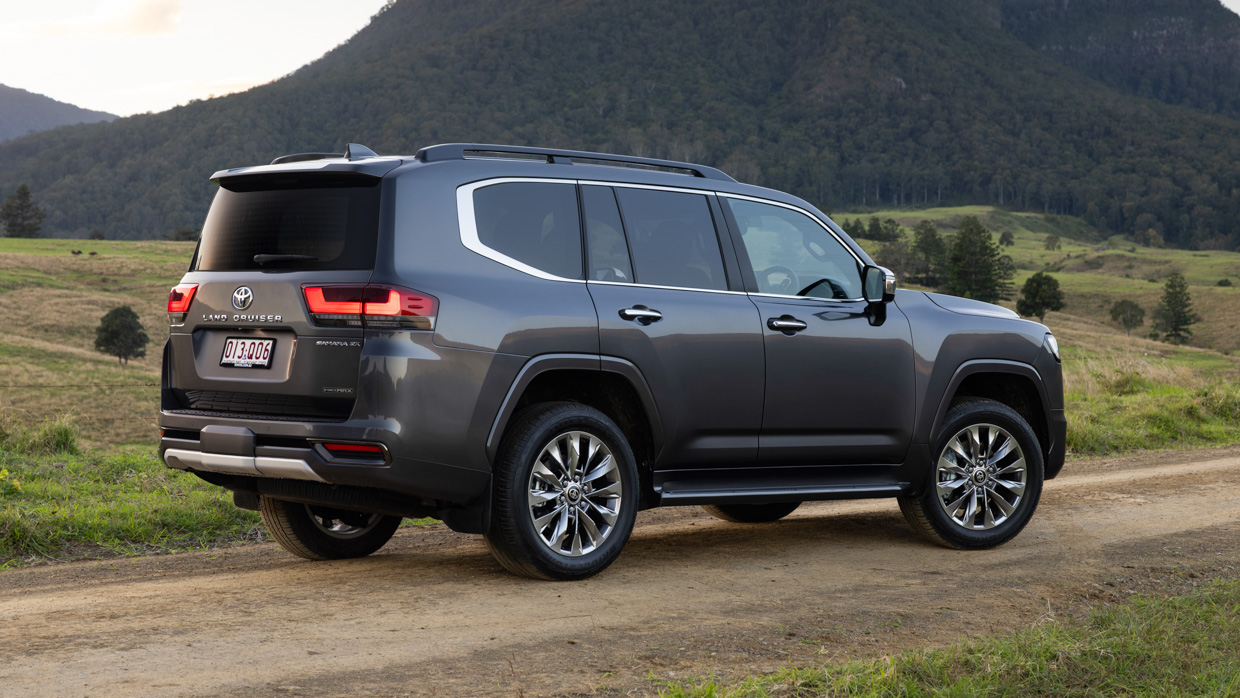
It was the only new Hybrid variant we drove on the launch, given that the first batch are all Sahara ZXs and not the imminent GR Sport we first sampled nine months ago.
In the diesel, I’ve always much preferred the more supple GR (on 18-inch wheels) over the slightly stiff-legged ZX, though this petrol version proved amply comfortable on its adaptive variable suspension. Clad with 265/55R20 Bridgestone tyres, it loped along southern Queensland’s country highways with effortless aplomb.
Combined with a unique Torsen limited-slip rear differential and new electric power steering (instead of the diesel’s hydraulic) that debuts on this Hybrid version, for what it is (a big, heavy, separate-chassis beast), the Sahara ZX steers with pleasing consistency and accuracy, and is actually quite enjoyable to drive in all conditions.
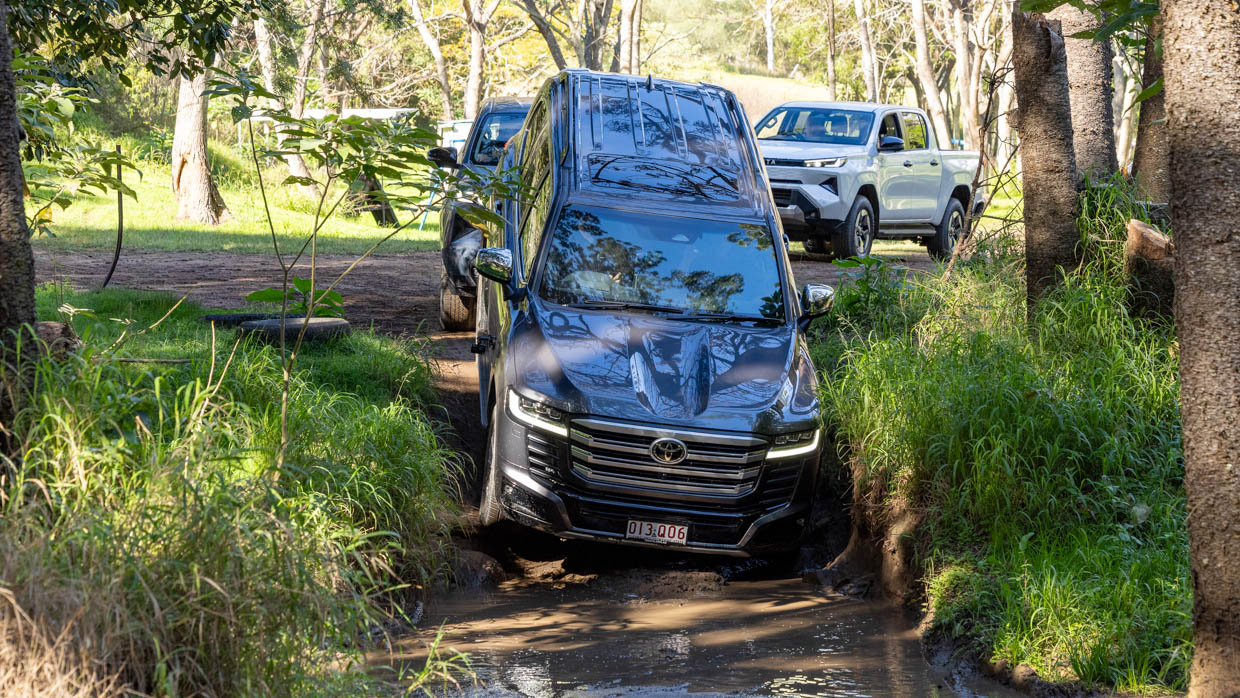
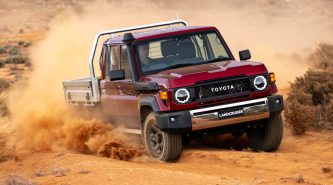
Even off-road, the Sahara ZX rounds off sharp edges and intrusive bumps effortlessly, and while it’s no air-suspended Range Rover when it comes to cushioning, it’s in another league for off-road comfort compared to the milkshake ride of Toyota’s 4WD utes.
Even the low-down torque delivery of the twin-turbo-hybrid powertrain is really well-calibrated, and that’s despite having so many gear ratios to play with. And we’re talking about the Sahara ZX here, with its high-street-fashion 20-inch alloys and bespoke new lower front bumper treatment that screams bitumen or dirt tracks, not river crossings and proper off-roading.
Should you want your ‘Performance Hybrid’ LandCruiser to be an off-road hero, the GR Sport is the one to go for.
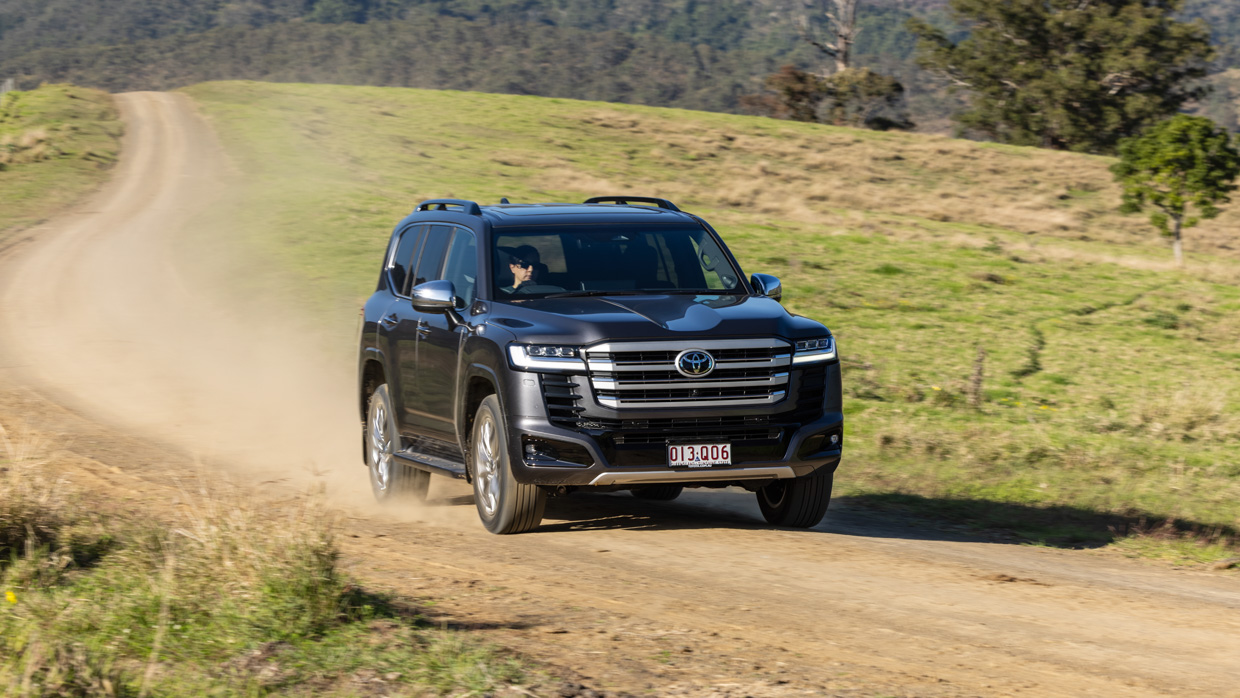
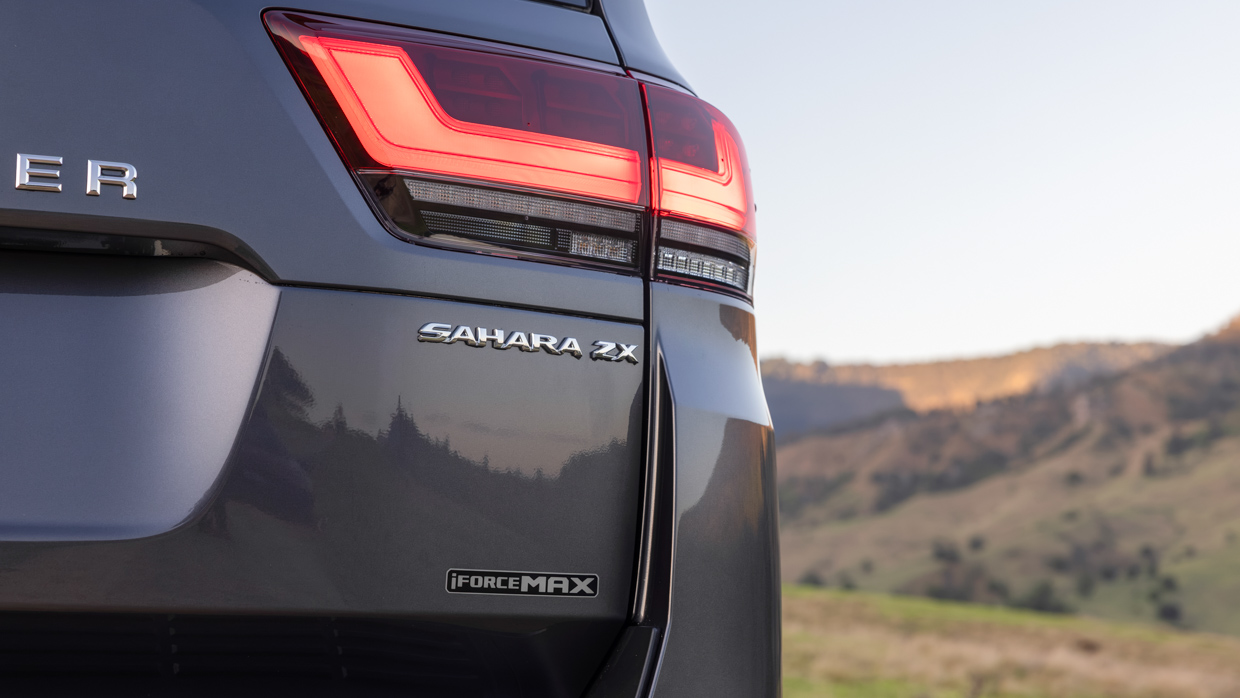
Aside from its ‘i-Force MAX’ decal on the tailgate, it looks identical to the diesel version, and underneath it retains the exclusive locking front differential and e-KDSS suspension tech (that automatically decouples the anti-roll bars in serious off-roading) that set it apart from the Sahara ZX.
In addition to a silvery bootlid plaque, the petrol-hybrid Sahara ZX also gains a new lower rear bumper design to match its new front one, plus unique wheelarch mouldings and side steps. And while it doesn’t get e-KDSS, its locking centre and rear differentials, and five-mode Multi-Terrain Select (MTS) is more than ample in aiding the ZX’s off-road clout.
Mechanical differences aside, shared equipment includes an electric compressor for the four-zone climate control that Toyota says improves efficiency, in combination with heated-ventilated eight-way electric front seats, heated/ventilated outboard rear seats, and a refrigerated centre-console box.
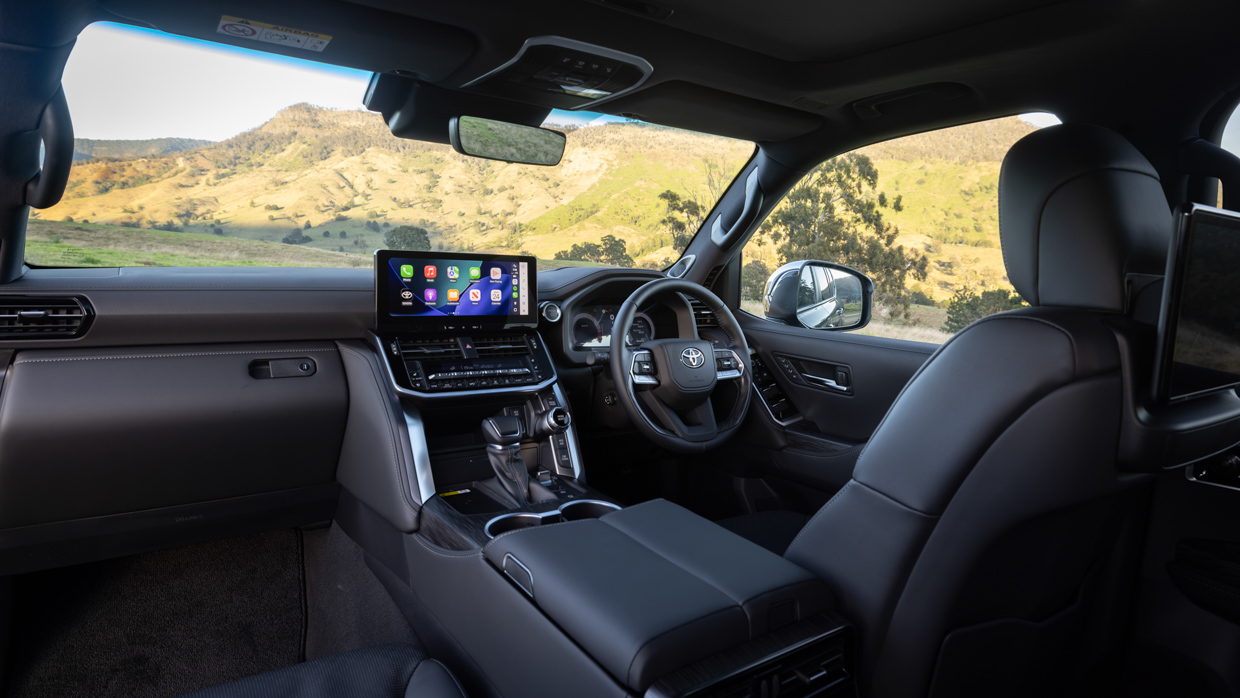
The Hybrid system’s battery also enables fitment of a 220V/1500W three-pin AC outlet in the luggage area, in combination with 12V outlets, dual USB-C ports and an HDMI port in both front and rear rows.
The Sahara ZX uniquely features a dual rear-seat entertainment system, though it shares a 14-speaker JBL stereo with the GR Sport.
So while the Performance Hybrid’s stronger performance and available power outlet might sway some buyers, the clincher will most likely be fuel economy. Comparing the official figures and range, the diesel wins – 8.9L/100km combined, backed by dual fuel tanks (80 + 30L) for a theoretical 1236km of range.
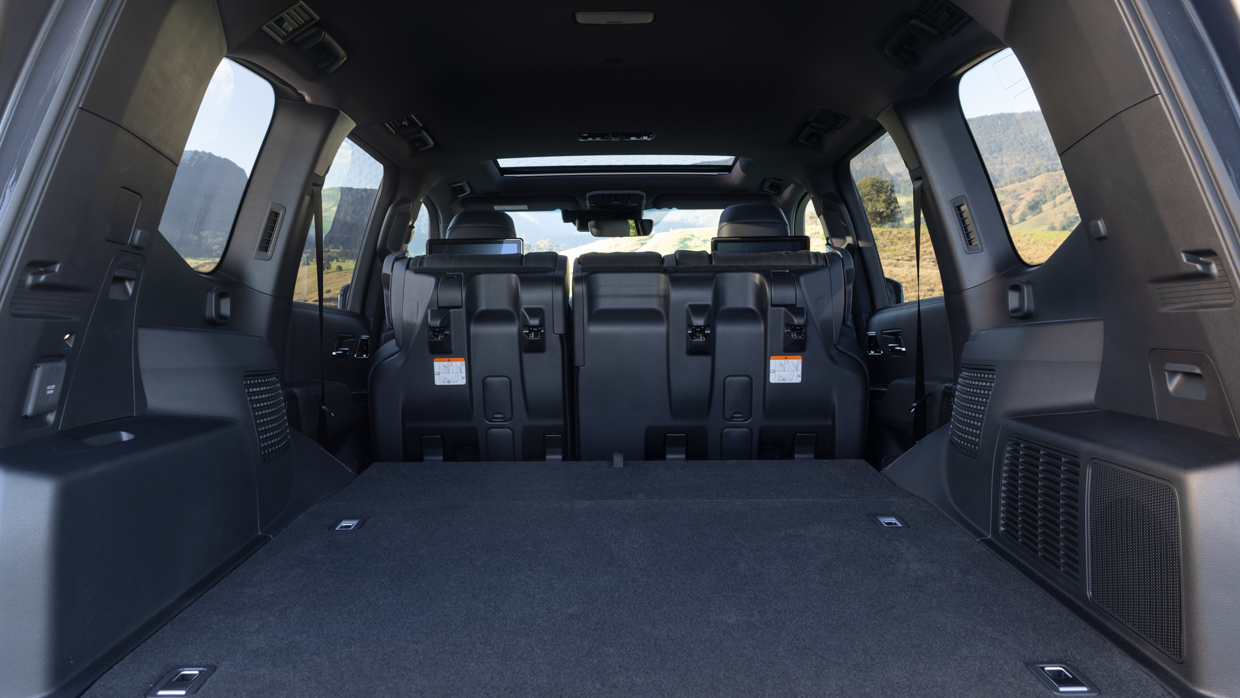
The petrol hybrid drinks 10.0L/100km on the combined cycle (using 95RON premium) and has a 98-litre tank, meaning 980km of theoretical range. Burrow into the details, however, and their highway consumption (Extra Urban) is almost identical – 7.6L/100km (diesel) versus 8.0L/100km (hybrid) – though the Urban figures clearly favour the oiler (11.1 versus 13.7).
During our pleasantly brisk launch drive, the Sahara ZX Hybrid averaged 13.1L/100km.
Towing capacity is unchanged (3500kg braked) and servicing is also identical – $450 per service for the first five years/100,000km – which means, just like the diesel, you’ll be booking into your Toyota dealer every six months or 10,000km.
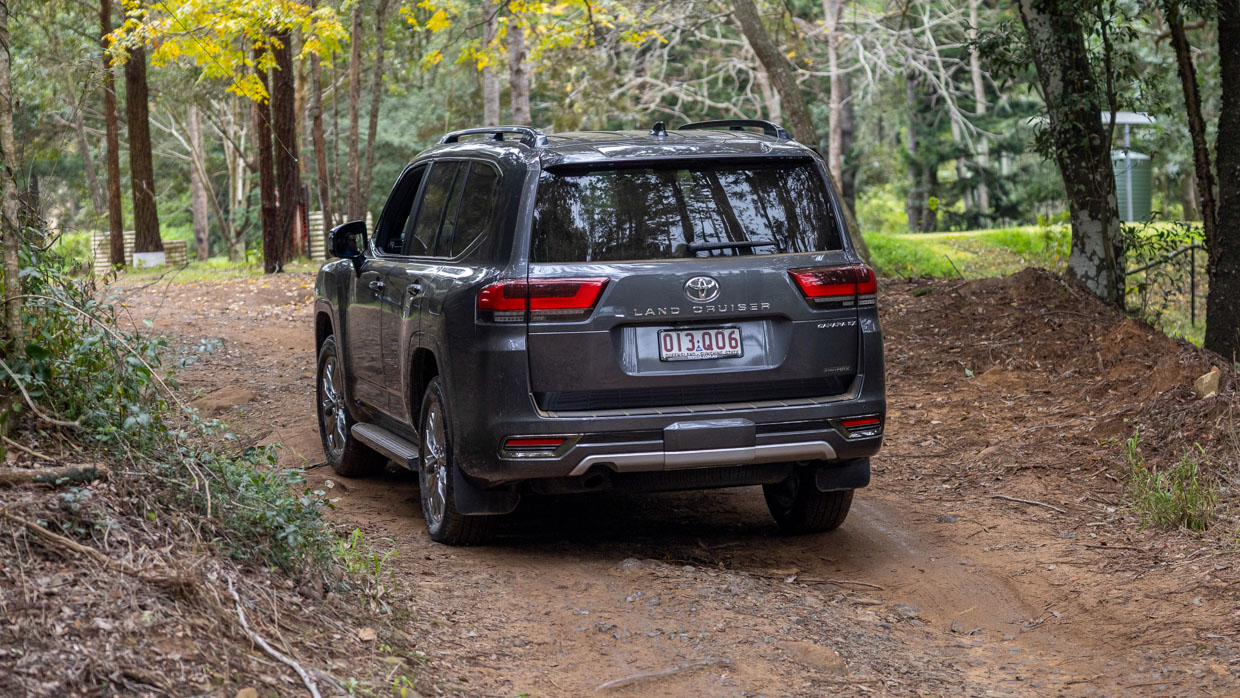
And when you’re done with it, the Performance Hybrid’s three-year projected resale (according to The Red Book) is 71.8 percent for both variants, which is an impressive figure compared to most vehicles (and slightly up on the diesel’s 68.8 percent).
That said, in LandCruiser world, nothing can beat the 76-series wagon or 78-series Troopcarrier (87.0 percent each).
You could argue there’s little point in the LandCruiser 300 Performance Hybrid given its $9K price premium (GR Sport – $155,990; Sahara ZX – $156,740, each before on-road costs), and its inferior range and efficiency. It’s also not a performance car, so doesn’t really need the additional grunt.
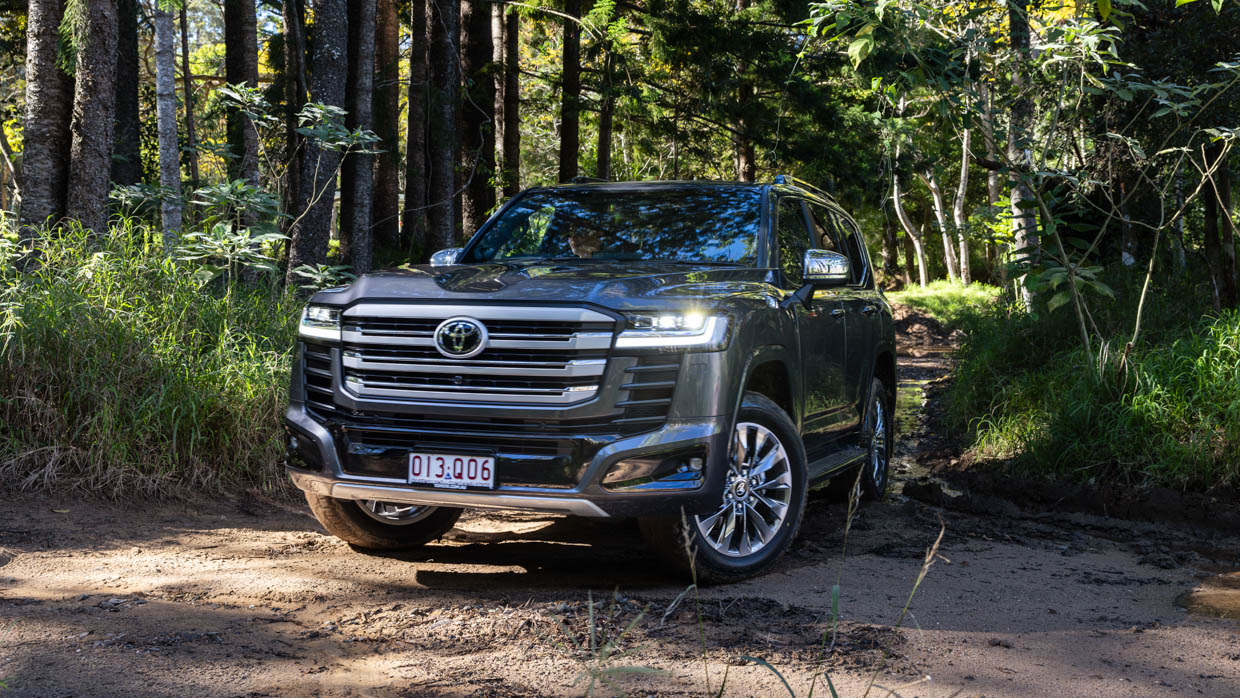
However, it’s a nice-to-have, it makes it more refined and sophisticated, and in an era of potentially volatile diesel-fuel pricing and availability, giving buyers choices makes powerful sense.
Given the two hybrid LC300s are quite different characters, we’ll reserve rating the breed until we can test the individual variants using more thorough assessment.
Key specs (as tested)
About Chasing cars
Chasing Cars reviews are 100% independent.
Because we are powered by Budget Direct Insurance, we don’t receive advertising or sales revenue from car manufacturers.
We’re truly independent – giving you Australia’s best car reviews.
The estimate provided does not take into account your personal circumstances but is intended to give a general indication of the cost of insurance, in order to obtain a complete quote, please visit www.budgetdirect.com.au. Estimate includes 15%^ online discount.
^Conditions Apply
Budget Direct Insurance arranged by Auto & General Services Pty Ltd ACN 003 617 909(AGS) AFSL 241 411, for and on behalf of the insurer, Auto & General Insurance Company Limited(ABN 42 111 586 353, AFSL 285 571).Because we don’t know your financial needs, we can’t advise you if this insurance will suit you. You should consider your needs and the Product Disclosure Statement before making a decision to buy insurance. Terms and conditions apply.
Indicative quote based on assumptions including postcode , 40 year old male with no offences, licence suspensions or claims in the last 5 years, a NCD Rating 1 and no younger drivers listed. White car, driven up to 10,000kms a year, unfinanced, with no modifications, factory options and/or non-standard accessories, private use only and garaged at night.
^Online Discounts Terms & Conditions
1. Discounts apply to the premium paid for a new Budget Direct Gold Comprehensive Car Insurance, Third Party Property Only or Third Party Property, Fire & Theft Insurance policy initiated online on or after 29 March 2017. Discounts do not apply to optional Roadside Assistance.
2. Discounts do not apply to any renewal offer of insurance.
3. Discounts only apply to the insurance portion of the premium. Discounts are applied before government charges, taxes, levies and fees, including instalment processing fees (as applicable). The full extent of discounts may therefore be impacted.
4. We reserve the right to change the offer without notice.