Powered by

-
Car Reviews
Latest reviews
-
Car News
Latest news
-
Car Comparisons
Latest comparisons
- Chasing Deals
Latest reviews
Latest news
Latest comparisons
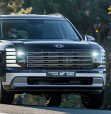
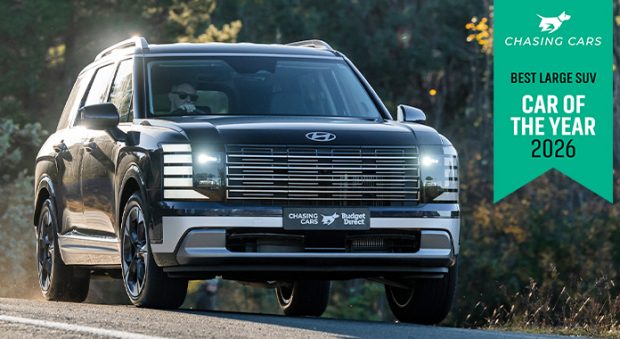
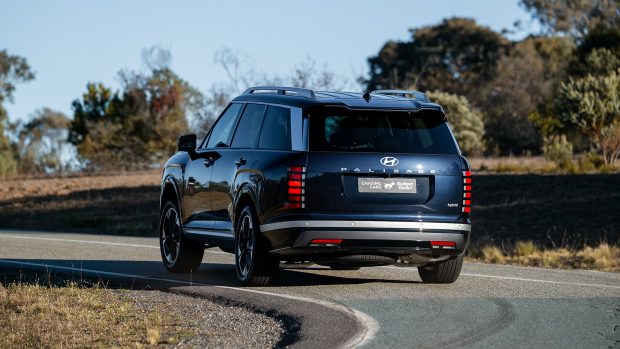
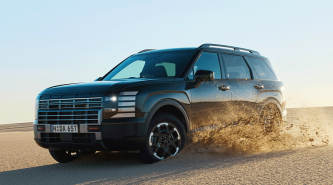
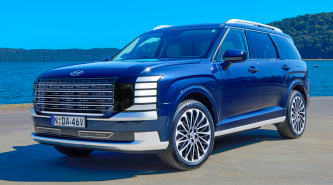
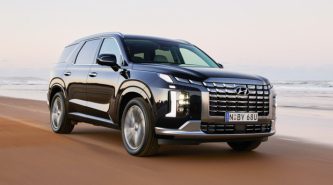
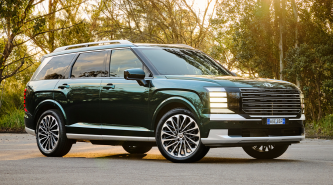
With its space, class, features and value, Hyundai’s premium-tinged Palisade was a large-SUV act that couldn’t be topped
As the SUV landscape fractures into niches of varying sizes, styles and powertrain choices, one thing remains constant – if you want a large SUV that does what the description promises, then you’ll want a comfortable seven-to-eight seater that doesn’t drive like a bus.
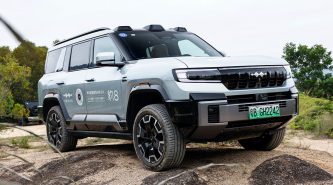
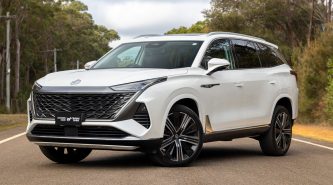
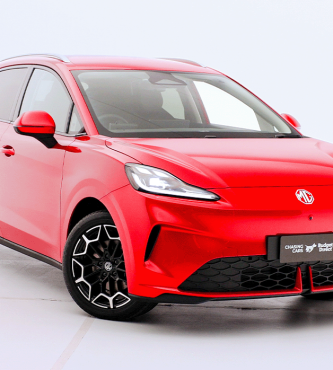
Newcomers among 2025/26’s Large SUV cohort included the MG QS ($47-$51K), Chery Tiggo 9 plug-in hybrid ($53-$60K), BYD Sealion 8 plug-in hybrid ($57-$71K), Peugeot 5008 ($56-$68K) and Denza B8 plug-in hybrid ($93-$99K) seven-seaters, along with the Omoda 9 plug-in hybrid ($62K), Denza B5 plug-in hybrid ($77-$82K) and Jaecoo J8 ($50-$55K) five-seaters.
Arriving on the back of last year’s Chasing Cars Car of the Year winner – the deeply impressive six/seven-seat Hyundai Santa Fe ($54-$77K) – all the above contenders fail to distinguish themselves in various departments, particularly when it comes to dynamic sophistication, overall comfort and vehicle calibration in most instances.
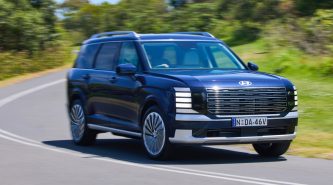
The Peugeot 5008 looks superb, is well-packaged and is pleasant to drive, but its undernourished mild-hybrid powertrain pales in comparison to the effortlessness of our highly deserving winner that builds on last year’s victorious Santa Fe in many ways – the Hyundai Palisade Elite Hybrid.
What are we looking for in a Car of the Year segment winner? It’s all about performance of intended function — how well a vehicle executes its purpose. Below are the aspects we interrogate.
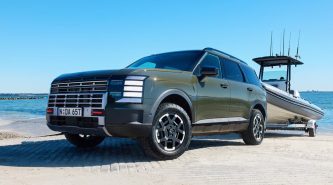
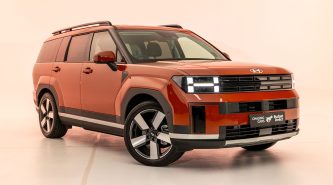
It could’ve potentially emerged as a stretched, bulked-up rehash of the smaller Santa Fe, but the new-generation Palisade is very much its own thing, and then some.
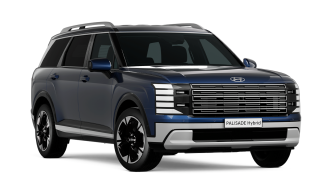
Combining a larger turbo-petrol hybrid powertrain and an extensively re-engineered platform, the ‘entry-level’ Palisade Elite Hybrid stands proud as a holistic, comprehensively engineered large SUV for the masses…
… though when we say masses, a starting price of $76,500 isn’t exactly entry-level territory. However, when you factor in the Hyundai’s vast eight-seat space, its elegant design, excellent refinement, generous standard equipment, and impressive balance of performance and parsimony, nothing else out there can touch it below 100 grand.
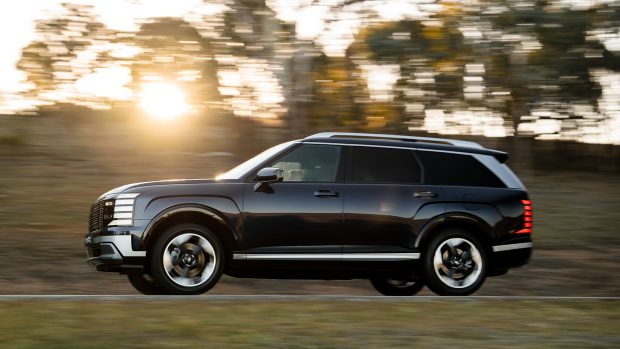
Undoubtedly sealing the deal is the way it devours Australian roads. For such a large SUV (5060mm long, 1980mm wide and 1805mm tall), the Palisade is almost sporting in the way it steers and handles, yet it rides with polished distinction.
The benefits of a well-suspended, effortlessly controlled people hauler cannot be overstated enough, and the Palisade’s combination of precision and panache smooth every journey.
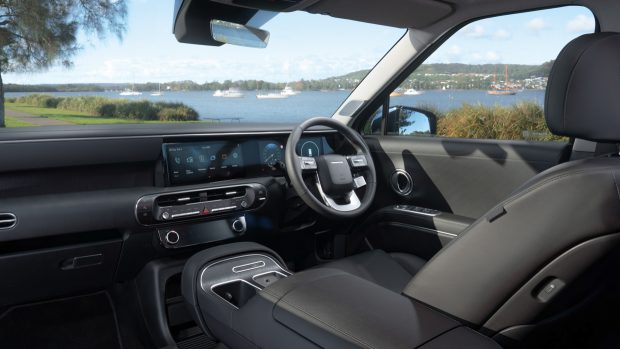
Inside, each row has something to crow about. The front seats are 10-way electric with heating, the middle row is fore-aft adjustable with manual backrest rake, and the adult-friendly third row also includes manual backrest rake, as well as roof-mounted air vents, USB-C ports and twin cupholders on each side.
Many SUVs purport to carry seven or more passengers, but the Palisade is one of few that does so with ease.
There’s also a feeling of quality to the Palisade’s interior. From its classy, cohesive plastics to its solid switchgear, ergonomic control layout and terrific seat comfort, there’s a cossetting feeling of luxury in here that transcends Hyundai’s mainstream brand status. Even premium-badge products are increasingly going backwards in this department, so the new Palisade is welcome relief.
Other highlights include vehicle-to-load (V2L) capability, over-the-air software updates, Bluelink connected services, the same gutsy 14-speaker Bose stereo as the top-spec Calligraphy, enough cup- and bottle-holders to host a kid’s party, and leather upholstery on the seats, steering wheel, armrests, centre console and dashboard.
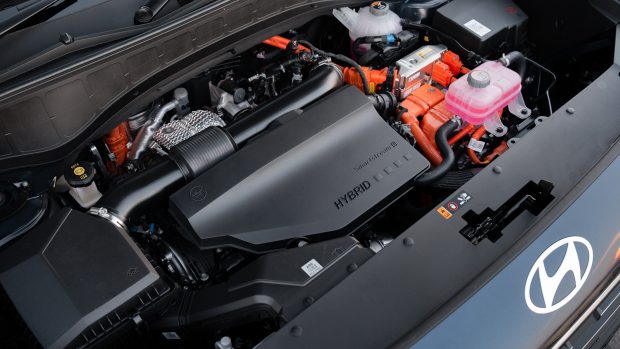
Finally, to the powertrain. It’s a series-parallel hybrid system that combines a grunty 2.5-litre turbo-petrol four-cylinder with a 54kW/264Nm electric motor for robust combined outputs of 245kW at 5800rpm and a 460Nm slug of torque from 1800-4500rpm.
According to our own testing, it’s muscular enough for 0-100km/h in less than 8.0sec, despite relying on a relatively simple six-speed automatic to transfer power.
Drinking regular unleaded or E10, the Palisade’s combined fuel figure of 6.8L/100km puts it way ahead of any non-hybrid rivals, and within striking distance of the mild-hybrid 1.5-litre engine in the underpowered base Skoda Kodiaq (6.1L/100km), despite the Palisade being a heavier, more commanding, more capacious SUV.
If we had to criticise the Palisade anywhere, it would be for active-safety features such as steering assist and speed-sign detection. They’re ultimately too intrusive, though other Hyundai/Kia models are much worse. And while the disabling process is relatively straightforward, it could be easier…or those systems could simply be better!
We wish there was a variant below the Elite, with all the space and refinement but without the 20-inch wheels, electric heated leather seats and other fancy business…and perhaps a high-$60K price tag. And we wish the drivetrain was capable of beating its 2009-era exhaust emissions standard (Euro 5), though it will be forced to upgrade (to Euro 6d) come early ’28.
But in every area that counts, this is an excellent large SUV.
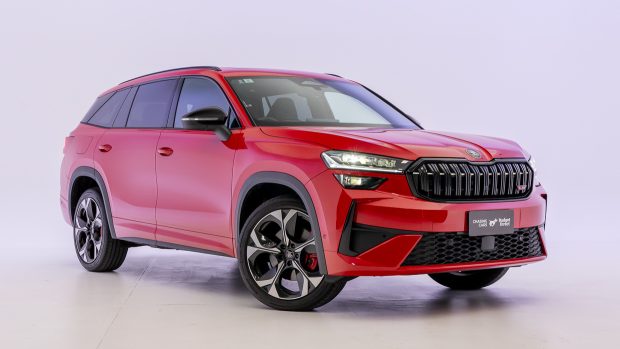
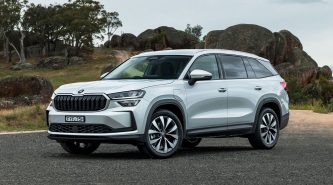
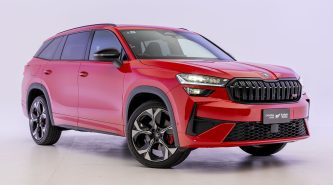
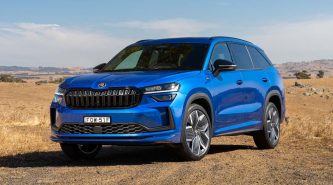
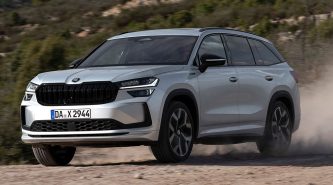
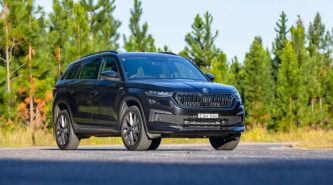
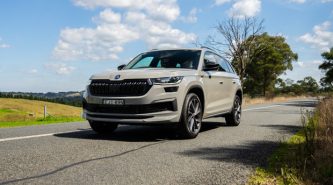
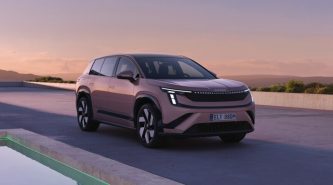
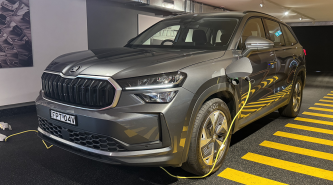
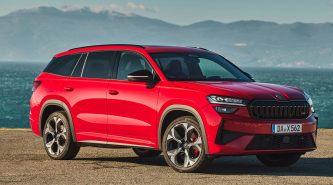
There’s a lot to like about the new-generation Skoda Kodiaq – especially its breadth of powertrain choice and the amount of cleverly configured space and storage it squeezes into its relatively modest size.
Compared to the Palisade, the Kodiaq is 300mm shorter, about 140mm lower and 115mm narrower, so it’s a lot more manoeuvrable when it comes to tight inner-city parking and meandering.
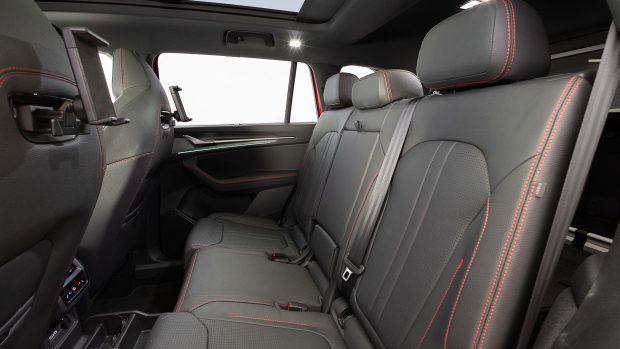
But it ultimately doesn’t have the Palisade’s lounging room, its third-row amenities, ride comfort or the performance/economy balance of the Hyundai’s full-hybrid powertrain – at least without stretching to a plug-in hybrid.
The base powertrain is relatively sluggish (0-100km/h in 9.9sec), though its driveability is competent and its pricing is sharp ($49,990 driveaway, without options).
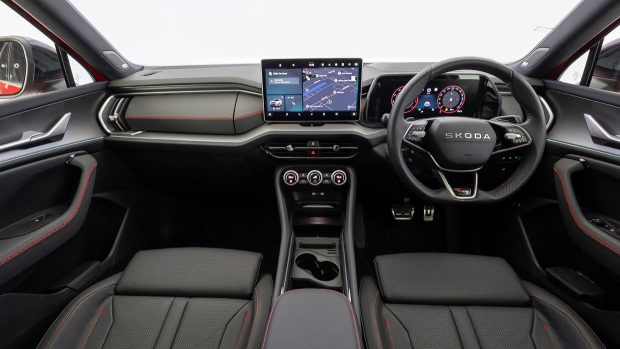
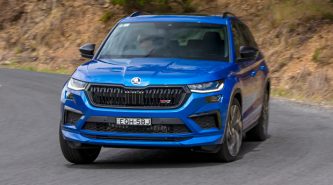
The Kodiaq is at its best in flagship RS form – pushing the Palisade Elite super-close for all-round ability, for a similar price – though the Skoda’s unique proposition is an eHybrid version, offering up to 110km of WLTP electric range (from $68,990 driveaway).
But if ‘Large SUV’ is what you’re after, meaning proper space for seven to eight people, the imposing Hyundai offers more car for the money and is unmatched for overall comfort. Besides, if you want the best-driving family Skoda, either Superb bodystyle is more likeable and satisfying than the Kodiaq SUV line-up.
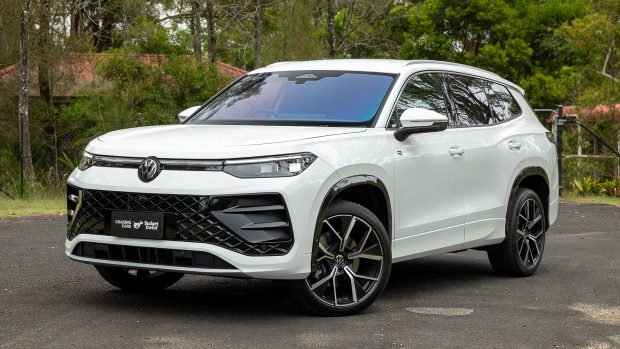
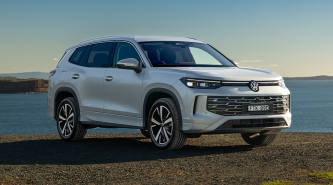
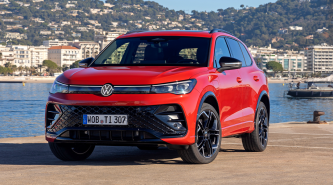
Compared to Volkswagen’s outgoing Tiguan Allspace, which was more of a five-plus-two than an actual seven-seater, the all-new Tayron is much more fit for purpose. It’s larger, roomier, cleverly packaged, more dynamic to drive and more distinctive as a vehicle, as its standalone nameplate suggests.
Yet the Tayron is ultimately outshone here by the slightly cheaper and cleverer Skoda Kodiaq, which is closely related under the skin – sharing wheelbase length and drivetrains – but really only cedes superiority to the Tayron for luggage volume (345L versus 289 with third row up, 855L versus 794 behind the second row).
The Skoda gets an extra two years of warranty coverage, is around $6000 cheaper in our favoured spec (Kodiaq RS versus Tayron 195TSI R-Line) and, to our eyes, is slightly classier to look at in most variants as well. But there’s still plenty to admire about the Tayron – especially in higher-spec engine variants.
Latest comparisons
About Chasing cars
Chasing Cars reviews are 100% independent.
Because we are powered by Budget Direct Insurance, we don’t receive advertising or sales revenue from car manufacturers.
We’re truly independent – giving you Australia’s best car reviews.