Powered by

-
Car Reviews
Latest reviews
-
Car News
Latest news
-
Car Comparisons
Latest comparisons
- Chasing Deals
Latest reviews
Latest news
Latest comparisons
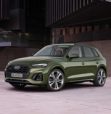
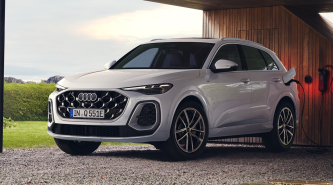
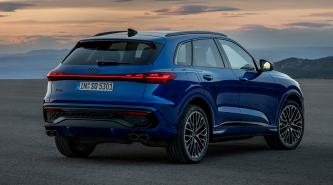
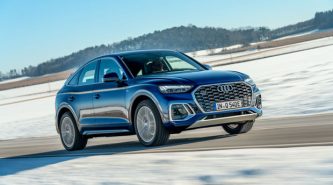
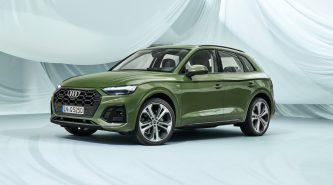
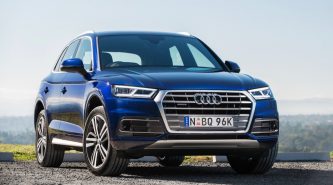
With SQ5 power, a nice ICE price and boosted EV-only range, Audi’s revitalized plug-in medium SUV appears more enticing while remaining oh-so familiar
It’s been 12 months since the third-generation Audi Q5 medium-sized SUV lobbed Down Under – regular TFSI petrol and TDI diesel variants – with what we generally called a “carefully and conservatively modernised” update to Ingolstadt’s global volume seller. The go-faster SQ5 arrived too, with rebooted turbo-petrol V6 power replacing the old oiler.
Seemingly heartbeats later, the new A5 e-Hybrid – yet another rebranding of Audi’s (revised) plug-in hybrid system – landed in Sportback (sedan) and Avant (wagon) guises, with boosted performance and EV range complimented by a more enticing value proposition via a revised strategy on PHEV pricing.
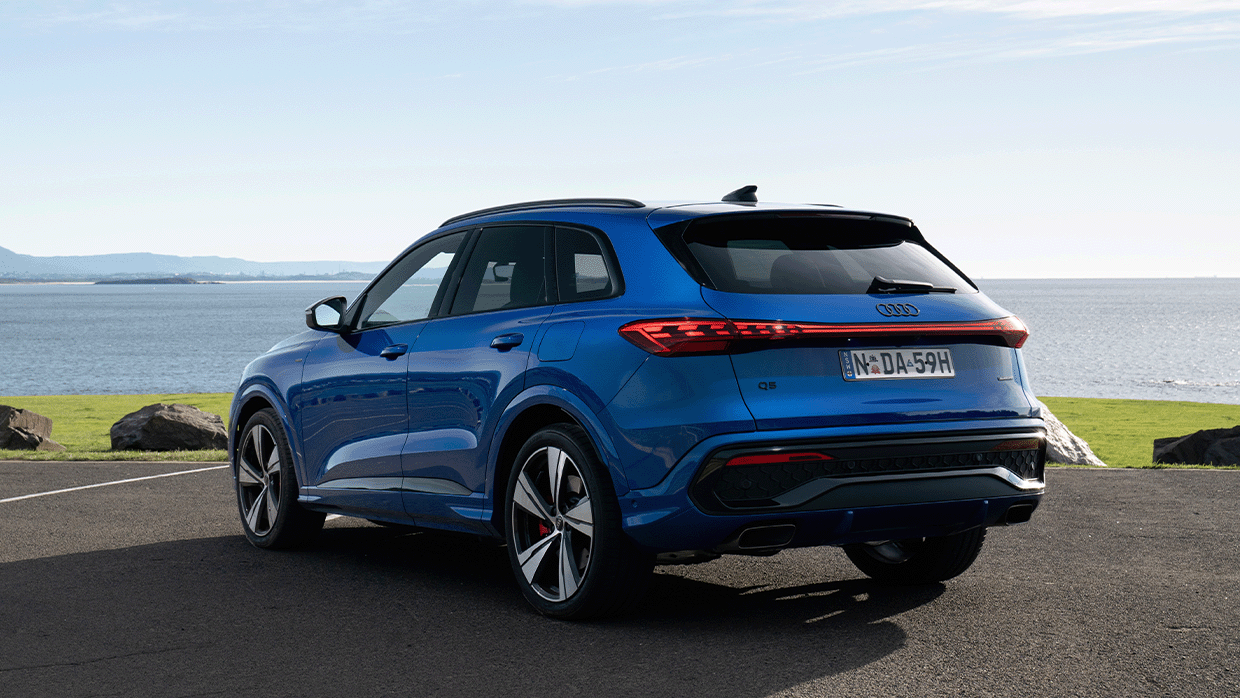
Predictably, then, mid-2026 sees the former Q5 SUV model materialise with the latter A5’s plug-in powertrain. And, also predictably, regular readers and Audi aficionados alike will have a fair idea of what to expect from this plugged-in, mid-sized, family-hauling newcomer.
Still, merely viewing a laundry list of amalgamated stats and features doesn’t reveal the combined experience, even before you factor in some key updates to the Q5 (and indeed A5/S5) range(s) for MY26.
There’s an ADAS boost: new long-range radar, plus adaptive cruise, traffic jam and lane change assist smarts, plus enhanced (and optional) features like ‘Trained parking’, reverse assistant and kerb avoidance. Frequency selective damping for the standard steel sprung suspension, as debuted in MY25, features here, with air suspension cost-optional on the new PHEV.
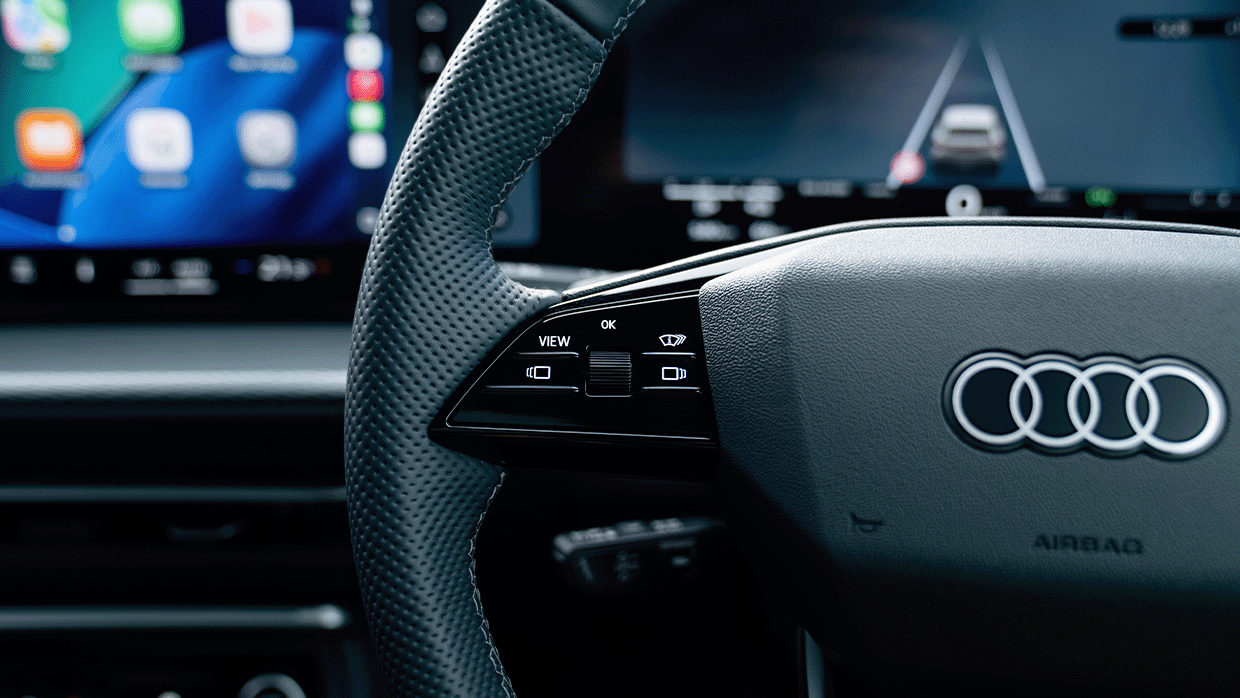
Inside, MY26 brings – hooray! – haptic rollers on the steering wheel, updated MMI and Virtual Cockpit content, upgraded 60w front/100w rear USB-C outlets, “experience world” environment themes and enhanced media app functionality (such as Spotify integration).
Nuanced updates apart, the main pitch is that the new PHEV Q5 is measurably fitter than the old gen-two plug-in it replaces in its key metrics: a bigger 25.9kWh gross (20.7kWh usable) battery, longer electric-only range (82km plays 55km WLTP), faster three-phase AC charging (11kW plays 7.2kW), etcetera.
The upshot? The turbo 2.0-litre PHEV powertrain outputs an SQ5-rivalling 270kW. But the plug-in’s formidable 2.3-tonne kerb weight and a slightly more modest 500Nm torque peak (plays SQ5’s 550Nm) leaves its performance claim of 5.1 seconds 0-100km/h a significant six-tenths slower than the turbo-V6-powered SQ5.
But at $96,818 (SUV) and $100,318 (Sportback) list, the plug-in Q5s are priced almost identically to the less-powerful (200kW/400Nm), slower (6.2sec) and thirstier (7.9L/100km plays 3.3L/100km) petrol-powered mild-hybrid Q5 TFSI alternatives. Meanwhile, the full-fat regular SQ5 starts from around $126K…
Audi Australia says the revised pricing over the (Q5 55 TFSIe-branded) old-gen replacement is $9000 in SUV guise and $13,000 cheaper in Sportback form – our 2023 review of the old plug-in suggests pricing was closer.
It’s a sole e-Hybrid specification though some buyers will opt for the adaptive Air Suspension ($4650), a Premium package (HUD, B&O 3D sound, 10.9in MMI passenger screen, acoustic glass, $5900), a Tech Pro package (Electric column, OLED taillights, Park assist Pro, et al, $5400) and Winter pack (Heated wheel and rear outboard seating, $1350).
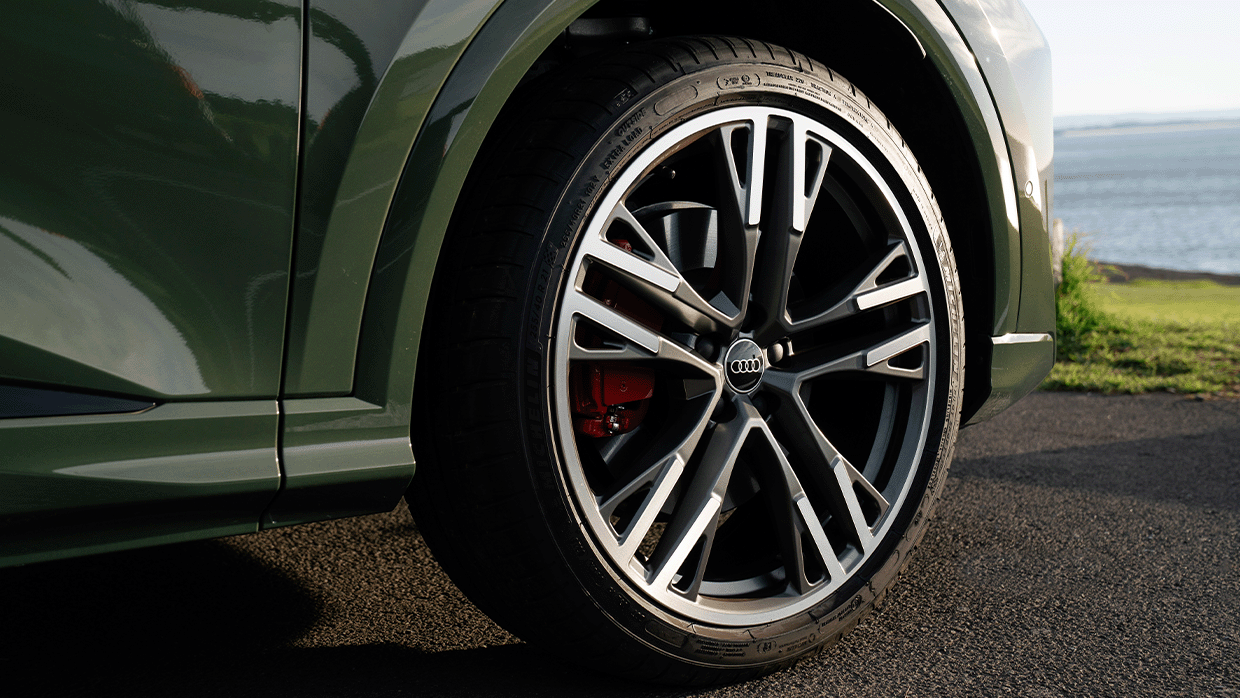
Most examples available to drive during the Australian launch programme included premium paint ($2000), 21-inch wheels ($2100) and front seats ventilation ($2200), plus some of the above bundles, adding around $18K-$20K of options to their list prices and sending on-road outlay well above $120K…
Warranty is five years of unlimited-kilometre coverage, with a five-year (12-month, 15,000km-interval) servicing bundle priced at around $3500. Fuel minimum is 95RON.
As we dove into in our third-gen Q5 reviews prior, the new Premium Platform Combustion (PPC) architecture is essentially the old MLB Evo platform retooled, primarily for improved computing power and expanded electrified drive battery facility. A tweaked if quite a familiar drive.
Our most vocal gripe and big sore spot with the MY25 spec was the overly firm steel-sprung suspension tune, even with the then newly-introduced frequency selective damping (that MY26 e-Hybrid adopts). Q5 begged for adaptive air suspension to ease the ride, we wrote, and so it proves sampling both formats back to back in PHEV form.
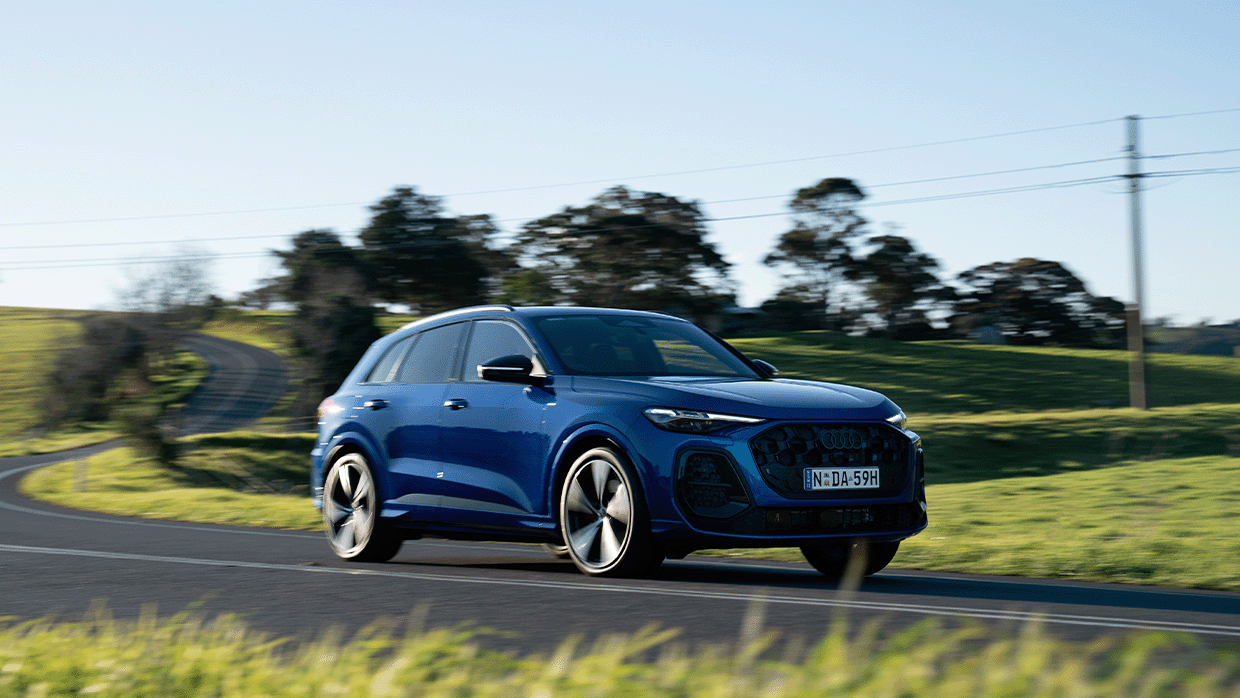
The air system feels well balanced. It offers resolved bump control and the expected level of polished compliance, the ride only occasionally caught wanting when those (optional) 21s snag a sharp edge. At the same time, it maintains a firm enough grip on body control to bring a sporty veneer to the Q5’s character, if mostly merely skin deep.
Add a strangely, unnecessarily under-assisted ‘progressive’ steering and solid grip from the 255mm-wide 21-inch tyres and the Q5 tries to feel focused and engaging yet ultimately fails to pull off the sports SUV conviction (and in spite of the frisky S line stylisms evident inside and out).
It’s just heavy – 2.3 tonnes in either body style you choose, some 400kg heftier than the TFSI version – and this blunts a sense of fluidity and dynamic response. In short, the plug-in Q5 is naturally better served as a comfort-focussed proposition, and on its chubbier 20in standard wheels.
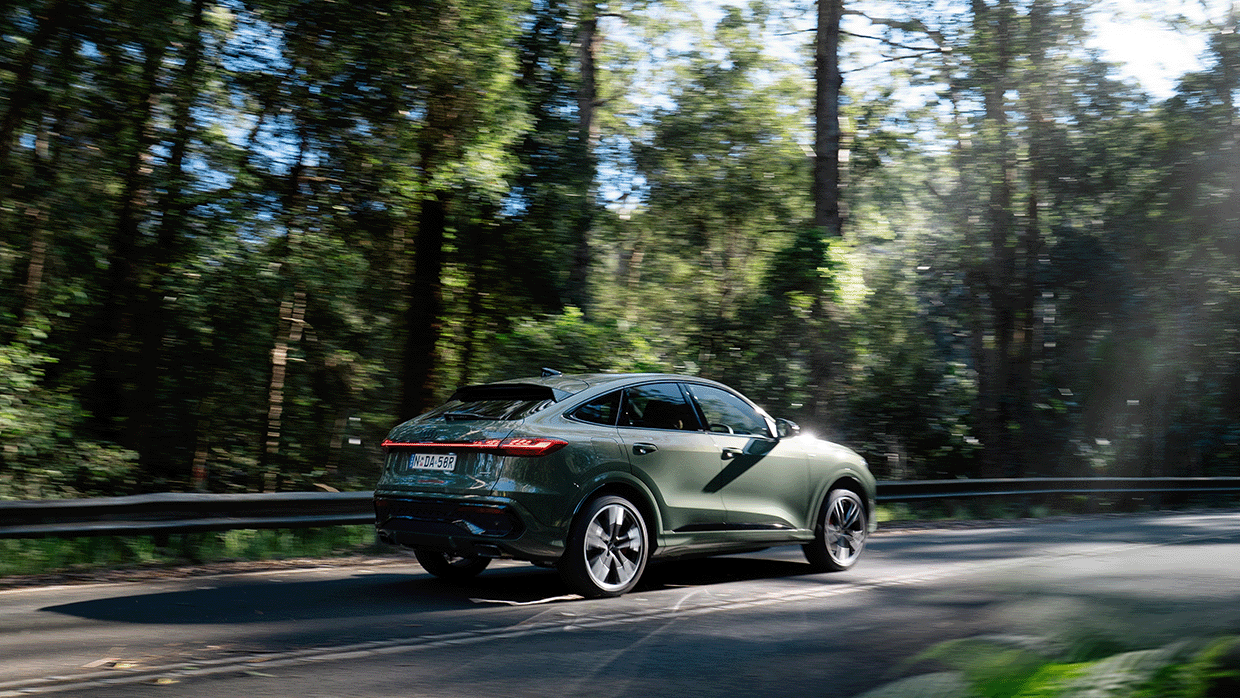
As we discovered in the technically-related A5 Avant e-Hybrid, the heavy battery pack mounted above and aft of the rear axle does help induce rotation in the corners. But as the Q5 isn’t neatly as low slung and squat as its sedan and wagon stablemates, the SUV merely feels ponderous and slightly spooky if you push on in corners…
So dynamic friskiness clearly isn’t Q5’s primary aim, though it clearly doesn’t lack the sort of squirt that helps facilitate a good time, if one largely best served if its 20.7kWh usable battery is holding plenty of charge.
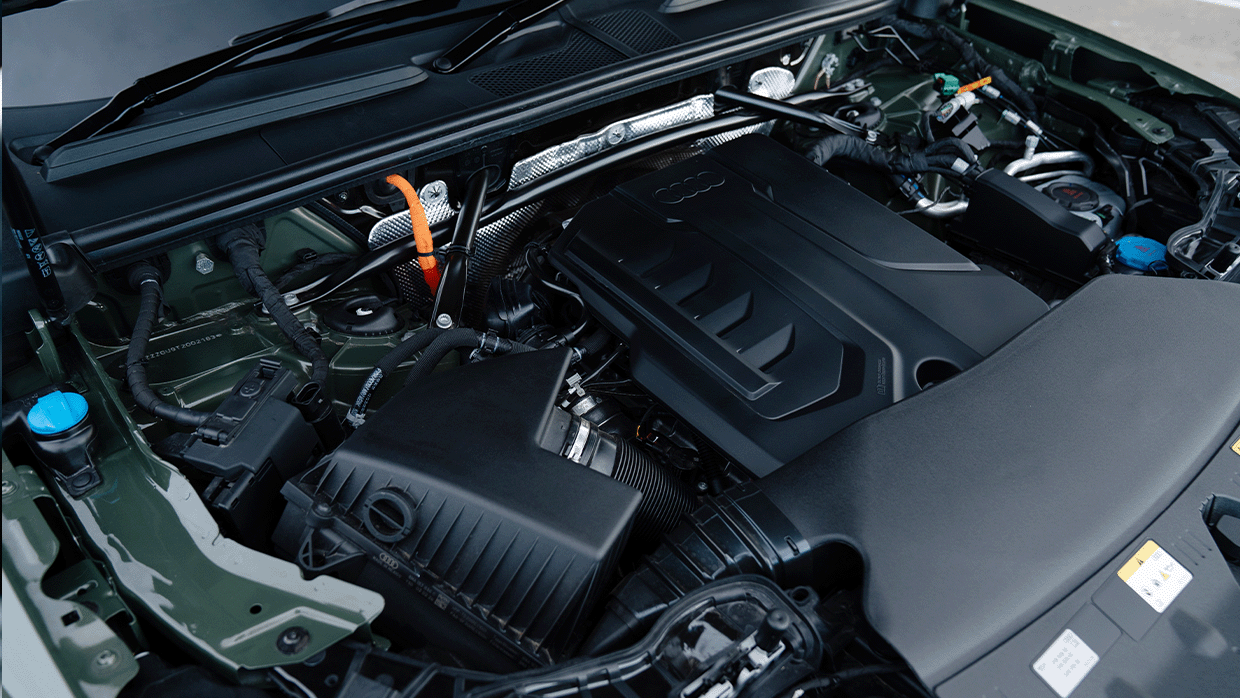
With engine and motor on full song, the SUV churns out tremendous, instant shove. As outlined in our A5 review, it’s essentially the Volkswagen Golf GTI-spec EA888 2.0-litre turbo-petrol four offering 185kW and 380Nm, if complimented by 105kW and 350Nm of electric drive wedged between internal combustion and the dual-clutch seven-speed auto.
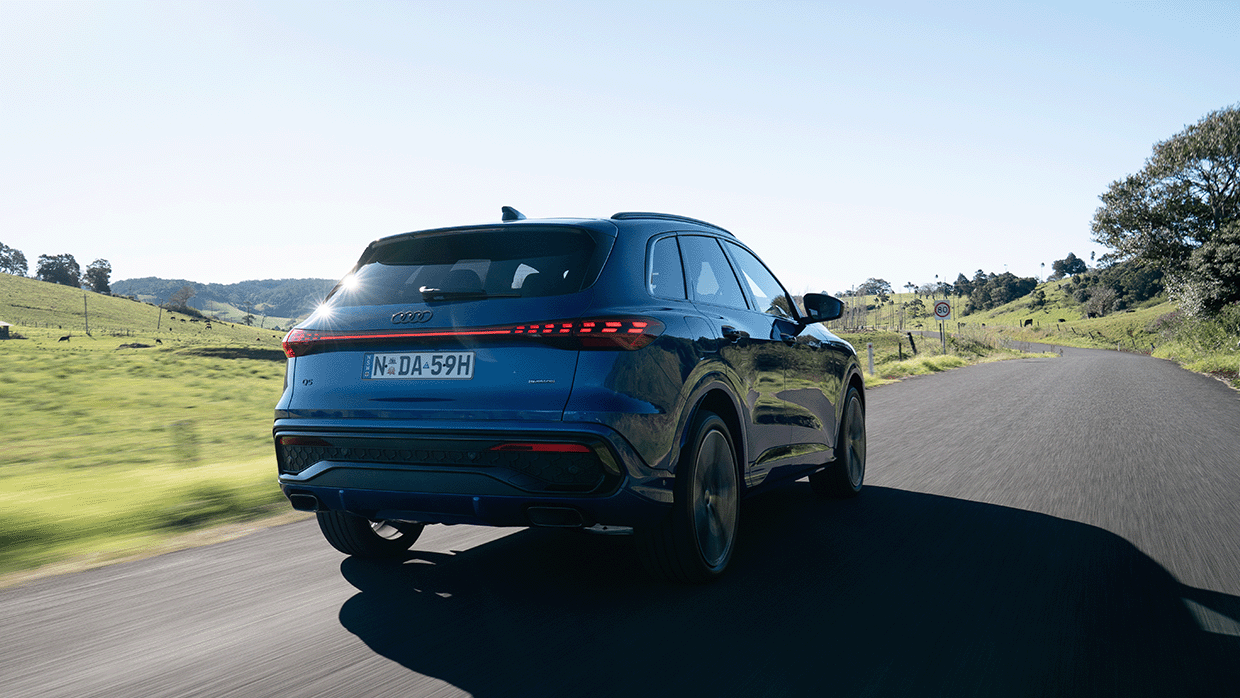
The motor contributes much of the sharp, alert heavy-lifting off the mark, and it feels like formidable forced reckoning with considerable kerb weight in the process. This powertrain would be supremely potent – and deserving – in a much more lightweight vehicle.
As a complete powertrain, it’s also wonderfully refined, with any suggestion of nippy dual-clutch upshifts blended buttery smooth by electric torque. It’s quiet, too, which really brings a velvet hammer character to the SUV and premium dignity to its on-road manner.
And it remains this gusty and dignified until the battery dips below 10 percent charge, when the Q5 leans heavily into internal combustion and the SUV suddenly feels (mostly) strained and overworked. Thankfully, it seems to hold some charge in reserve for the odd petrol-electric acceleration ‘hit’ if you want or need it.
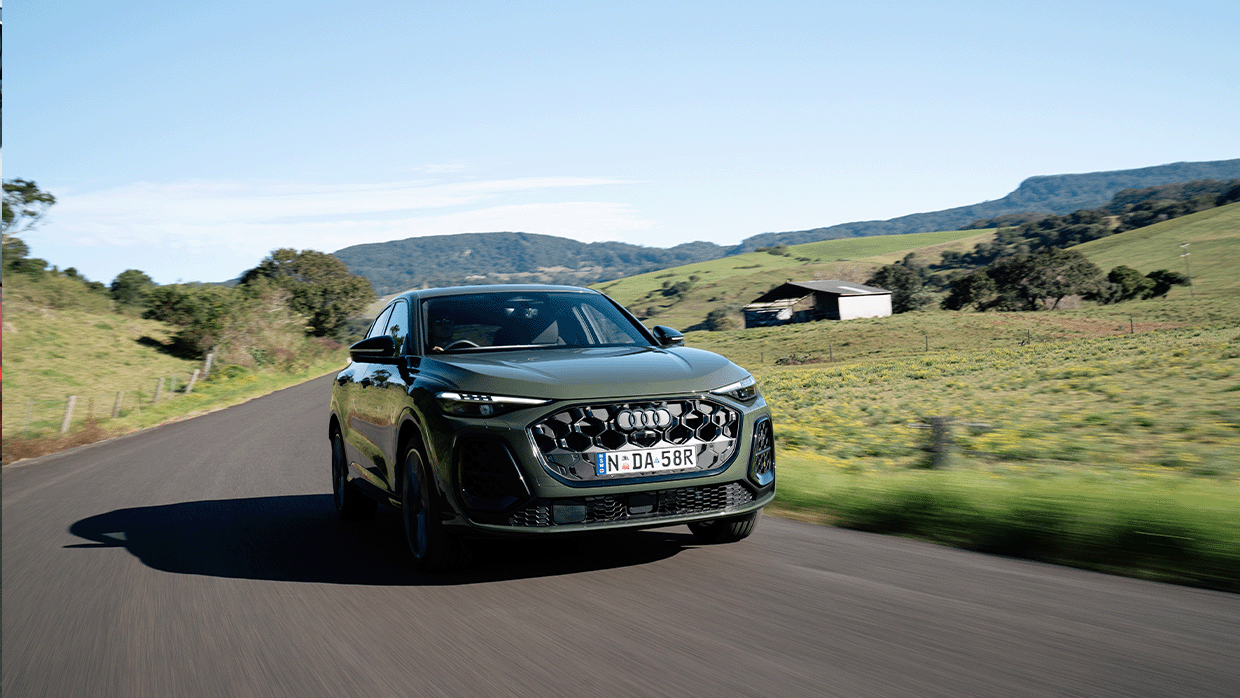
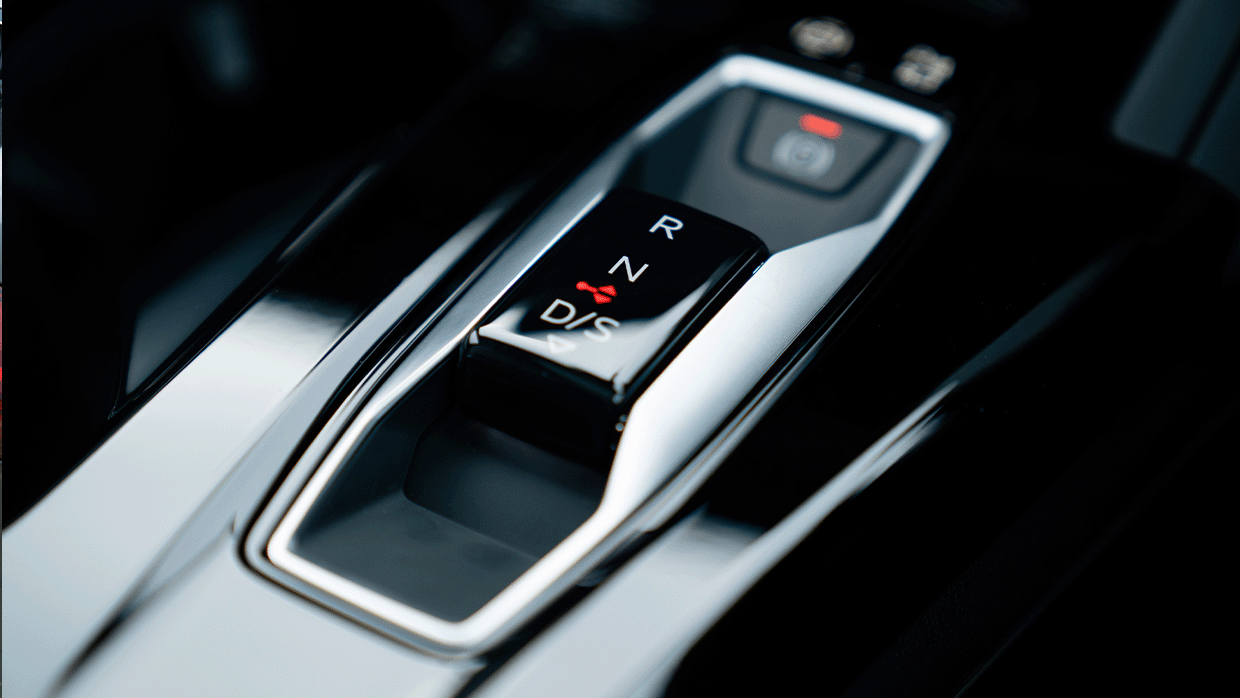
EV only range is roughly 82 kilometres (WLTP) and deployed at up to 140km/h, though on test we kept the Q5 in a self-regulating hybrid drive mode for the best of both worlds. Thus set, it’s a simple tap-S-for Sport on the transmission selector to permanently deploy internal combustion.
Unsurprisingly, this latest ‘intelligent‘ hybrid tech is complex with oodles of user adjustability, plus predictive automatic drive mode adjustment attuned to sat-nav route guidance. There’s also multi-stage auto or manual brake regeneration via the paddle shifters.
Speaking of smarts, the craftier computational tech of the PPC architecture combined with, says Audi, judicious local calibration of ADAS yields an impressive suite of driver assistance systems that are not just broader in features count but exceptionally well behaved in local conditions.
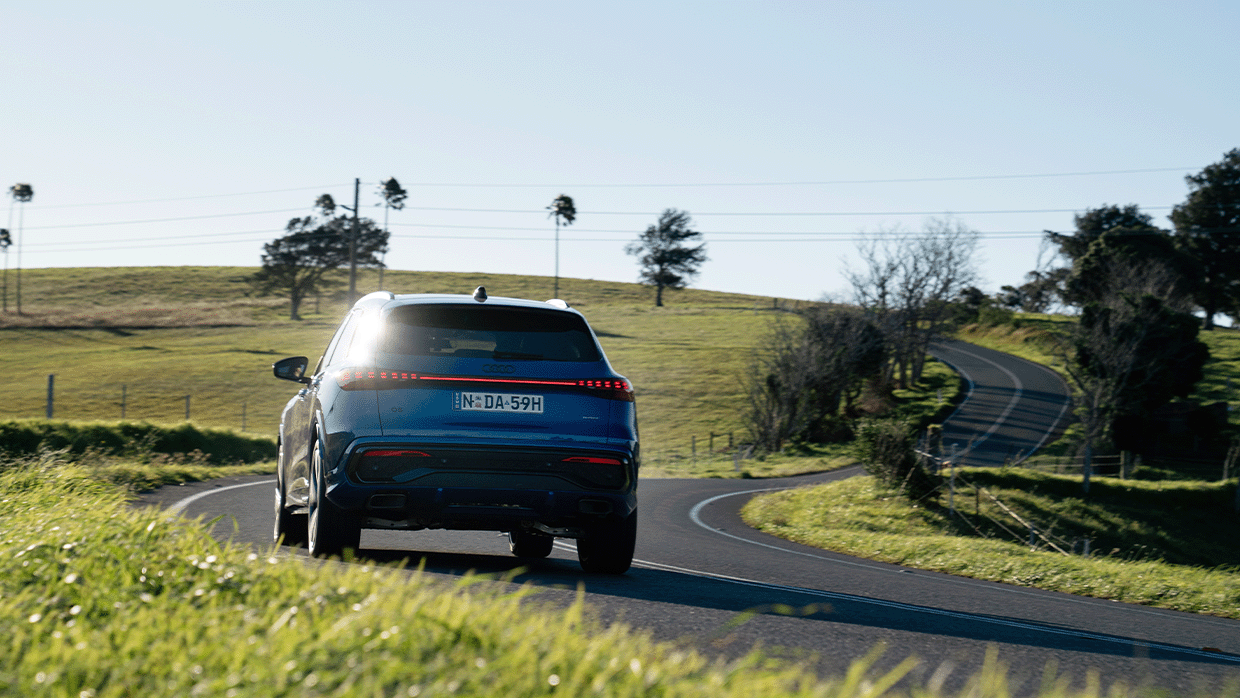
And when you choose to switch ADAS systems off, they stay off indefinitely. Hallelujah!
We’ve dug deep on Q5’s ‘revolutionary’ cabin redesign details recently in the TFSI and TDI versions, but the elevator synopsis is that the marginally longer cabin has a refreshed vibe with a rich ambience, with a boost in slickness for the tech and digital window dressing.
It seems all German – and good many other regions’ – carmakers are “reverting to buttons and rollers due to customer feedback” in today’s era, though Q5 still relies heavily on media screen UI. It’s big on hidden shortcuts which, while clever in the minutia, is annoyingly complicated for newbies.
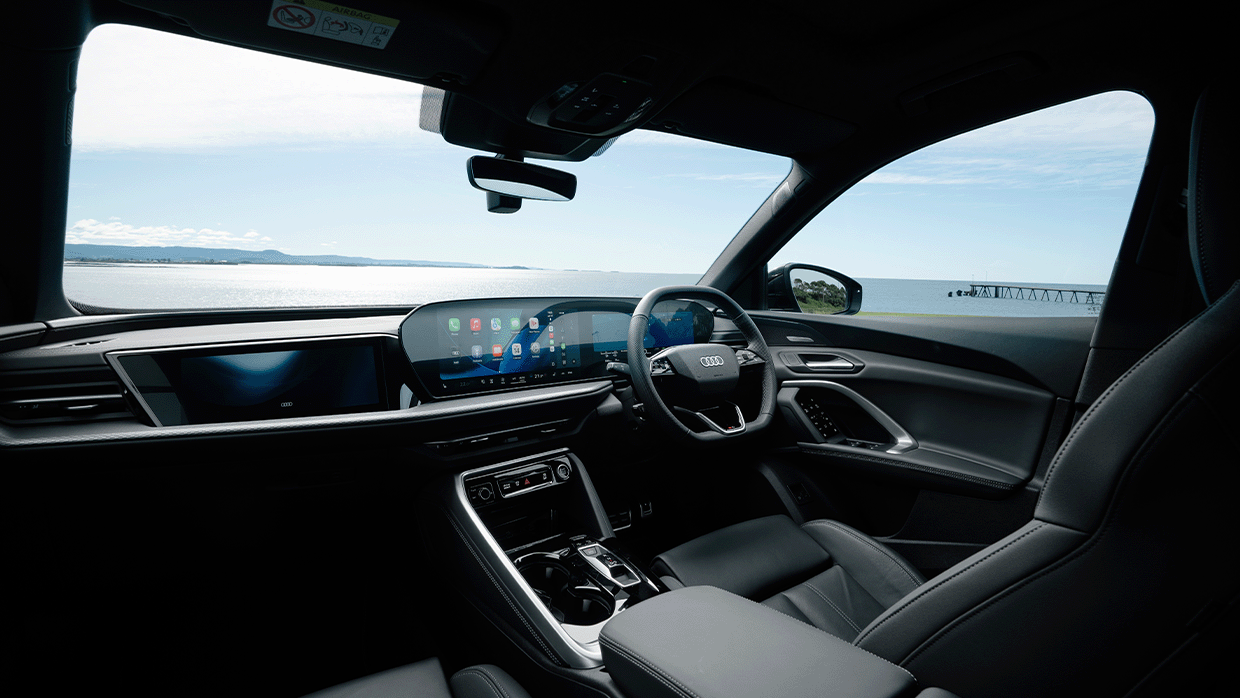
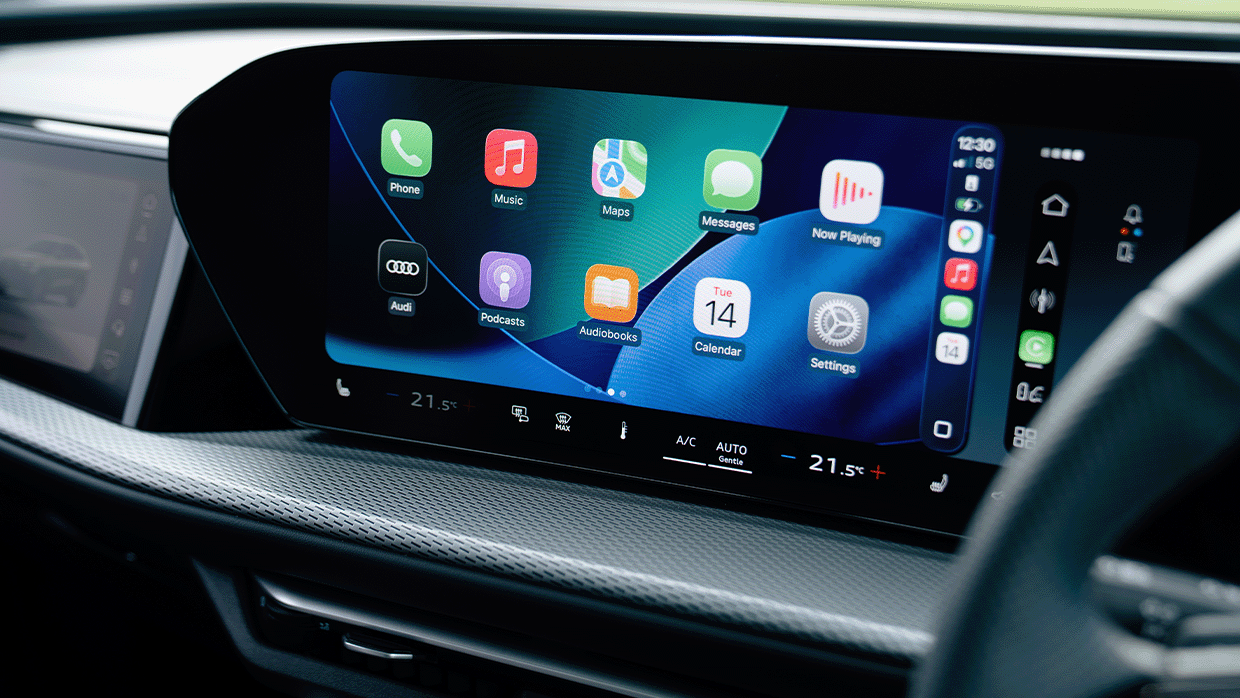
Unlike the ‘conventionally wheeled’ ICE versions we’ve driven lately, the e-Hybrid gets a trendy squircle tiller. Looks great, haptic rollers are a win, and it frames the razor-sharp curved 11.9-inch driver and 14.5-inch OLED centre screen neatly.
However…the Q5 suffers a quirk shared by many new offerings from various marques: because the driver’s screen isn’t quite square to the driver’s viewing perspective, its content appears lopsided (dropping left).
The squircle wheel’s flat top exacerbates this, compounded by the new-look rectangular driver’s screen skin creeping into some Audi models.
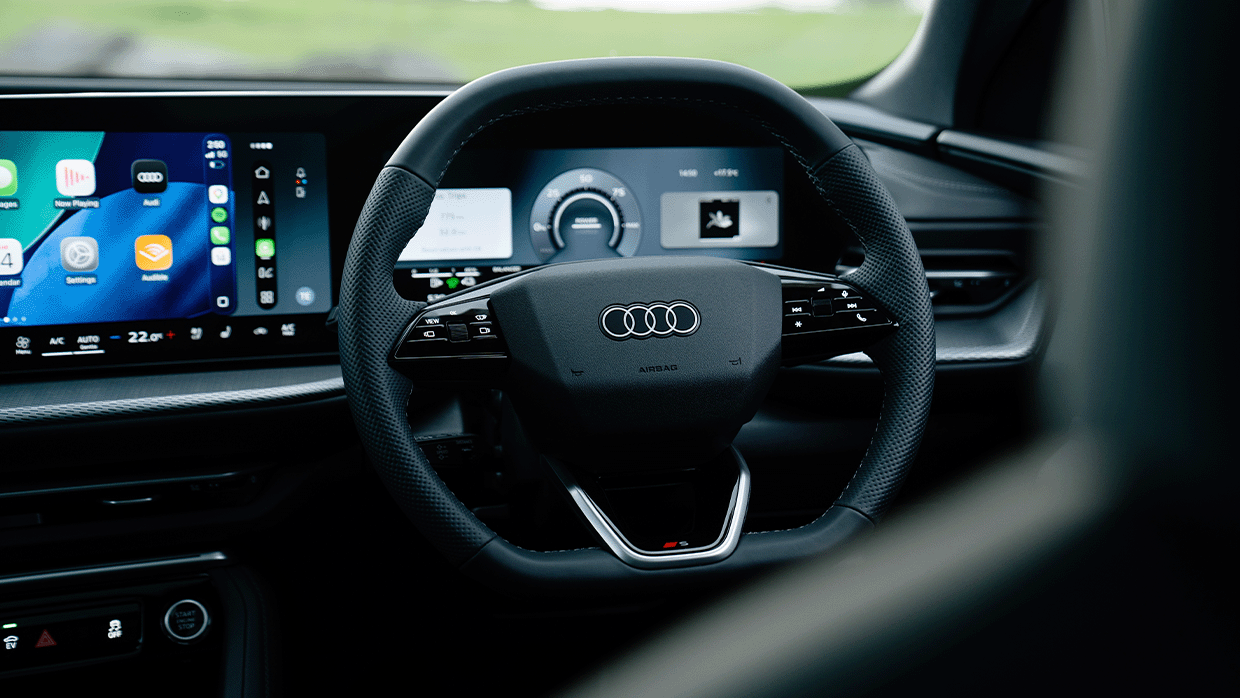
On that…Audi was a true pioneer of this Virtual Cockpit concept back in TT’s early days, and improved upon it for decades. So why this new ‘rectangular’ redesign, one that appears like a cheap knock-off of the real thing? The pricey, optional passenger screen, too, looks like an aftermarket add-on.
Thankfully, the weird ‘coat hanger’ column stalk array of the new Q3 hasn’t migrated up the SUV range to the Q5, which fits conventional wiper and indicator hardware.
Such a shame, because the core tech – looks, speed, intuitive interface – is otherwise slick and upmarket. The neat little touch panel on the driver’s door (mirrors, lights, seat memory) is also inspired.
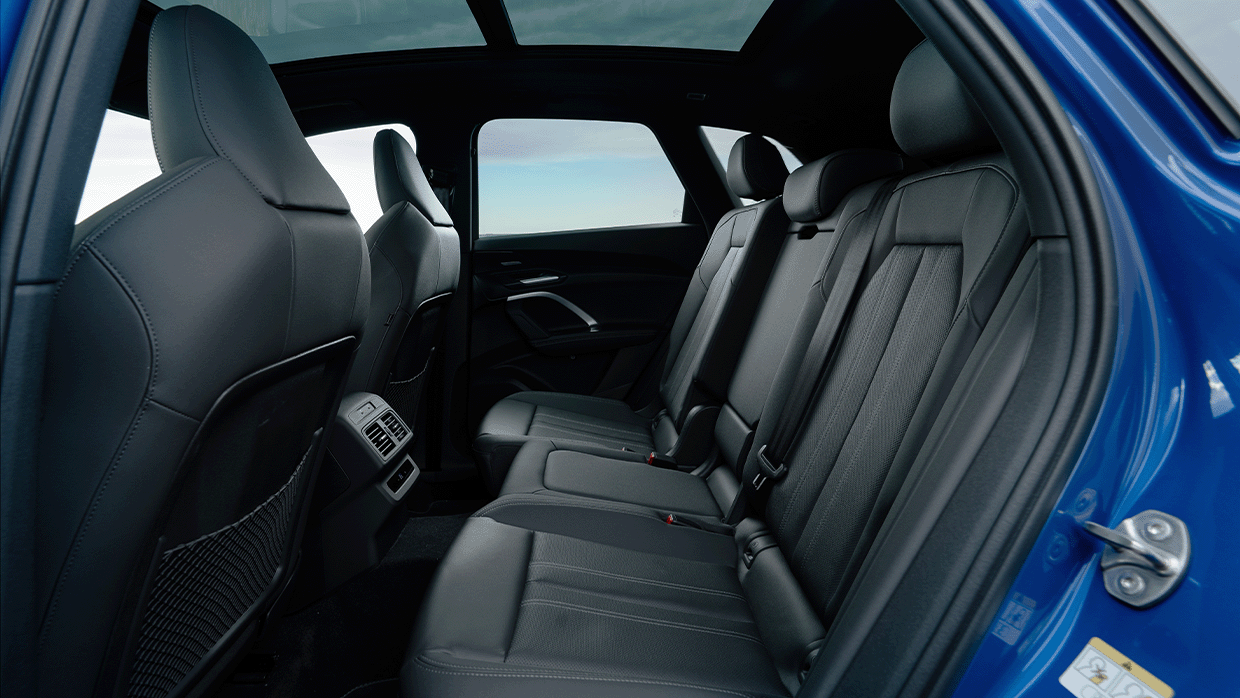
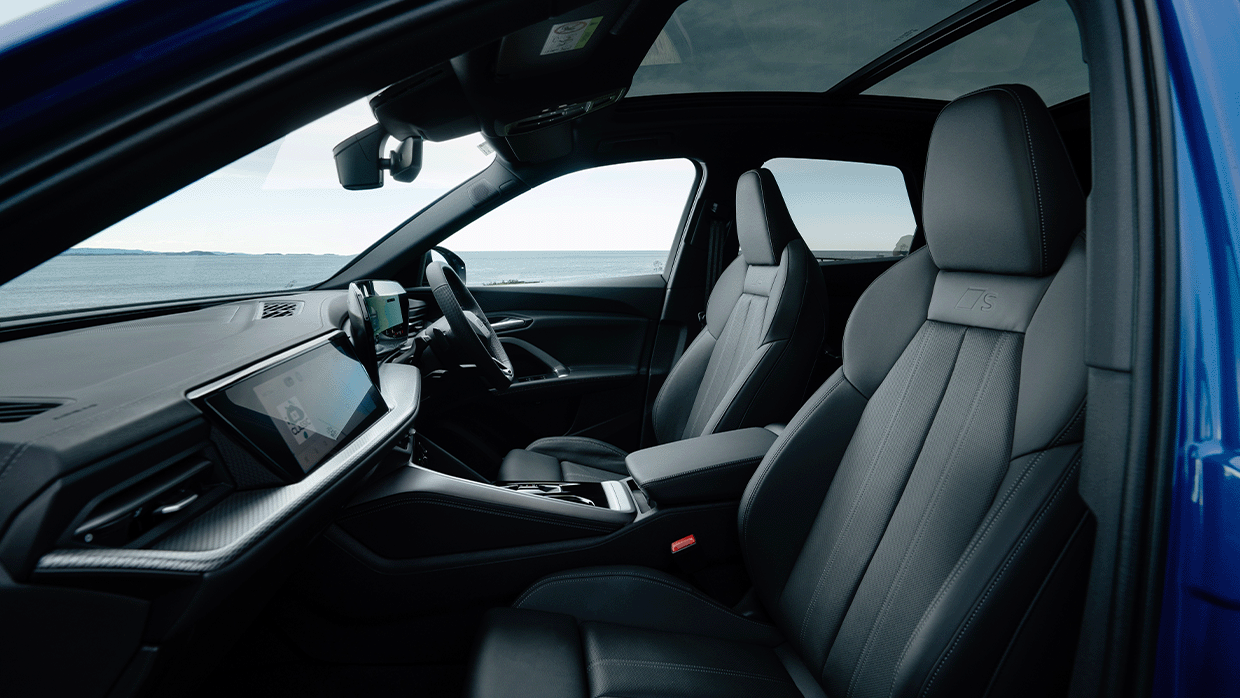
The rest of the cabin is mostly great if just missing the mark in a number of areas. The materials are presentable, varied (and mostly tactile)…but there are too many glossy, smudge-ready touch points. It’s mostly solid in build, if let down in small, easy to amend areas.
The seats are good, if too sporty in vibe for the shortcomings in the driving experience, the trim a little too hardy to be properly supple, its form a little too lumpy to be certifiably comfortable. So close, but…
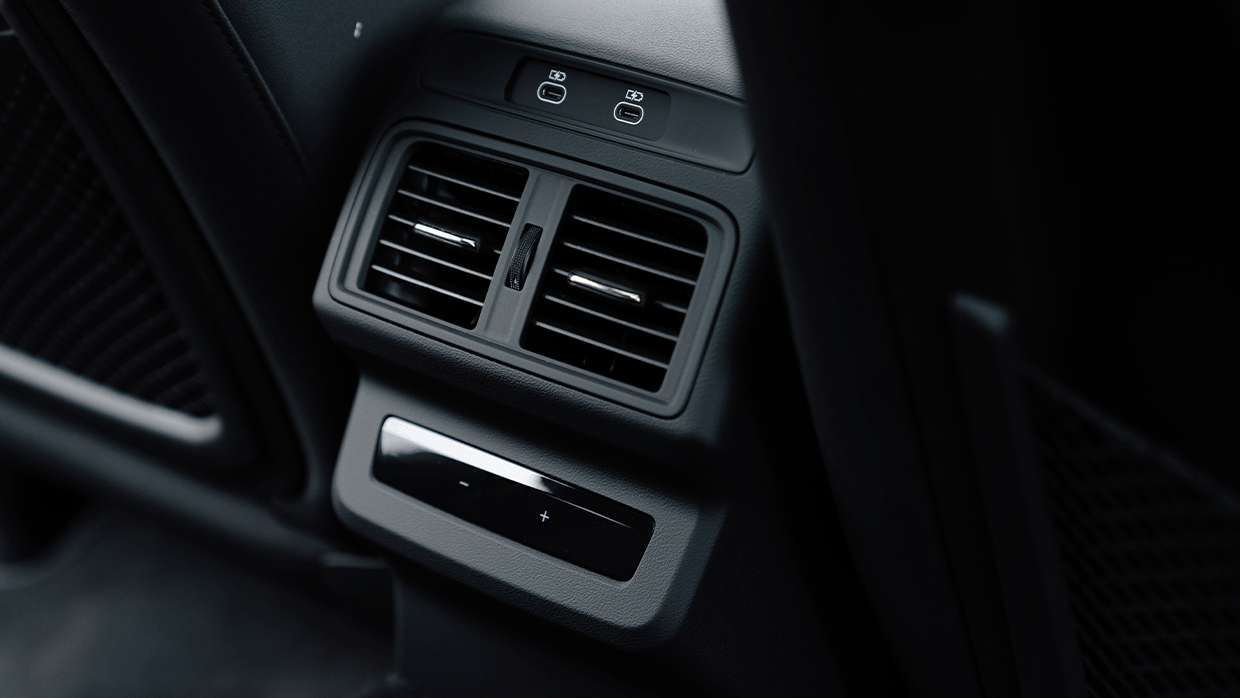
Despite Q5’s added (56mm) length, there’s not much extra legroom in the rear and, frankly, it’s quite pinched for a medium SUV circa-2026, be it the SUV or the Sportback version. Thankfully, you get third-zone climate controls and gutsy 100w rear USB-Cs (the fronts are 60w).
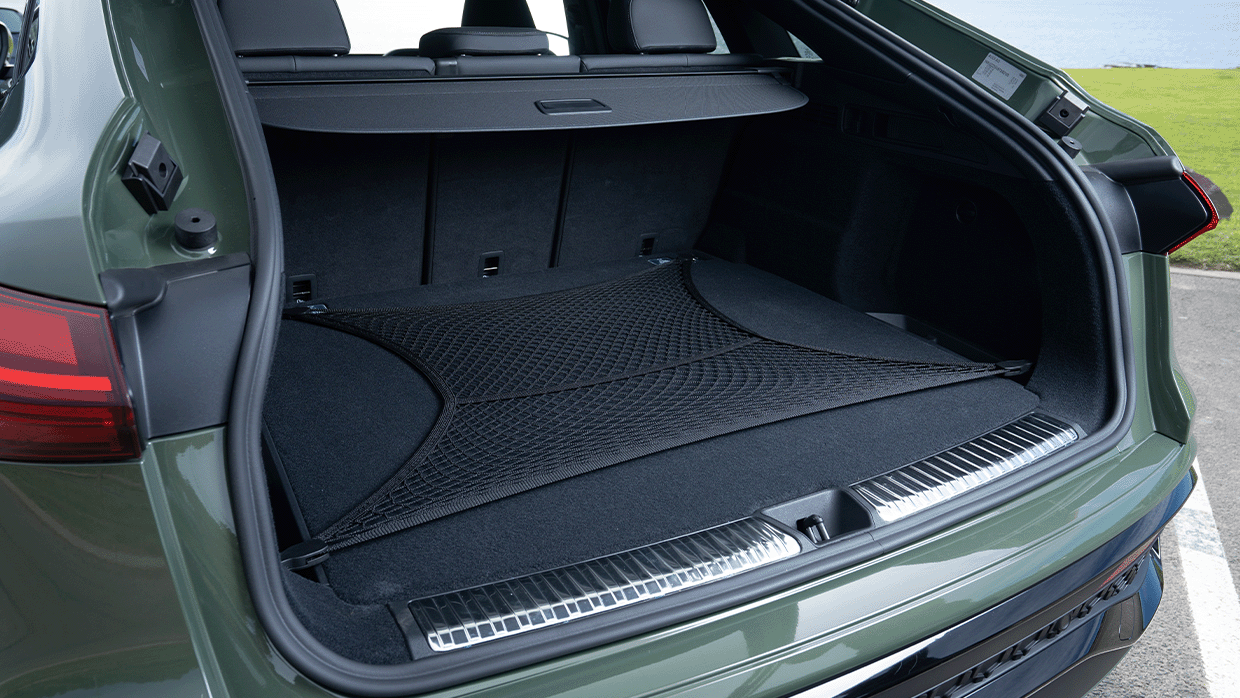
Boot space is at a bit of premium in the PHEV: the big battery atop the rear axle appear to raise the floor quite a bit, and the plug-in’s usable volume – 438L for SUV, 433L for Sportback – is well short of that of its ICE-powered twins (520L). Stowing row two liberates 1358L and 1300L, respectively.
The headline pitch of offering SQ5-rivalling 270kW of plugged-in performance and frugality for the entry price of the 200kW mild-hybrid petrol quattro looks an enticing recipe on the menu. It’s just that it feels little underbaked attempting to serve this duality.
As we’ve written before, the Q5 (breed) is a well-executed premium SUV. But where the e-Hybrid, specifically, falls a little short is that its sporting pretensions and excessive weight aren’t the happiest bedfellows, so it lacks some synergy.
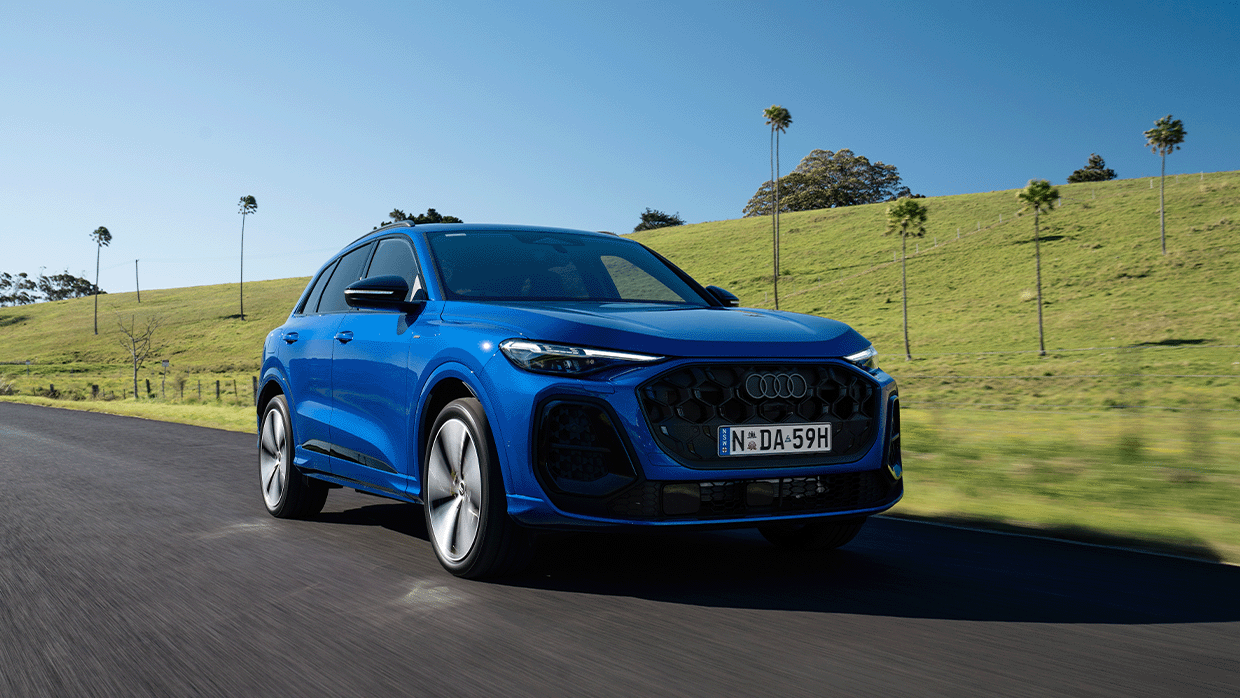
The sport-luxo-frugal-performance mash-up the Q5 e-Hybrid is aiming for hits the target squarer in its lower-slung A5 brethren, particularly the Avant version, which embodies the family-friendly plug-in sportster neater and more convincingly.
The Q5 e-Hybrid is good. But if this medium SUV PHEV eased off the athletic aspirations a bit and leaned into the luxo-comfort theme more wholeheartedly – softer edges, comfier seats, smaller wheels, standard-fit air suspension – it might stick the landing firmer and more confidently.
Key specs (as tested)
About Chasing cars
Chasing Cars reviews are 100% independent.
Because we are powered by Budget Direct Insurance, we don’t receive advertising or sales revenue from car manufacturers.
We’re truly independent – giving you Australia’s best car reviews.
The estimate provided does not take into account your personal circumstances but is intended to give a general indication of the cost of insurance, in order to obtain a complete quote, please visit www.budgetdirect.com.au. Estimate includes 15%^ online discount.
^Conditions Apply
Budget Direct Insurance arranged by Auto & General Services Pty Ltd ACN 003 617 909(AGS) AFSL 241 411, for and on behalf of the insurer, Auto & General Insurance Company Limited(ABN 42 111 586 353, AFSL 285 571).Because we don’t know your financial needs, we can’t advise you if this insurance will suit you. You should consider your needs and the Product Disclosure Statement before making a decision to buy insurance. Terms and conditions apply.
Indicative quote based on assumptions including postcode , 40 year old male with no offences, licence suspensions or claims in the last 5 years, a NCD Rating 1 and no younger drivers listed. White car, driven up to 10,000kms a year, unfinanced, with no modifications, factory options and/or non-standard accessories, private use only and garaged at night.
^Online Discounts Terms & Conditions
1. Discounts apply to the premium paid for a new Budget Direct Gold Comprehensive Car Insurance, Third Party Property Only or Third Party Property, Fire & Theft Insurance policy initiated online on or after 29 March 2017. Discounts do not apply to optional Roadside Assistance.
2. Discounts do not apply to any renewal offer of insurance.
3. Discounts only apply to the insurance portion of the premium. Discounts are applied before government charges, taxes, levies and fees, including instalment processing fees (as applicable). The full extent of discounts may therefore be impacted.
4. We reserve the right to change the offer without notice.