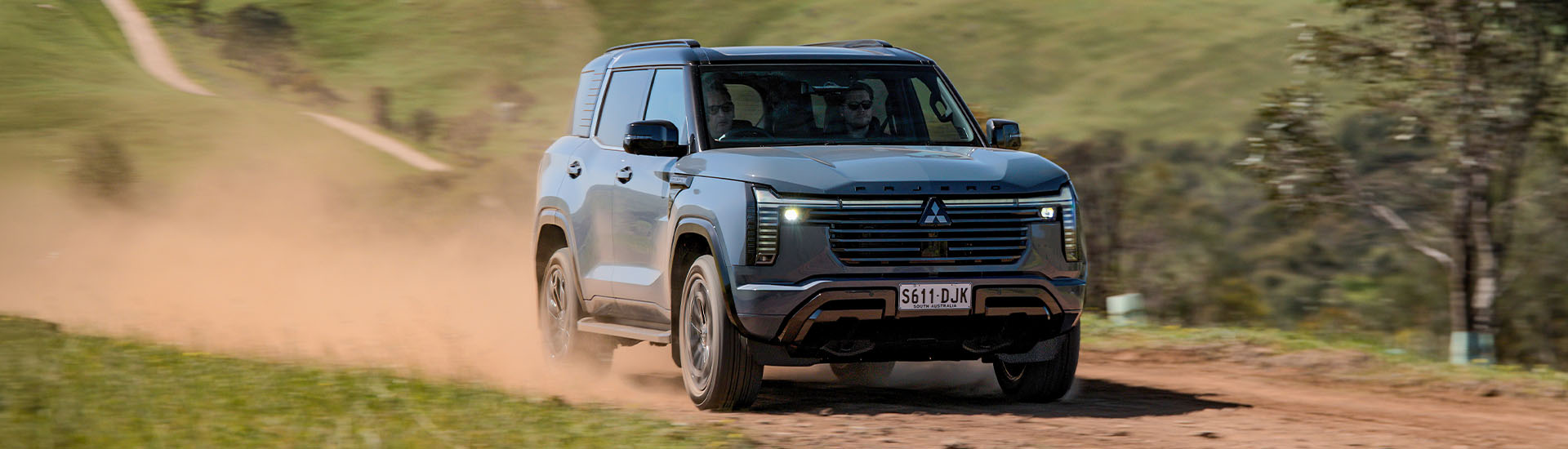


After a brief drive of the new fifth-generation Pajero at Mitsubishi’s Okazaki proving ground in Japan back in early September – a test that highlighted its quality feel and impressive refinement – we’re back behind the wheel of a range-topping Pajero GSR at a dedicated 4WD facility in South Australia, keen to find out how it fares in the wild.
While the Eagle View 4WD Park isn’t a suburban street or an Aussie country highway, it does provide us with a condensed opportunity to find out what a 20-inch-wheeled Pajero GSR is like on rough surfaces.
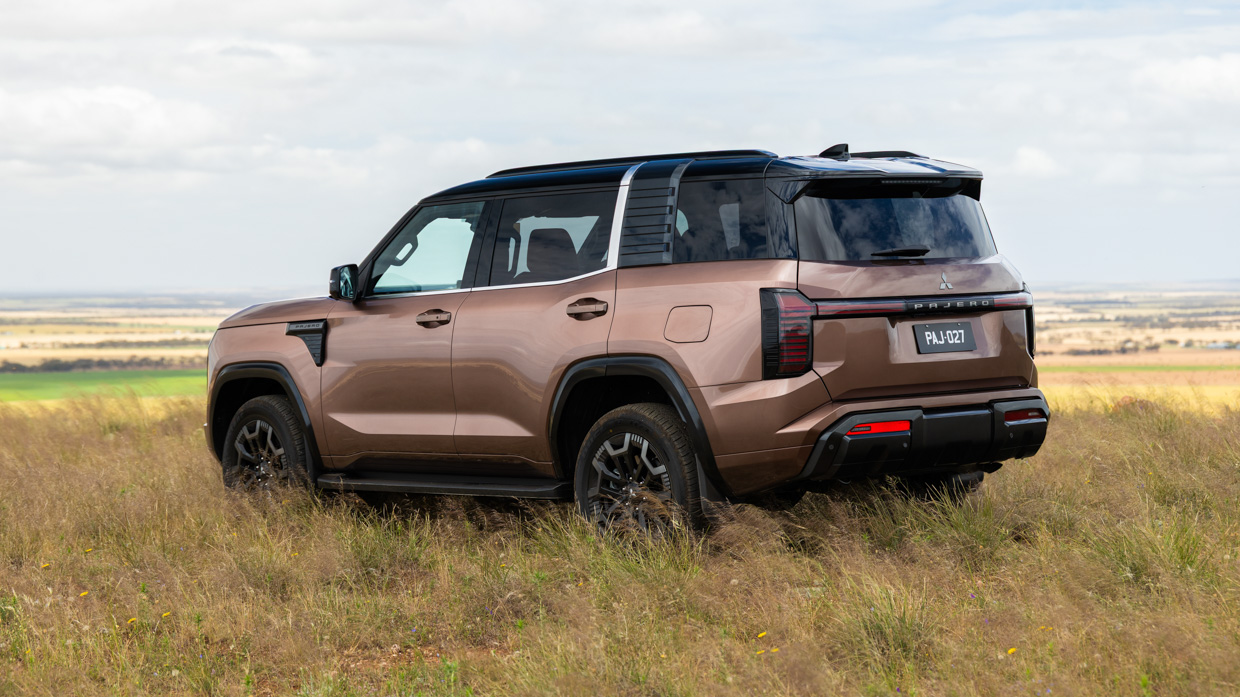
Eagle View’s extremely rocky trails, steep ascents and wheel-articulation challenges will be a fantastic test of what the new Pajero is capable of in Australian conditions.
Mitsubishi hasn’t been coy about its new flagship 4WD being a development of the Triton dual-cab ute, yet there have been many changes made to its structure, powertrain, front suspension (with a much broader front track), and completely new five-link, coil-sprung live-axle rear suspension with the same 1630mm track width as the front-end – 65mm wider than Triton.
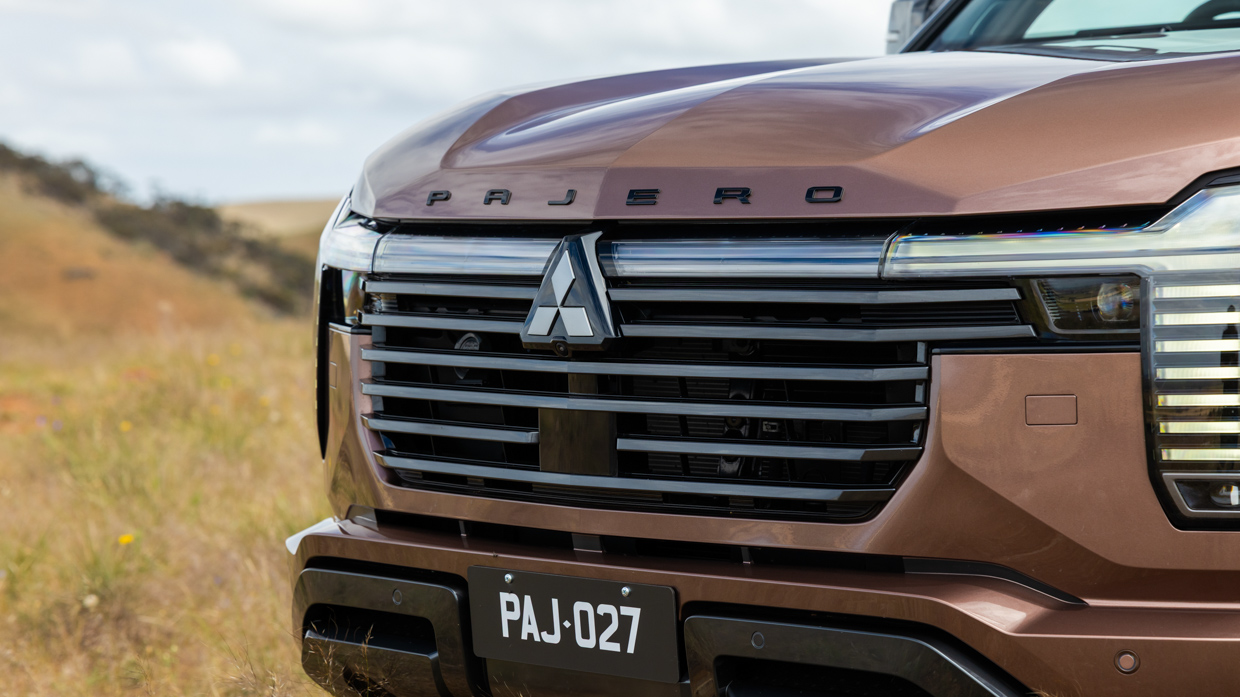
In those respects, the new Pajero is little different to its two main competitors – the Toyota Prado and Ford Everest – though the Prado is a platform relative of the 300-series LandCruiser and not the Hilux ute (apart from sharing its engine).
So the purpose here is not just to see whether the new Pajero is as capable off-road as everyone expects it to be. It’s also about testing its all-round quietness and refinement, and the suppleness of its re-engineered suspension.
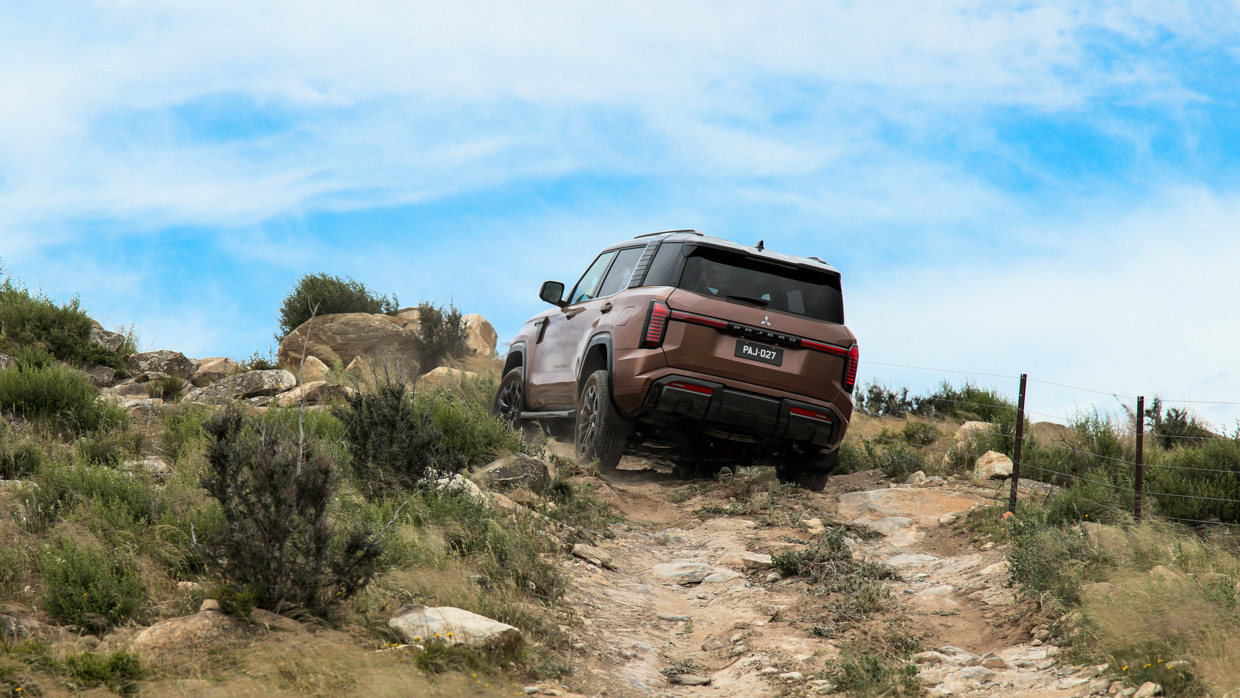
While there are plenty of dirt tracks at Eagle View – and some truly amazing vistas from its steep hills – there’s also a tonne of rocky terrain, some of it pretty severe for a regular trail, so it’s here where the Pajero needs to shine.
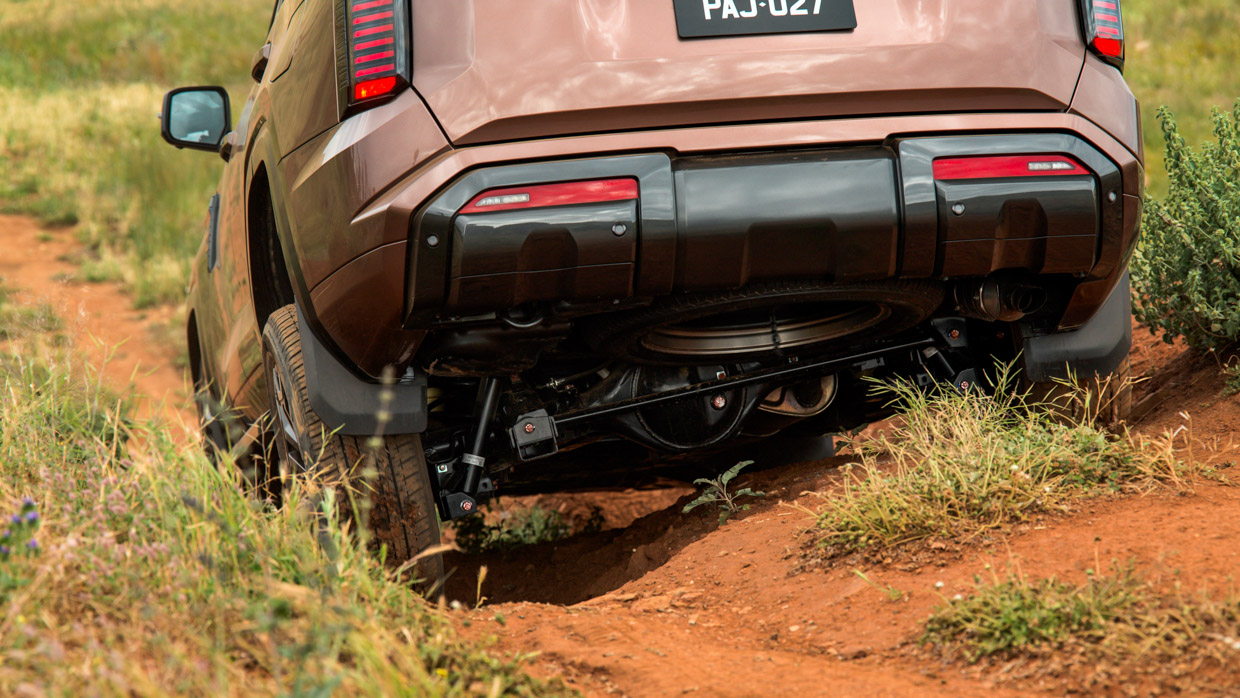
And it absolutely does. The way it absorbs punishing surfaces underneath without shaking its occupants to bits, and without slamming into its bump-stops or generating noise from its suspension, is really impressive.
The new coil-sprung rear end feels particularly good. There’s loads of available wheel articulation, allowing it to demonstrate its inherent suppleness as well as the effectiveness of its damping control.
In this area alone, the new-generation Pajero GSR is vastly superior to the much-stiffer Triton Raider we’re also driving as a companion vehicle (which is highly capable off-road, but lacks the effortless comfort of the Pajero).
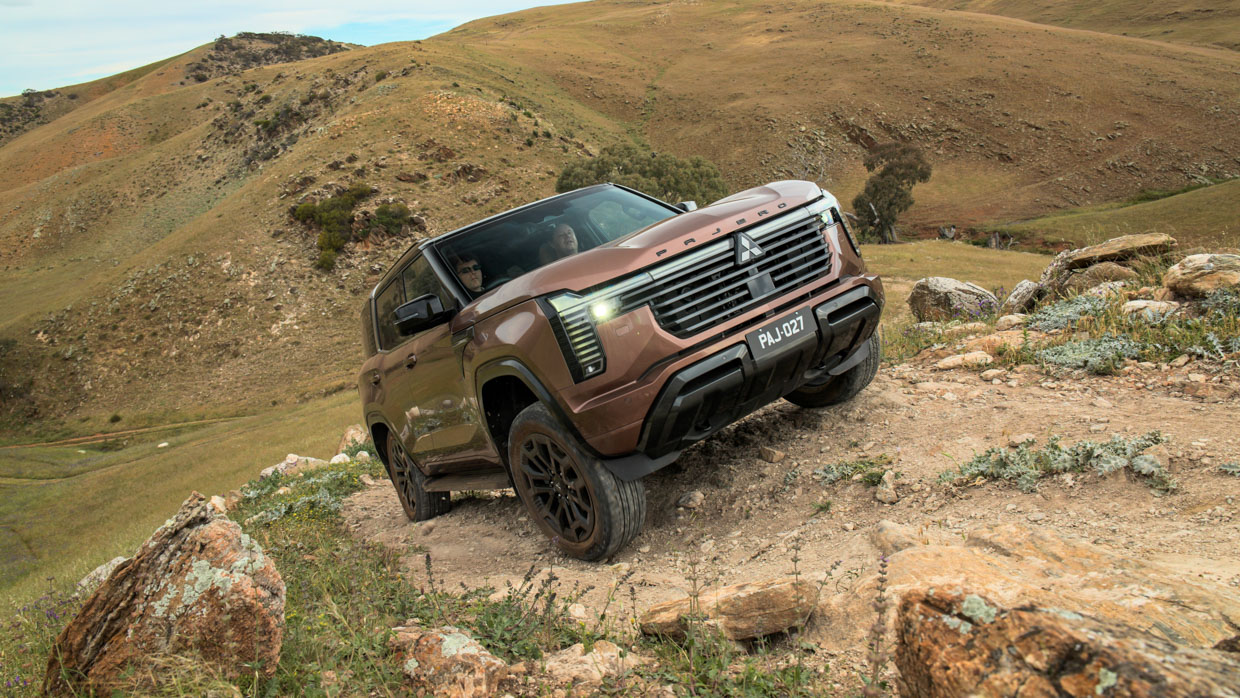
Perhaps the best demonstration of that is a heavily rock-strewn ascent that needs to be tackled at walking pace – preceded by an incredibly rocky downhill trail that we attack at a much higher speed.
The Pajero rocks its front passengers from side to side (we’re two-up) but also rounds off the edges of bumps so the movement isn’t so extreme.
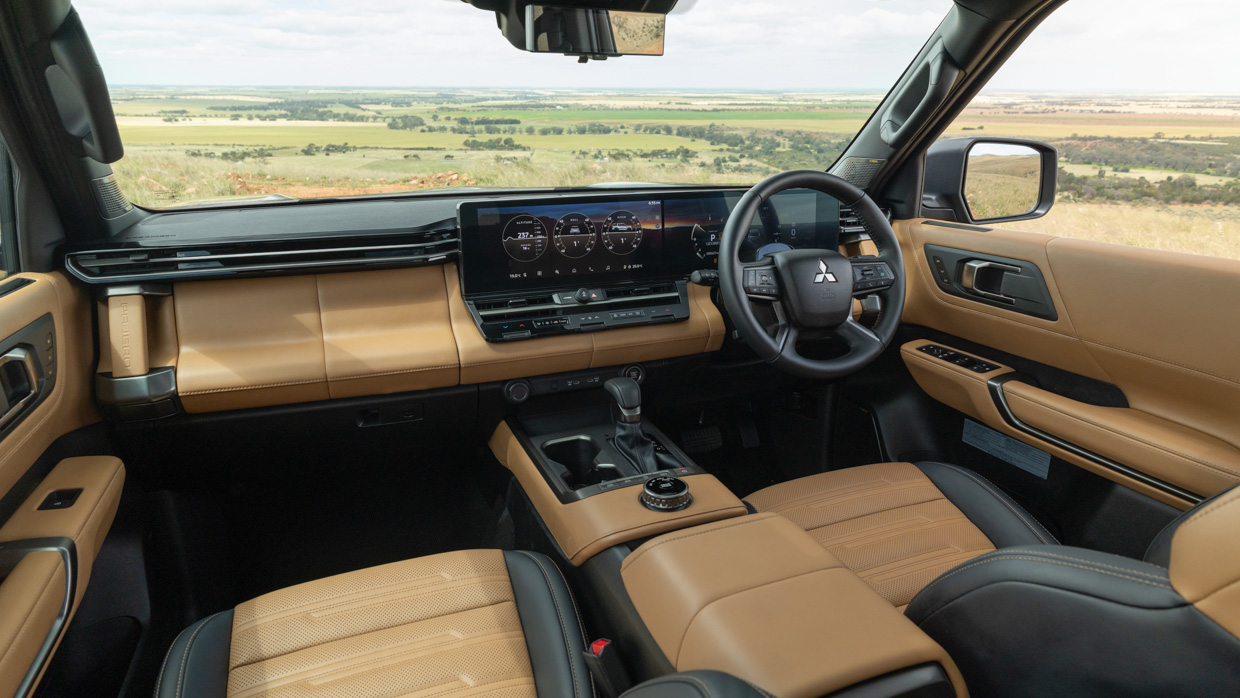
And its rally-inspired, generously adjustable electric front buckets (with lovely camel/charcoal stitched-and-perforated leather upholstery) do a brilliant job of holding us in place, meaning I’m not hanging off the steering wheel.
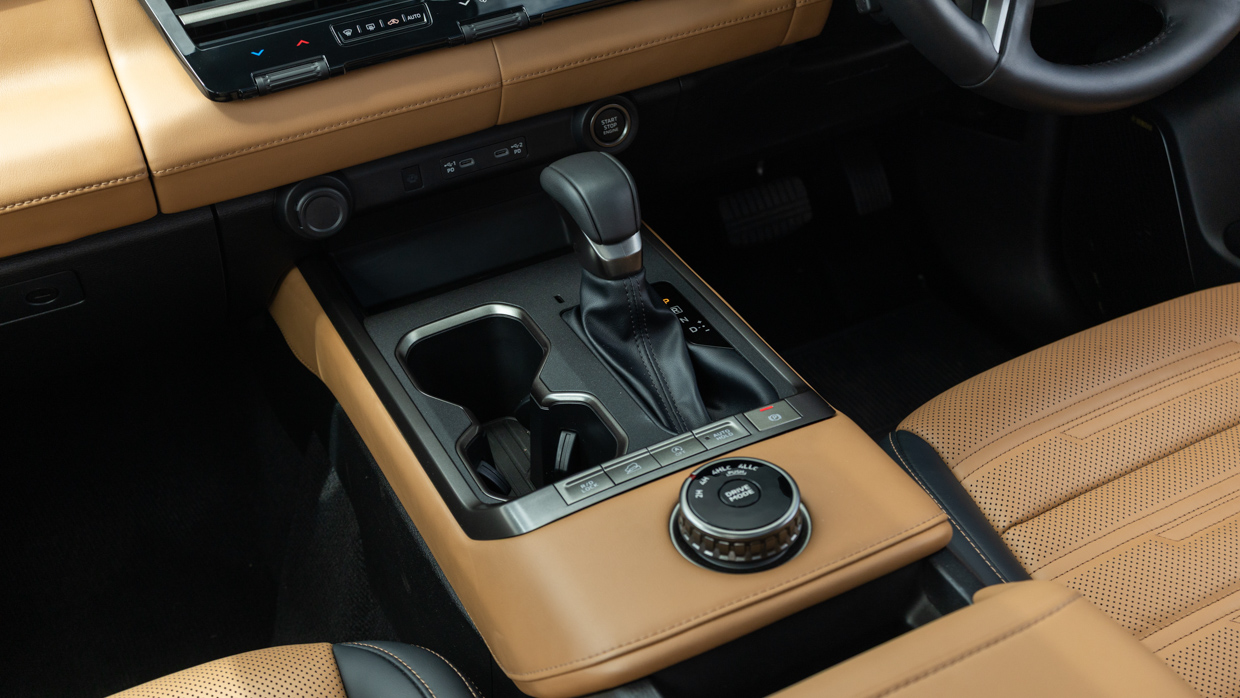
And then when it comes to the rocky ascent, I leave the Pajero GSR in high-range 4WD with a locked centre diff (4HLc) and Normal drive mode – avoiding both low-range and its Rock drive-mode option.
The lower first gear of the new eight-speed auto does a terrific job channelling engine torque (now 480Nm from 1750-2500rpm) and only one huge rock sees the Pajero pause as it transfers torque to the tyres, then moves forward. It nails the exercise easily.
On the downhill trail, the Triton Raider may as well be the Triton Milkshake as it thrusts us from side to side – effortlessly copping the suspension hits but transferring way more of that violence to the cabin.
And then on the rocky uphill, we decide to choose low-range because the older six-speed auto doesn’t have the low first gear and overall ratio spread of the eight-speed.
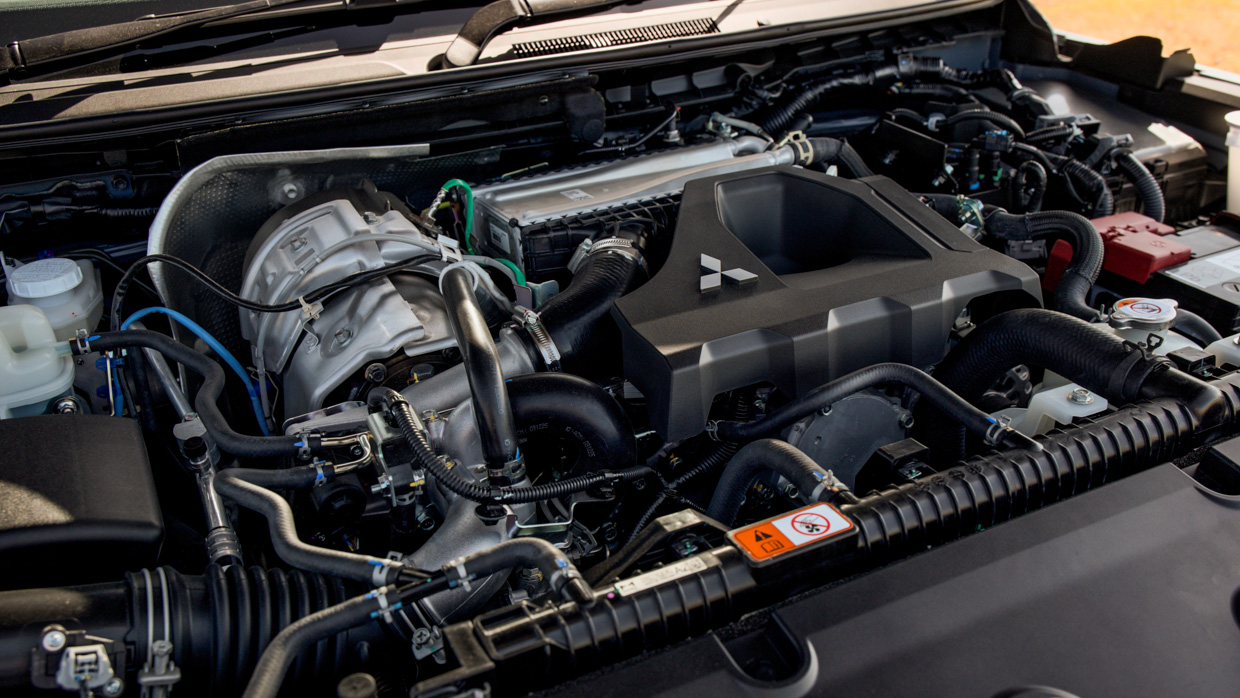
Again, the Triton Raider easily makes it to the top, however there’s a stark contrast between its suspension ‘suppleness’ (or lack thereof) and the Pajero’s. And its first-generation twin-turbo 2.4-litre diesel is louder and gruffer than the second-gen, variable-vane single-turbo version that debuts in the Pajero and sounds relatively sophisticated.
This engine will make its way into Triton at a later stage.
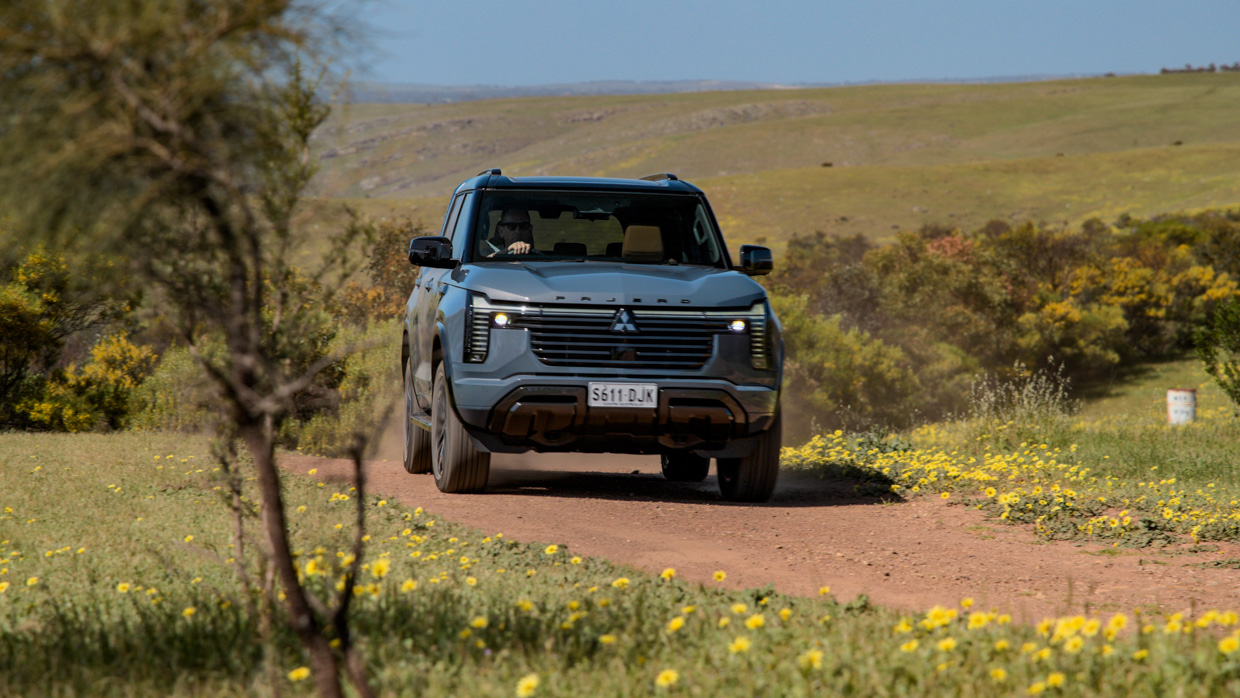
Perhaps surprisingly, this re-engineered 150kW/480Nm four-cylinder diesel feels effortlessly capable in off-road situations and, as we indicated from our brief drive in Japan, intelligently matched to the eight-ratio spread of the new auto gearbox.
Only proper on-road testing over Australia’s challenging road network will determine for sure whether it has enough grunt to comfortably handle a full load – something we won’t know until at least December – and whether there’s enough headroom with combined load and towing limits seeing the Pajero GSR’s kerb weight is already 2513kg.
Cheaper Pajero variants such as the five-seat GLS offer a superior power-to-weight ratio (seeing it only weighs 2397kg) as well as a greater maximum payload (818kg versus the GSR’s 702kg), 10 litres more boot volume (529L with the third row folded) and potentially even better ride quality thanks to chubbier 255/65R18 tyres on black 18-inch alloys.
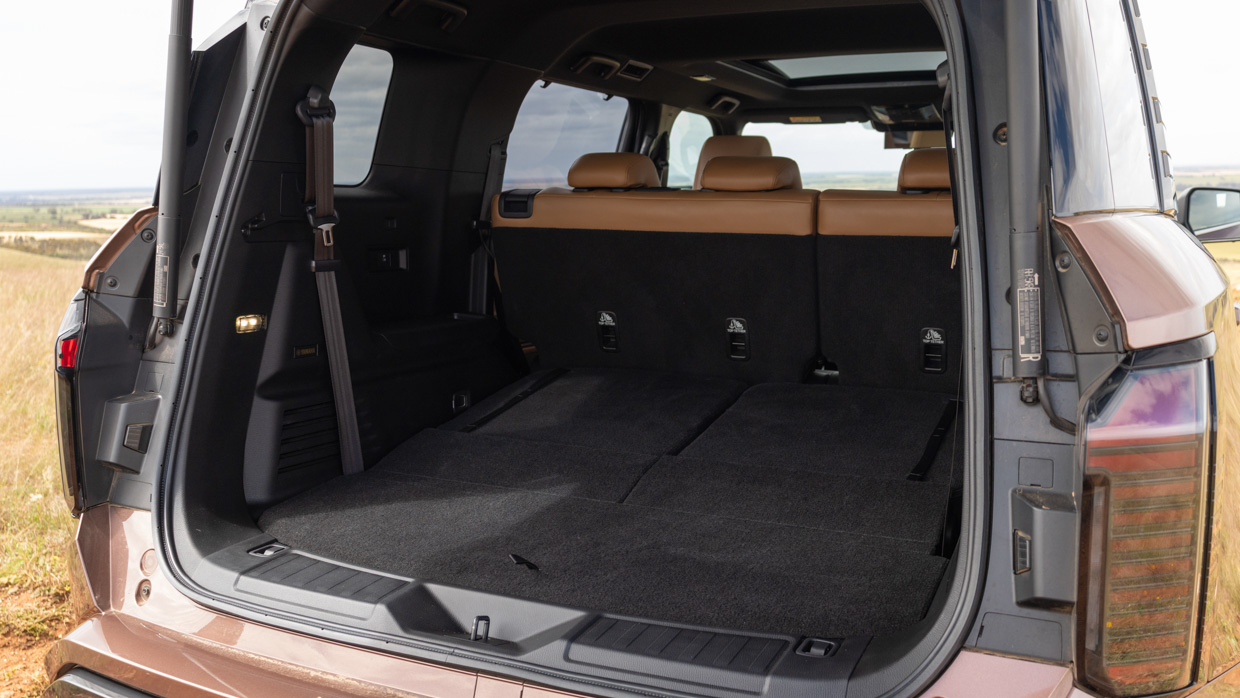
Given the Pajero GSR’s relatively meagre 60kW/tonne power-to-weight (the GLS 5-seat is 63kW/tonne), its eight-speed automatic is clearly doing everything possible to keep the Pajero’s powertrain percolating.
But that also applies to the eight-speed Toyota Prado Kakadu with just 58kW/tonne (for $100,620 compared to the Pajero GSR’s $84,990), as well as the 2.0-litre turbo-diesel four in the Everest Wolftrak ($73,000, 54kW/tonne), though the $83K Everest Platinum V6 diesel is good for nearly 75kW/tonne – countered by the fairly high official combined fuel consumption of 8.5L/100km.
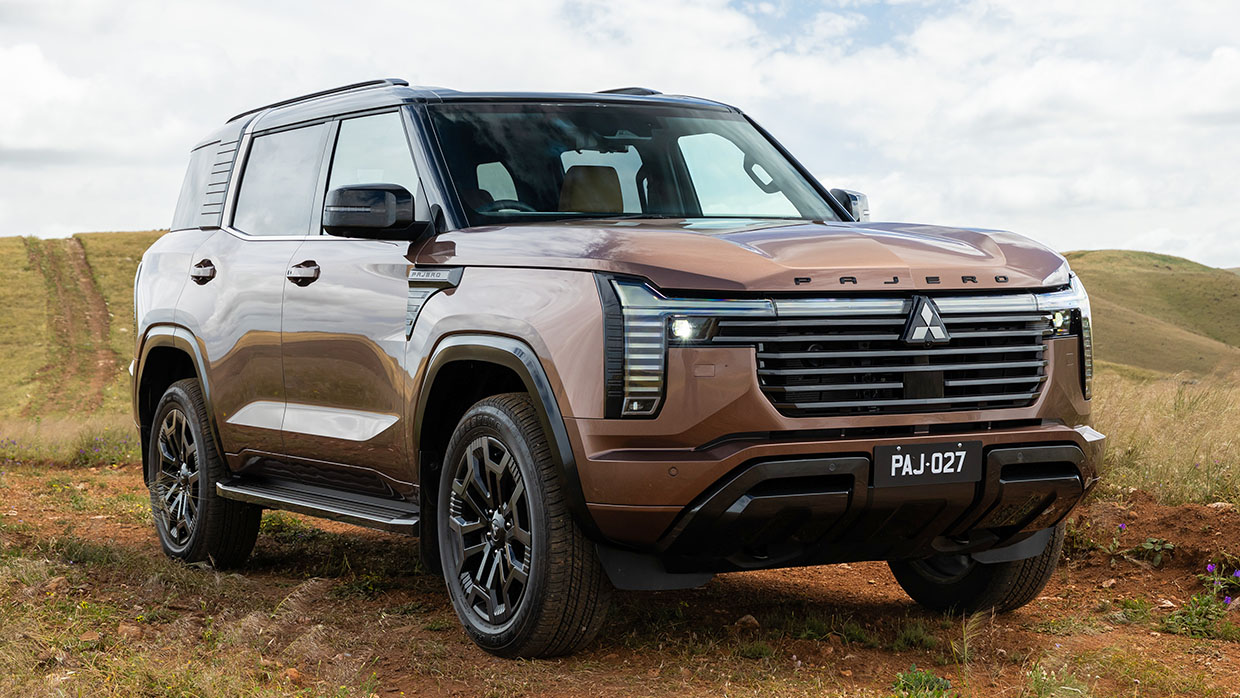
Mitsubishi claims 7.2L/100km combined for the Pajero GSR while Toyota’s figure for the equivalent Prado Kakadu is 7.6L/100km.
We’ll know where they stand for sure in the new year when an exhaustive Chasing Cars multi-car comparison test determines whether the new Pajero is as good in all conditions, on all surfaces, as we suspect it is.
Our last bit of testing in the Pajero GSR was driving it to the video location on top of a high hill, via a steep and rocky trail.
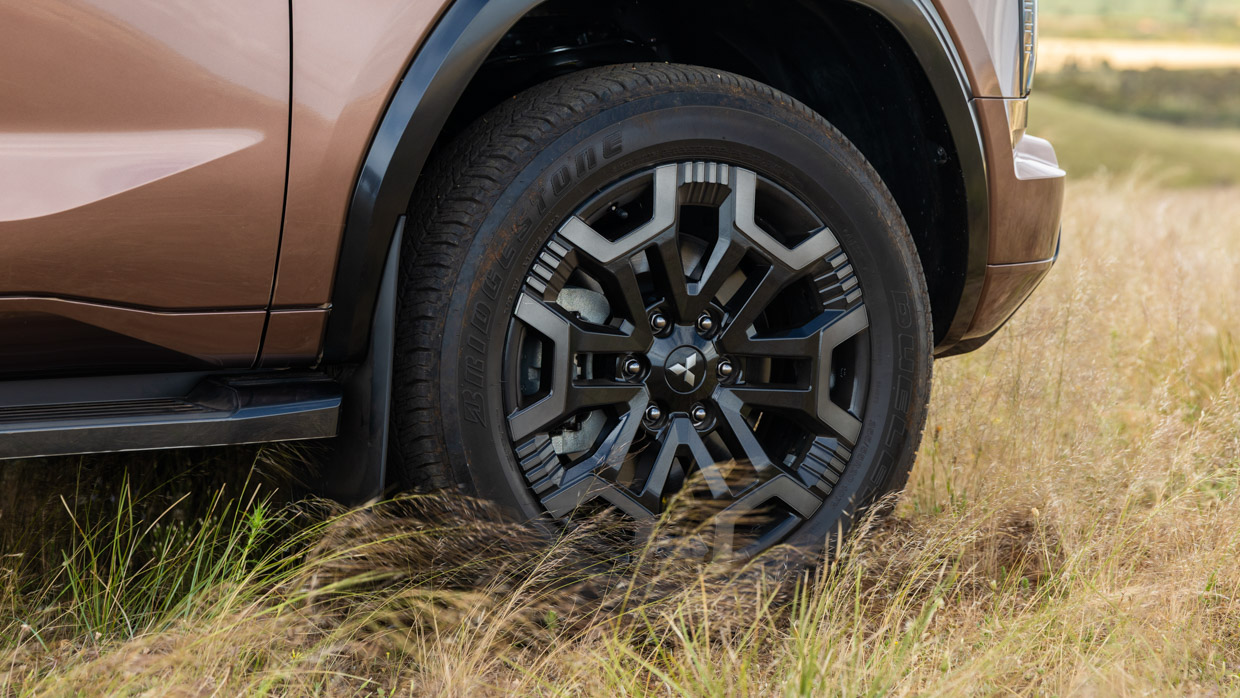
In my haste to get going, I didn’t notice that the Mitsubishi was still in rear-wheel drive … and yet it only required a nibble of traction-control intervention to comfortably crest Eagle View’s filming mound, and that’s also wearing far-from-knobbly Bridgestone Dueler 255/55R20 tyres.
So, two months out from its Australian launch, there’s already a lot to like about the range-topping Pajero GSR. It looks good, is nicely built, beautifully furnished, cleverly packaged, comfortable, quiet and supple. And even the GSR’s $85K asking price is comparatively respectable when you consider where Everest and Prado pricing is at.
Going forward, there’s a strong chance we’ll also see a more affordable Pajero GLX, given the wealth of standard equipment in the $68K Pajero GLS. And it’s no coincidence that Mitsubishi also showed a Pajero Ralliart concept at the new-gen 4WD’s unveiling in Japan, with wider wheelarch extensions, fatter rolling stock and a visibly athletic focus.
If Mitsubishi can build on the Pajero’s already-impressive foundation with gruntier and classier powertrains, and more-focused model variants (such as an off-roady Pajero Raider), then there’s little doubt this fifth-generation 4WD will do exactly what Mitsubishi needs it to do – succeed.