Powered by

-
Car Reviews
Latest reviews
- Car News
-
Car Comparisons
Latest comparisons
- Chasing Deals
Latest reviews
Latest comparisons
Beneath the radical seventh-gen remake and Wilderness schtick lies a familiar Outback experience that ticks plenty of boxes for traditional lovers of the breed
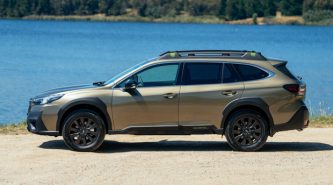
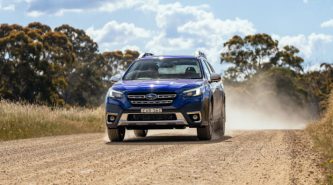
The Subaru Outback enjoyed a long evolution settling into what we once called “Australia’s best all-round family car”. It faithfully trod a familiar Subie formula – aesthetically, functionally, mechanically – and its off-road wagon format benefitted local tastes, its importer shrewdly hedging bets by eventually marketing it as an SUV.
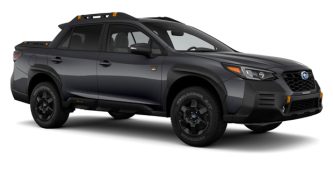
In so many ways the nameplate proved just the right fit for enough Aussie buyers, right down to the name itself. So shaking the formula up – that Griswolds’ Family Truckster form, the Americana ‘Wilderness’ schtick, a range’s new half-n-half powertrain split – for this new seventh-gen risks destabilising safe and familiar territory for Aussie buyers.
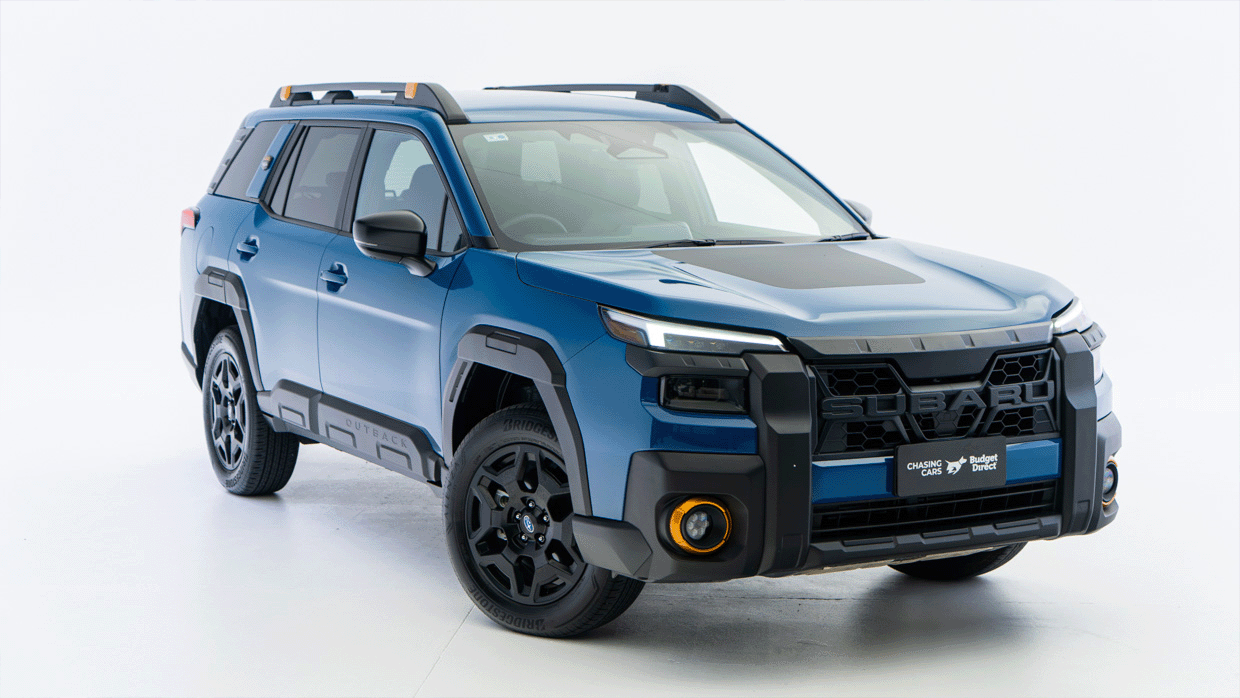
We’ve covered the shake-up stuff comprehensively to date, including the powertrain rift between ‘just Outbacks’ and the Wilderness newcomers, and it’s pretty clear from our initial impressions that the lusty turbocharged motivation of the latter comprehensively trumps the underbaked natural aspiration of the former.
Our first drives also revealed that, despite radically new and quite divisive exterior aesthetics and a much needed streamlining of the interior design, the new Outback is a reasonably faithful and familiar continuation of the old model’s character and driving experience.
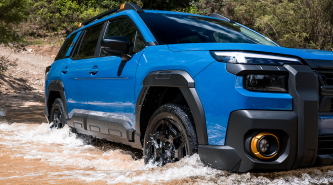
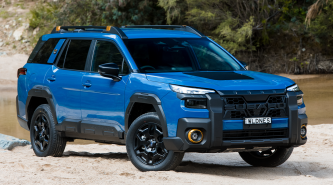
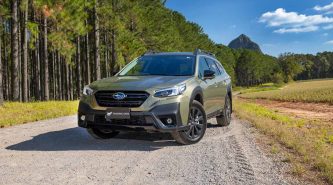
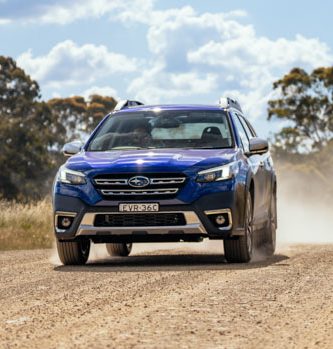
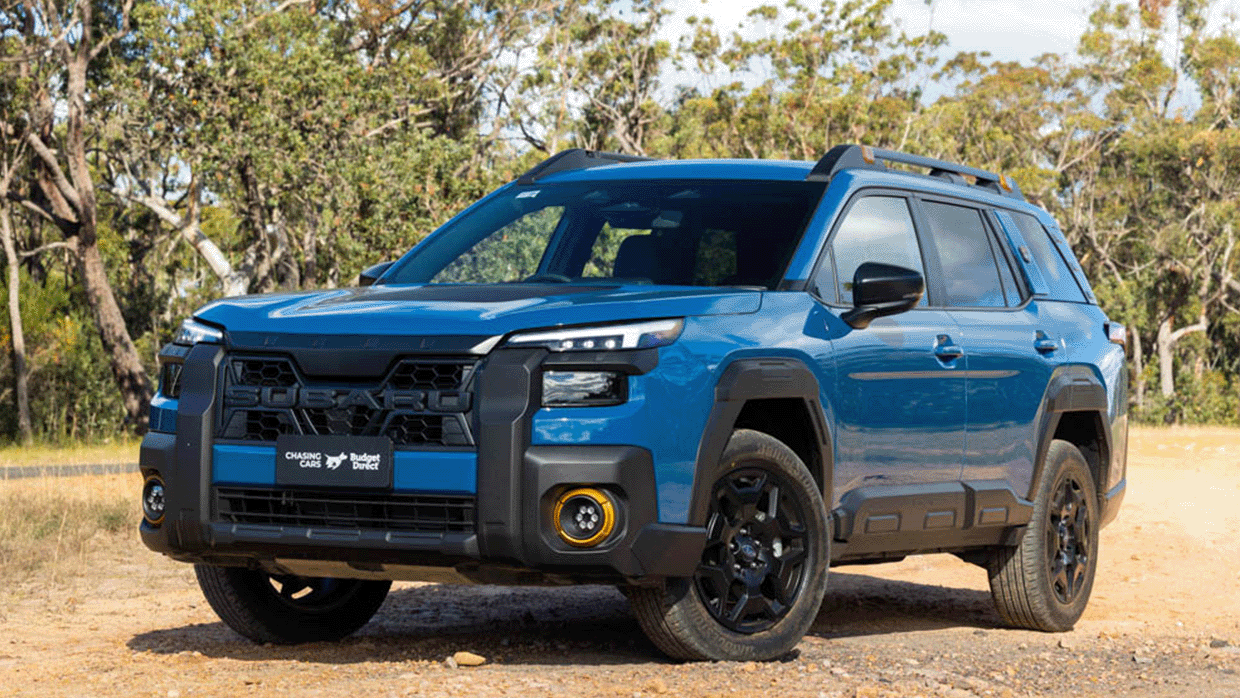
The regular Outback Wilderness we have at $59,690 list (around $66,500 driveaway), appears to be the somewhat sweetened choice in a lineup that we initially described as lacking a sweet spot at all.
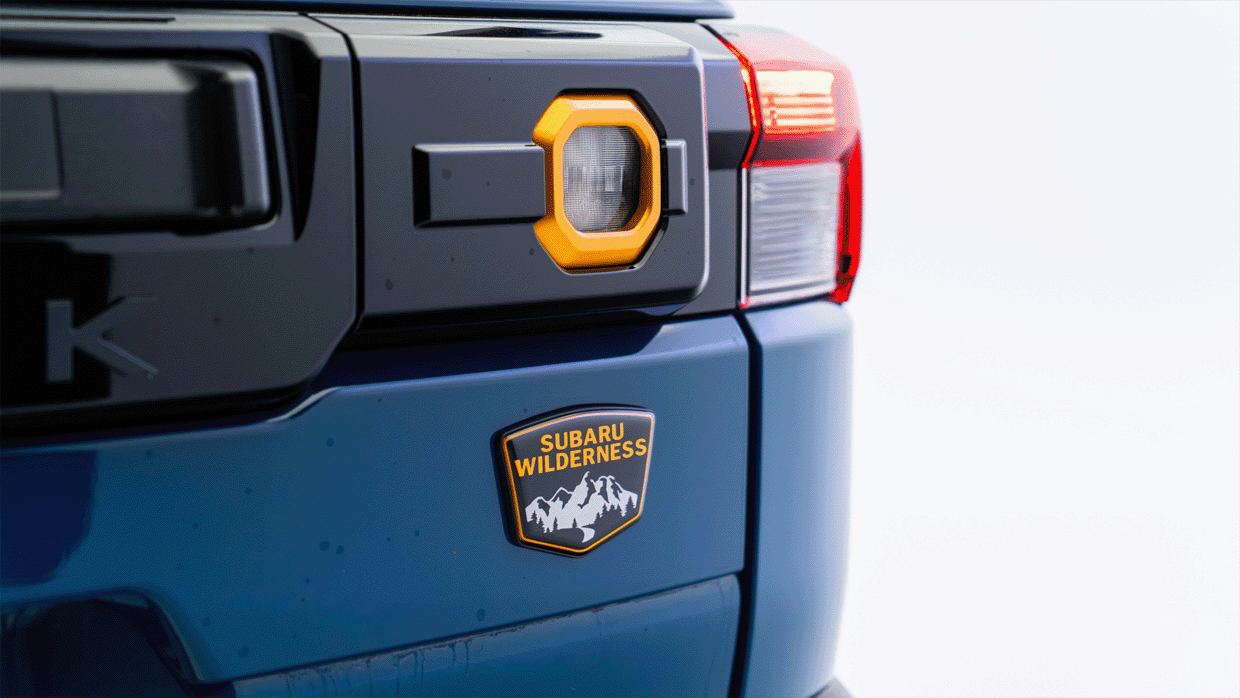
The Wilderness gets the turbo mill and go-anywhere look and spec, if without the leather-dipped luxury fitout of the Outback Touring variant and questionably omits some core features, such as satnav, that demand a three-grand upcharge in pricer ($62,990 list) Apex.
The more rugged, more spartan, turbo-fed pitch finds Wilderness, by Subaru Australia’s reckoning, luring buyers away from the likes of all-terrain savvy all-paw SUVs such as Ford Everest and Isuzu MU-X. New territory to conquer, perhaps, leaving the ‘regular’ Outback to cater for the nameplate’s traditional fanbase.
Tall order? Capability wise, perhaps so. But assessing whether Subaru’s petrol monocoque formula of symmetrical all-wheel-drive with CVT can hang with the ladder-frame Everest’s dual-range, diff-locking, 3500-kg-towing diesel prowess is an enticing match-up for another day…
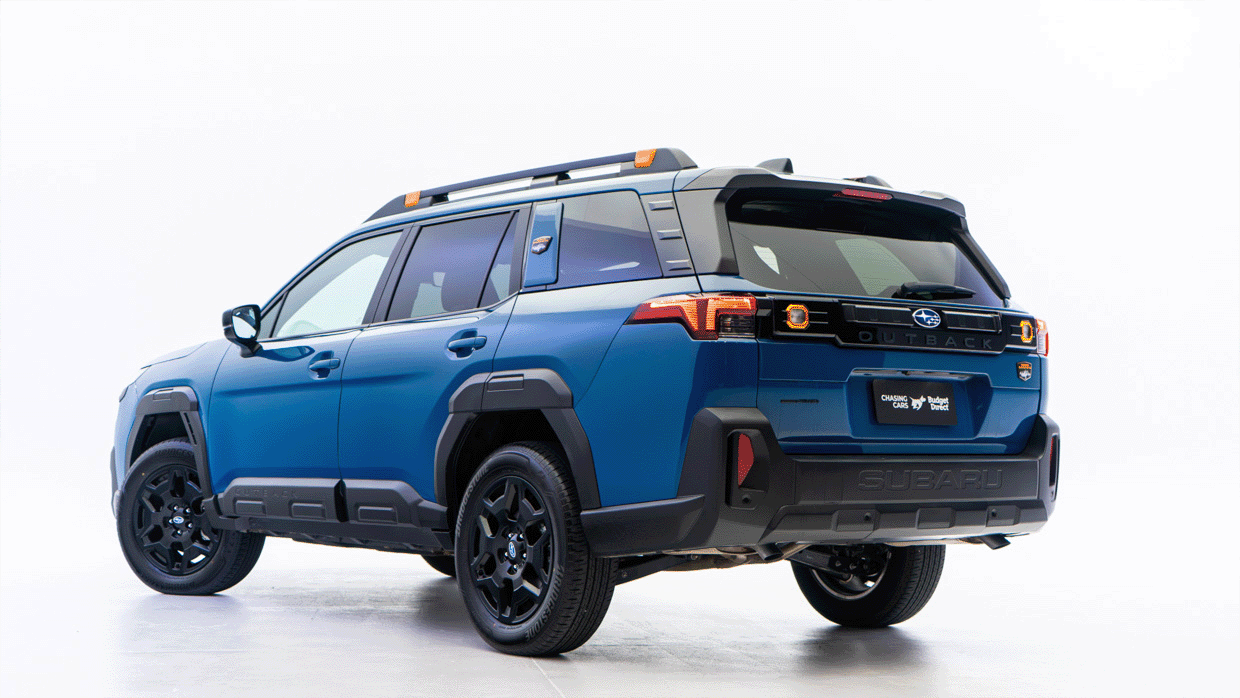
Here, we’ll assess the Wilderness on singular merit, in how it measures up against ‘classic’ Outback convention and what it brings – or removes – from what’s long been a popular success Down Under.
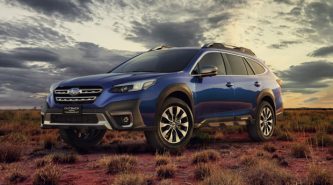
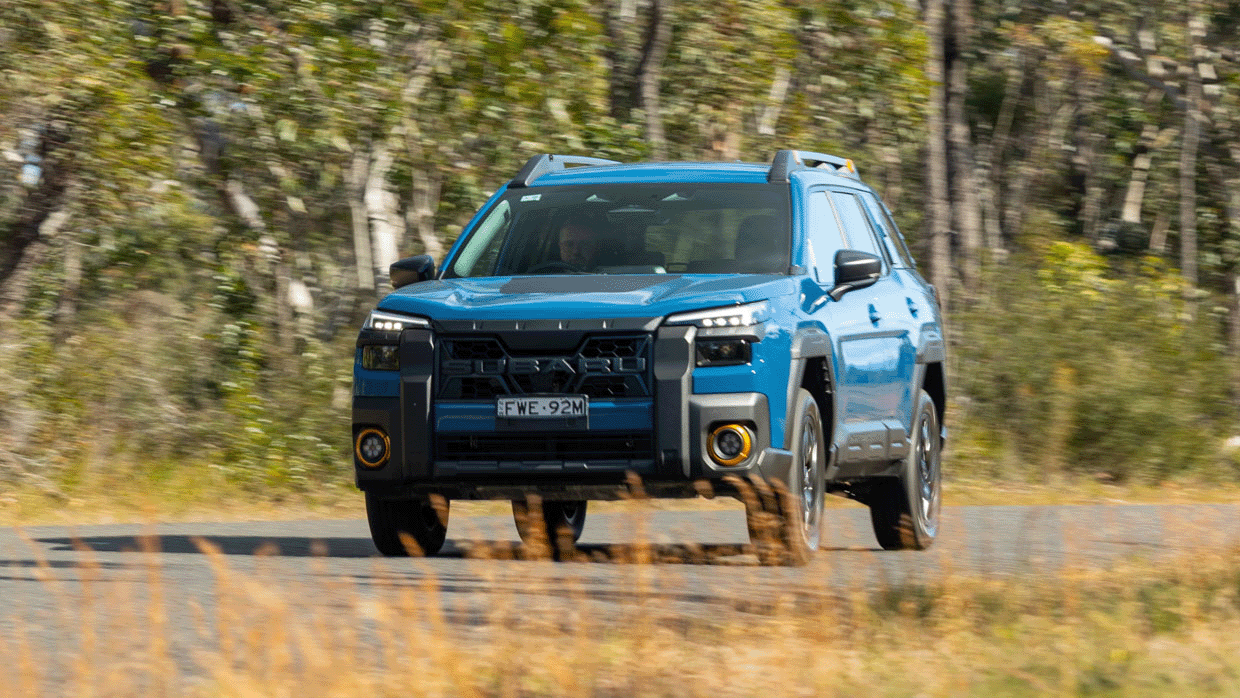
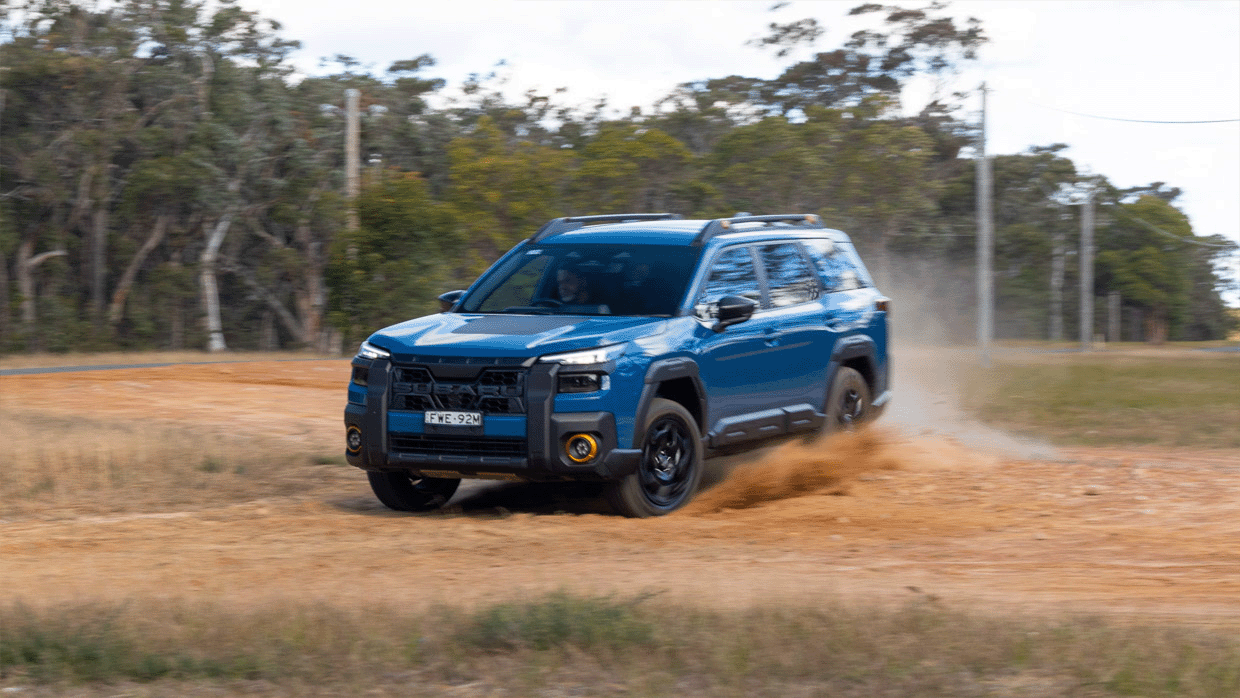
Despite the adventurous repackaging and remodelling of Outback in its more rugged, more-SUV-like and arguably more Americanised guise, the fundamental Wilderness on-road experience is oh-so-familiar Subaru.
On the plus side, there’s oodles of shove from the potent 194kW and 382Nm 2.4-litre turbo boxer four – as covered in our launch review, the more preferable power unit against the non-Wilderness versions’ underbaked (137kW/254Nm) naturally aspirated 2.5L donk by a considerable margin.
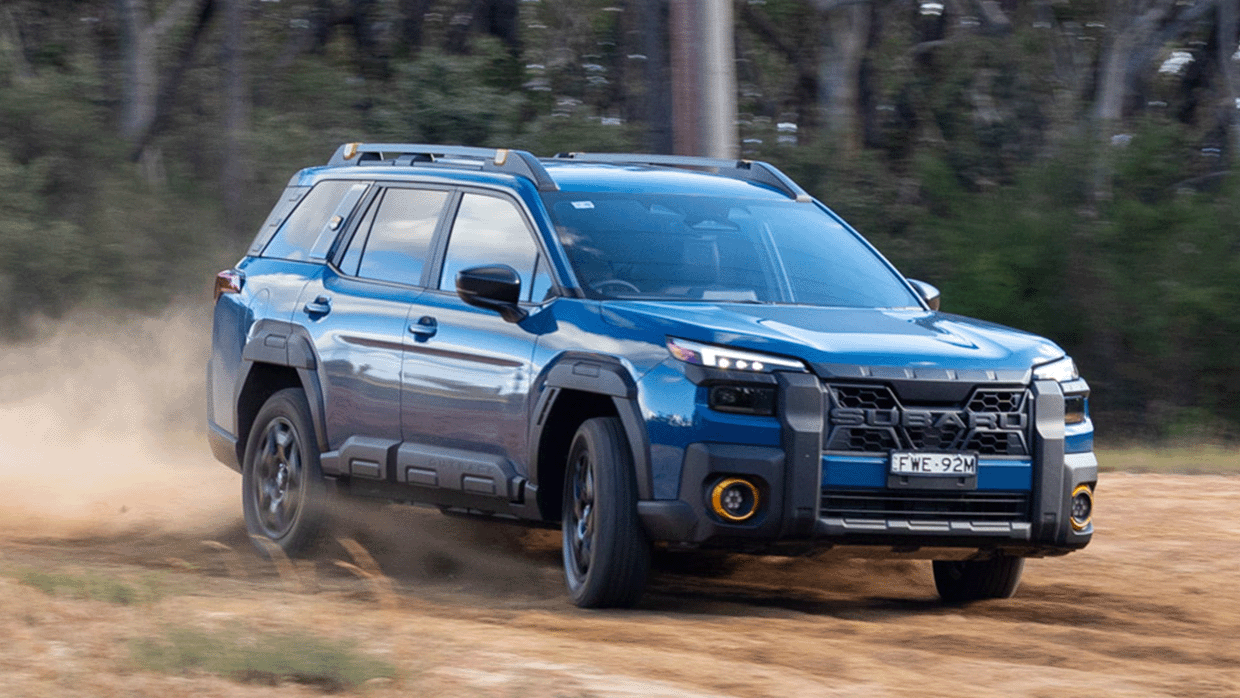
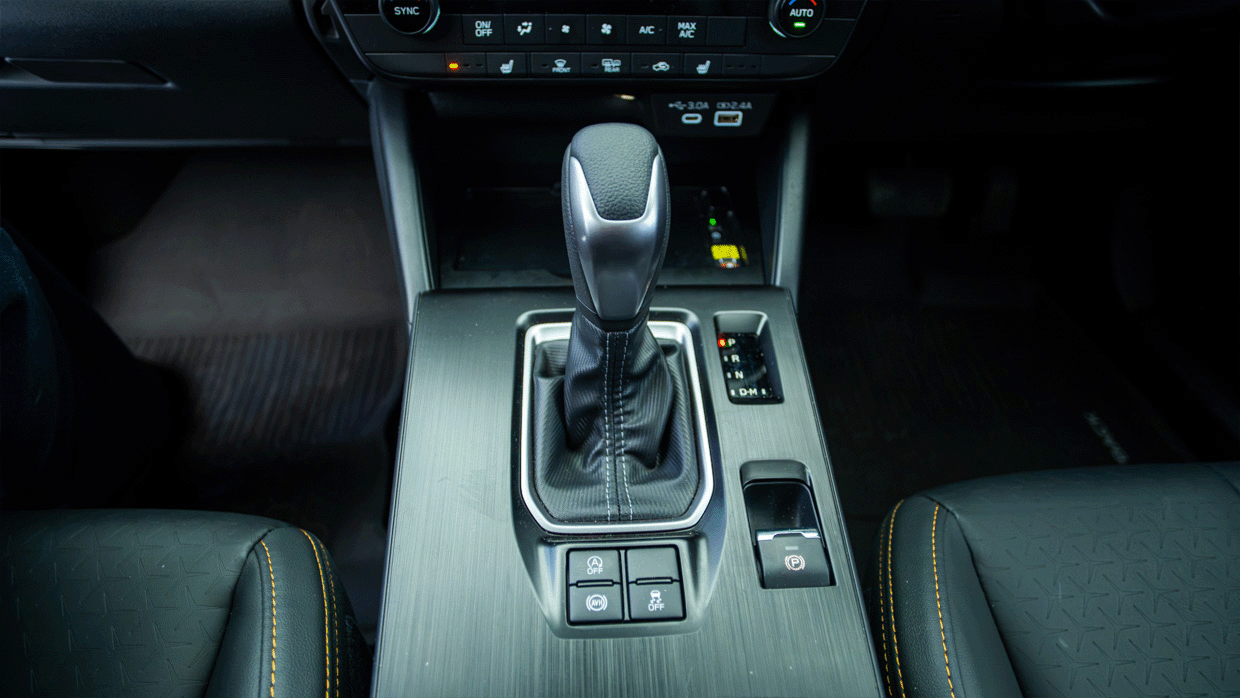
It makes the 1781kg SUV willing off the mark, backed by strong roll-on acceleration and a fairly effortless manner. The continuously variable transmission, for such an unloved format, is well calibrated on road, plucking the engine’s (2000-3600rpm) torque peak deftly and keeping the drivability polished and polite, even when battles stations are manned.
But the trade-off for the turbo engine’s lusty effortlessness is thirst. Its 7.2L/100km highway claim is tardy, its 14.0L urban stat downright alarming. And, strangely, it’s thirstier everywhere than the naturally aspirated alternative despite Wilderness spec only adding 50-75kg of kerb weight.
During our week with the Subie, it remained firmly in double figures (10.3L/100km average) through a mix of driving conditions, mostly one-up and unladen. There’s probably not much beyond 600km of outright range given its 61-litre tank.
Load it up with loved ones and luggage, venture off road or test its braked towing capacity – or any combination thereof – and consumption is bound to skyrocket.
And despite the superior turbo torque, braked towing is only 2100kg, just 100kg more than the N/A Outback…and a full 1400kg shy of a four- or six-powered Ford Everest. Subaru quotes a GVM of 2333kg and GCM of 4433kg in its literature.
But what the Wilderness lacks in capability, it compensates for in comfort.
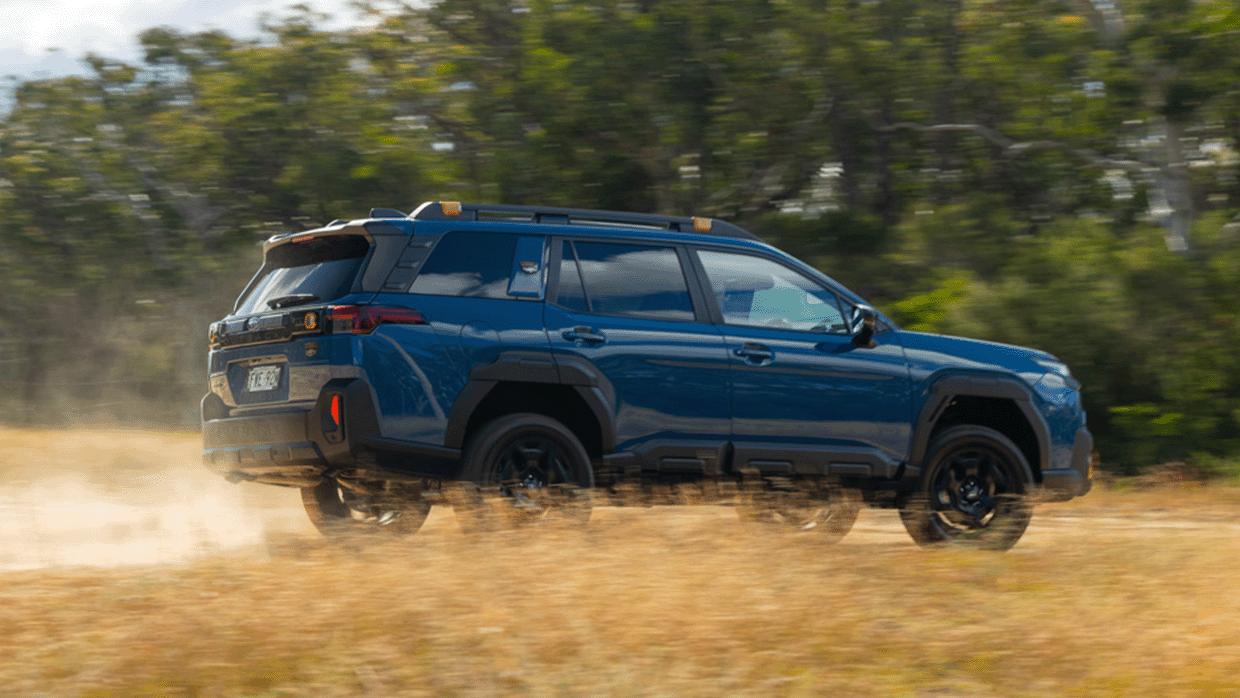
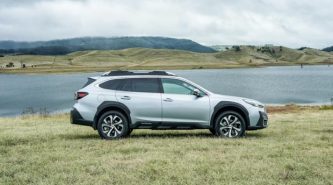
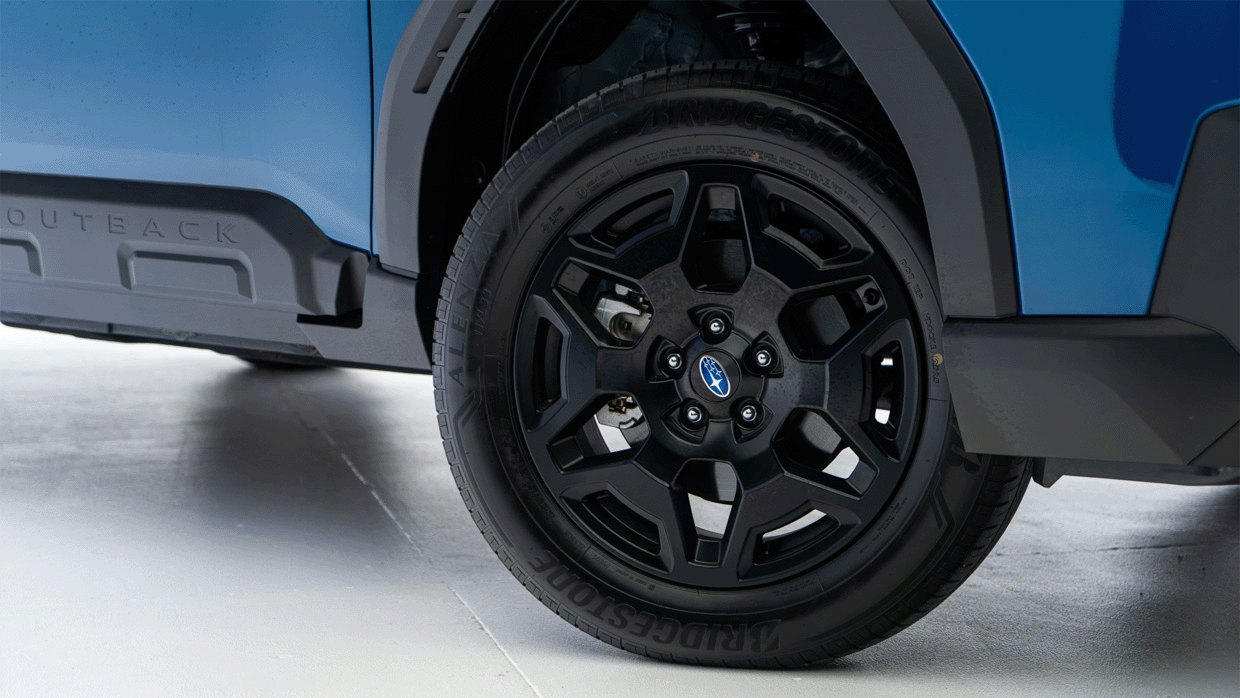
Apart from the 20mm of added ground clearance above the regular Outback (220mm), the Wilderness recipe brings electronically controlled (rather than one-mode passive) suspension dampers. Paired with chubby 60-series Bridgestone Alenza rubber, and the default ride is wonderfully compliant.
The Wilderness does feel considerable and hefty on the road, where it wafts along without too much floatiness, at least on flat running at pace. Slow the speed, test the articulation – of which there is plenty – and its soft rebound is easily exposed, making its bounce a little slow to settle.
This in itself is a trade-off: the softly set nature rounds off impacts across rougher terrain and makes it comfier traversing a beaten path, but doesn’t do the Subie’s body control any favours if you’re keeping it on the hot-mix.
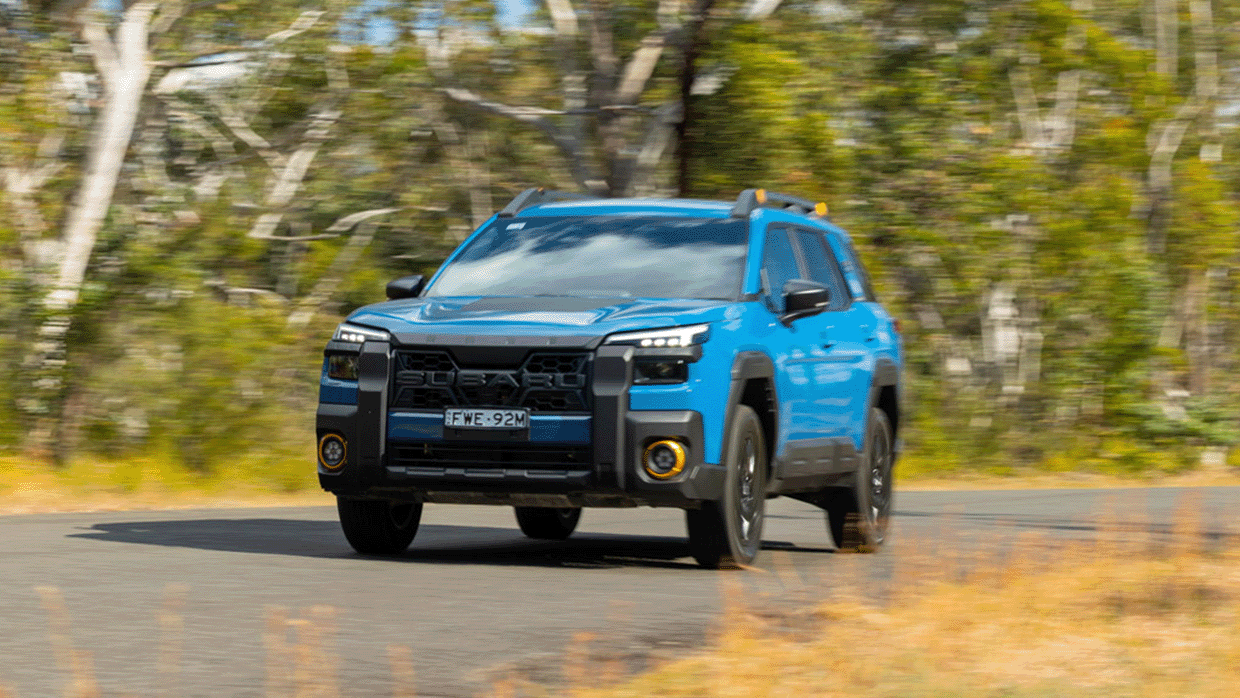
Bombing down the highway on cruise control, the Wilderness could be a touch more planted. In the corners, where those narrow 225mm Bridgestones are hardly the last word in dry lateral grip, it could be more composed and responsive from its helm. It looks ‘on stilts’ and feels as much in the experience.
Not helping engagement much is the steering. Whatever benefits Subaru’s newer electrically assisted dual-pinion design brings in fundamental connection feels filtered out via the on-stilts stance and pedestrian rubber.
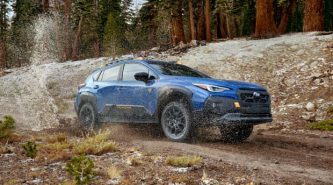
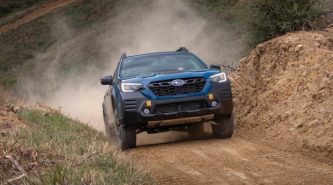
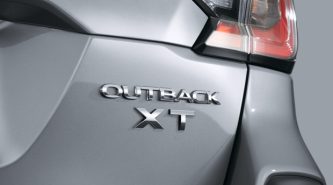
Nor does the rubber seem, nor feel, fit enough for anything like moderately challenging terrain. The Wilderness fits two-mode X-Mode electronic traction smarts – regular Outback gets a single mode – which Subaru says offers “unique hardware and tuning”. The Active Torque Split system (across all gen-seven Outbacks) is also revised.
Result? In isolation, the WIlderness feels effective at negotiating moderately challenging terrain, though its outright potential is inconclusive. Again, a solid A-B test against a ‘proper’ dual-range, diff-locking 4WD competitor in identical conditions will shine clearer light on how much added off-road potential the Outback breed now brings to the party.
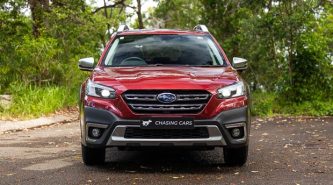
What is clear is that, despite the high roof and added glasshouse area, the new SUV-alike Outback it’s tricky to judge in tight spaces. Especially what’s ahead of its high-set and bluff front end. You get a 360-camera system that might offer the driver a better sense of the immediate surroundings off road, but that’s only fitted to the pricier Apex grade.
At least the full-sized spare wheel – plus tyre pressure monitoring – brings a semblance of surety whether you’re brave enough to point the Wilderness deep into the mulga or ferrying loved ones across grand touring distances.
Safety wise, all Outbacks get the same fulsome Eyesight branded suite of active assistance systems bar lane change assist, which is exclusively fitted to the Outback Touring. On road, all systems functioned naturally bar driver attention monitoring, which threw up no less than three different warnings hyperactively during our test.
The WIlderness interior is a bit of a mixed bag, one that became a hot topic of discussion and conjecture in the Chasing Cars office. Arguments central to the fact that gen-seven Outback lacks a true ‘sweet spot’ variant in range.
The features set offered is derived from the base ‘just AWD’ Outback, which is almost $11K cheaper – there’s currently no rugged Wilderness variant to match the feature-rich, leather-trimmed Outback Touring…which is also cheaper, albeit by $2700.
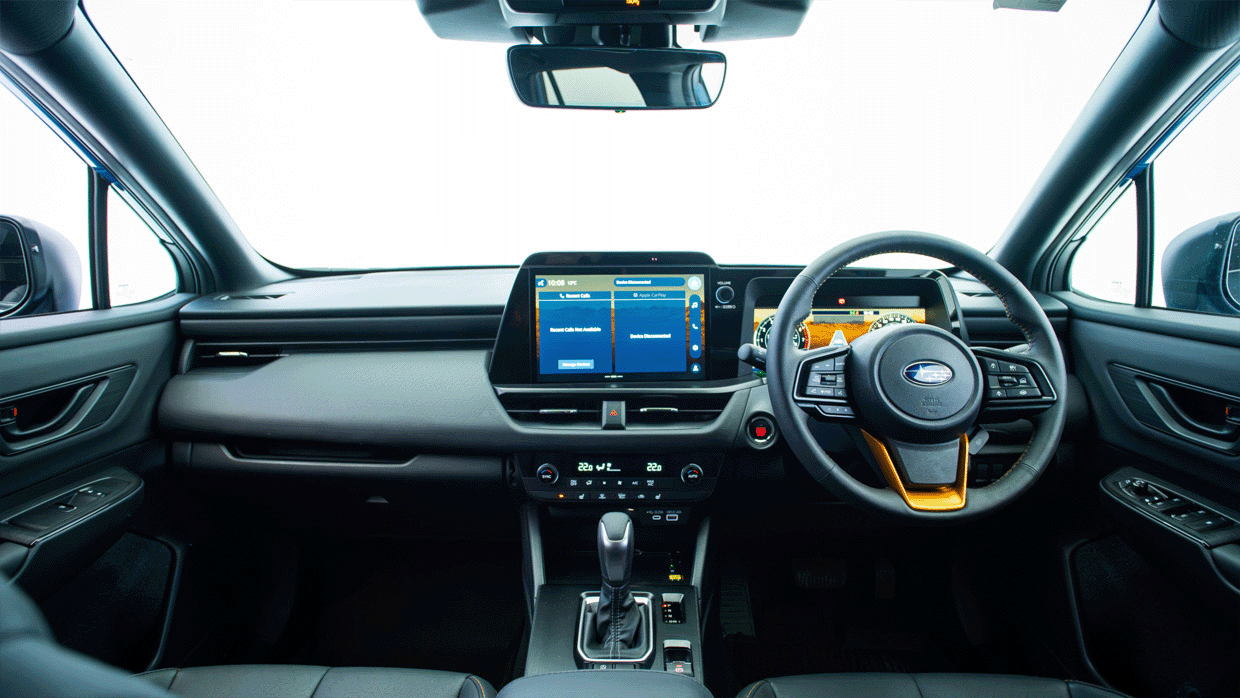
You can justify the Wilderness premium in turbo performance and billy goat trappings all day long, but what remains is that, for around $67K on road, our test car is a little too short on trimmings.
The key one is satnav. Australia lacks comprehensive telecommunications coverage. And anything purporting to ‘go anywhere’ ought to offer directional guidance beyond mobile app mapping capabilities. Simple.
Then there’s the “water repellant synthetic leather” seats trim: in other words, vinyl. The suggestion is that it offers a certain clean-out and wear utility for adventure types who like to swim or ski, but it’s just the same vinyl trim as the base Outback.
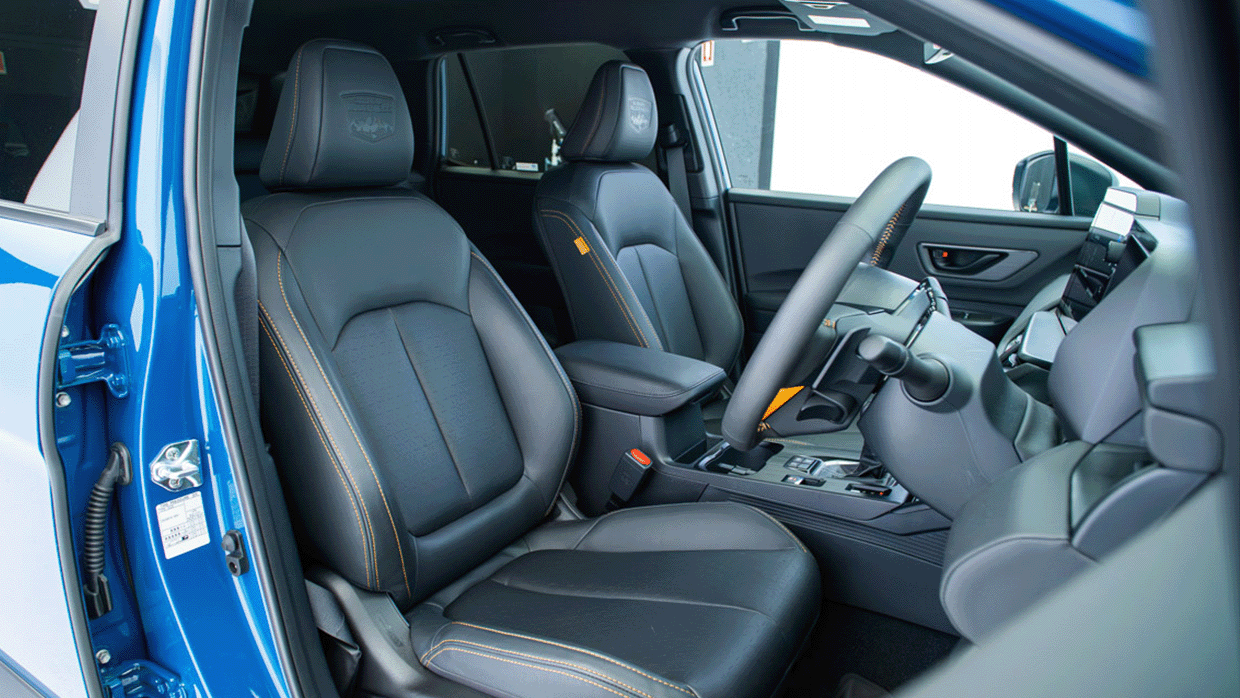
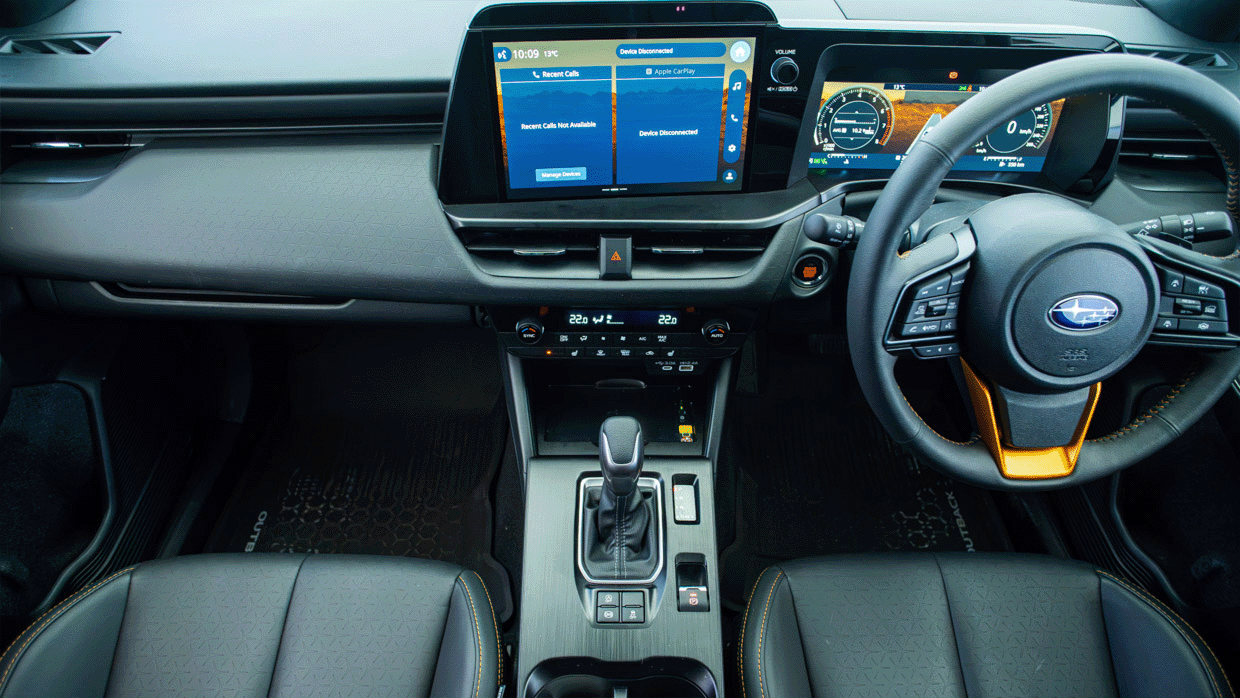
It’s doubtful that much of the rest of the cabin is nearly as ‘water repellant’ – don’t hose it down after that muddy biking trek – though the Wilderness fitout looks and feels spartan and rudimentary, despite how much the new digital window dressing spruces up its hardy, plasticky theme.
Here’s where the Wilderness – and lower grade regular Outbacks – buck something of a perception trend, where traditional buyers are drawn to the luxuriousness of the nameplate beyond that or, say, a Forester. This seventh-gen arguably doesn’t feel special enough.
Part of it is the lack of features (satnav, 360deg camera) and rudimentary material choices, as solid as the Subaru seems to be screwed together. Indeed, the flashy, sharper, landscape-oriented 12.1-inch touchscreen offers little more than a reversing camera and wireless phone mirroring.
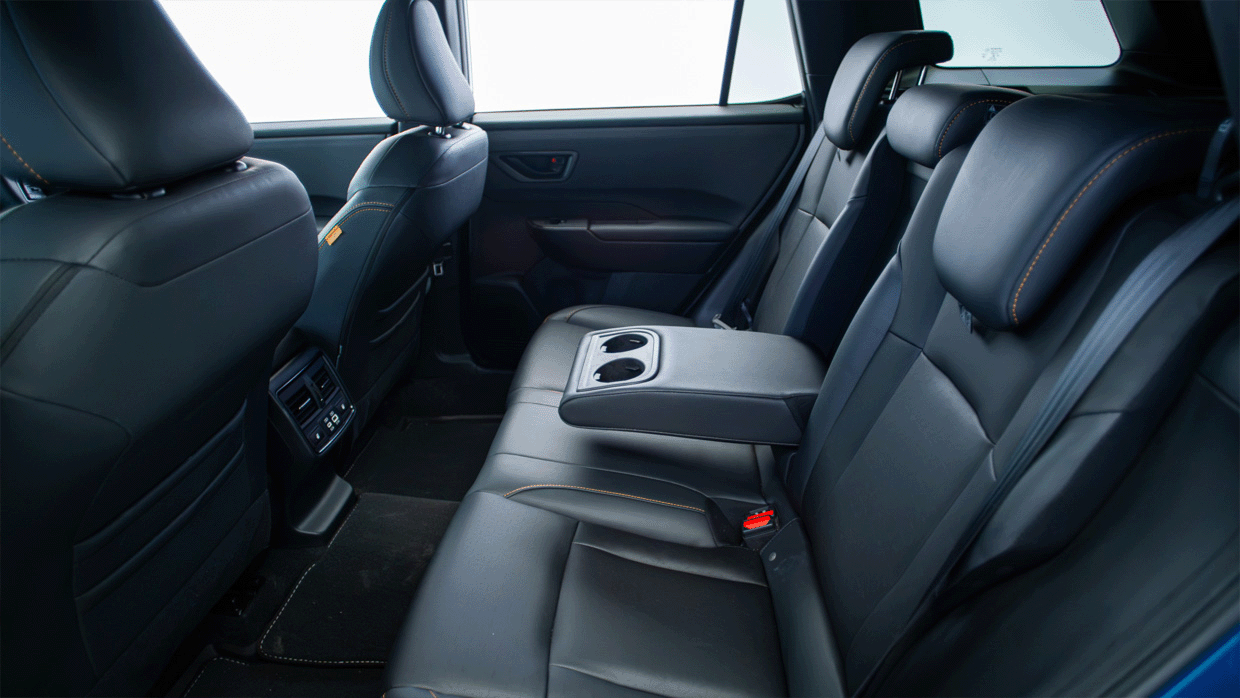
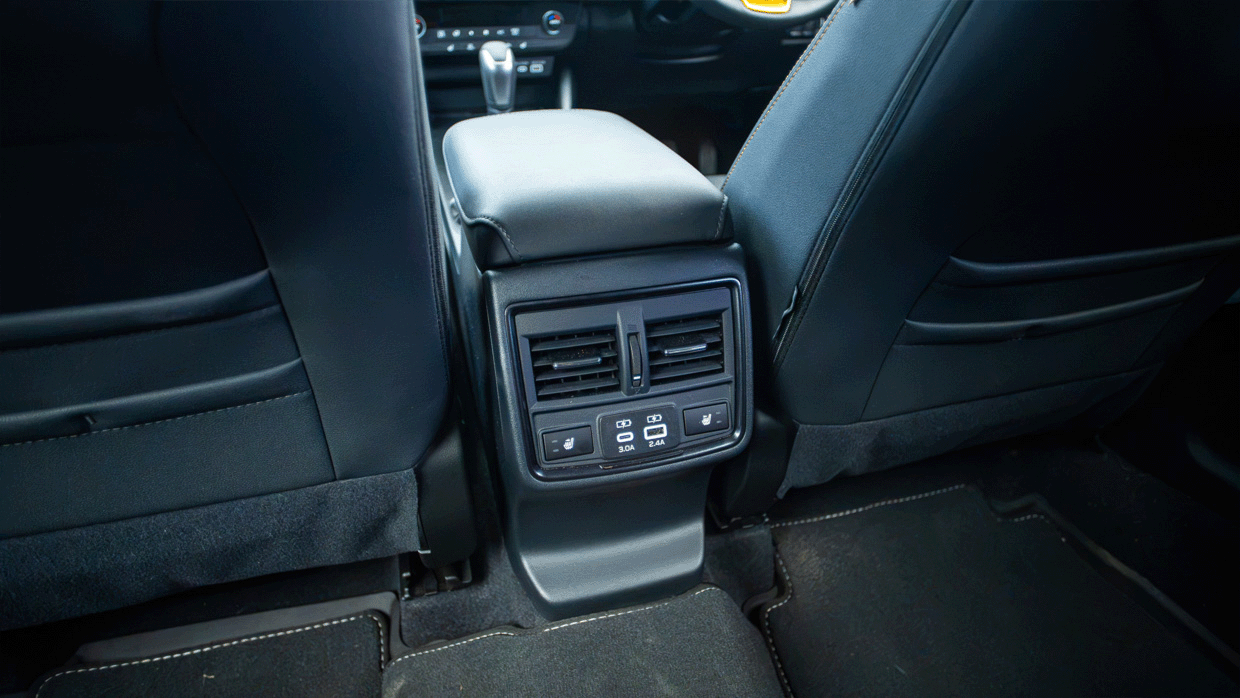
The driver’s seat is eight-way powered with front passenger fully mechanical – with heating for both – as per the base variant, but seating is comfy up front and hugely roomy and spacious in row two (where the Wilderness does exclusively fit outboard heating).
The rear seatback offers recline adjustment, too, bolstering its comfort chops as an adult-friendly long-haul device.
Kudos to Subaru for reverting back to a conventional, dedicated HVAC control panel (though the old-gen wasn’t the worst of in-screen formats) and retaining an audio volume knob, while the ‘classic’ multifunctional wheel – with its myriad switchgear – is like an old familiar friend.
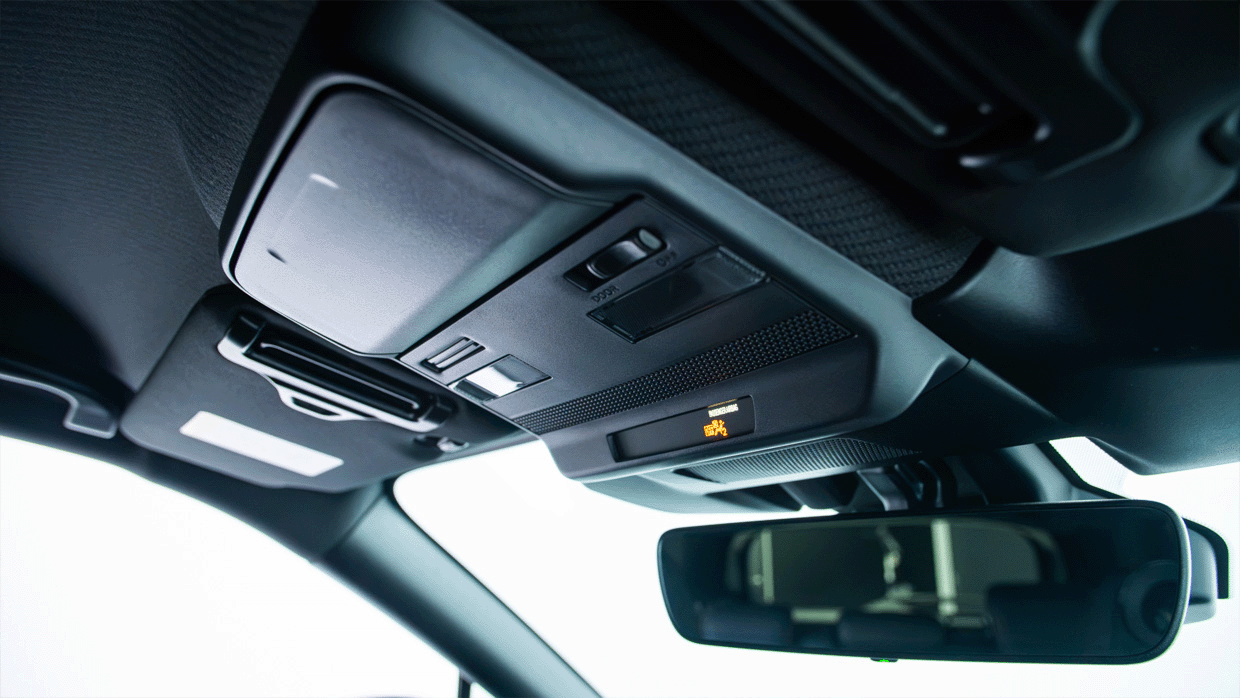
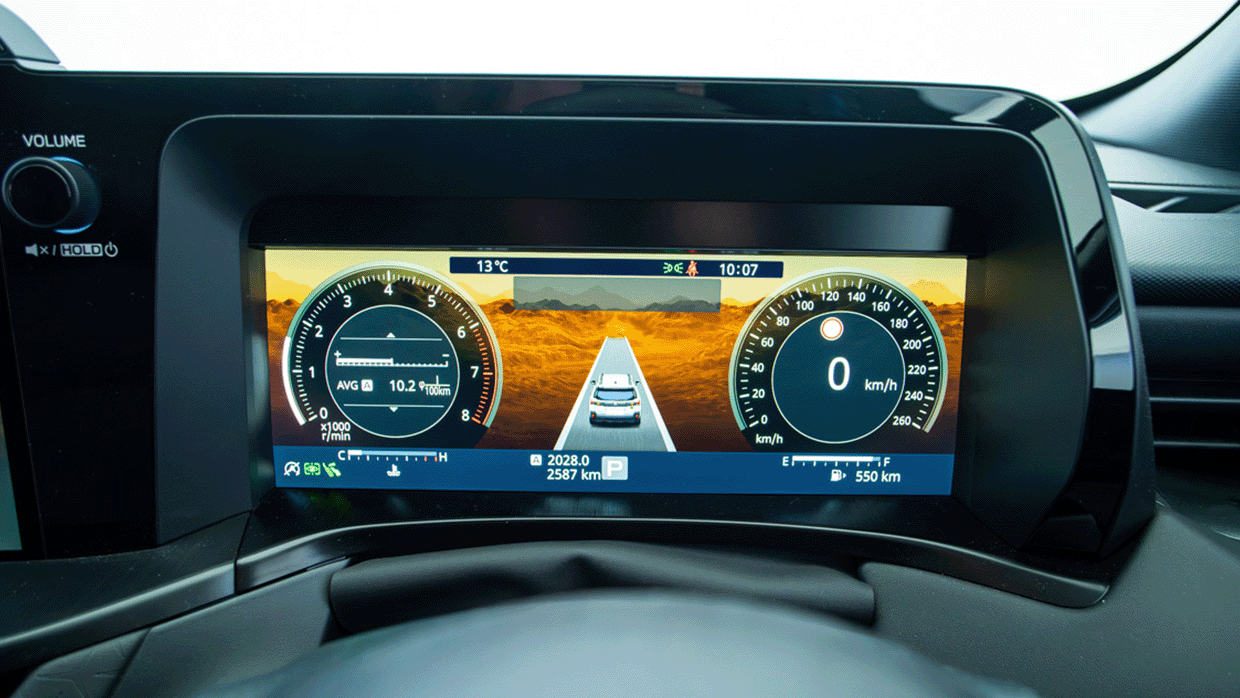
The 12.3-inch driver’s screen is big, bright and clear, and thankfully the skin design between the different in-cabin screens are (finally) quite congruent. It won’t mirror mapping, but there are three driver-selectable themes to choose from.
Storage is decent through both rows, with nifty flocked door bins to prevent your drinking receptacles from rattling about. Row two also gets rear air vents and device power, which is a mix of USB-A and -C through both seating rows.
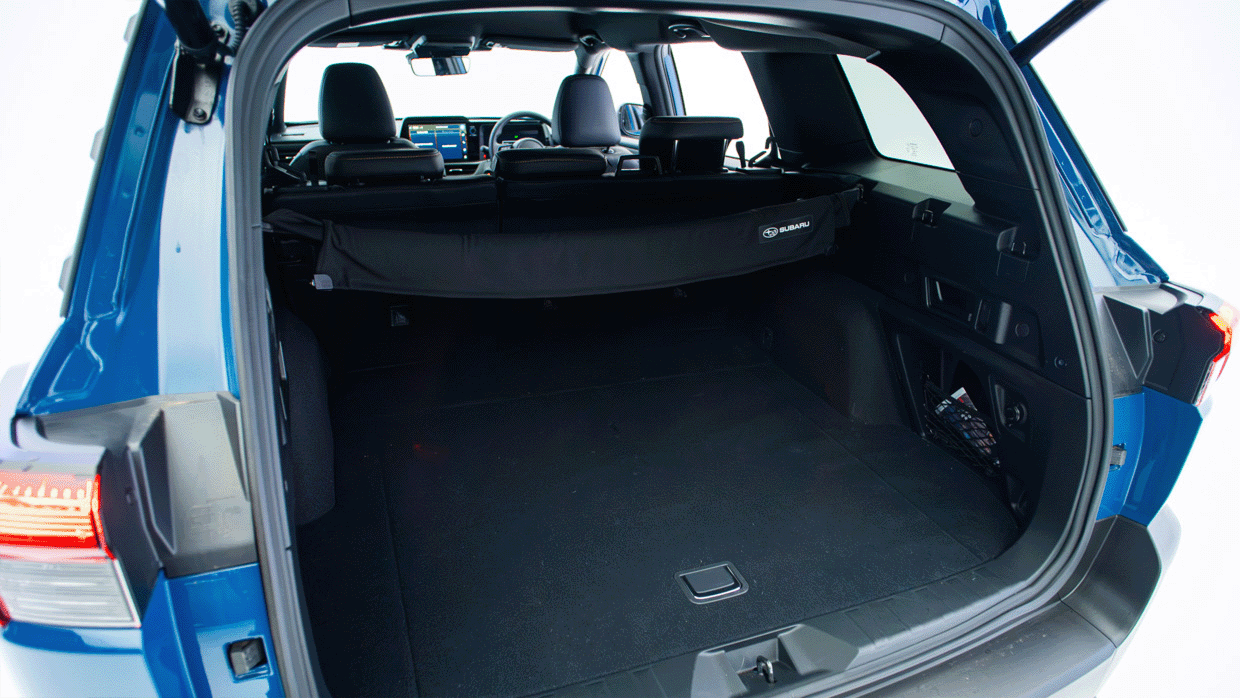
The newfound SUV boxiness affords a very practical 530 litres of bootspace, if one featuring a luggage cover that demands being clipped in at eight locations (which do, when not in use, make handy grocery hooks). The space expands to 1211L with row two stowed.
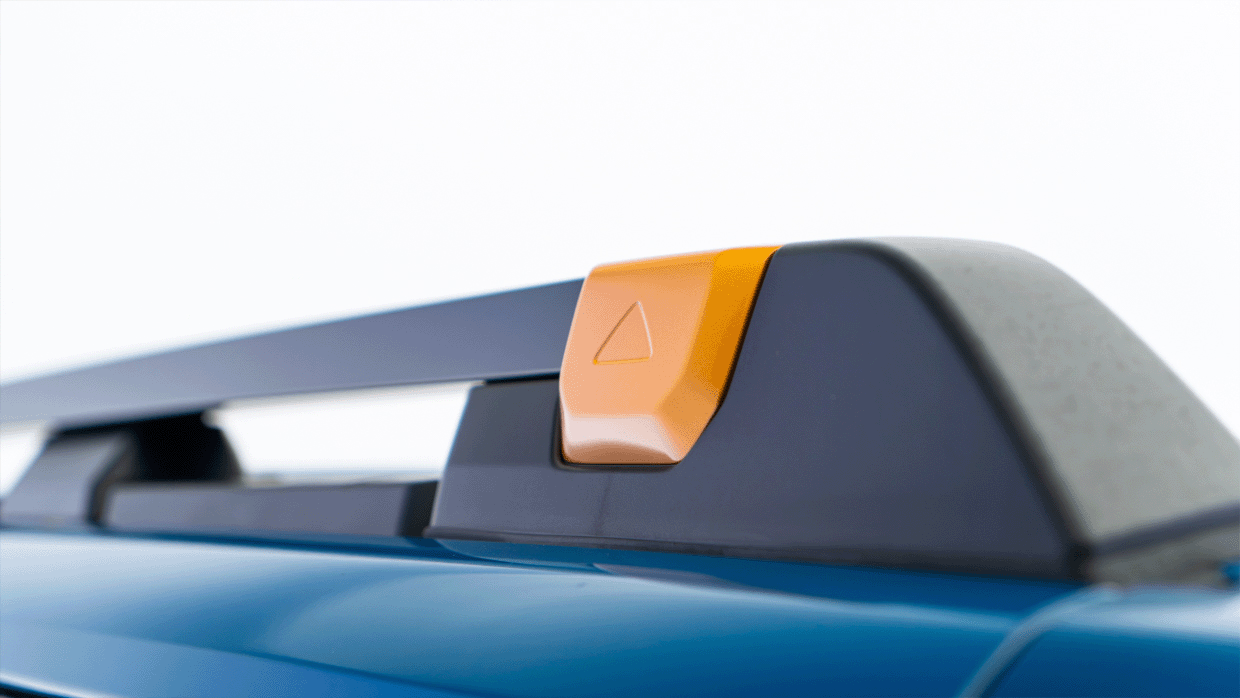
On storage, the roof rails have a static load capacity of 363kg, up from 318kg with the old generation.
As mentioned, its double-figure combined-cycle thirst is the caveat to the turbo 2.4L’s drivability and shove, though it does run on cheapy 91RON fuel.
Subaru Australia offers a five-year servicing package for $2348, with its 12-month/15,000km intervals priced between $347 and $702 (for the exxy fourth service interval).
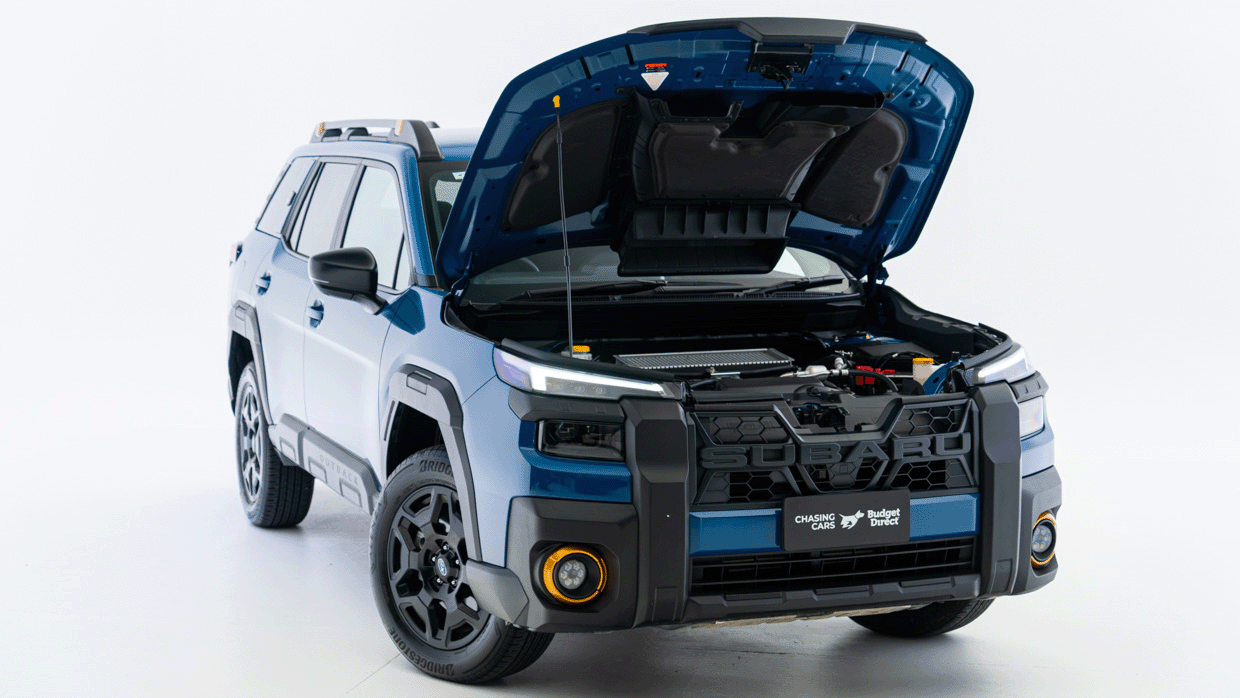
Warranty is a typical five years of unlimited-kilometre coverage.
Budget Direct told us the median annual premium purchased for the first time between 1/5/25 and 1/5/26 to comprehensively insure a new Subaru Outback was $1115. Individual circumstances and policy terms may vary.
Of course, everybody’s situation is different, and the premium will vary according to make and model, and other things insurers take into account, such as your postcode, driving history, who drives the car, where you garage the car and more.
Please quote for yourself. Subject to meeting underwriting criteria. Insurance issued by Auto & General Insurance Company Limited. See PDS & TMD at budgetdirect.com.au.
Asking whether gen-seven Outback in Wilderness guise improves the breed has no easy answer. It ultimately depends on the buyers’ wants.
The new, boxier SUV form over the old wagonesque? What you gain perceived space and practicality you lose, in some eyes, is old USP charm. And it’s certainly a design ‘to taste’.
This form underpinned by a familiar – if quite turbo potent – Subaru driving character? A real drawcard for brand and nameplate loyalists, of which Australia has many, if one that really doesn’t modernise what remains an old-school drive.
That turbo power? It’s great by the seat of the pants if not for the hip pocket with fuel bills. There’s no frugal hybrid, and the powertrain’s merits as a genuine diesel 4WD SUV competitor leave many many question marks, from outright range and off-roadability.
Then there’s this long-awaited, newfound Wilderness recipe – an Americanised recipe at that – versus the regular Outback format much loved by Aussies? It brings much swagger and a corresponding upcharge, but also conspicuous thriftiness in areas of specification.
Key specs (as tested)
About Chasing cars
Chasing Cars reviews are 100% independent.
Because we are powered by Budget Direct Insurance, we don’t receive advertising or sales revenue from car manufacturers.
We’re truly independent – giving you Australia’s best car reviews.
The estimate provided does not take into account your personal circumstances but is intended to give a general indication of the cost of insurance, in order to obtain a complete quote, please visit www.budgetdirect.com.au. Estimate includes 15%^ online discount.
^Conditions Apply
Budget Direct Insurance arranged by Auto & General Services Pty Ltd ACN 003 617 909(AGS) AFSL 241 411, for and on behalf of the insurer, Auto & General Insurance Company Limited(ABN 42 111 586 353, AFSL 285 571).Because we don’t know your financial needs, we can’t advise you if this insurance will suit you. You should consider your needs and the Product Disclosure Statement before making a decision to buy insurance. Terms and conditions apply.
Indicative quote based on assumptions including postcode , 40 year old male with no offences, licence suspensions or claims in the last 5 years, a NCD Rating 1 and no younger drivers listed. White car, driven up to 10,000kms a year, unfinanced, with no modifications, factory options and/or non-standard accessories, private use only and garaged at night.
^Online Discounts Terms & Conditions
1. Discounts apply to the premium paid for a new Budget Direct Gold Comprehensive Car Insurance, Third Party Property Only or Third Party Property, Fire & Theft Insurance policy initiated online on or after 29 March 2017. Discounts do not apply to optional Roadside Assistance.
2. Discounts do not apply to any renewal offer of insurance.
3. Discounts only apply to the insurance portion of the premium. Discounts are applied before government charges, taxes, levies and fees, including instalment processing fees (as applicable). The full extent of discounts may therefore be impacted.
4. We reserve the right to change the offer without notice.