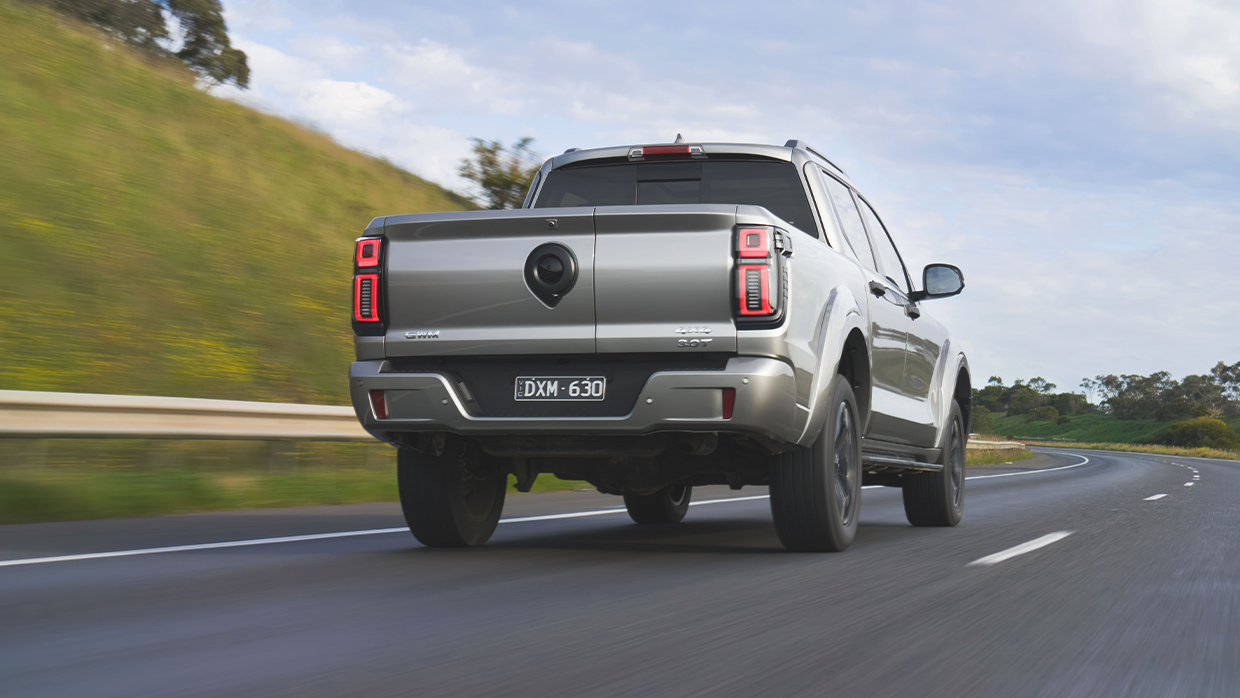
The medium-sized Zeekr 7X electric SUV became one of the stars of 2025 when it launched in Australia – championed for its slick styling, classy interior, cutting-edge EV tech and not-so-premium pricing, despite looking and feeling very much like a premium vehicle.
And as 2026 has progressed, buyers have cottoned on to that appeal, to the point where the Zeekr 7X is now a regular Top 10 seller and should comfortably exceed 15,000 sales for the calendar year.
This exponential rise from relative unknown to a fixture of our current automotive landscape piqued our interest, so we’re living with a Zeekr 7X for several months to see if it’s as impressive as we’ve said it is, or if it stumbles when lumped with everyday challenges.
Around 60 percent of buyers are choosing the $72,900 Performance AWD flagship, followed by the $63,900 Long Range RWD, which is the version that has joined the Chasing Cars fleet.
Mainly, we’ve done this because it offers the most WLTP range among the 7X trio (615km versus 543km for the AWD and 480km for the base RWD), but also for the ventilated front seats, head-up display, rear privacy glass and 21-speaker stereo it gains over the $6K-cheaper base model.
Our plan is to spend at least three months in the 7X Long Range RWD, tackling both urban gridlock and suburban commuting, as well as regular inter-city trips from Sydney to Newcastle (a 340km round trip) and one big interstate haul – to see if both the Zeekr 7X and Australia’s charging infrastructure are up to the task.
We also intend to switch into a Performance AWD for the final few weeks, to see whether spending another $9000 (like the majority of Aussie punters) on this 21-inch-wheeled, leather-trimmed, air-suspended, 3.8sec-to-100km/h flagship buys you comfortably the best 7X … providing you can stomach an $80K driveaway entry ticket!
It’s worth noting that an updated MY27 Zeekr 7X range has just been announced, featuring tweaked front and rear styling, a new centre console, upgraded powertrain outputs (335kW/520Nm for RWD variants; 500kW/790Nm for the Performance AWD) and greater range (627km for the Long Range, 544km for the Performance AWD, 482km for the base 7X).
Month 1: Welcome to the team
Smooth on the outside and smooth from behind the wheel – that’s the overriding first impression of the Zeekr 7X Long Range RWD, instantly elevating it beyond most of its EV contemporaries. But are the ergonomics and interior functionality as easy to like?
Kilometres this month: | 423.2km (odometer – 7792km). |
Energy efficiency this month: | 17.1kWh/100km |
Running costs this month: | $0 |
The statement “rides like an EV” isn’t a compliment – it refers to abrupt and overly stiff suspension that makes a vehicle react off bumps, not absorb them. It’s tiringly unpleasant and, for some reason, a common EV failing … yet little of that applies to the Zeekr 7X Long Range RWD.
Wearing handsome 19-inch alloy wheels clad with 255/50R19 Continental Eco Contact 7 tyres and featuring fixed-rate dampers for its fully independent suspension (double wishbones up front, multi-links out back), the rear-drive 7X doesn’t get the fancy adaptive air suspension fitted to the top-spec Performance AWD. But around town it maintains much of its fancy sibling’s ‘waftability’.
Much of the time, it smoothly and seamlessly glides around the suburbs, demonstrating impressive small-bump absorption and a pervasive air of refinement that makes it feel high-quality.
Unlike so many other Chinese EVs which are crucified by their non-existent calibration finesse – making them impossible for anyone to drive smoothly – the 7X RWD is effortlessly relaxed and calming.
Its soft (polyurethane) seating and crisply consistent steering weighting enhance that impression, and so does the premium feeling of its controls. But the way its suspension damping feels soggy over speed humps taken quickly does indicate the 7X Long Range RWD may not be so great on Aussie country roads.
Yet with 615km of claimed WLTP-measured range, it’s exactly the kind of EV intended to tackle big distances.
We’ll be throwing the 7X Long Range RWD into the interstate deep-end in the near-future, so for now, it’s all about how it feels in day-to-day operation.
We don’t own NCS-61T and thus don’t have it set up in the Zeekr app – instead relying on the square-shaped lozenge ‘key’ for unlock-on-approach and walkaway-lock, neither of which have worked consistently.
(The app does the same thing, so it is mainly for pre-conditioning the interior temperature, seat ventilation or steering-wheel heating, programming the embedded navigation – if you trust its capabilities – and even tooting the horn if you’ve lost your chariot among a sea of SUVs and dual-cabs in a multi-storey).
The auto-locking (which I set up in the touchscreen) has failed on two occasions – once where the Zeekr remained unlocked and still running (there’s no stop-start button) with my laptop on the front passenger’s seat while I entered a servo, used the dunny, bought a drink and then casually walked back, wondering why the door handles hadn’t retracted…
Speaking of which, the unlock-on-approach is my main source of frustration. Sometimes it opens perfectly – warmly welcoming me to the 7X. Other times I stand there manually pressing the doorhandle pad with my thumb, trying to open it but completely ignored, so have to resort to using the keyfob.
Then there’s the handles themselves, which require most of your hand to pause behind them to then pulse the unlock mechanism and open the door. Carrying a big load and wanna open them with your pinky or index finger? Tough titties. You’ll get nothing.
And when you try and rush them, on two occasions my thumb has been in exactly the right position to relock the car via the thumbpad – sandwiching my hand behind the handle as it attempts to retract (though not in a finger-crushing way) before loudly clacking closed as I slip my hand free. No wonder China plans to ban retractable door handles.
There are multiple driving settings for the Zeekr 7X, though I’ve settled on steering in Comfort, acceleration in Standard, regenerative braking in Standard, and brake assistance in Sport – with one-pedal mode mostly turned off (though it does work smoothly).
Sport steering adds a bit more weight but not excessively so, making it still doable in everyday driving. Yet I feel like my preferred combination best encapsulates the essence of the Long Range RWD’s urban painlessness and ease of operation.
Finally, to energy consumption. Riding on 800-volt architecture, arguably one of the greatest assets of the Zeekr 7X is its potential charging speed – capable of copping up to 420kW DC for the Long Range RWD’s 100kWh nickel-manganese-cobalt battery, in an era where the best Australia’s network can offer is 350kW (and that level of ultra-fast charging is super-rare).
Zeekr claims 10-80 percent in 16mins, though the base RWD with a 75kWh lithium-iron-phosphate (LFP) battery can handle up to 450kW does the same charge in 13mins!
That charging capability both future-proofs the 7X for upgrades to Australia’s EV infrastructure while placing it well ahead of its main competitors (Tesla Model Y – 175kW DC; Volkswagen ID.4 – 175kW; BYD Sealion 7 – 150kW; Skoda Enyaq – 135kW; and Kia EV5 – 100kW), with the EV5 taking well over twice as long to go from 10-80 percent battery charge.
In its first week at Chasing Cars, the 7X averaged 17.1kWh/100km over nearly 500km of purely urban driving, which equates to a real-world range of 567km based on its useable battery capacity (94kWh).
That may not be Tesla Model Y territory (we’ve seen 14.7kWh/100km out of the 2026 RWD variant), but the Tesla’s comparatively small 60kWh battery means its claimed WLTP range is just 466km.
To exceed this Zeekr’s WLTP-measured potential, you’ll need to spend considerably more on, say, a new-gen BMW iX3 40 ($90K, 635km range), Tesla Model Y L Premium AWD ($75K, 681km range) or Polestar 4 SUV ($74K, 630km range) because few electric medium SUVs go further than 600km WLTP. Not yet.
Hopefully the 7X Long Range RWD’s 615km potential and its promising early energy efficiency bodes well for longer trips because next month, we’re driving it to Adelaide and back – from Sydney – which is a round trip of around 3000km.