Powered by

-
Car Reviews
Latest reviews
-
Car News
Latest news
-
Car Comparisons
Latest comparisons
- Chasing Deals
Latest reviews
Latest news
Latest comparisons
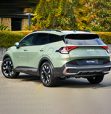
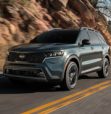
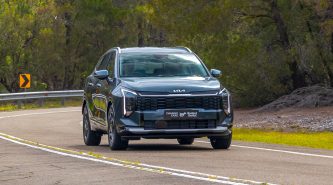
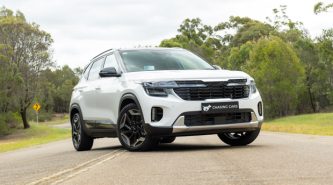
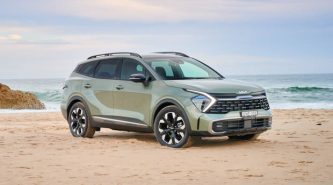
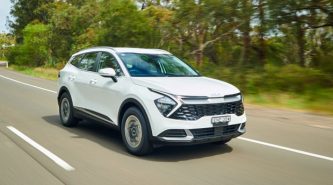
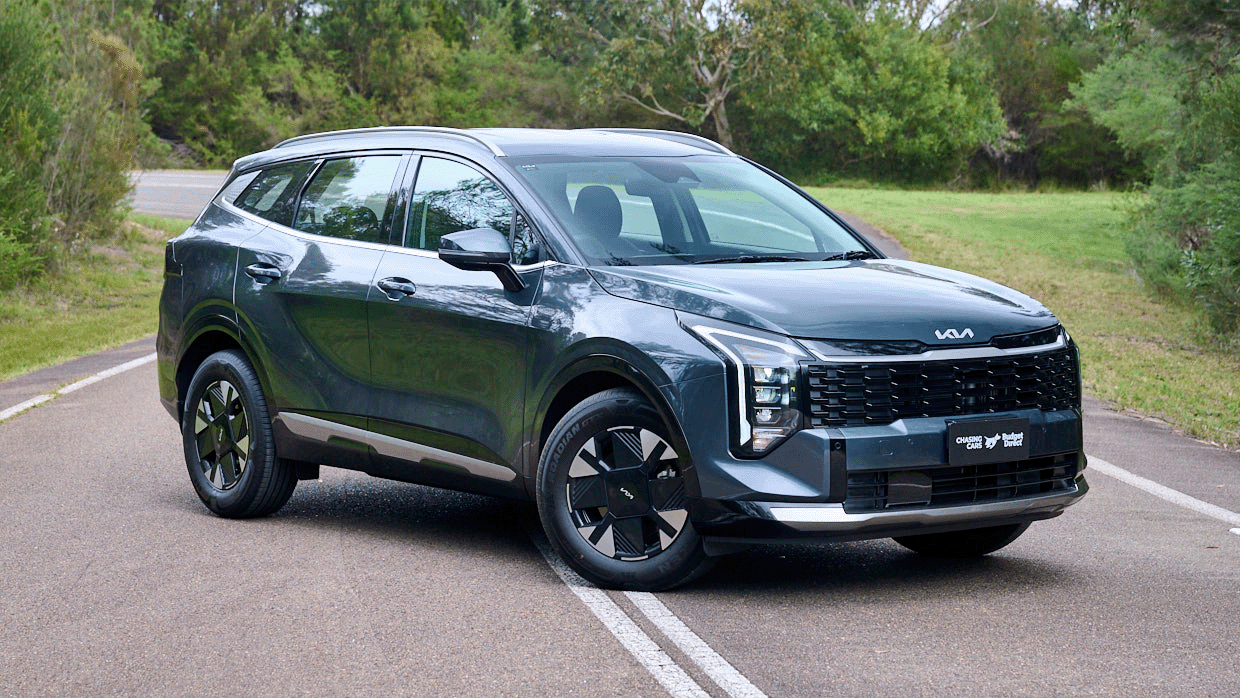
With pure-ICE variants dropped, the cheapest Sportage is now a pricier hybrid option. Is it an enticingly thrifty family choice?
The lack of an entry-grade hybrid variant was a sore point when Kia launched its facelifted Sportage in mid 2025, though quite a bit has changed in the past 12 months. Most notably, pure ICE power – 1.6L turbo and 2.0L natural aspiration – was axed earlier this year, leaving just diesels and petrol-hybrids…
…and the cheapest Sportage variant you can buy, in MY27 guise, the recently introduced S Hybrid, filling the aforementioned hole in what was a much broader (MY26) lineup, is currently priced at $44,490 driveaway.
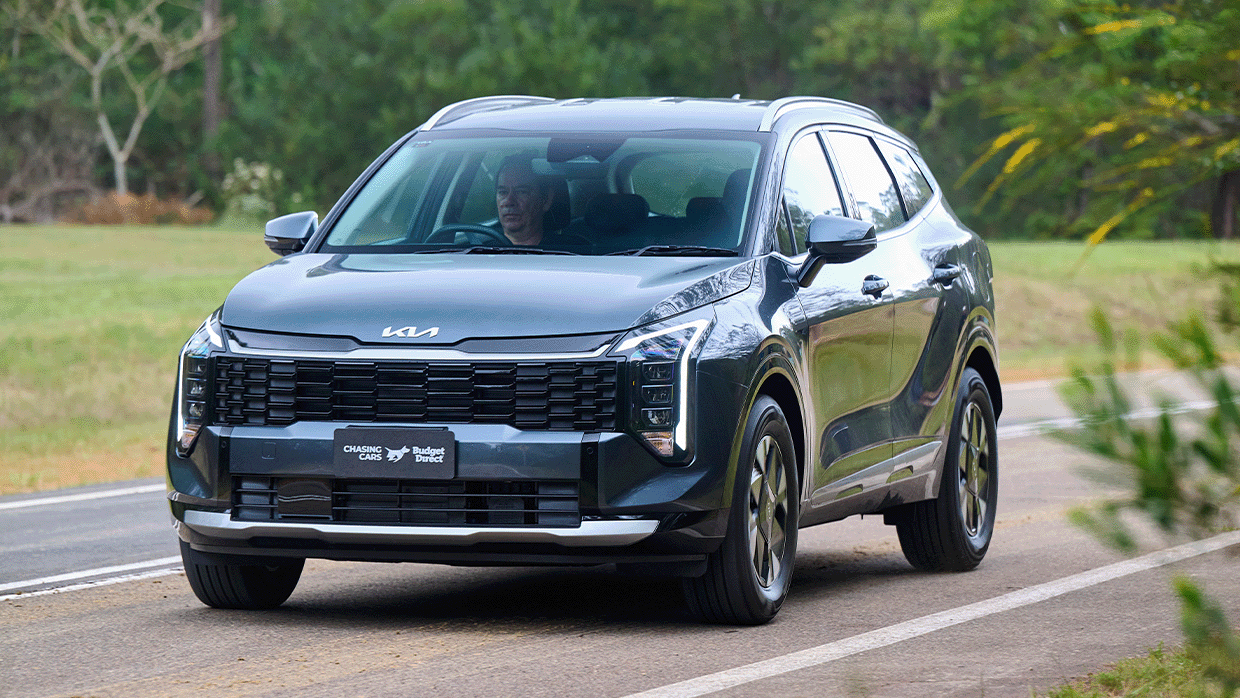
On list price, it’s the S Diesel – available only in all-wheel drive – that enters the Sportage gambit at $43,890 list, $560 cheaper than that of the front-drive S Hybrid ($44,450 list). However, at the time of review, the latter’s $44,490 driveaway ‘offer’ – yes, just an extra $40 – makes it $2500 cheaper than the oiler S ($46,990 driveaway) parked up in your garage.
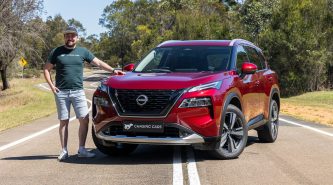
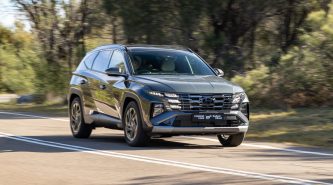
This price point heats up the competition against related cousin Hyundai Tucson Hybrid 44,990 D/A) and Nissan’s new X-Trail e-Power FWD ($45,990 D/A). Pricer self-charging rivals include the Honda CR-V e:HEV X ($49,900 D/A) and Toyota RAV4 GX FWD ($50,723 D/A).
While not all 40-something hybrid medium SUVs specifically target rental ranks, there’s some general commonality in the spec credentials offered among key rivals that tend to be – commonly – slim and utilitarian.
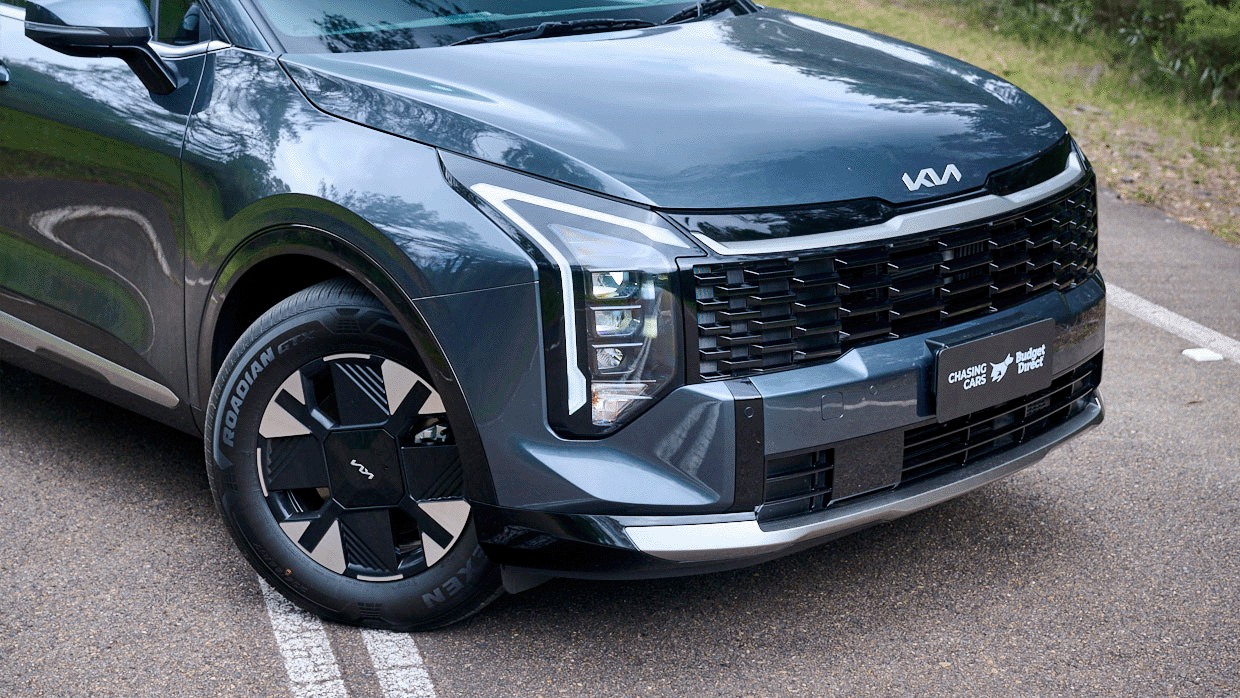
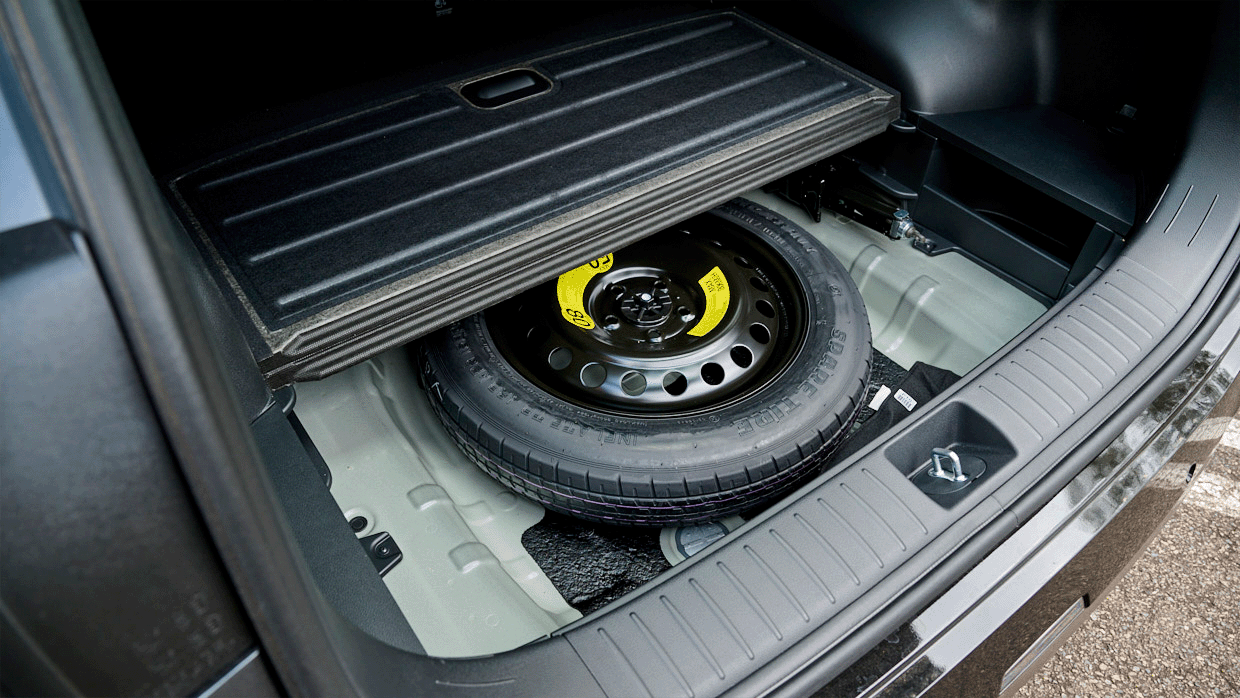
The lowest of Sportage’s four grades – S, SX, SX+ and GT-Line – fits 17-inch alloys (plus a space saver spare), cloth trim, mechanical front seat adjust, and a general features set that lacks little against the next rung up SX outside of small areas such as driver’s seat lumbar adjustment and remote folding levers for the rear seats.
Inside, it fits the familiar 12.3-inch media touchscreen sans sat-nav offered further upstream in the lineup, plus the low-spec driver screen that’s just 4.0 inches but fills its screen panel with graphics as to appear like the GT-Line’s fulsome 12.3-in unit. Dual-zone climate and wireless (or USB-C wired) smartphone mirroring are solid inclusions for an entry grade.
The S (and SX) fit the same broad ADAS suite as the top-shelf GT-Line bar specific exclusions such as Highway Driving Assist (semi-autonomy), reverse parking collision avoidance, surround view/blind spot view monitoring, and an auto dimming mirror.
The circa-six-grand premium the hybrid demands over the (defunct if still on run-out) petrol S pays handsome dividends in the general drivability of the turbo petrol-electric powertrain.
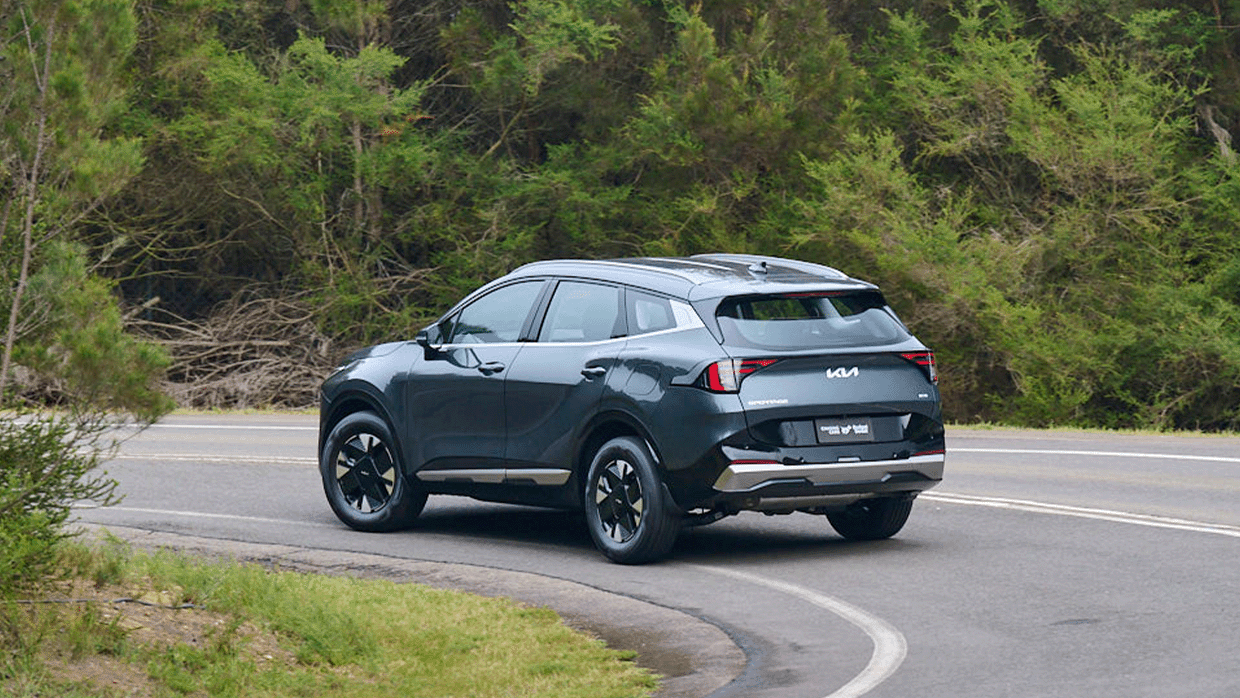
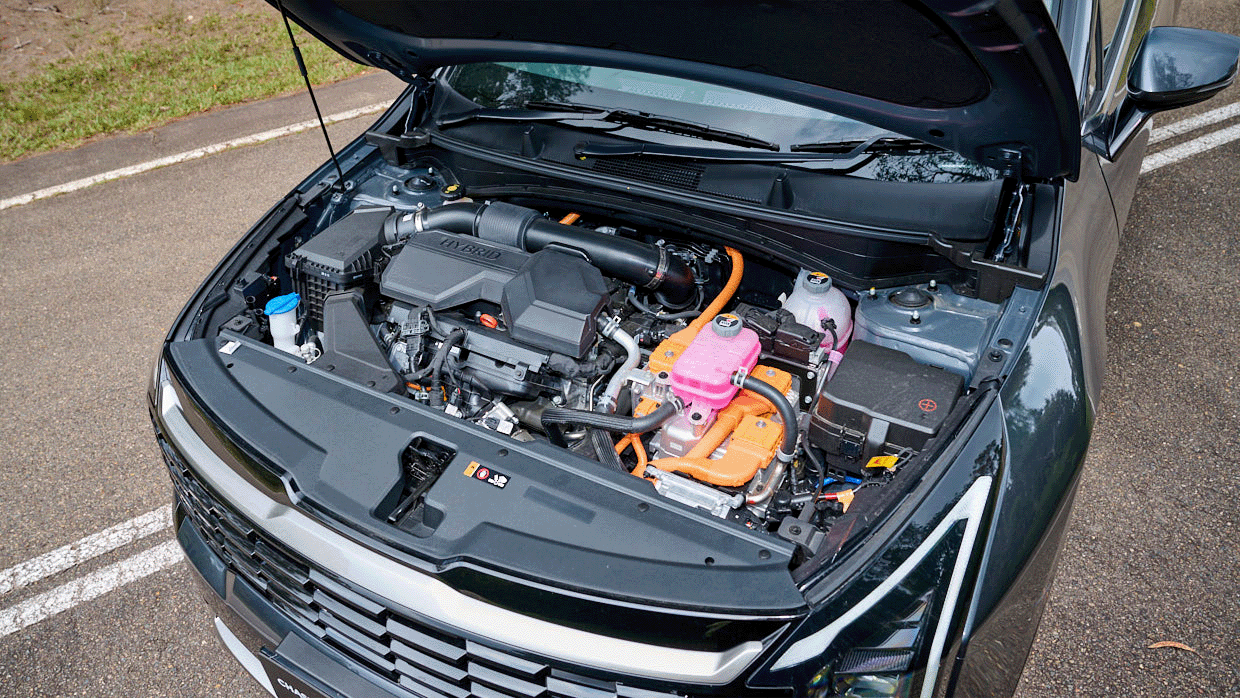
With 173kW and 367Nm combined, the Sportage finds an extra four kilowatts and 17Nm in 2025’s mid-life update, for what’s ostensibly the defunct 132kW/265Nm 1.6-litre turbo petrol engine with an extra 47kW of electric motor drive plumbed in downstream at the six-speed automatic transmission.
It’s really the e-motor’s added 264Nm (mated to a 1.5kWh lithium ion battery) that aids low-speed tractability, fattens combined torque below 2000rpm and makes the 1.73-tonne Sportage feel eager and downright lusty at times, especially in Sport mode.
It’s Eco mode, though, where Sportage hybrid is at its smoothest and roundest – the mixed My Drive feels jerky by comparison – best fit for balanced daily driving. And most because it returns decent circa-five-litre-neat consumption without overly neutering shove and response.
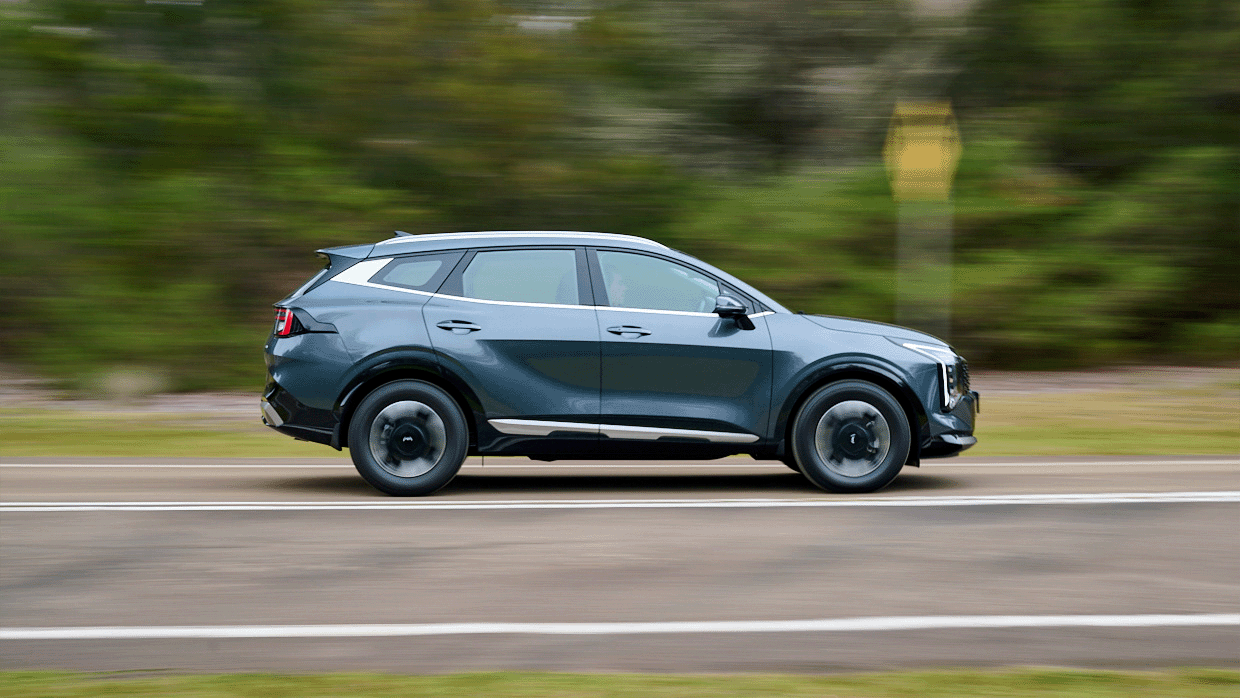
It’s also a quieter, more responsive and more refined powertrain than the 2.5-litre natural-aspiration-based RAV4 your author currently runs as a long-term tester, albeit the Kia’s more polished turbocharged ‘blend’ proves a little thirstier than the Toyota’s mid-four consumption.
The rest of the on-road experience is largely positive, notably bar the now era-defining rigmorale of having to turn off ADAS systems after each restart for the sake of occupant sanity. We may bang on about this stuff in review, and will continue to harp on until Korean brands – all of them – ‘fix’ this chronic user headache.
More? The rotary transmission selector, while a premium touch, can land in neutral unless you assertively switch between drive and reverse and back – not ideal for three-point turns in a rush on a slope…
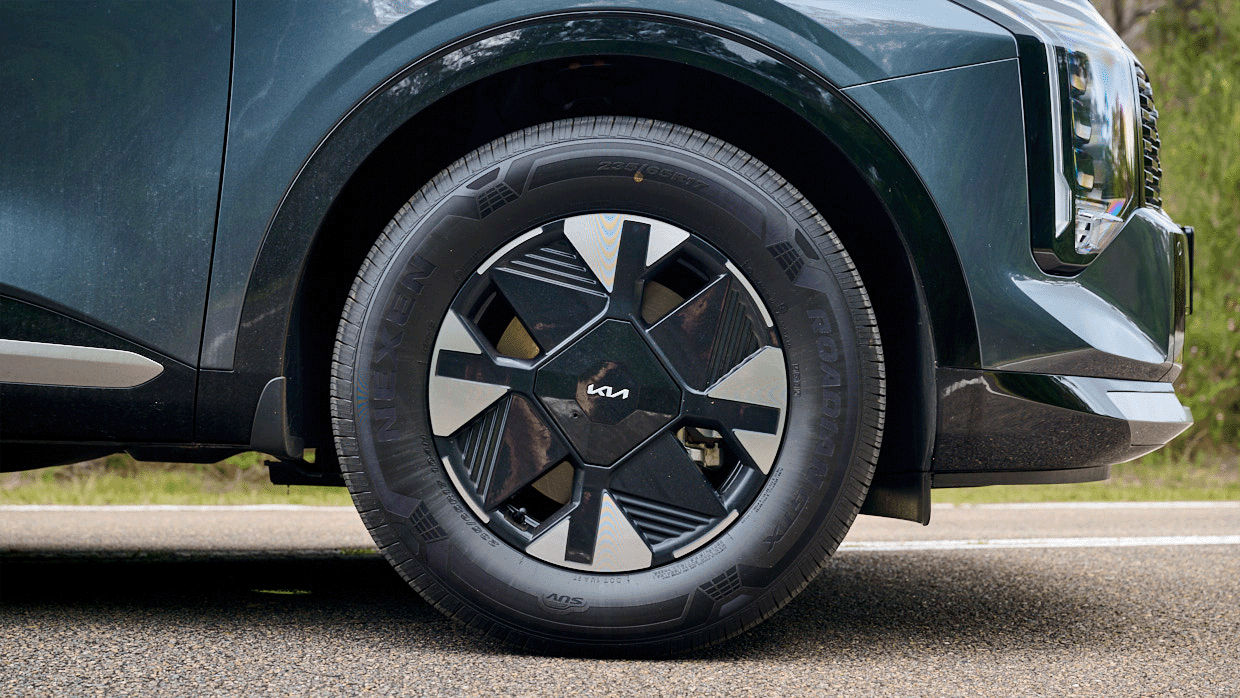
Moving on, as specified in reviews past, Kia’s added pass with steering and suspension calibration has subtly ironed out kinks in Sportage’s ride and handling, though a) it was never ‘bad’ per say and b) ride quibbles were largely targeted at (larger-wheeled) GT-Line.
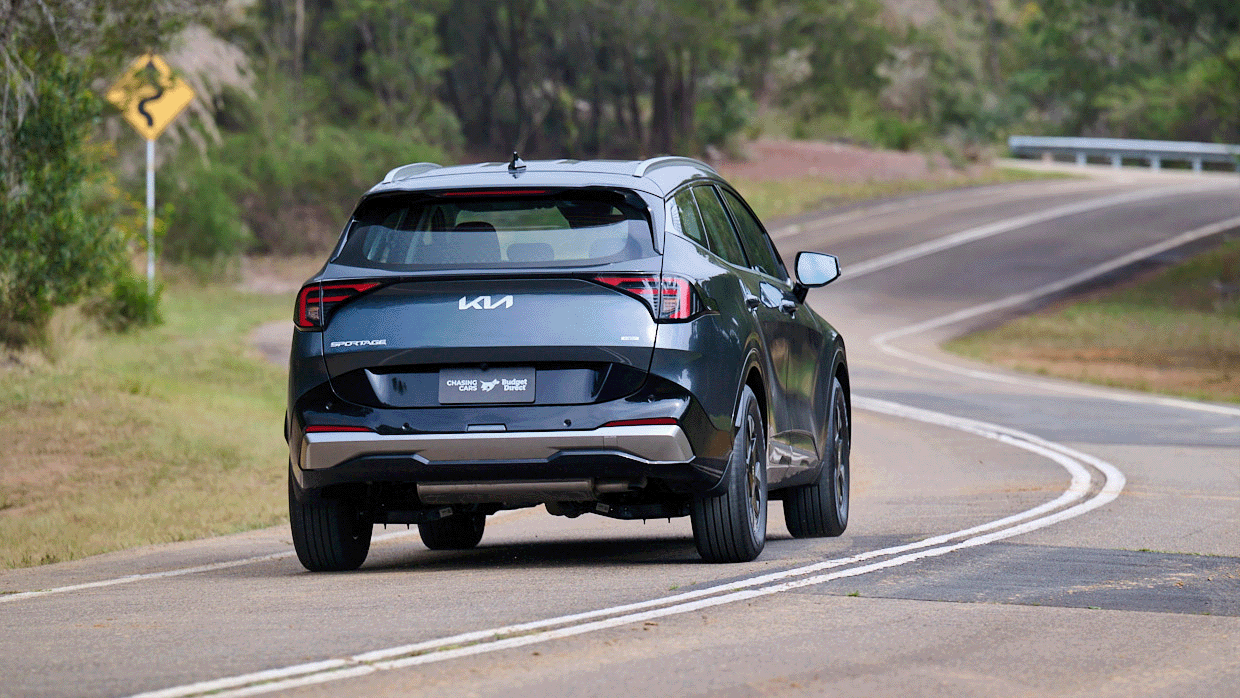
The base S, sat on chubby sidewall 17s, strikes a fine blend of softened compliance and taut enough body control to make the chassis stable on a highway, delivering a stress-free, comfortable drive.
And then you stick the Sportage into a corner and out swells a reasonably engaging character that’s trustworthy and maintains solid feedback and control, be it in dry or wet and slippery situations.
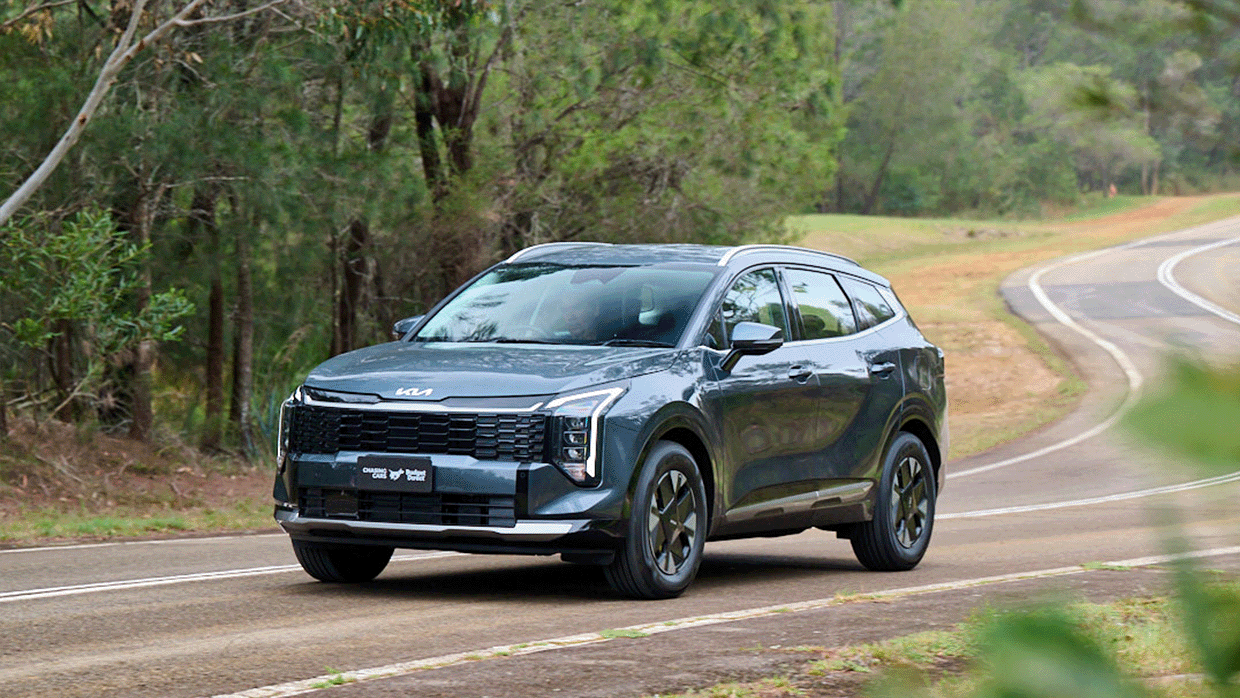
It’s more ‘fine’ than fun, though it’s really the trust you can put into its predictable and confident nature beyond the urban environment that is enjoyable in as much as it is reassuring.
The qualities of how the entry-grade Sportage drives against lower-rungs of the related Hyundai Tucson, the RAV, the well-regarded Nissan X-Trail or Honda’s impressive CR-V are tough to discern in isolation. But it’s clear that there’s real depth in quality in Japanese (and Korean) medium SUVs priced (in some cases) for a song.
And, ADAS resetting and transmission controller clumsiness apart, there’s little to gripe about with the quality of Sportage hybrid FWD’s on-road manner and it’s an easy ally to have trudging along the rinse and repeat of daily driving.
The S interior fix is typical of base-spec medium-sized mainstream SUVs: a clever bag of feelgood tricks belied by some conspicuous cost-consciousness. And Kia’s particular take is mostly a positive outcome.
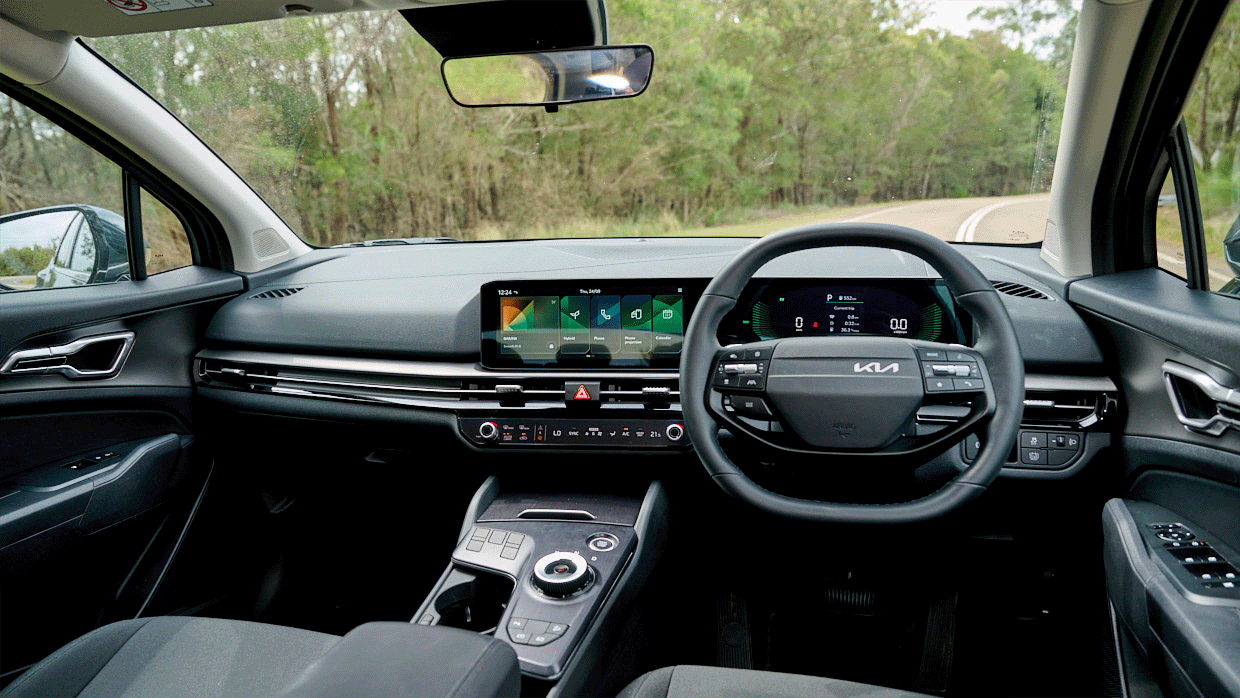
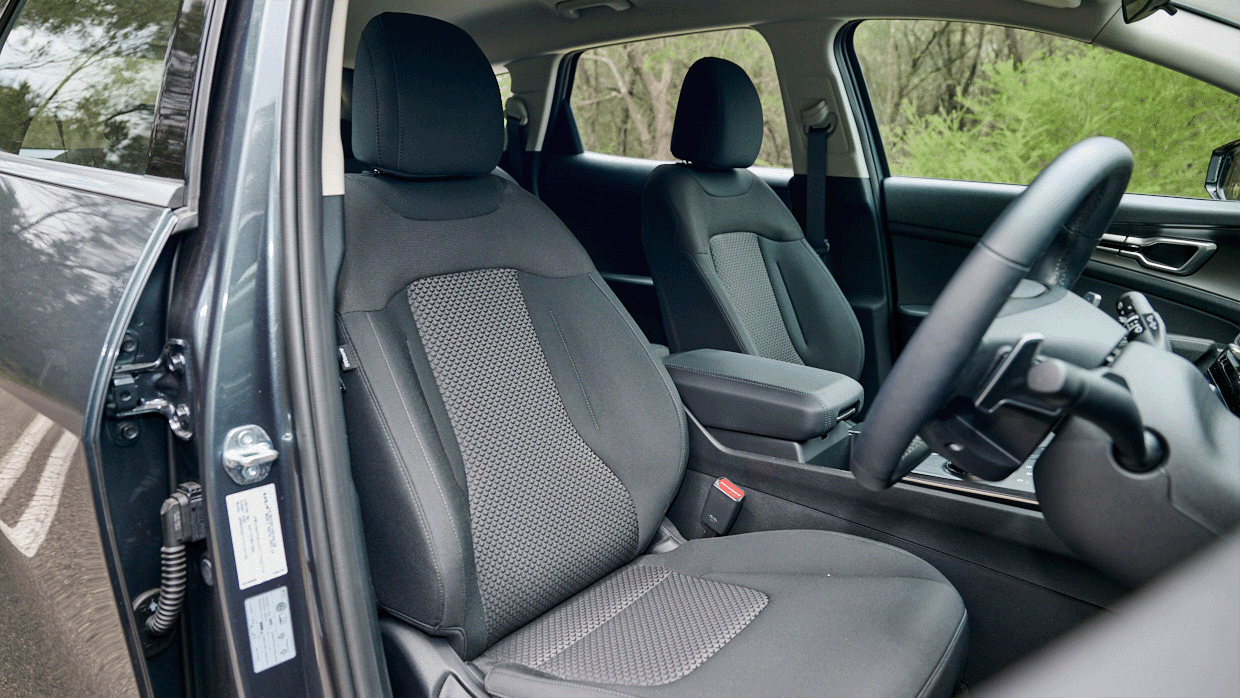
The oldest trick in the, erm, bag is the wheel: a high quality, tactile tiller as a focal point deflects myriad cabin execution sins elsewhere. And the squircle unit here, trimmed in supple leather and with neat, snickety paddleshifters, is a class act the likes of (plasticky) RAV4 struggle to match.
The broad display panel, floating in pleasing, slightly squishy vinyl-trimmed dash fascia with a deft blend of satin metal highlights and glossy glass-look features, adds an upmarket vibe in front passenger’s peripheral vision.
A neat driver’s screen trick, too: its brightly lit, colour-varied display cleverly disguises the fact that it’s not a fulsome 12.3-inch screen at all (as found further up the Sportage range) but a small four-inch screen flanked by some basic but fully effective LCD character readouts. Clever stuff.
Not quite so ingenious is retaining the centre console garnish shared with higher-grade variants, yet feature five conspicuously blank panels absent of various feature controls, as a reminder of sorts to the owner that they’ve bought the rental rank spec.
Ditto the door cards, which are minted wholly in such hard and shiny plastic that look lifted from a commercial grade ute (or worse). There’s no armrest padding, either, so the only benefit one imagines is that it’s utilitarian enough to hose down after ‘colourful misadventure’.
The front seats seem a little comfier than Sportage pews pre-2025 facelift: nicer shape, softer padding in the squab. They don’t suffer much for their purely mechanical nature or lack of lumbar adjustment, and once again cloth trim proves vastly favourable to the clammy vinyl trading as faux leather in rival options.
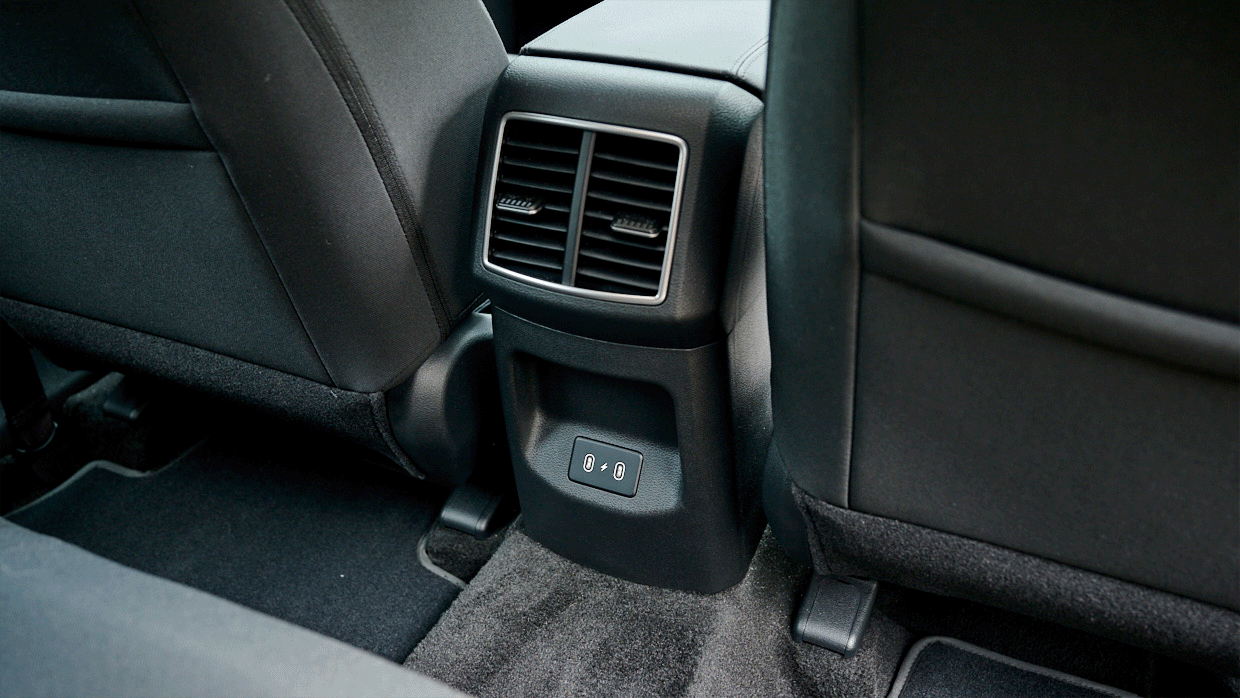
The media system is straightforward and intuitive to use, albeit lacking much in features – expectedly, there are no proprietary sat-nav or 360-camera systems here. The dedicated, increasingly old-school HVAC control panel is welcome, as is the dual-zone design and inclusion of rear air vents.
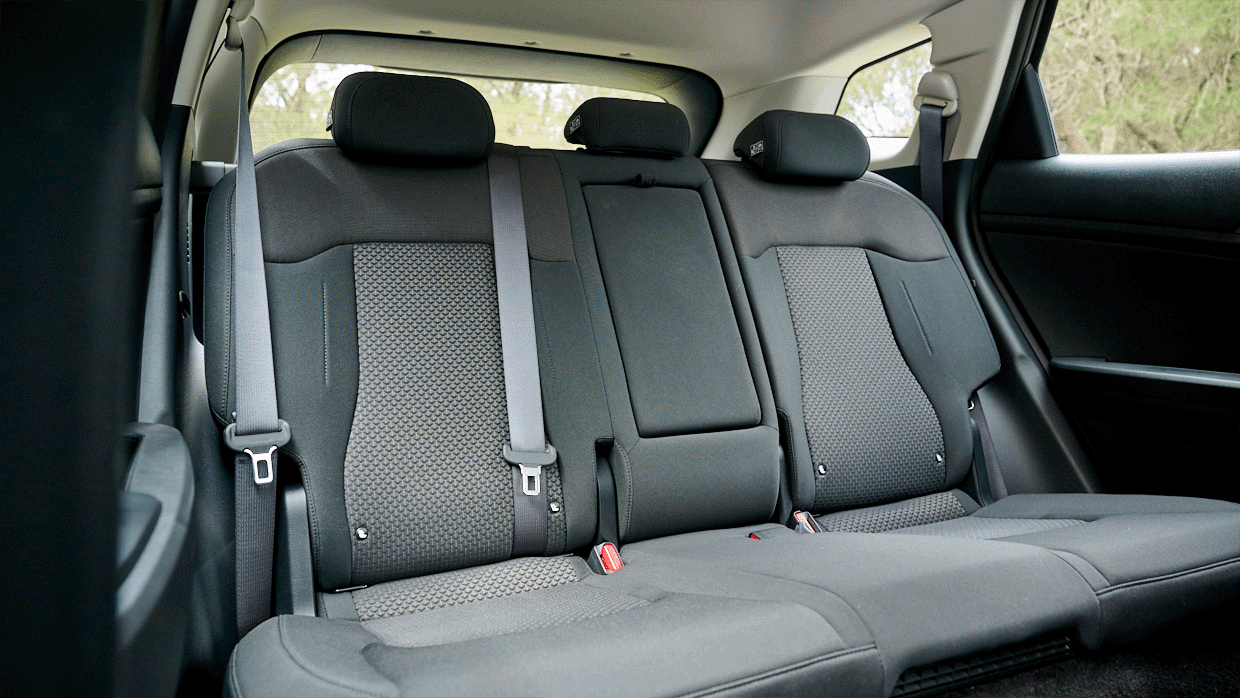
Row two feels very roomy, with lots of knee and head room and good visibility through to the first row – great for younger kids. The rear bench, though, is unusually bucketed and even sporty in contour, which is good form hugging but less so for lounging about on long road trips.
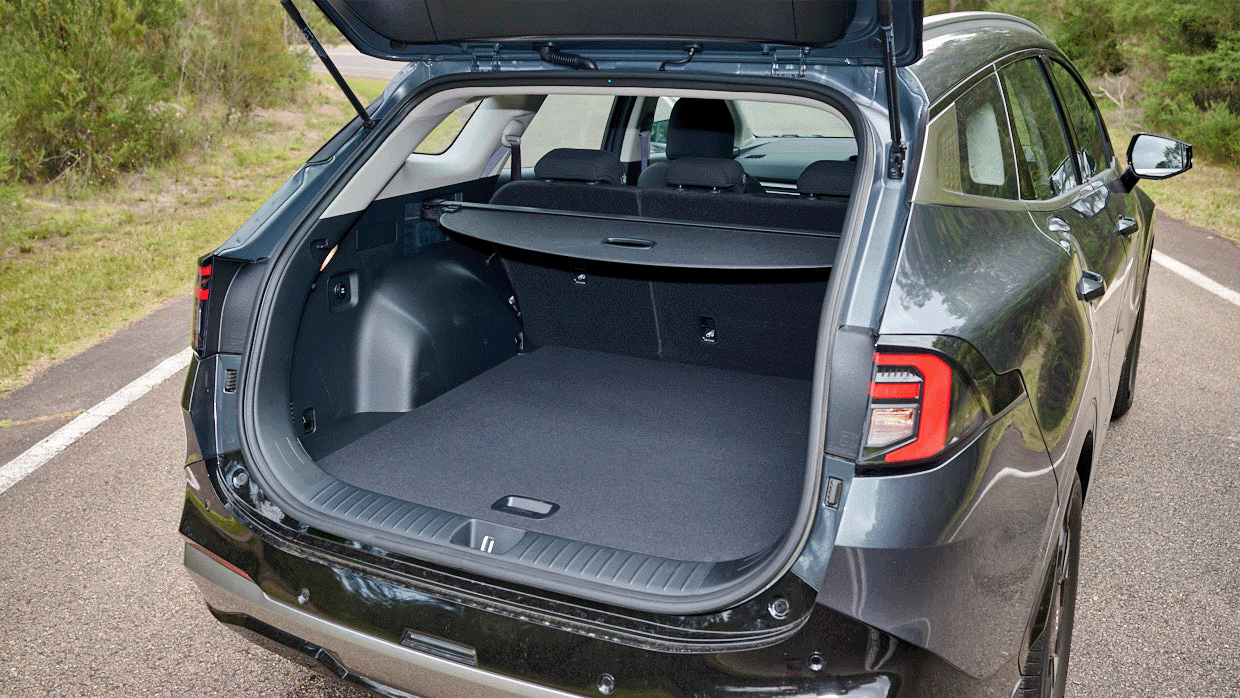
The boot is big, too, its 586 litres quite a bit up on the space offered in diesel versions (543L), with nice square proportions that’s handy for bulky objects. A space saver is under the flat floor, in a cavity that does look suspiciously capable of fitting a full-size wheel.
The claimed 4.9L/100km combined and highway consumption is quite genuine in the real-world and it’s 0.1L thrifter per hundred urban. Interestingly, it’s quite different to AWD versions that bring 5.4L combined, 3.6L urban and 6.5L highway claims.
That’s not quite as frugal as a RAV4 (mid-fours) but still offers almost 1000km of touring range and, unlike its Toyota rival, the Sportage petrol-hybrid runs on cheapy 91RON.
Five years of servicing costs $2613, averaging $522.60 per visit – not RAV4 cheap – with 12-month/10,000km intervals. Warranty is seven years of unlimited-kilometre coverage.
Budget Direct told us the median annual premium purchased for the first time between 1/8/25 and 1/8/26 to comprehensively insure a new Kia Sportage was $1367. Individual circumstances and policy terms may vary.
Of course, everybody’s situation is different, and the premium will vary according to make and model, and other things insurers take into account, such as your postcode, driving history, who drives the car, where you garage the car and more.
Please quote for yourself. Subject to meeting underwriting criteria. Insurance issued by Auto & General Insurance Company Limited. See PDS & TMD at budgetdirect.com.au.
The last variant we tested, the SX, seemed slim-picked on features for its circa-$50K on-road ask. The S, though, seems more palatable for around $45K driveaway – still lean on frills but it offers the same baked-in goodness.
The offer price ought to stick, because it lands the base Sportage in the same pricing tier as key rivals mentioned above. At a higher ‘regular’ price-point, the hybrid Kia sails out of realistic contention on value.
As it stands, it’s an easy short-lister for families on a tighter budget. One that shines brighter not so much in what it’s got, but how it is to live with for all aboard.
Those persistent ADAS annoyances aren’t deal-breakers – at least for some buyers – but it remains a shame that Kia (and Hyundai and Genesis) continue to fit them for the local market that, unlike other regions, don’t demand it in legislation.
About Chasing cars
Chasing Cars reviews are 100% independent.
Because we are powered by Budget Direct Insurance, we don’t receive advertising or sales revenue from car manufacturers.
We’re truly independent – giving you Australia’s best car reviews.
The estimate provided does not take into account your personal circumstances but is intended to give a general indication of the cost of insurance, in order to obtain a complete quote, please visit www.budgetdirect.com.au. Estimate includes 15%^ online discount.
^Conditions Apply
Budget Direct Insurance arranged by Auto & General Services Pty Ltd ACN 003 617 909(AGS) AFSL 241 411, for and on behalf of the insurer, Auto & General Insurance Company Limited(ABN 42 111 586 353, AFSL 285 571).Because we don’t know your financial needs, we can’t advise you if this insurance will suit you. You should consider your needs and the Product Disclosure Statement before making a decision to buy insurance. Terms and conditions apply.
Indicative quote based on assumptions including postcode , 40 year old male with no offences, licence suspensions or claims in the last 5 years, a NCD Rating 1 and no younger drivers listed. White car, driven up to 10,000kms a year, unfinanced, with no modifications, factory options and/or non-standard accessories, private use only and garaged at night.
^Online Discounts Terms & Conditions
1. Discounts apply to the premium paid for a new Budget Direct Gold Comprehensive Car Insurance, Third Party Property Only or Third Party Property, Fire & Theft Insurance policy initiated online on or after 29 March 2017. Discounts do not apply to optional Roadside Assistance.
2. Discounts do not apply to any renewal offer of insurance.
3. Discounts only apply to the insurance portion of the premium. Discounts are applied before government charges, taxes, levies and fees, including instalment processing fees (as applicable). The full extent of discounts may therefore be impacted.
4. We reserve the right to change the offer without notice.