Powered by

-
Car Reviews
Latest reviews
-
Car News
Latest news
-
Car Comparisons
Latest comparisons
- Chasing Deals
Latest reviews
Latest news
Latest comparisons
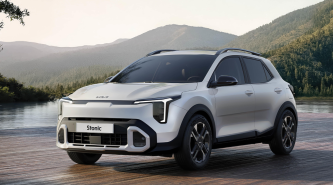
Neatly sized, impressively packaged and with turbo performance bolstering admirable dynamic talent, the base Stonic proves there’s joy in simple pleasures
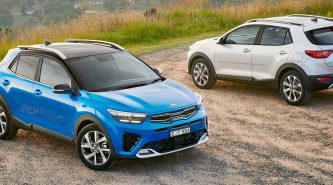
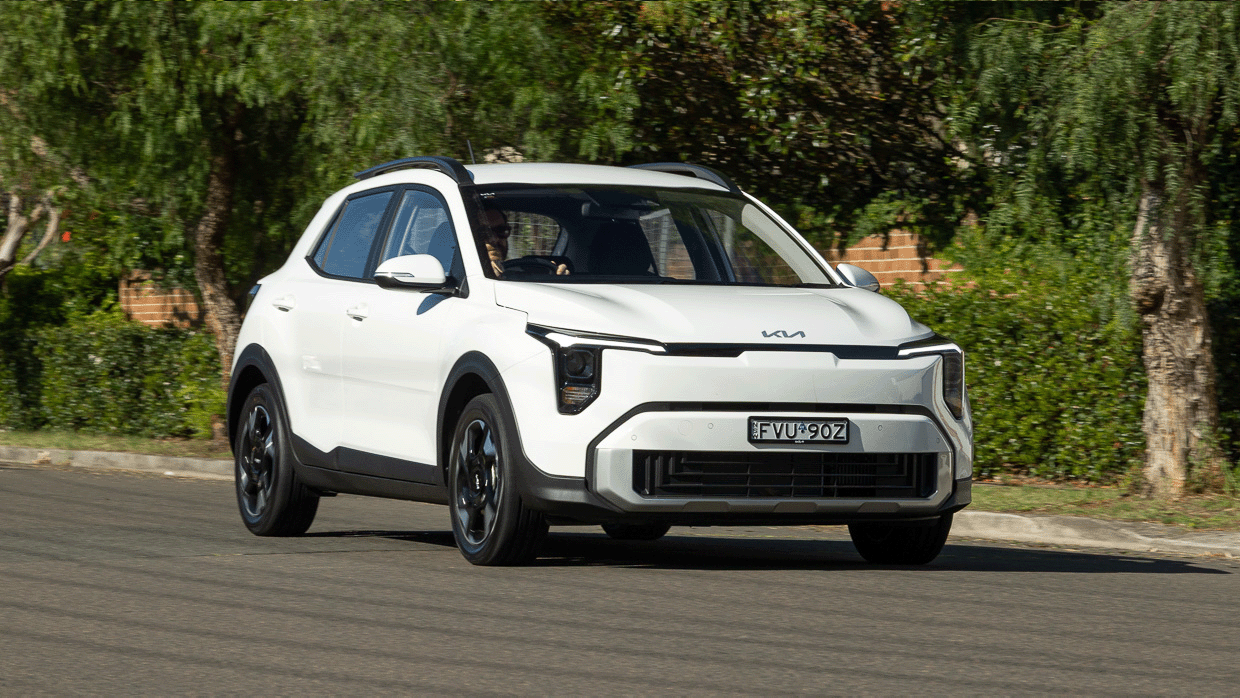
If you’re pining for a 30-grand new car crammed with gadgets, best look away now – the facelifted 2026 Kia Stonic S base model is an engineering-led, European-style light SUV whose excellence is derived from the sophisticated way it drives, not how brightly it glimmers in a showroom or the number of ‘labour-saving’ devices it offers.
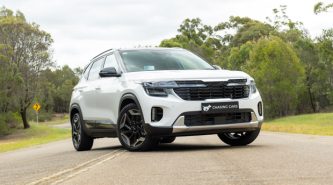
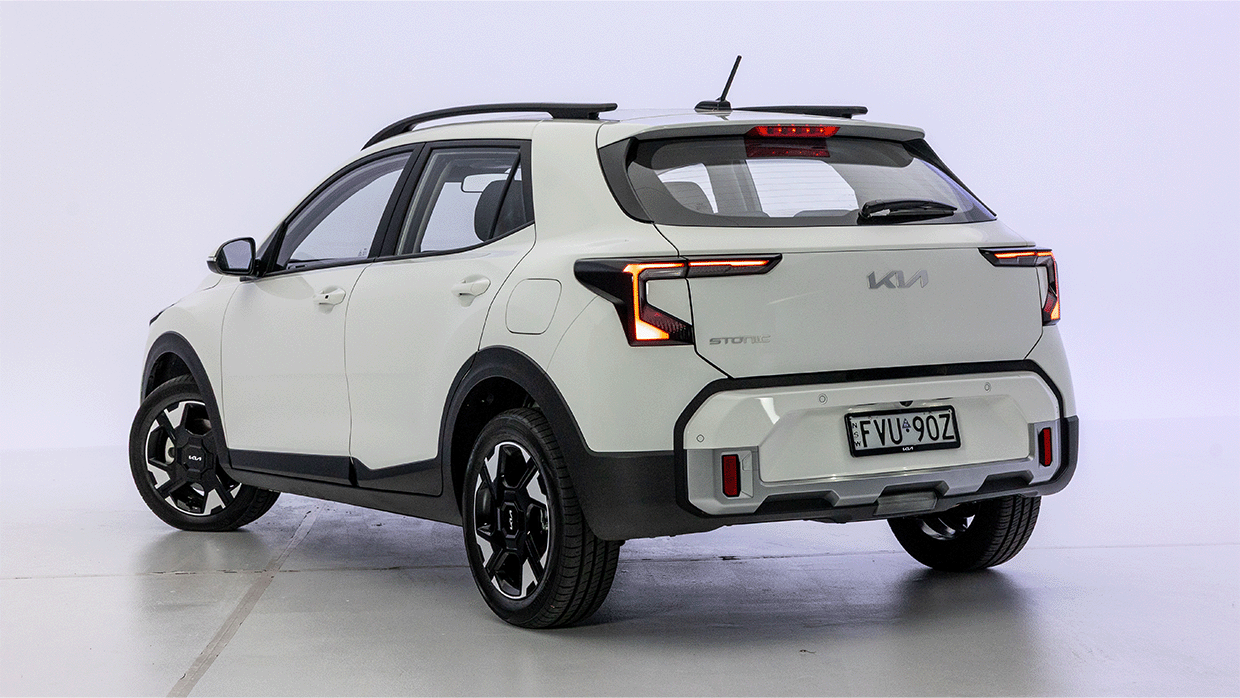
Originally launched way back in 2017 in Europe, the Stonic arrived in Australia in early 2021 following its first ‘mid-life’ update, positioned beneath the larger Seltos. But it has been extensively made over again for MY26 with an even more comprehensive facelift that debuts new front and rear styling, a completely new dashboard and a mild-hybrid drivetrain.
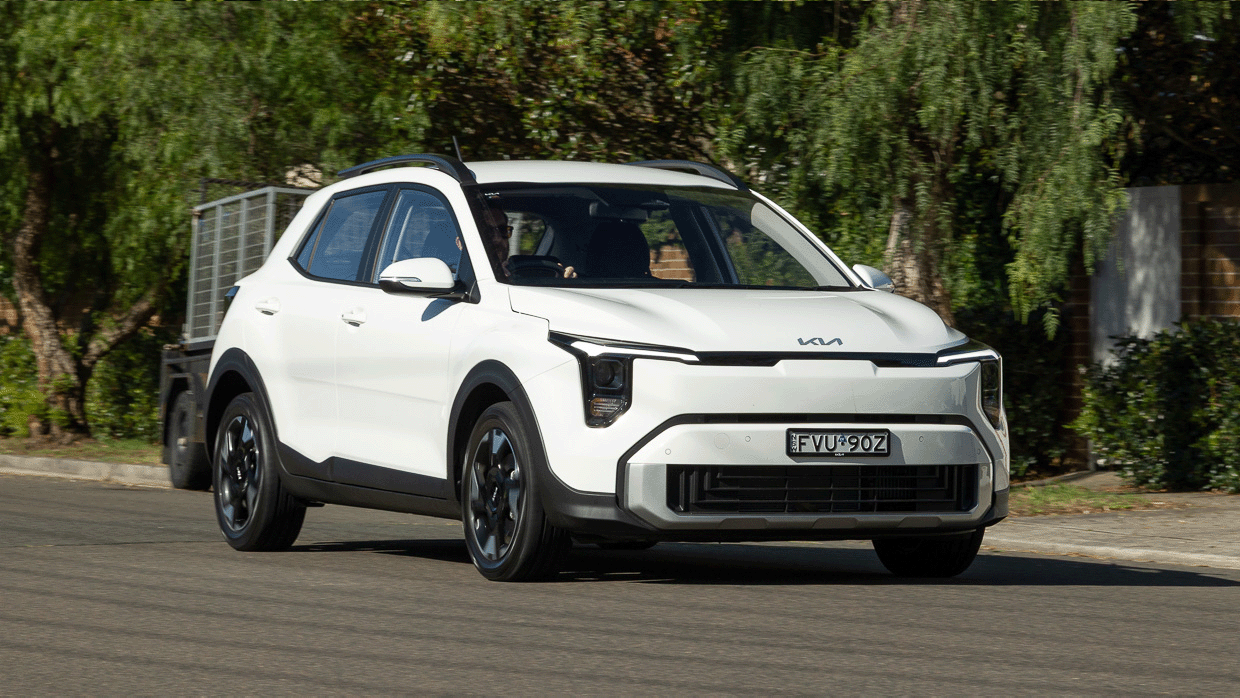
The things that didn’t change, such its packaging space and its overall suspension tune, didn’t really need to change. So the Stonic remains a refreshingly compact light SUV that is both usefully practical and genuine fun to drive.
At $29,990 driveaway (as of August 2026), the Stonic S isn’t a bargain-basement offering, despite being the most affordable Stonic variant, sitting beneath the Sport ($34,690 driveaway) and GT-Line ($38,190 driveaway).
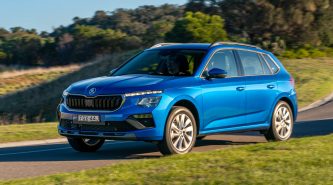
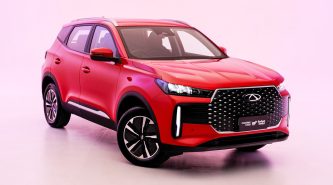
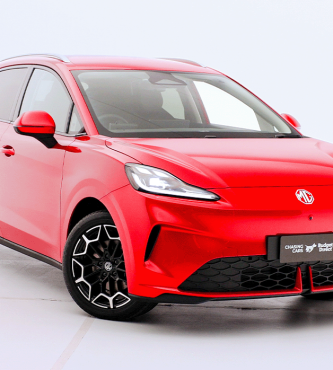
The Kia is undercut or matched by several fully featured Chinese small SUVs such as the Chery Tiggo 4 Hybrid Urban ($30K driveaway), GAC Emzoom Luxury ($27K driveaway), Jaecoo J5 Summit ($30K driveaway) and MG ZS Essence Turbo ($29K driveaway), as well as the Czech Skoda Kamiq ($30K driveaway).
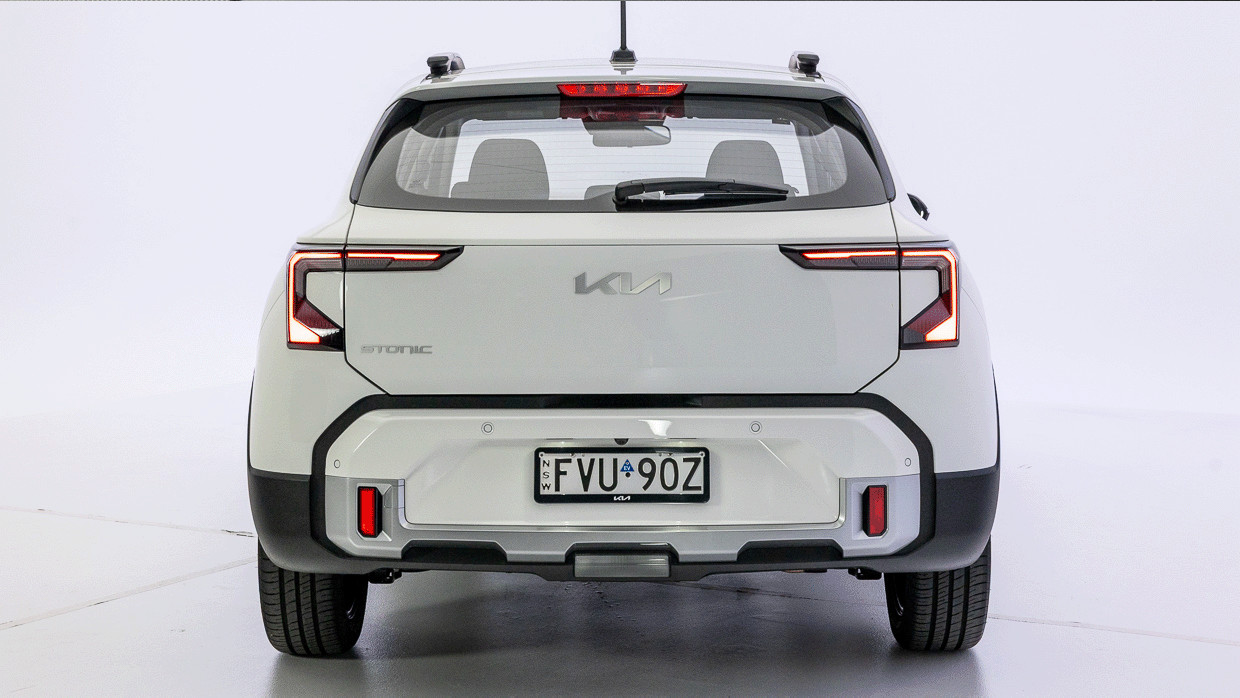
But only the Skoda shares Kia’s mindset – driving flair over features, though still with enough equipment to satisfy most buyers, in an offering that’s backed by a seven-year warranty.
If you understand what ‘European driving flavour’ means (and why that’s a positive statement), then you’ll appreciate what the Kia Stonic S brings to light SUVs.
This is a proper Euro-market car that feels confidently planted, but also supremely agile with excellent handling poise and light, precise steering that enhances its fun-to-drive factor. It’s a communicative and involving small car – an increasing rarity in modern times.
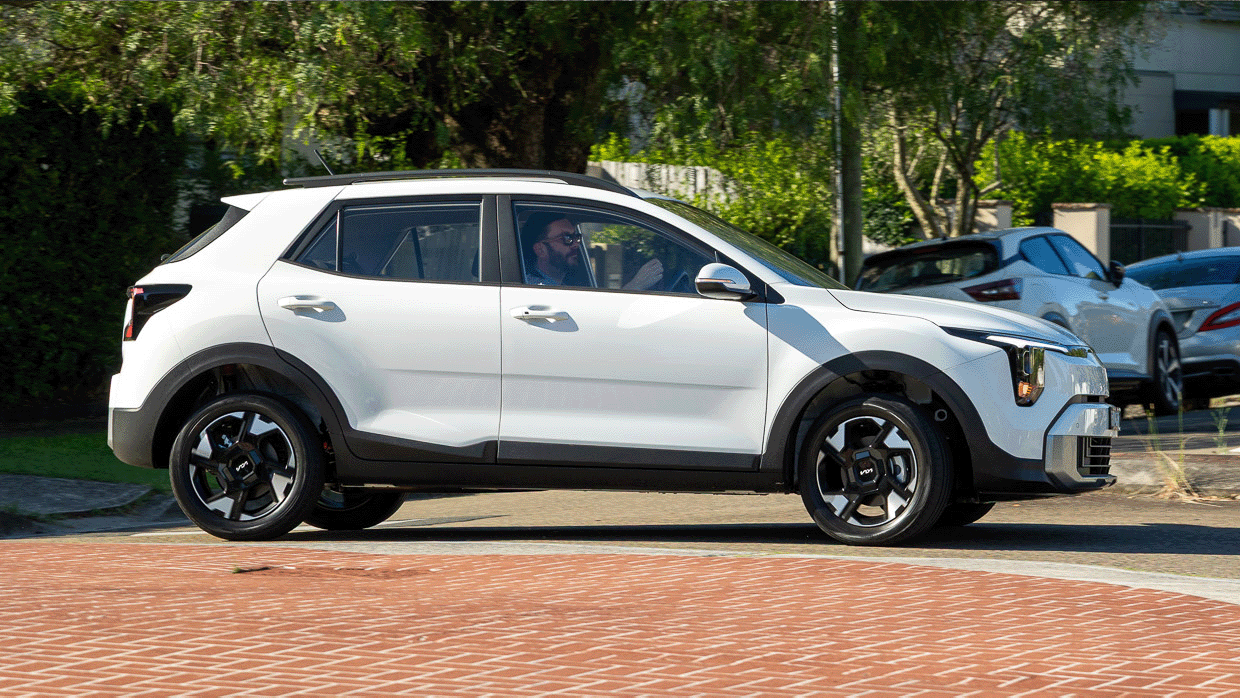
The Stonic rides well too – firm, but with proper damping control – and its tuneful 1.0-litre three-cylinder turbo engine is delightfully torquey, nicely garnishing its keenly accomplished dynamic vibe.
In this regard, the classy Stonic massively distances itself from its flawed Chinese rivals – particularly the poorly calibrated, completely disconnected driving feel of the Chery Tiggo 4.
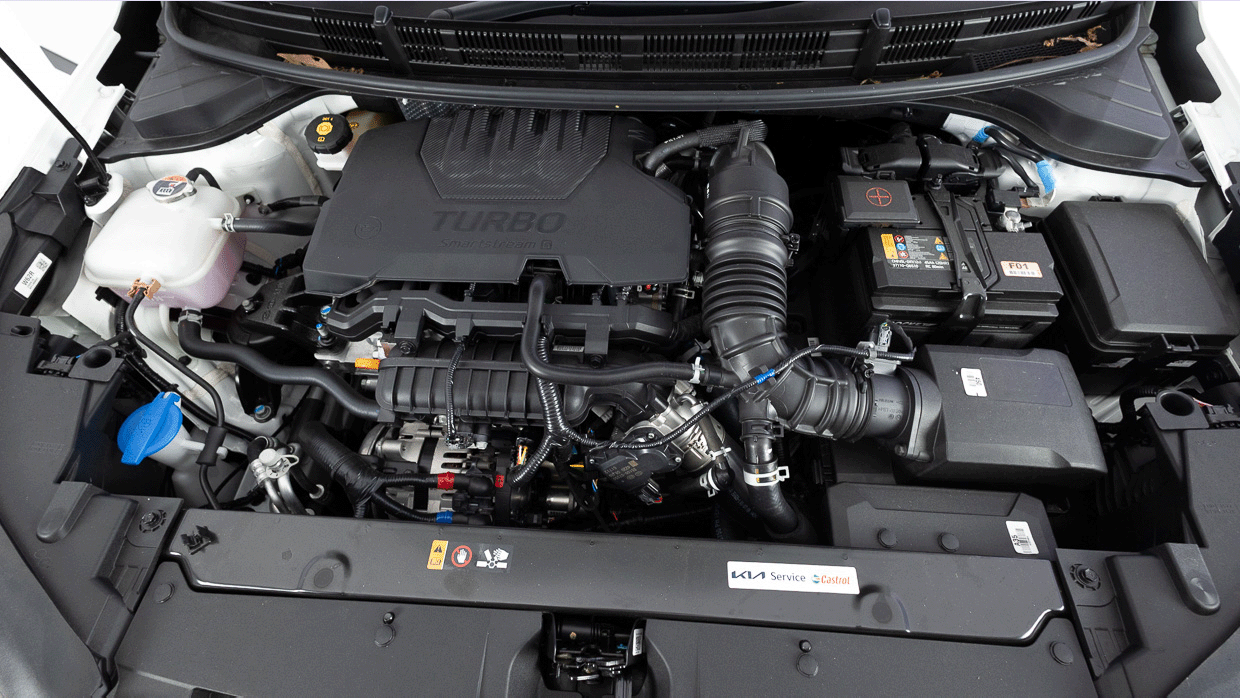
After moving to an all-turbo line-up in mid-2024, the MY26 Stonic goes one step further with a new 48-volt mild-hybrid system that keeps the 1.0-litre three-cylinder’s torque at 172Nm (across a broad band from 1500-4000rpm) but lifts power to 88kW (up from 74kW), with most of this grunt increase accessed beyond 5000rpm.
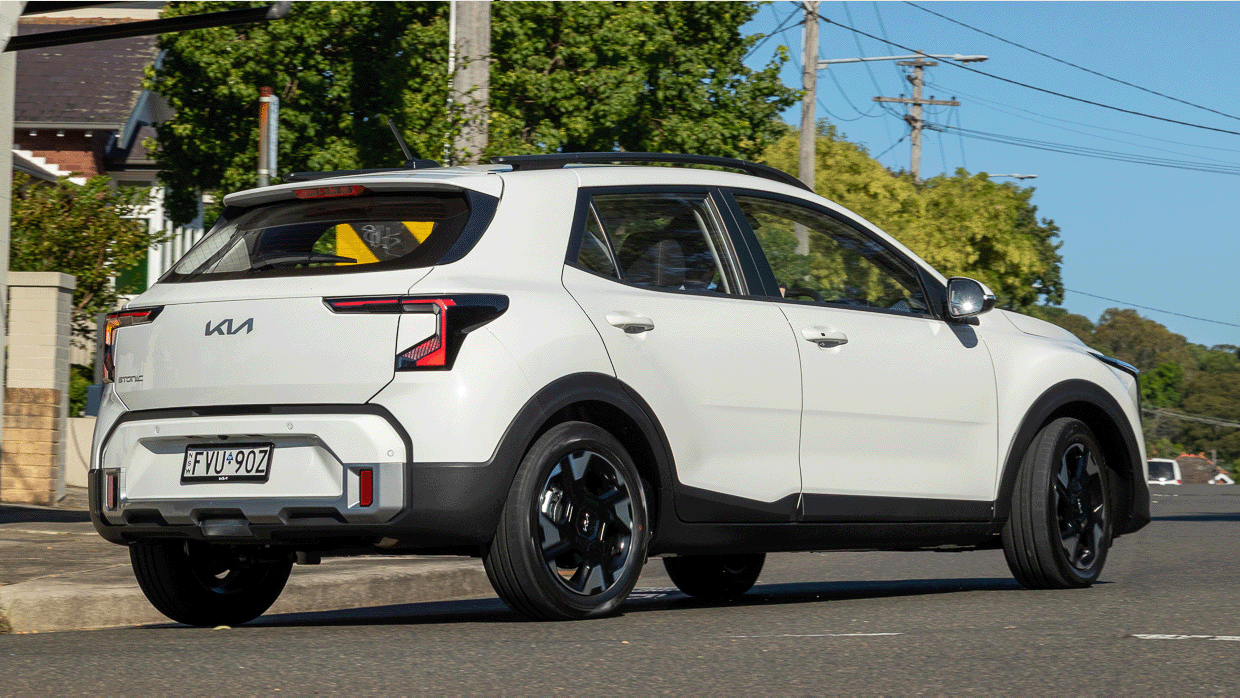
The reason for the mild-hybrid introduction is NVES fuel-efficiency – the MY26 Stonic claims an official combined fuel consumption of 5.0L/100km (down from 5.7L/100km in the MY25 car, and 6.7L/100km in the old 1.4 auto) – which perhaps also explains why the Stonic S defaults to an Eco drive mode at start-up.
Here lies the main problem with the way the mild-hybrid Stonic drives – its willful adherence to Eco mode’s doughy throttle response, early upshifts and Valium-haze driveability, to the detriment of its actual real-world efficiency (see ‘Ownership Costs’). You can drive around it by frequently stomping the accelerator, but that quickly becomes tiring.
The solution is a dead-simple press of the drive-mode tab on the steering wheel to select ‘Normal’ mode. Suddenly, there’s much perkier powertrain response, more effortless driveability and sufficient tuning to complement the Stonic’s terrific handling.
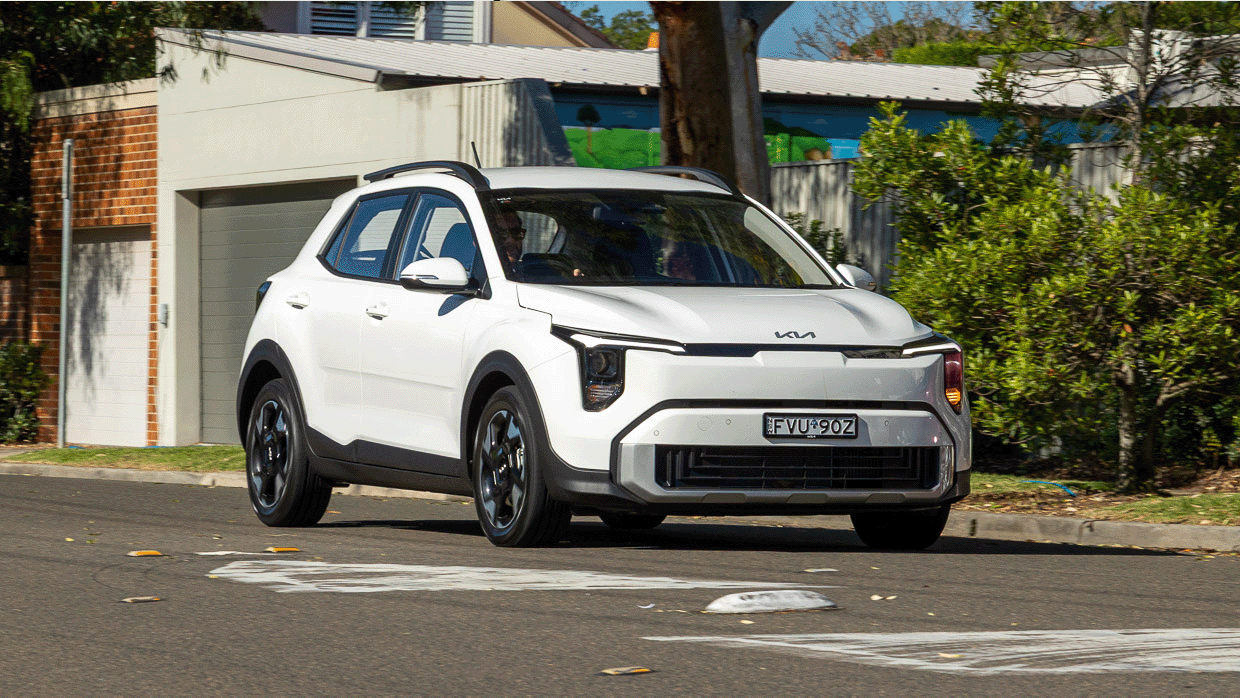
Kia’s seven-speed dual-clutch automatic transmission must shoulder some of the blame as it’s far less positive in its gear selection than the best of its ilk, though it comes good in full-throttle acceleration – upshifting briskly, to the accompaniment of the boosted engine’s charming three-cylinder thrum and newfound top-end thrust.
A side benefit of the Stonic S being essentially a nine-year-old car underneath is that it lacks several of today’s contentious active-safety features such as speed-limit warning and, arguably the most hated feature of all, driver attention monitoring.
But it does get lane-keep assistance (which can be turned off via a steering-wheel button), blind-spot monitoring, lead-vehicle departure alert, front and rear parking sensors, a rear camera with dynamic guidelines, LED daytime running lights, and AEB that includes pedestrian and cyclist detection (but not junction-turning assist) – all the safety essentials.
While the Stonic’s impressive dynamics clearly separate it from its Chinese competition, so does its interior – mainly because it doesn’t have vinyl seats attempting to pass themselves off as ‘leather-like’, or any resultant petro-chemical plastic pong.
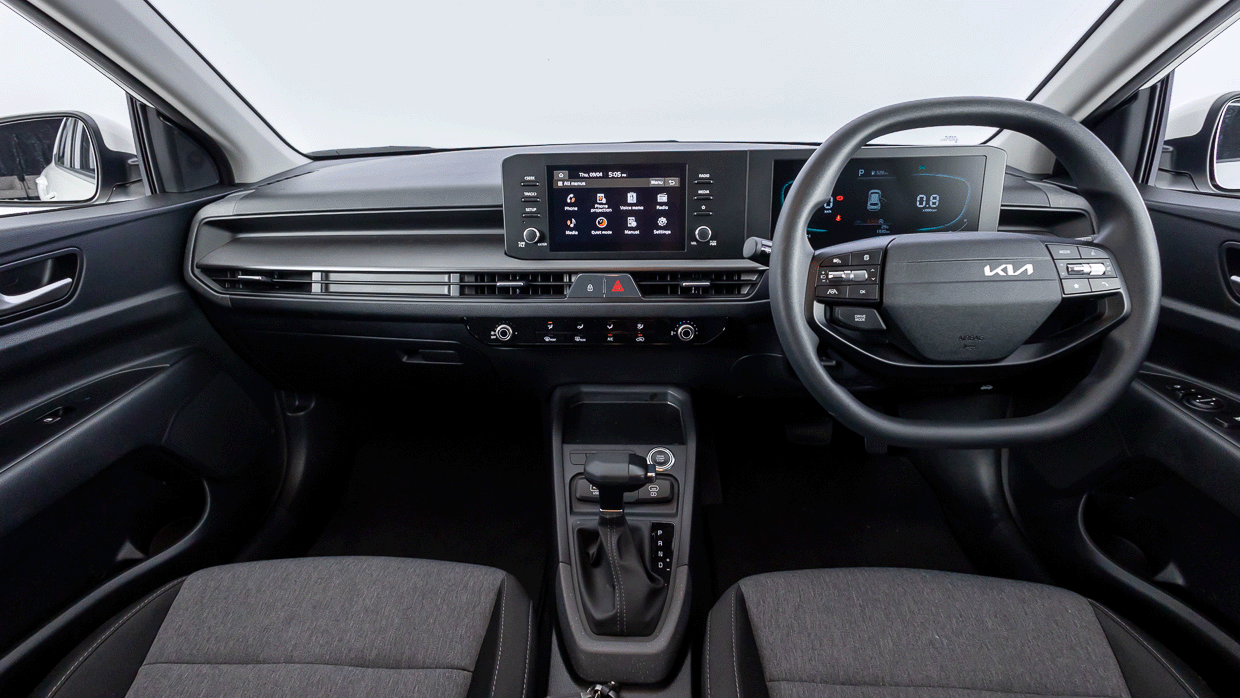
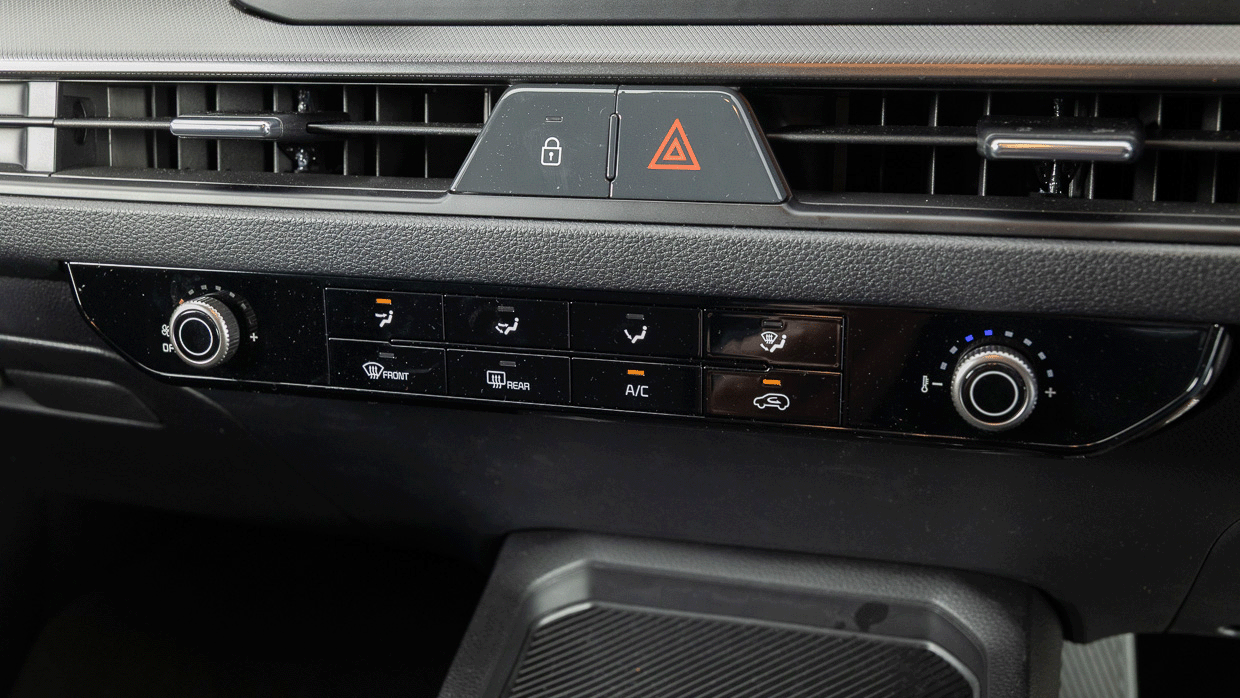
Instead, it’s a robustly constructed 2010s-era car that prioritises serviceability and functionality over superficialities. For example, simple non-digital HVAC controls with push-button air-con, a proper T-bar transmission shifter, front doors that take large bottles, and a low-rise centre console that isn’t constructed around a rarely used lower tray.
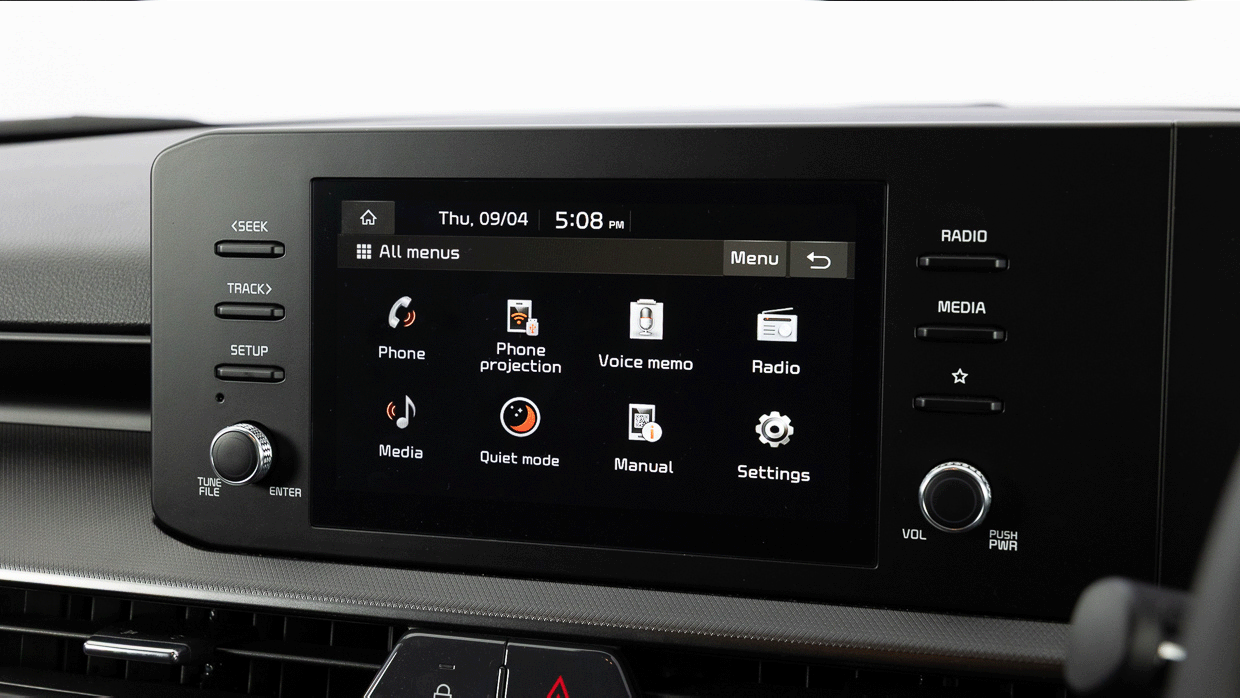
Being the base spec, it does get a less-fancy multimedia set-up with a modestly sized 8.0-inch screen, though it also gets physical shortcut buttons (yay!), wireless Apple CarPlay/Android Auto and six decent speakers for better-than-expected audio cred.
The Stonic’s driving position feels only slightly higher than a normal car – meaning it envelops you, rather than the feeling that you’re sitting on top of it, but still with a great view forward. And that blends beautifully with its nimble size, keen handling and baby-Euro feel.
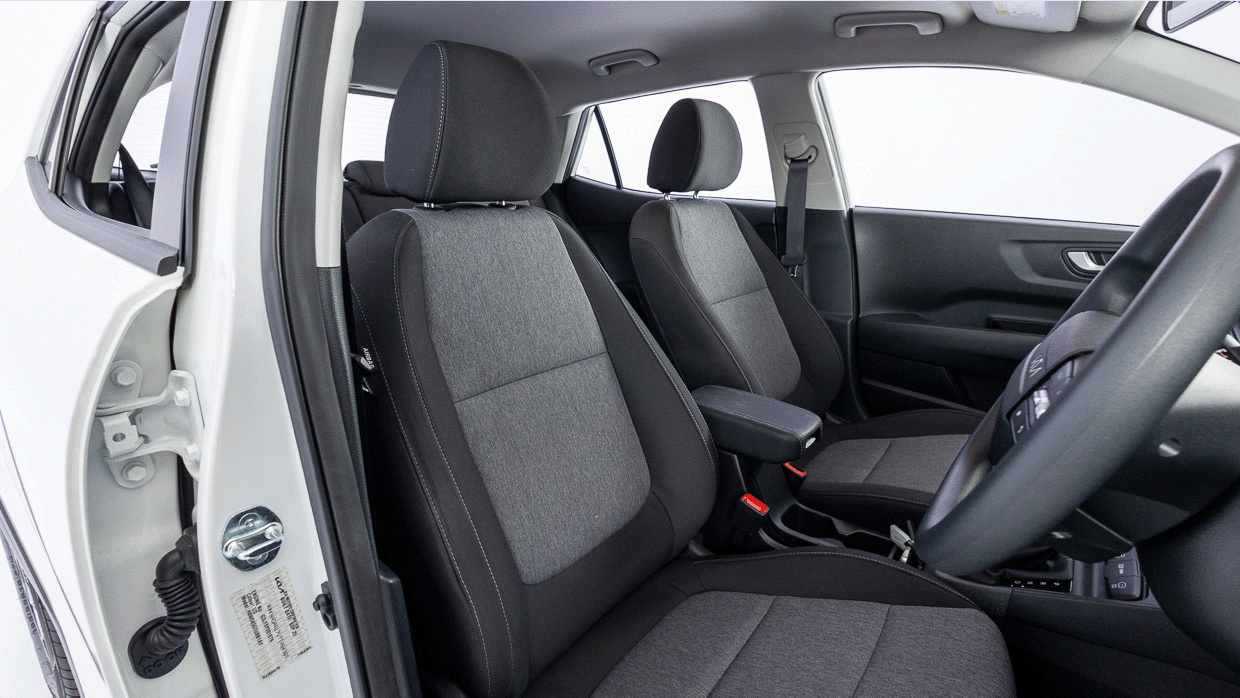
The Stonic S doesn’t get an upholstered steering-wheel rim, but its grained plastic feels relatively pleasant, and it does get two-tone cloth seat trim and a stitched-vinyl padded centre armrest. Not everyone loves the support of the firm front seats, however they accommodate larger body frames well.
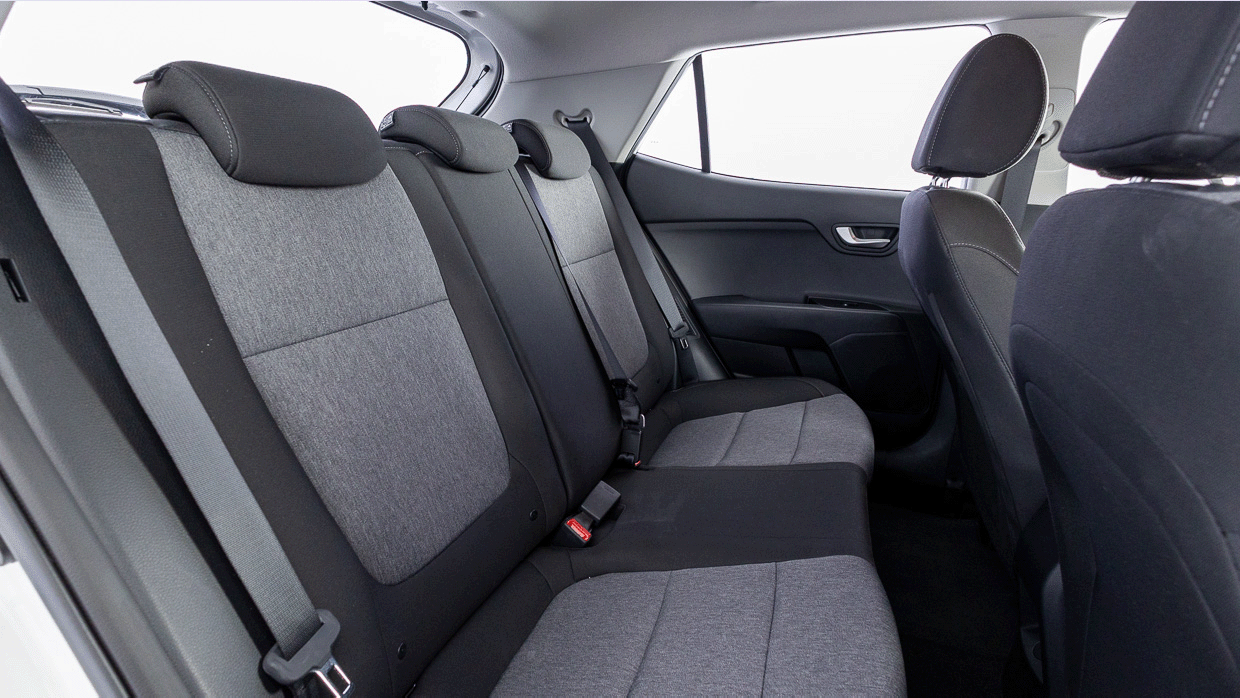
The Stonic’s rear seat isn’t hugely roomy, but given this car’s compact external dimensions, it does an excellent job of making the most of what it has. The bench is really quite comfortable with a relatively deep cushion, just enough leg and toe room, and impressive forward vision – things that cannot be said about many of the Stonic’s $30K rivals.
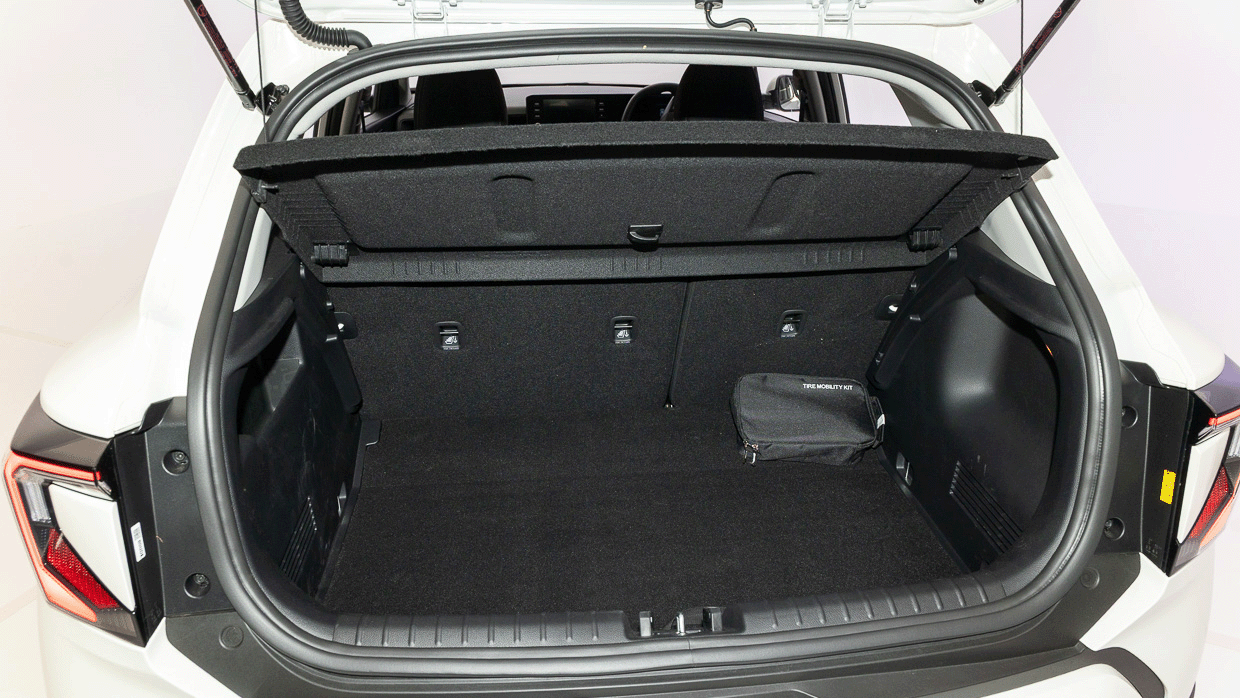
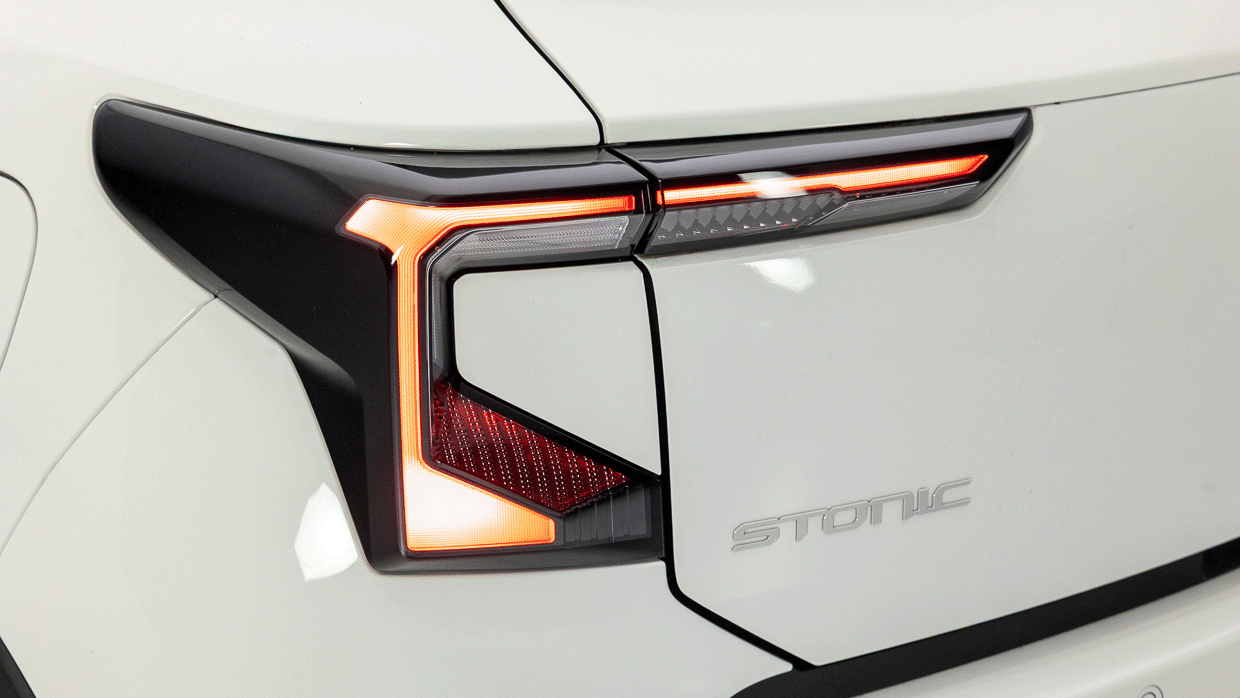
And it backs that up with a good boot for a light SUV – offering 352 litres of volume below the luggage cover, though without any hidden additional space (or a space-saver spare wheel) below the floor. The mild-hybrid Stonic packages its 48-volt battery there instead.
The official combined fuel consumption figure for the MY26 Kia Stonic is 5.0L/100km, with an urban figure of 5.8L/100km and an extra-urban (highway) figure of 4.5L/100km – all while drinking 91RON regular unleaded.
With its 45-litre tank, the theoretical range of the Stonic S is 900km.
However, we struggled to get anywhere near those fuel-consumption numbers and saw a purely city-based figure of 9.0L/100km, while testing its performance and multi-mode driveability.
And there’s the aspect of its transmission lethargy in Eco drive mode, which frequently necessitates big accelerator inputs to drive around its far-from-ideal calibration. The solution is to select Normal mode (via a steering-wheel button) and enjoy a more relaxed/efficient real-world driving experience.
On cruise-controlled freeway journeys, the Stonic gets much closer to its official figures.
Recommended service intervals are every 12 months or 10,000km, with the Stonic’s five-year/50,000km servicing cost being a rather steep $2464.
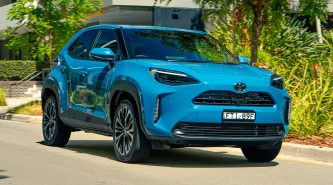
That’s even pricier than the MG ZS Essence Turbo ($2029 for 75,000km) and considerably more than a Chery Tiggo 4 Hybrid ($1495 for 75,000km) or a Toyota Yaris Cross Hybrid ($1375 for 75,000km).
Kia’s new-vehicle warranty in Australia is seven years/unlimited kilometres.
Budget Direct told us the median annual premium purchased for the first time between 1/7/25 and 1/7/26 to comprehensively insure a new Kia Stonic was $1207. Individual circumstances and policy terms may vary.
Of course, everybody’s situation is different, and the premium will vary according to make and model, and other things insurers take into account, such as your postcode, driving history, who drives the car, where you garage the car and more.
Please quote for yourself. Subject to meeting underwriting criteria. Insurance issued by Auto & General Insurance Company Limited. See PDS & TMD at budgetdirect.com.au.
If you’re all about visual bling and supposedly fancy features, then the Kia Stonic S is unlikely to be on your radar – but perhaps it should be.
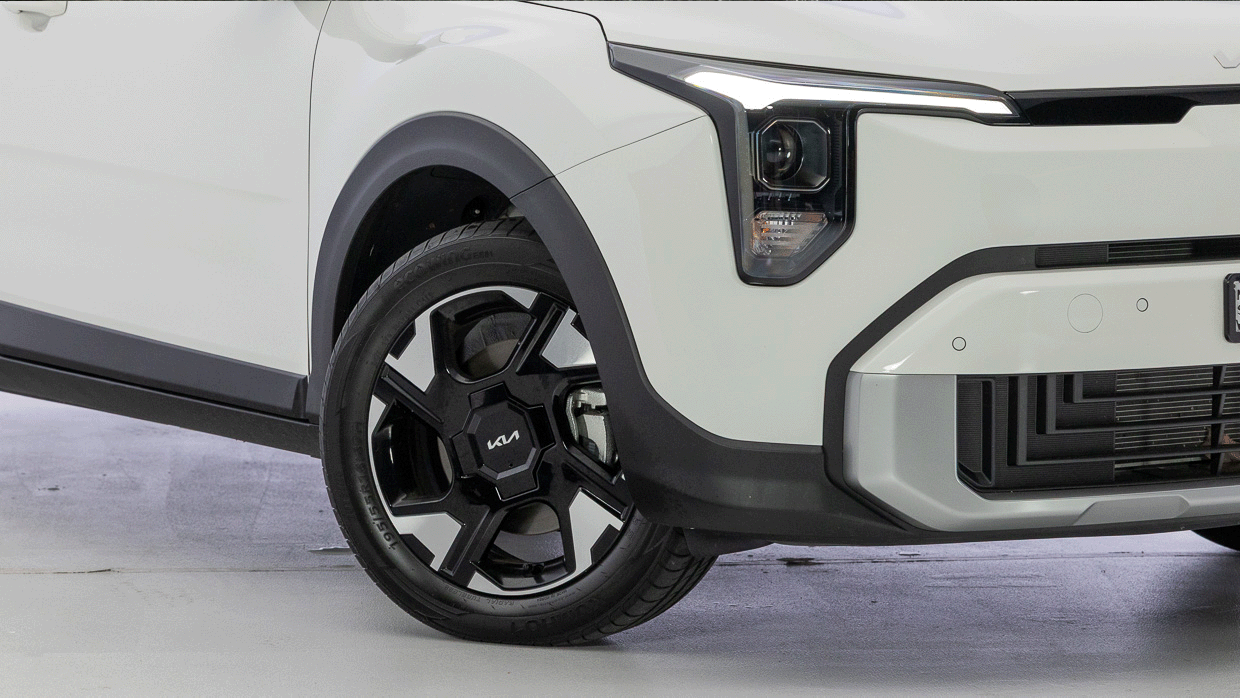
Sure, its 16-inch alloys look quite small, but the 195/55R16 tyres they wear give it the best ride quality among its brethren, which combines with arguably the best handling in its price class for a proper European-style light SUV wearing an affordable sub-$30K driveaway price tag.
The Stonic S succeeds in making the most of what it has. And it packs all the features you could ever really need in a modern car, while leaving out several items that you don’t.
If you place value on how good a car is to drive and can forgive a few flaws to fulfill that desire, then the Kia Stonic S remains an underrated cracker of a thing – light, keen, manoeuvrable and fun.
But its dual-clutch transmission can be a bit lumpy and its mild-hybrid turbo-petrol powertrain doesn’t really achieve the fuel-efficiency excellence that its on-paper figures promise. Plus, it’s also more expensive to service than almost all its rivals…
…which makes the Kia Stonic S ultimately a heart-over-head purchase. But if driving fun and character are what appeals to you, then the Stonic offers something that none of its Chinese rivals come close to achieving.
Key specs (as tested)
About Chasing cars
Chasing Cars reviews are 100% independent.
Because we are powered by Budget Direct Insurance, we don’t receive advertising or sales revenue from car manufacturers.
We’re truly independent – giving you Australia’s best car reviews.
The estimate provided does not take into account your personal circumstances but is intended to give a general indication of the cost of insurance, in order to obtain a complete quote, please visit www.budgetdirect.com.au. Estimate includes 15%^ online discount.
^Conditions Apply
Budget Direct Insurance arranged by Auto & General Services Pty Ltd ACN 003 617 909(AGS) AFSL 241 411, for and on behalf of the insurer, Auto & General Insurance Company Limited(ABN 42 111 586 353, AFSL 285 571).Because we don’t know your financial needs, we can’t advise you if this insurance will suit you. You should consider your needs and the Product Disclosure Statement before making a decision to buy insurance. Terms and conditions apply.
Indicative quote based on assumptions including postcode , 40 year old male with no offences, licence suspensions or claims in the last 5 years, a NCD Rating 1 and no younger drivers listed. White car, driven up to 10,000kms a year, unfinanced, with no modifications, factory options and/or non-standard accessories, private use only and garaged at night.
^Online Discounts Terms & Conditions
1. Discounts apply to the premium paid for a new Budget Direct Gold Comprehensive Car Insurance, Third Party Property Only or Third Party Property, Fire & Theft Insurance policy initiated online on or after 29 March 2017. Discounts do not apply to optional Roadside Assistance.
2. Discounts do not apply to any renewal offer of insurance.
3. Discounts only apply to the insurance portion of the premium. Discounts are applied before government charges, taxes, levies and fees, including instalment processing fees (as applicable). The full extent of discounts may therefore be impacted.
4. We reserve the right to change the offer without notice.