Powered by

-
Car Reviews
Latest reviews
-
Car News
Latest news
-
Car Comparisons
Latest comparisons
- Chasing Deals
Latest reviews
Latest news
Latest comparisons

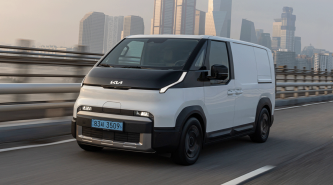
Kia’s second Platform Beyond Vehicle fits either eight cubic metres of things or nine people
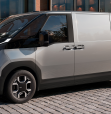
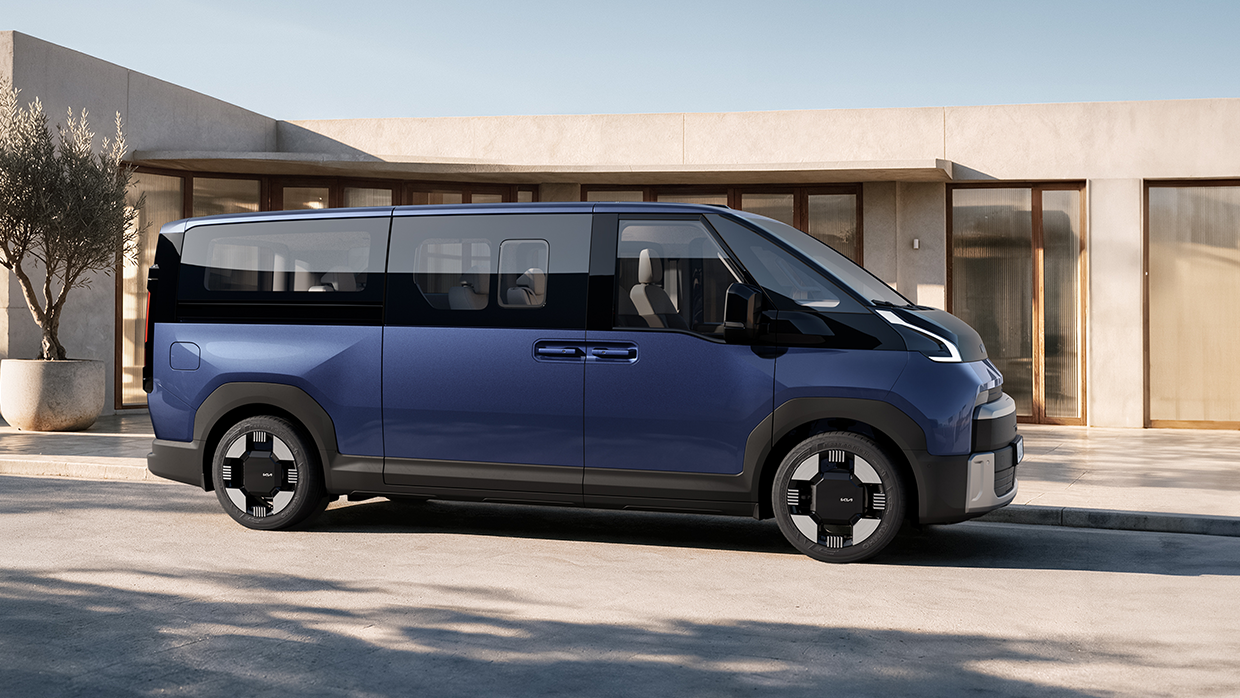
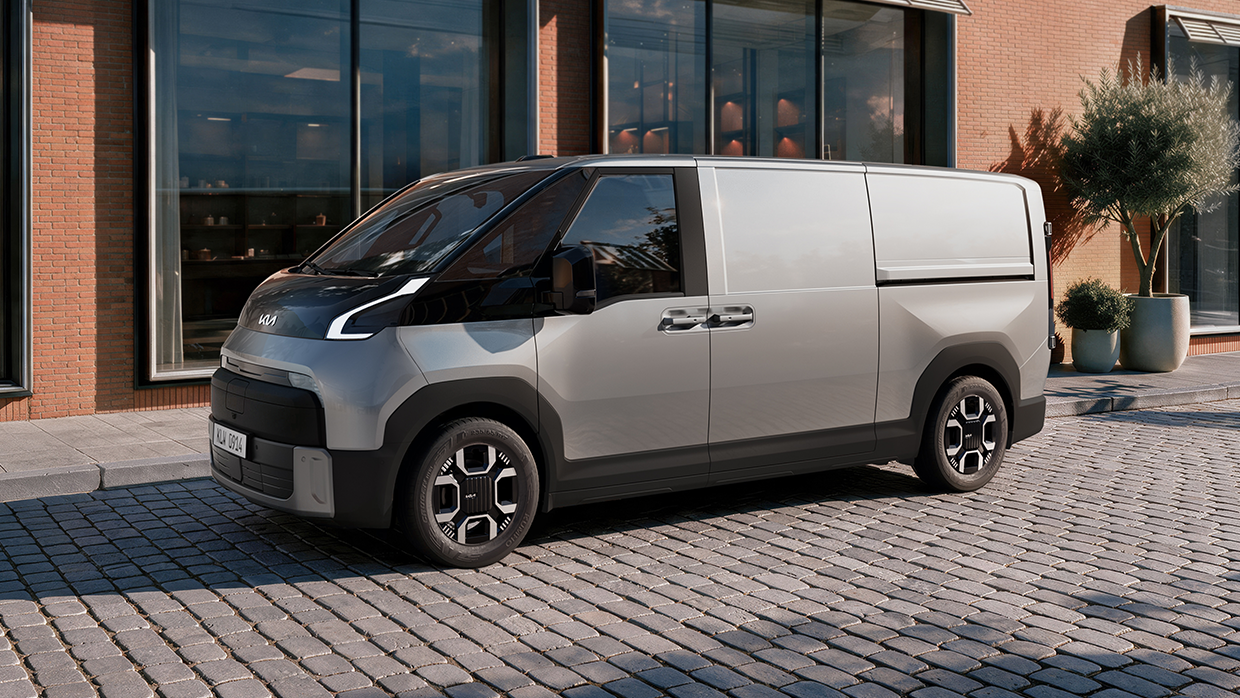
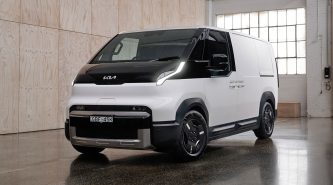
Kia’s second Platform Beyond Vehicle (PBV) electric van has broken cover. The PV5 now has a bigger stablemate, the PV7.
Due in Australia by the end of 2027, Kia’s large van will go on sale with local tuning from the brand’s ride and handling team and far more space than the PV5.
It won’t be alone in the electric van space, with the Renault Master E-Tech ($77,990 before on-roads), Ford E-Transit ($89,990 before on-roads) and Mercedes-Benz E-Sprinter ($104,864 before on-roads) fighting it. If the well-priced PV5 is any guide, expect the Kia PV7 to be closer to the Renault than the Mercedes.
Like the PV5, the PV7 is front-wheel drive for now, though all-wheel drive is planned for the future. “Up to” 200kW and 420Nm is produced by the motor, powered by an NCM (nickel, cobalt, manganese) battery of either 71.5kWh or 96.2kWh.
An 800V electrical system is standard. The PV7 can accept up to 350kW DC charging, theoretically enabling a 10-to-80-percent charge in 25 minutes.
Behind the motor is where things get interesting. The PV7 shares the PV5’s so-called E-GMP.S platform and Flexible Body System. In plain English, Kia’s electric vans are modular to enable the same basic van to wear many hats.
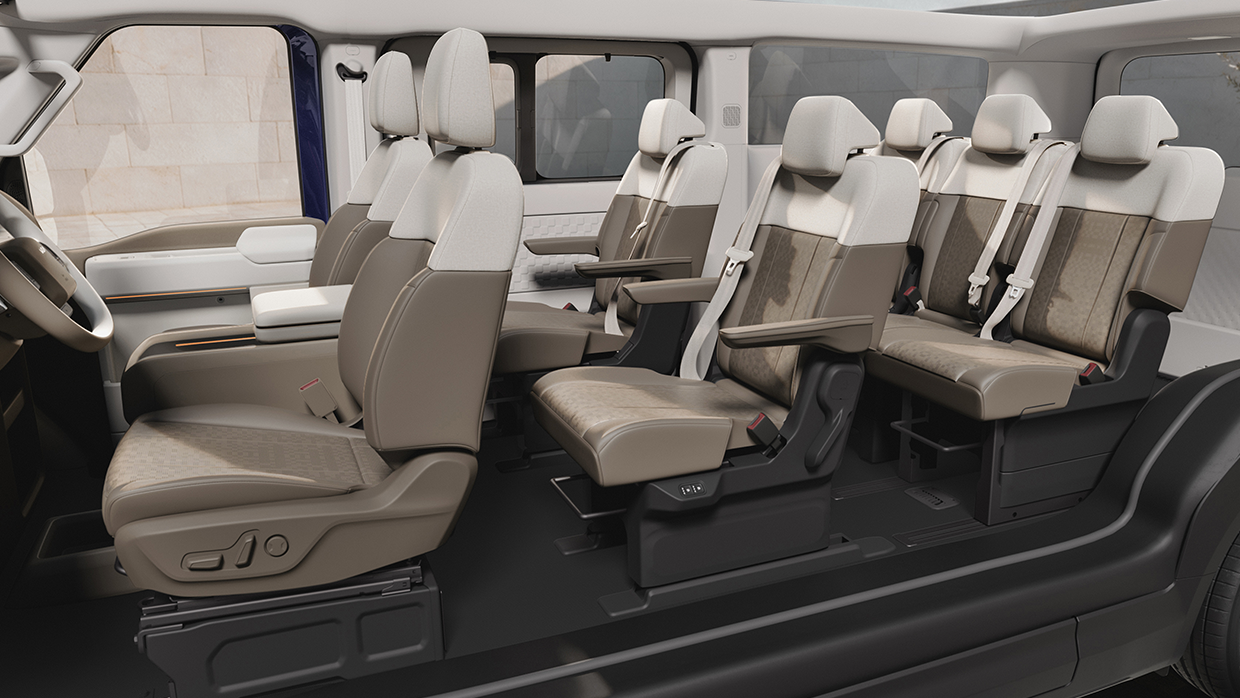
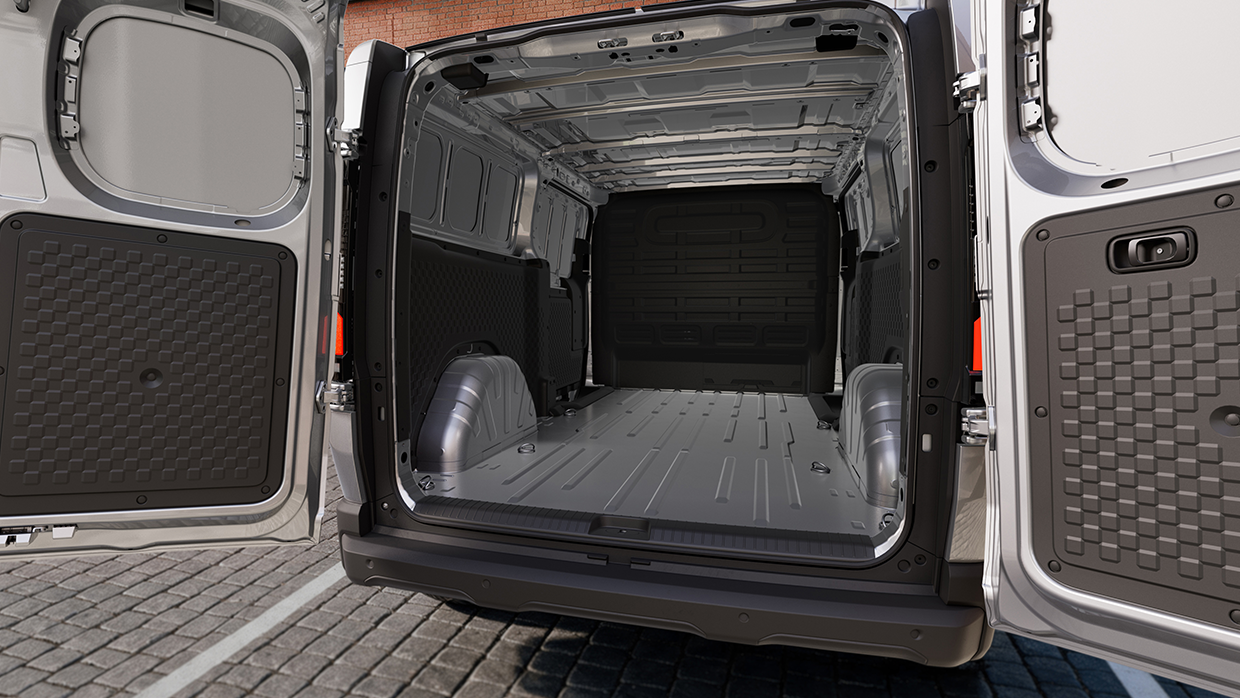
An in-house conversion centre in Korea lets Kia fulfil many specialist requests, but even the off-the-shelf options are plentiful. Six forms of PV7 are coming – a nine-seat Passenger version in Compact and Long bodies, a Cargo model in Compact, Long and High Roof bodies, and a cab chassis.
The PV7s displayed so far are the Long body, which is 5350mm long, 1995mm wide and 1990mm wide. That’s notably shorter than the smallest Master and Sprinter, but the Renault and Benz aren’t purpose-built EVs and therefore have front overhangs where the engine was.
The Cargo model can be had with up to eight cubic metres of space, but only two or three seats. In the latter, the middle seat becomes a tray when folded.
The driver is treated to Pleos, Hyundai and Kia’s clean-sheet infotainment system. The Korean giants have an AI program of their own named Gleo, enabling “natural-language control” of vehicle functions, navigation and messaging.
Hardware’s received as much attention as software. Entry steps and a grab handle on the A-pillar make constantly getting in and out less wearying. Physical buttons remain plentiful for the aircon, safety systems and media.
Kia’s introducing its own fleet management and maintenance software, the Kia Business Solutions Portal. The company hopes to increase efficiency by, among other things, giving businesses advance warning of faults.
Latest news
About Chasing cars
Chasing Cars reviews are 100% independent.
Because we are powered by Budget Direct Insurance, we don’t receive advertising or sales revenue from car manufacturers.
We’re truly independent – giving you Australia’s best car reviews.