Powered by

-
Car Reviews
Latest reviews
-
Car News
Latest news
-
Car Comparisons
Latest comparisons
- Chasing Deals
Latest reviews
Latest news
Latest comparisons
Kia returns to van segment after over 20 years to produce oddball, yet enticing, electric effort
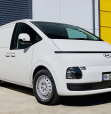
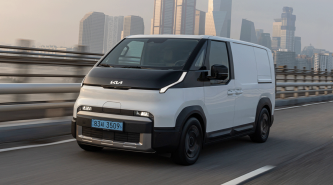
Following the demise of the rattly diesel Pregio in 2006, Kia has been out of the van game in Australia for 20 years. But the Korean brand is coming back in a big way, with the electric PV5 Cargo leading the offensive.
With 120kW and 250Nm from a single electric motor and agreeable $55,990 price (before on road costs), the PV5 Cargo becomes the second cheapest electric van in the country behind China’s LDV eDeliver 5 ($47,990 on road).

The PV5 serves as the first of three bespoke electric van models developed by Kia on a new ‘Platform Beyond Vehicle’ (PBV) electric van platform, using 400-Volt E-GMP.S (S for Service) electric architecture.
It’s about two years ahead of its larger siblings, PV7 and PV9, and hopes to blow the lid on a segment most people have never considered — E-Vans.
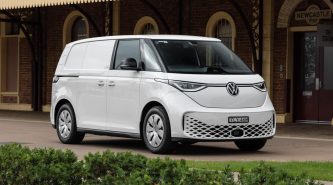
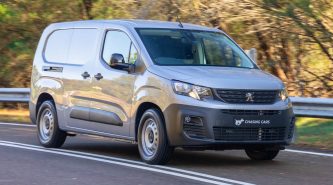
The electric van segment is locally championed by the Peugeot ePartner and Volkswagen ID.Cargo, and last year comprised about two percent of Australia’s van sales — a touch more modest than king-of-vans Toyota Hiace’s 46-percent take.
But Kia isn’t looking to dethrone the Hiace – which spans some five grades with a huge options list — overnight. Its modest PV5 launches in a single Cargo S Long Range grade, to be backed up by a seven-seat Passenger variant later in the year.
Kia’s targeting 500 annual sales of PV5 for its first year of production, with the fate of the PV7 and PV9 hanging in the balance of its success. Granted, these ambitions are far less lofty than the 20,000 unit ambitions of the Tasman ute.
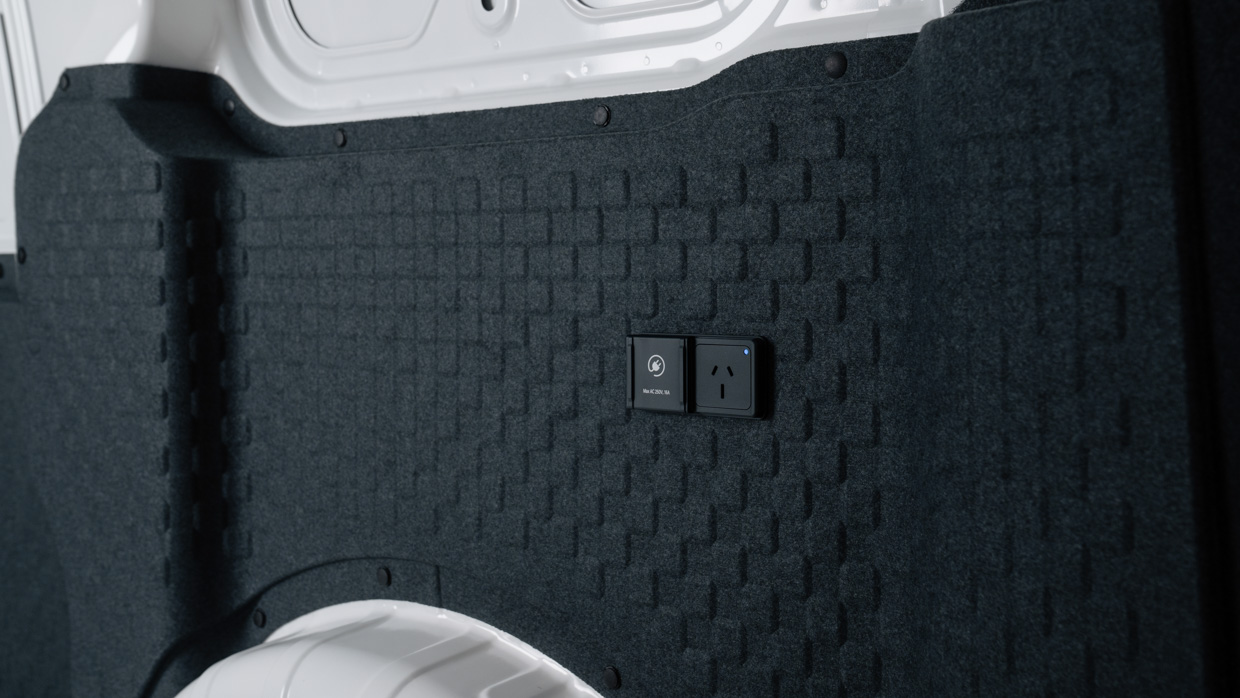
Being electric, the PV5 has some added niceties like vehicle-to-load functionality (a 16amp plug in the back) which supports up to 3.6kW – enough juice to power large appliances like a chest freezer, or, a small model railway – and straightforward servicing that even the busiest of couriers should be able to keep on top of.

Of course, we can’t talk about electric power without talking about range. The PV5 is rated to travel 416km (WLTP) from a 71.2kWh battery, and claims to recharge from 10-80 percent in 30 minutes when hooked up to a 350kW DC charger.
If Kia’s new van is to have lasting success, it needs to fill an incredibly versatile role. It will need to serve as a mobile office, accommodate heavy payloads, be suited to all-day driving and have the driving range to do so.
We sampled the PV5 electric cargo van both unladen and with a 300kg payload in the back on a test loop which saw high speeds, low speeds, and several road surfaces.
With a short wheelbase, 1910kg kerb weight and low-slung battery to package, the PV5 van sounds like a recipe for a bouncy ride. Luckily, this isn’t the case.
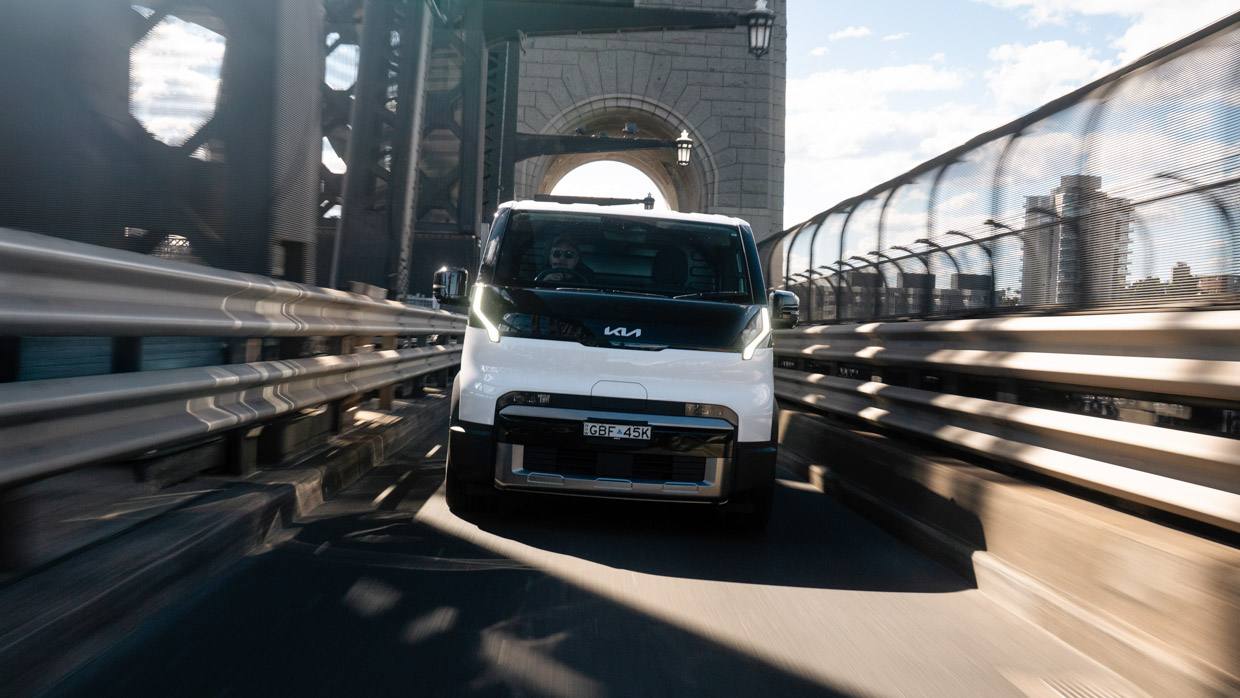
We set off on the pot-holed streets of Sydney – two occupants aboard – and immediately found the PV5’s 120kW/250Nm powertrain to be more than capable of shunting about 2.4 tonnes of combined heft without breaking a sweat. Of course, it was still 420kg shy of Kia’s claimed maximum payload.
The electric motor is well calibrated, smoothly dialing on the power in a controlled, effortless way. Coming off the power is just as rewarding, laden or otherwise, with strong regen adjusted via the PV5’s paddle shifters.
In ‘i-Pedal’ mode with maximum regen, an observant driver likely won’t need to touch the brakes in most situations as the van brings itself to a stop.
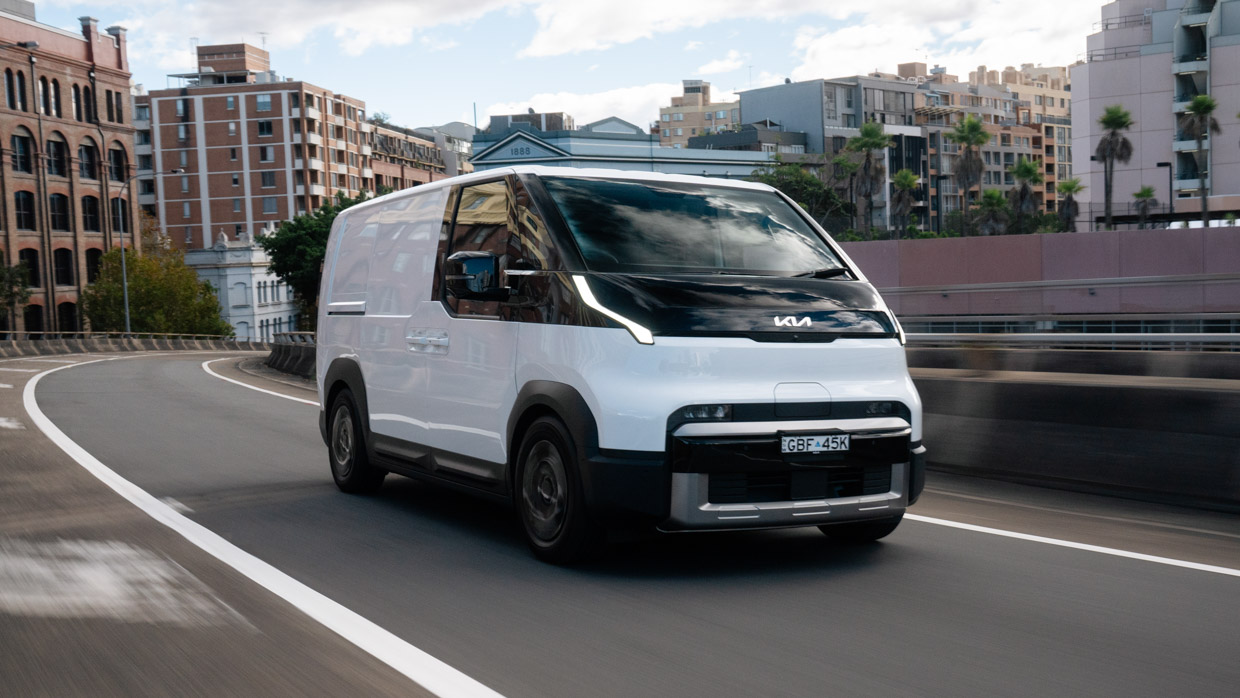
Laden or unladen, the PV5 rides and handles consistently, with a low centre-mass skateboard EV platform resulting in a fun, direct and stable handling character way above expectations.
It seemed quicker and more planted than its combustion-powered competitors, which noticeably lean into bends and slowly meander up to the speed limit when lumped with any kind of payload — not to mention the droning diesel soundtrack.
The steering is direct, but light and suited to all-day driving. The brakes are hugely effective, and the ABS well calibrated and capable of pulling the PV5 in a straight line when it really matters. In a mid-corner brake test, the PV5 stuck to the inside of the bend, rather than ejecting itself off-line and into potential danger.
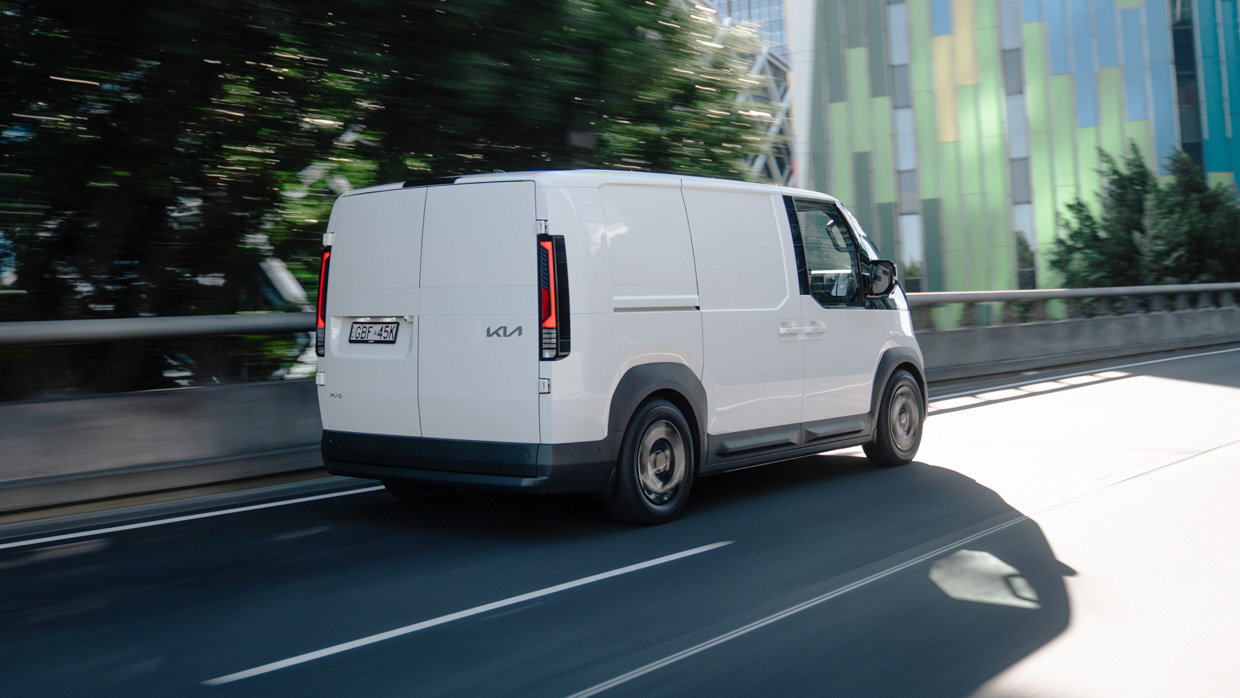
We noted some tyre noise at speeds over 80km/h, which can be frustrating, particularly on broken, poor quality road surfaces. It is a van after all.
Similarly, while the front-end absorbs bumps big and small with relative ease, it makes quite the protruding “thunk” while doing so. The suspension feels a touch underdamped, too, leading to a small second rebound cycle before the PV5’s body settles.
The PV5’s driver assistance and safety system list is vast, but most of these systems don’t intrude during regular driving. Like any Kia-Hyundai product, however, the speed warning is often wrong and constantly beeping. Fortunately, this can be switched off with one of two programmable steering wheel buttons.
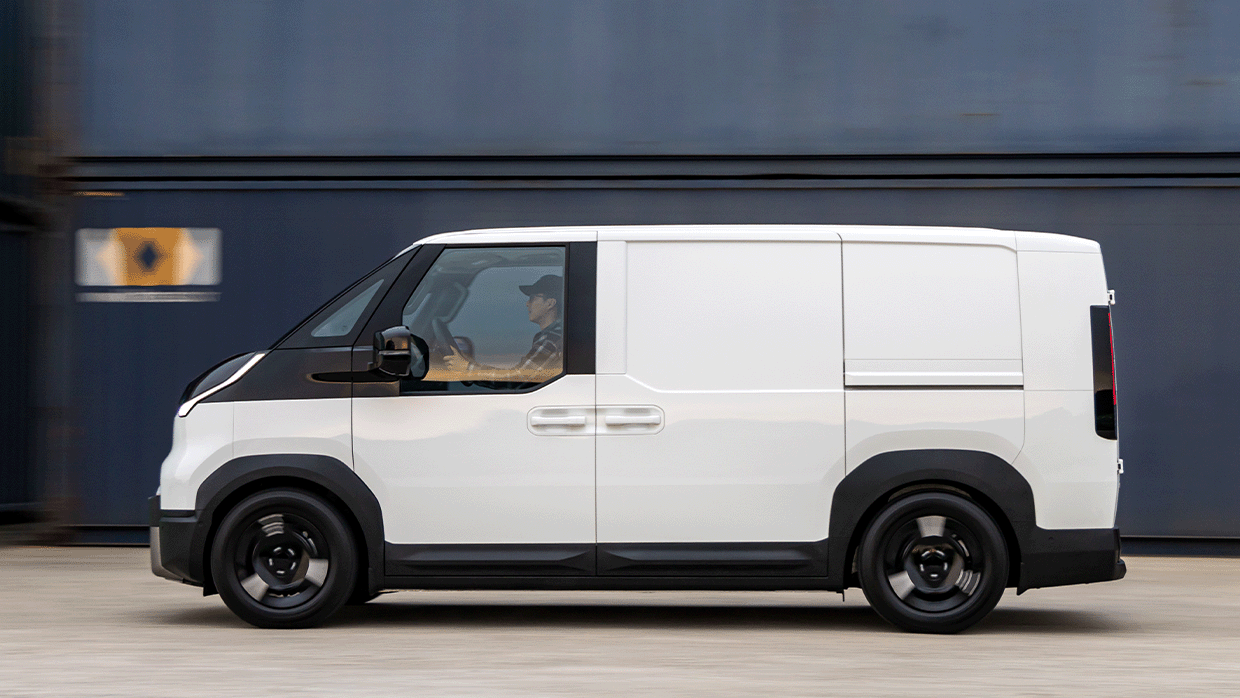
There are two separate mechanisms for blind spot monitoring which are both absolutely necessary. Due to the PV5’s huge b-pillar, you cannot headcheck your blindspots, and must rely on the amber light in the mirror or small camera display in the 7.5-inch digital cluster.
Both of these systems complement each other and work without fault, though adapting to the blind-spot view in the cluster takes some time. The a-pillar blindspot is equally large, and the front-end visibility isn’t quite as good as the vans of yesteryear.
Fortunately an overhead 360-degree camera view, front camera and several parking sensors make this less of an issue.
The inside of a van is where the magic truly happens. Day-in, day-out of the same cabin roaming around the streets of Sydney, in and out of the driver’s seat all day. It goes without saying that a van should be comfortable, easy to use and relaxing.
The PV5 has to absolutely nail the mobile office experience, and the results from our testing seem positive. The driver controls are large and tactile, forgoing obnoxious digital controls for physical buttons… for the most part.

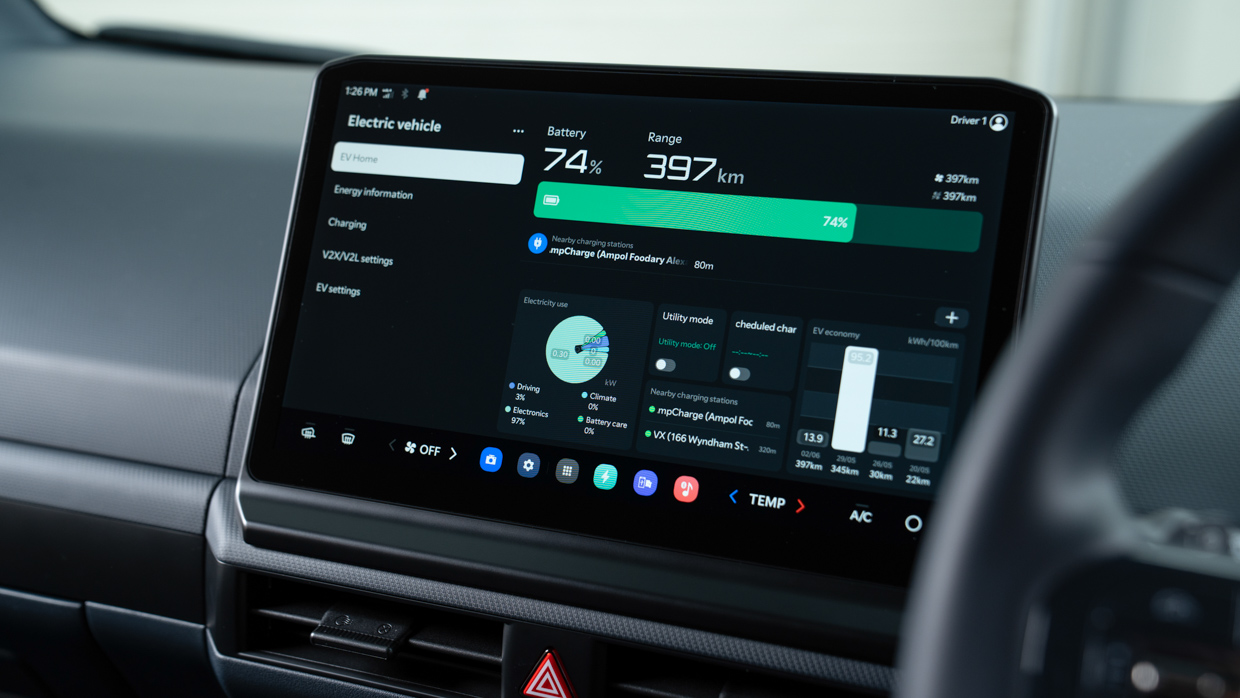
The exception is the PV5’s climate control system, which is frustratingly integrated into the 12.9-inch centre touchscreen.
The fan speed and temperature remain visible at all times at the bottom of the screen, but adjusting the direction of the air calls for sub menus, as does the re-circulate feature – annoying, particularly if a fleet-purchased PV5 has several unfamiliar drivers.
Beyond the climate system, there are six cupholders for monster energy cans, red bulls and cappuccinos galore, a large pull-out drawer under the dashboard between the front seats, large door bins, and a document compartment within the top of the dashboard on the driver’s side.
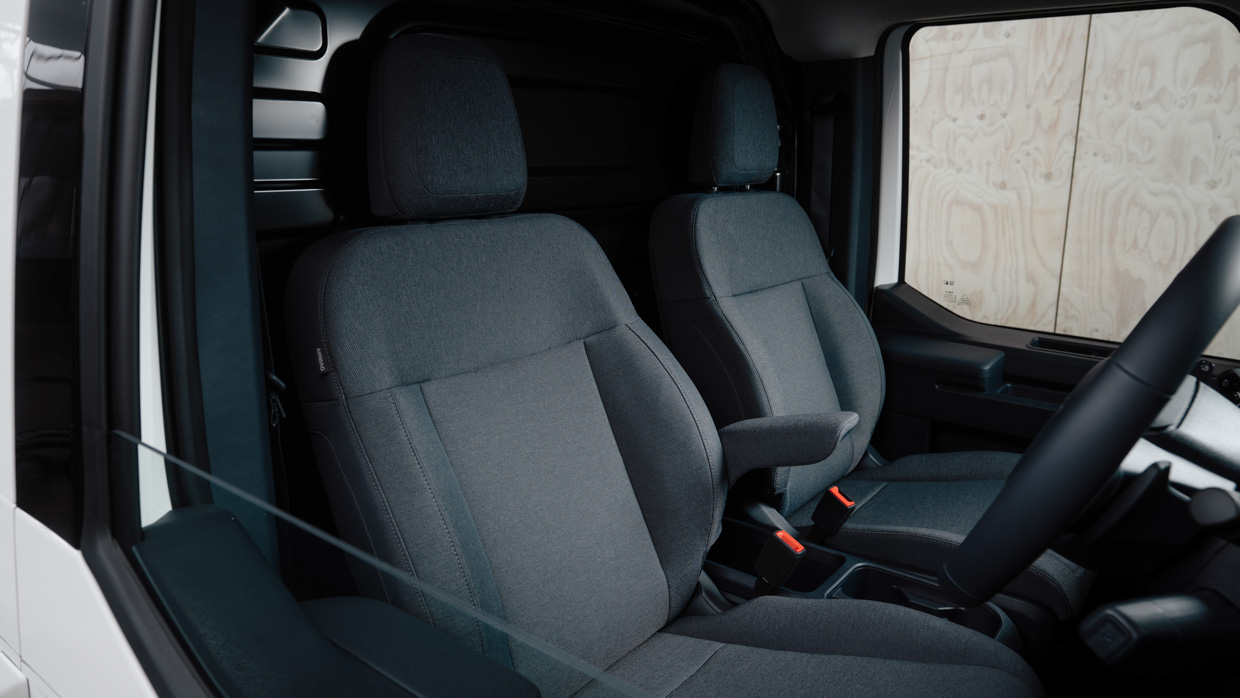
The cloth seats are comfortable and provide ample support, much preferred to the vinyl we saw in the PV5 Passenger display car. Note though, that the extremely soft and squidgy lower seat bolsters are unlikely to last through several bumcheeks sliding over them day after day.
The driver benefits from a single arm rest on their left , but nothing on the right, while the passenger gets squat. Between the seats is a spot for you and your mate’s backpacks, and the use of a column-mounted shifter means you can easily climb across from the passenger’s to driver’s side seat in a really tight parking spot.
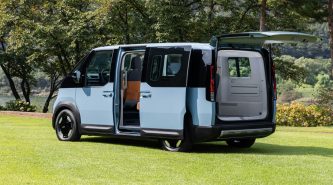
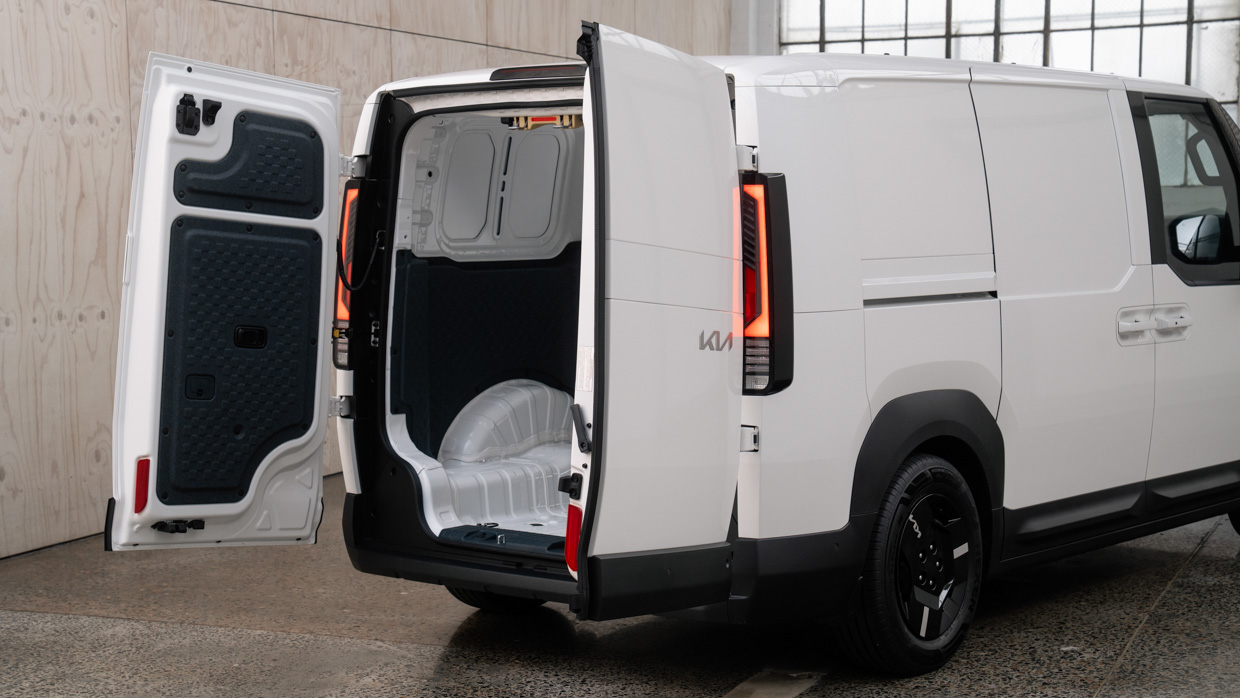
What about the back? Kia promises 4420 litres of payload space, and thanks to a flat floor and relatively high roof (1520mm floor to ceiling), almost all of this is usable. The standard-fit dual sliding doors are a win, and each open out about a metre to accommodate large items.
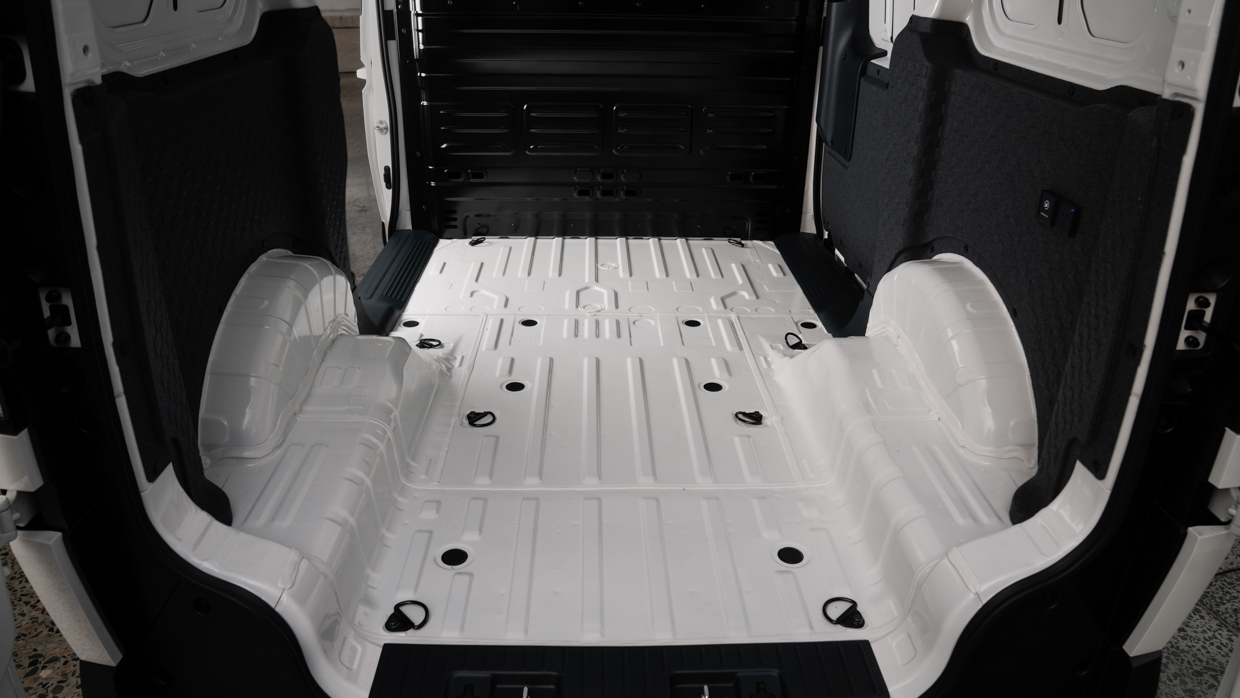
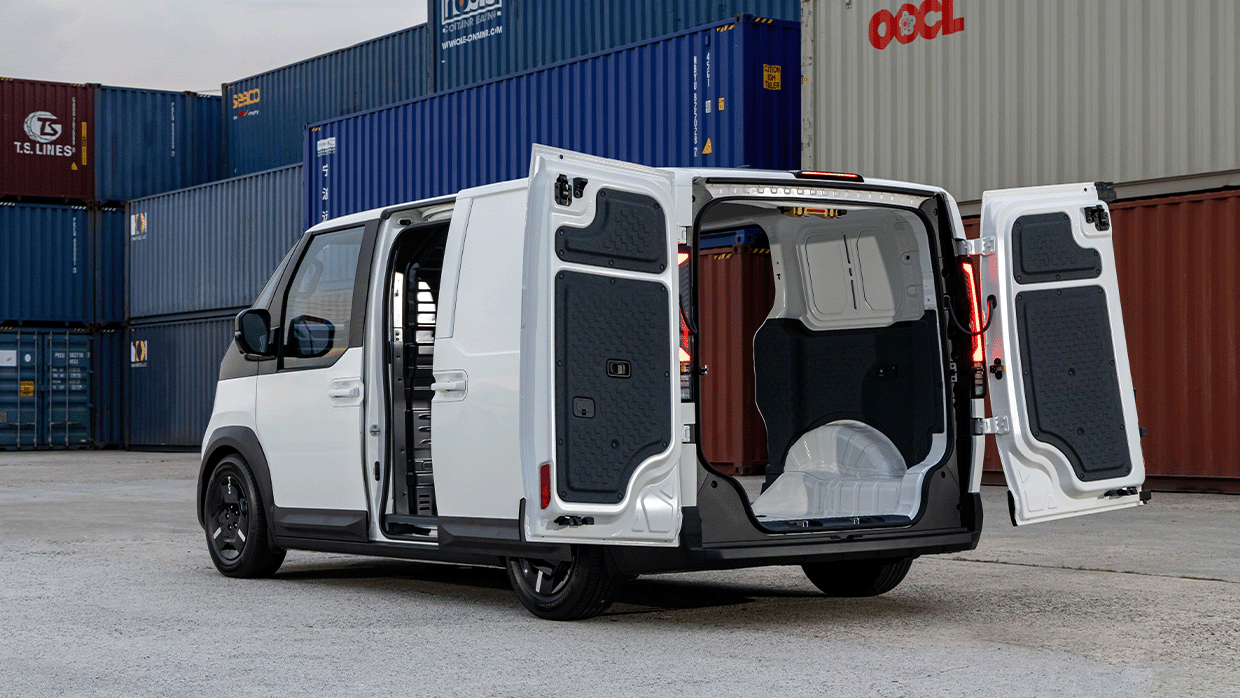
Another win is the use of double barn doors, which can swing out by up to 180 degrees to allow for easy loading into a storage compartment 2255mm deep and 1565mm wide. There’s just one problem – the space between the wheel arches is suited to a standard size Euro pallet, not an Aussie one.
This is somewhat of an issue, as Aussie pallets are 1165 x 1165mm to Europe’s 1200mm x 800mm. Resultantly, pallets will need to be loaded onto a platform above the wheelarches – something Kia is already working on as a dealer-fit accessory.
One V2L plug in the back suits 16a and up to 3.6kW, while eight tie-down points adorn the floor. The bulkhead is flat and feels sturdy, though it isn’t clear if it is rated for items to be strapped to. On the topic of load lugging, braked towing is rated to 750kg.
We saw a combined long-term efficiency of 16.4kWh over 526km of combined recorded duration in one of the unladen vehicles (which Kia had fortuitously forgotten to reset), representing a real-world range of 434km.
Independent testing of both the laden and unladen vehicles revealed small efficiency differences: 16.2kWh for the unladen car and 17.1kWh for the laden, which would result in a reduced driving range of 416km – exactly the figure claimed by Kia. It remains to be seen how an additional 400kg would impact the PV5’s combined efficiency over the same test.

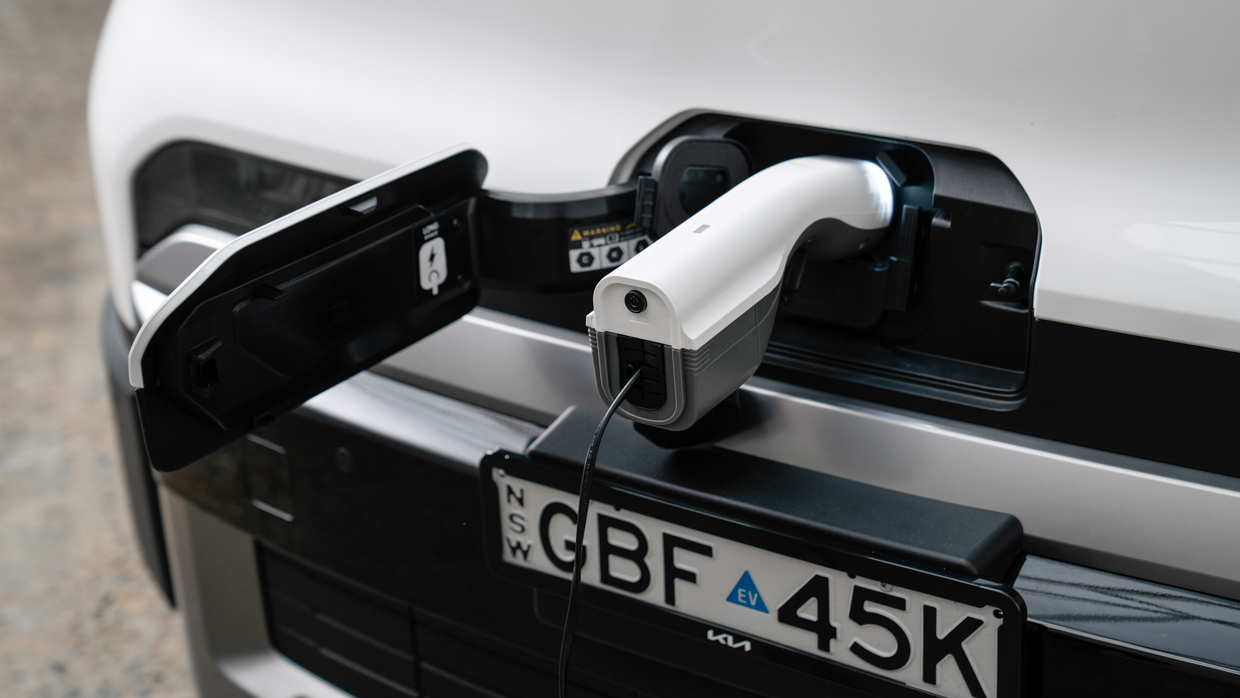
As for charging, the 30-minute DC fast-charge time is competitive for charging on-the-move. Slower AC charging at 11kW will take 6.5 hours from flat to full, according to Kia. This is reasonable for an overnight recharge, though 22kW AC would have improved utility.
It is worth noting the added cost and complexity of setting up a business for a fleet of electric vans — installing ‘back-at-base’ charging infrastructure isn’t a cheap outlay. The long-term benefits offer significant savings potential, though, compared to diesel fuelling.
Depending on the application, the Kia PV5 will adhere to one of two warranty periods. Private, general fleet and government vehicles come with a seven-year/unlimited-kilometre warranty, while commercial vehicle use is seven-years/150,000km, whichever comes first. The high-voltage battery in both instances has a separate eight-year/150,000km warranty.
Kia offers a pre-paid service plan which theoretically covers the PV5 for eight years or 120,000km with service intervals of two years/30,000km, whichever comes first. Up-front service plans cost $528 (one service), $1090 (two services), $1650 (three services) and $2246 (four services).
Starting from $55,990 before on-road costs, the Kia PV5 might be more influential than its 500-unit strong sales target would suggest.
Looking broadly, it’s a capable van with smooth power delivery, great calibration, more than amicable ride and handling, strong brakes, and good comfort. Plus it has a wealth of tech to keep users safe and stimulated.
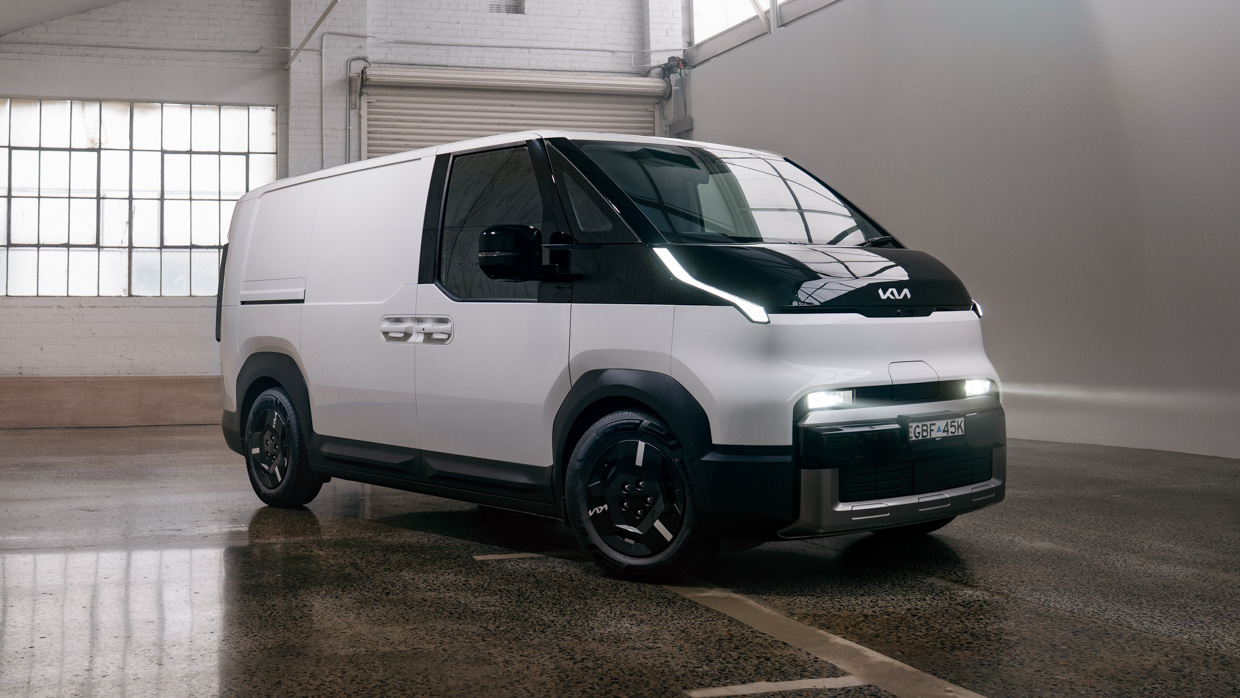
As a commercial vehicle however, the PV5 needs to suit the needs of many, rather than the few. Kia’s fleet arm will need to convince large-scale commercial old-heads that the switch from internal combustion to fully electric is worth ‘the risk of the unknown’.
There’s a lot of legs in the argument of fleet vehicles switching to electric – cheaper servicing with longer intervals, easier maintenance, V2L, cheaper to run, plus huge novated lease and FBT benefits for business holders and their employees.
Whether businesses are willing to make the initial outlay, and if 416km of driving range will be enough, are unanswered questions for the moment. What we can say is that the PV5’s bones are good, and this is a pleasant electric van to pilot.
Key specs (as tested)
About Chasing cars
Chasing Cars reviews are 100% independent.
Because we are powered by Budget Direct Insurance, we don’t receive advertising or sales revenue from car manufacturers.
We’re truly independent – giving you Australia’s best car reviews.
The estimate provided does not take into account your personal circumstances but is intended to give a general indication of the cost of insurance, in order to obtain a complete quote, please visit www.budgetdirect.com.au. Estimate includes 15%^ online discount.
^Conditions Apply
Budget Direct Insurance arranged by Auto & General Services Pty Ltd ACN 003 617 909(AGS) AFSL 241 411, for and on behalf of the insurer, Auto & General Insurance Company Limited(ABN 42 111 586 353, AFSL 285 571).Because we don’t know your financial needs, we can’t advise you if this insurance will suit you. You should consider your needs and the Product Disclosure Statement before making a decision to buy insurance. Terms and conditions apply.
Indicative quote based on assumptions including postcode , 40 year old male with no offences, licence suspensions or claims in the last 5 years, a NCD Rating 1 and no younger drivers listed. White car, driven up to 10,000kms a year, unfinanced, with no modifications, factory options and/or non-standard accessories, private use only and garaged at night.
^Online Discounts Terms & Conditions
1. Discounts apply to the premium paid for a new Budget Direct Gold Comprehensive Car Insurance, Third Party Property Only or Third Party Property, Fire & Theft Insurance policy initiated online on or after 29 March 2017. Discounts do not apply to optional Roadside Assistance.
2. Discounts do not apply to any renewal offer of insurance.
3. Discounts only apply to the insurance portion of the premium. Discounts are applied before government charges, taxes, levies and fees, including instalment processing fees (as applicable). The full extent of discounts may therefore be impacted.
4. We reserve the right to change the offer without notice.