


Australia’s plug-in hybrid SUV market is constantly expanding, with many drawn to the prospect of “the best of both worlds” promise of part EV, part combustion driving.
PHEV drawcards include impressive combined fuel consumption claims, growing ‘pure-EV’ driving distances, and an EV-like driving experience without the usual range anxiety. Plus they can be parked in “EV ONLY” spaces!

Pictured: 2026 Audi Q5 PHEV
As with regular hybrids and fully electric vehicles, there are good PHEVs we recommend and other models that are less impressive.
So here’s the Chasing Cars guide to the best plug-in hybrid SUVs currently on sale in Australia.
A note on plug-in hybrid fuel consumption
You’ll often see plug-in hybrid vehicles quote a combined fuel consumption typically from just below 1.0 litres per 100km up to about 3.0L/100km. Such figures can be difficult, even impossible, to achieve in real-world driving.

Pictured: 2026 BYD Sealion 5 charging
Official combined fuel economy figures are calculated in a lab to help generate consistent results between tested vehicles, though with favourable conditions – including the ability to complete all testing without the vehicle battery being fully depleted – the results are not representative for all PHEV owners.
To maximise low fuel use, PHEV owners need to charge their vehicles regularly to use the electric-only drive capability. Most PHEVs claim a full-battery distance between 80 and 110km.
Once the battery reaches a lower level – usually about 25 percent charge – the petrol (or diesel) engine becomes the primary propulsion for the vehicle. The electric motor continues to provide some assistance and is partially recharged by the petrol/diesel engine.

Pictured: 2026 Mercedes-Benz C350e PHEV
In this state, plug-in hybrids become relatively inefficient because the vehicles are commonly heavier than either regular hybrids or battery electric vehicles.
Full electric driving, however, is not available again until the battery has been recharged.
Chasing Cars aims to inform its readers with data that is truly independent. In the copy below, you’ll see a vehicle’s claimed fuel consumption, and, where available, its indicated real-world consumption based on our testing.
Our top choices
BYD Sealion 6
Size: Medium SUV
Price: From $42,990 before on-road costs
Claimed EV-driving range: 92km (NEDC)
Claimed fuel consumption: 1.1L/100km
The Sealion 6 was a significant milestone for BYD Australia on launch, serving as the company’s first deviation from dedicated electric power. It quickly gained a reputation for its competitive entry price, which better aligned with plugless hybrid and combustion rivals.
A resounding level of equipment shared across its model grades furthered the Sealion 6’s appeal, as did the prospect of greater performance and all-wheel drive in upmarket variants.

Pricing remains extremely competitive. The range starts at $42,990 before on-road costs for the base-model front-drive Essential, which produces 160kW while claiming an EV driving range of 92km and fuel consumption of 1.1L/100km.
During testing, we saw indicated figures of 80km and 4.1L/100km respectively for the base-model car.
BYD’s $46,990 long-range Dynamic Extended uses a larger, 26.6kWh battery to claim up to 140km of EV driving range and a combined consumption of 0.8L/100km, while its $52,990 performance AWD sibling bumps combined output to 253kW while reducing EV driving range to 128km and reverting consumption to 1.1L/100km.

Marks against: The Sealion 6’s safety technology can be oversensitive, and the underlying petrol engine is quite weak.
Read more: BYD Sealion 6 Dynamic 2024 review
Cupra Terramar VZe
Size: Medium SUV
Price: From $77,990 before on-road costs
Claimed EV-driving range: 109km (WLTP)
Claimed fuel consumption: 0.5L/100km
The Terramar VZe exists in a relatively untapped ‘midsized performance plug-in’ segment, blending good driving dynamics and a 200kW output.
The Terramar VZe combines a 130kW 1.5-litre turbocharged four cylinder petrol engine, 19.7kWh battery, and 85kW electric motor housed within a six-speed dual clutch transmission. It produces a combined output of 200kW/400Nm, claiming an EV driving range of 110km and combined fuel economy of 0.5L/100km.

In testing, we found the Terramar’s lack of all-wheel drive and sometimes awkward petrol-to-EV powertrain transmission to take away from an otherwise resounding driver experience.
It’s not cheap, either, though Cupra consistently succeeds at delivering a semi-premium vibe with its vehicles.
Geely Starray EM-i
Size: Medium SUV
Price: From $37,490 before on-road costs
Claimed EV-driving range: 83km (WLTP)
Claimed fuel consumption: 2.4L/100km
Cheap, approachable and well packaged, the Geely Starray impressed the Chasing Cars team when put through its paces on a three-month long term test.
In the real world, the Starray returned a combined consumption figure of 5.2L-5.7L/100km. Its best qualities shine through in tight city streets, with stout EV-like performance, good range, and calibrated regeneration. On road trips, the Starray can feel a touch out of its depth.

A wealth of over-the-air software and usability updates have pushed the Starray over the line as a good contender. It is competitively priced, rides comfortably, and is pleasant to live with. Its comprehensive driver safety aids and adaptive cruise control reduce driver fatigue, and will hopefully continue to improve as more updates are developed.
For those looking at PHEV motoring on a budget, the Geely Starray should be considered for your shortlist.
Read more: Geely Starray EM-i long term review
Lexus NX450h
Size: Medium SUV
Price: From $84,500 before on-road costs
Claimed EV-driving range: 87km (NEDC)
Claimed fuel consumption: 1.3L/100km
A true premium alternative to the commendable Volvo XC60 PHEV, the Lexus NX450h offers an admirable sense of occasion, well calibrated powertrain and a familiar, secure feeling of Japanese build quality and refinement.
We recommend the cheaper of Lexus’s two-variant-strong NX450 PHEV range, with the $84,500 Luxury playing second-fiddle to the range-topping $96,000 F Sport. Despite the naming conventions, both models offer the same combined output of 227kW.

The NX Luxury features a 2.5-litre turbocharged petrol engine, ‘eCVT’, dual electric motors, an 18.1 kWh battery, and all-wheel drive. It claims an EV driving range of 87km (ADR) and combined consumption of 1.3 L/100km.
Our testing matched Lexus’ EV-range claim of 87km, while combined consumption hovered around the 5.5L/100km mark. We think the more powerful, EV-driving capable NX450 Luxury PHEV is worth the additional $13,000 it claims over its base model NX350 hybrid counterpart.
Both vehicles offer adequate grandeur, resounding build quality, a pleasant cabin experience, smooth, comfortable ride and seamless petrol-hybrid-EV transition — refinements which have become typical for a premium Japanese vehicle.
Read more: Lexus NX 450h+ long-term review
Skoda Kodiaq PHEV
Size: Medium/Large SUV
Price: From $63,490 before on-road costs
Claimed EV-driving range: 110km (WLTP)
Claimed fuel consumption: 1.9L/100km
Skoda’s products are consistently compelling and the newly launched Kodiaq PHEV is no different.
Effectively replacing the once entry-level 140TSi Kodiaq Select AWD, the new Select PHEV front-driver has big shoes to fill, particularly as it has sidelined the option of entry-level all-wheel drive (now reserved for the range-topping Kodiaq RS).

The Select PHEV pairs a 1.5-litre turbocharged four cylinder with a large electric motor and six speed DSG, totalling a combined output of 150kW/350Nm. A sizable 25.7kWh battery supports up to 110km of EV driving range, and assists with a combined consumption of 1.9L/100km.
In testing, we saw the Skoda achieve an EV range of about 100km, while combined fuel consumption was marked at 5.0L/100km. We like the Skoda for its fantastic dynamics, tight handling, and smooth, yet simple suspension.
Plenty of boot storage and room for passengers furthers the Select PHEV’s family car agenda, as does the seven-year, unlimited-kilometre warranty. Servicing is reasonable, too, required every 12 months or 15,000km and totals $2990 pre-paid for a five-year package.
Read more: Skoda Kodiaq PHEV
Volvo XC60 PHEV
Size: Medium SUV
Price: From $92,990 before on-road costs
Claimed EV-driving range: 89km (NEDC)
Claimed fuel consumption: 1.6L/100km
Serving as the most expensive vehicle to appear on this list, the Volvo XC60 PHEV is a premium midsize plug-in SUV best known for its impressive performance, contemporary styling and deep brand ties to occupant safety.
An already proven vehicle built on Volvo’s globally best-selling platform, the XC60 PHEV received mid-life updates in late 2025 to keep the model relevant after eight-years in dealerships.
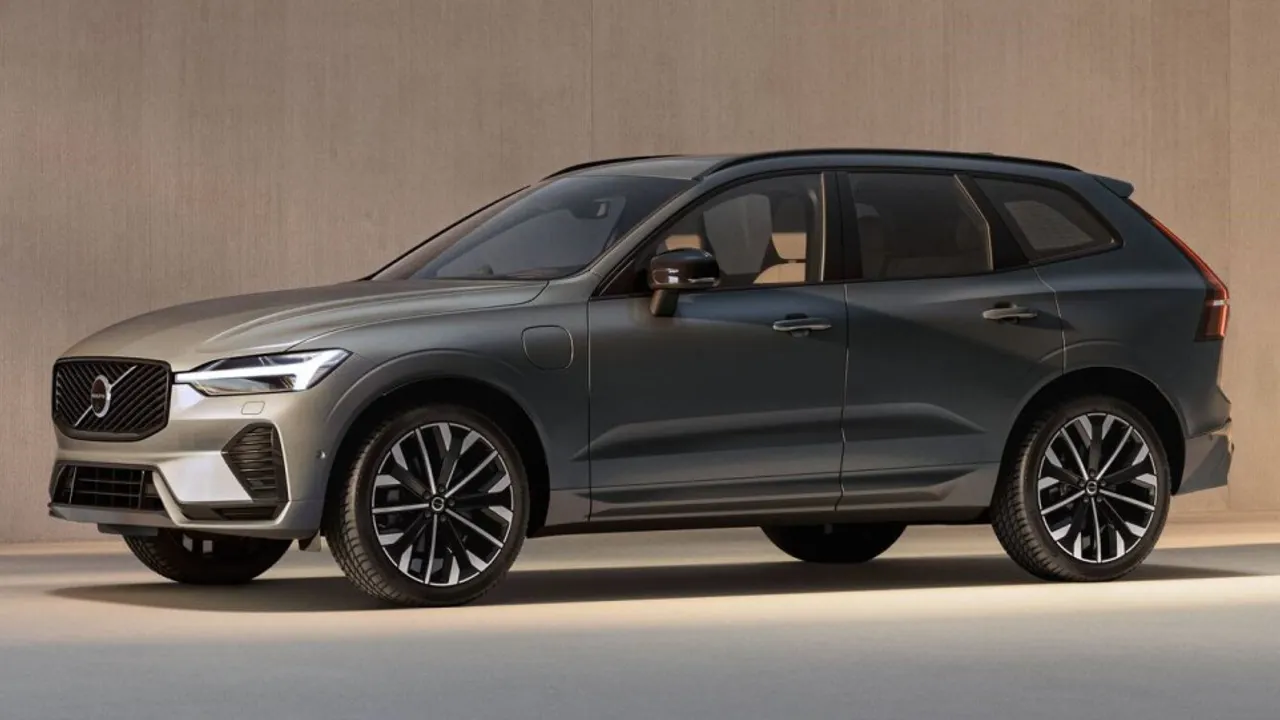
The XC60 now features new front and rear bumpers to match its newfound electric siblings EX30 and EX90, new wheels, and an updated interior with a larger 11.2-inch infotainment screen (up from 9.0 inches).
The XC60’s PHEV system blends a 2.0-litre turbocharged four cylinder, electric motor, eight-speed transmission, and all-wheel drive to produce a combined output of 340kW/709Nm. A 19 kWh battery offers up to 89km of EV driving range, while combined fuel consumption is quoted to be 1.6L/100km.
Chasing Cars enjoys the timeless looks, comfortable seating, class leading safety and stout powertrain refinement offered by the XC60 PHEV, while its cheaper-than-rivals price and supple ride quality puts it ahead of fellow Euros BMW X3 PHEV and Audi Q5 PHEV.
Read more: Volvo XC60 Recharge PHEV 2023 review
Other plug-in hybrid SUVs worth considering:
The below vehicles aren’t as well rated as those above though may be worthy of closer inspection for some buyers.


