Powered by

-
Car Reviews
Latest reviews
-
Car News
Latest news
-
Car Comparisons
Latest comparisons
- Chasing Deals
Latest reviews
Latest news
Latest comparisons
Pillar-to-pillar interior screen, completely new platform and sophisticated motors see the C-Class step into the electric age, but petrol versions aren’t going anywhere
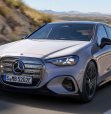
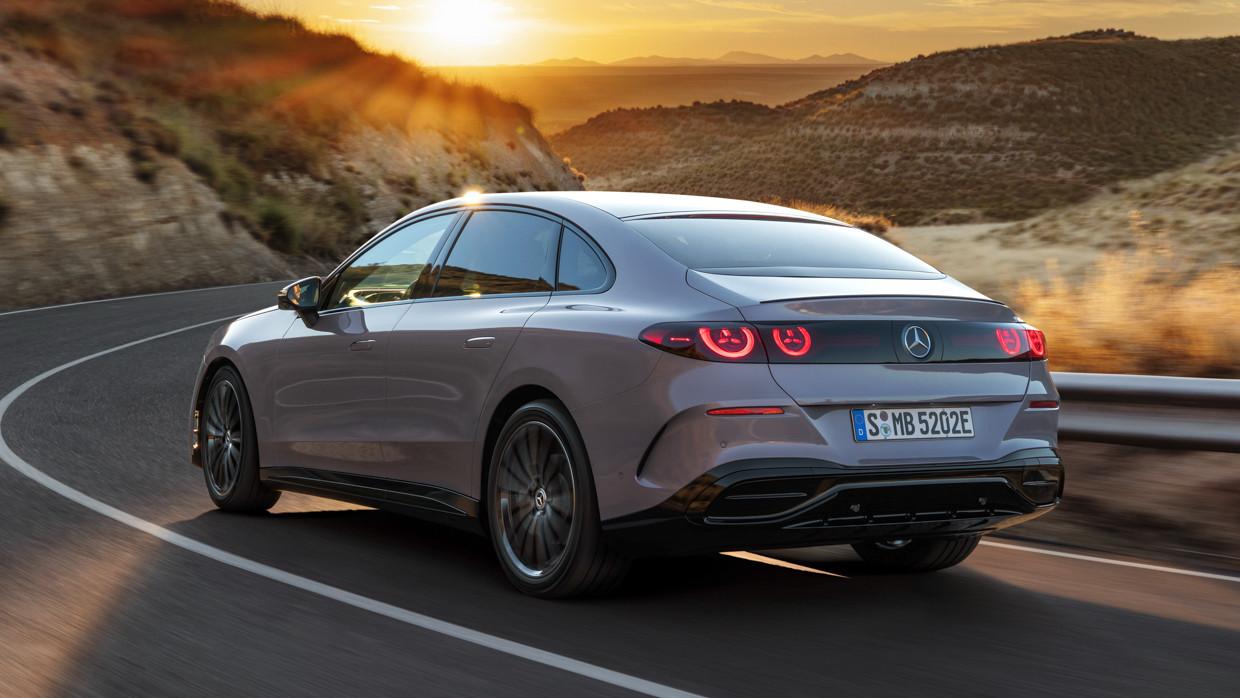
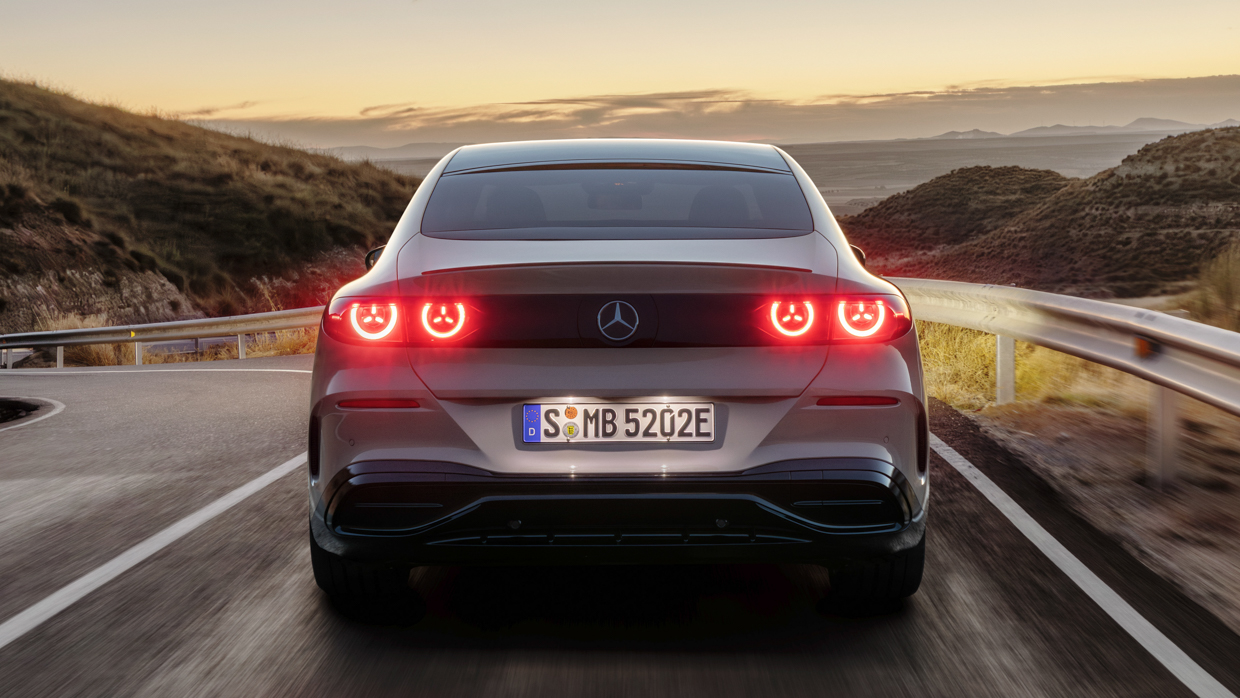
Mercedes-Benz has revealed its all-new electric C-Class, which will share a badge with – but not replace – one of the brand’s most important combustion nameplates – with a ground-up EV model that promises long range and rapid charging credentials.
Expected to be released in Australia in 2027, the electric version of the C-Class will launch globally first as a C400 4MATIC: a dual-motor, all-wheel-drive sedan producing 360kW and 800Nm, with a claimed 0-100km/h time of 4.0 seconds.
More affordable rear- and all-wheel-drive models will join the range later, as will smaller batteries, while AMG is understood to be working on a high-powered counterpart.
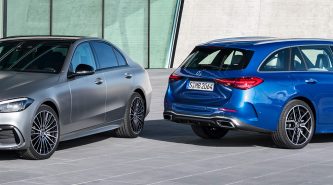
Some markets should also receive a C-Class station wagon in time. The SUV equivalent is the new GLC with EQ Technology – an EV-related moniker that appears to have been dropped for the sedan.
Clearly, the most important target for the electric C-Class is BMW’s equivalent in the i3, which should land in Australia at around the same time.
Many specifications between the C400 4MATIC line up with the i3 50 xDrive launch version of the 3 Series EV, but the battery in the Benz is meaningfully smaller at 94kWh (versus 108kWh).
As a result, the C-Class’s range claim of up to 762km (WLTP) in C400 format falls a little short of the BMW’s 900km – a figure the Bavarians brute-forced to with a truly SUV-sized battery.
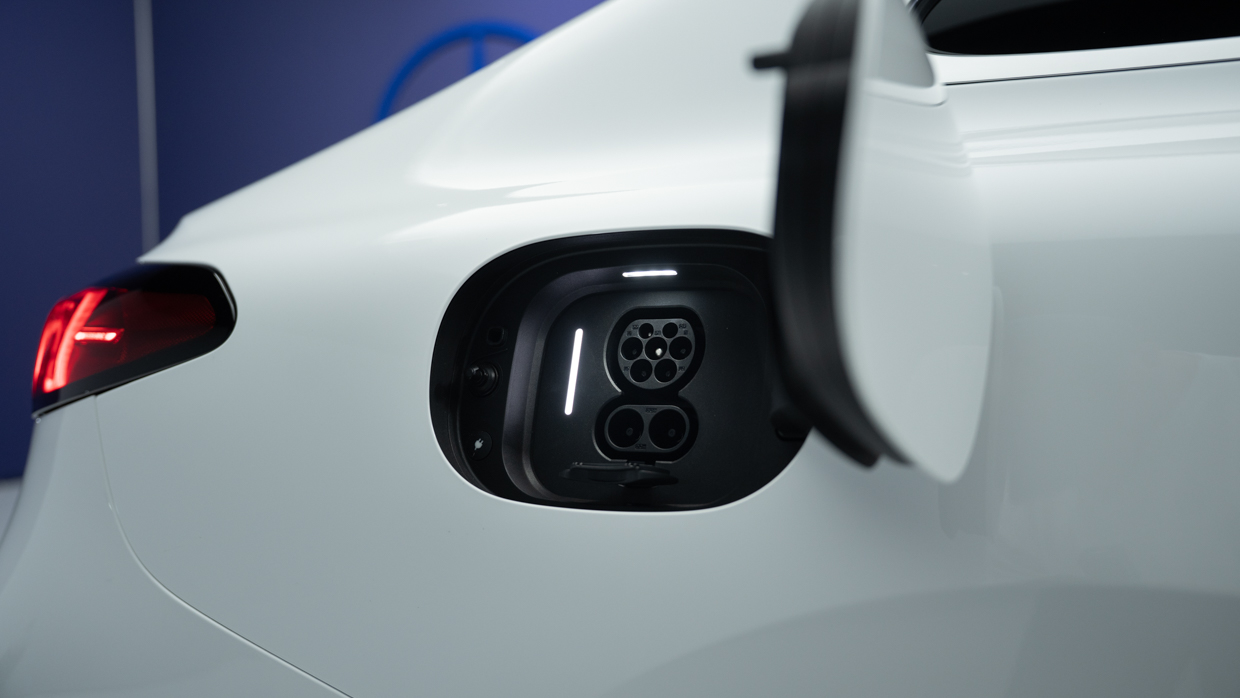
Efficiency is ultimately similar between the rivals, however, and like the BMW, the Mercedes-Benz uses an 800-volt electrical architecture that can support, in this case, 330kW DC peak charging.
Those numbers will put the C-Class at the pointy end of the premium electric sedan segment and signal a more serious technical effort than some earlier EQ-branded models.
Unlike the EQC and early Mercedes EV models, the C-Class is positioned as a direct supplement to, and continuation of, the C-Class lineage rather than a new side branch of the range.
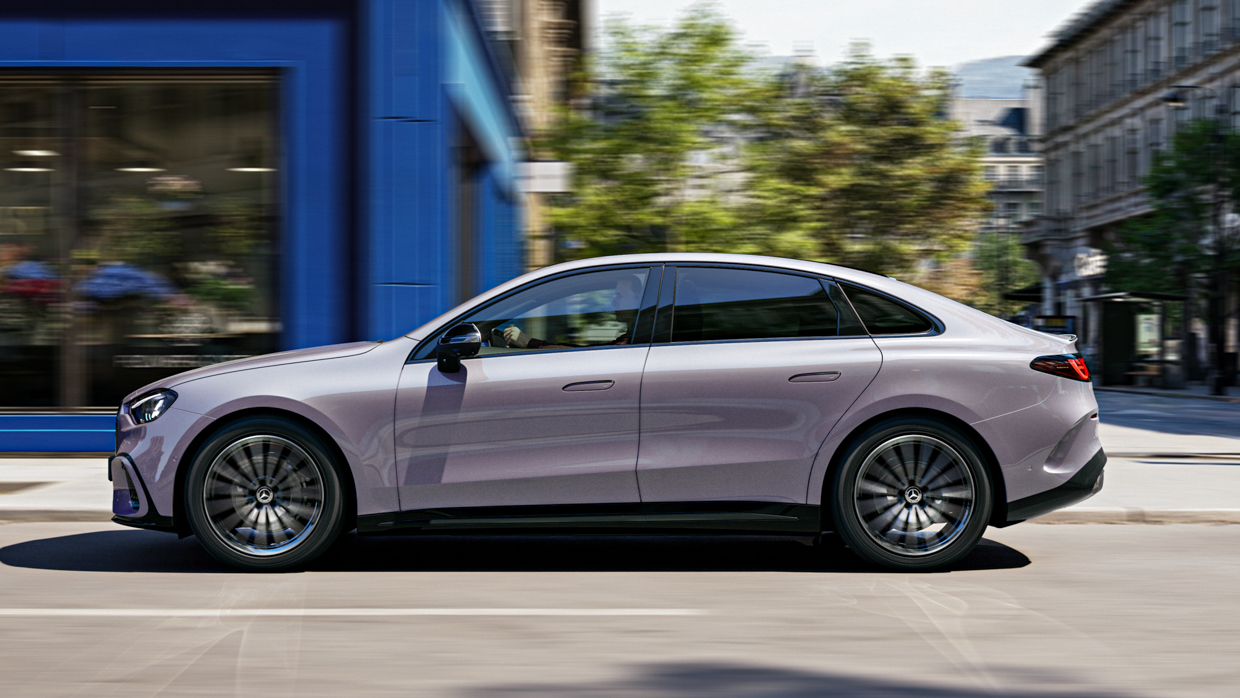
Physically, the electric version is a bigger car than the petrol-powered ‘W206’ C-Class it will sit alongside in showrooms, with the EV measuring 4883mm in length (+132mm compared to the ICE car) on a 2962mm wheelbase (+97mm).
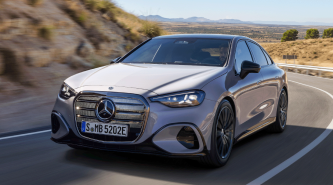
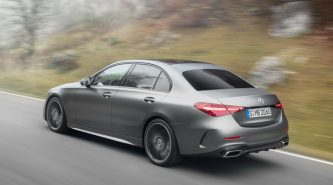
While Mercedes has carefully paired back the organic styling cues of the EQE and EQS sedans, the electric C-Class is still more coupe than saloon from some angles, with a slippery drag coefficient of 0.22Cd.
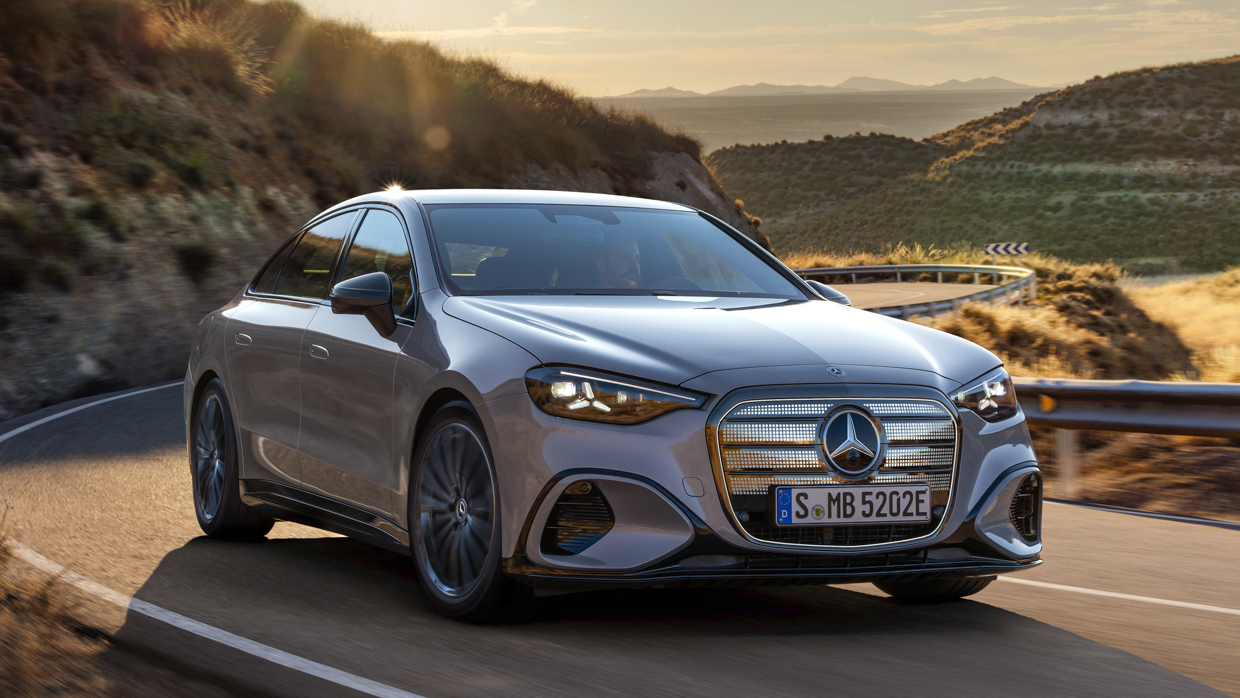
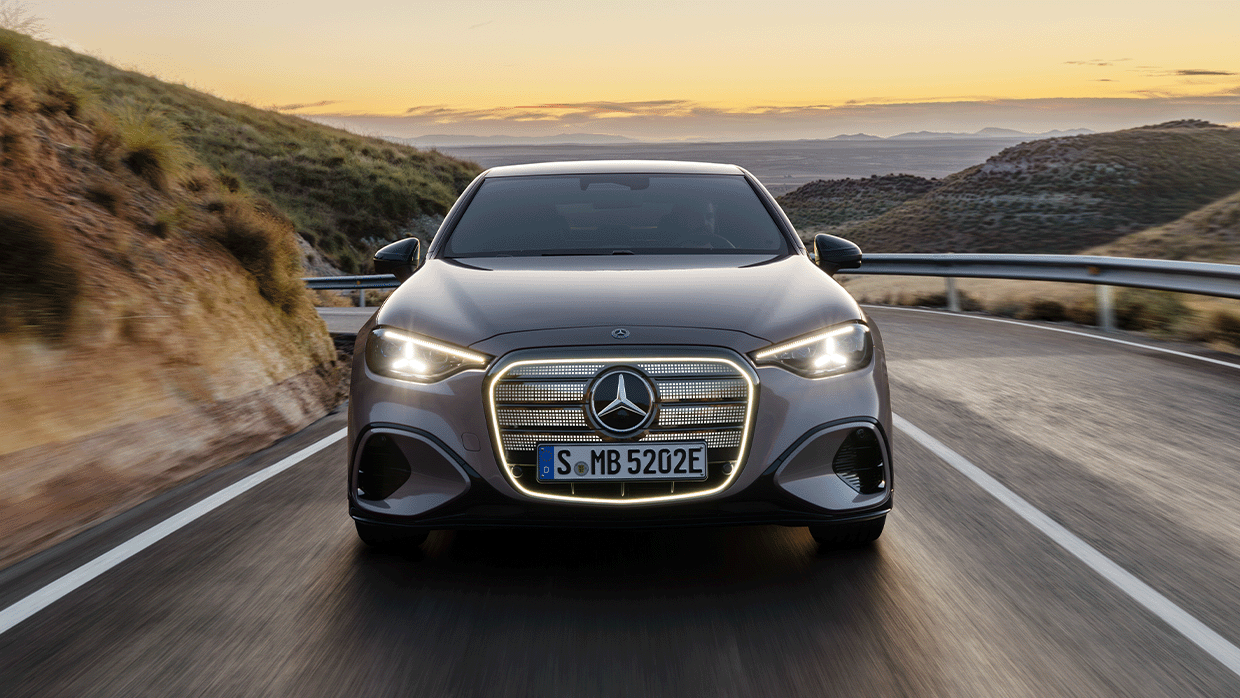
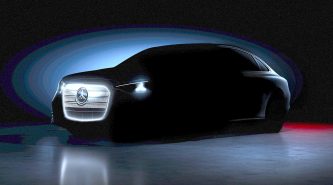
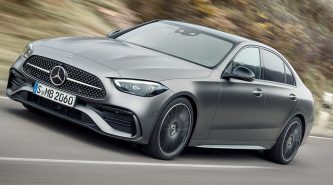
Up front is perhaps its most traditional view with a postmodern interpretation of the upright Benz radiator grilles of the 1980s now filled with dynamic lighting elements.
The brand is emphasising the sophistication of the electric C-Class chassis, positioning the EV as both more agile and more comfortable.
Key hardware includes optional Airmatic air suspension, rear-axle steering with up to 4.5 degrees of articulation, and predictive damping based on cloud data uploaded by other Mercedes-Benz cars.
The dominant rear motor is paired to a two-speed transmission – still a rare feature for EVs – aimed at delivering strong low-speed punch while achieving better efficiency on the highway.
Meanwhile, an automatically disconnecting front motor will allow AWD versions of the C-Class to run as a rear-drive vehicle under light load.
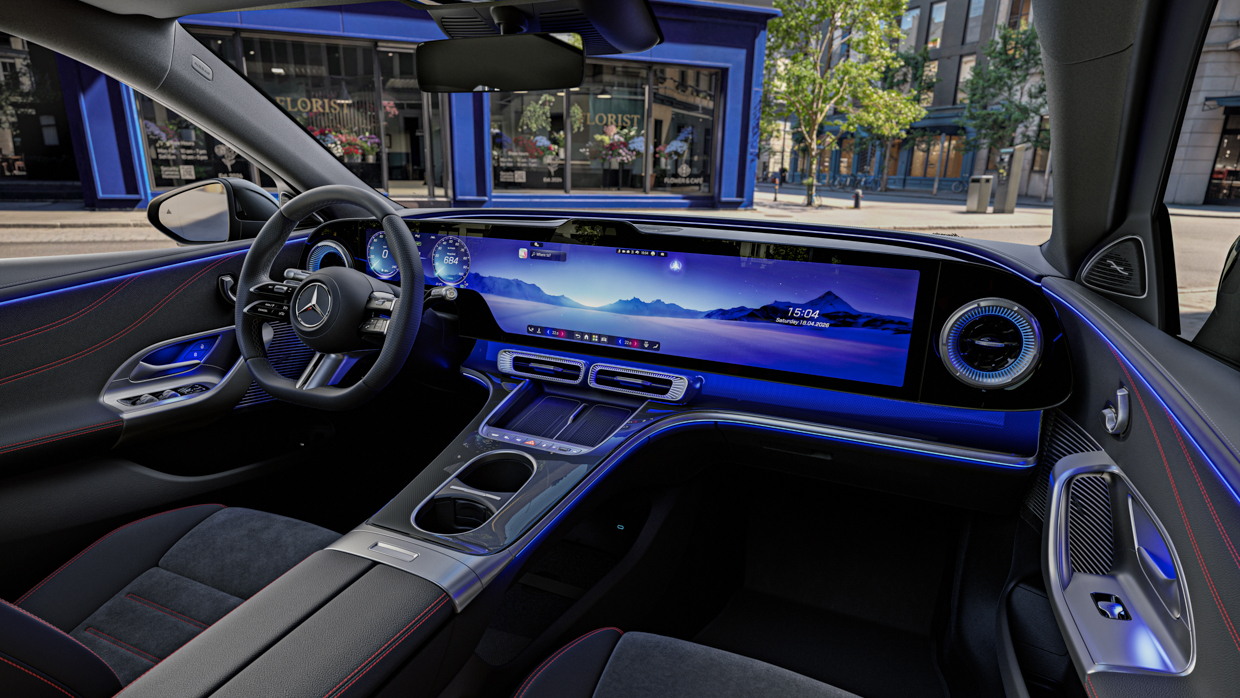
Inside, the electric C-Class steps well beyond the combustion model in terms of digital integration, with the highlight being an (optional) seamless 39-inch Hyperscreen with end-to-end content.
No dashboard is available for the new C-Class that does not see screen acreage spanning from pillar to pillar: the only question is whether ‘joins’ in the screens are visible.
While it appears that a passenger display is standard fare, there is a big asterisk: on base versions, the screen in front of the passenger displays an ambient view but is not usable.
Mercedes-Benz says a new zonal architecture beefs up the computing power of the C-Class by a considerable degree, while occupants can also now interact with a multi-agent AI system.
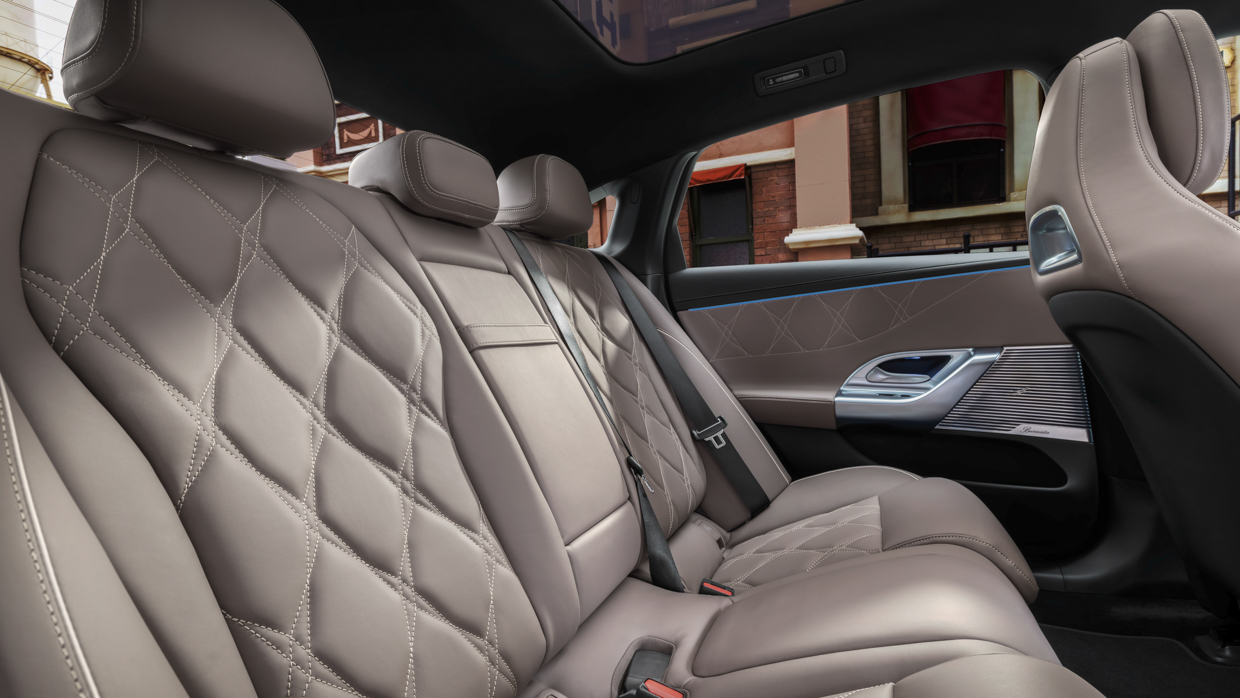
The interior will include the option of massaging and ventilated seats, a choice of base leather, Nappa leather or a certified full-vegan cabin, and an optional fixed glass roof that incorporates 162 illuminated stars.
Cargo room comprises a 470-litre boot and a 101-litre frunk that the carmaker says can take a carry-on suitcase or charging cables.
Latest news
About Chasing cars
Chasing Cars reviews are 100% independent.
Because we are powered by Budget Direct Insurance, we don’t receive advertising or sales revenue from car manufacturers.
We’re truly independent – giving you Australia’s best car reviews.