Powered by
-
Car Reviews
Latest reviews
-
Car News
Latest news
-
Car Comparisons
Latest comparisons
- Chasing Deals
Latest reviews
Latest news
Latest comparisons
Disappointed with the limited upgrades of the Shark 6 Performance? BYD says a fully featured ‘ultimate’ variant is on the way
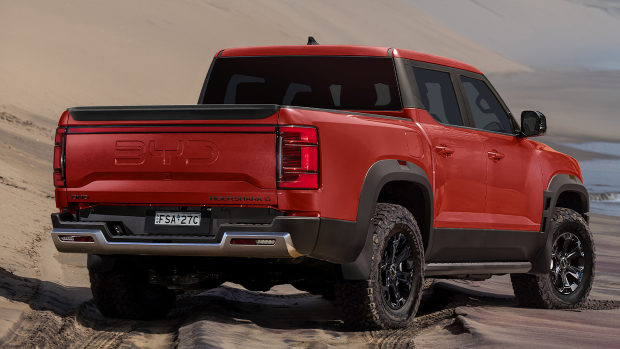
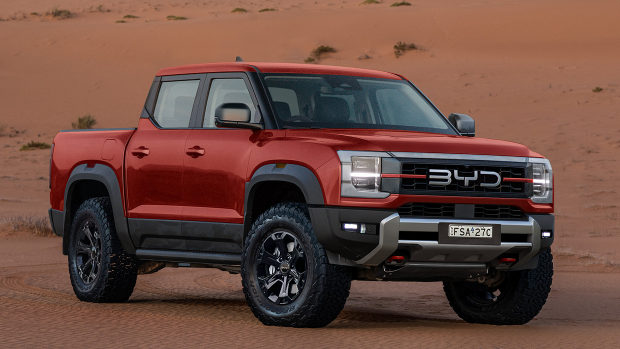
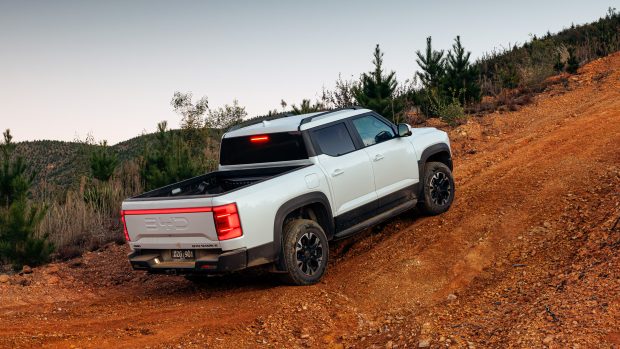
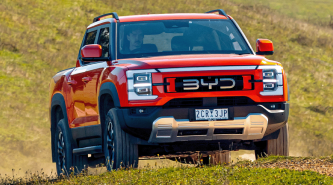
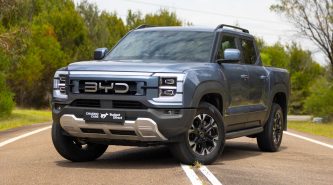
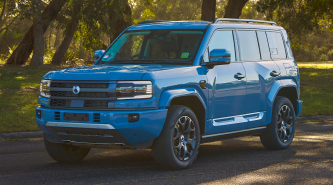
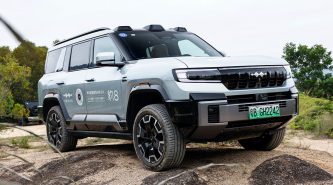
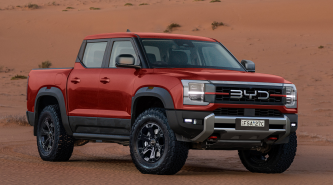
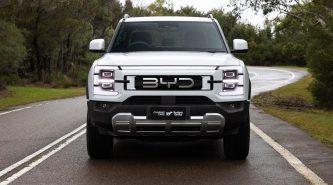
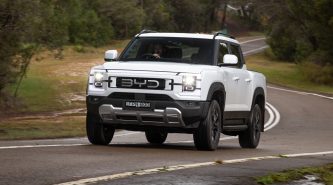
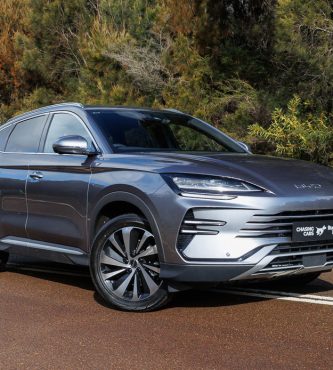
BYD Australia says its wildly successful Shark 6 range “will expand further”, with an extreme off-road grade and a fully electric variant on the cards.
Australia buys more Shark 6 utes than anyone else in the world, a position BYD says has seen requests and feedback of local buyers integrated as a high priority.
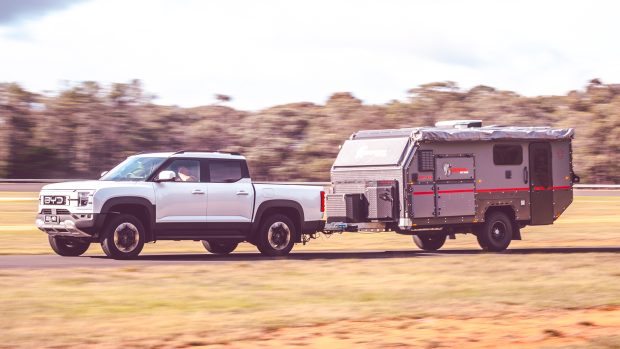
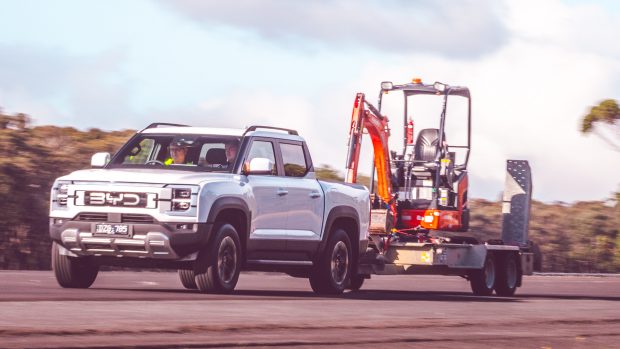
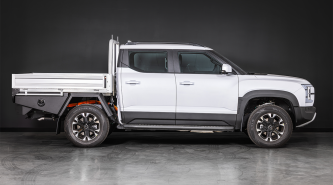
Evidence of this is seen in the May 2026 update, with the Shark range expanding with a fleet-focused Dynamic cab-chassis and 3.5-tonne towing Performance, straddling the existing Premium grade – but BYD says more is to come.
A cab-chassis variant rated to tow 3.5 tonnes, instead of the Dynamic and Premium’s 2.5-tonne limit, appears the next logical step but a more hardcore off-road variant above the Performance remains in clear focus.
Chasing Cars spoke to Sajid Hasan, who serves as the chief product officer at both BYD and Denza, where he confirmed the brand’s clear intentions to build an ‘ultimate’ Shark grade.
“We’d love to fill that space…. we’re going to fill that space”, Hasan said.
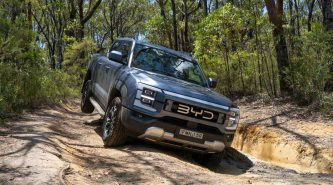
On the menu? Hasan says locking differentials and “all the things that you guys have been talking about, and asking for, are the things that we’re pushing for to fill that space.”
But the path to a twin-locked Shark isn’t straightforward, with packaging constraints from the tightly arranged chassis of the plug-in hybrid ute proving a significant challenge.
“There would be some packaging challenges… we can do it, it’s just a matter of time and resources,” he said.
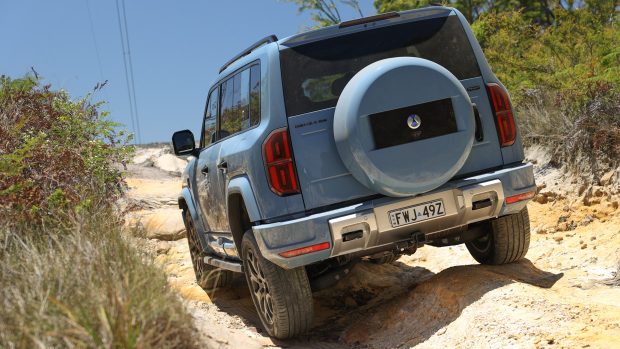
“We just have to work out the packaging of the spare wheel, which creates some complexity around that rear motor in that axle area. The real estate’s a bit tight back there, and we don’t have that issue with the [Denza] B5 and B8, because the spare wheel’s on the back door.”
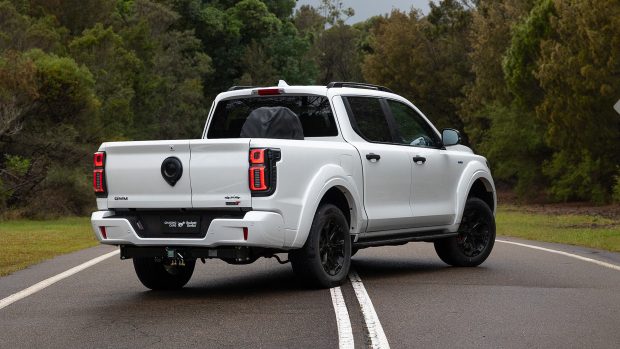
Rival brand GWM was famously forced to mount the spare wheel of its twin-locked Cannon Alpha PHEV in the tub due to packaging constraints around the 37.1kWh battery – a mistake the brand has sworn not to make again with the inbound Cannon PHEV.
Hasan also suggested there is still potentially room to improve with its updated ‘Crawl mode’ and hill-descent control.
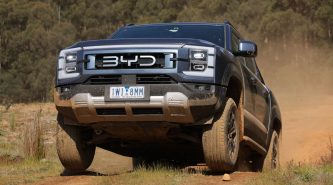
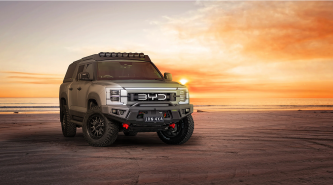
Other likely upgrades? Bigger tyres and a tougher appearance would help separate the ‘ultimate’ grade from the Performance on which it would likely be based, with the latter keeping the design almost entirely unchanged to appeal to a broader customer base.
A key point of contention with the Performance grade is the fact the GVM has been carried over from the Premium’s 3500kg, despite being a 65kg heavier vehicle and being rated to tow 1000kg more at 3500kg braked.
The latter figure has emerged as a hard ceiling for BYD, and venturing above could create complications with licensing rules in other markets, as well as the ability to earn an ANCAP rating in Australia – though Hasan conceded recent rule tweaks have allowed the Denza B8, sporting a GVM of 3992kg, to earn a five-star rating.
“We’re at 3.5-tonne GVM and we’re not looking to cross that threshold because there’ll be increased struggles to introduce it in some other markets,” he said.
Additional off-road upgrades would likely eat further into the already limited 725kg payload, though Hasan points to aftermarket GVM upgrades, such as those offered by Ironman, as a potential solution – though this comes as an additional expense to the buyer.
Although technically possible, the popularity of GVM upgrades among Shark buyers also makes the inclusion of the brand’s DiSus-P suspension unlikely, as the complex hydraulic set-up would make said upgrades exceedingly difficult, according to Hasan.
The stance will likely come as a disappointment to fans, as DiSus-P has proven to significantly boost off-road capability on the Denza B5 and B8 SUVs, with the former able to raise its suspension to increase the ground clearance by 110mm.
Other benefits touted by BYD include increased roadholding, and self-levelling when towing and when parked on uneven campgrounds.
With the recent introduction of the Toyota Hilux BEV, and new models such as the MG U9 EV on the horizon, BYD says it too is mulling over the idea but chief operating officer Stephen Collins told Chasing Cars the business case needs to stack up.
“We don’t have it on our product plan at this point in time, but we’re talking about it. It’s on our wishlist,” he said.
“We’ve been in discussions with a lot of mining companies, particularly where mining sites don’t have fuel on-site, so it’s definitely under discussion.”
While not likely within the next 18 months, Collins insists he believes Australian buyers are ready for a fully electric Shark 6.
“I think there’s a market for it – whether we can make it work is the question. Not technically but just as a business model.”
Large SUVs and utes have struggled to embrace full electrification as the format often requires a huge battery capacity, which comes at considerable additional cost. The end result in terms of driving range is also disappointing compared to other EVs.
For example, the MG U9 EV boasts a massive 102kWh LFP battery, but cites a range of 430km WLTP, a compromise too significant for many existing ute owners.
Latest news
About Chasing cars
Chasing Cars reviews are 100% independent.
Because we are powered by Budget Direct Insurance, we don’t receive advertising or sales revenue from car manufacturers.
We’re truly independent – giving you Australia’s best car reviews.