Powered by
-
Car Reviews
Latest reviews
-
Car News
Latest news
-
Car Comparisons
Latest comparisons
- Chasing Deals
Latest reviews
Latest news
Latest comparisons
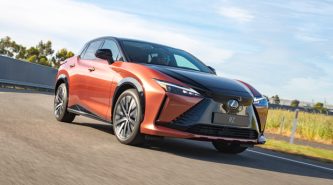
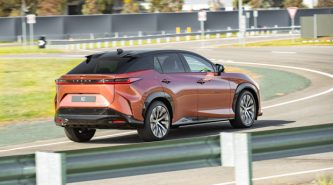
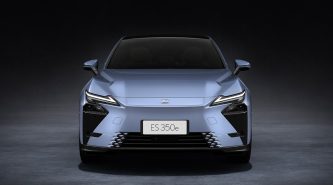
The Lexus electric cops a price dump and performance boost in its MY26 update, but its flagship lacks sportiness and by-wire steering is a gimmicky ‘yoke’
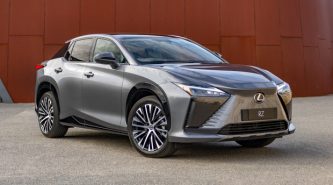
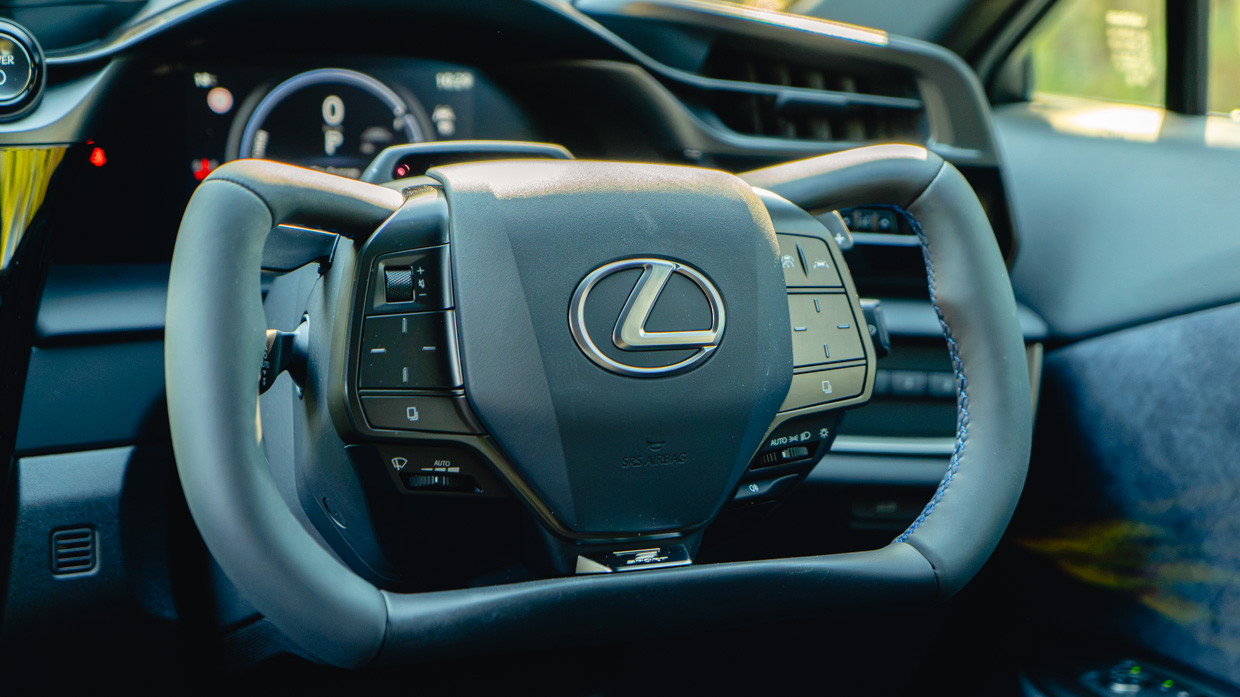
Lexus has reinvented the wheel. Or, more accurately, lifted a ‘yoke‘ and various other technical influences, to essentially reinvent steering itself.
The Japanese luxury marque has taken Tesla’s flawed ‘yoke’ application and Infiniti’s failed by-wire electronic steering, coupling and mashed them together for its “steer-by-wire (SBW) steering system with yoke steering wheel”, referred to in some literature as One Motion Grip. And its thrown in variable rack ratio hardware, as used by numerous Euro premium marques.
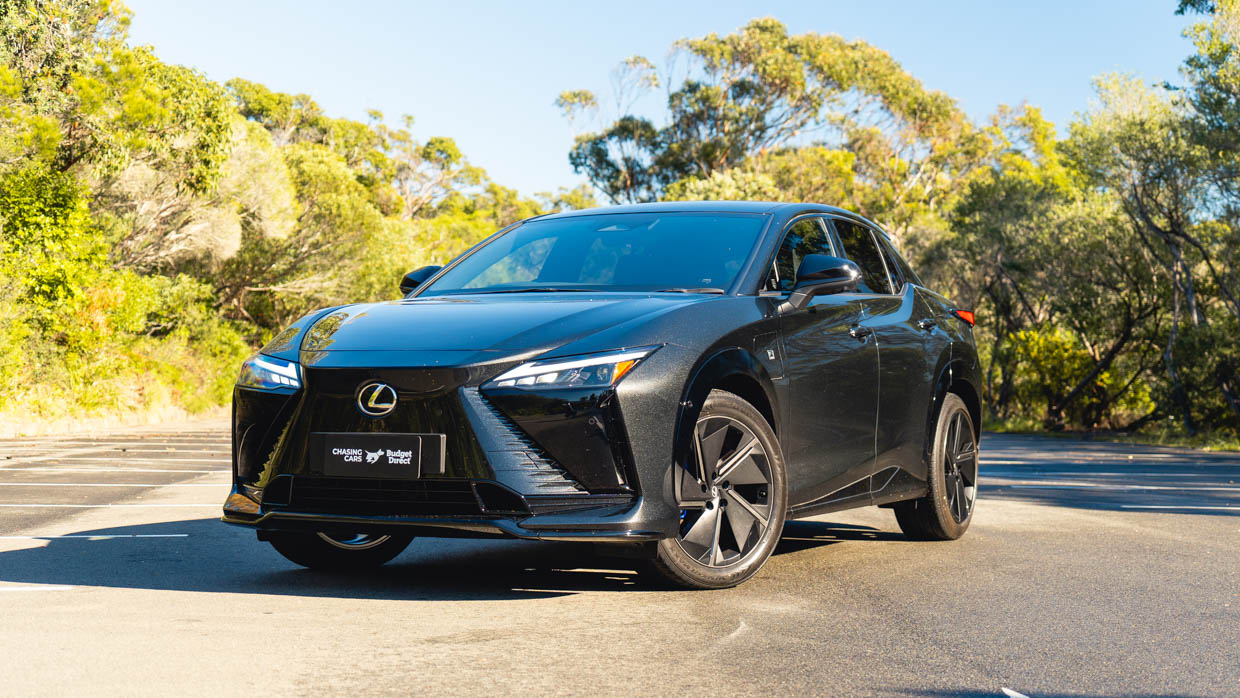
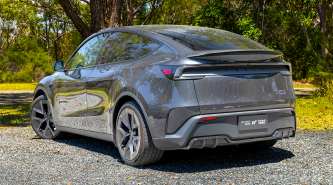
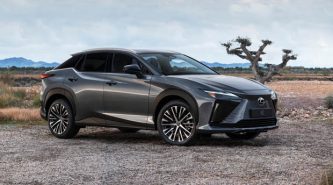
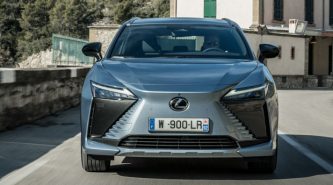
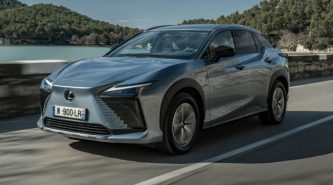
It’s a single feature of one variant – the 550e F Sport flagship – of the three-strong Lexus RZ lineup that, for 2026, brings myriad notable changes and virtues to the three-year-old midsize electric crossover.
But the yoke is inescapably centric to the top-shelf RZ experience, fitted standard, for better or worse.
Nearly as attention-grabbing is the massive price drop as RZ scrambles to reposition itself in an EV market that, in the three years since its debut, has skyrocketed in performance and range expectations while plummeting in its key price points.
Back in 2023, Lexus pegged its 230kW, circa-400km-capable Toyota BZ4X twins, in 450e guise, at $123,000-$135,000 before on-roads. Our readers and viewers were brutal: “$135K for the pimped BZ4X with 400km of range and no-one pedal?” one asked. “Sounds like they want to sell as few as possible,” suggested another…
Three years later, a more powerful 280kW 500e configuration, with bigger 74.7kWh battery pack and up to 460km WLTP range, starts from just $84,500…a haircut of almost $40K at the ground floor.
At the top of the new heap is the first-ever F Sport electric and the first-ever Lexus to be completely leather-free. This 300kW 550e F Sport at $105,000 list, hoping to stake the brand’s performance and tech credentials claim into seemingly fast-shifting EV sands.
At $84,500 list, the entry RZ 500e Luxury fits a 167kW/269Nm electric motor on each axle for 280kW combined and a range claim of 460km. DC charging for its 74.7kWh is capped at 150kW while AC is 22kW.
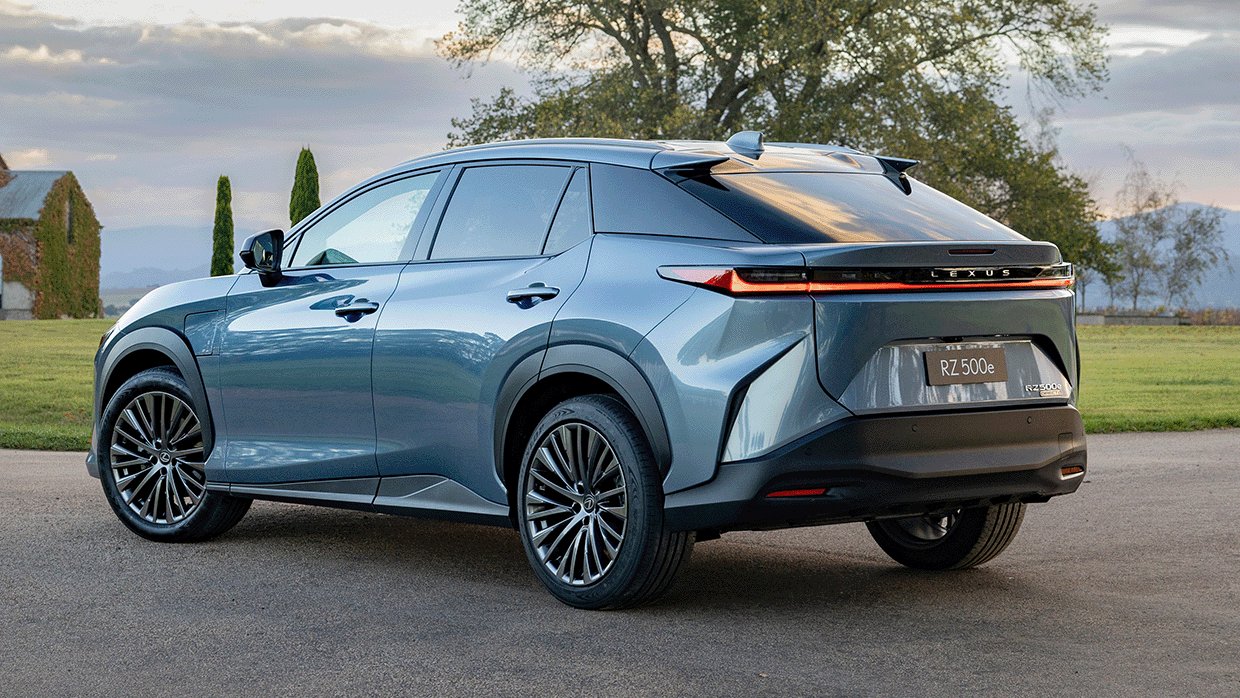
Features for the base RZ grade include features such as:
The mid-spec variant of the RZ range is the 500e Sport Luxury, fitting the same dual-motor 280kW powertrain and high-voltage credentials, priced from $91,000 before on roads..
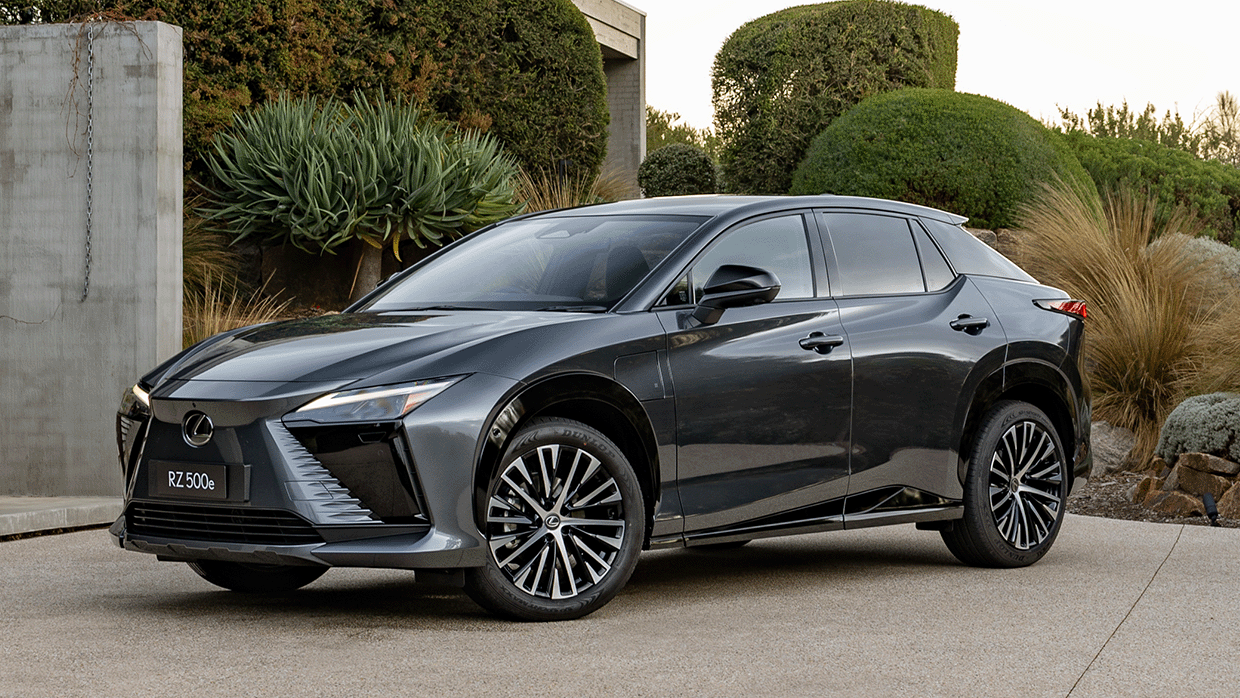
Additional features over the ‘just Luxury’ include:
The flagship 550e F Sport on test here clocks in at $105,000. It fits the same dual-motor array as the 500e with a larger 77kWh battery and a higher combined peak output of 300kW. Maximum range is slightly lower, at 437km WLTP.
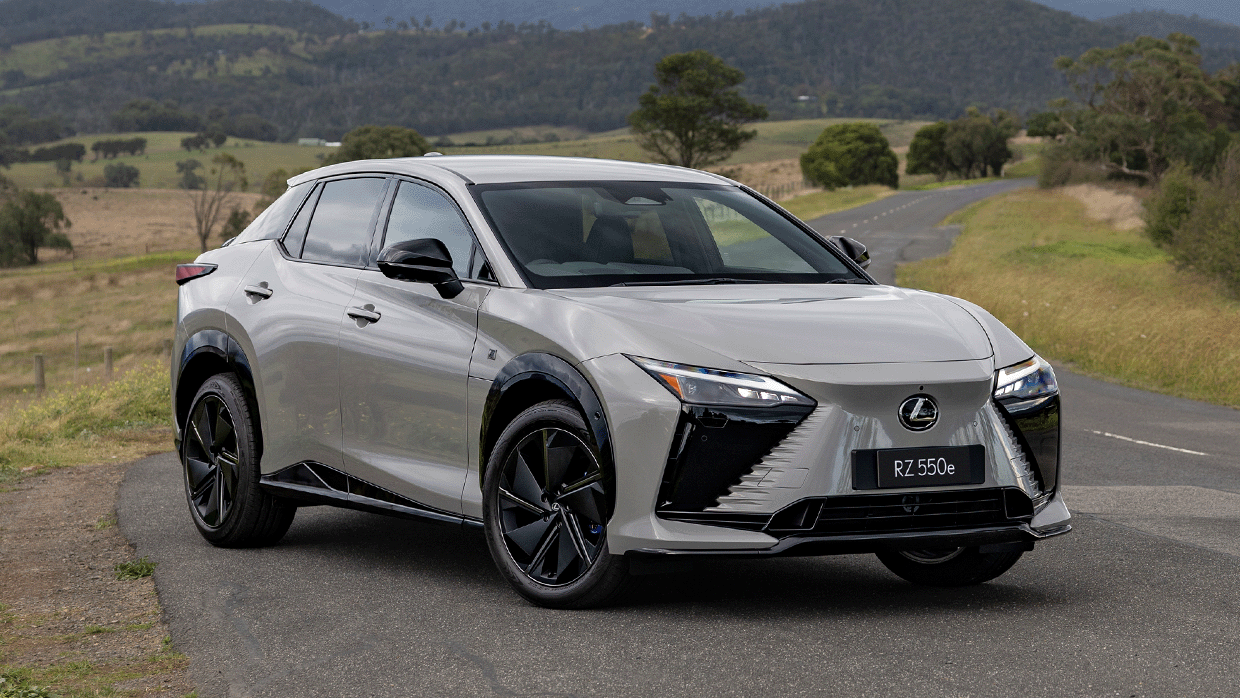
The current tree-topper version fits the follow spec:
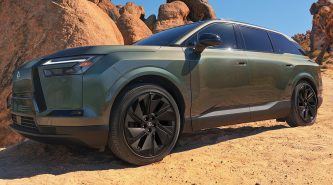
The 500e is available in a choice of six paint colours, while the 550e F Sport specifically brings five single-tone and three two-tone paint schemes.
We’ll preface this by-wire yoke business with this: when founder Tom Baker drove the 450e prototype three years back, he made positive noises about this revolutionary (pre-production) electronic steering application.
Three years on, and horses for courses considered, your reviewer isn’t so keen on its production form, as applied to the 550e F Sport recipe.
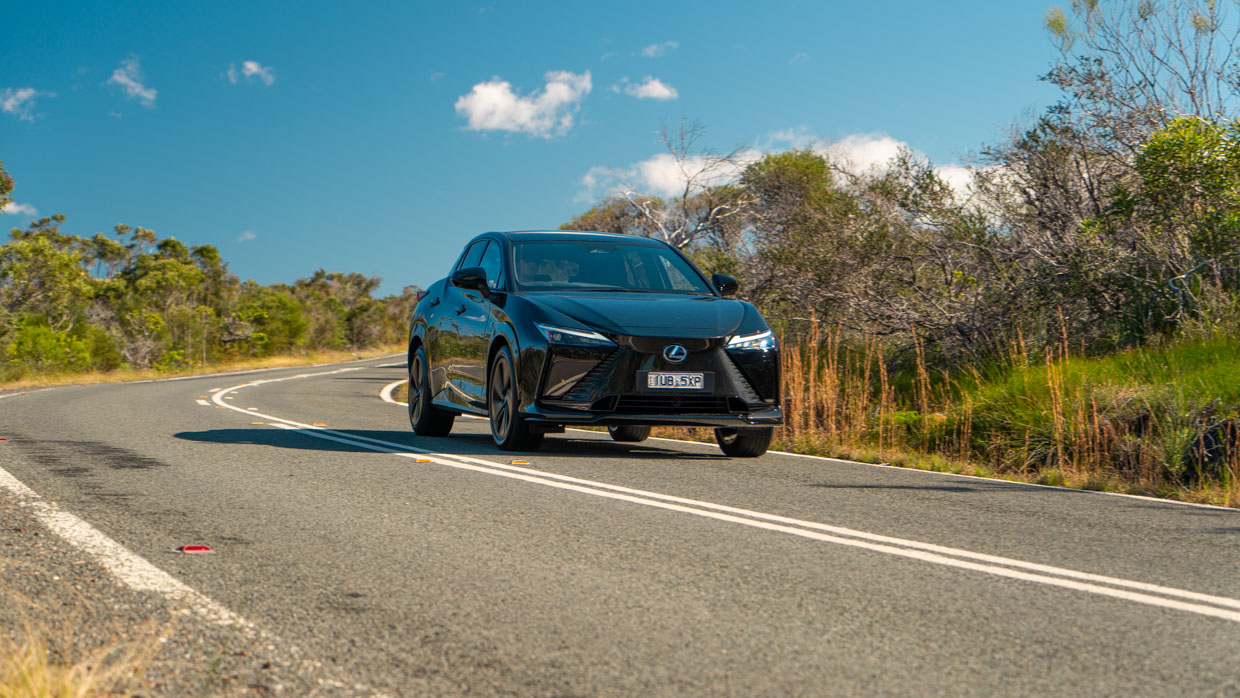
A yoke ‘controller’ – don’t call it a wheel – might work in Max Verstappen’s F1 car: lightning fast rack ratio, no hand-over-hand motion required. But for everyday driving, from a leisurely highway cruise through to negotiating tight multistory car parks, it’s hugely compromising.
Lexus understood that the Tesla’s yoke-on-conventional-steering format was chronically flawed in control mechanics, an intensely clumsy methodology during normal hand-over-hand steering manoeuvres Tesla’s design demands.
The Lexus solution is a dramatically variable, active rack ratio: higher and more relaxed off-centre, shorter and sharper with increased lock input. It’s also duller at high speed, quicker at low speed. In short, it radically changes its ratio situationally.
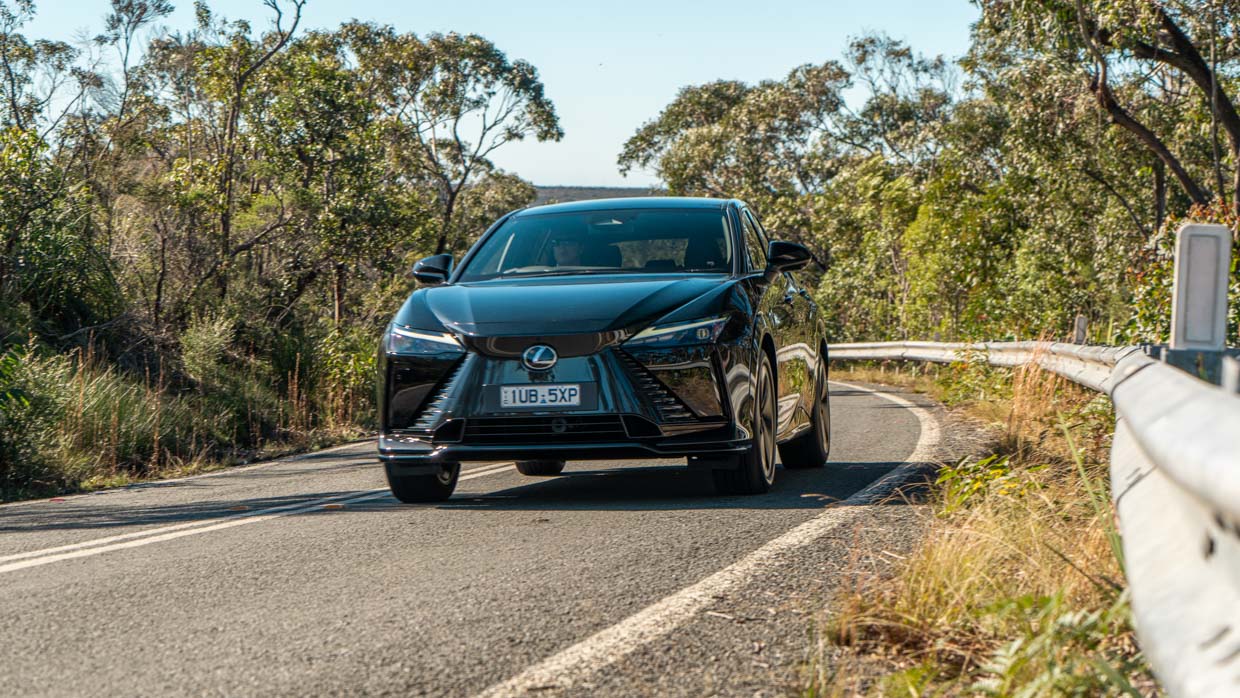
Now, linearity is a primary steering virtue, and this RZ system is the least linear design on sale, by a fair margin.
This steering is fast. Subjectively, the RZ’s steering is about twice as quick as ‘normal’ steering off centre and it just gets quicker with more lock and reduced road speed.
Its radically variable nature makes it extremely difficult to anticipate the relationship between driver input and vehicle turn-in. And its responses are so alert and amplified that steering inputs feel wholly inaccurate and, at times, almost random.
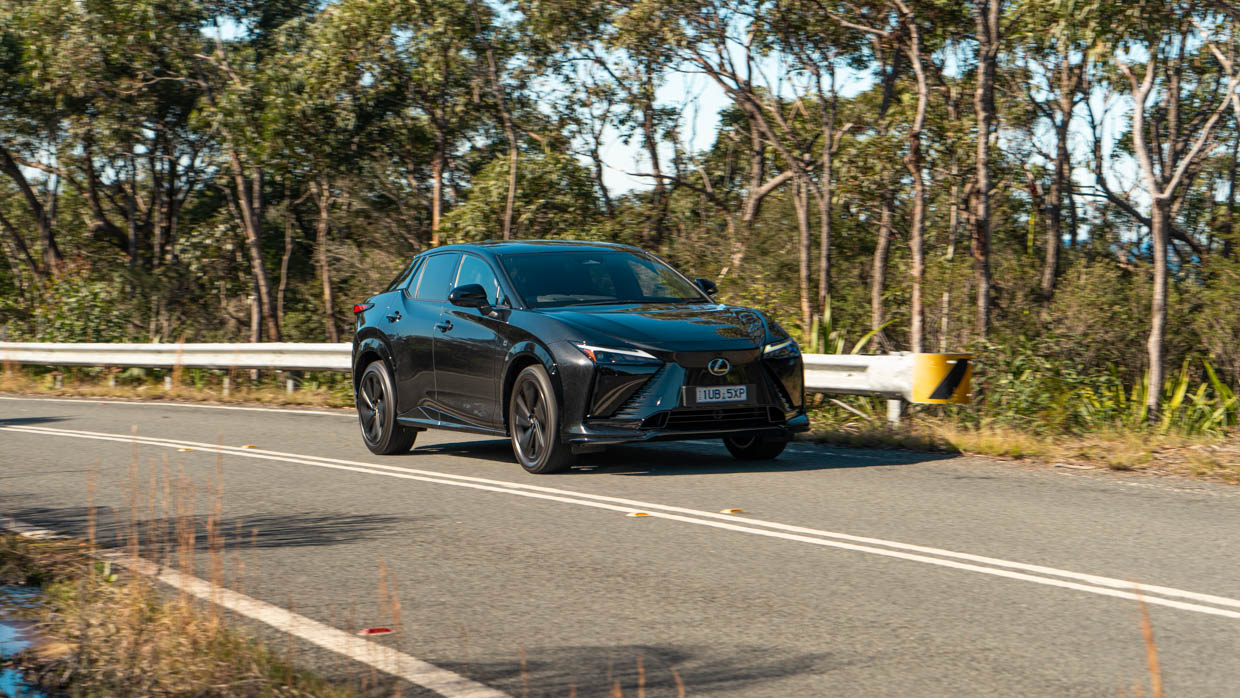
This is all designed to negotiate and compensate for its scant 400 degrees of rotation, lock to lock, or just over one turn. Most cars have 2.8 to 3.2 turns. So what you gain maneuverability, you lose in natural feel, intuitive control and input accuracy.
There might be some solace if the steering presented genuine feedback – another key virtue – to inform the driver of front-end tyre friction loss. But no. Instead, the RZ steering offers a uniform amount of self-centring weight, in all situations, leaving the state of front tyre lateral tyre grip largely a mystery.
The RZ does point – another key steering virtue – and turn in faithfully, but without linearity and feedback it’s neither as enjoyable or useful as conventional mechanical steering, while forcing your hands into the nine and three positions permanently, which can be fatiguing.
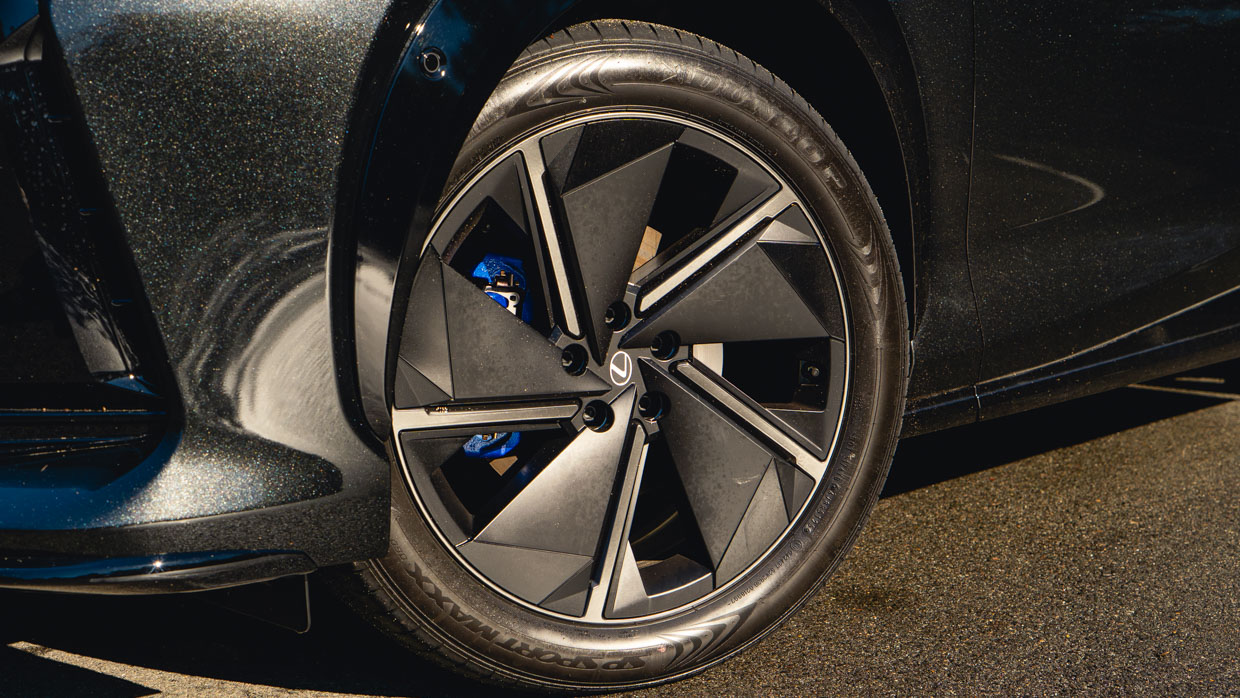
This is not to merely kick a technology that’s different: it’s simply a flawed solution fit to a poorly-conceived, use-case application.
Despite the clumsy clasping of the yoke and its controls in breaking baked-in driving habits, the yoke by-wire system is somewhat cooperative around town. You kinda-sorta get used to its hyperactive nature – it doesn’t demand concentrated operation in some situations.
But it becomes spooky and untrustworthy when you push on – where you need feedback and linearity – so as a premium feature at an upcharge, its fitment as F Sport spec is a curious move.
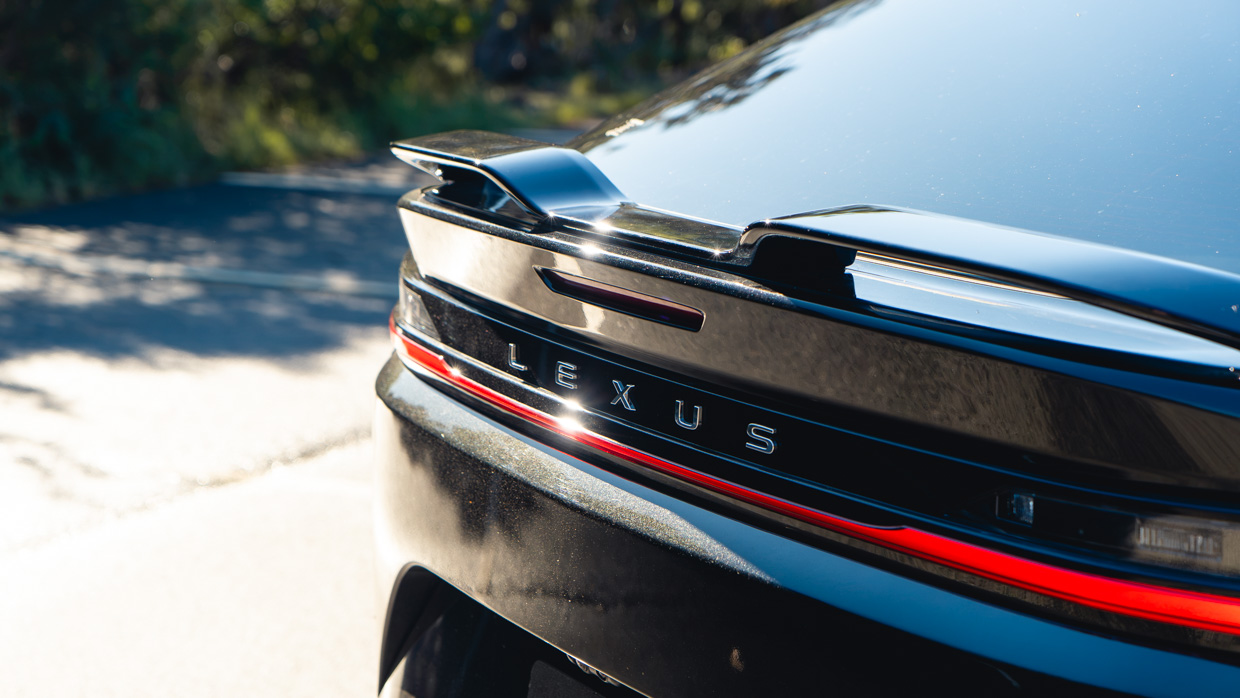
Nor has the Direct4 all-wheel drive’s torque-shuffling recalibration injected much tangible sportiness to the e-TNGA platform. It’s solid, refined, stable and a downright comfortable drive as a default, but F Sport doesn’t embrace fun factor – nothing to mark itself apart from other RZs…or even BZ4X, bar straight-line pace.
The flagship brings a front ‘strut brace’ and Vehicle Dynamics Integrated Management, an intangible addition to otherwise identical suspension to non-F Sport versions. The staggered 235mm/255mm 20-inch rubber and braking spec is also identical across all RZs.
Exclusive to F Sport, though, is a novelty Interactive Manual Drive, aka M Mode, is the latest in faux-gearchange fakery, ala Hyundai N electrics.
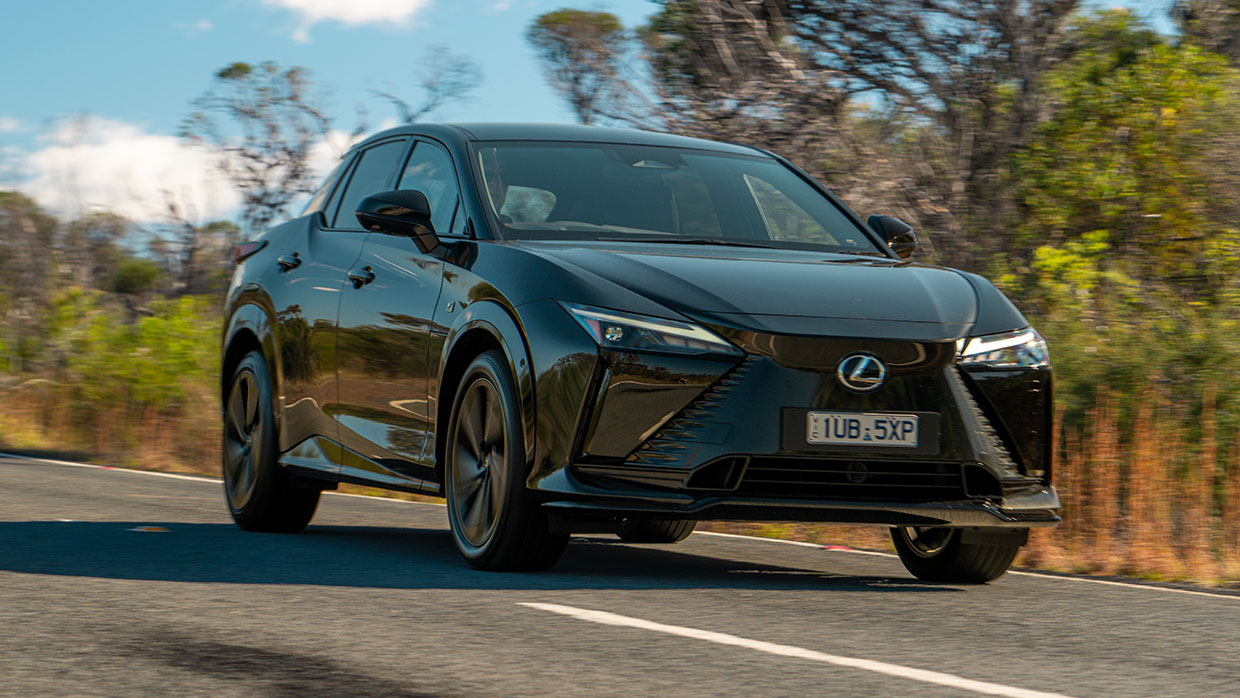
It’s mildly entertaining, if lacking the Korean’s upshift thumps while returning a soundtrack nothing like Lexus’s fine V8s of yore, but rather something sounding vaguely akin to a washing machine on spin cycle.
It does match throttle position/power with chosen in-gear rpm, though, which is neat.
In regular (non M) mode, the paddleshifters adjust regen. But, again, the RZ brings missed tricks, as there’s no truly genuine one-pedal setting offered.
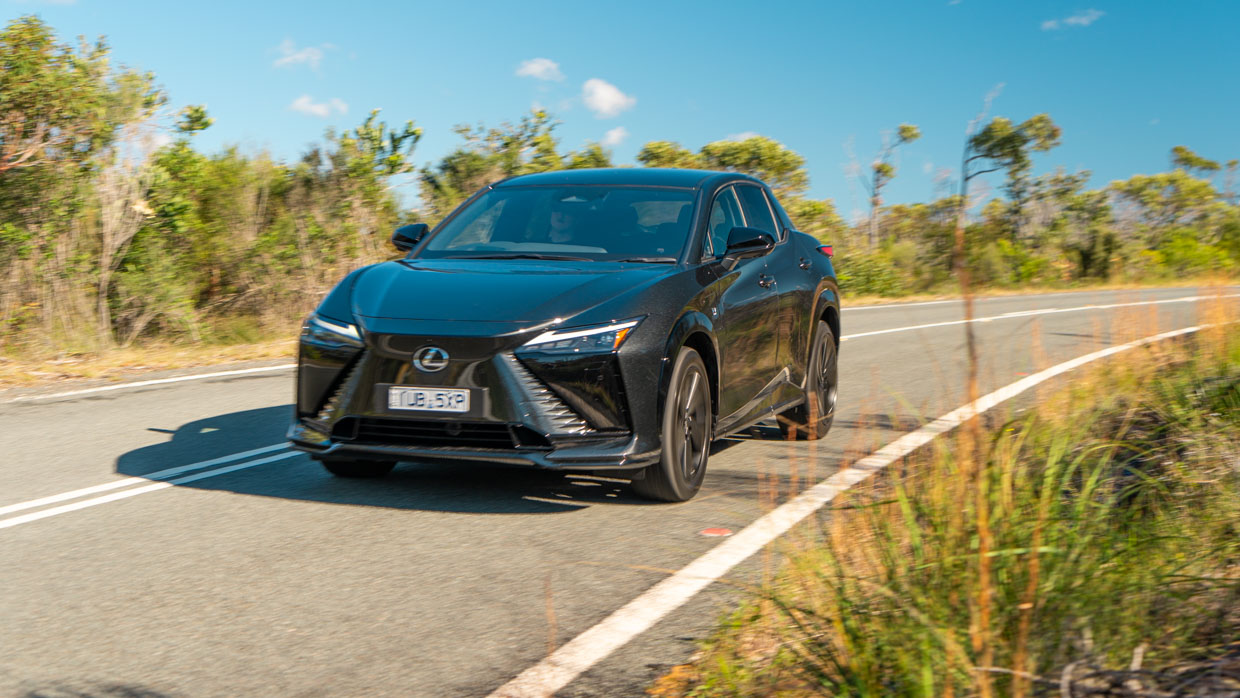
Performance? At 300kW, the 550e offers oodles of it: vastly more than the old (450e) 230kW. That said, it’s merely 20kW over the shove of lower (280kW) 500e grades, sharing the identical 167kW/269Nm motor units front and rear.
The 550e F Sport’s bigger battery (77kWh plays 500e’s 74.7kWh) also brings more kerb weight (2155kg plays 2095-2105kg) which might stymie much performance advantage: at a swift 4.4sec 0-100km/h, it’s a mere two-tenths quicker than the cheaper Luxury and Sport Luxury variants.
You’ll love or hate the yoke cabin centrepiece: it’s a totally polarising feature.
Beyond the H.R Giger Aliens look, the form factor is sound enough for functional intention, in that the yoke-mounted wiper and indicator controls – where paddleshifters are usually located – rotate in tandem with hand movement, while the paddles themselves sit above the peripheral controls.
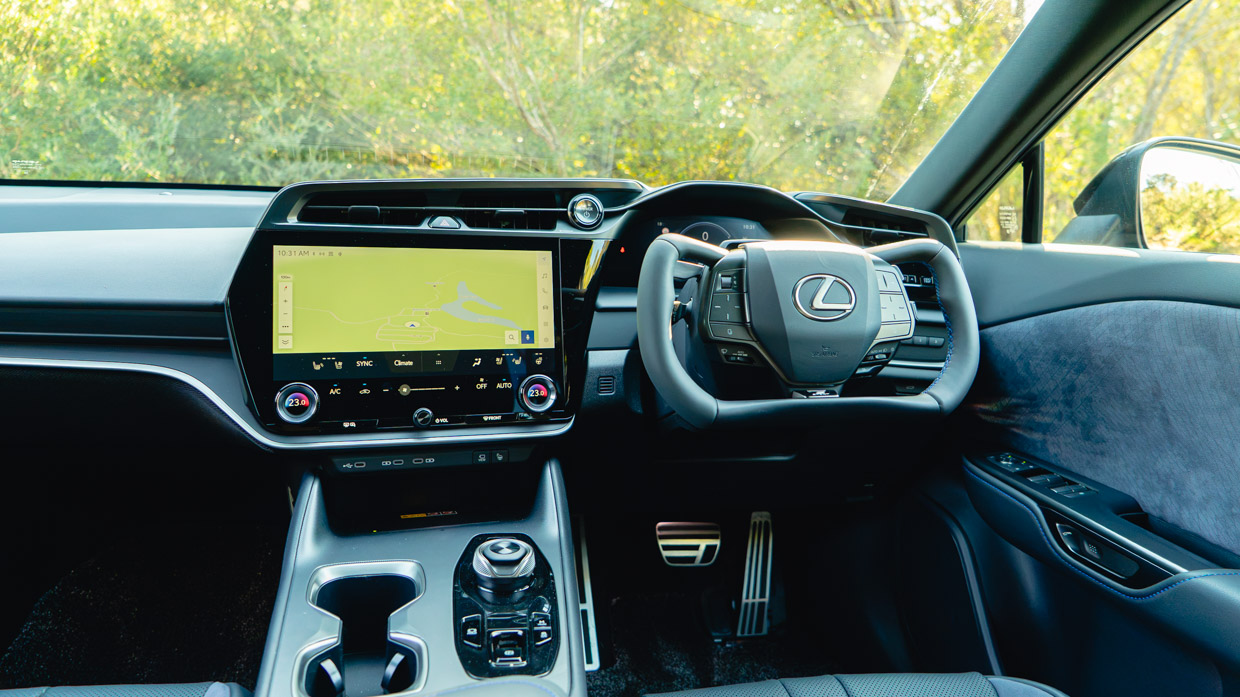
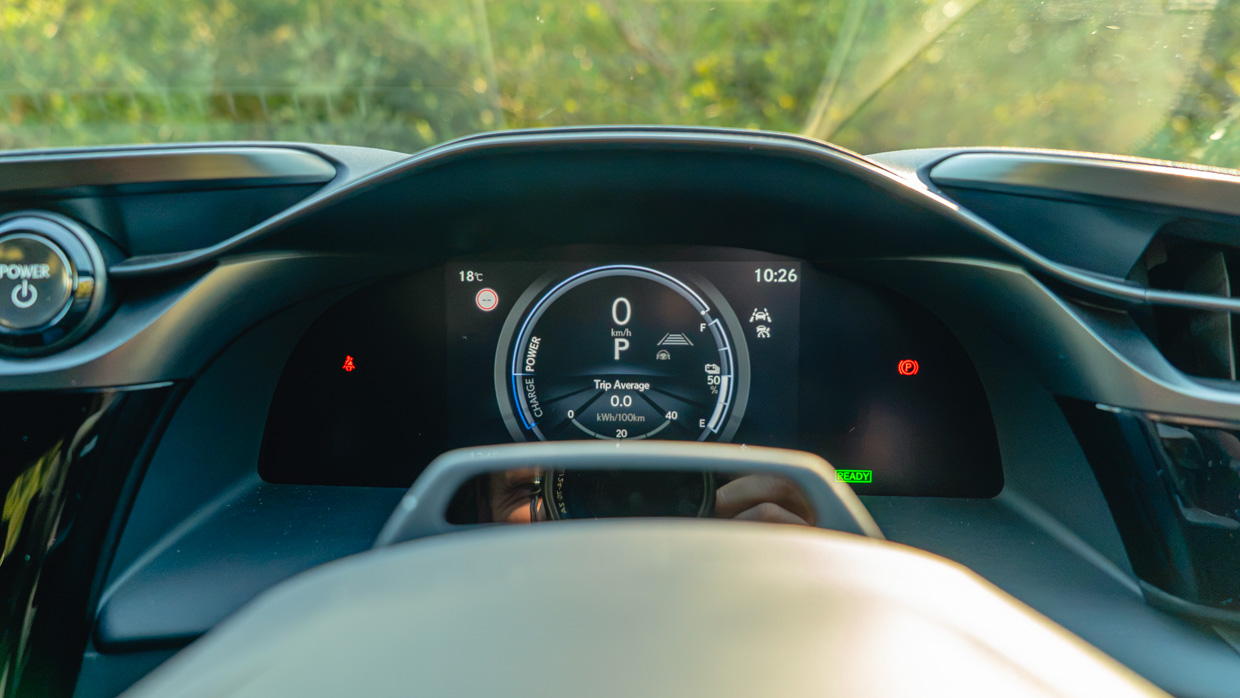
Great? No. Outside of the chronic steering functionality shortcomings of the driving experience, set high the yoke handles are positioned too low for natural driving ergonomics and arm leverage – an issue shared with related BZ4X – while also, confoundingly, obscuring some of the driver’s display.
It’s a strange outcome given the yoke-fitted F Sport specifically sets the (surprisingly low-definition) driver’s screen 38mm higher and 36mm deeper than other RZ variants with ‘normal’ steering.
The only acceptable control/vision solution is to extend the yoke to its maximum reach…then adjust the driver’s seat excessively rearward on its rails, making reaching the media touchscreen a stretch and pinching rear occupant legroom. None of this is aided by the high-set floor (from the underfloor battery) compromising underthigh support. Oh dear…
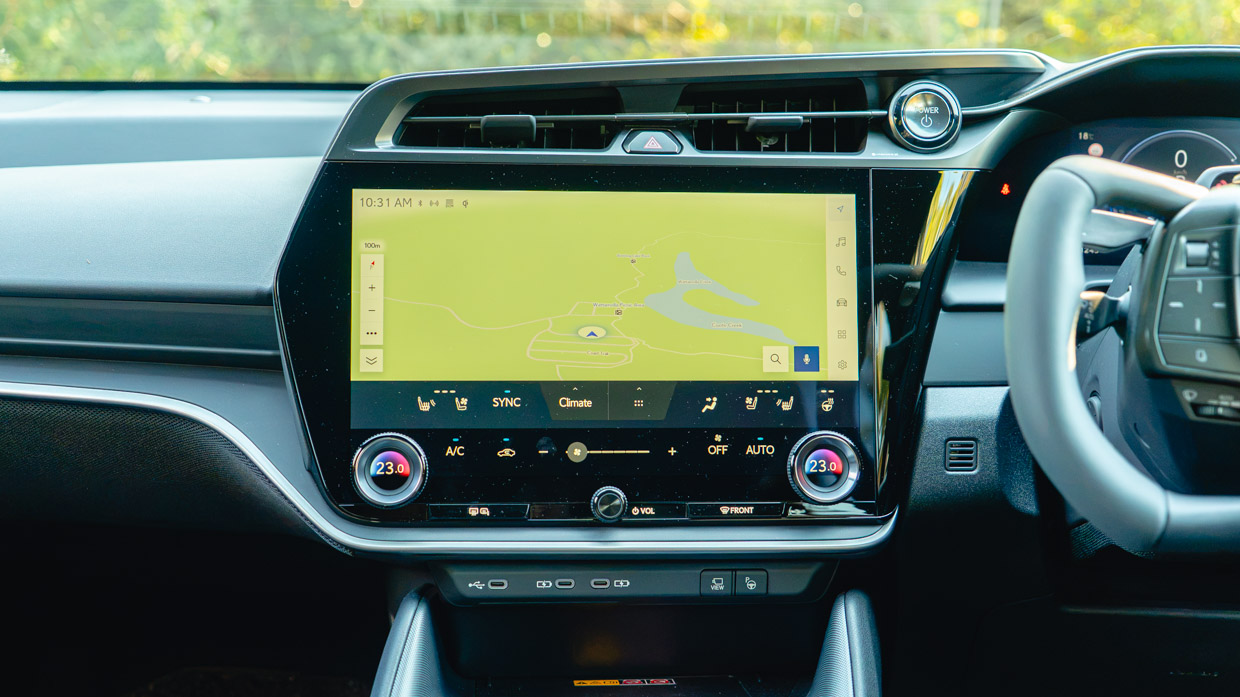
At least the tech and HVAC arrays in the driver-centric dash fascia attempt desperately to present all system control and adjustment otherwise close to hand. And all of it is familiar current-gen Lexus stuff, front the wonderful and charming colour temperature dials to the ‘mid-school’ media tech that’s useful if far from cutting edge.
It’s unsurprising that the Look At Me steering control hardware is complimented by a convoluted ‘transmission selector’ dial array and electronic door latches to add a veneer of over-the-top celebration. The ambience is a strange blend of Lexus convention and sci-fi adventurousness that’s not convincingly congruent.
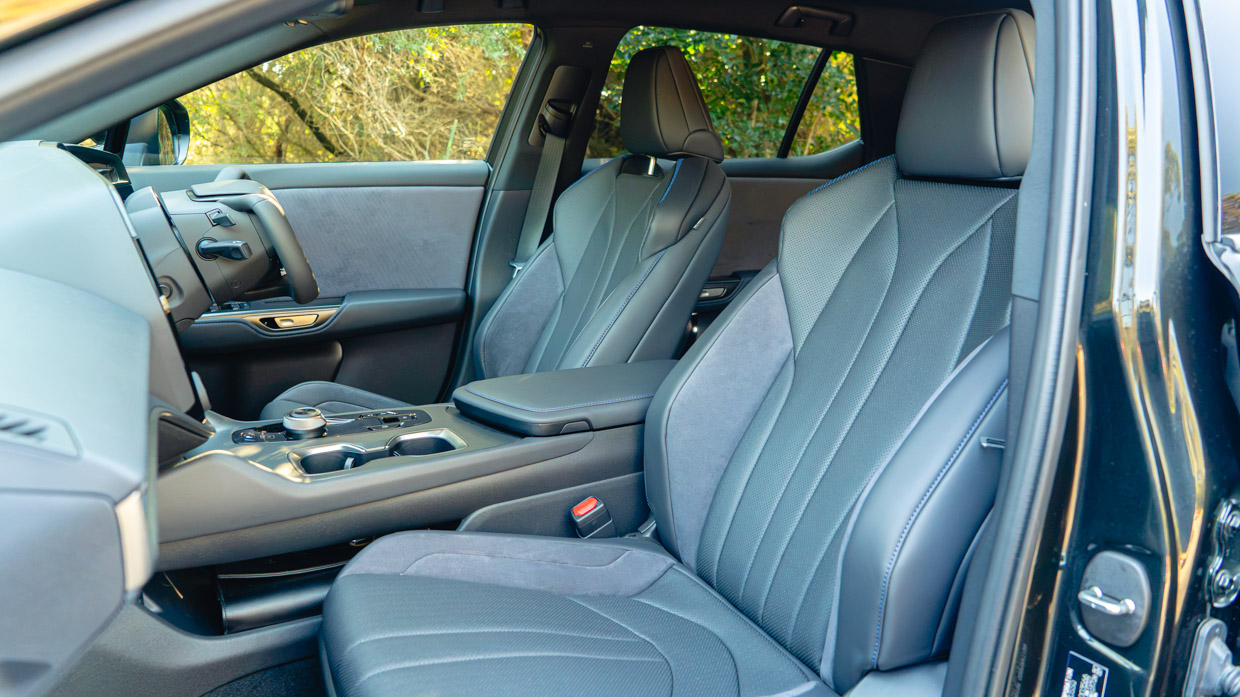
The overt ‘F-Sportiness’ of the front seat design, too, feels out of kilter with a machine almost desperately short of bona-fide sporty genetics, though the expanses of faux suede through the door cards feels suitably plush. At least, plusher than gaudy faux carbonfibre-esque centre console cap.
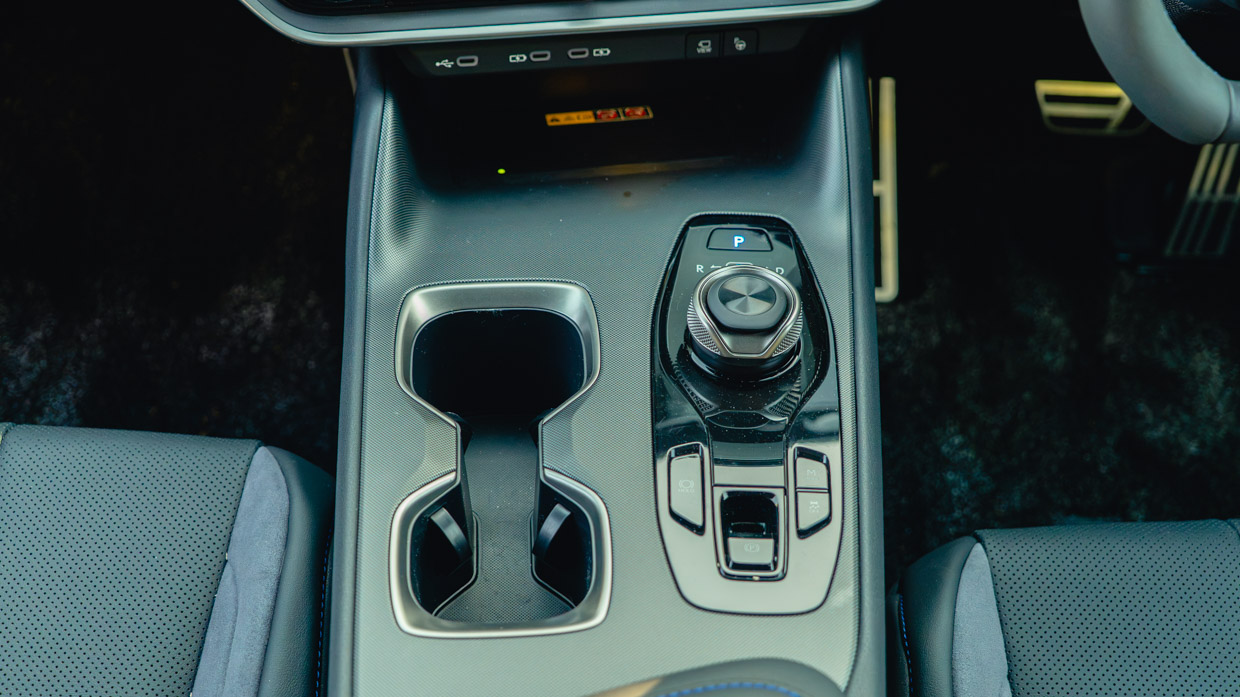
Nice, though, is the hewn-from-granite solidity and the material choice is nice enough for a $135K proposition, let alone one price cut to $105 though, again, anything appearing leathery is now fakery. Daft, though, is the lack of glovebox leaving the old-school printed owner’s manual to occupy the otherwise handy cubby under the centre console.
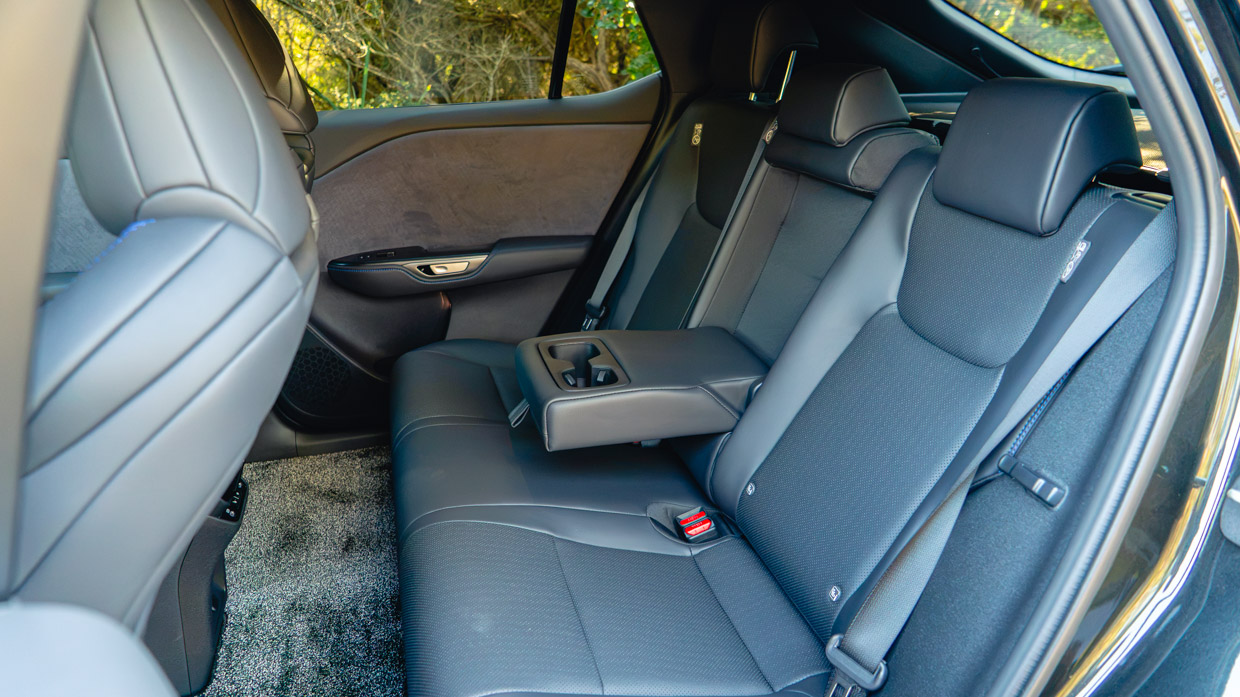
Rear room is huge, offering exceptional knee and head room though, again, the thick underfloor battery will raise knees and jam toes under the bases of the front seats.
But it’s here where the wash of Ultrasuede feels more convincing – more appropriately lounge-like – and expected niceties such as the third-zone climate control array and device power help make it feel well rounded as a luxury device, despite the lack of rear seat sliding and reclining adjustment.
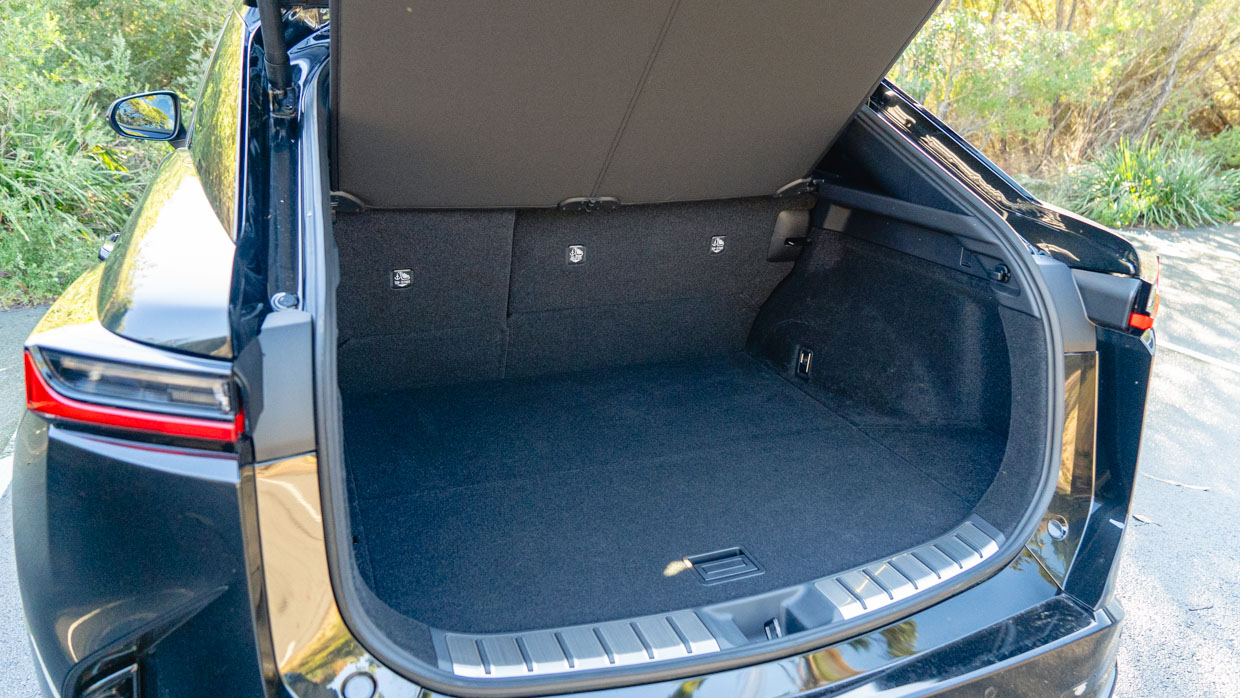
Its near five-metre length not only affords reasonably generous rear legroom but also a very handy 522 litres of boot space, with plenty of width and depth, with a 60:40 rear seat split fold for some seriously practical (1451L) load-through volume capacity.
All RZs feature a shedload of safety kit, including 10 airbags, AEB, front and rear ‘parking’ brake support, blind spot monitoring, rear cross traffic alert, emergency steering assist and driver monitoring, to name a few systems.
It is currently rated five stars with ANCAP using assessment conducted under 2023 protocols.
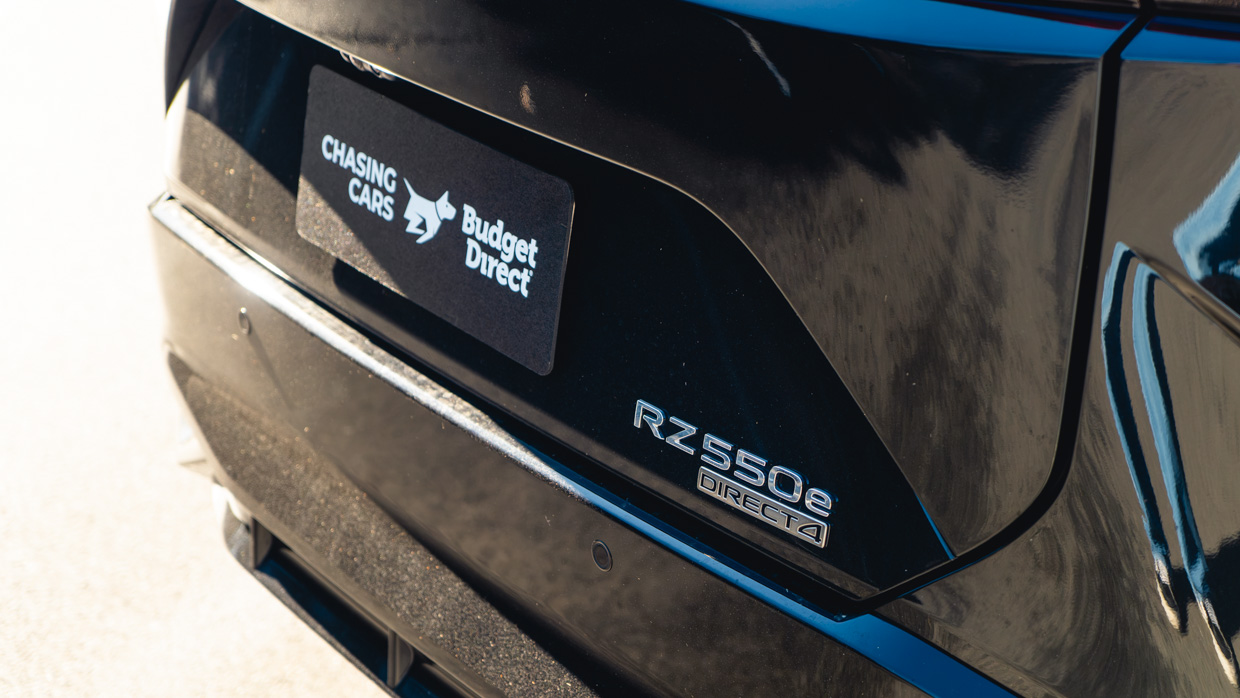
On test, the active systems performed as expected and transparently, bar some intrusive and excessive loud beeping, especially when you engage reverse, cueing a cacophony of beeps once the proximity parking sensors join in.
Lexus claims 18.8kWh/100km WLTP consumption for the 550e F Sport, which proved impressively accurate on test.
That’ll net a little over 400kms run bone dry (off a 437km claim WLTP) in the real world, which was barely competitive three years ago when RZ launched three years ago and a bit behind the game for electric SUVs now in 2026.
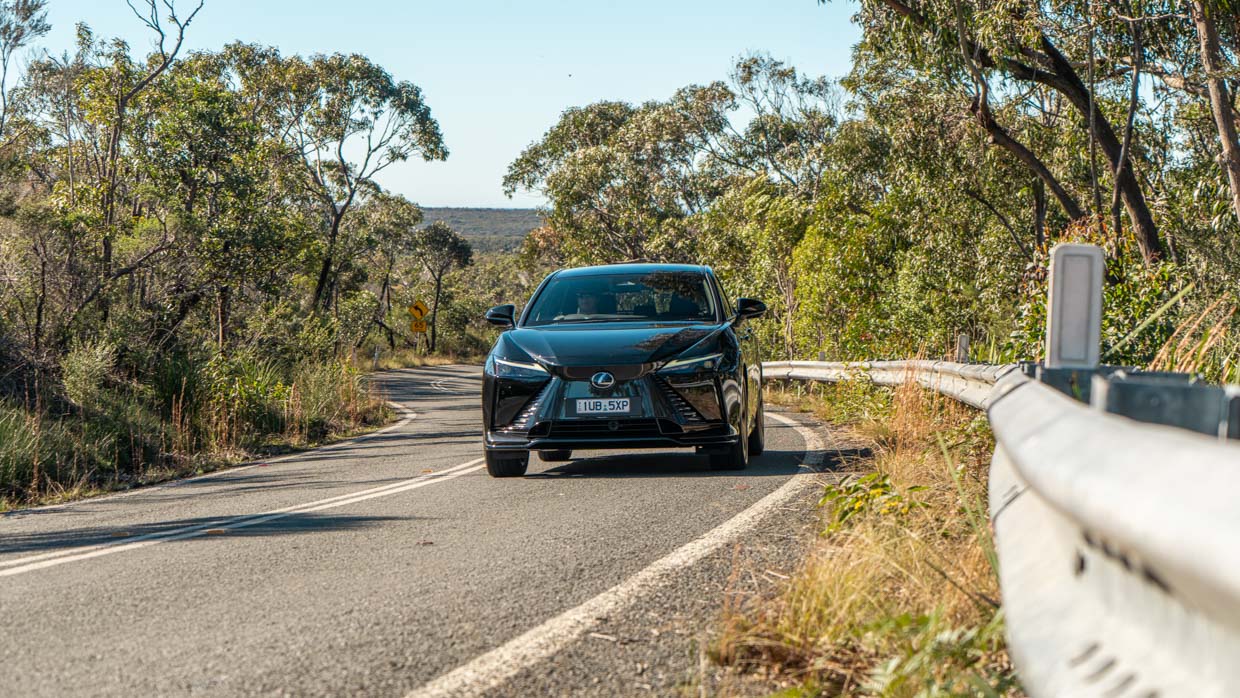
Nor is the (384-volt) architecture a rapid-charger, with a 28-minute claim for the 10-80 percent measure on its modest 150kW DC charging peak. AC is up to a handy 22kW, or around 3.5 hours to 100 percent.
Servicing is capped at $395 per 12-month/15,000km visit, which is thrifty for a premium brand if twice that of the technically related Toyota BZ4X electric ($190 per visit).
Warranty is five years of unlimited kilometre coverage.
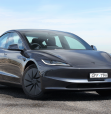
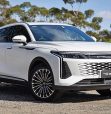
Viewed broadly, the big performance hike and huge price drops have certainly made the RZ breed significantly more relevant, competitive and enticing on 2026’s upmarket medium-SUV landscape. It needs to be against popular (and cheaper) choices in Tesla Model Y and Zeekr 7X.
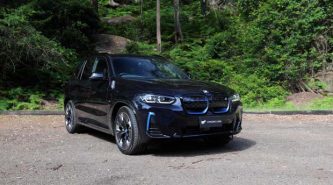
Performance is where it needs to be, but the range is not: low-400kms on a full charge is merely adequate at best. The 550e F Sport’s chief rival from BMW, the soon-to-launch iX3 50 xDrive, offers around double the Lexus range, at 804km WLTP claimed.
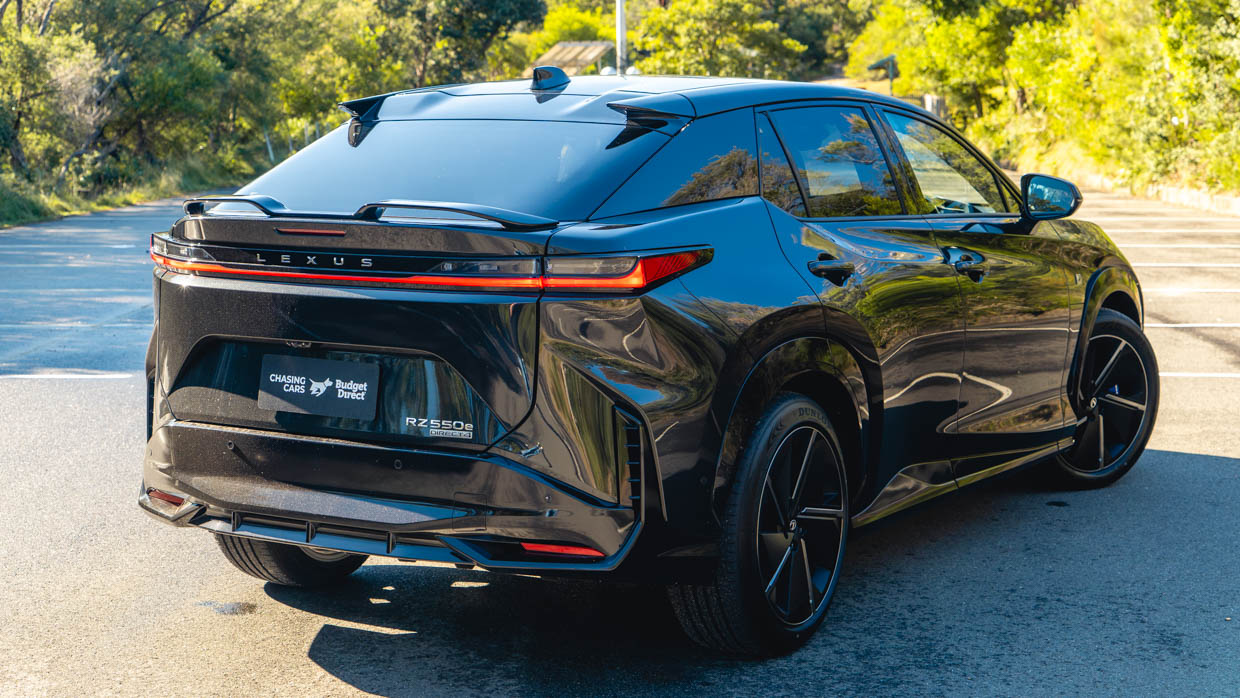
All of which makes the regular RZ 500e Luxury clearly the most enticing combination of the right price ($84,500), the best-of-the-bunch range (460kms), and nigh on identical performance – and sporty-to-drive – prowess to the flagship F Sport. Even better, it has normal steering…
A yoke-shaped electronic by-wire steering system is a gimmick: a radical enough talking point to grab some limelight in an increasingly saturated EV landscape where frequent one-upmanship in outputs, performance and driving range aren’t the headline acts they used to be.
That’s not to say that unorthodoxy doesn’t have big appeal. But it remains to be seen as to whether its dare-to-be-different schtick will win the popularity vote with buyers over some given the system’s significant critical compromises.
Key specs (as tested)
About Chasing cars
Chasing Cars reviews are 100% independent.
Because we are powered by Budget Direct Insurance, we don’t receive advertising or sales revenue from car manufacturers.
We’re truly independent – giving you Australia’s best car reviews.
The estimate provided does not take into account your personal circumstances but is intended to give a general indication of the cost of insurance, in order to obtain a complete quote, please visit www.budgetdirect.com.au. Estimate includes 15%^ online discount.
^Conditions Apply
Budget Direct Insurance arranged by Auto & General Services Pty Ltd ACN 003 617 909(AGS) AFSL 241 411, for and on behalf of the insurer, Auto & General Insurance Company Limited(ABN 42 111 586 353, AFSL 285 571).Because we don’t know your financial needs, we can’t advise you if this insurance will suit you. You should consider your needs and the Product Disclosure Statement before making a decision to buy insurance. Terms and conditions apply.
Indicative quote based on assumptions including postcode , 40 year old male with no offences, licence suspensions or claims in the last 5 years, a NCD Rating 1 and no younger drivers listed. White car, driven up to 10,000kms a year, unfinanced, with no modifications, factory options and/or non-standard accessories, private use only and garaged at night.
^Online Discounts Terms & Conditions
1. Discounts apply to the premium paid for a new Budget Direct Gold Comprehensive Car Insurance, Third Party Property Only or Third Party Property, Fire & Theft Insurance policy initiated online on or after 29 March 2017. Discounts do not apply to optional Roadside Assistance.
2. Discounts do not apply to any renewal offer of insurance.
3. Discounts only apply to the insurance portion of the premium. Discounts are applied before government charges, taxes, levies and fees, including instalment processing fees (as applicable). The full extent of discounts may therefore be impacted.
4. We reserve the right to change the offer without notice.