Powered by

-
Car Reviews
Latest reviews
-
Car News
Latest news
-
Car Comparisons
Latest comparisons
- Chasing Deals
Latest reviews
Latest news
Latest comparisons
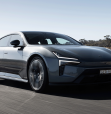
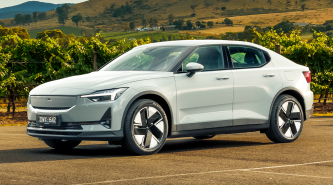
Polestar’s new electric flagship is expensive, indulgent and destined to be exclusive — but this Taycan rival is also one of the most convincing EVs we’ve tested so far
After ‘V1’ speed is reached, pilots commit to taking off. There comes a similar point in the development of new car models – where even if the market turns hostile, the carmaker is in too deep. Too much money and time has been spent, and the product must launch.
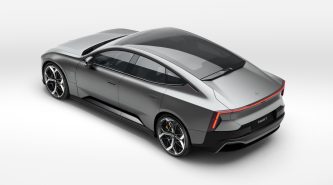
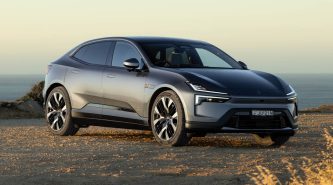
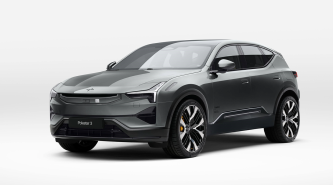
That may have been the case for the new Polestar 5: a large, electric five-door GT car that began life six years ago as the 2020 Precept concept. In a few months’ time, it will arrive in Australia as the brand’s flagship model.
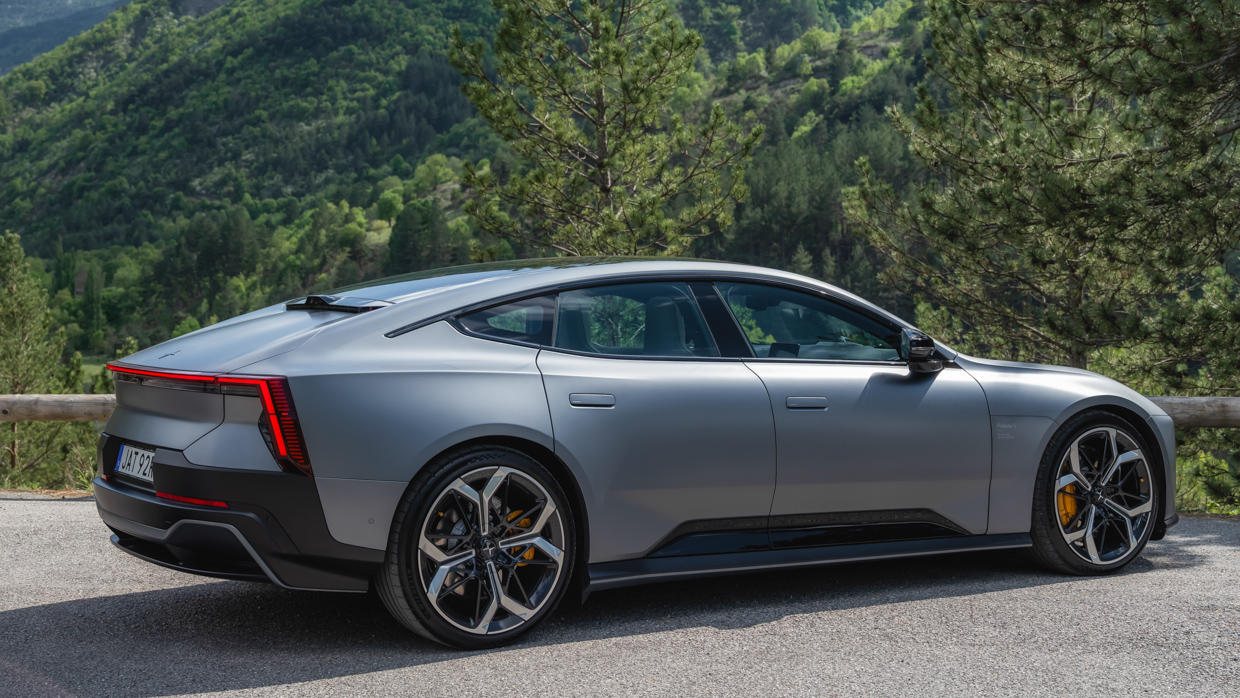
Like its archrival, the Porsche Taycan, the Polestar 5 is the sort of car that only comes into existence when regular budgets are dispensed with, and the accountants are convinced to look the other way for a while.
The ‘5’ is not based on any Geely Group platform, as you might rationally expect. Instead, it uses a one-off bonded aluminium architecture developed by Polestar’s former UK development base that drew in engineering minds from Aston Martin, McLaren and Lotus.
It’s fair to say the Polestar 5 is a rare bird in 2026: a genuinely bespoke, high-end sedan launched into a market that has become sceptical of expensive EVs.
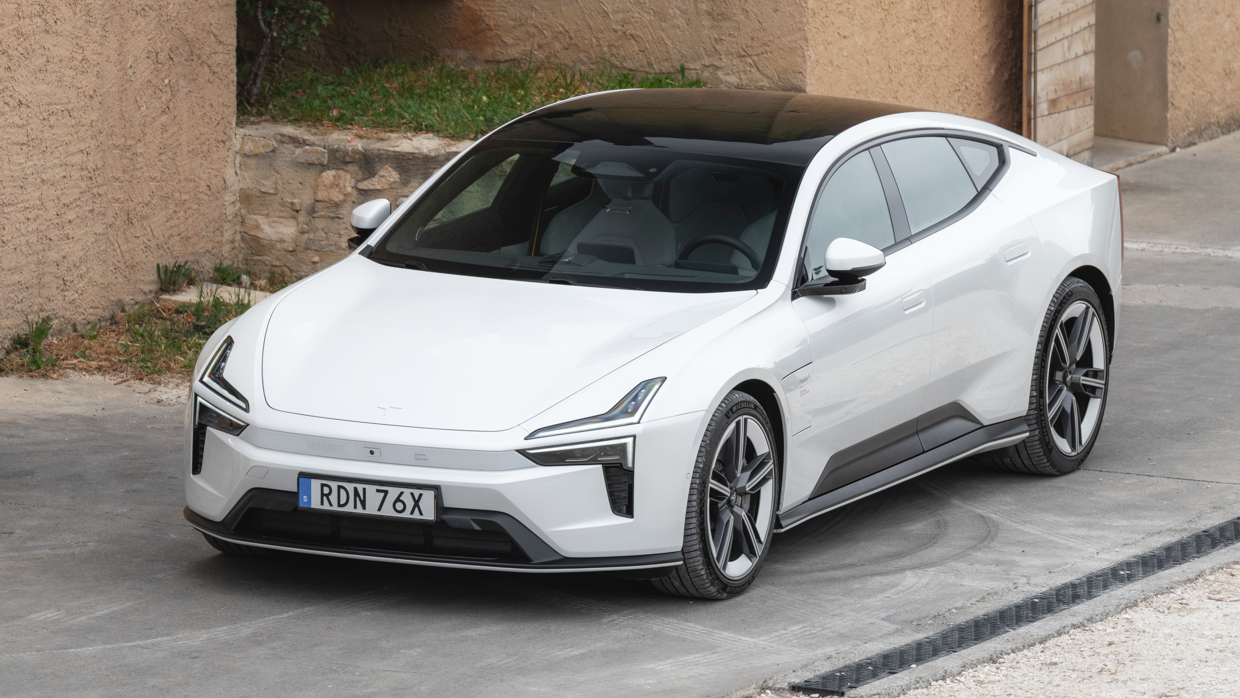
Australia will receive the Polestar 5 in two formats. The entry point is the Long Range Dual Motor (LRDM), priced from $171,100 before on-road costs, while the Performance costs $193,100 plus on-roads.
The standard car seems like all most people will need. The LRDM version makes 550kW/812Nm from a dual-motor, AWD powertrain, and runs 20-inch aero wheels, Brembo front brakes, double-wishbone suspension, matrix LED headlights, a glass roof, 14.5-inch touchscreen, 9.0-inch cluster, head-up display, quad-zone climate and Recaro seats.
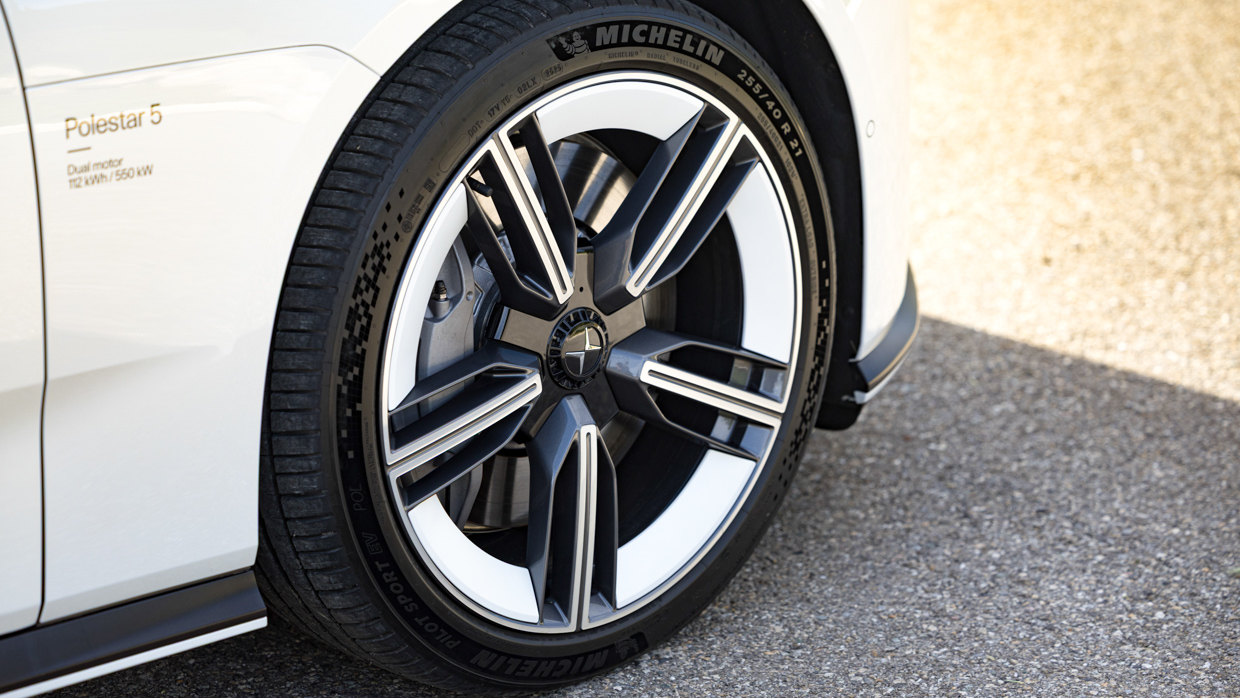
Spend $22K more and the Performance ups the ante to 650kW/1015Nm while adding 21s and gold calipers, and BWI MagneRide adaptive dampers subbed in for the LRDM’s passive set-up.
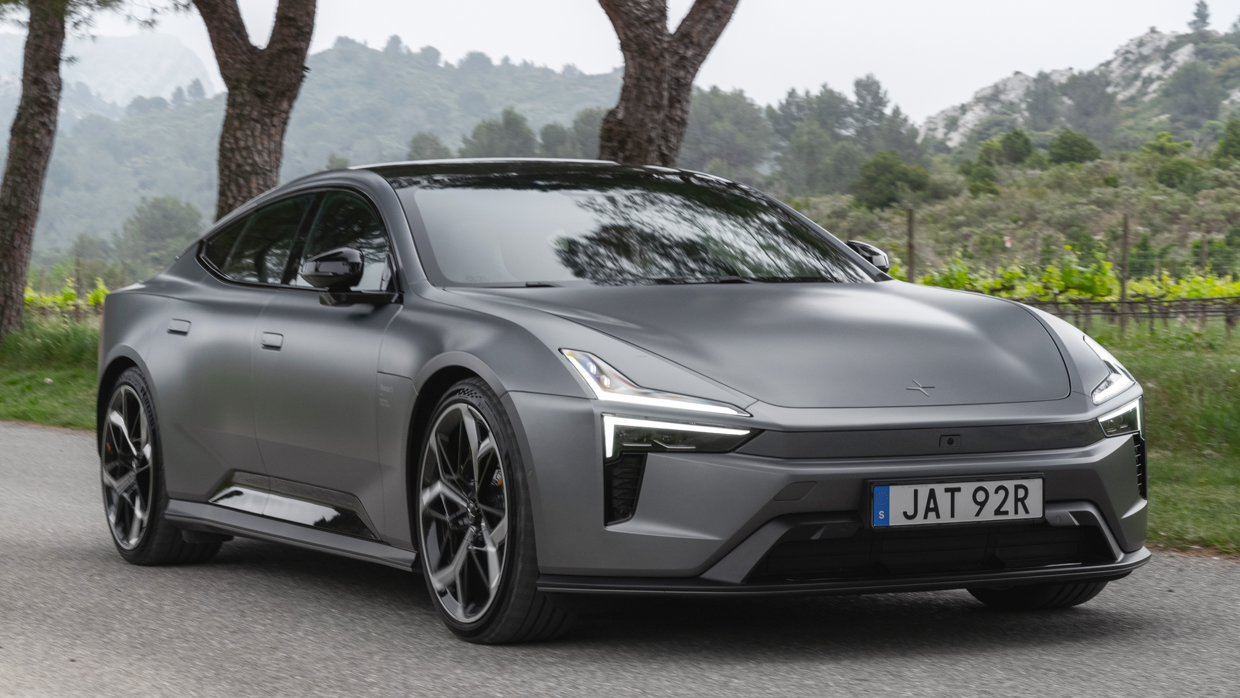
On paper, the Performance looks tempting, but after driving both variants on a challenging route from Montpellier to Nice, the cheaper car is ultimately the one that makes the stronger case.
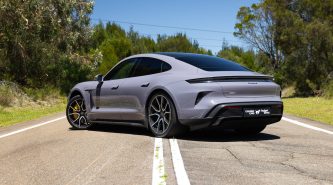
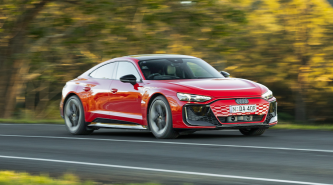
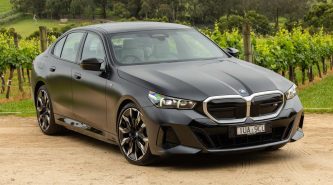
The key rivals are obvious: the Porsche Taycan, plus its Audi e-tron GT platform-sharing cousin, while the BMW i5 M60 sedan and wagon sit relatively near the Polestar on price.
But the ‘5’ isn’t a copy of any of them: it has its own distinctive character and engineering story, with enough talent to be taken seriously.
While the headline outputs are absolutely monstrous, the Polestar 5’s talents go well beyond straight-line speed. That’s important, because electrification has democratised huge power to the point where it’s no longer special or distinctive.
Still, the LRDM sprints from 0-100km/h in a reassuringly brisk 3.9 seconds while the Performance drops the figure to 3.2sec. Both make use of Polestar’s new in-house rear motor, which can develop up to 450kW by itself, negating the need for a two-speed gearbox.
The throttle is responsive but not jerky in that hair-trigger way so many EVs are. Power arrives promptly but without the violent or pointlessly dramatic delivery some performance EVs lean on for shock value.
It’s a similar story with the strong brakes. Both grades share the same four-piston Brembo front calipers, but the bigger story is an easy-to-modulate pedal: the blending between regen’ and friction braking is nearly imperceptible, without the wooden feel of some rivals.
But the Polestar’s chassis pleased us the most. While the 2500kg ‘5’ is no lightweight, the exceptionally stiff aluminium structure acts as an ideal base for the suspension to be allowed to fully breathe over imperfections.
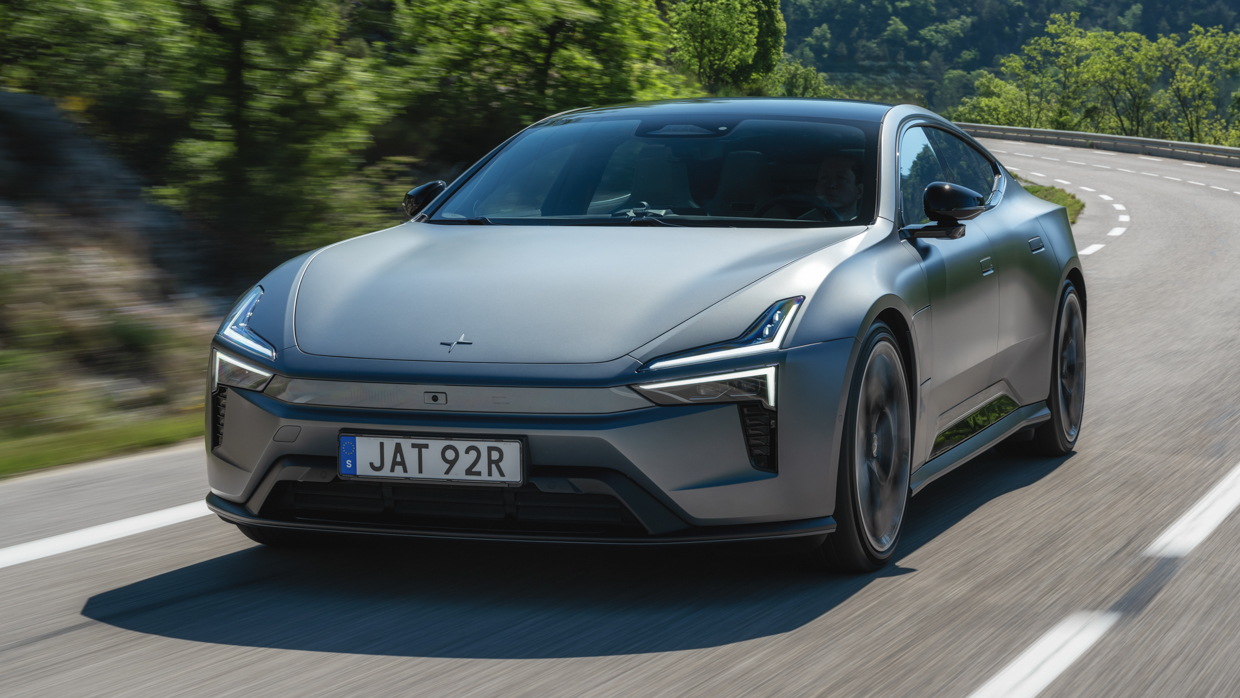
The effect is particularly obvious in the purer LRDM grade. Its passive, non-adjustable suspension has nowhere to hide and thrills with its superbly judged, near-perfect blend of compliance, comfort and control.
There is something deeply satisfying about a very good, one-mode suspension. It’s a genuinely difficult feat to pull off with all the compromises that heavy EVs throw up, and in the LRDM, you’re never second-guessing whether the dampers should be in another setting. Because they can’t be.
Meanwhile, the Performance’s three-mode MagneRide dampers add bandwidth on really demanding, rocky roads, where repeated compressions start to ask a lot of the chassis. That’s where the adaptive set-up can settle the Polestar 5’s five-metre body just that little bit more quickly.
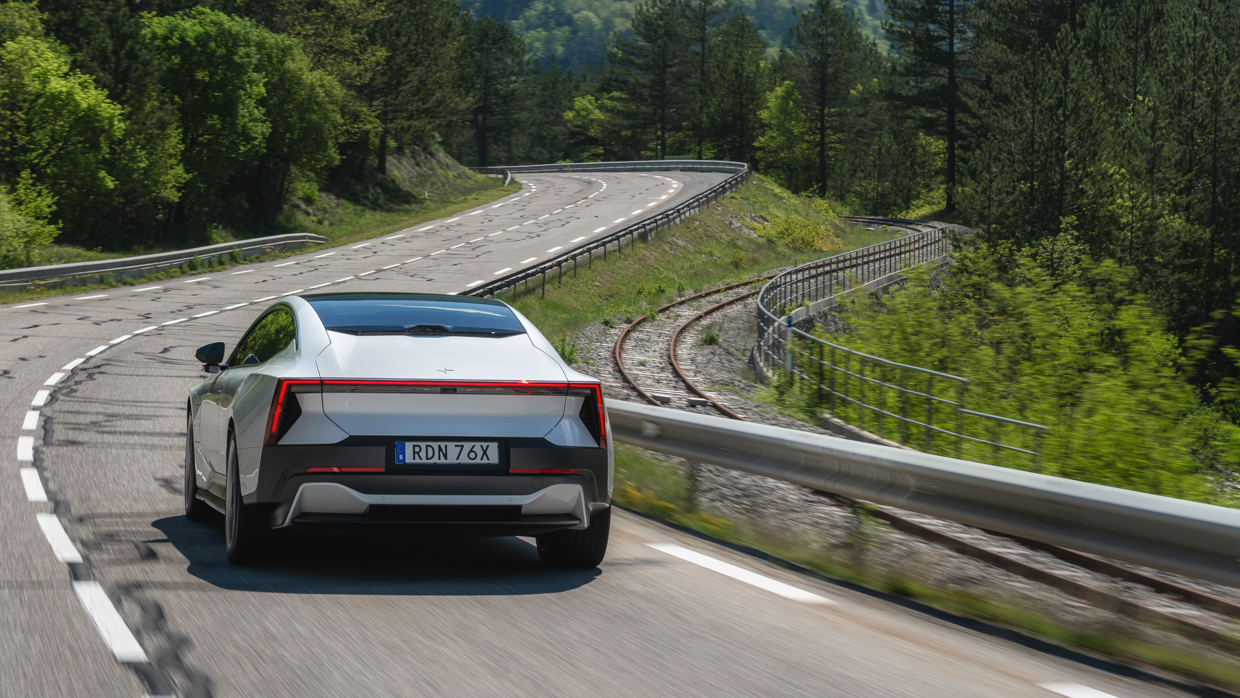
But the standard car is already so complete that the upgrade simply doesn’t feel essential. It’s 95 percent as good.
The steering is accurate but as in the Polestar 3 SUV, it’s not especially feelsome. That’s an area where a Taycan keeps the edge by providing more fine communication through its steering wheel.
Push the Polestar 5 properly hard and it eventually washes into understeer, but a lift of the throttle is generally enough to help tuck the nose in when cornering at pace.
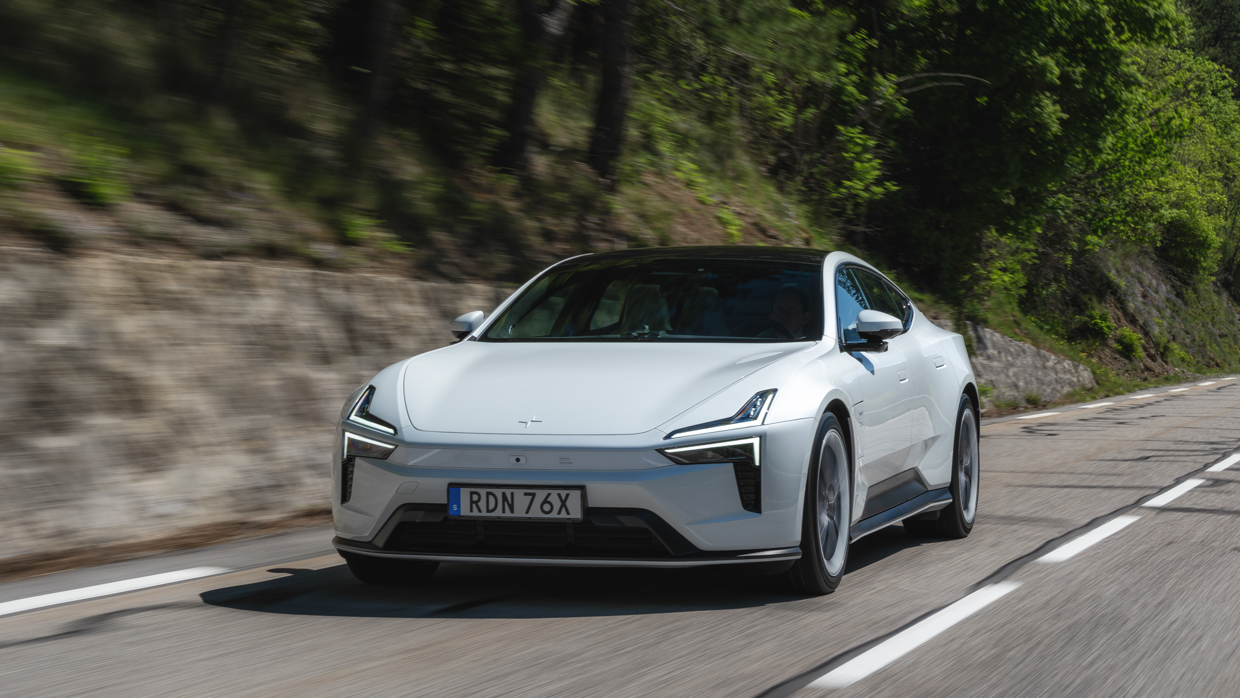
That said, the lack of a limited-slip differential or true torque vectoring on the rear axle leaves a degree of bite off the table, and even the ESC Sport setting is quite conservative.
Refinement, however, is excellent. Even on 22-inch wheels, the Polestar 5 remains quiet while touring, though the biggest alloys introduce a bit more chop than we might like. We recommend stopping at 21s, which are enough wheel for the car visually and dynamically.
We found the forward collision warning to be a touch sensitive, but the lane-keep assist was well-tuned and audible speed warnings could be silenced with a steering-wheel shortcut.
While Max Missoni’s exterior styling continues to look quite fresh even six years after this car was revealed in near-production form, the interior – which is essentially shared with the Polestar 3 – now seems a bit dated.
While the driving position is sound, the ergonomics quite brilliant and the comfort levels exceptionally high, the industry is starting to move on from this minimal dash layout focused on a prominent vertical slate-style touchscreen with few physical buttons.
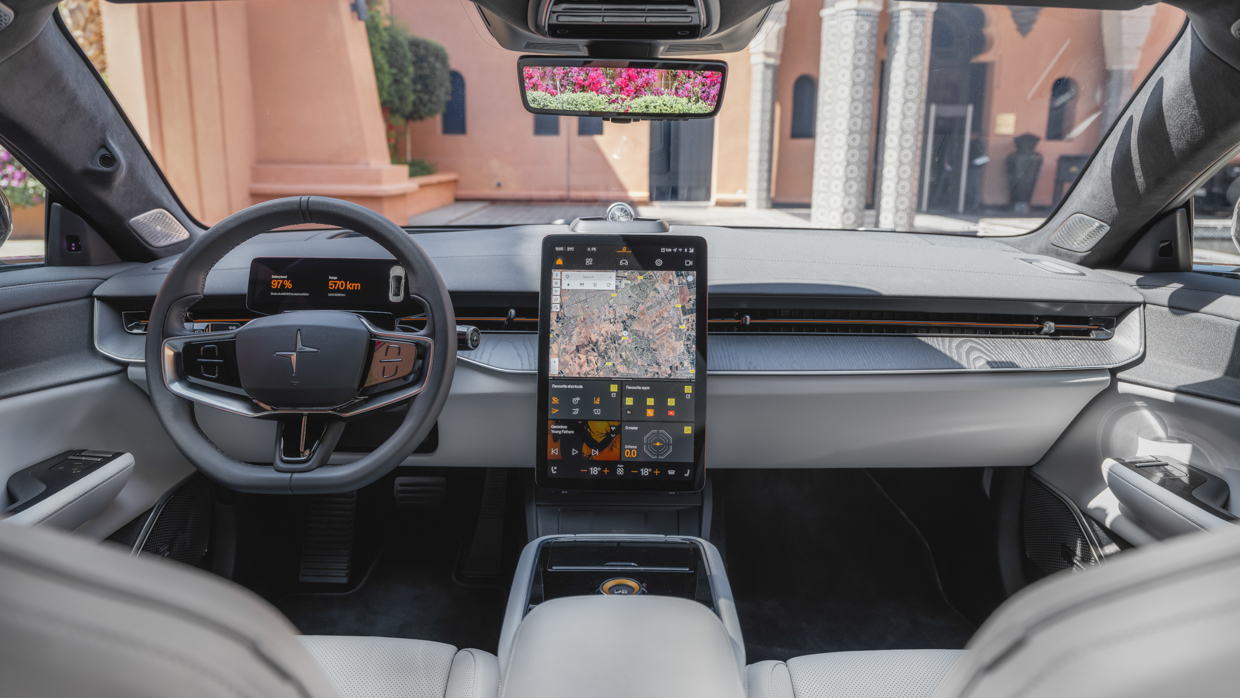
Still, at least the 14.5-inch panel itself has mature graphics and clear menu structures. And the climate bar remains permanently visible at the bottom.
We had a few minor issues with the pre-production cars on the international launch: wireless CarPlay and digital key functionality was yet to be added and there were a few bugs, but Polestar assures us an update is coming before the cars reach customers.
Polestar already made some of the best seats in the game, but the ‘5’ represents a further upgrade courtesy of a collaboration with Recaro.
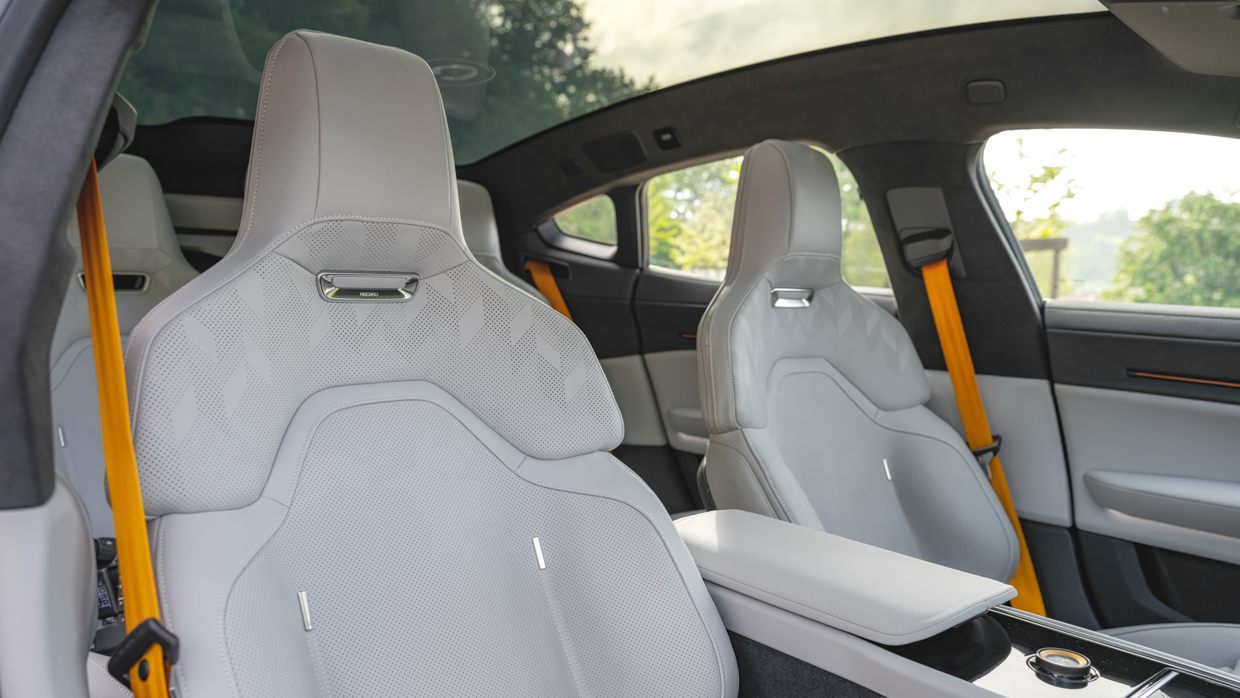
The front buckets are seriously supportive with extensive power-adjustment and heating as standard, but ventilation, massage and ‘Bridge of Weir’ Nappa leather all need to be optioned in at a cost of $11,800 to make the Polestar 5 feel as special as it should.
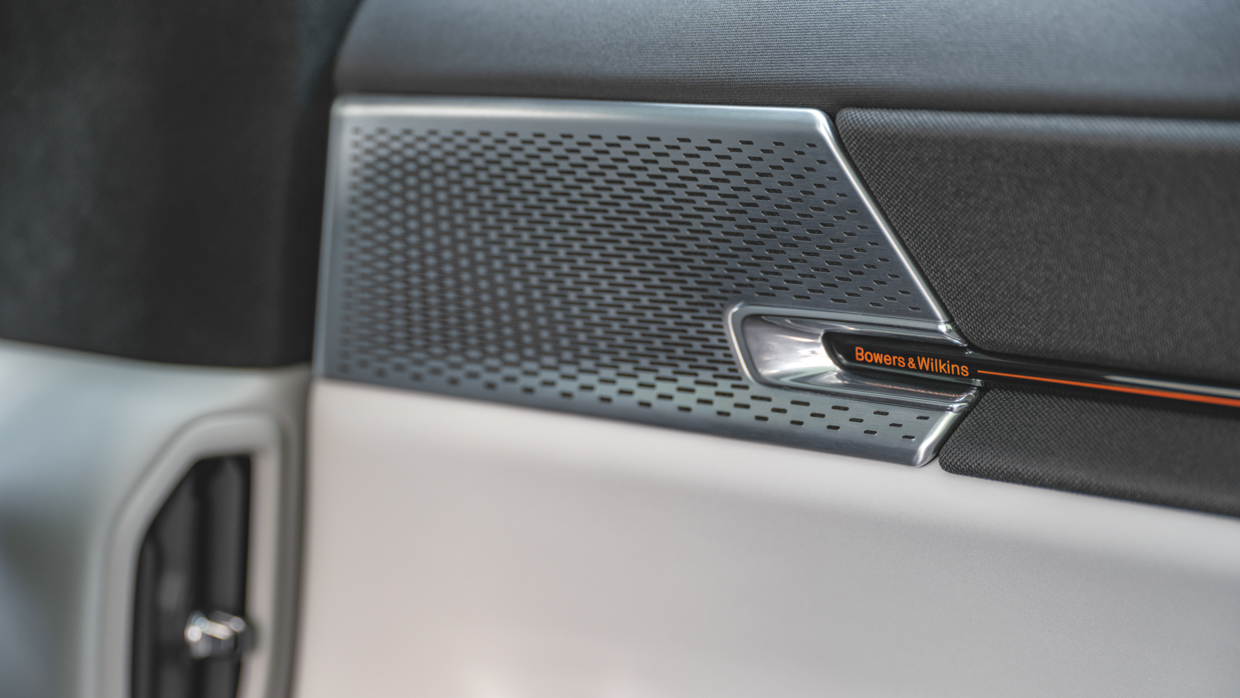
We’d say the same for the optional 21-speaker Bowers & Wilkins audio system, which asks a further $8800 but sounds phenomenal. This means a Polestar 5 can require $20K in options to feel truly complete, though it still manages to handily undercut less powerful Taycans.
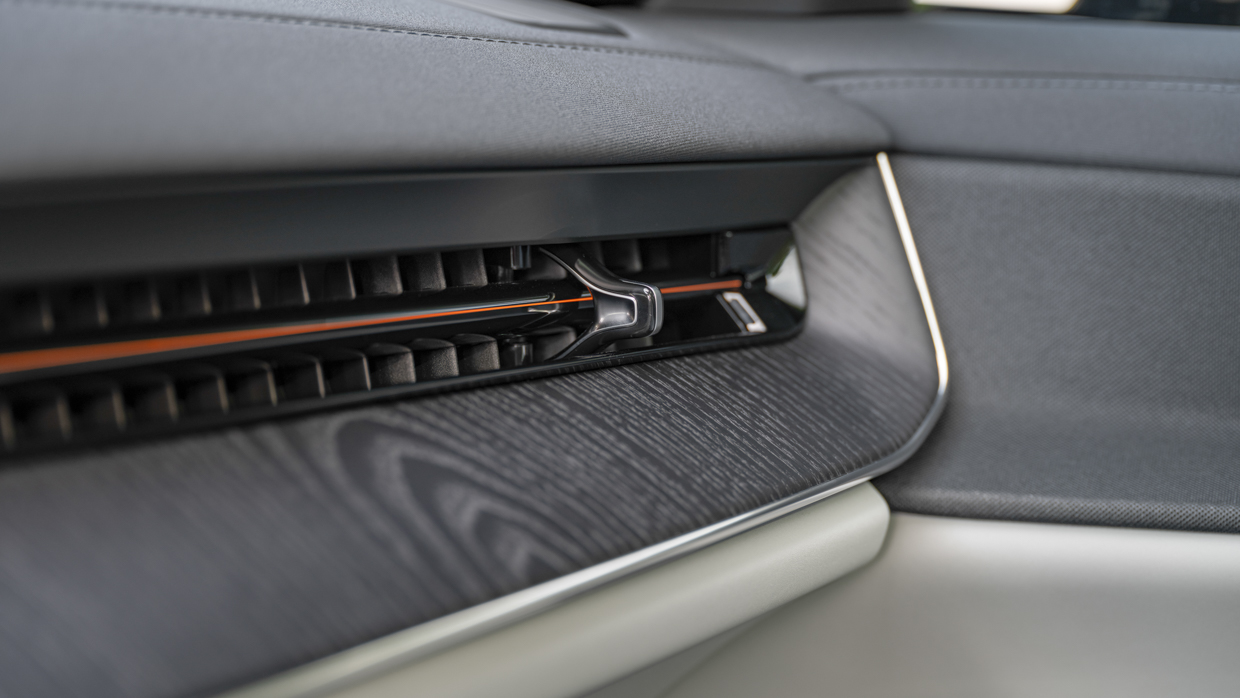
Materials quality is typically excellent, with real metals, open-pore wood, high-quality recycled fabrics on the doors and – hallelujah – physical toggles to quickly alter the direction of the air vents.
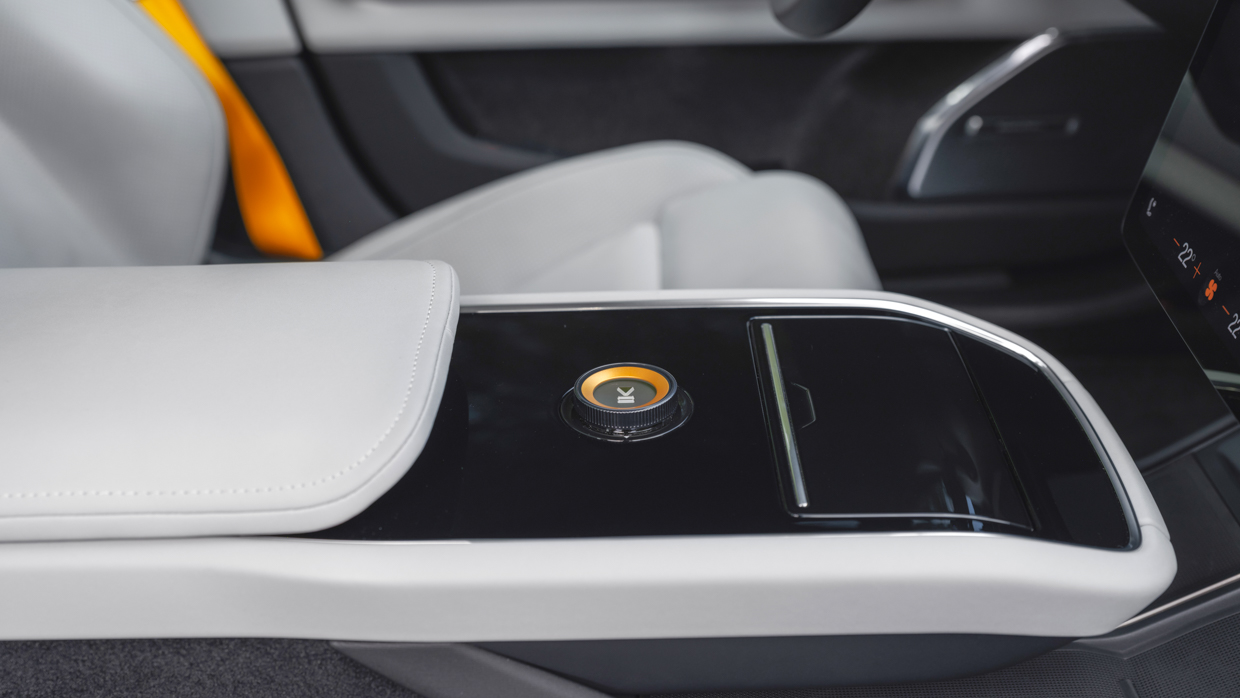
The only exception is the steering wheel itself, which is trimmed in a slightly rough-feeling non-leather material and relies on mysteriously unlabelled gloss-black shortcut pads on the spokes – they make life harder than it needs to be.
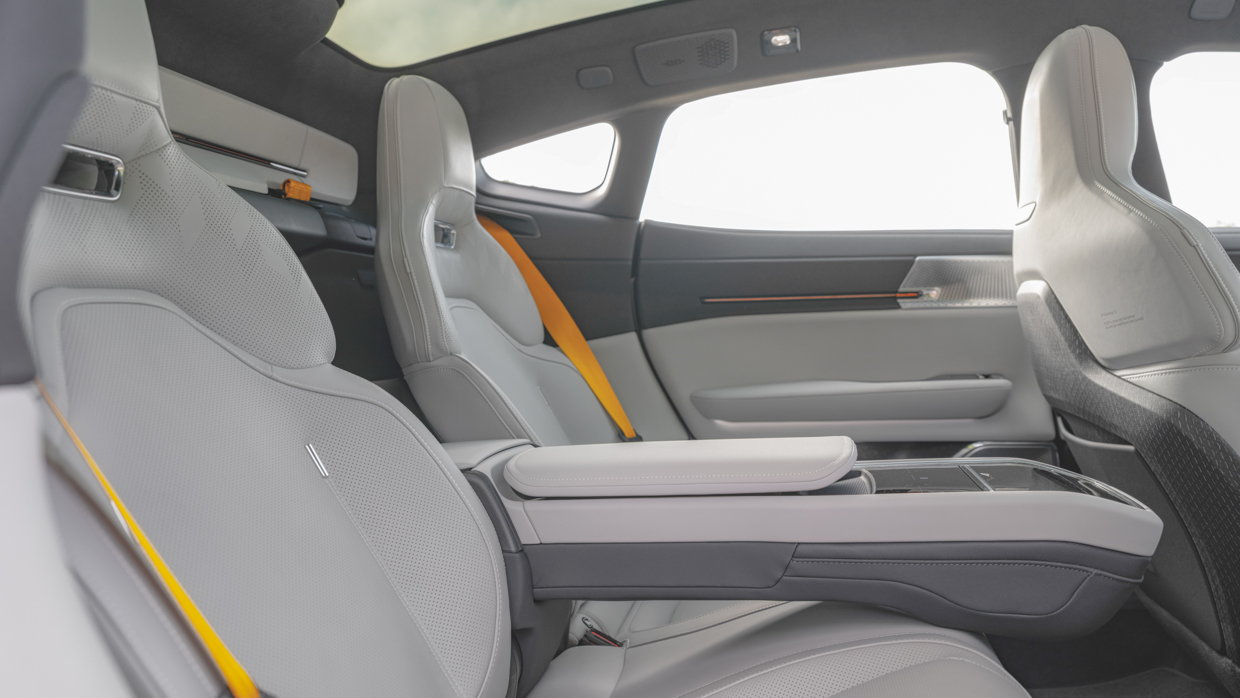
While the front seats are usually the place to be in a car like this, the Polestar 5 has not forgotten those travelling in the second row, which has ‘executive-style’ heated, cooled and massaging seating.
This is a rare EV in which adults can sit comfortably in the back, thanks to decent headroom and “foot garage” cut-outs in the battery that create proper space for rear passengers’ feet.
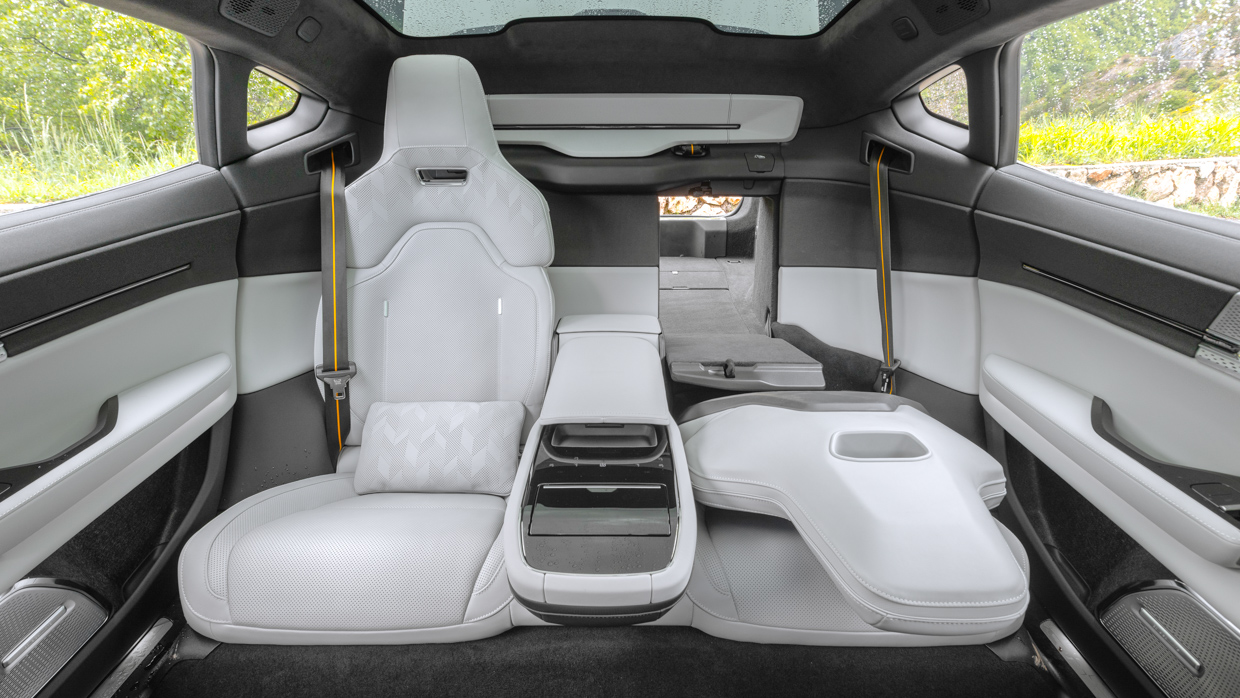
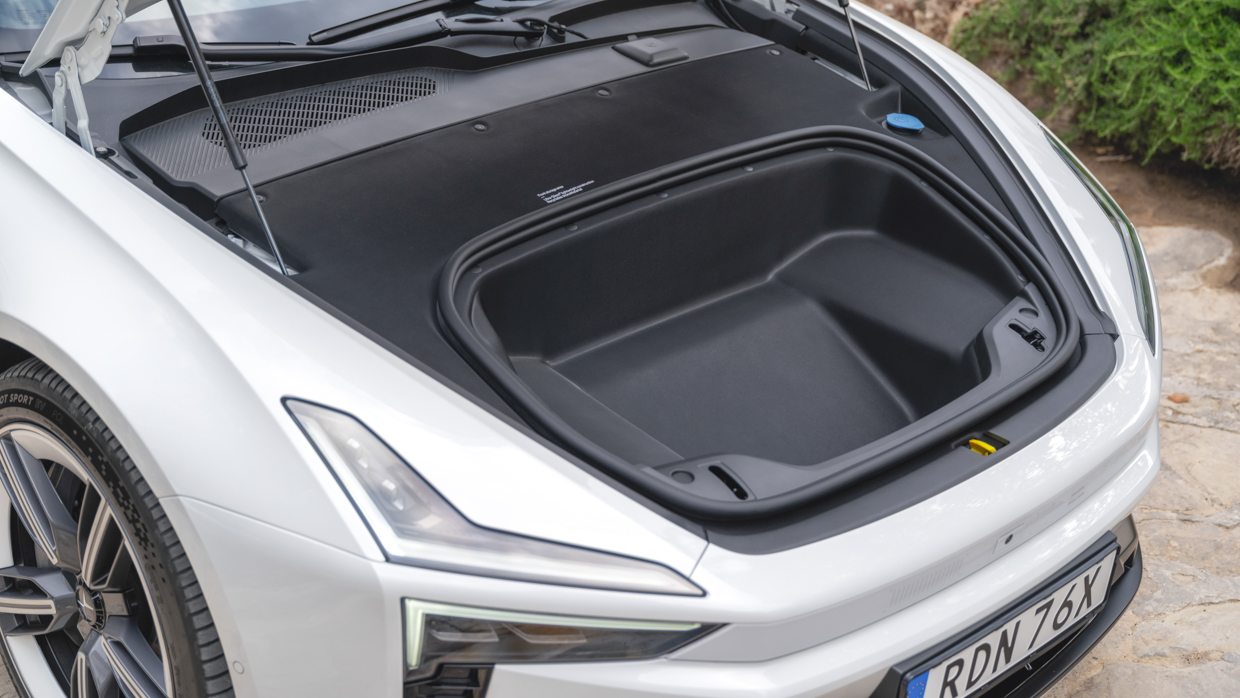
But practicality is a weak spot: the boot measures just 365 litres, which is poor for a car of this size. At least the back seats can fold for long items, and there is some underfloor storage. A frunk adds cable storage and room for small bags.
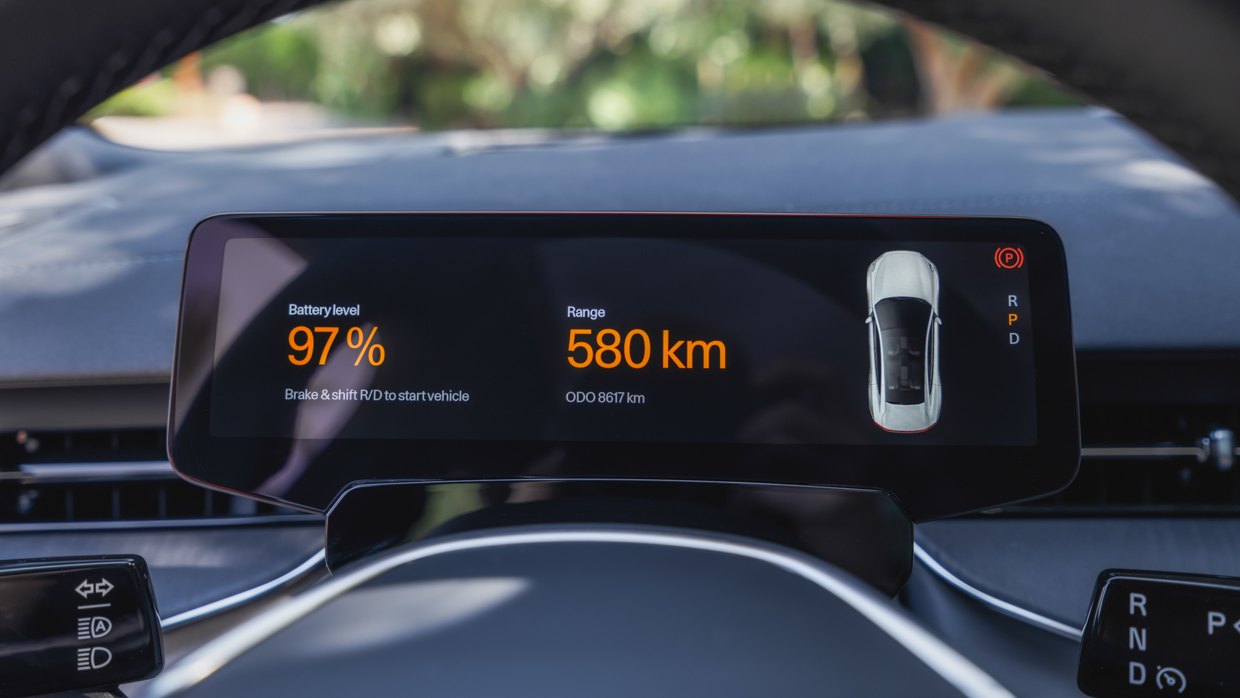
All Polestar 5 examples have an 800-volt system and make use of a 112kWh nickel manganese cobalt battery produced by SK On – of which 106kWh of energy is usable.
Claimed WLTP range is 670km for the LRDM and 565km for the Performance, based on claimed consumption of 15.8kWh/100km and 18.7kWh/100km respectively.
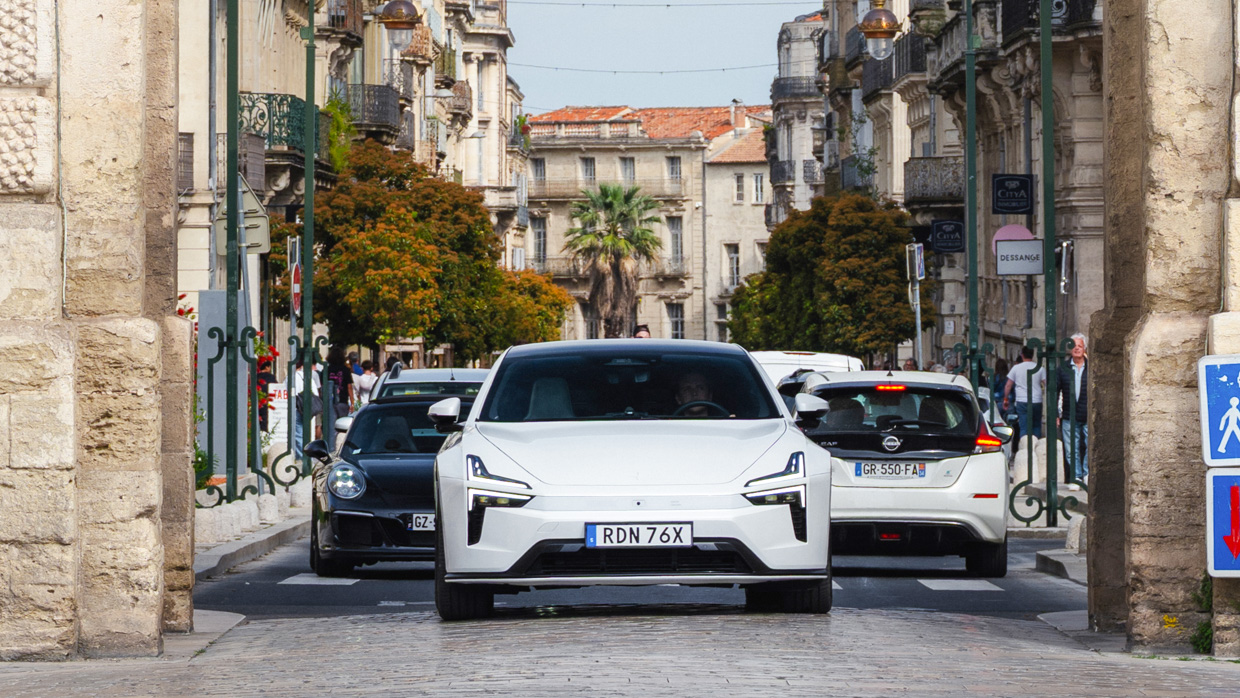
While the range claims look far apart, Polestar explained to Chasing Cars that the Performance was certified with regulators in its sportier drive setting, meaning that grade can remember your preferred drive mode. The LRDM returns to Range Mode every drive.
Over our launch drive in France, which included mountain roads, highways and suburban work, consumption rose to 20-25kWh/100km depending on how hard we were pedalling the car for real range of 430-530km.
While that consumption is middling, charging performance is reasonably strong. Using a 350kW DC charger, Polestar says a 10-80 percent top-up will take 22 minutes, representing an average charge rate of 213kW across the session. AC charging peaks at 11kW.
Service pricing will be announced closer to the Polestar 5’s Australian launch. Expect a five-year/unlimited kilometre vehicle warranty and an eight year/160,000km battery warranty.
Approaching our first drive of Polestar’s new sedan flagship, we unsurprisingly wondered whether this four-door would feel special enough, talented enough and desirable enough to play in the same space as benchmarks such as the Porsche Taycan.
The answer to all three questions is unequivocally ‘yes’.
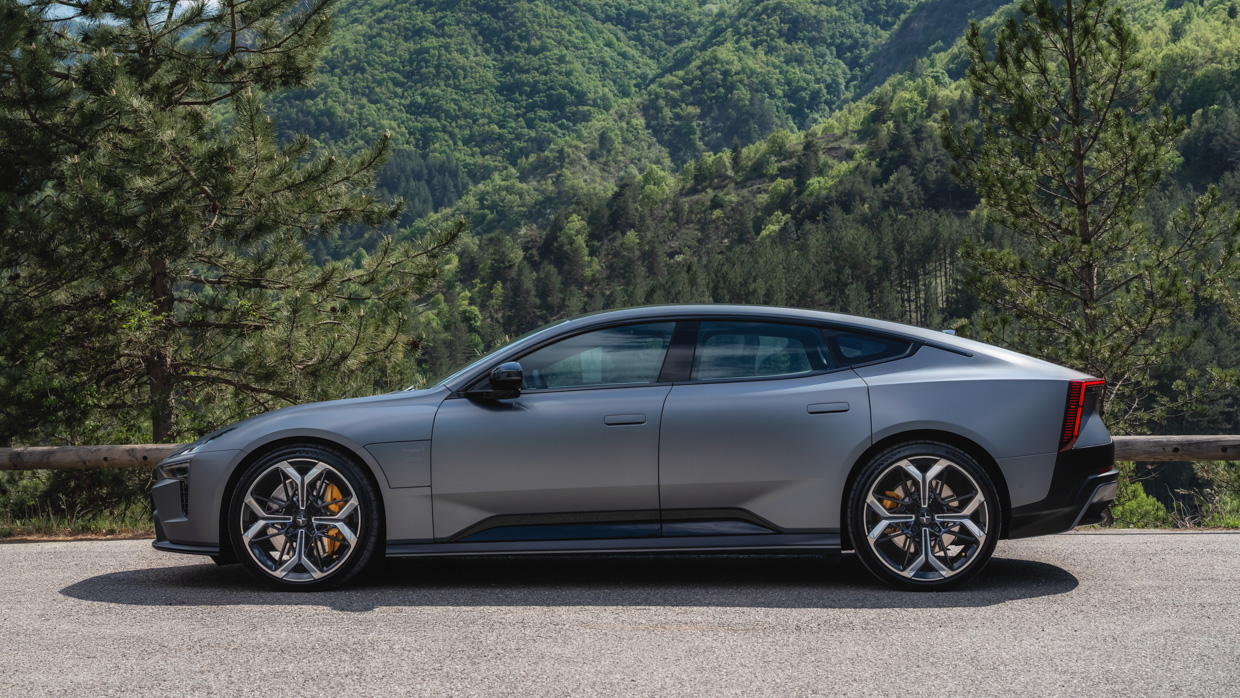
While Porsche’s electric sedan and sportwagon range still has the Polestar 5 beat on some metrics, including steering feel, practicality and software polish, the ‘5’ represents an intriguing and hugely capable alternative.
The fundamentals here are tempting. The chassis is genuinely special, offering up a rare simultaneous blend of suppleness and stiffness, comfort and control.
Plus, the cabin feels appropriately high-end once optioned correctly, and in doing so, you are still only spending base-ish Taycan money, despite the Polestar feeling much more bespoke.
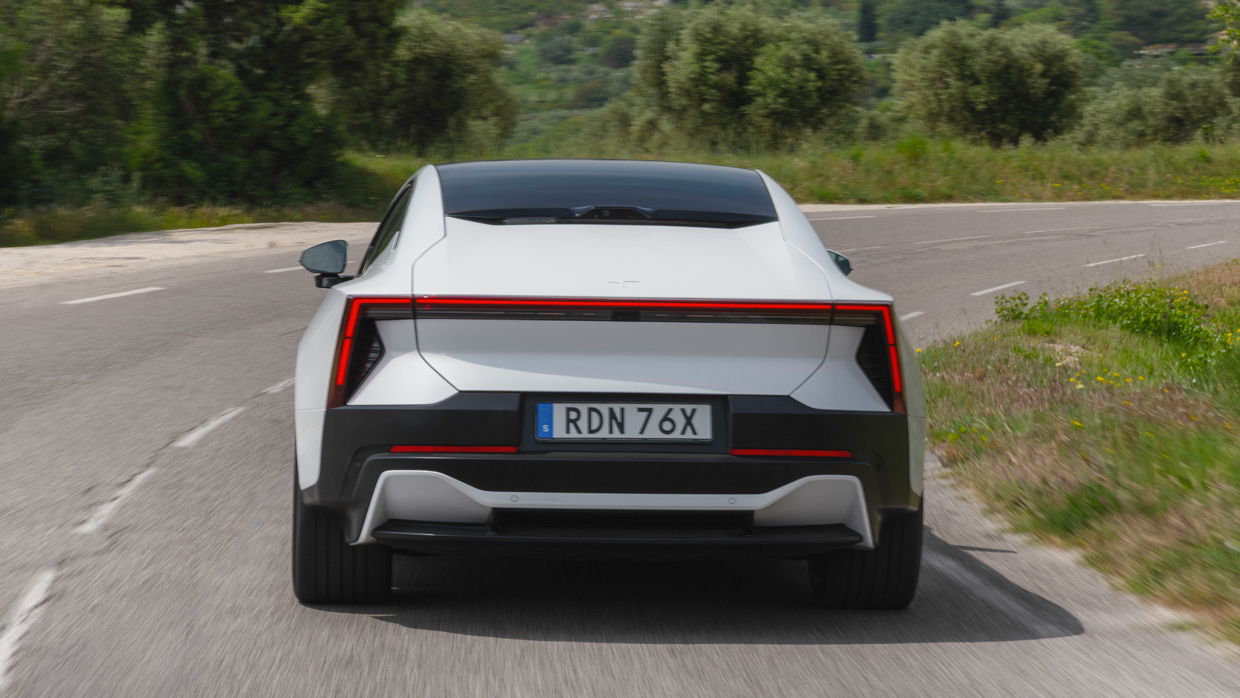
Polestar knows the ‘5’ will occupy a niche position in the market, but for the right buyer – someone already comfortable with EV ownership and interested in a car that feels more like a classic GT than an appliance – the Polestar 5 will be a deeply rewarding option.
This is a car that shows exactly what Polestar can do when it really stretches itself. The result is enormously impressive.
About Chasing cars
Chasing Cars reviews are 100% independent.
Because we are powered by Budget Direct Insurance, we don’t receive advertising or sales revenue from car manufacturers.
We’re truly independent – giving you Australia’s best car reviews.
The estimate provided does not take into account your personal circumstances but is intended to give a general indication of the cost of insurance, in order to obtain a complete quote, please visit www.budgetdirect.com.au. Estimate includes 15%^ online discount.
^Conditions Apply
Budget Direct Insurance arranged by Auto & General Services Pty Ltd ACN 003 617 909(AGS) AFSL 241 411, for and on behalf of the insurer, Auto & General Insurance Company Limited(ABN 42 111 586 353, AFSL 285 571).Because we don’t know your financial needs, we can’t advise you if this insurance will suit you. You should consider your needs and the Product Disclosure Statement before making a decision to buy insurance. Terms and conditions apply.
Indicative quote based on assumptions including postcode , 40 year old male with no offences, licence suspensions or claims in the last 5 years, a NCD Rating 1 and no younger drivers listed. White car, driven up to 10,000kms a year, unfinanced, with no modifications, factory options and/or non-standard accessories, private use only and garaged at night.
^Online Discounts Terms & Conditions
1. Discounts apply to the premium paid for a new Budget Direct Gold Comprehensive Car Insurance, Third Party Property Only or Third Party Property, Fire & Theft Insurance policy initiated online on or after 29 March 2017. Discounts do not apply to optional Roadside Assistance.
2. Discounts do not apply to any renewal offer of insurance.
3. Discounts only apply to the insurance portion of the premium. Discounts are applied before government charges, taxes, levies and fees, including instalment processing fees (as applicable). The full extent of discounts may therefore be impacted.
4. We reserve the right to change the offer without notice.