Powered by

-
Car Reviews
Latest reviews
-
Car News
Latest news
-
Car Comparisons
Latest comparisons
- Chasing Deals
Latest reviews
Latest news
Latest comparisons

GWM’s boxy off-roader picks up well-calibrated plug-in hybrid power for what could be the perfect one-car solution
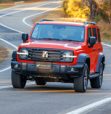
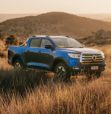
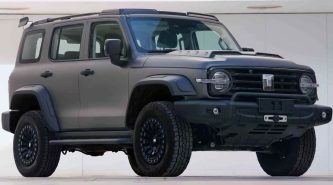
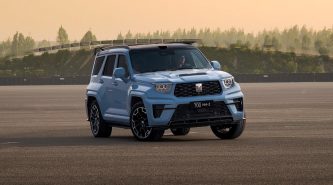
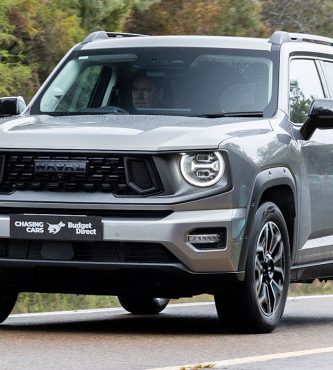
When it arrived in Australia, us motoring writers were quick to poke fun at the GWM Tank 300, which lifted styling cues, seemingly, from every other 4WD on the market.
It didn’t help that early cars were saddled with over-sensitive driver assistance systems and your choice of an ironically, thirsty hybrid or a very thirsty turbo-petrol engine. It just didn’t make the cut. Still, with wheels pushed to each corner and lots of ground clearance, it had potential.
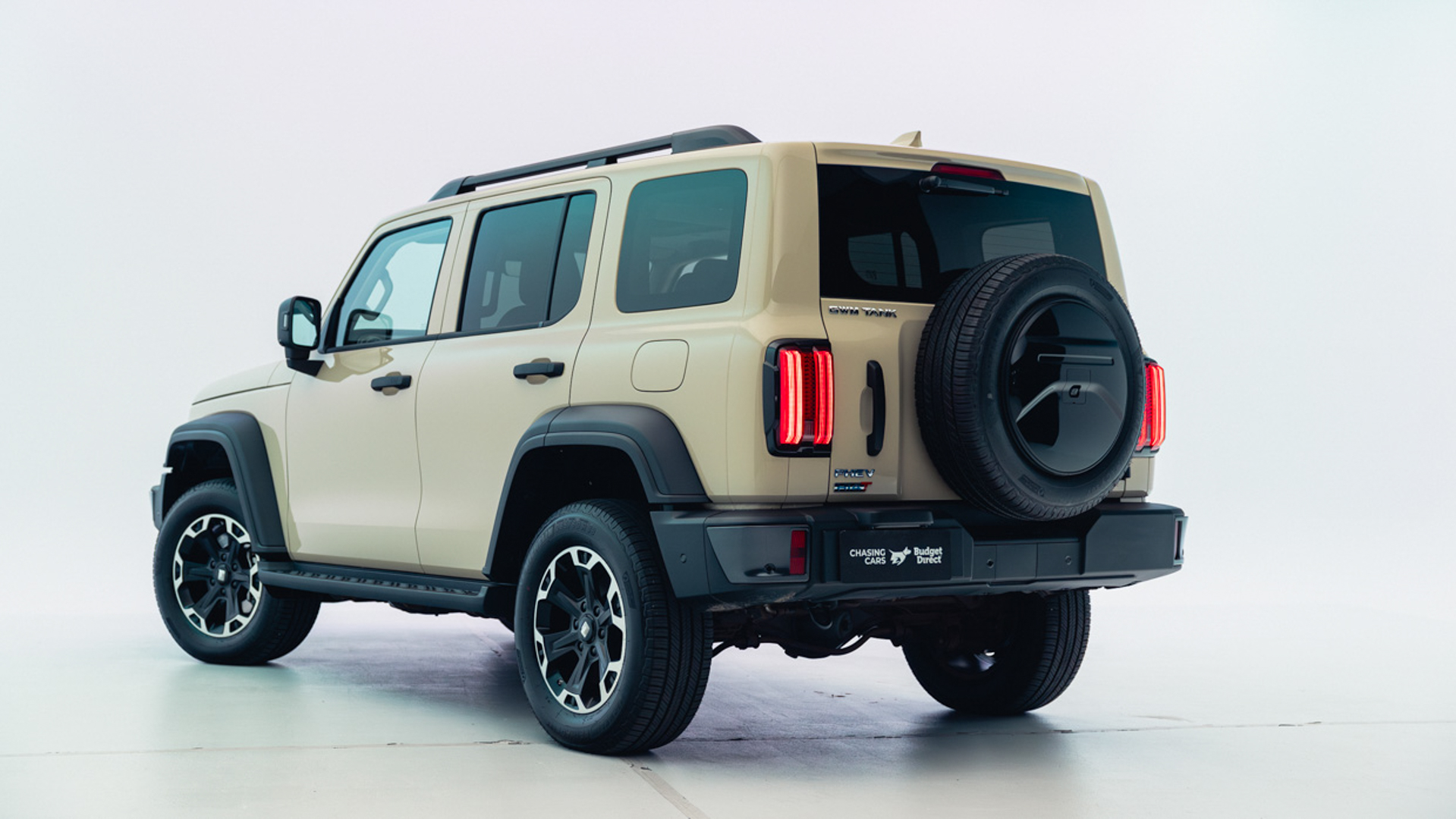
Step in the diesel, which broadened appeal, and now the 300kW/750Nm Hi4-T plug-in system and the range feels fit for 2026. The Australian team has been busy, too, tweaking ADAS settings and adding new drive modes.
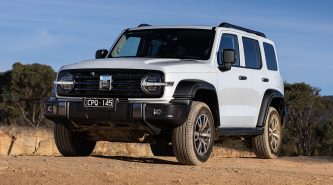
And now, with a 37.1kWh (gross) lithium-ion battery, 100km of EV range (WLTP), vehicle-to-load capability and sub-4.8-metre length, the Tank 300 PHEV makes a strong case for itself as the only vehicle you’d need as a 4WD enthusiast; easy enough to park, electric drive in town, no loss of capability.
The price is pretty attractive as well, with a reasonable $7000 upcharge over the diesel mode. The plug-in hybrid Tank 300 starts at $55,990 driveaway in Lux guise and $59,990 on road in as-tested Ultra trim. Those are introductory prices, after which the Ultra will climb to $61,990 driveaway.
While the Lux is well-equipped with power-adjustable leather-accented seats, bright 12.3-inch screens and plenty of cabin tech, the Ultra adds some niceties: heated and ventilated Nappa leather-accented seats with adjustable lumbar feature inside, while a locking front differential boosts capability further.
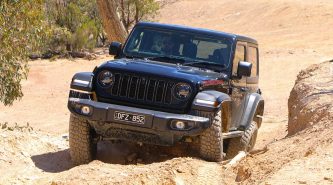
When the battery is charged up and the Tank 300 is running on electrons rather than petrol, it’s a smooth, near-silent experience in town. It is far more refined than a Jeep Wrangler or even a Toyota Prado as a result.
We found the Tank 300 to be quite efficient as well. The WLTP rating is 100km of electric-only range and when travelling in smooth, flowing traffic at 50-90km/h with few traffic lights, that’s easily achievable. In stop-start scenarios that falls to more like 85-95km — still better than nothing.
Providing you keep charge in the battery, petrol use is reasonable as well. In mixed driving, we saw 3.2L/100km on the trip computer. In low state-of-charge this jumps significantly, up to 10L/100km and even higher in town — though it’s still better than the petrol-only Tank.
Straight line pace doesn’t thrill like you might expect from 300kW and 750Nm. Instead, the Tank 300 PHEV swells up to speed, getting from 0-100km/h in a claimed 6.3 seconds. Overtaking punch is solid, though.
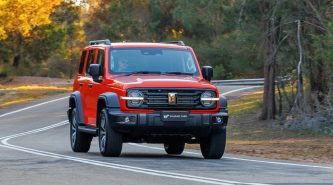
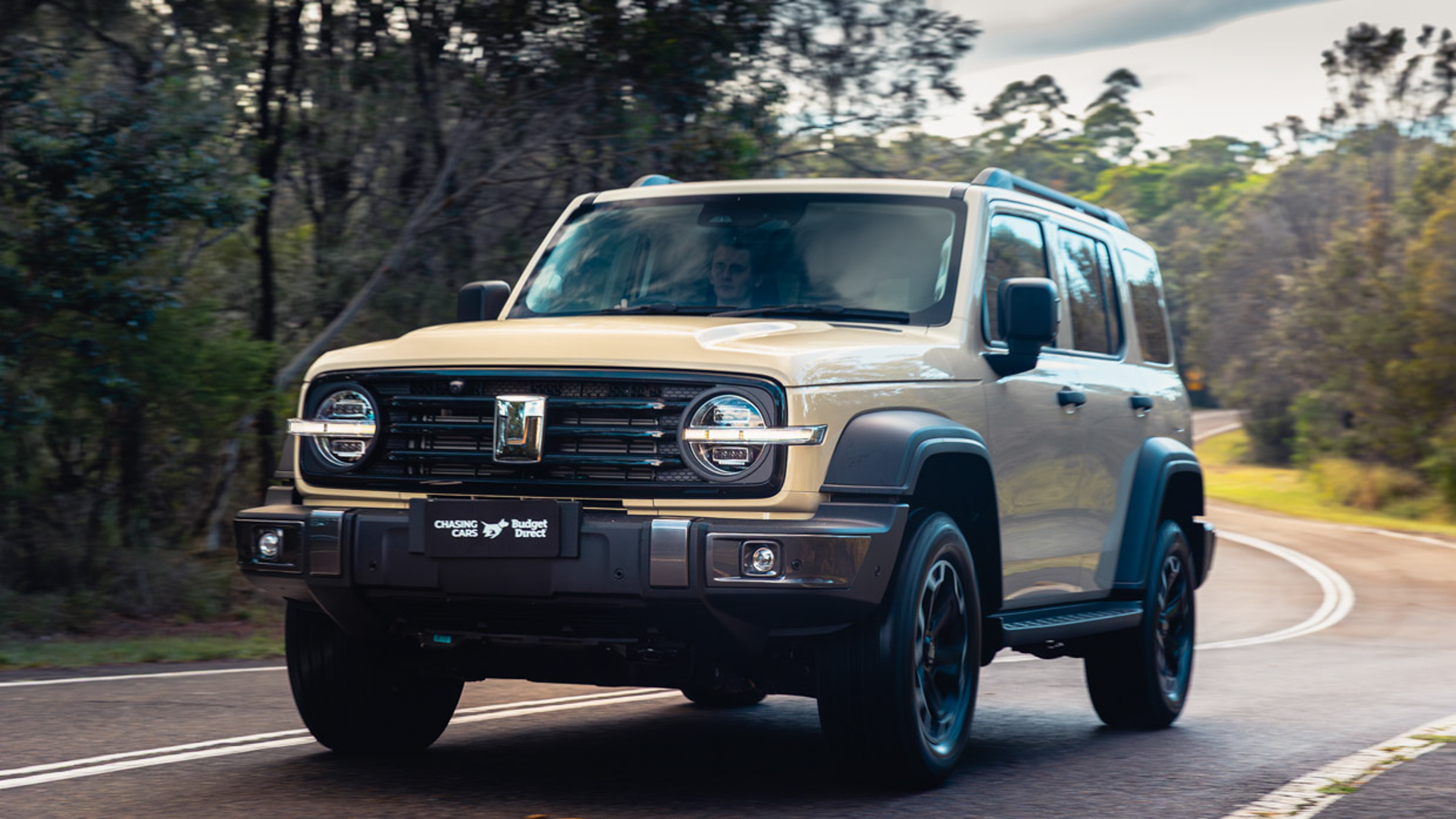
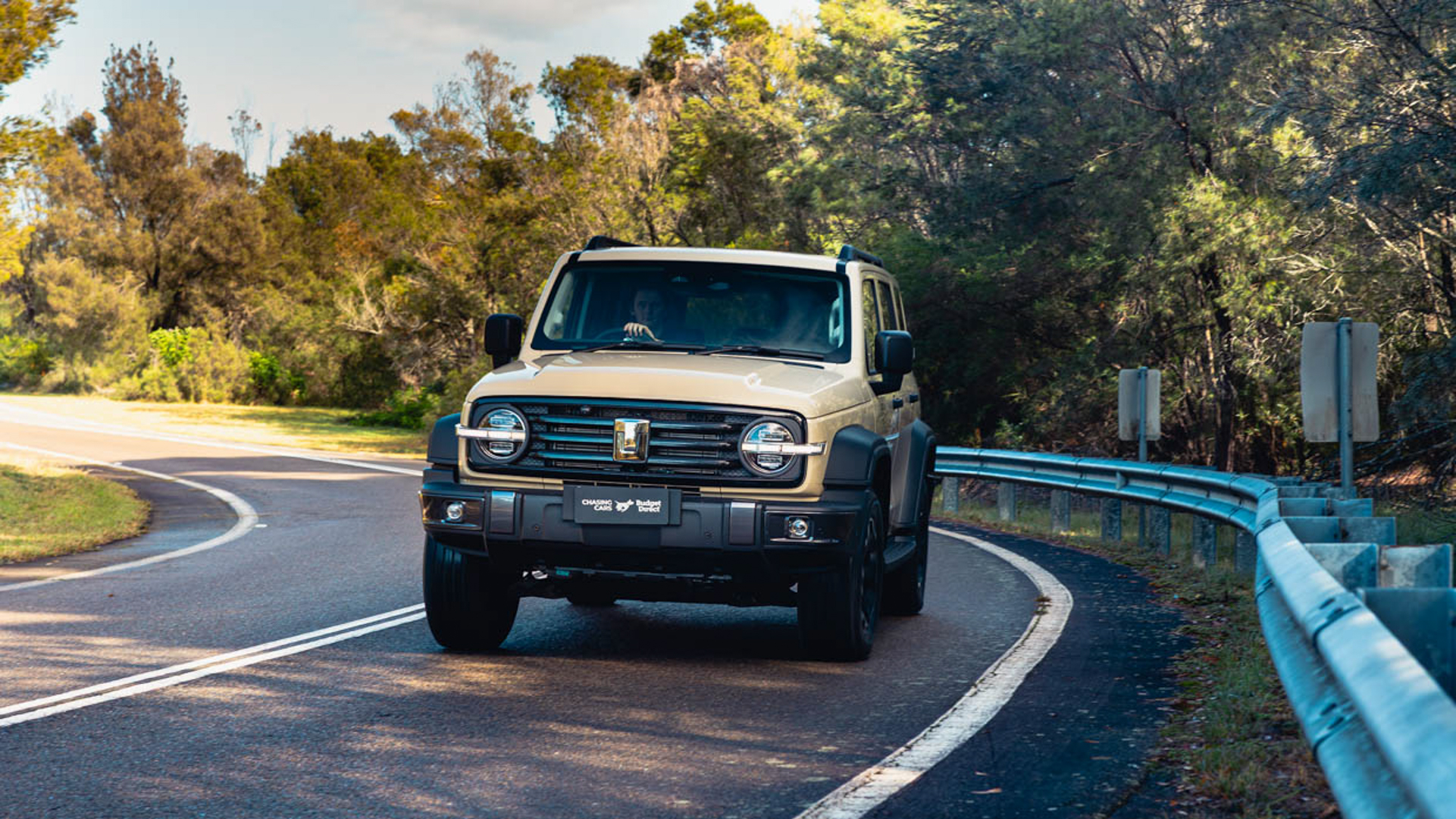
On twisting country roads, the Tank 300 PHEV is fine. Given this is pitched more at off-road enthusiasts than the larger, family-friendly Tank 500 stablemate means that we can largely forgive the occasionally harsh and sometimes clumsy on-road ride.
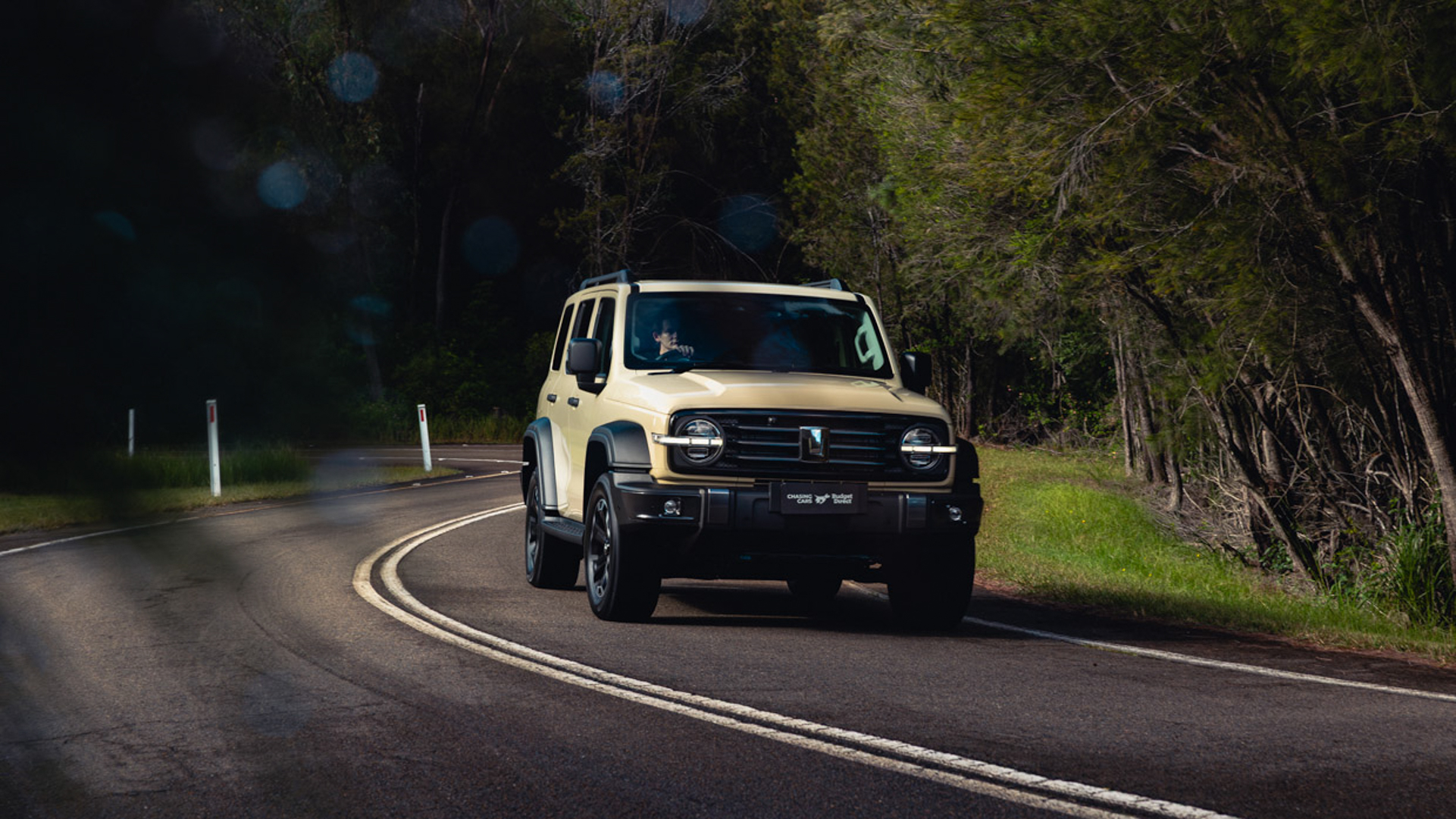
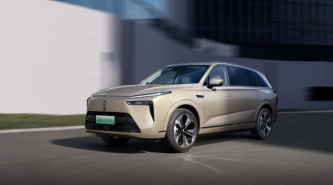
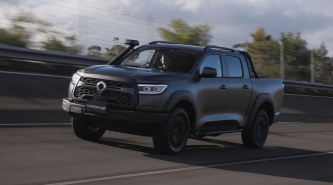
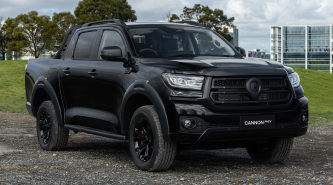
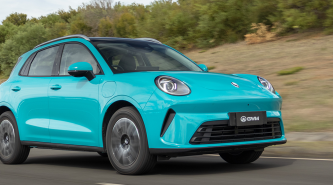
The Tank 300 isn’t a soft and floppy mess, either, like the base model Denza B5 can be. It bodes well for towing ability — though we weren’t able to sample this aspect of the Tank. Towing is also limited to 3000kg braked, rather than 3500kg in the Cannon Alpha ute.
A new tow mode is added for MY26, however, along with a host of driver-assistance updates. Unlike early Tank 300s, the driver-attention monitoring gives you a long leash, the emergency lane-keep assist is tamed and the adaptive cruise control distance is more consistent with smoother inputs. You can also select non-adaptive cruise control, if you wish.
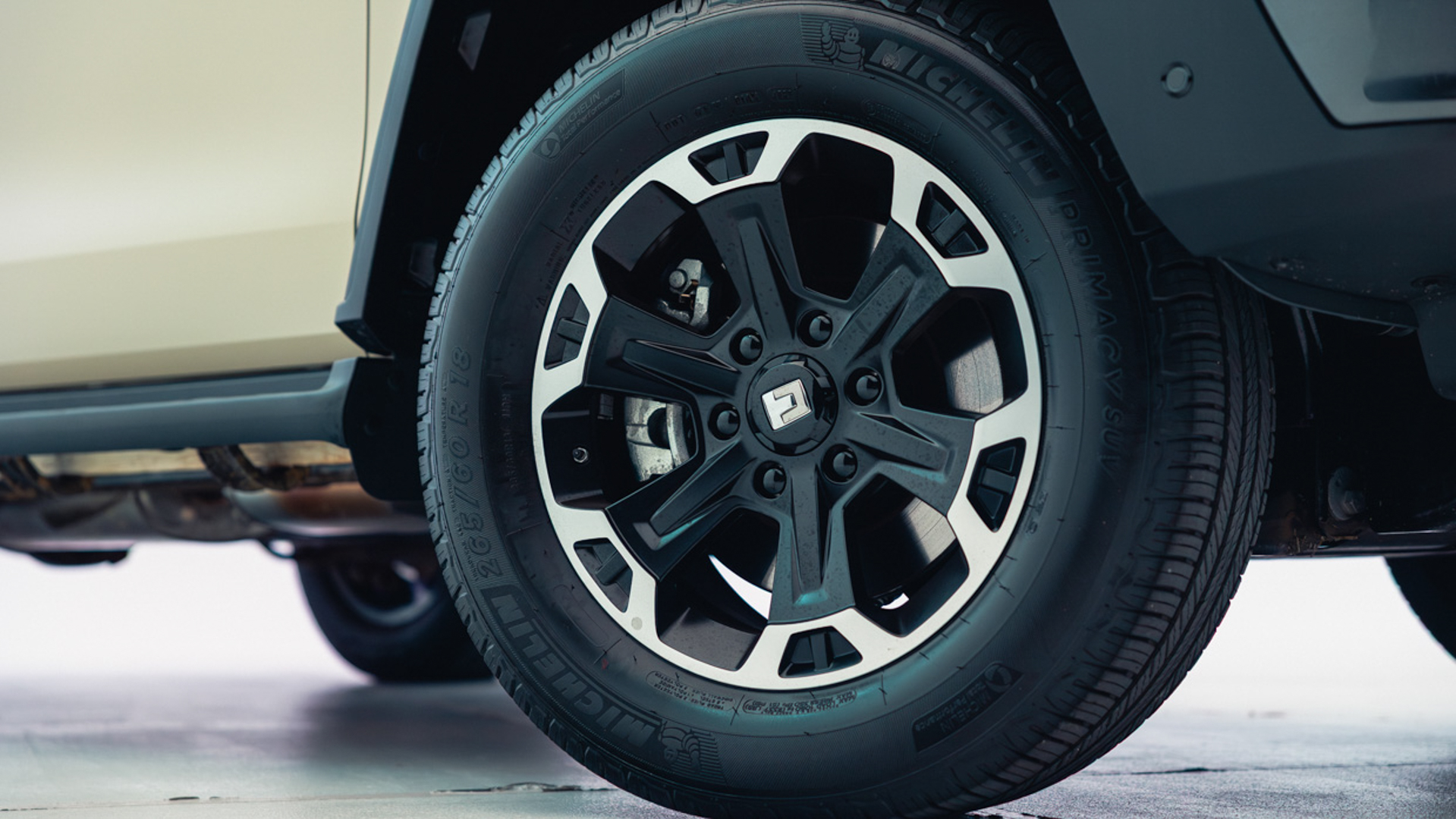
Handling and road-holding is adequate, those 18-inch Michelin road tyres hiding a lot of sins normally associated with a tall, body-on-frame vehicle.
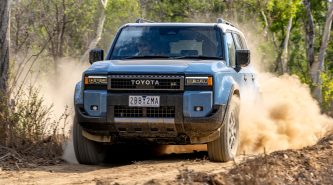
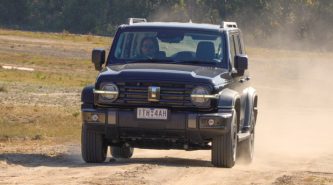
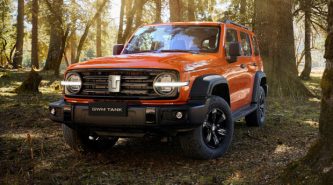
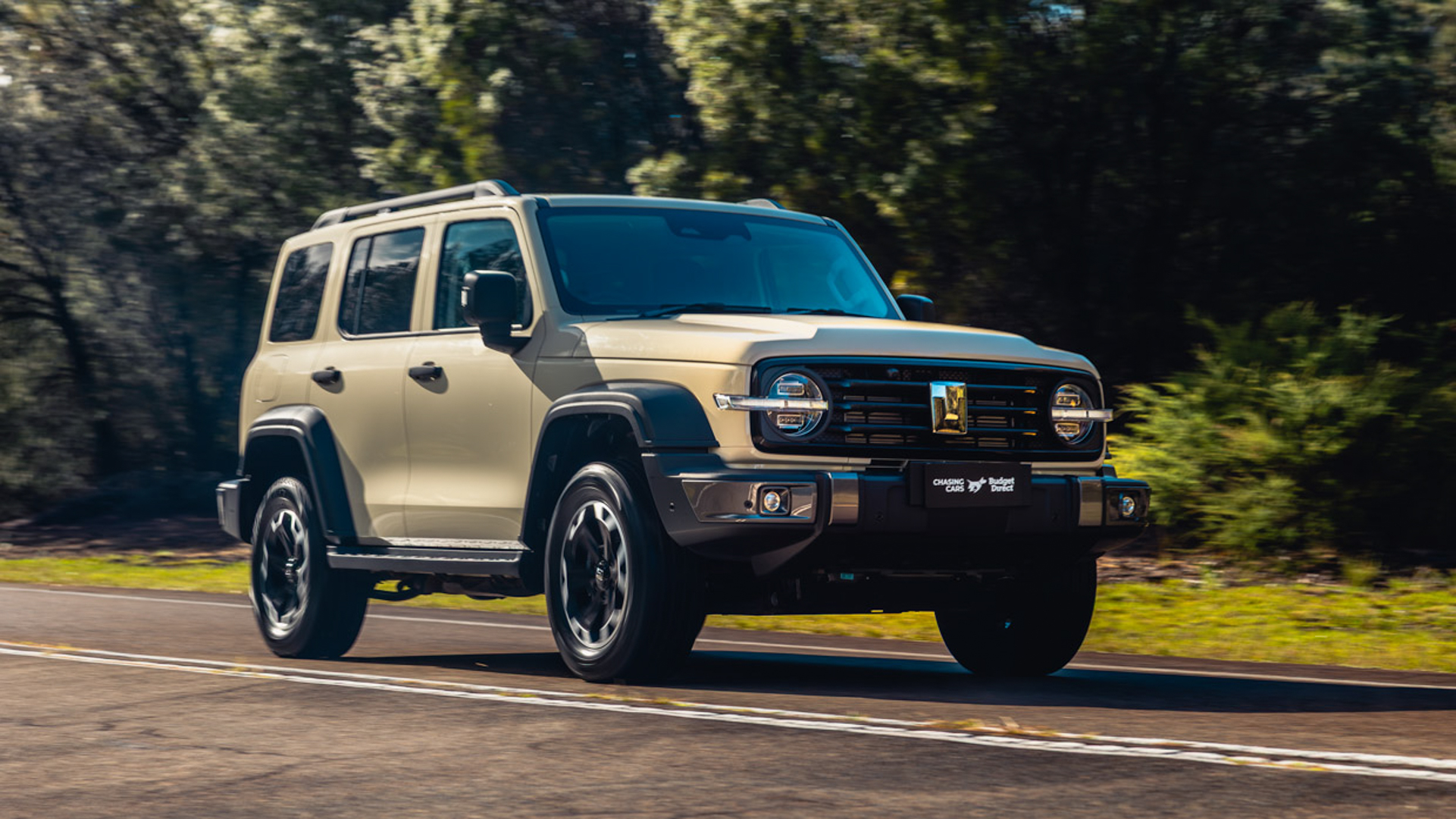
Off-road is where the Tank 300 PHEV comes into its own. Ground clearance is 222mm while approach and departure angles are impressive at 32 and 33 degrees, respectively. It uses double wishbone front and multi-link rear suspension with coil springs all around.
Compared to the over-eager diesel versions, the Tank 300 PHEV has a lazier throttle response, making it easier to modulate at low speeds on bumpy and challenging terrain. Torque comes on at idle with the e-motor boost giving the Tank great drivability.
The configuration of GWM’s Hi4-T system, shared with the Cannon Alpha ute, puts the electric motor before the transmission, meaning the Tank 300 has selectable 4WD with 2H, 4H and 4L. There are myriad drive modes including Rock, Snow, Mud/Sand, Mountain, Pothole and a configurable Expert setting.
That said, the Tank 300 does have room to improve. We found the traction control in Mountain and Pothole modes allowed too much wheel slip to be effective, and that the nine-speed automatic held gears longer than necessary in low-range.
The Tank, therefore, relies heavily on locking differentials for its off-road capability. Not a bad thing, per se, as they activate rapidly and are also linked to drive modes — for example Rock engages the rear locker almost immediately to get you out of sticky situations.
As with many Chinese vehicles, the exterior cameras are stunningly good, giving drivers almost superhuman vehicle placement abilities when in Conqueror view.
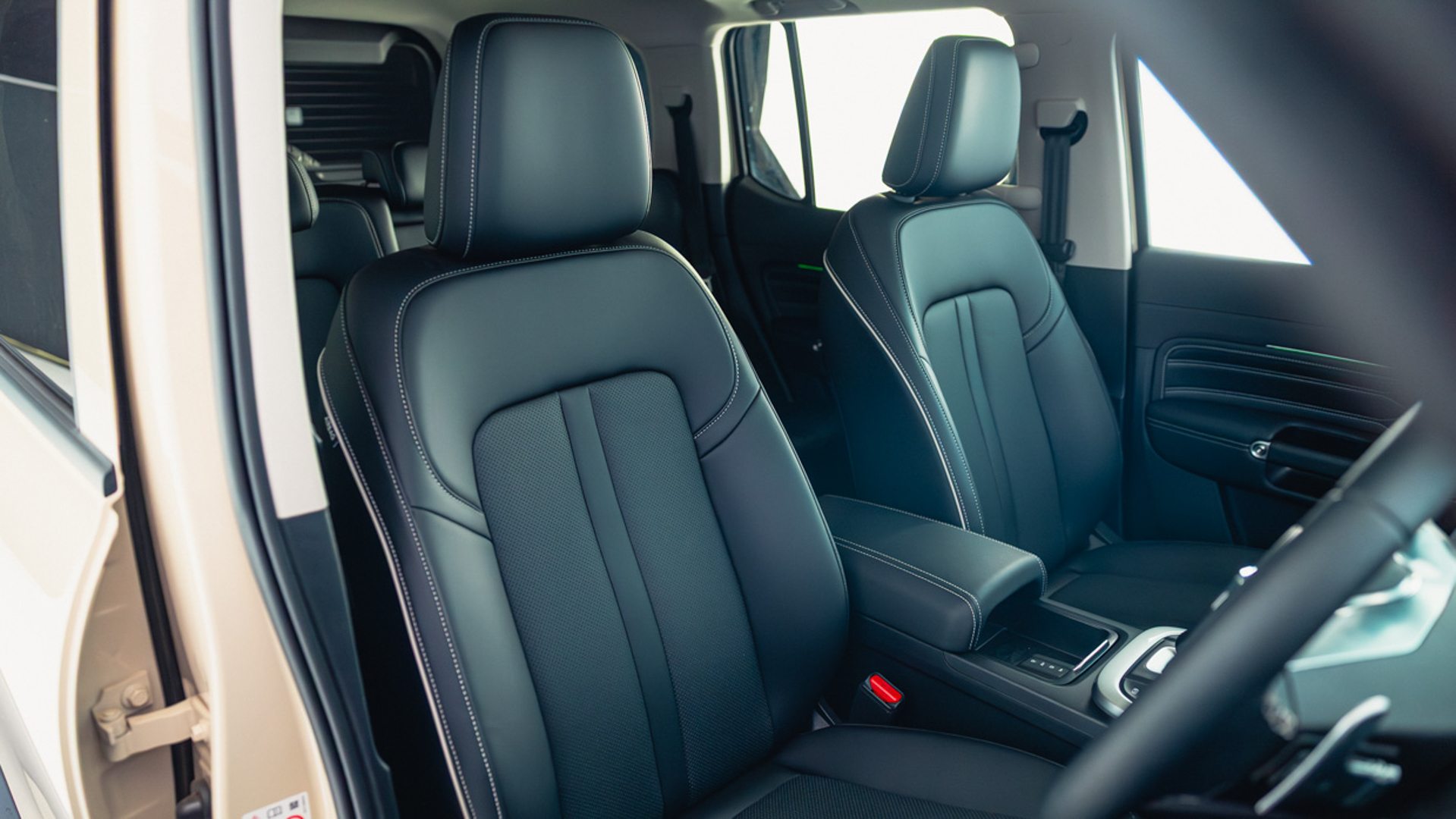
There’s a lot to like inside the Tank 300 for the price — real Nappa leather trimmings, heated and ventilated seats, big bright touchscreens set into the dash to avoid glare in the Aussie sun and boxy proportions to make seeing out easy.
If we have complaints, some design elements are an acquired taste, and even with lumbar adjustment the front seats are flat and unsupportive.
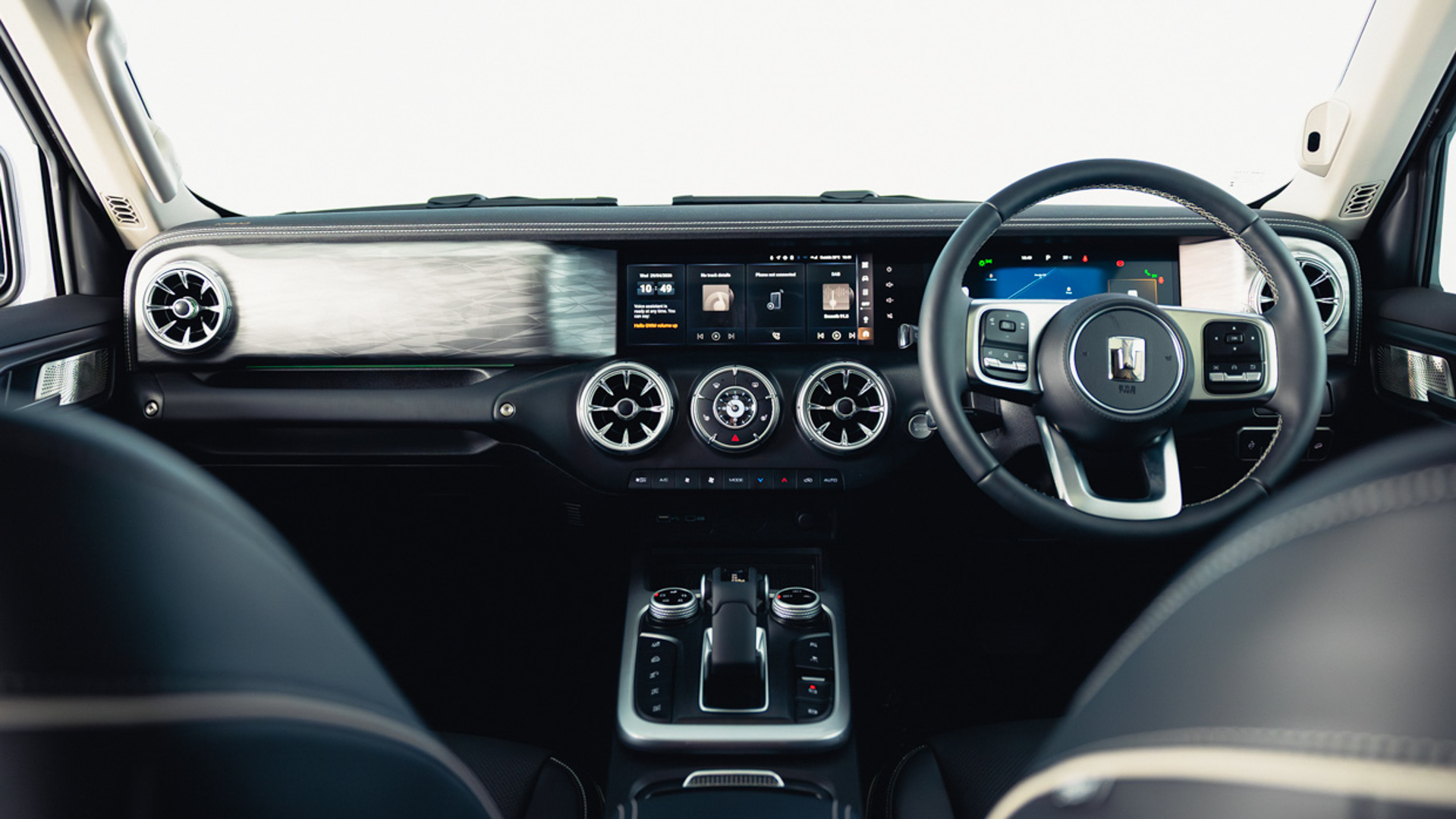
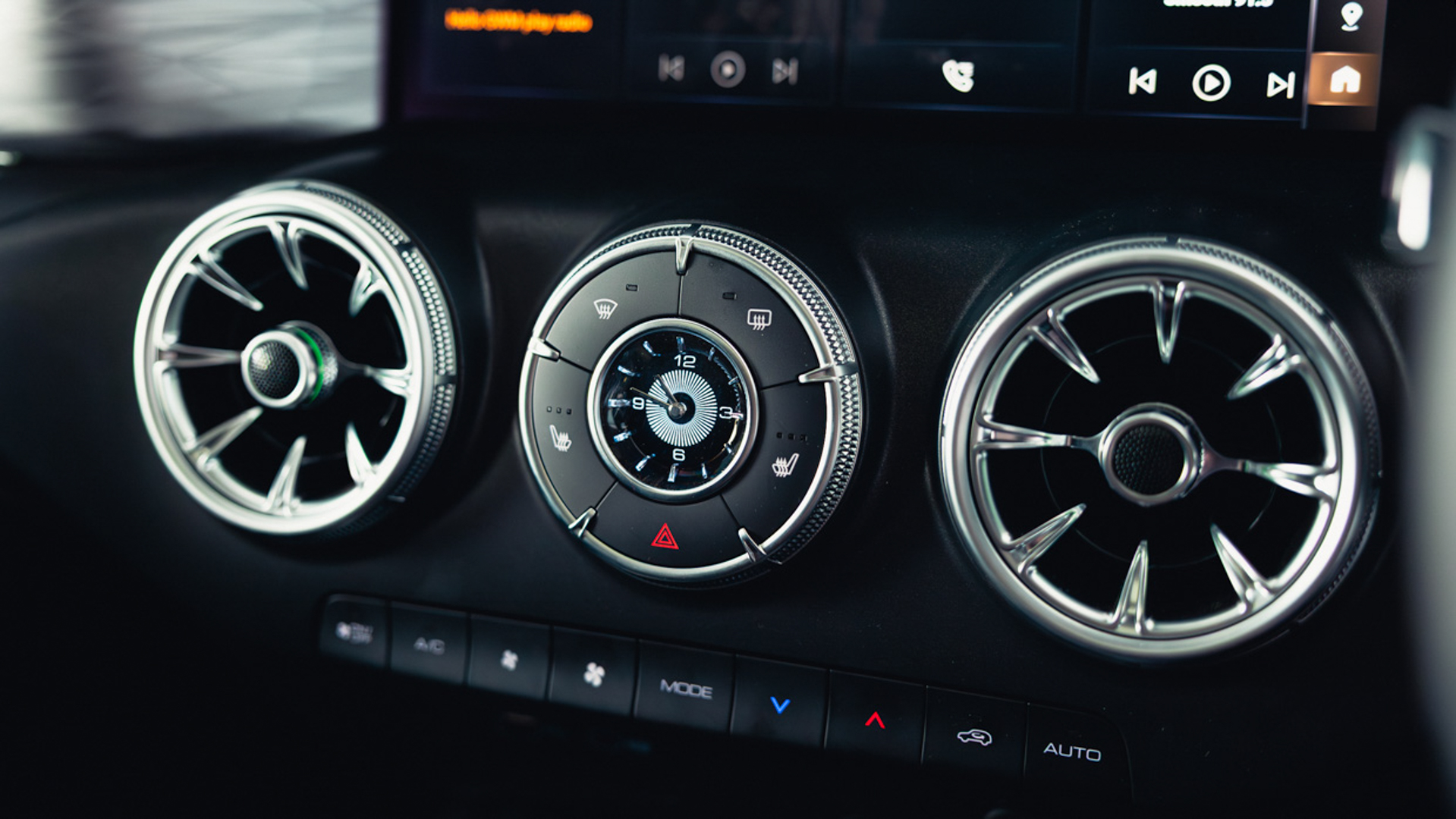
There’s a prominent physical button to engage the heated seats, yet to activate ventilation you need to tap through the screen. It’s a shame you can’t customise the function of the physical switch to your liking.
Yet it’s generally positive here. The touchscreen is responsive and the digital driver’s display integrates mapping, either with the native system or mirrored Google Maps and Waze, which is a nice touch.
A shame we don’t get the newer cabin design seen in China, which does without the cool-but-clunky pistol grip gear selector and enhances cabin storage, which is decent but not amazing in the Tank 300 PHEV.
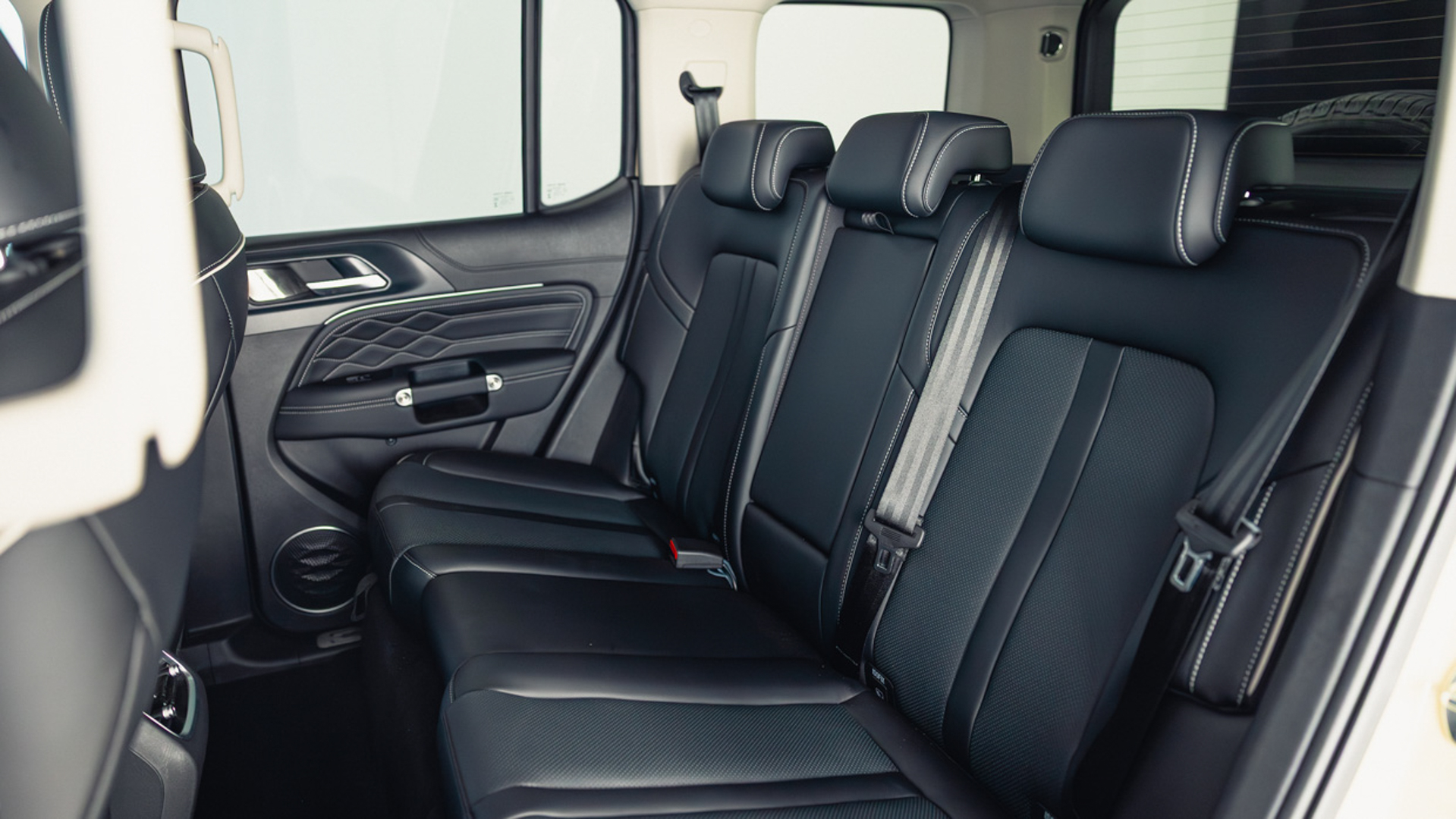
The back seat is better than expected for a fairly compact, body-on-frame 4WD. Big windows for good vision out with tints to keep the heat down. The bench and backrest are supportive and the second row is big enough for grown adults. There’s even a sunroof in both trims.
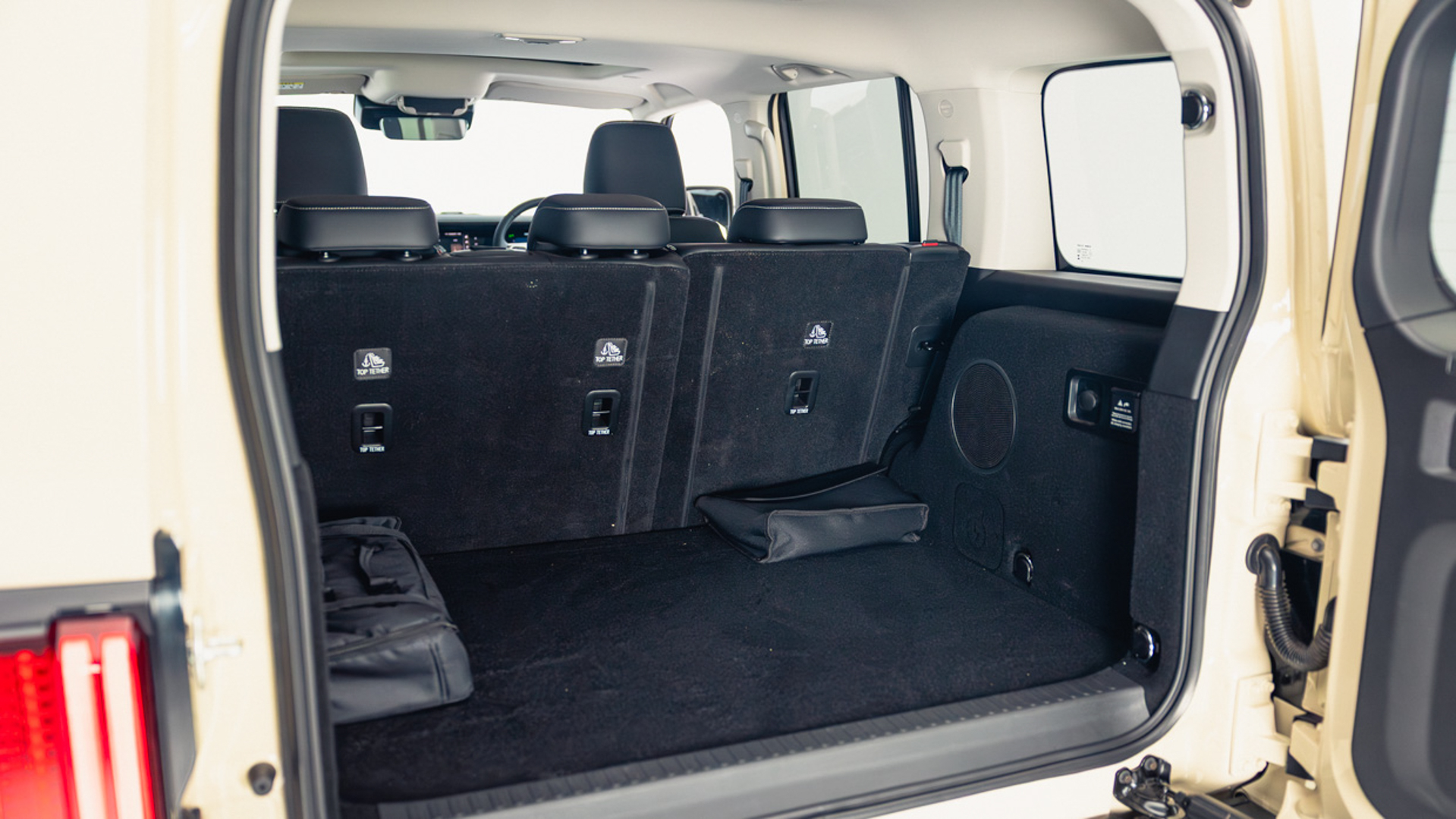
Where the Tank 300 sacrifices some usability is the boot, rated at just 360L with all seats in place, it’s smaller than a Volkswagen Golf. Touring with four onboard would be difficult
That said, fold the second row and space grows to 1520L and, despite weighing 2615kg, the Tank 300 keeps a 610kg payload, comparable to the dearer Denza B5 and Toyota Prado. A full-size spare is mounted on the side-swing tailgate.
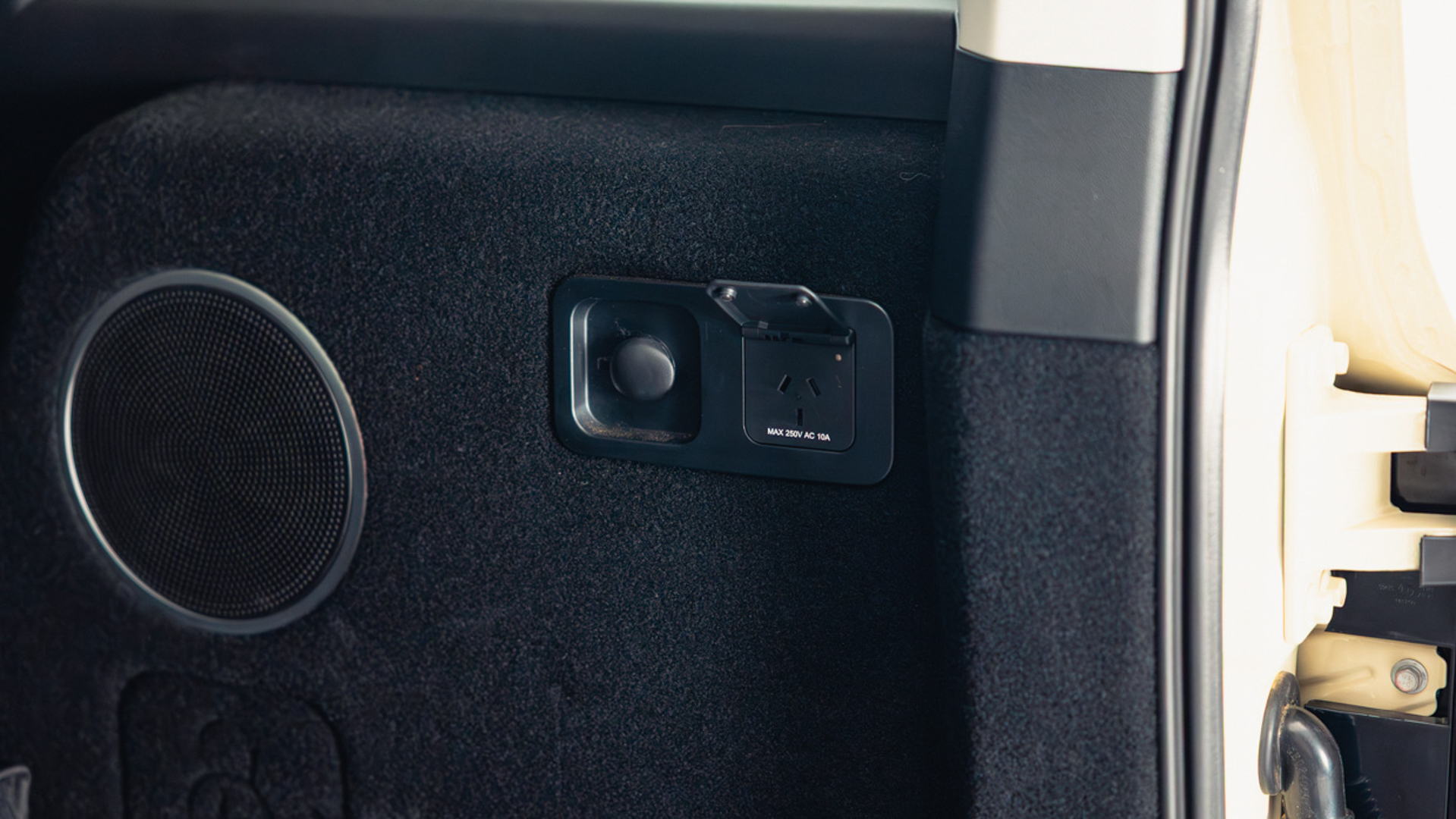
Adding utility is the Tank 300 PHEV’s vehicle-to-load (V2L) ability which lets owners use the traction battery as a built-in power bank. You can run a campsite, tools and other accessories either via a the 250V three-pin socket in the boot or through an adapter that plug into the charge port outputting up to 6.0kW.
GWM’s ownership proposition is strong in Australia with a seven-year/unlimited kilometre warranty complemented by the same period of roadside assist and capped-price servicing.
As covered above, real-world economy is close to advertised providing you keep on top of battery charging.
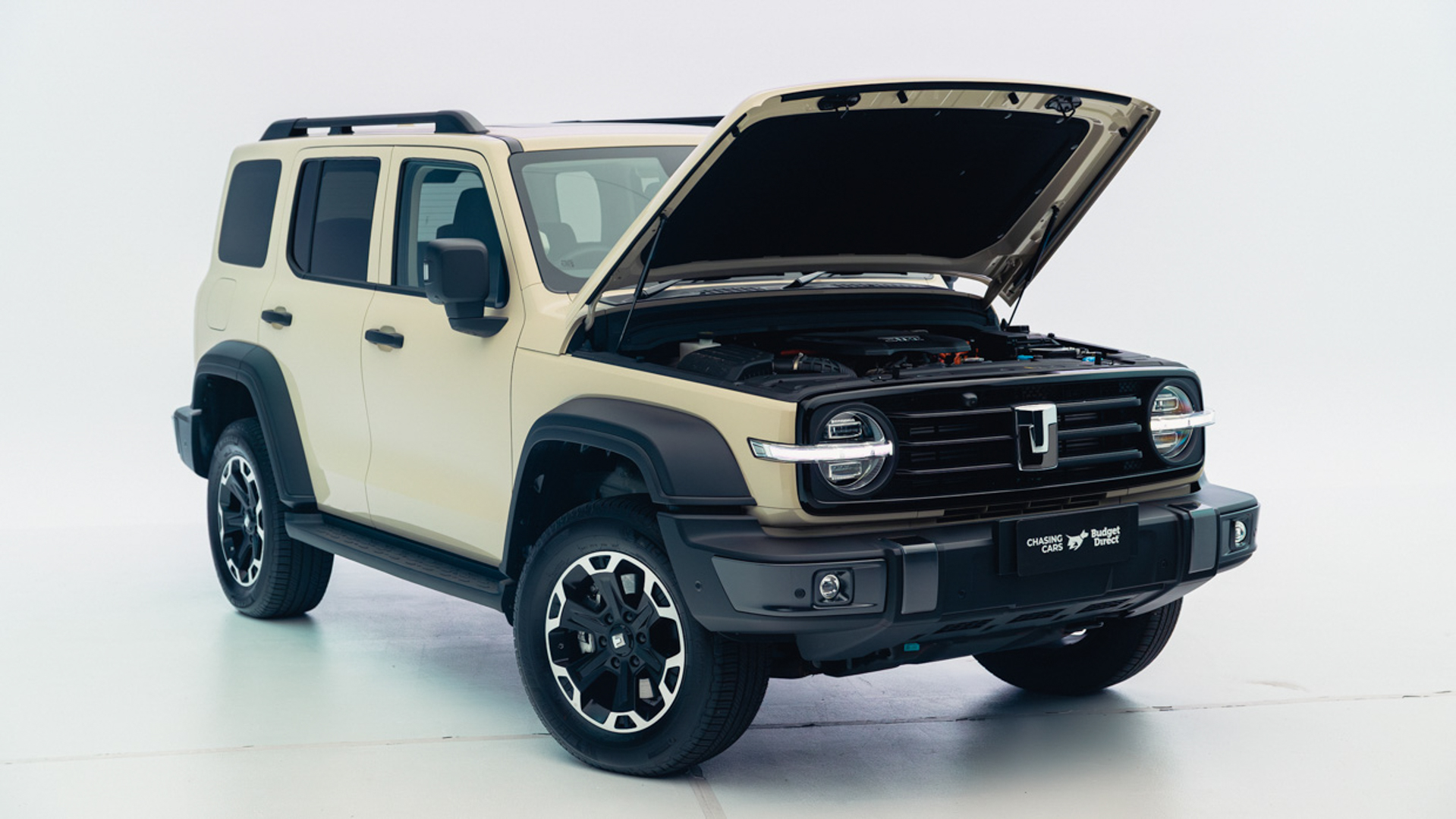
It’ll take about seven hours to go from ‘flat’ (really 15 percent remains when the e-range says zero kilometres) on a 7.0kW wallbox or as quick as 24 minutes from 20-80 percent at up to 50kW on a public DC fast-charger.
Maintenance is due every 12 months or 10,000km — whichever comes first — and the Tank 300 PHEV will cost $2610 to service over the first five years.
Budget Direct told us the median annual premium purchased for the first time between 1/4/2025 and 1/4/2026 to comprehensively insure a new GWM Tank 300 was $1492. Individual circumstances and policy terms may vary.
Of course, everybody’s situation is different, and the premium will vary according to make and model, and other things insurers take into account, such as your postcode, driving history, who drives the car, where you garage the car and more.
Please quote for yourself. Subject to meeting underwriting criteria. Insurance issued by Auto & General Insurance Company Limited. See PDS & TMD at budgetdirect.com.au.
With a plug-in hybrid onboard and a host of small tweaks to make it more appealing to Australians, the Tank 300 blends 4WD capability and daily usability really rather well.
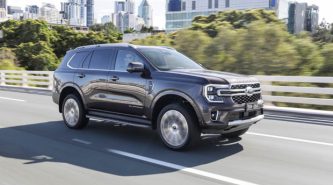
That its price tag is $20,000 lower than the (admittedly larger) Denza B5, Toyota Prado and Jeep Wrangler, giving it strong appeal within its niche.
GWM reckons the plug-in hybrid could account for up to 50 percent of Tank 300 sales as the petrol and plugless hybrids are slowly phased out.
That seems likely, as it does pretty much what it says on the tin at a good price. It’s not perfect and many will still want the diesel, but the Tank 300 PHEV gets an awful lot right.
Key specs (as tested)
About Chasing cars
Chasing Cars reviews are 100% independent.
Because we are powered by Budget Direct Insurance, we don’t receive advertising or sales revenue from car manufacturers.
We’re truly independent – giving you Australia’s best car reviews.
The estimate provided does not take into account your personal circumstances but is intended to give a general indication of the cost of insurance, in order to obtain a complete quote, please visit www.budgetdirect.com.au. Estimate includes 15%^ online discount.
^Conditions Apply
Budget Direct Insurance arranged by Auto & General Services Pty Ltd ACN 003 617 909(AGS) AFSL 241 411, for and on behalf of the insurer, Auto & General Insurance Company Limited(ABN 42 111 586 353, AFSL 285 571).Because we don’t know your financial needs, we can’t advise you if this insurance will suit you. You should consider your needs and the Product Disclosure Statement before making a decision to buy insurance. Terms and conditions apply.
Indicative quote based on assumptions including postcode , 40 year old male with no offences, licence suspensions or claims in the last 5 years, a NCD Rating 1 and no younger drivers listed. White car, driven up to 10,000kms a year, unfinanced, with no modifications, factory options and/or non-standard accessories, private use only and garaged at night.
^Online Discounts Terms & Conditions
1. Discounts apply to the premium paid for a new Budget Direct Gold Comprehensive Car Insurance, Third Party Property Only or Third Party Property, Fire & Theft Insurance policy initiated online on or after 29 March 2017. Discounts do not apply to optional Roadside Assistance.
2. Discounts do not apply to any renewal offer of insurance.
3. Discounts only apply to the insurance portion of the premium. Discounts are applied before government charges, taxes, levies and fees, including instalment processing fees (as applicable). The full extent of discounts may therefore be impacted.
4. We reserve the right to change the offer without notice.