Powered by

-
Car Reviews
Latest reviews
-
Car News
Latest news
-
Car Comparisons
Latest comparisons
- Chasing Deals
Latest reviews
Latest news
Latest comparisons
More on-road focused Tank 700 with pure EV range “up to 180km” could soon arrive, with a V8 plug-in also under consideration
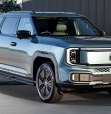
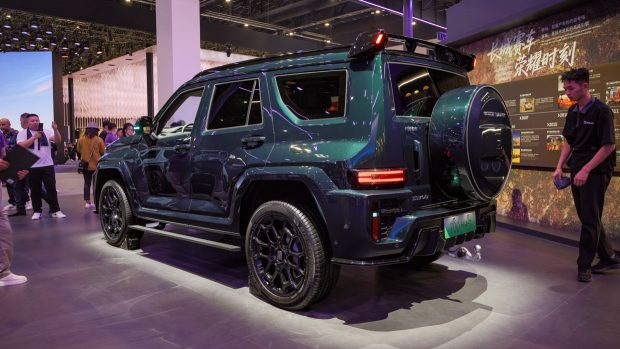
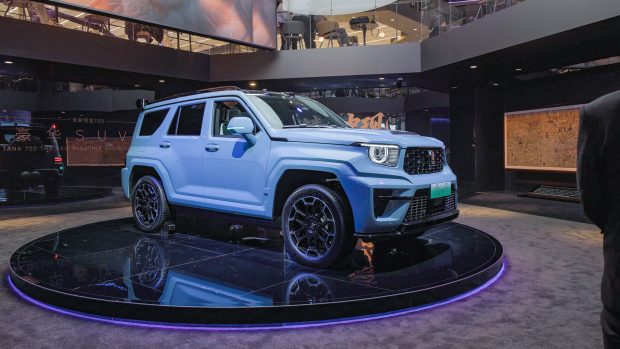
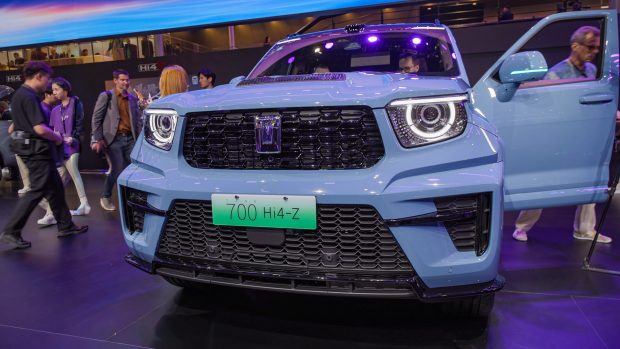
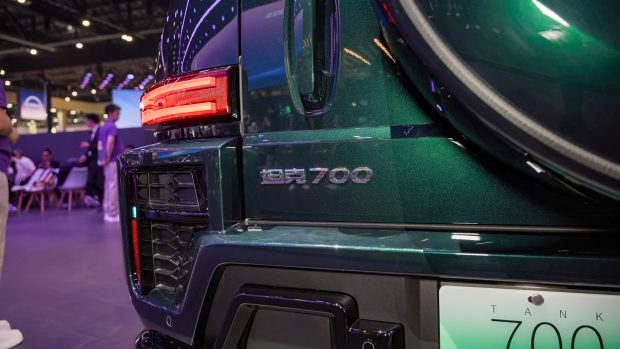
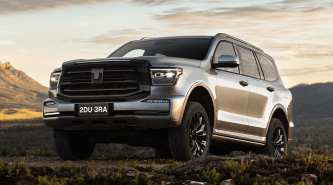
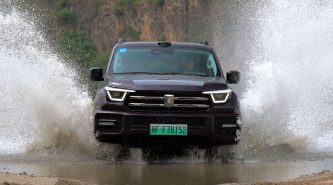
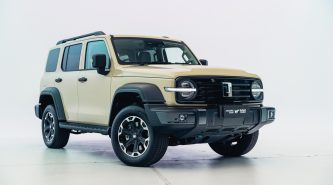
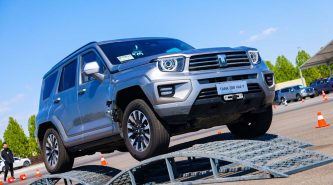
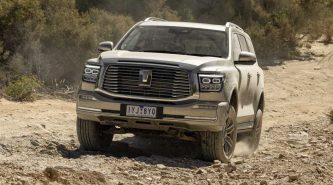
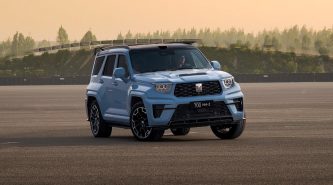
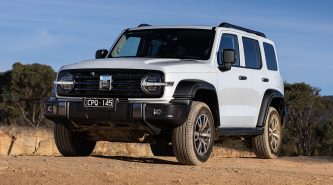
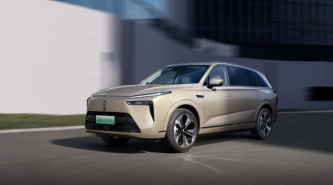
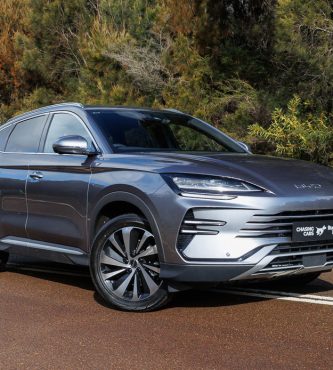
Denza’s B5 and B8 plug-in off-roaders look likely to soon have stern opposition in the boxy shape of GWM’s Tank 700 PHEV, as an Australian launch looks closer.
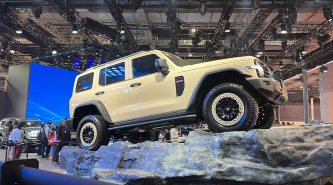
China has just welcomed a facelifted version of this large plug-in 4×4, and while GWM Australia refused to lock it in for our market, it was “absolutely, strongly under consideration,” said GWM Australia’s head of marketing and communications, Steve Maciver at this month’s Beijing Auto Show.
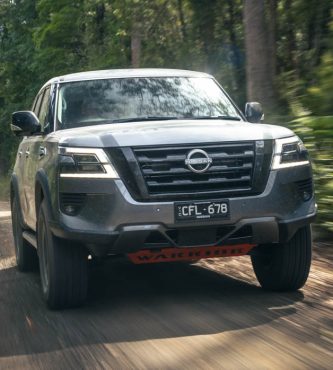
Also on the table is a V8 option, drawing stark contrast from established rivals such as the Toyota LandCruiser 300 Series and Nissan Patrol Y63, which have moved away from the beloved powertrain to more emissions-friendly V6 engines.
Launching with the refreshed model makes sense, not least as it introduces GWM’s Hi4-Z technology: a more on-road focused and efficient alternative to the familiar Hi4-T setup currently employed in GWM’s Cannon Alpha PHEV.
Guessing at an Australian price tag, a direct conversion from the Chinese-market version equates to roughly $90,000 for a Tank 700 Hi4-Z: similar to Denza B8 money, but well above the Denza B5 which is from $74,990.
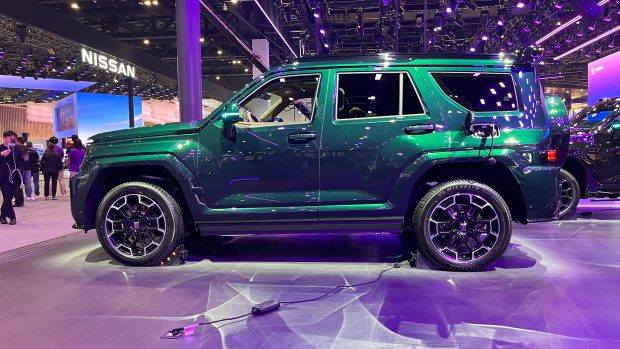
Size-wise, a Tank 700 at 5105mm straddles the Denza B5’s 4921mm and B8’s 5195mm.
The muscle-arched Tank 700 Hi4-Z uses a 2.0-litre turbo petrol engine with two electric motors, and its 59kWh battery promises an EV-only driving range “up to 180km”.
Like Chinese rival Denza’s 4×4 setup, GWM’s Hi4-Z system loses the mechanical linkage between front and rear axle. GWM’s Hi4-T setup, by comparison, has smart triple locking differentials able to send 100 per cent of drive to a single wheel for optimum traction.
In China, the 700 is available with choice of “Z’ or “T” depending on intended use. Hi4-Z versions are best for those prioritising on-road travel with occasional off-roading, while Hi4-T models are the pick for more extreme adventurers.
The Z has a 2500kg towing capacity – down 1000kg on the T setup – and won’t prove as much of a “go-anywhere” mountain goat.
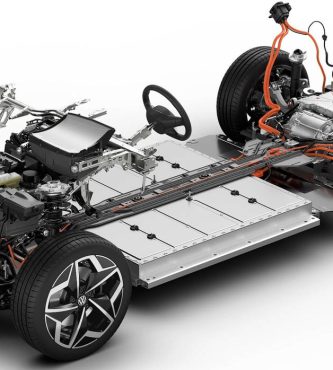
But there are myriad benefits. With its driveshaft deleted, the PHEV’s battery can be bigger (59kWh versus 37.1kWh), giving roughly twice the amount of electric range over a Hi4-T.
The battery sits in the middle of the chassis for better weight distribution while improving cabin packaging. The Hi4-T’s smaller battery is in the rear, making the back end heavier and compromising boot space.
Here’s the science bit. With the Hi4-Z, its 185kW petrol engine with 215kW front electric motor powers only the front axle. And, like a range extender, the petrol charges the big battery to run a 240kW electric motor on the rear axle. The two back wheels are only ever turned by electricity.
Differing from the Denza setup, the Hi4-Z has a three-speed transmission up front, plus a two-speed ratio in the rear.
Figures quoted for the Chinese market version are a combined power of 635kW, and 0-100km/h time in a swift 5.6 seconds.
There’s also the option of utilising a 3.0-litre V6 petrol engine, but in China this beefier powerplant is reserved for Hi4-T models.
What’s more likely, intriguingly, is bringing to Australia a V8 Tank 700, a vehicle GWM confirmed is already under development.
This eight-cylinder, for now, is destined only for the Tank 700, and in China will be offered as a traditional V8, hybridised V8 and plug-in hybrid V8. GWM’s Aussie division would likely only be interested in the plug-in V8, tapping into our lasting desire for big bent eights.
Steve Maciver told Australian media the flagship Tank 700 was under full evaluation to sit as a flagship for the GWM brand, and the Hi4-Z tech boosted its appeal.
“That mechanical linkage you get with Hi4-T is always going to give you better off-road capability,” he explained.
“But Hi4-Z will give you more range and better performance on-road in terms of acceleration.
“Hi4-Z is something we’re looking at, so there are lots of different powertrain options for us.”
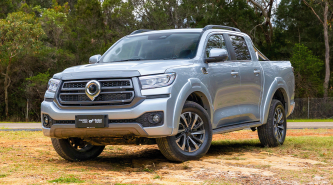
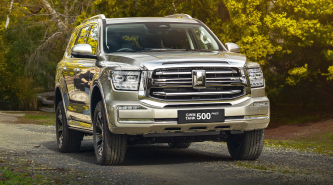
What else could receive Hi4-Z? It’s only possible on a body-on-frame chassis, not a monocoque, so it would be limited to 4×4 off-roaders, namely the current Tank 300 and 500 SUVs, plus, potentially, Cannon utes.
It’s unknown if the better packaging with Hi4-Z could mean the 700 PHEV could be offered with a third row of seats, boosting its Aussie appeal. The only models we saw at Beijing remained strict five-seaters.
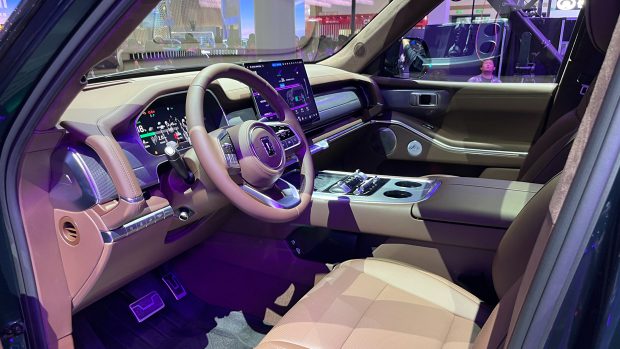
Battling the auto show hoards, our short time inside the facelifted Tank 700 confirmed it is worthy of flagship status with deep luxury in evidence.
As standard are heated, ventilated and massage leather seats, a 5.4-litre centre console fridge, 21-speaker audio, 17.3-inch roof-mount screen for rear passengers, and 15.6-inch infotainment up front.
GWM plans up to ten new vehicle launches in the next 12 months, keeping former Holden engineer Rob Trubiani busy as he leads the local ride and handling work on new GWM products.
It looks odds-on the big Tank 700 will be one of that number hitting his workbench soon.
Latest news
About Chasing cars
Chasing Cars reviews are 100% independent.
Because we are powered by Budget Direct Insurance, we don’t receive advertising or sales revenue from car manufacturers.
We’re truly independent – giving you Australia’s best car reviews.