Powered by
- Car Reviews
-
Car News
Latest news
-
Car Comparisons
Latest comparisons
- Chasing Deals
Latest news
Latest comparisons
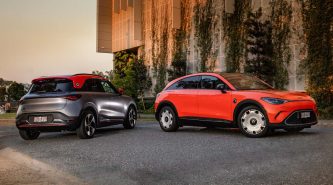
Cute-as-hell city car previews the 2026 production model; could it be the $30k style statement Smart needs?
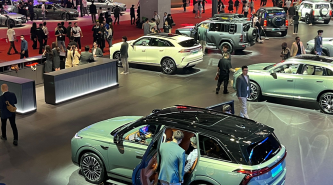
It’s not easy standing out at the senses-smashing extravaganza of the Beijing Auto Show, but sometimes the smallest scream loudest.
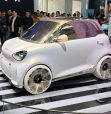
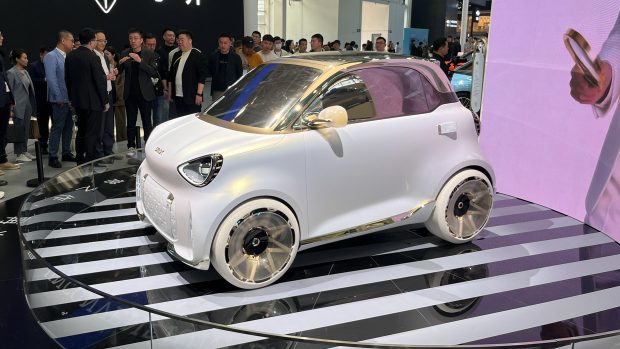
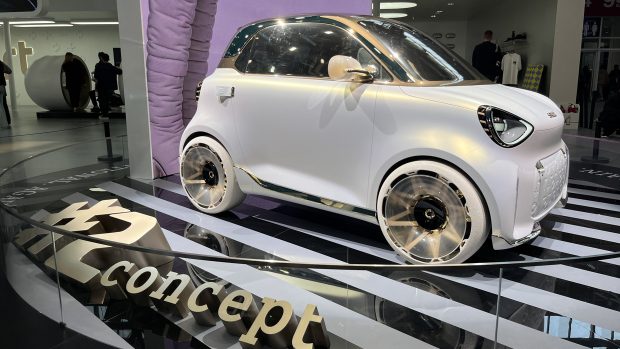
A bright white and gold-accented tiny two-door city car – the Smart #2 Concept – dropped jaws beside an overload of yacht-sized EVs on display.
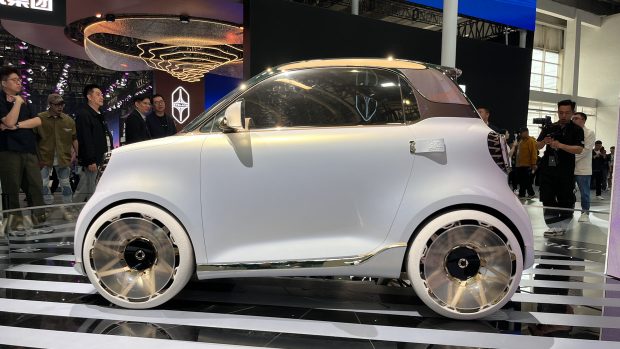
Rolling on white-clad tyres (why not?) wrapping gold rims extended outside the bodywork, this concept likely looks very close to a Smart #2 production version, set for full reveal at the Paris auto show this October.
It’s a return to the size and style of the icon Smart Fortwo two-seater that became an inner-city star car in the 1990s. But for 2026, the #2 is entirely battery powered: Smart was revived as an EV-only brand under a joint venture between Chinese giant Geely and German powerhouse Mercedes-Benz.
Despite Australian car buyers’ general rejection of tiny city cars, Smart #2’s product manager, Simon LV (his translation from the Chinese), said he considered the new baby EV “80 per cent likely will go to Australia.
It’s a global model, so will be for both left-hand and right-hand drive markets.”
Larger Smart #1 and #3 SUVs are currently distributed in Australia by LSH Auto through only three showrooms – Sydney, Melbourne and Brisbane – as part of their Mercedes-Benz dealerships.
Let’s not gloss over the myriad cool touches on the #2 Concept. Leather door straps, pixel digital lighting front and rear, contrast colour roof and a front grille panel that resembles a high-end patterned ladies’ handbag.
Most striking is seeing the #2 in profile. It’s a mere 2792mm – very close and actually a smidge longer than the original Smart Fortwo – with practically zero overhangs. It looks like you could pick it up and it’d fit in your pocket.
The benefits for city parking are obvious – you can park its rear wheels to the kerb – while turning circle is a truly tight 6.95 metres. Sadly, it was a locked-door concept with no hint at the interior style.
Simon said he couldn’t yet reveal details on the Smart #2’s motor and battery, but electric range was “around 300km WLTP,” which would be ample for a car unlikely to leave city confines.
Maximum charging speed isn’t known, but a promised 10 to 80 per cent in 20 minutes suggests it’ll be competitive (and the battery a tiddler), while desirable V2L will also feature.
Product lead Simon also revealed #2 is built on a completely new platform. “If you want to build a small car and make it safe enough, you need to choose a new platform,” he explained.
“So Smart decided to develop an in-house platform called ECA (Electric Compact Architecture). It’s completely unique, and won’t be used on other Geely products. There will be no compromise on safety, and we won’t make it a cheap car, like other Geely cars.”
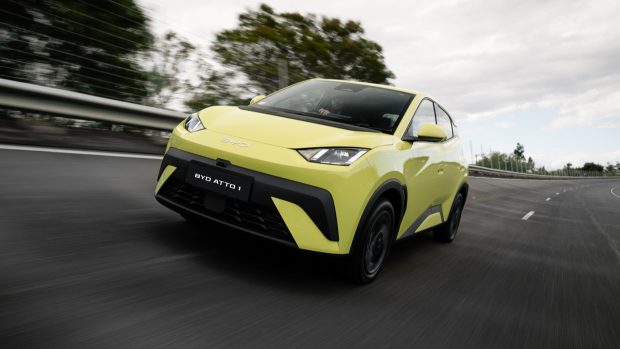
Regardless, an Australian price around $30-35,000 would most likely be a target to be competitive against a BYD Atto 1, GAC Aion UT and Hyundai Inster.
Simon wasn’t shy when asked about the potential for the #2 and scope for variants and other models on that platform.
First one, of course, is a Brabus edition. “Most likely we will have a Brabus (version) because we have a great partnership with them,” he said. Pocket rocket is often overused, but the duo’s history continues, the mashup would seem entirely appropriate there.
“It’s an interesting topic,” said Simon. “We had discussions with our designer from the MB (Mercedes-Benz) team, and they are also interested. For now, it’s not in our current portfolio plan, but it’s a very interesting topic.”
Likewise, a convertible version – something also under study – but it appears only a hardtop will be seen at the Paris reveal.
With retro-style EV versions of other Euro legends such as Renaults 4, 5 and Twingo, and Fiat Pandas and 500s, this return to “true” Smart car looks and size is a welcome treat for the car design nostalgics.
Latest news
About Chasing cars
Chasing Cars reviews are 100% independent.
Because we are powered by Budget Direct Insurance, we don’t receive advertising or sales revenue from car manufacturers.
We’re truly independent – giving you Australia’s best car reviews.