Powered by

-
Car Reviews
Latest reviews
-
Car News
Latest news
-
Car Comparisons
Latest comparisons
- Chasing Deals
Latest reviews
Latest news
Latest comparisons

Fresh meat from China swings in with loads of equipment and driving range at a bargain price, but how is it to live with?
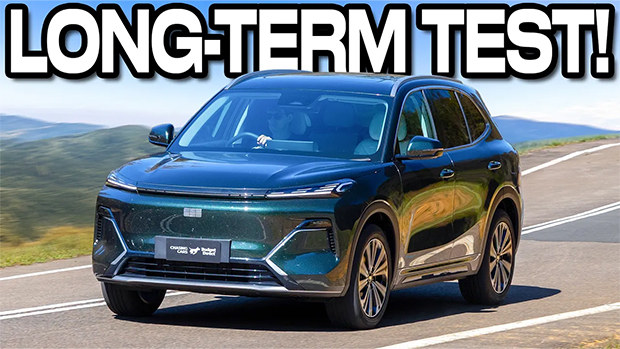
Seemingly every month there’s a new car brand from China launching in Australia, but Geely is bigger than many others, and is likely here to stay.
Truth is, the Geely parent company already has a solid footing in Australia, as owner of premium European badges including Volvo and Polestar, plus sportscar specialist Lotus and its Smart joint venture with Mercedes-Benz.
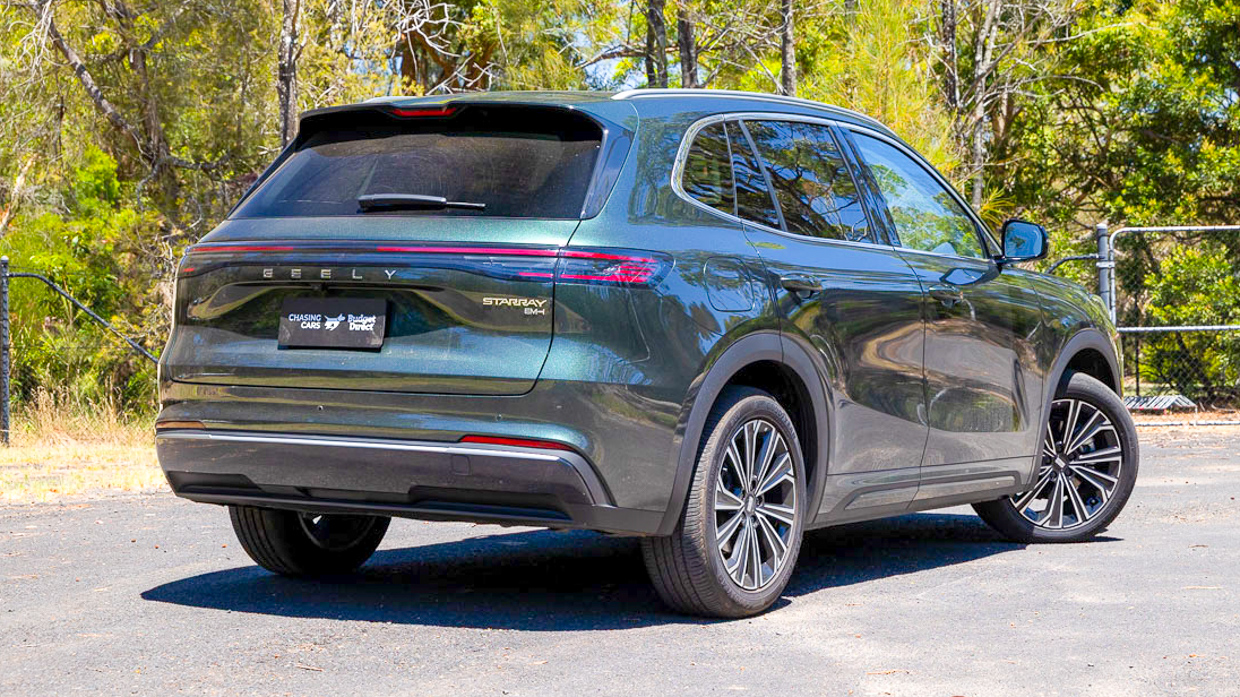
Geely dipped its toes in the water with premium Zeekr brand and is looking to introduce commercial vehicles from its Farizon sub-brand in the future.
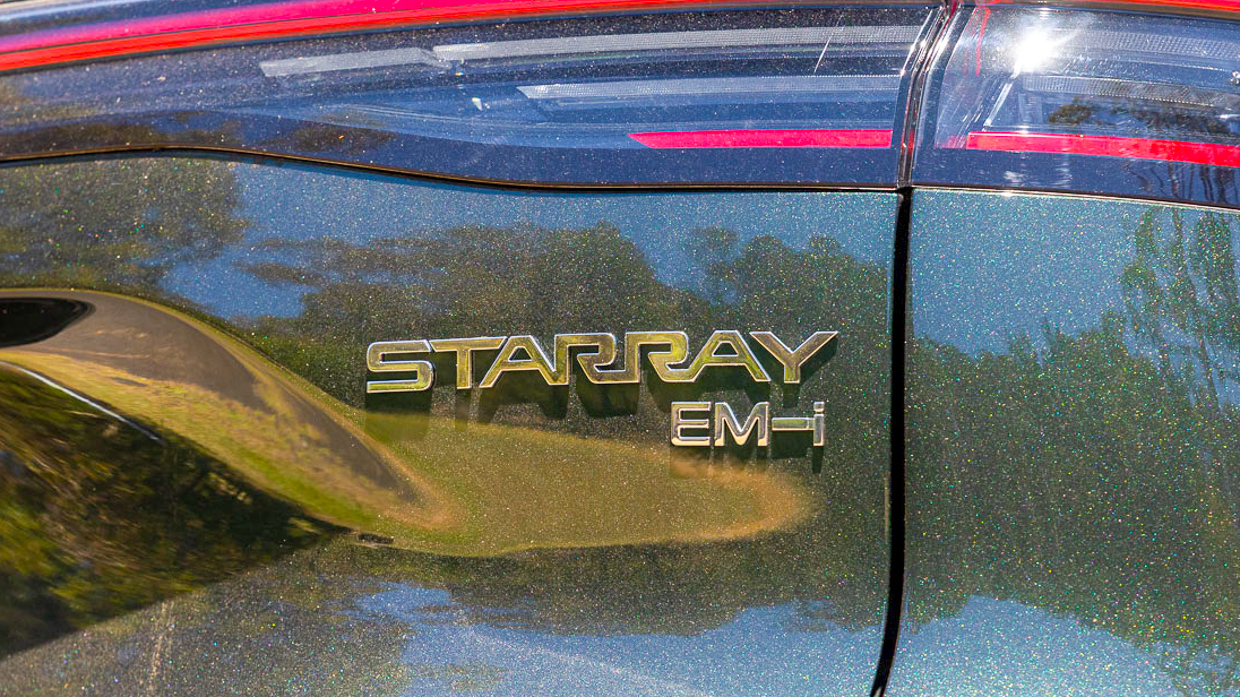
Yet the greatest volume potential for now comes from Geely’s core range, including the impressively affordable EX5 electric SUV and the Starray EM-i, a family-size plug-in hybrid SUV with nearly 1000km driving range. The price? Under $40,000 before on-road costs.
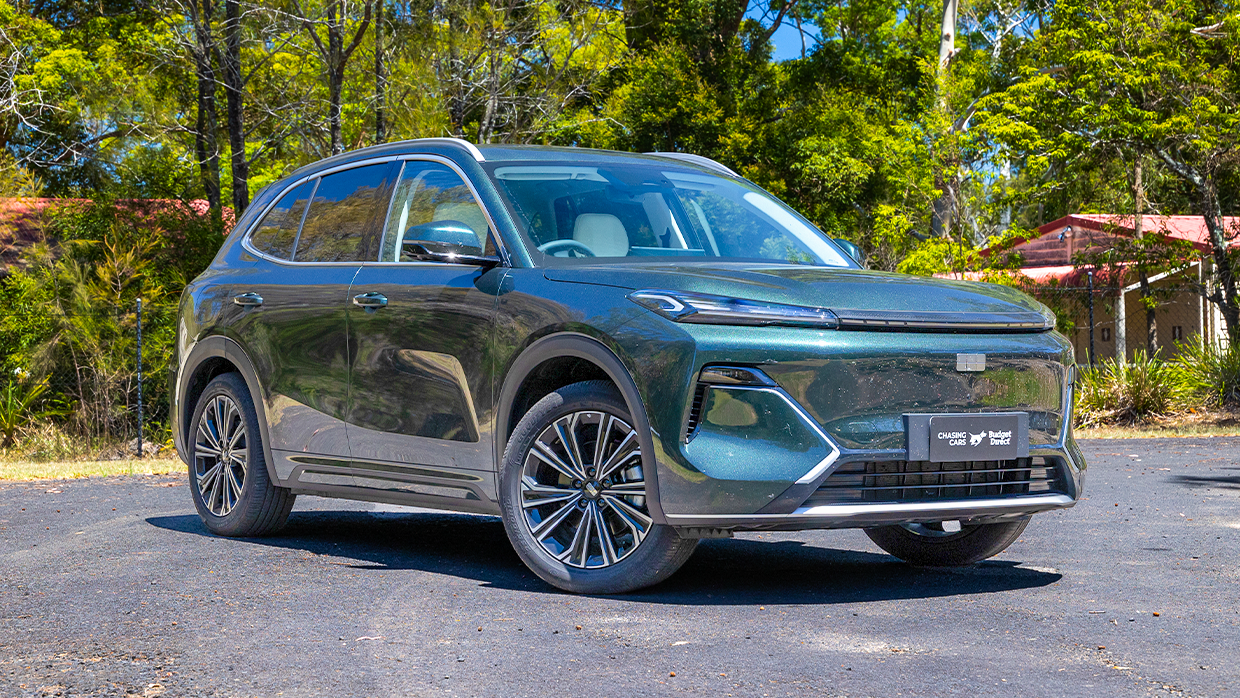
Our job is to live with Geely’s new entrant and see if its low price makes this the bargain of the decade, or if there really is a hidden cost to such an affordable family car.
The Australian new-car market is flooded with new entrants from China.
Not to stereotype, but many offer similar things: a low price of entry, loads of equipment, excellent electric credentials, and many of them have left me and the broader Chasing Cars team cold, unenthused, and occasionally frustrated.
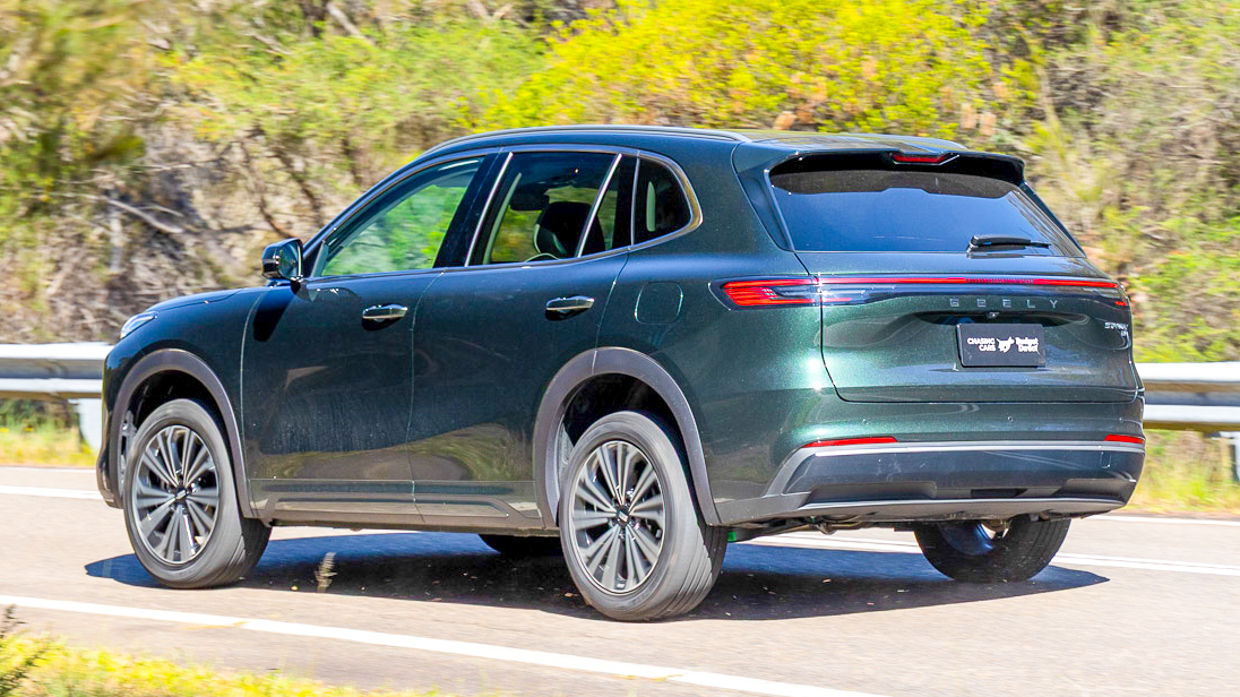
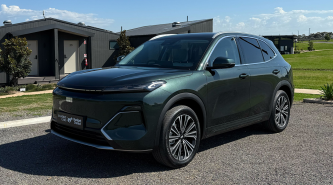
It’s with this context I picked up the keys to my Geely Starray EM-i with scepticism. I had biases and expectations, as any buyer might. But happily, Geely’s RAV4-sized plug-in hybrid fitted in nicely, with a quietly pleasant demeanour in most situations.
I can’t sit here and write that the Starray EM-i was a perfect, 10/10 companion because that’s simply not true. The ride is too soft for Australian tastes and driving speeds, the petrol engine is terse and some of the software is frustrating.
Yet considering the price, efficiency and cabin space, the Starray has become an easy name to recommend after four months and over 6000km at the Law household.
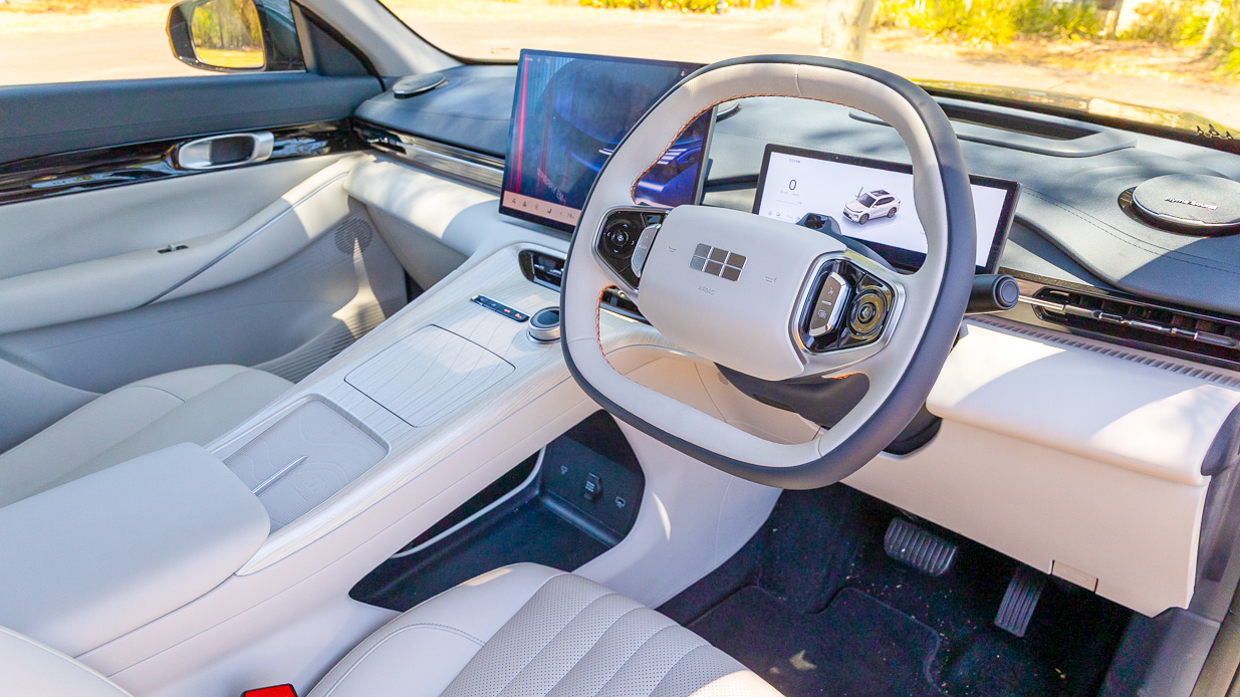
Since handing our Starray back, Geely has rolled out an MY26 update which features a 29.8kWh battery pack increasing electric-only range to 136km (WLTP). Massage seats and faster DC charging are also new, which makes the $1500 price increase seem very reasonable.
You can read further below for detailed reports on the Starray’s electric-only living, hot weather running and over-the-air developments. Read on for the good and bad of Starray EM-i ‘ownership’.
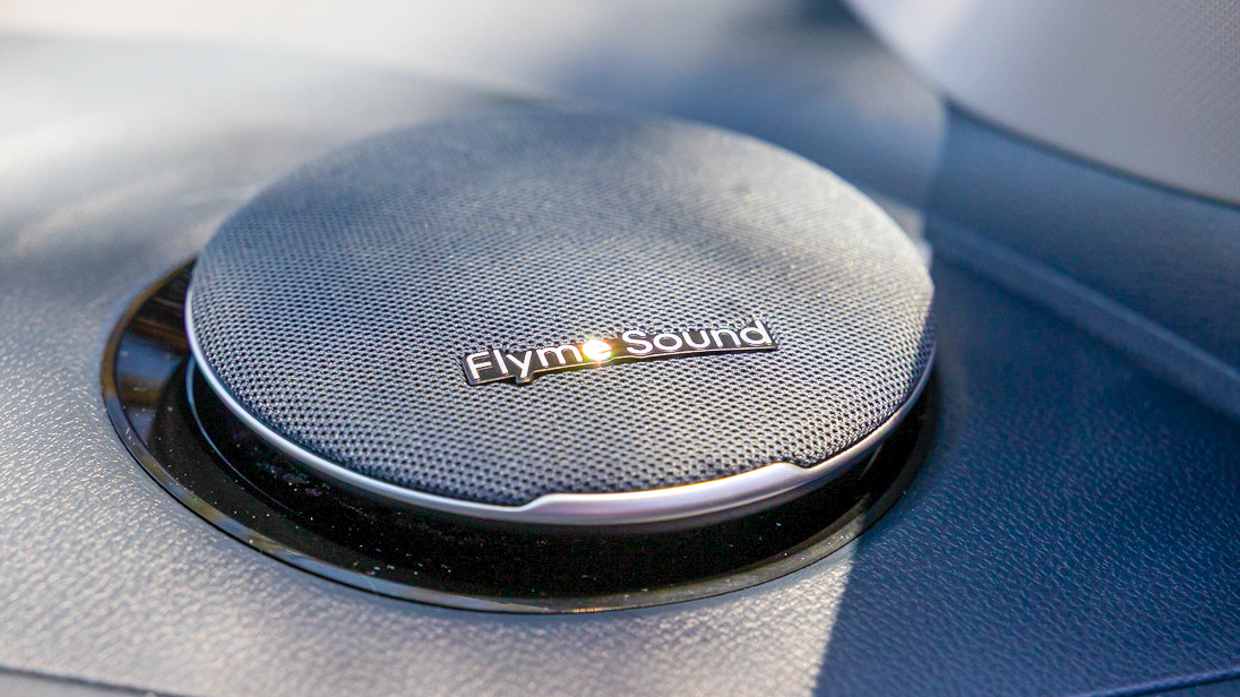
The level of equipment fitted to our car for under $44,000 driveaway is stunning, and Geely has only amped the value proposition with the MY26 Starray EM-i update. Of note was the 16-speaker Flyme sound system, heated and ventilated seats and full-length glass roof.
The next win was a smart and efficient powertrain. The acceleration is smooth, it knows when to prioritise EV mode and, when driving on electric power, is faithful to the WLTP range rating — we managed a best of 95km in testing.
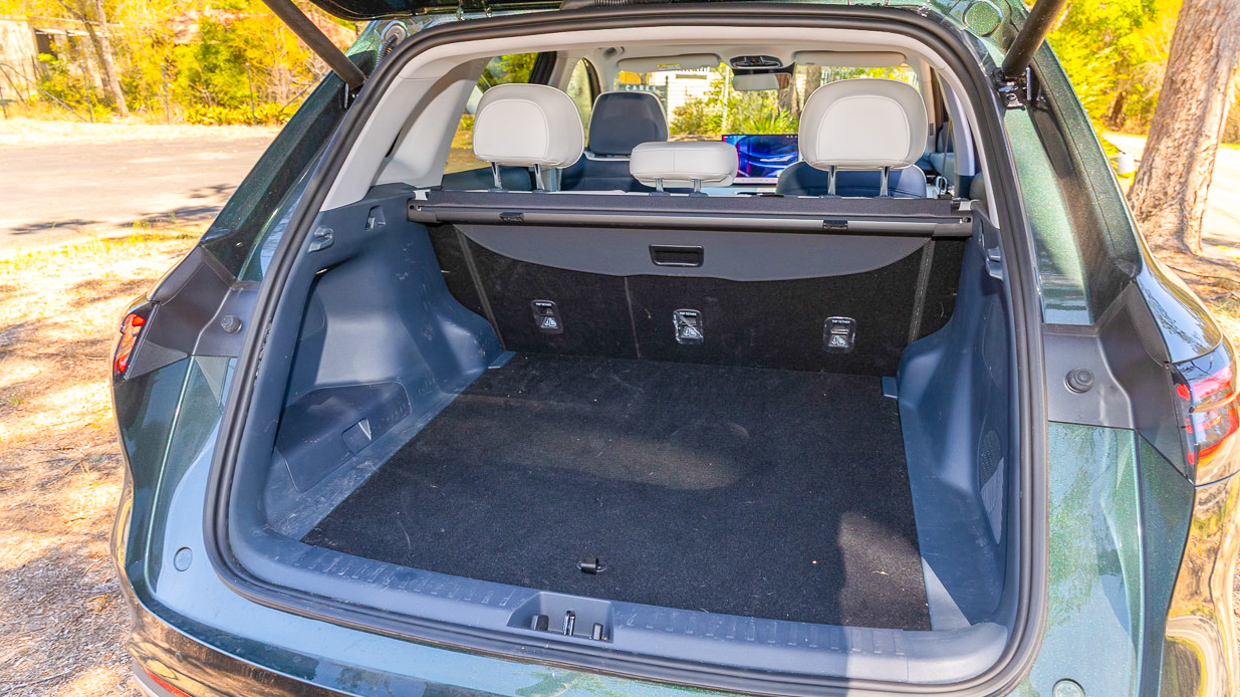
It’s a big car, too, for a medium SUV. The Starray is not quite as large on the outside as a Hyundai Tucson or Nissan X-Trial, but the Geely’s five seats are adult-friendly. A wide, squishy second row bench and generous boot made it ample for our family of two adults and two medium-sized dogs.
Though the Starray’s interior is dominated by an overly bright 15.4-inch touchscreen, there are physical hard switches for key cabin functions.
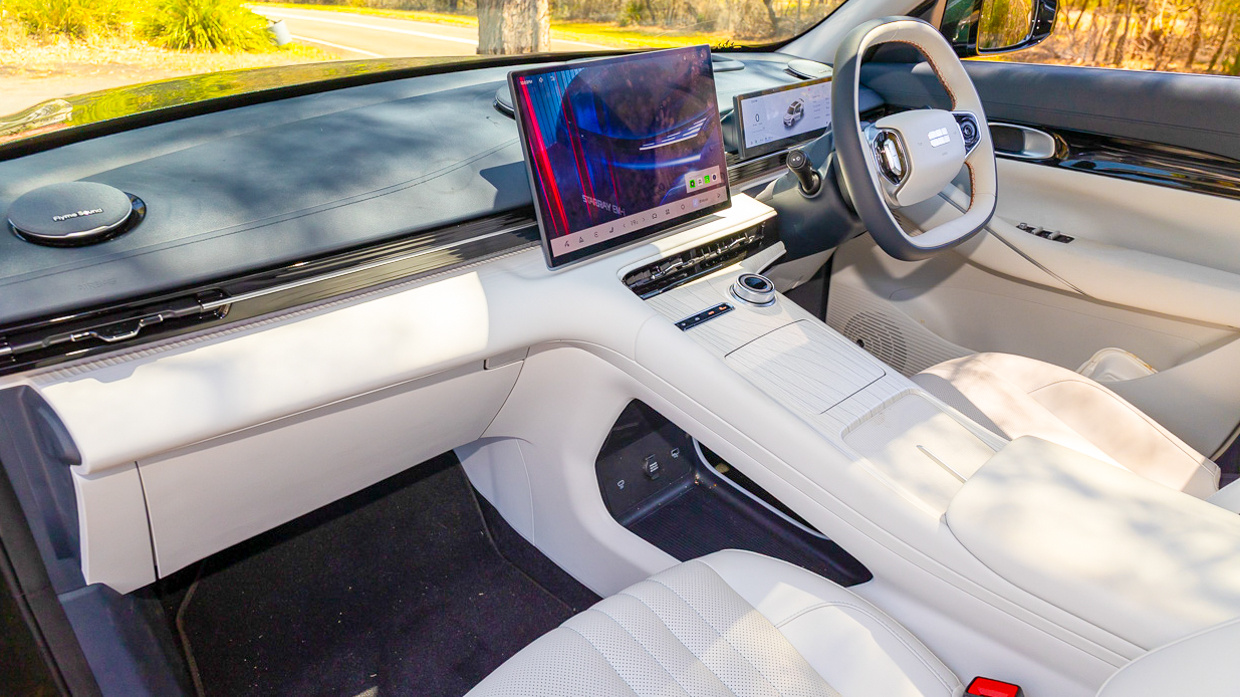
These include front screen de-mist, recirculate, Auto and On/Off for the air conditioning, plus a customisable rotary dial for volume. Tap this down once and you can choose whether it adjusts air-con temperature, fan speed, or other functions.
During our time with the car Geely also added a custom drive setting, allowing drivers to program their desired regenerative braking power, drive mode, electric/hybrid power, speed sign recognition preferences, lane-keep assist and driver-attention monitoring to the star button on the steering wheel. Neat.
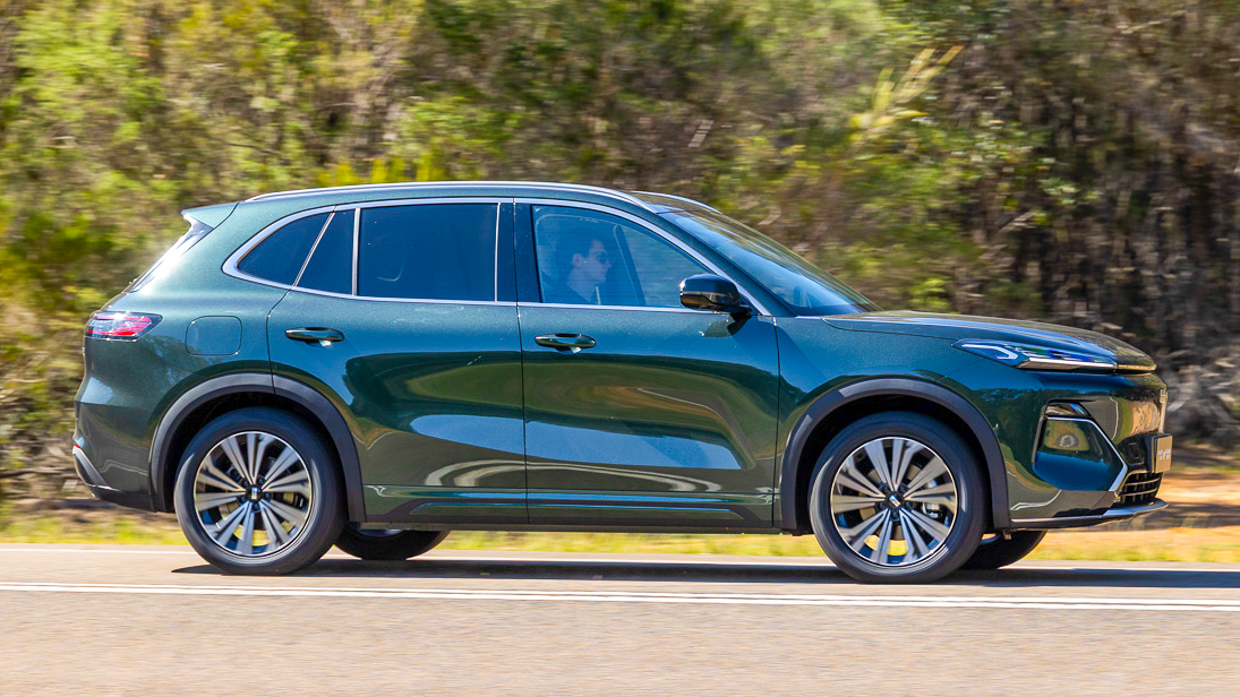
The last positive we’ll cover is the Starray EM-i’s bland, yet inoffensive character. This may sound like a back-handed compliment, but for a car you get into and head from A to B in, the Starray EM-i nails it. Quiet, comfy, with light controls you forget about the moment you hop out of the conventionally-handled doors.
Unfortunately, the Starray’s lack of unpleasant character means it also largely lacks pleasant driving aspects. The steering is lifeless, the handling is uninspiring and the suspension is too soft, promoting sea-sickness on long motorway stretches.
A few big-budget hires of Aussie ride and handling engineers (just like GWM with Rob Trubiani) ought to help Geely’s future products ride and steer with a flavour more appealing to Aussie buyers.
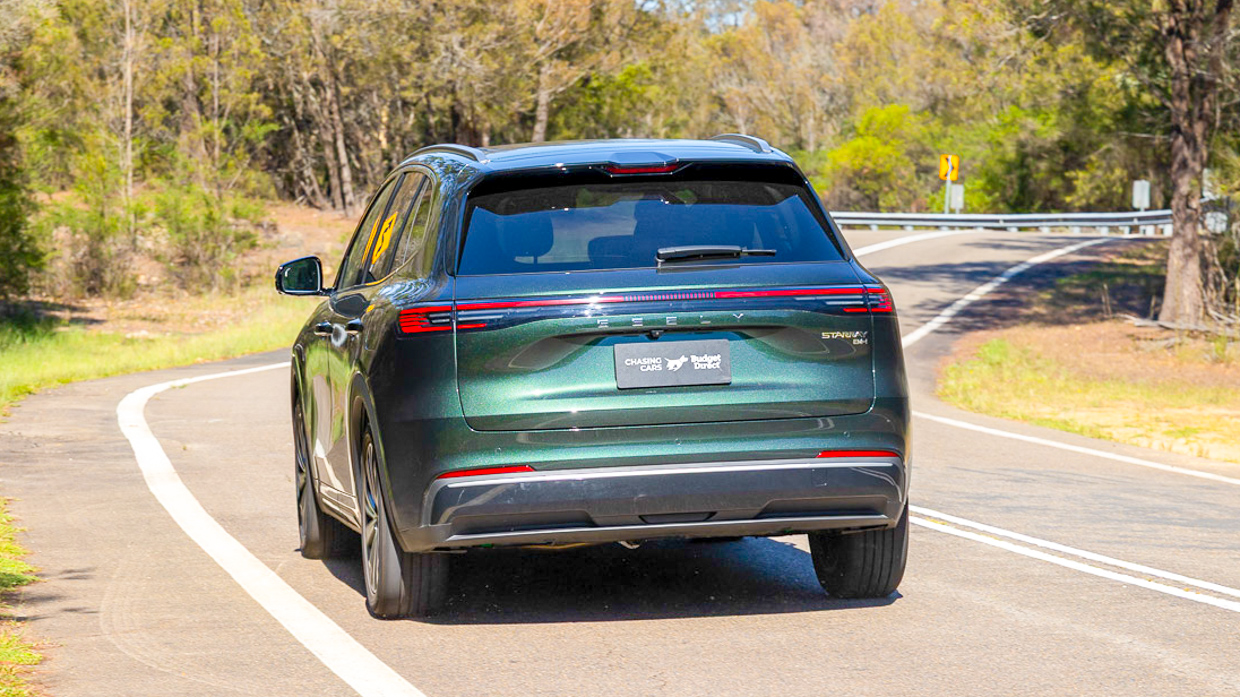
Speaking of, we found the cabin to be hot in summer — and this is in the top-spec Inspire with white interior with ventilated seats. The air-con isn’t as powerful as a Toyota, Honda or Nissan and you notice. As such, the extra spend over the base Complete (no seat ventilation!) is money well spent.
While the in-cabin technology experience was pretty serviceable, the Geely companion app for iPhone needs work. It kept logging me out and didn’t provide confidence the car had executed your instruction — turning on ventilation or locking, for example.
The Geely is best suited to urban environments at this point. On top of the soft ride, the front seats lack lumbar and under-thigh support. My left knee also sat against the hard plastic centre console, causing a sore spot after a few hours at the wheel.
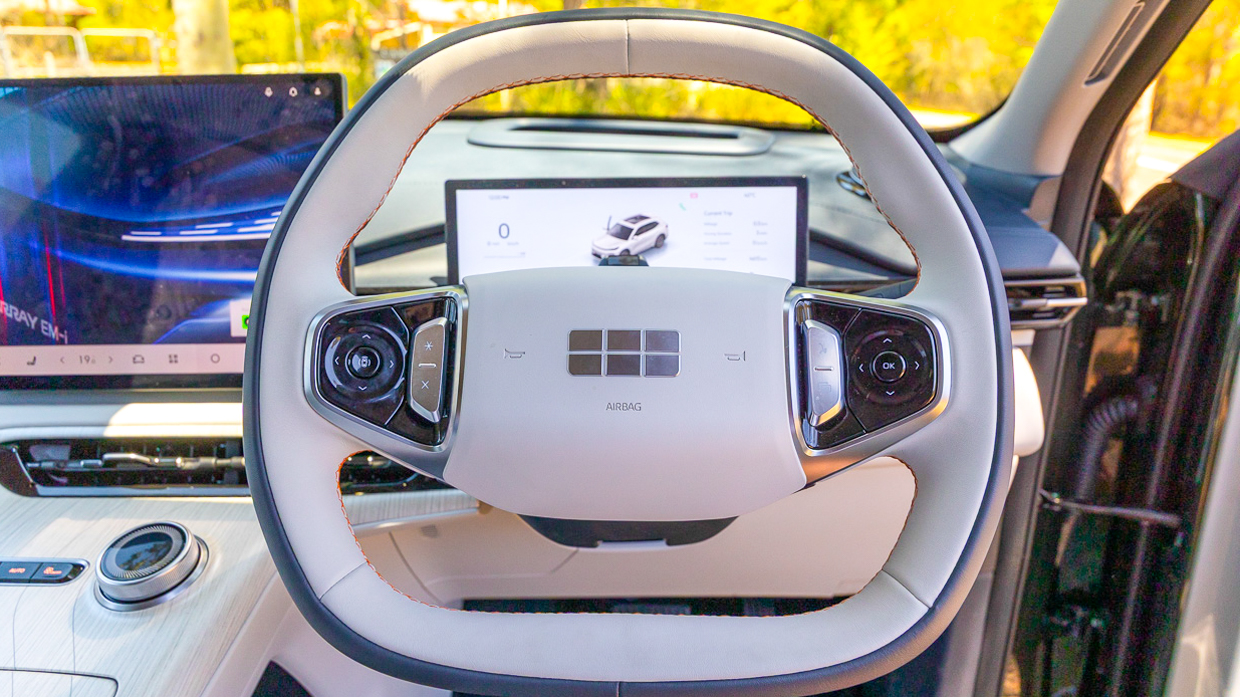
And then there’s the adaptive cruise control/lane-trace assist systems which need a deep revision. The following distances are inconsistent, braking force too firm — like the car’s been startled by someone merging — and the Starray EM-i decelerates too rapidly, and too much, for corners.
The lane-trace assist is also tiring, bouncing the car between lane markings on the motorway.
Over five months, we averaged 5.1L/100km cumulatively, which may not sound great but included plenty of high-speed motorway and rural running. Fuelling costs were $420 over 5000km, which we think is alright.
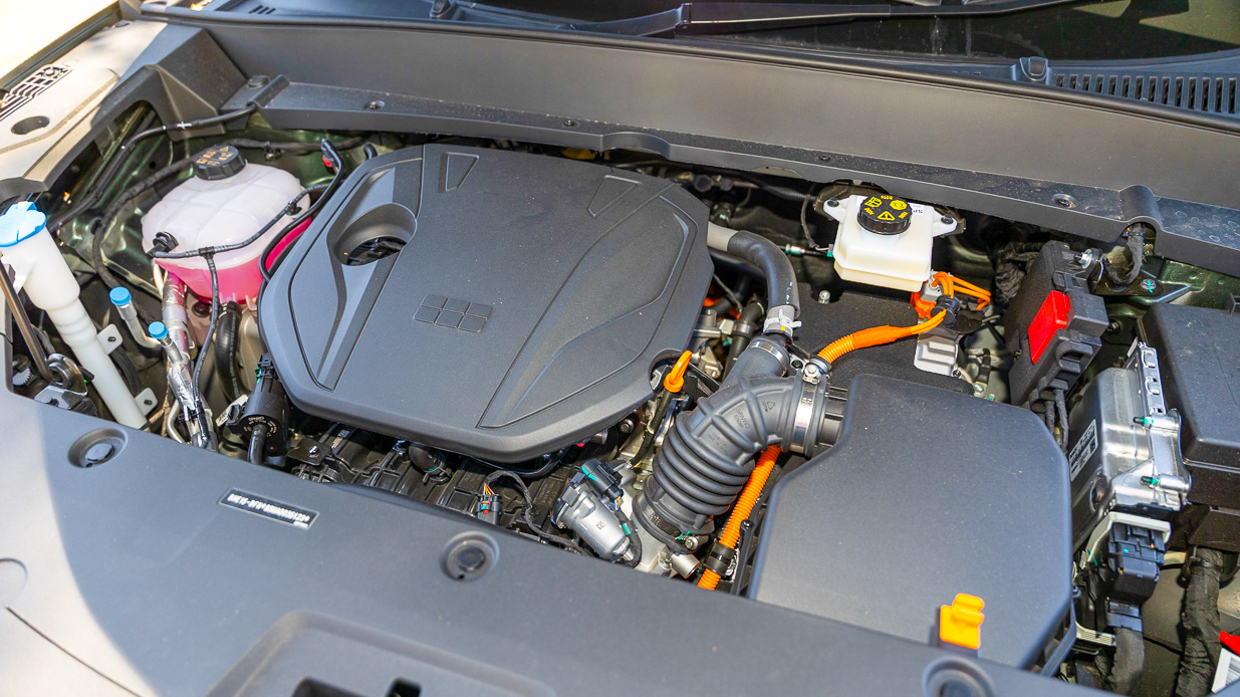
Our best electric-only range test was a 95km run, averaging 65km/h and 14.2kWh/100km — close to battery EV efficiency — when the Starray used 100-25 percent of its battery. Most of the time, though, we would see about 80-90km when driving in electric-only mode.
We didn’t notice any rattles and we didn’t encounter mechanical issues. The only glitch was a frozen touchscreen meaning the 360-camera wouldn’t engage in reverse. This issue went away after the last software update, however.
A quick test-drive of the Geely Starray EM-i might have you believing it’s a nondescript electrified transportation blob. But do you know what? It doesn’t do much wrong, and Geely has shown an appetite for improvement.
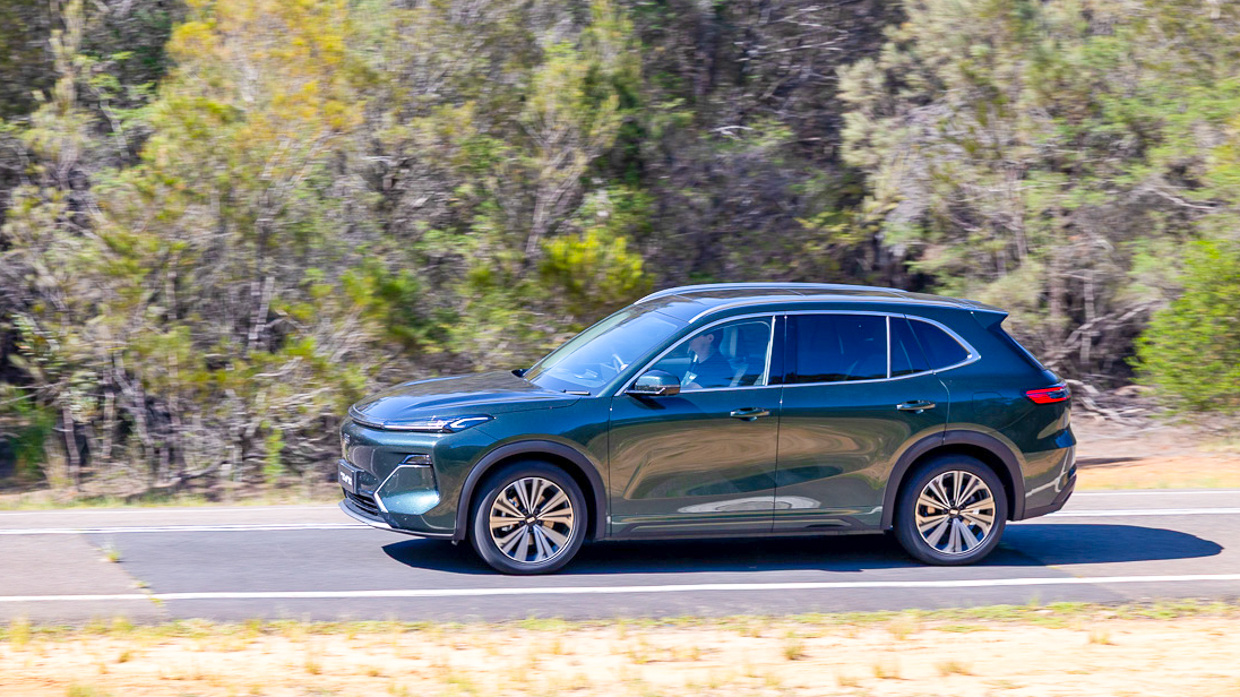
The new model’s a little dearer but comes with enough extra goodies — including a charging cable — that make it feel worthwhile.
If BYD is China’s Toyota, Geely seems like China’s Volkswagen. In that sense, the Starray EM-i offers rounder edges and greater polish than the BYD Sealion 5 and 6, if not necessarily bringing the eye-catching headline figures.
It’s worth a look, for sure, and suggests that with a bit more time, Geely could be delivering some seriously impressive products at the right price.
After last month’s long distances, it was back to normalcy: commuting and running suburban errands. This is where the Starray EM-i shines.
The tank was already brimmed and I decided not to put any money into petrol stations, given fuel pricing volatility at the time and the fact the Starray is always most pleasant when you can’t hear that gravelly combustion engine. EV-mode only it is.
This was annoying, initially, as the Starray defaults to ‘Hybrid’ drive mode, rather than ‘Pure’, with regenerative braking set to ‘Auto’ when it starts up. Halfway through the month an over-the-air software update solved this with a customisable drive setting shortcut. But more on that later.
The experiment involved an EV-mode only run to test real-world electric range and the result was impressive. The WLTP rating is 84 kilometres but with a full battery, our Starray managed to travel 95.2km from a 100-percent charge until the petrol engine kicked in at 25 percent.
That represents an energy use of 14.2kWh/100km, which is better than some electric cars we’ve tested, including the Kia EV5. This figure was obtained between 2:30-4:00pm on a roundtrip starting in Alexandria, Sydney, then travelling on the M2, M7, M5 and M8 motorways at an average speed of 65km/h.
Leaving the Starray in Hybrid mode to do its thing with a full battery, we saw a 2.4L/100km fuel efficiency on a similar 100km loop.
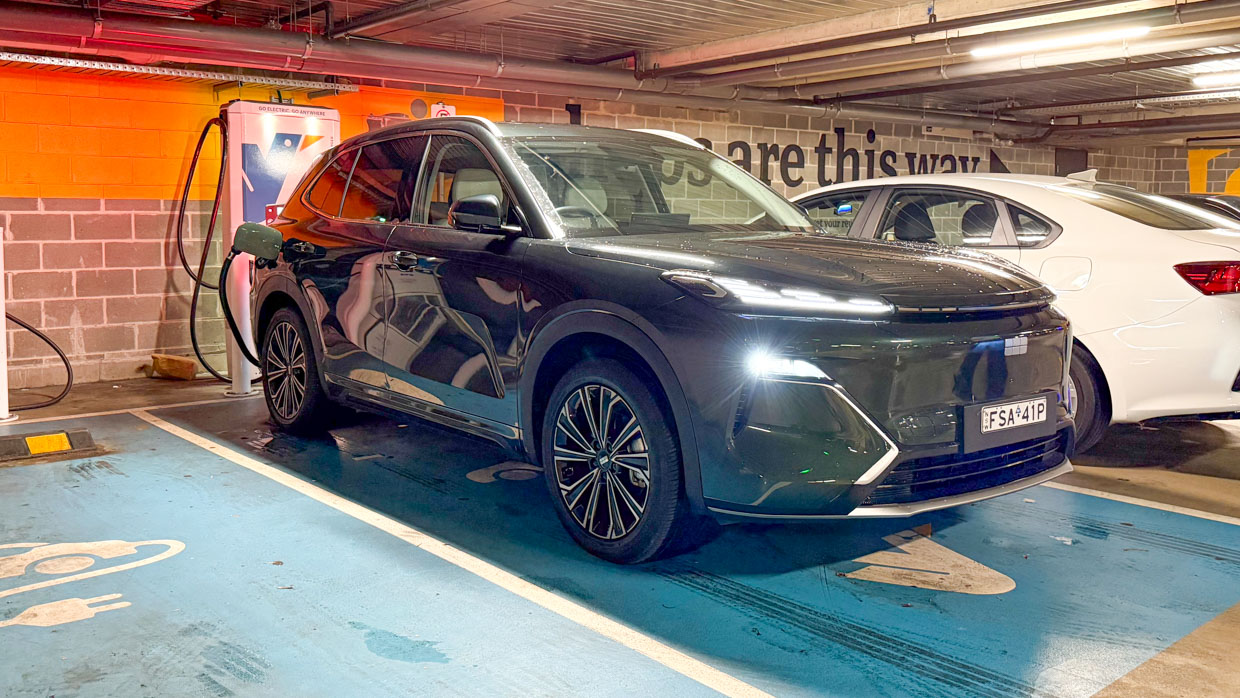
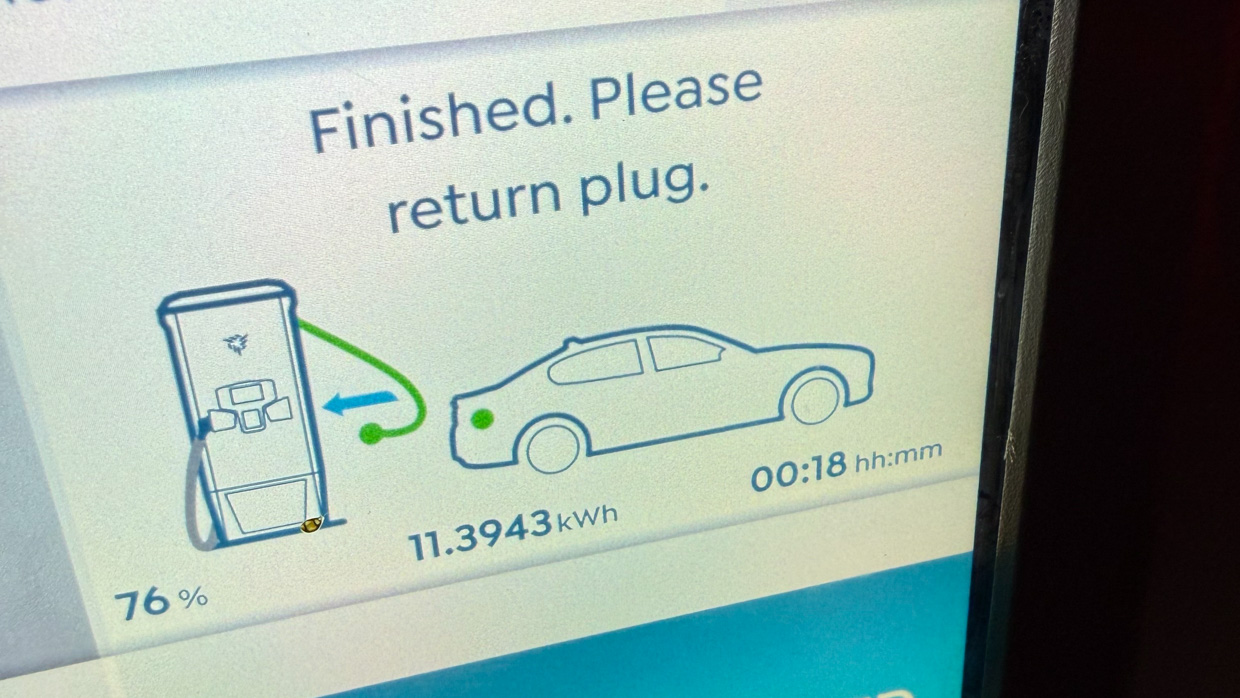
Keeping charge in the battery is easier than some early plug-in hybrids, too, as the Starray accommodates DC fast-charging, averaging 30kW from 20-80 percent, says Geely. Our best result was 11.4kWh in 18 minutes — enough for about 80km all-electric driving at our efficiency figure.
There were a few more frustrations. Wetter weather highlighted the Starray’s poor traction.
The front-wheel drive SUV has brand-name Goodyear tyres yet has an alarming amount of fore-aft pitch. Under moderate acceleration this lifts the nose and makes wheelspin more likely. You don’t have to try hard to disrupt the peace with a screech.
We also noticed the reverse and 360-degree cameras — which have superb resolution, mind — didn’t always engage when reversing. This seemed to be improved after installing the over-air software update.
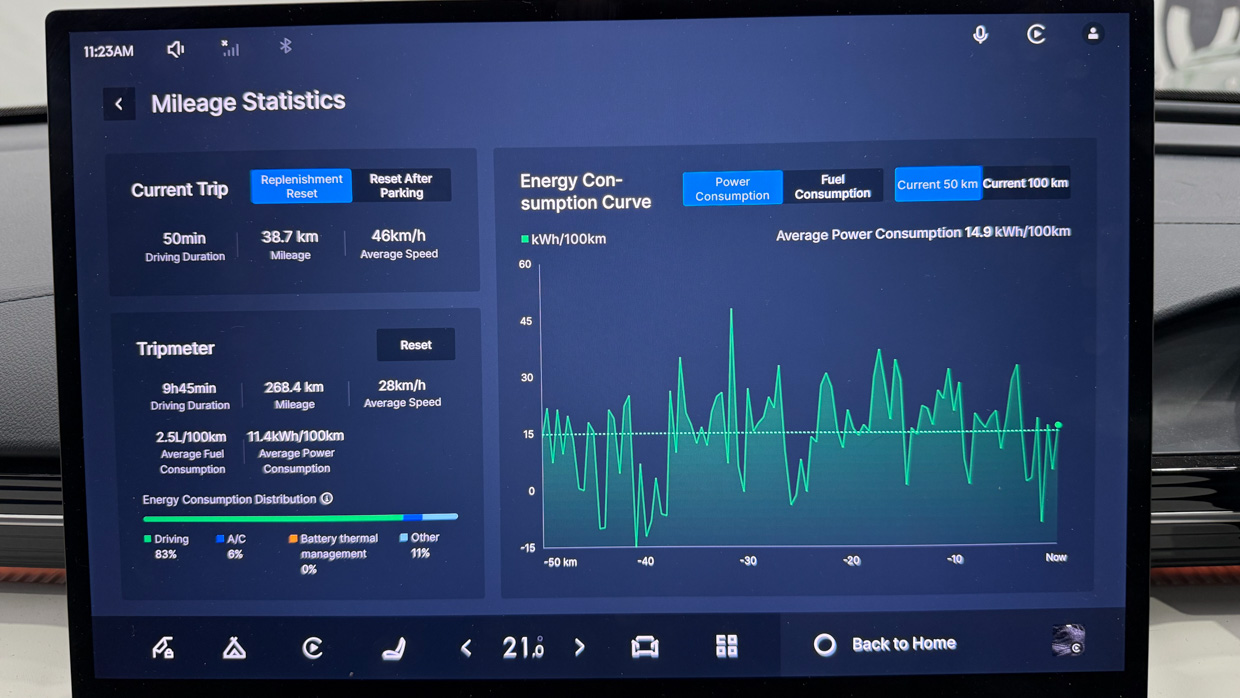
At month’s end, the Starray EM-i had covered 911km without visiting a petrol station. Sometimes, you just don’t want to visit the forecourt bowser and a plug-in hybrid gives this flexibility. The Starray EM-i was much more comfortable with this month’s tasks, that’s for sure.
With summer holidays and a record-breaking heatwave, the Starray EM-i was thrown a set of typically Aussie challenges this month, schlepping south from Sydney to the coast, up The Blue Mountains and to our fine capital.
Consider this a hot weather highway guide to the Starray EM-i, which continues to provide adequate transportation, though not without some frustrating faults.
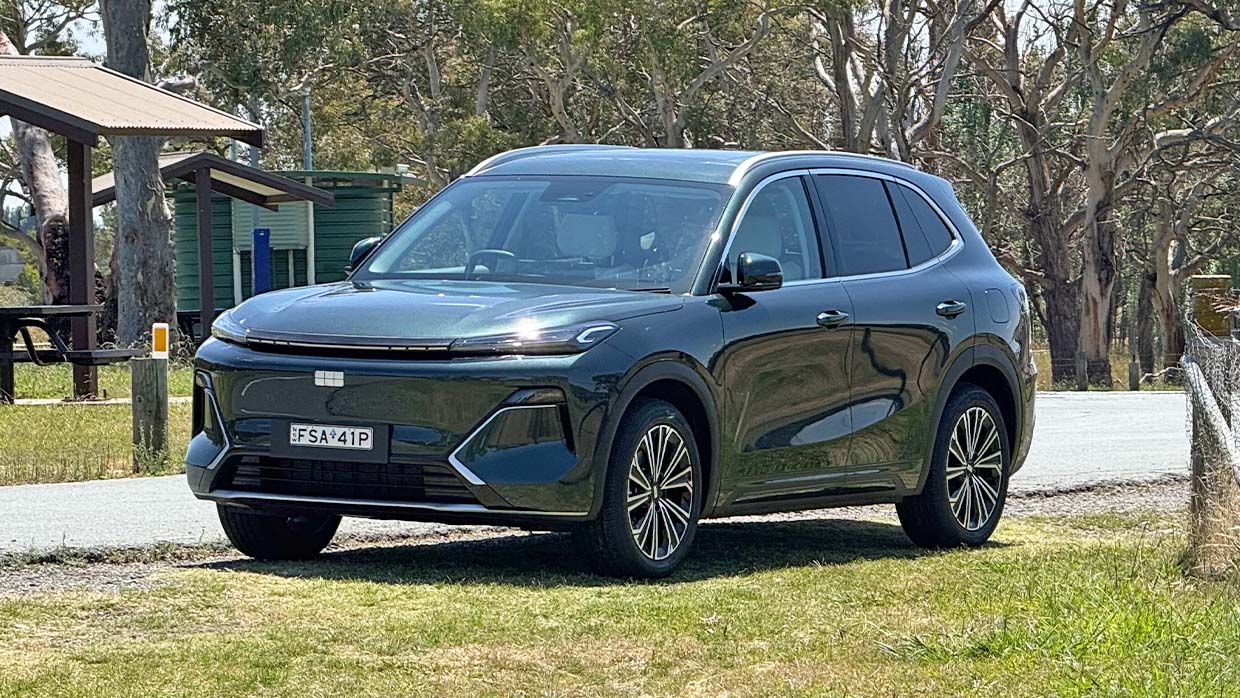
The first month was spent mostly in blissful quietude thanks to the Starray EM-i’s largely EV-only operation and a battery that was regularly topped up. And so our first trip down Mt Ousley Road’s fierce grades at 100km/h was… enlightening.
Essentially, long-distance touring is not the Geely’s star quality.
Like many PHEVs from China, there’s a power source performance imbalance. In this case, relying on a piddly 73kW/125Nm petrol four-cylinder to keep charge in the battery which is supplying a 160kW/262Nm front electric motor. That’s quite the power delta!
The petrol motor can directly drive the front wheels, but only under heavy load at high speeds.
And so, on said long grades, the noise grating as the petrol motor strains like a geriatric weightlifter to drag the Starray EM-i uphill. In these conditions, we also noticed the battery percentage would briefly drop below 20 percent. Road noise on coarse-chip motorway surfaces is quite loud, too.
Windy conditions in January and February revealed another Starray EM-i highway issue: crosswinds. With light steering that’s imprecise off centre and over-soft suspension this Geely requires managing in gusts. That the lane-keep assist continues to grab at the wheel only makes the situation more challenging.
There’s another problem with the Starray EM-i in summer, and it’s the hot cabin. Without tint on the front passenger windows and with plenty of horizontal surfaces, the Starray EM-i is glary inside. When it gets particularly hot inside we’ve noticed an acrid, bug spray-like smell in our Starray EM-i.
Aftermarket tint and window shades would help cut cabin heat. The Geely’s smartphone companion application also allows one to send climate control commands remotely but it seems to be hit-and-miss whether the instruction takes in the car.
Thankfully, the white vinyl-appointed seats are ventilated, because if they weren’t, I would’ve been sweating even more — for this reason alone, the Inspire is worth the upcharge over the base Complete.
If only they were more comfortable. The Starray EM-i’s seats desperately lack lumbar support and under-thigh tilt, so I’m constantly shifting and wriggling on long drives.
Driver assistance systems continue to be a bugbear. This month, it’s the inconsistent follow distance of the adaptive cruise control and the unpredictable inputs it makes — heavy braking when a car pulls out a long way in the distance, but sometimes the opposite.
Also, the cruise automatically slows down for curves. This isn’t a negative on its own but the Starray’s system is too sensitive, overslowing even on the motorway — a trait that’s incompatible with Australian driving standards. It had me wishing for simple ‘dumb’ cruise control more than once.
There’s a silver lining, though. Geely recently announced an over-the-air software update for the EX5 electric SUV, which will simplify the way you disable driver assistance features you might not want.
We understand this will make its way to our Starray EM-i before it goes back — perhaps Geely can roll-out some updates to the car’s adaptive cruise control logic, too.
Another win for the Starray EM-i this month was its long-drive efficiency. With barely any battery charging going on and lots of time spent at 100-110km/h in hot weather, we’re happy to see an average of 5.7L/100km at the bowser — that’s roughly what we’ve seen from a previous-gen Toyota RAV4 hybrid in similar conditions.
The Geely Starray EM-i is yet another Toyota RAV4 competitor. It’s a family-size SUV with five seats powered by a hybrid system — though this one is a plug-in hybrid, leaning more on electrification.
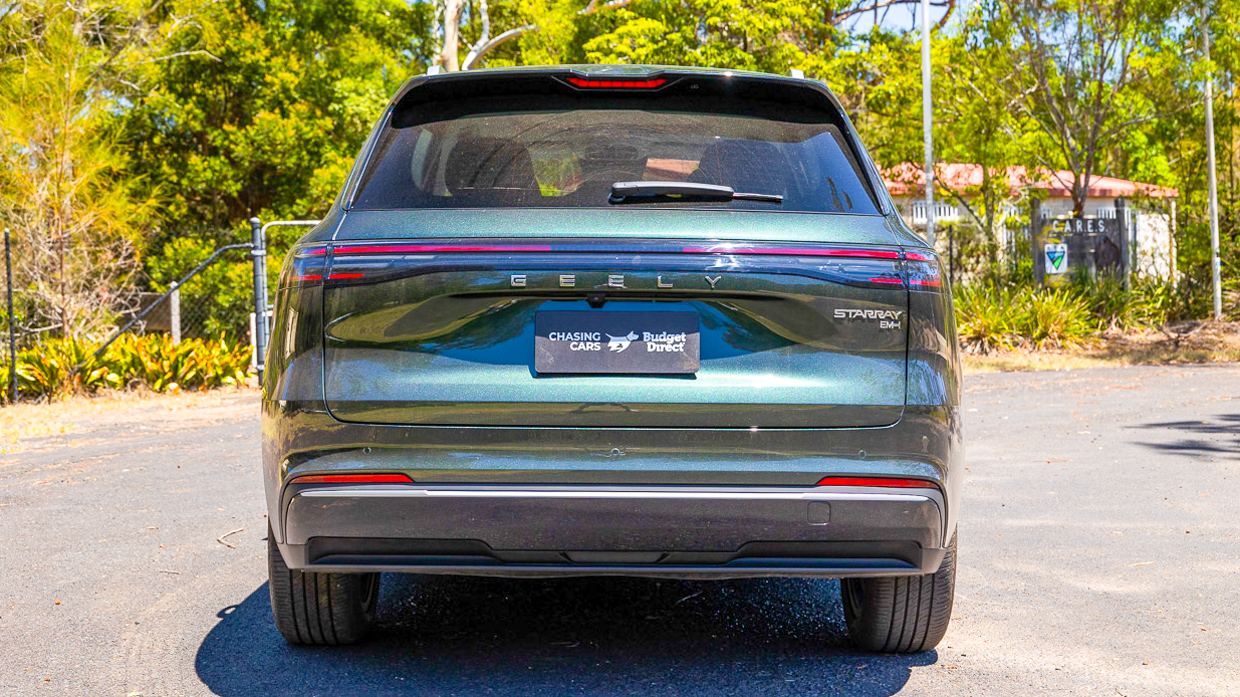
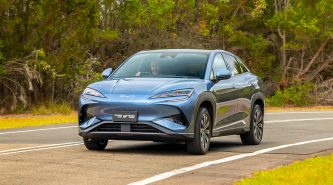
Therefore, the Starray EM-i is a direct rival for the Chery Tiggo 7 SHS, Mitsubishi Outlander PHEV and BYD’s incoming ultra-cheap Sealion 5, which is following up on that Chinese brand’s Sealion 6 success.
European and Japanese brands are entering with PHEVs, with Volkswagen, Toyota and more set to fight in this segment but none can compete with China’s circa-$40K price tags.
Compared to the regular crop the Starray EM-i is on the large side, measuring 4740mm long, 1905mm wide, 1685mm tall and rolling on a 2755mm wheelbase.
For motivation the Starray EM-i’s numbers are modest, with 160kW/262Nm from its single electric motor supported by a 73kW/125Nm 1.5-litre inline-four petrol engine. The ICE runs mostly as a generator when the battery’s charge is low but can also drive the wheels directly at certain speeds.
The Starray promises 83km of electric-only range (NEDC) and keeps about 20 percent charge in its battery at all times.
Charging the battery not using the engine can be done using a wallbox at up to 6.6kW AC (from 20-100 percent in less than three hours) or using a DC fast-charger at 30kW, for about 20 minute to go from 30-80 state of charge.
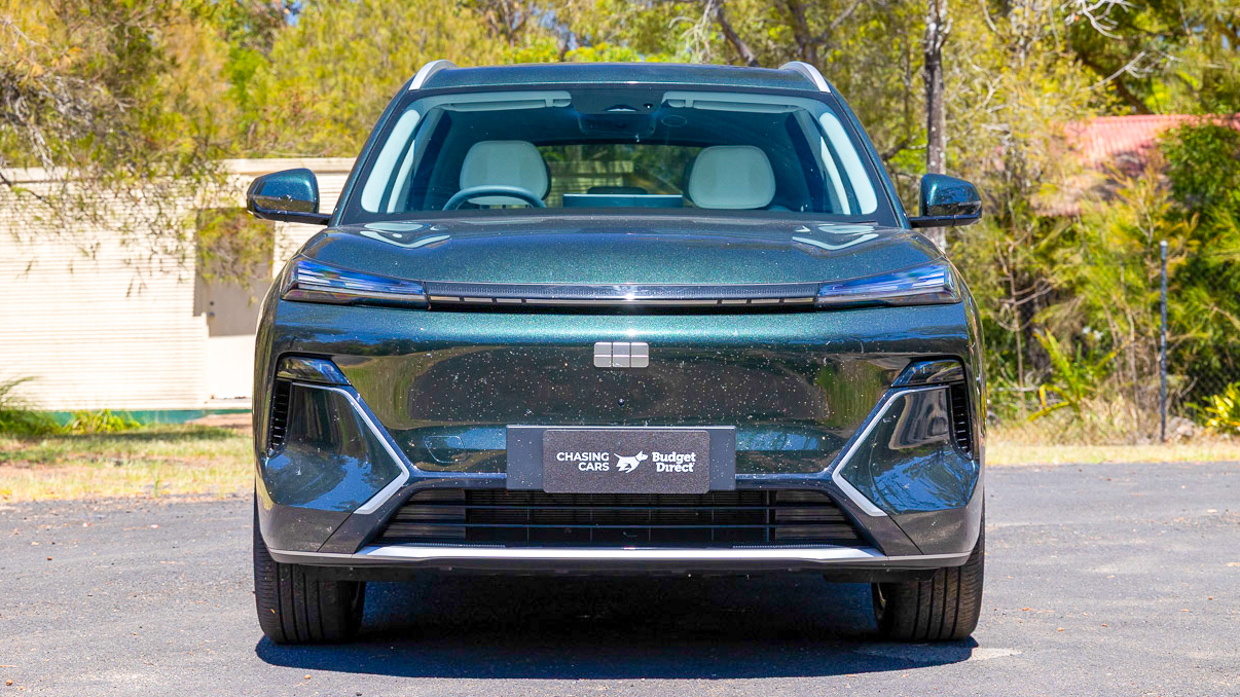
Impressive is the 2.4L/100km rated fuel consumption, though this includes battery charge in the figure. The truth from a full tank should vary widely, and that’s one of the things we aim to find out.
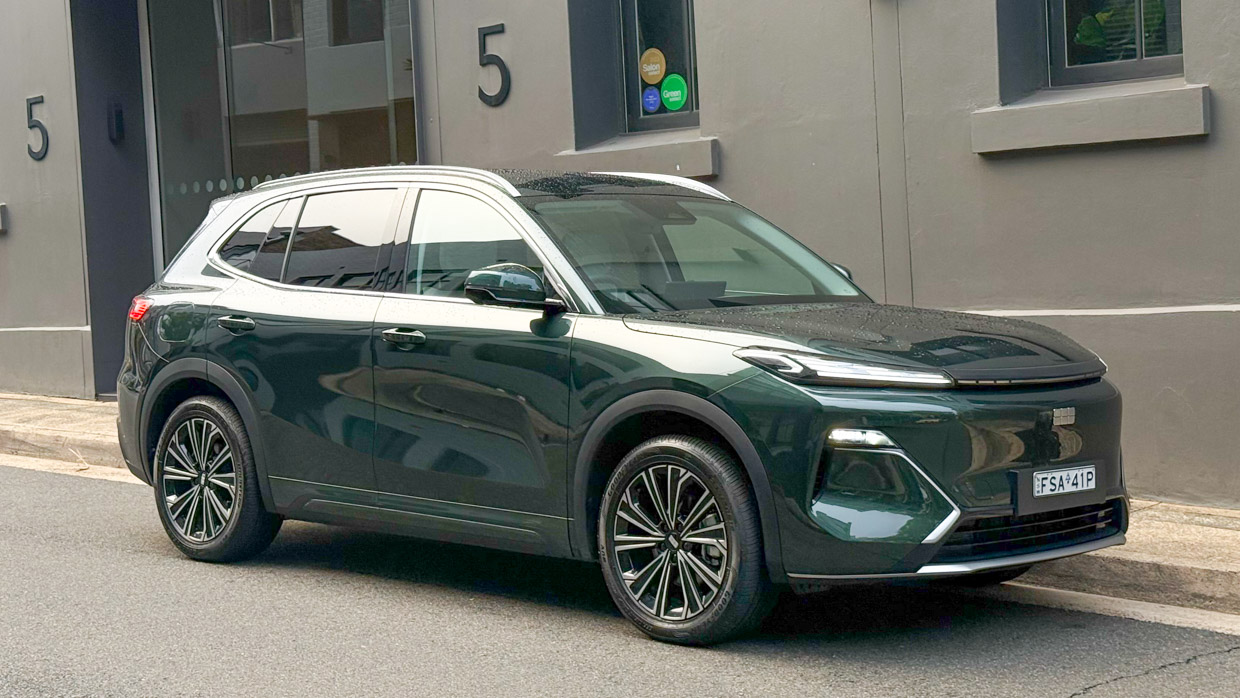
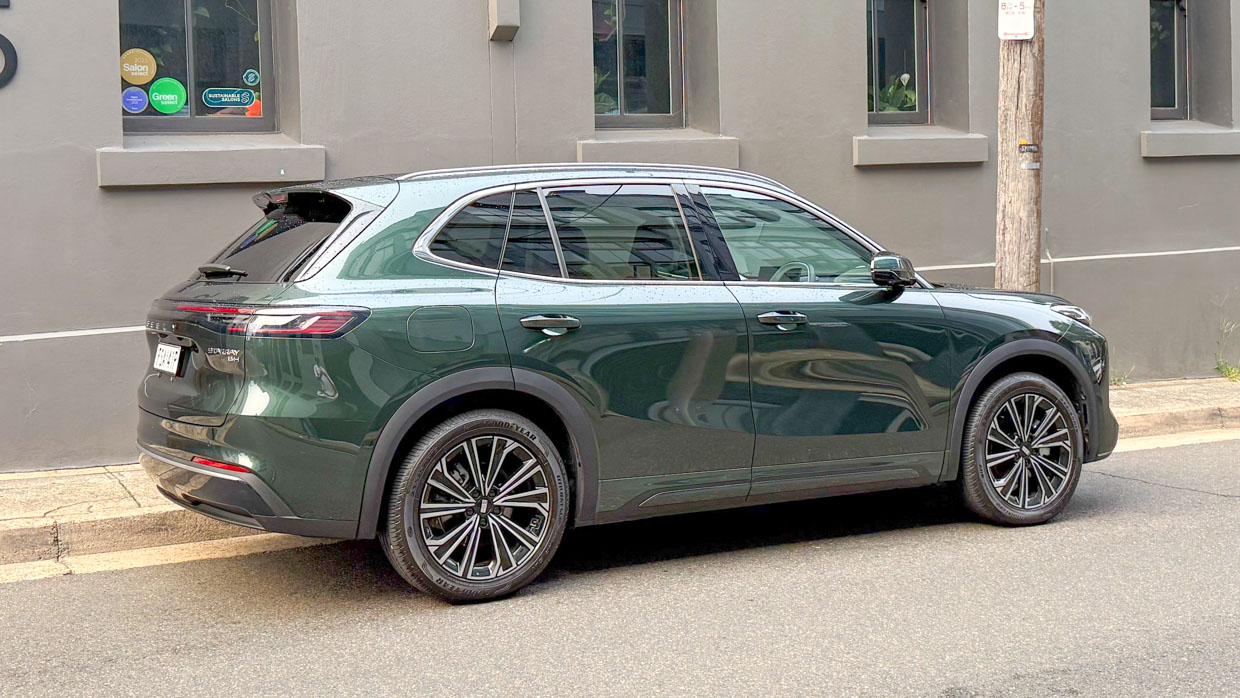
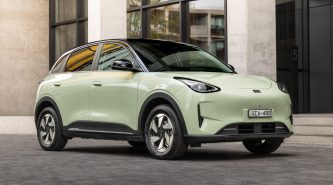
The Starray EM-i starts at $37,490, before on-road costs, and our Inspire wearing Jungle Green paint ($600, only Alpine White is included) is $43,988 drive-away in NSW.
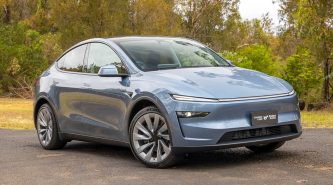
That’s cheap. For context, a base model RAV4 GX Hybrid is now $45,990, before on-road costs, with a Tesla Model Y — Australia’s most popular electric car — is $55,900.
That said, BYD’s new Sealion 5 undercuts the Starray with the Premium trim costing $37,990, before on-road costs. We predict these price wars will wage long into this decade, so don’t feel too bad you didn’t get the cheapest hybrid SUV.
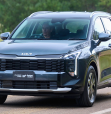
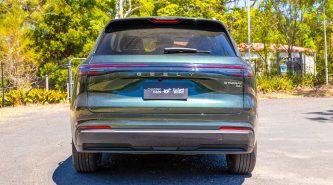
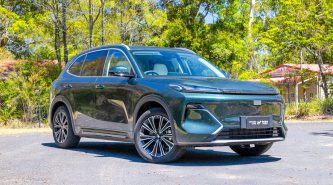
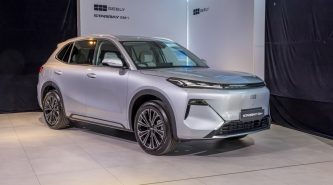
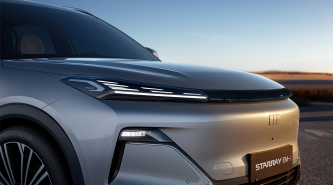
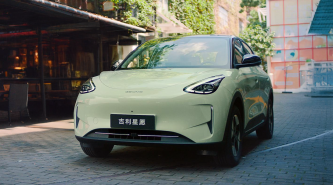
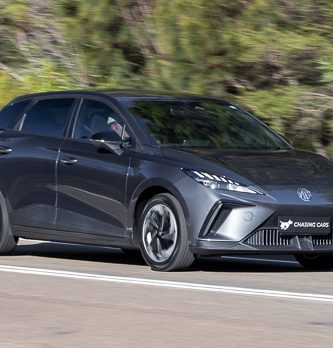
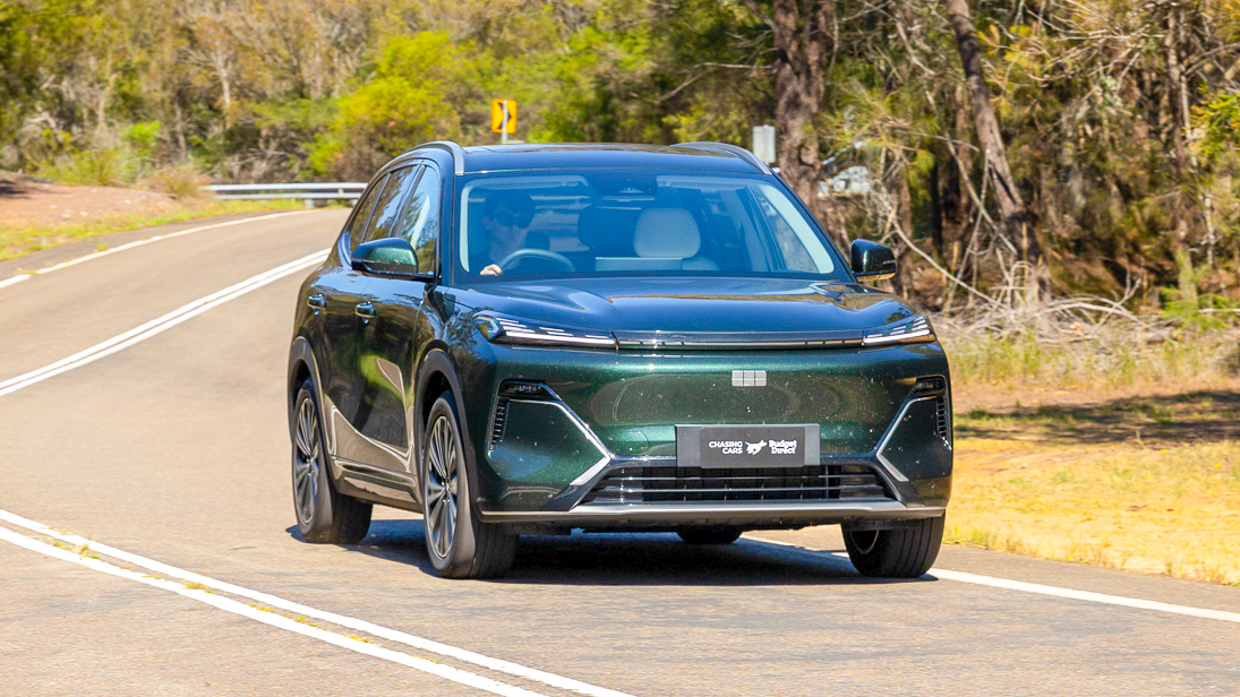
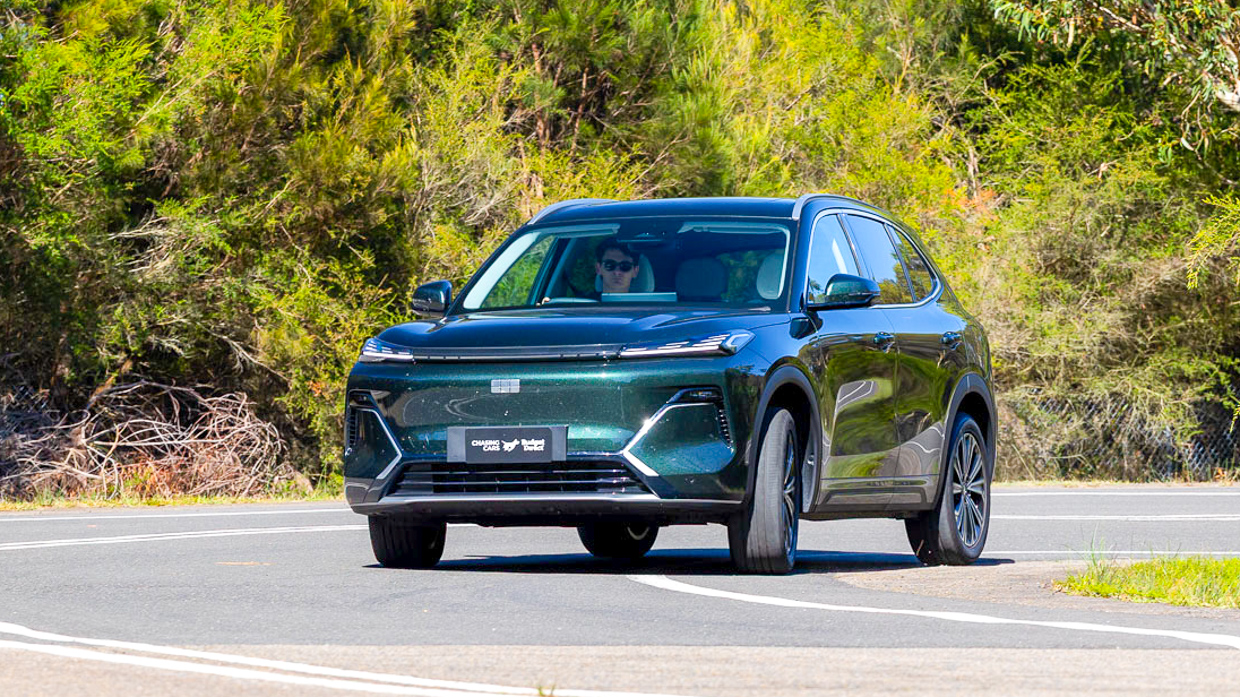
The Starray in our possession is finished in quite trendy green over a white interior and looks handsome. Slim LED lights were democratised fast and have become ubiquitous, lending even affordable machines a hint of Porsche (Cayenne, in the Starray’s case) chic.
Over and above the Complete, the Inspire gets a large head-up display, 16-speaker ‘Flyme’ sound system, ventilation for the front seats, and a panoramic sunroof. This feels like great value, so basically skip the Complete and go for this one.
Geely Starray EM-i Inspire, with the following features as highlights.
Geely has come in swinging with aftersales promises, backing its Starray EM-i with a seven-year/unlimited kilometre new-car warranty and an eight-year/unlimited kilometre guarantee on the high-voltage electrics.
For everyday interaction, the Starray EM-i has a companion app for smartphones allowing remote control of climate, lock/unlock, location services and a few other goodies, but it is not a digital key.
Maintenance is due every 12 months/20,000km and the Starray EM-i’s capped price service plan costs $1487, with the fourth year the most costly at $671.
We’re keeping the Starray EM-i for three months, which will take in the hot Aussie summer. Should be a good test for the vinyl seats and bright white interior. In this time, we’ll be covering over 5000km to get our heads around the Starray EM-i.
First and foremost, we’re living with this car everyday — just like you would as an owner. This means suburban commutes, carrying people, shopping, dogs, and general stuff.
We’ll be keeping a close eye on key metrics, including energy use and deterioration over time.
As the Starray EM-i is a plug-in hybrid, we’re also covering off all kinds of charge scenarios — fully charged urban running, a mix for suburban and petrol-heavy highway driving. The point is to get an idea of how the Starray responds to different use cases, which should help you make your mind up.
As a mode of transport the Geely has, so-far, been fine. It is largely inoffensive, quiet and smooth with a marshmallow soft ride.
We have been put at ease about any dramatic power loss on a discharged battery as the Starray EM-i keeps about a fifth in reserve, even when the dash reads ‘0km’ EV range.
To put this theory to the test, we ran acceleration testing with the battery at about half full, then empty. Ambient temp was a toasty 35 degrees but the Starray EM-i put down consistent 0-100km/h runs of 8.5 seconds.
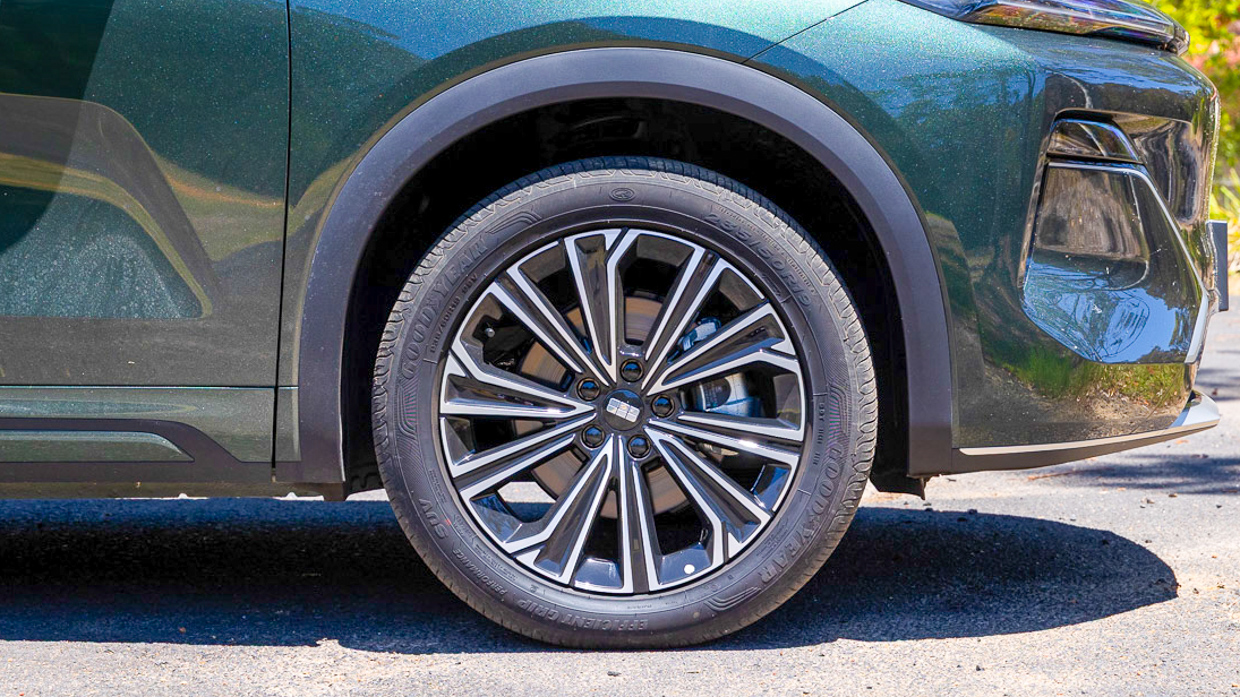
Braking performance is adequate thanks to name-brand Goodyear tyres on the 19-inch alloys, with the Geely stopping from 100km/h in 37.4 metres.
Inside, it’s spacious and quite practical (save for tiny cup holders) with a sense of solidity in the build. The squishy cabin materials are a cut above base model Mazdas and Hyundais, too, if not reaching into the luxury segment.
The big complaint so far is a combination of poorly calibrated active safety systems and an overloaded touchscreen.
The Starray EM-i’s adaptive cruise slows dramatically when entering tunnels, the lane-keep sends through loads of false positives, the speed sign detection is often inaccurate, and the driver attention monitoring is overactive.
To turn the annoying systems off, it’s 15 taps total on the touchscreen to get all that done and navigate back to wireless Apple CarPlay.
So far fuel economy has been good, at 5.2L/100km on both the trip computer and calculated at the bowser. With a mix of hybrid, electric and petrol running, we don’t have a concrete electron use figure yet.
A decent, but not perfect start. The Starray is worthy of a deeper look, that’s for sure.
Key specs (as tested)
About Chasing cars
Chasing Cars reviews are 100% independent.
Because we are powered by Budget Direct Insurance, we don’t receive advertising or sales revenue from car manufacturers.
We’re truly independent – giving you Australia’s best car reviews.
The estimate provided does not take into account your personal circumstances but is intended to give a general indication of the cost of insurance, in order to obtain a complete quote, please visit www.budgetdirect.com.au. Estimate includes 15%^ online discount.
^Conditions Apply
Budget Direct Insurance arranged by Auto & General Services Pty Ltd ACN 003 617 909(AGS) AFSL 241 411, for and on behalf of the insurer, Auto & General Insurance Company Limited(ABN 42 111 586 353, AFSL 285 571).Because we don’t know your financial needs, we can’t advise you if this insurance will suit you. You should consider your needs and the Product Disclosure Statement before making a decision to buy insurance. Terms and conditions apply.
Indicative quote based on assumptions including postcode , 40 year old male with no offences, licence suspensions or claims in the last 5 years, a NCD Rating 1 and no younger drivers listed. White car, driven up to 10,000kms a year, unfinanced, with no modifications, factory options and/or non-standard accessories, private use only and garaged at night.
^Online Discounts Terms & Conditions
1. Discounts apply to the premium paid for a new Budget Direct Gold Comprehensive Car Insurance, Third Party Property Only or Third Party Property, Fire & Theft Insurance policy initiated online on or after 29 March 2017. Discounts do not apply to optional Roadside Assistance.
2. Discounts do not apply to any renewal offer of insurance.
3. Discounts only apply to the insurance portion of the premium. Discounts are applied before government charges, taxes, levies and fees, including instalment processing fees (as applicable). The full extent of discounts may therefore be impacted.
4. We reserve the right to change the offer without notice.