Powered by

-
Car Reviews
Latest reviews
-
Car News
Latest news
-
Car Comparisons
Latest comparisons
- Chasing Deals
Latest reviews
Latest news
Latest comparisons
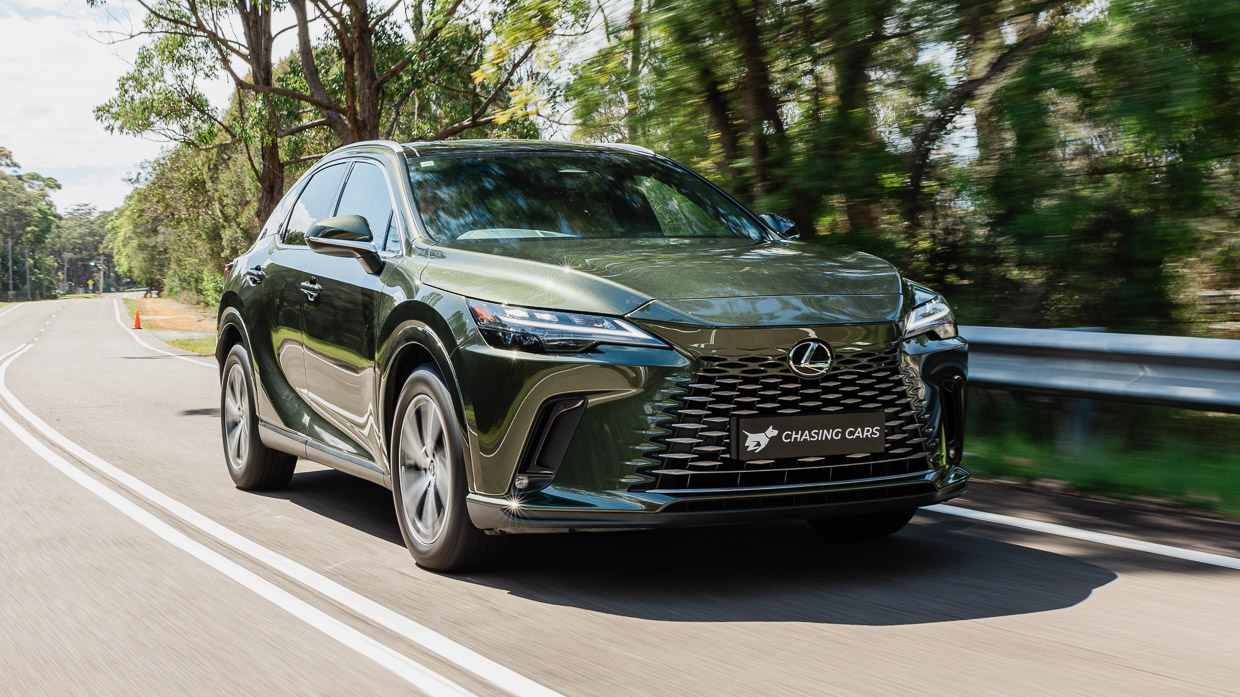
With plug-in hybrid power and F Sport trim, can the priciest version of the most popular premium midsize SUV impress across six months and 10,000 kilometres?
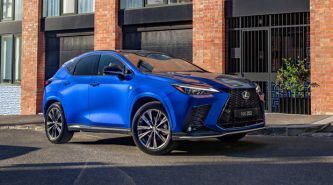
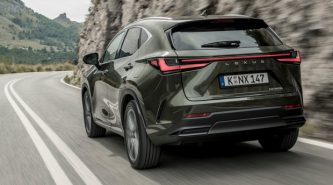
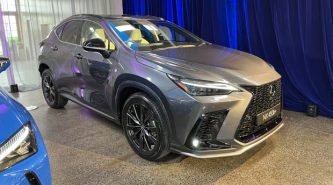
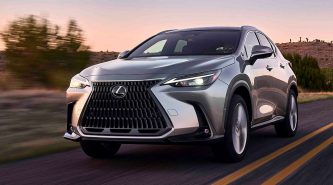
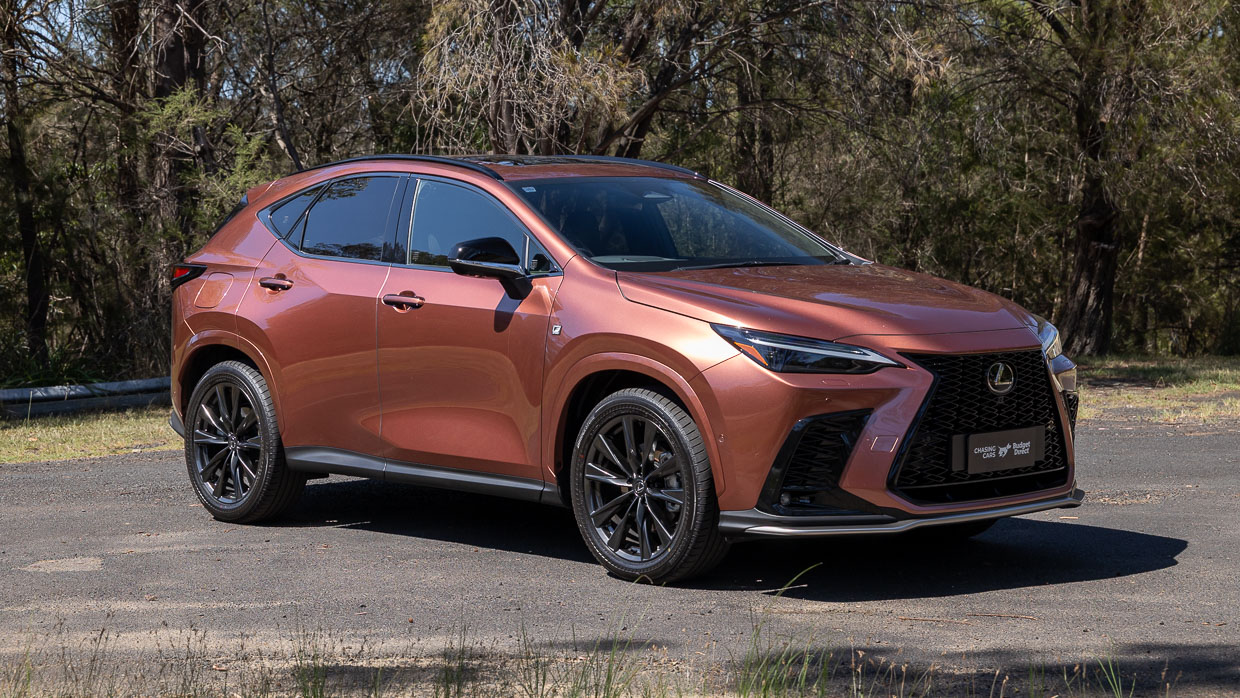
I bid farewell to Chief, my circa-$92K Lexus RX 350h Luxury large hybrid SUV long-term loaner, around two years ago. And here we are, at the start of 2026, saying hello to the newest steed in the Chasing Cars long-term garage, the NX 450h+ F Sport midsize family hauler.
The first double-take was price. Here was a smaller, older-generation (from 2022 onward) SUV – a dead ringer for the larger RX in many respects, inside and out – and it’s priced from $96,000. Yep, four grand more outright, for a smaller Lexus SUV model (if now, in 2026, $97,200 before on-roads and goodies).
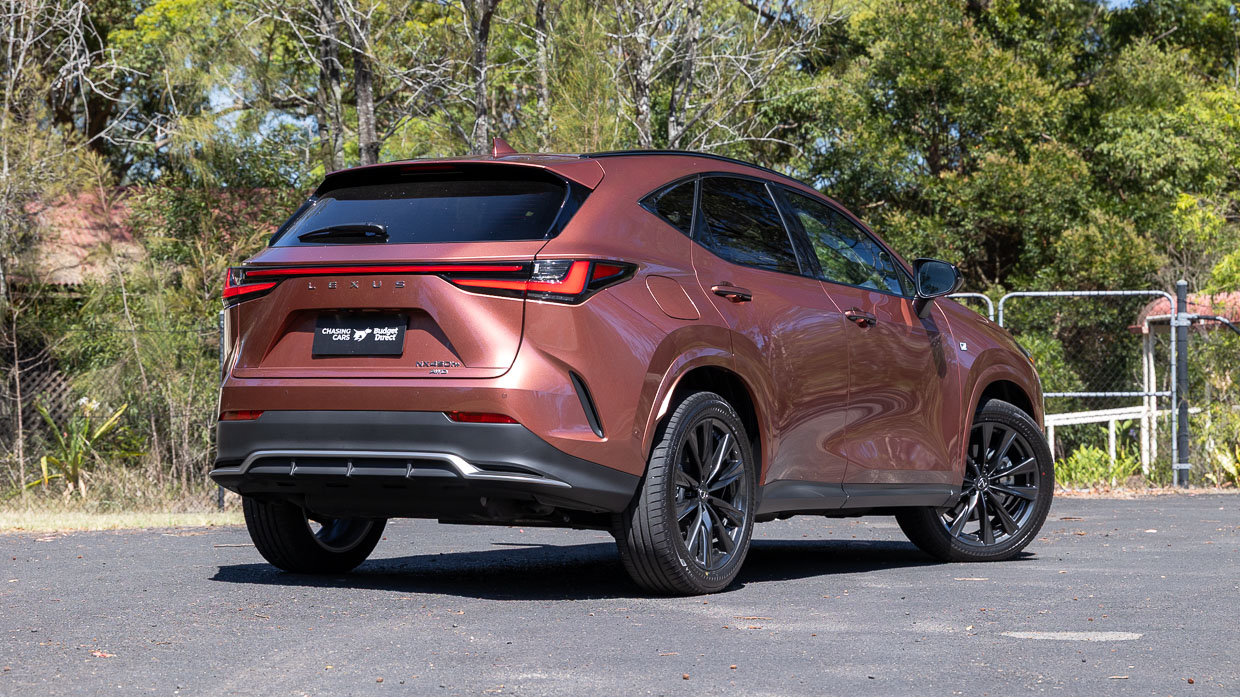
The question of value for money marks the kick-off of six months and a target of 10,000 kilometres of custodianship. And I suspect it will remain ever-present until the day, sometime around mid-2026, a final verdict is handed down and its key is handed back to Lexus Australia, as its various virtues are stacked up and measured against what’s around $107K on road.
That’s big coin, even among the Audi Q5s, BMW X3s, Mercedes-Benz GLCs and some 31 other nameplates consider premium ($60K-plus) midsize SUVs on the local market that the NX wishes to swoon buyers away from.
How’d that go for Lexus in 2025? Handsomely, indeed. The NX (6024 units) was its segment’s biggest seller last year, comfortably supplanting Mazda CX-60 (5410) and BMW X3 (4909) into second and third place respectively. The NX is certainly a popular rig amongst Aussies.
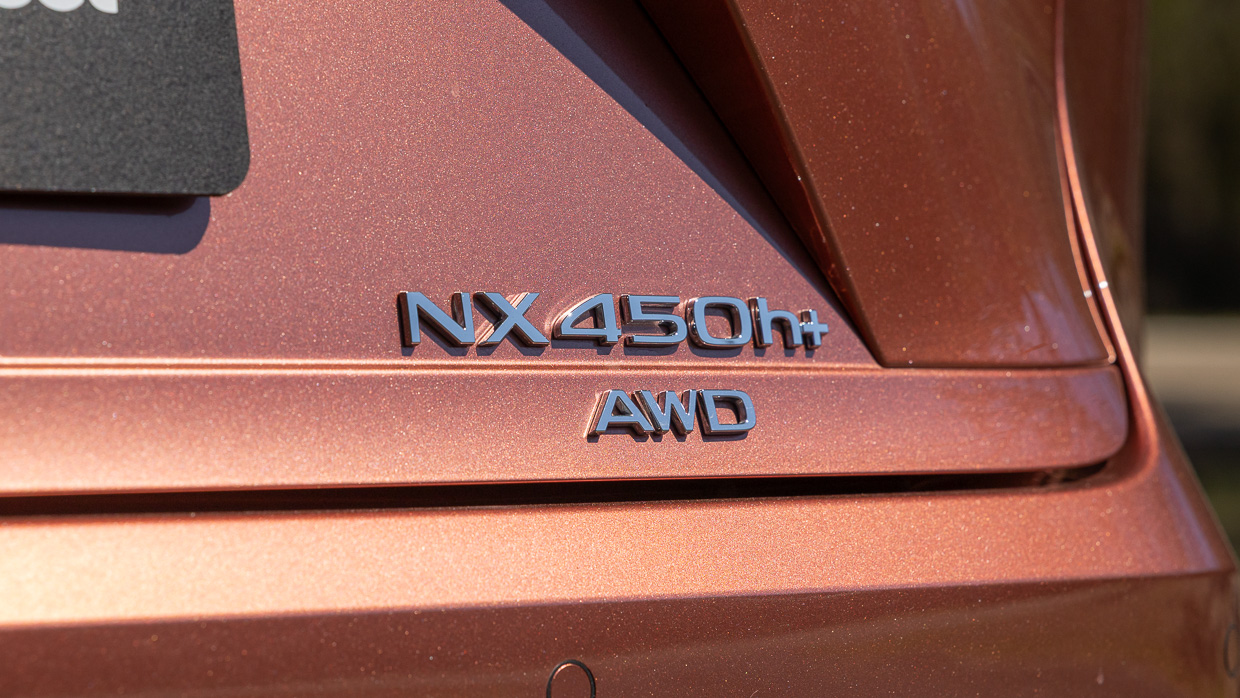
Regardless, most gravitate to less, ahem, fiscally adventurous variants than our new 450h+ F Sport, a plug-in hybrid version sat right at the 16-variant-strong lineup’s summit.
With the lowly 250 grades now discontinued, the NX range kicks off with the 350h Luxury ($71,700 list), a front-driven petrol-electric hybrid. Nicer Sport Luxury and F Sport trims can be had with the same powertrain ($79,200).
Adding AWD to the self-charging hybrid commands extra outlays of between $4800 (Luxury) and $5800 (Sport Luxury and F Sport). Turbo petrol all-wheel drive? It’s exclusively a racier F Sport grade ($79,450).
Want more? Feature-adding Enhancement Pack 1 and Pack 2 bundles are available throughout the range, priced between $3000-$6000.
A latecomer (November 2025) to the range was 450h+ Luxury ($84,500) at the entry point to the plug-in hybrid AWD powertrain (plus Enhancement Pack 1 as standard) leaving an $11,500 stretch up to our as-tested ultimate grade, the 450+ F Sport ($96,000) that adds Enhancement Pack 2 as standard plus, one imagines, the kitchen sink.
Maybe I’m just not a plugged-in guy…
Long-term six-month loans can pan out a number of ways, if usually one of two very likely outcomes: the vehicle reveals itself to form a vastly different impression between its arrival and departure; or it simply firms up first impressions stronger with extended seat time.
The NX is most certainly the latter. Our long-termer, Copper as it’s nicknamed, comes from fine premium stock, a medium SUV model that still impresses with relevancy despite entering its midlife cycle. But, boy, its priciest 450h+ F Sport flagship iteration is not the spec for me.
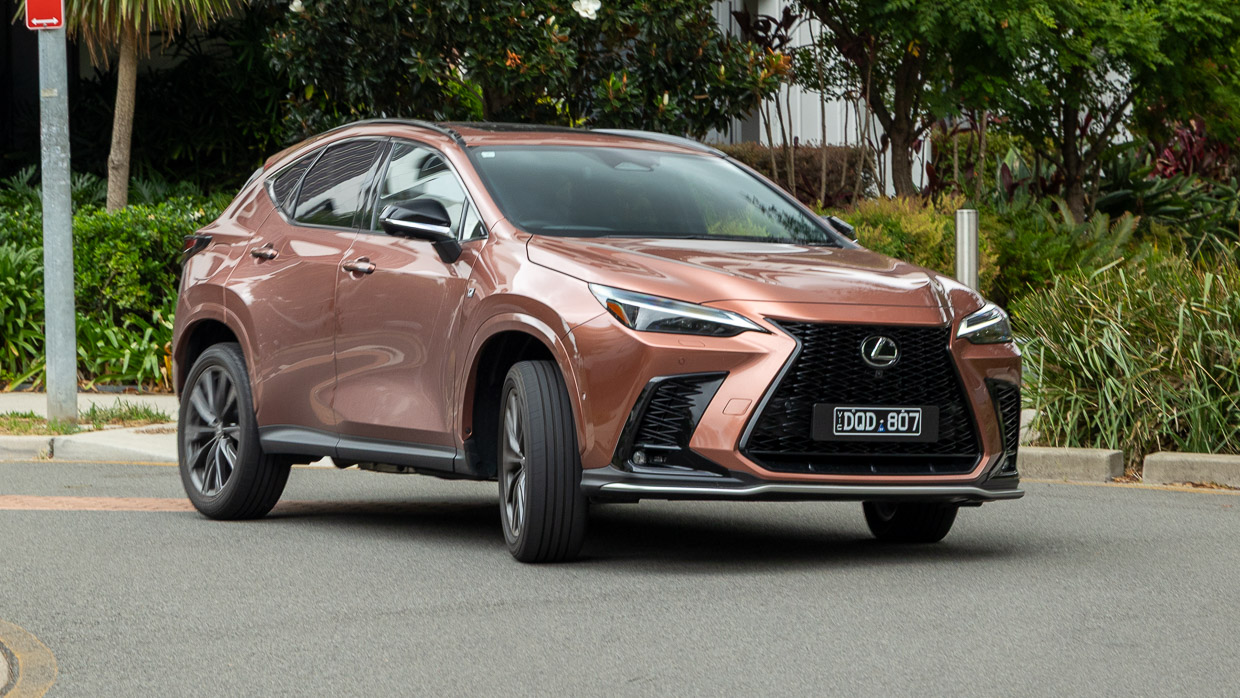
As my first plugged-in live-in experience, it’s not dissuaded me totally from the PHEV format. It’s just that your reviewer is inclined to conclude that Lexus’s take really underperforms for what is an overpriced premium outlay. Where to start…?
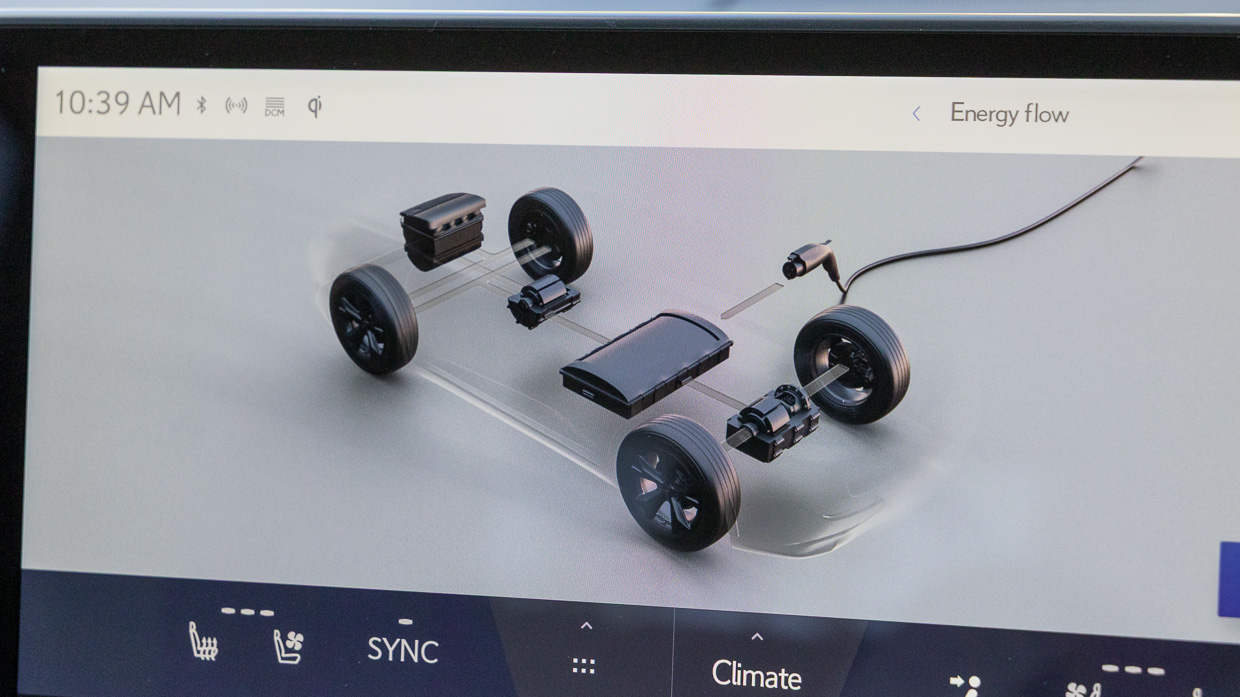
While the high-voltage gubbins deliver reasonable standalone electric drive ‘performance’, its circa-87K of EV drive is too slim in 2026. The AC-only charging format, with no option to DC quick-charge EV-only range, really inhibits the potential flexibility one buys into with the PHEV experience.
And it’s no more frugal than the self-charging hybrid on a dead battery, an option that’s vastly more affordable to buy into in the NX range. And when you’re stumping up extra for PHEV in a luxury marque, you ought to expect a significant ‘hybrid’ performance boost, layered with added sportiness.
But it’s not. And the naturally aspirated Atkinson cycle petrol four – demanding 95RON no less – in conjunction with a CVT is simply too pedestrian, now in 2026, for another proper luxury medium SUV well into six figures on road. Turbos, real gearboxes, proper performance boosts, long EV range…is where the PHEV action is at, on today’s premium landscape.
Average consumption across six months? It was calculated as 5.44L per hundred as tested, the caveat being that, in discovering being a plug-in owner simply doesn’t suit my personal lifestyle, I rarely plugged it in. I’d probably have been better off with the cheaper, self-charging hybrid option (5.0L/100km claimed).
As covered off ad nauseum in Month 2, results vary dramatically depending on usage and – like all ADR-based PHEV consumption claims – the 1.3L/100km figure attached to this Lexus is only possible with very specific parameters. That is: fully recharging every 100km of driving, no more or less frequently.
As is always the case with PHEVs: only buy into it if you’re willing to plug in regularly to reap the efficiency and drivability benefits.
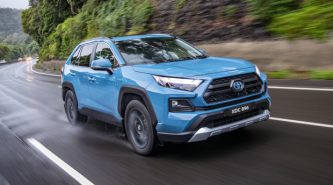
Then there’s character. The NX’s PHEV powertrain sounds, feels and behaves like a plug-in system you’d expect in a Toyota RAV4 wanting for half the price. And, technically, when you view the two SUVs’ powertrain specs side by side, lo and behold…
The rest of the NX package, bar a few strange missteps, is quite commendable, with so many more variant options – most of them – that make more sense or impress more in the balance of quality versus outlay.
It’s easy to see why the NX remains one of the strongest premium mid-sized SUV sellers, and continues to be an easy recommendation…in virtually any trim other than its not-nearly-so-F-Sporty enough, plugged-in, tree-topping guise.
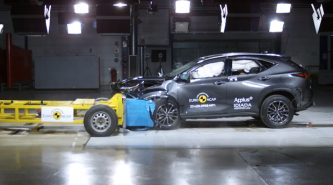
Lexus safety shines brightly on a gloomy long-weekend road trip
According to cursory research, predators for the eastern grey kangaroo include dingoes, crocs and the copper-coloured Lexus. While I’m skeptical about the first two, for reasons of size and location, I can confirm the latter via first-person experience.
So why, then, is eastern grey roo completely camouflaged against the landscape of the Hume region, in rural northern Victoria, where one never sees crocs or dingoes…but might find a bright metallic Lexus, travelling at 100km/h, along a narrow single-carriage piece of hot-mix? Wouldn’t a bright pink coat serve this marsupial better?
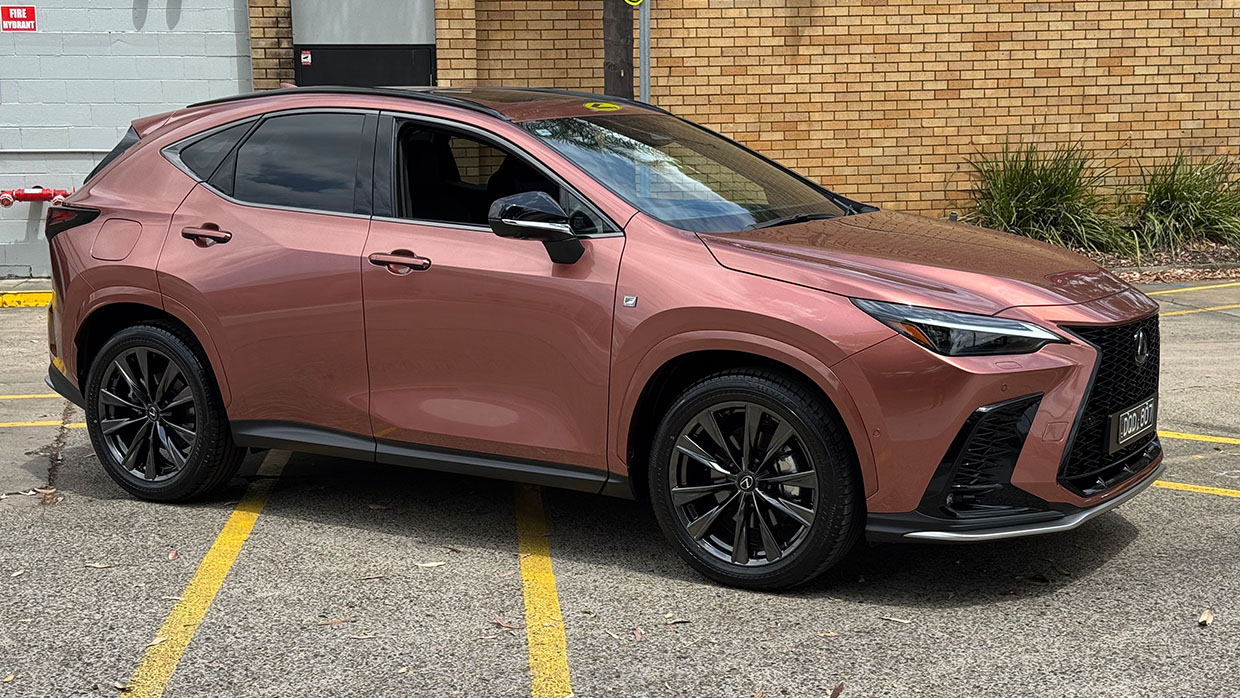
Instead, the indigenous hopper seems utterly prepped by evolution to be an apex predator bar the fact that a) they’re herbivores and b) they jump towards their fast-moving metal hunter when they’re suddenly startled.
So it proved, along regional Seymour-Tooborac Road, skirting the perimeter of the Puckapunyal military site. It’s a narrow, slithering road I’ve driven a hundred times and, as the trickiest stretch of my semi-regular 850km Sydney to Vic Gold Fields return jaunt, it demands utmost concentration at the best of times.
But in the misty low light of a cold six-degree-ambient winter’s dawn, I didn’t need ‘Surprise Skip’ to suddenly attempt to headbutt the Lexus NX’s bluff grille, out of nowhere and seemingly on purpose.
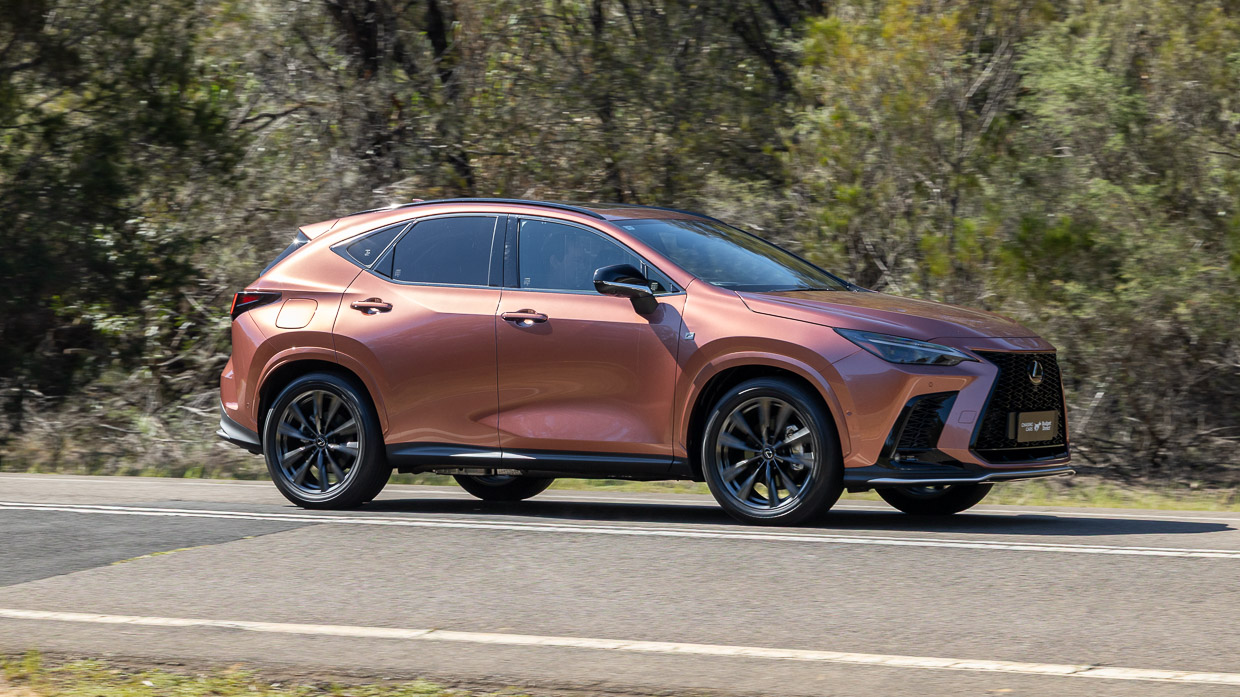
These are classic Aussie roo conditions, and with the buzz of a triple-shot flat white on board I’d been scouring the peripheral landscape regardless. But grey Skip shot out of the grey landscape from the right onto the cold, dew-y hot-mix about 20 metres or so ahead of the two tonnes of Lexus nudging triple figures. So evasive action it was…
The immediate instinct was to not nail the roo square, but miss it by millimetres, while not letting the passenger-side tyres still on the black stuff venture on the green and brown stuff. I jump on the brakes, hard, thread the needle, and hope the Japanese SUV pulls up with enough sealed road underfoot.
Thankfully, Skip bound softly enough into the fast-decelerating NX – call it 60km/h and slowing – just enough to knock him off balance, the only potential damage to his dignity. And with the utterly superb precision of the Lexus steering under full ABS braking, it stopped exactly where it was pointed, skirting the broken left-side verge of the road.
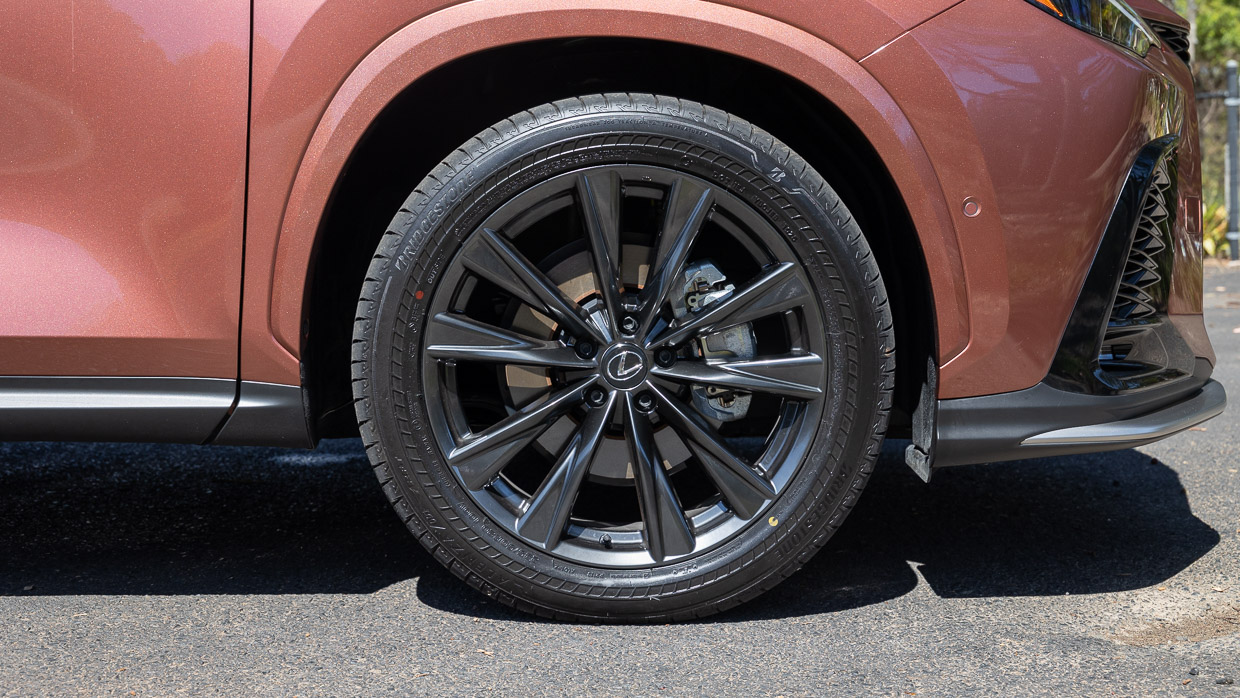
This is exactly and precisely why one might invest in a trusted brand who’s invested in calibrating safety systems correctly. This is exactly why we car reviewers bang on about chassis driving – and steering – engagement so much.
Good active safety, as so handsomely demonstrated by the NX, is about enhancing driver control. Bad active safety is about relinquishing control from the driver due to mistrust or poor calibration. Had this situation arrived in any number of today’s less-capable (if equally fanciful) offerings, the Lexus, Skip and I would’ve arrived at a far more dangerous outcome.
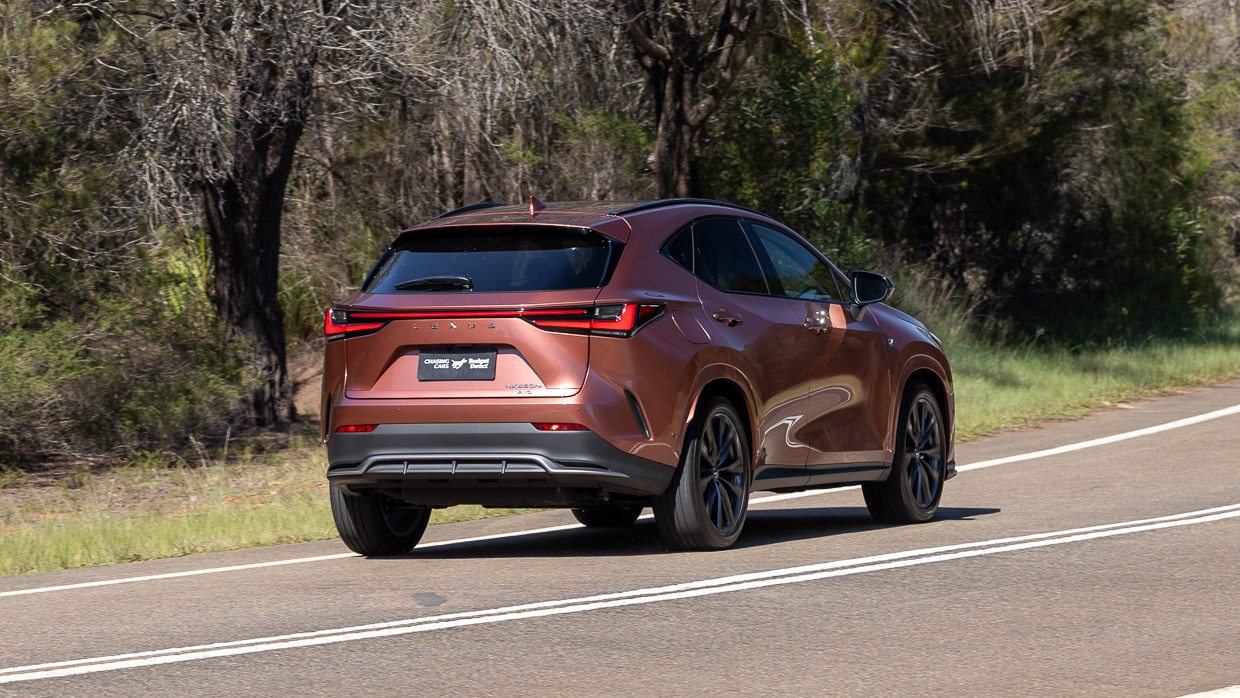
I’ve not been completely complimentary about the plug-in NX long-term experience at times. But on this 2000km interstate weekend round trip, I discovered a newfound fondness for the SUV during the rest of the jaunt back to Sydney which, at the tail end of a holiday long weekend, would take almost another 11 hours in the saddle due to traffic.
It really is, all things said, a great thing to spend serious time in at the helm, even if the helm’s chunky bolsters could be more relaxed on the ribcage. We sometimes forget that the simple requirement of making it home in one piece is luxury enough.
Lexus puts the sport into luxury, and we’re not quite sure about that…
As a model of 2022 vintage, the NX has been treated to numerous interior assessments at Chasing Cars over the prevailing years, mostly positive, usually in strokes as broad as the review narrative allows.
However, some areas that seem inconsequential in week-long review loans perhaps deserve a deeper nitpicking dive in long-term assessments such as this. So let’s get out the needles, shall we?
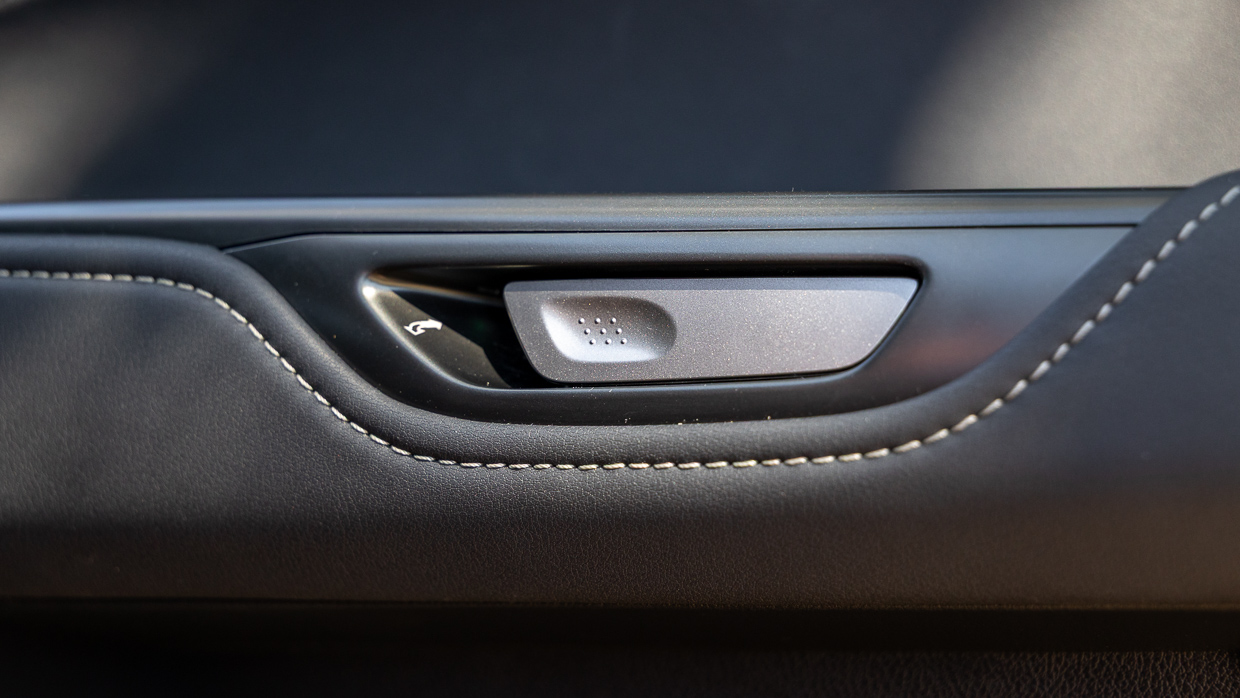
The electric door handles outside are pretty cool, but the interior units are testing at times. It’s not because pushing the lever actuators with your thumbs is rocket surgery, it’s that explaining to every new passenger how to use them to exit the vehicle gets very stale after the umpteenth time.
But the one bugbear that seems to grate with increasing intensity over time is the laggy start-up procedure. After a cold start and after you’ve hit the start button, the media screen remains blank for a good pause before you’re presented with a pointless animation, a greeting screen, and another pause while it reboots CarPlay. Call it 12 to 15 seconds or so.
If you want to do anything such as adjust climate control or boot up a podcast on Spotify, you’re just going to have to wait. Perhaps the intent from Lexus designers was to present some sort of premium showcase. Instead, its tech comes across as being clunky, underpowered and slow.
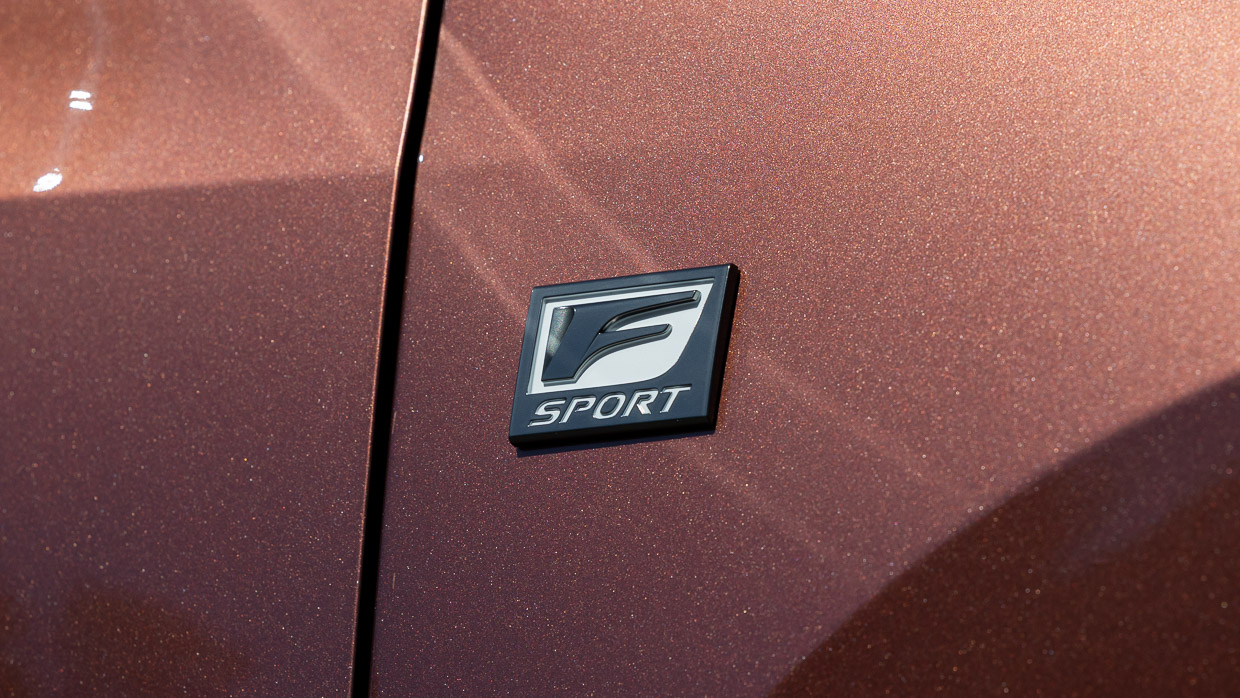
Then there’s shutdown, which is quick enough, but – much like my old RX long-termer and more Toyotas than you poke a stick at – what’s with all the stupid beeping business when you just want to lock the car and walk away, or simply open the tailgate.
Like the RX, the NX will beep nine times when you lock it – sometimes – that’s clearly some code to alert you to something it wants you to know but isn’t at liberty to explain what and why.
According to Google, it’s possibly (though unconfirmed) some warning to the driver to check that you haven’t left your kids in the back seat. A nice sentiment, but if you’re the kind of parent that tends to leave young offspring about the place because you forget they exist, perhaps you shouldn’t leave the house with kids to begin with… Not really a Lexus problem, is it?
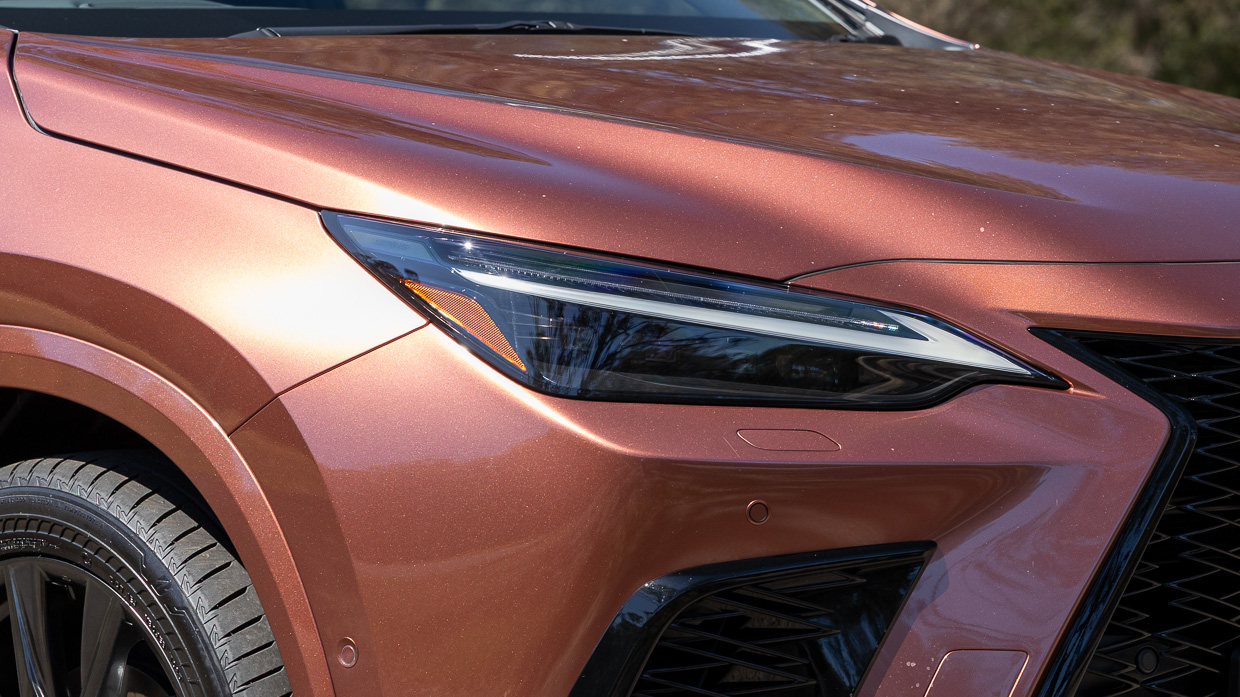
Also according to Google, you can switch the beeping off via digging through layers of media screen submenus. According to your reviewer’s personal research, Google is full of crap. With our NX, we managed to quieten the beeping, but only by a couple of decibels at best.
The Lexus (and Toyota) obsession with beeping when you’ve unlocked/locked the vehicle, or opened the tailgate, is simply safety overreach to the detriment of one’s sanity. And there’s no further proof than the fact almost every other carmaker is rational enough not to fit such annoyances.
The main issue is apartment living and how much incessant beeping will irk your neighbours. It grates during normal times of day, but can infuriate those in earshot when the Lexus (or Toyota) owning neighbour leaves home early or arrives home late. Please, get rid of this stuff.
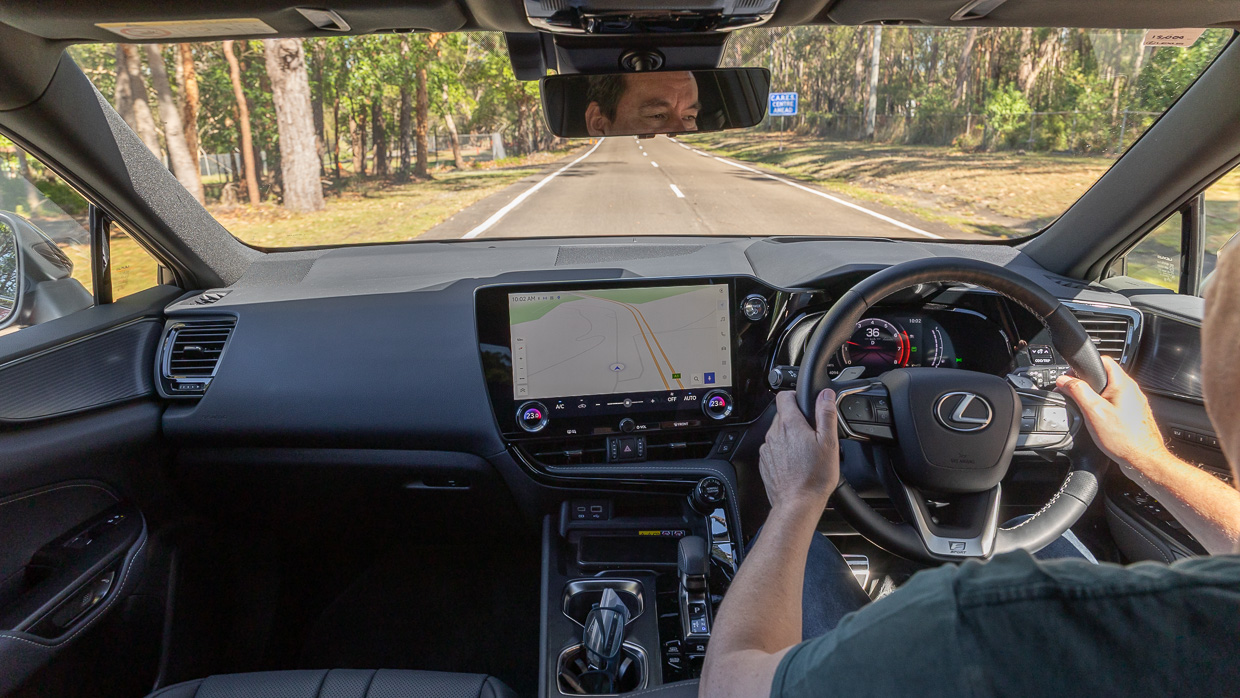
What’s the shame is that the Lexus, in between getting the thing mobile and getting out at journey’s end, is overwhelmingly peachy. Build, material choice, vibe…we’ve covered all of these pluses numerous times in the past.
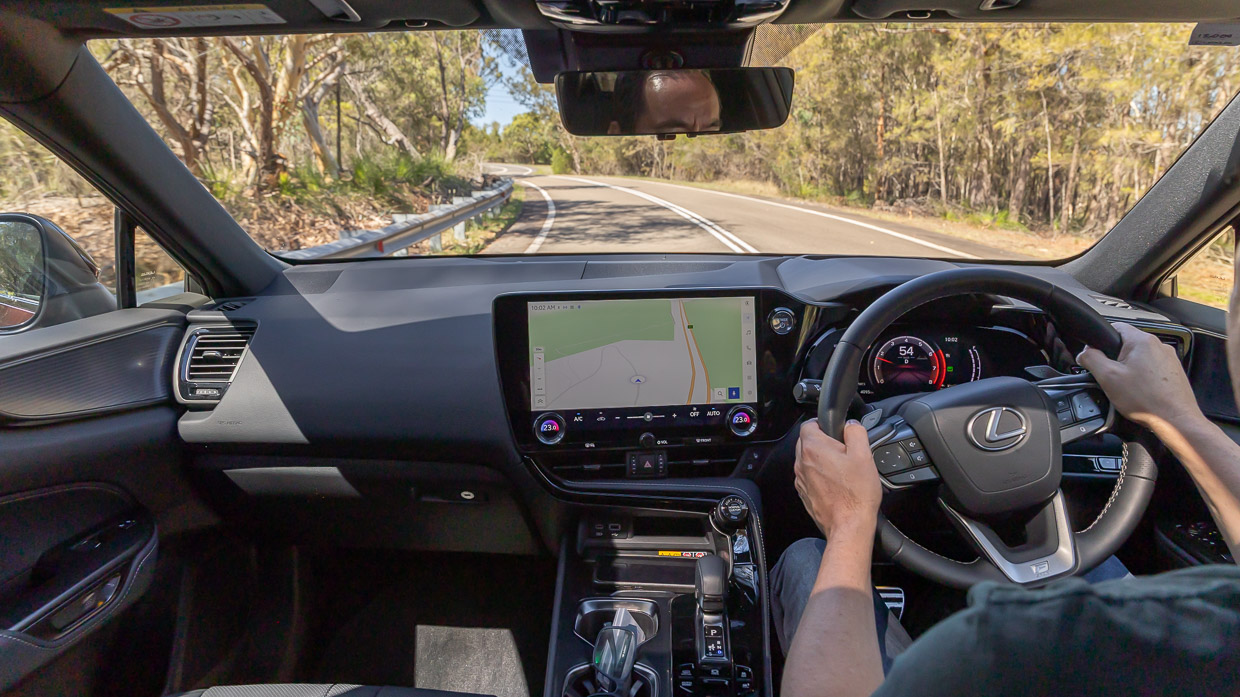
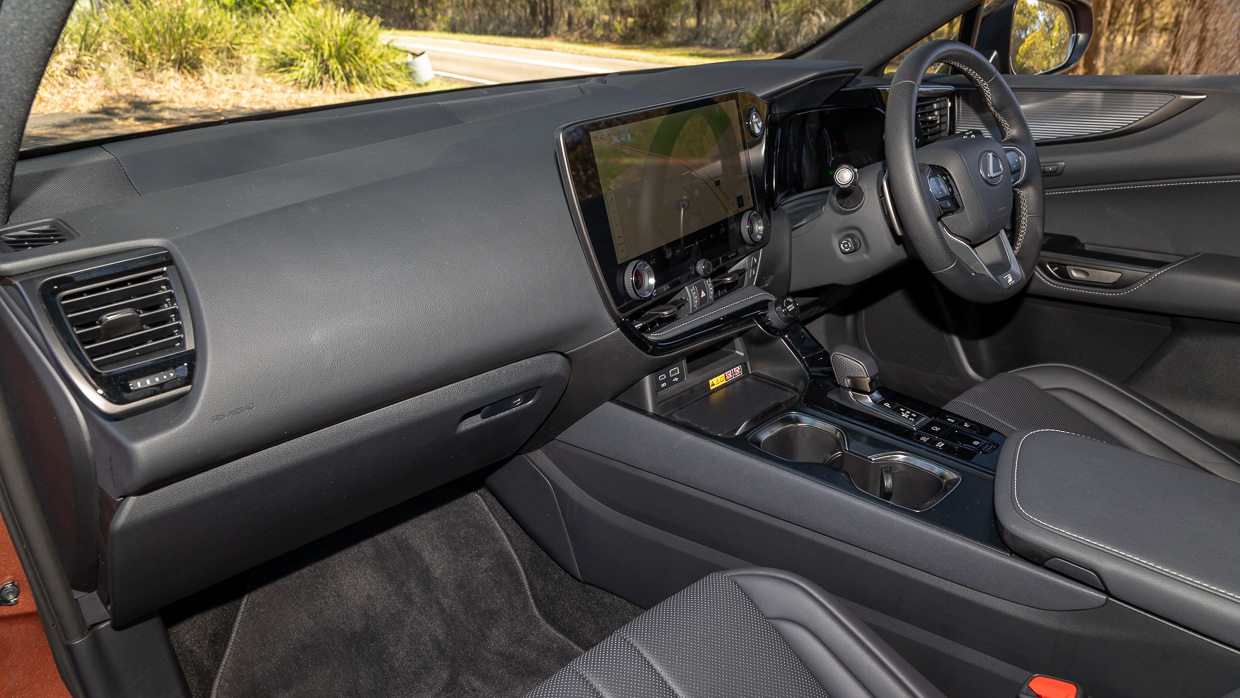
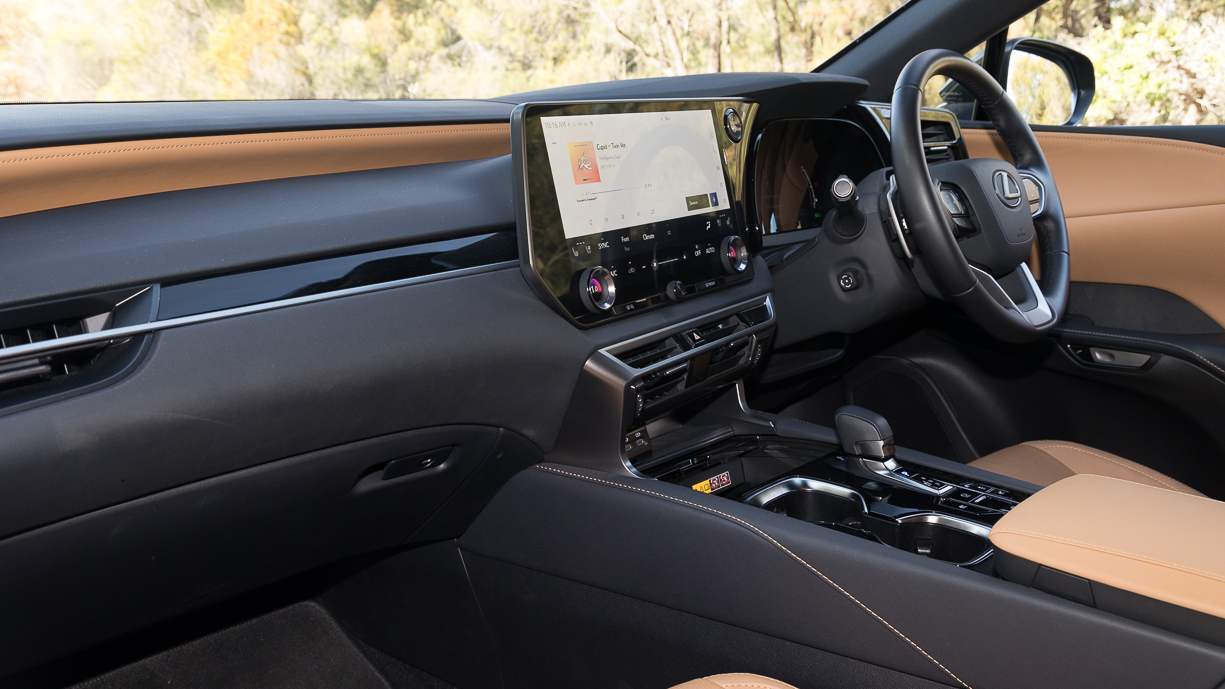
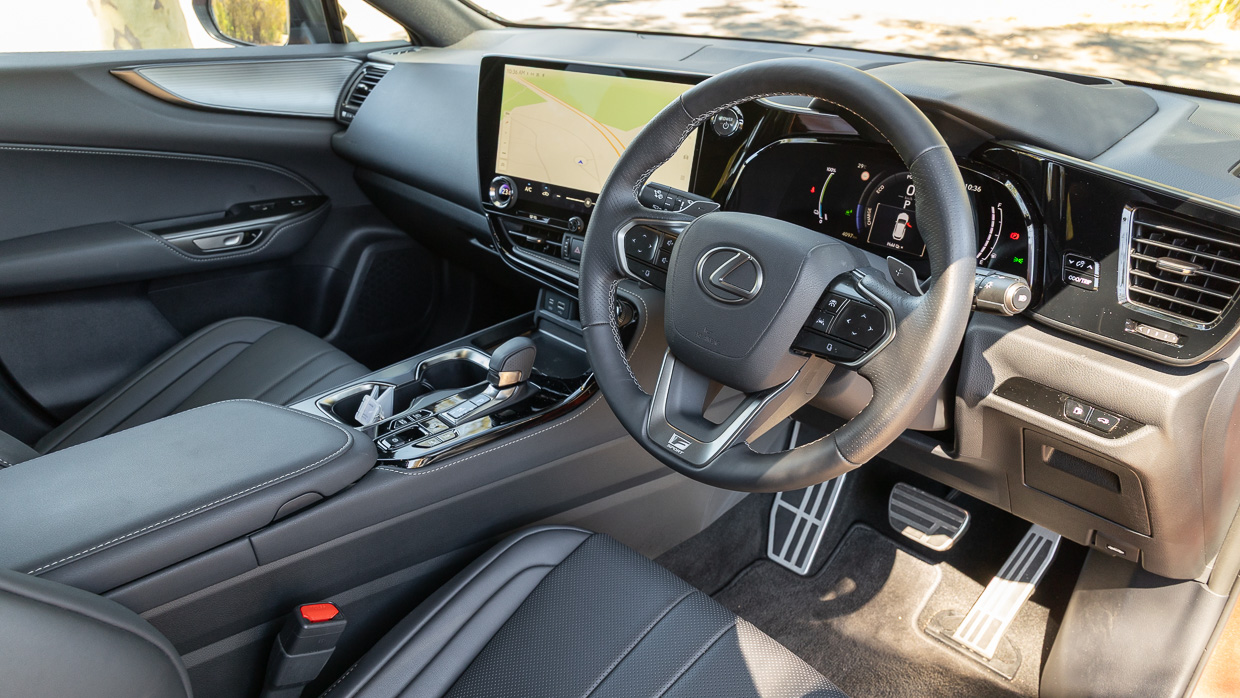
Some of the design choices deserve special mention. For instance, the countersunk digital driver’s screen is, for yours truly, a vastly more pleasing format than the in vogue flat panel multiscreen array that will, inevitably, become passe once we’ve moved on from the current era of car design. It feels…classic, somehow.
I still love the inspired coloured climate control dials, the retractable inductive charging pad so you can genuinely tether two phones at once, the snickity by-wire transmission selector and the nifty double-hinged centre console lid. Properly premium stuff.
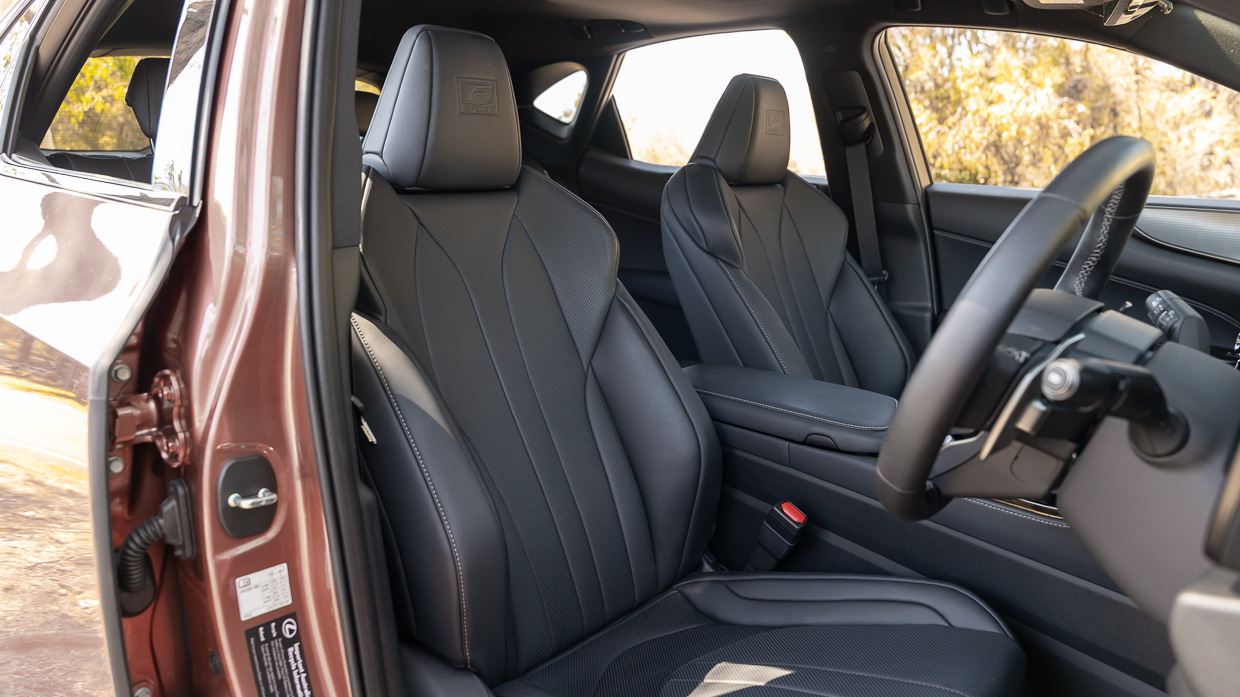
Where it falls down is how the F Sport accoutrement lands comfortably atop what’s fundamentally a luxury landscape. Looks good, feels in places quite unnecessary.
Case in point are the front seats. Their chunky bolsters might be right at home in the BMW M2 or Volkswagen Golf R, but feel out of place in a medium premium SUV that, frankly, puts out little in the way of actual performance mojo outside of big wheels and styling tweaks.
Worse still, and unlike some premium German brands’ sport seat designs, you can’y electronically or pneumatically adjust the tightness or looseness of the side bolster angle. In effect, they weld you into the seat too much – depending on occupants’ body types, they can be quite uncomfortable during long trips.
More F Sport misses are the touchpads on the otherwise beaut F Sport wheel, which activate menuing in the head-up display. In theory, these are handy given that you can adjust all manner of vehicle systems without adverting your gaze from the road ahead.
However, the reality is that they’re so touch sensitive that you’re constantly brushing them with your thumbs, which causes the head-up display to constantly rotate through menuing displays during normal driving. You can turn it off, but the beg the question of: what then is the point?
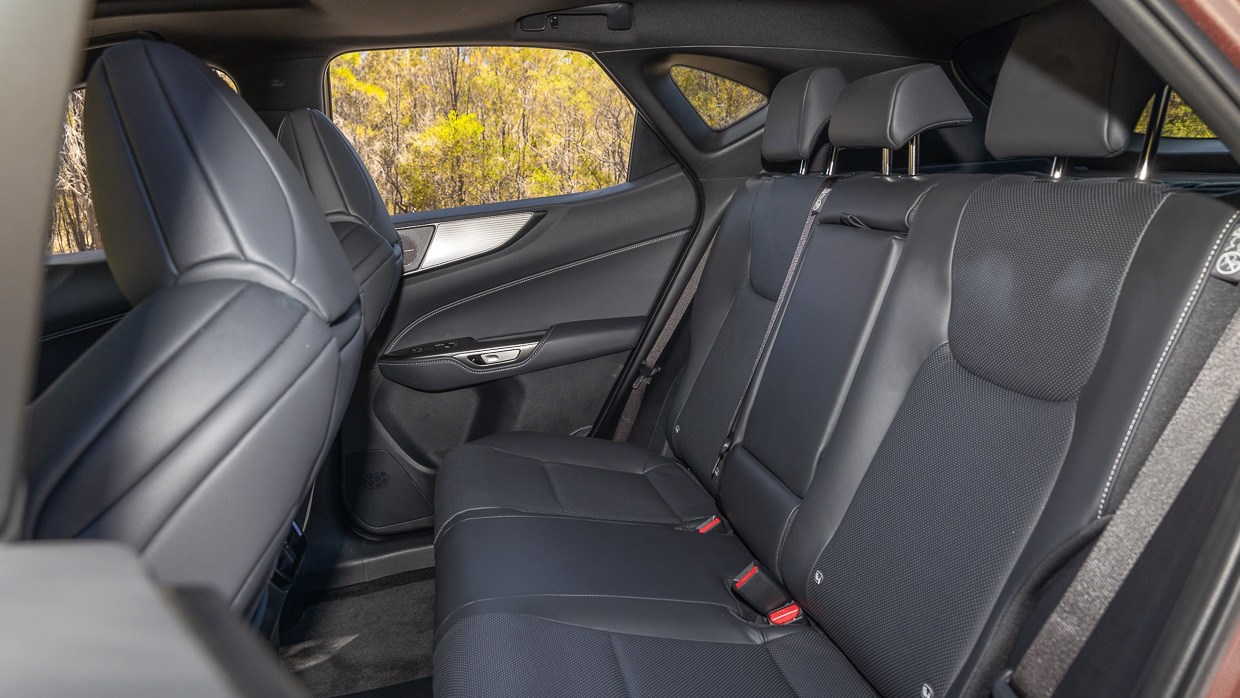
But if there’s one thing that irks about the NX, it’s that the mid-sizer feels all the part like the large-segment RX with about a foot of wheelbase chopped out of it. All of the spatial compromise is, on evidence, centred on rear-passenger legroom.
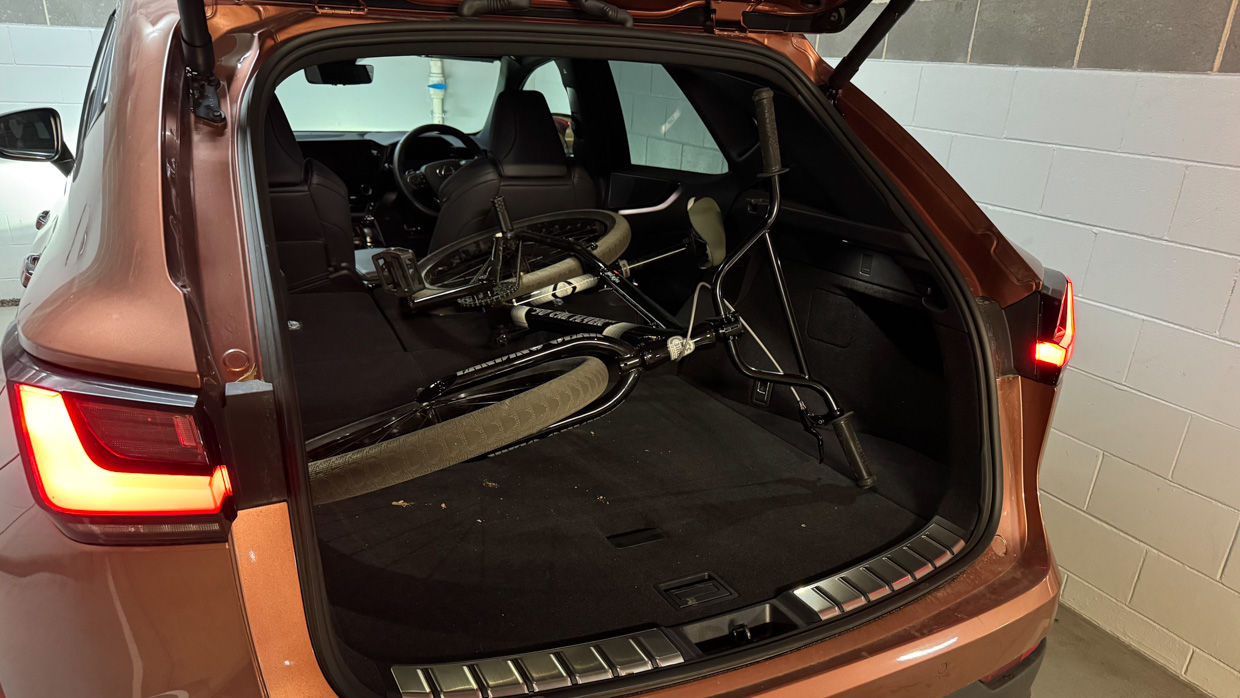
Rear room isn’t bad, but it’s not great. It’s about average for a medium-segment family hauler. But the added wheelbase in the sister RX makes for a vastly more comfortable all-adult experience…and offers enough combined load through to cart around adult-oriented pushbikes without having to remove any bicycle wheels.
Overall, the NX cabin is good, but not great. There’s plenty of room for improvement in the NX 450h+ F Sport package, and sadly for it, many of those improvements arrive in cheaper NX variants or RXs that want for similar coin.
Lexus’s staying power, its rightful place in the pantheon of luxury motoring, and why this NX mightn’t be its shiniest example
Our third month of the plugged-in NX experience was accompanied by two unwavering factors: a busy office life left time for little else bar daily commuting; and the niggling question around the flagship’s value for money remains ever-present with this six-month faux-ownership experience.
Chief, my old Luxury-spec RX 350h AWD long termer, sold everyone in the Chasing Cars crew about the merits of the premium Lexus spin, circa-2024. How it supplanted, and continues to supplant, so many rival Euros on core quality and luxury while undercutting them on price and, in areas, flash, just seemed to sit right.
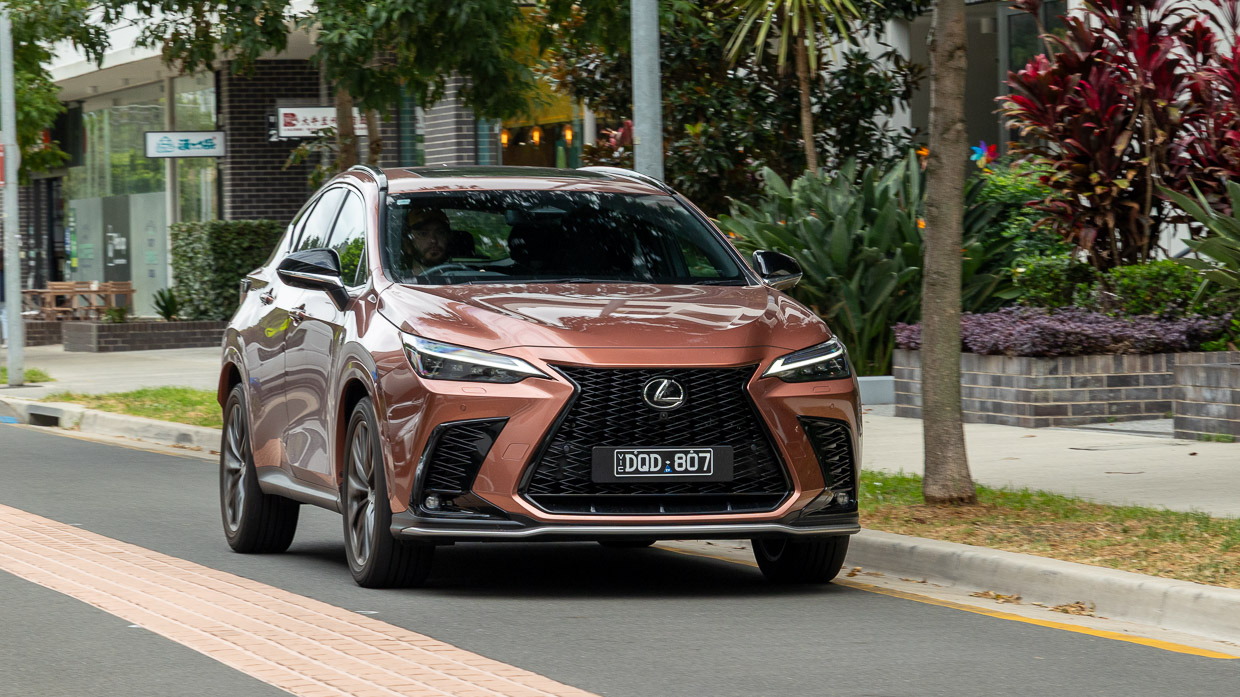
The NX, in fancy-pants plug-in 450h+ F Sport guise, remains less convincing, three months into the long-term loan and viewed through a 2026 lens. It’s a niggling, nagging feeling, and I’m compelled to riff and spin my musings on digital paper to air my thoughts.
As the only time I’ve ever had two long-term, faux-ownership loans from the same brand – let alone both SUVs with broad-stretching similarities – I feel like a Lexus return customer. And halfway through our journey, I’m not nearly convinced I’ve faux-traded up.
But why? Especially given that the NX is certainly crafted as well as the RX, and both are equals in solidity, fit, finish, material execution, refinement…the list goes on with all of those oh-so Lexus traits the brand has managed to maintain – no, elevate – in an existence we often forget is a short 37 years.
Pictured: ‘Chief’, Curt’s former Lexus RX 350h long-termer
Not to whiz in its pockets, but Lexus really has managed to pull off the remarkable. Its overseer Toyota targeted Germany in the early 1980s and its luxury arm bolted out of the gates with the LS400 in 1989, capturing American hearts and wallets and, in a way, dragging Australia into its tow of momentum.
And with a fire that never lit nearly as brightly in Europe. Hot take: as fundamentally a German facsimile predominantly targeting American buyers, a Lexus was still achingly Japanese in vibe, regardless of how much or how little its maker marketed the fact.
In essence, early-gen ‘Lexii’ blended Toyota’s QC and dependability with Mercedes-Benz-like premiumness couture and, depending on the model and grade, landed somewhere in between, both on prestige and price.
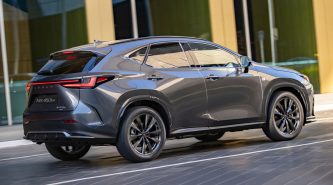
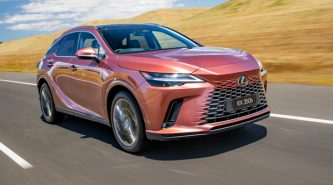
Pictured: Lexus NX (top), and Lexus RX (bottom)
Sure, the Lexus stable was and remains a broad church – for its LBX and ES models so conspicuous in their Toyota commonality, there’s a LS limousine or LFA supercar as counterpoint bookends.
But when you bury down to Lexus brand mantra of combining Omotenshi (‘selfless service to guests’) with Takumi (‘master craftsmanship’) in the spirit of Kaizen (‘quest for improvement’), it’s really the middle-of-the-stable RX large SUVs – and in lower to middling grades – that nail it best.
What niggles and nags about the NX 450+ F Sport is that it does what RX does, if with less usable cabin space and less design flair, while piling on frills, complexity and expense at its bottom line. And at times it’s a particular combination that feels to drift too far from the Lexus magic formula that remained fairly consistent for four decades, very much to the brand’s strength.
Times like Month Three put in service as a daily driver, for instance.
Tool back and forth from the office, the F Sport seats miss the mark for relaxed comfort. The low-profile wheels and suspension fizz in an un-luxurious way, and the rubber drums up too much noise and soil the serenity around Sydney’s underground motorway system.
Then there’s the whole plug-in business. With no recharging option with apartment living, the convenience of simply riding its pretty handy circa-six-litre consumption as a self-charging hybrid proves vastly more convenience, and not terribly cost detrimental, than chasing public charging stations for electrons. At least when the rest of (real) life gets busy.
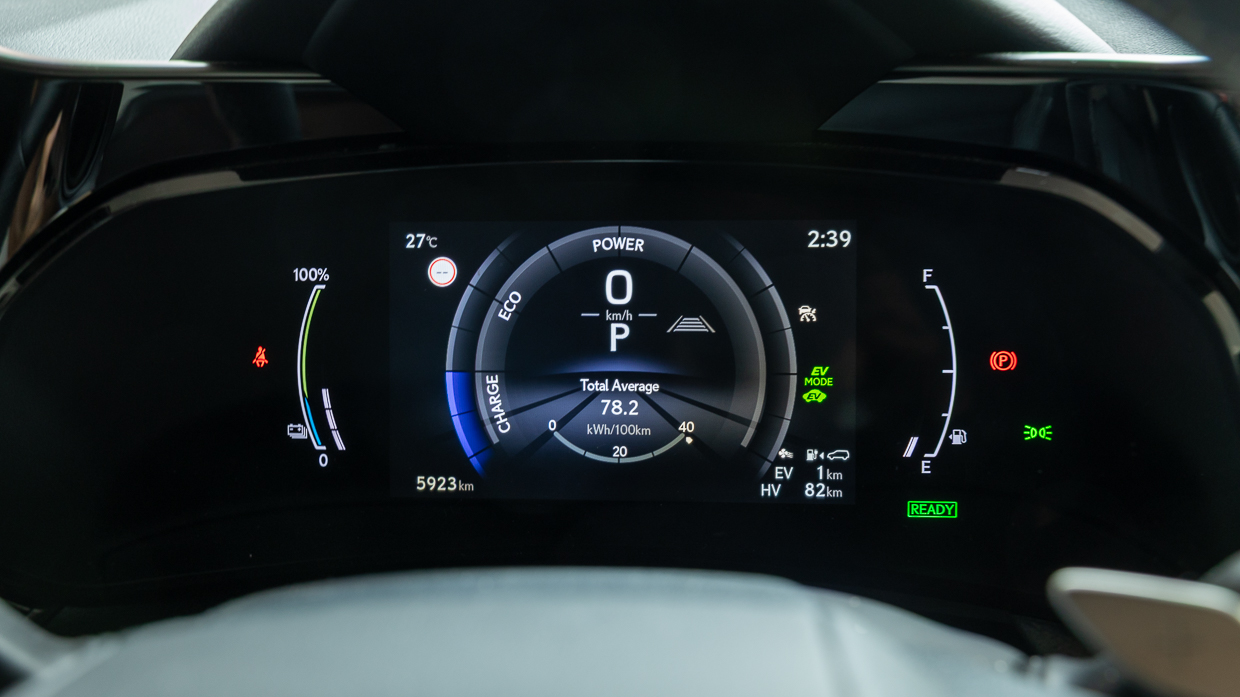
One tankful of 95RON at around $110 – a handful of minutes to replenish the SUV in a hectic month – was a bargain to pay given time saved from not having to plug it in nine or more times to cover the 727km mileage on electrons alone…even without factoring in recharging outlay.
Maybe some road tripping, grand touring, or perhaps corner carving will reveal more virtues from this medium-sized SUV in the coming months. Because midway through our NX experience, our example is beginning to feel somewhat bloated, be it in spec or in price.
Negotiating the nightmare of calculating bona-fide PHEV efficiency
What’s the real efficiency of the Lexus NX plug-in hybrid? Or any PHEV? It depends…
I’ve always been dubious of plug-in fuel economy claims. And not wholly because testing is performed in a laboratory to Australian Design Rules standards (ADR81/02) by the government (rather than the vehicle importer).
It’s because its ethos carried over from ICE fuel efficiency testing (where it works) to a petrol-electric dual-power-source format (where it doesn’t under any reasonably sound logic).
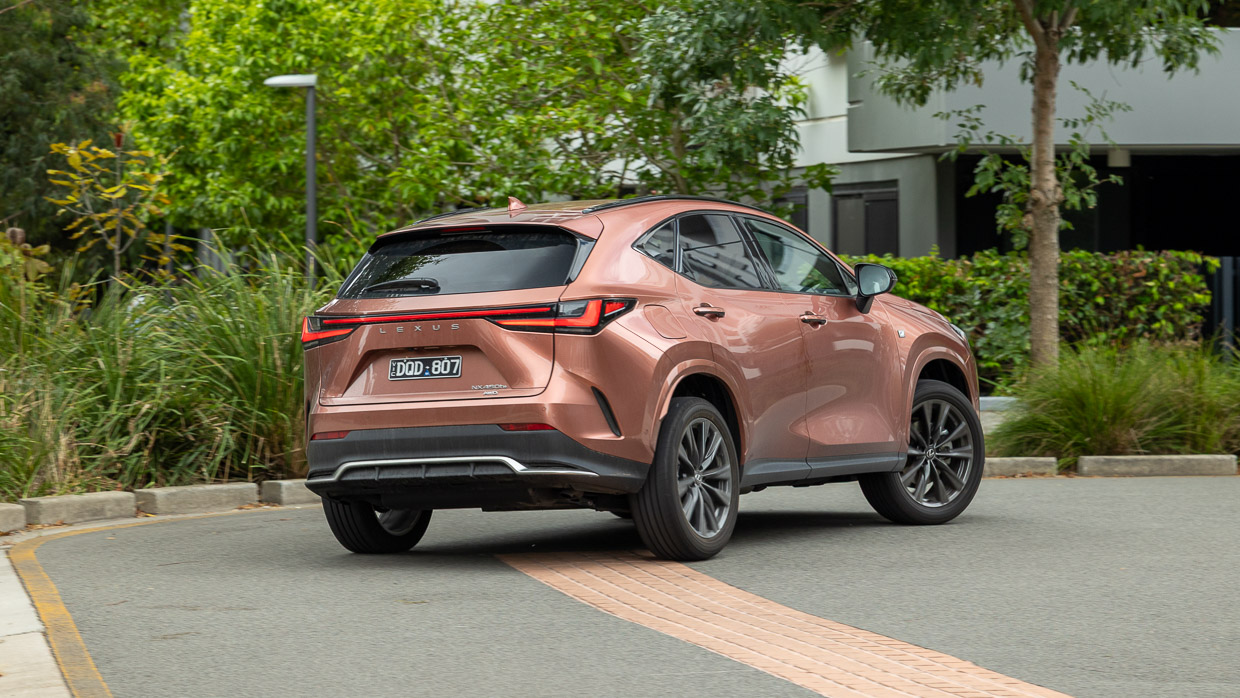
The turbo-petrol NX 350: its 8.4L/100km combined claim is easy to assess by simply refilling what was once a brimmed fuel tank after (duh) 100km of travel.
The self-charging NX 350h hybrid and its 5.0L/100km claim? Same process, similar accuracy in the results, where results may vary ‘a bit’ due to inconsistencies in driving style, powertrain behaviour, orientation of the moon, etcetera…
…but you get an indicative ballpark figure of what fuel consumption to expect.
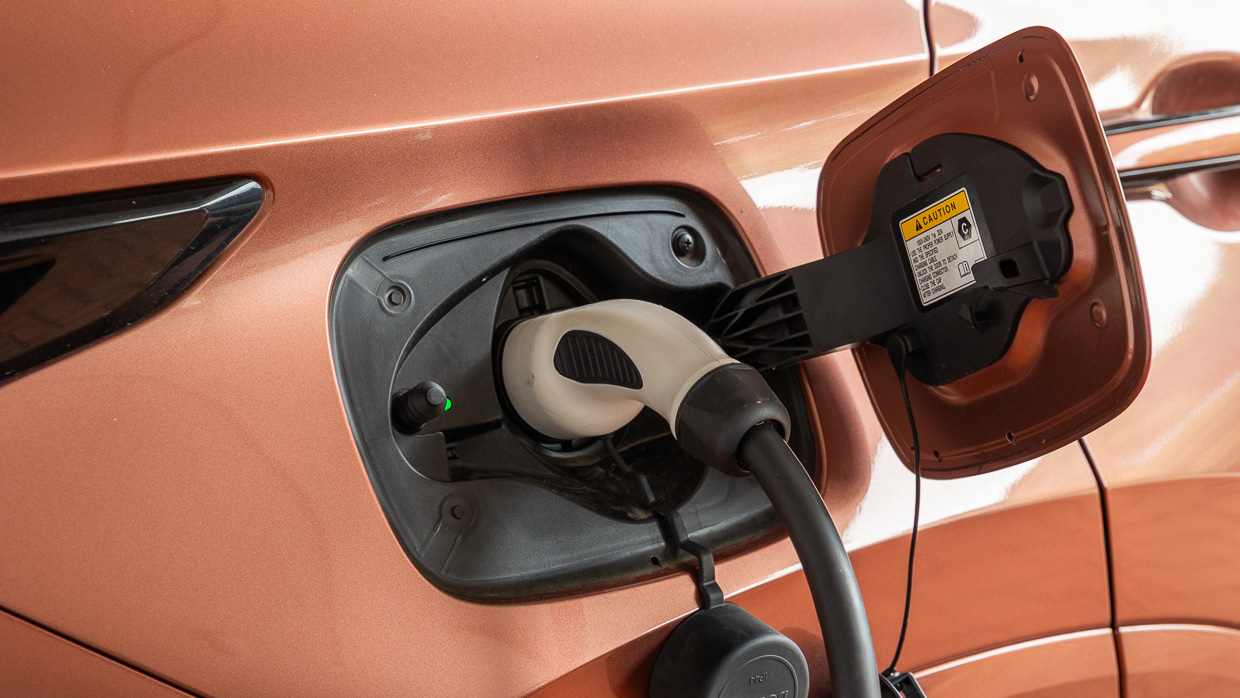
PHEV? You brim the tank, top-up the battery, drive 100kms, measure fuel usage, hey presto, right? Well, no. And not for any simple single reason.
Our NX 450h+ has a 1.3L/100km combined fuel claim. So that’s 87-ish kilometres of pure electric, a remaining 13km on petrol power…there’s your figure. Except it’s a fantasy figure unless you’re prepared to stop the car, refill <and> recharge the battery, every single 100 kilometres of travel. It’s a fallacy.
Now, in 2026, some PHEVs offer over 100kms of pure EV driving. Using dimwitted convention, fuel consumption would therefore be zero-per-hundred. Which is certainly not the reality once the vehicle travels significantly further…
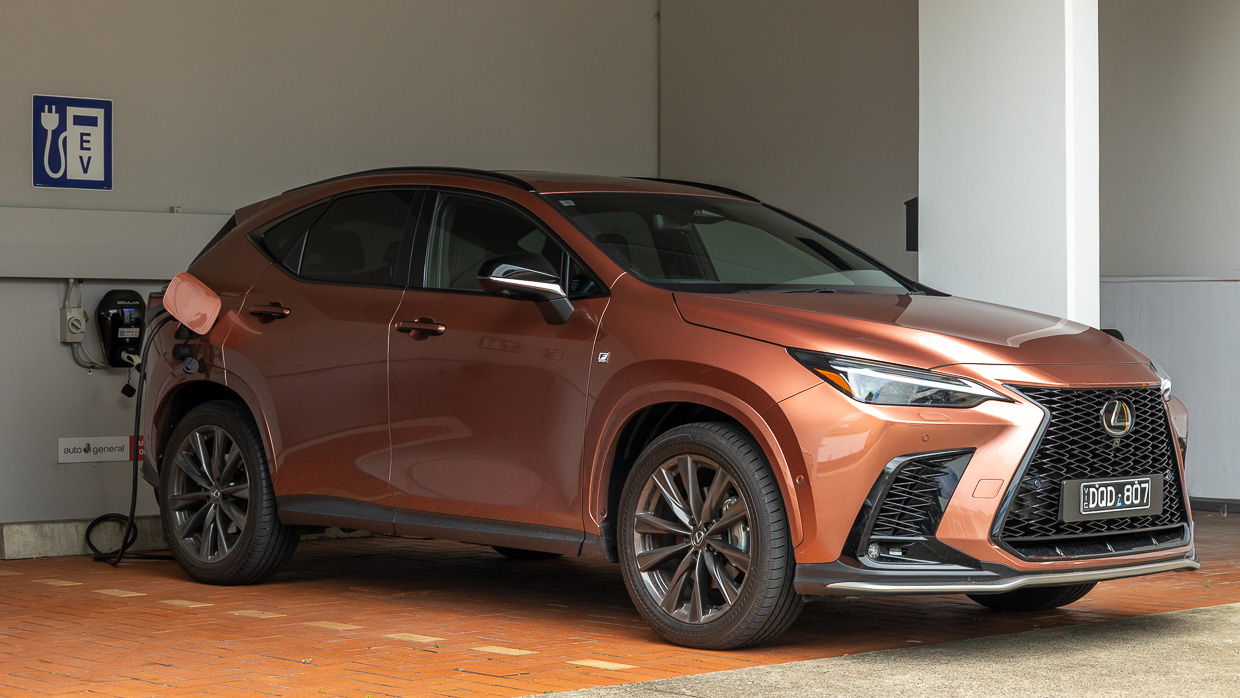
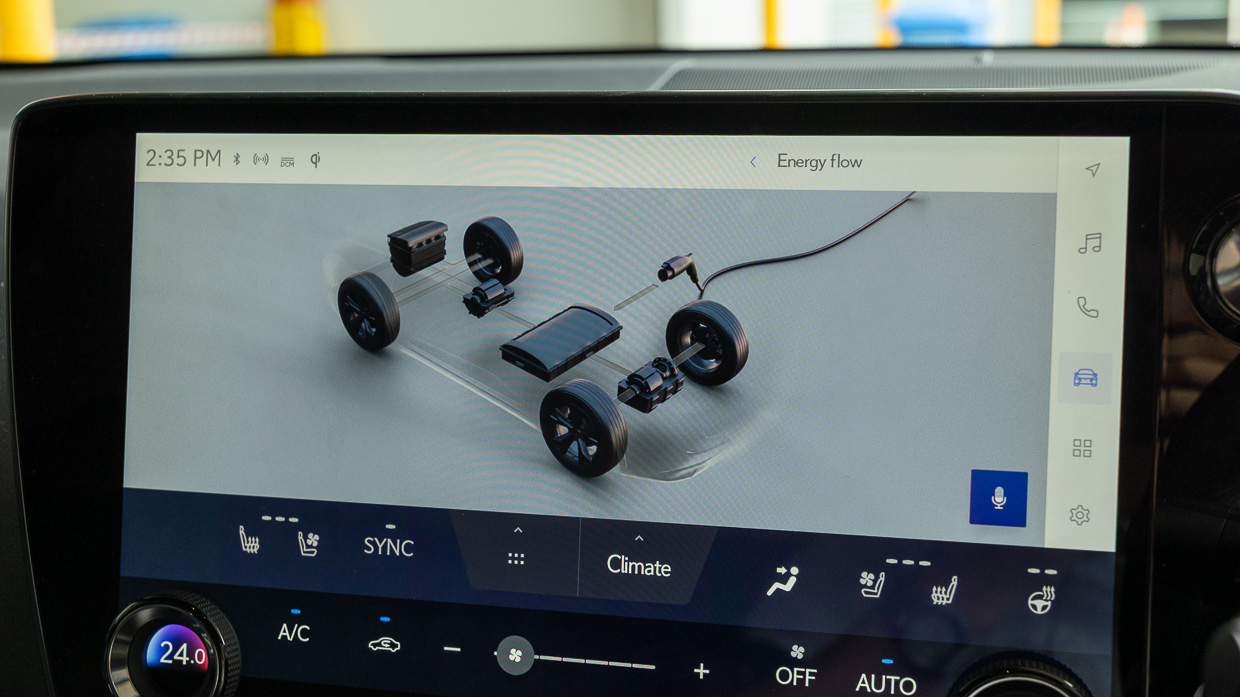
Come Month 2 of our Lexus loan, the first port of call was to assess fuel consumption on a dead battery. After the first 87km-ish, battery depleted (for the moment), the NX 450h+ jumps up to around 6.0L/100km. And there it sits until, soon enough, reciprocal self-charging trickles electrons into the 18.1kWh lithium-ion battery and it drops closer to 5.0L/100km…
Of course, results will vary – and wildly – depending on owner usage. Plug your PHEV into the home and work wallbox religiously everyday, you might rarely ever use internal combustion: 0.0L/100km. Never plug in and you’re at 6.0L. Individuals’ reality will be somewhere between.
Still, a litres-per-hundred figure provides indicative relativity on running costs – fuel and electricity – against ICE or self-charging alternatives. So, logically, a genuine figure demands similar science, right?
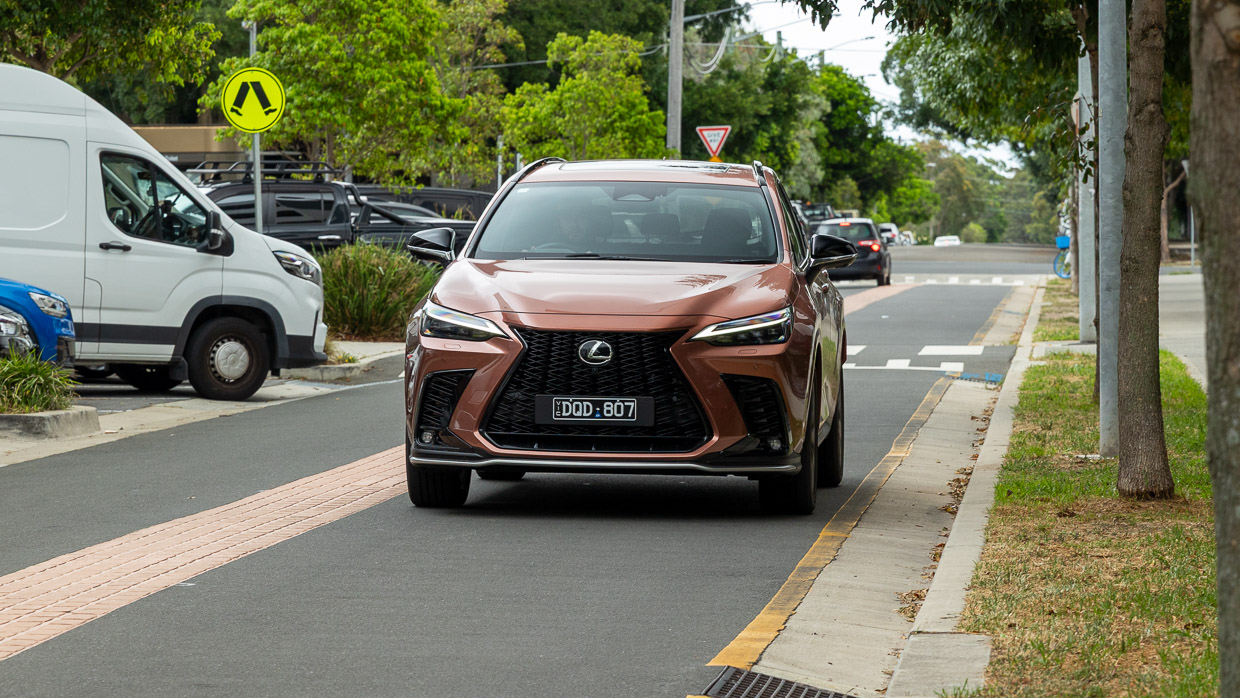
Fully charged and tank brimmed, we drove the Lexus until a) the battery depleted on its own accord after about 87kms and b) the 55-litre tank ran dry, about 920 kilometres (at 6.0L per) further along the exercise. So…1000km using 55 litres. Or 5.5L/100km on average. In the real world.
Simple, right? Well, no. Results will vary whether that’s a thousand kays of peak-hour driving, or you’re road tripping on the cruise control between Sydney and Melbourne. On that, Lexus (that is, government ADRs) doesn’t supply figures for urban or extra urban consumption like there is for ICE and self-charging hybrids…
Perhaps because it’s complicated. One of these complications is drive mode choice: Eco, Normal, Sport S or feistiest Sport S+ affects the petrol-electric output balance and, therefore, petrol and electric consumption. But there’s more to it than that…
The PHEV has four other operational modes: EV Mode is wholly electric drive, even at full throttle; Auto EV/HV for mostly electric with a petrol boost under heavy throttle; HV mode which is essentially self-regulated hybrid shuffling and; Battery Charging mode, which favours ICE to replenish the battery, on balance.
In truth, our Lexus spends all of its time pinned to HV self-regulation, in Normal drive mode, and plugged into a wall when it’s practicable to do so. And you know what? It works perfectly fine and is pretty damn good on balance, without any other complication…
Last-minute copper swap saves us from an uncomfortable doppleganger
When handed the key to the fanciest 450h+ F Sport spec of the biggest-selling premium midsize SUV in Australia for a six-month custodianship, there’s little one might complain about. For full disclosure – and usual practice for Toyota/Lexus local arms – Lexus Australia is also stumping up for fuel and electron outlay. Nice.
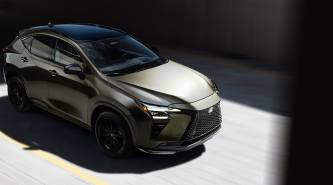
But the concern was colour. “Khaki Metal” said the e-mail, which is the same colour as my last Lexus long-termer, the RX 350h Luxury nicknamed ‘Chief’ from a couple of years back. A great rig, that. Solid and comfy. I was a big fan. But given the large-segment RX and midsize NX look so damn similar to one another, some might think they’re twins of sorts.
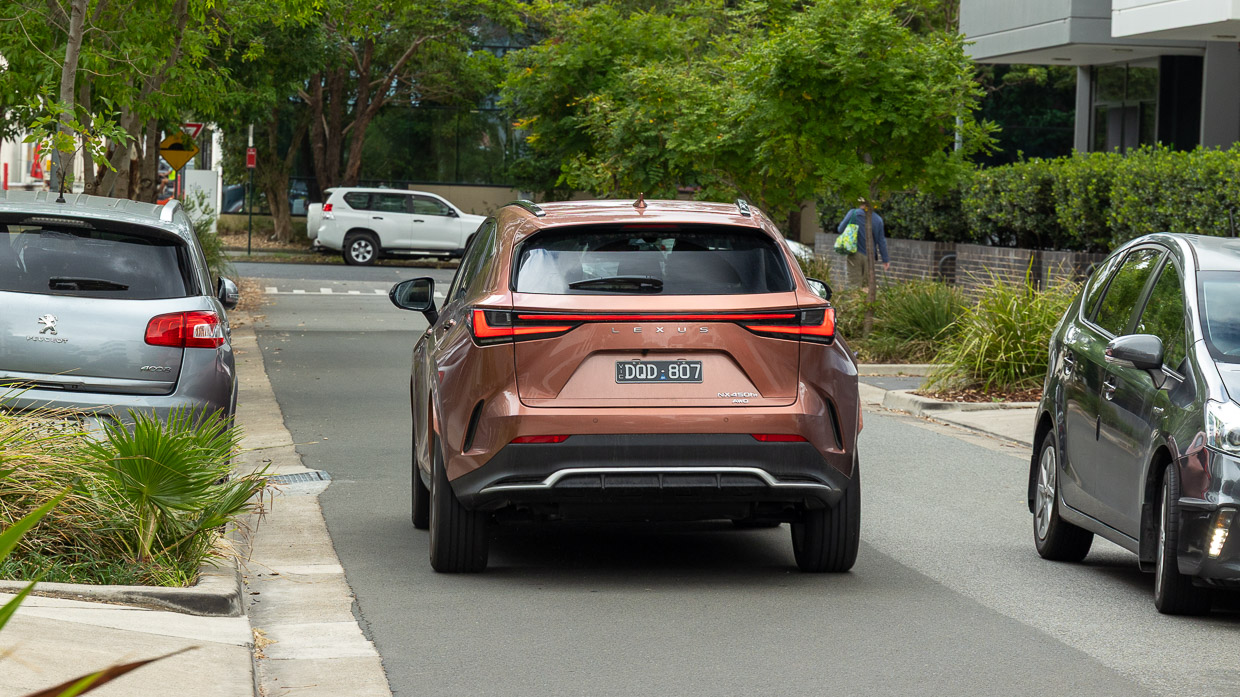
“Sorry,” read a subsequent Lexus Oz email. “We’ve had to change the booking to a Sonic Copper example…” Phew!
Given their similar designs, I’d mistakenly thought the NX was simply the larger RX with 16 centimetres sliced from its wheelbase. There’s more to it. Overall length is 230mm shorter (4890mm vs 4660mm), the front and rear treatments are distinctive to each model, and the NX doesn’t have the RX’s curvaceous rear hunches or teardrop rear glasshouse signature.
They’re quite different inside, too. Lots of commonality in the display hardware, switchgear and design ethos, yes, but the theme is quite different once you bury down into it…which we’ll do in an upcoming update.
The topic of similarities nagged at me given the underpinning notion that ‘my’ new midsize Lexus SUV was, at $96,000 before on roads and options. Our Sonic Copper (adds $1750) example costs $107,088 on road in NSW. Yikes!
Here’s the oversimplified breakdown of the full-blown 450h+ F Sport specification and features.
As a baseline, the cheapest (hybrid 350h FWD, $79,200 list) F Sport variants fits:
That version fits a 2.5L natural aspirated-based self-charging hybrid totaling 179kW in either front or all-wheel drive (for a $5800 upcharge) though, typical for Toyota/Lexus, there are no peak combined torque claims for either.
The ‘premium’ powertrain of our long termer is the plug-in hybrid 450h+, available only in all-wheel-drive guise. This PHEV’s naturally aspirated 2.5L petrol four (136kW/227Nm) is in a lower state of tune than the self-charging 350h unit (140kW/239Nm).
And, interestingly, the electric motors – 134kW/270Nm front and 40kW/121Nm rear – have the same outputs across both hybrid formats.
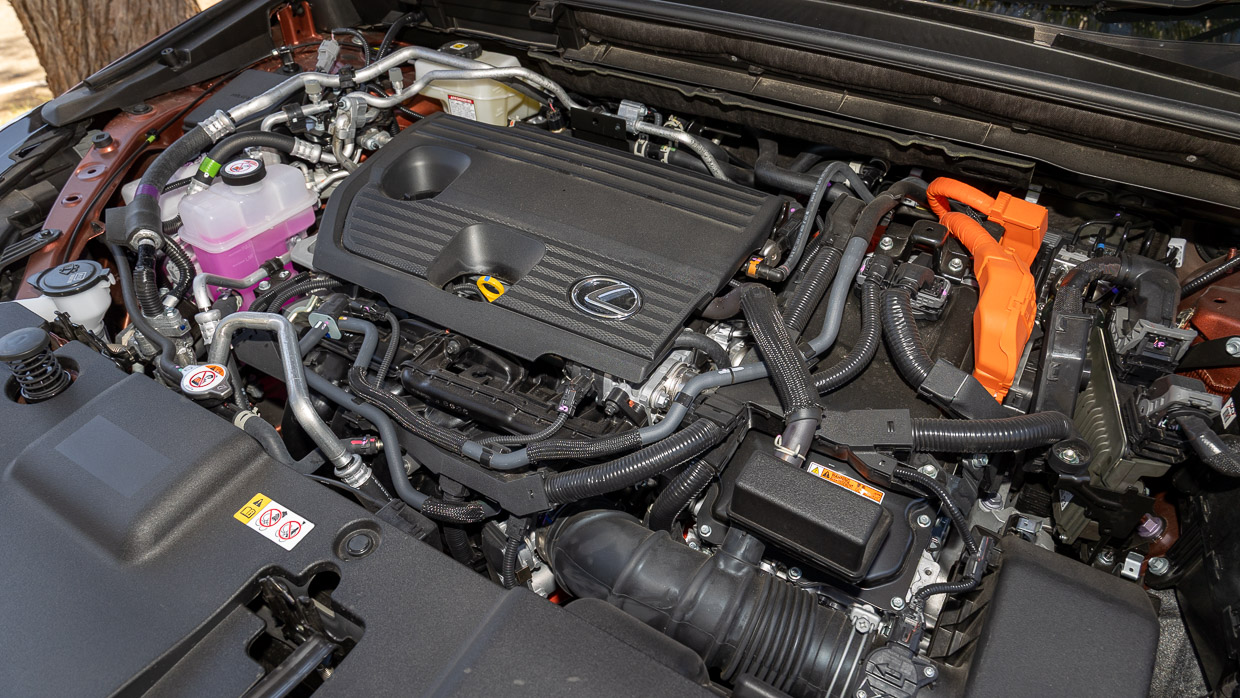
But the 450h+ PHEV is positioned as the ‘alpha’ powertrain, with peak combined power at 227kW against the 350h’s 179kW. Lexus claims a 0-400m time of 6.3 seconds for the plug-in NXs.
The PHEV has the best ‘efficiency’ claim, too. With its large 18.1kWh lithium ion battery and 87km peak electric only driving range claim, the 450h+ variants are advertised at a scant 1.3L/100km, far more miserly than the self-charging hybrids’ 5.0L/100km (FWD or AWD) let alone the far thirstier 8.4L/100km claim of the 2.4L turbo petrol versions.
As a self-proclaimed skeptic of claimed versus real-world PHEV fuel economy stats, we’ll deep dive in a future report once we have a couple of thousand scientific kilometres under our plug-in’s shiny 20-inch wheels and crunched the numbers.
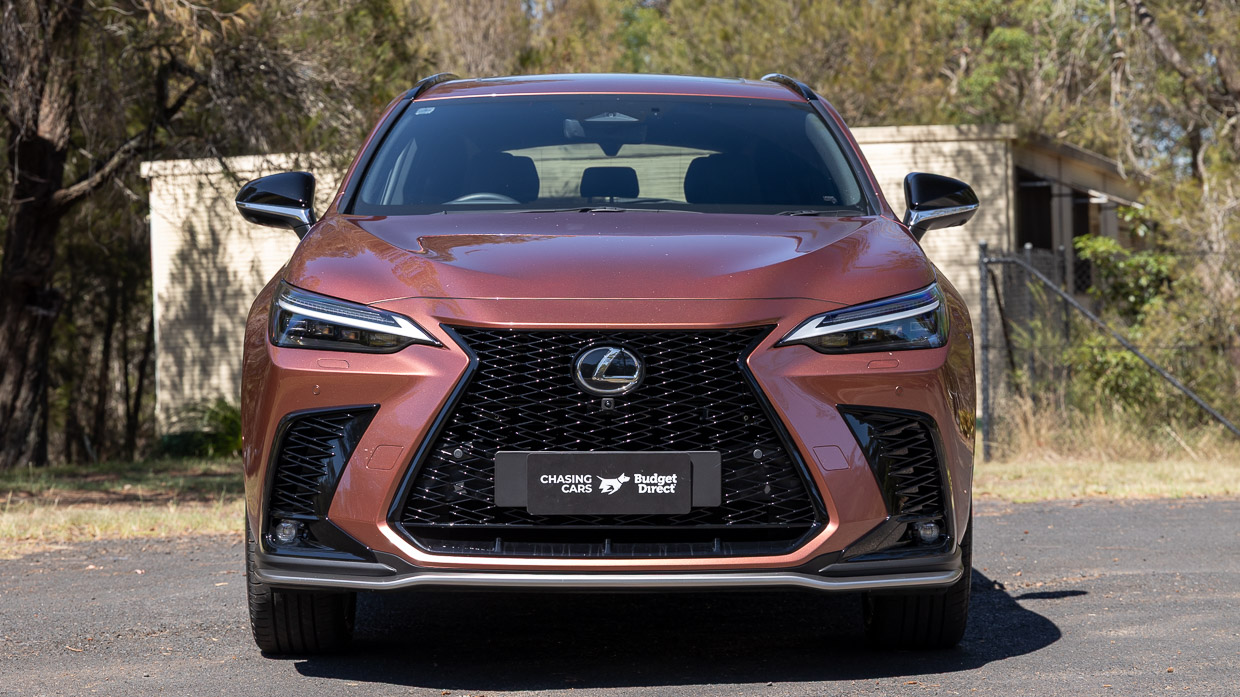
However, to dissect the wealth of features on our priciest 450h+ F Sport guise, it’s worth checking out what the cheaper ($84,500 list) 450h+ Luxury gets given the $11,500-pricier F Sport shares an identical powertrain with identical performance and efficiency claims.
The 450h+ Luxury essentially fits much of the above-mentioned 350 F Sport except:
The 450h+ F Sport, for its $11K-ish upcharge, adds or replaces:
The whole Enhancement Pack 1 and 2 thing adds another layer of feature complexity and, formally, the flagship 450h+ F Sport gets the ‘2’ pack as standard. But not all of it. Not offered is the 17-speaker Mark Levinson sound sound auto system as standard on Luxury Sport grades, nor can you get the panoramic glass roof offered elsewhere in the line-up even as a cost option.
The 450h+ F Sport lobbed into the Chasing Cars garage at the beginning of December 2025 and will head home, all going to plan, around mid-2026.
It arrived with 3514km on the odometer and was sidelined for two weeks over the Christmas and New Year period at the office in trade for a stint in a Jeep Wrangler Rubicon and, thus, we only went through three-quarters of a tank of fuel (and a single full battery charge): hence the lean $81.33 monthly running cost if sobering six-litre fuel consumption (against its glowing 1.3L claim).
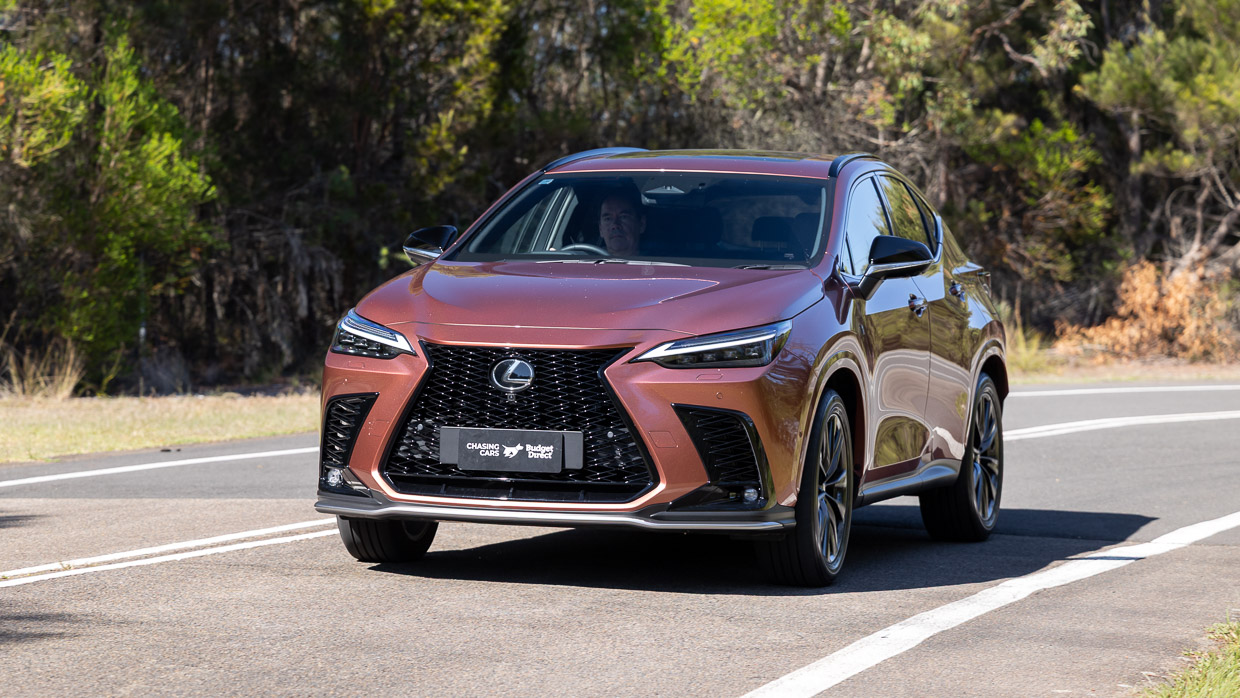
Again, we’re going to have a very close look at that combined efficiency claim in the coming months…given there’s a $11,000 premium for our long termer over the ($85,000 list) 350h AWD F Sport self-charging hybrid that ought to return, again, somewhat similar (5.0L/100km claimed) fuel consumption.
Easy. Mostly urban testing around Sydney, plus at least a couple of long interstate trips where we’ll not only assess its grand touring suitability but be able to get a fair read on proper average consumption on a single trip where both the battery and fuel tank are run as dry as we dare.
We’ll also check out its family friendliness, its performance and dynamic capabilities give the F Sport schtick, delve into safety and, as a key component of any long term testing, shake out the gremlins and discover if the pricey Lexus presents anything in the way of real deal-breakers to the ownership experience.
And, as always, we’ll try to get a read on if our spec is the sweet spot of its range, or whether you’re better off spending your hard-earned somewhere further down the ladder. Or, perhaps, might it be smarter to plonk the folding stuff down elsewhere, like maybe on a larger RX stablemate in a grade costing similar outlay…?
Key specs (as tested)
About Chasing cars
Chasing Cars reviews are 100% independent.
Because we are powered by Budget Direct Insurance, we don’t receive advertising or sales revenue from car manufacturers.
We’re truly independent – giving you Australia’s best car reviews.
The estimate provided does not take into account your personal circumstances but is intended to give a general indication of the cost of insurance, in order to obtain a complete quote, please visit www.budgetdirect.com.au. Estimate includes 15%^ online discount.
^Conditions Apply
Budget Direct Insurance arranged by Auto & General Services Pty Ltd ACN 003 617 909(AGS) AFSL 241 411, for and on behalf of the insurer, Auto & General Insurance Company Limited(ABN 42 111 586 353, AFSL 285 571).Because we don’t know your financial needs, we can’t advise you if this insurance will suit you. You should consider your needs and the Product Disclosure Statement before making a decision to buy insurance. Terms and conditions apply.
Indicative quote based on assumptions including postcode , 40 year old male with no offences, licence suspensions or claims in the last 5 years, a NCD Rating 1 and no younger drivers listed. White car, driven up to 10,000kms a year, unfinanced, with no modifications, factory options and/or non-standard accessories, private use only and garaged at night.
^Online Discounts Terms & Conditions
1. Discounts apply to the premium paid for a new Budget Direct Gold Comprehensive Car Insurance, Third Party Property Only or Third Party Property, Fire & Theft Insurance policy initiated online on or after 29 March 2017. Discounts do not apply to optional Roadside Assistance.
2. Discounts do not apply to any renewal offer of insurance.
3. Discounts only apply to the insurance portion of the premium. Discounts are applied before government charges, taxes, levies and fees, including instalment processing fees (as applicable). The full extent of discounts may therefore be impacted.
4. We reserve the right to change the offer without notice.