Powered by

-
Car Reviews
Latest reviews
-
Car News
Latest news
-
Car Comparisons
Latest comparisons
- Chasing Deals
Latest reviews
Latest news
Latest comparisons
Second-generation Bayon adopts bolder, more SUV-like design
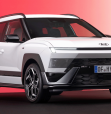
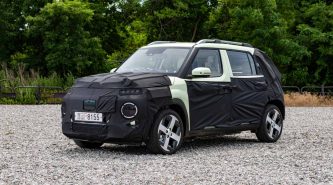
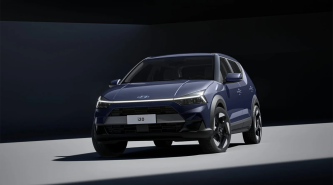
Hyundai has revealed a second-generation Bayon, though the European-built compact SUV is again expected to be excluded from the Australian market.
Bayon Mk2 arrives five years after the original debuted as the UK and Europe’s small-SUV equivalent of the Korean-assembled Venue sold in markets such as Australia.
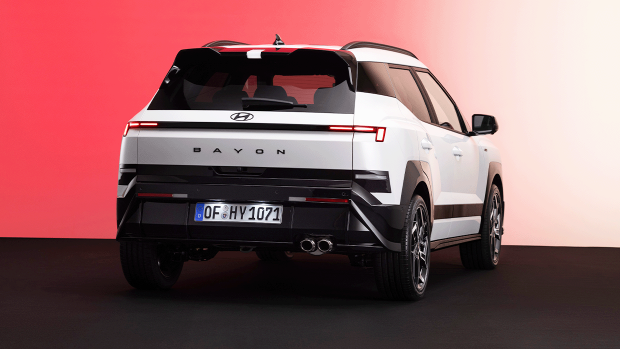
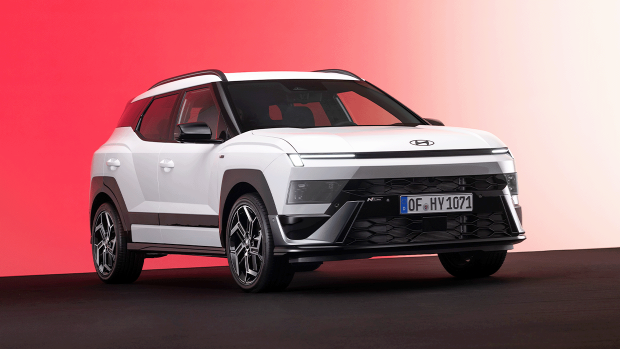
The new Bayon was unveiled at this week’s Paris motor show and is again based on the platform of the i20 city car, though has increased slightly in size while adopting a bolder exterior design that shifts away from hatchback crossover to more conventional SUV.
The styling also aligns the Bayon more closely with its bigger SUV siblings, the Tucson and Santa Fe.
At 4.2 metres, the Bayon is longer than the 4.0m Venue that is priced locally from $24,000.
Where the Venue is powered by 90kW 1.6-litre naturally aspirated engine, the Bayon will initially be offered with a 1.0-litre turbocharged petrol engine with at least 66kW before it’s joined for the first time by a hybrid powertrain combining a 1.6-litre petrol engine and electric motor for 101kW.
The hybrid will feature adaptive regenerative braking that’s available via steering wheel paddle levers.
Hybrid components shrink boot space to 397 litres in the hybrid Bayon, down from the 440 litres of the turbo petrol version.
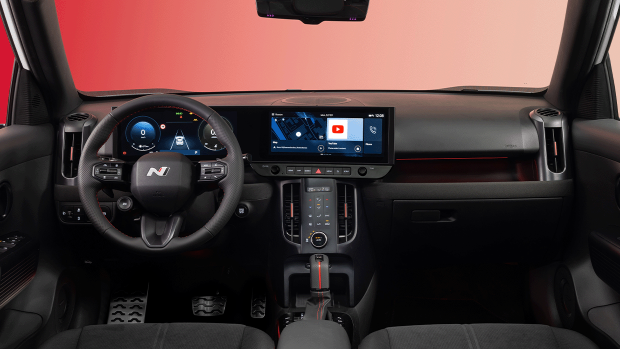
The Bayon is also offered in an N-Line specification that adopts sporty exterior and interior elements.
Hyundai Australia couldn’t make a business case for the previous Bayon due to exchange rates and the situation hasn’t changed considering the compact SUV continues to be built in Europe.
Latest news
About Chasing cars
Chasing Cars reviews are 100% independent.
Because we are powered by Budget Direct Insurance, we don’t receive advertising or sales revenue from car manufacturers.
We’re truly independent – giving you Australia’s best car reviews.