Powered by
-
Car Reviews
Latest reviews
-
Car News
Latest news
-
Car Comparisons
Latest comparisons
- Chasing Deals
Latest reviews
Latest news
Latest comparisons
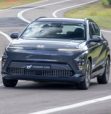
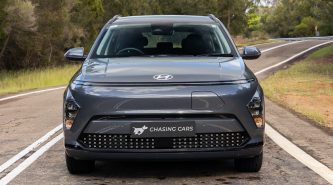
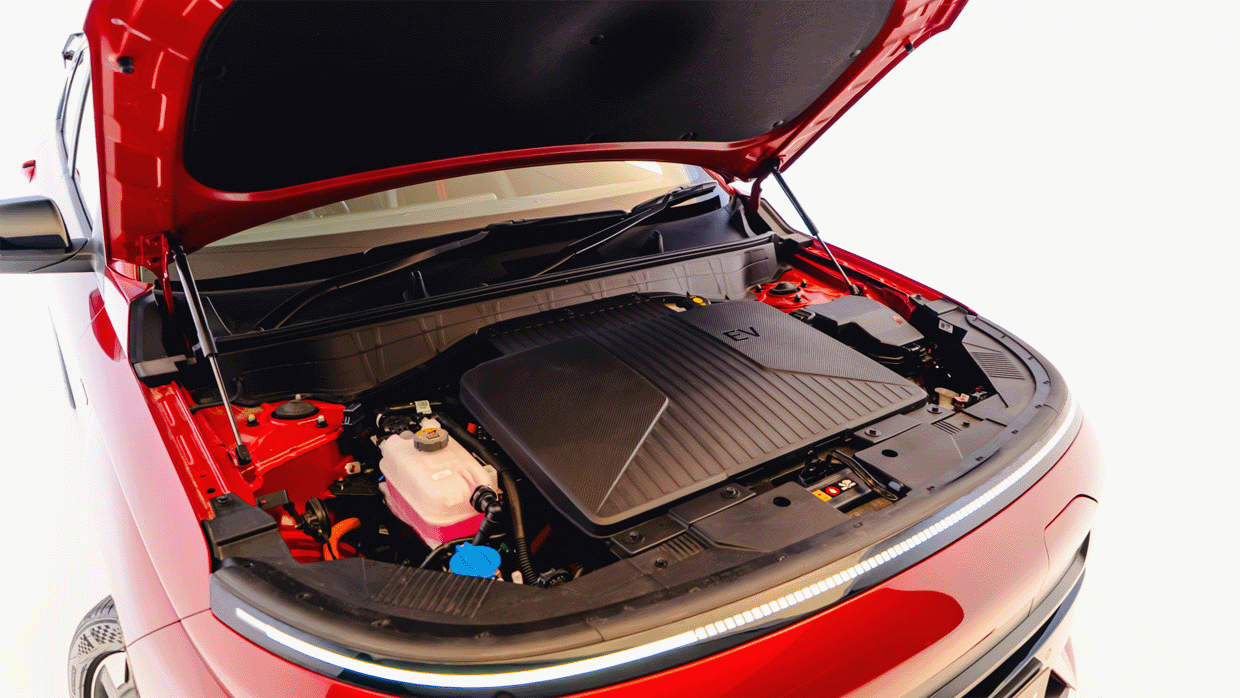
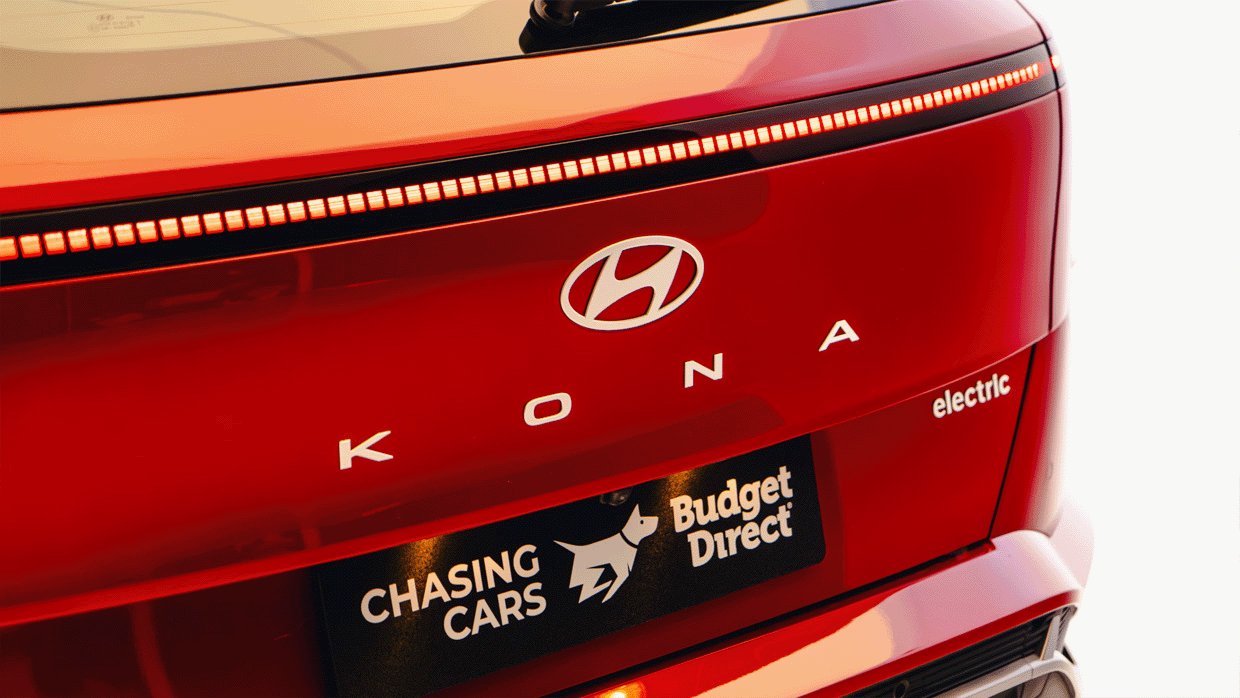
If you want a regular car from a well-known brand that is available with an electric powertrain, then the Kona Electric makes logical sense, though it’s far from cutting edge
If you want an electric vehicle but aren’t too keen on testing the reliability waters with an unknown (and as-yet unproven) brand in Australian conditions, then the major South Korean car makers (Hyundai and Kia) have you well-covered.
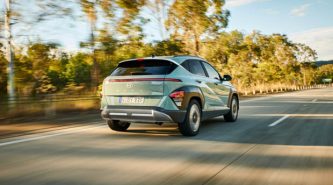
The now three-year-old, second-generation Hyundai Kona – Australia’s best-selling small SUV – offers multiple powertrains (petrol, hybrid, and fully electric) with the same packaging and body design, spanning multiple trim levels and price points but with each variant sharing the same class-leading space and seating comfort.
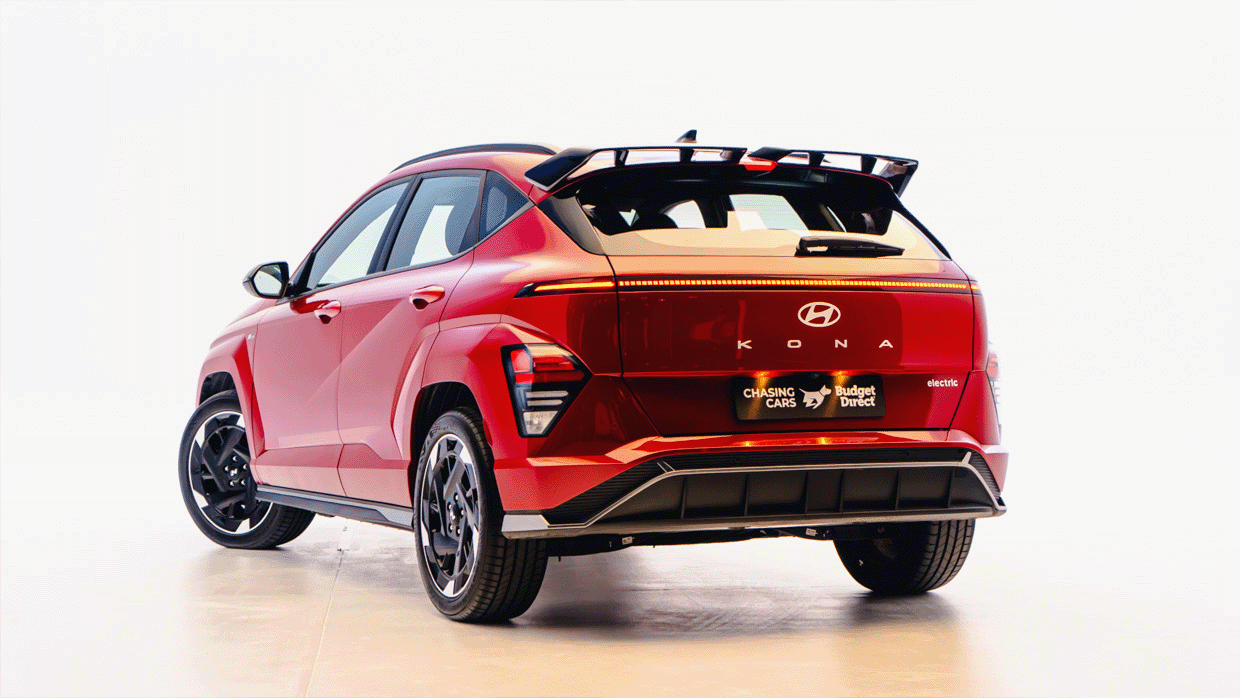
Recent price reductions have slashed $8000 from the price tags of the Kona Electric line-up, meaning the flagship Premium N-Line tested here now starts at $63,000 before on-road costs (but is currently $64,990 driveaway – $4000 more than the regular Premium version).
Indeed, the only MY27 Kona Electric available with an N-Line package is this Premium variant – you can no longer specify the base Electric or the Electric Elite with an N-Line upgrade like you could for the previous model year (MY26).
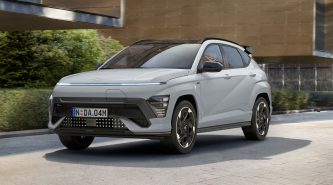
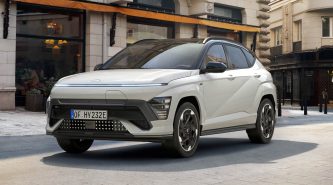
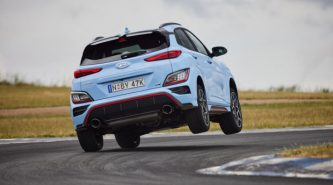
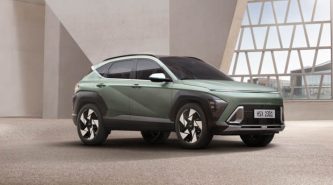
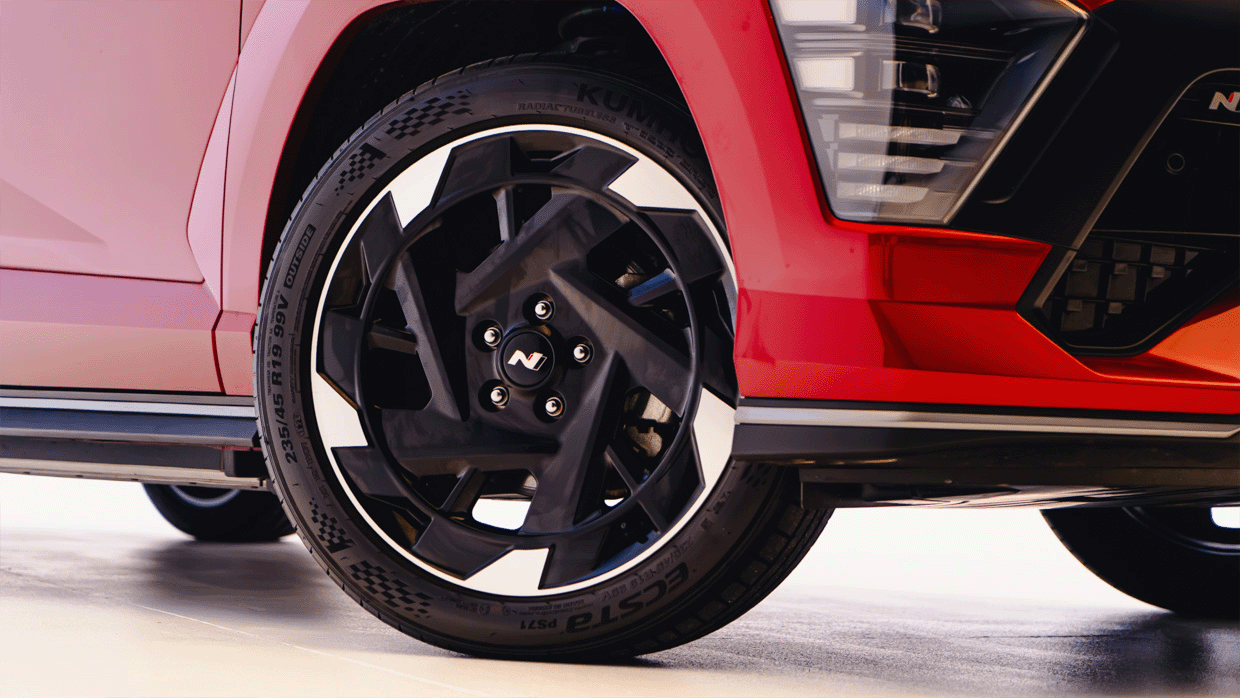
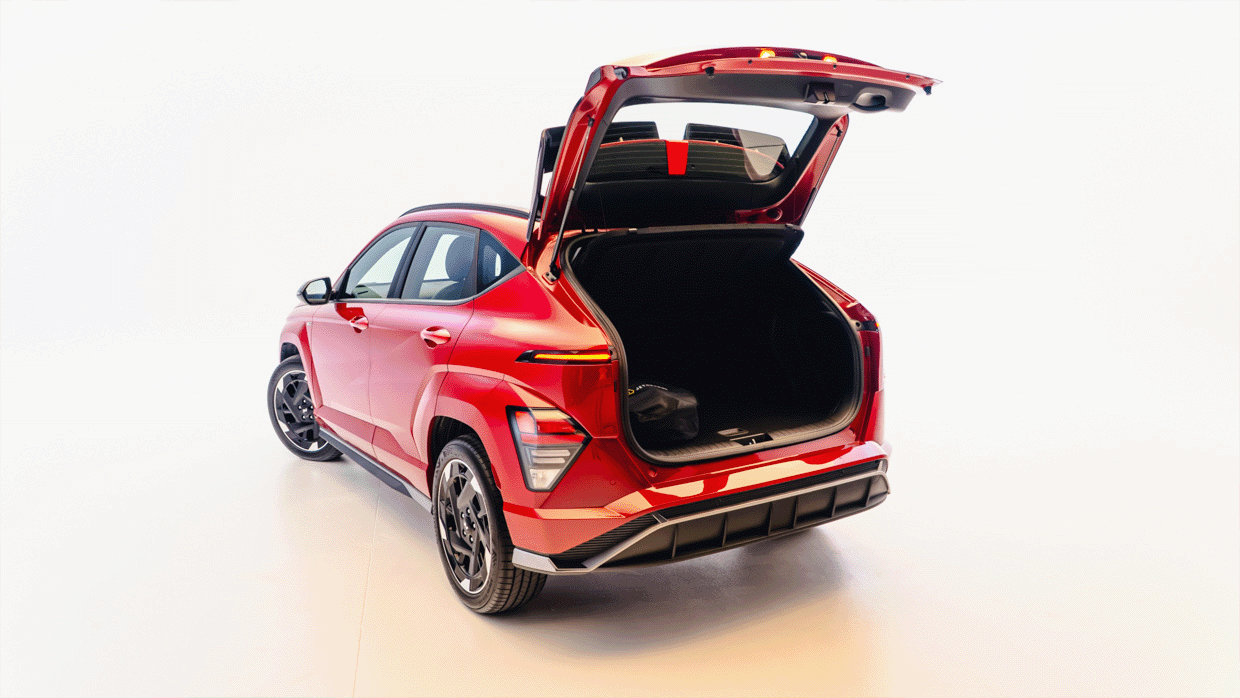
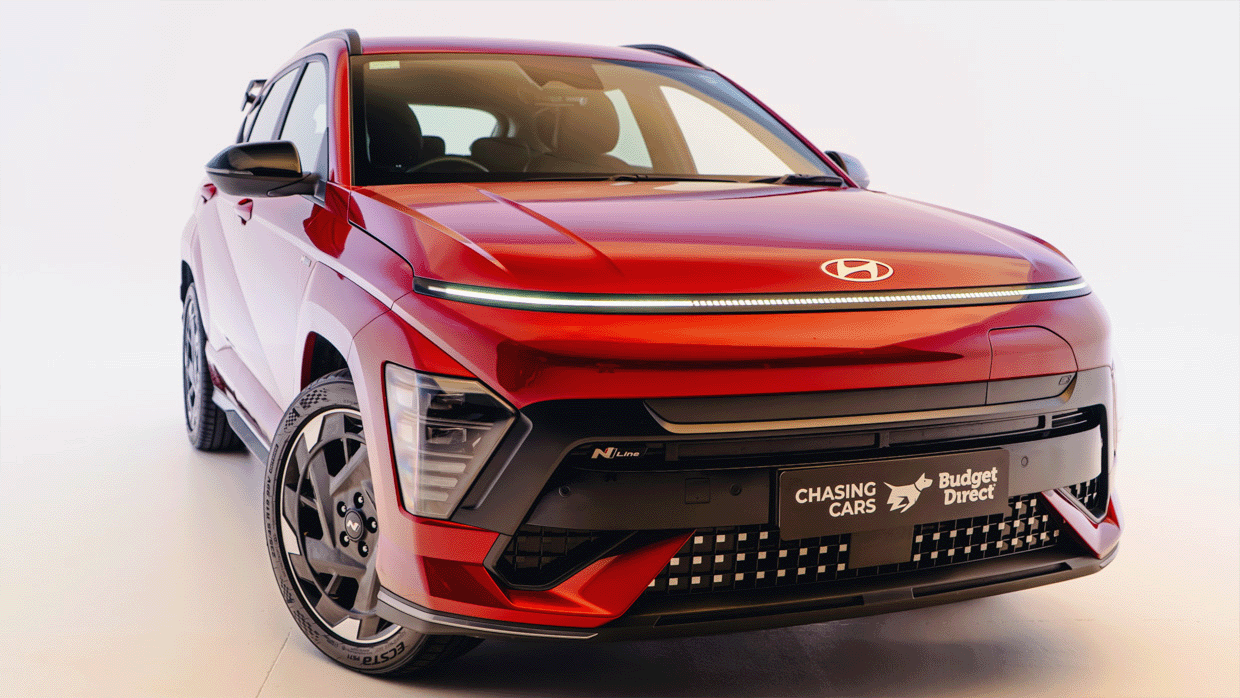
The N-Line’s four-grand expense brings visual razzle-dazzle – unique black 19-in alloys, an incongruous rear spoiler, unique bumpers/skid plates/side skirts, body-coloured cladding and exclusive paint colours (Neoteric Yellow, Soultronic Orange), plus an N-Line leather/Alcantara upholstery and steering wheel, ‘Dark Metal’ and ‘Active Red’ detailing, and alloy pedals.
It’s these racy visuals that make the N-Line version an acquired taste. Do you want your brisk but hardly scorching small electric SUV to look athletic, or would you prefer the more restrained visage of the cheaper Kona Electric Elite or Premium?
Where the Kona Electric puts substantial distance between itself and the vast majority of Chinese EVs asking for similar money is in the way it drives.
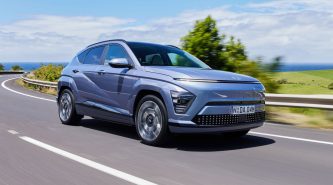
It might be a relatively unassuming front-driver with only 150kW/255Nm, but in reality it feels strong in its body, planted on the road, confidence-inspiring in corners and, most importantly, smoothly calibrated in its steering, braking and accelerator response.
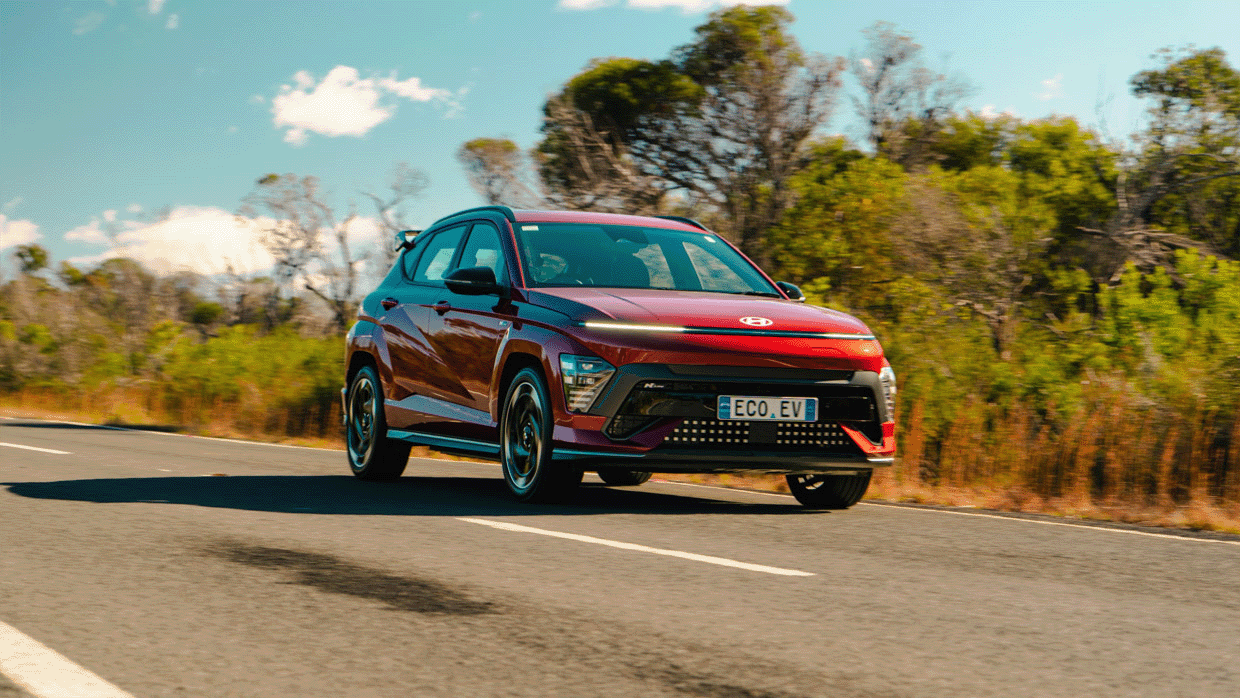
In an era where many inexpensive EVs are impossible to drive smoothly – to the huge detriment of passenger comfort and motion-sickness mitigation – the Kona Electric feels effortlessly refined, mature and finessed.
With 0-100km/h acceleration in a claimed 8.1 seconds, this isn’t a neck-snapping EV, but nor does it need to be. That’s all part of its smoothness and its dynamic cohesion, which is helped by Hyundai’s benchmark approach to adjustable regenerative braking settings.
Where the Kona Electric stumbles is with the specification that we have here on test – the Premium N-Line.
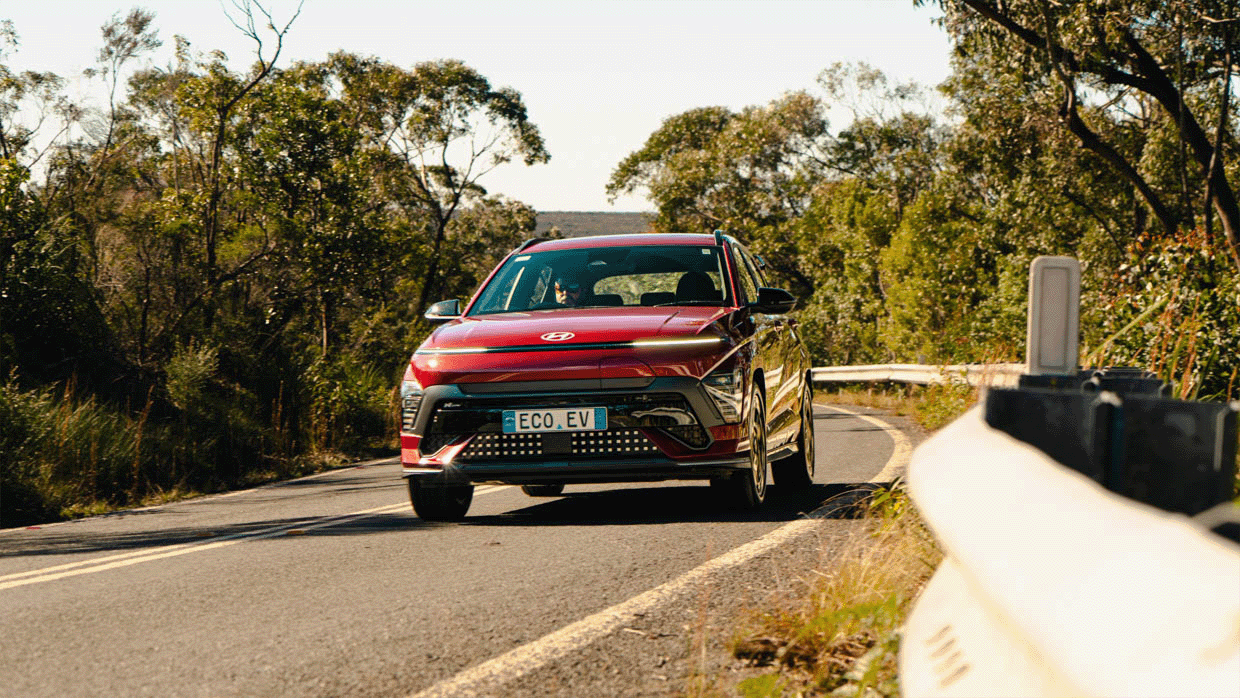
On smooth roads, it’s excellent – offering terrific handling balance, precise and well-weighted steering and impressive refinement.
But over uneven Aussie country roads, our test N-Line frequently ‘tramlined’ at the front, where the guiding wheels followed ridges in the road, rather than absorbing them, which made it feel fidgety and ill-sorted.
It’s not something we’ve noticed in other Kona Electric variants – especially the base Extended Range wearing narrower, higher-profile 215/60R17 tyres instead of 235/45R19 Kumhos – so maybe this was specific to our test car.
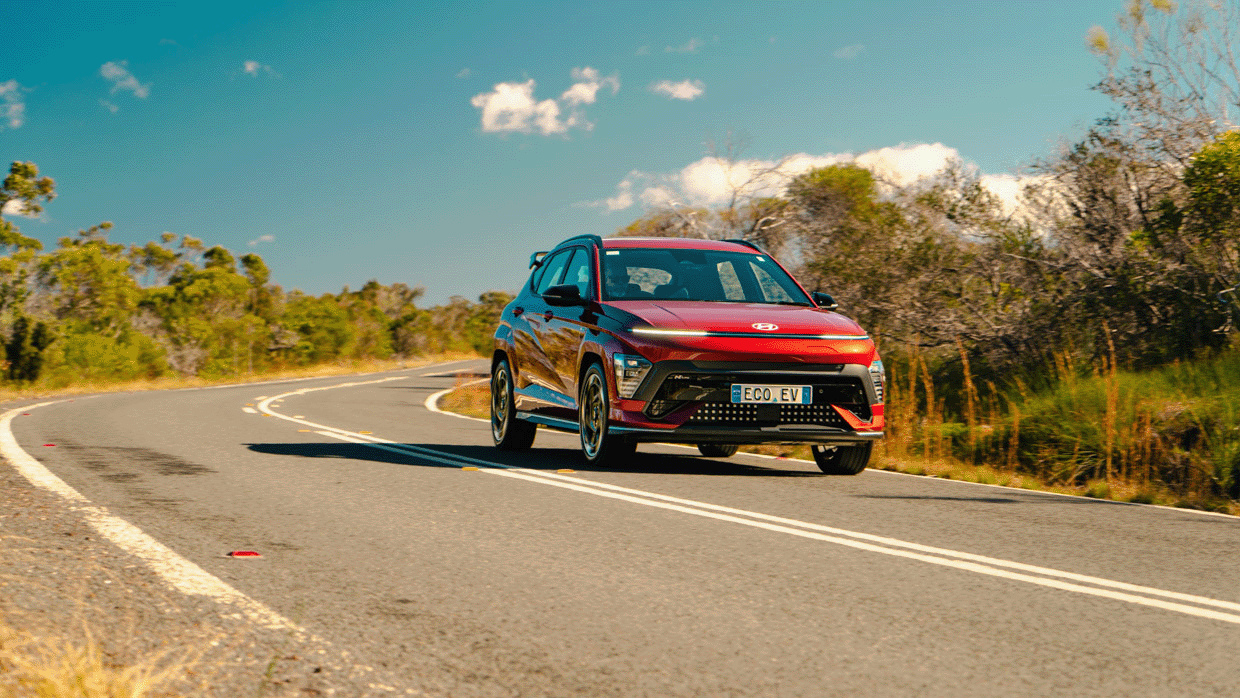
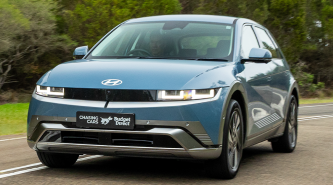
But if you’re contemplating spending $65K on an Electric N-Line, we’d be test-driving the more sophisticated $70K Hyundai Ioniq 5 RWD, which is more powerful (168kW/350Nm) and faster to 100km/h (7.5sec), but also deeply impressive in terms of ride, handling and steering crispness.
Where the Kona Electric Premium N-Line really wins people over is inside its warm, tactile, generously specified and spacious cabin.
The N-Line treatment makes everything quite dark, but there’s a bunch of red highlights (including stitching on the steering wheel and seats) and luxurious perforated Alcantara suede for the front seat facings and entire rear bench, lifting cabin warmth considerably. This seat upholstery is the best reason for specifying the N-Line package.
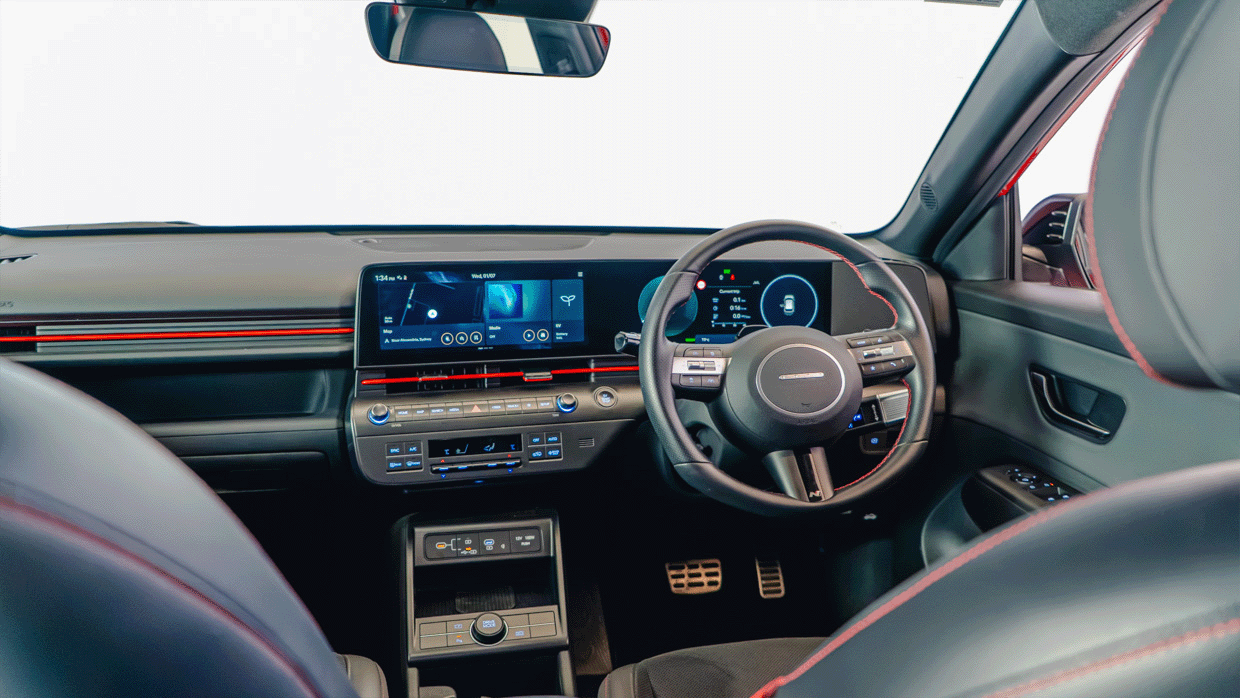
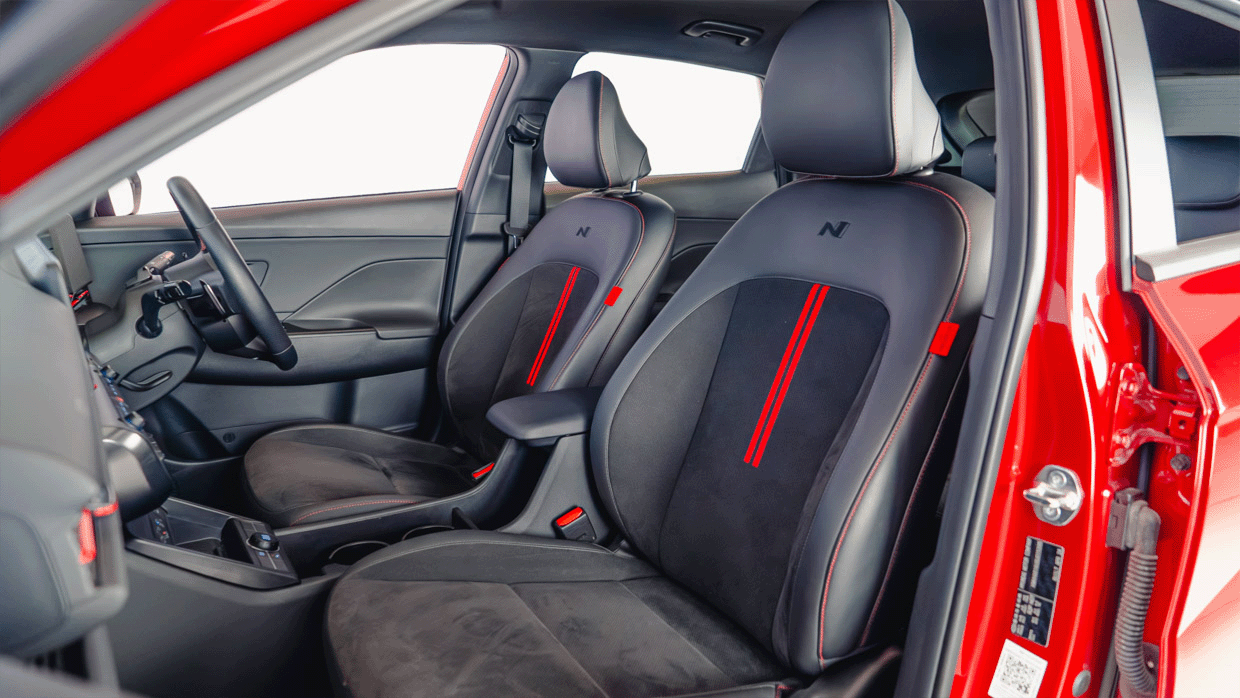
Both front seats feature heating and cooling, as well as 10-way electric adjustment for the driver’s seat and eight-way electric for the passenger’s seat, both with ‘zero gravity’ relaxation function. They’re generously sized and offer a pleasantly elevated view.
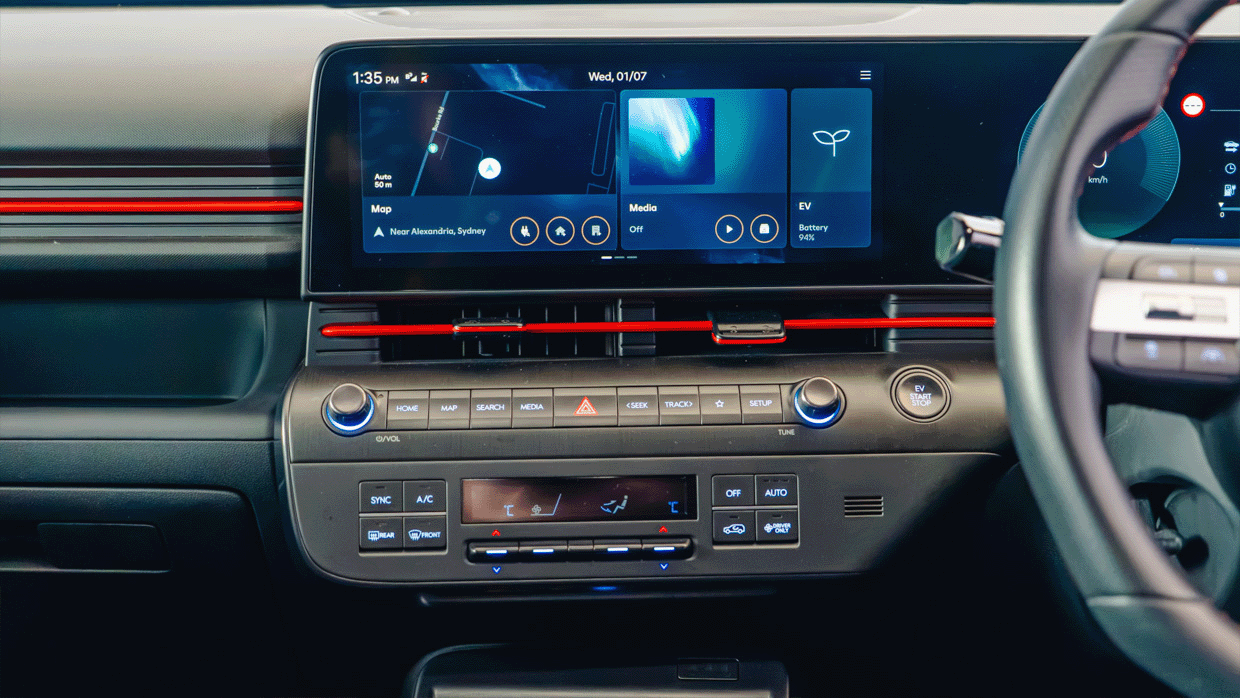
There’s also ample bottle storage in the front doors, useful centre-console room and a logical, user-friendly control layout that relies on switchgear for most functions – not a clumsy, convoluted touchscreen!
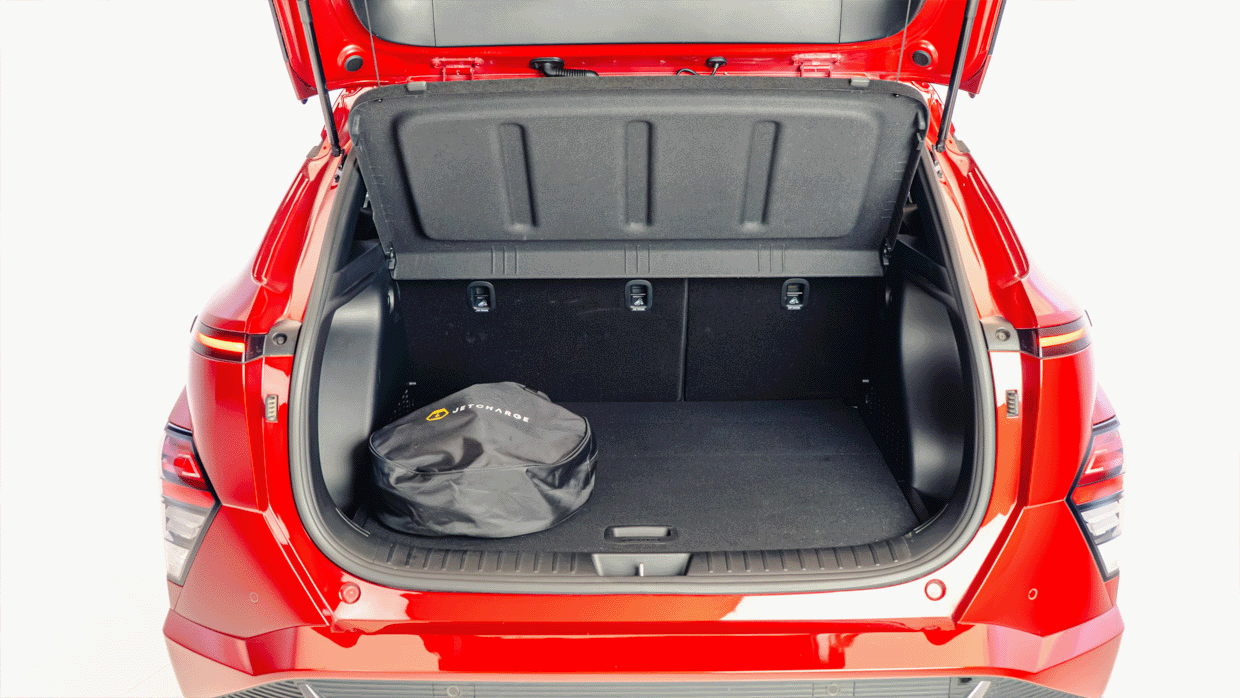
The Kona’s rear seat is arguably the best in its class for three-person room, forward vision and overall legroom – enhanced by a fully flat floor and complemented by an excellent 407-litre boot (with electric tailgate).
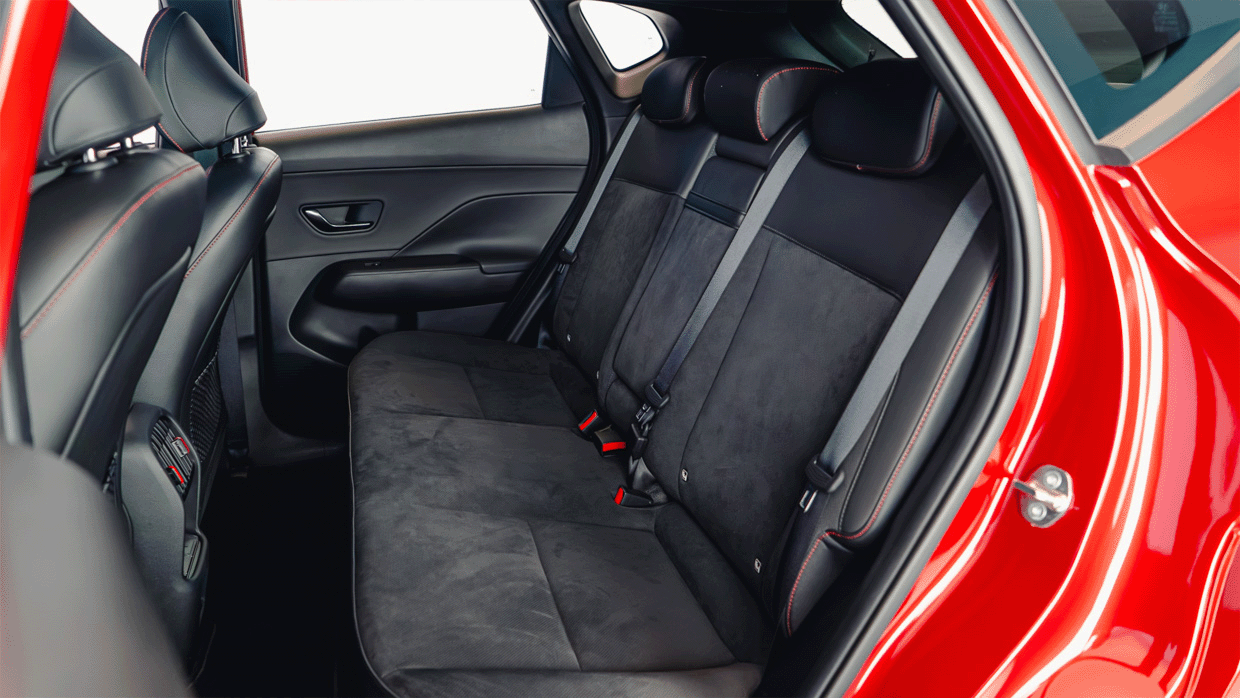
In these regards, just like any other Kona, the Electric packs plenty into its relatively compact size.
The Premium N-Line also boasts a large glass sunroof, a 12.3-inch driver’s instrument display that blends into a 12.3-inch touchscreen, wireless Apple CarPlay/Android Auto, and a decent eight-speaker Bose sound system.
There’s all the expected active-safety gear too, including adaptive cruise control with stop-and-go, safe exit assist and rear cross-traffic collision-avoidance assist.
However, you may need to disable the speed-limit alert (by holding the volume mute button), driver attention monitoring (a shortcut can be programmed into the ‘star’ wheel button) and lane-keep assist (also on a wheel button) because they’re too insistent and diminish the joy of driving.
The official combined ADR81/02 energy efficiency figure for the Kona Electric Premium N-Line is 16.7kWh/100km while its WLTP-measured range claim is a modest 444 kilometres – significantly less than the 505km offered by the base Kona Electric on 17-inch wheels.
During our testing, the Electric N-Line averaged an impressive 14.9kWh/100km in mixed urban, highway and dynamic driving.
With a usable battery capacity of 64.8kWh, that energy consumption calculates to a real-world range of 435km, which indicates the N-Line should easily be able to match or exceed its 444km WLTP range claim – a rare feat in any EV.
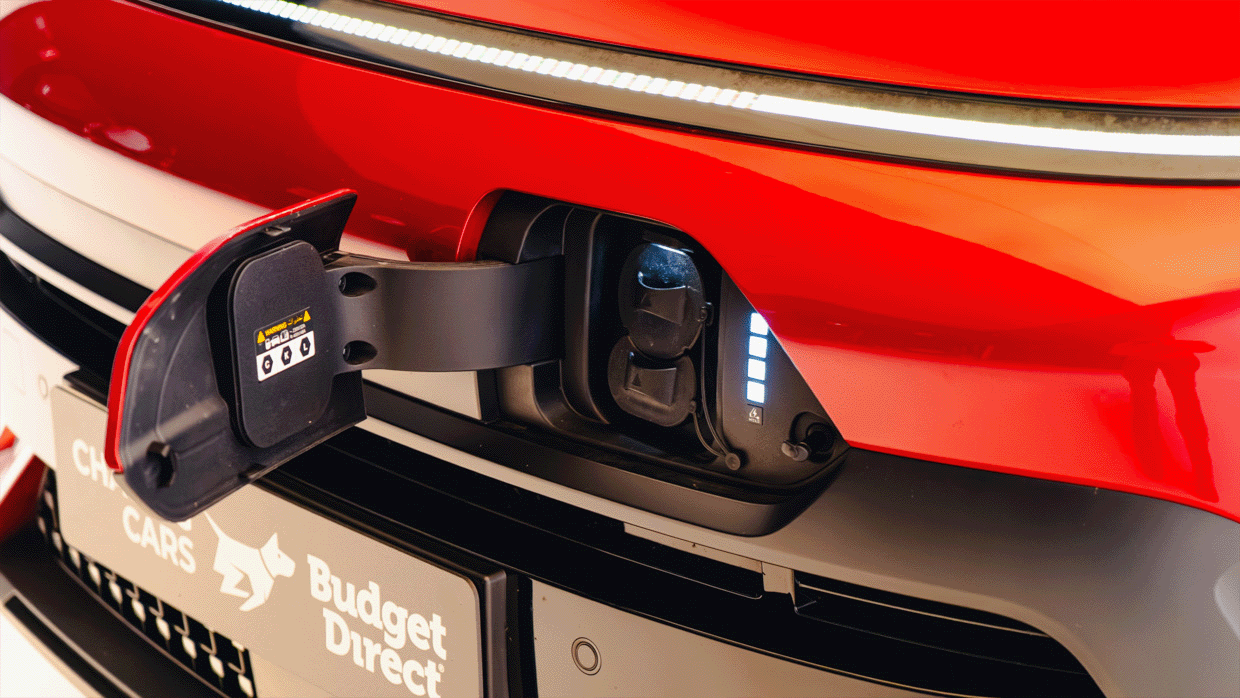
Unfortunately, charging times for the 400-volt Extended Range Kona Electric are well below what Hyundai’s 800v EVs manage – 10-80 percent in a hope-you-brought-your-knitting 45 minutes (at a meagre 94kW DC maximum) and a 10-100 percent AC charge (at 10.4kW) in 6hrs 35mins.
Recommended service intervals are every two years or 30,000km, with the Kona Electric’s six-year/90,000km servicing cost being $2227.
Hyundai’s new-vehicle warranty in Australia is five years/unlimited kilometres – or seven years if serviced with Hyundai’s network – while its battery warranty is eight years/160,000km.
Budget Direct told us the median annual premium purchased for the first time between 1/7/25 and 1/7/26 to comprehensively insure a new Hyundai Kona was $1129. Individual circumstances and policy terms may vary.
Of course, everybody’s situation is different, and the premium will vary according to make and model, and other things insurers take into account, such as your postcode, driving history, who drives the car, where you garage the car and more.
Please quote for yourself. Subject to meeting underwriting criteria. Insurance issued by Auto & General Insurance Company Limited. See PDS & TMD at budgetdirect.com.au
The Kona Electric is a car that works best at base level.
With the larger 65kWh battery, the Extended Range (currently $50,990 driveaway) or Extended Range Elite (currently $53,990 driveaway) offer the most mileage from a charge, plus superior steering and ride quality, as well as a big lift in equipment for the Elite version for only an extra $3000.
In comparison, the Premium N-Line (at $65K driveaway) is well beyond the Kona Electric sweet spot, both for how much it costs and the way it drives.
Anyone considering paying mid-60s for an electric Hyundai should look no further than the aforementioned base Ioniq 5 rear-wheel drive, which is currently $69,990 driveaway. Its outstanding suppleness and smoothness, combined with impressive range (570km) and just 18 minutes for a 10-80 percent charge make it one of the best EVs you can buy in Australia.
It’s a modern design classic – elevating the evergreen Ioniq 5 far beyond the likeable but comparatively humble Kona Electric.
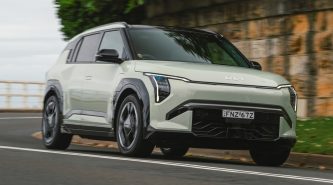
Or there’s the Kona’s distantly related Kia EV3 GT-Line AWD cousin with its 0-100km/h in 6.6sec punch and impressive 559km WLTP range for $66,490 (before on-road costs).
Like we said, if a Kona Electric is on your radar, best stick to a lower spec.
Key specs (as tested)
About Chasing cars
Chasing Cars reviews are 100% independent.
Because we are powered by Budget Direct Insurance, we don’t receive advertising or sales revenue from car manufacturers.
We’re truly independent – giving you Australia’s best car reviews.
The estimate provided does not take into account your personal circumstances but is intended to give a general indication of the cost of insurance, in order to obtain a complete quote, please visit www.budgetdirect.com.au. Estimate includes 15%^ online discount.
^Conditions Apply
Budget Direct Insurance arranged by Auto & General Services Pty Ltd ACN 003 617 909(AGS) AFSL 241 411, for and on behalf of the insurer, Auto & General Insurance Company Limited(ABN 42 111 586 353, AFSL 285 571).Because we don’t know your financial needs, we can’t advise you if this insurance will suit you. You should consider your needs and the Product Disclosure Statement before making a decision to buy insurance. Terms and conditions apply.
Indicative quote based on assumptions including postcode , 40 year old male with no offences, licence suspensions or claims in the last 5 years, a NCD Rating 1 and no younger drivers listed. White car, driven up to 10,000kms a year, unfinanced, with no modifications, factory options and/or non-standard accessories, private use only and garaged at night.
^Online Discounts Terms & Conditions
1. Discounts apply to the premium paid for a new Budget Direct Gold Comprehensive Car Insurance, Third Party Property Only or Third Party Property, Fire & Theft Insurance policy initiated online on or after 29 March 2017. Discounts do not apply to optional Roadside Assistance.
2. Discounts do not apply to any renewal offer of insurance.
3. Discounts only apply to the insurance portion of the premium. Discounts are applied before government charges, taxes, levies and fees, including instalment processing fees (as applicable). The full extent of discounts may therefore be impacted.
4. We reserve the right to change the offer without notice.