Powered by

-
Car Reviews
Latest reviews
-
Car News
Latest news
-
Car Comparisons
Latest comparisons
- Chasing Deals
Latest reviews
Latest news
Latest comparisons
For electric driver-focused ultra-performance for somewhat attainable money, Hyundai’s newest N-car has no competition
The arc from the excellent red-hot, turbo-petrol i30 hatch – that established Hyundai N brand credibility – to the latest N-car in the electric Ioniq 6 N sedan, is a considerable one. There’s almost no correlation in technical DNA and a magnitude of difference in performance and price.
But they’re close kindred spirits, both demonstrating what the Namyang skunkworks is capable of at date-stamps eight years apart (2018 for i30 N through to today). And – hot take – both are absolute high-performance bargains.
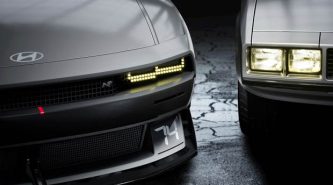
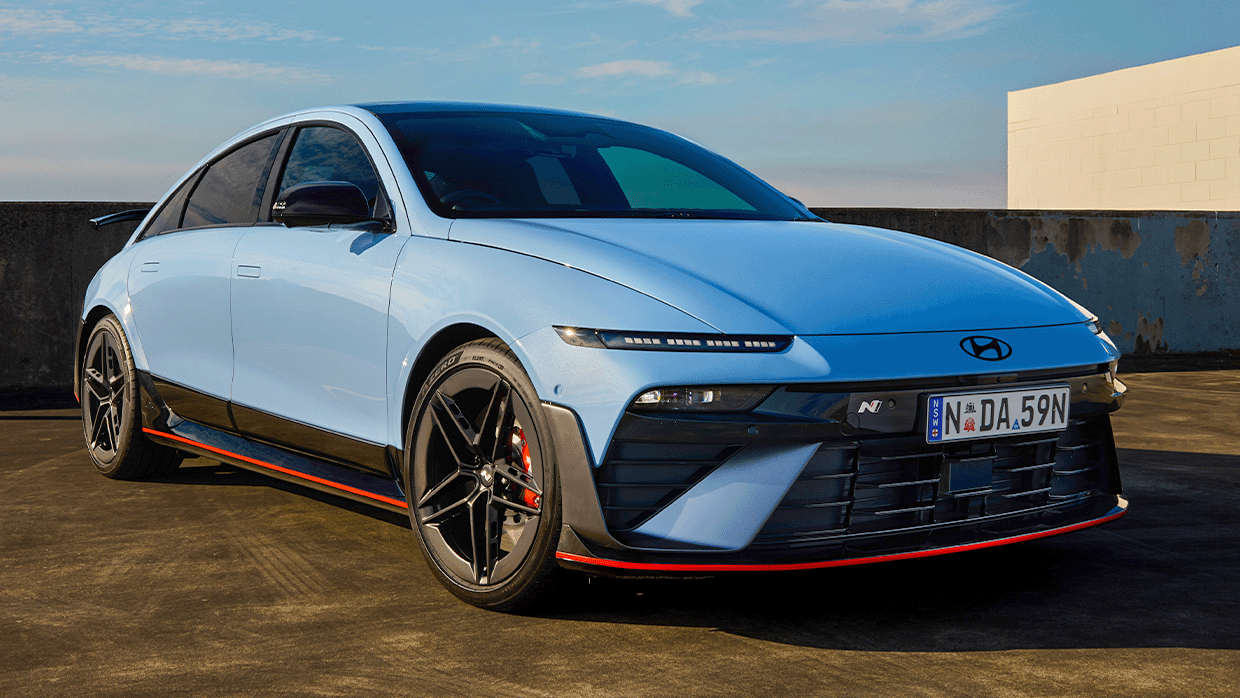
Three years after we drove the Ioniq 6 N’s prototype testbed, the RN22e, its polished road-and-track-going production version arrives in Aussie showrooms at $115,000 (list) as a single specification. Big coin for a Hyundai, you might say, and through a pragmatic lens, perhaps so.
But as a love letter to gearheads, brimming with techno-geekery, and evolved and polished from an already lofty baseline (Ioniq 5 N), no other EV out there offers this level of uncompromised pace, focus, sophistication and fun factor… for virtually any outlay, let alone $115K.
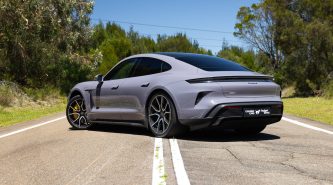
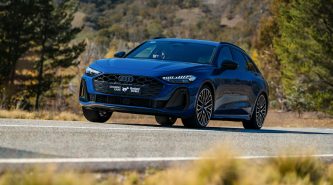
Tesla? Not even close. Porsche and Audi? You’ll need to open your wallet way wider to ink your name on Taycan or e-Tron rego papers.
The Ioniq 6 N is not for everyone. And it’s certainly not out for volume sales.
Instead, it’s a quite complex – and not entirely accessible – techno tour de force that hopes to reward forward-thinking enthusiasts with a pulse-racing thrill ride. And one that’s wholly organic, too, which would surely prove its most masterful trick.
It also hopes to deliver as a Jekyll and Hyde all-rounder, a device you could daily drive (like a Porsche 911 Carrera) one moment and crush a racetrack (like a GT3) if you wanted the next. That in itself is one helluva challenge.
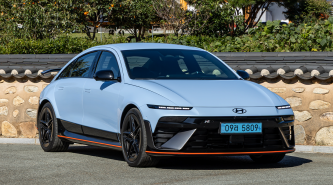
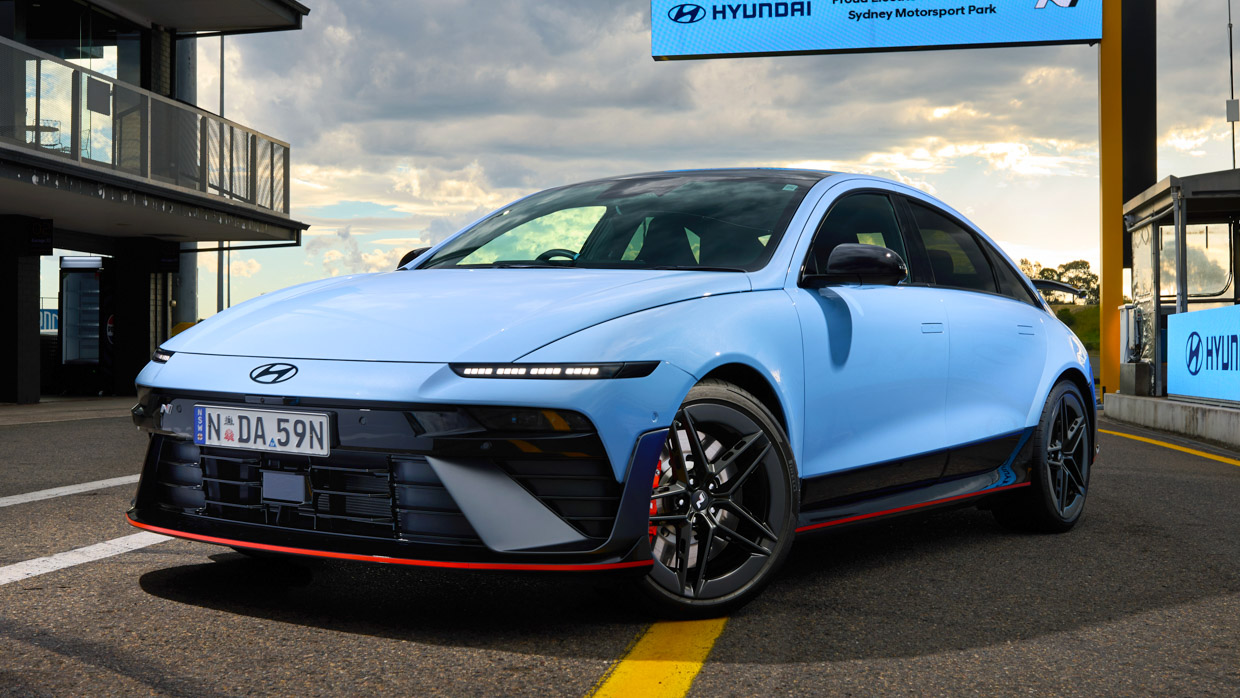
It’s one spec, $115K list, with a no-cost delete option for the standard-fit sunroof. Six colours are available, including the debut of signature Performance Blue in a new pearlescent finish.
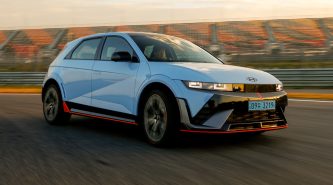
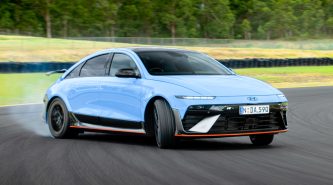
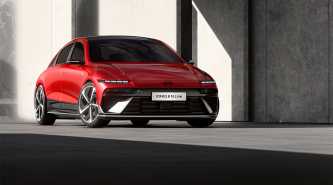
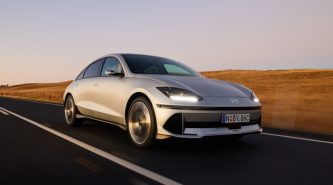
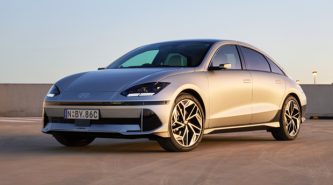
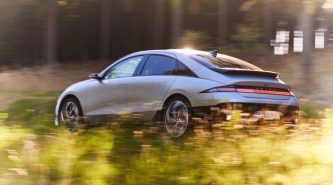
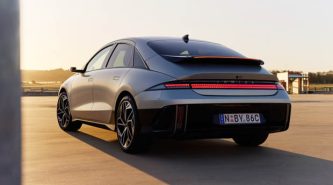
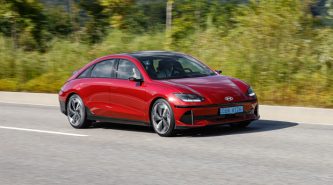
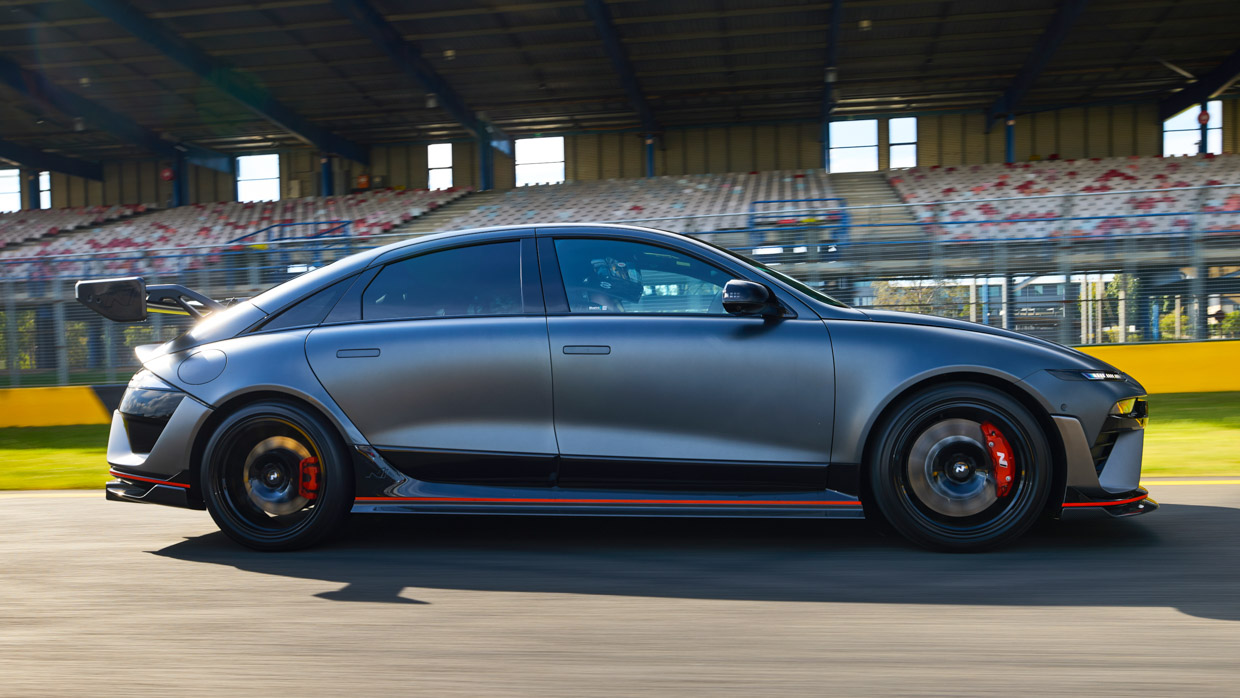
The geeky stuff? N-specific bodywork boasts Air Curtain canards, satin black and silver highlights, and a rear wing capable of 100kg of downforce at v-max, despite a relatively slippery 0.274 drag coefficient.
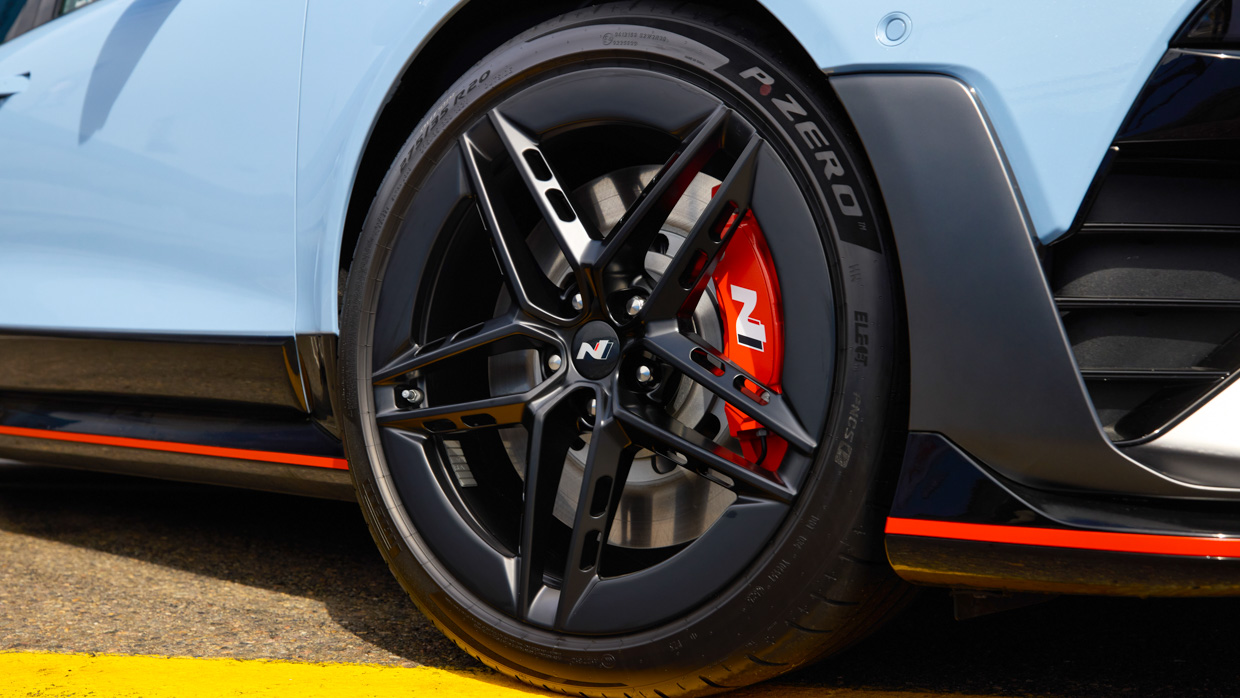
Wheels are forged 20-inchers, one inch smaller than the ‘5 N’ as, Hyundai says, it affords a broader choice of hi-po road and circuit-friendly rubber fitment. Hyundai N-specified 275mm Pirelli P Zero 5 tyres are standard.
The reinforced (welding and adhesive) body boasts a 20-percent increase in torsional rigidity, while adding a ribbed glass-fibre plastic front suspension brace, a metal rear brace and heavier-duty suspension mounting points. The 6 N also has a lower roll centre than the 5 N.
Electronic controlled damping, a torque vectoring electro-mechanical rear LSD, new integrated driveshafts and dual-axis hydro mounts and hydro bushings feature, while a motor-driven power steering system – with torque steer compensation smarts – and stiffer mounting ‘void’ bushing are brand firsts.
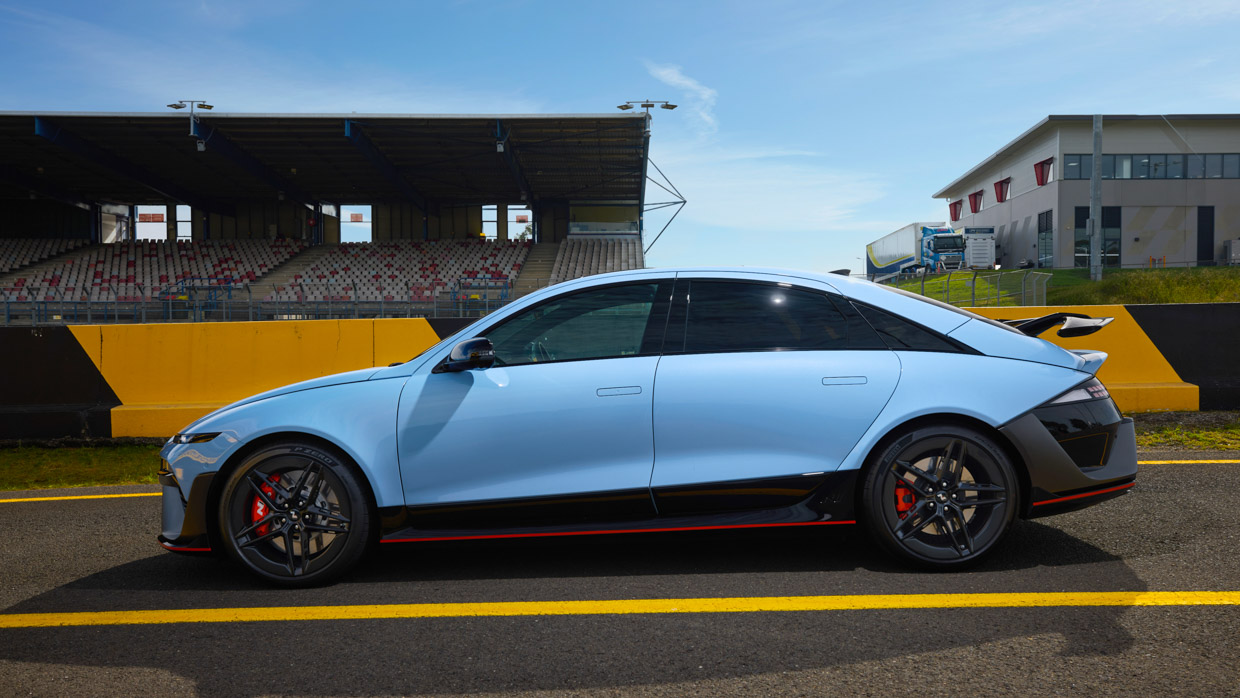
The front (166kW/350Nm) and rear (282kW/390Nm) motors combine for 448kW and 740Nm peaks, discounting 10-second bursts of N Grin Boost adding an extra 29kW. Torque split can send as much as 95 percent drive to either axle, with “up to 11 different driving modes” able to alter drive in different condition maps.
Its 0-100km/h claim is 3.2 seconds, while top speed is capped at 257km/h.
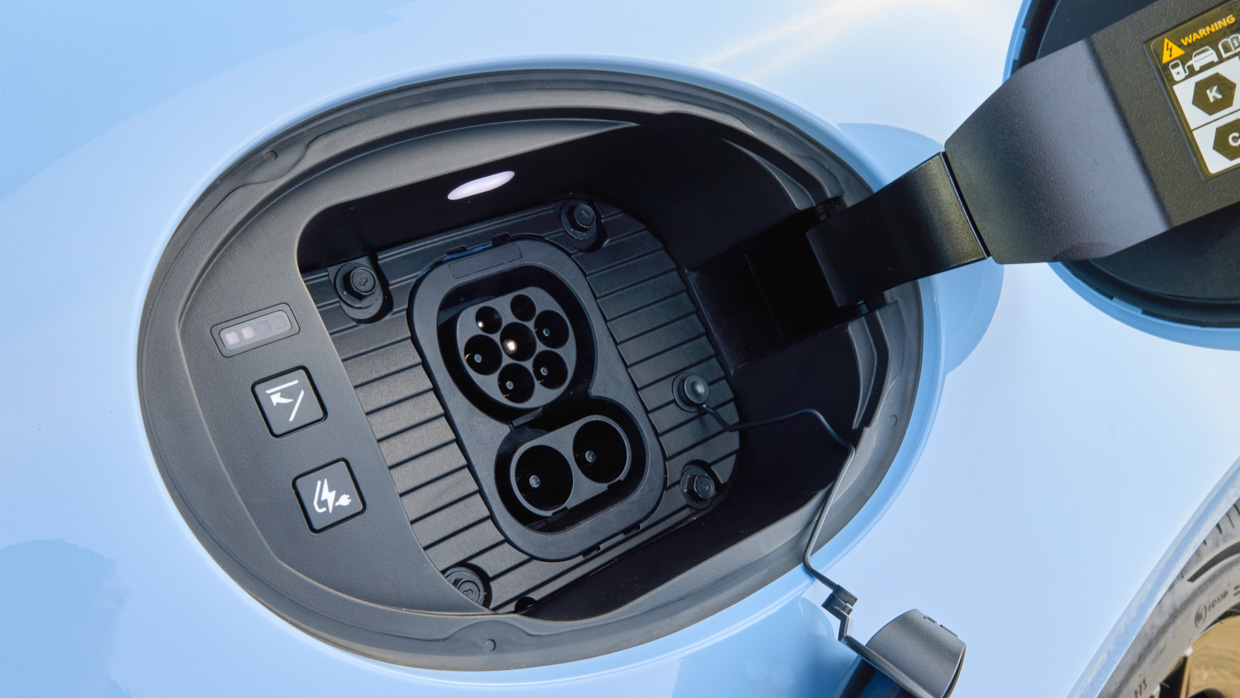
The 800-volt E-GMP architecture can return a 10-80 percent peak charge of the 84kWh gross (77kWh net) battery in just 18 minutes. Range is 487 kilometres with a combined 18.7kWh/100km consumption, both WLTP, if you choose not to tap into the 6 N’s formidable outright performance potential.
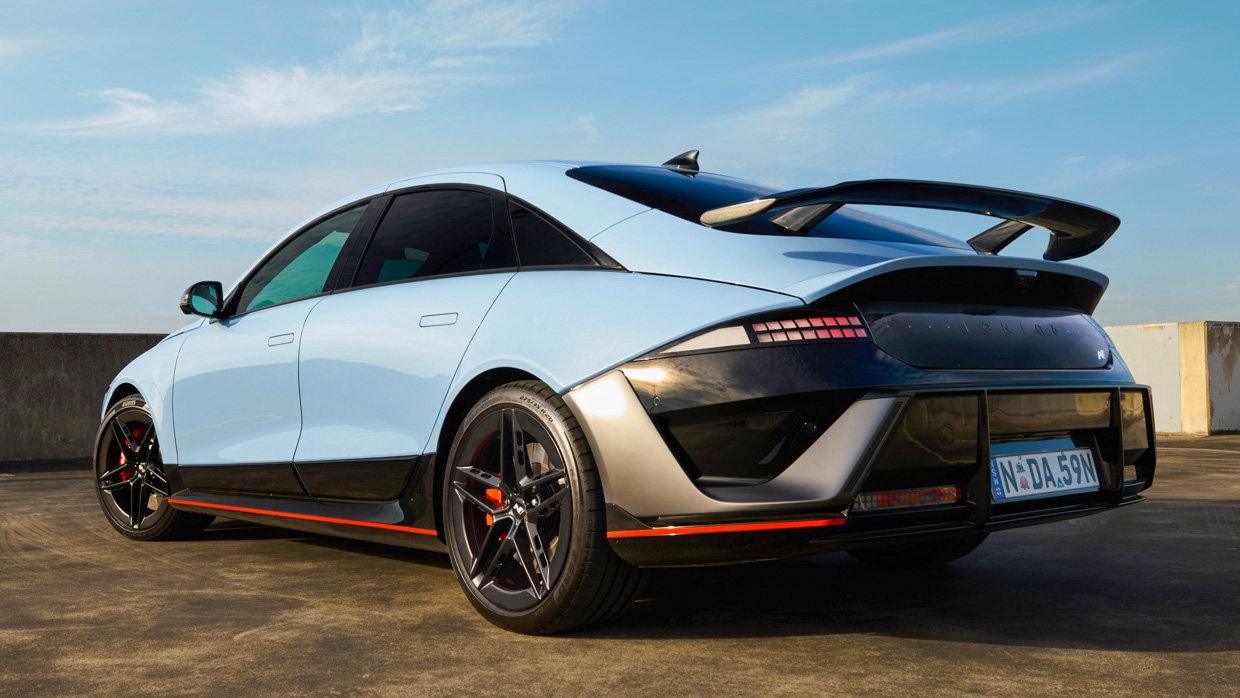
Elsewhere, 400mm four-piston monobloc front and 360mm slide type brakes, with dual selectable modes (Normal and Sport) are standard, with a matrix of regen settings paired with its four drive modes (or separately adjustable using paddle shifters). ESC can be completely defeated for track work.
Cooling has also been overhauled from 5 N spec, with a 7.0kW heater (up from 4.5kW), upgraded heat exchangers and a higher-capacity battery preconditioner, all designed for “drag, sprint or endurance” use cases.
More? The N e-Shift offers short, stacked ‘faux’ gearshifts with expanded deployment in more drive settings, with a shift light now paired to the cabin mood lighting. Sonics are enhanced with a new dual-DSP, six-channel Active Sound+ complete with added sound effects.
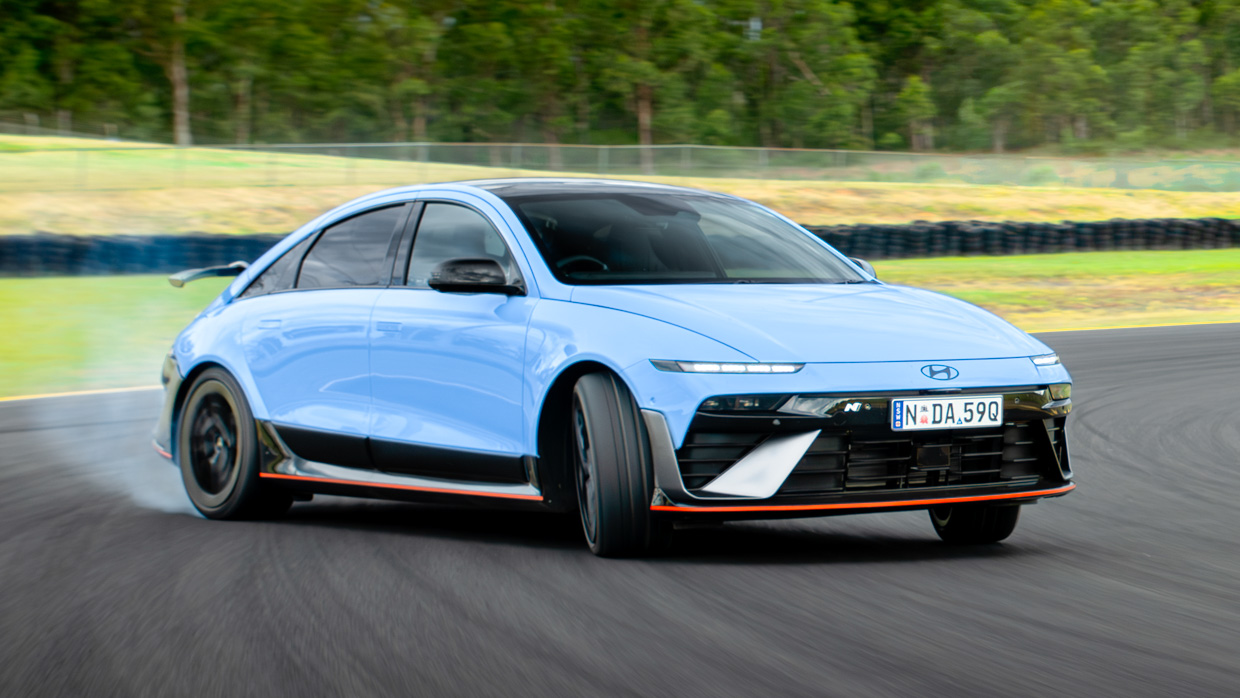
N Drift Optimiser is back, with enhanced ESC/TCS level control. You can now activate it on the move, use e-Shift functionality mid-drift, and adjust regen during ‘tip-out’. On road, the N Road Sense system, which suggests N mode activation, now detects double-curve road signs.
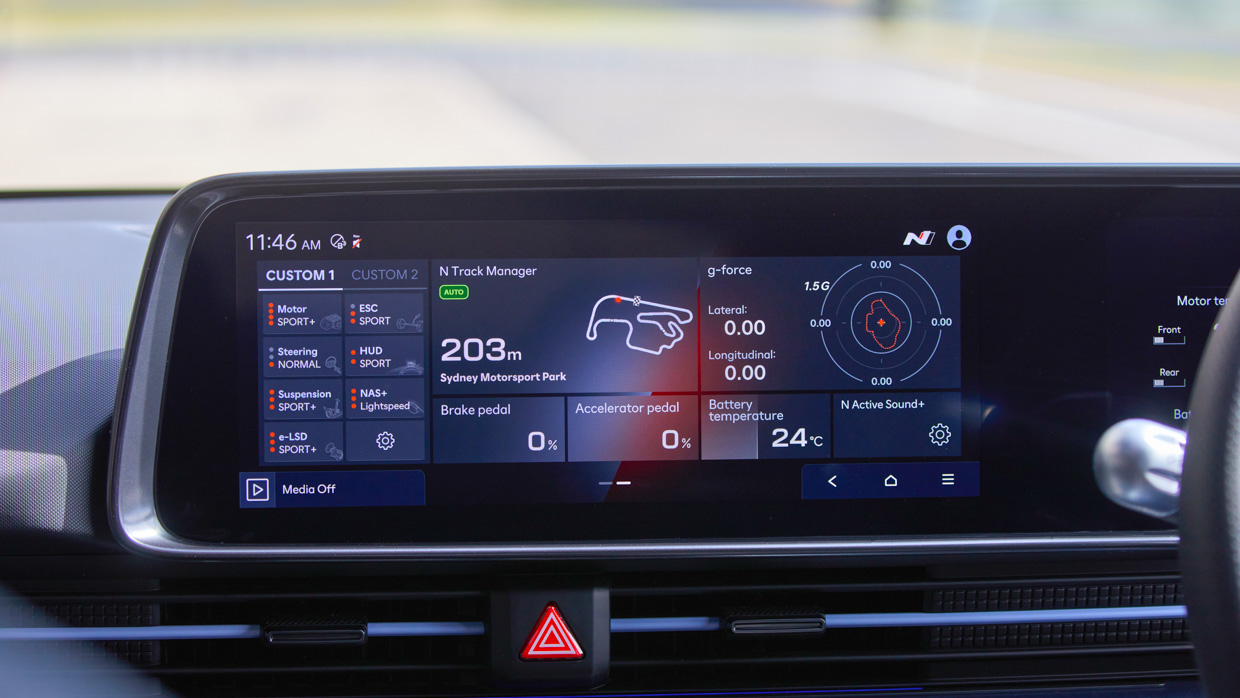
The list goes on. Assignable Tyre Pressure Monitor Custom Mode and Track Manager telemetry are both brand firsts, while N-specific content is offered in dual 12.3-inch displays and a standard head-up system.
Elsewhere, the heated/cooled front mechanical buckets are leather and Alcantara appointed, and the 6 N loads in typically expected features such as wireless Apple CarPlay and Android Auto, proprietary sat-nav, dual-zone climate control, a 360-degree monitor and Blind Spot View monitoring.
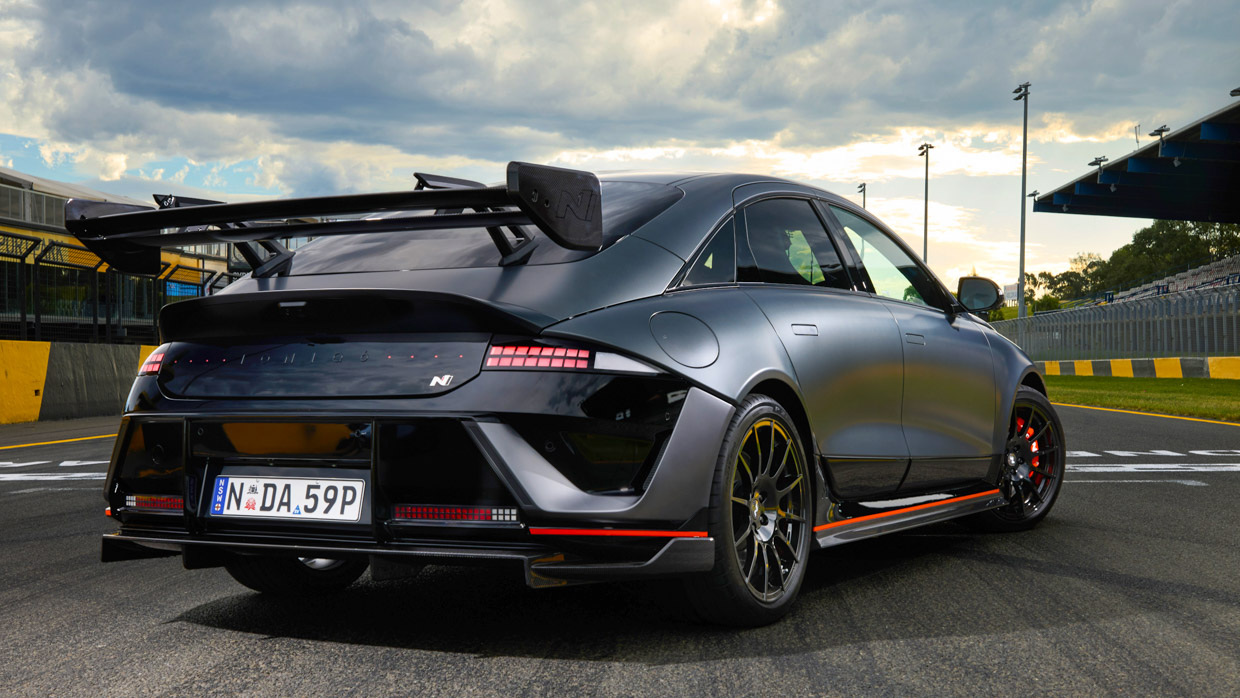
A menu of N Performance accessory upgrades includes everything from underbody turning vanes ($21 per side) to lightweight (-1.5kg per rim) forged 20-inch wheels ($1097 per rim) to a monstrous adjustable carbonfibre rear wing ($7288.50).
The completists’ all-you-can-eat N Performance swag adds $24,148 in go-faster parts, plus $600 for fitment.
It drives like dynamite. And a big stick of it at that. Some of the time.
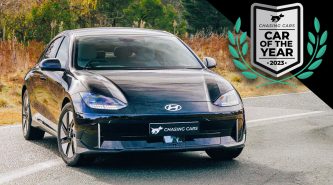
As a former Car of The Year winner, the Ioniq 6 is clearly a Chasing Cars’ favourite. And while the N head-kicker clearly carries over many of the pedestrian version’s fundamental virtues, it’s a wildly different animal.
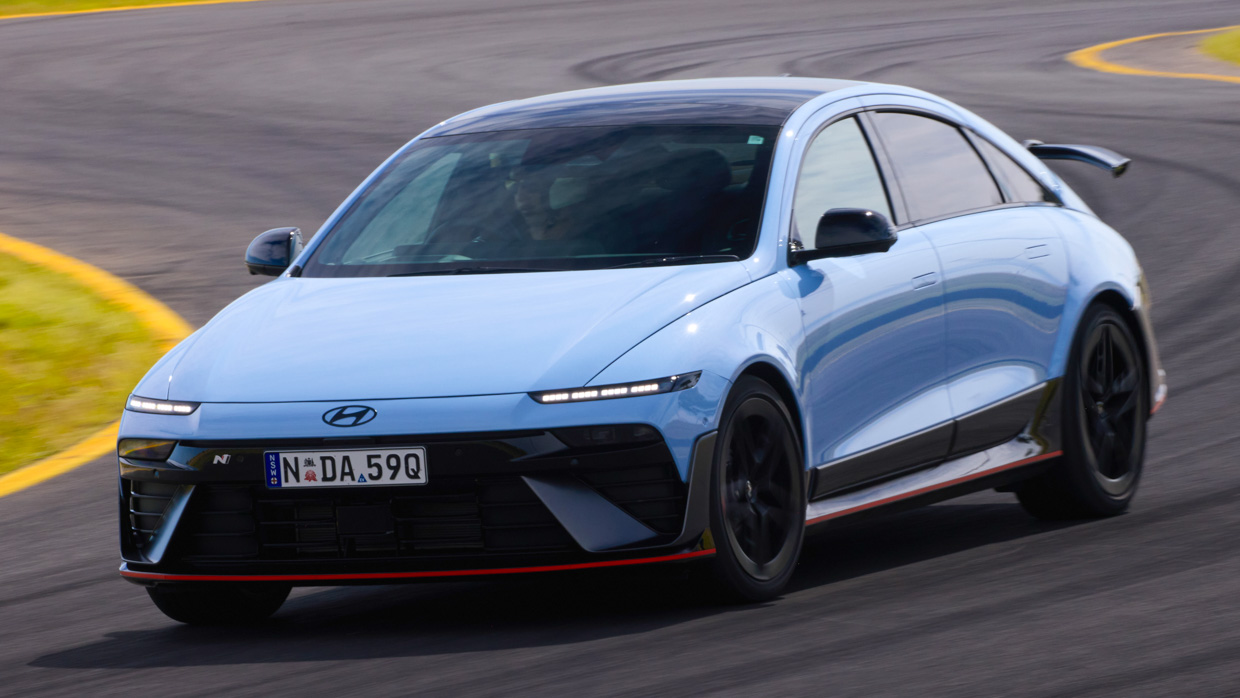
It’s clear from the get-go that a) the learning curve to understand and get the best from this beast takes more investment than an Australian launch program allows, and b) it’s a placid pussy cat if you simply climb in and drive the thing.
But let’s not beat bushy things: when you uncork the 6 N in any of its feistier drive modes, it’s absolute dynamite!
Catch a succession of well-sighted, sweeping, smooth hot-mix backroads – of which you’ll find well north of Sydney – the sedan demonstrates an explosion of output and acceleration that’s simply breathtaking.
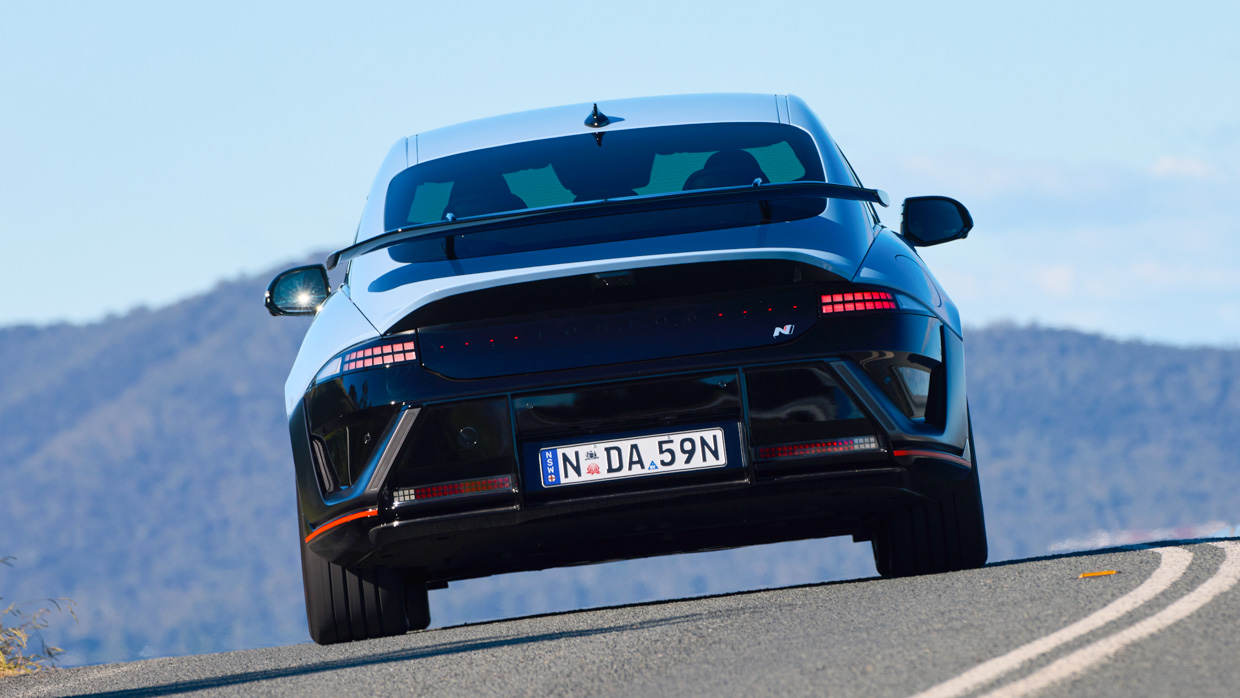
Being hamfooted is foolhardy because it simply sprints so hard, so quickly. Even uphill and in a manner that completely masks its hefty 2.2-tonne weight. The fake upshifts thump you in the back and the faux combustion rpm soundtrack fills the cabin, adding a crucial sense of road speed between apices and a lovely sense of celebration.
Fully uncorked, this is way too much muscle and pace for a public forum. And the myriad system adjustments are too complex to explore outside of a racetrack forum.
It’s a steep learning curve and gaining trust in this machine demands some trepidation. Big power and big weight combined with a hugely customisable dynamic character really demands the safe expanses of off-street real estate.
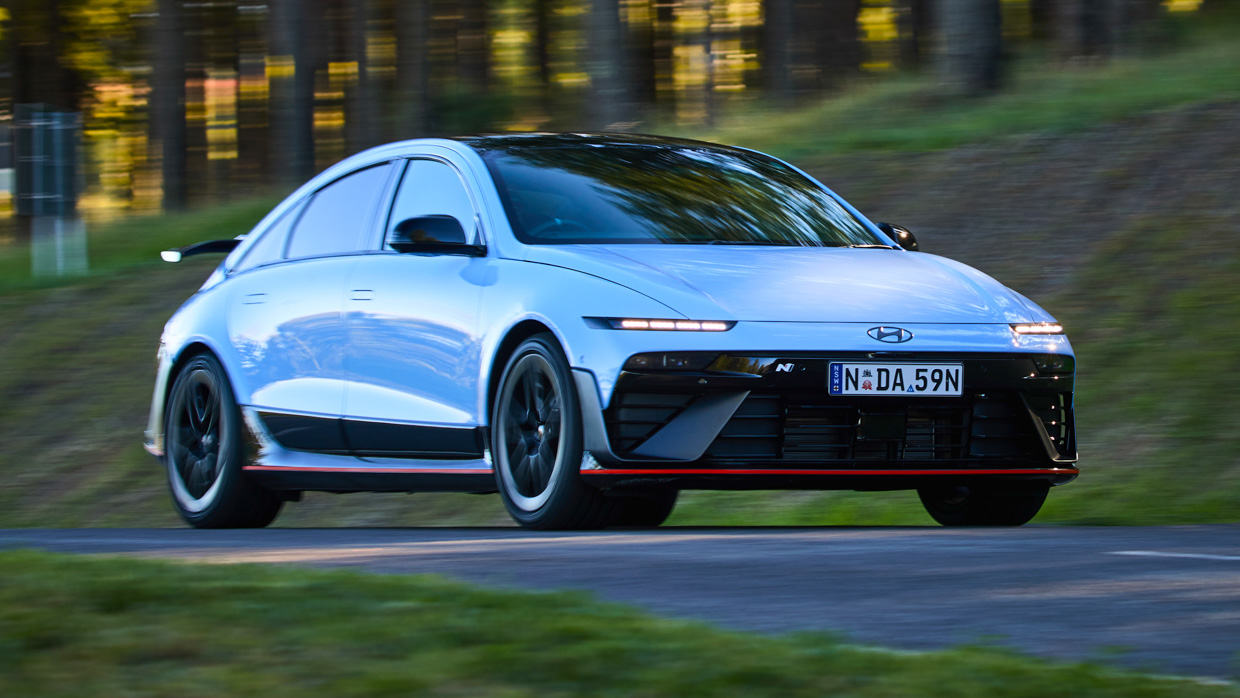
Fortunately, the 6 N amplifies its potency in large, progressive strides, with set-and-forget Sport ideal for keen driver satisfaction at a spirited road punt that won’t risk your licence (much).
In dry running, at least, those whopping 275mm Pirellis drum up incredible grip and front-end point. Paired with the remarkably flat stance of the chassis, the 6 N feels like a slot car on road, one clearly well within its limits at any sane pace.
Steering feel and connection is very good, if a little synthetic at times in its weight, which varies considerably depending on which mode you opt for. But it’s a doddle to place the Hyundai exactly where you want it on road to the millimetre.
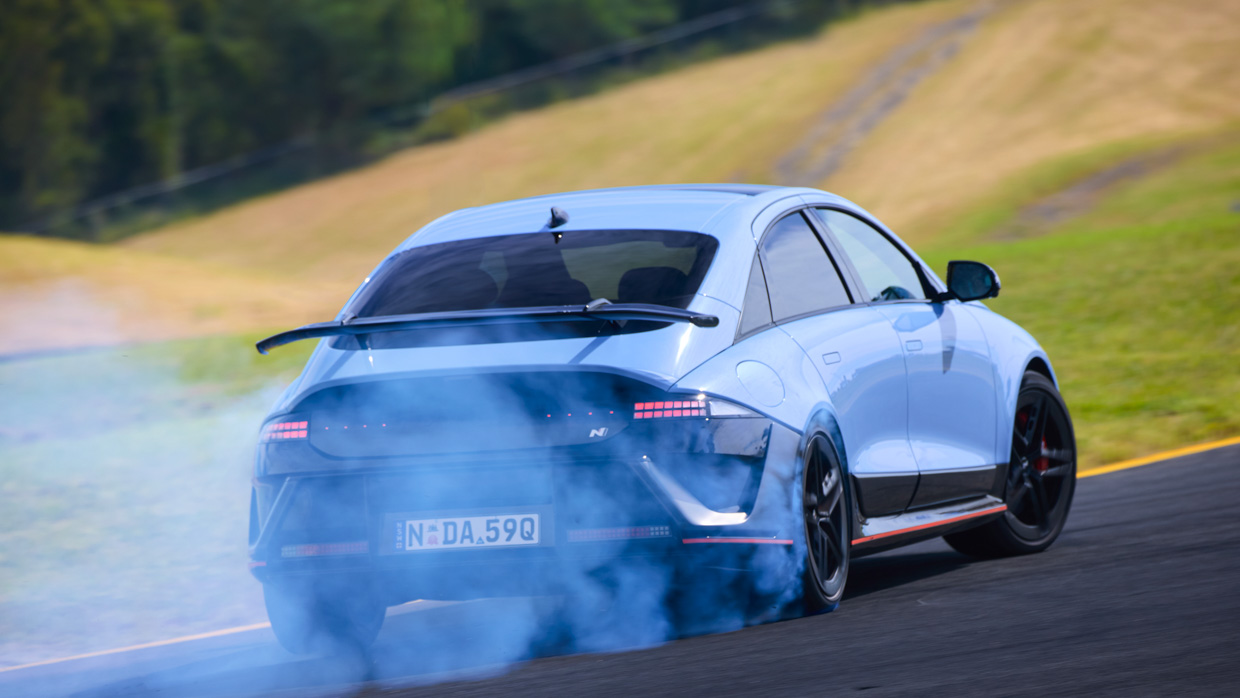
Despite a more rearward power balance – at least at full power – the drive mode dependent torque shuffling mostly keeps the 6 N’s rump firmly planted and gripped up. It feels like a safe pair of electromechanical hands, that if a driver wants lurid oversteer they’d need to uncork it via a button very much on purpose.
Importantly, for all of the ones and zeroes crunching under the skin, the 6 N feels natural and organic… enough. It doesn’t do anything weird, nor demand driver recalibration for its smarts.
It’s natural enough in character that, say, whether the N Pedal function actually “provides rapid load transfer and linear turn-in response using regen” or not remains pure conjecture.
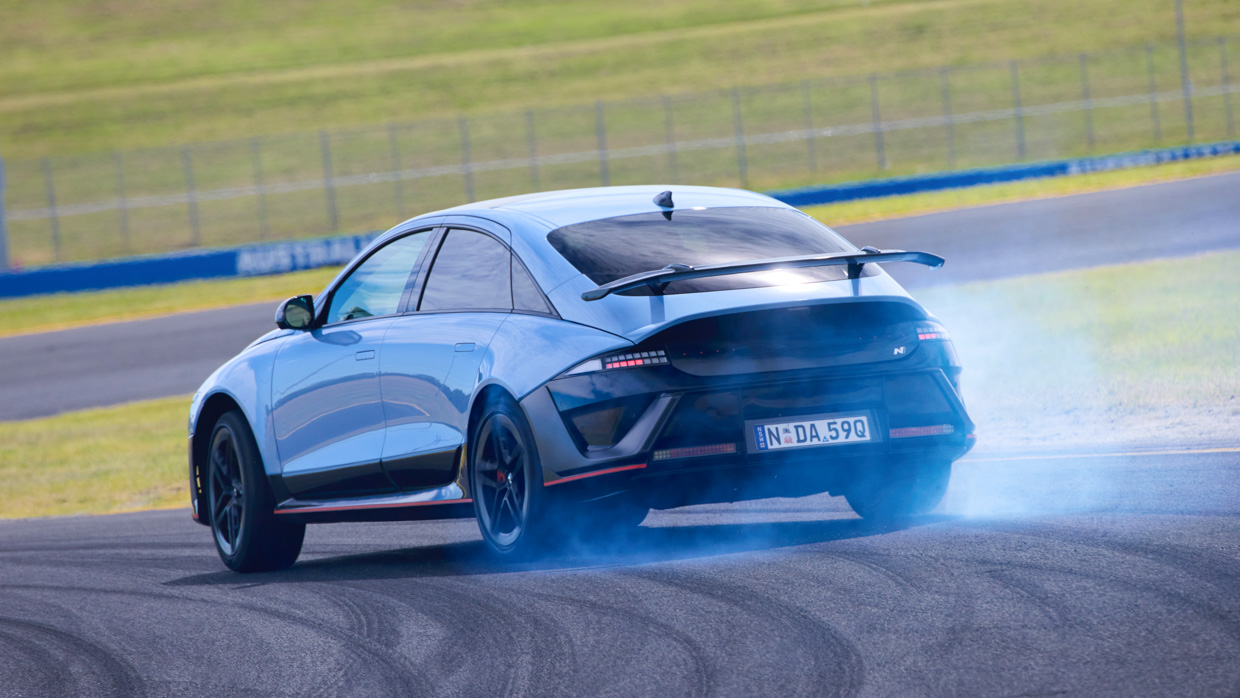
Dialled back, it feels a perfectly ‘safe’ tourer or commuter. The Hyundai is planted and predictable on the open road and evenly measured and approachable driven gently around town. If you’re expecting GT3-like bone-shaking masochism in all situations, this electric rocketship is a genuinely pleasant antidote.
Bar some expected thrum from its rubber footprint on coarse surfaces, the 6 N is a very quiet operator. All of the added reinforcement and stiffening designed to enhance dynamics also pay handsome dividends in general solidity and refinement around town.
The ride is very good, too, be it tooling around the burbs or negotiating pockmarked surfaces along twisty backroads. It’s naturally firm-ish in order to return such stunning body control, yet compliant enough to filter out low-speed fizz or pitch over speed humps.
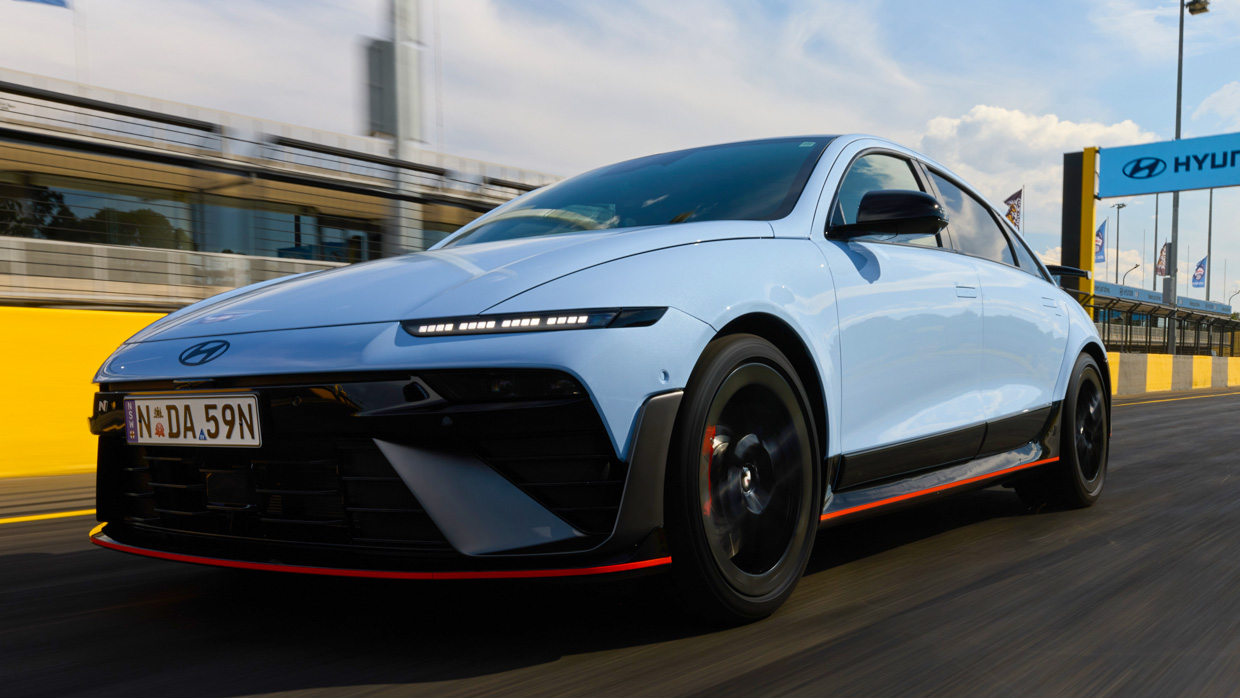
The rest of the on-road experience is very… Ioniq. The adaptive cruise with lane keeping is mostly intuitive and well calibrated, the camera systems and proximity sensors make it easy to park, and you have to turn off the overspeed warning and lane keeping, annoying, after every restart.
It does do the Jekyll and Hyde act supremely well, demonstrating a huge breadth at that. But if there’s one area where this N-car seems quite singularly focused, it’s that its on-tap performance comes at the price of efficiency.
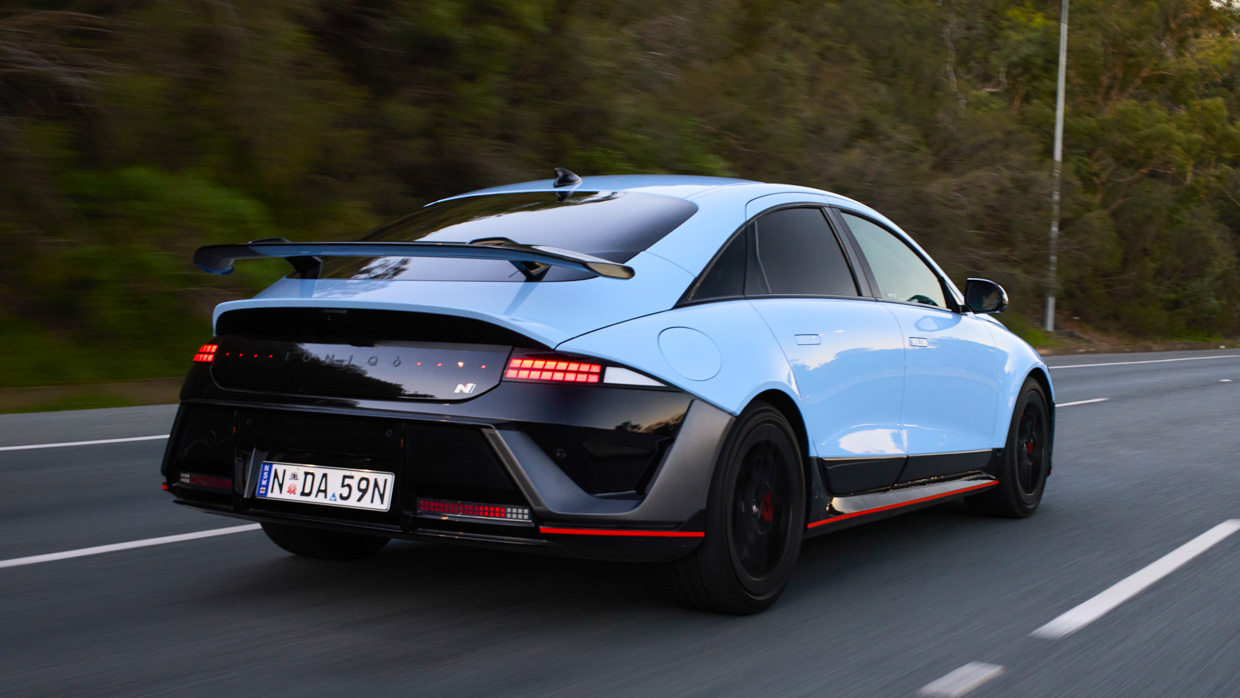
When measured on a loop blending gentle urban and highway driving with some enthusiastic backroad punting, consumption rarely dipped below 20kWh/100km and, pushed on, skyrocketed into the 30-plus range.
That 487km range claim is very much a best-case scenario. Tap into red-misted talent regularly, and usable range will plummet in the real world.
The 6 N flaunts its intent at 50 paces – especially dressed in full optional N Performance accessory regalia – and that promise continues once you climb inside, which includes an odd ‘guitar riff’ sonic motif at start-up (and shutdown).
If you’ve become accustomed to accessing base feature adjustment through a touchscreen – ala Tesla or Zeekr – the 6 N might shock: is there another car on sale today with more buttons and switches than this Hyundai?
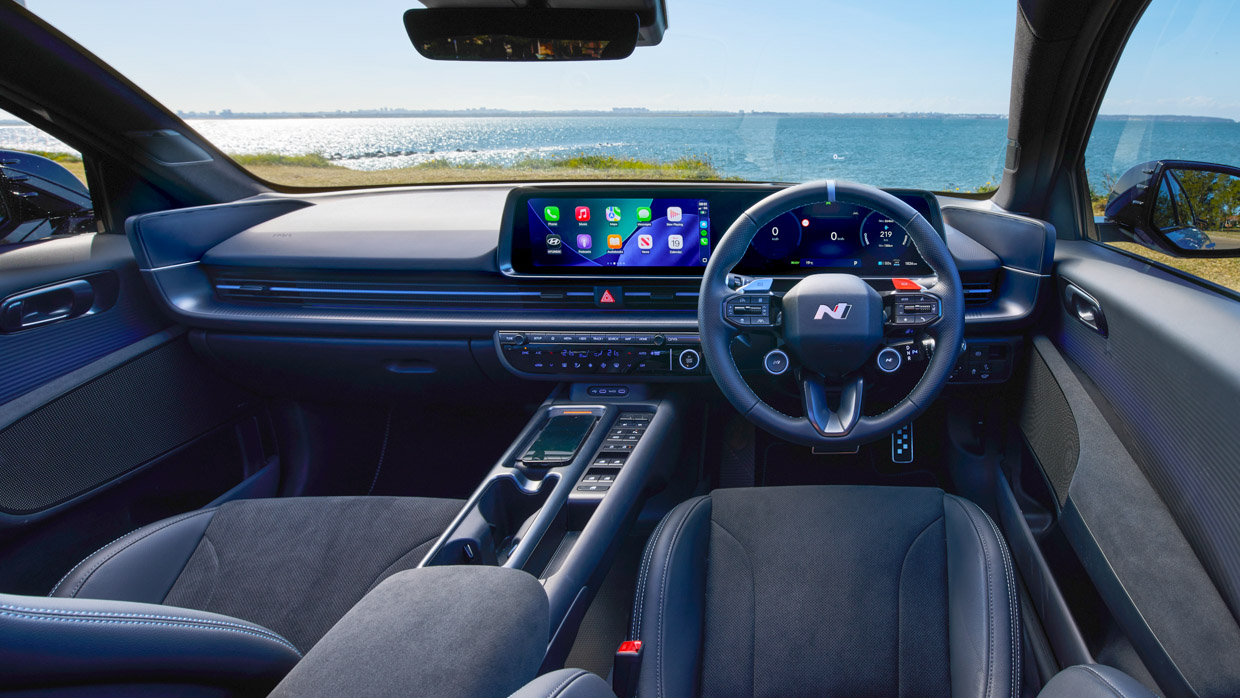
And for good reason. For such a complex device, you really want critical changes close and convenient to hand. The 6 N does a great job at it, even though it makes the cabin design feel slightly cluttered.
Case in point is the (brilliant) wheel. Its four-button array allows quick access to preset drive modes, instant N Grin Boost activation, and facility to toggle between two user-customisable (N1 and N2) drive mode settings.
Change the drive mode and the driver screen and HUD graphic skins change design completely. The paddles, too, offer handy adjustable regen in some modes, faux gear upchange and downchange theatrics in others.
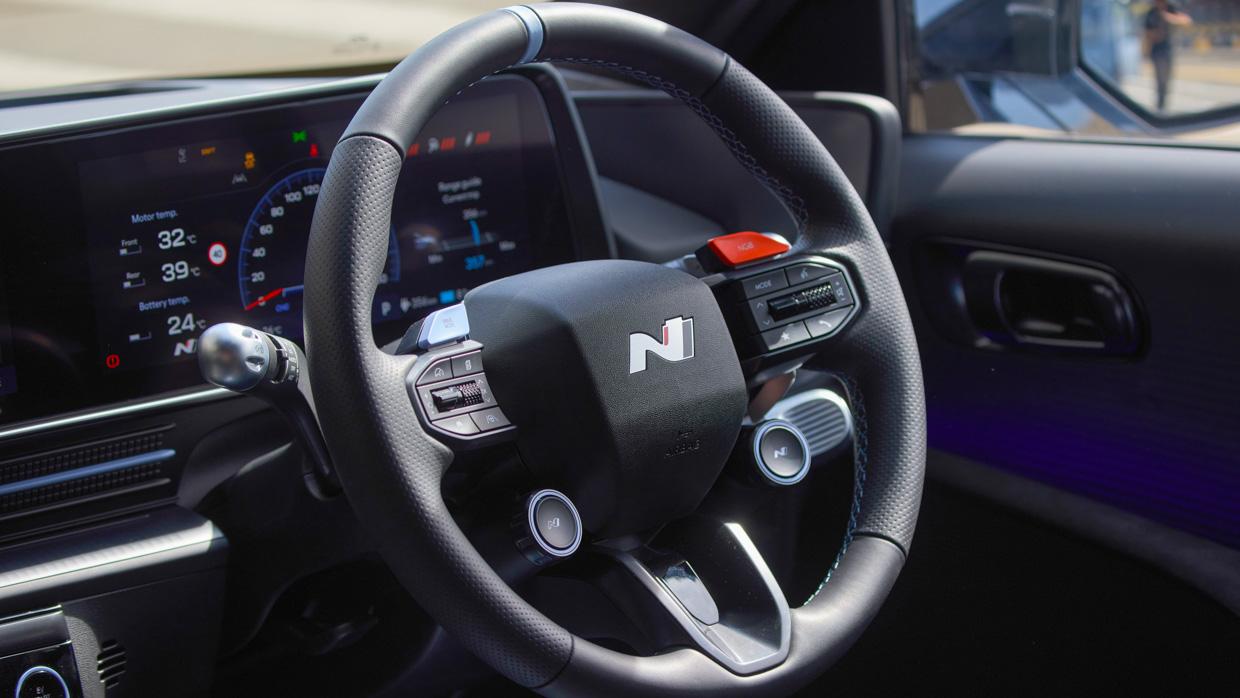
The theme is unashamely built for driver focused fun, with excellent natural ergonomics and wonderfully supportive and comfy front buckets. However, the pure mechanical seat adjustment might seem a bit of a cheap move in some potential buyers’ eyes.
There’s a befitting semi-premium overall vibe, though some of the plastics, especially around the console area, are a bit rudimentary. A nice touch, though, is that the console sides have 3mm of padding, to help prevent bruising your knee when you anchor it during track work.
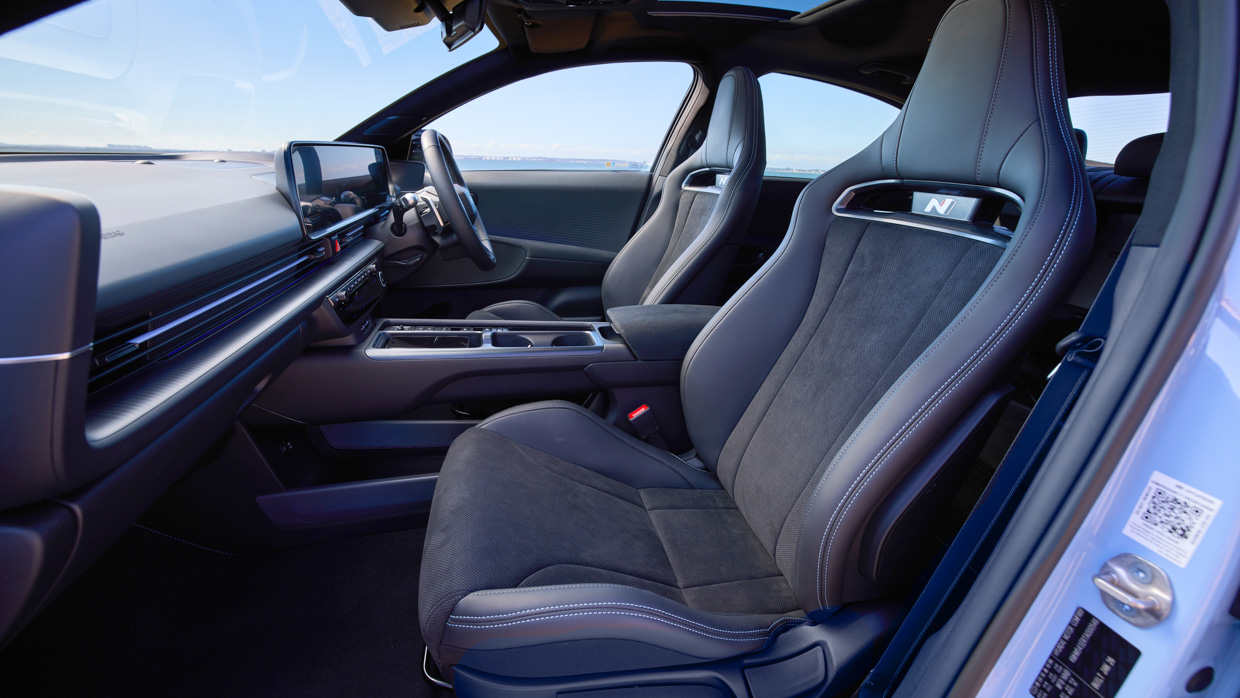
The N-specific media content – from N Battery management to N Track Manager lap timing – will appease gearheads who choose to delve, but the rest of the multimedia is familiar Hyundai stuff and all the better for it.
The Ioniq 6’s leaner, tighter confines does make it feel more of a thoroughbred sportscar than its bigger, airer 5 N twin, but this means more limited space and less general practicality.
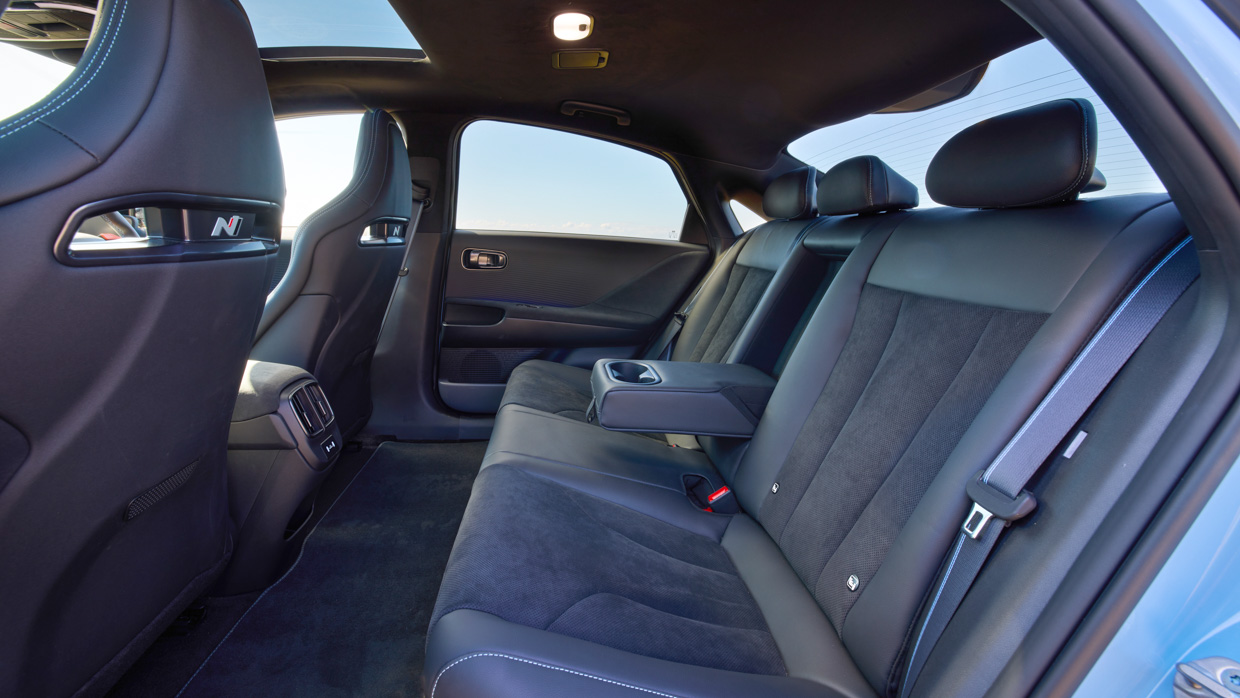
Row two is reasonably roomy enough, but for those after a more SUV-like go-fast experience, the 5 is a better fit. Still, head room is fine enough, there’s enough rear legroom to avoid feeling cramped, and the rear bench is a comfy place to spend touring hours.
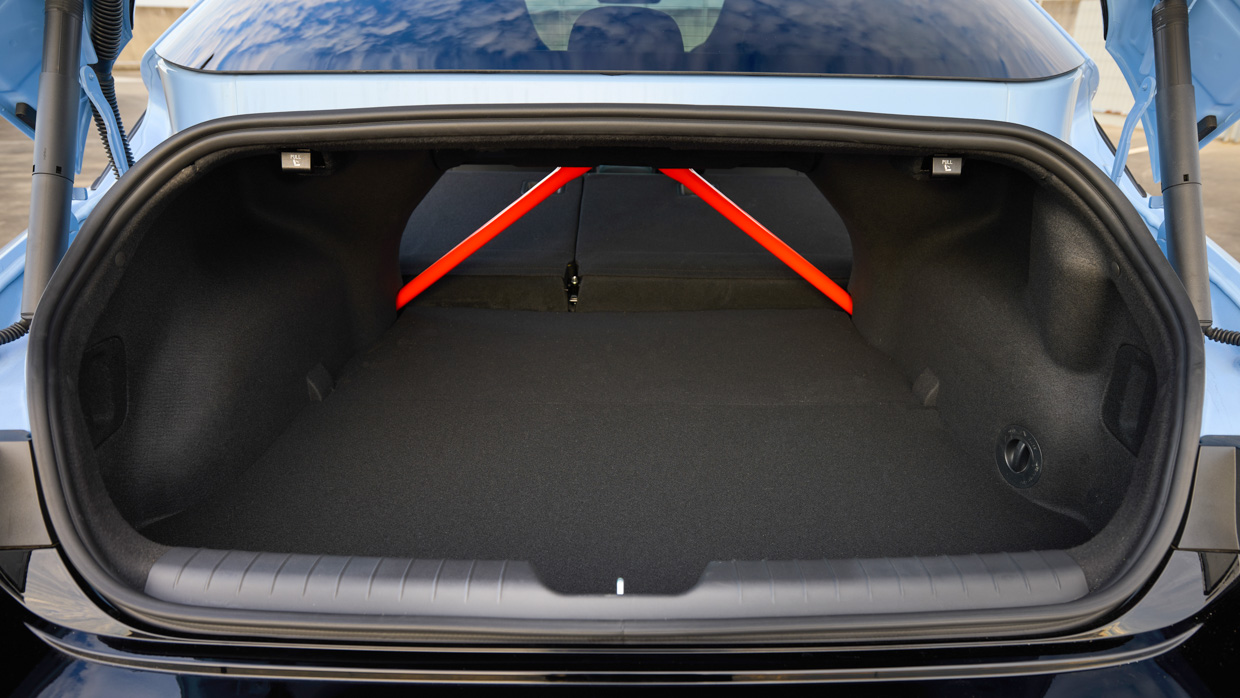
Boot space is, at 371 litres, more usable and generous, though any hope of load-through capability is firmly blocked by the bright red rear suspension brace behind the second-row seat backs.
Despite the quasi-track car focus, Hyundai hasn’t skimped on active safety and assistance or, like Porsche, demanded extra outlay for some features.
It’s a want-for-little ADAS fit-out and, technically, the go-fast N version gets a five-star ANCAP rating according to the regime’s website at the time of publishing.
Standard safety feature include:
On test, the 6 N’s various safety and assistance systems functioned without fault, bar the ever-present Korean car annoyances of having to disarm overspeed and strong-armed lane keeping after every restart, as mentioned above.
That said, the speed limit advisory system seems to use (inaccurate) mapping data rather than sign-post recognition, as the Hyundai often displayed the incorrect sign-posted speed limit – in some cases 20km/h over the legal limit of the stretch of road.
As mentioned, big energy demands big consumption. Hyundai’s electric N cars, it seems, are not nearly as frugal as either its own regular BEV models (which use the same 84kWh gross battery) or rivals such as Porsche Taycan, which offer very sophisticated efficiency protocols and demonstrably leaner consumption.
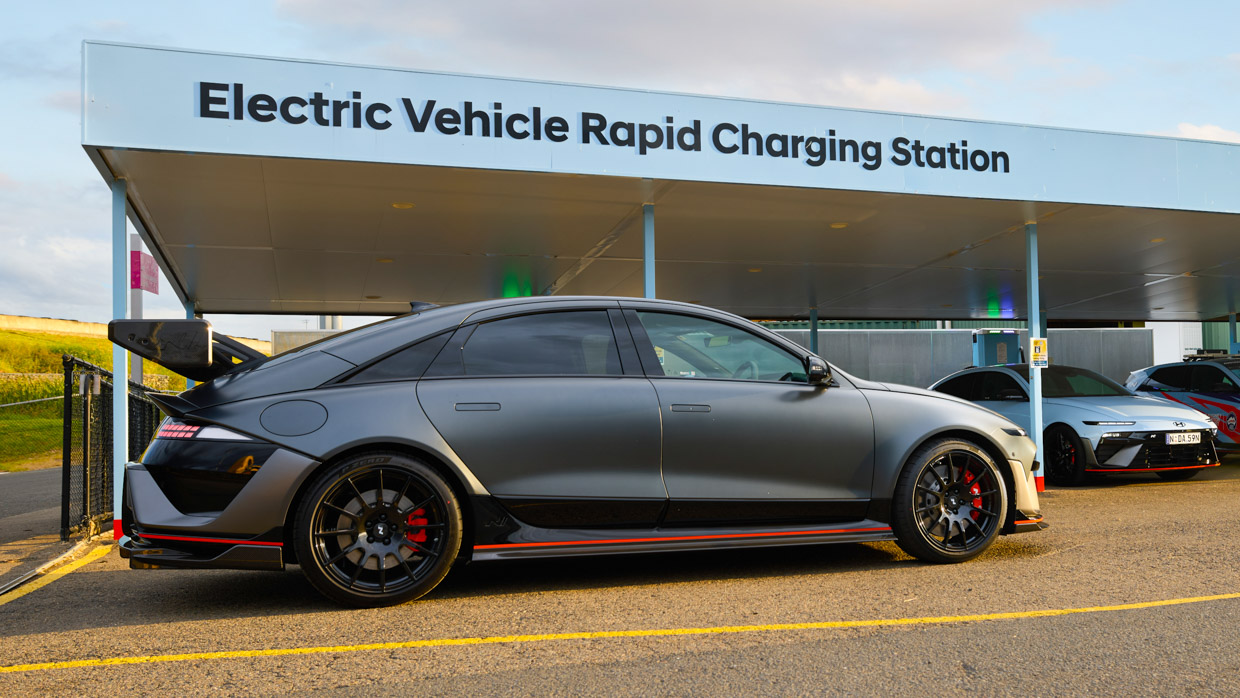
Famously, Hyundai has installed its own fast charger infrastructure at Sydney Motor Sport Park – great if that’s your poison, less so if you have other go-fast plans.
It’s an EV you inevitably need to charge more frequently than most, but its rapid 18-minute 10-80 percent replenishment – facilities permitting – does offset its thirst to some degree.
Elsewhere, ownership looks rosier. Servicing is every 24 months or 30,000kms at $645 for the first visit and $667 for the second, averaging out to $328 per year. Not bad for such a sophisticated 3.2sec hyper-mobile.
The story gets better with warranty. Not only does Hyundai’s regular seven-year, unlimited-kilometre warranty apply, you are, like every N-car, covered for non-competitive track use and abuse.
Better still, factory warranty is not affected if you choose to slap on stickier non-OE rubber or install aftermarket brake pads. And if you use the 6 N as nature intended regularly, you’ll need a healthy stash in the kitty for those high-volume consumables.
The 6 N takes the game-changing 5 N recipe and evolves and hones it to a fantastic result. It does what’s claimed on the box: in a right forum (with the right tyres), it’s so ferocious it’ll make its driver woozy.
Dialled back, it’s as easy, placid and surprisingly comfortable as any decent EV ought to be. Its mild-to-wild scope is, like the finest performance electrics, quite remarkable.
It’s also so complex, and in turn inaccessible, that it demands user application and commitment, to both extract its go-fast potential and to tune to the driver’s taste – a learning curve best left for ownership and one not fully scaled in a media launch program.
It’s thirsty. It’s somewhat range compromised. It’ll chew through rubber and brake pads at a furious rate if driven as nature intended. But that’s the deal with any device this potent and capable.
Most importantly, for all of its techno-wizardry, it (mostly) returns a natural, organic and (mostly) convincingly analogue driver experience. Further, it seems the tech is there to make it evermore a fine driver’s tool.
Few cars, electric or otherwise, offer this much sophistication – executed with aplomb – for any sort of money. So $115K is a bargain. Porsche has thus far failed to match what 6 N (and 5 N) have anywhere near this price point.
The Ioniq 6 N has gearhead appeal through the roof, though it’s not for everyone. If you just want ‘quick’ without the heroic talent or polished nuance, there are many other simpler electrics out there to choose from.
About Chasing cars
Chasing Cars reviews are 100% independent.
Because we are powered by Budget Direct Insurance, we don’t receive advertising or sales revenue from car manufacturers.
We’re truly independent – giving you Australia’s best car reviews.
The estimate provided does not take into account your personal circumstances but is intended to give a general indication of the cost of insurance, in order to obtain a complete quote, please visit www.budgetdirect.com.au. Estimate includes 15%^ online discount.
^Conditions Apply
Budget Direct Insurance arranged by Auto & General Services Pty Ltd ACN 003 617 909(AGS) AFSL 241 411, for and on behalf of the insurer, Auto & General Insurance Company Limited(ABN 42 111 586 353, AFSL 285 571).Because we don’t know your financial needs, we can’t advise you if this insurance will suit you. You should consider your needs and the Product Disclosure Statement before making a decision to buy insurance. Terms and conditions apply.
Indicative quote based on assumptions including postcode , 40 year old male with no offences, licence suspensions or claims in the last 5 years, a NCD Rating 1 and no younger drivers listed. White car, driven up to 10,000kms a year, unfinanced, with no modifications, factory options and/or non-standard accessories, private use only and garaged at night.
^Online Discounts Terms & Conditions
1. Discounts apply to the premium paid for a new Budget Direct Gold Comprehensive Car Insurance, Third Party Property Only or Third Party Property, Fire & Theft Insurance policy initiated online on or after 29 March 2017. Discounts do not apply to optional Roadside Assistance.
2. Discounts do not apply to any renewal offer of insurance.
3. Discounts only apply to the insurance portion of the premium. Discounts are applied before government charges, taxes, levies and fees, including instalment processing fees (as applicable). The full extent of discounts may therefore be impacted.
4. We reserve the right to change the offer without notice.