Powered by

-
Car Reviews
Latest reviews
-
Car News
Latest news
-
Car Comparisons
Latest comparisons
- Chasing Deals
Latest reviews
Latest news
Latest comparisons
It’s not every day that an icon is revived, with the new Toyota Prado and Ford Everest rival set to be more capable and more luxurious than ever before
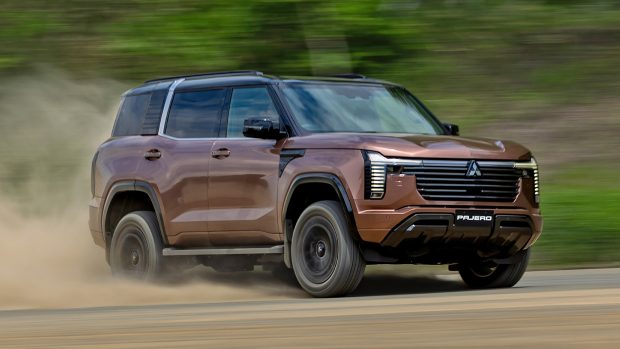
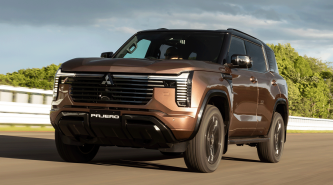
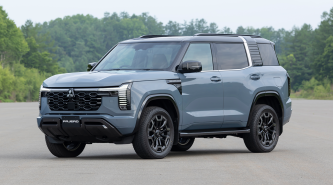
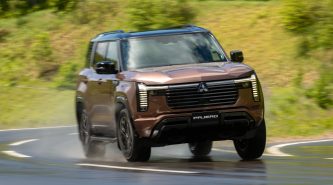
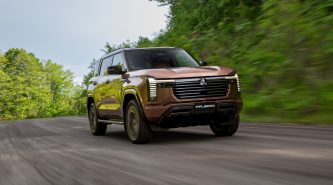
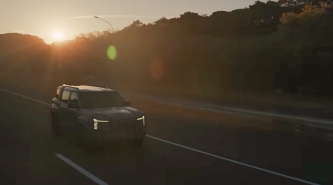
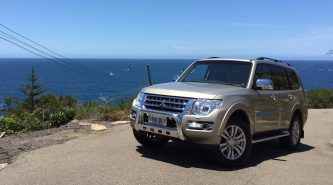
Mitsubishi Motors has revived its flagship Pajero 4WD after a five-year hiatus, with the fifth-generation 4×4 set to land in Australia in the fourth quarter of this year.
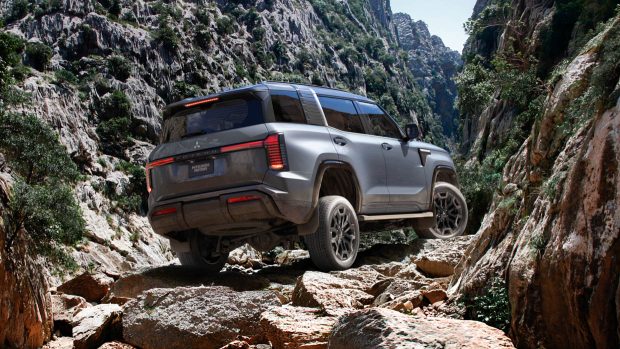
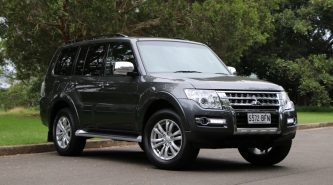
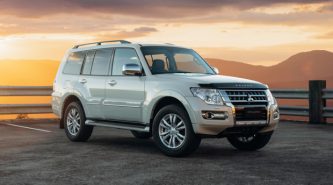
The new Pajero has been refocused with a return to ladder-frame underpinnings but Mitsubishi says its new 4×4 wagon is both more luxurious than its highly acclaimed unibody predecessor and more off-road capable than the rugged Pajero Sport.
Historically a rival to the full-size Toyota LandCruiser and Nissan Patrol, the new generation Pajero is expected to sit closer to the Toyota Prado and Ford Everest in terms of price.
Measuring 4920mm (+20mm) long, 1925mm (+25mm) wide, 1910mm (+10mm) high and with a 2870mm (+90mm) wheelbase, the new model is larger in all dimensions than the previous Pajero, which itself was a larger vehicle than the Pajero Sport.
Although sharing the same basic architecture as the Triton, Mitsubishi says it has heavily re-engineered the chassis rails from the engine bay backwards to increase refinement and better suit the practical needs of an SUV.
This includes the fitment of five-link rear suspension paired with a live axle over the Triton’s leaf spring and live axle setup, along with disc brakes instead of drums. Double wishbone suspension is found upfront.
Mitsubishi engineers are particularly proud of the off-road comfort and capability of the new Pajero but haven’t neglected its road manners either, with a quieter cabin thanks to ample sound-deadening material and the use of acoustic glass.
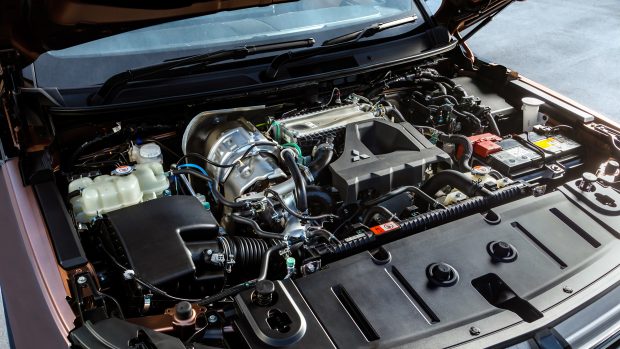
An evolved version of the Triton’s 2.4-litre turbo-diesel four-cylinder is the sole engine offered with the new Pajero for now, with outputs boosted slightly to 150kW/480Nm – up 10Nm of torque over the ute.
It’s coupled with a newly developed eight-speed automatic transmission and Mitsubishi’s Super Select II full-time 4×4 system with locking centre and rear differentials.
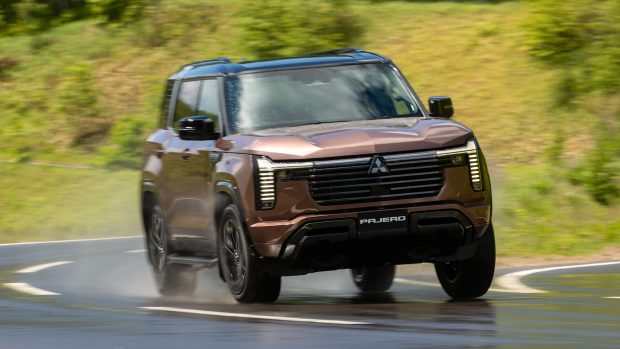
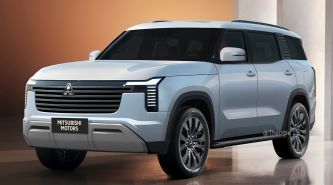
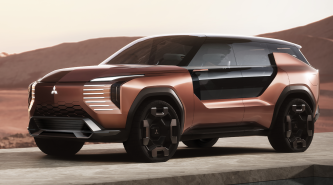
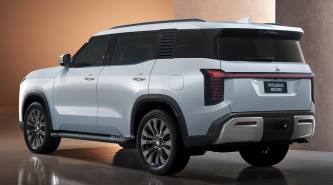
The fifth-generation Pajero marks a progression in Mitsubishi’s design language, with the 4×4 wearing an evolved version of its ‘Dynamic Shield’, inspired by the mask worn by combatants in the sport of fencing.
The retro-futuristic design is far less fussy than previous Mitsubishi models, with designers using the phrase ‘Grand Charisma’ as their guide in the process.
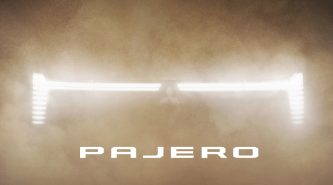
Curiously, the headlight and tail-light designs are almost identical in shape, though the main beam of the former has been kept deliberately inboard of the body to offer greater protection from animal strikes.
Mitsubishi has ditched the door-mounted spare wheel of the Pajero in favour of an underslung arrangement to make opening the boot easier for buyers.
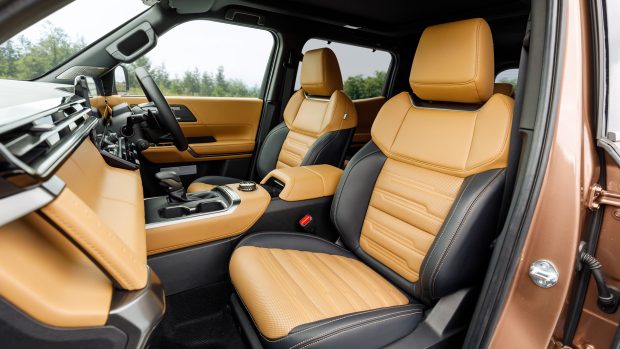
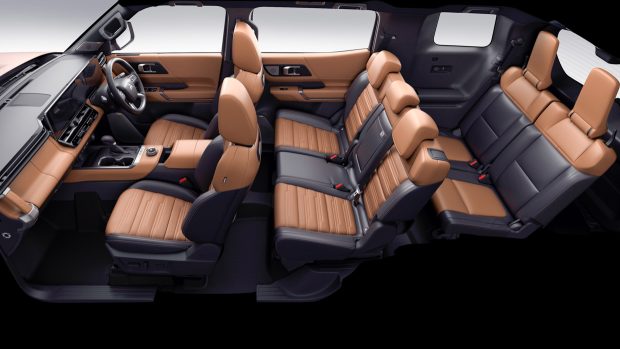
Luxury has been a major focus of the new Pajero, with Mitsubishi pointing to comfort, space and the use of higher quality materials as key achievements in the construction.
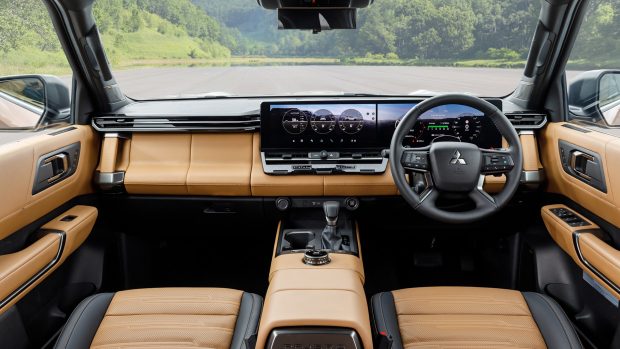
The leather-trimmed dash has been shaped to create a sense of space, with a pair of 12.3-inch screens fitted as standard and larger 14.3-inch displays found on higher grades, though physical controls are still retained for climate and other functions, along with a traditional shifter.
The Pajero also debuts new technology (for the model) including a wireless phone charger, heated/cooled seats and a 360-degree camera with a bonnet-see-through mode to help with precise wheel placement when off-roading.
Bolstering the luxury feature set is the inclusion of Mitsubishi’s Dynamic Sound Yamaha Ultimate sound system, three-zone climate control and a panoramic sunroof.
Mitsubishi has also focused on improving the space inside the cabin, with more head and knee room to accommodate adults, while the ability to slide the second-row seats 150mm should also make it easier for them to get in.
More information on local specification and pricing will be released soon.
Latest news
About Chasing cars
Chasing Cars reviews are 100% independent.
Because we are powered by Budget Direct Insurance, we don’t receive advertising or sales revenue from car manufacturers.
We’re truly independent – giving you Australia’s best car reviews.