



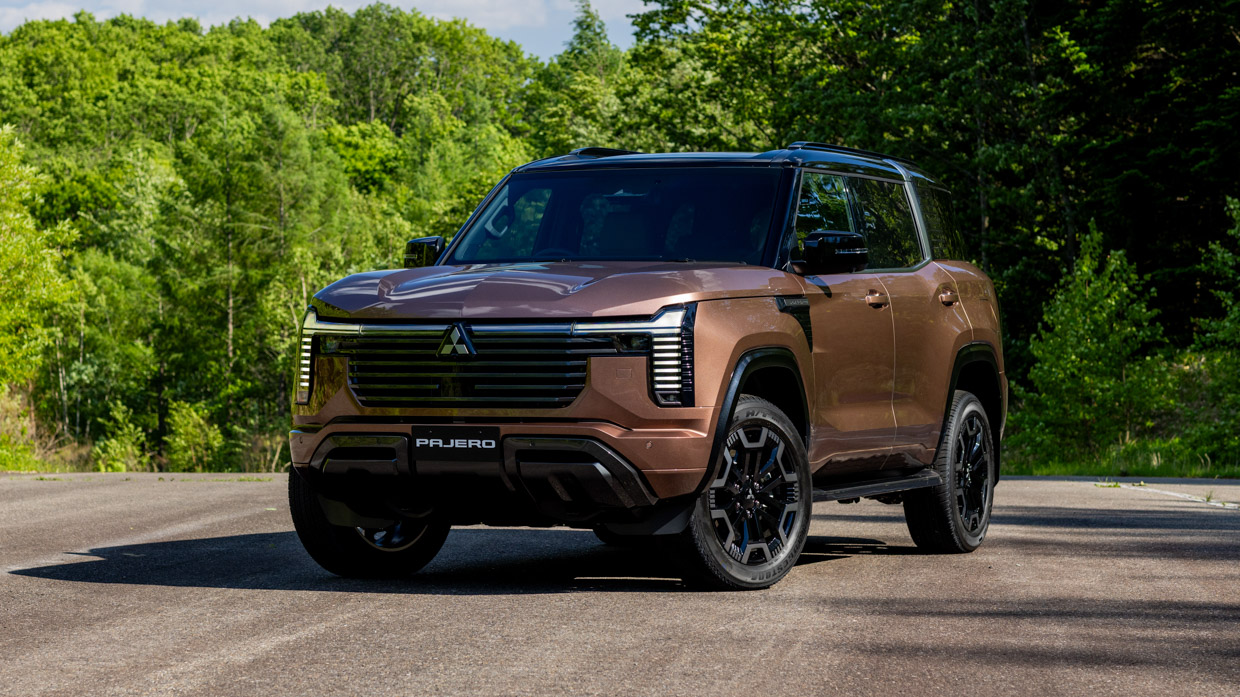
Mitsubishi desperately needs a halo car such as this – the all-new, fifth-generation Pajero 4WD.
Launching in Australia in December 2026, it will play a crucial role in boosting the triple-diamond’s flagging brand image, and it will metaphorically spawn a pair of smaller Pajero-branded models in the coming years – one a compact SUV, the other a small SUV, according to Mitsubishi’s official intel.
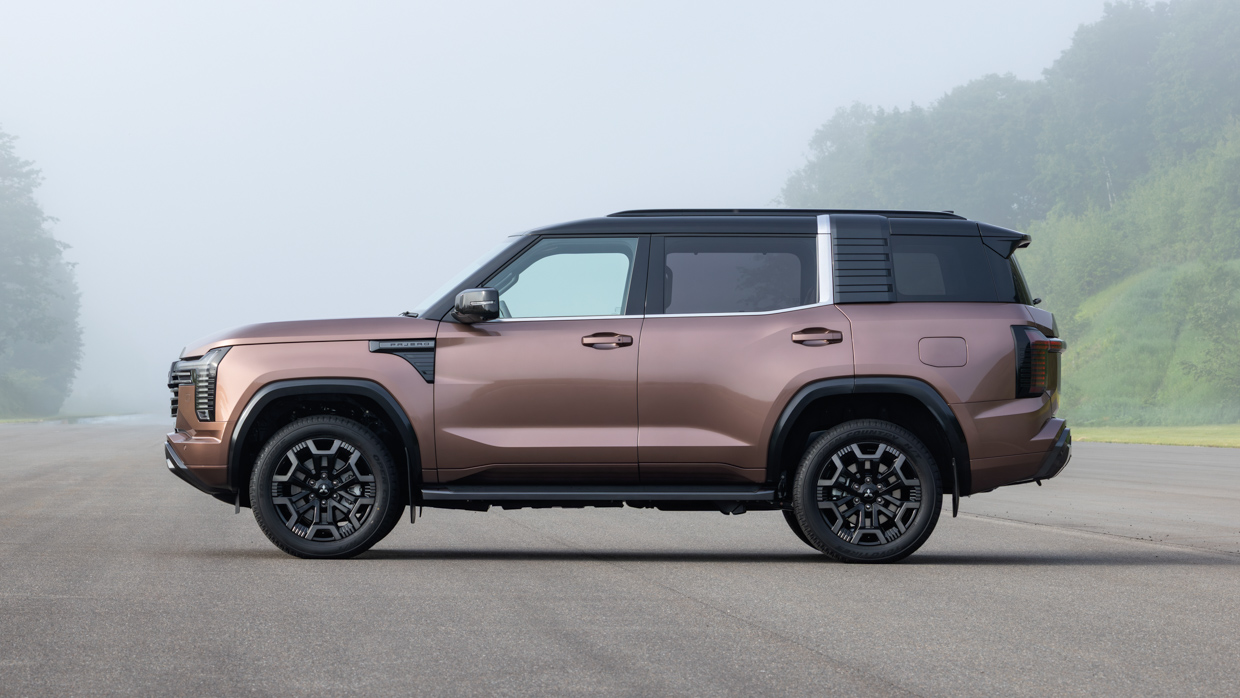
More importantly, the new Pajero buries the agricultural Pajero Sport (2015-25) which attempted to trade off the excellent qualities of the third- and fourth-generation ‘big Pajeros’ (1999-2021) but failed in almost all areas to pull that off. It was a dual-cab ute in ugly drag, which is something that cannot be said about the fifth-generation Pajero.
In essence, it’s a latest-generation Triton with refinements…but those refinements extend so deep that it is essentially new from the A-pillar back, with its own 2870mm wheelbase, completely new rear suspension with a five-link, coil-sprung live axle, heavily revised double-wishbone front suspension to accommodate broader track widths.
There’s clearly been a concerted focus on quietness and refinement polish (in contrast to the Triton!) to this new 4WD.
The elephant in the room is that it’s a body-on-frame design (like the first- and second-gen Pajeros) and not a sophisticated monocoque with incorporated ladder-frame strengthening (like the third- and fourth-gen Pajeros), though the new Pajero frame is apparently significantly stiffer than that underneath the outgoing Pajero Sport (it indirectly replaces).
We’ve already covered the fifth-generation 2027 Pajero’s design, specification, variant line-up, standard equipment and Australian pricing extensively. But what we haven’t done is confirm whether Mitsubishi’s aim of combining the previous Pajero’s dynamic capability with a newfound level of comfort and quietness has been achieved…
A definitive verdict will need to wait until we comprehensively test the new Pajero on home turf later this year, however Mitsubishi is keen to give Australian motoring media a brief taste behind the wheel of a 20-inch-wheeled Pajero (equivalent to our top-spec GSR) at the Okazaki proving ground in Japan. And our first impression is overwhelmingly positive!
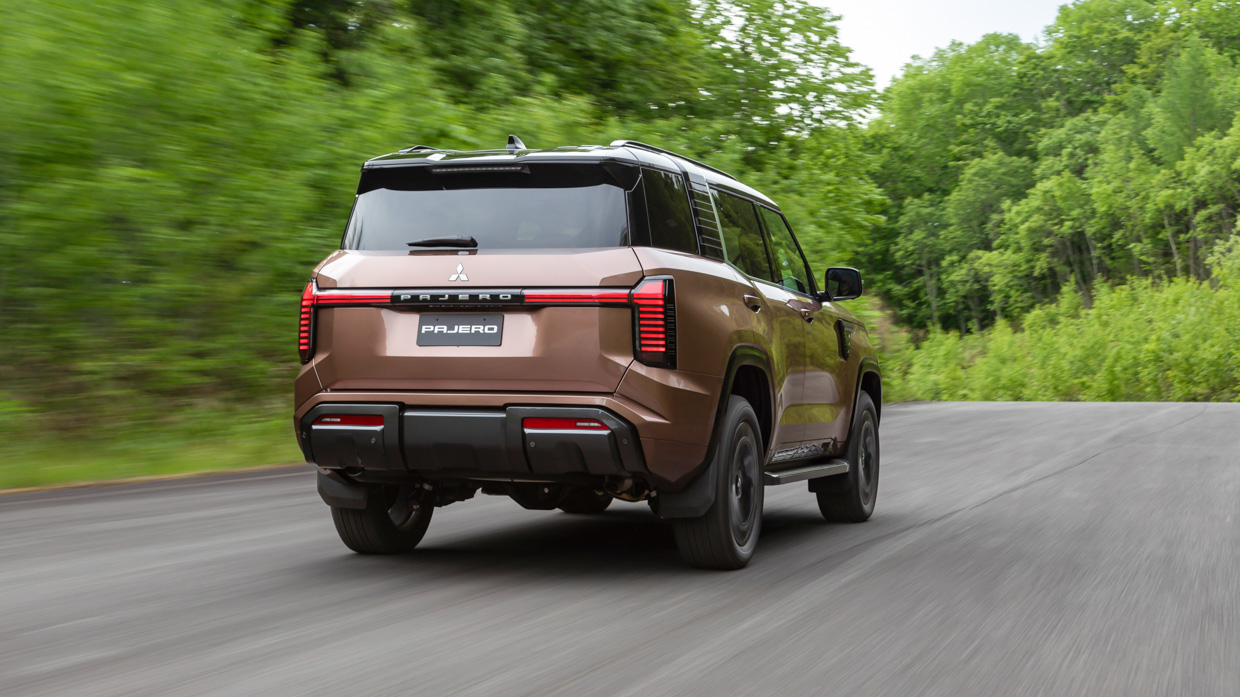
We begin with a full standing-start acceleration run to over 100km/h before slowing for a give-way sign, then hurling the new Pajero through a series of esses intended to simulate a twisty two-lane road with a broken line threading its way down the middle.
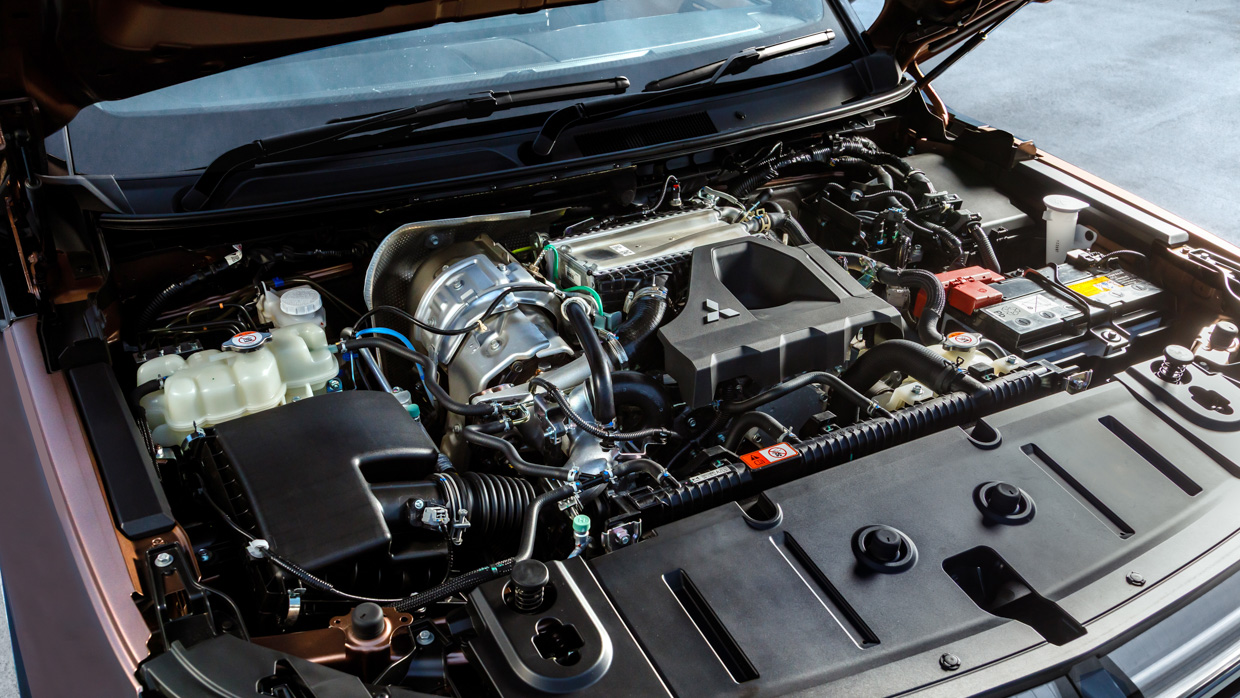
I chuck the Pajero’s drive mode into Sport and mash the throttle. Step off is measured but once the 2.4-litre diesel’s new variable-vane single turbo starts to spool, the Pajero builds momentum with a refined ease. It’s not quick but it is keen, and it does have the benefit of eight gear ratios to play with, rather than the Triton’s six.
With 150kW at 3500rpm and 480Nm from 1750-2500rpm, the Pajero’s outputs are near-identical to the Triton’s (and very close to a Toyota Prado’s), though it does get a 10Nm boost and the new turbo is designed to improve driveability, as well as fuel efficiency.
But by far the most noticeable aspect is its relative quietness! Upshifting through a well-spaced ratio set, the new Pajero is nowhere near as loud and gravelly as the Triton – which it needed to be if it was going to mesh with Mitsubishi’s ‘prestige’ hopes and dreams for this flagship 4WD.
The engine also meets Euro 6d emissions regulations thanks to the addition of a 17-litre AdBlue tank alongside the 80-litre fuel tank, which is probably why Mitsubishi refers to the single-turbo 2.4TD as ‘second generation’ – and why this engine upgrade will soon make its way into Triton.
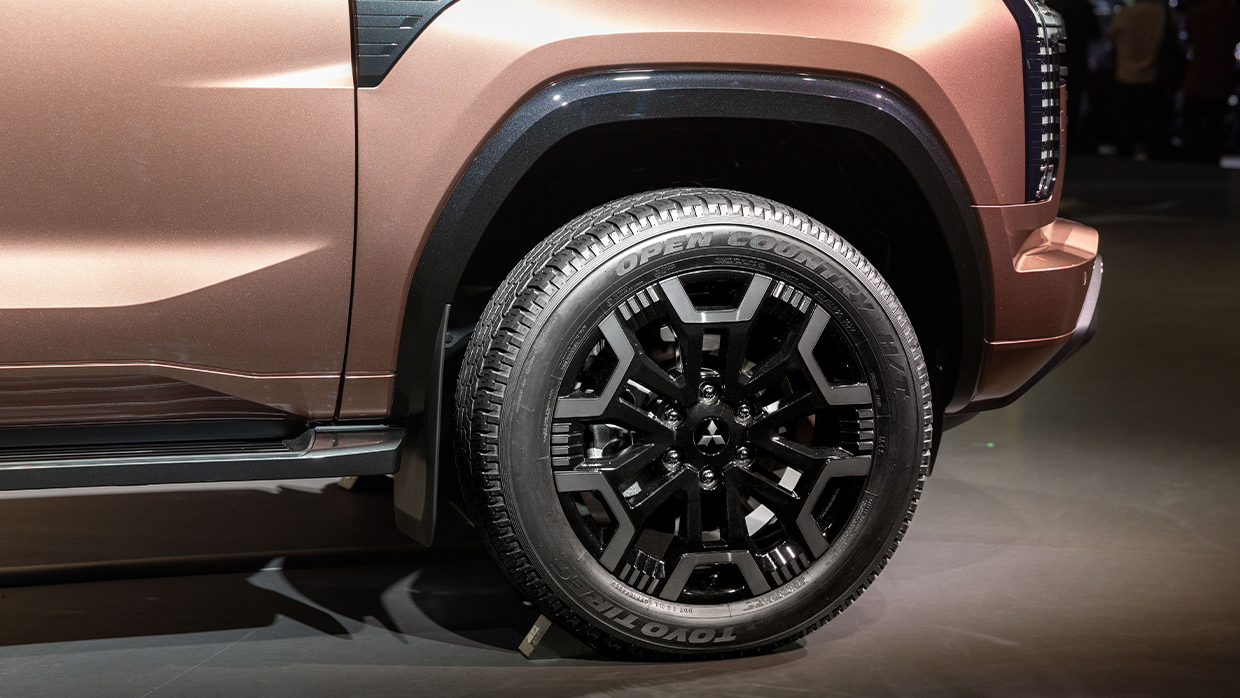
Entering the esses, the new Pajero (wearing V-rated 255/55R20 Bridgestone Duelers) feels effortlessly composed. It rolls moderately and quickly changes direction without tying itself in knots – mostly sticking to my chosen left lane and only crossing the centre line as the corners tighten.
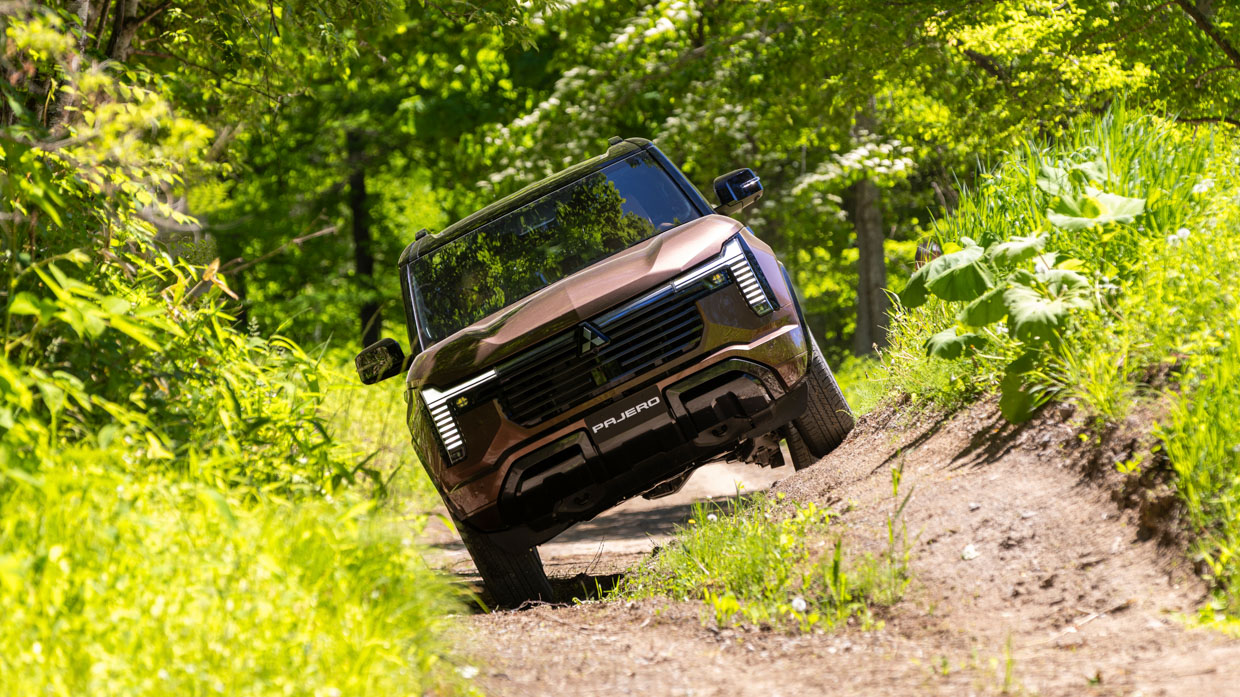
It this driving situation, the tyres remain subdued and the steering weighting feels smooth, consistent and finessed.
Mitsubishi claims an 11.6m turning circle, which is pretty decent for a 4.9m-long 4WD, and there’s 2.8 turns lock-to-lock, which clearly communicates the pleasing accuracy of this steering, without being too sharp or too languid. On first acquaintance, the new Pajero’s handling and steering response feel nicely blended and on the same page.
Pulling out on the straight of the banked speed bowl, the Pajero gets another opportunity to gather pace briskly. And it does so with a refined effortlessness – in no small part due to the eight-speed automatic.
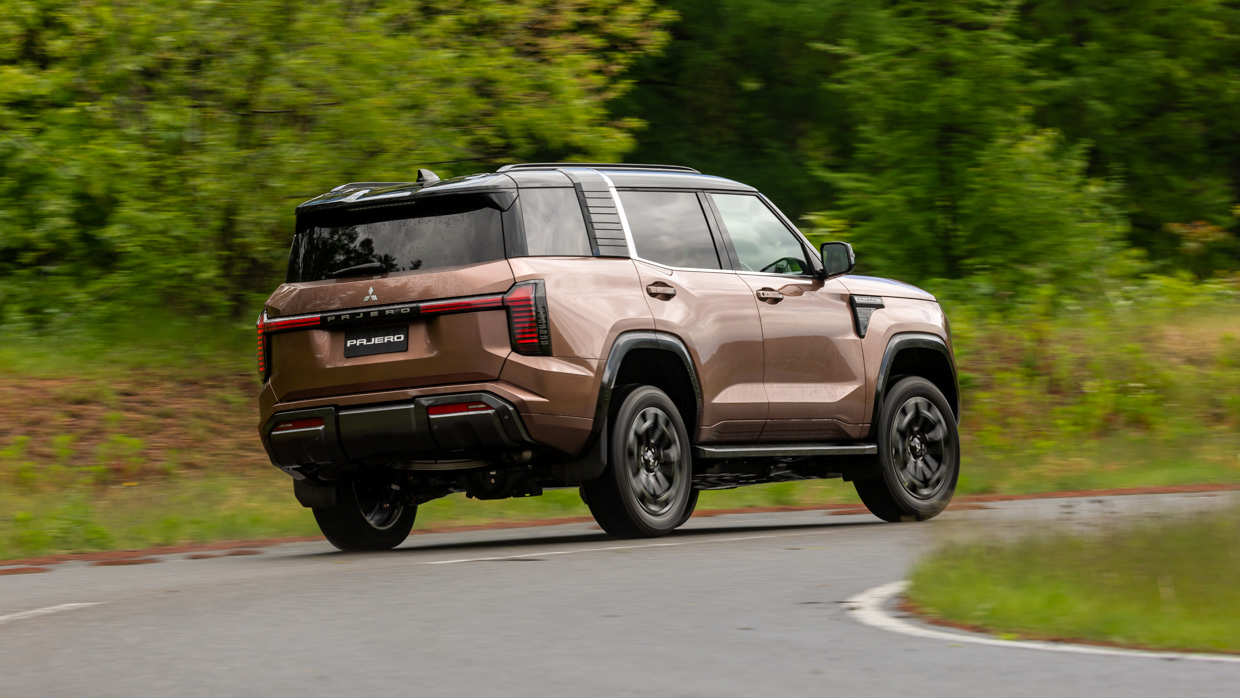
Around the banking and onto the next straight at an indicated 120km/h, the Pajero feels stable and surprisingly hushed – its tacho showing 1900rpm as it comfortably hums along in eighth gear, firmly in the centre of its peak torque band. And we’re three people up too. Despite what the keyboard warriors might be saying, the new Pajero is no slug.
After an easy squeeze of the brake pedal to clamp the four-wheel discs, we steer onto a narrow inner track with two lanes – each nicely patchworked and undulating.
I initially stick to the outside lane traversing lumpy bitumen that’s a good challenge for the Pajero’s damping. It rocks around a little but generally does a terrific job of smoothing over the edges and absorbing the terrain while disguising the size of its wheels.
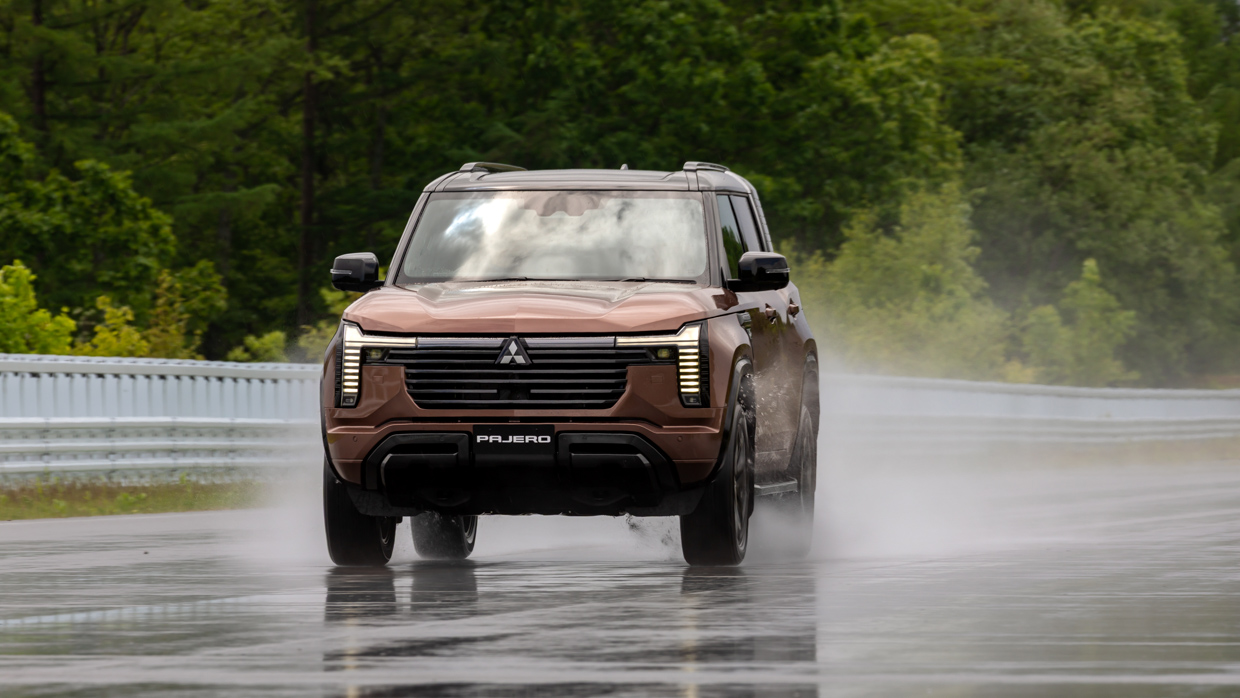
Then when the inner lane changes to concrete, I move left and notice the Pajero is similarly unfazed by concrete joins and changing surface angles.
For a separate-chassis 4WD with fixed-rate dampers wearing 20-inch wheels, it’s much better than expected and really quite impressive for both its comfort and its quietness (though it’s not as level as a well-damped passenger-car station wagon or a well-tuned SUV on air suspension).
Pulling up at the PG HQ, it’s easy to spot the Pajero’s highlights. Its winged front seats are outstanding – both supple and supportive, each with height adjustment – and its outer second-row pair are impressive too.
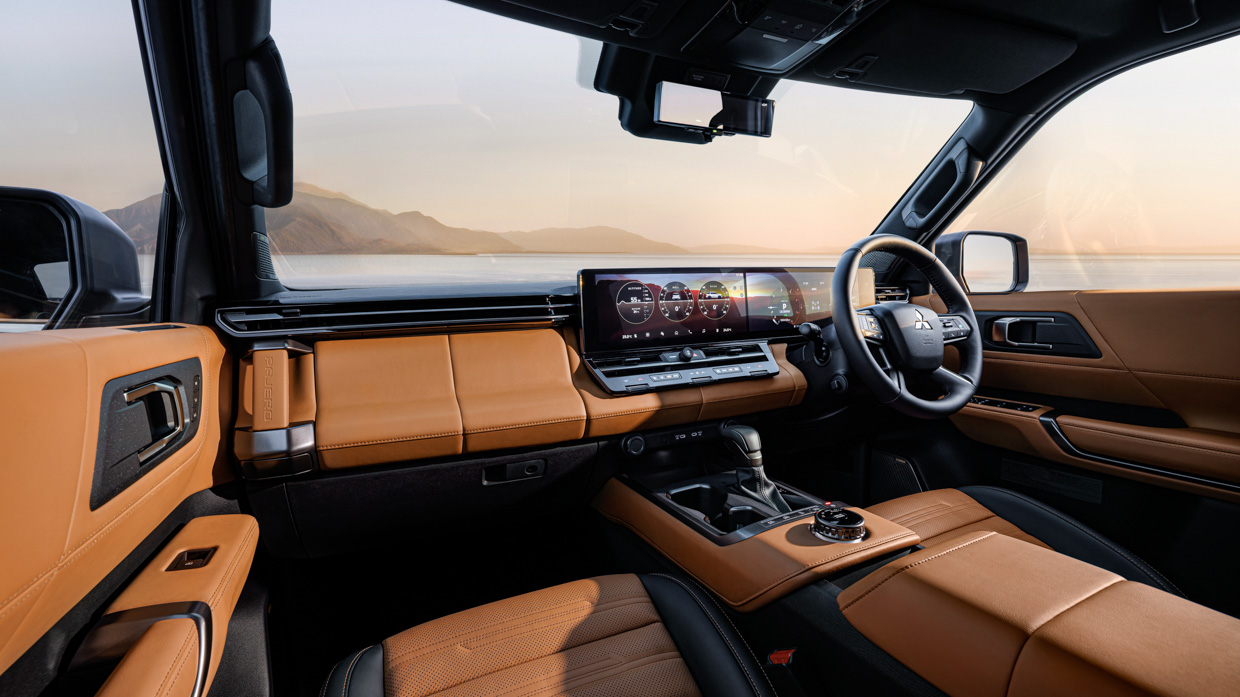
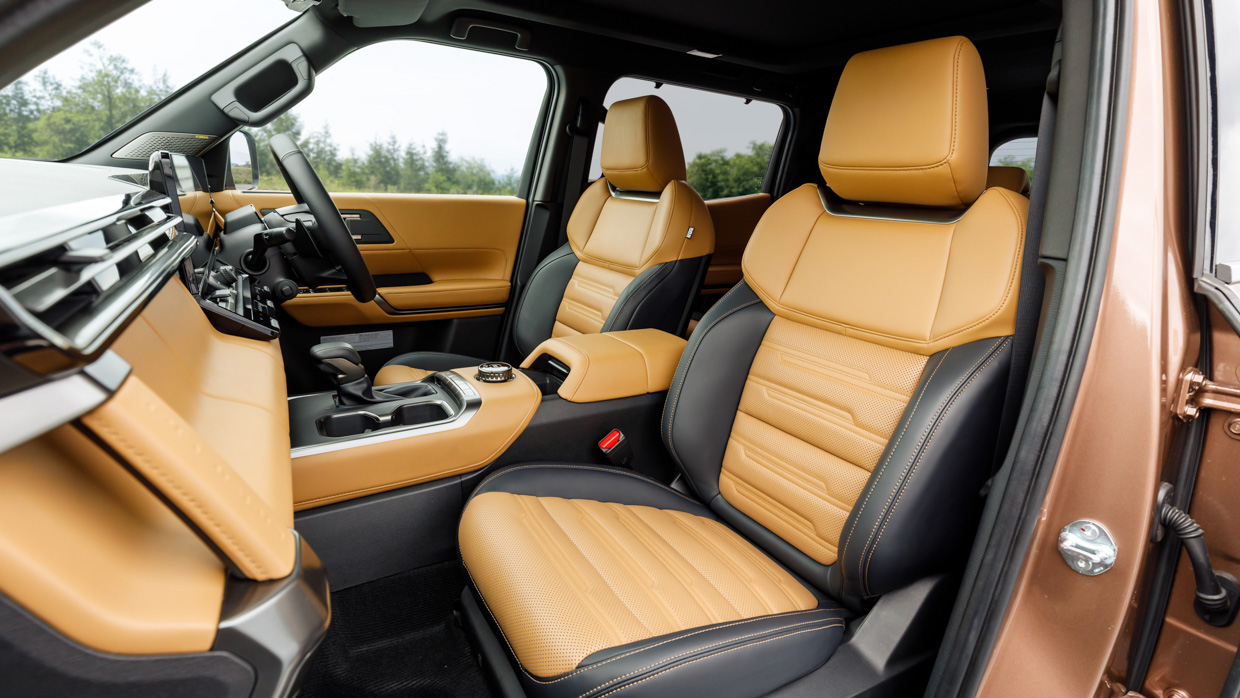
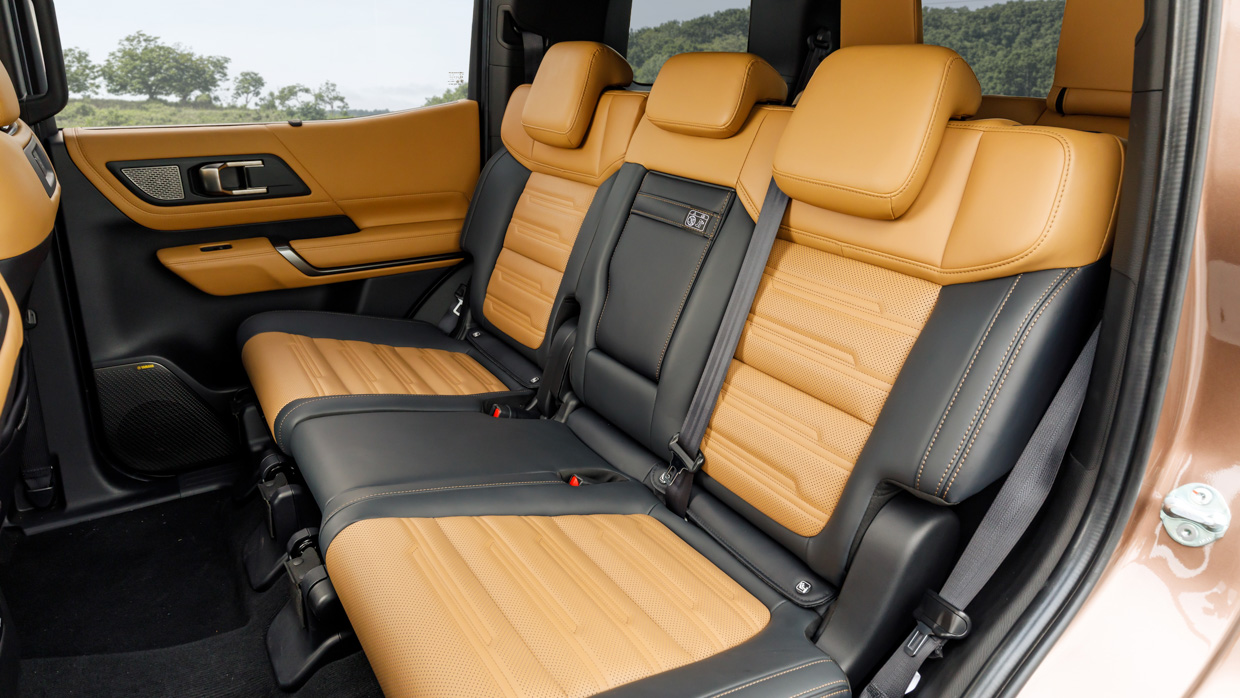
Even the middle seat is completely doable (rather than truly awful) while the third-row pair benefit from scalloped headlining to provide decent headroom, matching the surprising legroom back there.
There’s plenty of intelligent storage (such as the pop-out dash cupholders below the vertical ‘Pajero’-branded grab handles at each end) and the cabin finishes are delightful – certainly the all-black leather version but definitely the two-tone black and camel interior of the GSR.
Its stitching design is superb, there’s padded material everywhere and, well, it’s the best cabin Mitsubishi has done in generations. By a long way.
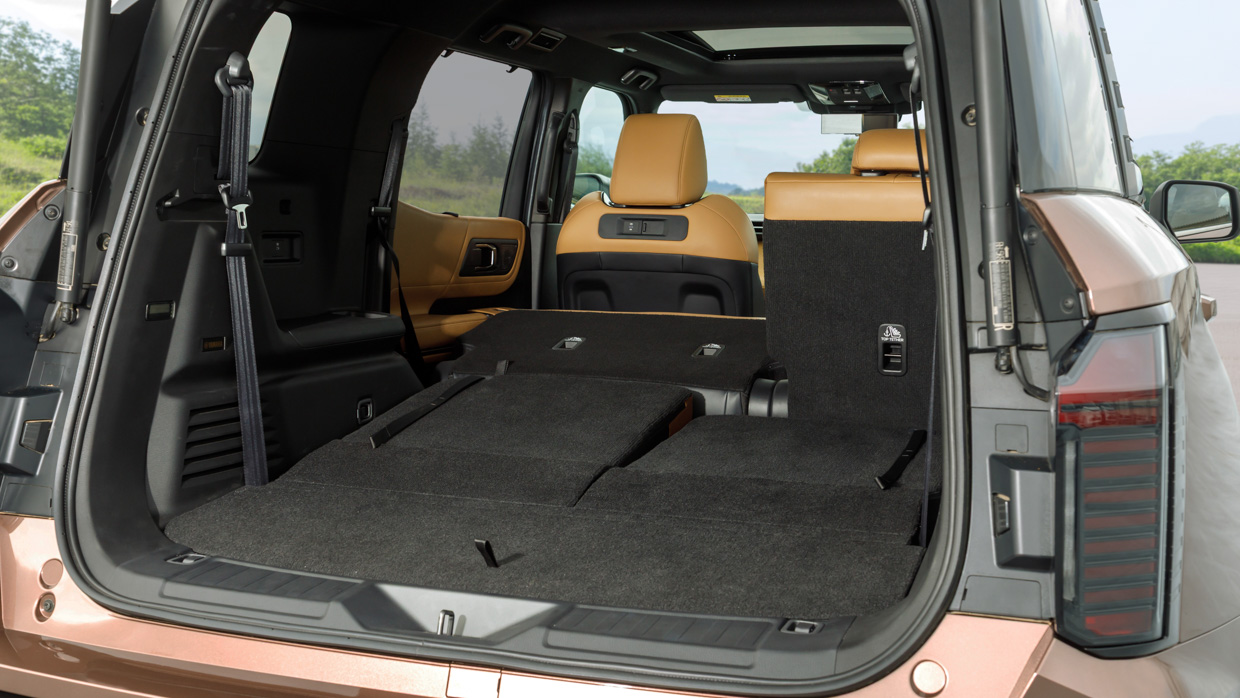
If the new Pajero had a longer tail then it would be able to offer more boot space (it’s 519 litres behind the second row, which is reasonable). And if it had a different engine (such as a petrol V6, or the petrol-hybrid and plug-in hybrid that are ‘under consideration’) then it would almost definitely have the powertrain to match its prestige aspirations elsewhere.
But those aspects aside, there’s a lot to like here on first impression.
It really does feel comfortable and sound refined, while looking inoffensively handsome. If people like the way it looks then we suspect they’ll really like the way it drives. And if Mitsubishi keeps its development throttle planted, we’ll eventually see other powertrain options, as well as a pair of baby Pajero-branded SUVs to flesh out the triple-diamond line-up.
For the sake of Mitsubishi’s fortunes, it’s not just a case of want, however. It’s a case of need. Mitsubishi needs its brand character back and it needs some genuinely good product. So far, it appears that the new Pajero has become patient zero.


