Powered by
-
Car Reviews
Latest reviews
- Car News
-
Car Comparisons
Latest comparisons
- Chasing Deals
Latest reviews
Latest comparisons
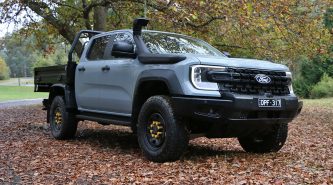
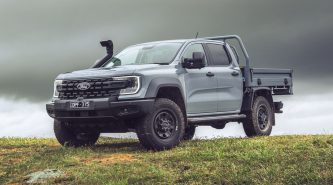
After years in the kitchen, has Ford succeeded in cooking up the ultimate ute, or is the Ranger Super Duty just another unfinished rig?
The idea of ‘potential’ is rife in the ute segment and often relied upon by car manufacturers to sell 4x4s which don’t meet their self-set, sky-high brief without significant investment in modifications.
Few need the ‘ultimate ute’ for their daily duties, but for buyers who plan on holding the ambitious marketing material to account, the Ford Ranger Super Duty is the answer many have been waiting for.
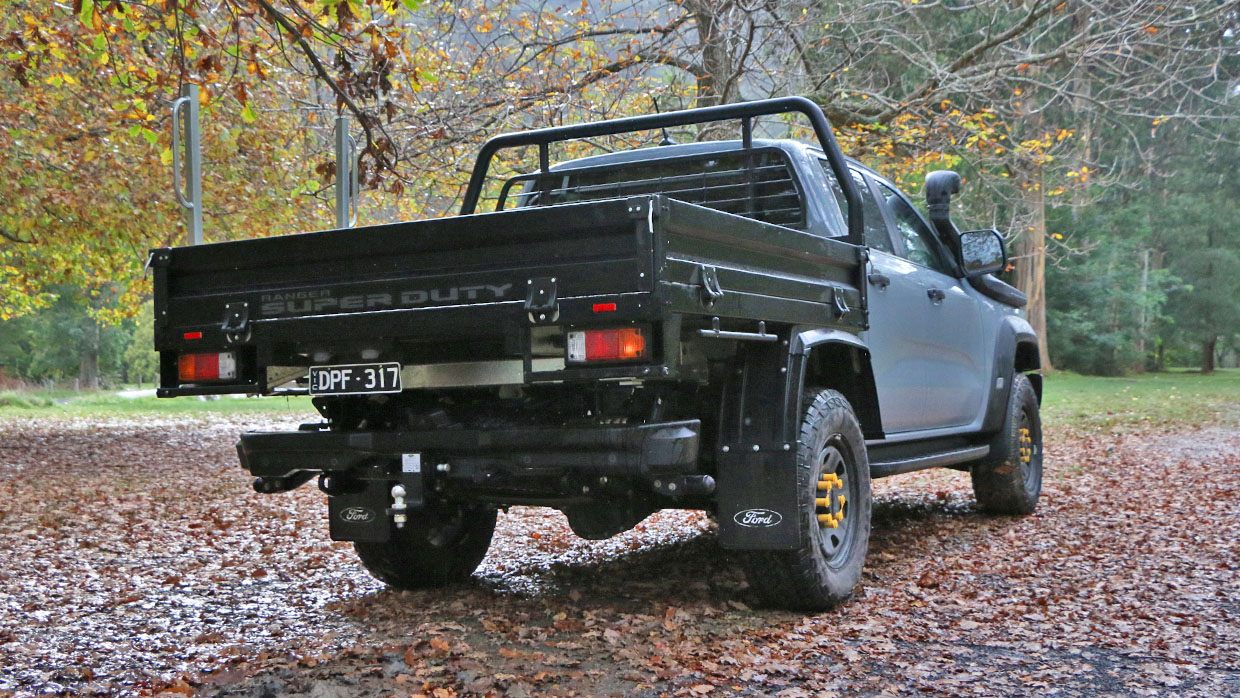
In most utes, stock payload/GVM is insufficient for the listed towing capacity, clearance too low, protection lacking and the tyres unsuited for any decent off-roading.
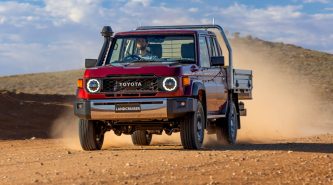
The Ranger Super Duty aims to solve these issues and tap into terrain held not just by the Toyota 70 Series LandCruiser, but also work trucks like the Isuzu N-Series, which can typically be driven on a standard car licence.
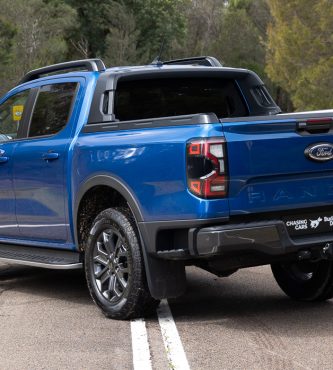
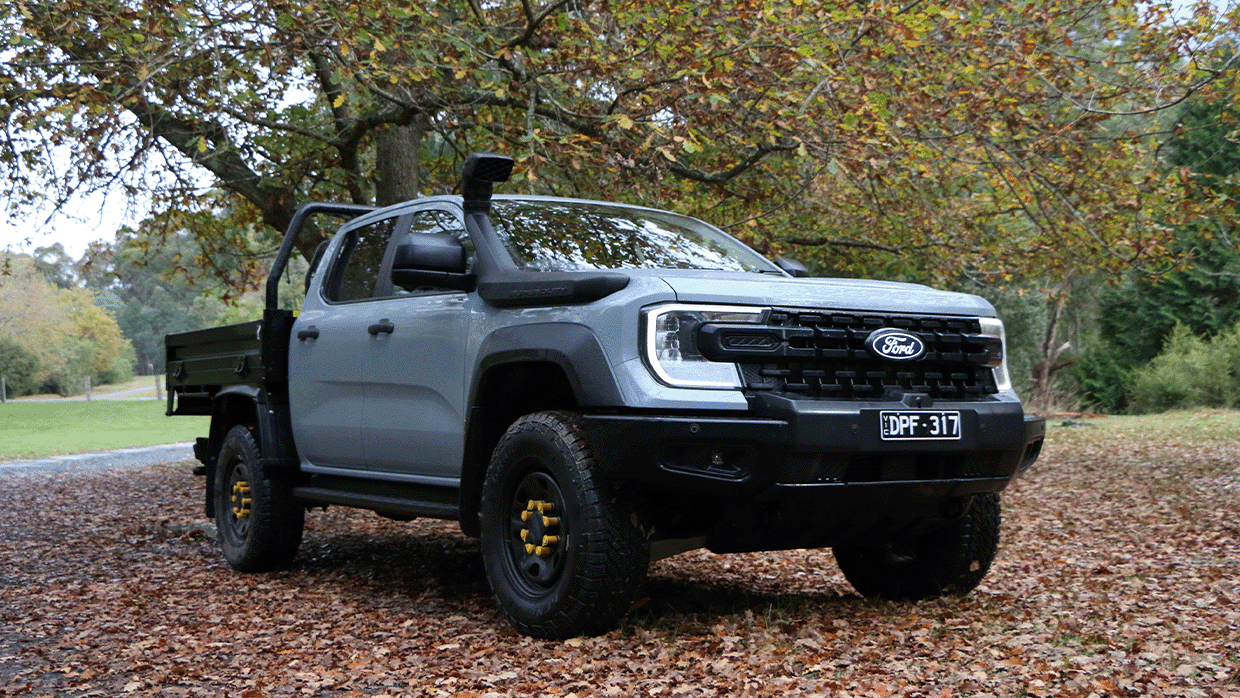
The headline figures are well-known, but still impressive: 4500kg braked towing capacity, 4500kg GVM, 8000kg GCM, ground clearance of 299mm and wading depth of 850mm.
Arguably more impressive is the fact the Super Duty still enjoys the coverage of Ford’s five-year warranty, and interstate tourers won’t have to worry about confusing state-based rules that can make GVM upgrades legally invalid if you’re not careful.
After years of local engineering, consultation with fleets and brutal testing Ford says the Super Duty version of Ranger is a vehicle genuinely built for the task, right off the showroom floor. So just how credible is this claim?’
Pricing for the Ranger Super Duty opens at $82,990 before on-road costs for the single cab-chassis, followed by the Super cab-chassis ($86,490).
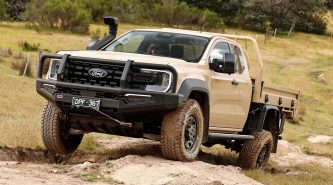
The dual-cab cab-chassis ($89,990) tested here is the more affordable option at first glance, though it’s actually cheaper to opt for the pickup at $93,990, once you add on the circa-$6K+ you’ll need for the steel tray of the former.
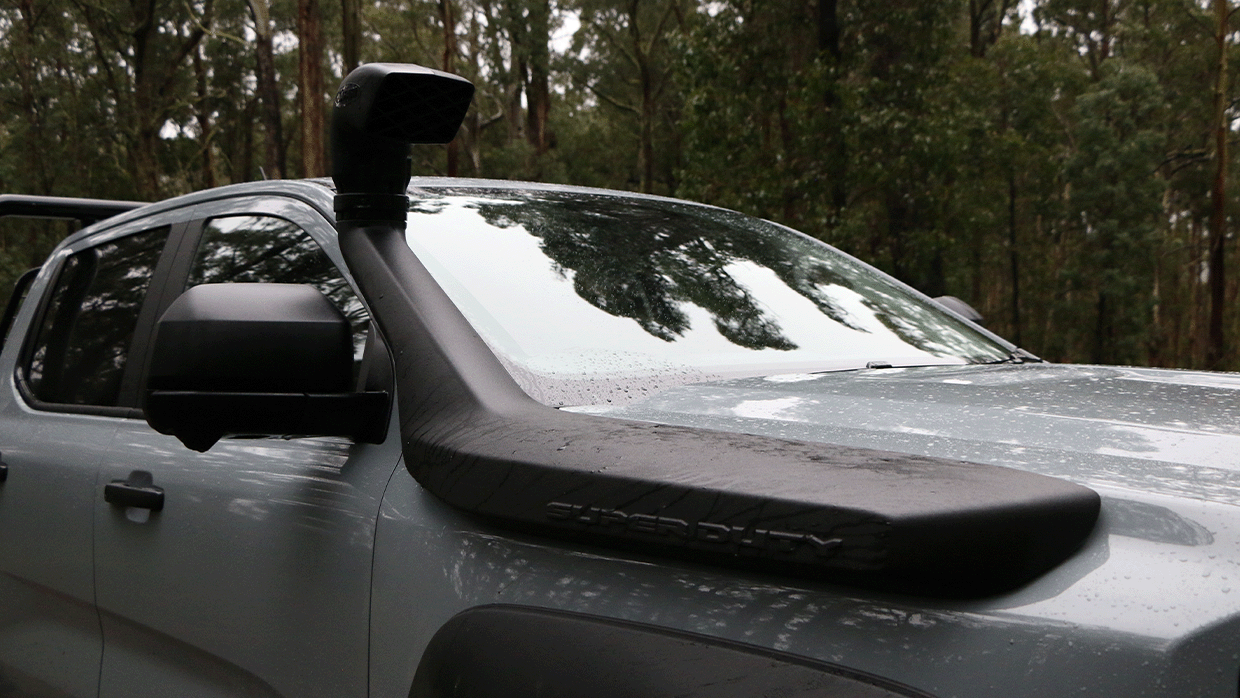
Starting on the outside, it’s equipped as standard with:
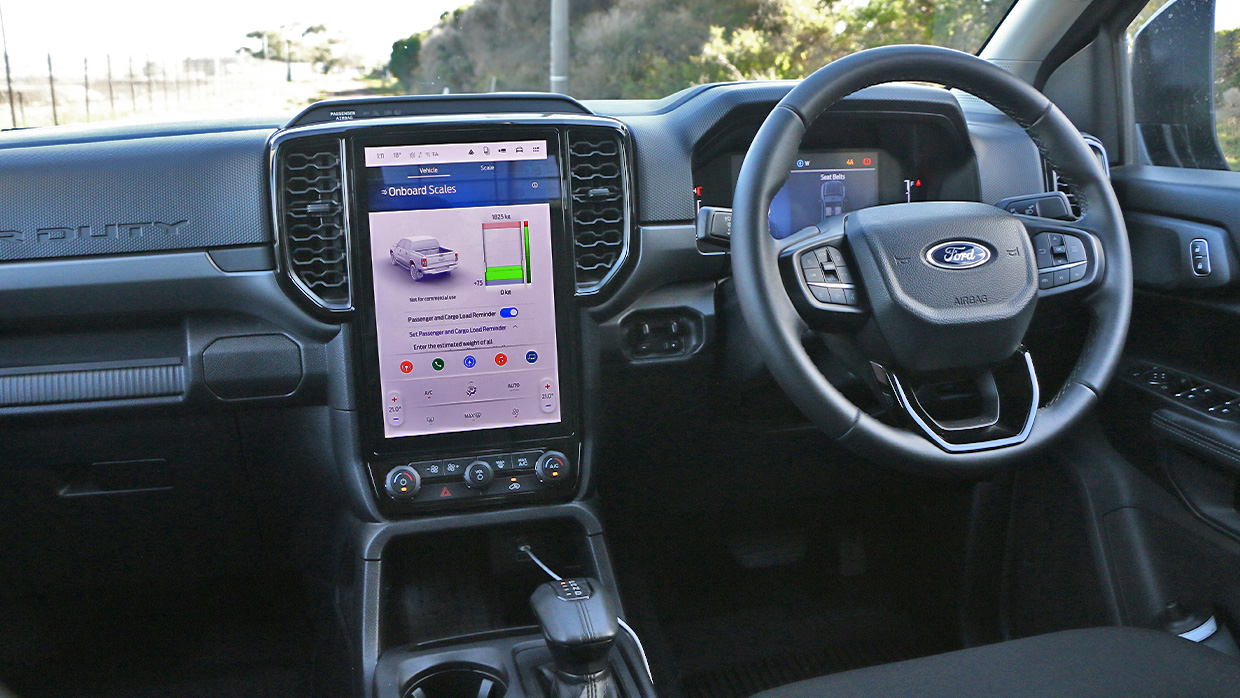
And on the inside:
Like a normal Ranger, the Super Duty is fitted with a 400W inverter with a household plug inside the cabin – though cab-chassis models miss out on the outlet found in the tub of the pickup, which is a bit of a shame given that new rivals like the BYD Shark 6 have shown this can be done with a cab-chassis layout.
Those looking for more luxury can step up to the XLT, priced at $95,990 and $99,990 for the cab-chassis and pickup, in dual-cab guise only. For the extra cash, buyers net leather upholstery, heated and ventilated front seats, carpet flooring and 18-inch alloy wheels.
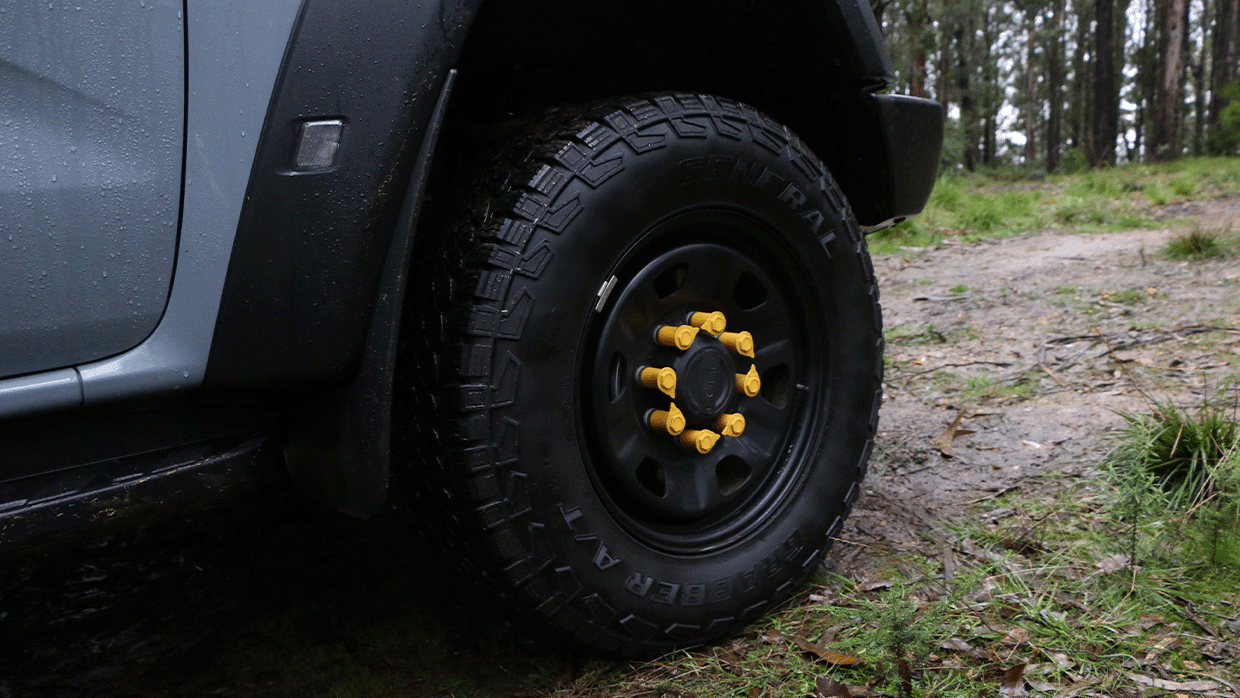
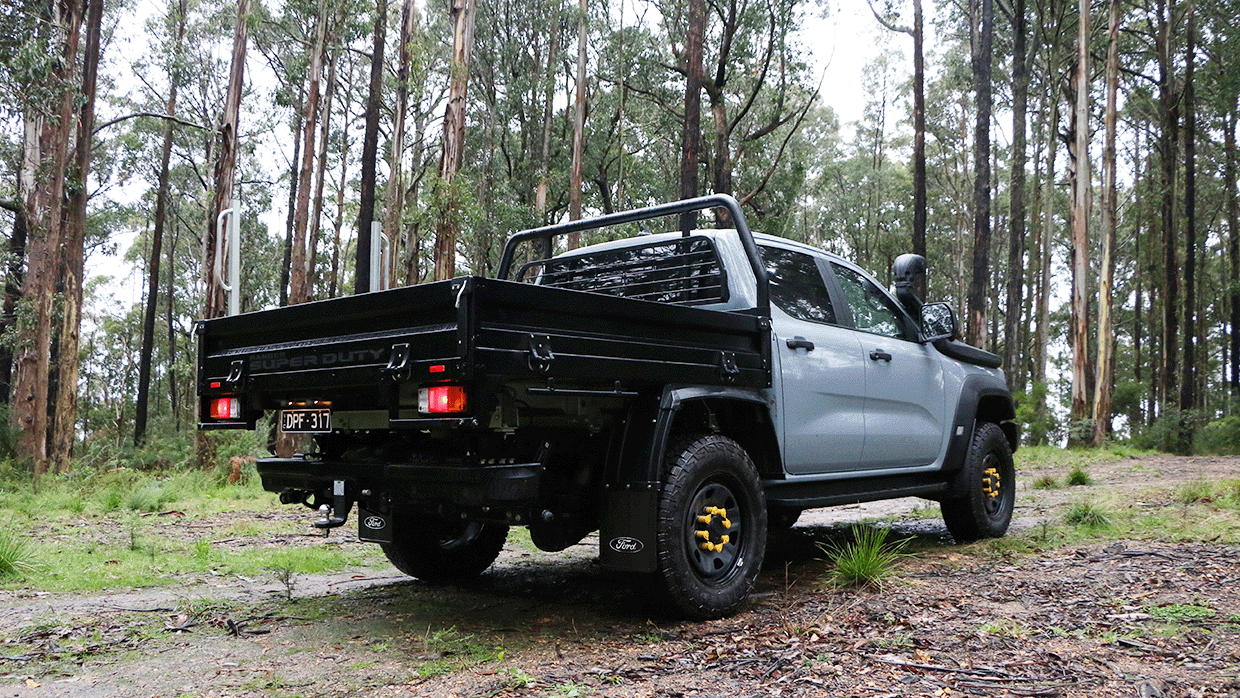
The level of customisation is commendable from Ford, with the accessories brochure running 14 pages long by itself, with key add-ons fitted to our test unit including the matte black steel tray ($8166), tray steps ($835), wheel nut indicators ($150), all-weather floor mats ($306) and Command Grey paint ($750).
All up, the Super Duty tested here costs roughly $110,000 driveaway.
We spent nearly 1500km behind the wheel of the Super Duty across several weeks of moving house, exploring mountainous areas and tackling the monotony of everyday life, in doing so getting a great idea of what it’s like to live with.
The most remarkable aspect of the Super Duty is how it goes, turns and stops just like the regular Ranger. That’s not to say there aren’t differences – there certainly are – but given the added capability, it’s an impressive result.
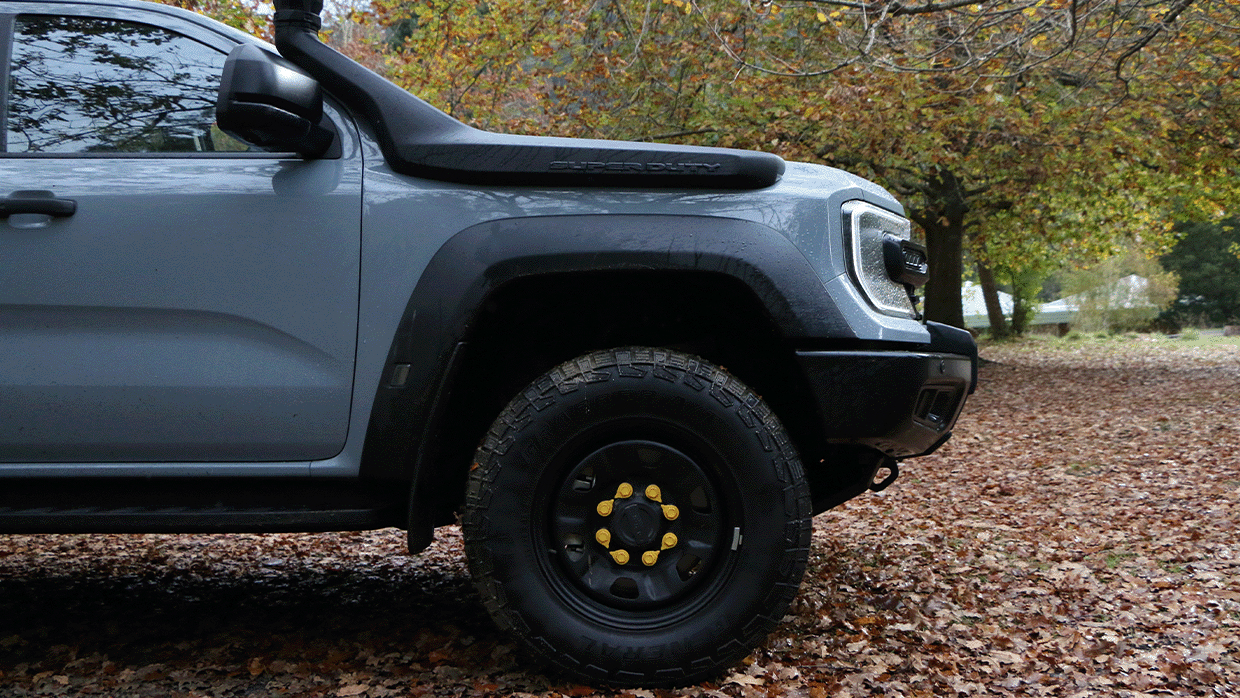
The Super Duty sits 100mm higher, 114mm wider and weighs roughly 600kg more than a Ranger Double Cab (though the Super Duty’s weight is without tray) thanks to thicker chassis rails and added features.
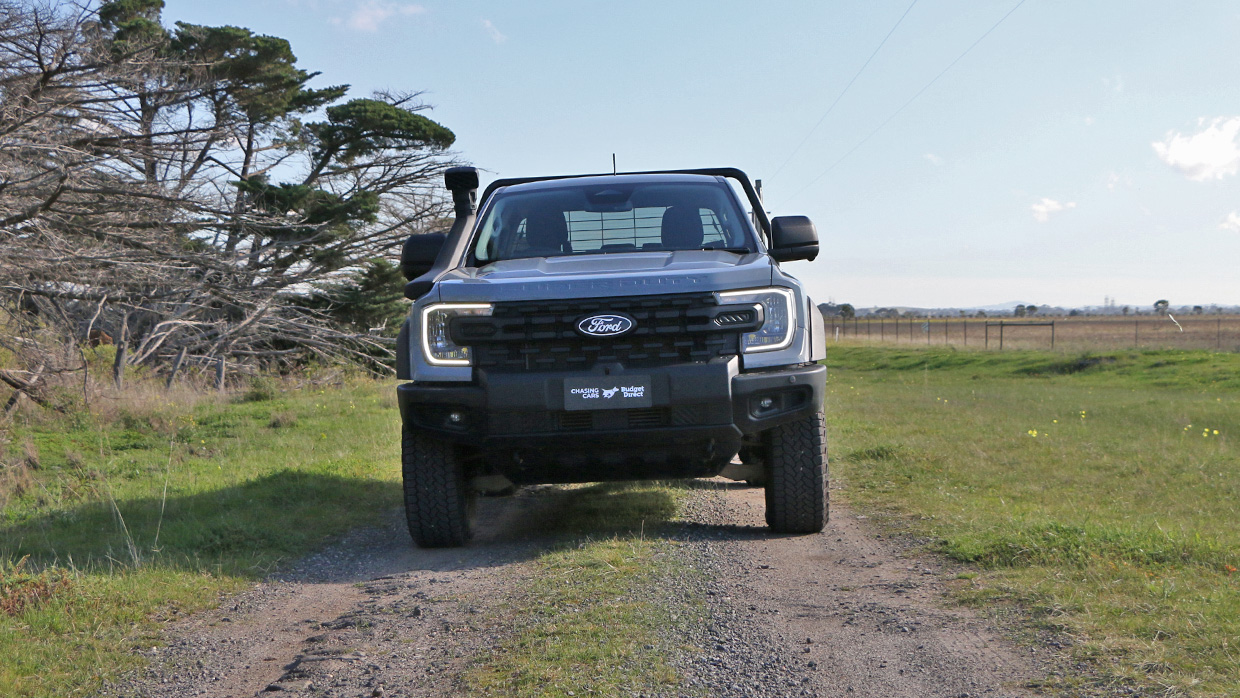
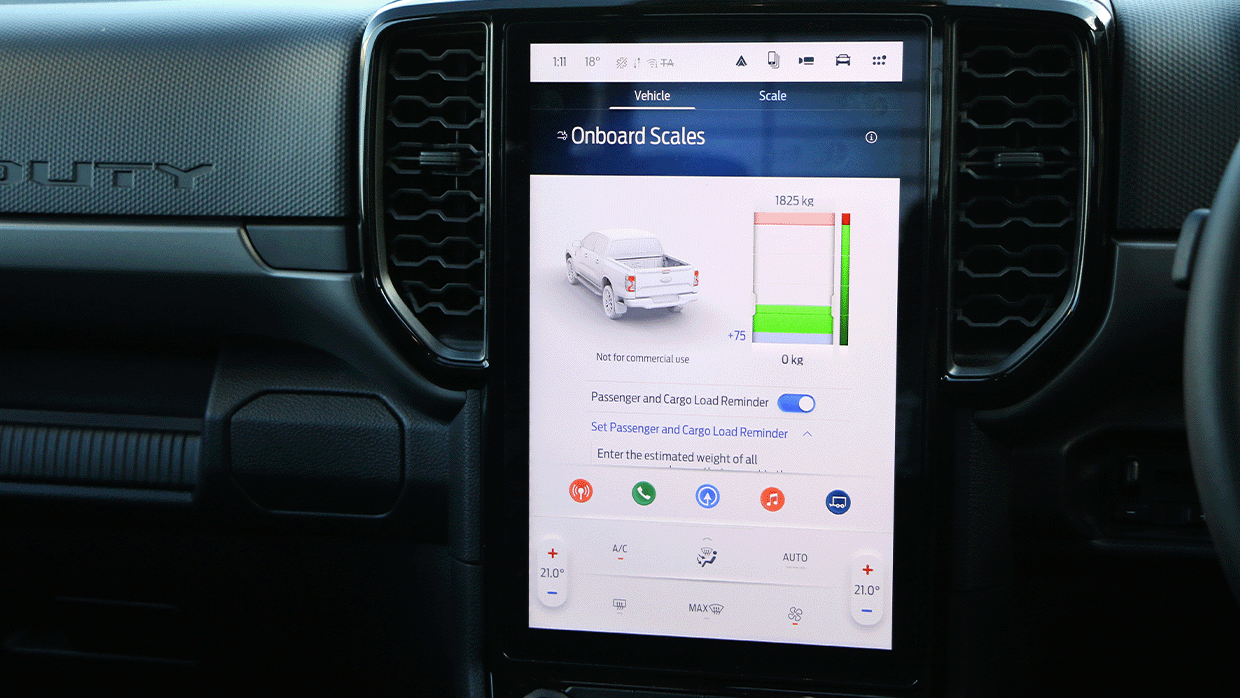
Compared to a Ranger, the Super Duty has a noticeably rougher ride and less steering precision — remember its payload sans-tray is 1825kg — but the experience still far exceeds that of most lifted and GVM upgraded utes.
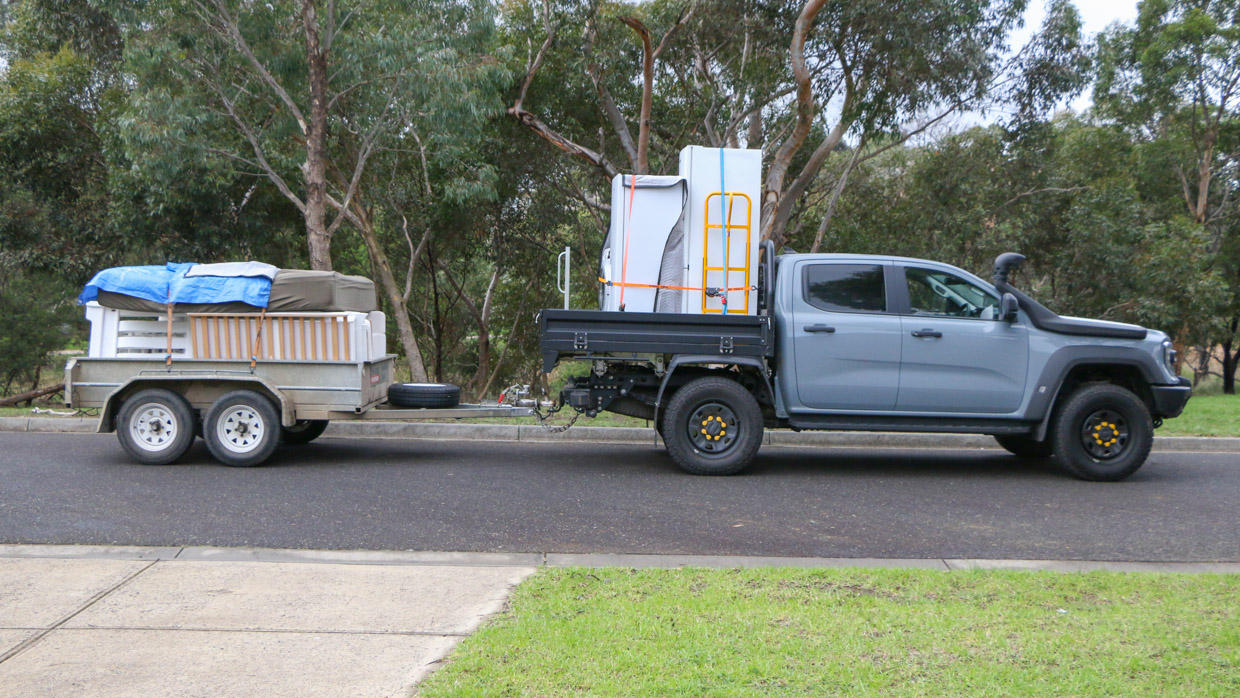
As with most utes, the Super Duty’s ride settles with weight in the back but it was remarkable how unbothered it was by roughly 500kg of cargo in the tray (plus 2x 100kg men), and a loaded twin-axle trailer weighing just under two tonnes.
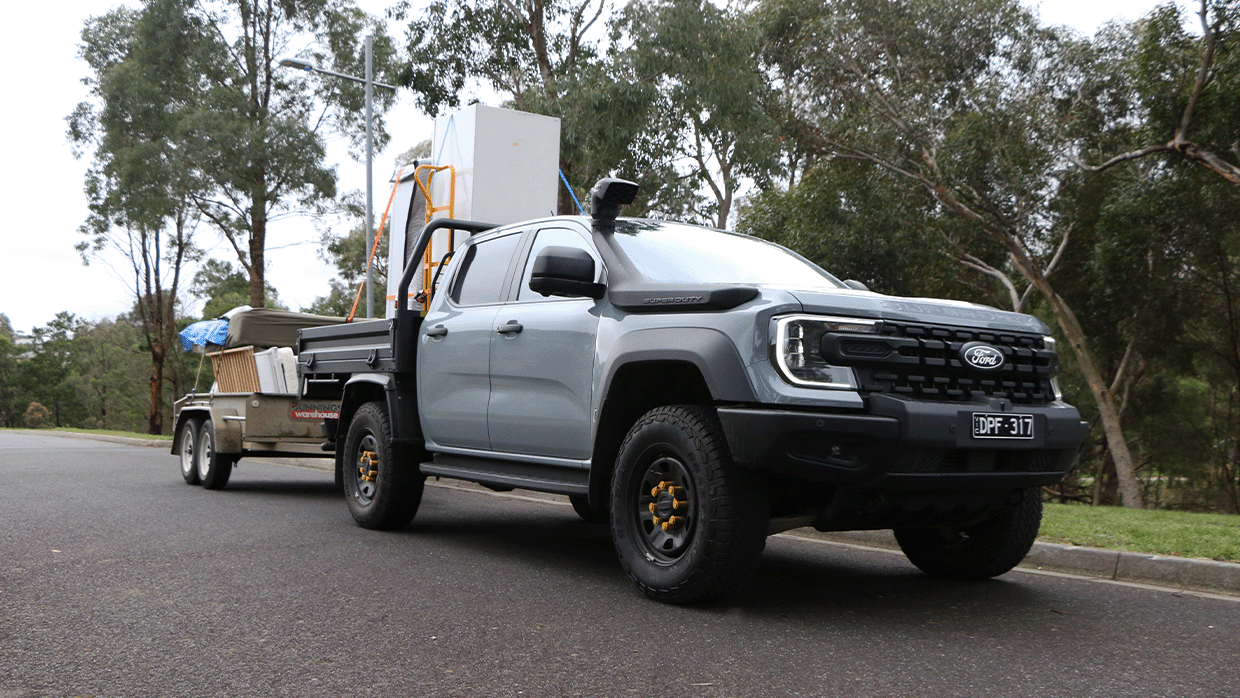
The hitching process is seamless, with the Ford automatically switching into Tow/Haul mode without fuss and the enlarged mirrors providing excellent visibility – though we still longed for the superior ‘split’ mirror design of the Transit range.
Detuned from 184kW to 154kW (at 3250rpm) to enhance the reliability of the 3.0-litre turbo-diesel V6 and meet emissions targets, the heavier Super Duty is noticeably slower than a typical Ranger. With the 600Nm peak (at 1750rpm) retained, the Super Duty still feels largely unimpeded when modestly loaded with gear.
It’s worth remembering, too, that these are impressive outputs when looking at commercial trucks with similar payload and towing figures. The N-Series, for example offers just 140kW/513Nm in its highest state of tune, though most variants run just 110kW/375Nm.
We can see why some buyers might opt for an aftermarket tune if towing three-plus tonnes on the regular, but it’s far from critical in our eyes. The 10-speed automatic makes good use of the torque on offer, and the full-time 4×4 system is another advantage over rivals like the 70 Series which are restricted to RWD on sealed surfaces.
Around town, the Ranger Super Duty doesn’t hide its rugged identity but it’s still significantly more refined than most rivals, with very little noise coming more the snorkel and minimal cabin vibrations for the class.
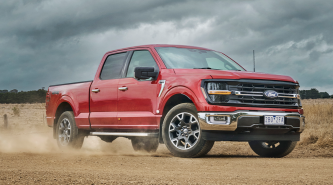
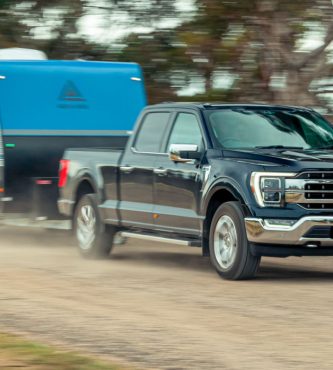
Well-tuned adaptive cruise on the highway, a solid 360-degree camera for parking and the comparatively smaller size over light-trucks or full-size utes, like the F-150, also make it a significantly easier vehicle to live with.
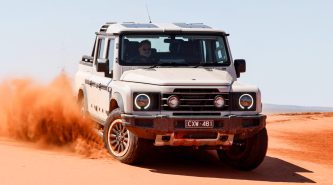
We didn’t get a chance to get the Super Duty properly dirty for this review but we’ve previously spent plenty of time in high- and low-range in central Australia where the Ford seriously impressed; coming out on top against the 70 Series and Ineos Grenadier Quartermaster.
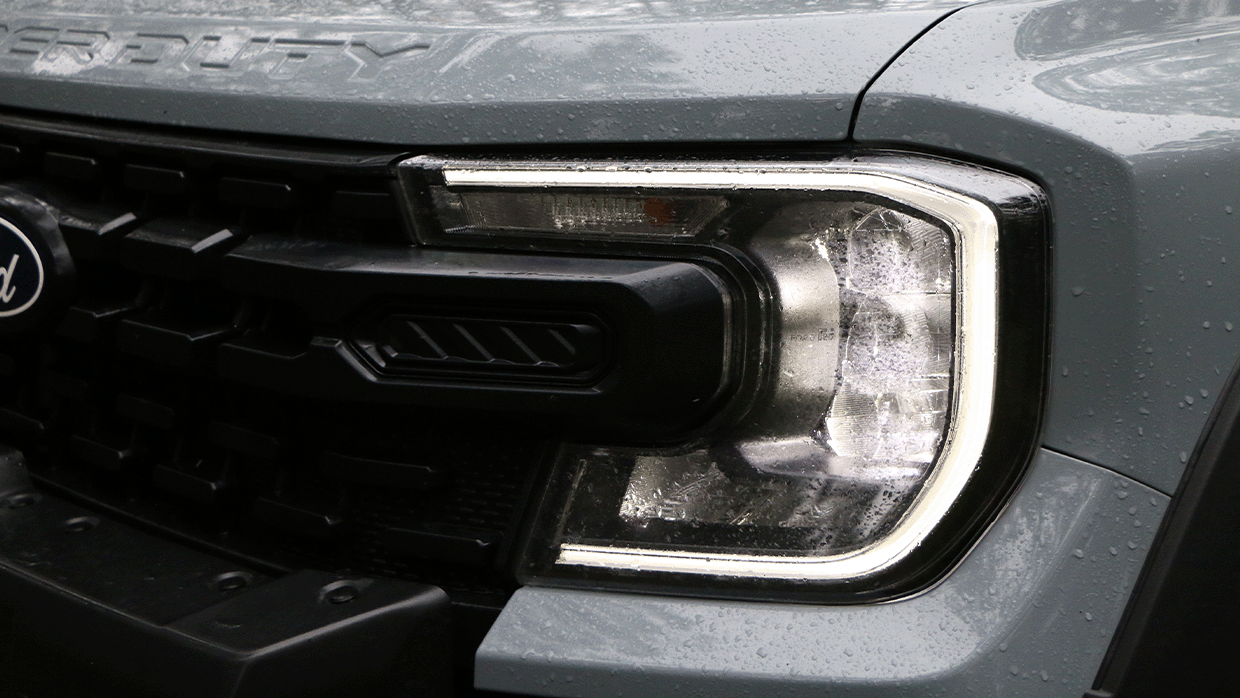
For a $100K ute, though, the headlights on the base Super Duty are poor. Frustratingly, the Super Duty (including dearer XLT) misses out on the Matrix LEDs of high-grade normal Rangers.
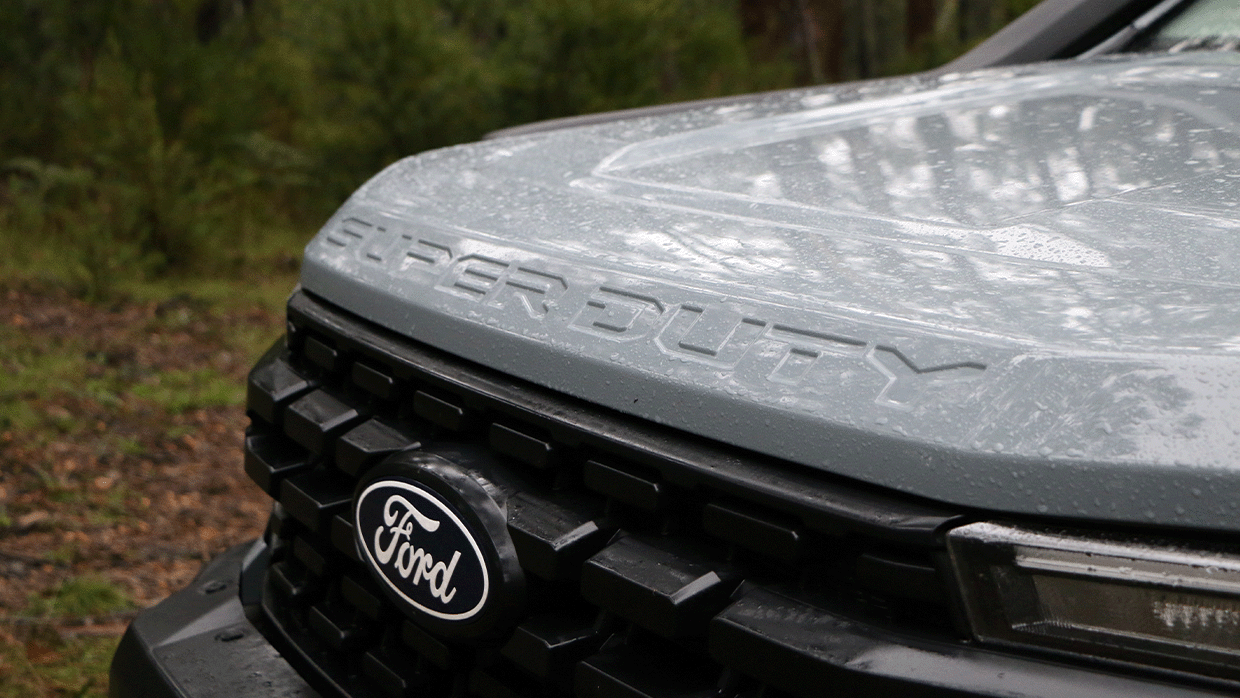
Save for the charming ‘Super Duty’ branding cut into the dashboard, the Super Duty cabin is largely the same as a typical low-spec Ranger, though with the higher-grade tech – such as the 12-inch multimedia screen – sprinkled in.
You’re still left with a low-rent six-speaker sound system and 8.0-inch digital driver’s display from lesser Ranger trims.
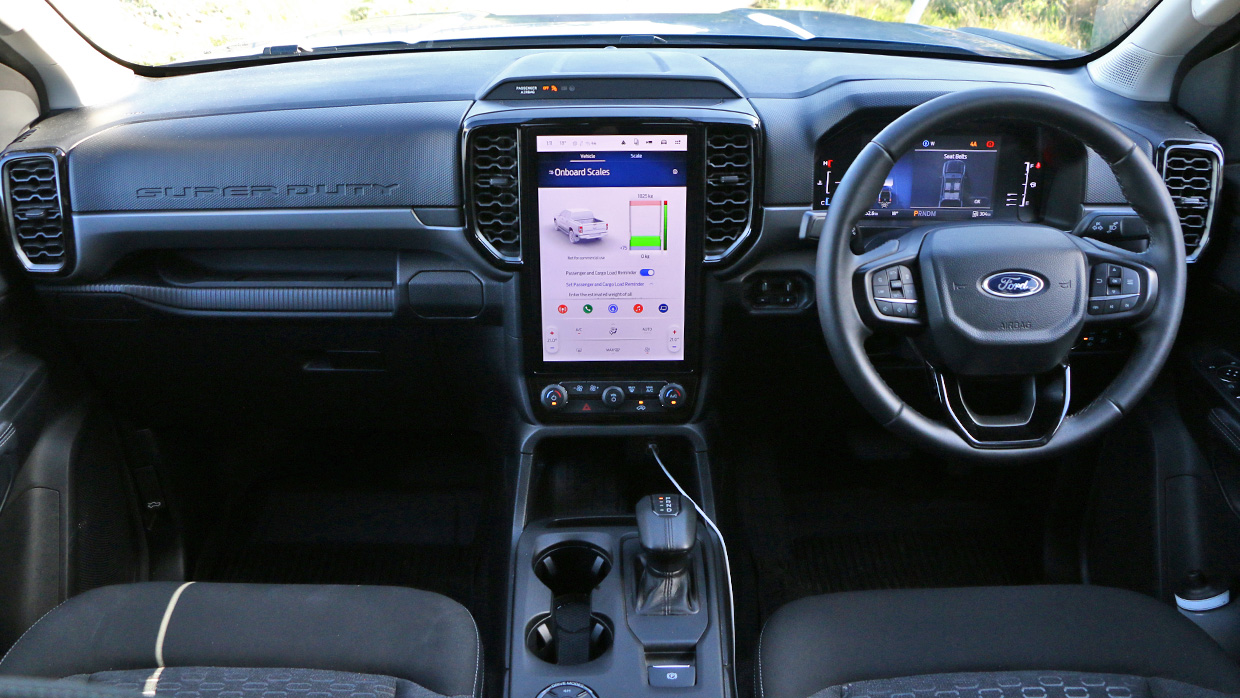
The multimedia system is easy to use, with a wireless charger for your phone and most key controls falling easily to hand.
That said, we’d still like to see Ford spend the extra coin and integrate physical buttons for the front and rear differential locks instead of relying on the touchscreen – which isn’t ideal if you work in a role that constantly requires gloves, for example.
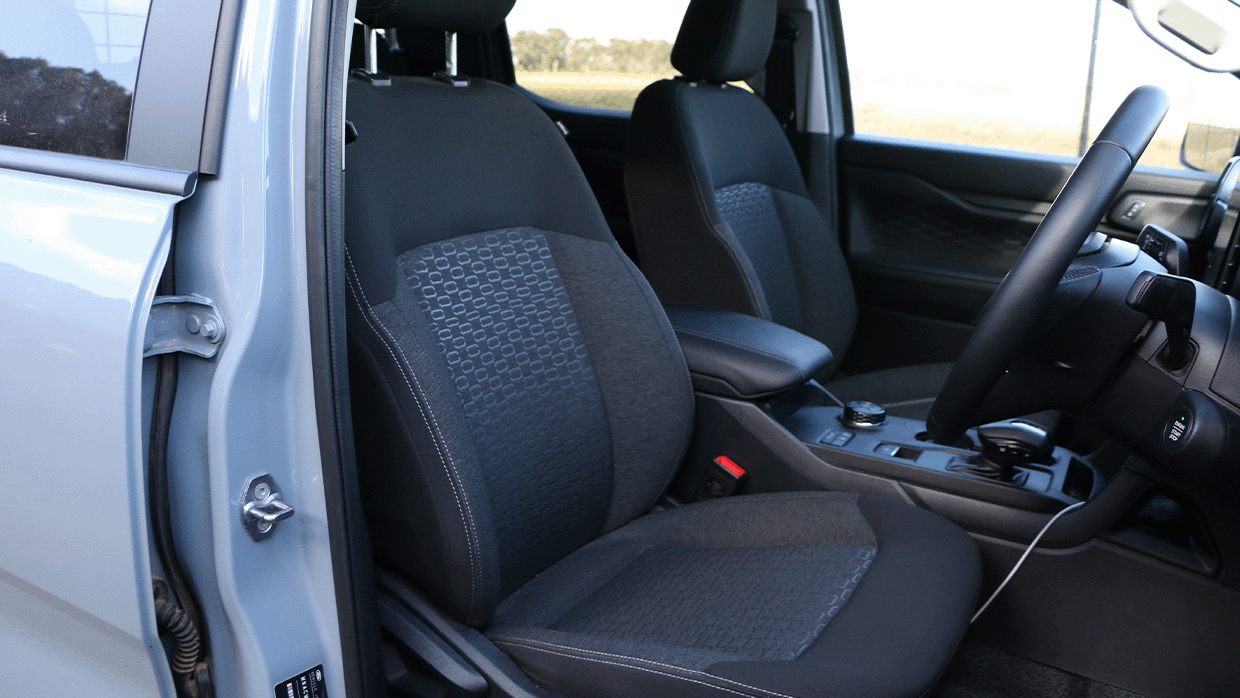
Materials are generally harsh but hard-wearing and that’s probably the right call for this base grade; private buyers planning long road trips are likely better accommodated in the XLT, though the base still features leather on important touchpoints like the steering wheel and armrests.
Vinyl floors by default is another good choice for the Super Duty, though we did note one of the fragile plastic clips holding down the all-weather floor mats had snapped on our review unit.
It’s not the only quality concern, either, with a prominent rattle noted from the driver’s b-pillar of our test car – an issue already well documented in the regular Ranger and the Ford-built Volkswagen Amaroks for years now.
The cloth, manually adjustable seats are decent but not as supportive as they could be and lack heating – unlike Ford’s other commercial offerings like the Transit Custom, which kicks off at $56,590 before on-road costs.
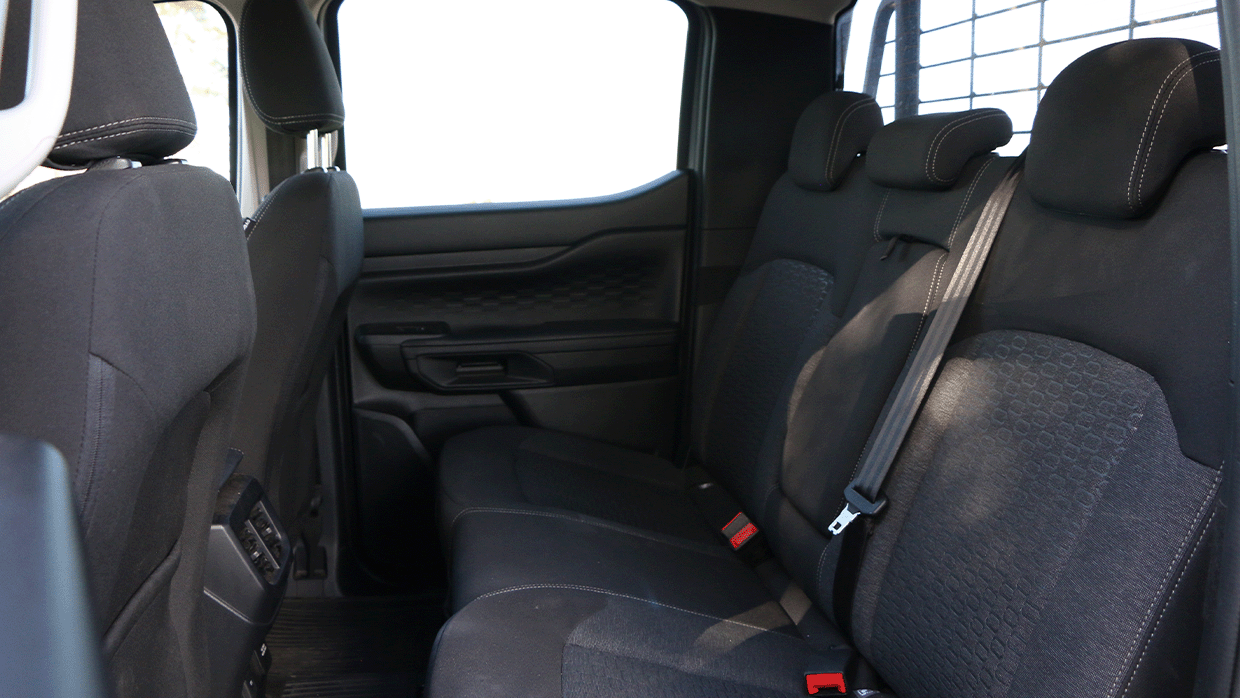
Row two is the worst part of the Super Duty package, with little room to accommodate a rear-facing child seat or large adults without everyone getting a bit cramped. There are at least features like air vents and USB points for charging devices, which isn’t a given in this segment.
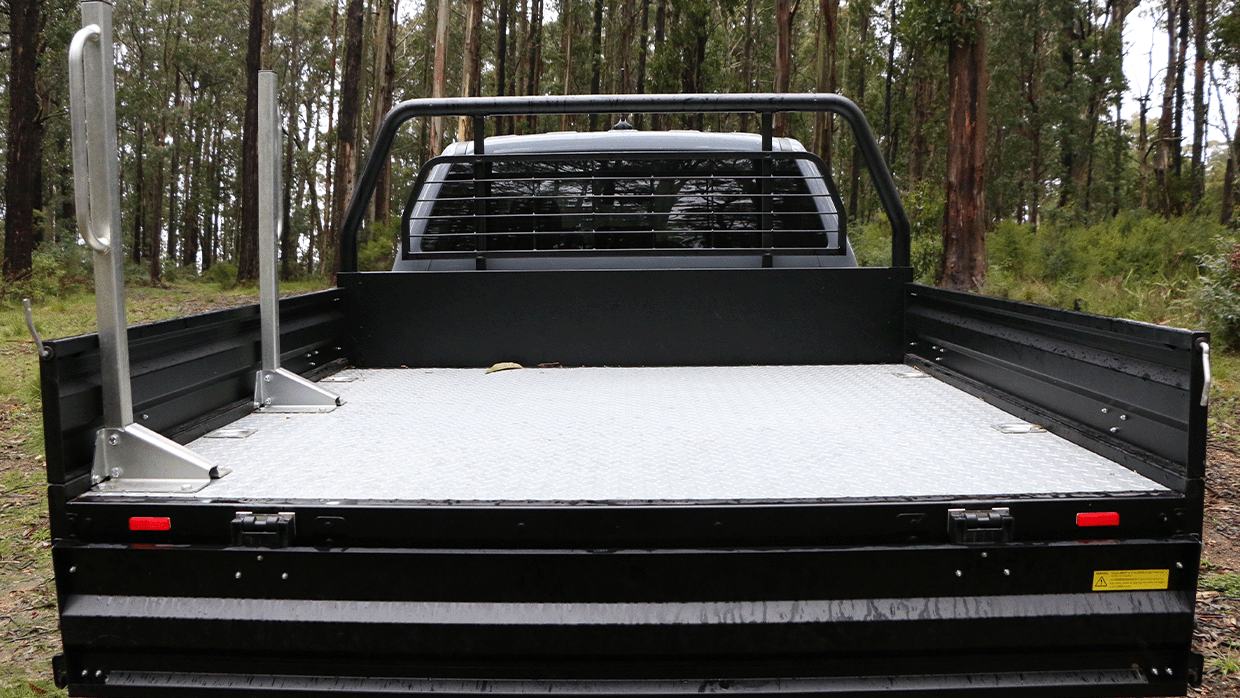
Ford Australia doesn’t provide the exact dimensions of the steel tray but it’s a solid size for a dual-cab ute, though some shorter folk might find the tray height a bit challenging. We’d also appreciate more than the four basic fitted tie-down points, Ford.
Significant changes made to the Super Duty mean it’s not covered by the five-star safety rating awarded by ANCAP in 2022, but much of the safety equipment carries over.
Nine airbags are fitted to the Super Duty as standard – drawing stark contrast to the 70 Series, which fits just ‘two’ in most of the range.
Active safety features include blind spot mentoring with trailer coverage, front and rear AEB, post-impact braking (so you don’t roll into another crash), cross traffic alert, front/rear parking sensors and more.
In practice, the safety assistance technology is generally well calibrated, too, save for the lane-keep assistance which is slightly over-eager in all Ranger-badged models.
The Ranger Super Duty is covered by the same five-year, unlimited kilometre warranty, regardless of whether it’s being used for private or commercial purposes – in another win over its Toyota rival.
Servicing needs to be done every 12 months or 15,000km, with a prepaid servicing plan covering five years/75,000km priced at a reasonable $2100.
There is no official fuel consumption figure provided by Ford, but we saw 12.5L/100km when driving across a range of conditions, including towing. When towing and hauling a combined 2700kg of cargo in isolation, that stepped up to 13.3L/100km. Both figures are respectable and better could be achieved in highway conditions.
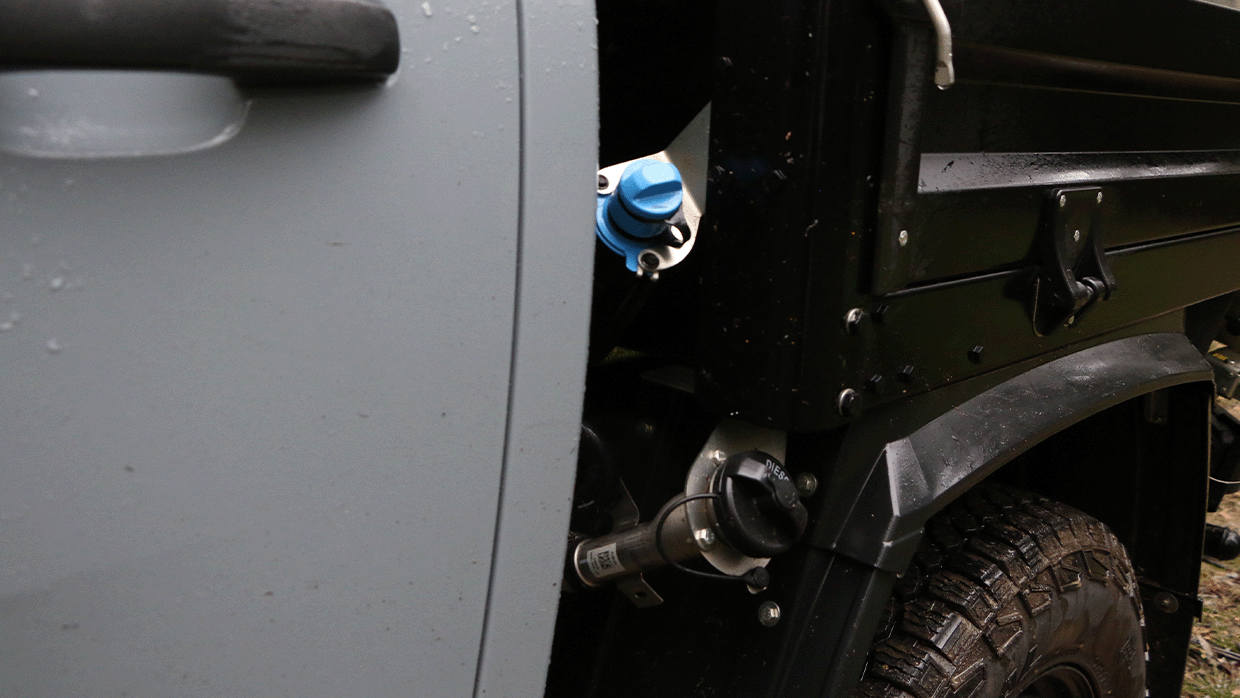
Using our as-tested figures, the Super Duty has a solid range of roughly 1040km thanks to its 130L tank. Buyers will also need to be mindful to refill the AdBlue tank.
Ford has also implemented a revised alternator design for MY26.5 Ranger Super Duty models to allay early reliability concerns.
Budget Direct told us the median annual premium purchased for the first time between 1/7/25 and 1/7/26 to comprehensively insure a new Ford Ranger Super Duty was $1425. Individual circumstances and policy terms may vary.
Of course, everybody’s situation is different, and the premium will vary according to make and model, and other things insurers take into account, such as your postcode, driving history, who drives the car, where you garage the car and more.
Please quote for yourself. Subject to meeting underwriting criteria. Insurance issued by Auto & General Insurance Company Limited. See PDS & TMD at budgetdirect.com.au.
With more off-road capability and legal bandwidth on carrying capacity than most will ever need, Ford’s heavy-duty rig feels a lot like doing things once and doing them right.
The cost comes in two forms, the confronting upfront price, and the loss of luxuries you could get in Ranger for less than this one.
That said, it’s still far better equipped and significantly safer than a 70 Series, which has been left to occupy this corner of the market for far too long.
At this point, Chasing Cars has carried out thousands of kilometres of testing of the Ranger Super Duty and in our books it meets its own ambitious brief.
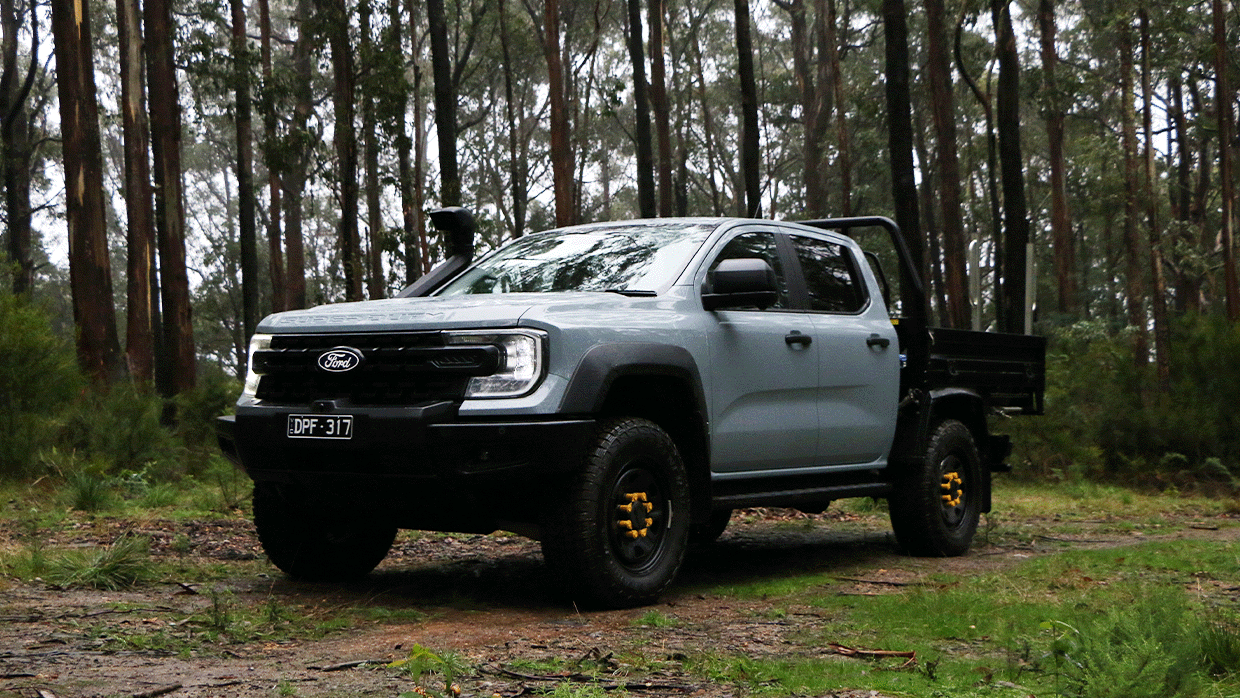
But it’s not without issues and the base model dual-cab chassis is hard to recommend thanks to its high asking price, limited features and cramped back seat space.
Commercial buyers appear far better served in the cheaper single or super cab-chassis models at the base level, and private buyers looking to spend some serious seat time travelling the country will no doubt thank themselves for spending an additional $6K on the XLT to secure a few extra luxuries that could make all the difference.
Key specs (as tested)
About Chasing cars
Chasing Cars reviews are 100% independent.
Because we are powered by Budget Direct Insurance, we don’t receive advertising or sales revenue from car manufacturers.
We’re truly independent – giving you Australia’s best car reviews.
The estimate provided does not take into account your personal circumstances but is intended to give a general indication of the cost of insurance, in order to obtain a complete quote, please visit www.budgetdirect.com.au. Estimate includes 15%^ online discount.
^Conditions Apply
Budget Direct Insurance arranged by Auto & General Services Pty Ltd ACN 003 617 909(AGS) AFSL 241 411, for and on behalf of the insurer, Auto & General Insurance Company Limited(ABN 42 111 586 353, AFSL 285 571).Because we don’t know your financial needs, we can’t advise you if this insurance will suit you. You should consider your needs and the Product Disclosure Statement before making a decision to buy insurance. Terms and conditions apply.
Indicative quote based on assumptions including postcode , 40 year old male with no offences, licence suspensions or claims in the last 5 years, a NCD Rating 1 and no younger drivers listed. White car, driven up to 10,000kms a year, unfinanced, with no modifications, factory options and/or non-standard accessories, private use only and garaged at night.
^Online Discounts Terms & Conditions
1. Discounts apply to the premium paid for a new Budget Direct Gold Comprehensive Car Insurance, Third Party Property Only or Third Party Property, Fire & Theft Insurance policy initiated online on or after 29 March 2017. Discounts do not apply to optional Roadside Assistance.
2. Discounts do not apply to any renewal offer of insurance.
3. Discounts only apply to the insurance portion of the premium. Discounts are applied before government charges, taxes, levies and fees, including instalment processing fees (as applicable). The full extent of discounts may therefore be impacted.
4. We reserve the right to change the offer without notice.