Powered by

-
Car Reviews
Latest reviews
- Car News
-
Car Comparisons
Latest comparisons
- Chasing Deals
Latest reviews
Latest comparisons
Eighth-generation ES throws conservatism to the wind and embraces classy forward thinking with an electric-focused range, a distinctive new look and great driving dynamics
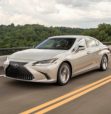
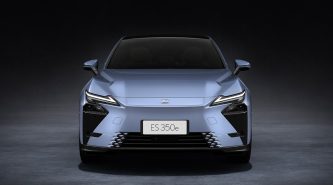
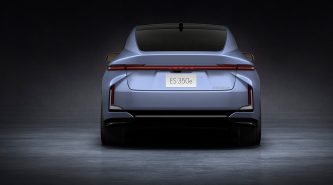
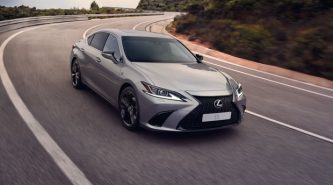
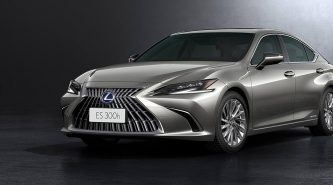
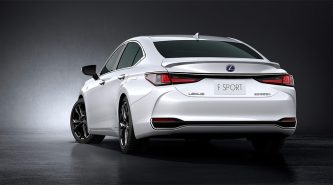
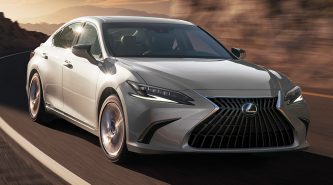
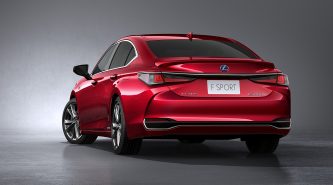
With the way the world is heading, you could perhaps forgive Lexus for ditching its mainstream sedans in favour of SUVs in every size, body style and powertrain configuration. And yet here we have the virtually all-new, eighth-generation Lexus ES! A proper four-door sedan with a regular bootlid, just like the olden days.
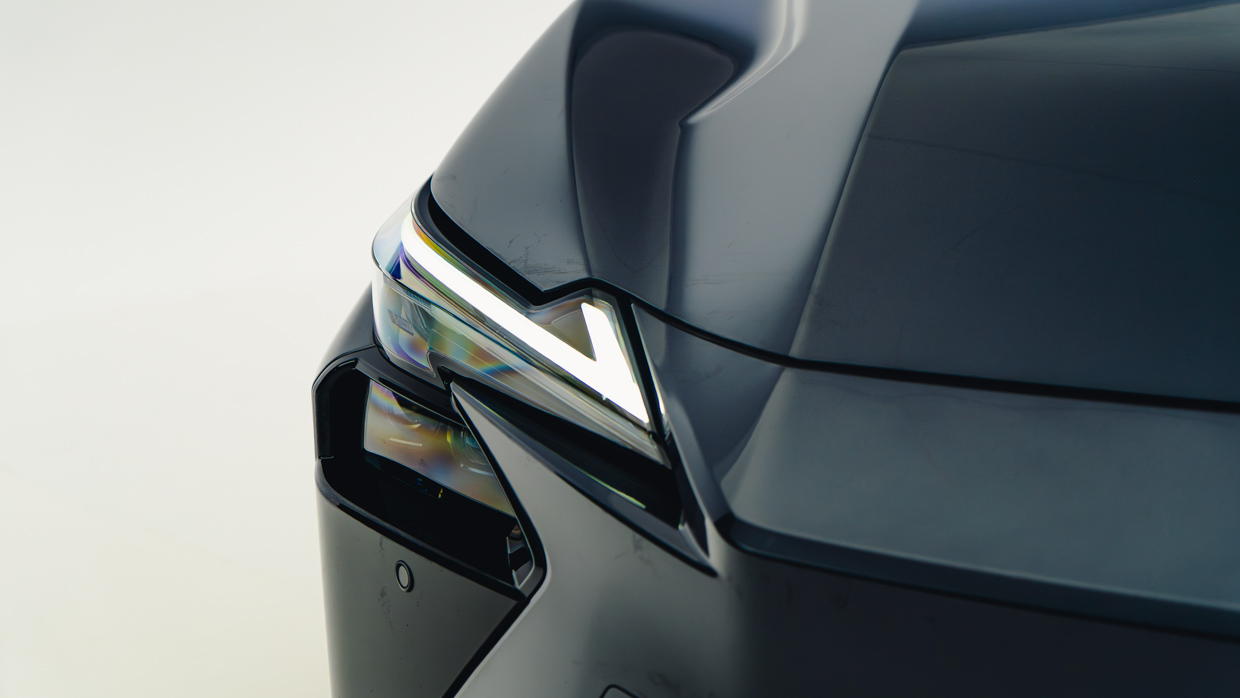
Don’t be fooled by its apparent adherence to tradition, however, because underneath is a substantially altered version of the Toyota/Lexus GA-K platform, engineered to effortlessly package all-electric powertrains and an entry-level petrol-hybrid engine – cloaked in a fastback silhouette that jettisons conservatism and predictability.
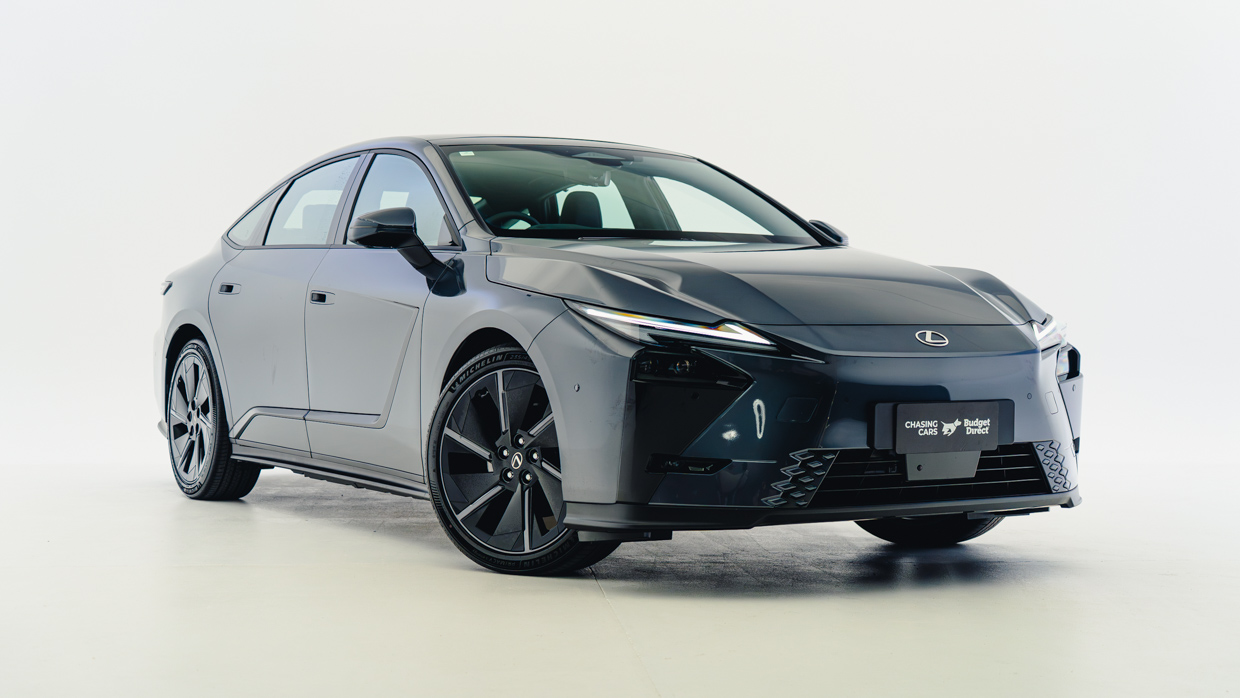
With the rear-wheel-drive Lexus GS consigned to history way back in 2020, the new-for-’26 Lexus ES essentially fulfills two roles – as a direct replacement for its capable-but-forgettable 2018 predecessor, as well as a sporty, sophisticated alternative to the premium GS that acted as a Japanese BMW 5 Series competitor.
So while the latest ES remains a predominantly front-driven machine, it now has the size, specification and presence to cover both bases.
How big are we talking? This handsome beast has expanded into a proper large sedan – adding 170mm in length (now 5145mm), 115mm in height (to 1560mm), and 55mm to its width (now 1920mm), plus another 80mm to its wheelbase (for a leggy 2950mm).
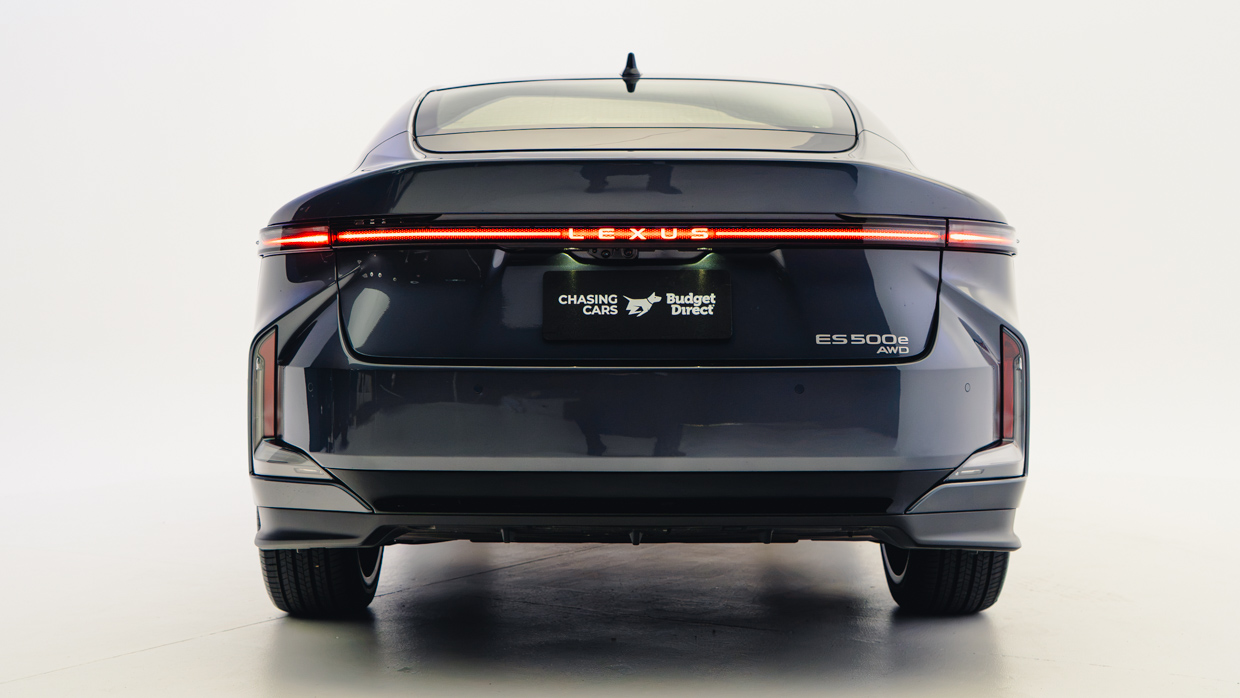
To put that into context, the last long-wheelbase Holden Caprice made in Australia (until 2017) measured 5160mm long, 1899mm wide and 1480mm tall, riding on a 3009mm wheelbase. And that was a big car!
Lexus is offering three versions of the new ES in Australia – two electric models (the front-drive ES350e and ES500e AWD) available now, plus a petrol-hybrid (the front-drive ES300h) that will follow shortly.
The 144kW ES300h will be offered in Luxury trim for $75,000 (before on-road costs), as well as with an optional Enhancement Pack ($7000) that essentially raises its equipment to ES500e level: it gains ventilated front seats, multi-colour ambient lighting, head-up display, wireless charging, panoramic view monitor and a 17-speaker Mark Levinson stereo.
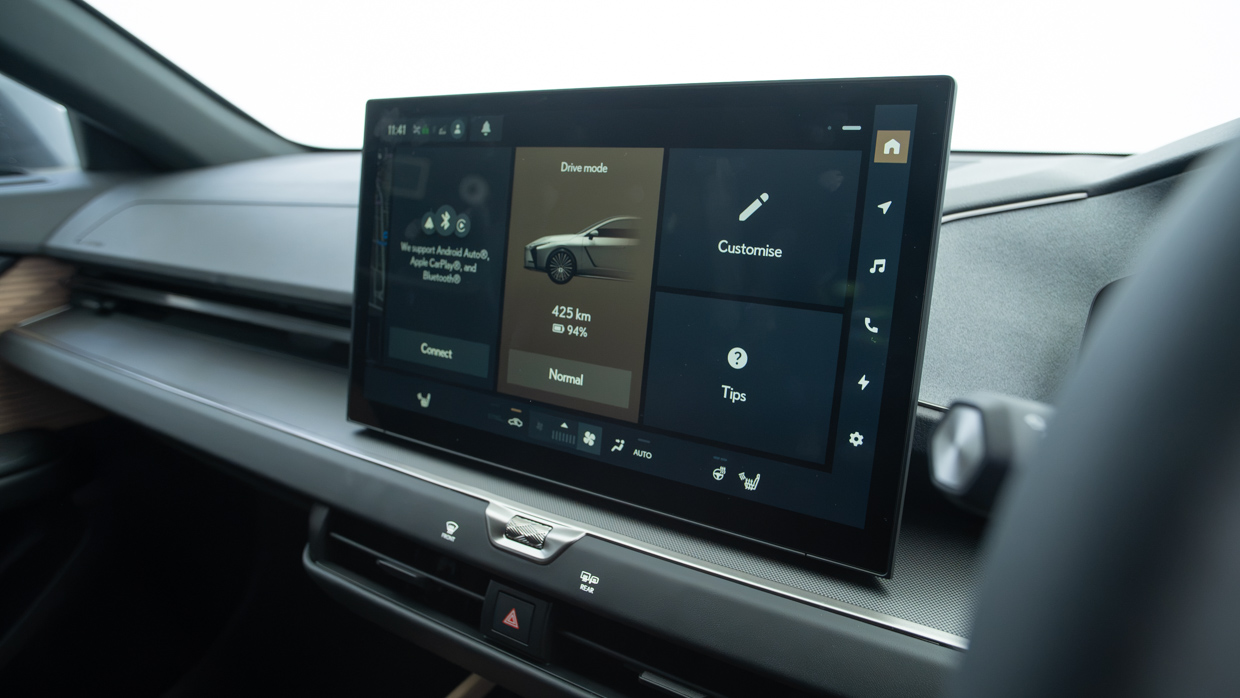
Our test subject is the ES500e Sports Luxury AWD variant, though standard equipment on electric ES variants is mostly shared, including:
Seven paint colours are offered (White Nova, Sonic Iridium, Sonic Titanium, Sonic Chrome, Graphite Black, Sonic Copper and Wavelength Blue) as well as three interior trim colours (Black, White or Hazel).
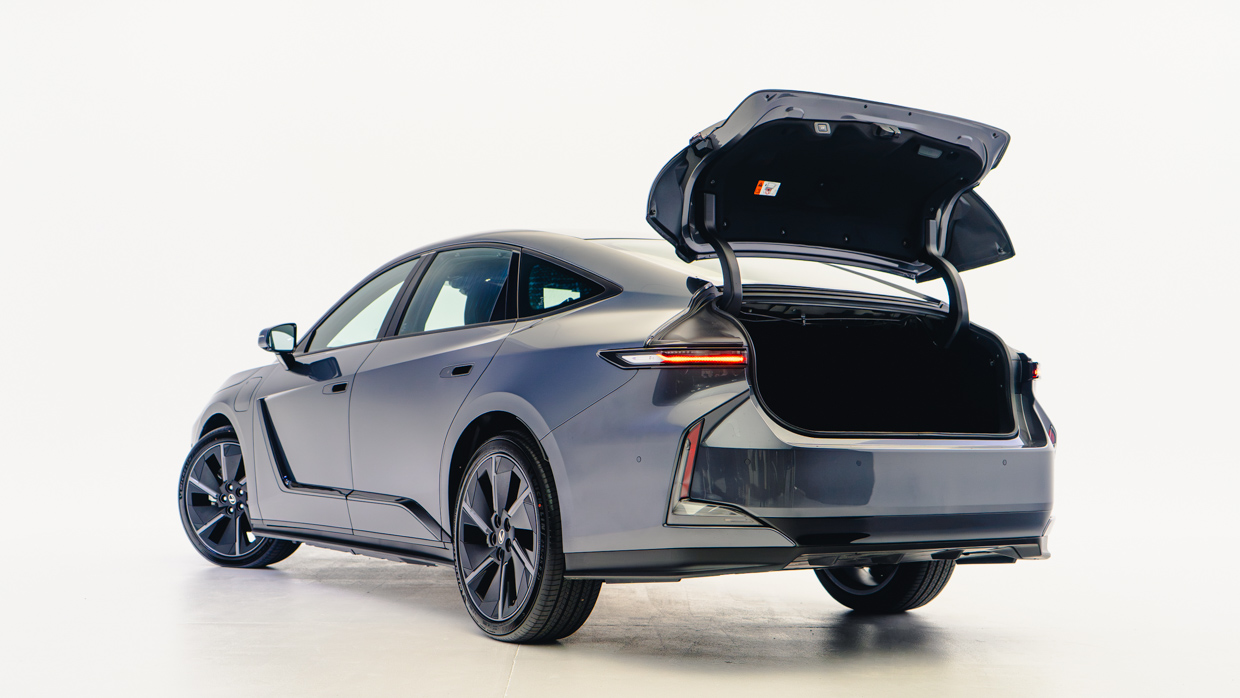
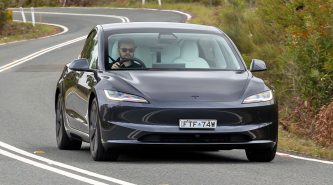
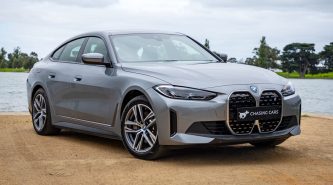
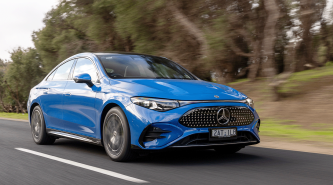
Price-point rivals for the ES500e Sports Luxury AWD ($84,000 before on-roads) include the new Mercedes-Benz CLA 350 4Matic ($91,300), BMW i4 eDrive 35 Gran Coupe ($88,900), Polestar 4 Dual Motor ($88,350), Tesla Model 3 Performance AWD ($80,900), and MG IM5 Performance AWD ($80,990) and, in concept, the Ford Mustang Mach-E GT ($98,405).
For the vast majority of its 35-year career, the Lexus ES has been rather soft and frumpy in the dynamic department, with rare exceptions.
The previous-generation ES debuted an all-new GA-K platform that delivered substantial improvements to its suspension control and athleticism, though that car always felt like a longer, flabbier Camry rather than a holistic luxury sedan. But the eighth-gen ES fixes all that.
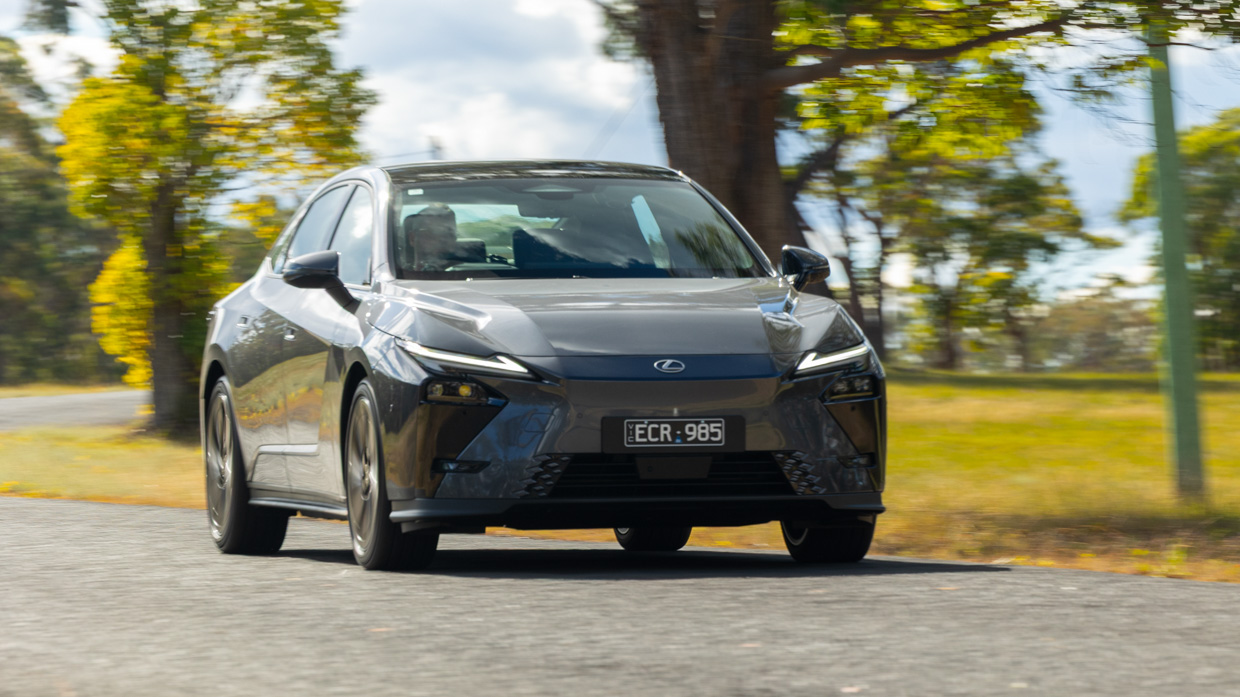
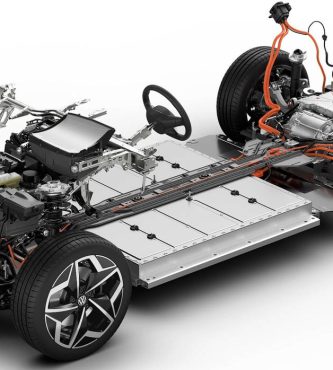
A huge amount of work has gone into re-engineering and strengthening its GA-K base so it not only accommodates an underfloor battery pack (which acts as a structural member) but also greatly enhances the ES’s dynamic capabilities, as well as its ride quality and refinement.
Combined with all-new suspension geometry, links and bushings, as well as a new front strut arrangement, more linear steering, completely new multi-link independent rear suspension, and standard adaptive dampers (what Lexus calls ‘Adaptive Variable Suspension’), the result is an outstanding combination of suppleness, quietness, poise and control.
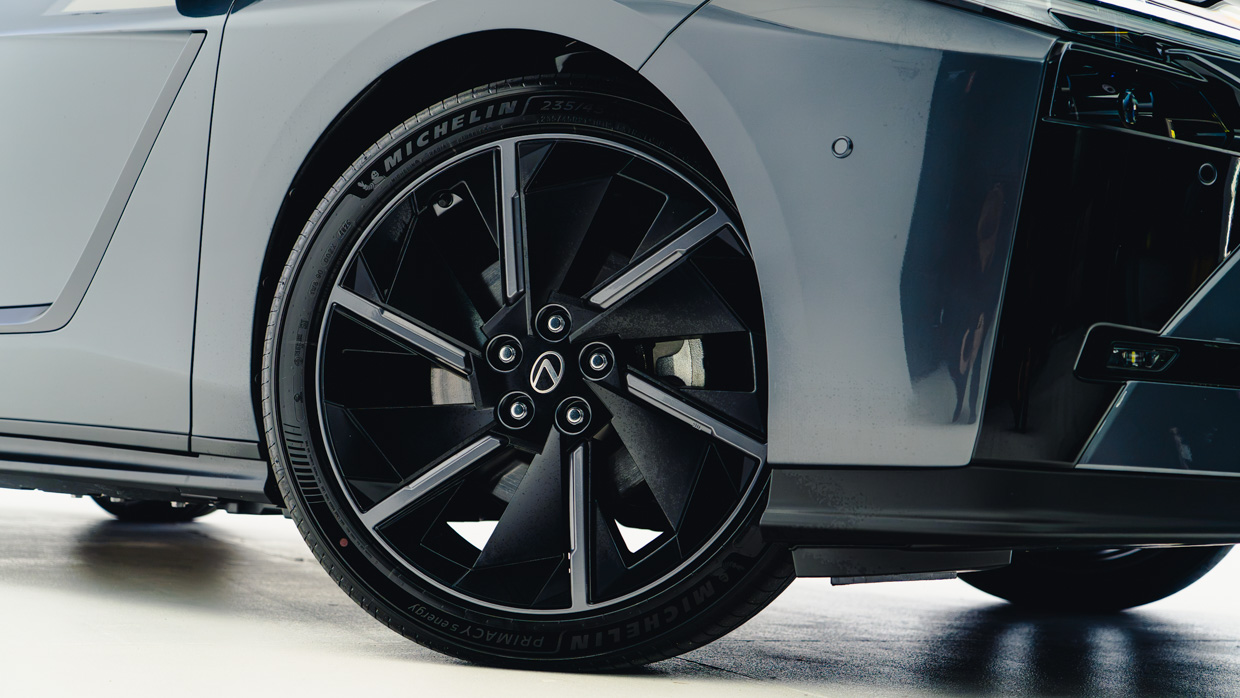
No matter what the road surface, the thing that really hits home is the ES500e’s smoothness, even wearing big 21-inch alloys clad with 235/45R21 Michelin Primacy 5 Energy tyres. Only big potholes will send the ES’s suspension into its bump stops – otherwise its ride quality is brilliant.
The Lexus also has the dynamic nuance and subtlety of balance that makes the current Camry a sweet driver’s car, but elevates that experience even further than the Toyota sedan.
The new ES is even more refined than its silky Toyota relative, and arguably even better-balanced – despite this dual-motor version weighing 2.2 tonnes! And while its steering isn’t brimming with feel, the crispness of its consistency and response, and the way it synergises with the handling balance, is genuinely delightful.
Even in Sport mode, the ES500e isn’t too firm, so in all those respects, the electric ES finally steps up as a deeply worthy spiritual successor to the GS. It’s surprisingly driver-focused, yet also supremely comfortable.
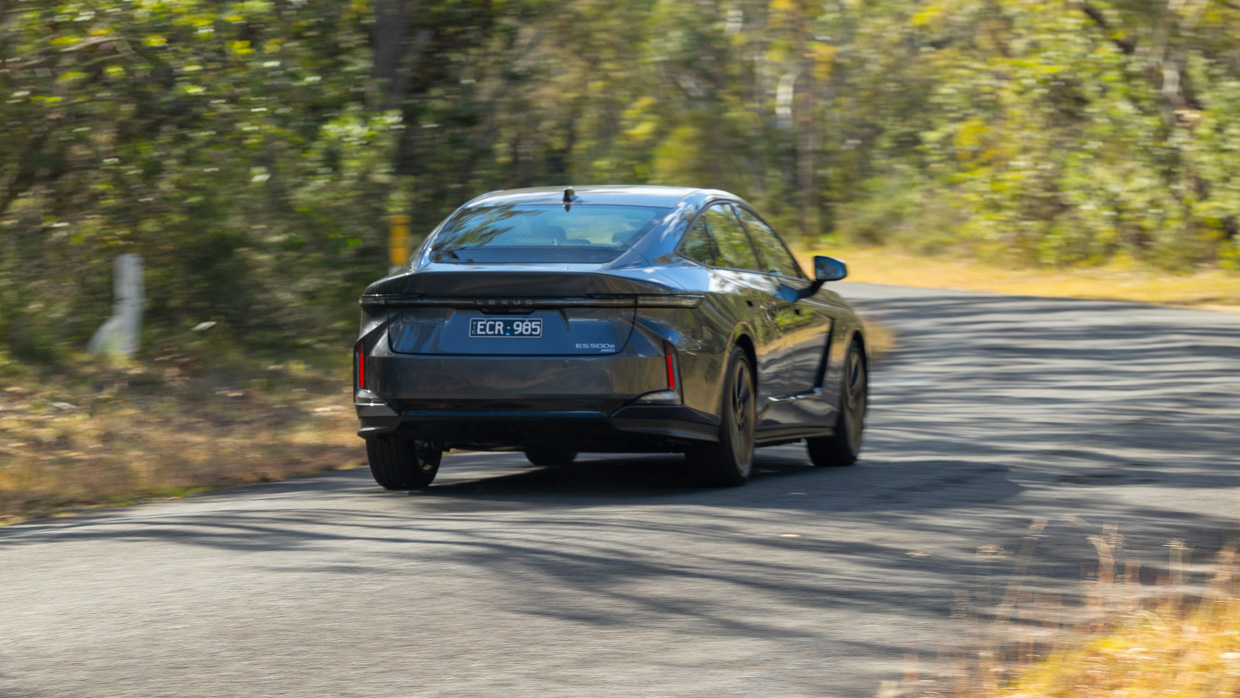
It has the performance to match as well – combining a 167kW/269Nm front electric motor with an 88kW/170Nm rear motor in this AWD flagship to deliver a total system power output of 252kW and claimed 0-100km/h acceleration in 5.5 seconds (the front-drive ES350e has 165kW and does 8.0sec to 100km/h).
Yet rather than the headline numbers, it’s the detail calibration that makes this electric powertrain such a pleasing companion – in the same way that this car’s overall tuning makes it such a fantastic luxury car to drive.
Regardless of drive mode, there’s a smoothness to the ES500e’s operation that reeks of expense, and that also applies to its brakes – large 340mm front and 338mm rear ventilated discs, with multi-setting regenerative braking that works well, but automatically resets to a default position after each time you brake.
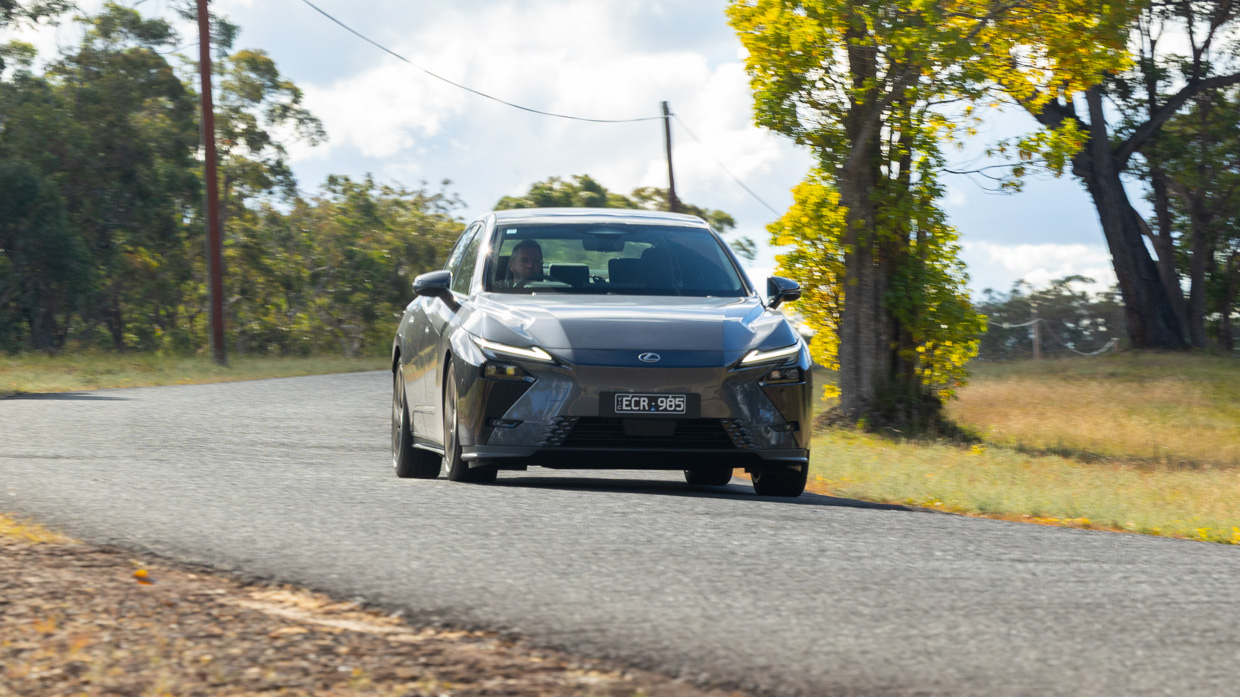
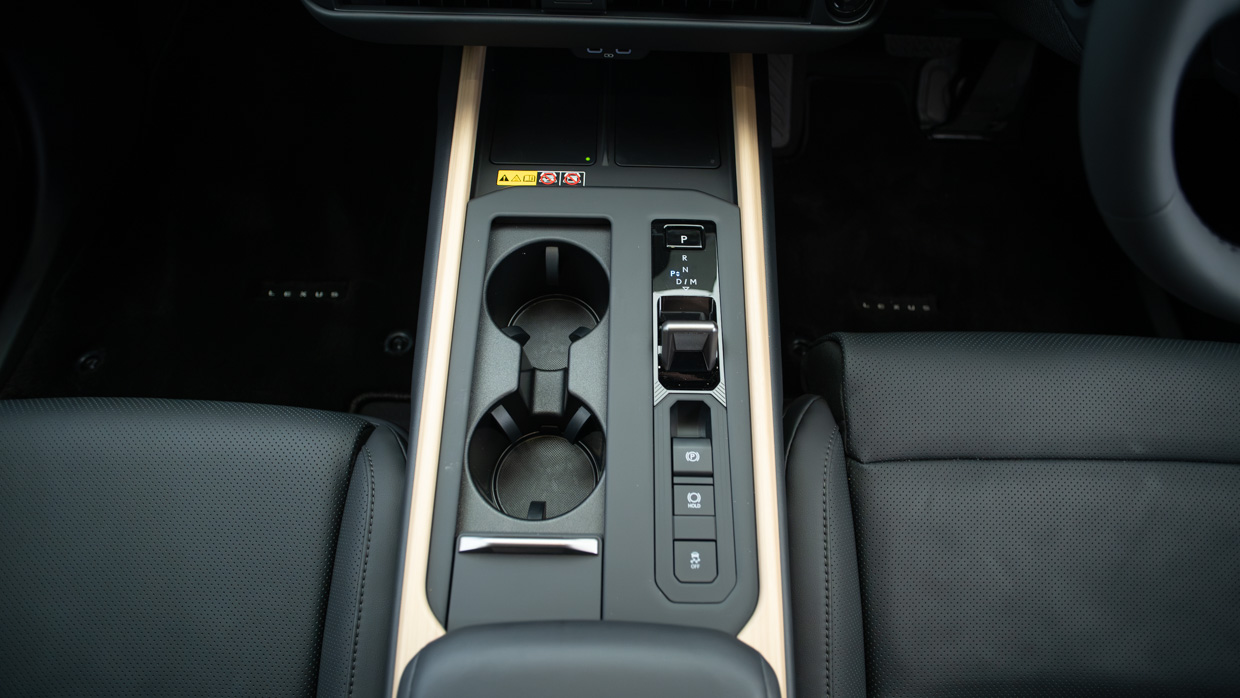
Uniquely, the ES500e has a pseudo-manual mode when in Sport (which you can select via Lexus’s all-new, Volkswagen-like shift lever) that simulates gears and a rev cut-out, much like Hyundai’s Ioniq 5 N and 6 N.
It surges to a peak, accompanied by a soundtrack rising to a crescendo, and then snags on a faux ‘limiter’ before upshifting once you clack the right wheel paddle. In tight cornering it might be kinda fun, though in a Lexus ES it seems a bit like a gimmick.
Amusingly (though perhaps not intentionally), the rising soundtrack could be the score in a horror movie, just prior to the particularly gruesome bits.
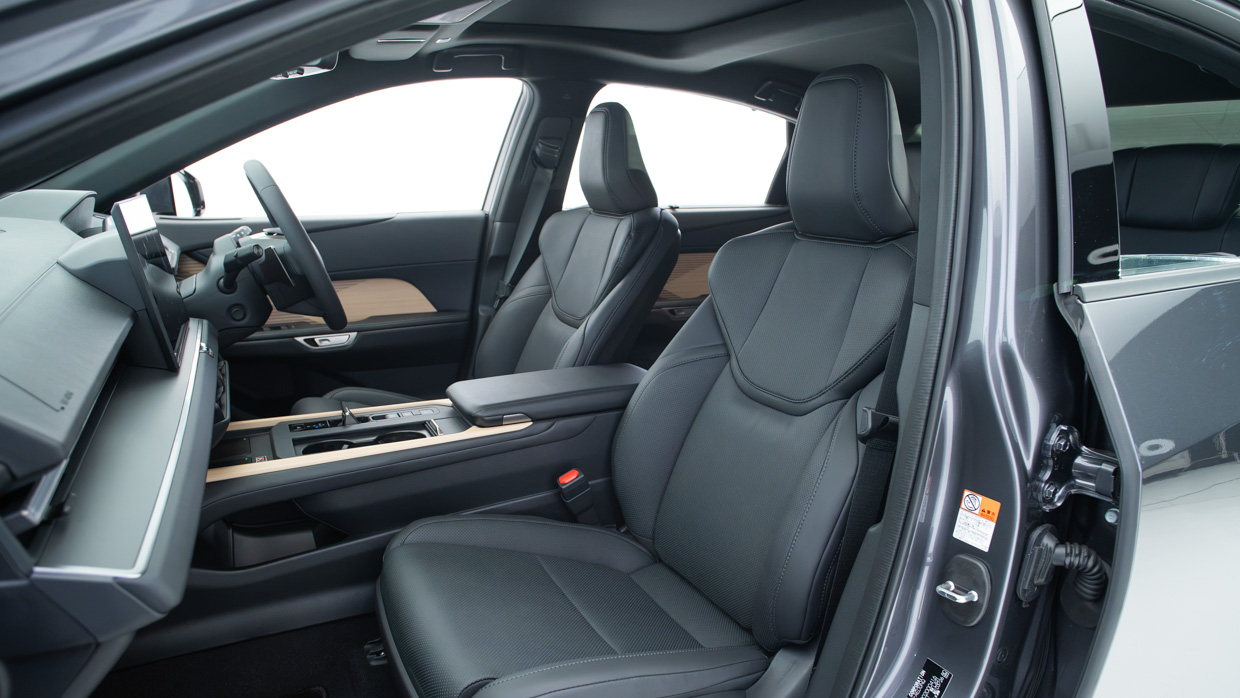
One area where the new-generation ES doesn’t make a great first impression is inside its vast cabin – especially with the dour all-charcoal colouring of our Sonic Chrome test car, where none of the grey hues quite match each other. It needs the white or hazel (tan) two-tone alternatives, which lift the ES’s interior enormously.
Yet regardless of which colour you choose, there’s an almost 3D-printed vibe about its cabin architecture, as if it was designed by artificial intelligence – especially the hard steering-wheel boss with ‘Lexus’ lettering on it. And that is not a compliment.
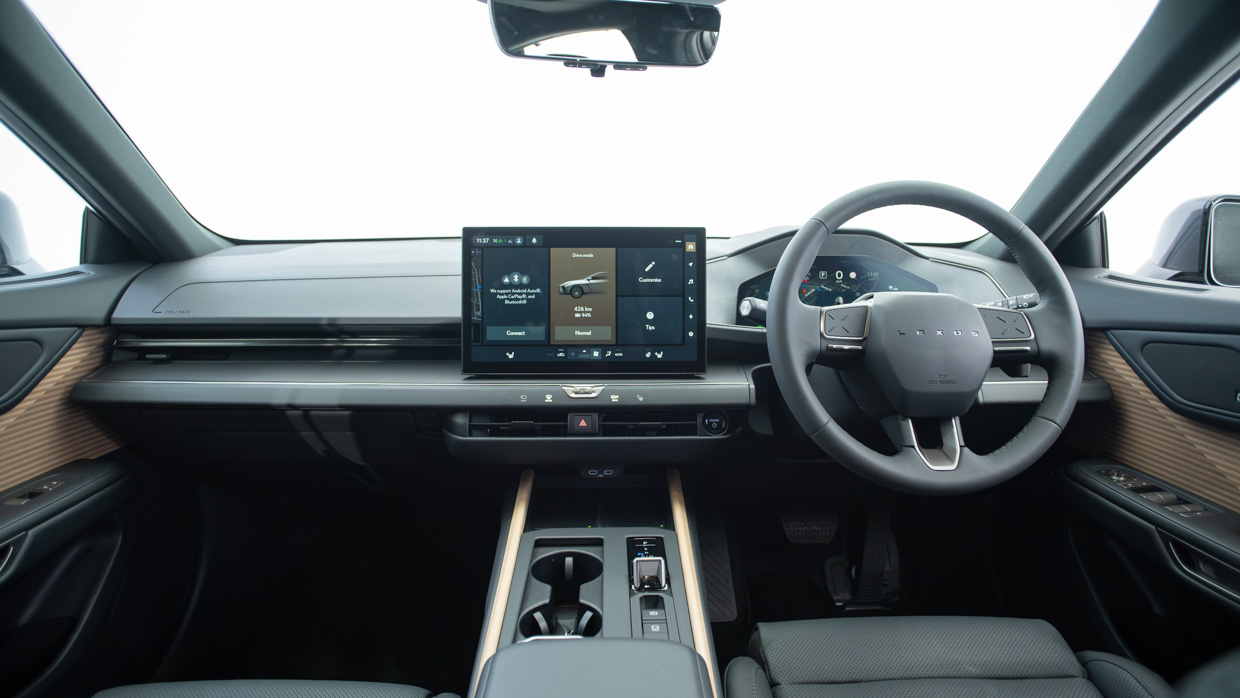
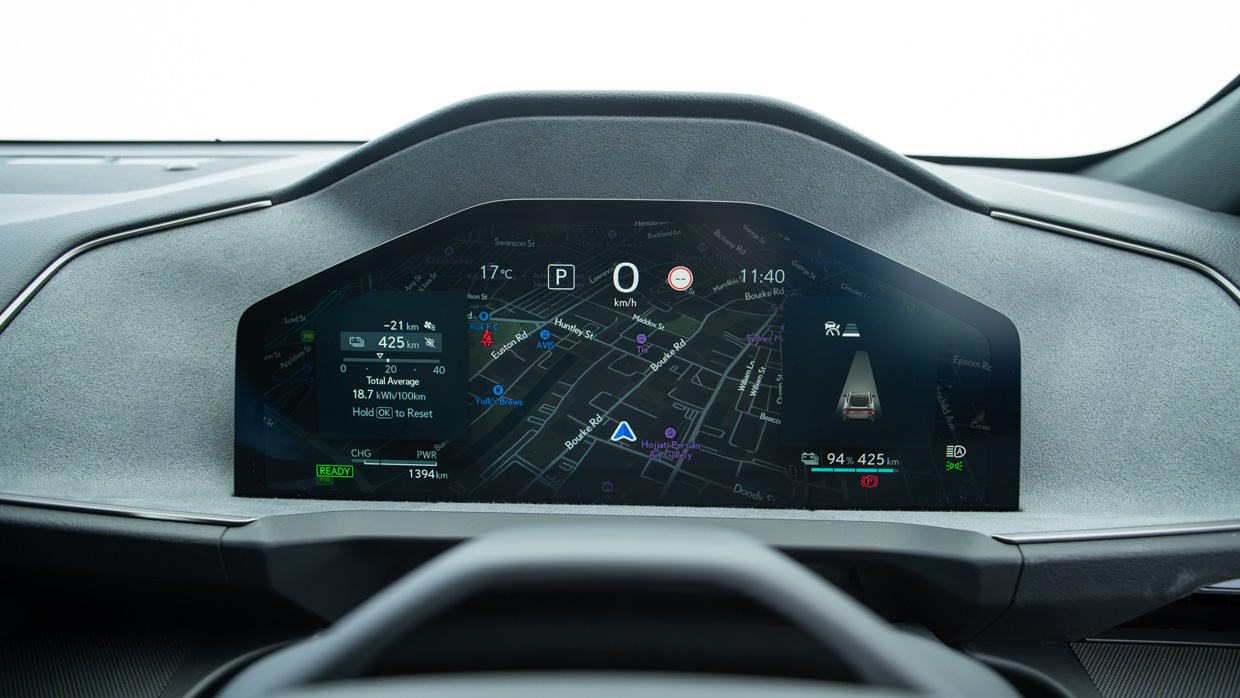
Only after testing the tactility of the surfaces does the ES start to feel more like a Lexus, such as its dashboard top which looks unyielding but is actually quite soft to touch, and the real bamboo inlays in the doors and along the console that are embedded with ambient lighting.
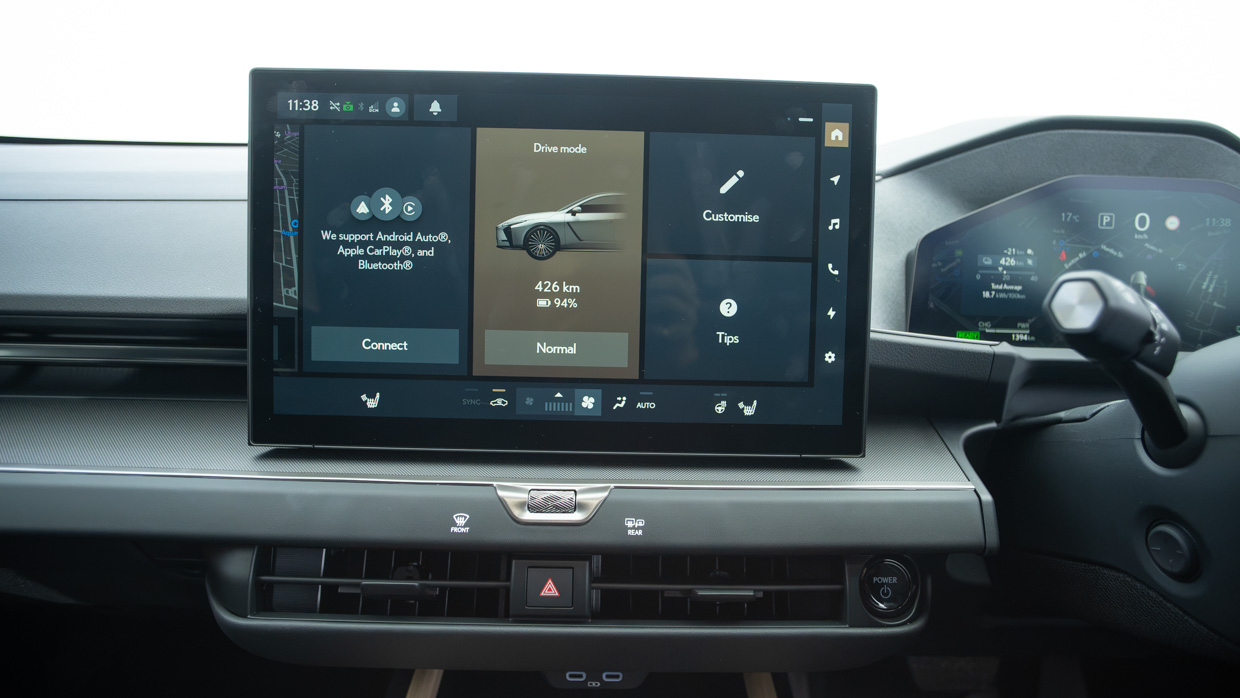
To keep the aesthetic as minimal as possible, it also debuts a feature called ‘responsive hidden switches’ where the controls on both steering-wheel spokes and the HVAC buttons embedded in the dash beneath the 14.0-inch touchscreen only illuminate when it detects a human finger approaching.
They work well (for now) and you do get used to waiting a moment for them to appear (before gradually fading), though it’s all in the name of cosmetics, not ergonomics.
Same goes for redacting Lexus’s formerly excellent HVAC controls into the touchscreen, apparently to appease the Chinese market – the ES will soon be manufactured there – while infuriating everyone else.
Admittedly, the embedded dash switches do feel nice and work well, however you need to deliberately expand the ventilation screen to access everything – adding complexity to what should be (and was) a simple task.
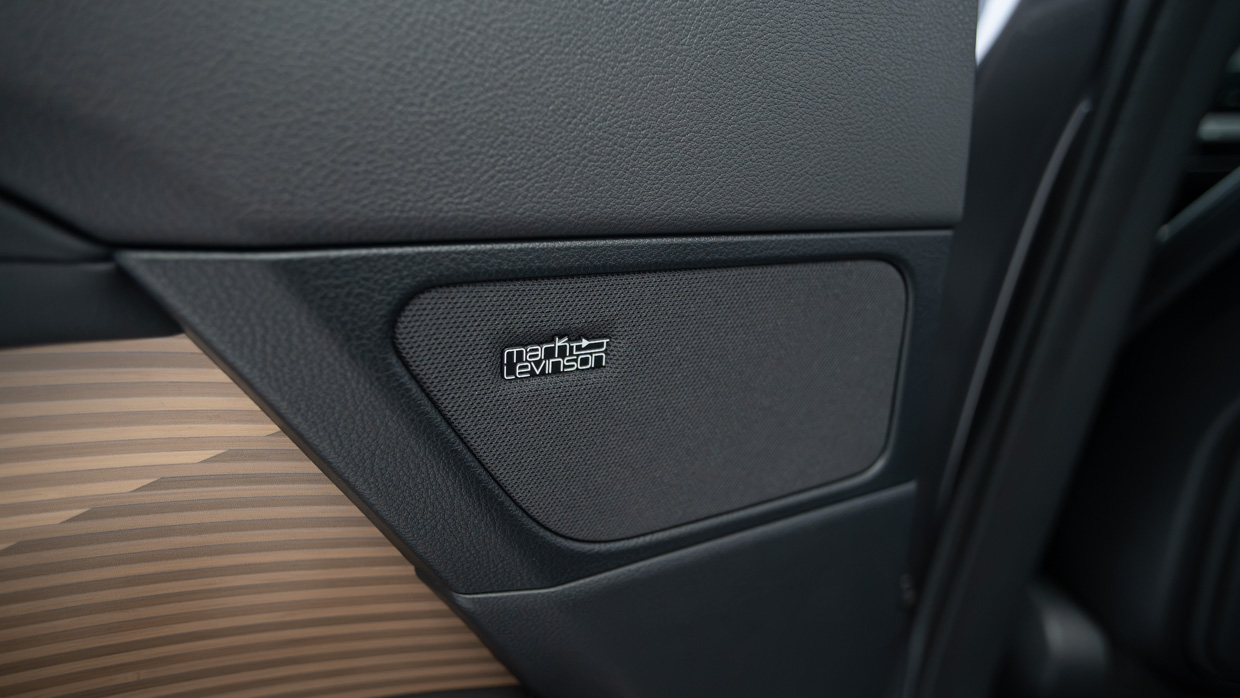
The touchscreen’s fonts are fairly basic as well, especially the stereo’s equaliser sliders for adjusting treble and bass. The graduations are tiny, making finite adjustment difficult even when the car is stopped, though the 17-speaker Mark Levinson audio needs this tweaking to sound good.
The ES500e’s perforated semi-aniline leather front seats are mostly impressive – the new two-piece backrest with excellent shoulder support more so than the cushion, which could use a little more under-thigh tilt. They get ventilation and heating which again requires touchscreen access, plus seat memory for the driver.
For the most part, the driving position is luxuriously comfortable – aided by powered steering-column adjustment – though the ‘NuLux’ artificial material on the steering wheel rim feels almost unnaturally smooth and oily, which is both lovely and slightly weird.
Aside from dual wireless phone charging, storage isn’t great, though there is a deep centre bin that can be opened from either side, plus a lower tray and decent centre cupholders. The doors are near-useless for storing anything beyond a drink can or a 600ml PET bottle.
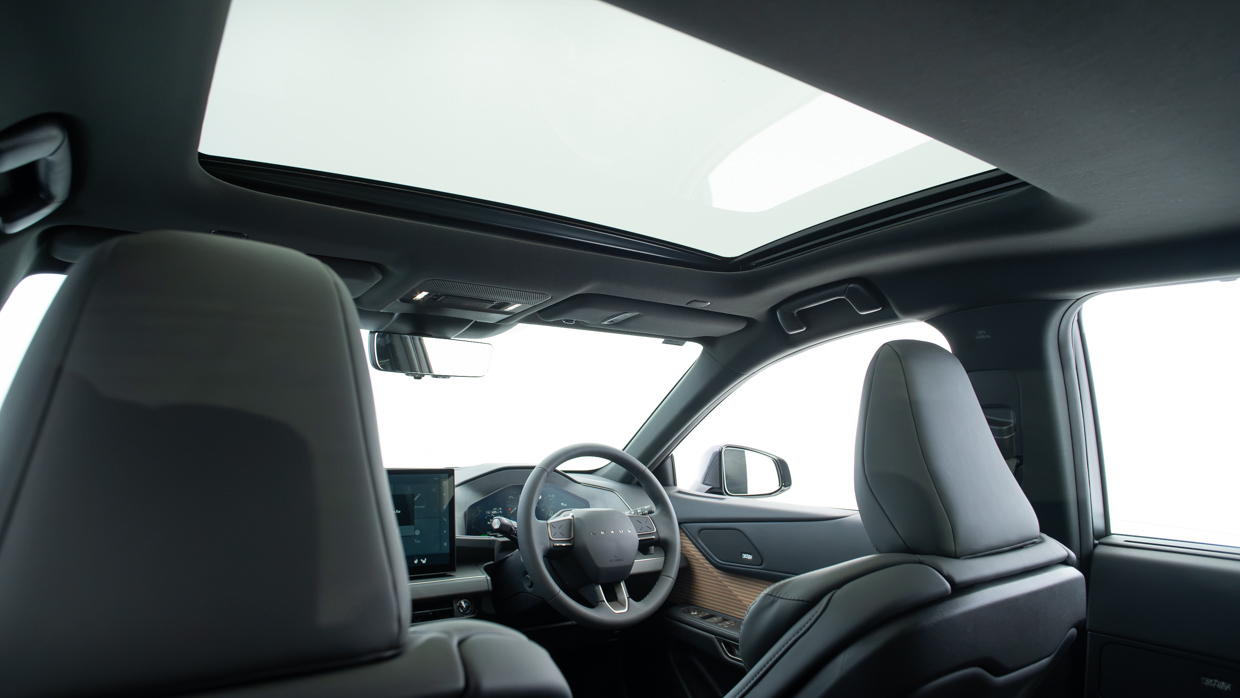
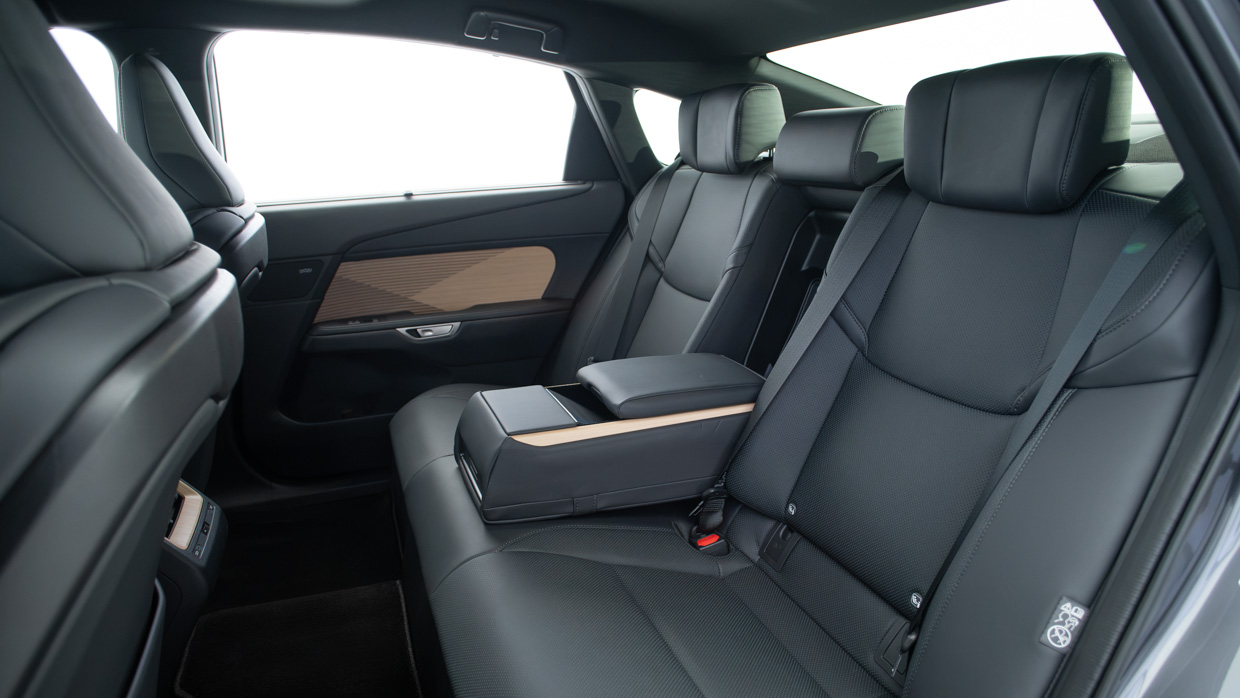
Same goes for the rear doors, though there are rear sunshades. There’s also the light-filled joy of a large sunroof (that doesn’t open very far) and an enormous expanse of rear legroom, knee room, toe room, you name it – hence our comparisons to the much-missed Holden Caprice (and its Ford Fairlane/LTD cohort).
In this area, the new ES is stunning – far exceeding what similarly priced SUVs can offer – though the standard-fit sunroof does limit headroom somewhat. And while it’s an electric vehicle, there’s still a centre-tunnel hump to limit middle-passenger legroom.
Rear passengers also get a pair of USB-C ports (to accompany the three in the front), though they also get the same cheap-feeling air vents as the dashboard pair, minus any temperature control.
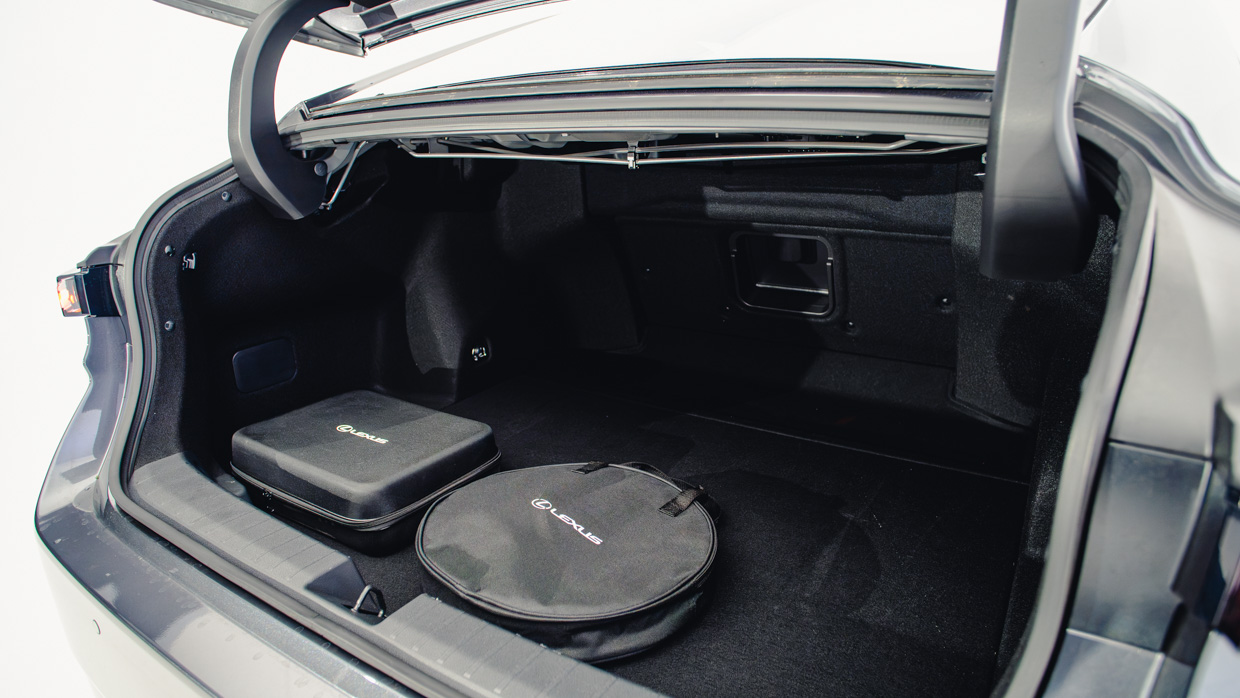
The ES matches its rear-seat space with a big boot – 517 litres – though there’s no spare wheel and it doesn’t get a folding rear-seat backrest, only a small ski port.
The 2026 Lexus ES is yet to be independently tested by any global NCAP organisation for crash-test performance or active-safety features, though based on the five-star rating of its predecessor – and the XV80 Toyota Camry it is distantly related to – there’s a good chance this eighth-gen ES will receive five stars.
In almost all areas, its active safety features work smoothly and relatively unobtrusively, though with one jarring exception – its overly sensitive driver attention monitoring.
Turn it off before you set off and everything is fine. But forget to do so and you’ll be subjected to one of the most intrusive driver-attention warnings we’ve ever experienced.
Each restart defaults to ‘High’ sensitivity, resulting in a persistent warning chime that can last minutes – particularly if you wear vision glasses on a bright day. Even pressing the ‘back’ arrow on the steering-wheel spoke doesn’t switch it off – not until you pull over, put it in Park, scroll through the menus and disable this active-safety nightmare.
Lexus Australia said it may be possible to fix (or mitigate) this distracting ‘driver’s aid’ in a future software update. Or that this over-sensitivity might be specific to our test car, though we’ve spoken to colleagues who’ve driven other ES variants and they’ve had similar complaints.
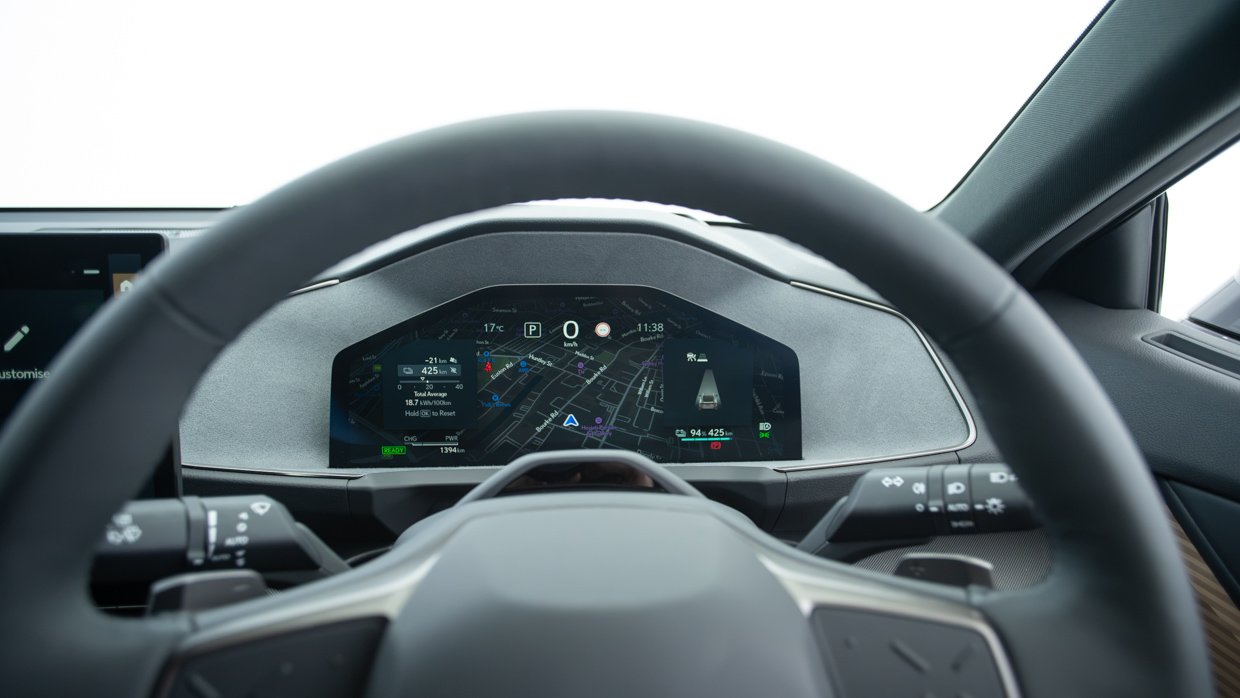
Standard safety equipment on the ES500e Sports Luxury includes:
The official combined ADR81/02 energy efficiency figure for the ES500e is 17.9kWh/100km while its WLTP-measured range claim is a mediocre 465km, due to its modestly sized 74.7kWh battery. The front-drive ES350e offers more range at 510km WLTP.
During our testing, the ES500e averaged 16.8kWh/100km overall and high-15s when restricted solely to urban driving – enhanced by the noticeably effective energy recuperation of its regenerative braking system.
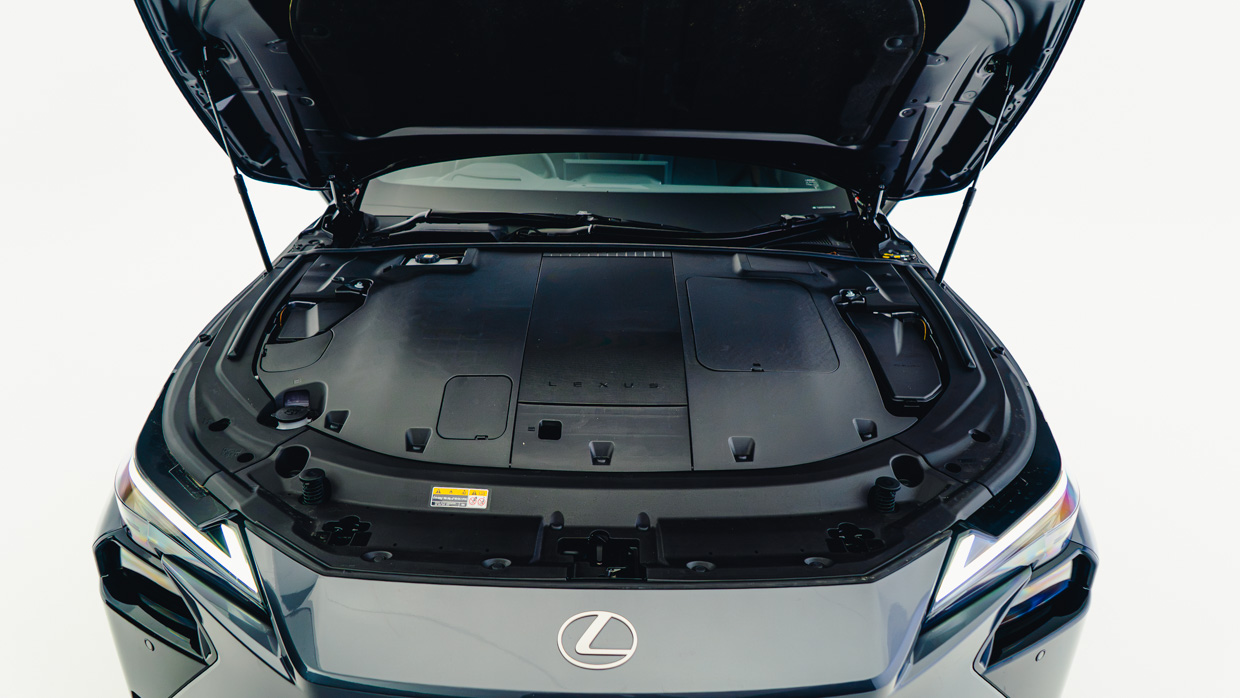
With a usable battery capacity of 71kWh, the overall consumption calculates to a real-world combined range of 423km, while the urban figure works out at 447km – indicating the ES’s 465km WLTP claim is entirely achievable, unlike in the majority of EVs.
Charging times for the ES500e include a 10-80 percent fast charge in a leisurely 28 minutes (at a 150kW DC maximum) and a 0-100 percent AC charge (at 22kW) in 4hrs 30mins.
Recommended service intervals are every 12 months or 15,000km, with the ES500e’s five-year servicing cost being $3125. Lexus’s new-vehicle warranty in Australia is five years/unlimited kilometres, while its battery warranty is eight years/160,000km.
In its virtually all-new eighth generation, the Lexus ES has finally filled an Australian niche that was effectively abandoned with the demise of the Holden Caprice in 2017 – that being an large luxury sedan that combines huge interior space with rewarding dynamic grace for a (relatively) affordable price.
The Caprice V’s $61,490 sticker in 2017 translates to around 80 grand today, which is damn close to the ES500e Sports Luxury AWD’s $84,000 list price. And even their performance is near-identical – 5.5sec to 100km/h – so what we have here is effectively the dual-motor, all-electric spiritual successor Australia’s home-grown, rear-drive V8 luxury sedan.
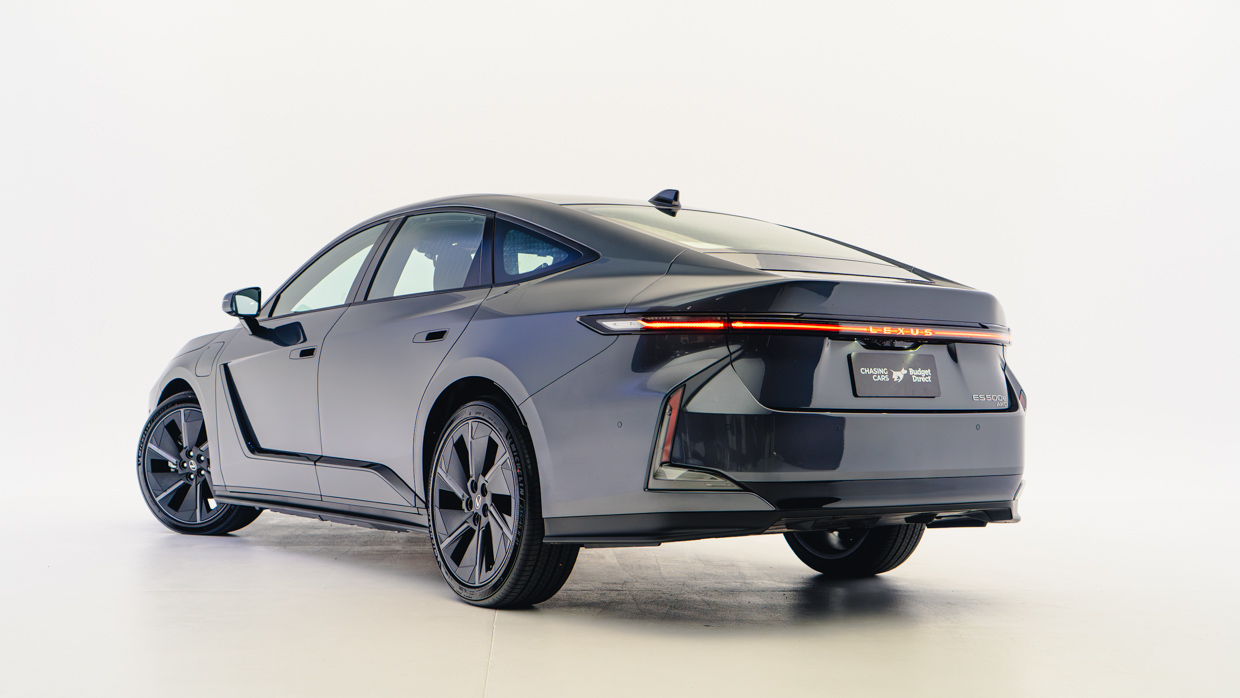
The appeal of this type of car is combining the limousine-like refinement of a $200K-plus premium sedan with sub-LCT lease-ability and genuinely premium driving dynamics. In this one area, the ES has been elevated well beyond expectation – though whether it has any genuine cut-through in an era defined by SUVs remains to be seen.
The first impression of its interior aesthetic and even its WLTP range claim isn’t hugely positive, and its debilitating driver attention monitoring demands an immediate software update, which should be possible with Lexus’s new operating system.
But the deeper you dig, the more you ask of it, and the more time you spend in it, the more time you want to spend in the Lexus ES500e Sports Luxury AWD. And that’s something we’ve never said of a Lexus ES.
Key specs (as tested)
About Chasing cars
Chasing Cars reviews are 100% independent.
Because we are powered by Budget Direct Insurance, we don’t receive advertising or sales revenue from car manufacturers.
We’re truly independent – giving you Australia’s best car reviews.
The estimate provided does not take into account your personal circumstances but is intended to give a general indication of the cost of insurance, in order to obtain a complete quote, please visit www.budgetdirect.com.au. Estimate includes 15%^ online discount.
^Conditions Apply
Budget Direct Insurance arranged by Auto & General Services Pty Ltd ACN 003 617 909(AGS) AFSL 241 411, for and on behalf of the insurer, Auto & General Insurance Company Limited(ABN 42 111 586 353, AFSL 285 571).Because we don’t know your financial needs, we can’t advise you if this insurance will suit you. You should consider your needs and the Product Disclosure Statement before making a decision to buy insurance. Terms and conditions apply.
Indicative quote based on assumptions including postcode , 40 year old male with no offences, licence suspensions or claims in the last 5 years, a NCD Rating 1 and no younger drivers listed. White car, driven up to 10,000kms a year, unfinanced, with no modifications, factory options and/or non-standard accessories, private use only and garaged at night.
^Online Discounts Terms & Conditions
1. Discounts apply to the premium paid for a new Budget Direct Gold Comprehensive Car Insurance, Third Party Property Only or Third Party Property, Fire & Theft Insurance policy initiated online on or after 29 March 2017. Discounts do not apply to optional Roadside Assistance.
2. Discounts do not apply to any renewal offer of insurance.
3. Discounts only apply to the insurance portion of the premium. Discounts are applied before government charges, taxes, levies and fees, including instalment processing fees (as applicable). The full extent of discounts may therefore be impacted.
4. We reserve the right to change the offer without notice.