Powered by
-
Car Reviews
Latest reviews
-
Car News
Latest news
-
Car Comparisons
Latest comparisons
- Chasing Deals
Latest reviews
Latest news
Latest comparisons
Unlike everyone else, Honda’s new small EV happens to be a tiny Kei-car on steroids – an engineering-led marvel that prioritises urban agility, space utilisation and driving fun
Remember the diminutive, fuel-sipping Japanese ‘Kei’ cars that used to populate Aussie roads during decades past?
They never sold in huge numbers but they were popular enough to be a common sight everywhere – including Honda’s original N360/N600 and Z, the Suzuki 550/800 Hatch (Alto), Subaru Sherpa and Fiori, Daihatsu Handivan/Handi/Mira/Cuore, and the charmingly oddball Suzuki Mighty Boy.
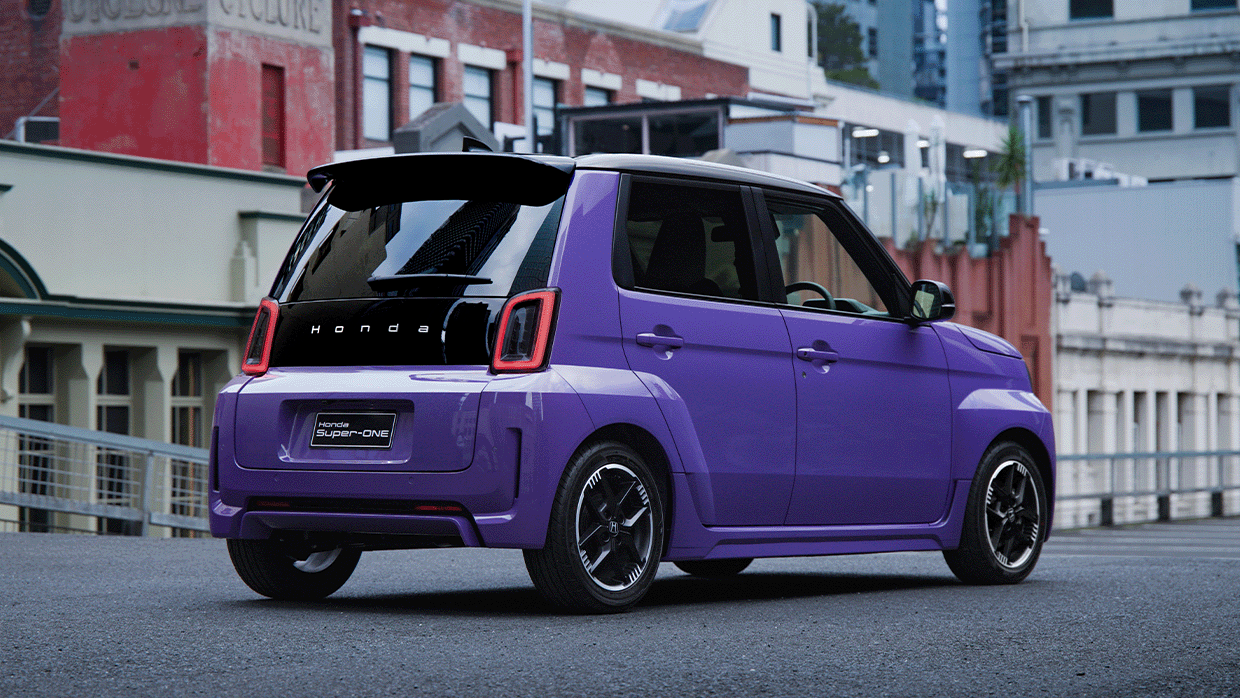
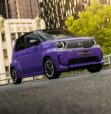
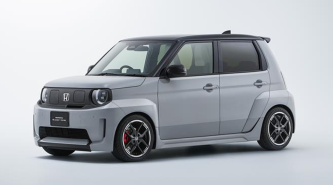
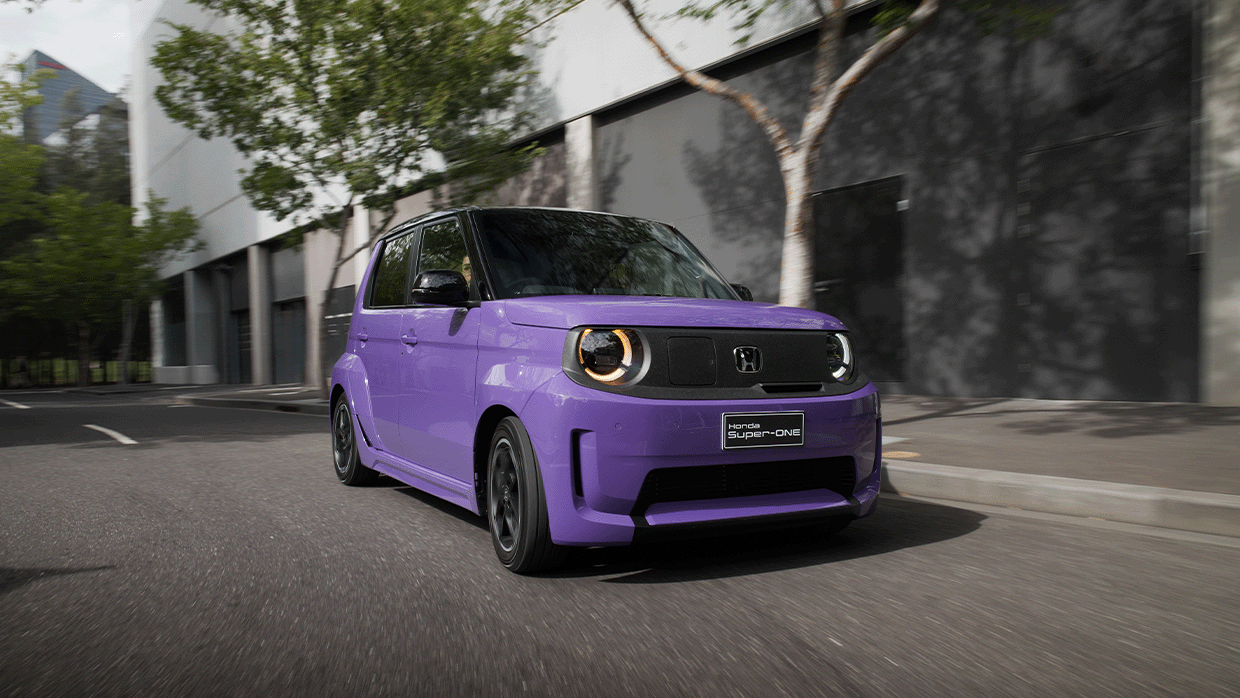
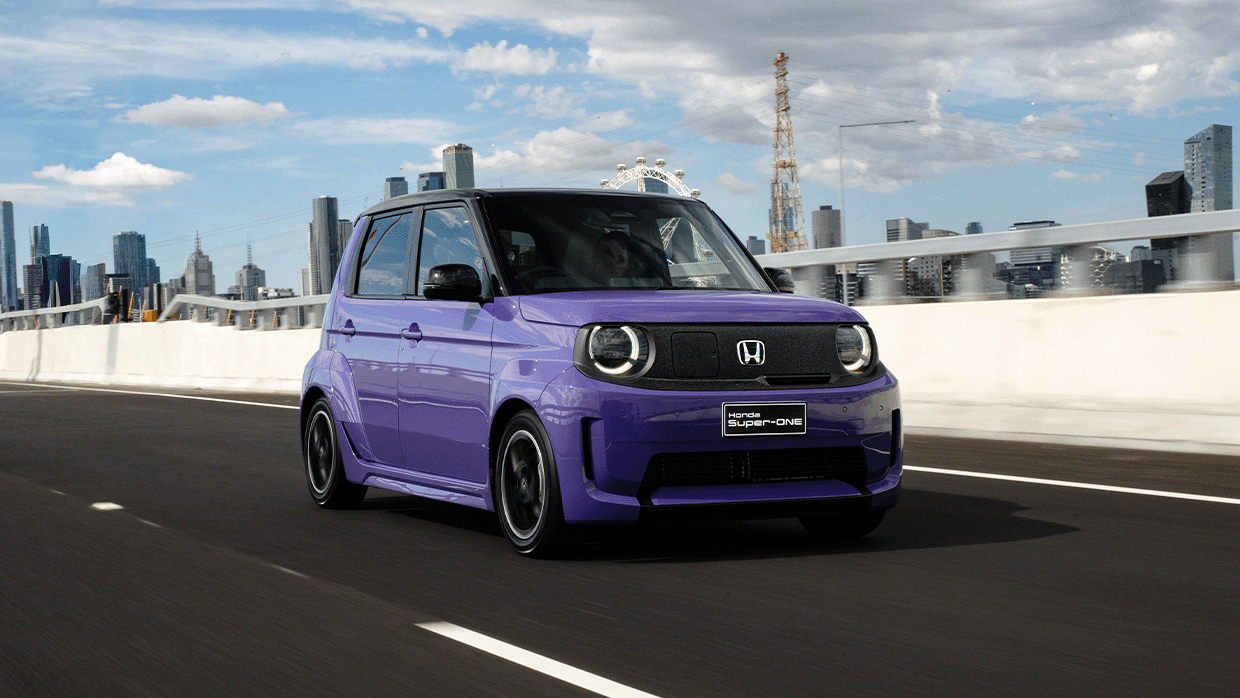
We also saw the original Honda City in two-seat van form, but not the beefed-up Turbo II version with its boosted donk and flared wheelarches – nicknamed the ‘Bulldog’ – that has provided the design inspiration for what you see here, the electric Honda Super-One.
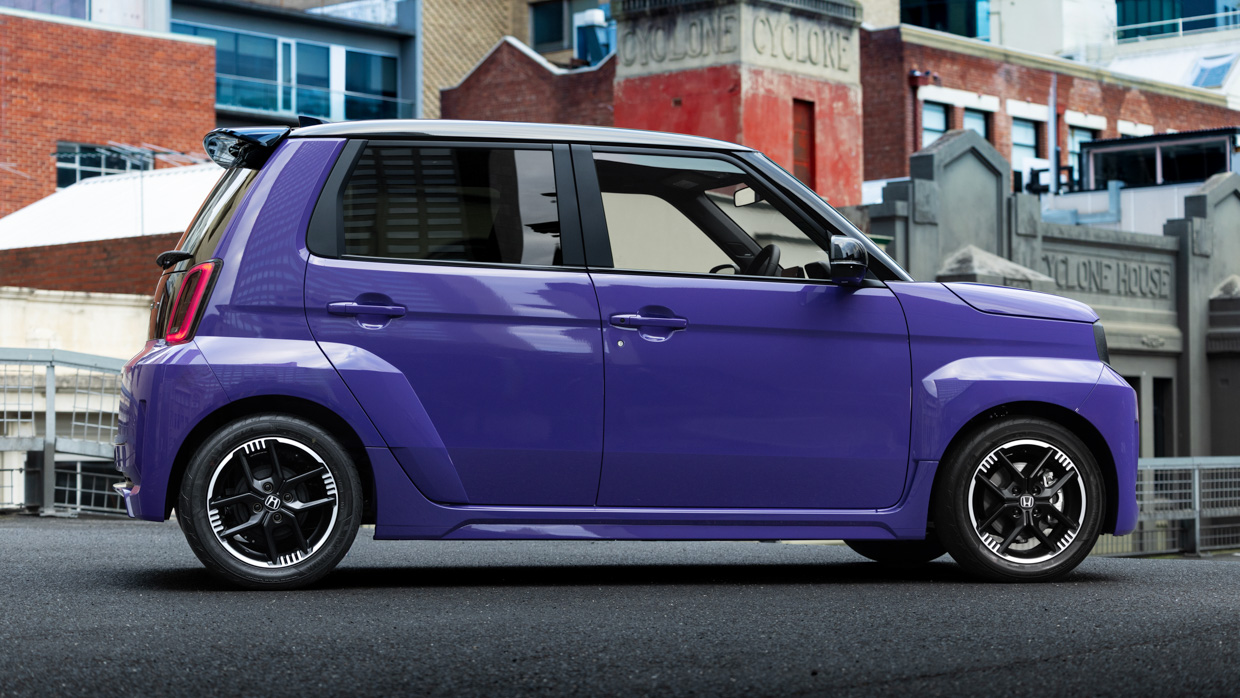
Just like the City Turbo II, the Super-One is based on a regular-bodied baby Honda (the electric version of the delightful N-One kei car) but adds pumped guards, wider tracks, a stiffened structure, beefier bumpers, and completely retuned suspension designed to make it both export-worthy, as well as fun to drive without ruining its ride comfort.
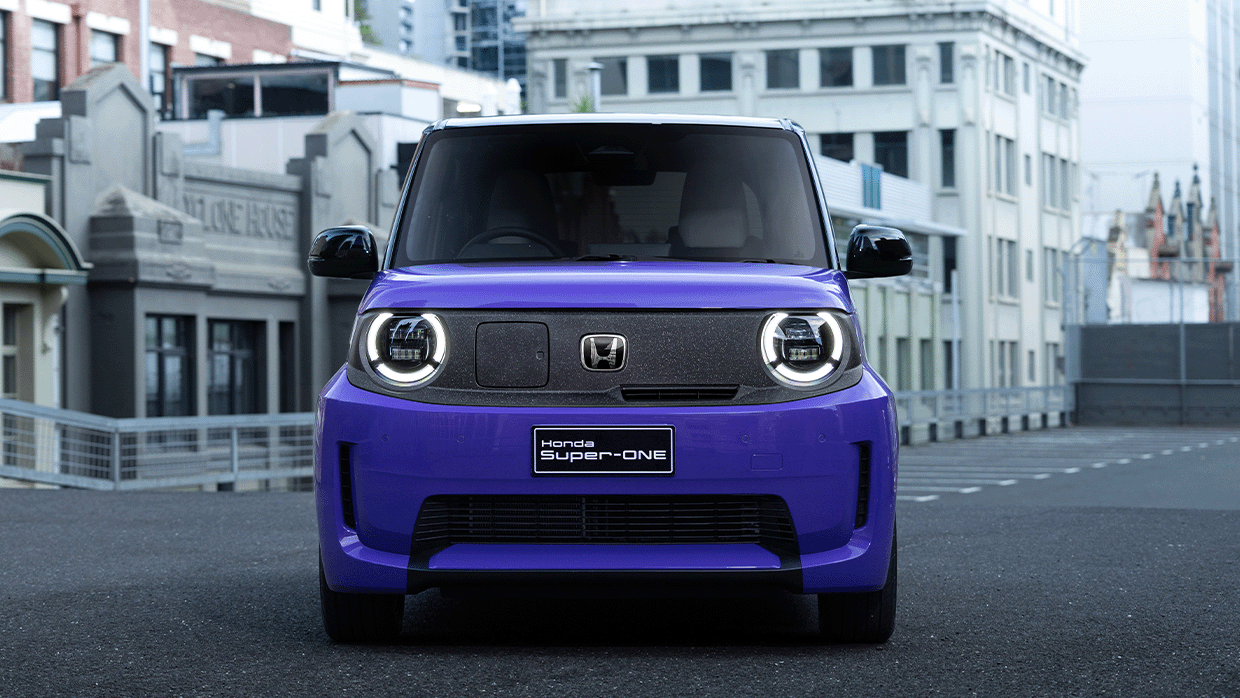
Without the need to comply to Japan’s kei-car size limits for tax purposes, the Super-One is 100mm wider and 185mm longer to make it a bit more crashworthy, as well as tougher to look at and even more engaging to drive.
So while many of its electric compatriots in the sub-$40K arena are all about showroom razzle-dazzle and the lure of technology, Honda is pitching the Super-One as an engineering-led vehicle designed first and foremost to invoke joy in its driver.
With an initial allocation of just 130 cars for 2026 (which sold out almost immediately) and almost 7000 expressions of interest from the Aussie public, it appears that Honda has another niche hit on its hands after the excellent Prelude.
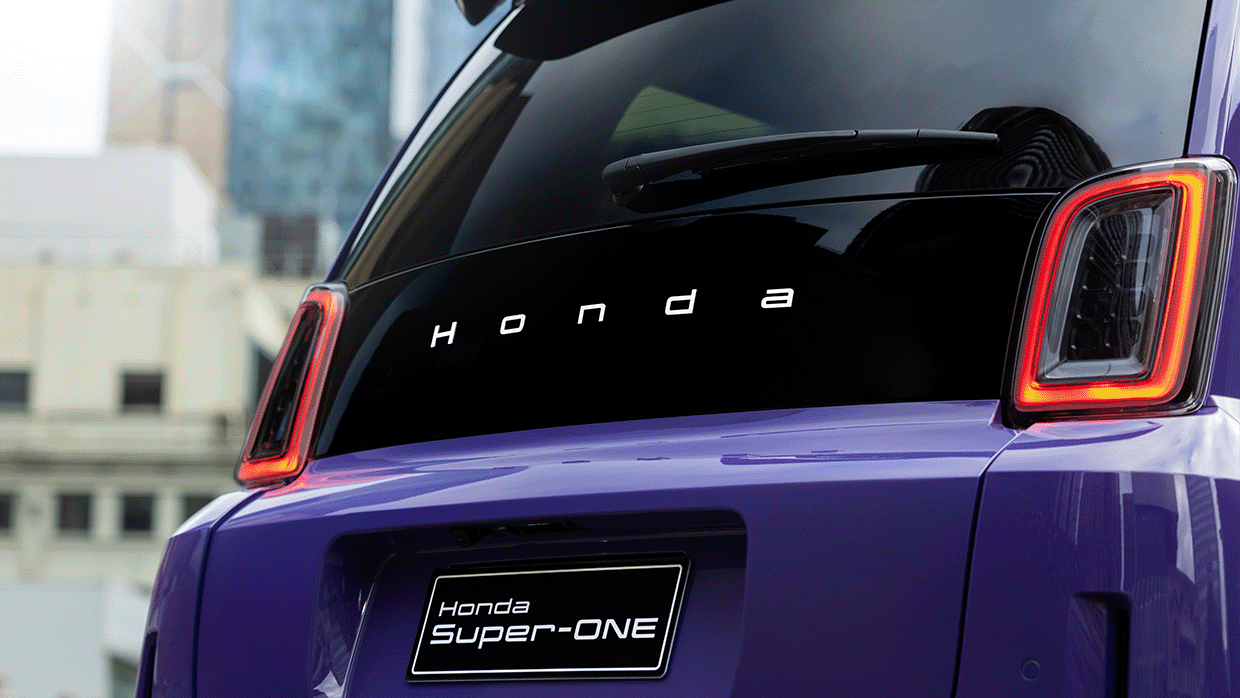
But with only 500 examples in total allocated to Australia until the end of 2027 – hence the abbreviated colour choice (black, grey and purple only) – supposedly due to its runaway success in Japan, the Super-One is going to be a coveted proposition simply because it’s so bloody hard to score one!
Beyond all the fanfare, however, does the Super-One actually work on Australian roads? And will a WLTP range claim of just 206km be enough to satisfy over-compensating Aussies?
The main issue with kei cars on Australian roads has been their potential crashiness and ride quality on poor surfaces, due to having such small wheels. But one of the intentions in developing the Super-One was to make it comfortable, as well as fun, traversing scarred urban roads.
Wearing dinky four-spoke 15-inch alloys clad with Yokohama Advan 185/55R15s, you wouldn’t call the Super-One’s ride plush, but it’s surprisingly good at absorbing hits and remaining unperturbed for such a small car.
In that respect, its level ride contrasts starkly with the suspension harshness and vertical jiggle of so many cars in the sub-$40K category.
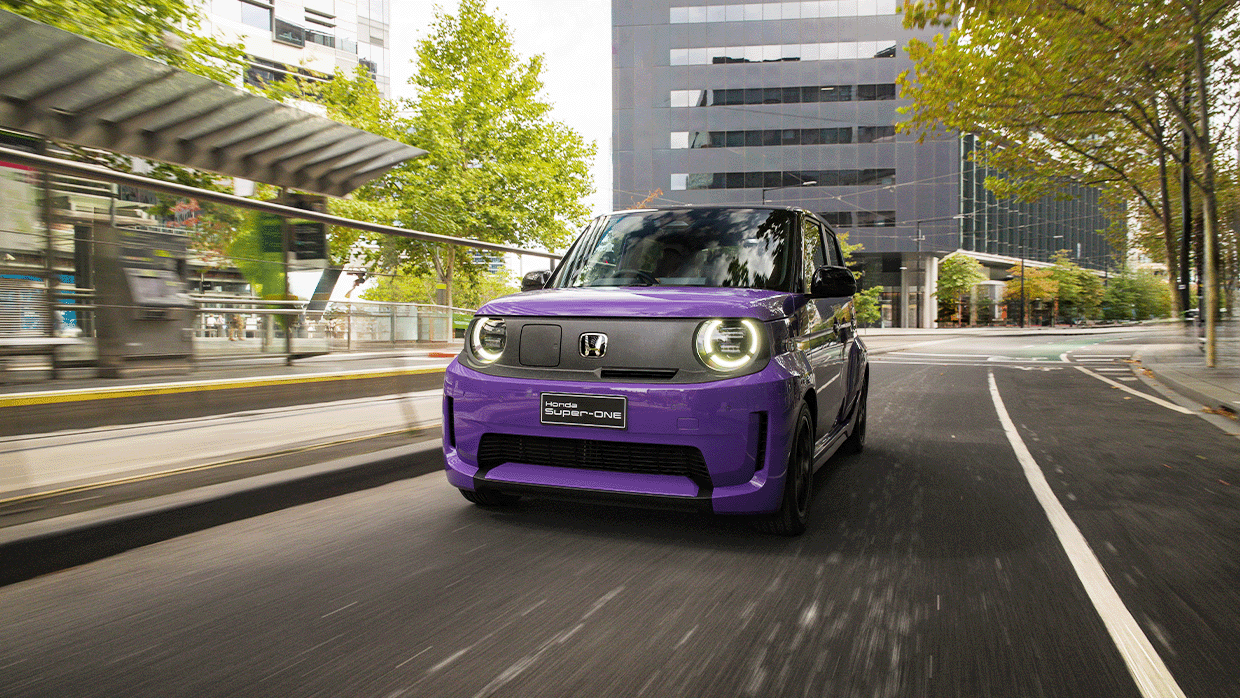
As does its handling engagement. Weighing just 1093kg, with a wafer-thin 29.8kWh battery spanning its underfool to keep the centre of gravity low, the Super-One instantly feels like it’s been tuned by people who love driving.
Its steering is keen and communicative, with excellent weighting even in ‘City’ mode via a lovely two-spoke wheel. And its handling is giggle-inducing, with terrific balance and a hunger to change direction with surprisingly little body lean, thanks to its laughably ‘wide’ 1345mm front/1346mm rear tracks.
Rarely has so much fun been so accessible at such modest speeds.
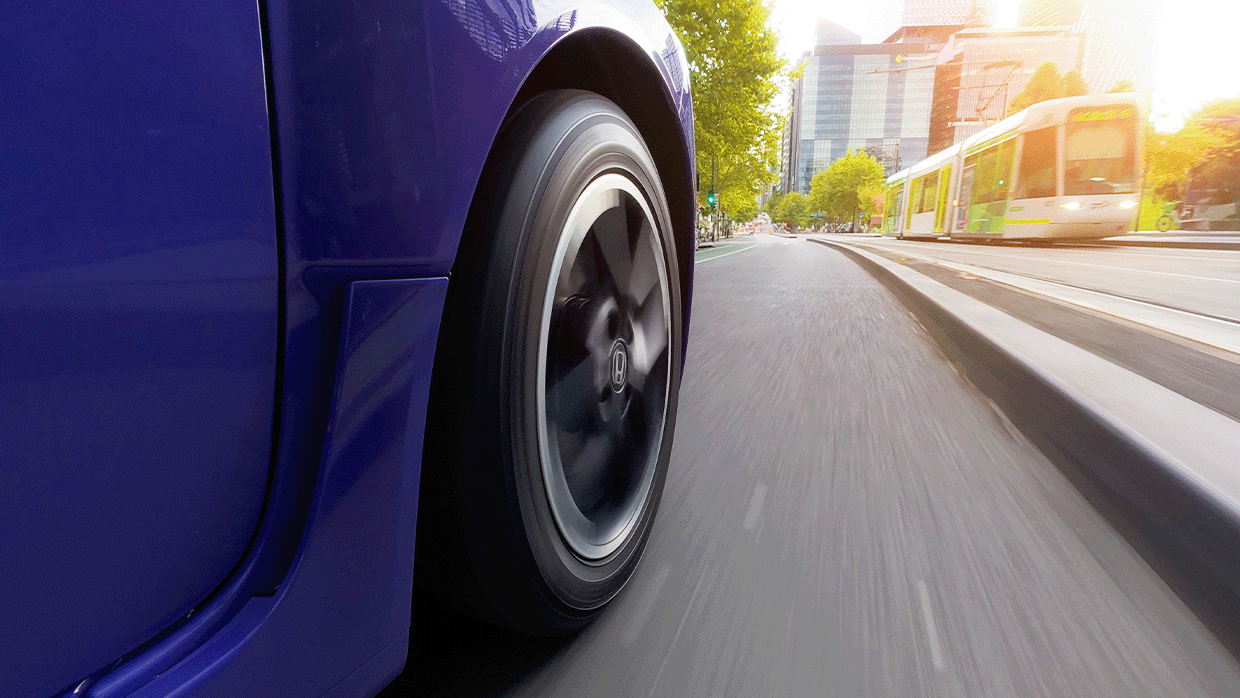
There are four drive modes available (Eco, City, Normal and Sport) via a toggle on the central gear-selector bulge, though I predominantly drove it in City mode because it provides four levels of beautifully judged regenerative braking (adjustable via steering-wheel paddles), as well as full one-pedal operation.
Sport does without any regen and instead relies on the regular brakes (262mm ventilated front discs and 200mm rear drums) for ample retardation and good feel, as well as a degree of ‘engine braking’ via seven virtual gear ratios that can be manually selected via the wheel paddles.
Sport also introduces a synthesised induction rasp while ‘upshifting’, along with three dials (including a virtual tacho) across the bottom of the digital instrument pack.
It even includes a virtual engine cut-out – just like a Hyundai Ioniq 5 N – so you can rev-rasp the Super-One until it snags a fake limiter, then go for a higher gear! It’s more of a gimmick than a performance feature, yet it’s another part of the baby Honda’s charm.
While Sport mode automatically increases the powertrain’s power output to 70kW (from 47kW, while maintaining torque at 162Nm), there’s also a Boost button on the right wheel spoke that can be depressed at any time for an instant performance uplift, which is particularly useful at higher speeds.
Immediately off the line, the Super-One is remarkably brisk, but acceleration slows noticeably as it approaches 100km/h or beyond – hence it’s quaint 0-100km/h claim of 14.5 seconds.
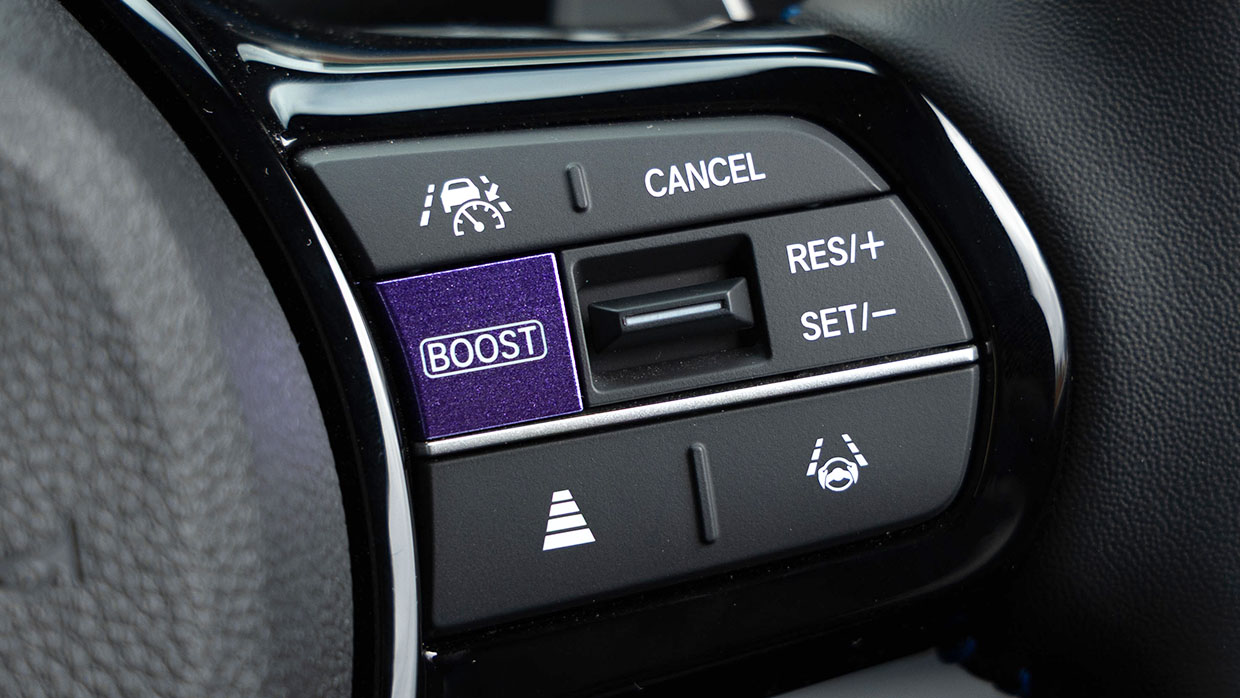
With Boost (or Sport mode) engaged, that time drops to just 10.0sec, which is easily enough to enjoy the Super-One’s lithe agility and chuckable handling, plus there’s enough grunt to scrabble its front Yokohamas when exiting hairpins.
So, despite appearances suggesting the Super-One may be lacking when it comes to dynamic attributes, it’s actually quite sophisticated in its engineering finesse and calibration tuning, with only a fair degree of road noise lacking the maturity it displays elsewhere.
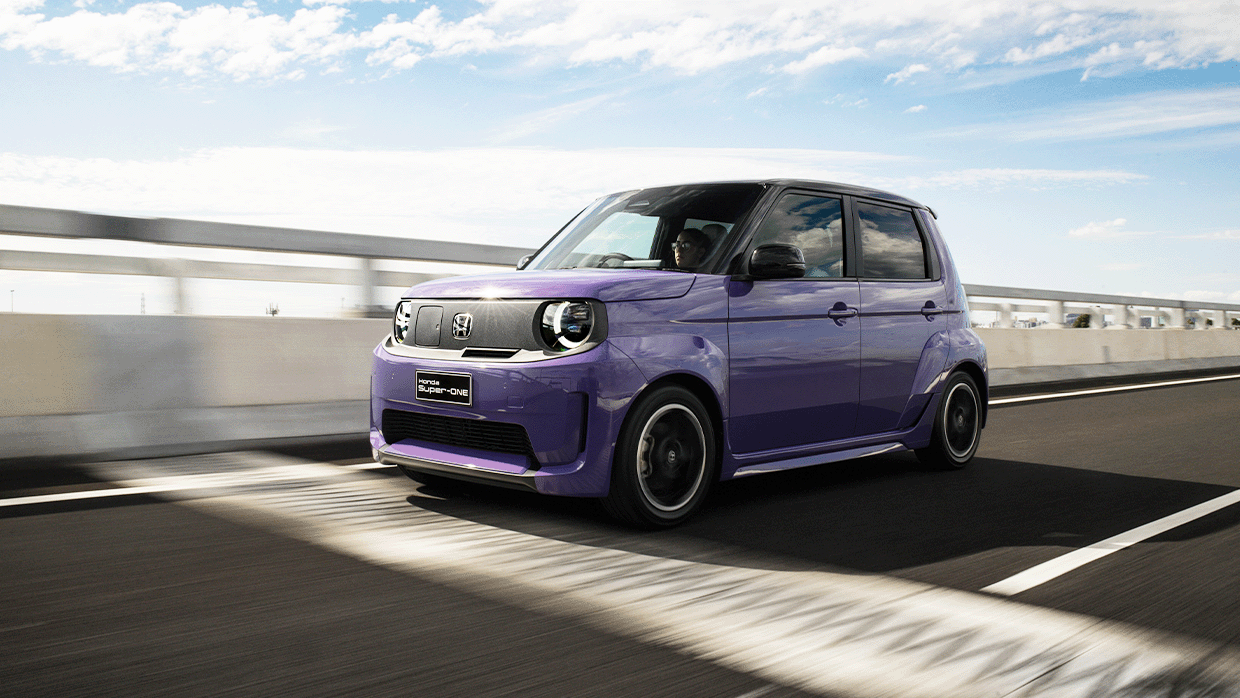
Yet it’s the diminutive size of the Super-One that greatly enhances its driving joy. After years of cars of all types getting heavier, flabbier and harder to see out of, it’s a revelation to be in a car as small and wieldy as the Super-One, while enjoying almost unimpeded vision.
As a tonic to relieve the drudgery of life, it’s a cracker.
The Super-One’s outstanding vision is all down to its kei-car packaging, squeezing the maximum amount of space into the smallest footprint for truly Tardis-like interior room.
It’s only 1573mm wide – 100mm of that down to its bulging ‘bulldog’ wheelarches – but also 1608mm tall, so its upright stance houses four adults effortlessly.
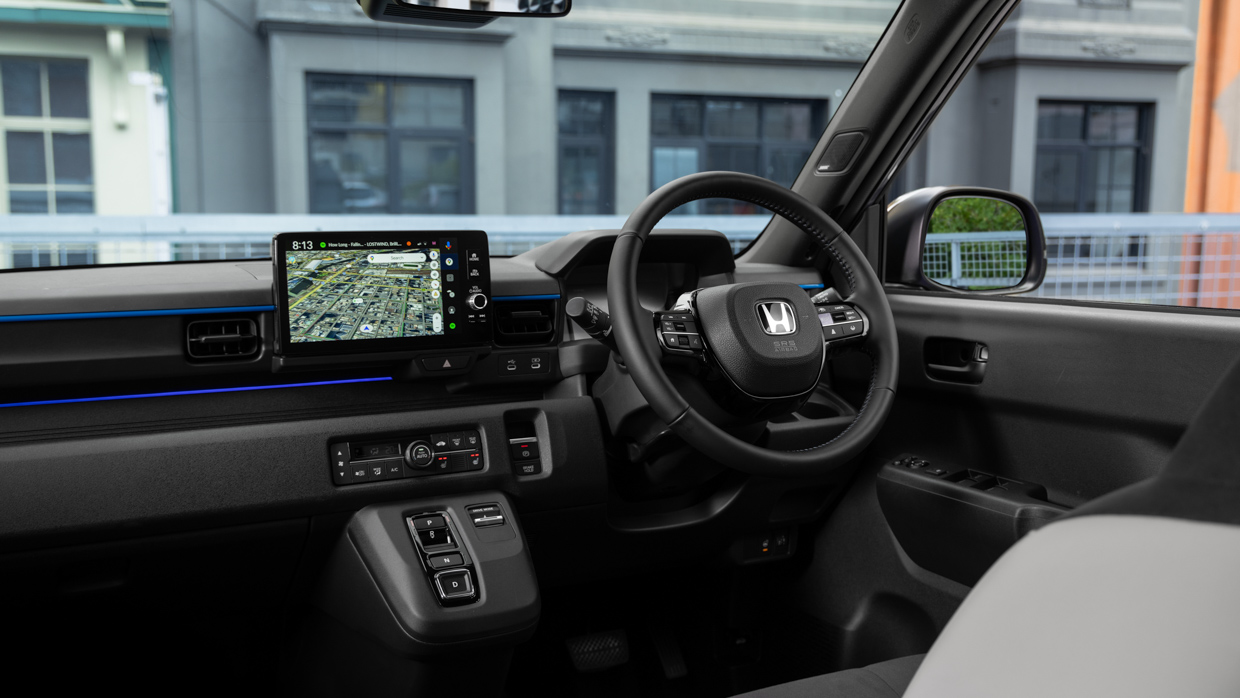
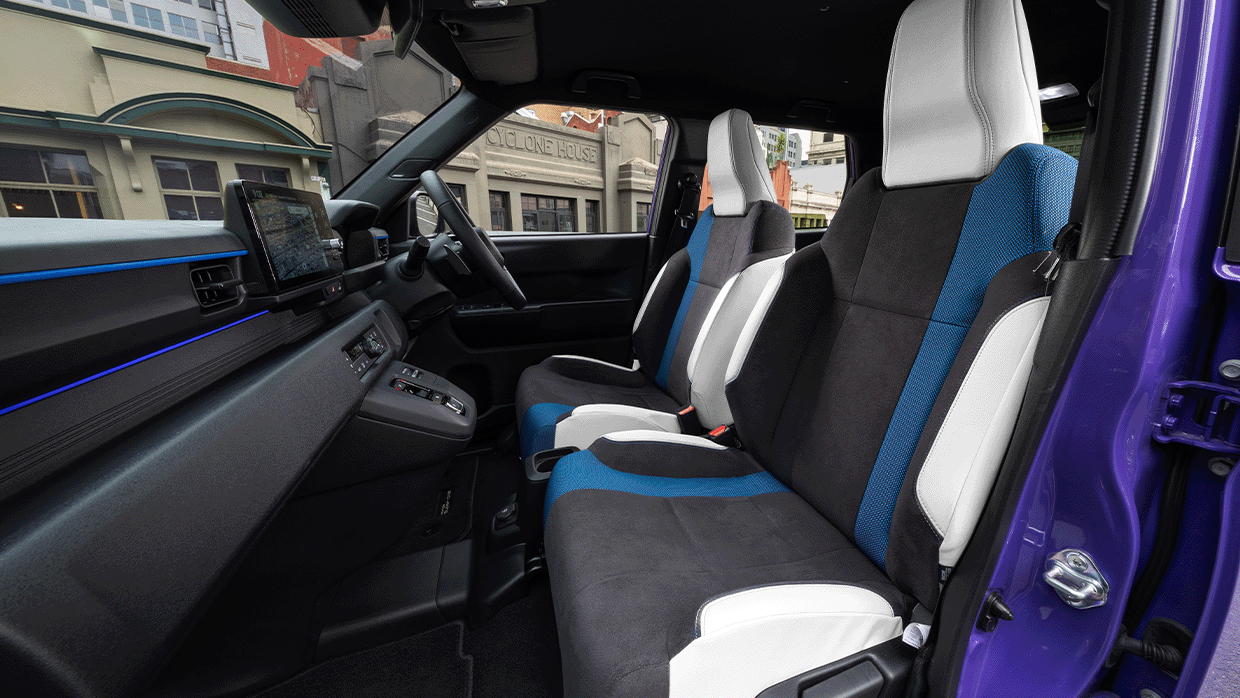
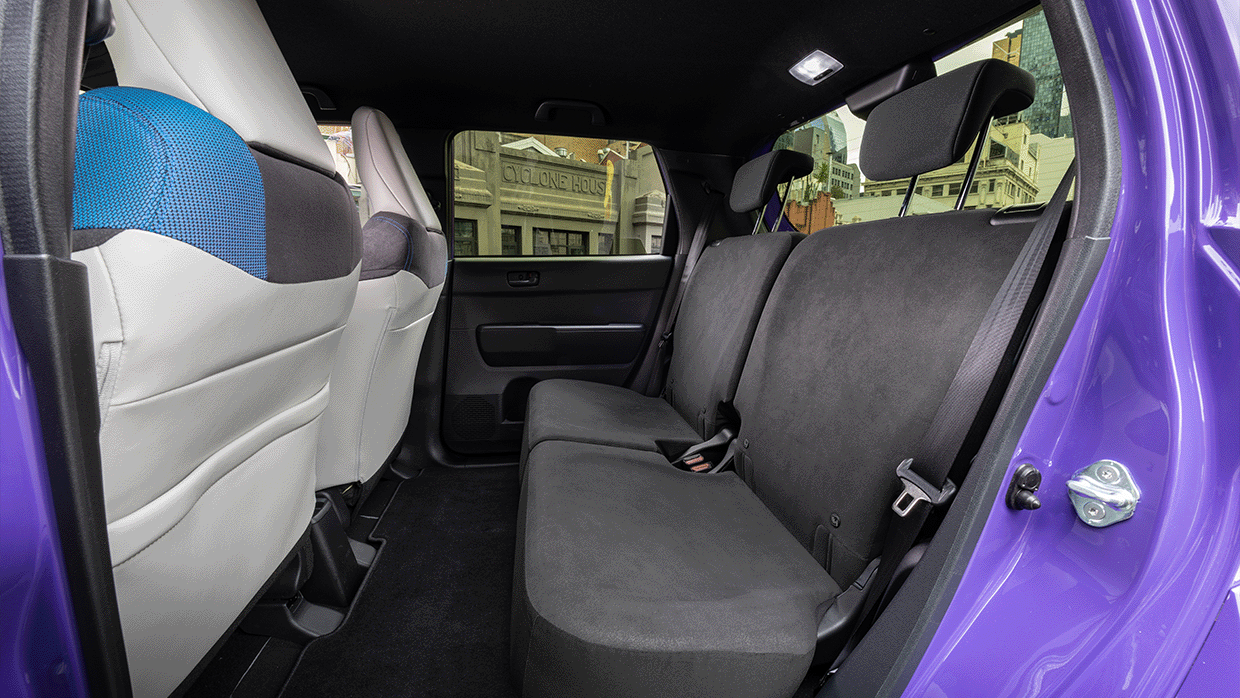
The front buckets are quite heavily bolstered and brilliantly supportive (with manual height adjustment for the driver), and the split rear bench is actually quite supple, allowing passengers to sink into its cushions while enjoying the individual flexibility of two-position backrests.
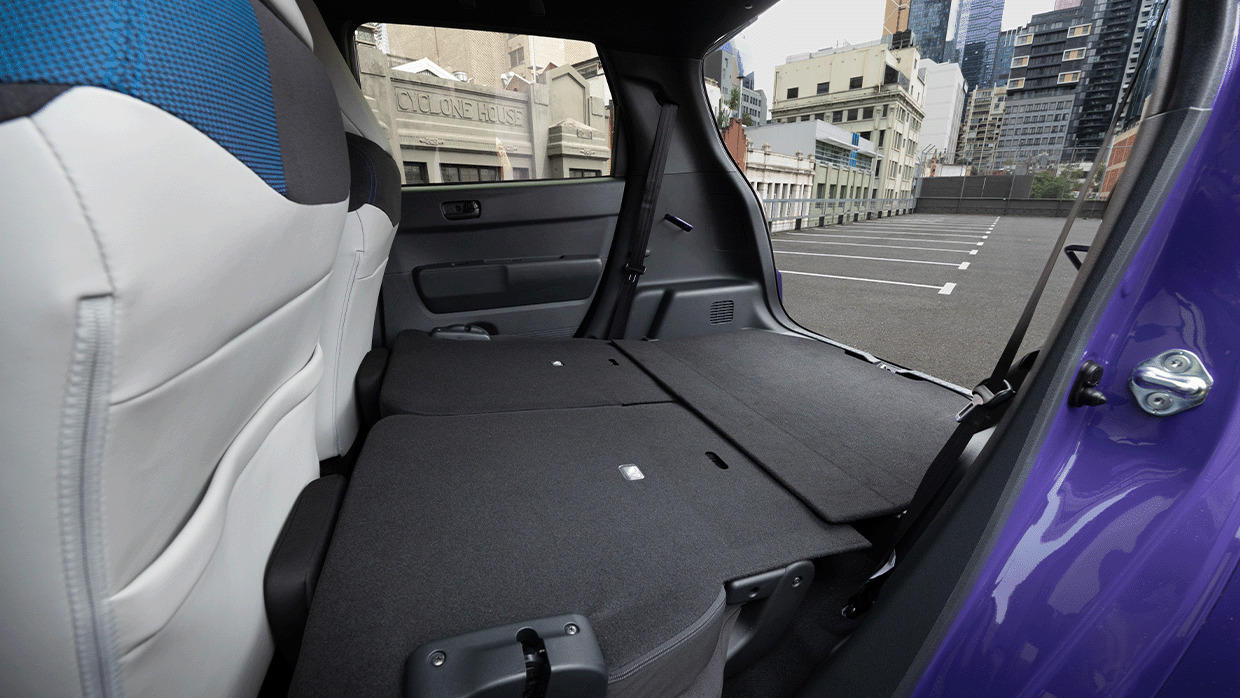
And when it comes time to carry stuff, those ‘magic’ rear seats either sandwich forward in an elegant two-phase movement to fold perfectly flat (for a total of 618 litres to the window line or 967 litres to the roof). Or the bases lift up and clamp to the backrests, revealing a vast area with a completely flat floor.
It makes the Super-One outstandingly versatile.
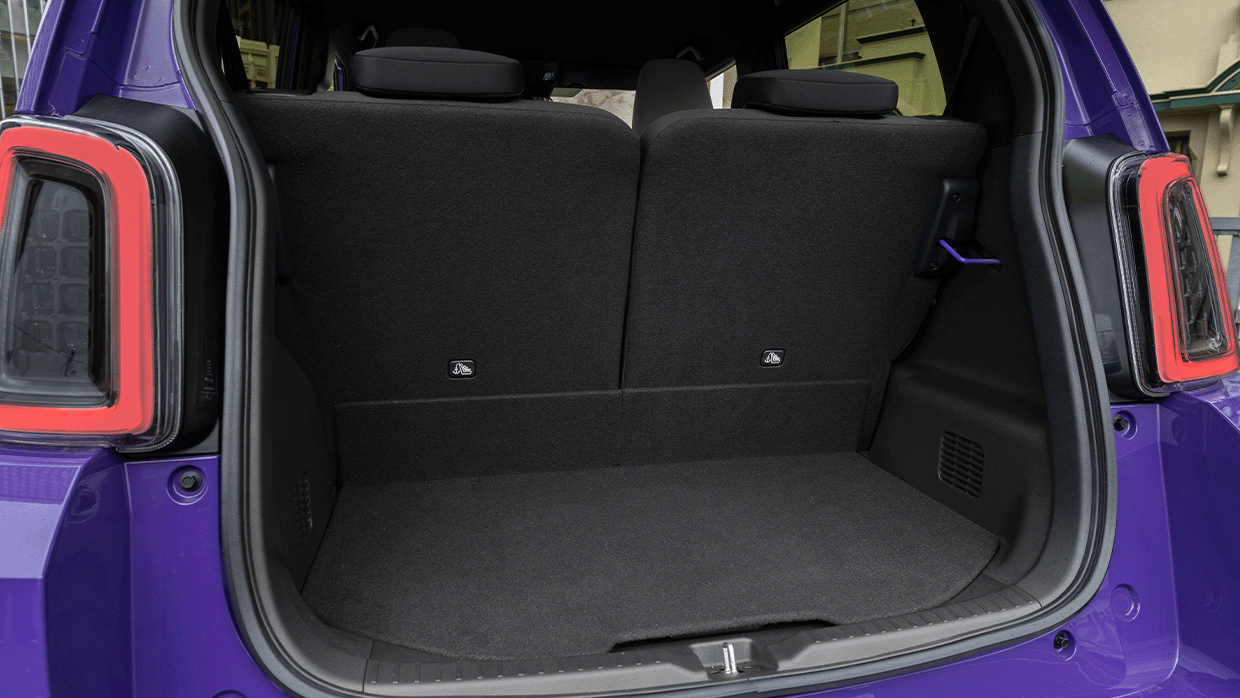
Regular boot space with the rear backrests erect is only 162 litres, yet that’s impressively workable too thanks to a super-low loading lip and a super-light tailgate.
And while the rear doors aren’t up to storing much, the front pair will comfortably take one-litre bottles – joining the centre tunnel tray, centre cupholder and driver’s dash-mounted cupholder to elevate the Super-One’s storage capability.
The baby Honda’s plastics are all fairly hard and simple (the entire door cards are one-piece, for example), but there’s a well-built uniformity to its quality, as well as a good amount of standard equipment for the $36,900 driveaway (or $37,400 for the Two Tone with black roof) that Honda Australia is charging.
There’s a solid array of safety features – six airbags, seatbelt pretensioners and emergency locking retractors, front and rear parking sensors, multi-angle reversing camera with dynamic guidelines, forward AEB with collision warning, lane departure warning and lane-keep assist, road-departure mitigation and adaptive cruise control.
It should be noted, however, that Honda doesn’t plan to run its little EV through ANCAP’s testing program to evaluate its crashworthiness and driver aid performance.
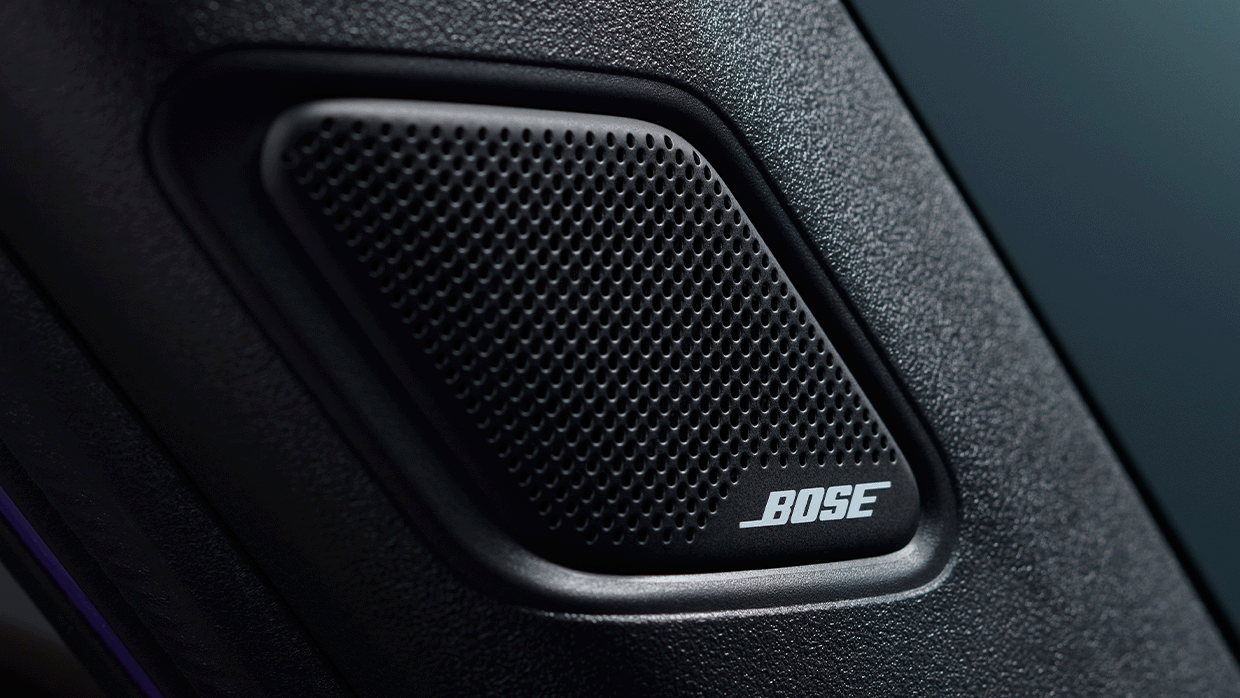
But value is good. Inside, there’s an eight-speaker Bose stereo with boot-mounted subwoofer, a 9.0-inch touchscreen with wireless Apple CarPlay/Android Auto and digital radio, two USB-C ports, auto-folding mirrors, keyless entry/start, heated front seats and steering wheel, ambient lighting, single-zone climate control and a three-year subscription to the Honda Connect app to monitor and control many Super-One functions remotely.
The official combined ADR81/02 energy consumption for the Super One is 12.1kWh/100km while its WLTP-measured combined range is 206km – or 320km WLTP in urban driving, according to UK-market data.
During our testing, the Super-One averaged 14.3kWh/100km in mixed urban, highway and dynamic testing – much of it quite brisk. Based on a usable battery capacity of 28.0kWh, that calculates to a real-world range of 196km, which is impressively close to Honda’s claim.
While that kind of range means the Super-One would require a charging stop if attempting the 286km drive from Sydney to Canberra, Honda is pitching the Super-One as purely an urban EV … that just happens to be confidently poised in freeway conditions.
EVs with similar range include the BYD Atto 1 (220-310km WLTP), Geely EX2 (252-345km WLTP) and Hyundai Inster (327-360km WLTP).
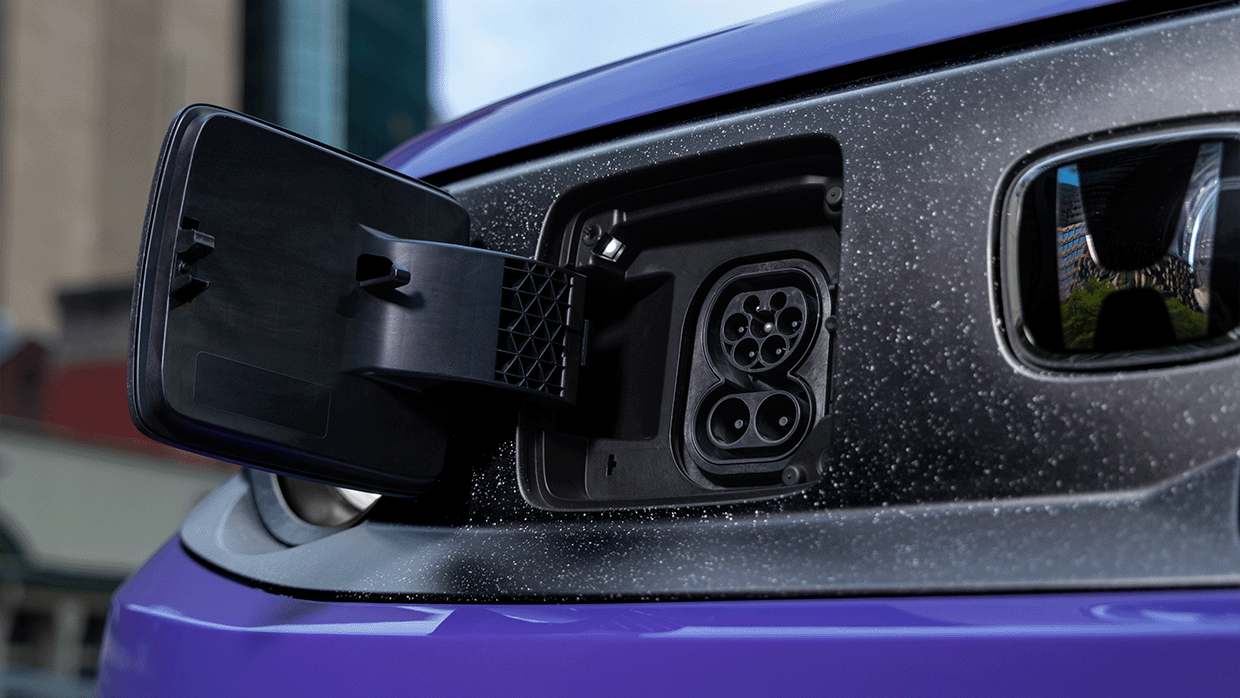
With a maximum DC charging rate of just 50kW, the Super-One takes a leisurely 30mins to go from 15-80 percent battery charge, but only three hours to go from zero to 100 percent with an 11kW AC charger.
Recommended service intervals are every 12 months or 15,000km, with the Super-One’s five-year servicing cost being $995.
Honda’s new-vehicle warranty in Australia is five years/unlimited kilometres, plus a six-year rust perforation warranty and an eight-year/160,000km battery warranty.
The Honda Super-One is not for everyone, but nor is it trying to be that kind of car.
It’s an unashamedly driver-focused city EV that also happens to be brilliantly sized for urban conditions, superbly packaged, astoundingly roomy and surprisingly comfortable. It’s also adorable to look at, without being cringe-worthy like so many cutesy baby cars.
So it’s an urban runabout with limited range. Yet it’s also refined and stable on the highway (though we didn’t drive it in strong wind!) and an absolute hoot to drive. It’s not thrilling like a great hot hatch, but you don’t need to have a fast car to have fun.
Indeed, the Super-One is very much the Mazda MX-5 of its ilk – all about the experience rather than the promise. It’s a heart-over-head choice that happens to be both classless and without a genuine rival, given that the pricier Hyundai Inster EV is quite a bit bigger.
The loveable Super-One is yet another sign that Honda hasn’t forgotten it was once an innovative, engineering-led company that produced genuinely great cars, not just depressingly mediocre appliances for the undiscerning.
Now if Honda Australia could also import the similarly charming N-One kei car with its tiny turbo-petrol engine, then small-car fans will truly be able to rejoice.
About Chasing cars
Chasing Cars reviews are 100% independent.
Because we are powered by Budget Direct Insurance, we don’t receive advertising or sales revenue from car manufacturers.
We’re truly independent – giving you Australia’s best car reviews.
The estimate provided does not take into account your personal circumstances but is intended to give a general indication of the cost of insurance, in order to obtain a complete quote, please visit www.budgetdirect.com.au. Estimate includes 15%^ online discount.
^Conditions Apply
Budget Direct Insurance arranged by Auto & General Services Pty Ltd ACN 003 617 909(AGS) AFSL 241 411, for and on behalf of the insurer, Auto & General Insurance Company Limited(ABN 42 111 586 353, AFSL 285 571).Because we don’t know your financial needs, we can’t advise you if this insurance will suit you. You should consider your needs and the Product Disclosure Statement before making a decision to buy insurance. Terms and conditions apply.
Indicative quote based on assumptions including postcode , 40 year old male with no offences, licence suspensions or claims in the last 5 years, a NCD Rating 1 and no younger drivers listed. White car, driven up to 10,000kms a year, unfinanced, with no modifications, factory options and/or non-standard accessories, private use only and garaged at night.
^Online Discounts Terms & Conditions
1. Discounts apply to the premium paid for a new Budget Direct Gold Comprehensive Car Insurance, Third Party Property Only or Third Party Property, Fire & Theft Insurance policy initiated online on or after 29 March 2017. Discounts do not apply to optional Roadside Assistance.
2. Discounts do not apply to any renewal offer of insurance.
3. Discounts only apply to the insurance portion of the premium. Discounts are applied before government charges, taxes, levies and fees, including instalment processing fees (as applicable). The full extent of discounts may therefore be impacted.
4. We reserve the right to change the offer without notice.