Powered by

-
Car Reviews
Latest reviews
-
Car News
Latest news
-
Car Comparisons
Latest comparisons
- Chasing Deals
Latest reviews
Latest news
Latest comparisons
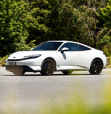
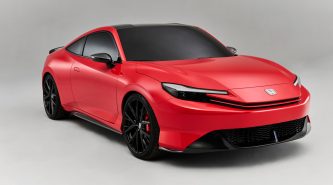
Honda revives the long-dead ‘personal coupe’ category with a sixth-gen Prelude featuring Type R-flavoured handling, Civic Hybrid slickness and a welcome degree of comfort
It’s been nearly a quarter of a century since the Honda Prelude was unceremoniously killed off – a lifetime for many Honda fans – during an era that also saw the death of the Nissan 200SX/Silvia (in 2002) and the Toyota Celica (in 2006), signalling the demise of Japanese ‘personal coupes’.
And yet the revival of the Prelude nameplate on a dramatically different replacement is already one of the highlights of 2026.
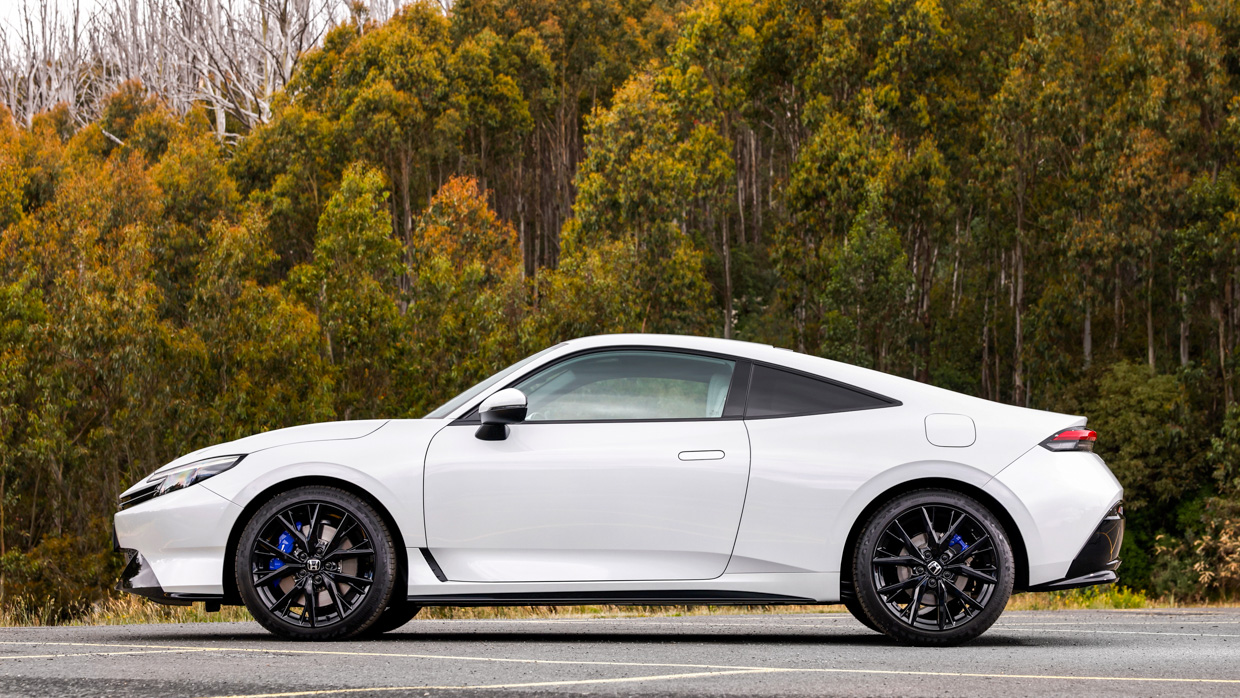
Honda’s intention with this car was to build a hybrid sports coupe, not a Prelude successor, though as the program rolled along, ‘Prelude’ became the favoured model name (given that the ‘Integra’ nameplate – from a smaller Honda coupe discontinued in 2006 – had already been exhumed in North America for a restyled Honda Civic, branded as an Acura, in 2022).
The decision to call the new coupe Prelude comes despite the fact it features a liftback tailgate – as per every preceding Integra coupe – rather than a traditional coupe bootlid like every preceding Prelude generation.
But before we dive deeper into the intriguing new Prelude e:HEV, let’s address the elephant in the room – the pronunciation of its name.
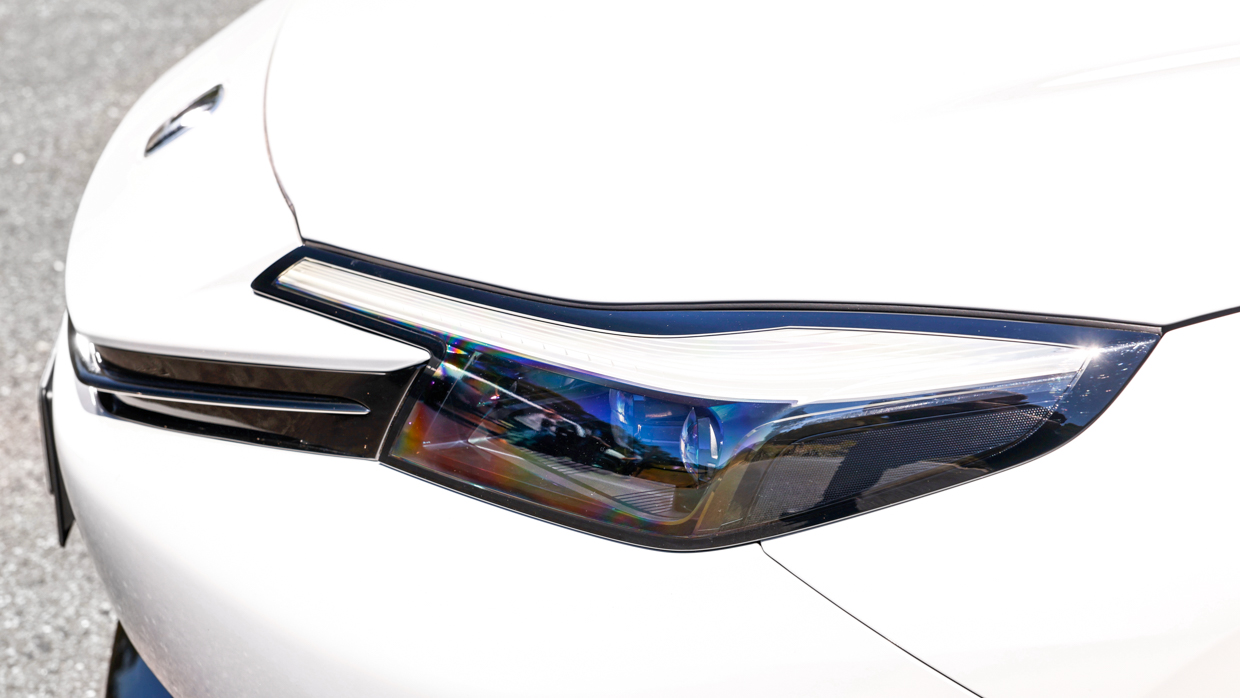
In English-speaking markets such as Australia and the UK, it has always been ‘Prel-yood’ – right from launch in 1979 – whereas in North America, they call it ‘Pre-lewd’. The societal proliferation of Americanisms has seen younger folk deferring to the US pronunciation, however Honda Australia assures us that ‘Prel-yood’ remains correct for our market.
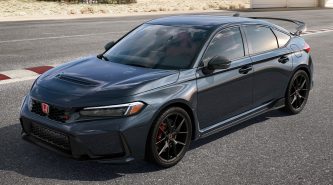
Riding on a Civic-derived platform (with a wheelbase shortened to 2605mm), the new Prelude features front suspension and brakes adapted from the high-performance Civic Type R, combined with a petrol-electric powertrain shared with the Civic Hybrid (though with sporting alterations).
Honda’s intention with the new Prelude is to deliver a sleek, modern, efficient, brand-building sports coupe that handles like it looks, without compromising comfort and practicality (for a small-ish coupe).
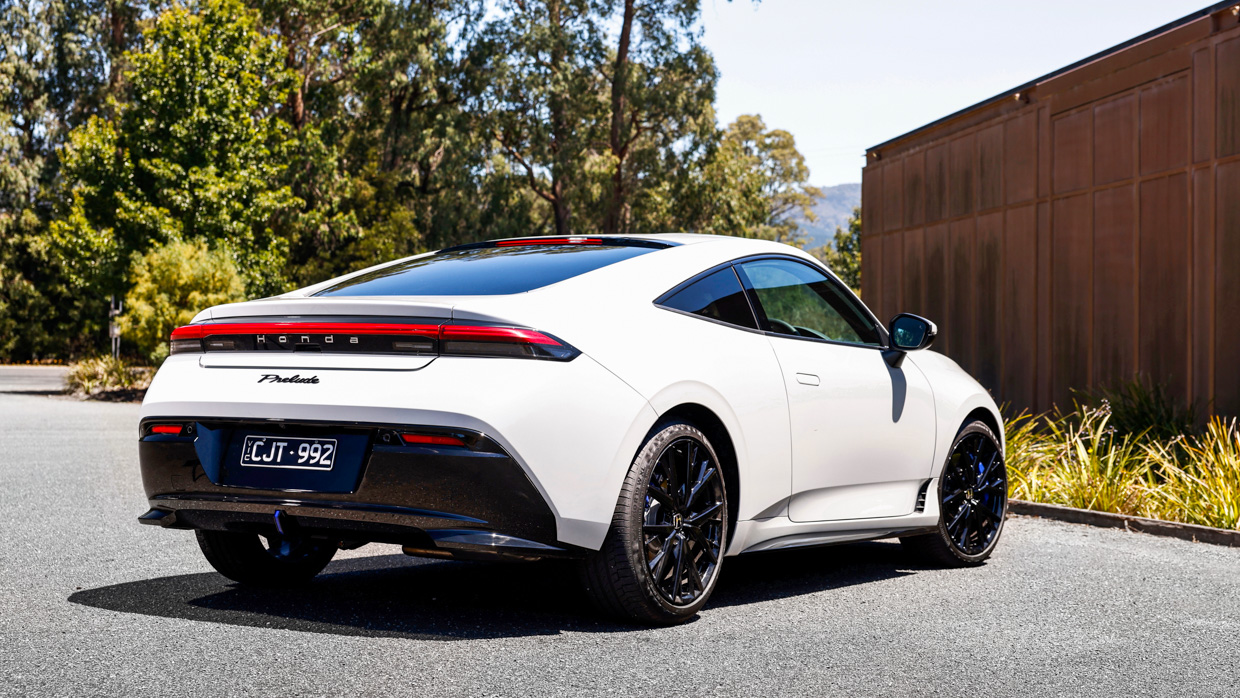
If it succeeds, the new Prelude may well prove to be a landmark car for Honda, much like the MX-5 still is for Mazda. If it doesn’t, that will be more a reflection of the dire state of modern automotive tastes than any deficiencies on the Prelude’s part because this contemporary coupe is all about reviving not only a revered nameplate, but the joy of motoring.
Honda Australia is asking $65,000 driveaway for the Prelude e:HEV, which seems like good value given that a Civic Hybrid LX is $55,900 driveaway, and that the well-equipped Prelude theoretically has no direct competitors.
When the fifth-gen Prelude was discontinued in late-2001, a top-spec VTi-R ATTS manual was $50,209 before on-road costs, while a VTi-R auto without the Active Torque Transfer System was $49,209 … which makes $65K driveaway seem like a comparative bargain 25 years later!
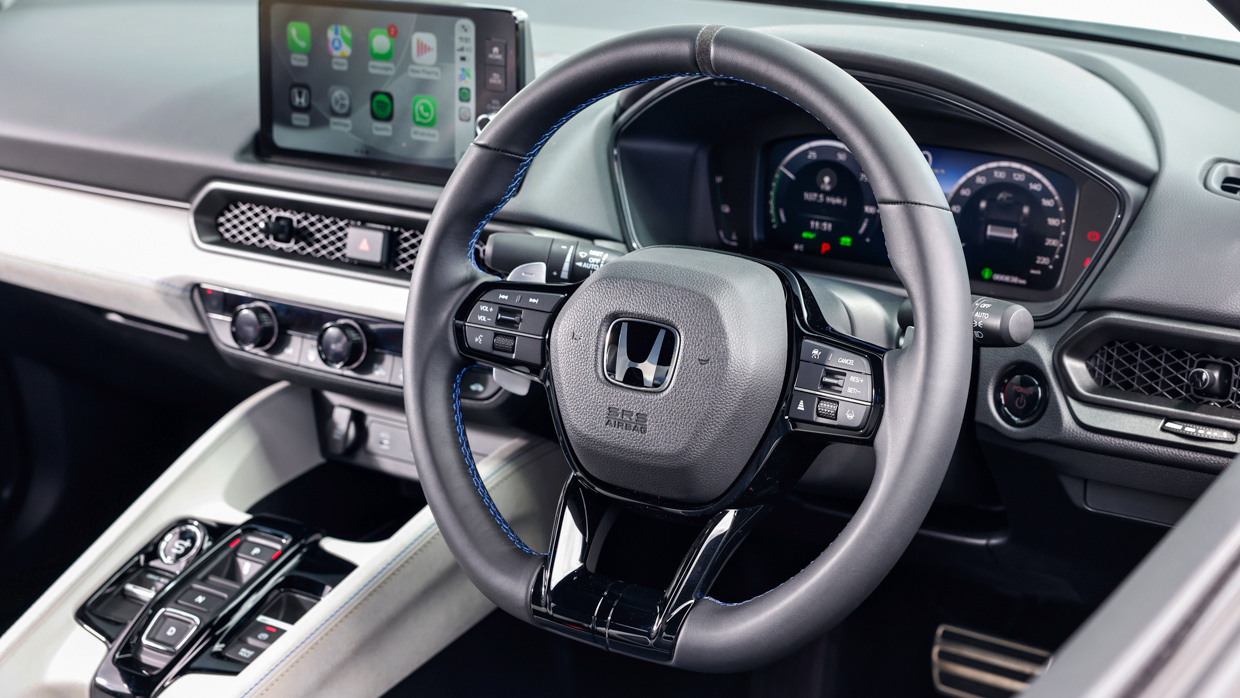
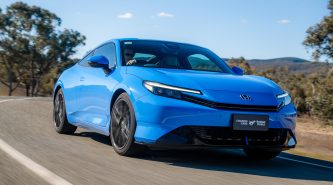
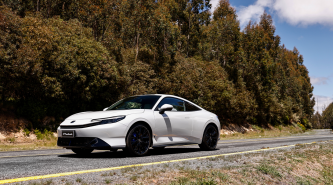
Just one premium spec will be offered in Australia, with the only options being a choice of colour (Racing Blue Pearl, Moonlit White Pearl, Crystal Black Pearl, Meteoroid Grey metallic, Rallye Red) or adding some dealer-fit accessories such as bodykit parts.
Standard equipment on the Prelude e:HEV includes:
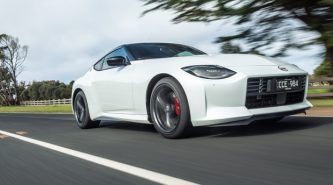
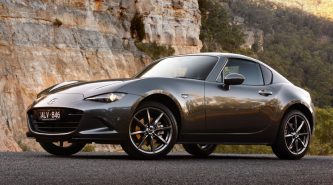
As for potential alternatives, a BMW 230i coupe (which is more of a two-door sedan) starts at $79,900, not on-road, before options. A Nissan Z is $76,100 before on-road costs, manual or automatic, while a flagship Mazda MX-5 RF is $56,790 before on-road costs for a GT RS manual, or $55,290 for a GT auto.
Factor in driveaway pricing for any of these coupes and you’re looking at just under $62K driveaway for the two-seat MX-5 RF GT RS, just under $83K driveaway for the two-seat Z, and $88K driveaway for the four-seat BMW, before any options.
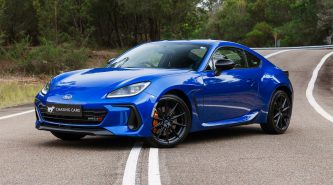
The two-plus-two Subaru BRZ ($56,802 driveaway for a ts coupe, manual or auto) and Toyota GR86 ($50,603 driveaway for a GTS, manual or auto) are significantly cheaper in price, but also significantly cheaper in interior finish and equipment, and therefore comfort and luxury. They’re sports cars, not sports coupes like the Prelude.
Traditionally, the generations of personal coupes that preceded this all-new Prelude were more about looks and equipment than actual driving ability, though Honda’s take was always an exception – particularly after the excellent 4WS model of 1987, developed during Honda’s F1 dominance.
The driving mantra for the new Prelude was “unlimited glide”, and while that sounds like a marketing wank, it doesn’t take long behind the wheel to realise that statement captures the essence of the new Prelude perfectly.
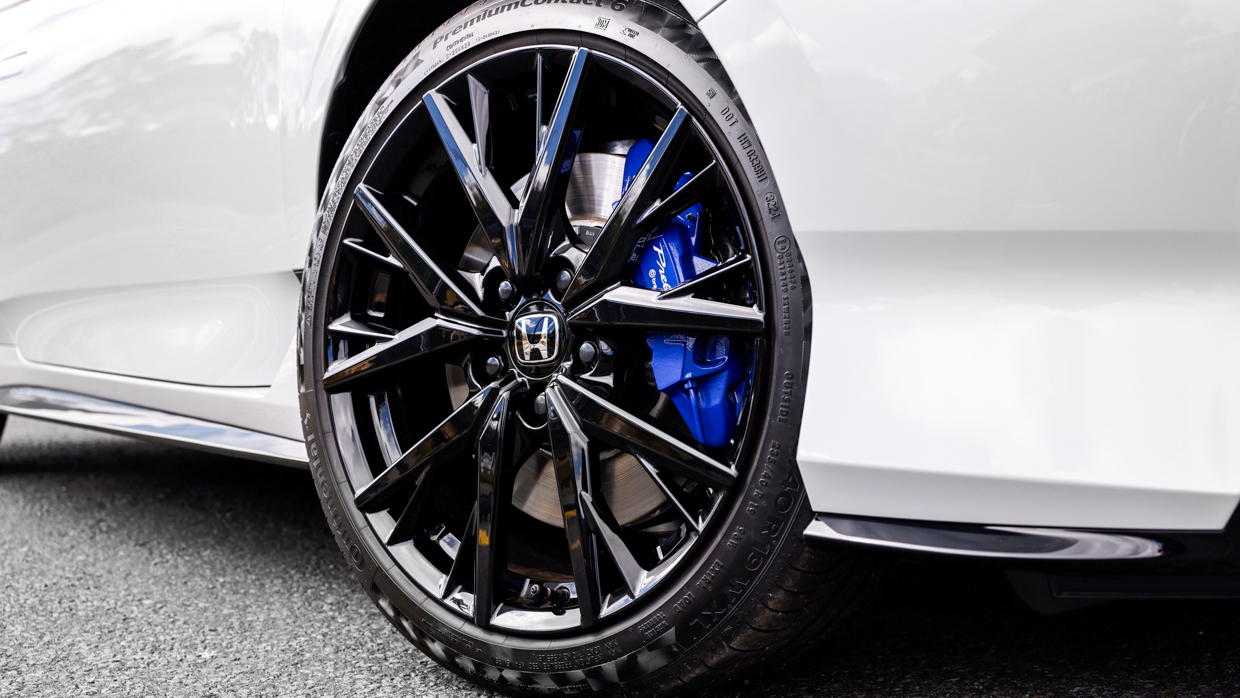
Combining the dual-axis front suspension of the Civic Type R with its 350mm ventilated front disc brakes and four-piston Brembo calipers, along with adaptive damping, multi-link rear suspension and dual-pinion, motion-adaptive electric power steering, the Prelude has all the necessary hardware to deliver on its promise.
While the carry-over powertrain from the Civic Hybrid appears flaccid – same 135kW/315Nm from the Atkinson-cycle 2.0-litre direct-injection four-cylinder, plus a 72-cell lithium-ion battery, and two electric motors providing direct drive in the e-CVT automatic – in reality it feels and sounds as sweet as honey, and offers peachy-keen performance.
Honda claims 8.2 seconds from 0-100km/h but when we performance-tested the Prelude, it managed 7.2sec for the classic three-figure sprint, and that’s how it feels on the road – though not quite that punchy on a circuit. The Prelude is all about driving enjoyment on great roads, not scorching racetrack times…even though its chassis can take it.
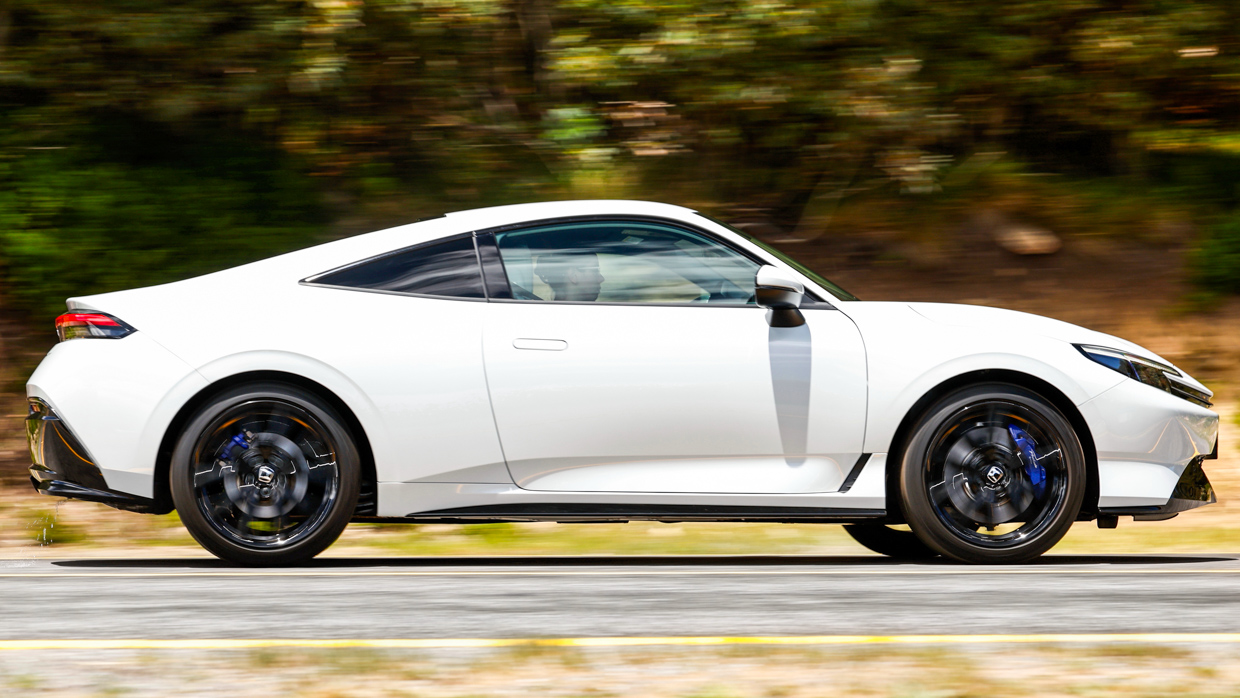
This car marks the first application of Honda’s updated Advanced Handling Assist (AHA) chassis electronics, which can subtly brake the inside wheels to enhance corner rotation during both corner entry and exit, improving steering accuracy and handling poise.
Whatever AHA adds to the mix, in combination with its Type R suspension hardware and a beautifully judged adaptive damping, it works.
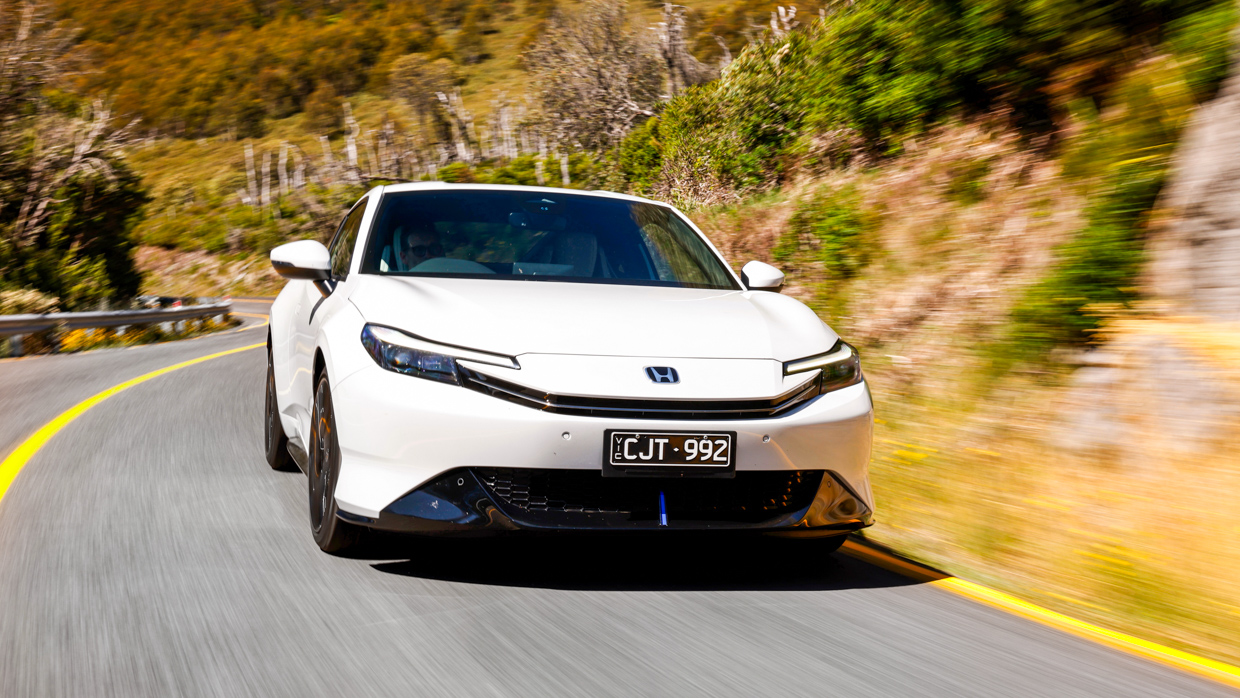
On fast, undulating, challenging back roads, the Prelude is brilliant, scything into corners with an exquisite level of poise, tightening a cornering line without a smidge of understeer, and (on dry roads, at least) proving that its handling limits are far beyond most drivers.
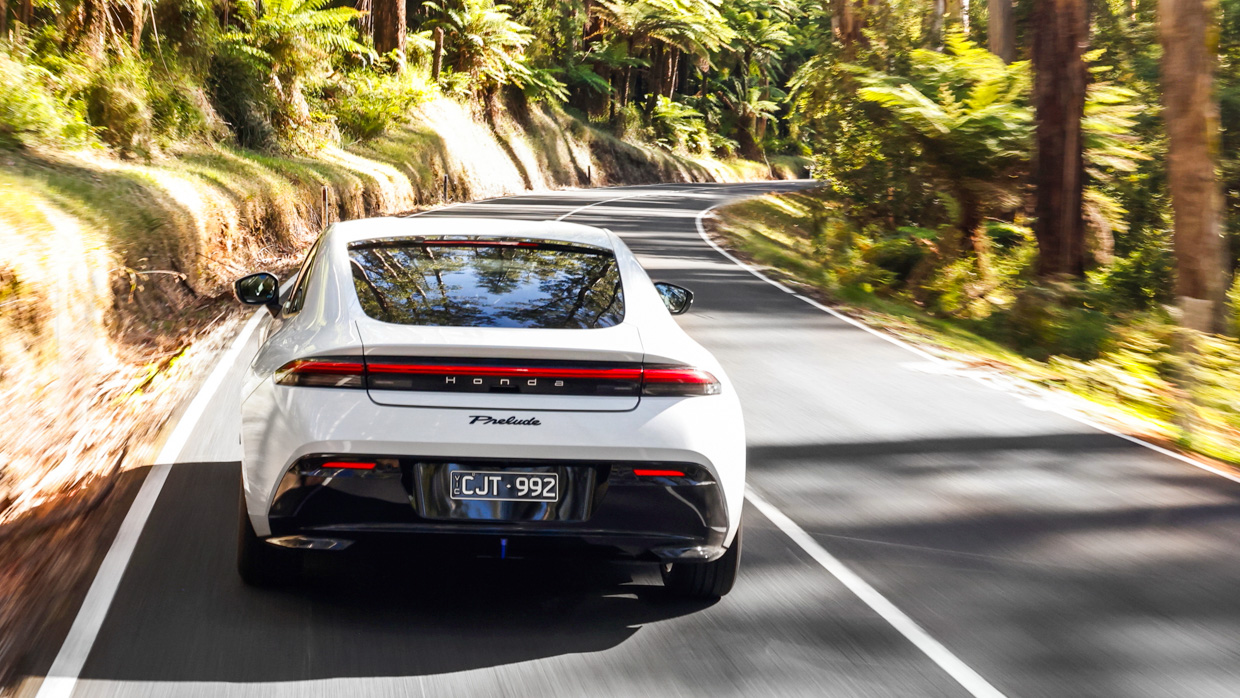
No matter the driving mode, the Prelude delivers, though pushing hard in Comfort does increase body roll to a degree. The mid-level GT setting and top Sport setting are best on serious roads, amping the Prelude’s keenness without introducing any harshness.
There’s also an Individual setting that separates all dynamic parameters to fine-tune your flavour – steering weight, damping firmness, throttle response, engine sound – which is great for Aussie country highways.
Even Comfort possesses a decent level of body control, though its USP is undoubtedly urban commuting. At city speeds, the Prelude’s refined absorbency, delightfully crisp steering, effortless low-speed torque, slick powertrain response and superb forward vision make even small journeys around town a delight.
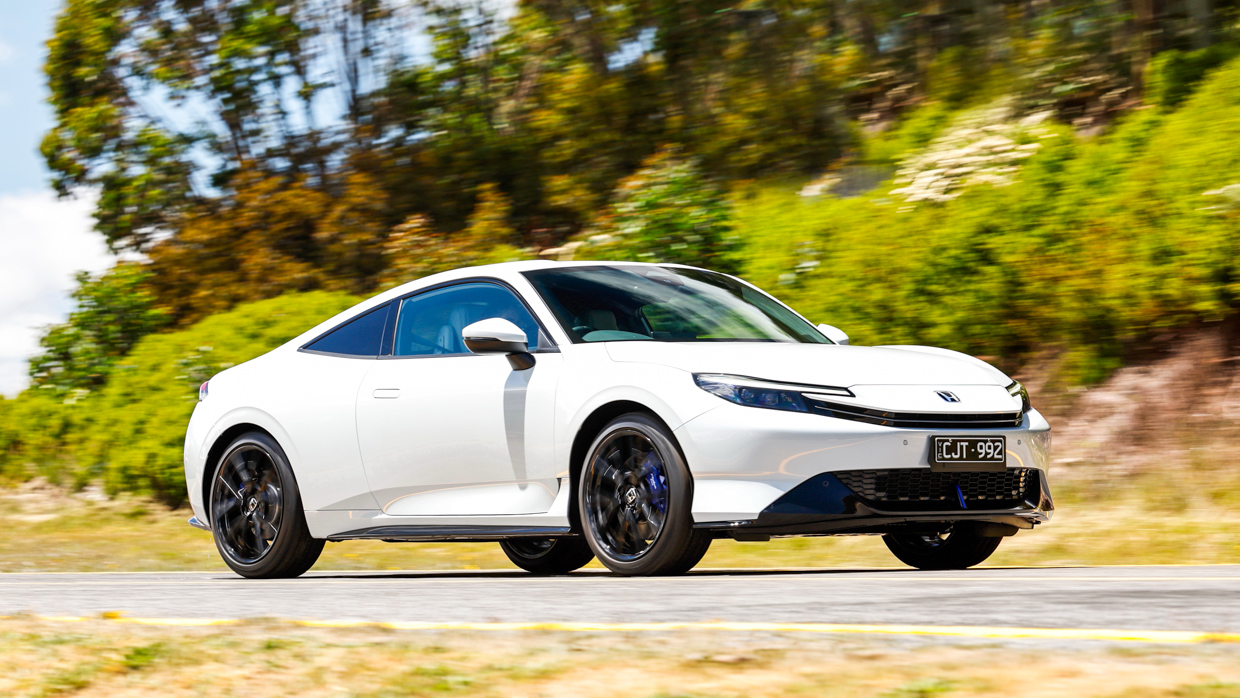
At the opposing end, Sport mode is intelligent and sophisticated enough to enhance the Prelude’s underlying dynamic excellence without impeding on its suaveness. Steering is firmer, though not heavy, and still crisp and feelsome (for a modern car).
With slightly less roll, turn-in is sharper and body movements are tighter, while Honda’s zingy four-cylinder sounds peachier thanks to more pronounced Active Sound Control (ASC) amplification.
Even weighing 1468kg (versus around 1300kg for the old fifth-gen model), the hybrid Prelude always feels light on its feet, primed to eagerly change direction, but without nervousness. In terms of all-round dynamic finesse, it’s superb.
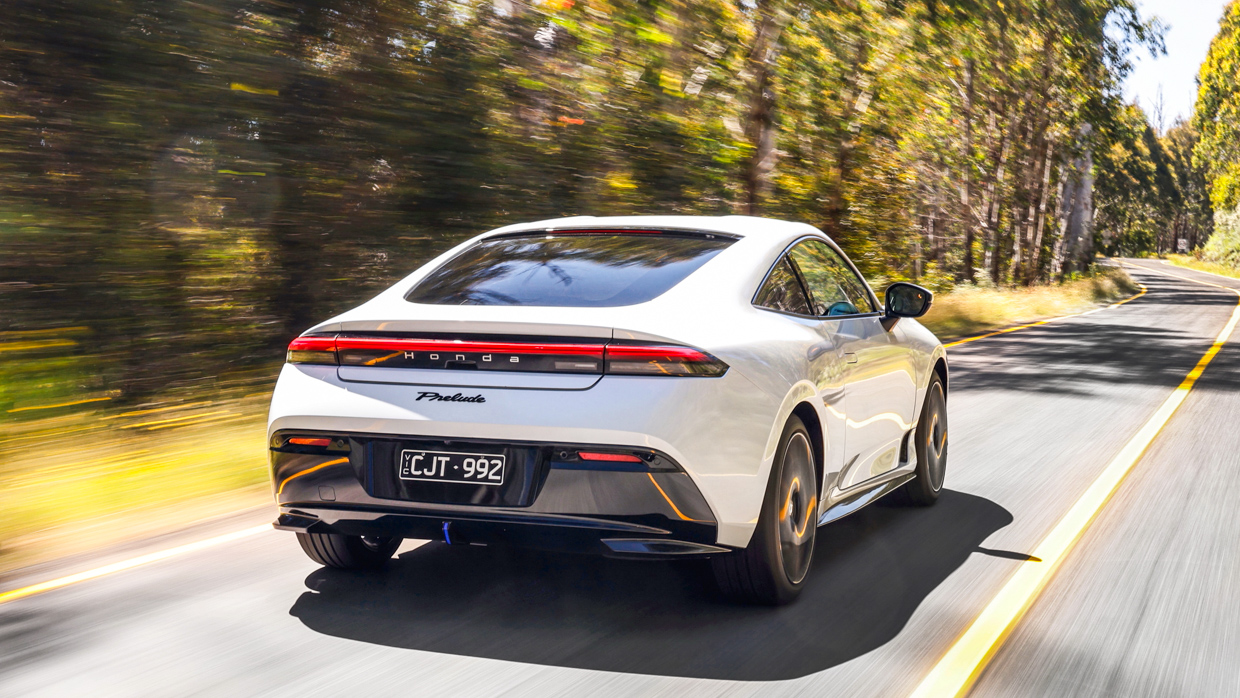
In addition, there’s S+ Shift, which transforms the steering-wheel paddles from providing (smoothly effective) variable regenerative braking (across seven levels, plus a coasting mode) to operating eight pre-set gear ‘ratios’ via the transmission’s dual electric motors.
Don’t be put off by the Prelude’s ‘e-CVT’ description because there’s no belt drive or any rubberiness associated with this transmission. Even left in Drive, it does a superb job of choosing the right ‘ratio’, though S+ introduces a satisfying level of manual control (as well as a tachometer to the instrument pack) while subtly amping all drive mode parameters, in every drive mode.
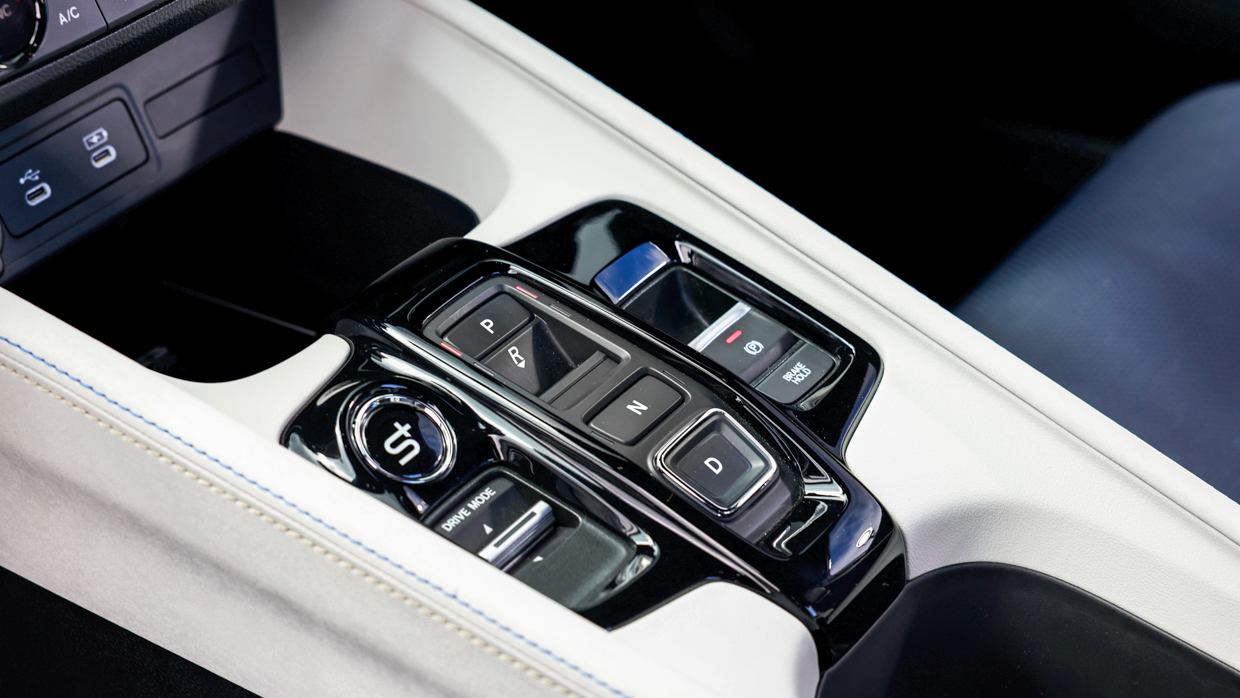
It’s a pity the push-button gear selector arrangement is so clunky to use and won’t automatically engage the park brake when shifted to Park. A cracking Honda manual would alleviate all those gripes, however the brand’s Australian management claims there’s been no suggestion that an S2000-rivalling six-speed manual is in the works.
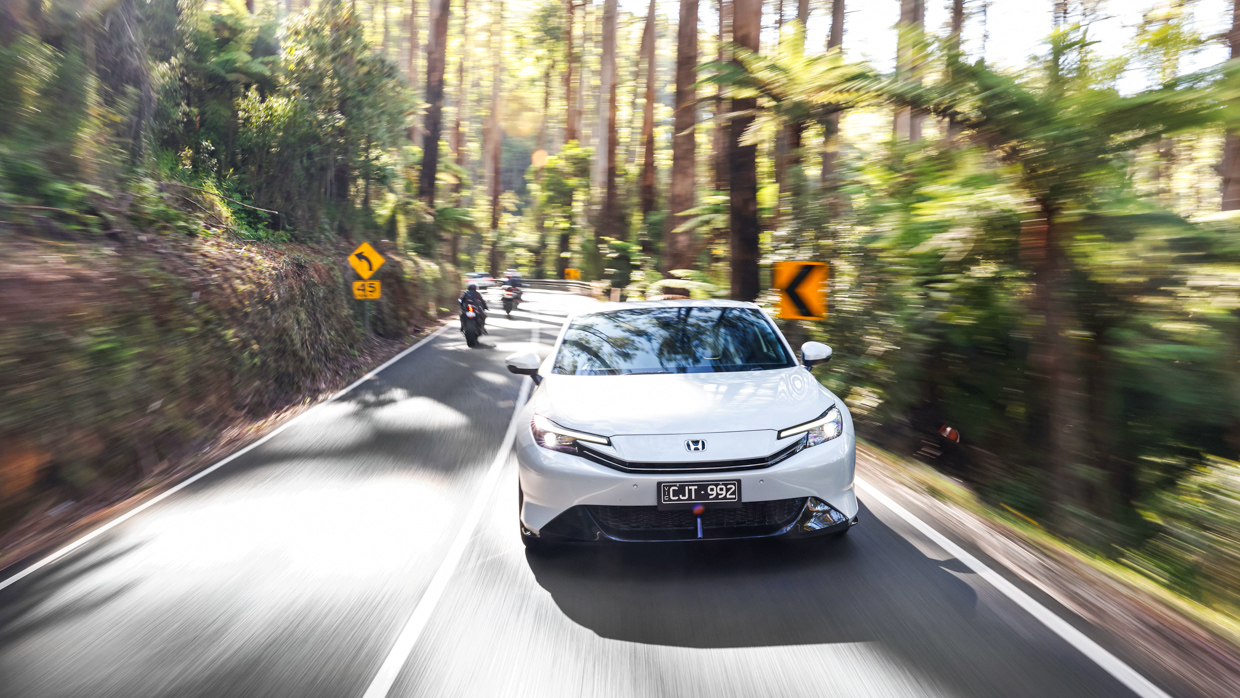
There’s also been no suggestion of a sportier ‘Type-S’ version offering a bit more grunt, though the Prelude’s powertrain is clearly capable of delivering more – providing it doesn’t impact fuel economy to any significant degree. For the most part, however, the Prelude’s drivetrain is sweetly amenable and seamlessly integrated into its driving experience.
What makes us suspect there’s more to come is the Prelude’s serious braking package – 350mm ventilated front discs with four-piston Brembo calipers, plus 305mm solid discs at the rear, which prove unyieldingly capable in hard driving and offer strong pedal feel.
And, of course, there’s the chassis, which delivers outstanding roadholding, even in the wet, despite wearing Continental Premium Contact 6 tyres rather than proper high-performance rubber.
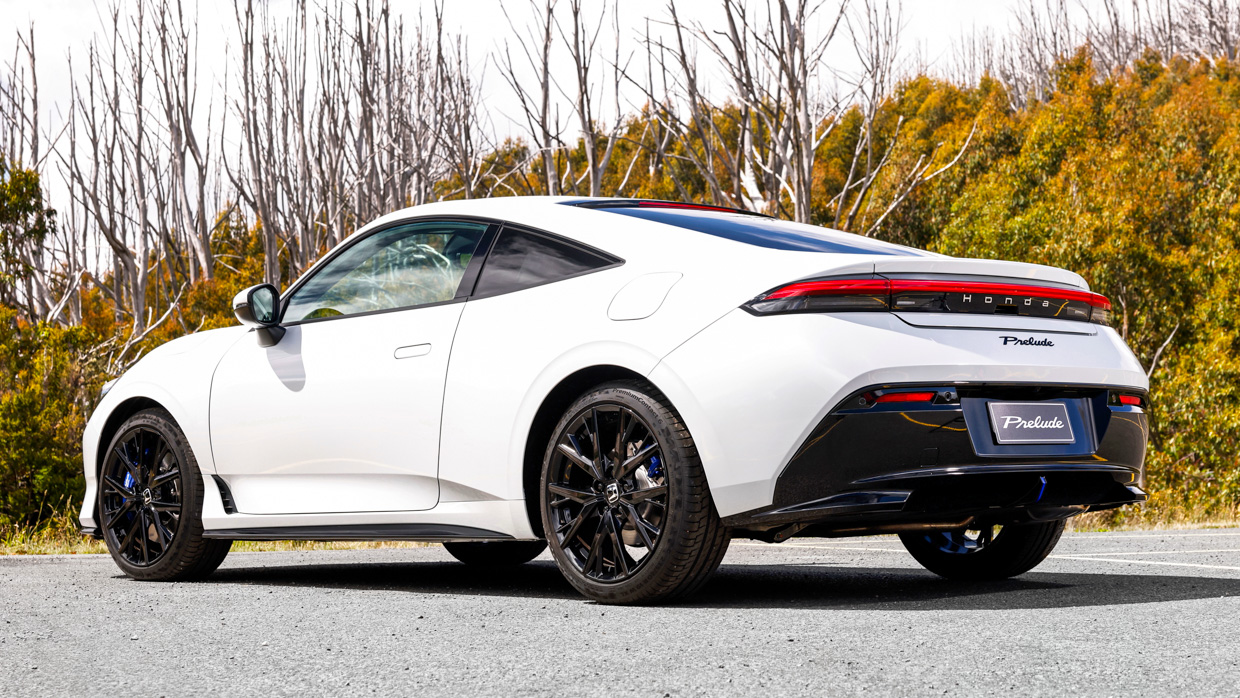
Size-wise, the sixth-generation Prelude is almost identical in length to the fifth-generation model that ended production in 2001 (4522mm versus 4520mm), though it’s substantially wider at 1880mm (+130mm) and slightly taller at 1355mm (+40mm).
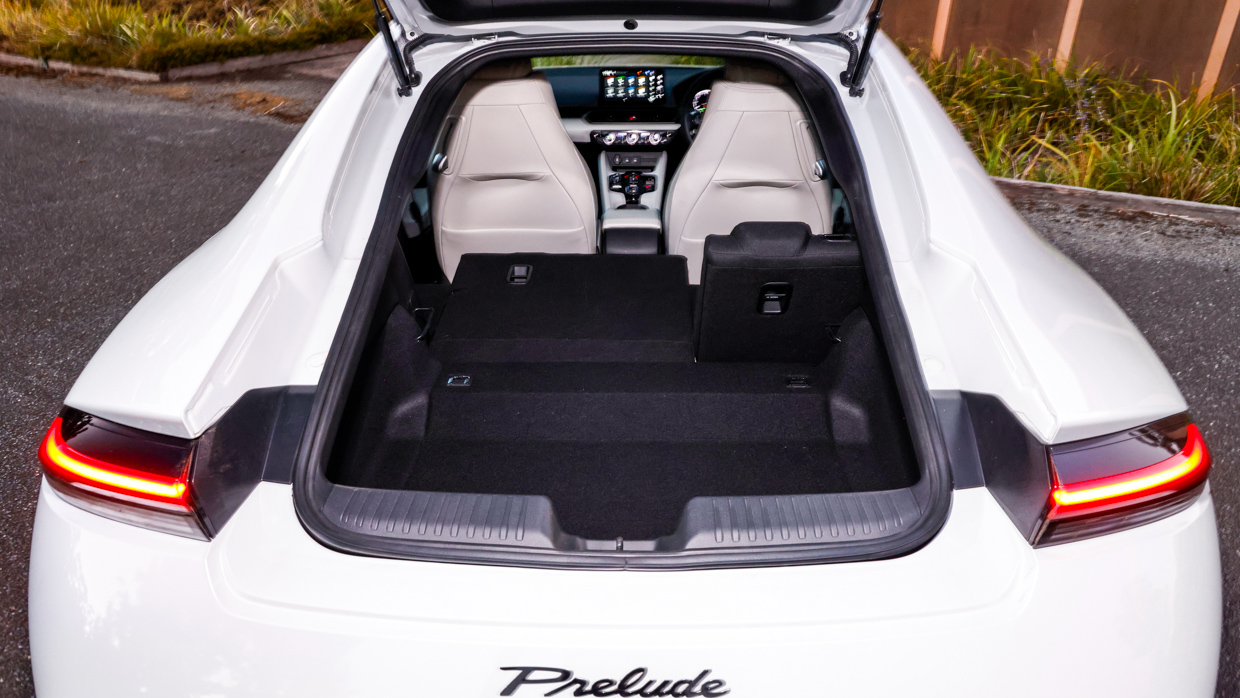
And being a liftback, actual boot space of 264 litres can easily be extended to 663 litres with the rear backrests folded – offering ample luggage space for two people on a trip.
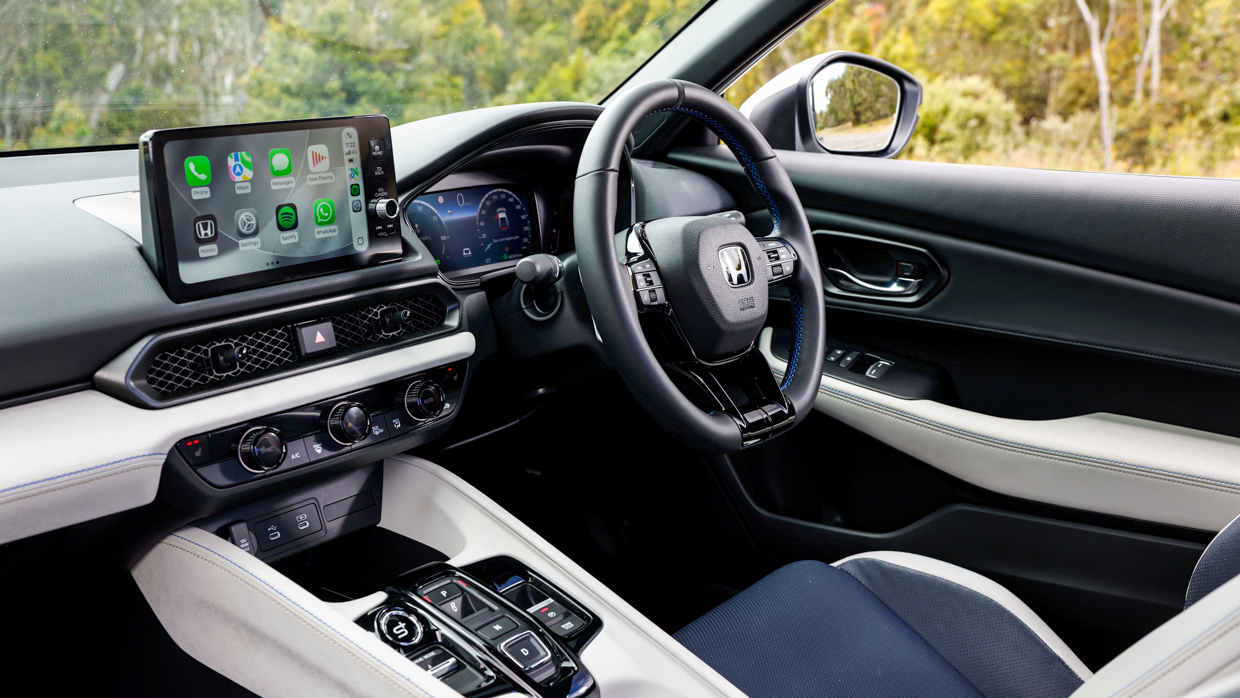
Interior design is very similar to a Civic’s – something that has heightened the criticism of this car being a Civic coupe in drag – though the actual architecture is quite different.
It’s the detailing that’s the same, including lovely HVAC controls, column stalks, steering-wheel spokes and switches (though Prelude gets a squared-off bottom and a trim strip at top dead centre), and the 9.0-inch centre touchscreen display.
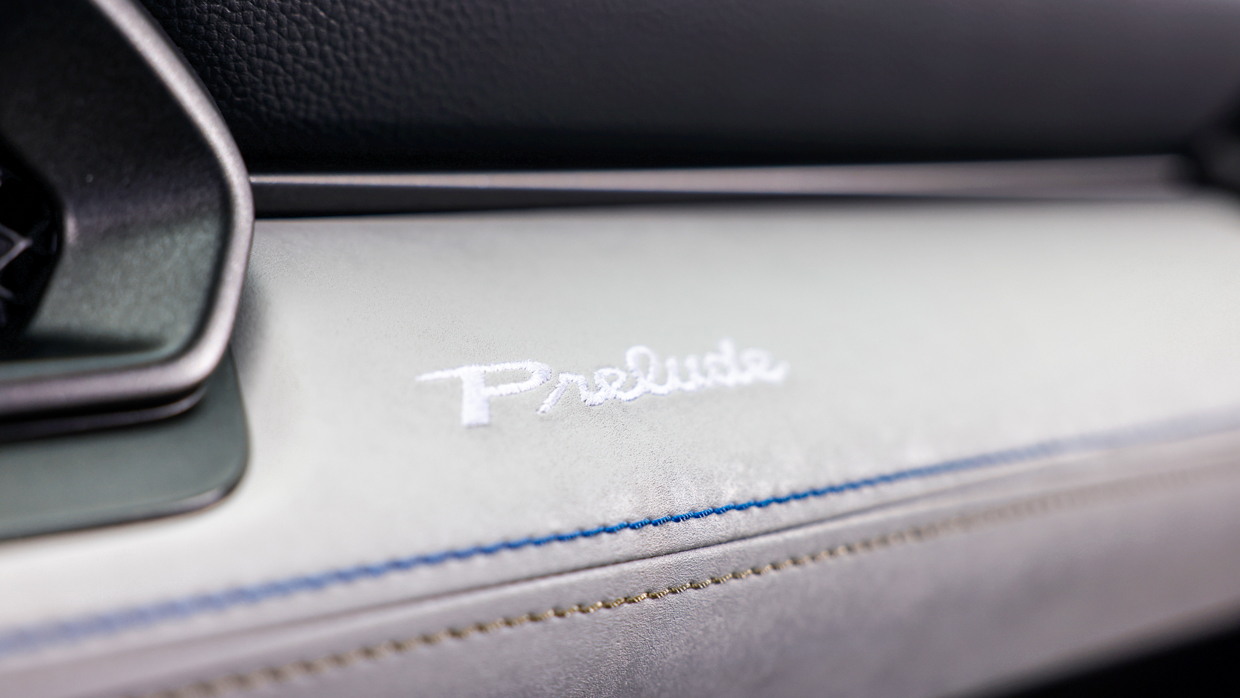
The Prelude’s leather-appointed dashboard insert with suede-like trim and exposed stitching is a nice touch, along with similar stitched padding on the centre console. Its seats are terrific, too, offering a white/perforated navy leather-appointed combination on both (heated) buckets, though the driver’s seat scores enhanced bolstering and under-thigh padding.
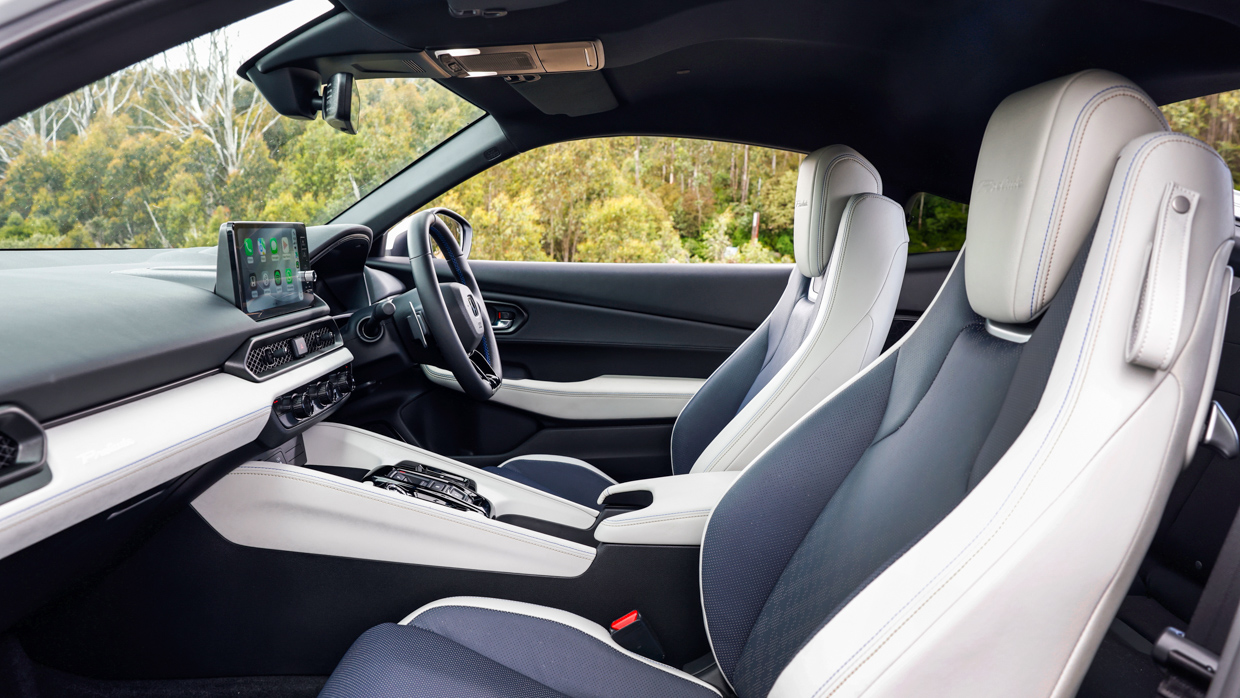
Pity they’re both manually adjustable via uncharacteristically cheap-feeling levers, and only the driver gets height adjustment.
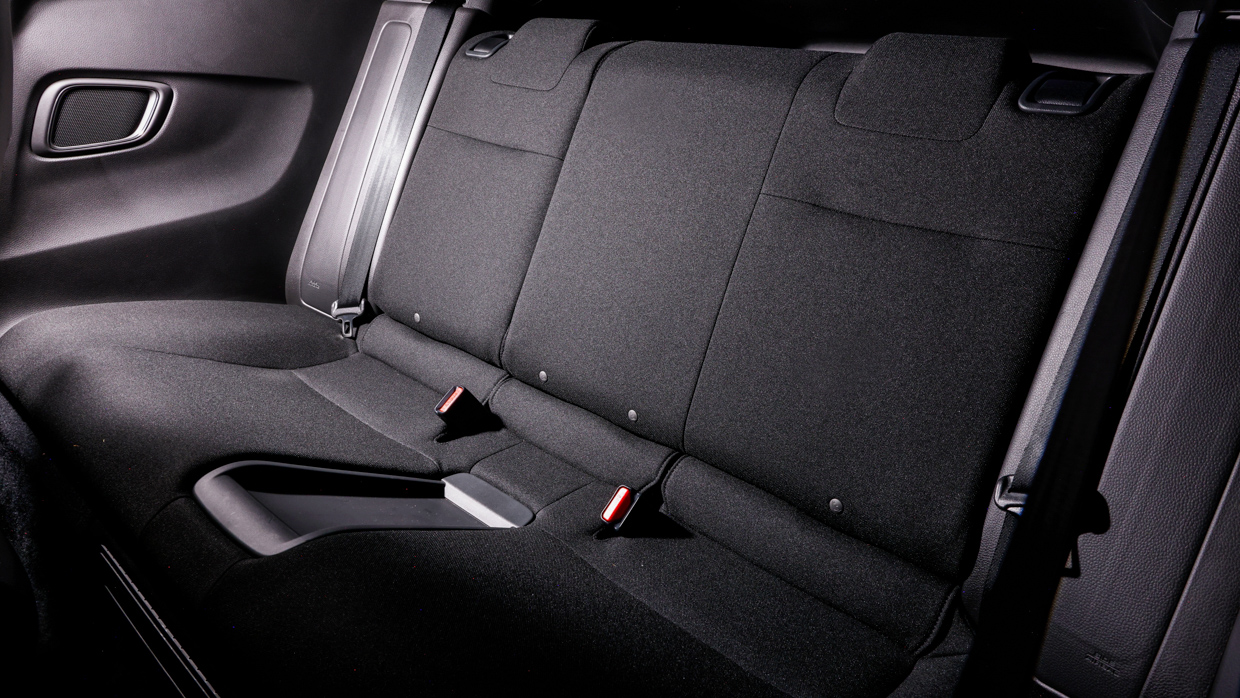
Access to the rear seat is by solid vertical slide levers on the tombstone backrests, and while they tilt and slide in one movement going forward, the backrests don’t return to their original position.
Few adults will want to spend more than a few moments in the Honda’s cloth-trimmed second row, though it does provide emergency accommodation and some children might actually enjoy it back there. It also has child-seat mounting points.
Given that it’s a sports coupe, the Prelude’s functionality and storage are impressive, including accessible bottle holders in the doors, well-sized cupholders in the centre console, and a non-slip wireless charging pad beneath the centre stack. The dash-top touchscreen is easy to reach and use, and there’s wireless smartphone mirroring, plus a gutsy Bose stereo.
Pity the Apple CarPlay proved frustratingly glitch-prone in one of our test cars, though others seemed more reliable.
Finally, there’s the new Prelude’s vision. It can’t quite match the ultra-low-cowl forward expanse of its ancestors – some of which boasted the lowest bonnet height in the world at the time – but the new car’s curved windscreen, plus plenty of side and rear glass, and neat bulges above the front wheels provides a commanding mise-en-scene for the driver.
The 2026 Prelude has not been tested by ANCAP or Euro NCAP for crash-test performance or active-safety features, though Honda Australia says it offers an ultra-strong body structure and its electronic safety aids are both widespread and brilliantly judged.
While not everything can be turned off on the move, the relatively subtle steering and lane-keep assistance is a mere button press away on the steering wheel, and even the speed-limit warnings are refreshingly unobtrusive, rather than deeply enraging.
Standard safety equipment on the 2026 Prelude includes:
The official combined fuel consumption figure for the Honda Prelude e:HEV is 4.3L/100km, drinking 91-octane regular unleaded, though we averaged 7.0L/100km during our spirited launch drive through the Adelaide hills.
Given its 40-litre fuel tank, that translates to a theoretical range of 930km and an as-tested, hard-driven range of 571km.
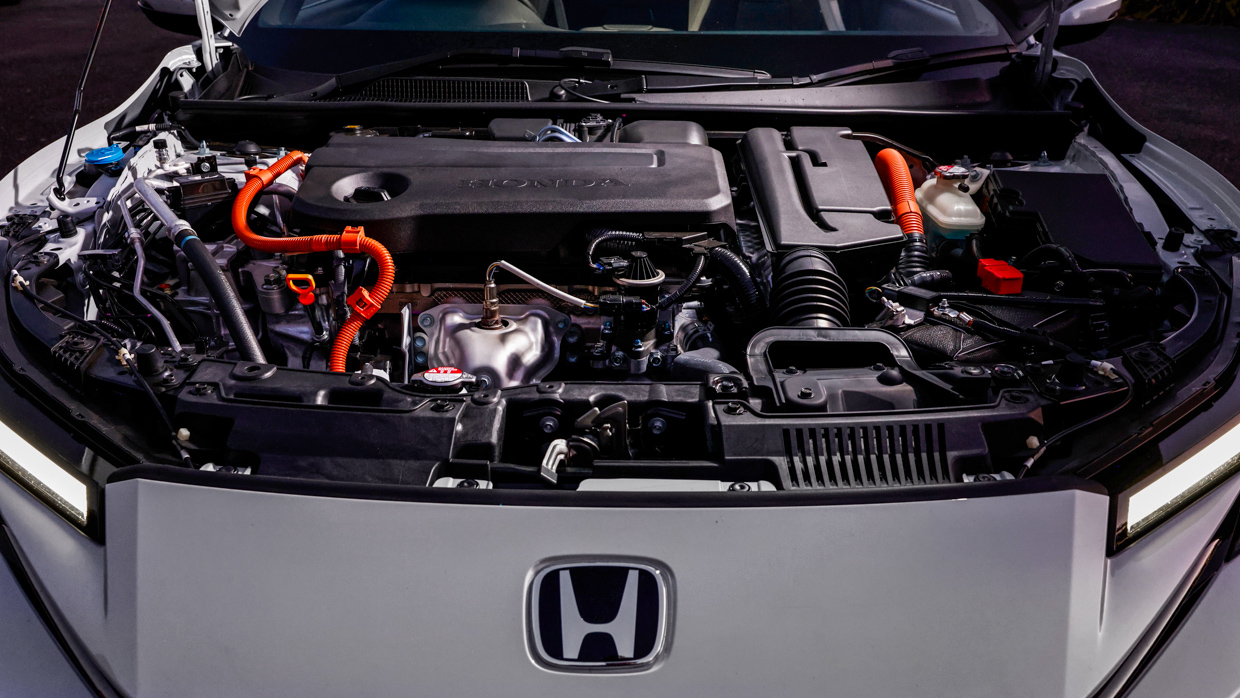
Recommended service intervals are every 12 months or 10,000km, capped at just $199 per service, meaning the Prelude’s five year/50,000km servicing cost is an excellent $995. In comparison, a Mazda MX-5 RF GT auto will set you back $2705 across five years/75,000km.
Honda’s new-vehicle warranty in Australia is five years/unlimited kilometres, including five years of roadside assistance and a six-year/unlimited-kilometre warranty covering rust perforation. Stick to the service schedule at a Honda dealer and both your warranty and roadside assistance will be extended to eight years/unlimited kilometres.
On paper, it’s easy to dismiss the new Prelude. It potentially doesn’t look special enough, isn’t powerful enough and has been harshly described by some as merely a Civic coupe (or a latter-day Integra) rather than a vehicle worthy of carrying the Prelude nameplate forward into the 2030s.
But it only takes one medium-speed corner – or a lumpy urban road – to discover that this hybrid Prelude is greater than the sum of its parts.
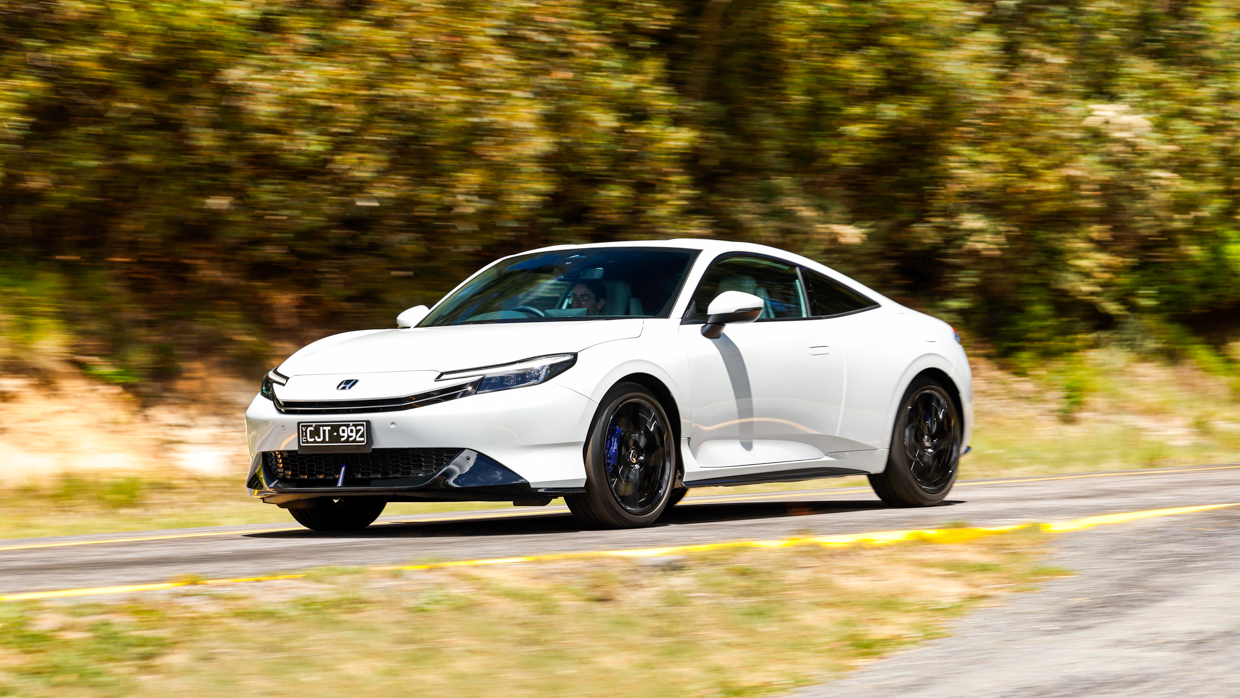
We should’ve expected the Civic Type R’s front suspension and steering gear, as well as its front brakes, would gift the Prelude supreme directional agility, as well as a lithe delicateness. It’s beautifully poised in corners and wonderfully comfortable around town, making the new Prelude a genuine jack-of-all-trades sports coupe.
It looks significantly better on road than it does in pictures – enhanced by its muscular stance and fast roofline – and it’s also a fabulous day-to-day runabout thanks to its great vision, crisp steering, effortless powertrain and thrifty consumption. Even its luggage flexibility exceeds expectation.
Some people will rag on it for not being faster, or roomier, or a manual, but that is somehow missing the point. The fact the Prelude even offers a short-haul (or kid-friendly) rear seat rather than nothing at all makes it instantly more appealing for most people….
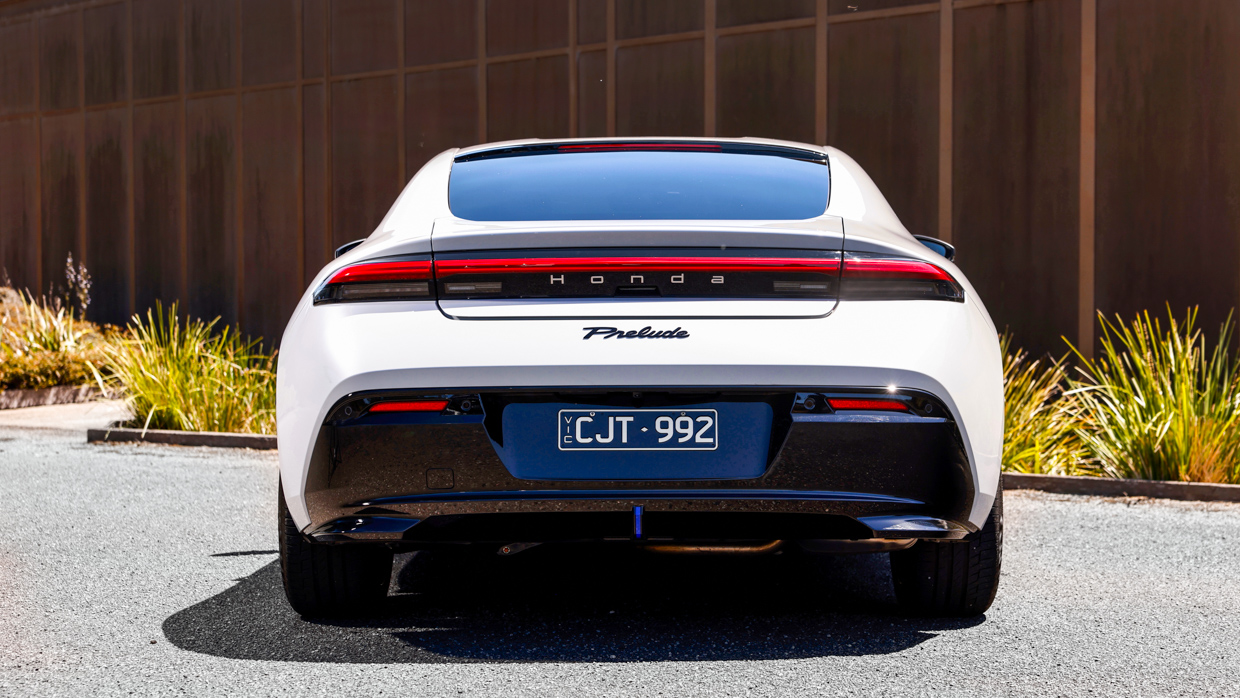
…though who that buyer is, even Honda doesn’t know. So far, there’s been nearly 4000 expressions of interest in Australia, and Honda says it can access enough Japanese production should the majority of those people actually decide to purchase a car. Out in the real world, it certainly gets attention – all of it good, for all sorts of people.
What it comes down to, however, is the Prelude’s essence. This is a striking, nicely built, effortless comfortable, practical and efficient sports coupe that ticks all the logic boxes. But it’s also a brilliant handler with stunning brakes, fabulous poise and a suave, sophisticated sweetness that is rare in any modern car.
It’s also one of those rare cars that is a joy to drive at any speed. And that balance of power – despite clearly being capable of harnessing more in that department – deserves to be celebrated in 2026.
Key specs (as tested)
About Chasing cars
Chasing Cars reviews are 100% independent.
Because we are powered by Budget Direct Insurance, we don’t receive advertising or sales revenue from car manufacturers.
We’re truly independent – giving you Australia’s best car reviews.
The estimate provided does not take into account your personal circumstances but is intended to give a general indication of the cost of insurance, in order to obtain a complete quote, please visit www.budgetdirect.com.au. Estimate includes 15%^ online discount.
^Conditions Apply
Budget Direct Insurance arranged by Auto & General Services Pty Ltd ACN 003 617 909(AGS) AFSL 241 411, for and on behalf of the insurer, Auto & General Insurance Company Limited(ABN 42 111 586 353, AFSL 285 571).Because we don’t know your financial needs, we can’t advise you if this insurance will suit you. You should consider your needs and the Product Disclosure Statement before making a decision to buy insurance. Terms and conditions apply.
Indicative quote based on assumptions including postcode , 40 year old male with no offences, licence suspensions or claims in the last 5 years, a NCD Rating 1 and no younger drivers listed. White car, driven up to 10,000kms a year, unfinanced, with no modifications, factory options and/or non-standard accessories, private use only and garaged at night.
^Online Discounts Terms & Conditions
1. Discounts apply to the premium paid for a new Budget Direct Gold Comprehensive Car Insurance, Third Party Property Only or Third Party Property, Fire & Theft Insurance policy initiated online on or after 29 March 2017. Discounts do not apply to optional Roadside Assistance.
2. Discounts do not apply to any renewal offer of insurance.
3. Discounts only apply to the insurance portion of the premium. Discounts are applied before government charges, taxes, levies and fees, including instalment processing fees (as applicable). The full extent of discounts may therefore be impacted.
4. We reserve the right to change the offer without notice.