Powered by
-
Car Reviews
Latest reviews
-
Car News
Latest news
-
Car Comparisons
Latest comparisons
- Chasing Deals
Latest reviews
Latest news
Latest comparisons
Massive visual reset for Volkswagen’s midsize electric SUV lineup brings sharper exterior styling and much more tactile interior, albeit with familiar underpinnings
Volkswagen has given its electric midsize SUV range a very comprehensive midlife makeover, while also consolidating the ID.4 and ID.5 lines down to a single, wagon-bodied ID. Tiguan model instead.
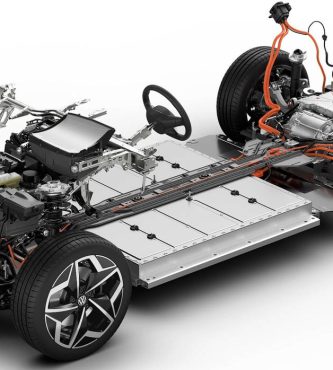
Picking up a badge far more familiar with SUV customers, the ID. Tiguan is a different vehicle under the skin to the combustion Tiguan, making use of the MEB electric platform while also scoring a substantially overhauled interior previewed by the ID.3 Neo and ID. Polo small cars.
The new model will launch in Europe in early 2027, and while the new electric SUV looks very likely for Australia, local timing is up in the air.
A Volkswagen Australia spokesperson told Chasing Cars: “While we are unable to comment on future product timing or availability at this stage, we remain committed to bringing the latest generation of electric vehicles and technologies to Australian customers and will share further details when appropriate.”
The ID. Tiguan’s presence in the most popular segment for EVs — midsize crossovers — make it a near-certainty the new model comes to Australia.
Huge facelift transforms ID. Tiguan out of ID.4 and ID.5 bones
While Volkswagen describes the ID. Tiguan as completely new, it is more akin to a comprehensive ‘deep facelift’, being a substantial reinvention of the existing ID.4 and ID.5 products rather than a clean-sheet exercise.
Changes to go beyond the skin-deep with the platform itself having been updated from MEB to MEB+, bringing compatibility with newer battery technologies and electric motor designs in future.
The ID. Tiguan measures 4618mm in length, 1855mm in width and 1619mm in height, making it 33mm longer, 3mm wider and 21mm lower than an ID.4 Pro. The wheelbase measures 2765mm, which is 1mm shorter than that of its predecessor.
Boot space decreases slightly from 543 litres to 534L but the ID. Tiguan gains a small 32L frunk for cable storage.
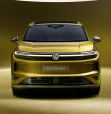
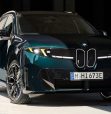
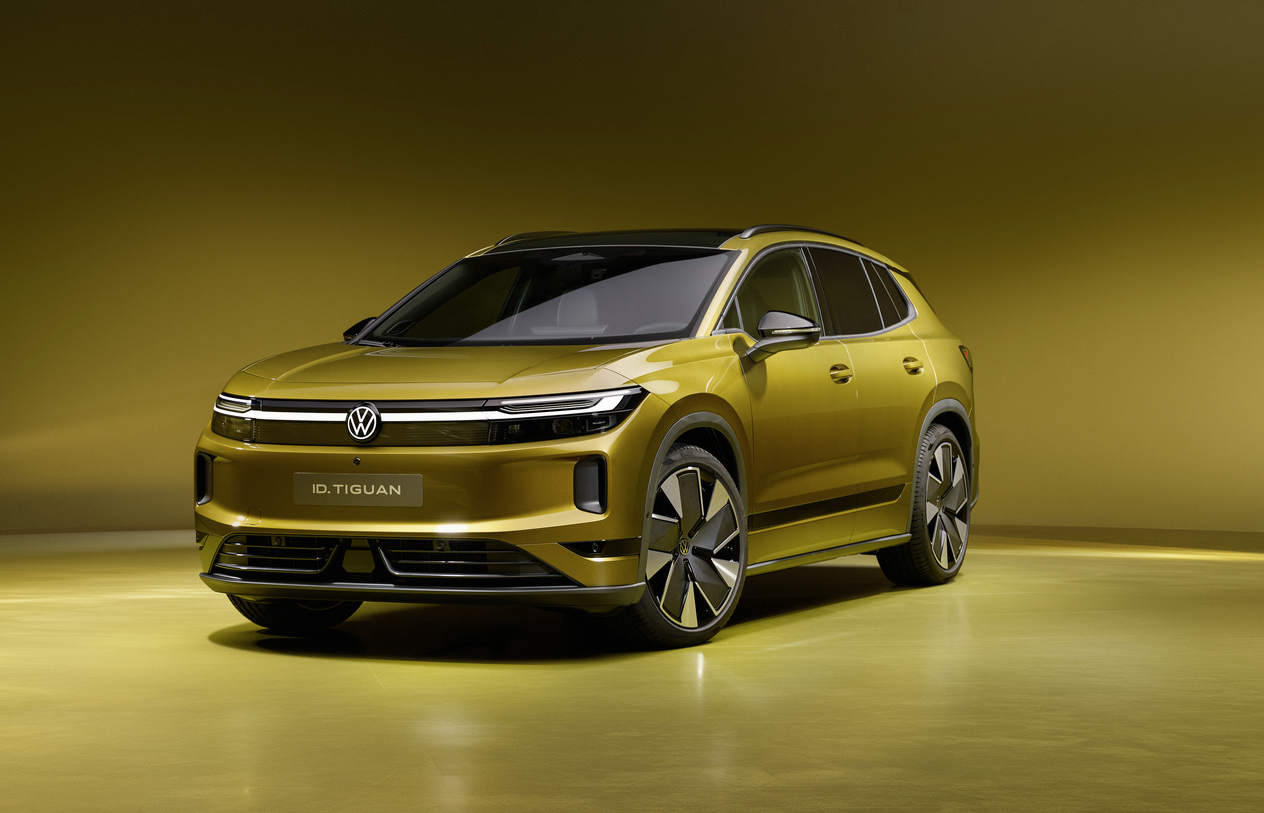
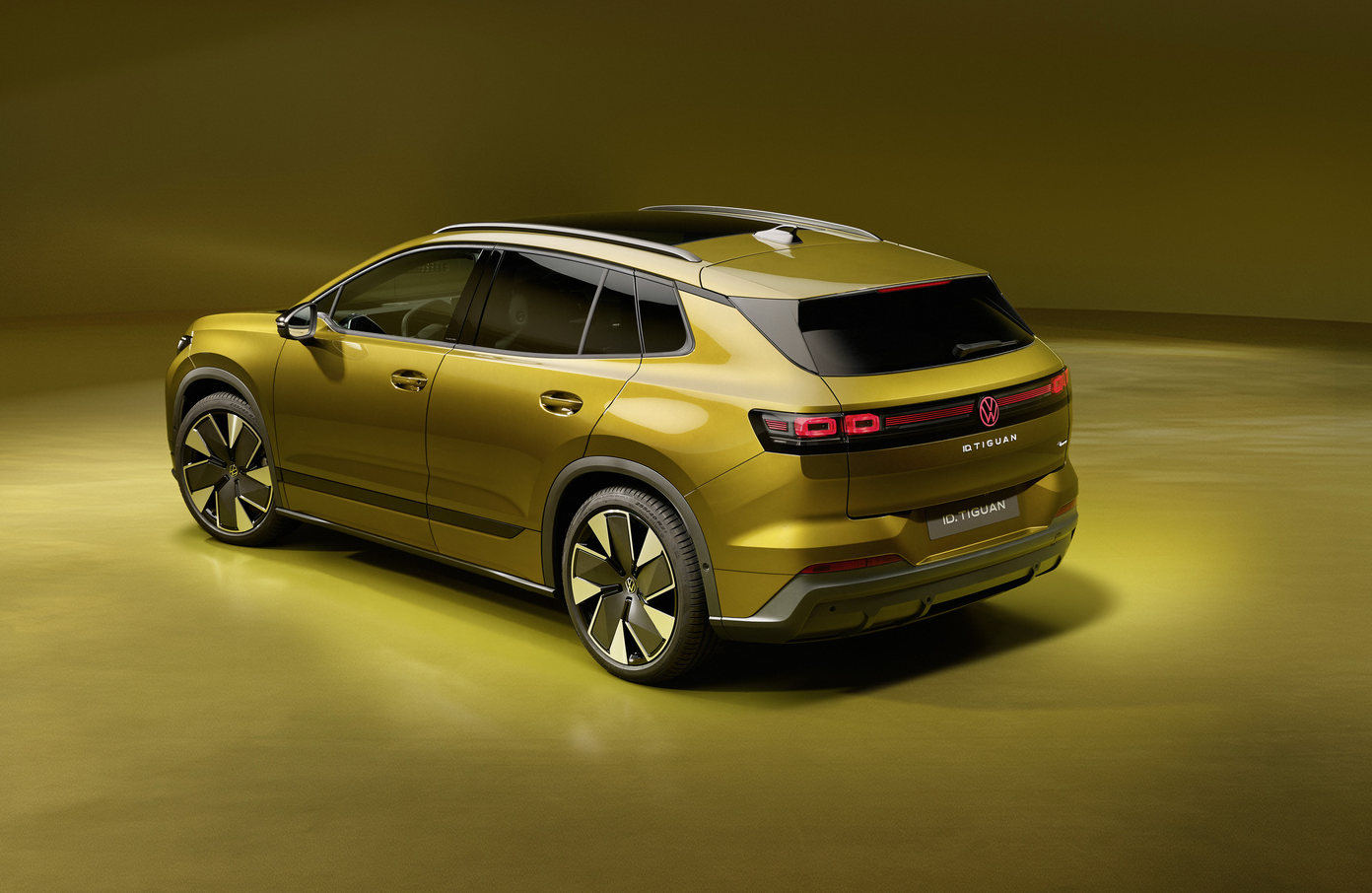
Immediately obvious is the substantial transformation to the styling, with an upright and squared-off body replacing the ID.4’s rounded crossover appearance, while the ‘coupé-SUV’ ID.5 has been deleted as an option entirely.
Conventional proportions with strong, wagon-bodied SUV lines and muscular horizontal detailing are found across the ID. Tiguan along with traditional pull-type door handles.
Interestingly, aerodynamic drag improves from 0.27Cd to 0.26Cd despite the changes.
Greater driving range but performance remains similar
In Europe, the ID. Tiguan will launch with three electric drivetrain options, beginning with a new 58kWh lithium iron phosphate (LFP) battery and 140kW rear motor delivering up to 450km of range (WLTP) with a 0-100km/h time of 8.5 seconds.
The likely volume-selling option will continue to be a 77kWh nickel manganese cobalt (NMC) battery paired to a 210kW/545Nm rear motor now rated for up to 600km (WLTP) range with 0-100km/h performance of 6.6 seconds.
Those battery and motor outputs mirror those of today’s Australian-spec ID.4 Pro, which delivers 544km of range and a 6.7 sec 0-100km/h time.
The increased range represents the principal improvement rather than a substantial leap in performance being on offer.
Maximum DC power decreases slightly, from 175kW to 165kW, with Volkswagen forecasting a 10 to 80 percent topup in 29 minutes, replenishing 420km in that time.
Meanwhile, a 4MOTION all-wheel drive variant will use the 77kWh battery with a combined 220kW of power at launch, with no replacement yet announced for the 250kW ID.4 GTX model.
The ID. Tiguan offers 1800kg of braked towing capacity even in entry-level 140kW guise, and up to 2000kg for the more powerful models, at least in Europe.
The extent of changes to ride, handling and refinement attributes remains to be seen.
Interior reset addresses numerous criticisms, heralds return of real buttons
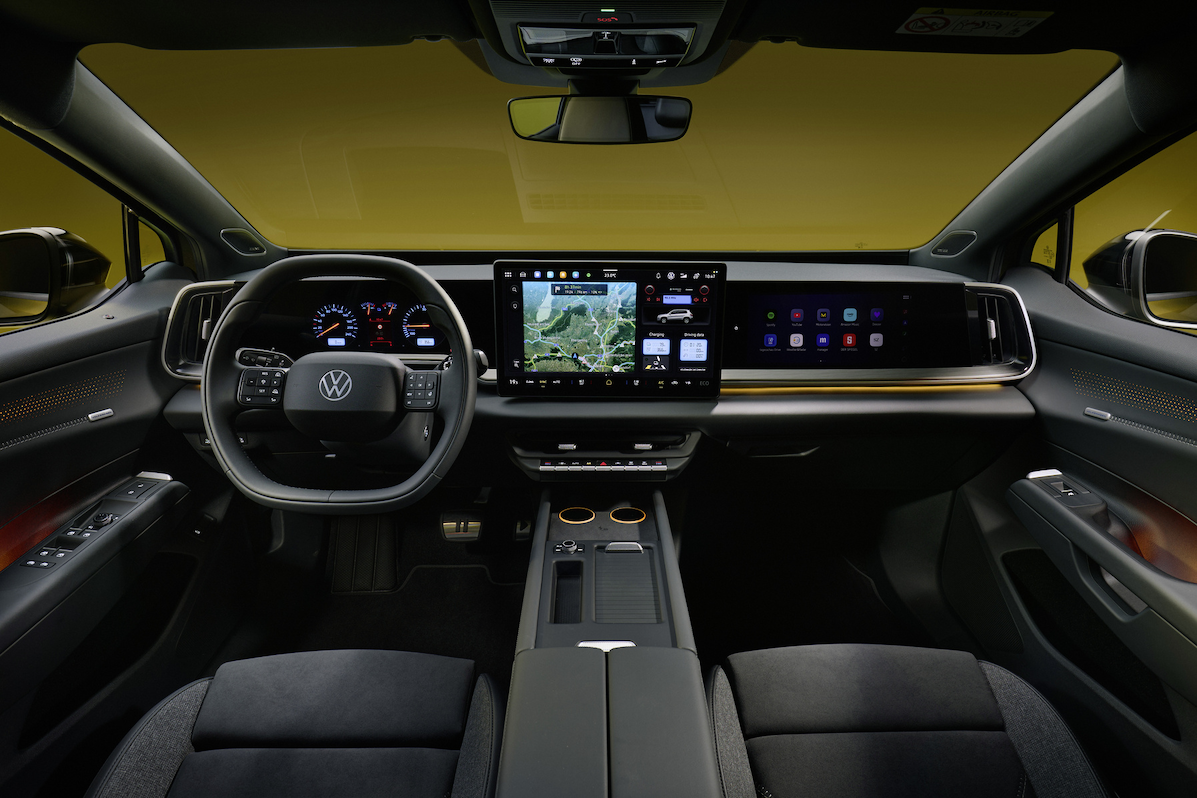
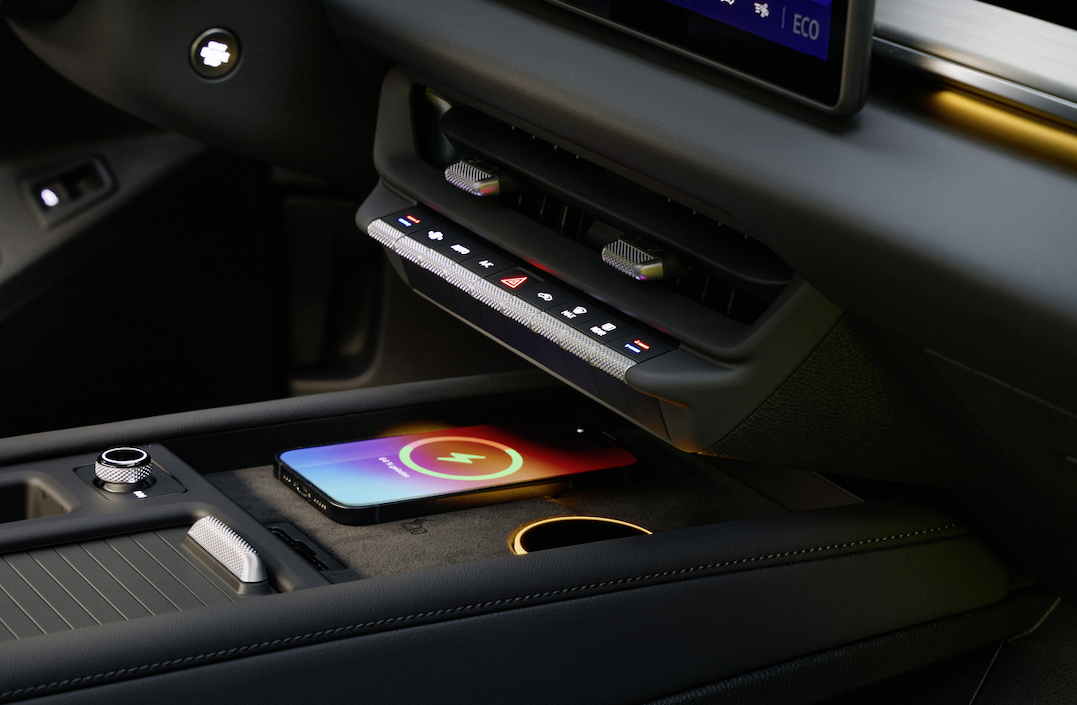
Arguably the biggest transformation to the ID. Tiguan has occurred inside, where Volkswagen has abandoned many of the ID.4’s most controversial touch-sensitive controls.
A new steering wheel design—shared with the ID. Cross, ID. Polo and ID. 3 Neo—re-introduces physical steering wheel buttons while there are now four window switches: all physical.
Plus, beneath a new 15-inch central touchscreen sits a row of physical climate shortcut keys while a rotary volume controller is also fitted.
A digital instrument cluster measures 10 inches in diameter while a 12-inch passenger display with privacy filter will be optional.
Those screens can display retro cluster themes based on previous Volkswagens, with options including the Golf I, II and IV, the first-generation Tiguan, Beetle, and Race Touareg.
Other additions to the ID. Tiguan specification include a dedicated one-pedal drive mode, vehicle-to-load capability, and ventilated and massaging seats (on top of standard heated pews).
ID. Tiguan will hope to build on modest success of ID.4 model
Despite the relatively dramatic reset embodied by the ID. Tiguan, the ID.4 and ID.5 family has not been an outright failure—particularly not in Europe.
Volkswagen says that more than 950,000 examples of the family have been produced since 2021 with 163,400 joining that tally during 2025.
Australia’s relatively recent introduction saw 1196 ID.4 and 386 ID.5 sales in 2025 with another 1819 combined recorded through to September 2026.
The ID. Tiguan therefore replaces an established product in key markets, though there will be hope that the more desirable new model—potentially with even sharper pricing—could be a more substantial success in the Australian market.
Competition in the midsize electric SUV segment has grown significantly in recent years, with the ID.4 duking it out with the Tesla Model Y, BYD Sealion 7, Kia EV5 and Zeekr 7X among others.
Local timing and pricing remains unknown, though the current ID.4 Pro starts at $59,990 plus on-road costs and will need to run out before the new model could be introduced.
Latest news
About Chasing cars
Chasing Cars reviews are 100% independent.
Because we are powered by Budget Direct Insurance, we don’t receive advertising or sales revenue from car manufacturers.
We’re truly independent – giving you Australia’s best car reviews.