



It’s safe to say that Chinese commercial vehicle maker JAC — pronounced ‘Jack’ locally — has not enjoyed a hugely successful start in Australia.
The T9 ute — a diesel dual-cab — landed in mid-2025 and has managed to snaffle up 0.4 percent market share in 2026, enough only to beat the niche and expensive Jeep Gladiator. There’s plenty of excitement for the follow-up plug-in hybrid JAC Hunter, though.
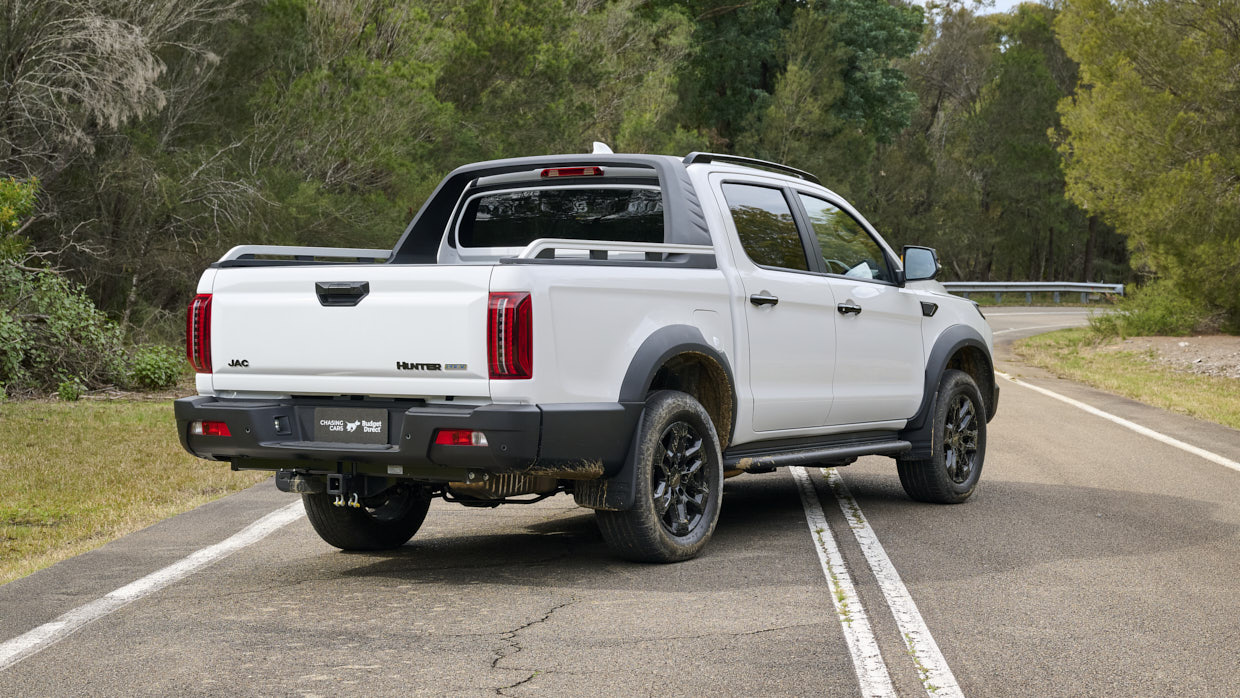
It’s off to a good start with a strong name, while the local importer’s marketing arm claims AU$10 million was spent on a suspension and chassis tune, led by Michael Barber, currently of Multimatic suspension and previously a GM Holden chassis guru.
The Hunter’s numbers are deeply impressive: 360kW and 1010Nm combined outputs, 3.5-tonne braked towing certification, four-wheel disc brakes, 100km of EV range and 1.6L/100km (NEDC).
You get all that for about $55K driveaway in the entry-level Hunter Pro, with leather-accented upholstery to boot, making the Hunter tantalising for even the most rusted-on BYD Shark 6, GWM Cannon Alpha and Ford Ranger PHEV fans.
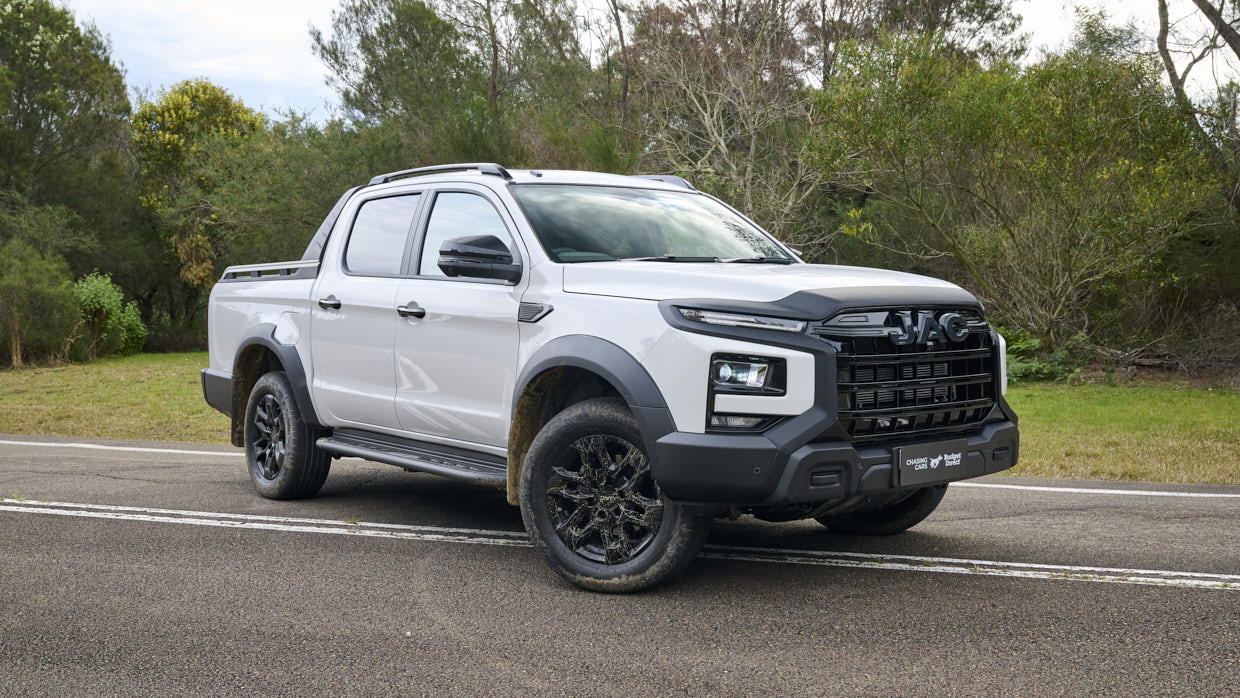
It may have taken the best part of 18 months to be ready for sale in Australia, but JAC says all that time has been spent honing the breed so it’s good to go out of the gates. Is that really the case?
We’ve spent a week testing the top-spec Hunter X on road, off-road, and against the stop-watch to find out.
What are the Hunter X’s features and options for the price?
There are two Hunter trims, the entry-level Pro ($49,988 before on-road costs) and the top-level X ($54,844 before on-road costs) that we have here on review.
The Pro is a $7226 step over the equivalent T9 Oasis 4×4, with which it shares a ladder frame and body panels. Available only in dual-cab pick-up guise for now, JAC confirmed to Chasing Cars a fleet-focused cab-chassis Hunter is in the works.
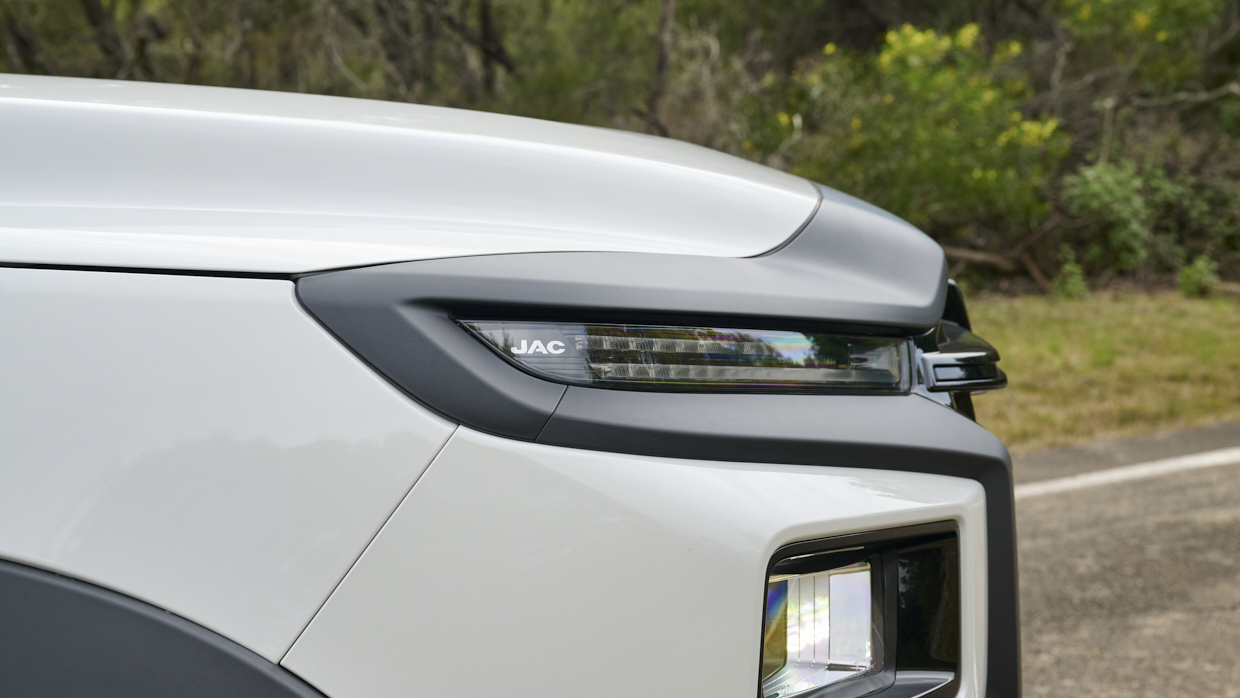
For your $49,888, the Hunter Pro gets an awful lot of equipment.
- Chrome badging and door handles
- LED head and tail lights
- 18-inch alloy wheels
- Sports bar
- Spray-in bed-liner
- Tailgate with lift assist
- Six-way power adjust driver’s seat
- Tilt & telescope steering wheel adjust
- Black leather-accented upholstery
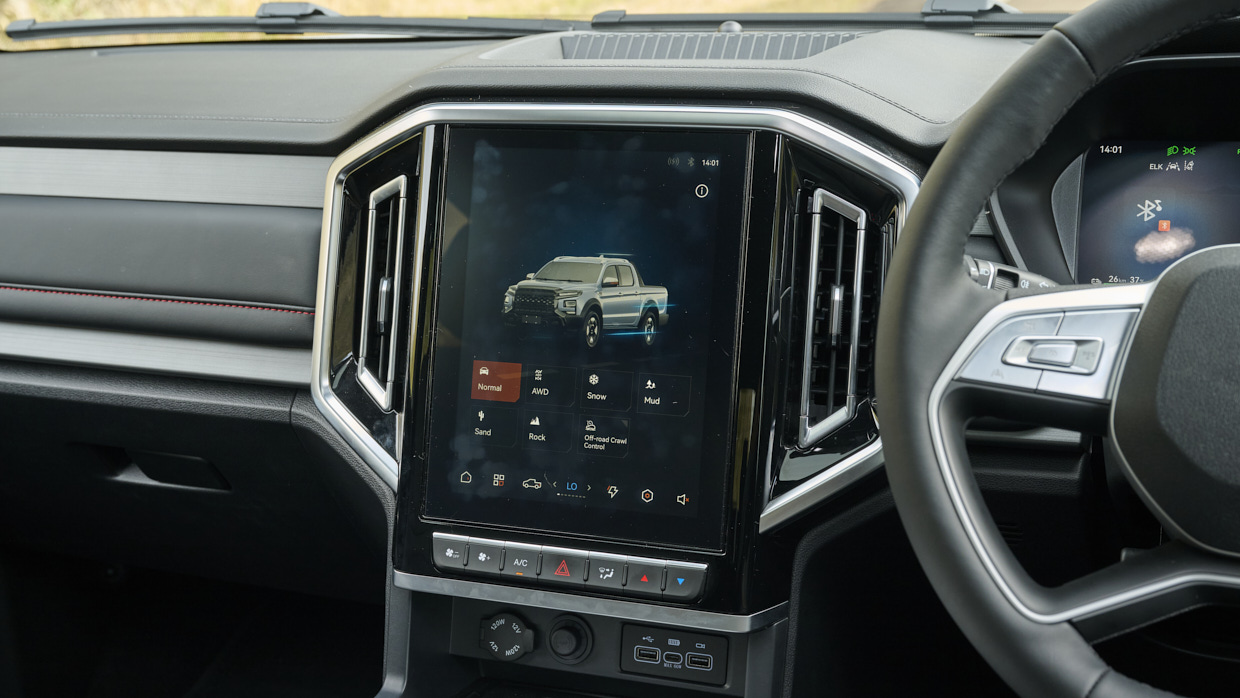
- 10.4-inch portrait touchscreen
- Wireless Apple CarPlay/Android Auto
- 8-speaker sound system
- 10.25-inch digital driver’s display
The Hunter Pro can be equipped with locking differentials front and rear for $1888, or move up to the Hunter X which features them standard, along with the following specification:
- Black badging, mirrors and door handles
- Power folding mirrors
- Privacy glass
- Heated seats
- 360-degree camera system
- Four-way power adjust passenger seat
- 220V/150W three-pin socket (back seat)
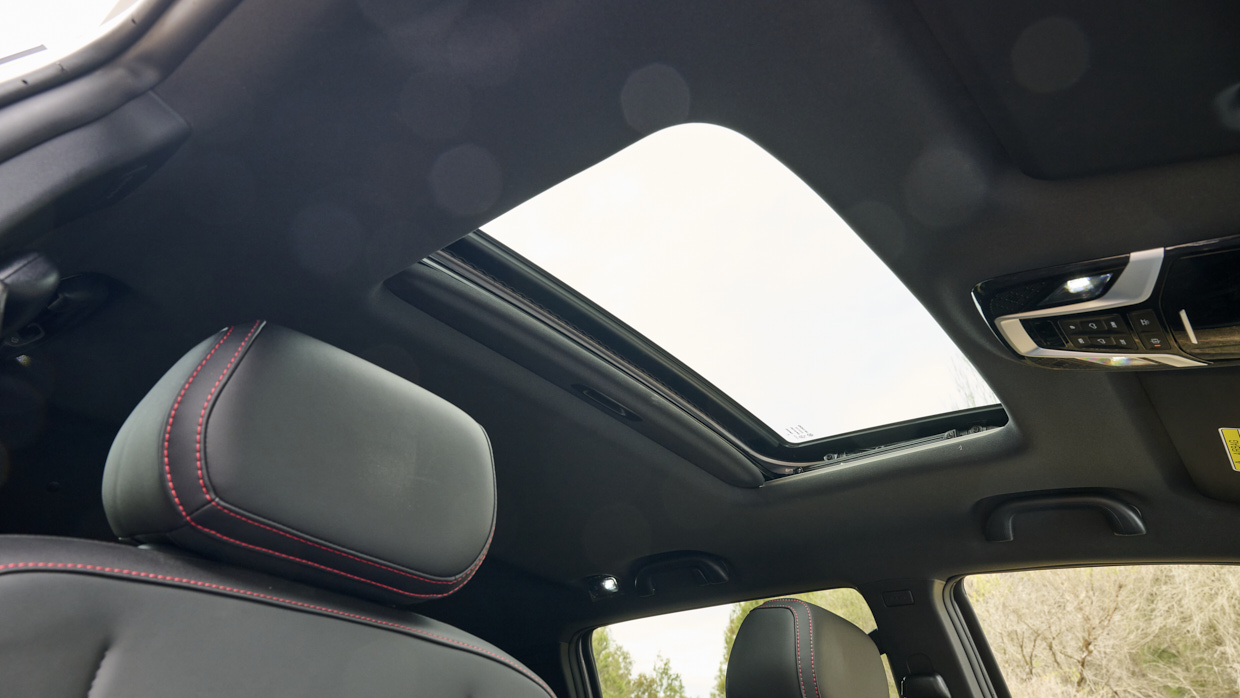
A sunroof ($1500) was fitted to our test car, which wore Stratus White paint, the only of the five catchily-named paint colours not to attract a $595 premium.
There’s a burgeoning accessory catalogue as well, with two different all-terrain tyres ($1736) offered, bull bars, canopies, light bars, rubber mats, and more.
It’s worth noting that the Hunter does not come equipped to tow, you’ll need to spend $1453 on the towbar and $941 integrated brake controller to haul loads.
How does the Hunter X drive?
The JAC Hunter does its best work when you first turn a wheel, which is what will impress out of the dealership on a test drive.
With a full battery charge and on fairly smooth roads, the Hunter PHEV is quiet, surprisingly flat and absorbent for a 2555kg leaf-sprung pick-up with a 915kg payload. Plus, it is rapid — the 360kW/1010Nm Hunter X managed a 0-100km/h sprint time of 6.7 seconds in testing.
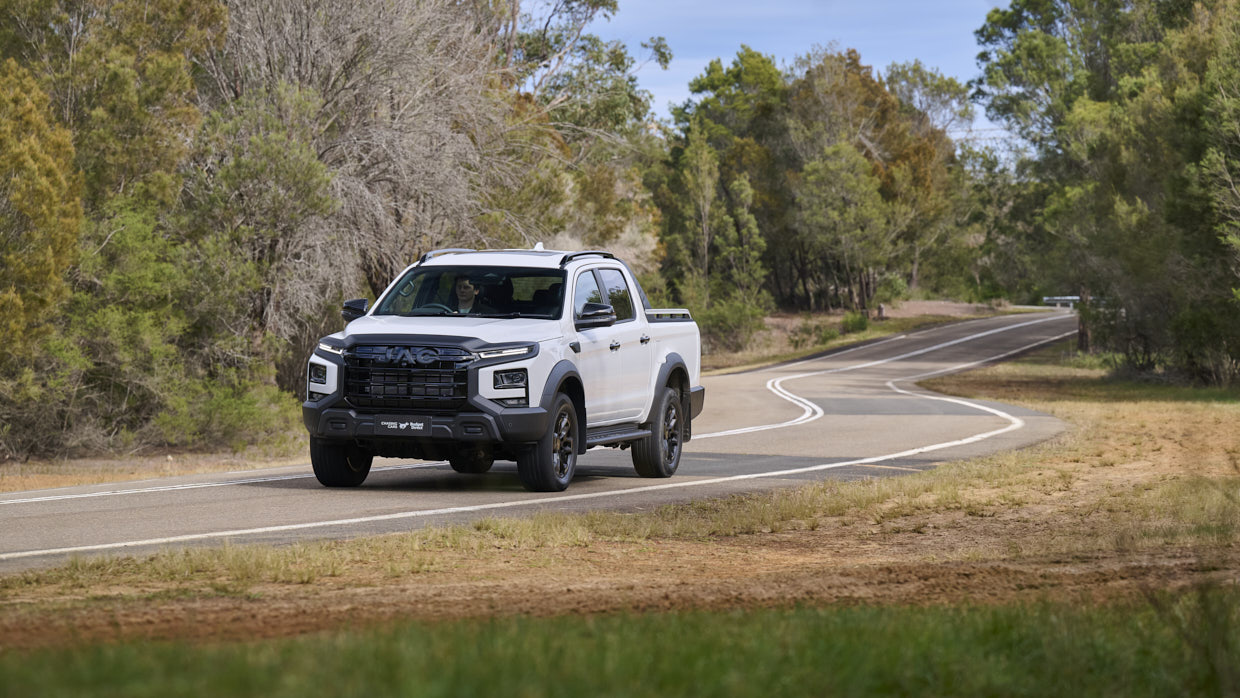
The ute performs well through twisting bends, both on sealed and unsealed surfaces. There’s a natural amount of body roll that aids grip and reminds you not to push too hard. When you do over-step the mark, it’s into safe (but resolute) understeer similar to a current-gen Toyota Hilux.
These are positive signs. Compared to price rivals, the Hunter’s chassis is more consistent and predictable than a GWM Cannon Alpha and more pliant than a KGM Musso. That’s enough to prove the 100,000km worth of testing and 14 different damper iterations were worth the hassle.
If only JAC had gone to the same effort with the rest of the Hunter package, because there are fundamental issues with this ute’s driving experience that undermine its promising ride and handling.
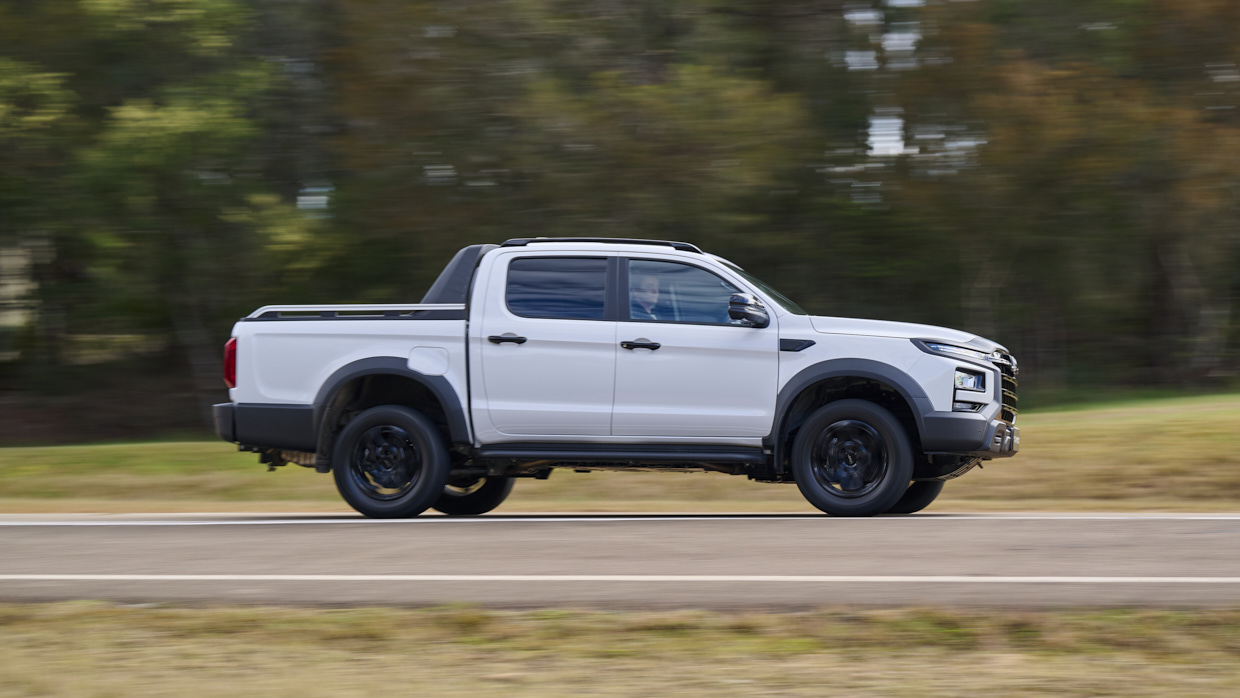
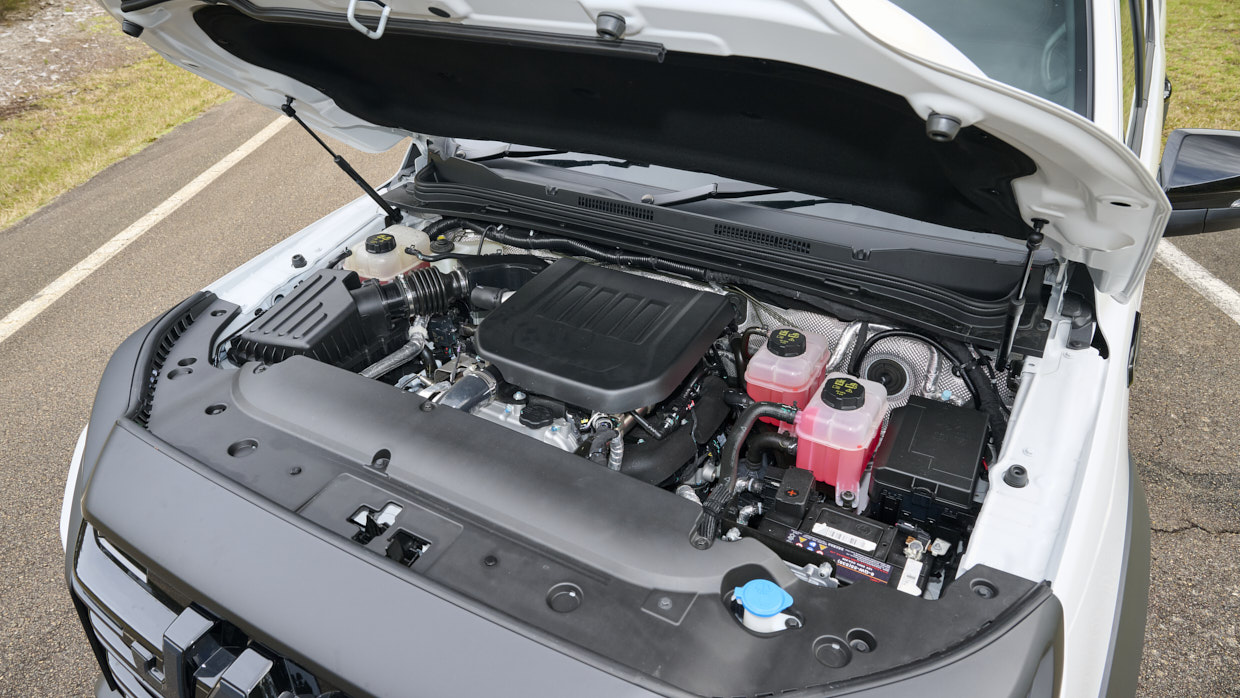
Under the skin, the Hunter is a philosophical mix between the BYD Shark 6 and GWM Cannon Alpha, using a similar drive layout to the former (petrol engine with two electric motors and no prop shaft) and suspension equivalent to the latter (double-wishbone coil-sprung front, and multi-link rigid axle with leaf springs at the rear).
It apparently develops more punch than either competitor, too.
On paper, the peak outputs are way up on a Shark 6, yet the JAC’s ‘rated max’ power and torque figures add up to 295kW and 670Nm; this sounds more realistic on the road and against the stop-watch where the Hunter, although quick, is still a full second slower to 100km/h than its BYD rival.
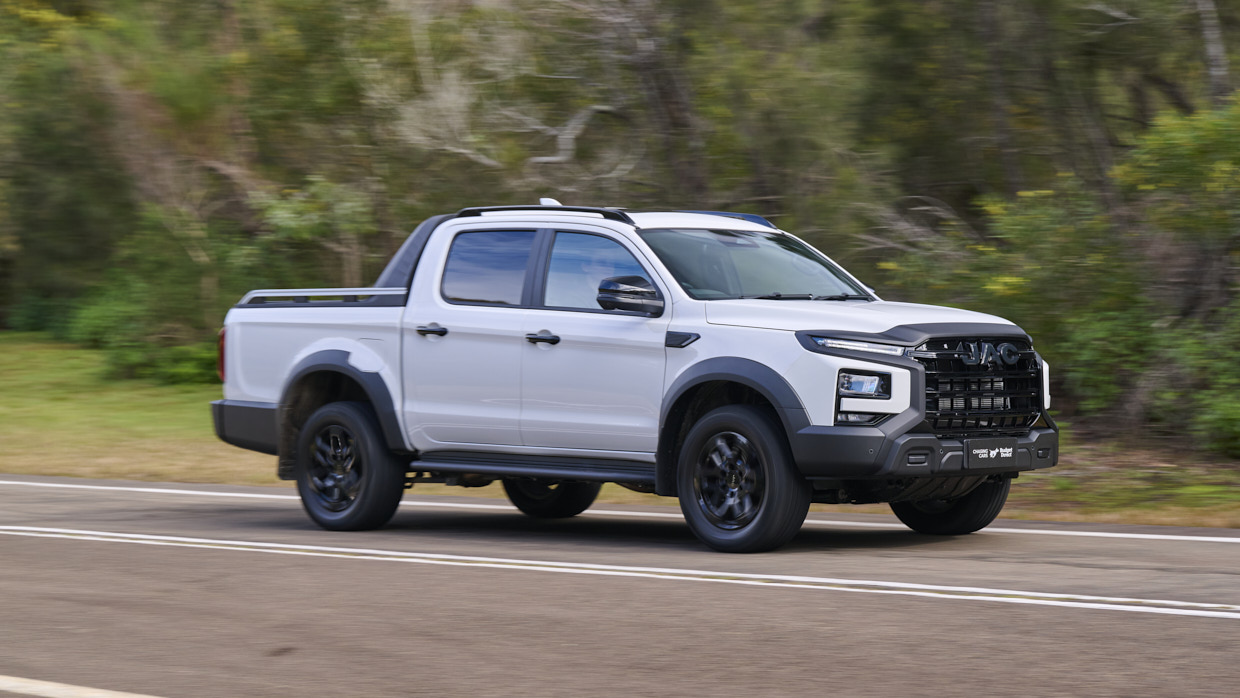
More worrying is how sluggish the Hunter X feels when the battery is at a low state-of-charge (SOC) — informal timing suggests 0-100km/h can take over 11 seconds, which is slower than a diesel Toyota Hilux.
And there’s more to this than pure numbers, as well. The Hunter has four ratios in its hybrid transmission and they each seem to deliver a different experience. It’s tardy up to 60km/h, then slams into another gear and shoots forward towards 100km/h.
You’ll notice similar, jerky phenomena around 40km/h when off-roading and again at 110km/h on the motorway making the Hunter tiring to drive at a steady speed in any conditions.
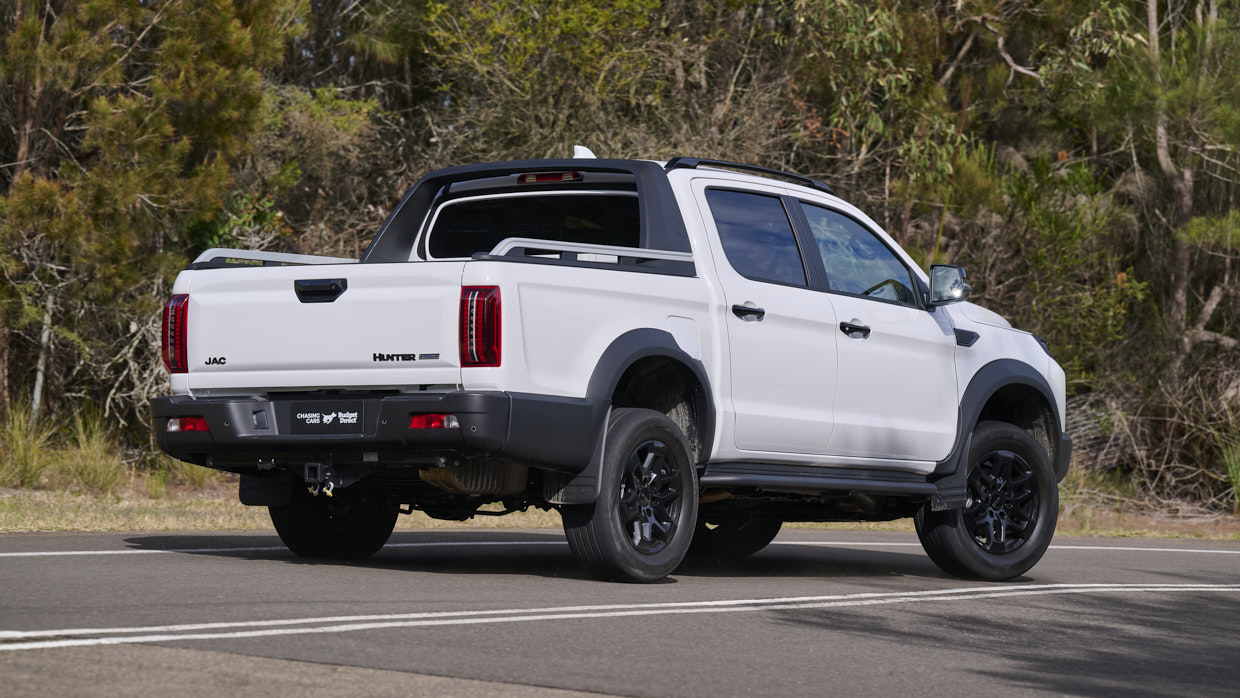
The 2.0-litre turbo engine, which we’re told is all new, lacks refinement. It’s buzzy, vocal and fires up at high rpm when stopped at traffic lights loudly enough for even disinterested passengers to ask ‘what’s wrong’ with the ute. This happens in Eco, Normal and Sport modes.
Ultimately it’s the unpredictability of the Hunter PHEV’s powertrain that’s the main source of concern. If you buy the T9 diesel, you know it’ll make 125kW and 410Nm and respond roughly the same every time, but the PHEV is a guessing game based on charge, speed, drive mode and conditions.
Braking performance needs work, too. With the e-motors the Hunter has some regenerative slowing effect but it’s less powerful than engine braking on a typical diesel ute, even in the most aggressive setting.
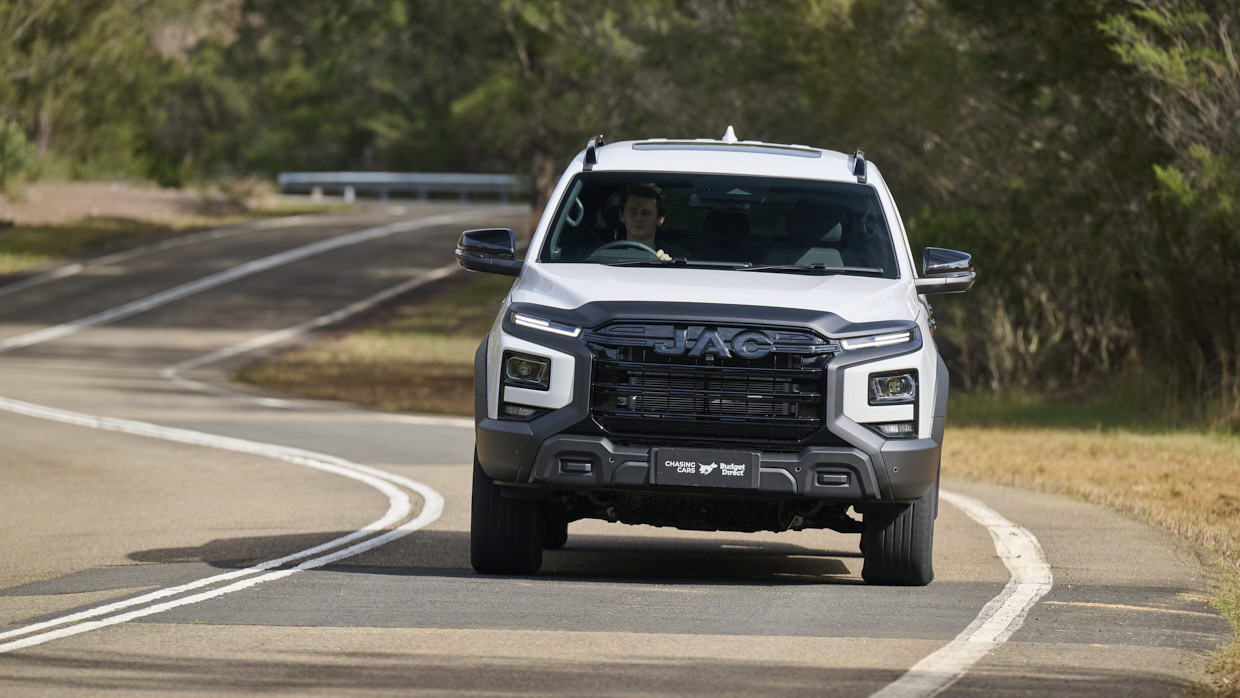
This is a problem as, after two hard stops where the Hunter pulled up from 100-0km/h in a respectable best of 42.3 metres, its disc brakes were already emitting acrid smelling smoke. This doesn’t bode well for towing 3500kg down steep grades.
And while the Hunter’s ride and road holding are fine when trundling along, it’s evident unit cost was a priority with damper development. Unlike Premcar’s successful Warrior programs, for example, the Hunter does not get higher-end suspension components or major geometry changes.
Throw in some tricky bumps or corner sequences and it therefore gets flustered. The Hunter also bottoms out quickly at the front and exhibits plenty of pitch under braking.
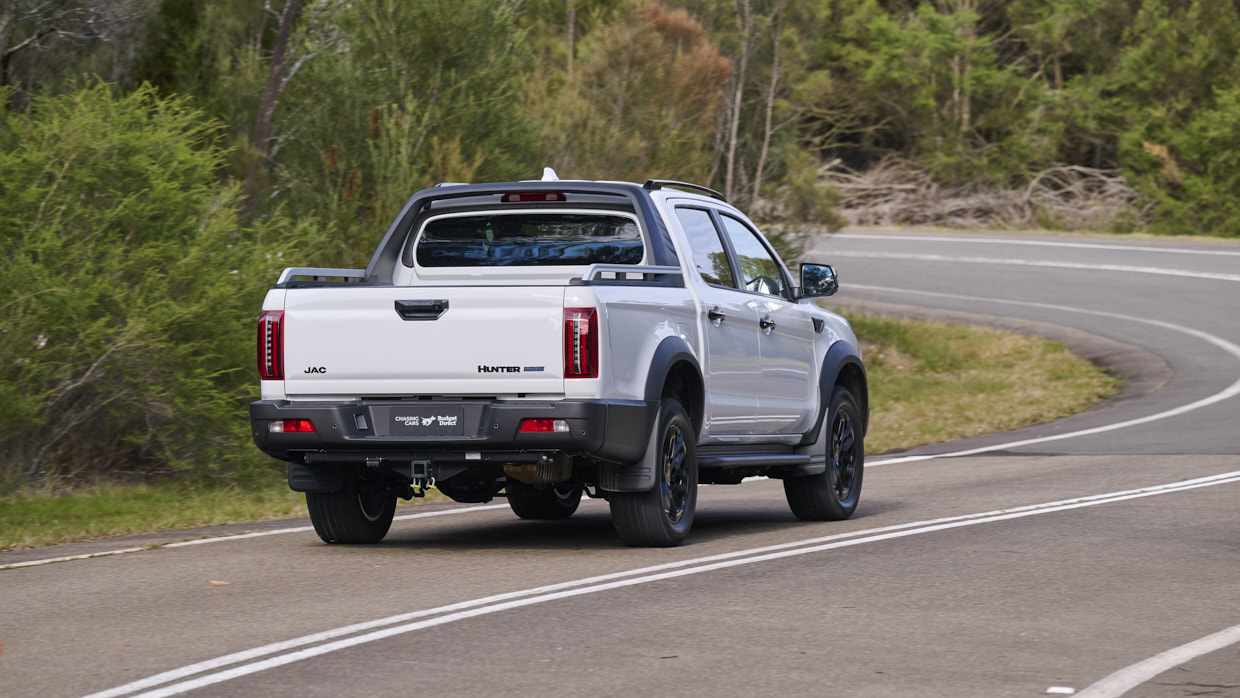
And you can feel the cabin is lacking stiffness compared to the Shark 6 — the suspension is noisy and the rubber seals creak.
The steering and brakes could use work as well — both are Sega Rally numb with little in the way of feel or feedback. At least the Hunter generally responds in a predictable manner to steering inputs.
How is the JAC Hunter off-road?
Compared to early examples of the BYD Shark 6, the Hunter plug-in hybrid is more capable when fitted with front and rear differential locks (even on road-biased Giti X-Ross rubber), though extracting the best from it is tricky.
Plush suspension helps minimise head toss and promote grip with greater articulation than a GWM Tank 300.
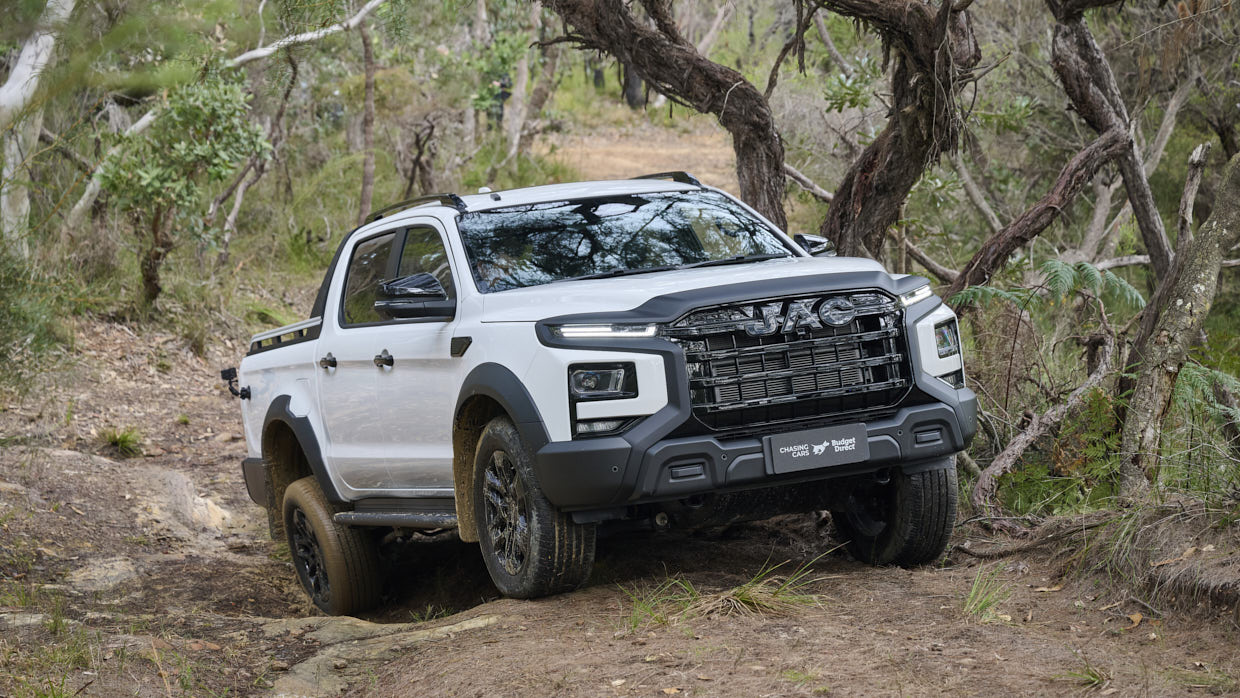
Providing the rear differential is locked — as the traction control isn’t much good — you’ll be able to hang with Ford Rangers and Mitsubishi Tritons on the trails. But in doing so you’ll cut up the tracks as you bump your way through climbs and descents.
Like on the road, the spongey accelerator response is mysterious. One moment you’ll be barely moving then suddenly the e-motors spin up and shoot the Hunter forward (and large rocks backward at some speed).
This is amplified when using JAC’s off-road crawl control (OCC), which lurches through obstacles.
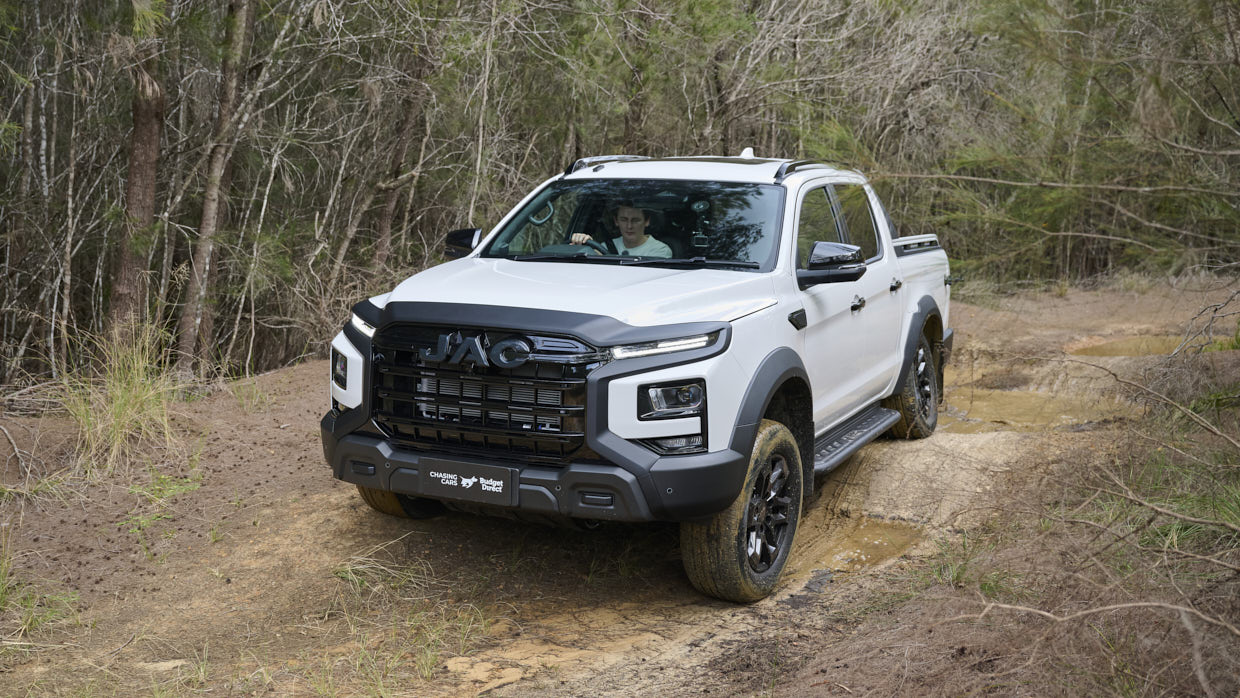
The ABS calibration needs some work as well, with regular lock-ups during descents even with hill-descent control engaged. It needs to be as well with the lack of a low-range transfer case to restrict momentum heading down hill.
If JAC wants to lean into the Hunter’s decent basic off-road credentials, it’ll need to spend time tweaking the traction control and electronic systems to maximise its ability.
What is the Hunter X’s interior and tech like?
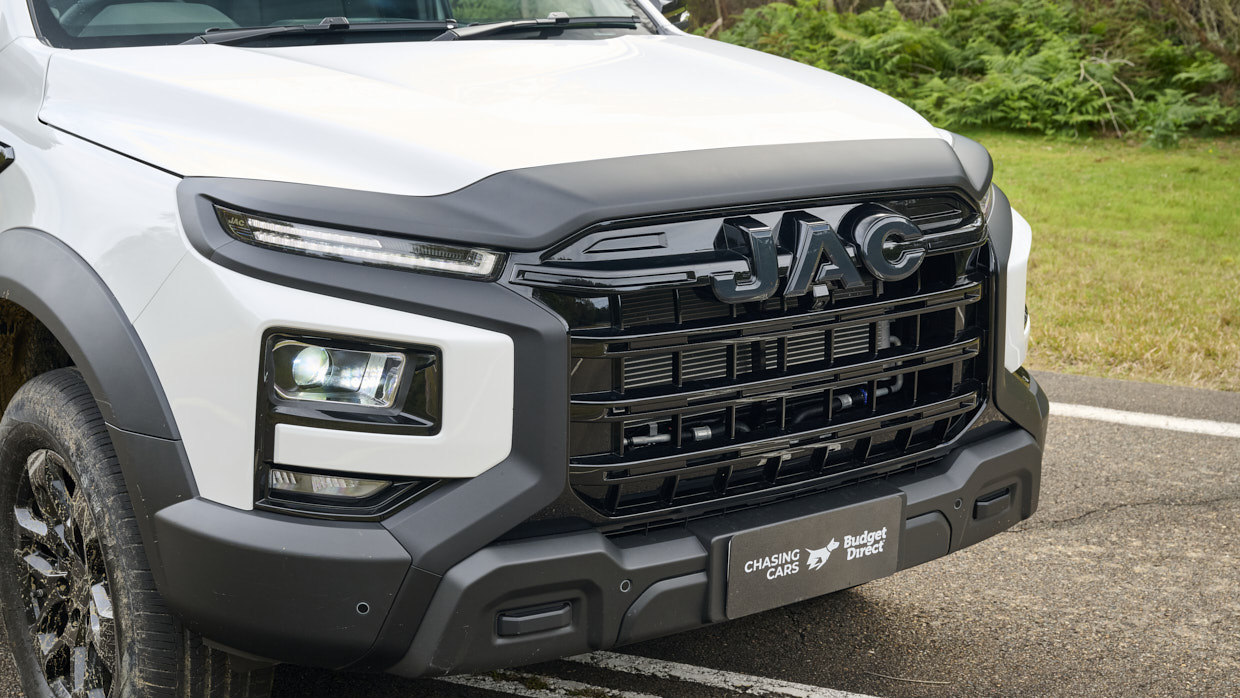
Inside the Hunter you’re greeted with a veneer of expense, Temu Ranger-like cabin layout and some genuinely thoughtful touches.
The seats are accented in quilted ‘leather’ upholstery and are notably less sweaty than the black vinyl often seen in utes at this price. There’s no seat ventilation but heating is standard, as is six-way power adjustment for the driver.
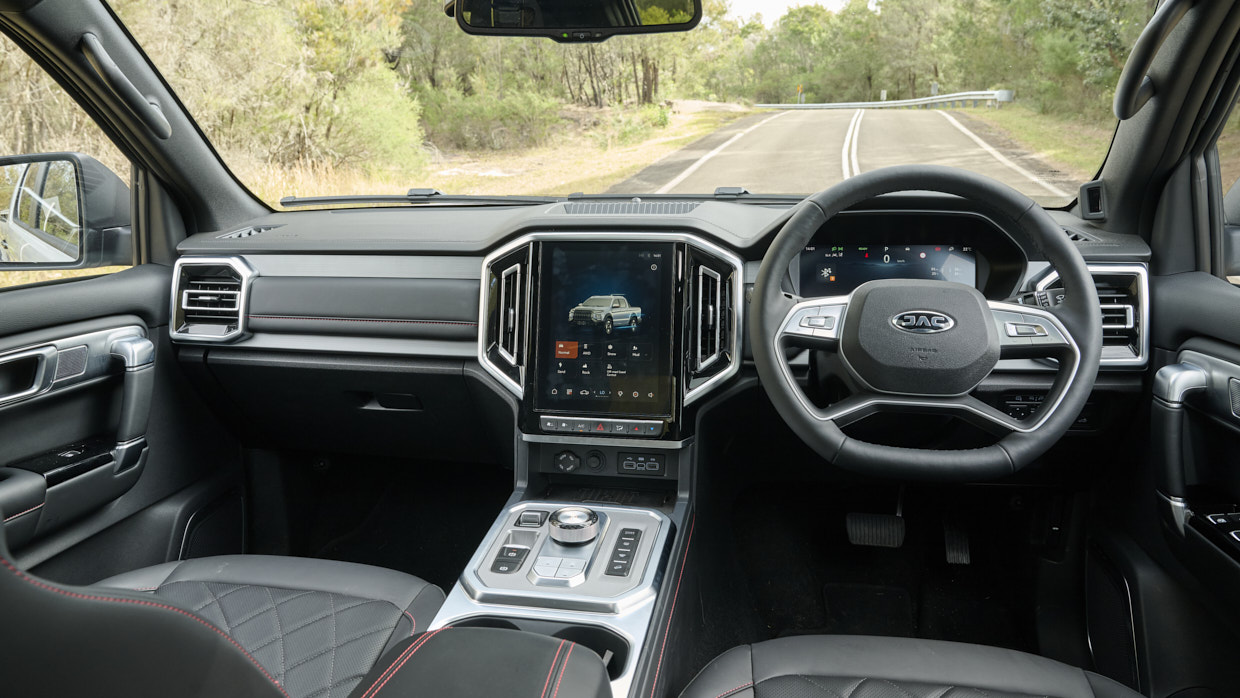
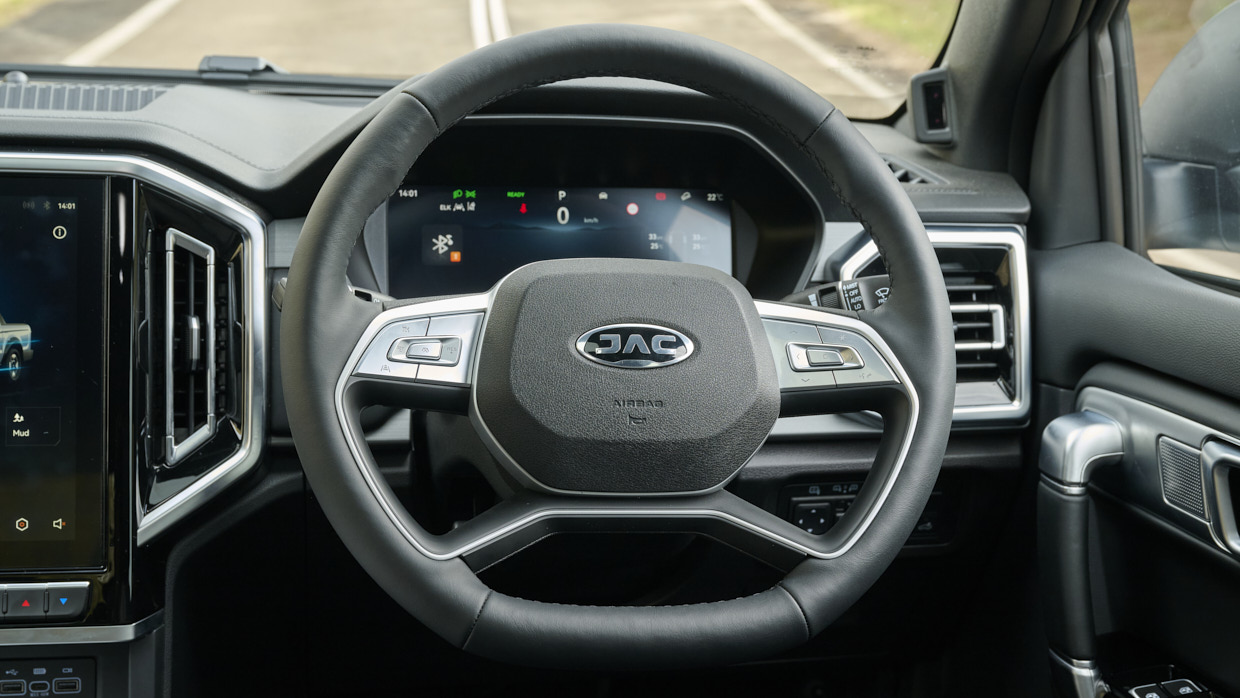
Soft touch rubber and leatherette is found around the cabin to absorb sound and bright sunlight; snazzy red contrast stitching and a leather-wrapped steering wheel feel beyond the price point in a good way.
An optional sunroof, fitted to our test car, is a nice touch as is the availability of a two-tone black/brown interior colourway.
We always appreciate clear controls — the rotary gear selector may not be on-trend anymore but at least it’s easy to locate and the drive mode controls, which are laid out logically around the shifter.
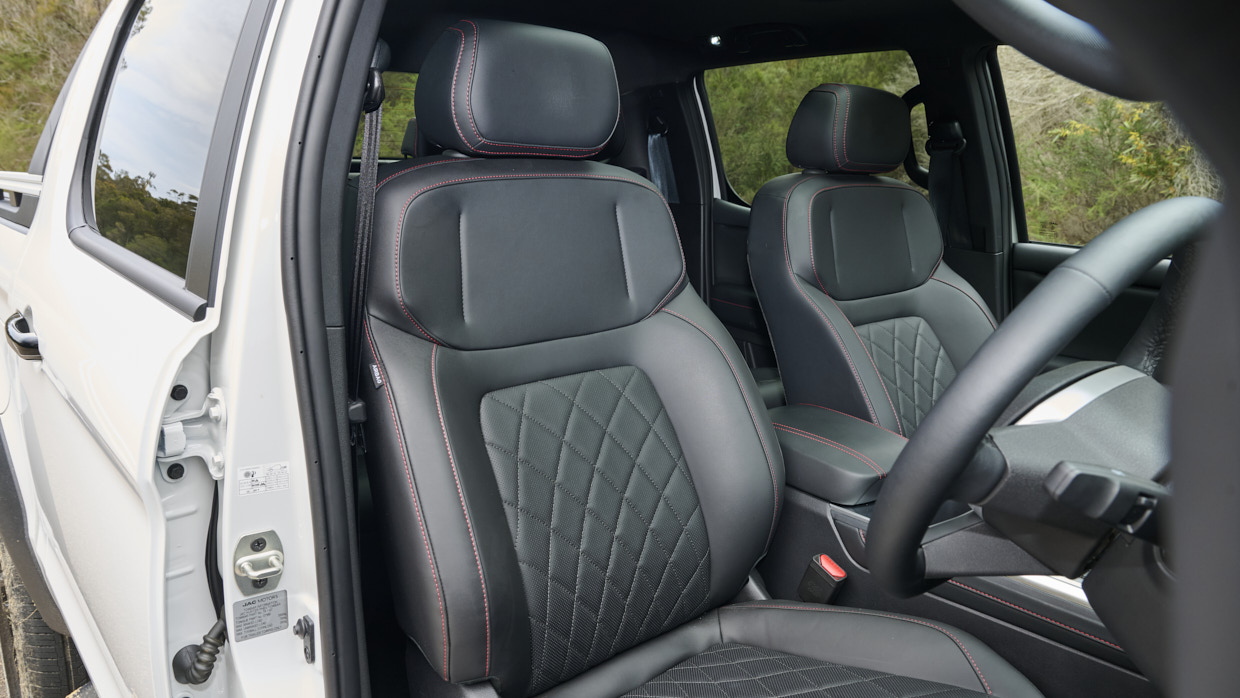
JAC listened to T9 feedback and implemented telescopic adjustment for the steering wheel however the Hunter’s driving position is still flawed. Combined with flat, unsupportive seats I was very uncomfortable after just an hour at the wheel.
The technology is also supposedly improved but is still laggy and unresponsive. The touchscreen is slow to respond and is not laid-out in a logical manner.
That said, JAC has built in customisable shortcut targets for key controls. The digital driver’s display is bright and legible with larger fonts than in a BYD Shark 6 or GWM Cannon Alpha.
During our week with the Hunter, the wireless smartphone mirroring (Apple CarPlay/Android Auto) was patchy, and we noted poor bluetooth sound quality with those on the other end of the phone line as well.
Inexcusable, though, was the JAC’s air conditioning performance. Not only was the fan noisy, a number of times on start-up it defaulted to 28 degrees and fan speed one. It also required full front and rear demisting even in lightly moist conditions.
There were various inconsistent temperature responses, too, at one point it was blowing hot inside when set to 21 degrees (ambient of 12) yet an hour later it blew icy cold with 14 degree ambient temp — this is all in ‘Auto’ mode.
At least there is a row of physical switches for fan speed, A/C on and temperature for when you (regularly) need to switch settings.
Practicalities are strong, with a wireless charging pad, a total of five USB charge points, a 12-volt socket, three-pin household plug, deep cup holders and generous door bins.
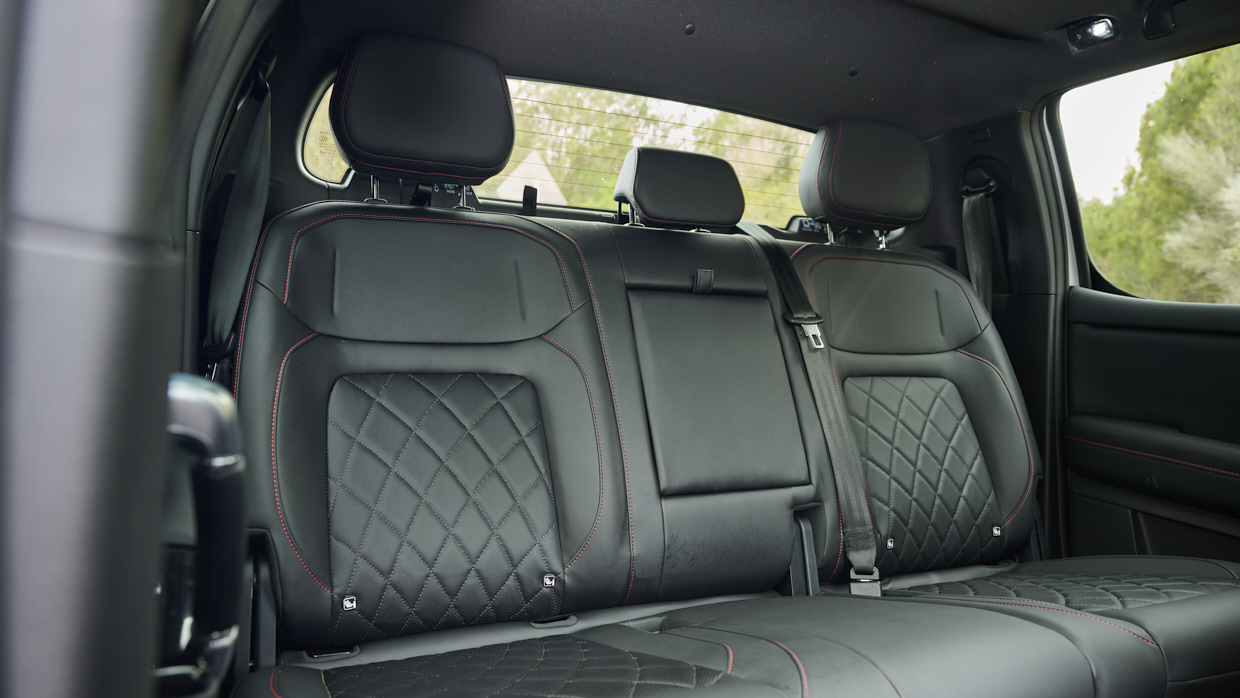
Despite its relatively small body the Hunter’s back seat is more comfortable than a Hilux or Ranger for adults. There are air vents, dark tints, a fold-out armrest and materials (soft door tops, aluminium-like door handles) match the front seats.
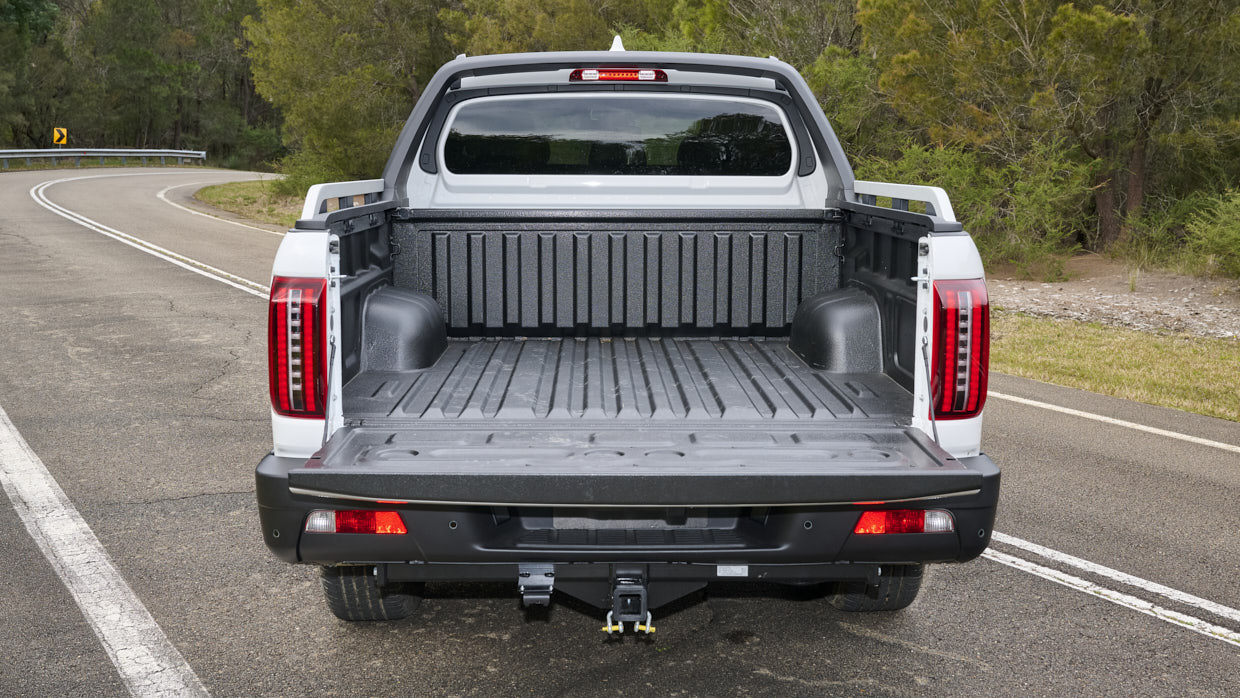
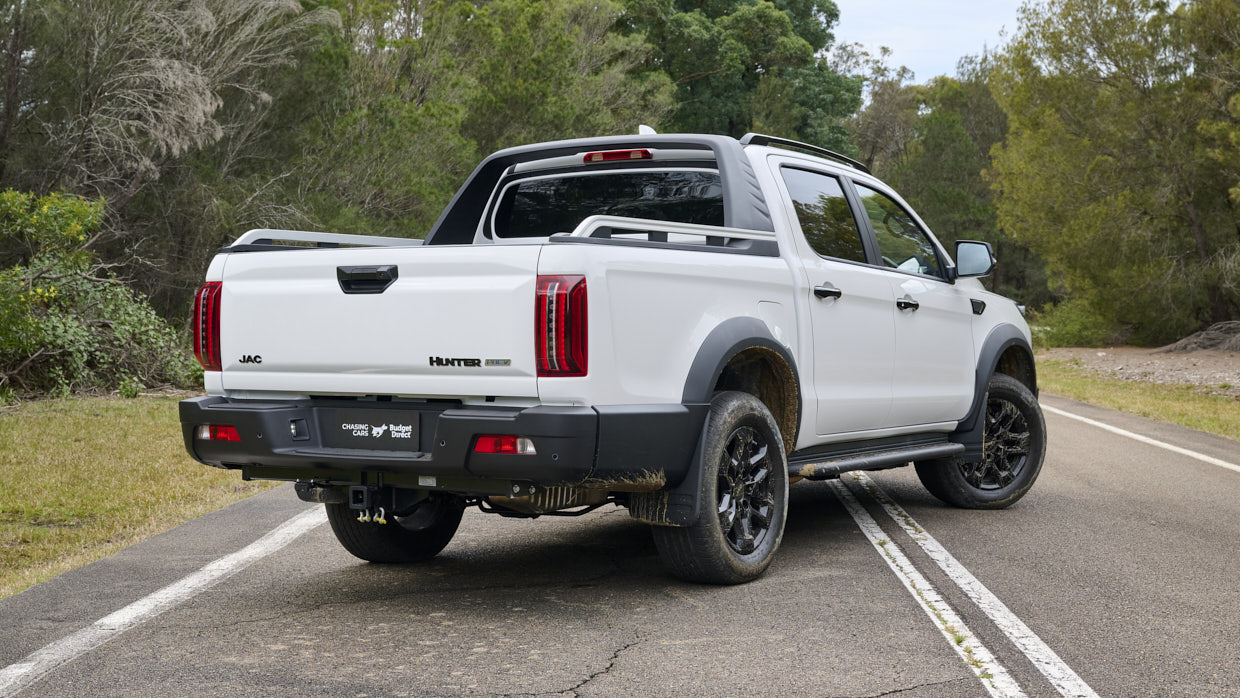
The JAC Hunter’s payload is 916kg, which is adequate for a high-spec ute and commendable for a plug-in hybrid. The tray has a spray-in liner, four tie-down points and measures 156cm long, 47cm deep, 158cm wide and 117cm between the arches.
The new sailplane design looks smarter than the T9’s sports bar and JAC claims the Hunter’s tailgate is sprung — light enough for just one finger. Unfortunately, the spring came free from its home on our test unit on the second close.
Is the Hunter X a safe car?
The JAC Hunter is covered by the five-star ANCAP rating awarded to the T9 diesel in 2024, which will expire in December 2031.
What you want to know, though, is how well the Hunter’s driver smarts are calibrated.
Like the rest of the ute, it’s a mixed bag. Most are not too intrusive, including lane-departure warning and blind-spot monitoring. Speed sign assist can be permanently silenced, too.
The adaptive cruise control programming needs some work and the Hunter lacks lane-trace assist.
As for driver-attention monitoring, you can turn it off quite easily which disables any beeping, but for whatever reason it continues to function silently in the digital driver’s display. This wouldn’t be an issue if it wasn’t over-sensitive and regularly confused by Australia’s bright sun.
The other annoyance is forward collision warning (FCW) which defaulted to its most sensitive level every key cycle and intervened much sooner than necessary.
What are the Hunter X’s ownership costs?
The headline figures for the Hunter X are 1.6L/100km fuel economy and 100km of electric-only driving range for over 1000km combined.
Naturally, in the real world, we were unable to match these figures. Our urban motorway efficiency loop, conducted at an average of 75km/h, showed 82km of electric range is possible in favourable conditions.
The Hunter never lets its 32.1kWh lithium-iron phosphate (LFP) battery go ‘flat’ and the combustion engine kicks in at around 15 percent charge.
A similar loop with a depleted battery saw 9.5L/100km running in hybrid mode and a best-case of 8.5L/100km — equivalent or slightly worse than many diesel utes.
The Hunter can be charged at up to 11kW (AC) and it’ll only take about 3.5 hours to fully replenish the battery at a powerful enough wallbox. DC fast-charging is possible as well at around 60kW, for 100 percent in 30 minutes.
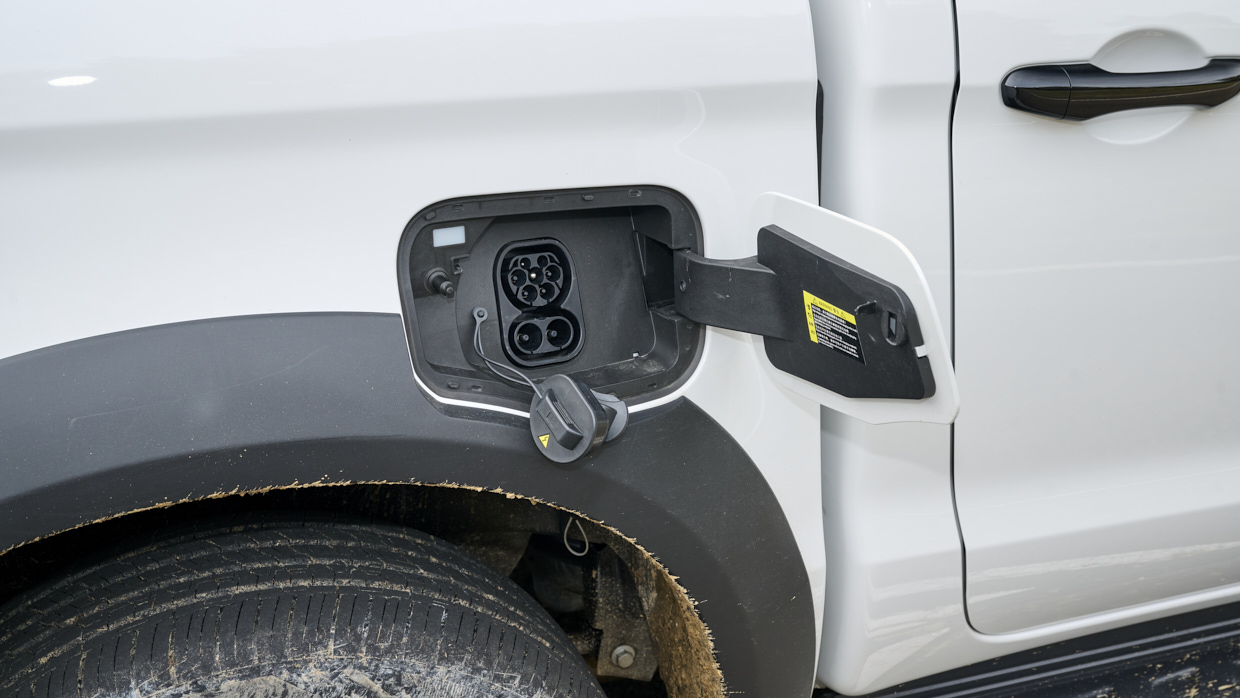
JAC covers all of its products with a seven-year, unlimited-kilometre warranty for private and commercial buyers. The battery and high-voltage electrics are guaranteed for eight years or unlimited kilometres.
The Chinese commercial vehicle specialist is also keen to point out that it has been around making trucks since the 1960s to give peace of mind. Looking at predicted residual values — a little bit like crystal balling — JAC products seem to be in a better place than LDV, and similar to GWM for medium-term retained value.
There’s also less online discourse about physical issues with JAC products than some brands, however technology gremlins are a common point of discussion.
Looking around the JAC, we noticed some cabling running through the wheel arches, wires not wrapped in secondary insulation in the engine bay, and a few other build quality concerns.
The honest verdict on the Hunter X
The best aspect of the JAC Hunter X is its improved ride and handling promise over the diesel T9. We hope these characteristics can be ported into the cheaper oil-burning ute without too much issue because, as it stands, that’s what we’d recommend over the Hunter.
Fair enough, with charge in the battery the JAC Hunter’s drive is decent enough initially, as is the base Hunter Pro’s price and interior presentation.
The more you drive this ute, the more you challenge it and live with it, the more tiring it becomes — and that is not an endearing trait.
The key hang-up is that there can be such a difference in acceleration speed and response depending on the situation. It’s concerning, and suggests the Hunter is more about headline figures than being a dependable, honest vehicle.
If you’re sold, the regular Hunter Pro is probably the pick given how well equipped it is for the price. If you’re looking at the Hunter X, though, you’ll get better products from other brands for the same money.


