Powered by

-
Car Reviews
Latest reviews
-
Car News
Latest news
-
Car Comparisons
Latest comparisons
- Chasing Deals
Latest reviews
Latest news
Latest comparisons
The Mazda MX-5 has always had its flaws, but the late, great ‘ND3’ revision to the open-top Japanese sports car makes the fourth gen more charming than ever
The future of the Mazda MX-5 is not clear. New regulations relating to both emissions and safety are making it commercially tough for carmakers to justify building sports cars — at least ones that aren’t hybrid or electric.
What that means is that if the MX-5 is your kind of car, this year is a good time to buy one. Mazda is planning a follow-up fifth-gen version of its famous convertible and it’s hard to say if the purity of the current model can be replicated in the future.
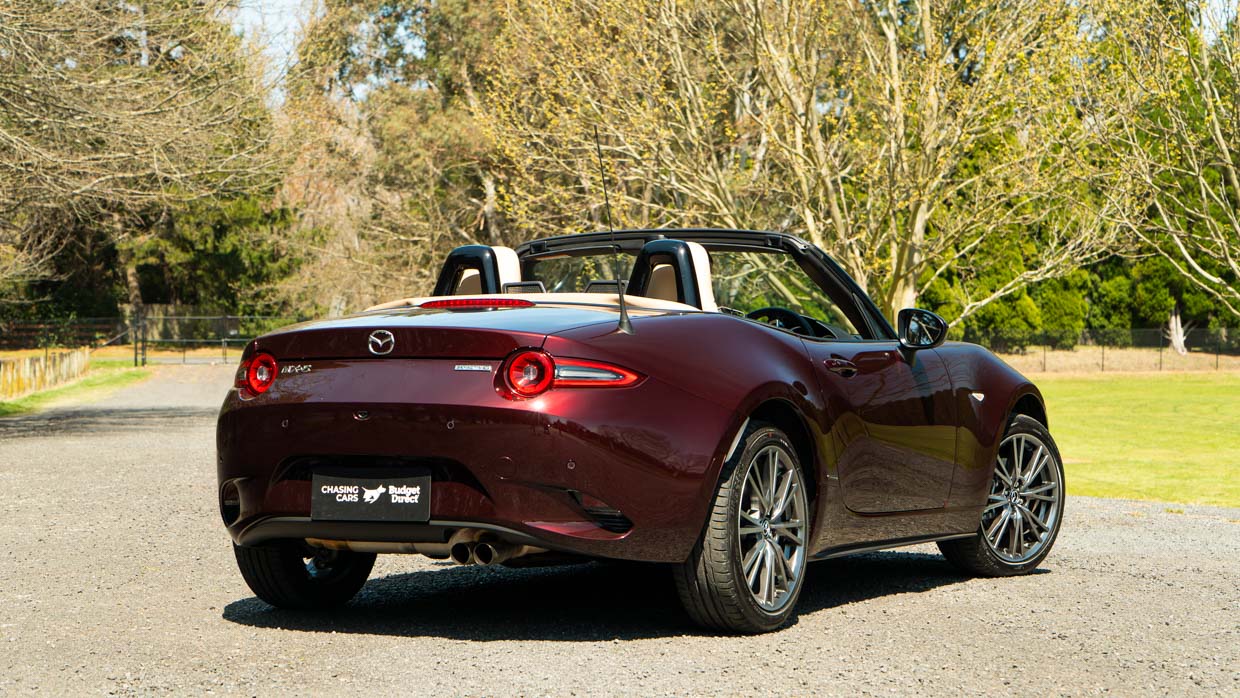
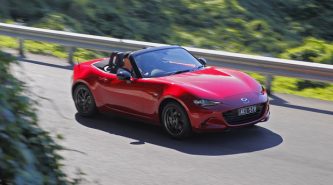
Two things are true of today’s ‘ND3’ version. The first is that an open-top MX-5 is one of the most fun cars to drive that you can still buy new. It’s best as a soft-top manual but any MX-5 is a good car — and one that has been improved by some key mechanical changes under the skin.
And the second is that, despite the ND3 update adding some extra tech in the cabin —like a wider central screen — the two-door Mazda is one of the only new cars that does not feel overwhelmed by modern technology. It’s still a relatively analogue experience.
As ever, some scoff and deride the MX-5 (often from the heights of dual-cab utes) but you shouldn’t care. The MX-5 is one of those cars that, in our view, separates real car people from pretenders, and those that know their stuff understand why you’d buy one.
The Mazda MX-5 is a less-is-more experience. It has a clear, unashamed purpose centred around precise, delicate handling. It’s a car with remarkably few true rivals. It is also true to say that the MX-5 is small, poky and impractical, seemingly vulnerable on the road alongside pick-ups and 4WDs, and even if its sophistication is clear, it is an indulgent purchase.
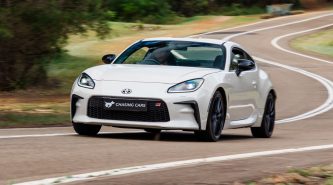
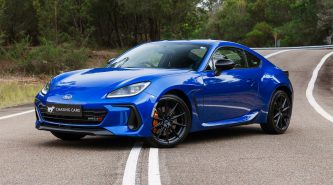
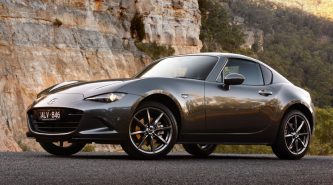
Rival-wise, you might say that the Toyota GR86 and Subaru BRZ twins are kind of similar in execution, and they do offer better handling thanks to their rigid fixed-roof nature. And frankly, the Mazda’s lack of a roof — especially as a soft-top, less so as a retractable fastback — that gives MX-5 drivers the ultimate connection to a great driving road.
Depending on your perspective, the MX-5 is either great value — as an affordable way into a car that is both polished and fun to drive — or an overpriced indulgence for a vehicle that is ultimately flawed.
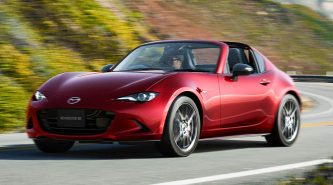
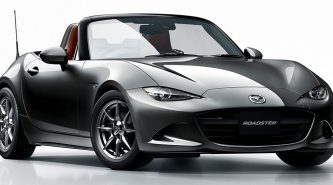
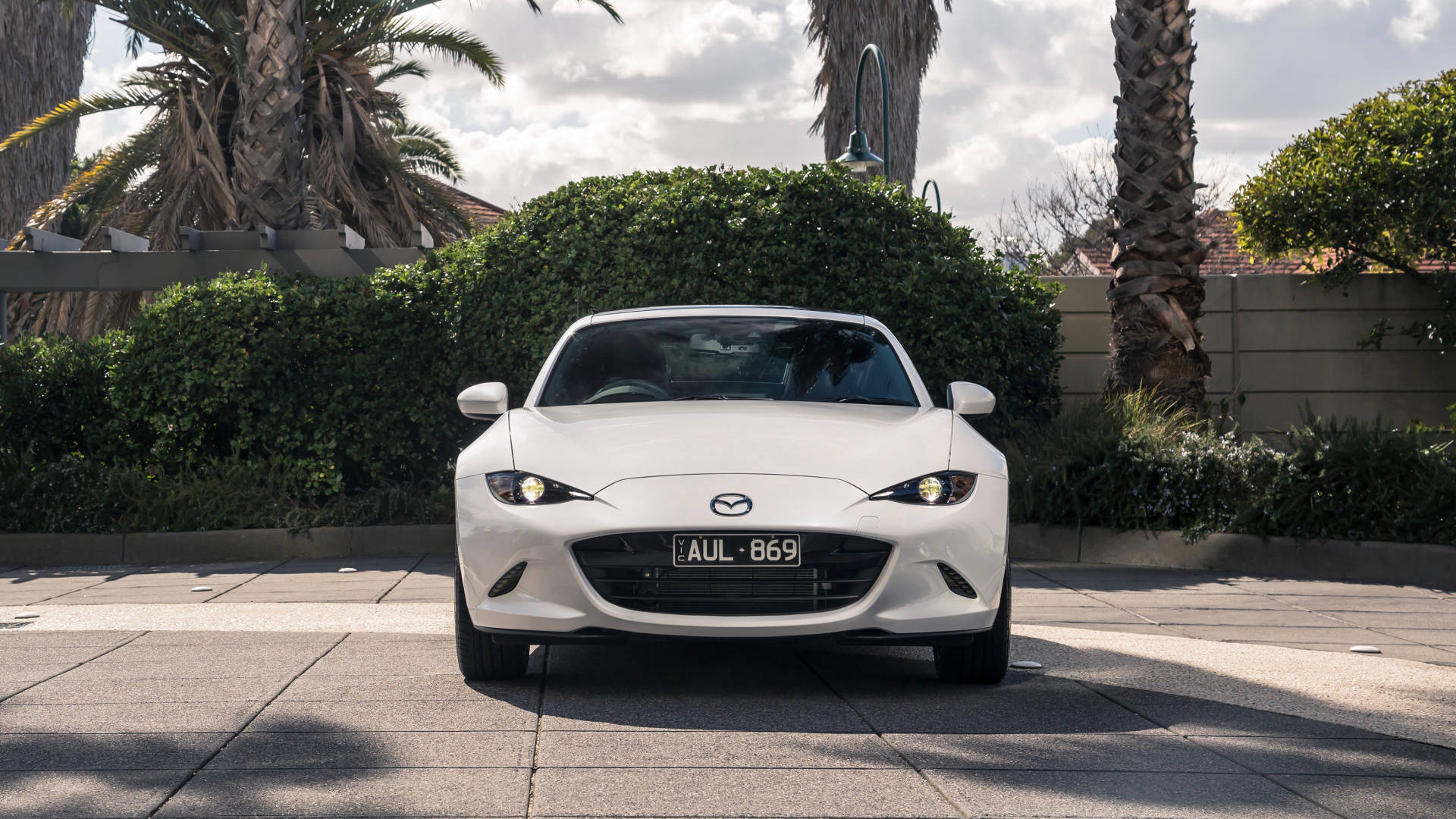
In Australia, the MX-5 can be specified as a roadster with cloth soft top, or Retractable Fastback (RF) with a targa-style folding metal hardtop. There are three trim grades, while manual and automatic transmissions are available — but not everything mixes and matches.
For 2026, prices kick off from $42,140 plus on-road costs (or about $47,000 driveaway) for the unnamed entry grade that is only available in Roadster format and only with the six-speed manual — in other words, this is the lightest, purest MX-5.
Standard kit for the base MX-5 includes 17-inch black alloy wheels, auto LED headlights and wipers, 8.8-inch infotainment display with navigation, DAB/AM/FM radio, wireless Apple CarPlay and Android Auto, single-zone climate control air conditioning, six-speaker stereo, auto-dim rear-view mirror and a Mazda connected services companion app.
Still, we’d consider spending $6650 more to step up into the MX-5 GT grade, which is available in manual or auto, Roadster or RF. Prices start from $48,790 + ORCs for the Roadster GT manual, with RF adding $4500. The automatic costs $1500 more than an equivalent manual.
GT spec key creature comforts like leather seat upholstery in black, heated front seats, nine-speaker, 203-watt Bose premium audio system, adaptive LED headlights and keyless entry, while being cosmetically differentiated via machined-finish alloys and body-coloured side mirrors.
But the best-driving MX-5 is the manual-only RS GT ($51,790 + ORCs as a roadster, $56,290 + ORCs as an RF), upgraded with lighter 17-inch grey BBS alloys, Brembo front brakes with red callipers all round, Bilstein dampers, front suspension tower brace bar and a track mode for the ESC system. RS GT reverts to black mirrors, like the base model.
So, what’s missing? Well, some visual customisation, for one thing. A palette of six exterior colours is available (most colours at no cost, Soul Red and Machine Grey at $595 apiece) but interiors are now black across the board.
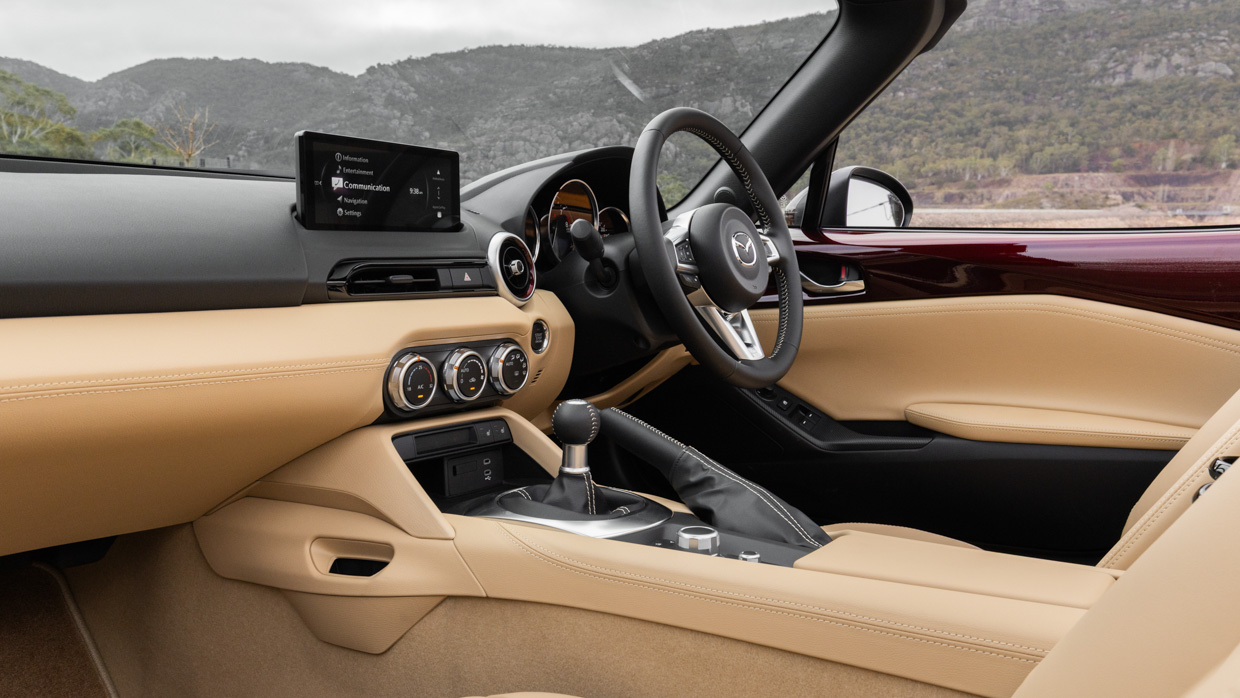
For a time, MX-5 GT models could be specified with beige or tan leather seats instead of black — perplexingly, that option is now gone, except in an RF GT specified with automatic transmission.
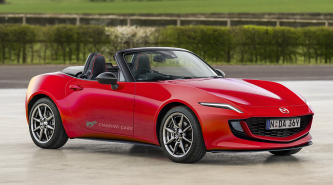
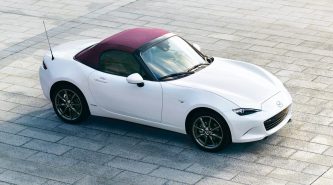
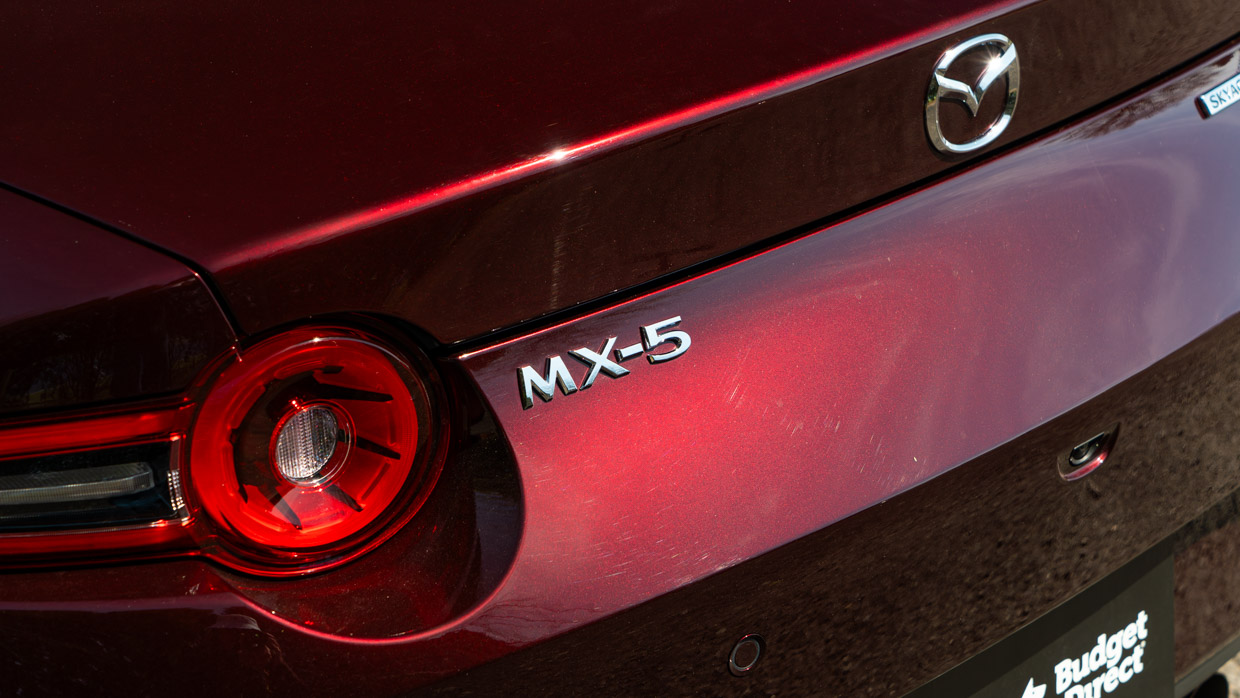
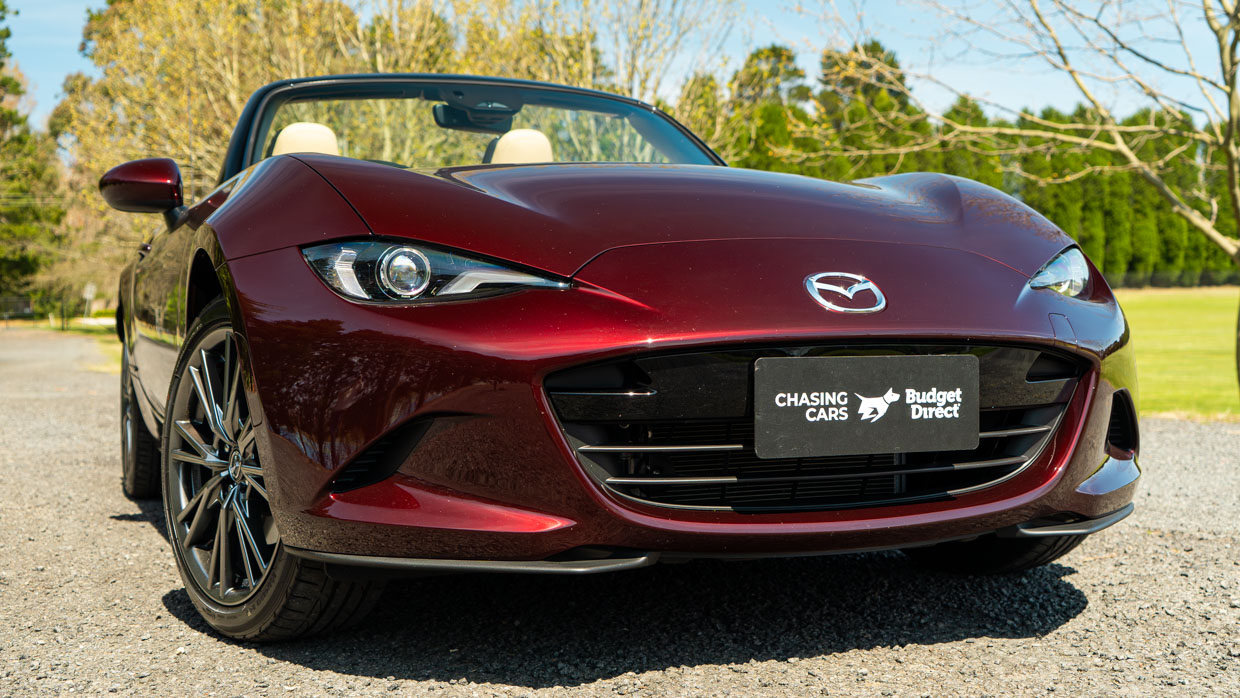
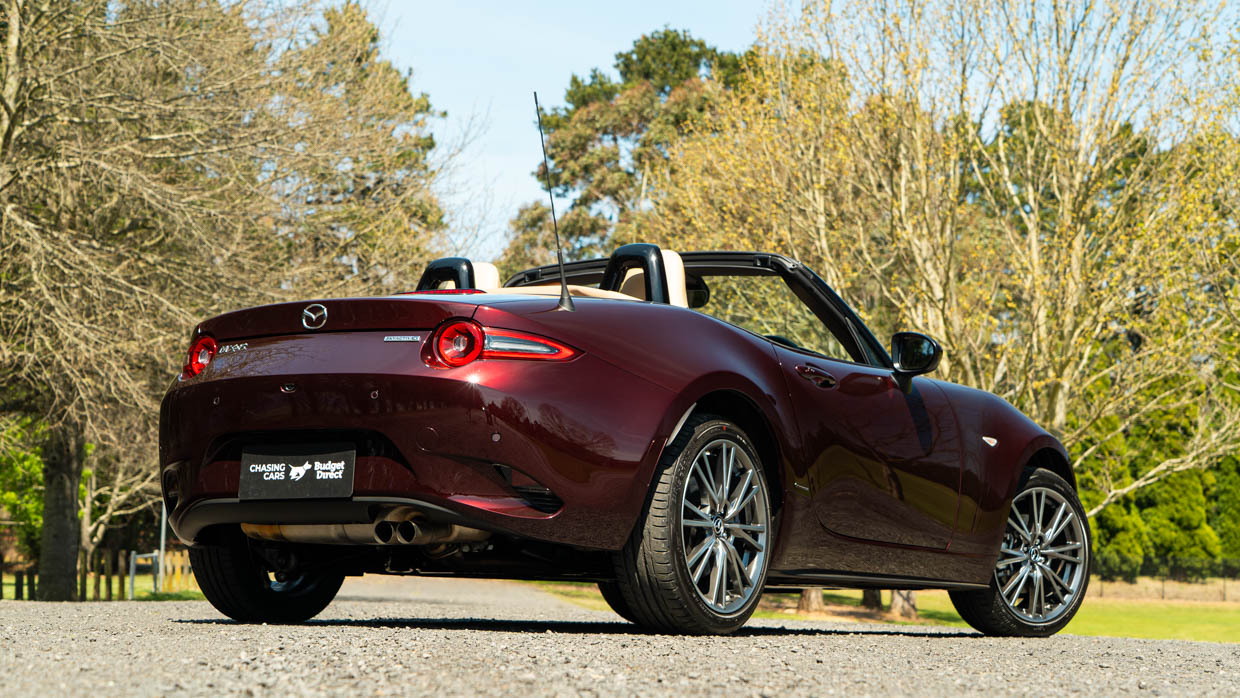
The car photographed for this review was a rare special edition imported into Australia in late 2025 called the MX-5 35th Anniversary. Only fifty units came to Australia, and all were sold at a rapid clip, priced at $51,140 + ORCs.
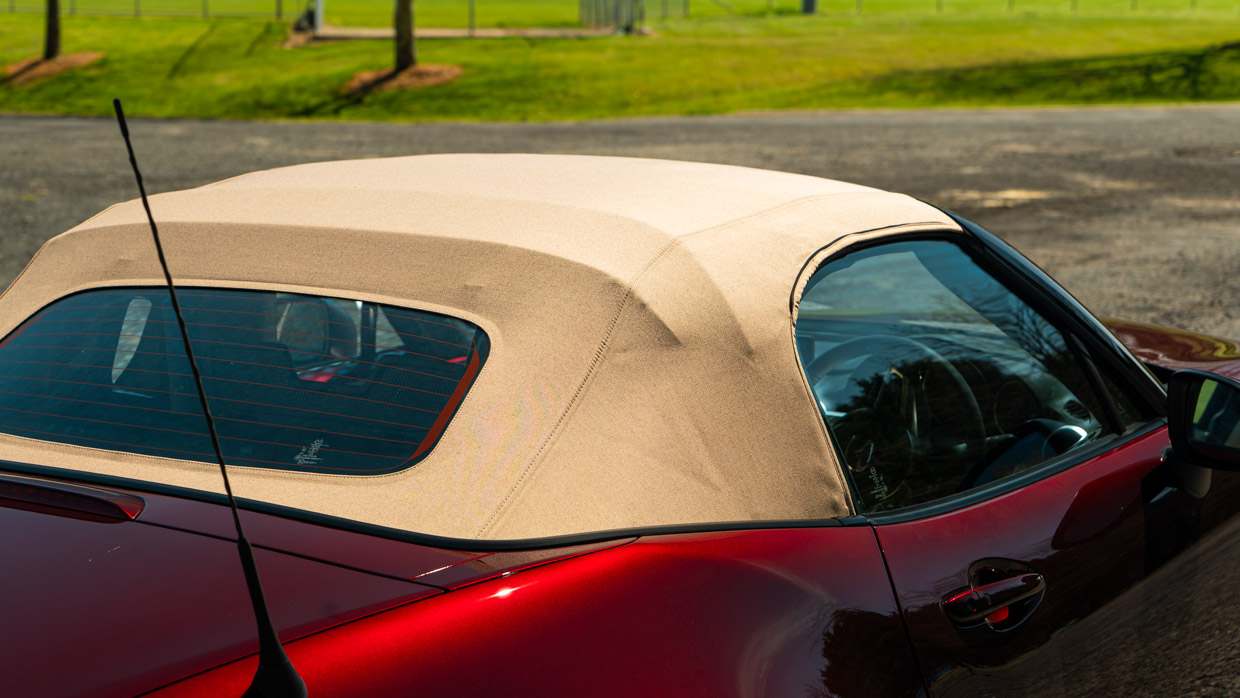
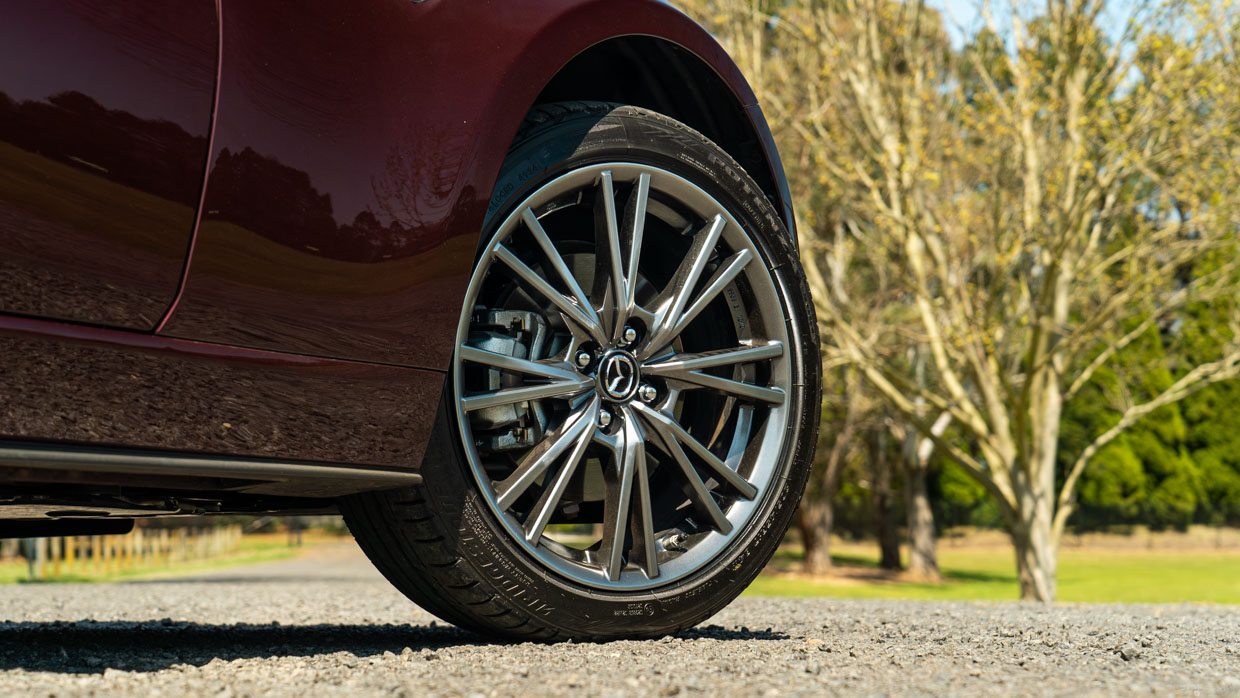
Lucky 35th Anniversary buyers missed out on the RS GT’s mechanical upgrades, but they scored additional kit over and above a regular GT including unique 17-inch multi-spoke alloys, beige leather with distinctive headrest embossing, beige carpeting, a beige soft-top and Artisan Red exterior paint.
Out of any of the cars you can walk into a showroom and purchase brand new in 2026, the Mazda MX-5 is one of the least corrupted by modern technologies — at least that’s how it feels.
There are elements of modernity to the fourth-generation MX-5: it has high-compression, direct-injected four-cylinder engine, electric power steering, sophisticated electronic stability control and even forwards and reversing autonomous emergency braking.
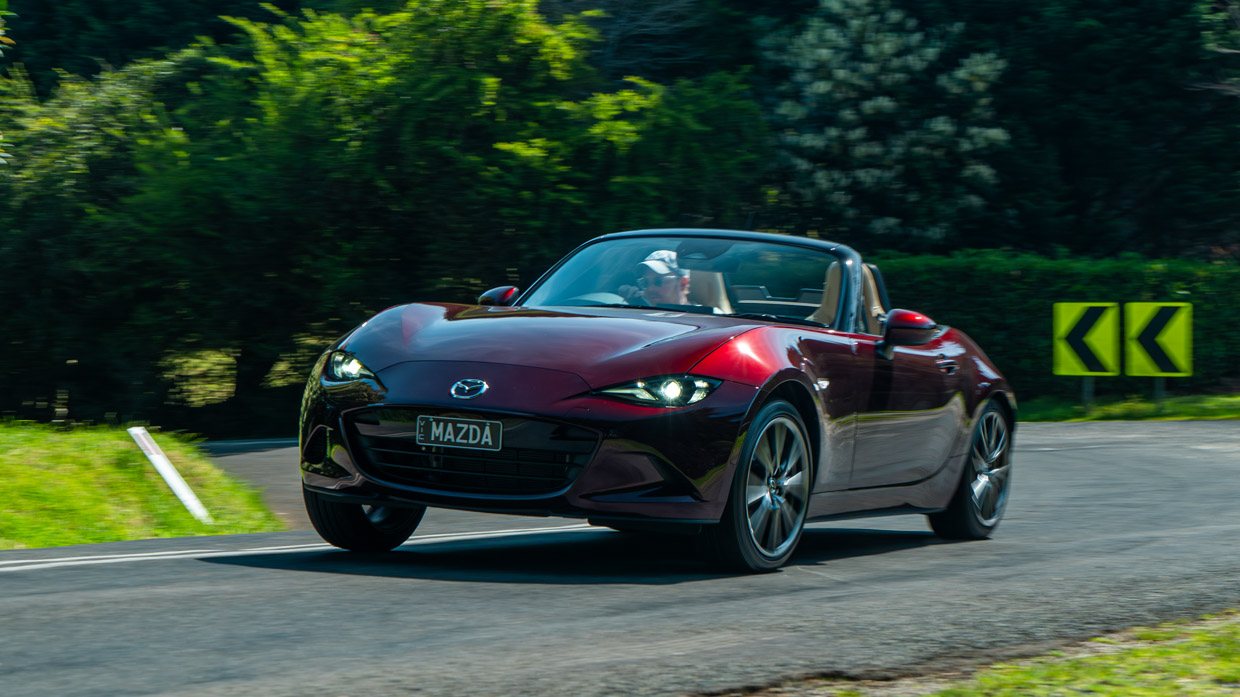
On the flipside, there is no turbocharging and no electrification (beyond a 12-volt system and start-stop tech — which can be deactivated), and two of the three MX-5 trim grades are exclusively available with a six-speed manual transmission.
Part of the reason Mazda has been able to maintain a relatively analogue experiences because the ‘ND’ MX-5 is, almost unbelievably, on the cusp of turning 11: production kicked off at Mazda’s Hiroshima plant in March 2015.
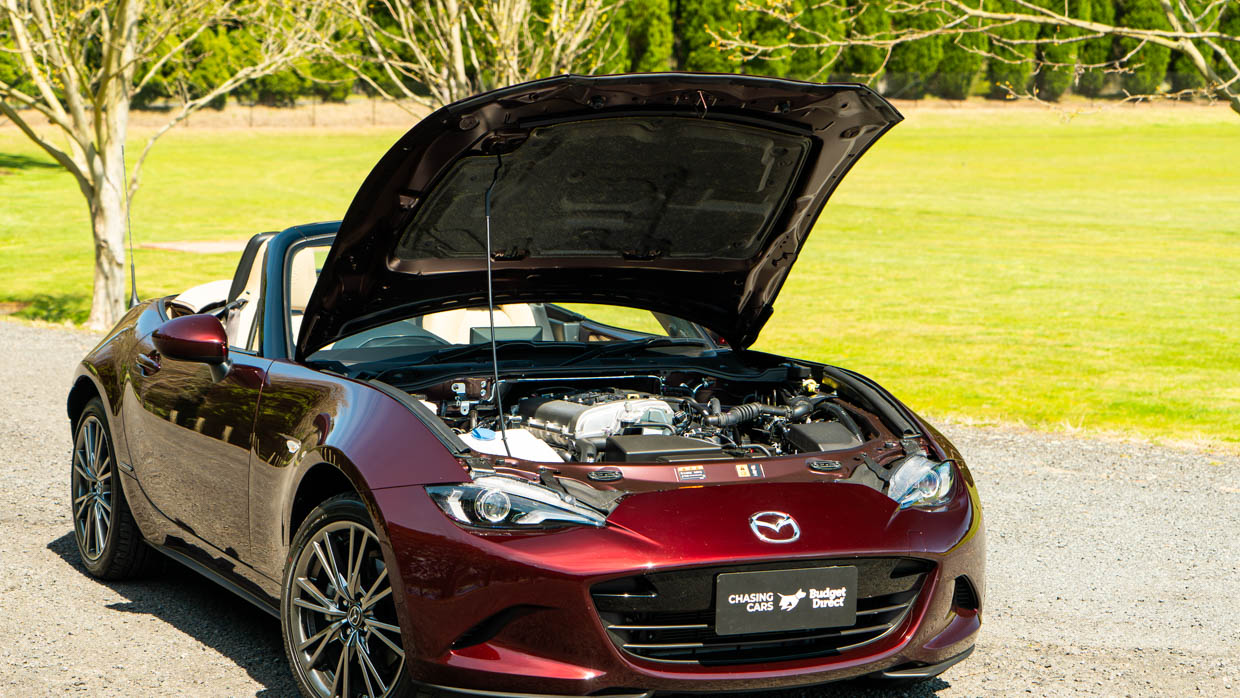
Basic elements of the ND package have remained essentially unchanged since, including the fundamentals of the 135kW/205Nm 2.0-litre Skyactiv-G petrol engine, the suspension and the steering, though Mazda has made incremental updates over time.
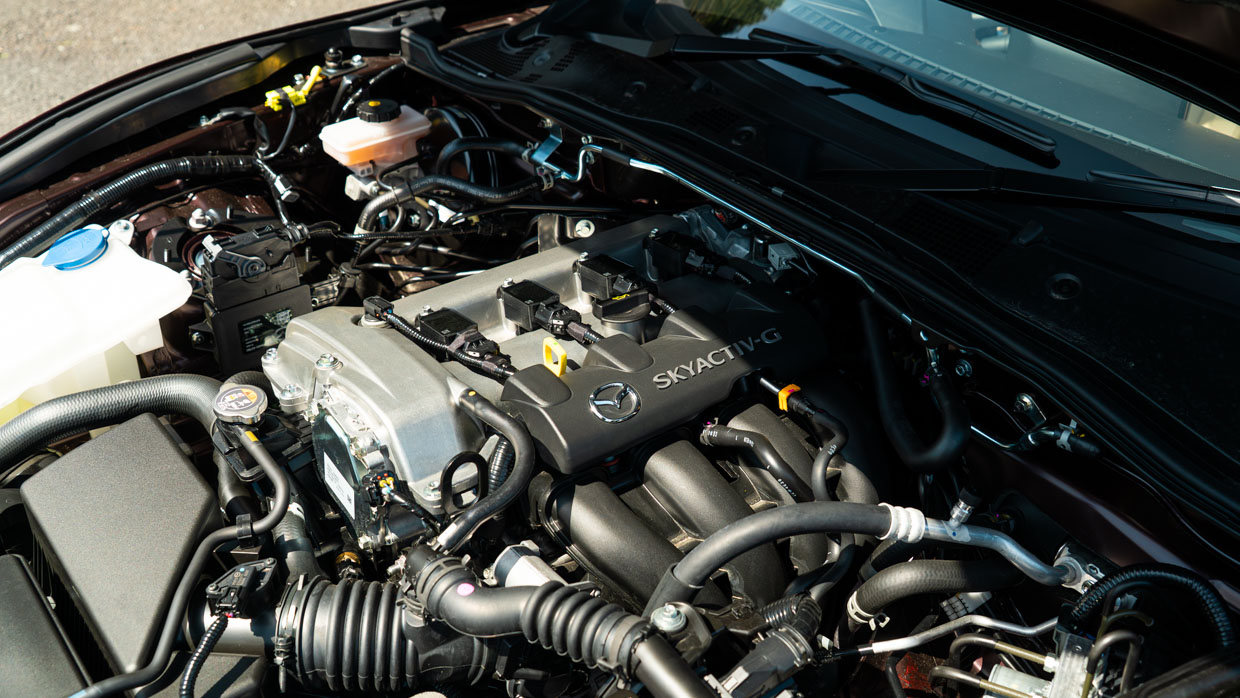
A pivotal ND2 update ushered in a freer-revving version of the 2.0-litre, while ND3 saw the manual receive revised throttle response to further reduce perceived rev delay.
The manual also exclusively received a new, asymmetric limited-slip differential (LSD) in ND3 form to increase stability while transitioning from trail braking to throttle while cornering and improving the predictability of the chassis to reduce snappiness.
Automatics, though, missed out on those updates but even the six-speed auto (optionally available in GT trim only) is a fine transmission for those that don’t want to shift their own gears.
The six-speed stick-shift is the way to go if you’re interested in maximum driving feel, of course, and the marriage between rifle-bolt action shifter, close pedal placement, quickened throttle response and zingy, free-revving atmospheric four-cylinder is a very happy one.
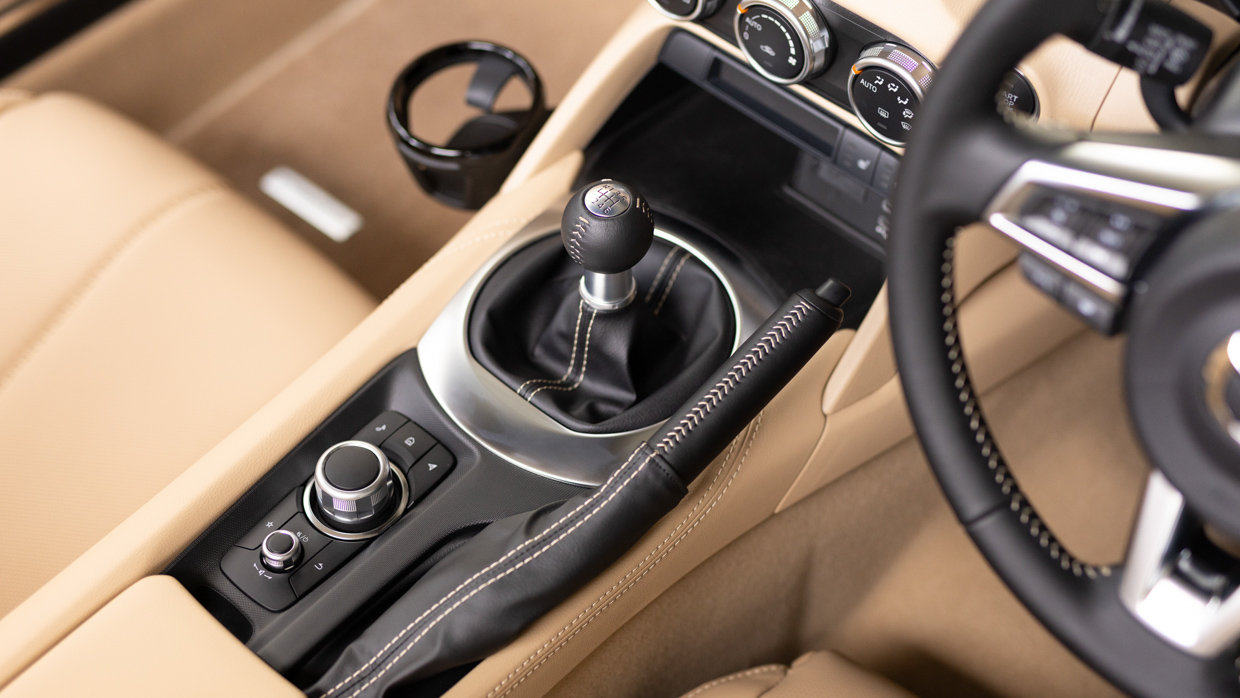
High compression makes the MX-5 relatively torquey even at low RPMs and, thanks to low rotational inertia and aggressive ECU tuning, the MX-5 is tractable and incredibly responsive on-throttle with revs rising and falling faster than you might be used to.
In terms of outright acceleration, the MX-5 isn’t especially quick — mid-sixes to low-sevens from 0-100km/h would be normal — but as a point-to-point experience on a winding road, few cars are as effective or fun.
While it may employ electric power steering rather than a hydraulic rack, Mazda — like Porsche — is one of the few manufacturers who have succeeded in imbuing the technology with considerable road feel.
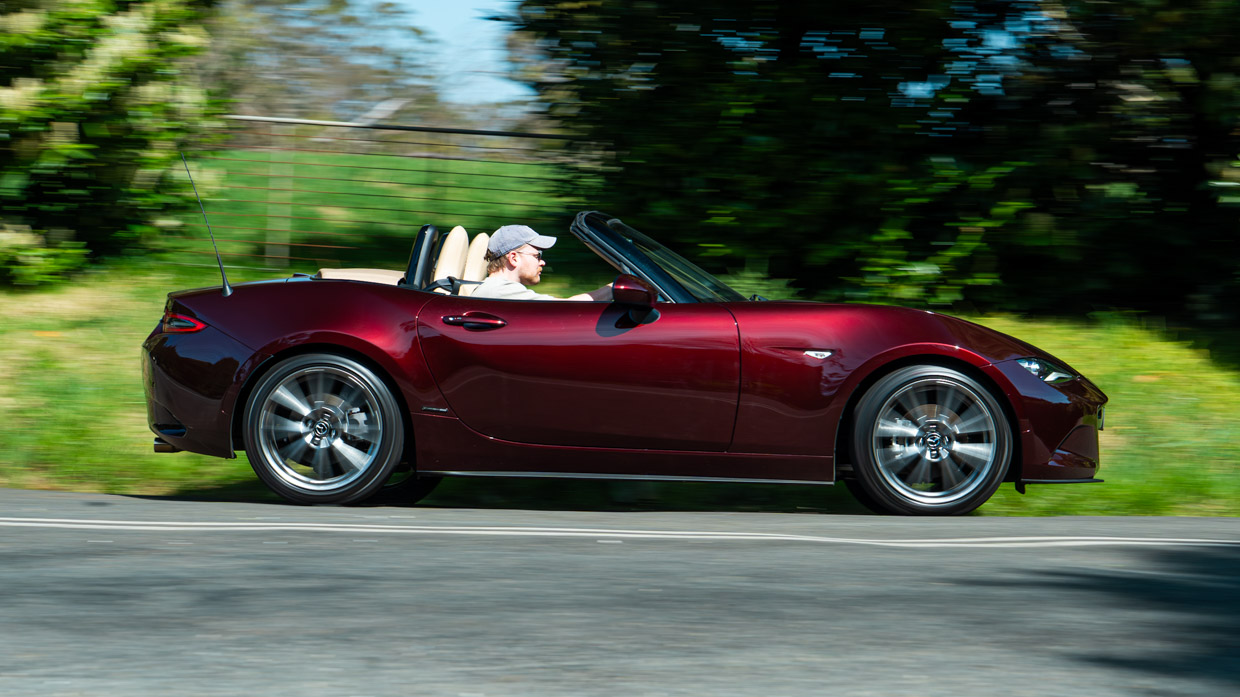
With the electric rack revised in ND3 form for reduced friction and new assistance parameters, the MX-5’s steering has become slightly lighter but more precise. Good definition still comes through the wheel as forces build up mid-corner.
There’s a sense of real immediacy and consistency to the control surfaces of the MX-5 — accelerator pedal, brake, steering wheel — all of which means drivers build up familiarity and confidence very quickly.
No doubt, there are limits to how hard you can push an MX-5 — it’s light (just 1015kg in base model form), sat on skinny tyres (205/45 R17 all-round) and, especially in standard and GT form, not suspended with particularly sophisticated dampers.
Body roll is clear and present and in fact encouraged by Mazda engineers as a method to alleviate pressure on the tyres but it does mean you rock and roll around in the corners more than, say, a modern hot hatch driver will be used to.
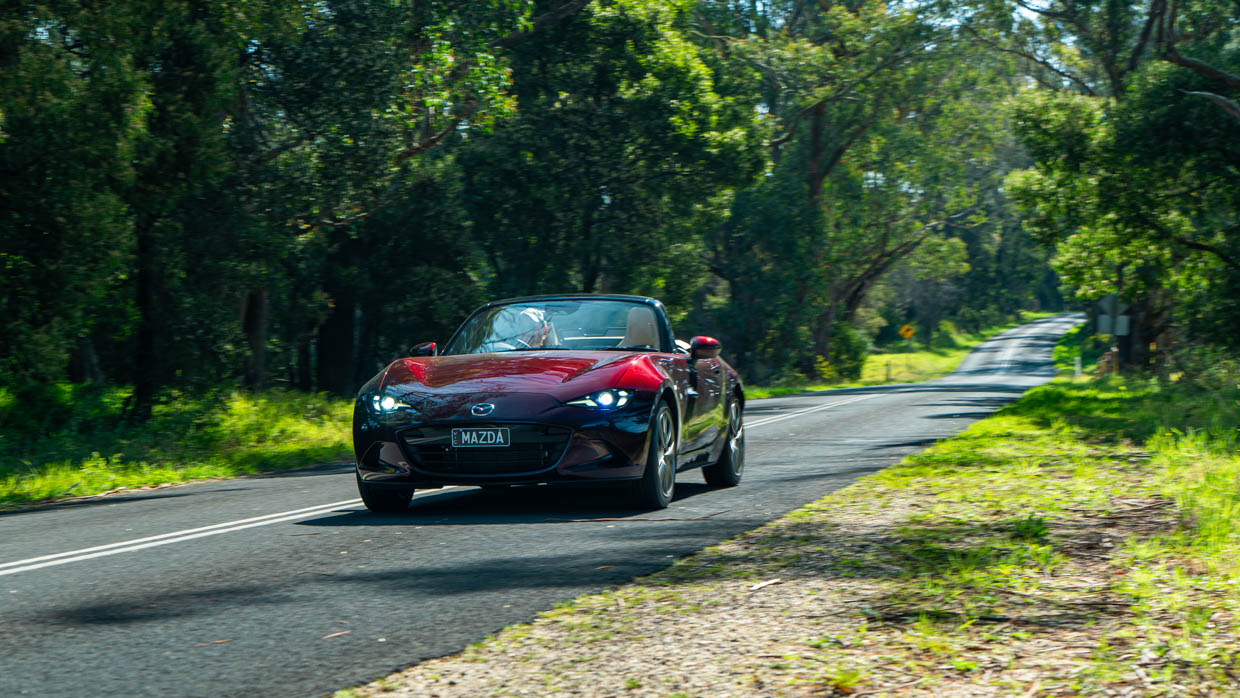
Instead of going as fast as possible, it’s best to enjoy the graceful chassis tuning of the MX-5 — and the movement of that chassis does allow you to induce plenty of oversteer moments on throttle. Take that, hot hatches!
With rear-wheel drive, a quick-revving engine, short wheelbase, relatively limited tyre grip and creamy handling all on tap, it’s just a shame that ESC is an on/off affair on the base grade and the GT, without the nuance of a middle setting.
Which is one reason why the best of the MX-5 bunch is the GT RS. Its Bilstein dampers are not only more compliant over all bumps, but they also add body control and considerable bandwidth to the MX-5’s handling, including via a well-judged ESC Sport setting.
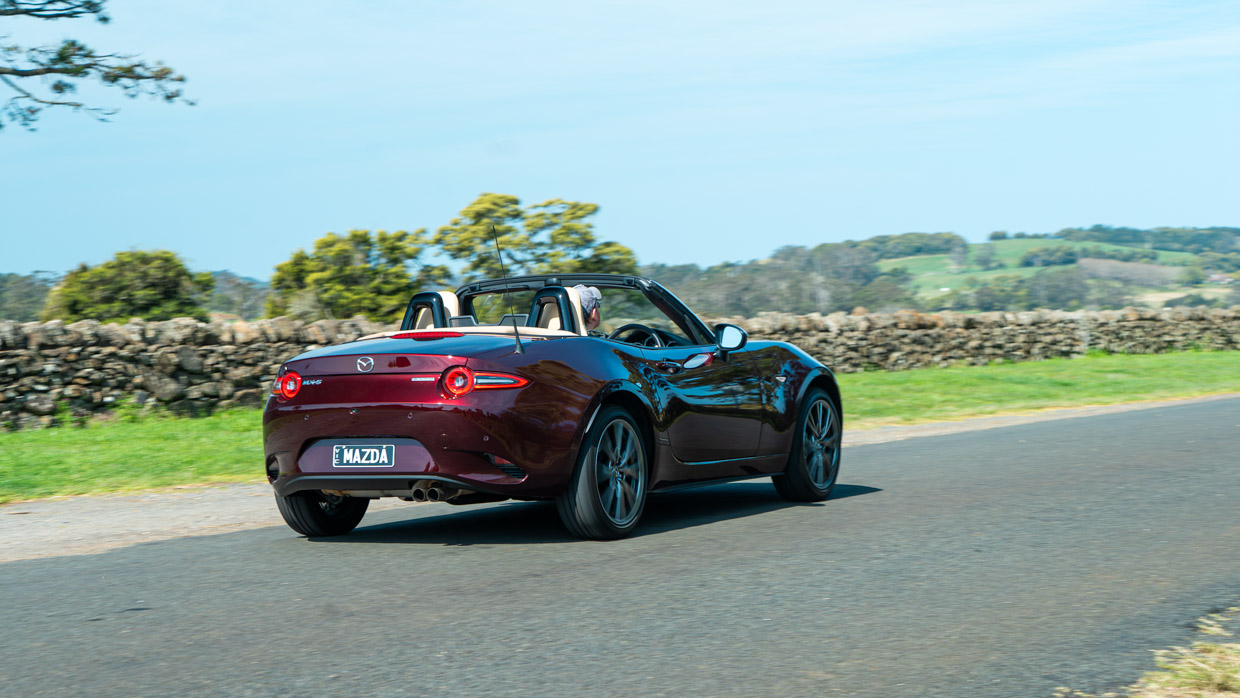
Beefier Brembo brakes, more bracing and reduced unsprung mass complete the GT RS picture — shame it goes without the excellent Recaro seats that have been deployed in some ‘ND’ trims in the past.
Overseas versions of the very pretty 35th Anniversary specification photographed for this review came with the Bilstein, Brembo and bracing package. Oddly, Australia missed out on these inclusions — meaning our special edition was essentially just a GT grade.
Inside, the MX-5 arguably has ‘just enough’ technology, as well as functional and appealing presentation of key features — but two flaws stop us from loving the ‘ND’ cabin in current form.
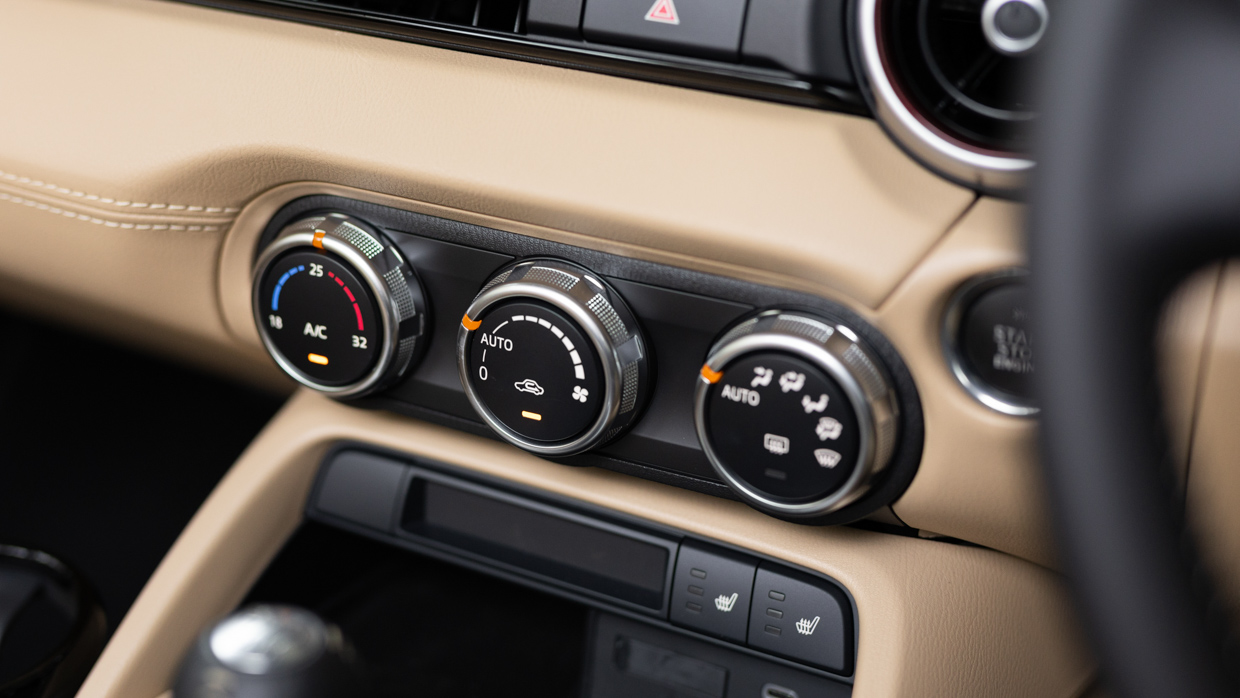
What is not problematic in our view is the fact that the MX-5’s dashboard is essentially shared with the current — and very old — Mazda 2 hatch and CX-3 small SUV. It’s a simple setup with four air vents (three of them circular) and exceptionally clear knobs for the air conditioning.
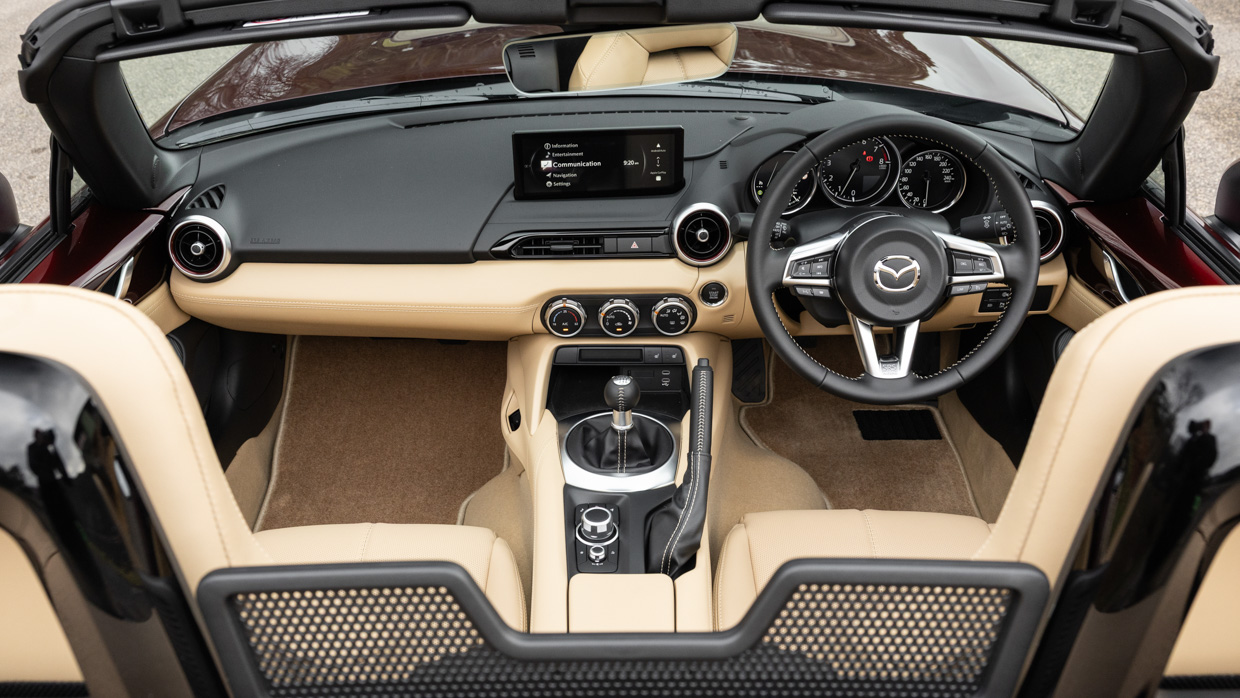
You certainly wouldn’t say the MX-5’s interior is fancy or upmarket, but the presentation is clean and tidy — almost timeless in its combination of a small amount of technology with plenty of old-school hardware with physical controls and a lovely, round steering wheel.
Analogue instrument binnacles house a large, central tachometer and smaller right-set speedometer, plus a left-side digital screen with basic trip computer readouts plus oil temperature and fuel level. What’s missing is a digital speedo — still!
New for the ND3 is an 8.8-inch widescreen sitting atop the dash; it’s bigger than the display it replaced but only in width, meaning visual clutter is reduced in our view. It runs Mazda’s latest OS and offers wireless smartphone mirroring, making it feel up to date.
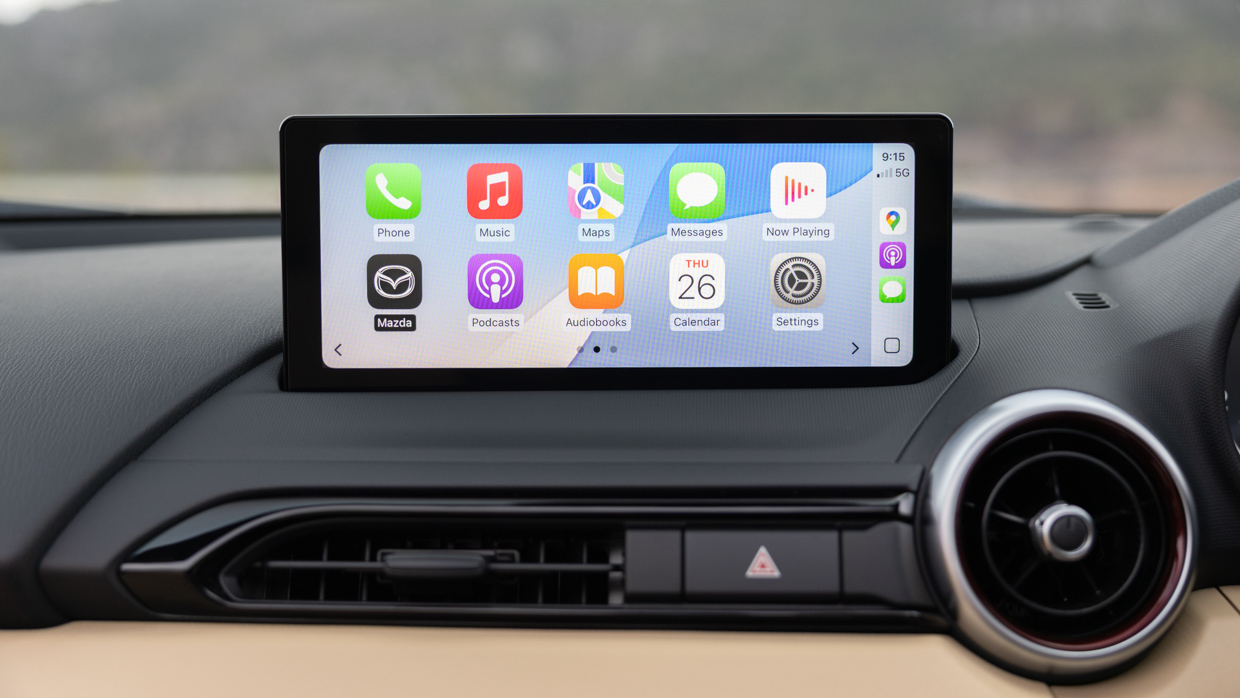
Even audio quality is acceptable (with roof up or down) in the GT and GT RS grades thanks to a decent Bose stereo with headrest-mounted speakers. The two flaws we mentioned start with the seats, which since the dawn of the ‘ND’ generation have been incredibly flat and unsupportive.
It’s not a problem that they are manually adjustable (and we like the inclusion of a base tilt adjustment knob); the issue is the near total lack of side bolstering and back lumbar. From time to time, Mazda occasionally rectified this with fitment of fantastic Recaro seats but those have only appeared on rare special editions for Australia.
The second flaw (and it might seem obvious) is the comical lack of storage inside the MX-5. Yes, it’s a small, light car and it isn’t meant to be practical … but in essence, the small box located between the two seats is the only place to stash anything inside.
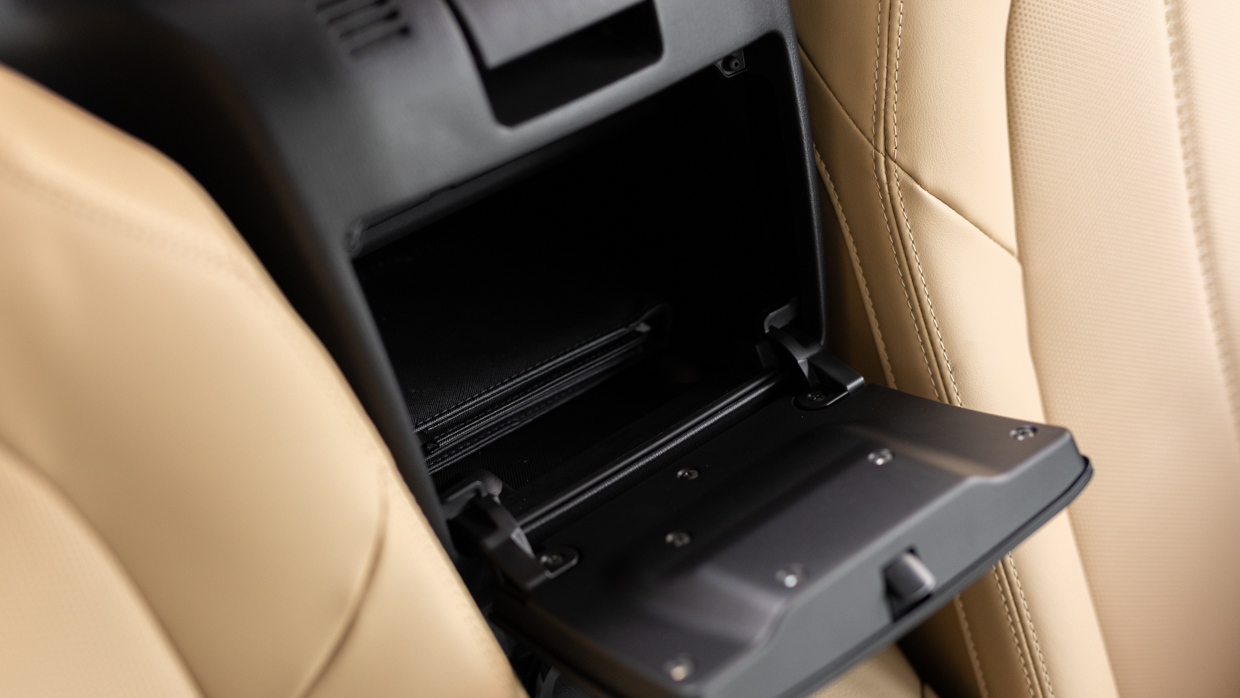
The area ahead of the gear shifter can’t accommodate a modern smartphone (which have, to be fair, become too large) and the detachable cupholder begrudgingly accepts only a small coffee.
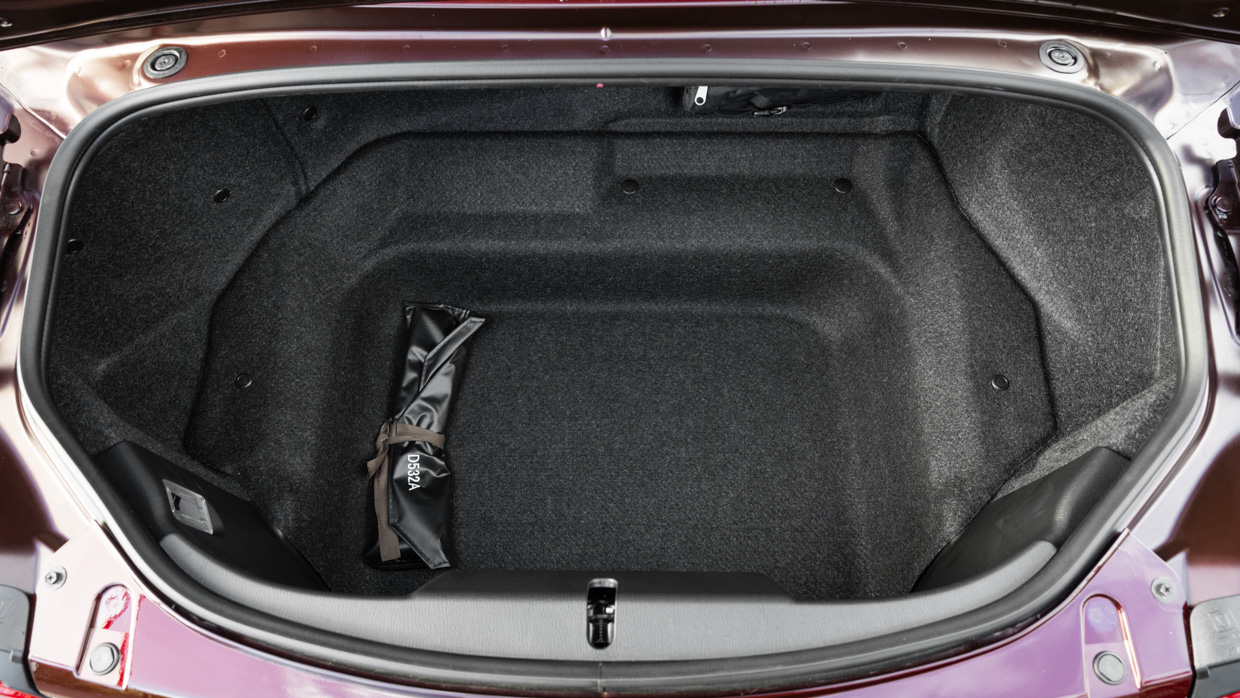
But while the boot is technically very small at 130 litres (half the size of a Mazda 2 hatch), two soft bags for a weekend away do fit without too much trouble.
Well … kind of, though there’s naturally an element of risk in choosing to drive a Mazda MX-5 on Australia’s roads, which have become so dominated by large vehicles.
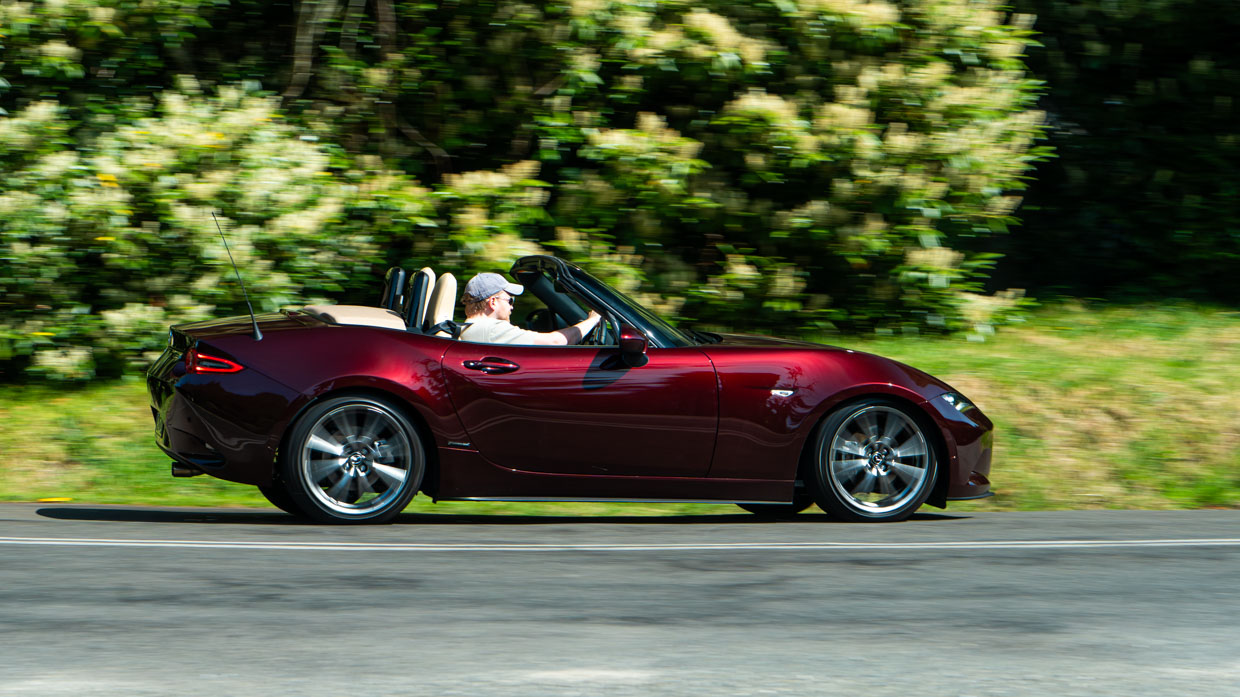
A core part of driving an MX-5 is needing to be constantly vigilant because many other motorists don’t see you — in part because the Mazda is so low (just 1230mm at its highest point) and in part because they don’t look very hard.
It is true that from 2015 until December 2023 the MX-5 carried a five-star crash and safety rating from ANCAP based on old 2016 testing protocols. That rating expired in December 2023, and the MX-5 is currently ‘unrated’.
It’s also the case that the MX-5 does come standard with a range of safety technologies including city-speed AEB (forwards and reversing, with front pedestrian detection), blind spot monitoring, traffic sign recognition, and driver attention monitoring.
There is also basic lane departure warning which tries to stop the vehicle leaving its lane unintentionally — this can be switched off with a long-press of a hardware button.
A reversing camera is standard and tyre pressure monitoring is useful.
Glorious is the fact that the MX-5 does not bing and bong as it gets down the road and the sanctity of the driving experience is maintained despite the features it does have.
The funny thing about the MX-5 is that for such a light car with a modest engine — barely over a tonne, just 135kW — it is not very fuel efficient.
Officially, the Mazda uses 6.8L/100km and over many road tests of ‘ND’ examples, we’ve always ended up using about 30 percent more — or about 9.0L/100km.
Naturally, if you baby the MX-5, or mainly drive at a constant speed on the highway, it will use less. But that misses the point: this sports car begs to be grabbed by the scruff of its neck and driven hard. It rewards doing so! The only problem is that with a 45-litre fuel tank, real-world range is limited at about 500km.
Scheduled servicing intervals are now 12 months/15,000km, with the first five years/75,000km setting owners back $2797 in total, or a steep $559 per year on average. Mazda’s new vehicle warranty in Australia is five years with unlimited kilometres.
Budget Direct told us the median annual premium purchased for the first time between 1/12/24 and 1/12/25 to comprehensively insure a new Mazda MX-5 was $1018. Individual circumstances and policy terms may vary.
Of course, everybody’s situation is different, and the premium will vary according to make and model, and other things insurers take into account, such as your postcode, driving history, who drives the car, where you garage the car and more.
Please quote for yourself. Subject to meeting underwriting criteria. Insurance issued by Auto & General Insurance Company Limited. See PDS & TMD at budgetdirect.com.au.
The Mazda MX-5 is a great car. It’s true that the fourth generation has always been flawed, but Mazda has tirelessly whittled down its minor foibles over time.
In late ‘ND3’ format, the current MX-5 is the best it has ever been, with a splash of contemporary infotainment boosting the modernity of what is still one of the finest driver’s cars on the market.
While front-biased hot hatches have become the default choice of many performance car enthusiasts seeking to spend south of $100,000, there’s still a real case to be made for the MX-5.
Drivers with the self-assurance to not care about the open-top MX-5’s dumb and dated ‘hairdresser’s car’ stigma are rewarded with a sublime experience behind the wheel — and even a free blow-dry (if they aren’t bald). That’s a joke. Happy MX-5 ownership does require good humour.
Finally, it’s become a tired cliché in recent years for motoring journalists to declare that it is the ‘last chance’ to buy a great car before it becomes an EV or SUV and everything gets ruined, and there’s every chance that the fifth-gen ‘NE’ MX-5 could be amazing.
But the ‘ND’ is so good right now. It’s a sure thing — a brand-new car you can still buy from a dealership — and if we wanted purity on four wheels with the confidence of a new car warranty, it’d be high on our shortlist.
Key specs (as tested)
About Chasing cars
Chasing Cars reviews are 100% independent.
Because we are powered by Budget Direct Insurance, we don’t receive advertising or sales revenue from car manufacturers.
We’re truly independent – giving you Australia’s best car reviews.
The estimate provided does not take into account your personal circumstances but is intended to give a general indication of the cost of insurance, in order to obtain a complete quote, please visit www.budgetdirect.com.au. Estimate includes 15%^ online discount.
^Conditions Apply
Budget Direct Insurance arranged by Auto & General Services Pty Ltd ACN 003 617 909(AGS) AFSL 241 411, for and on behalf of the insurer, Auto & General Insurance Company Limited(ABN 42 111 586 353, AFSL 285 571).Because we don’t know your financial needs, we can’t advise you if this insurance will suit you. You should consider your needs and the Product Disclosure Statement before making a decision to buy insurance. Terms and conditions apply.
Indicative quote based on assumptions including postcode , 40 year old male with no offences, licence suspensions or claims in the last 5 years, a NCD Rating 1 and no younger drivers listed. White car, driven up to 10,000kms a year, unfinanced, with no modifications, factory options and/or non-standard accessories, private use only and garaged at night.
^Online Discounts Terms & Conditions
1. Discounts apply to the premium paid for a new Budget Direct Gold Comprehensive Car Insurance, Third Party Property Only or Third Party Property, Fire & Theft Insurance policy initiated online on or after 29 March 2017. Discounts do not apply to optional Roadside Assistance.
2. Discounts do not apply to any renewal offer of insurance.
3. Discounts only apply to the insurance portion of the premium. Discounts are applied before government charges, taxes, levies and fees, including instalment processing fees (as applicable). The full extent of discounts may therefore be impacted.
4. We reserve the right to change the offer without notice.