Powered by

-
Car Reviews
Latest reviews
-
Car News
Latest news
-
Car Comparisons
Latest comparisons
- Chasing Deals
Latest reviews
Latest news
Latest comparisons
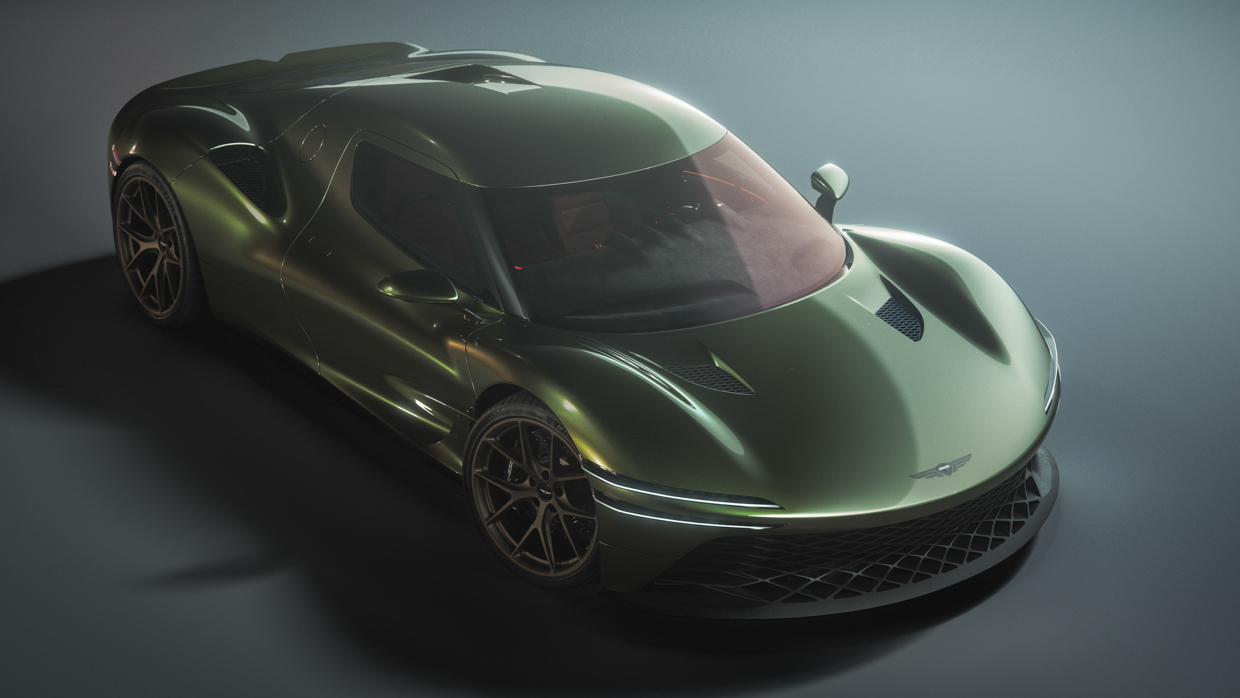
Genesis has taken another significant step towards launching a road-going supercar model, with the Korean luxury brand using the 2026 24 Hours of Le Mans to reveal a near-complete Magma GT3 concept alongside an evolution of its striking Magma GT study.
While Genesis has not yet confirmed it will build the Magma GT, the move to redouble on last year’s concept suggests the mid-engined two-seater is more than a thought bubble
That is because if Genesis enters the GT3 racing category with a dedicated Magma GT3 platform, it will need a homologated production car to base it on.
FIA GT3 regulations require eligible cars to be homologated in Group GT3 with a minimum production threshold of 300 road cars annually.
While the decision to roll out both road-going GT and race-bound GT3 concepts at the brand’s Le Mans debut says a lot, Genesis is leaving itself some wriggle room for now.
It says the Magma GT3 concept is “under exploration”, with the vehicle architecture, components (including powertrain) and development pathways still to be defined.
Genesis says it wants to expand its motorsport participation beyond the World Endurance Championship LMDh hypercar program, and GT3 is firming as the next step.
This weekend’s 24 hour race is the debut Le Mans showing of the Genesis GMR-001 hypercar.
If the GT and GT3 programs are approved, the most likely outcome would be a low-volume Magma GT road car sold as a halo model, with the GT3 version developed for customer racing and international endurance competition.
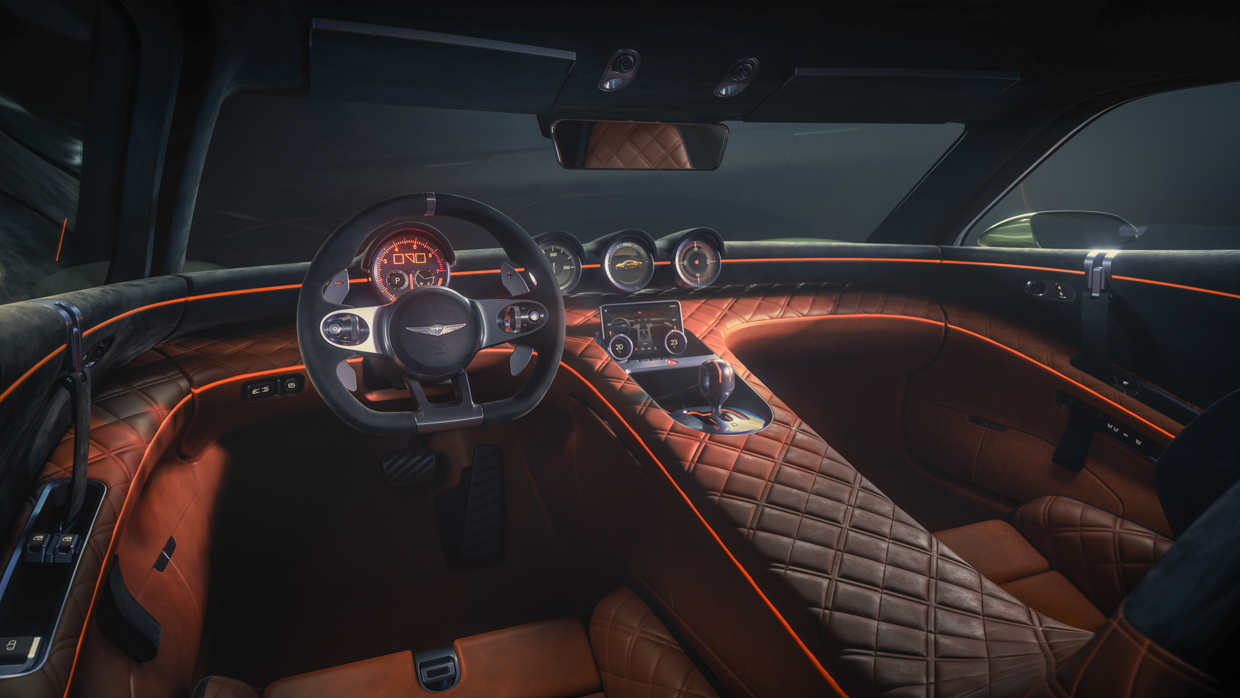
The road car is framed as a two-passenger luxury grand tourer rather than a stripped-out track toy. This was also the debut of the interior of the Magma GT concept, which includes analogue-style instruments and physical controls.
Hinting at the vehicle layout, Genesis says the GT has “dynamic mid-engine proportions”.
Genesis has not published dimensions, but the concept’s proportions suggest it will be a rival to the Ferrari 296 GTB, McLaren Artura and Chevrolet Corvette rather than a front-engined GT car.
An expected twin-turbo V8 powertrain would give the model significant credibility, potentially with hybrid assistance depending on cost and packaging requirements.
Previous reporting has pointed to a V8-powered Magma GT producing more than 450kW of power, but Genesis has not yet confirmed targets.
Meanwhile, the GT3 race car sets itself apart by the significantly more serious aerodynamic package it wears — plus wider tracks, enlarged air ducts, a fixed rear wing and huge rear diffuser.
A production Magma GT would give Genesis a halo product sitting far above the regular range and a true flagship to contest the top-end 911 and Mercedes-AMG GT space.
It would follow a similar route to other sports car and supercar manufacturers, many of which have used GT3 programs to connect road cars to global endurance racing.
For Australia, the question would be whether any examples of a road-going Magma GT would be built in right-hand drive.
If Genesis commits only to the minimum production required for homologation purposes, right-hand drive would likely be far from guaranteed.
However, if the Magma GT became a broader halo model and brand-building exercise for Genesis, Australia’s appetite for high-end performance cars could make help to justify a limited local allocation.
Latest news
About Chasing cars
Chasing Cars reviews are 100% independent.
Because we are powered by Budget Direct Insurance, we don’t receive advertising or sales revenue from car manufacturers.
We’re truly independent – giving you Australia’s best car reviews.