Powered by

-
Car Reviews
Latest reviews
- Car News
-
Car Comparisons
Latest comparisons
- Chasing Deals
Latest reviews
Latest comparisons

More than just another hot hatch, the latest FL5 Civic Type R offers Porsche levels of poise and panache — that makes it good high-performance value
Honda’s Type R legacy is three decades in the making. Cooked up originally as a hard-core version of the groundbreakingly reliable NSX sports car, the NSX-R (1992), this recipe has stayed largely the same since it was first applied to the Japanese-market ‘EK9’ Civic Type R in 1997.
This FL5-generation is the most well-rounded Type R ever, without sacrificing any of the signature precision or focus. Buyers seem to think so, too, for since its global launch in 2022 each allocation that has arrived in Australia have sold out.
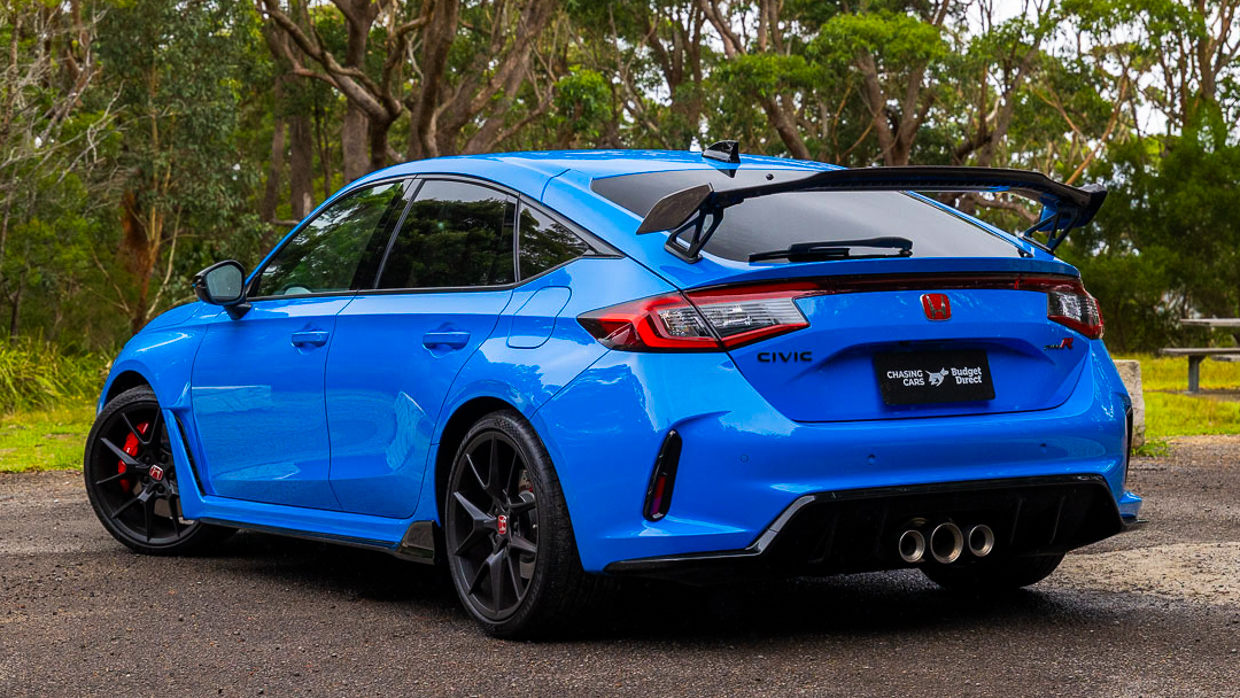
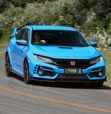
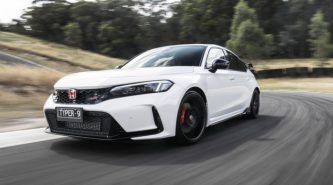
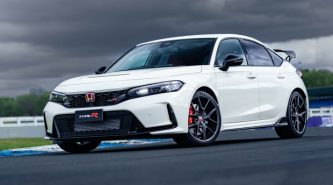
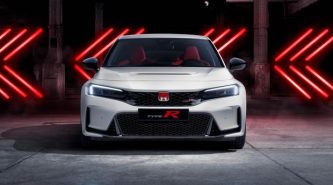
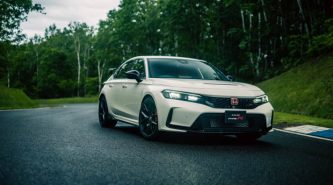
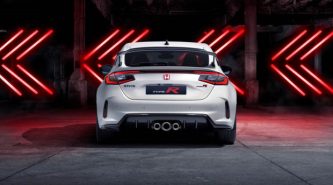
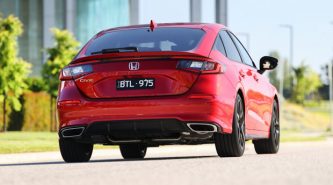
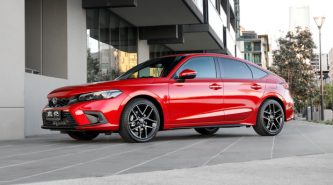
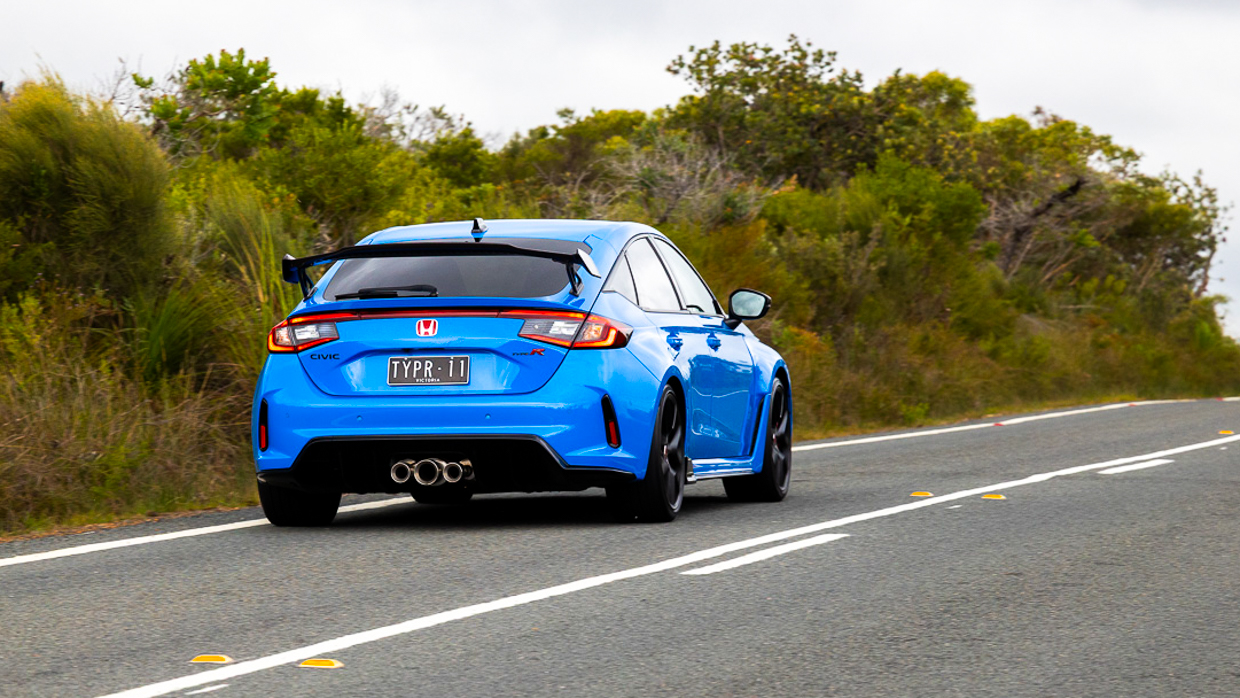
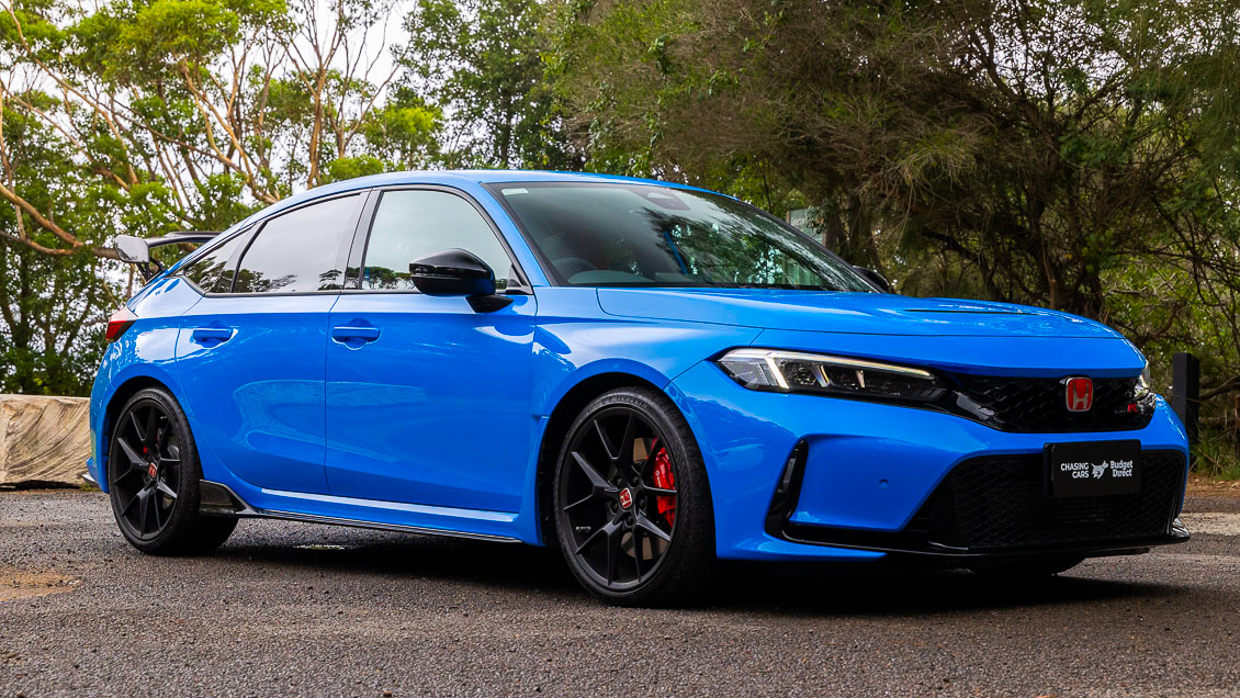
We find ourselves with the latest version, wearing new-for-2025 Racing Blue paintwork and featuring the optional $5300 carbon-fibre rear wing. That’s on top of a $4900 price increase to $79,000 drive-away, or $84,300 as it sits in these pictures.
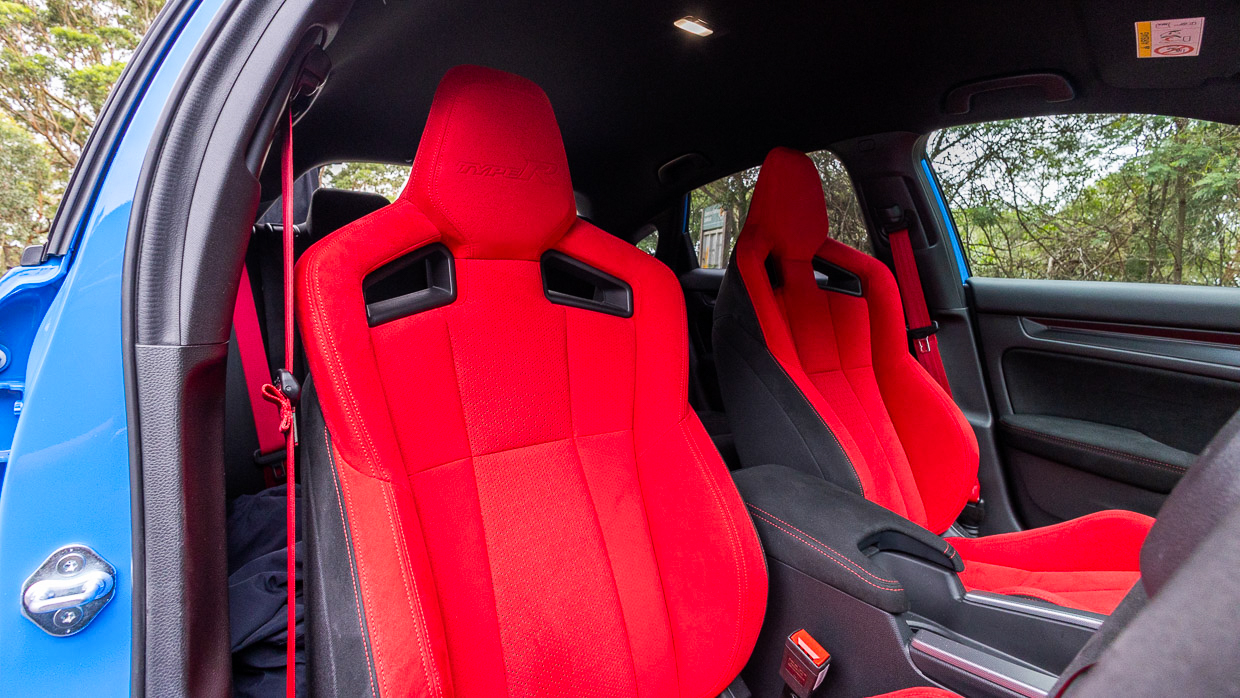
For that outlay you get manual-adjust seats without heating (okay, they are brilliantly snuggly red buckets), an unbranded sound system, a manual transmission and a 9.0-inch multimedia touchscreen. Oh, and in long-standing Civic Type R tradition, the FL5 is still ‘only’ front-wheel drive.
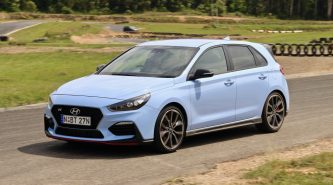
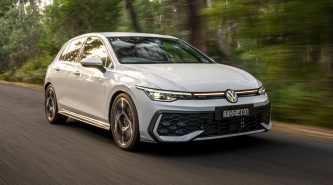
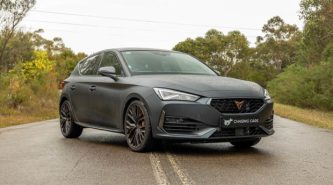
Some rivals for context include the Hyundai i30 N Premium ($60,587 D/A), along with plenty of Volkswagen group options including the Golf GTI ($63,990 D/A), Cupra Leon VZx ($65,990 + ORCs), and larger Skoda Octavia RS ($58,490 + ORCs).
You could even get a VW Golf R for less, and at $75,990 driveaway it comes with power-adjustable, heated and ventilated seats and all-wheel drive – a veritable bargain!
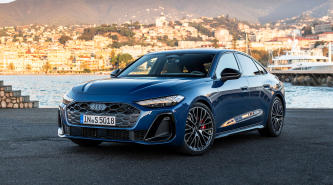
Even the premium Germans aren’t far above, with the Audi S3 $78,800 before on-roads and the BMW M135 a whisker over $90K on the road.
So what on earth do you get for your money, and how does Honda Australia manage to keep selling out of the Civic Type R?
To answer that question, you have to get behind the wheel of the Civic Type R, because what Honda has achieved with this front-drive small car is astounding.
Before we get into the important, touchy-feely fast-driving stuff, we have to first discuss pootling around town. The Type R recipe has always had an element of everyday excellence but never has it been as sophisticated as this ‘FL5’.
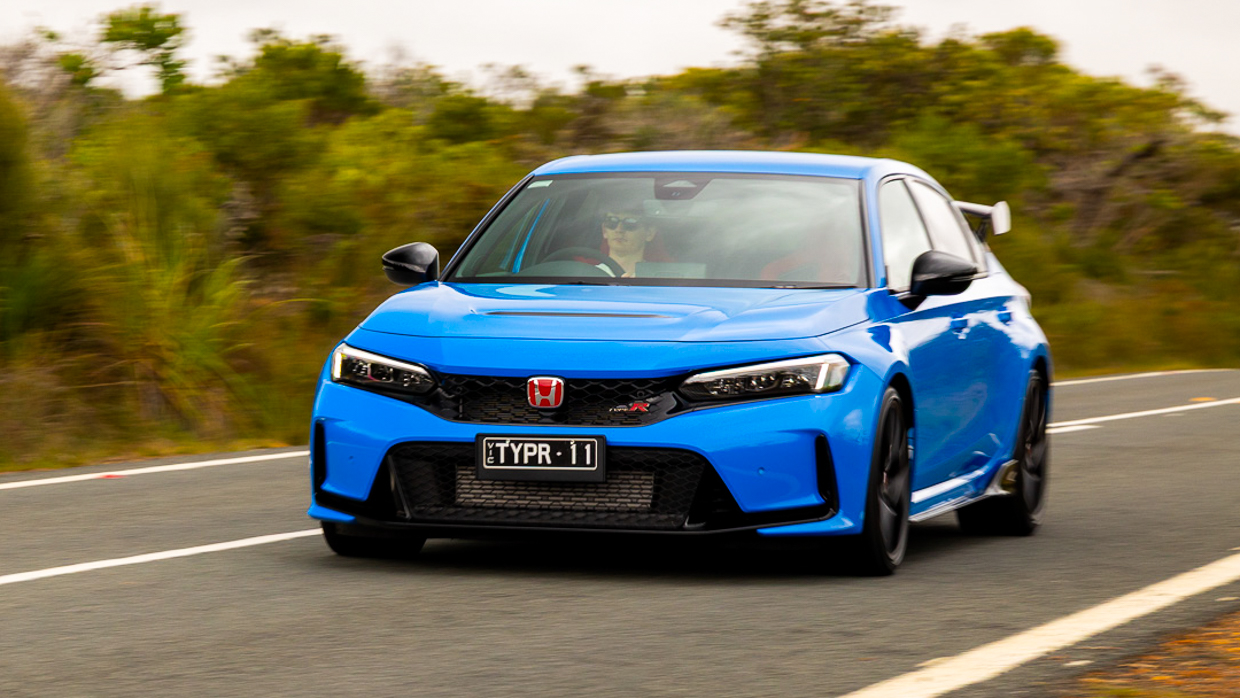
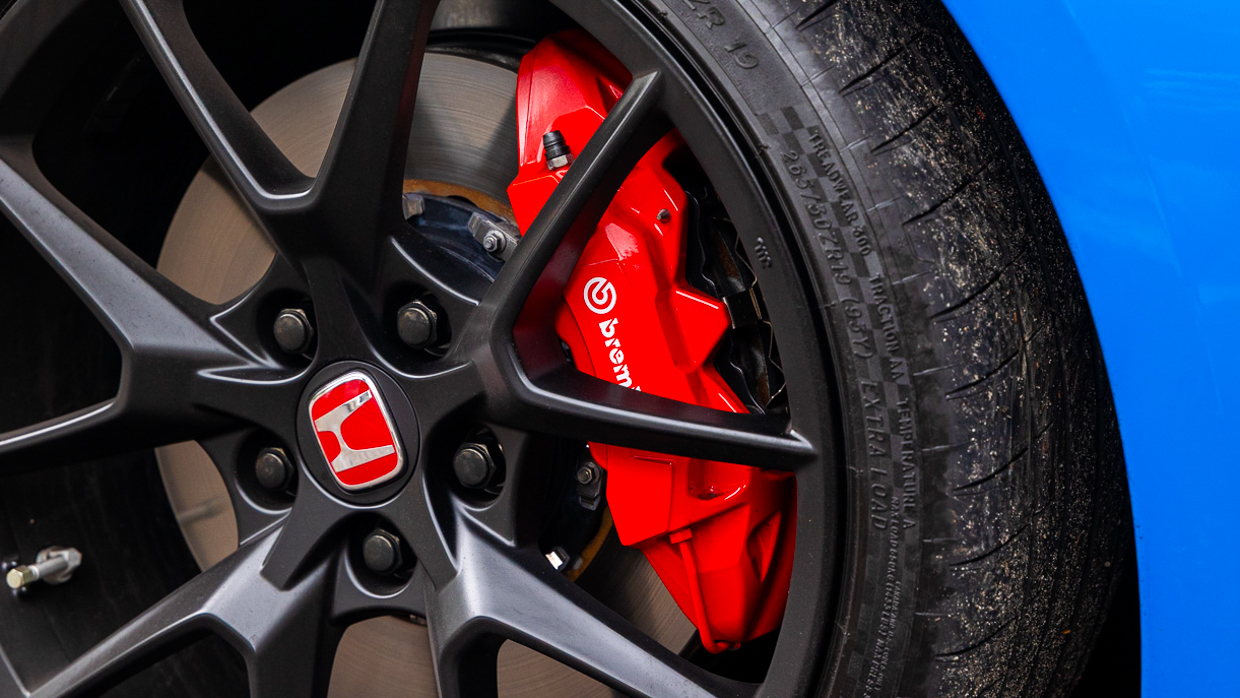
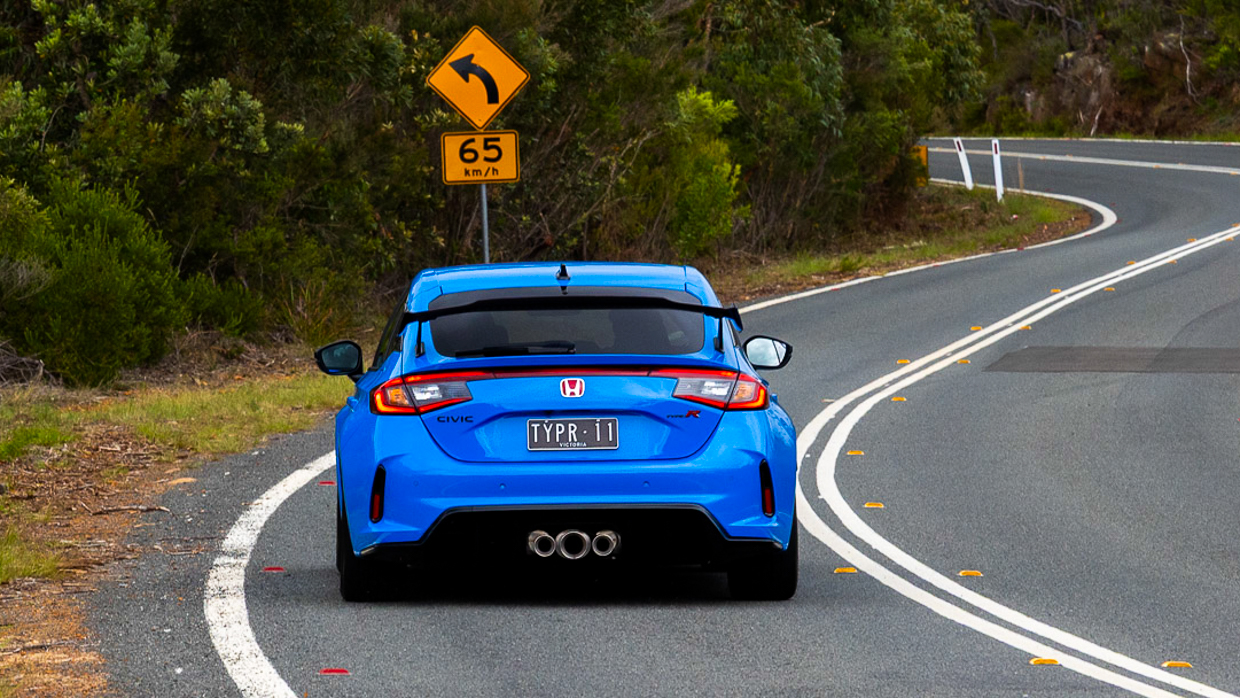
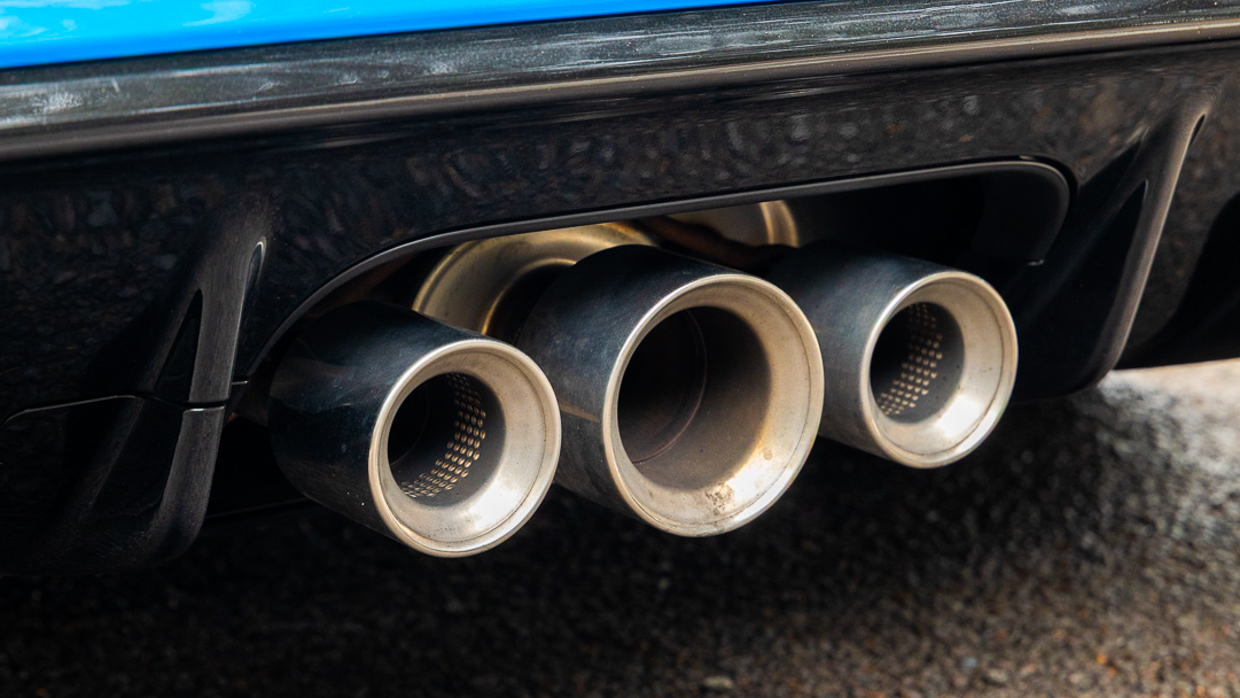
Considering the Type R has 265mm wide, 30-series Michelin Pilot Sport 4 S tyres and minimal ground clearance, bump absorption is more than adequate around town. It’s quiet, too, with no childish pops and crackles from the trio of exhaust outlets, and mostly good road noise insulation.
The clutch take-up is as smooth and slick as the six-speed manual’s positive shift, making the Type R a pussycat in the suburbs.
It takes a few revs on the dial to rouse the Type R’s 2.0-litre turbocharged four-cylinder — though nothing like the older naturally aspirated K20-engined cars — climbing above 3000rpm allows the 420Nm swell of torque to roll through the front tyres, accompanied by fruity turbo whistles.
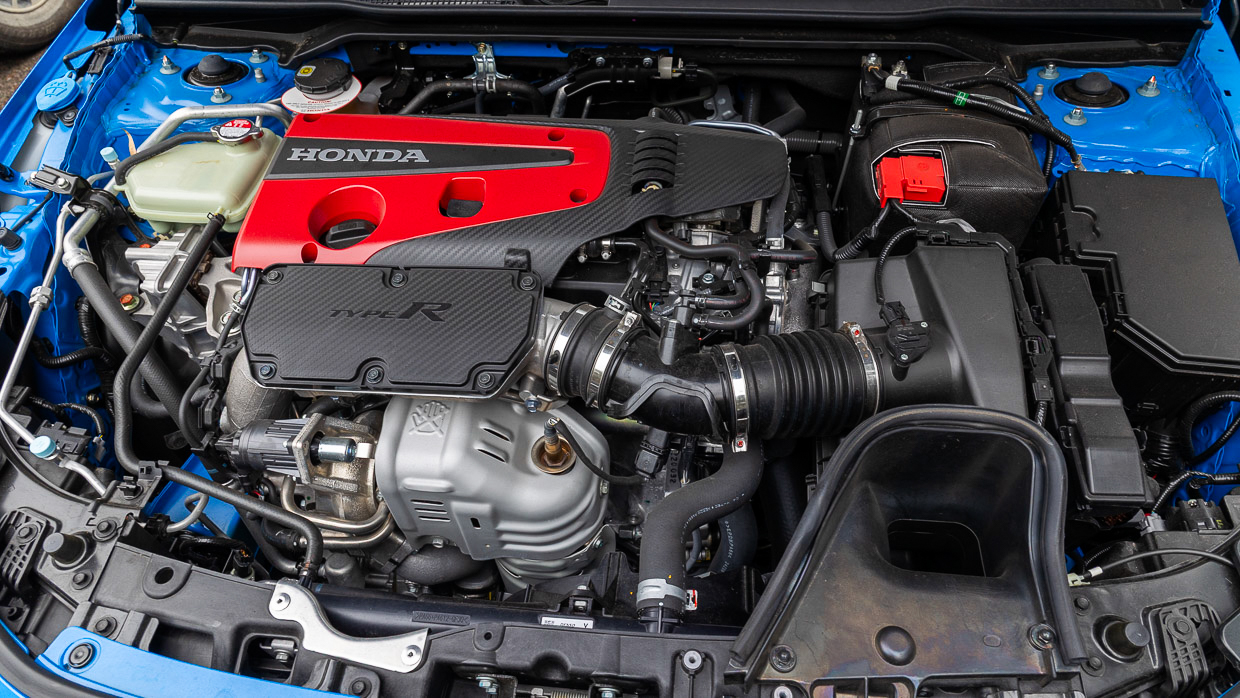
The Type R’s stout mid-range becomes lively beyond 5000rpm, building to its 235kW torque peak at 6500rpm. You’ll easily spin first and second gear in the dry — expect third and fourth to light up in the wet.
Once it’s hooked up in third gear the Type R is properly fast — way quicker than its impressive 5.4 seconds (claimed) 0-100km/h sprint suggests. Last-gen, naturally aspirated sports cars such as a Porsche 911 will struggle to keep up.
That’s all before arriving at a corner, where the Civic Type R’s front-end bite is so strong you’ll feel your organs rearrange inside. With cold rear tyres, it’s possible to get a nibble of oversteer on turn-in, but once warmed through grip is almost unshakeable.
There’s a lot of sophistication beneath the Type R’s skin, which uses a trick, dual-axis struts up front to minimise torque steer and multi-link rear suspension. Wider tracks, different spring rates and a massaged tune of better adaptive dampers makes the ‘FL5’ an even more confident, poised proposition than the previous-gen ‘FK8’.
While you can drive the Type R by the scruff of the neck in the way you would a Hyundai i30 N or BMW M2, it rewards the sort of delicate, considered inputs that make a Porsche 911 or Cayman dance.
As a driver, you’re equipped with incredible clarity through the brake pedal and seat of the pants to judge grip levels, as the electric power-assisted steering is more about firm, positive weighting and pin-point accuracy than feel. And yes, there is torque steer, but it’s very manageable.
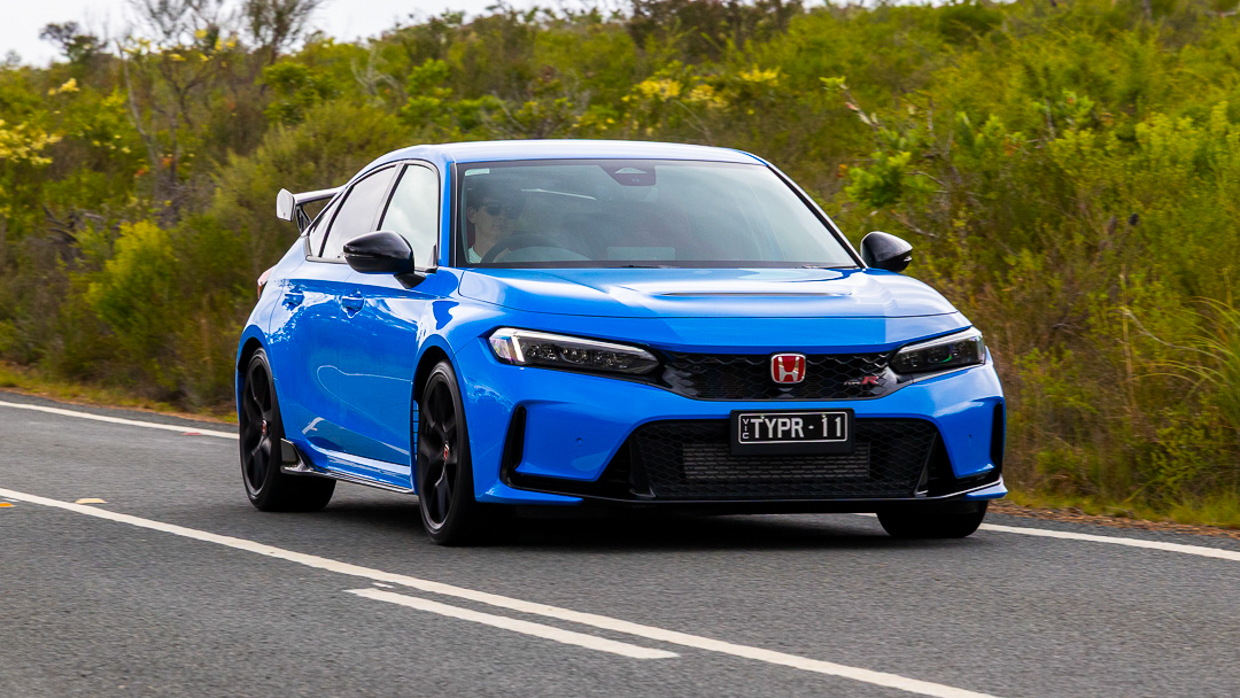
The Civic Type R’s four drive modes are easy to cycle through with a toggle on the centre console and it remembers the mode you were in after the car’s turned off. Comfort is plenty for almost any occasion, with Sport a nice increase all around for use on smooth roads and +R exclusively for competition use, in terms of damping response.
A happy medium can be found in Individual mode, cranking the engine response to +R combined with Sport steering, gauge cluster and switching between Comfort and Sport for the dampers, depending on surface quality.
Pedal spacing is quite broad, so for the narrow-footed, low-speed heel and toe downshifts require some ankle acrobatics. It makes sense at greater brake pedal inputs (when driving hard) and Honda’s auto rev-match function works brilliantly, anyway.
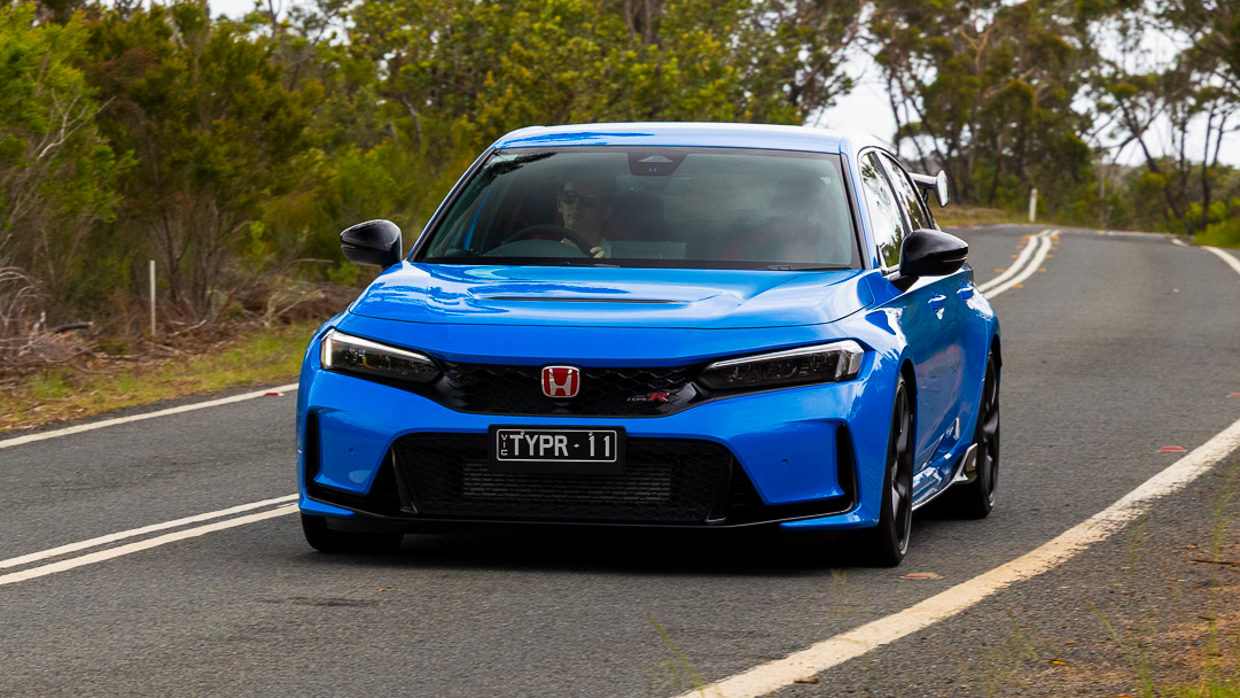
As you pull back layers of the Type R’s talent, you’ll reach another plane of talent — leaning on the helical limited-slip differential to ‘suck’ the Civic’s front end through corners. Providing the tarmac’s dry, traction is almost inexhaustible on exit with understeer banished — it’s seriously addictive.
At no point did the Civic Type R’s stability control interrupt proceedings. It’s either so expertly tuned you don’t notice it, or the car’s so stuck to the road it didn’t need to.
What’s wrong with the Type R? Well, the front-drive layout is inherently limiting. Wheelspin from the lights is common if you’re in a hurry and, in the wet, front-drive limits enjoyment possibilities compared to something like a Toyota GR Corolla.
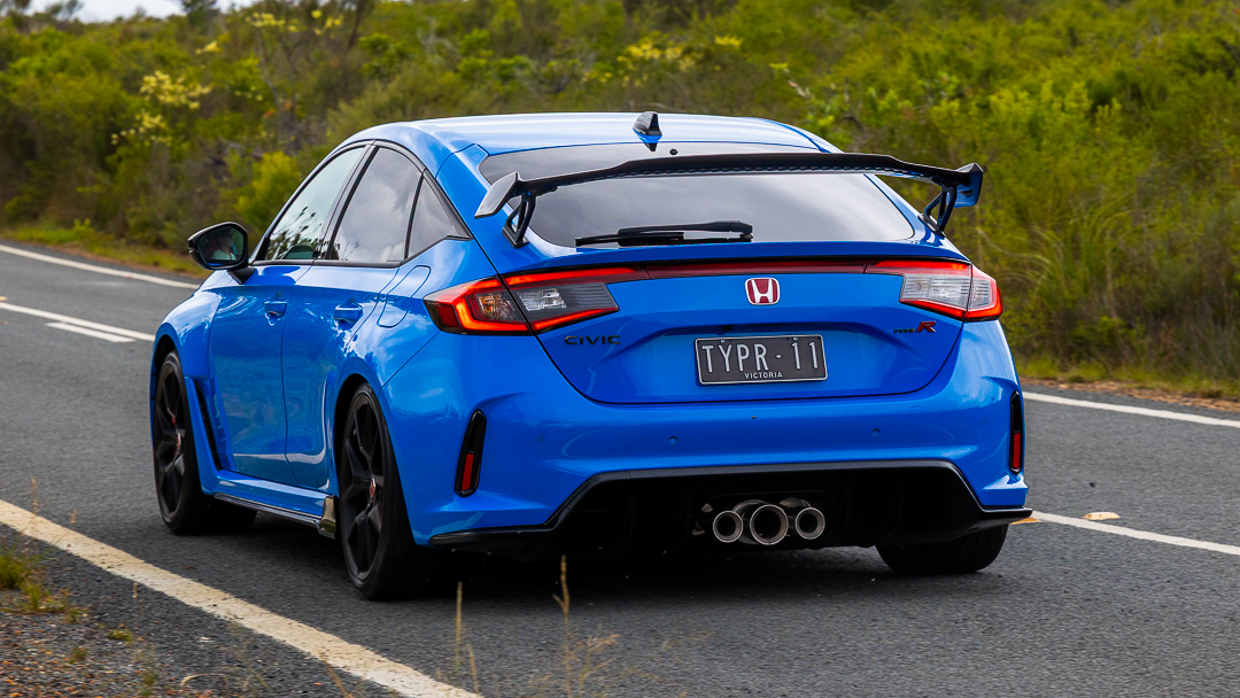
Plus, the piddly video-game-like sound of +R mode is a disappointment after those three massive exhaust tips. Not enough to turn one off the rest of the package, and as for the sound, that’s something you can choose to sort in the aftermarket.
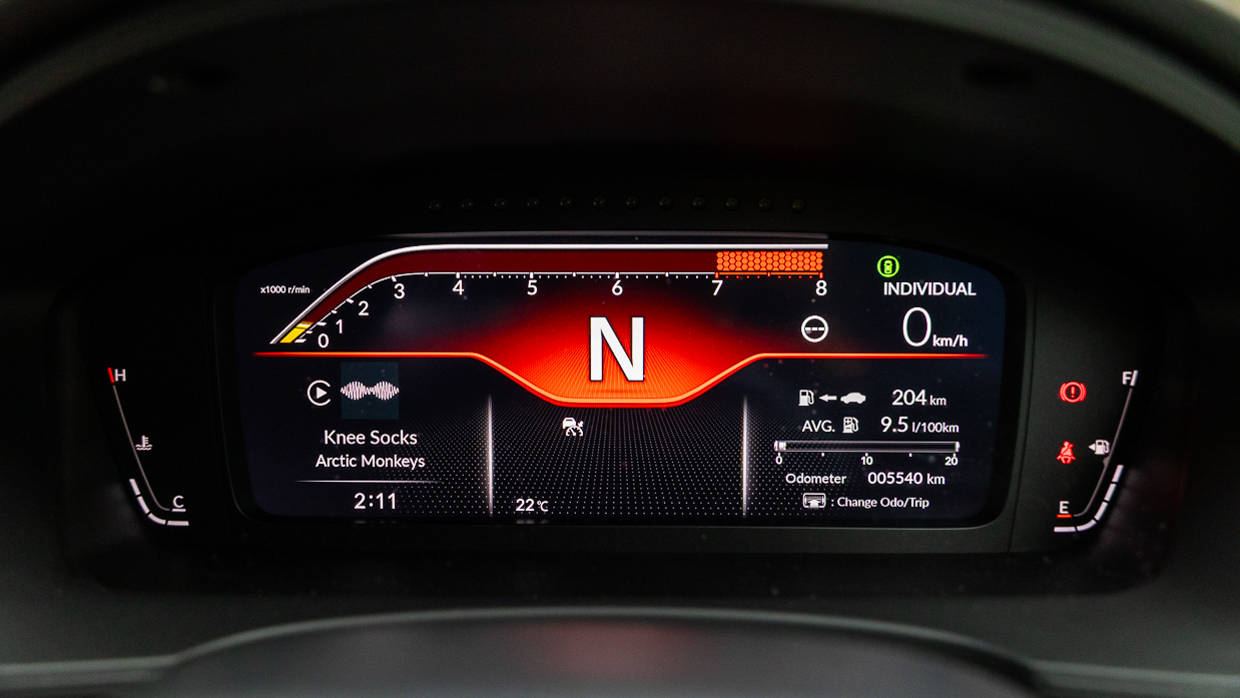
The other drawback is a small 47-litre fuel tank. It’s fine for regular use, where the Type R will drink fuel at 9.5L/100km, but when you indulge in the Type R’s boost, this quickly jumps to 12L/100km leaving you less than 400km between a full tank of 95RON and the fuel reserve light.
At the end of the day, most hot hatches are souped-up versions of normal cars, and therefore have inherent budgetary and packaging limitations.
The Honda Civic Type R proves it’s possible to overcome almost every single one of these constraints if the engineers care. The Type R has an inherent rightness that makes it special at all speeds — not just grip and speed, but the clarity of human-machine interface normally reserved for $500,000 Porsche 911 GT3s.
Unlike ‘P cars’, servicing a Civic Type R couldn’t be easier. Maintenance is due every 12 months or 10,000km and costs just $995 for five years. A five-year warranty is standard but keep the Civic serviced at a main dealer and this extends to eight years.
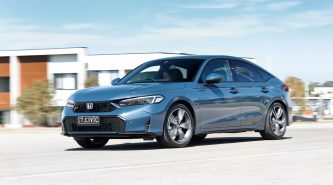
Budget Direct told us the median annual premium purchased for the first time between 1/12/24 and 1/12/25 to comprehensively insure a new Honda Civic was $1649. Individual circumstances and policy terms may vary.
Of course, everybody’s situation is different, and the premium will vary according to make and model, and other things insurers take into account, such as your postcode, driving history, who drives the car, where you garage the car and more.
Please quote for yourself. Subject to meeting underwriting criteria. Insurance issued by Auto & General Insurance Company Limited. See PDS & TMD at budgetdirect.com.au.
It is harder to escape the Civic-ness inside, so it’s helpful this generation features significantly higher grade materials than the likes of the Toyota Corolla, Kia K4 and even the Volkswagen Golf — the Civic’s build quality is better than premium German compact rivals, too.
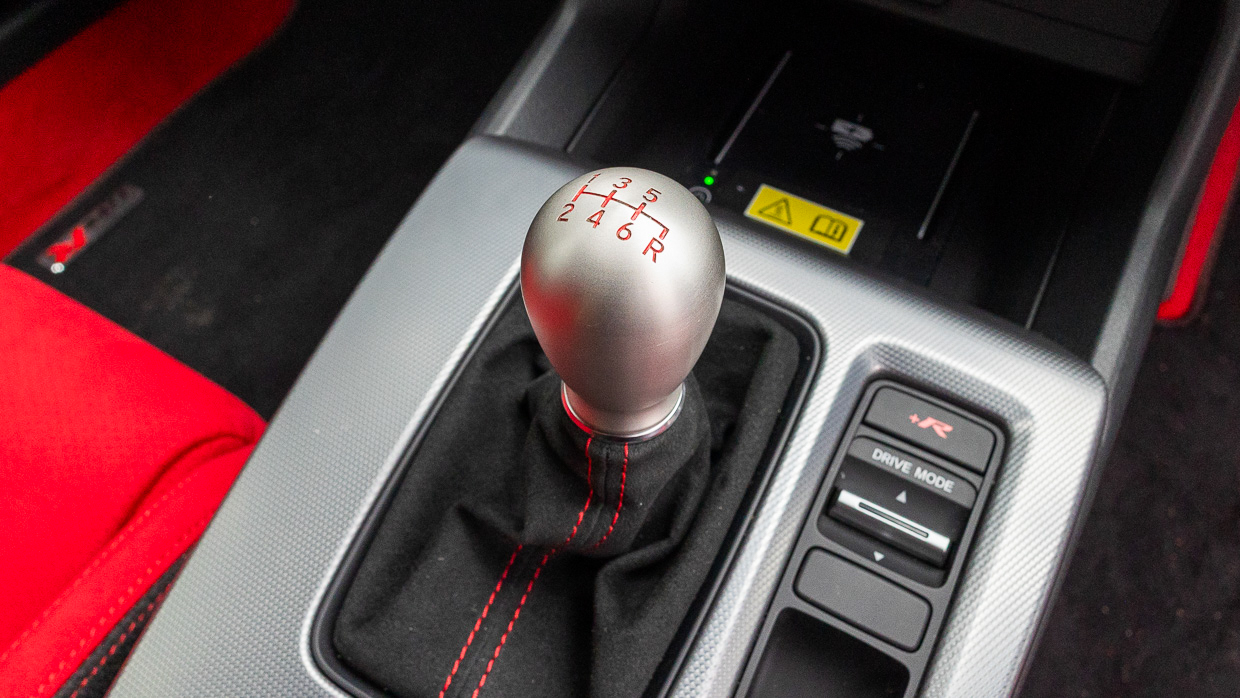
As in the driving, it’s Honda’s obsession with touch points that stands out. The low-set, manual-adjust bucket seats hug the body in all the right places. The grippy, suede-covered steering wheel, tactile metal gear level and responsive alloy pedals.
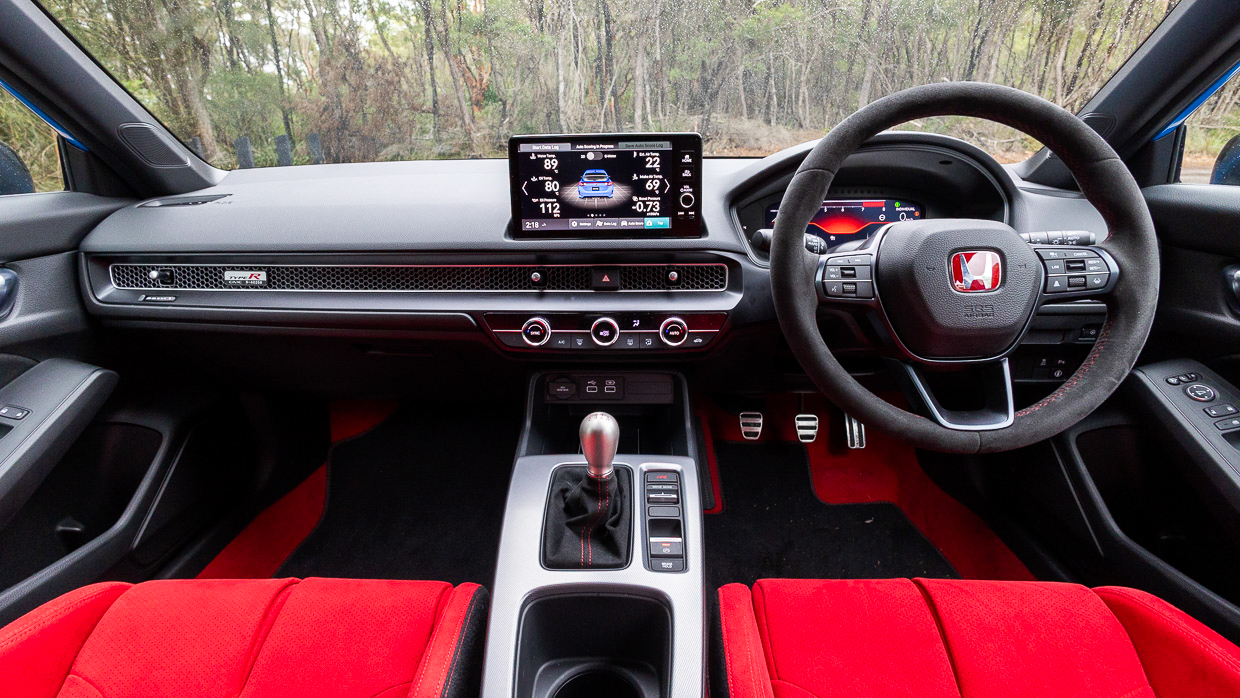
Tactility extends to clicky, rotary HVAC controls that are so refreshing in a touchscreen heavy world, and similarly pleasing are the easy-to-access steering wheel controls.
The clear and legible digital driver’s display does a nice job of imitating old-school dials and plays nice with Apple CarPlay/Android Auto navigation directions.
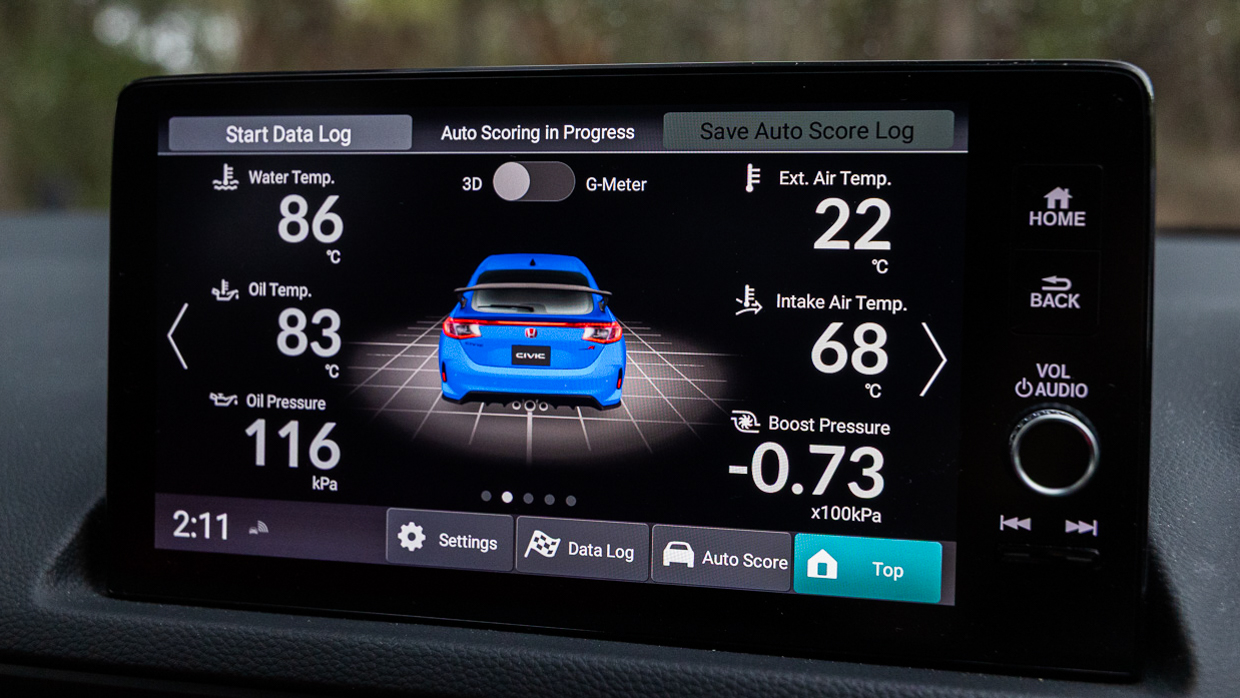
Where the Civic feels dated is the low contrast central screen, a 9.0-inch unit with physical ‘back’ and ‘home’ buttons. It runs phone mirroring wirelessly well enough, though isn’t the last word in snappiness.
We weren’t enamoured with the Civic’s in-house eight-speaker sound system, either. It lacked bass and power, plus was often unable to overcome tyre roar on coarse chip surfaces.
There are various novel data screens with real-time read-outs of G-forces and temperatures, the ability to log driving information, plus the ability for the car to generate an overall driving score with a smartphone companion app — this is best saved for the racetrack.
The Civic Type R features four, now-outmoded, USB-A charge points spread evenly between front and back seats and a wireless charging pad that worked fine.
For a performance car, the four-seat Civic Type R offers generous room in the back seat. Adults under 180cm tall will be fine for headroom and there’s plenty of leg space. The backrest has reasonable bolstering, but the limpet-like Type R easily unsticks rear passengers.
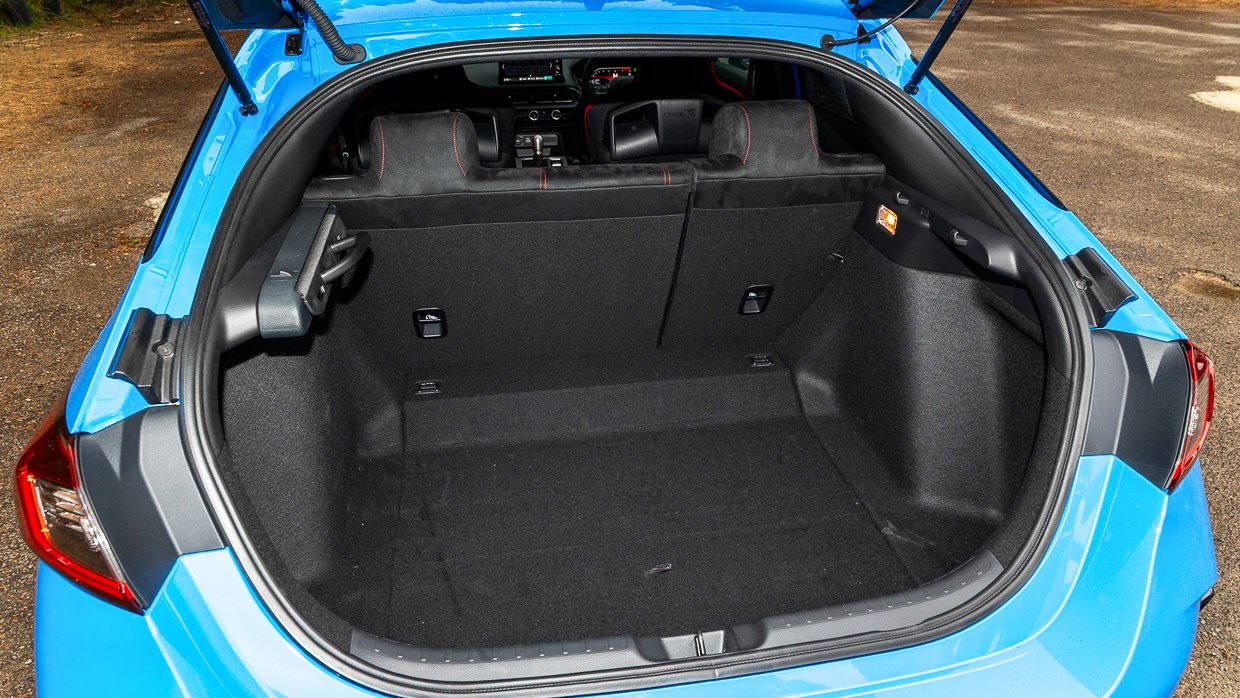
Another win in the Type R is that huge boot, measuring 410 litres (though it looks larger) with good width and depth. Folding the back seats increases this to 1212L, though there’s sadly no spare tyre in the Type R.
The praise for the FL5 Civic Type R may sound effusive because, after all, it’s bloody expensive. Not only significantly more than the hot-hatch watermark Golf GTI, but above the near-luxury all-wheel-drive Golf R and Audi S3 as well — and nowhere near the Germans on feature levels.
But no one is buying the Type R for flash infotainment screens or ventilated seats. Instead, it’s the way this FL5 Honda Civic Type R transcends its humble roots to become more than the sum of its parts: a brilliant performance car first, hot hatch second, that keeps them selling out.
A testament to the Type R’s excellence, the current allocation is, again, exhausted. “Additional stock of the Type R” is coming to Australia, Honda tells us, but with no exact timeframe.
If you want what will very likely go down as the greatest hot hatch of this decade, we’d suggest opening a dialogue with your Honda dealer sooner rather than later.
Key specs (as tested)
About Chasing cars
Chasing Cars reviews are 100% independent.
Because we are powered by Budget Direct Insurance, we don’t receive advertising or sales revenue from car manufacturers.
We’re truly independent – giving you Australia’s best car reviews.
The estimate provided does not take into account your personal circumstances but is intended to give a general indication of the cost of insurance, in order to obtain a complete quote, please visit www.budgetdirect.com.au. Estimate includes 15%^ online discount.
^Conditions Apply
Budget Direct Insurance arranged by Auto & General Services Pty Ltd ACN 003 617 909(AGS) AFSL 241 411, for and on behalf of the insurer, Auto & General Insurance Company Limited(ABN 42 111 586 353, AFSL 285 571).Because we don’t know your financial needs, we can’t advise you if this insurance will suit you. You should consider your needs and the Product Disclosure Statement before making a decision to buy insurance. Terms and conditions apply.
Indicative quote based on assumptions including postcode , 40 year old male with no offences, licence suspensions or claims in the last 5 years, a NCD Rating 1 and no younger drivers listed. White car, driven up to 10,000kms a year, unfinanced, with no modifications, factory options and/or non-standard accessories, private use only and garaged at night.
^Online Discounts Terms & Conditions
1. Discounts apply to the premium paid for a new Budget Direct Gold Comprehensive Car Insurance, Third Party Property Only or Third Party Property, Fire & Theft Insurance policy initiated online on or after 29 March 2017. Discounts do not apply to optional Roadside Assistance.
2. Discounts do not apply to any renewal offer of insurance.
3. Discounts only apply to the insurance portion of the premium. Discounts are applied before government charges, taxes, levies and fees, including instalment processing fees (as applicable). The full extent of discounts may therefore be impacted.
4. We reserve the right to change the offer without notice.