Powered by

-
Car Reviews
Latest reviews
-
Car News
Latest news
-
Car Comparisons
Latest comparisons
- Chasing Deals
Latest reviews
Latest news
Latest comparisons
Just like rival BYD, China’s Geely believes Aussies are short-changed when it comes to sedan options, and the affordable Emgrand plug-in hybrid is its solution
Australia’s experience of Chinese brands entering the new car market has been a bit unusual by global standards, because locals were already reasonably well served by Japanese, Korean, European and American metal.
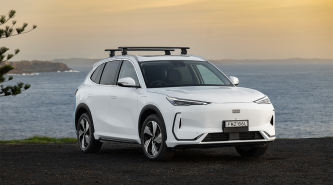
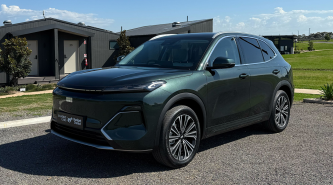
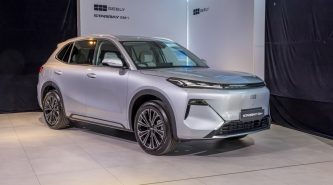
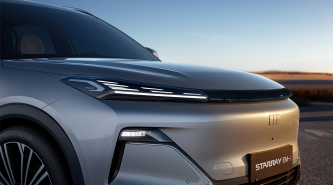
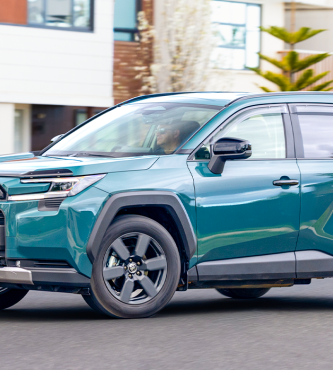
Here, Chinese cars have landed as appealingly affordable alternatives to effectively solid, if perhaps overpriced, existing options. Take the Geely Starray EM-i: it’s joined the midsize SUV field as a cheap-but-decent PHEV in a field that includes the well-regarded Toyota RAV4.
In developing countries, it’s been a very different story. If you’d visited North Africa or South America a few years ago, you would have marvelled at the number of decades-old Renault 5s or Mercedes 240Ds still toiling about. Now, they’re being replaced by new Chinese cars.
That’s because Chinese brands have seen great opportunity in countries, and vehicle segments, ignored or underserved by major Western brands who have struggled to make their new models cheap enough to appeal to car buyers who aren’t totally flush with cash.
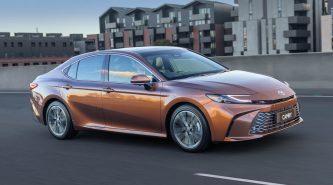
Our sedan market is a microcosm of this situation. Buyer migration to SUVs has slashed the profitability for Western carmakers to build and sell sedans in Australia, so they don’t bother — apart from the Toyota Camry (from $39,990 plus on-roads) and a few bit players.
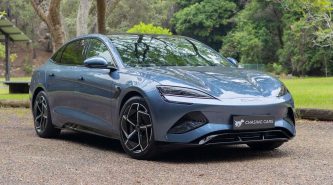
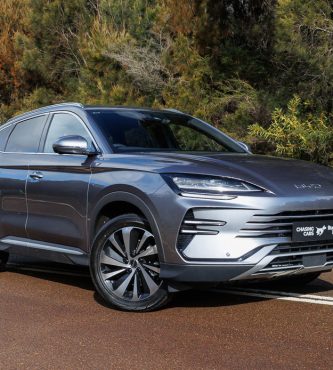
But not everybody wants an SUV, and not everybody that wants a sedan wants a Camry. So, as expected, the Chinese are rushing in to fill the vacuum. First to move was BYD, with the Seal 6 plug-in hybrid in $35K sedan and even $40K wagon formats. Exotic!
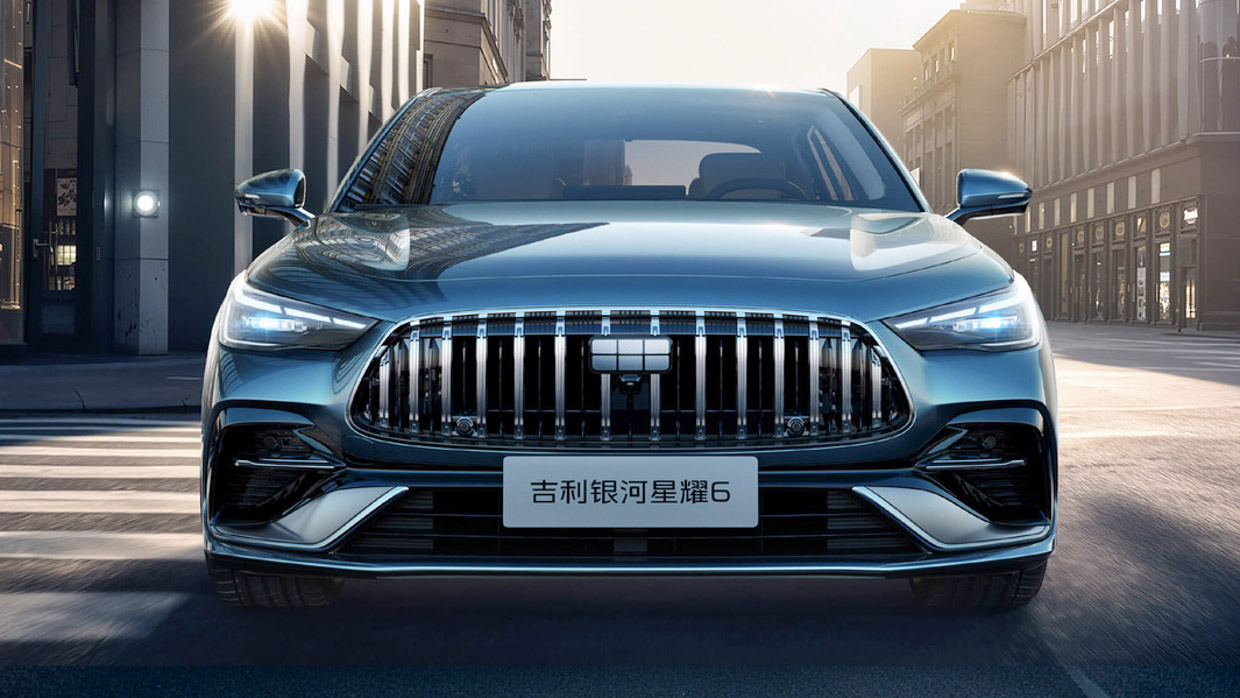
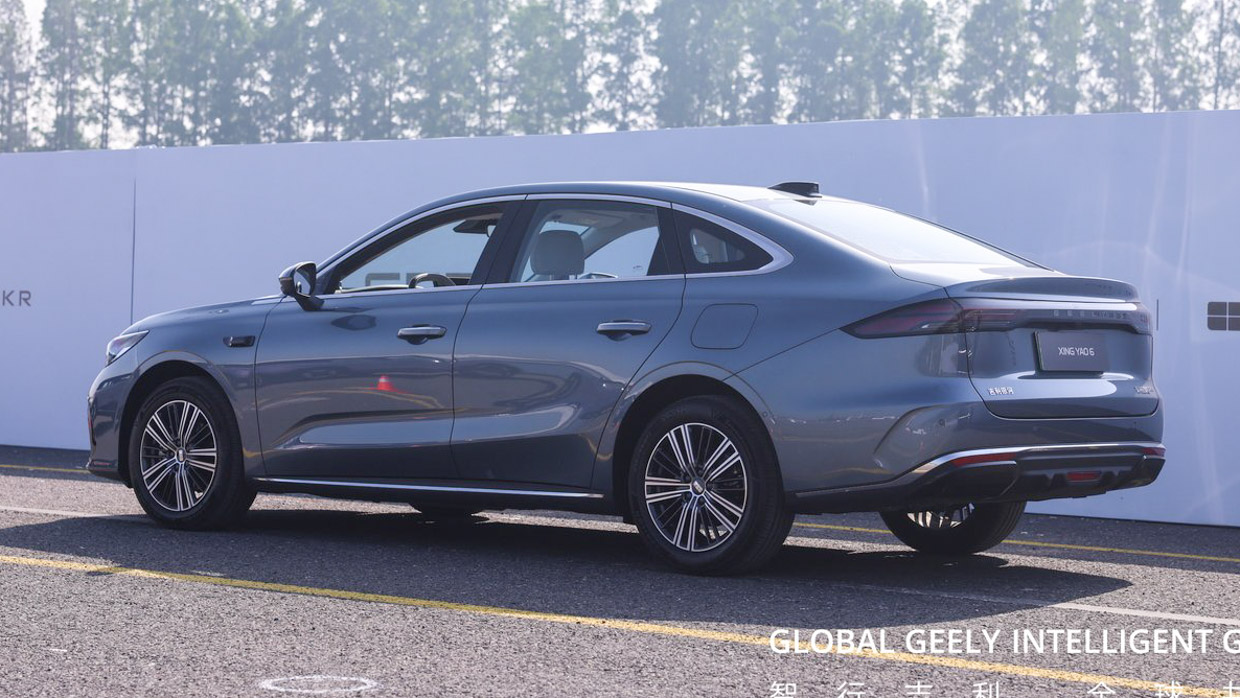
Next up is likely to be the subject of this test: the fifth-generation Geely Emgrand, known as the Galaxy Starshine 6 in its home market. Confirmed for Australia and scheduled to launch in early 2027, the Emgrand will initially be sold only with an ‘EM-i’ petrol-PHEV engine.
The Emgrand is related to the Geely Starray EM-i midsize SUV—a RAV4 rival that is selling in decent numbers. Chasing Cars is currently running a Starray as a long-term test vehicle.
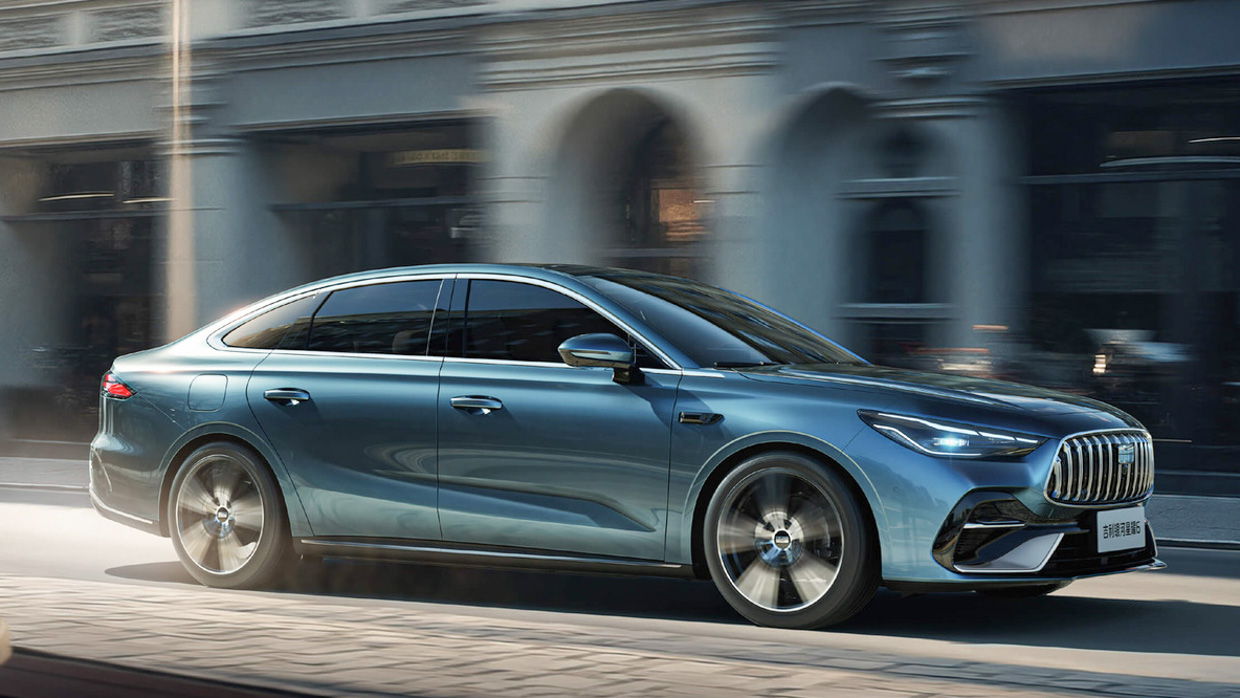
However, the two are not identical under the skin. They share their EM-i PHEV powertrain (with tweaked outputs), but the sedan is longer, narrower, and mechanically simpler, swapping the Starray’s independent rear suspension for a torsion beam.
Though it can drive the wheels at higher speeds, Geely’s EM-i system mainly works by using a 1.5-litre non-turbo four-cylinder petrol engine to generate electric power for the midsized battery—a 17kWh LFP pack in the Emgrand—which you can also charge by plugging in.
Battery power is sent to an electric motor, which drives the car most of the time, making an EM-i hybrid feel EV-like underfoot. Like the Starray, the Emgrand is front-wheel drive, but the sedan is slightly slower because its motor is detuned from 160kW/262Nm to 120kW/210NM.
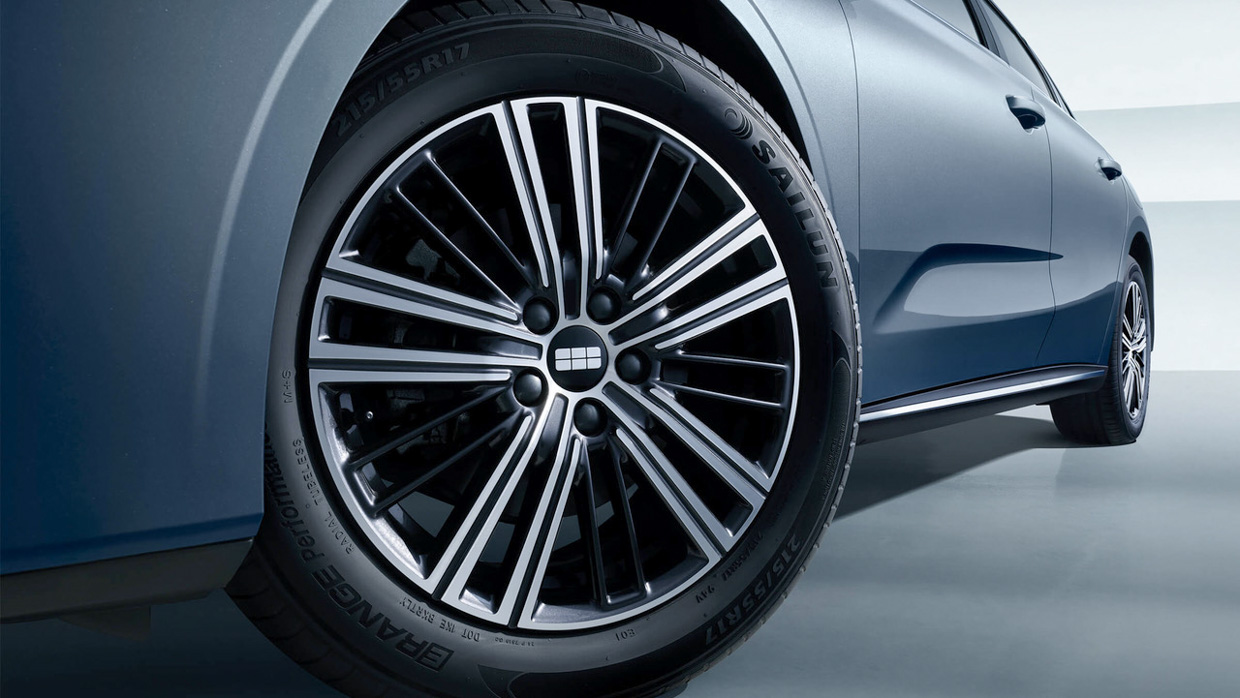
That call was likely made in the name of efficiency, and because at 1580kg, the Emgrand sedan is 200kg lighter than the Starray. It doesn’t need as much power to get the job done.
Our test of the Emgrand on a closed course near Geely HQ in Hangzhou, China, showed it to be quick enough off the line. Expect a 0-100km/h time around eight seconds with charge in the battery—more if the LFP pack is exhausted.
We noticed the modest petrol engine switching on and off more than we can remember occurring in the Starray, but to be fair, our tester was flogged by a rotation of international journalists.
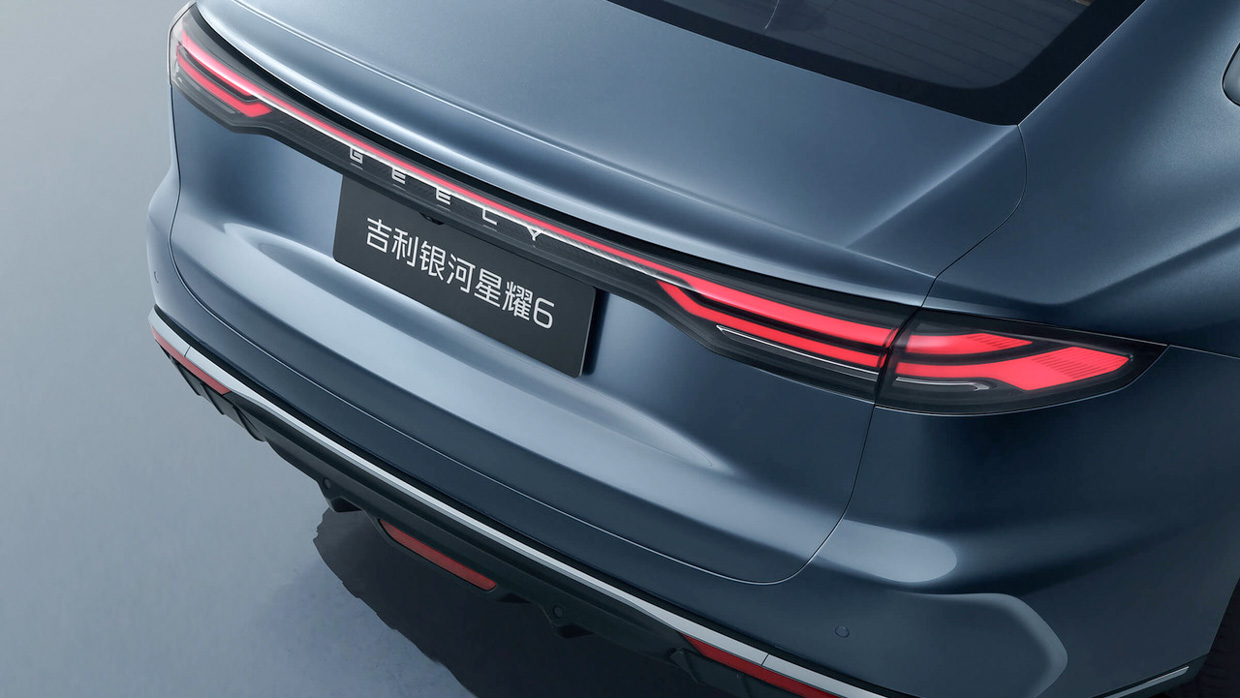
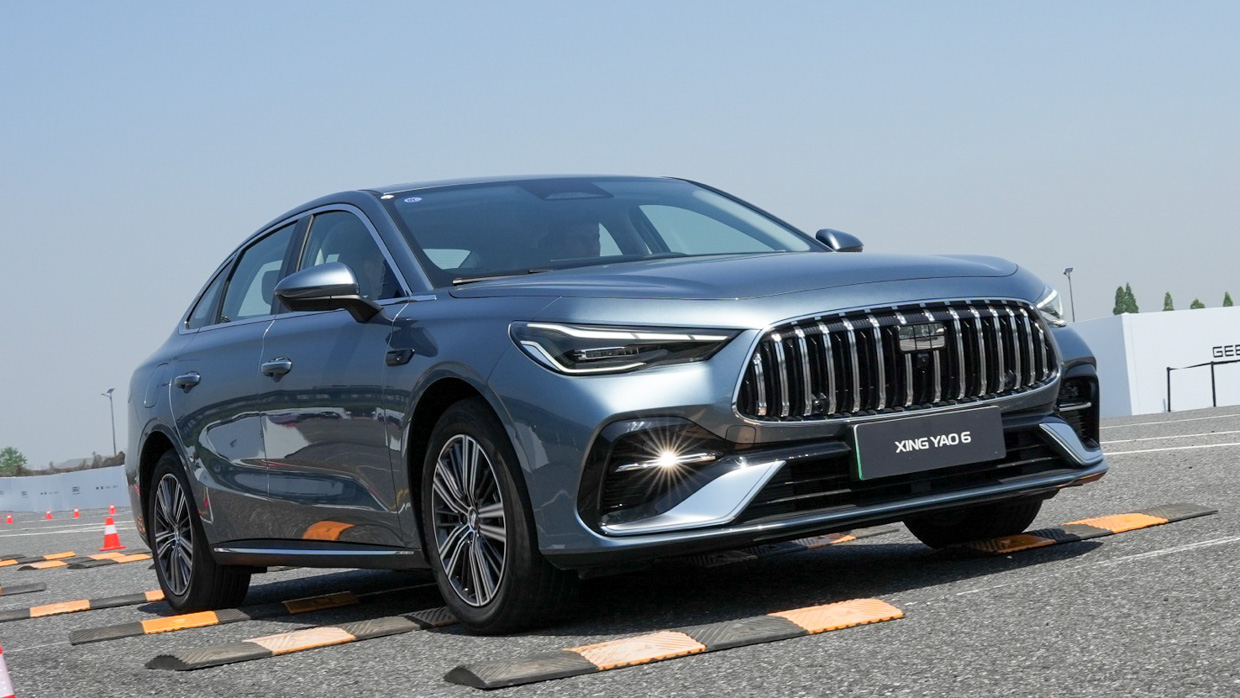
A tight and demanding handling course was set up for our first drive. It was, in effect, a good simulation of the kinds of obstacles a rideshare driver in an Australian city might have to dodge on a Saturday night.
We wrangled a few attempts in the Emgrand and came away with the clear view that it’s mostly fit for purpose as an urban errand-runner, but it’s not quite a match for the segment benchmark Toyota Camry—which manages to be both efficient and satisfying to drive.
The problem is that, in Chinese-market tune, the Emgrand is dynamically sloppy.
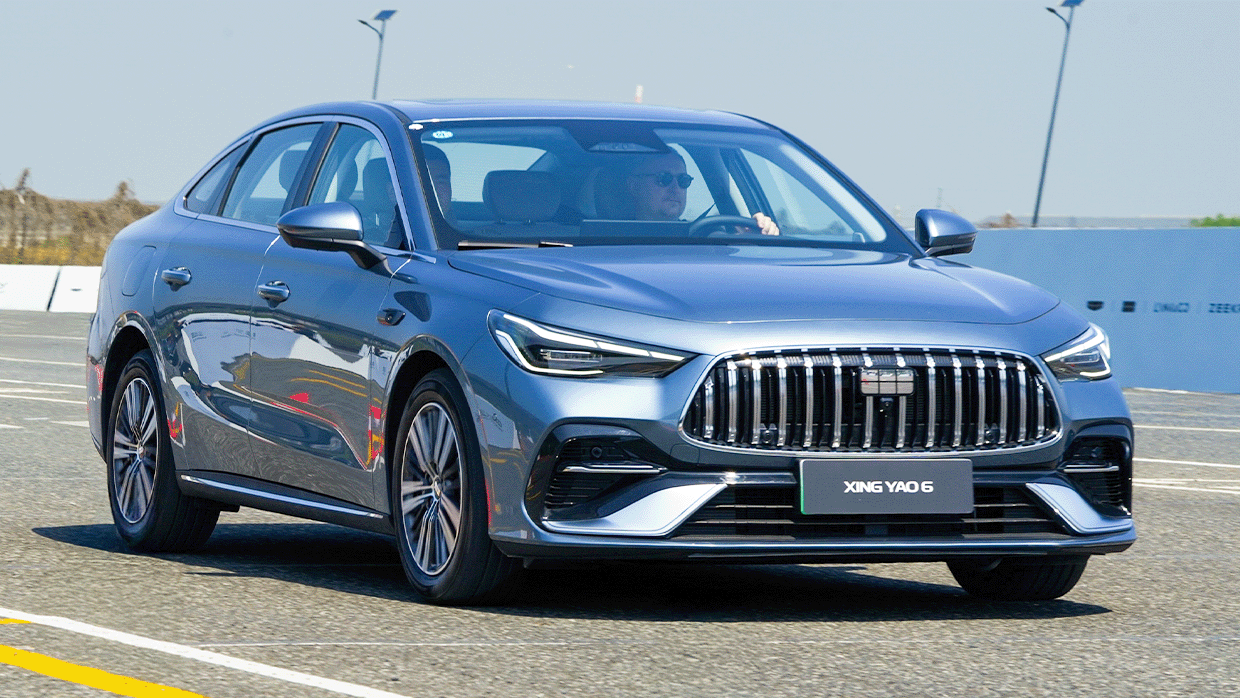
The suspension is too soft, pitching and rolling in all directions—huge nosedive under hard braking, comical body roll in the corners—meaning you must drive it very gently to keep everything settled. Sailun tyres also had limited grip and plenty of squeal.
We are not suggesting sedans intended for dignified driving or rideshare need to be sports cars, but everybody benefits from more disciplined body control and supple suspension—not least those travelling in the back seat.
More concerning is that the Emgrand’s foibles remind us more of the company’s first release (the overly soft EX5 electric SUV) than its second (the somewhat more capable Starray EM-i). The Emgrand’s suspension should be retuned before it lands locally, as we don’t want to see Geely regress.
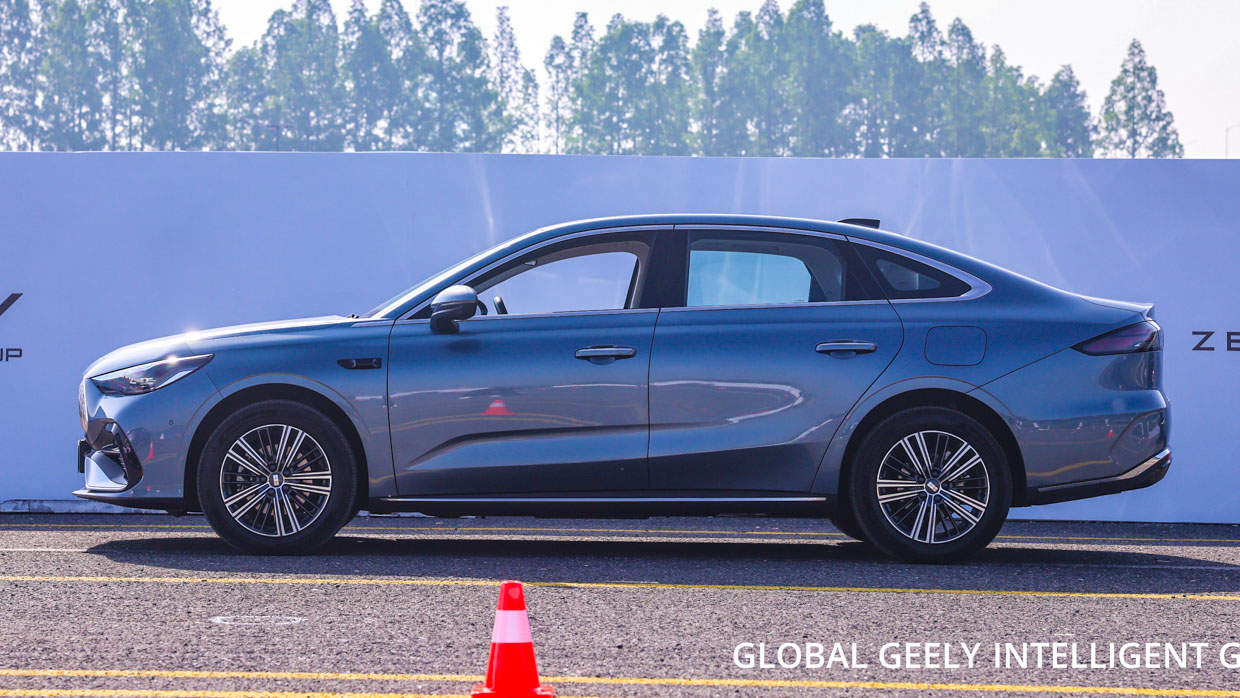
We’d recommend the engineers dissect an Aussie-market Camry and try to mirror its poised damping that suits Uber operators and keen drivers in equal measure.
We expect the Emgrand to undercut the $40K Camry Ascent, and if it does so, the cabin presentation will impress prospective buyers.
This doesn’t feel like a base-model—but nor does it feel like a luxury car. Geely has found the middle ground, where it can deliver high-grade Camry amenities like heated, cooled and powered seats, for a base model, cloth-seated Camry price.
We tested an Emgrand that was broadly representative of an ‘Inspire’ (or top) grade. Geely does have the option to introduce a cheaper, true base model with a smaller 8kWh battery and fewer features. There’s also a larger 28kWh battery waiting in the wings.
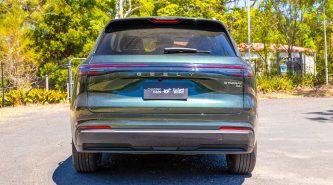
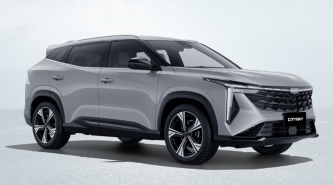
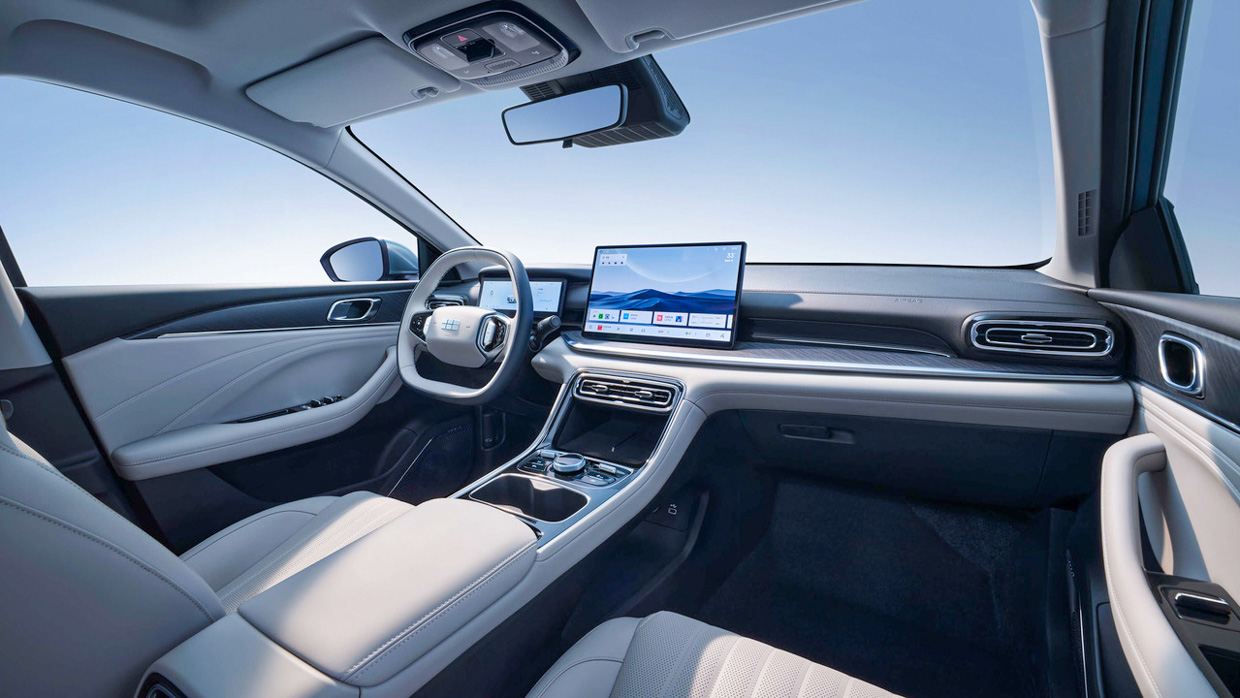
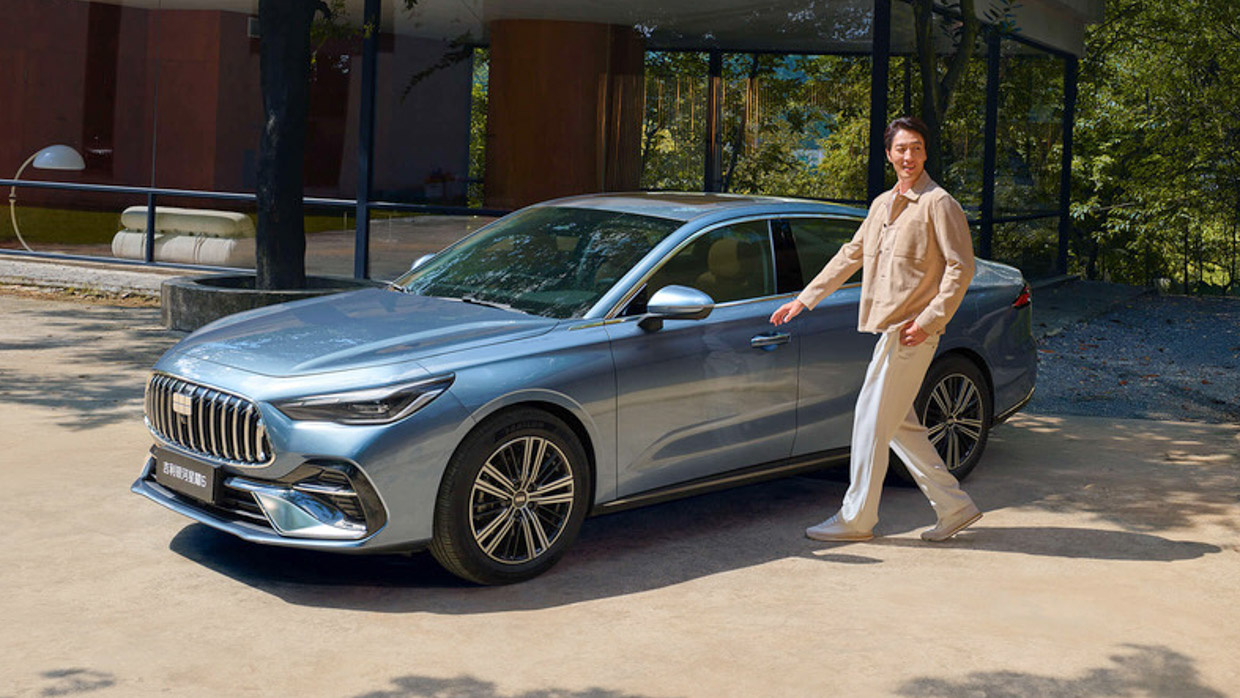
Our tester was finished in a mid-grey metallic with silver trimmings outside, and a two-tone cream and charcoal colour scheme inside. Buyers who prefer designs on the more conservative and less outlandish side will find much to like.
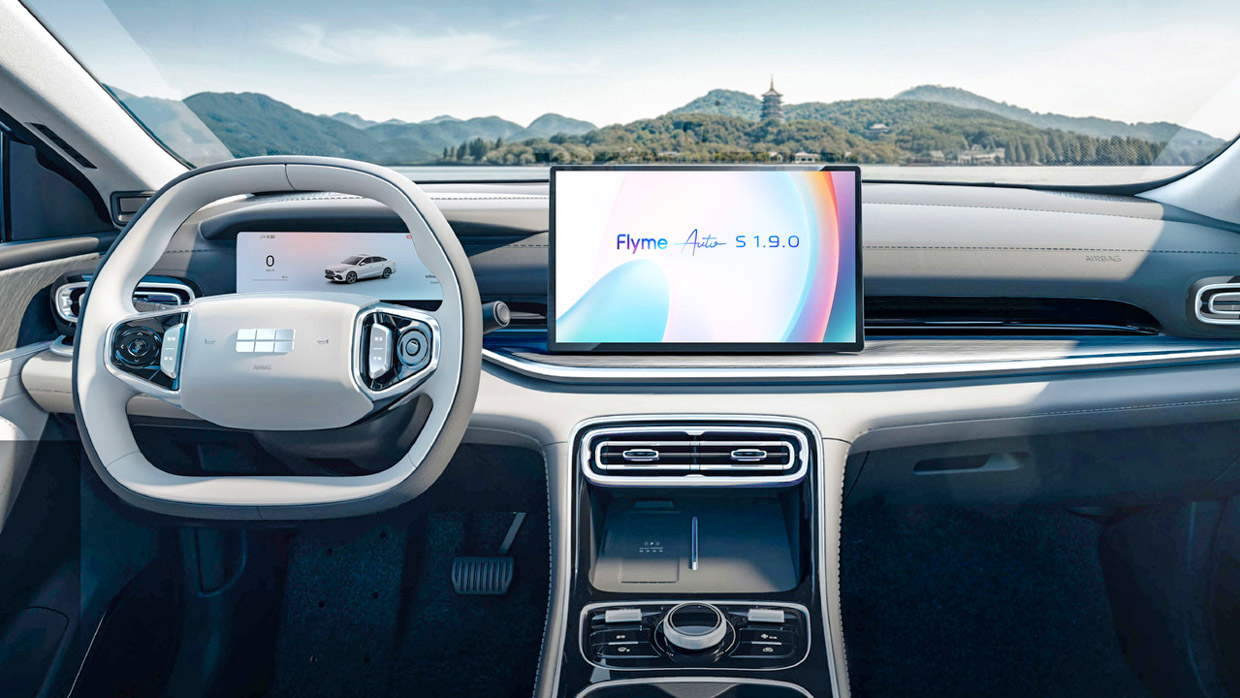
The interior design is straightforward and easy to work with. Air vents trimmed in faux chrome can be adjusted quickly (and manually!), and the deployment of a column shifter has freed up space on the centre console for physical shortcuts to key functions.
Two screens feature on the dash running Geely’s Flyme Auto operating system: a 10-inch digital instrument cluster for the driver, and a 14.6-inch 2K touchscreen. Climate controls are in the centre display, but they are permanently visible at the bottom.
Responses from the screen are snappy and wireless Apple CarPlay/Android Auto will be fitted for Australia.
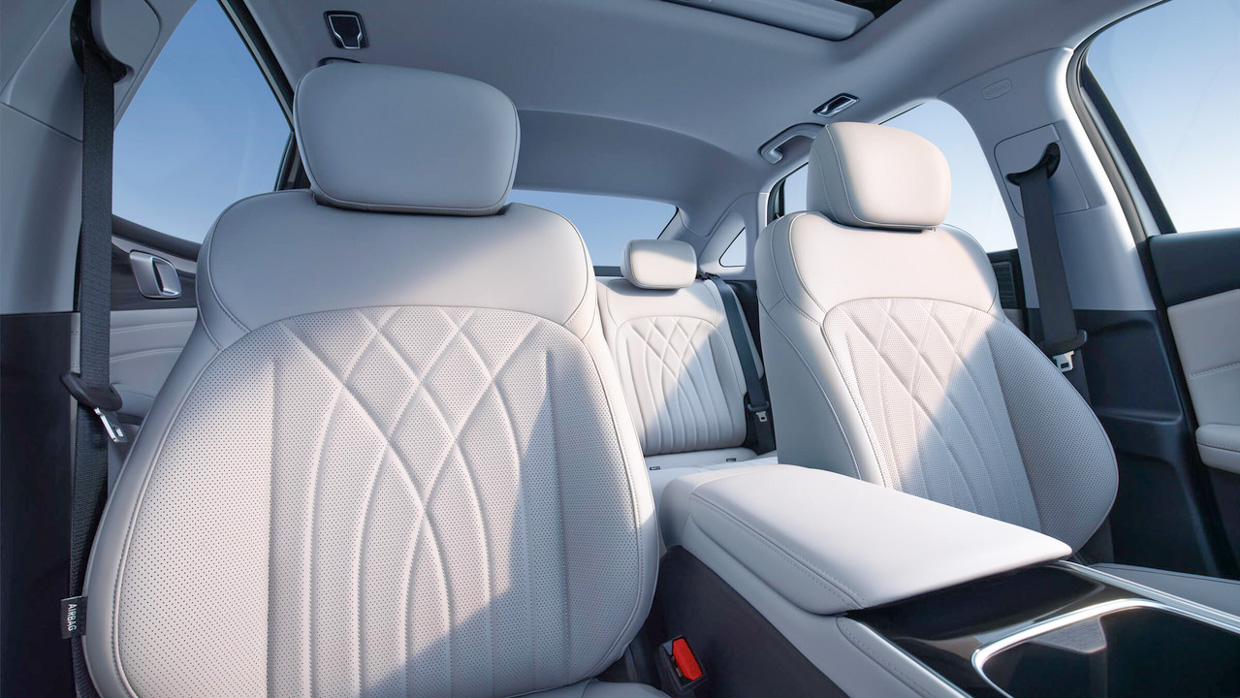
The perforated artificial leather pews are initially comfortable. The chairs are broad and flat, accommodating lots of body types, but the lack of seat base tilt means long-legged folks might struggle to feel supported over long drives.
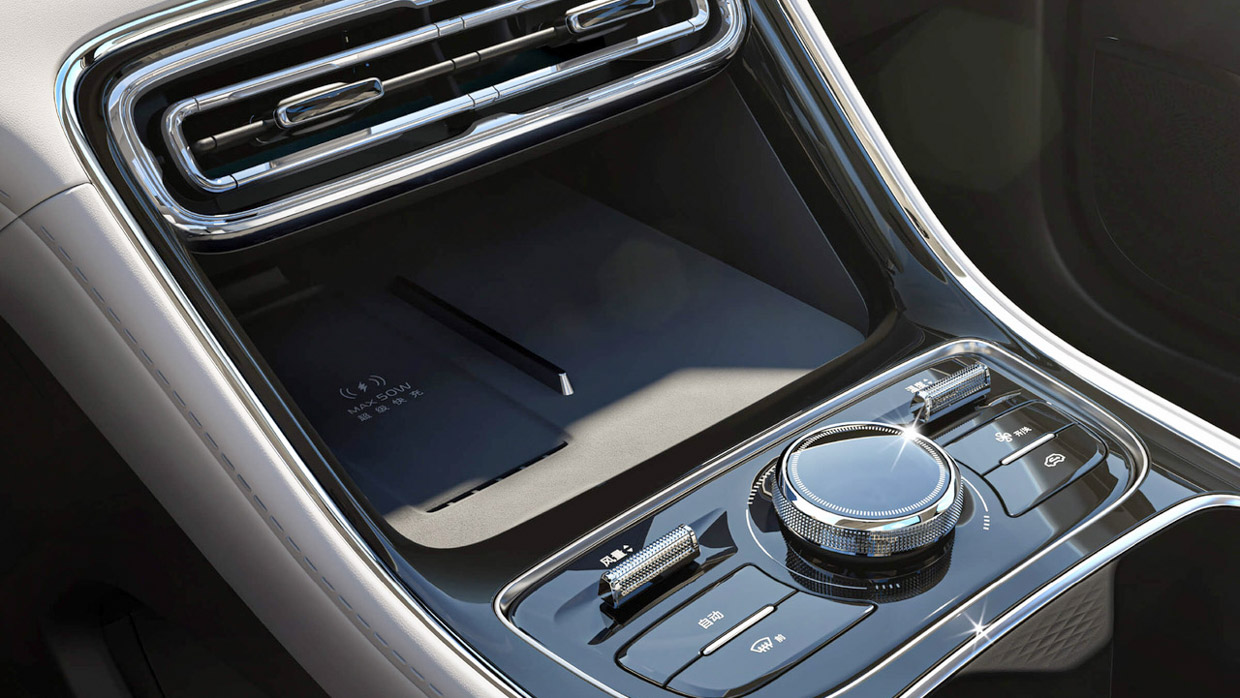
There’s no such thing as a free lunch, and while the Emgrand’s cabin brings niceties like modern tech and cooled seats to the table, many of the secondary materials are more of a ‘veneer of premium’ than the real deal. At this price, that’s probably fine.
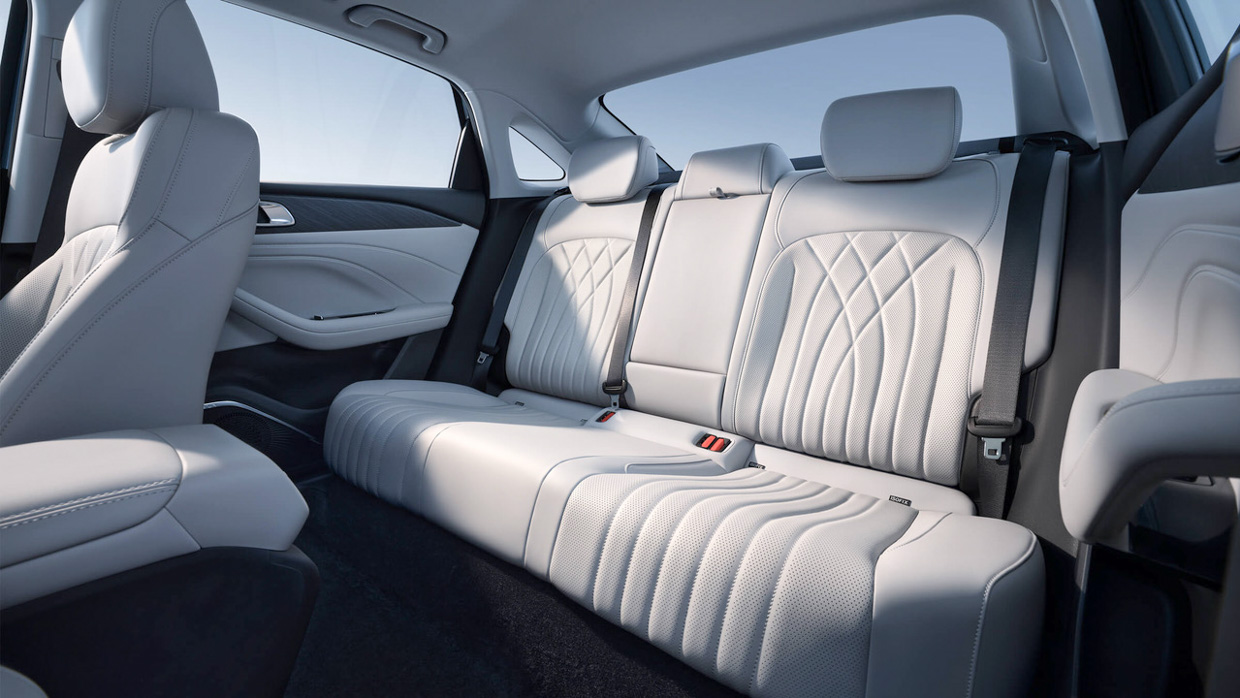
Space in the second row? Maybe not as big as you’d expect. That’s because the Emgrand is bit smaller than a Camry, but more importantly, it has a 69mm shorter wheelbase.
You can tell in the legroom. The Emgrand is still reasonably spacious, but it isn’t a stretch-out situation for passengers in row two. They still benefit from air vents, a USB charge point and a flip-down armrest, however.
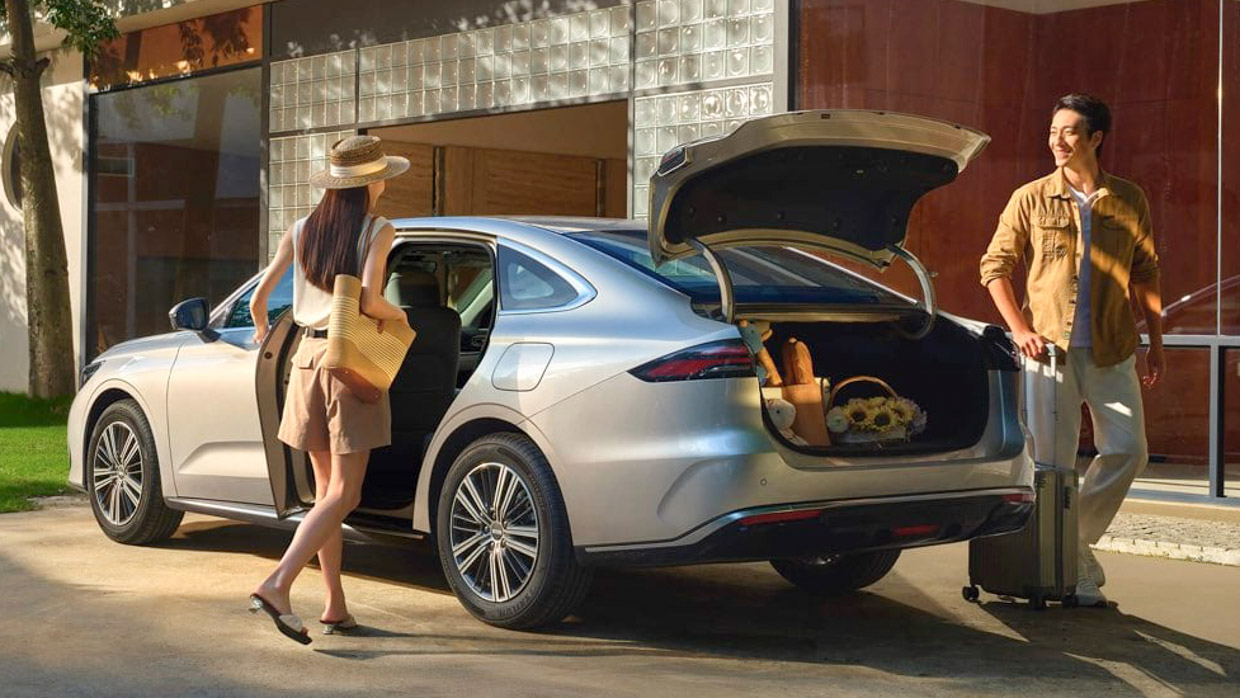
Boot space is solid at 609 litres as there’s more space down below from the compact torsion beam rear suspension, though gooseneck hinges eat into cargo space.
Plus, there’s no way to close the Chinese-market car’s boot without grabbing the dirty metal bodywork. That might sound like a thin complaint…but the bodywork gets filthy!
Our testing of the EM-i PHEV system in the Starray SUV has revealed that it’s an efficient technology—and the slightly less powerful, more aerodynamic Emgrand should deliver even better results.
With the 1.5-litre petrol engine common to all grades, we think it’s likely that the Emgrand will launch in Australia with an option of two LFP battery packs: 17kWh and 28kWh.
These batteries should unlock EV-mode driving of about 100km and 150km respectively. If you can charge up the Emgrand regularly at home or work, it is incredibly cheap to run.
Geely has tuned the EM-i system so that once the battery hits 20 percent state of charge, the petrol engine is forced on. This preserves some electric power for overtaking and merging and to keep a lid on emissions and fuel use.
Our long-term Starray EM-i is returning real-world fuel consumption of 5.2-5.7L/100km once the petrol engine is brought into play.
The lower and lighter Emgrand sedan should be able to deliver consumption of 4.0-4.5L/100km in the same conditions.
That is basically what the Camry delivers…but the Camry doesn’t have a PHEV battery for extended electric driving. That’s a benefit the Geely and BYD options bring to the table.
Service pricing will only be finalised closer to launch, but it is likely the Emgrand will have the same warranty arrangements as other Geely models sold in Australia.
For private buyers, that means a solid vehicle warranty of seven years/unlimited kilometres and a traction battery warranty that runs for eight years with no mileage limit.
As is standard in the car industry, commercial operators have stricter warranty terms with coverage for the vehicle and battery running out after a (relatively low) 150,000km.
Some rival brands have better terms for commercial drivers (such as rideshare operators): Kia does not limit its warranties for this use while MG offers a 10 year/250,000km conditional plan.
We’re pleased to see Geely committing to the Emgrand for the Australian market. Sedans are typically more efficient, more politely sized, and better to drive than their SUV counterparts.
It’s the latter point that needs fine-tuning in the nine months, or so, before the Emgrand hits our shores. The boaty, uncontrolled suspension is a major demerit compared to the beautifully damped Camry that sets the standard in the sedan class.
There are some bright lights here: the EM-i powertrain delivers excellent real-world efficiency even when the battery charge runs low, and the cabin presentation is appealing.
Tidy up the ride and handling, fit some better tyres, and throw in a few nice-to-haves like the boot grab to avoid dirty hands, and the Emgrand will start looking like an intriguing alternative to the default choice in this segment.
About Chasing cars
Chasing Cars reviews are 100% independent.
Because we are powered by Budget Direct Insurance, we don’t receive advertising or sales revenue from car manufacturers.
We’re truly independent – giving you Australia’s best car reviews.
The estimate provided does not take into account your personal circumstances but is intended to give a general indication of the cost of insurance, in order to obtain a complete quote, please visit www.budgetdirect.com.au. Estimate includes 15%^ online discount.
^Conditions Apply
Budget Direct Insurance arranged by Auto & General Services Pty Ltd ACN 003 617 909(AGS) AFSL 241 411, for and on behalf of the insurer, Auto & General Insurance Company Limited(ABN 42 111 586 353, AFSL 285 571).Because we don’t know your financial needs, we can’t advise you if this insurance will suit you. You should consider your needs and the Product Disclosure Statement before making a decision to buy insurance. Terms and conditions apply.
Indicative quote based on assumptions including postcode , 40 year old male with no offences, licence suspensions or claims in the last 5 years, a NCD Rating 1 and no younger drivers listed. White car, driven up to 10,000kms a year, unfinanced, with no modifications, factory options and/or non-standard accessories, private use only and garaged at night.
^Online Discounts Terms & Conditions
1. Discounts apply to the premium paid for a new Budget Direct Gold Comprehensive Car Insurance, Third Party Property Only or Third Party Property, Fire & Theft Insurance policy initiated online on or after 29 March 2017. Discounts do not apply to optional Roadside Assistance.
2. Discounts do not apply to any renewal offer of insurance.
3. Discounts only apply to the insurance portion of the premium. Discounts are applied before government charges, taxes, levies and fees, including instalment processing fees (as applicable). The full extent of discounts may therefore be impacted.
4. We reserve the right to change the offer without notice.