Powered by

-
Car Reviews
Latest reviews
- Car News
-
Car Comparisons
Latest comparisons
- Chasing Deals
Latest reviews
Latest comparisons

Not quite the full-on, game-changing, low-cost EV we were promised, cut-back Model 3 RWD still delivers superb value
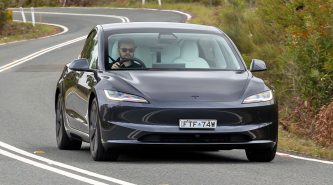
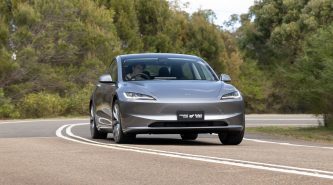
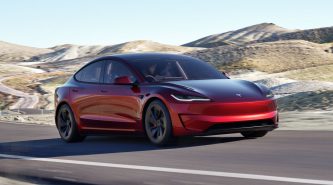
Tesla is in the habit of falling short on promises, and that’s how we’ve ended up with its new entry-level car in Australia, the 2027 Model 3 RWD — formerly known as the Model 3 Standard overseas.
Cutting straight to it, this new entry-level variant cleaves $9000 off the price of the newly named ‘Premium’ Model 3 RWD by omitting features.
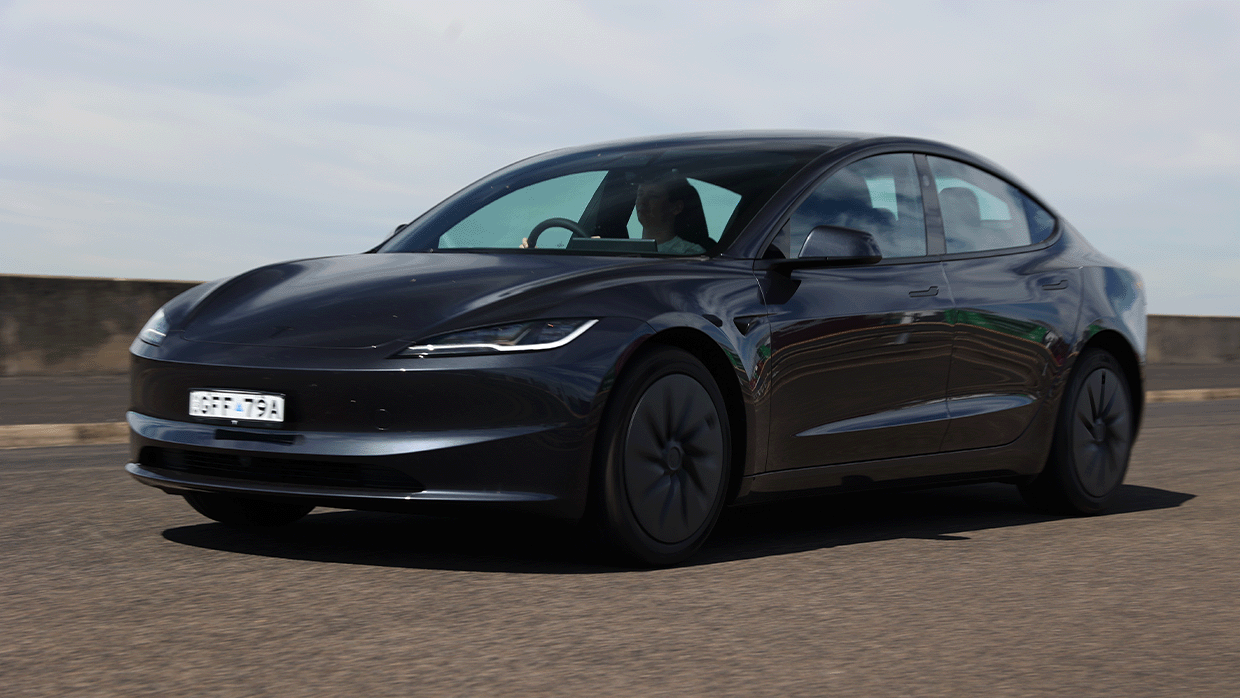
Yet Shanghai-built Australian-delivered examples get the same 62.5kWh LFP battery pack, longer 572km driving range, identical rear motor and the eight exterior cameras needed for Tesla’s Full Self-Driving (Supervised) driver-assist tech.
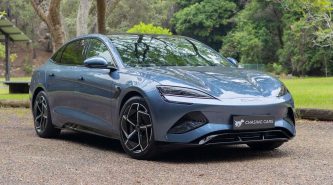
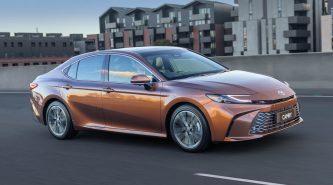
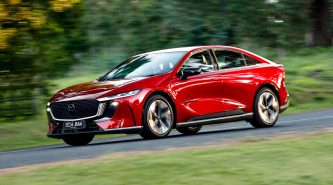
Tesla’s price slice makes the Model 3 RWD cheaper than electric rivals including the BYD Seal Dynamic ($46,990), Mazda 6e ($49,990) — not to mention very competitive with the hybrid sedan king in this segment, the Toyota Camry Ascent Sport ($42,990).
How has Tesla managed this without compromising performance and driving range? By cutting back on features, of course.
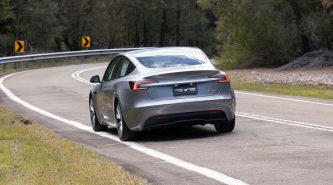
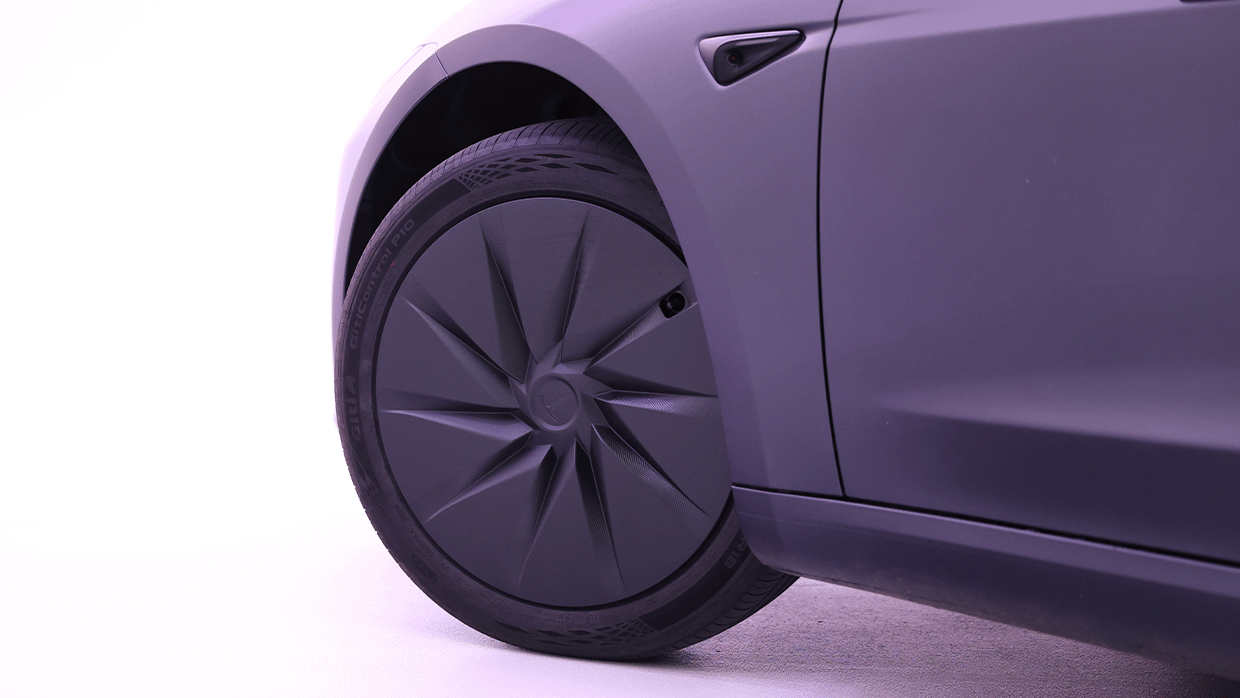
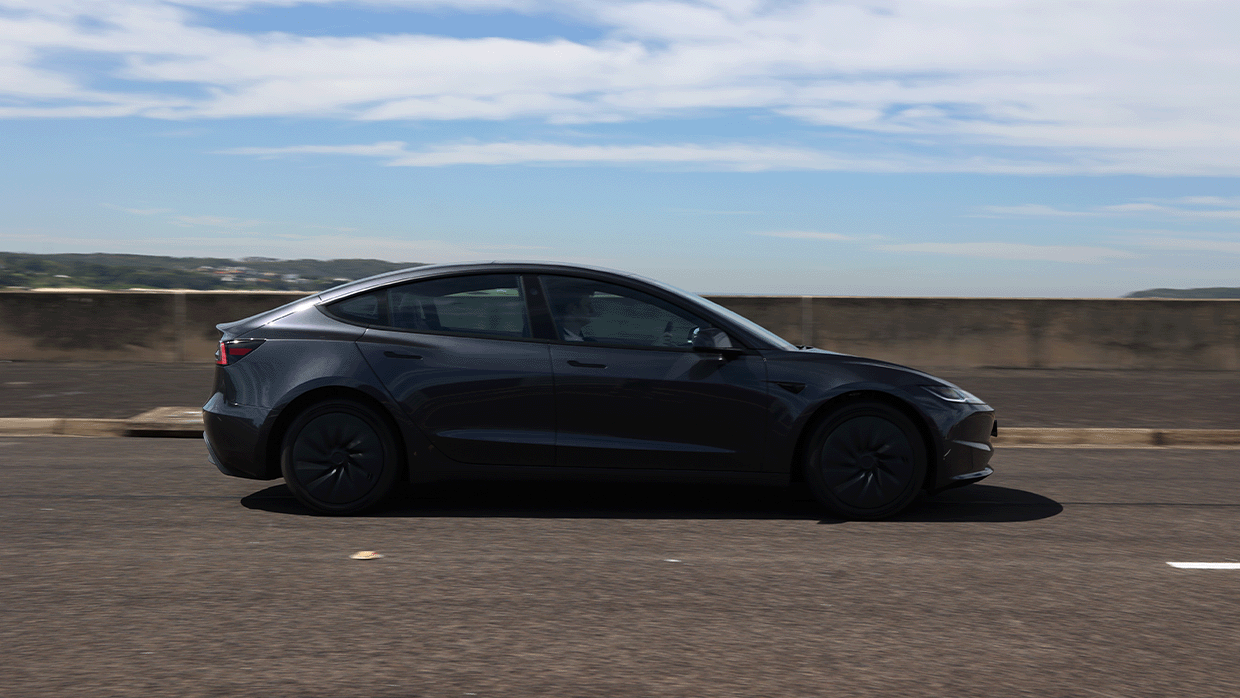
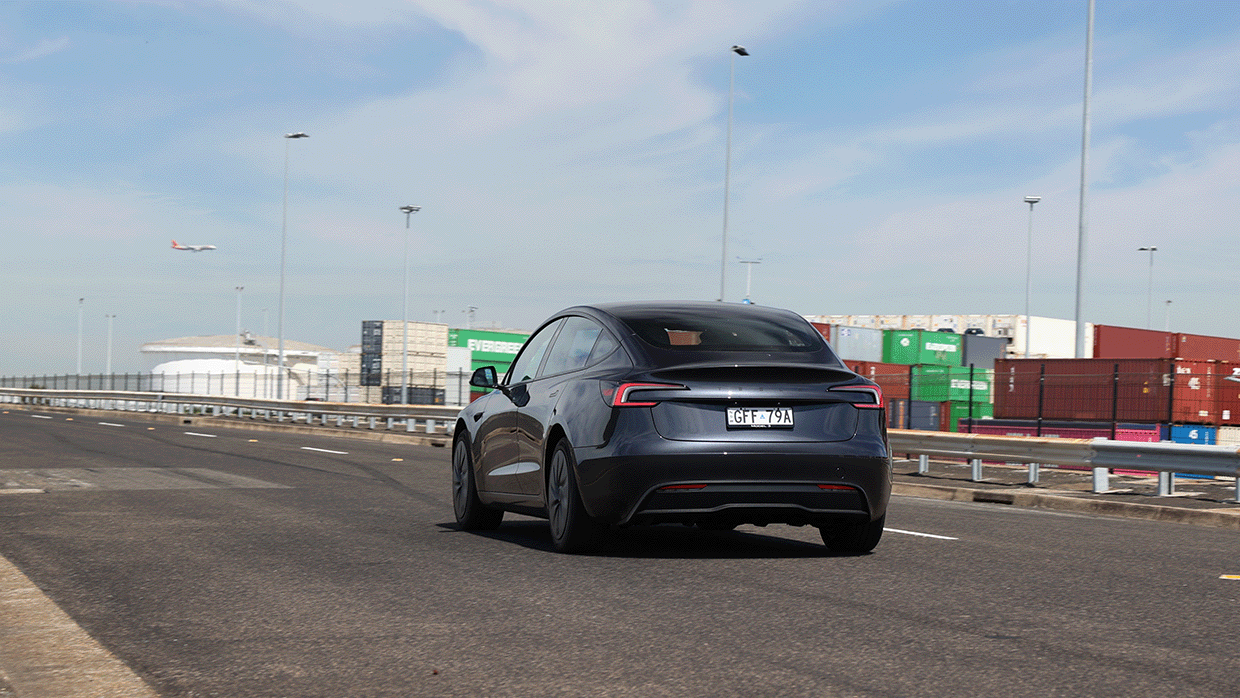
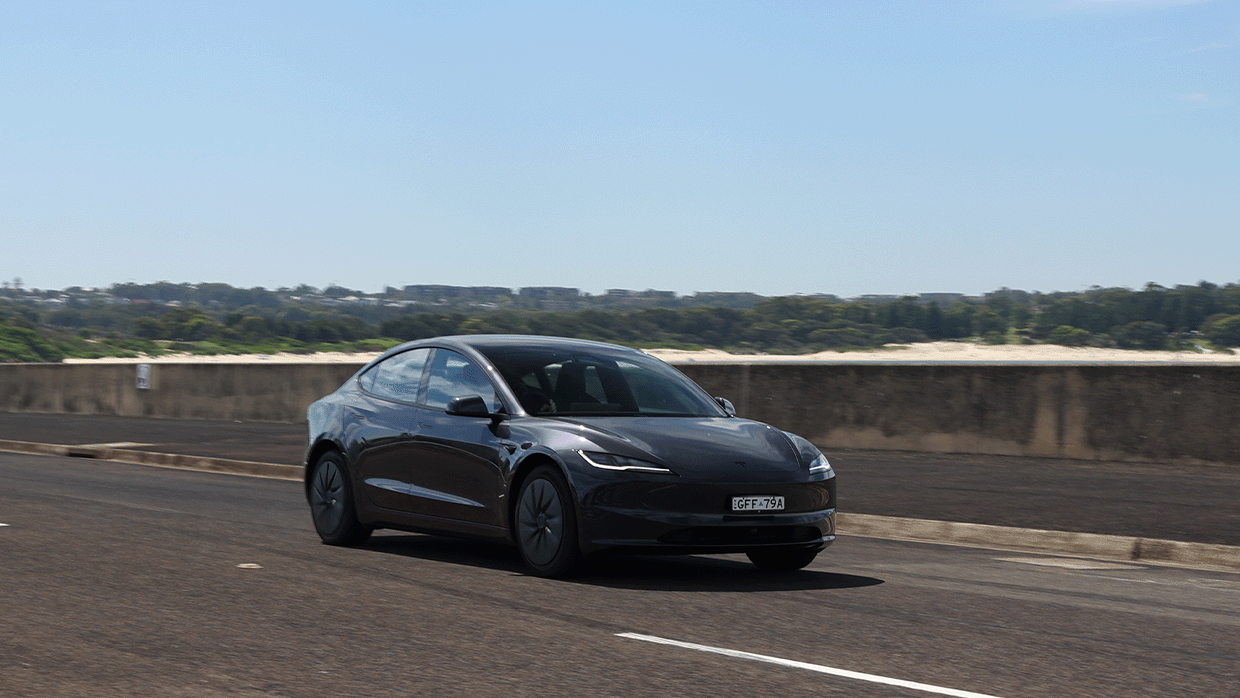
Visually, the new Model Y RWD can be identified by its 18-inch ‘Prismata’ wheels which are steel items with aero hubcaps. It also misses auto-dimming side mirrors and wraparound ambient inside lighting, while full synthetic leather upholstery is swapped for textile-centred seats.
Speaker count falls from nine to seven, there’s no FM/AM or DAB radio, no seat ventilation or rear seat heating, no floor mats, and no second-row touchscreen. The steering column moves to manual adjustment while power seats miss out on physical buttons and are instead controlled through the touchscreen.
From a driving perspective, the Model 3 RWD misses out on the Premium RWD’s ($54,900 list) higher-grade frequency selective dampers, acoustic rear glass and swaps to Giti eco tyres instead of the factory’s choice of Michelin, Hankook or Pirelli rubber.
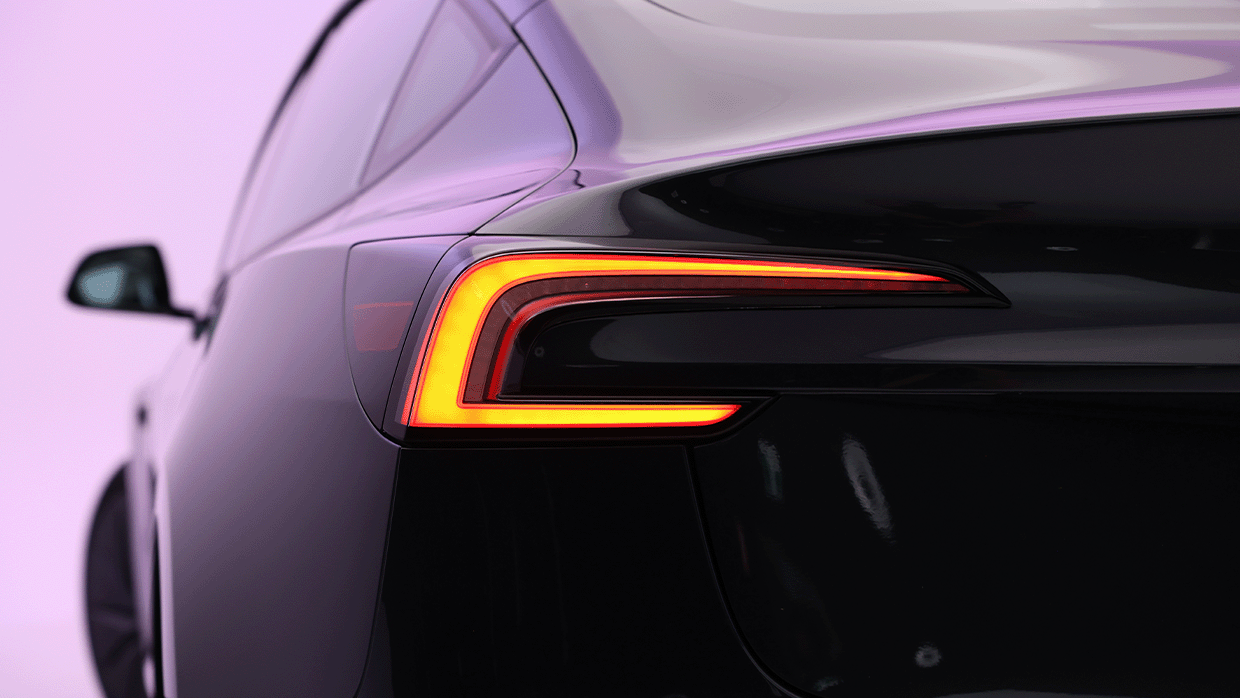
That still leaves an awful lot of kit, however, including a 16-inch touchscreen (up 0.6in but there’s still no HUD in 2027), panoramic glass roof, heated front seats and steering wheel, twin wireless phone charging, hands-free power tailgate, dual-zone climate control, a heat pump and matrix LED headlights.
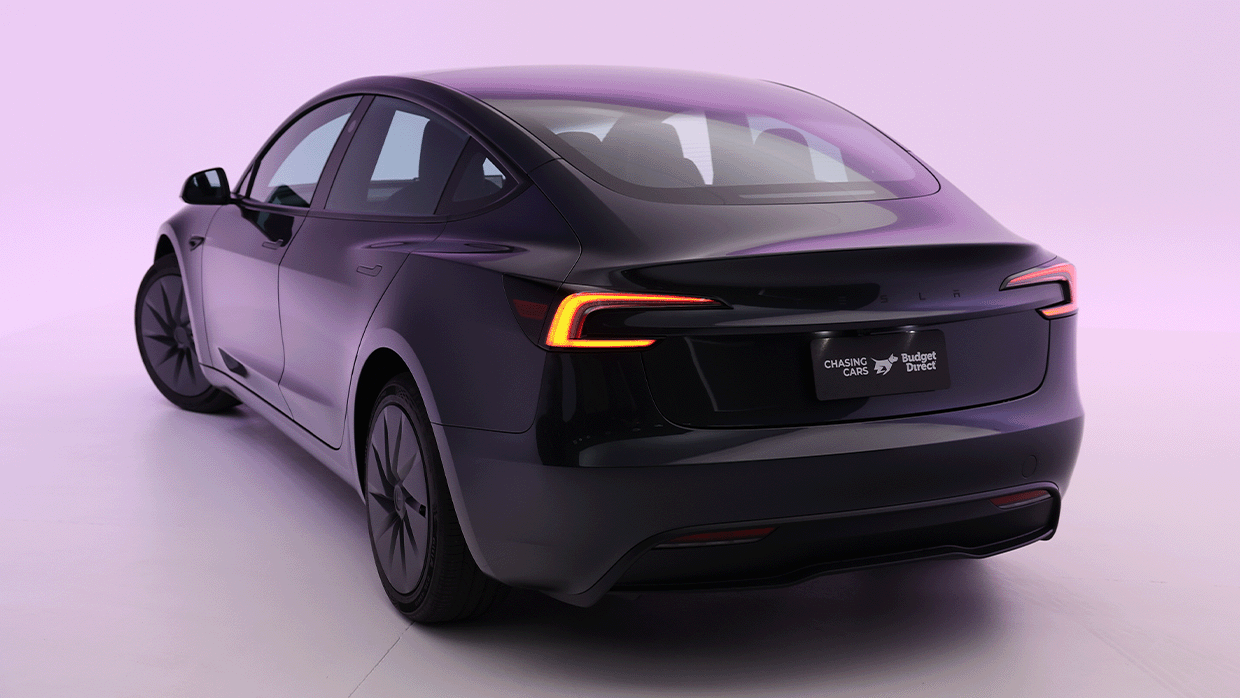
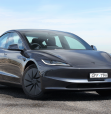
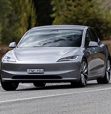
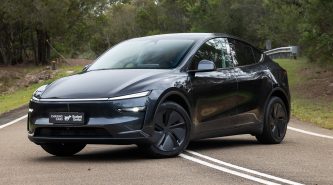
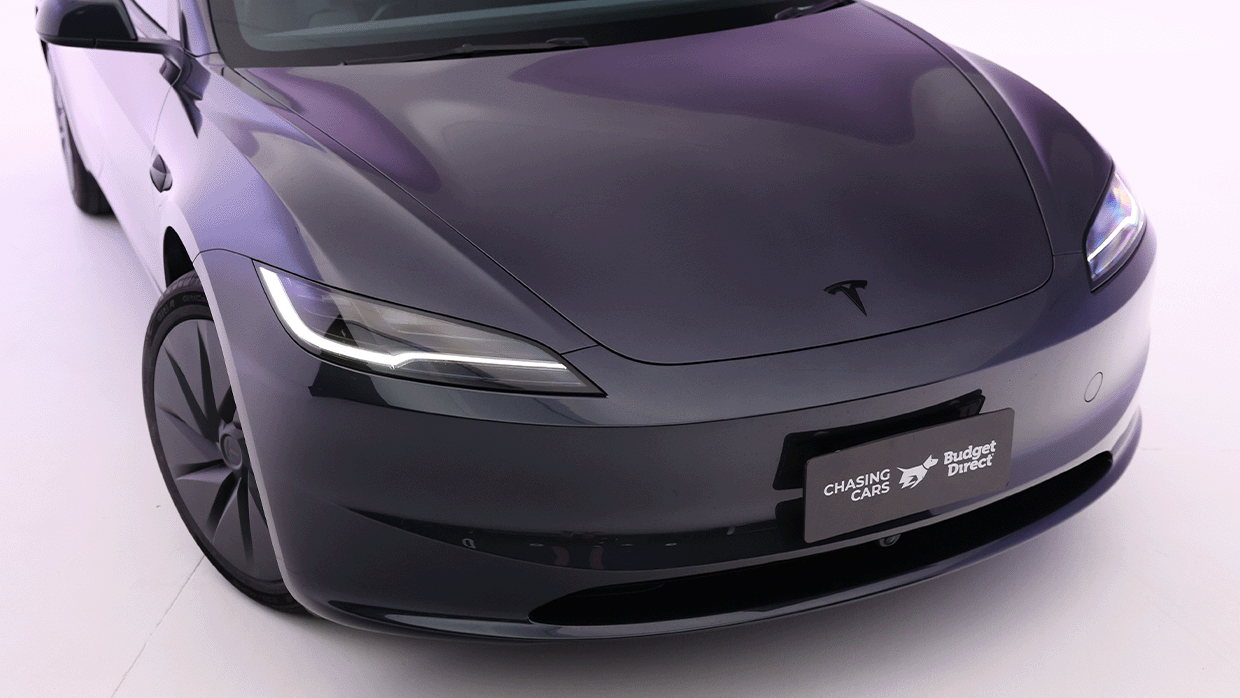
The only optional extras for the 2027 Model 3 RWD are paint — you can’t get 19-inch alloys. Pearl White is the only non-cost hue, with ‘exciting’ choices including Diamond Black ($1500) or our car’s Stealth Grey ($1900).
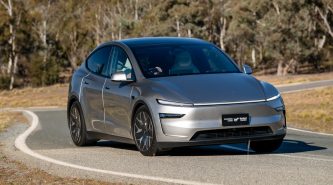
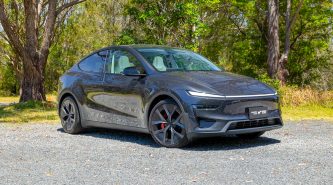
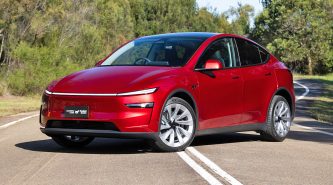
With Model Y significantly outselling the Model 3 in Australia, the cost-conscious entry-level sedan could level the playing field a little. Tesla is still expected to introduce a cheaper Model Y in the next 12-or-so months, which will likely prove more popular than the 3.
Driving Tesla’s new entry-level Model 3 is entirely defined by what it’s lost. Not that it’s bad to drive — far from it — there’s just a generally lower quality feel to the Model 3 RWD on the road you notice from it having less sound deadening, worse tyres and non frequency-selective dampers.
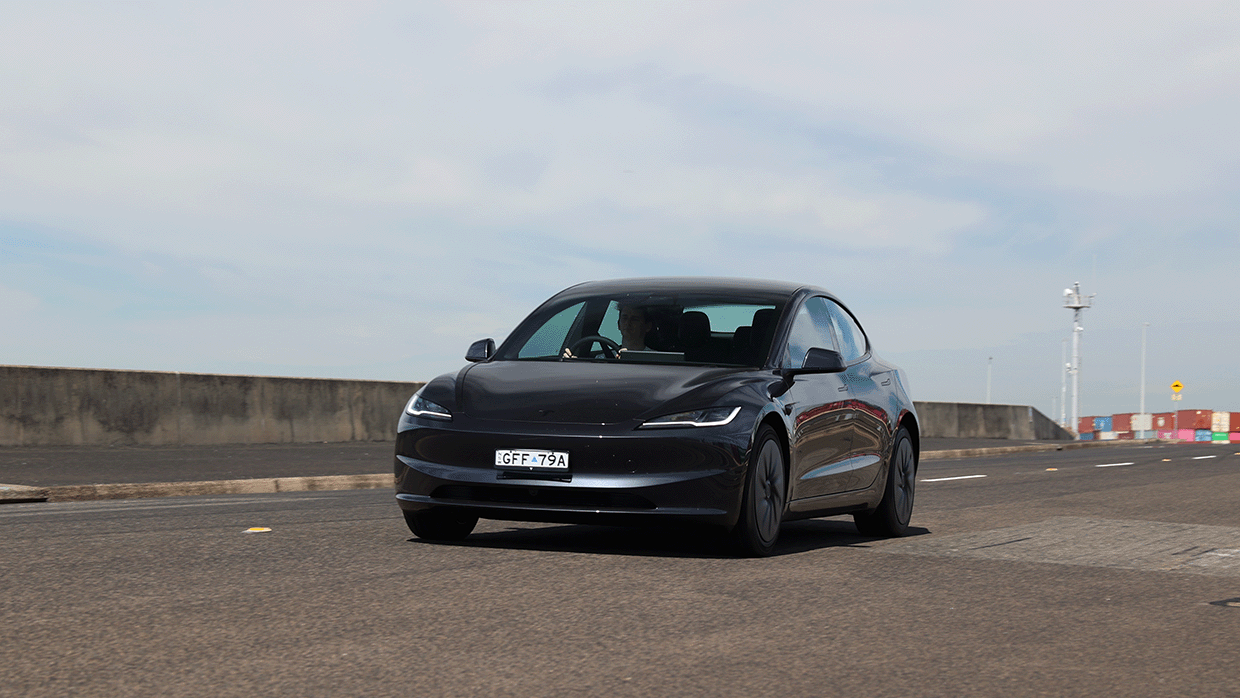
Take urban lumps and bumps, for example. The Premium Model 3 is plush and absorbent, swallowing concrete expansion joints and speed humps, where the new RWD is stiff-legged, busy and noisy. However, it’s still better than a pre-facelift Model 3, mind you.
The ride smooths out at speed too, over 70km/h on decent road surfaces the Model 3 rides very well, and for that matter it’s generally acceptable everywhere with greater consistency than the overly-soft BYD Seal.
Tyre roar is an issue, though. Whether it’s the cheaper Giti-brand 235/45 18-inch rubber or the missing acoustic rear windows contributing, the Model 3 RWD has noticeably more tyre noise on coarse chip surfaces compared to the bank-vault quiet Premium.
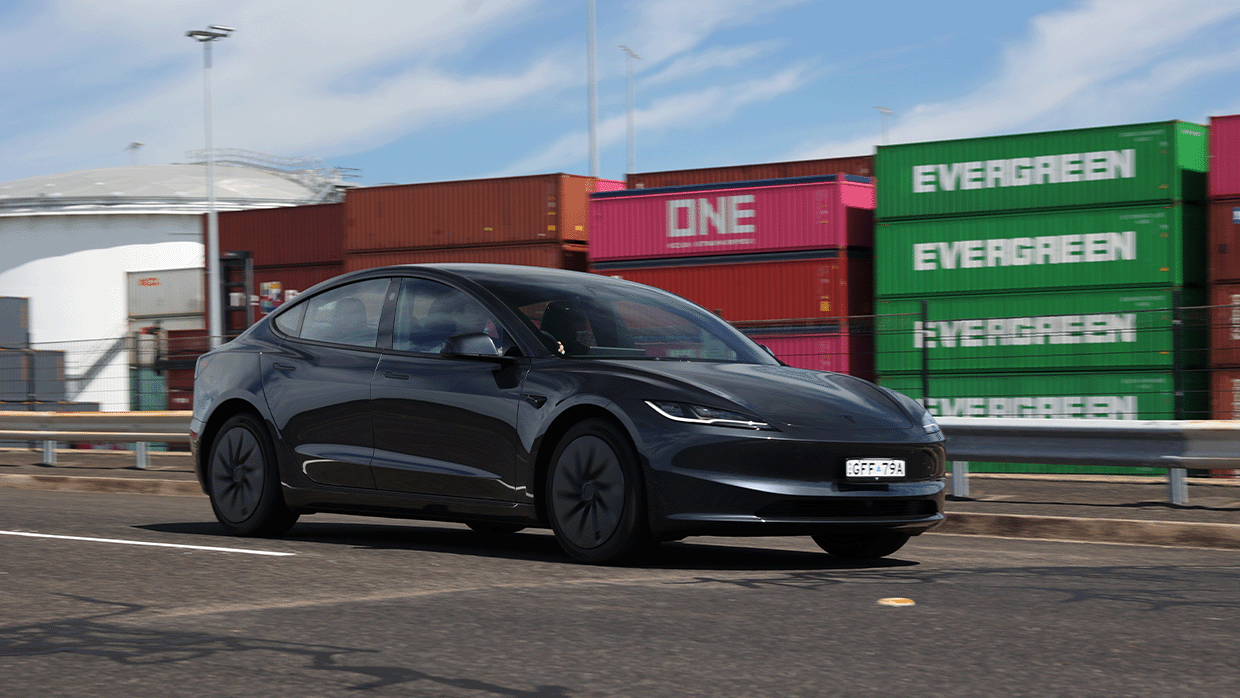
Corner grip is down but it’s mainly how the tyres breakaway as they lose grip that make the base model a little less athletic. Its steel wheels (underneath those dorky hubcaps) likely add some unsprung mass compared to the Premium’s alloys as well.
The rest of the experience is just like any other current Model 3. The car feels rear-driven but not in a sporty, BMW-like way. The sharp steering has little feel but a reassuring weight. Vision out is excellent and the supporting cameras have superb clarity.
Peak power stays at 208kW for Aussie-delivered cars and Tesla says the base RWD’s 0-100km/h time is a tenth slower (6.2 seconds). That’s still hot-hatch quick and the torque response is sharp meaning it’s easy to slip into gaps and blast away from traffic at the lights.
As for Full Self Driving (Supervised) — now a $149 monthly charge — it has come a long way since launching in Australia.
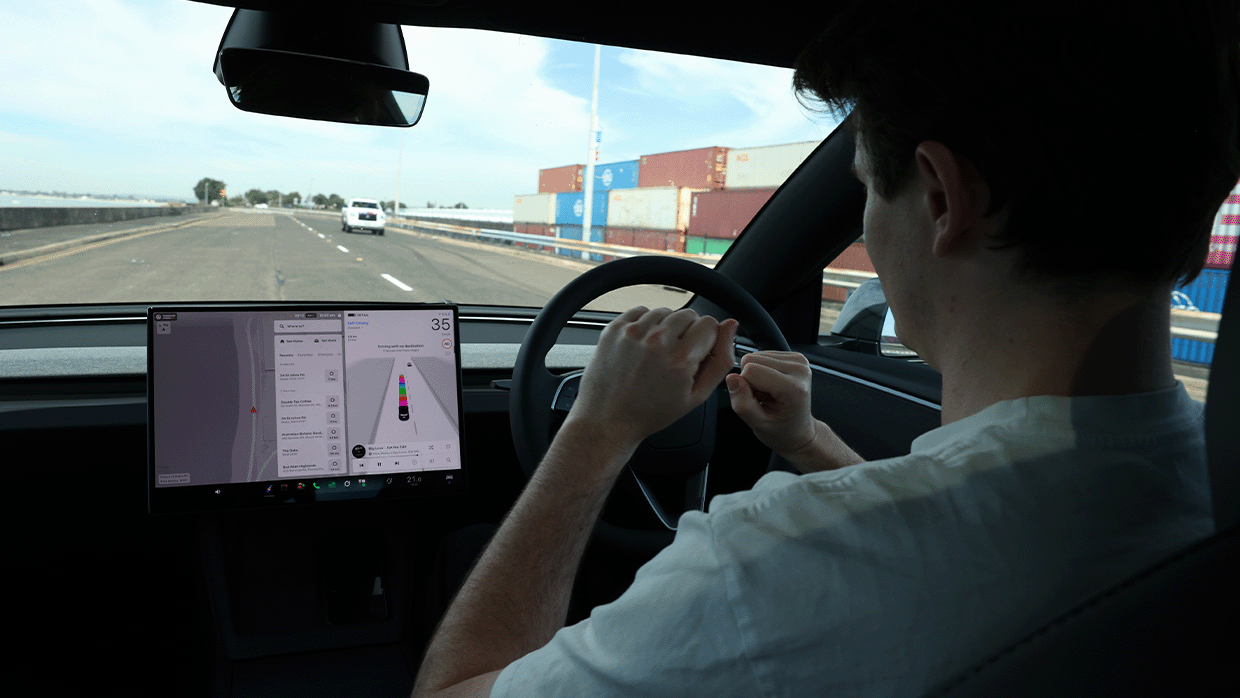
The latest iteration is more assertive, able to navigate shopping centre carparks, will mumble about without a navigation destination if you wish, is readier to change lanes and even seemed keen to undertake B-doubles — definitely progress, but not necessarily all for the better.
There’s work to do as FSD(S) still fails to correctly interpret variable speed limit signs, jumping between the blanket 80km/h and enforced variable 90km/h in Sydney’s sprawling tunnel network.
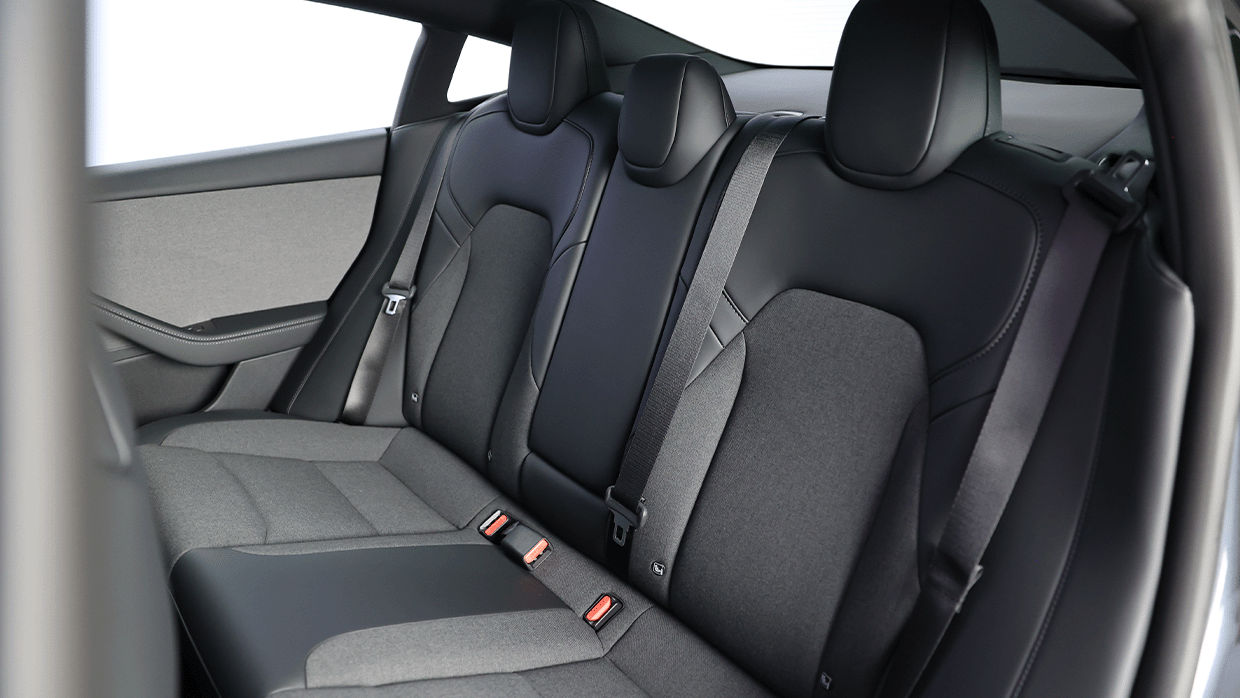
For some, Tesla dropping all black vinyl for cloth-centred seats will actually be a bonus — they’re definitely less conducive to sweaty backs and bums, even without ventilation. The material is still hardy and quite easy to clean as well.
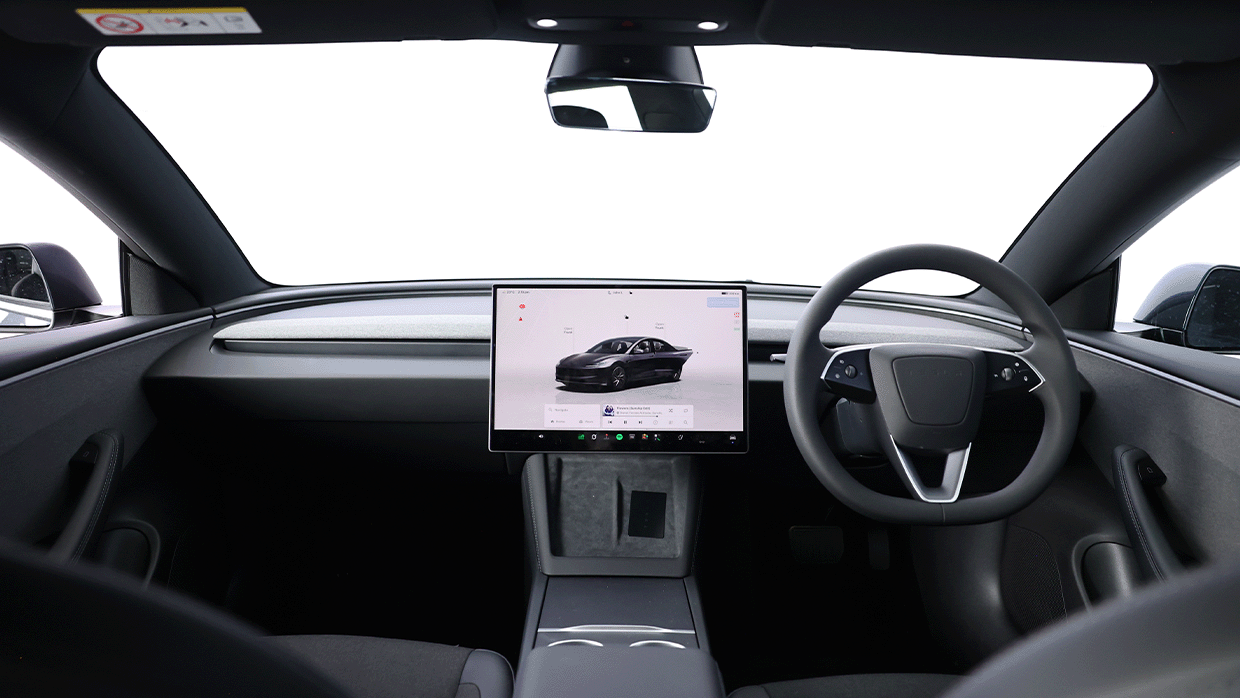
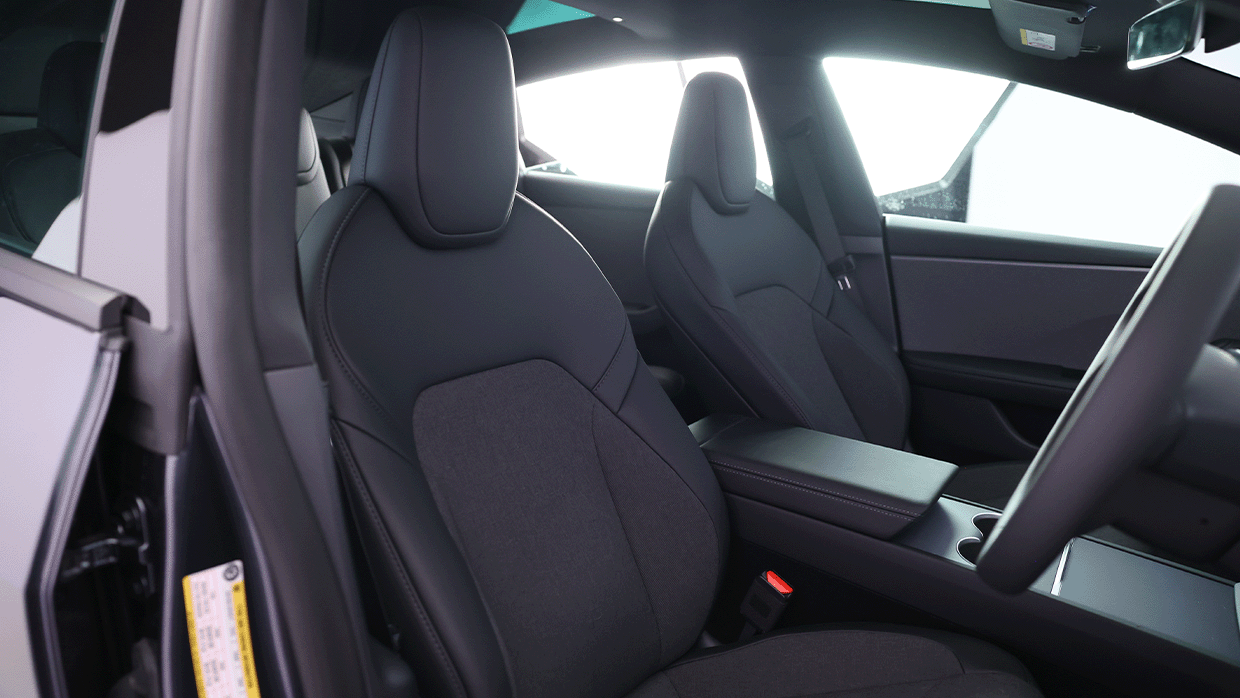
Adjusting your seating position from the touchscreen takes some getting used to — at least it’s not something that happens every time you set off. Presumably it would have cost a bomb to engineer manual seat adjustment so it was cheaper just to bury it in the touchscreen.
Technology remains class-leading at least. If you’re going to put every control including gear selection in the touchscreen then it needs to be supremely responsive — it is. The Model 3’s graphics are clear, and the software is more logically laid-out than rivals.
Tesla has reintroduced an indicator stalk, with shortcut buttons on the steering wheel now used for media and cruise control settings. There’s also an AI-powered voice command using Musk’s Grok chatbot that you can set to ‘NSFW’ mode, if you please.
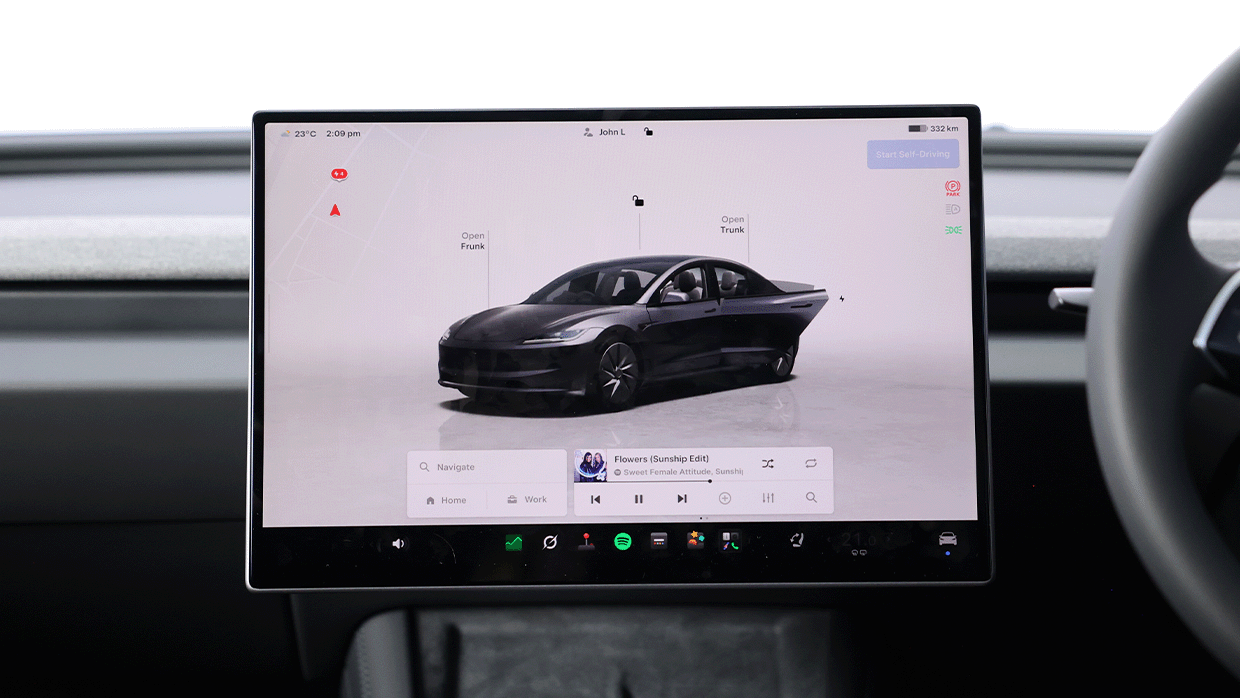
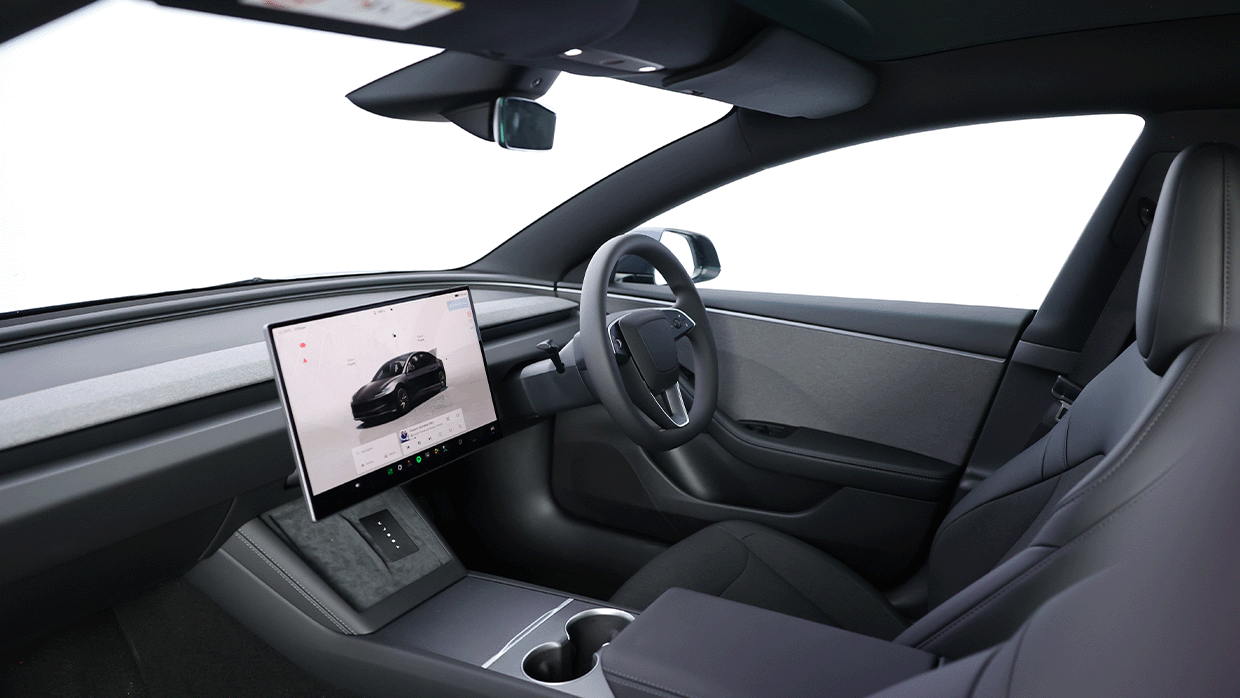
As ever, there’s no Apple CarPlay or Android Auto which takes some getting used to. The main drawback is not being able to use Siri to seamlessly read and compose text messages, as Tesla’s native software supports music and video streaming applications.
There’s a toybox with games and fun features (including built-in whoopee cushion and external microphone), while Tesla’s built-in connected navigation is simply excellent.
The Model 3 can be opened using the supplied key card or by setting a smartphone up as a digital key. Tesla’s system is especially good in this regard.
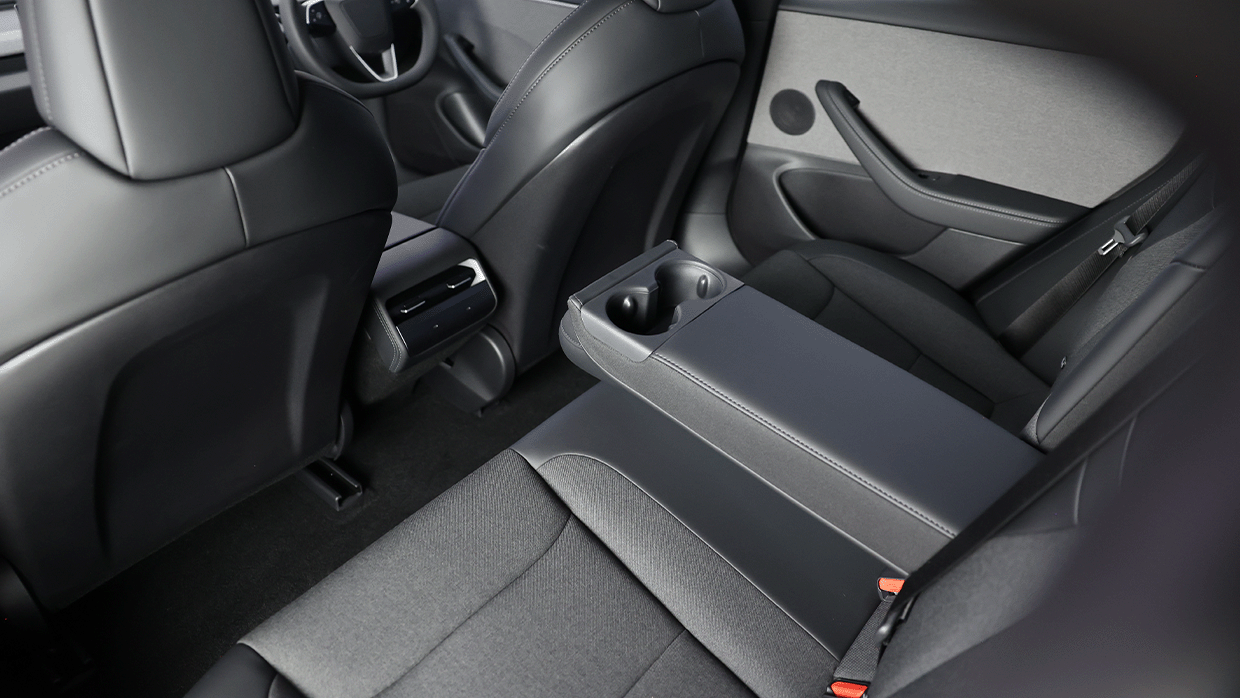
Cost-cutting is obvious in the new base Model 3’s material quality. Some areas that were wrapped in faux-leather, such as the lower portions of the doorcards, are now scratchy plastic.
There is also no carpet in the door bins — though we think this really demonstrates how much goodness you get in a $54,900 Model 3 Premium rather than how little you get in the boggo car.
Only real let-down is the seven-speaker sound system. It’s still much better than most mainstream entry-level stereos with powerful bass, though it loses the clarity in the high registers and sounds tinnier than the Premium’s system.
The rear seat loses its 8.0-inch rear screen in the new, cheaper Model 3 which isn’t ideal for family owners. The bench is fairly comfortable, there are two air vents, and although seat heating is gone the new fabric-centred upholstery is preferable in summer.
Speaking of, hot weather means sweltering under the Model 3’s standard glass roof. Tesla now sells a sun-shade but it’s still not as good as a metal roof with insulation for staying cool.
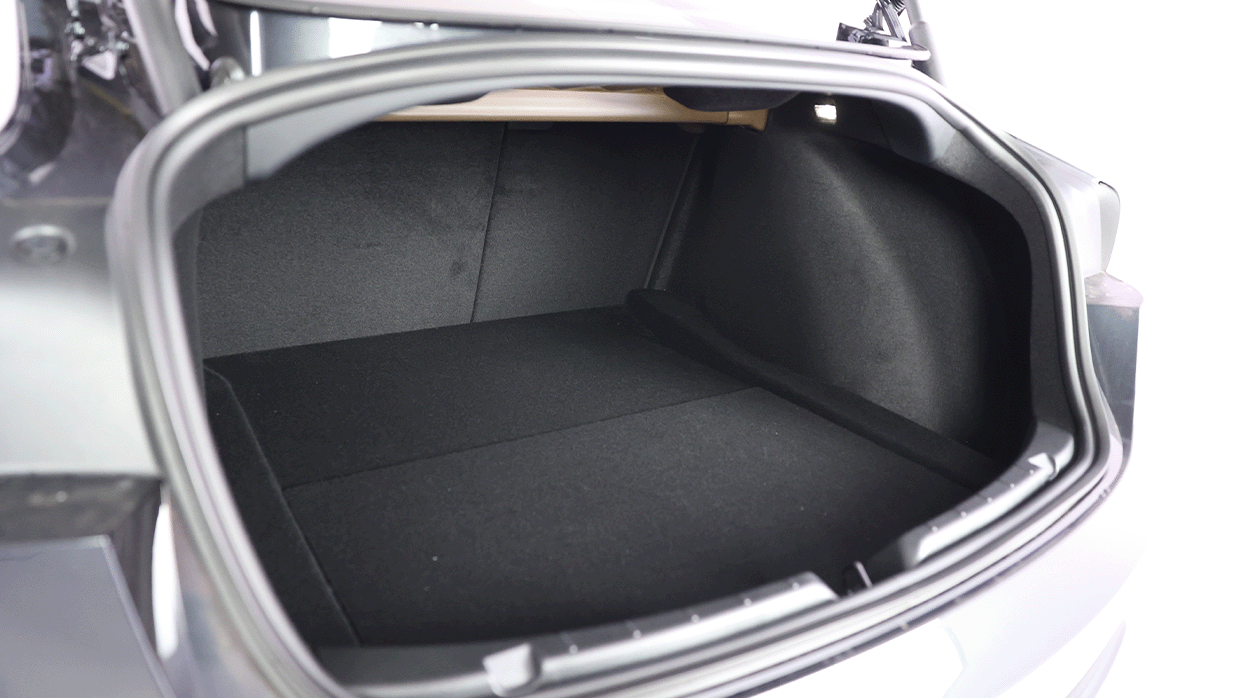
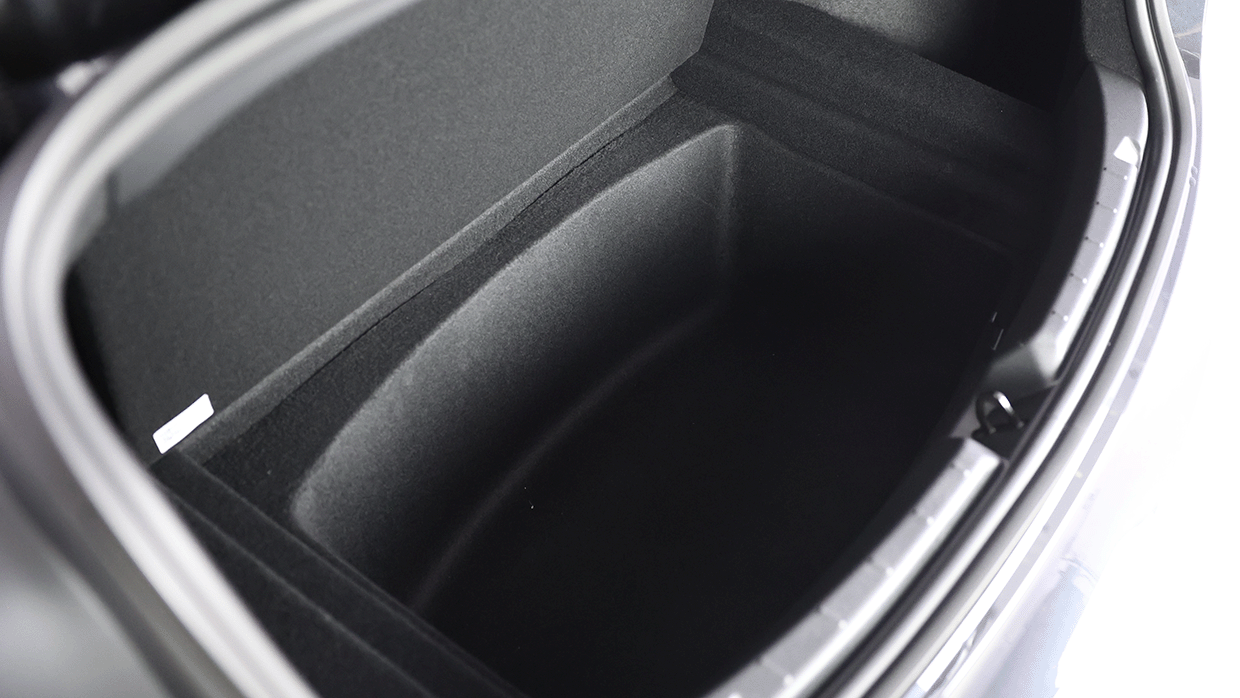
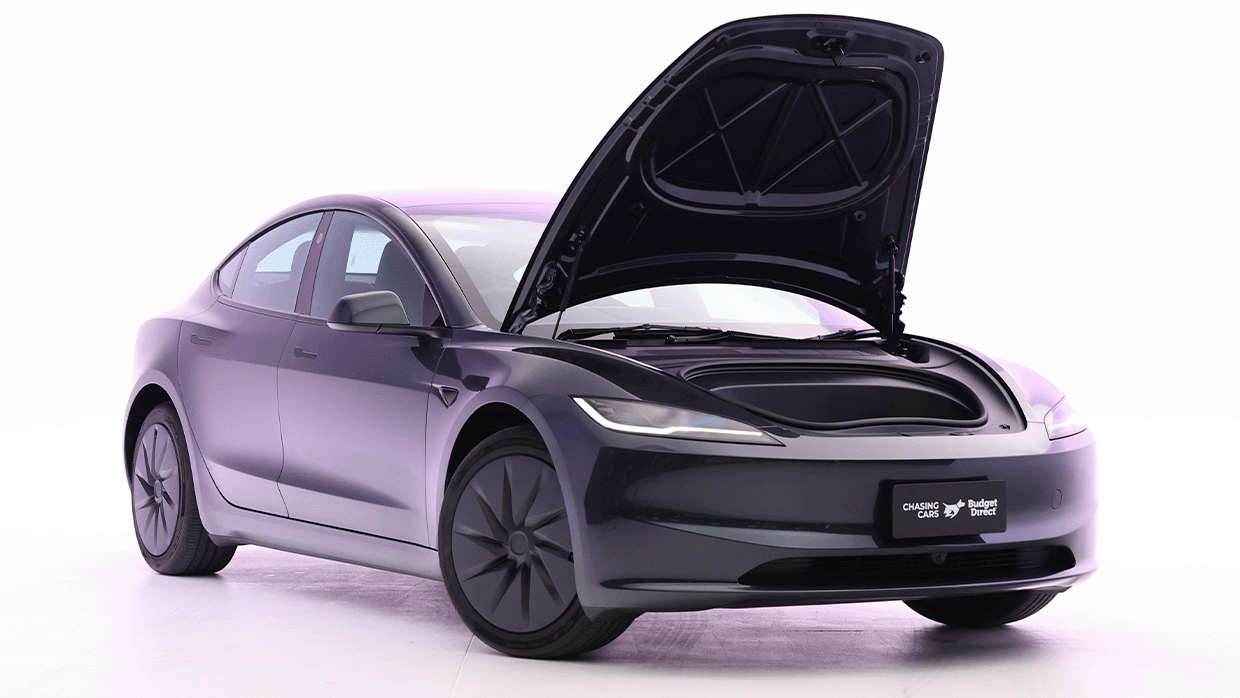
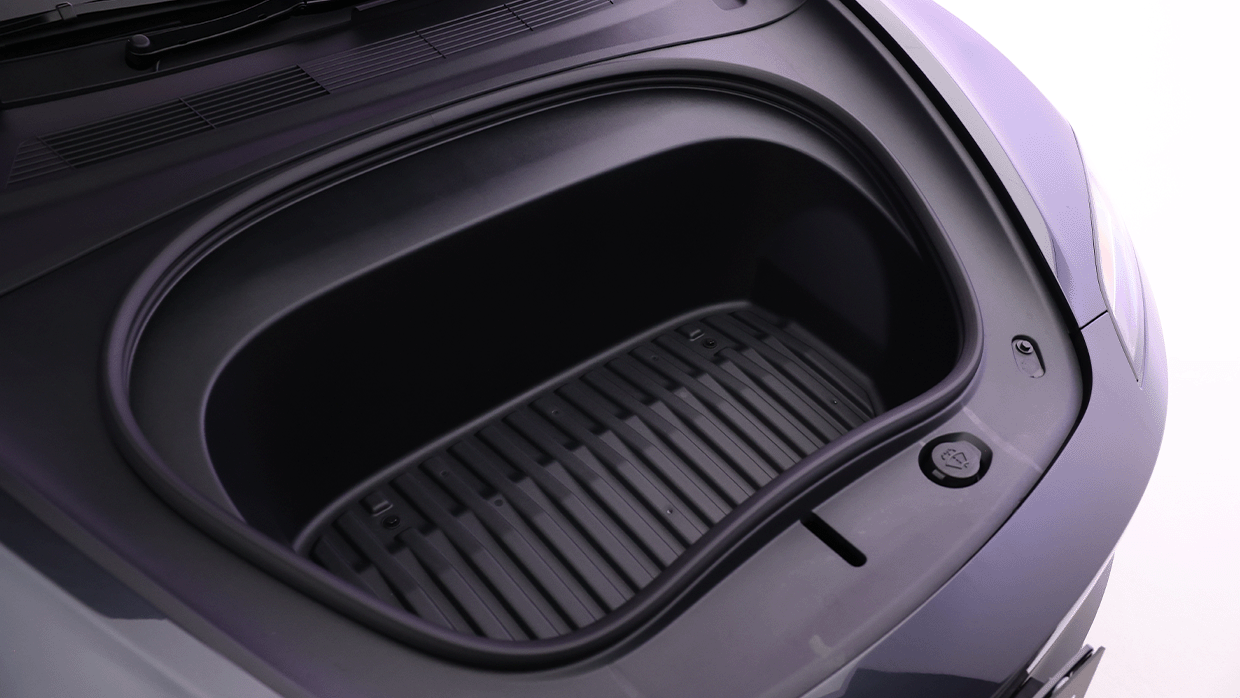
Like any other Tesla the Model 3 is an impressively packaged car with a total of 594 litres of cargo space including the boot and its cavernous under-floor storage area. There’s no spare tyre included but the Model 3 has a generous, 88-litre ‘frunk’ under the bonnet.
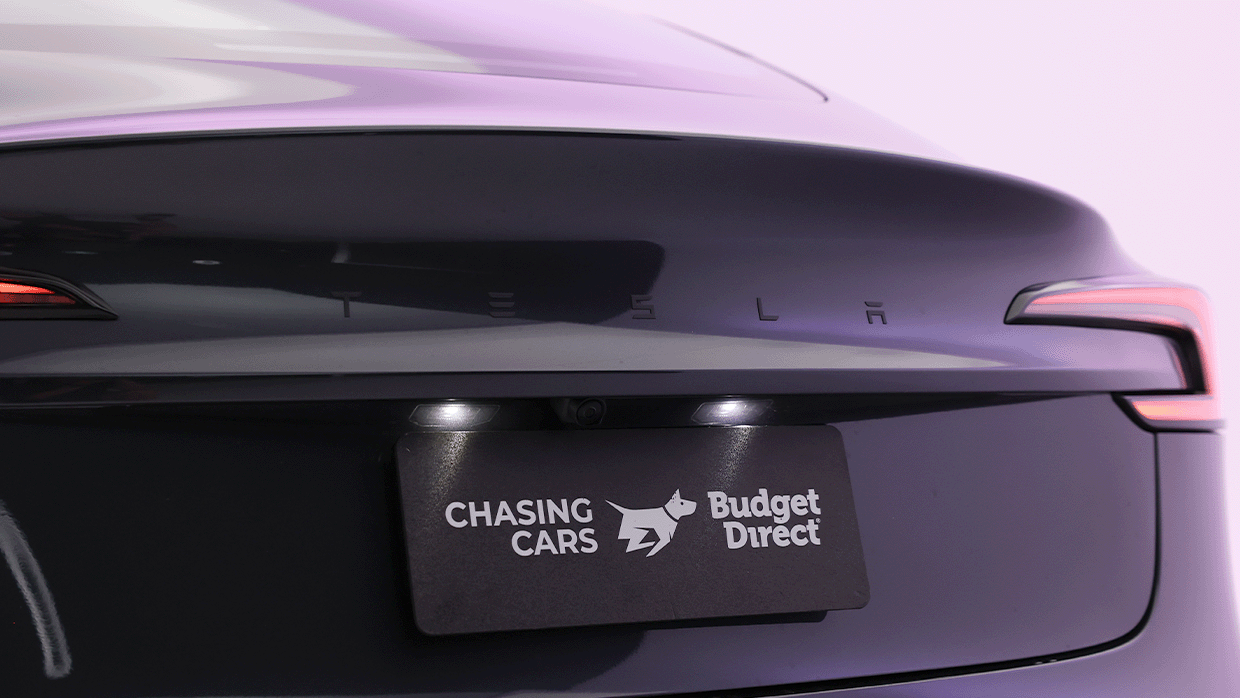
Tesla hasn’t cheaped out on the base car either and retains the hands-free power tailgate of the Premium.
Australian-delivered Model 3 RWDs use the same 62.5kWh LFP battery as Premium variants, with efficiency improvements contributing to a 52km longer 572km (WLTP) rated driving range.
Our real-world road test covered motorway, spirited rural and slow-speed city driving at 23 degrees ambient while using air conditioning. The Model 3 returned a deeply impressive efficiency of 11.8kWh/100km for 530km driving range.
We have no doubt more careful driving would see owners able to hit the range claim without much hassle.
Charging speeds are one area Tesla has not kept up with China (Zeekr 7X, Xpeng G6) and Europe (BMW iX3), with 800-volt EVs. Still, the base Model 3 can take on electricity at up to 175kW for 10-80 percent in about 25 minutes, and over 250km driving range in 15 minutes.
For regular charging, the Model 3 accepts 11kW AC charging for flat to full in around six hours.
The other advantage of owning a Tesla is more charging locations, and those that are open to non-Tesla owners are cheaper for you as well.
Chasing Cars local pylons charge any other EV owner $0.83 per kilowatt hour during peak times, but Tesla owners enjoy $0.59/kWh tariff. This equates to a saving of $12 in a 50kWh charging session — not bad at all.
Worth remembering to disable Sentry Mode and the Cabin Overheat detection if you intend to street-park your Model 3 — ours used over 100km of driving range over two days to keep the cabin temperate and monitor its surroundings.
Tesla does not offer capped-price servicing. Maintenance is due based on condition with the car prompting you when it’s time for a service. Customers report paying somewhere around $1500 for vehicle maintenance over five years, depending on distance travelled.
There are 21 Tesla service centres in Australia, though the company also uses mobile technicians for those who prefer.
Recently Tesla upped its Australian warranty coverage to meet the industry standard of five years and unlimited kilometres. The battery and high-voltage electrics are covered by an eight-year/160,000km guarantee.
Budget Direct told us the median annual premium purchased for the first time between 1/9/25 and 1/9/26 to comprehensively insure a new Tesla Model 3 was $3139. Individual circumstances and policy terms may vary.
Of course, everybody’s situation is different, and the premium will vary according to make and model, and other things insurers take into account, such as your postcode, driving history, who drives the car, where you garage the car and more.
Please quote for yourself. Subject to meeting underwriting criteria. Insurance issued by Auto & General Insurance Company Limited. See PDS & TMD at budgetdirect.com.au.
Fact is, the new entry-level RWD is still a Tesla Model 3 to its core. A seamless, technology-led experience that easily fits into everyday life. As to whether the base car’s shortcomings are worth saving $9000 compared to the Premium, well, that’s up to you dear reader.
If you’re buying the Model 3 as a tech-filled transportation pod — perhaps even for ride-share duty — then that extra money could be worth saving.
But if this is a car you intend to hang onto and cherish, spending a chunk more on the Premium will pay off in both resale and long-term enjoyment.
One thing’s for sure: we’d recommend the new RWD in a heartbeat over a two- to three-year-old second-hand Model 3 that can be had for around the same price. It benefits from significant hardware improvements and comes with a full complement of five-year warranty.
Any way you cut it, the cheaper Model 3 RWD is an important addition to Tesla’s line-up in Australia, but not as crucial as the sure-to-come cut-price Model Y.
Key specs (as tested)
About Chasing cars
Chasing Cars reviews are 100% independent.
Because we are powered by Budget Direct Insurance, we don’t receive advertising or sales revenue from car manufacturers.
We’re truly independent – giving you Australia’s best car reviews.
The estimate provided does not take into account your personal circumstances but is intended to give a general indication of the cost of insurance, in order to obtain a complete quote, please visit www.budgetdirect.com.au. Estimate includes 15%^ online discount.
^Conditions Apply
Budget Direct Insurance arranged by Auto & General Services Pty Ltd ACN 003 617 909(AGS) AFSL 241 411, for and on behalf of the insurer, Auto & General Insurance Company Limited(ABN 42 111 586 353, AFSL 285 571).Because we don’t know your financial needs, we can’t advise you if this insurance will suit you. You should consider your needs and the Product Disclosure Statement before making a decision to buy insurance. Terms and conditions apply.
Indicative quote based on assumptions including postcode , 40 year old male with no offences, licence suspensions or claims in the last 5 years, a NCD Rating 1 and no younger drivers listed. White car, driven up to 10,000kms a year, unfinanced, with no modifications, factory options and/or non-standard accessories, private use only and garaged at night.
^Online Discounts Terms & Conditions
1. Discounts apply to the premium paid for a new Budget Direct Gold Comprehensive Car Insurance, Third Party Property Only or Third Party Property, Fire & Theft Insurance policy initiated online on or after 29 March 2017. Discounts do not apply to optional Roadside Assistance.
2. Discounts do not apply to any renewal offer of insurance.
3. Discounts only apply to the insurance portion of the premium. Discounts are applied before government charges, taxes, levies and fees, including instalment processing fees (as applicable). The full extent of discounts may therefore be impacted.
4. We reserve the right to change the offer without notice.