Powered by

-
Car Reviews
Latest reviews
- Car News
-
Car Comparisons
Latest comparisons
- Chasing Deals
Latest reviews
Latest comparisons
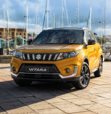
A power drop and a price hike complement the debut of hybrid drive in the now 11-year-young Vitara
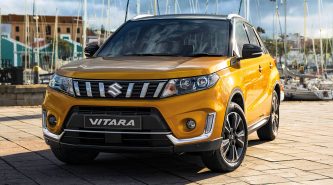
“New” is an interpretive label, particularly when officially applied to 2026’s ‘New’ Vitara Hybrid – or Vitara Turbo Hybrid, depending on your Suzuki marketing source of choice. The ‘hybrid’ bit is new. The ‘Vitara’ bit, despite periodic plastic surgery, is now 11 years old … and counting.
One needn’t have gazed too deeply into the crystal ball to see what 2026 had in store for an ageing generation of this stalwart nameplate: primarily, a palatable ‘hybrid’ badge of honour complete with improved fuel efficiency claims.
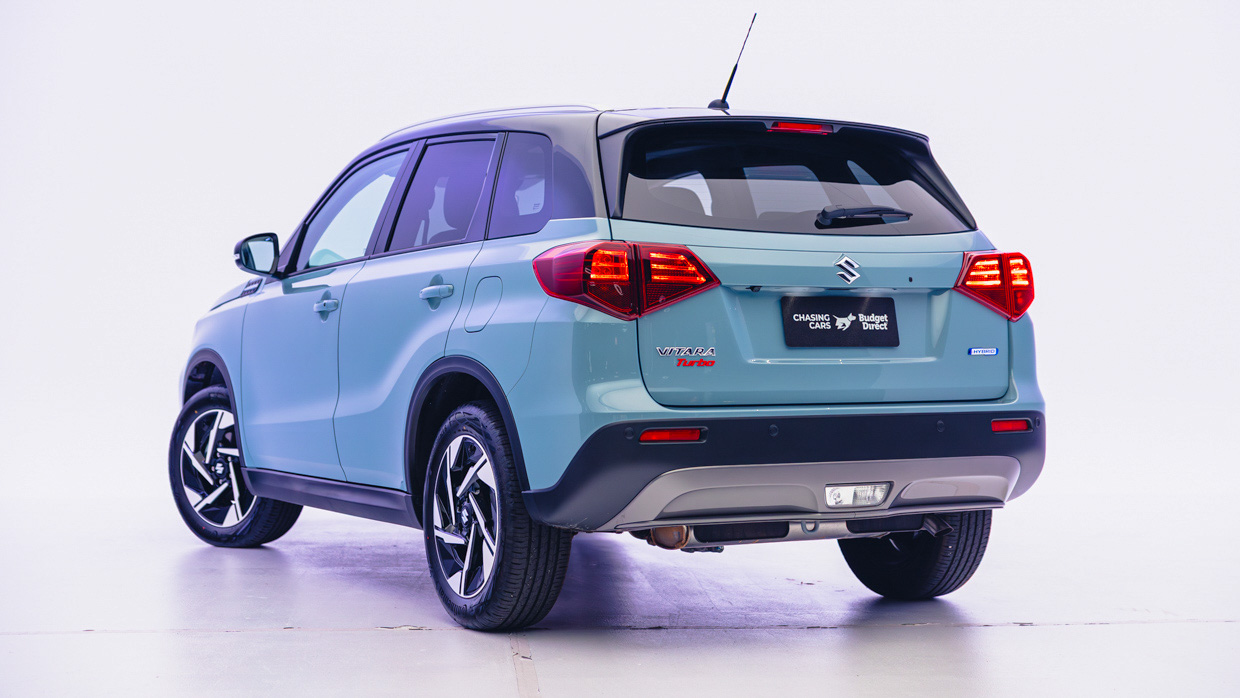
There’s a safety boost, too, refilling Vitara’s compact SUV-sized slot in Suzuki’s Aussie lineup after shortfalls in the subject pulled the pre-fixed model from showrooms in 2025. So far, so predictable.
Somewhat more surprising, though, is that the price of entry to Vitara-land – 11 years, remember – has pole-vaulted some $9500 up the fiscal tree, landing at $39,990 driveaway. Our Vitara Turbo Hybrid Allgrip, the all-wheel-drive flagship, is priced from $45,990 driveaway.
But the real eyebrow raiser is outputs. Power for the 1.4-litre ‘Boosterjet’ turbo engine has dropped from 103kW in old ICE guise to “80.9kW” in hybrid form: or 80kW by industry measures. An over 20-percent power drop is no insignificant loss, plus it demands 95RON premium fuel.
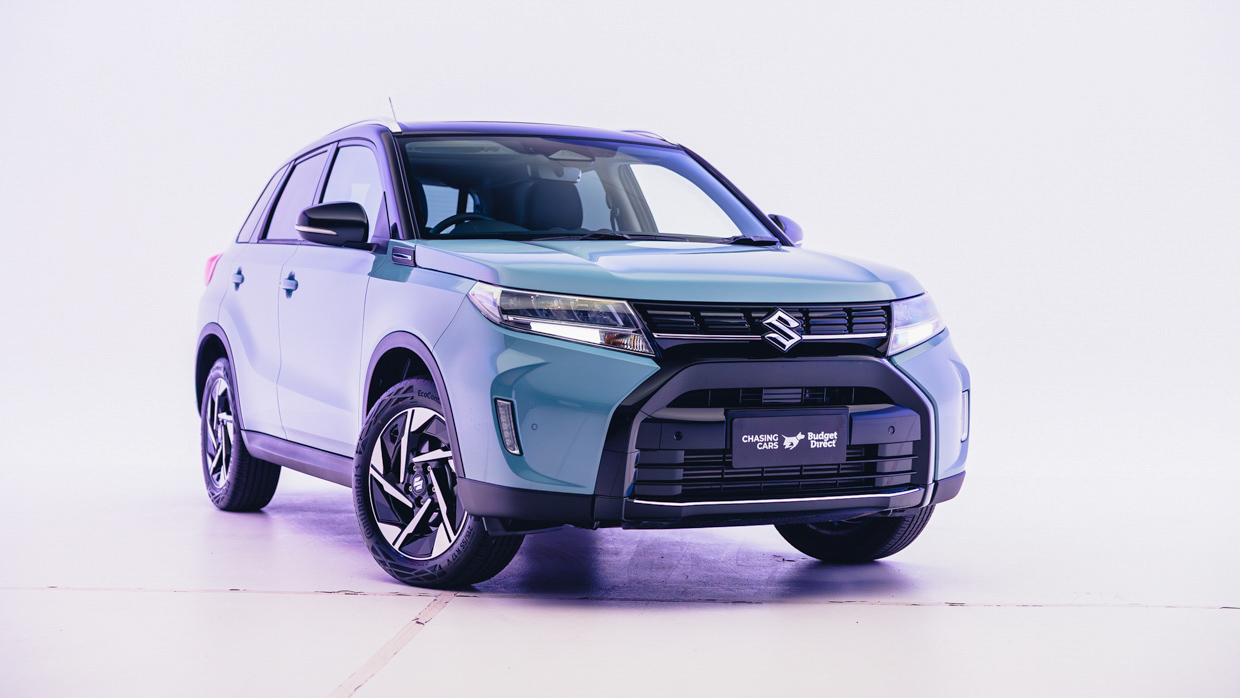
Put simply, there are two no-brainer methods to reduce emissions and fuel consumption: deploy smarter and more evolved engineering for all-round benefits, or neuter the old engineering while copping inevitable output penalties. Suzuki chose the latter.
A response to the latest NVES regulations? Nope. At 130g/km (FWD) and 139g/km (Allgrip), the Vitara overshoots 2026’s Type 1 vehicle average target of 117g/km by some measure. Nor does Suzuki quote critical stats like electric motor power or battery kilowatt hours for its powertrain, other than stating that it’s a 48-volt mild-hybrid design.
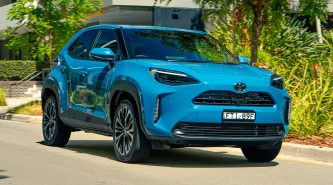
And mild it is. Unlike rivals such as Toyota Yaris Cross, the Vitara is incapable of any pure electric drive. But there are benefits. The mild-hybrid tech claims to boost torque to 235Nm (up 10Nm) and, one hopes, in the engine’s midrange to yield drivability benefits.
Consumption? A respectable if unremarkable 5.8-5.9L/100kms claimed, depending on driven wheel count, if thirstier than quite a few more powerful competitors.
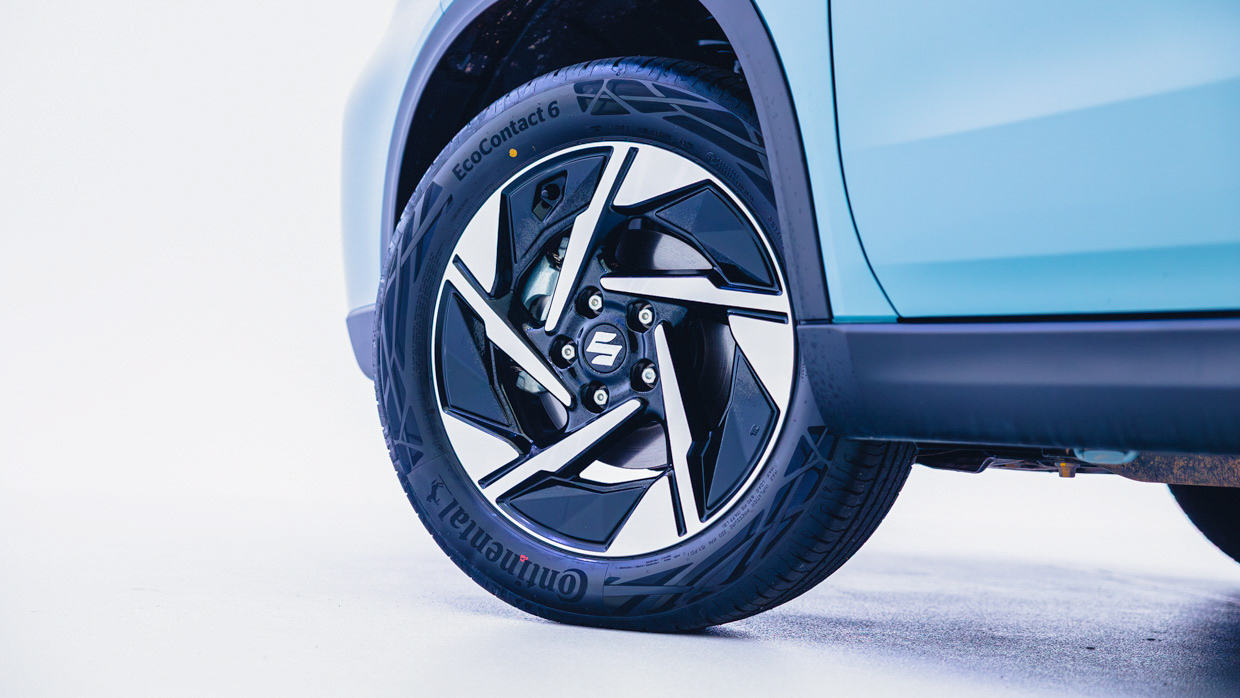
Features wise, both grades fit 17-inch wheels, auto LED headlights, adaptive cruise control and wireless phone mirroring. The Allgrip ups the media touchscreen from seven to nine inches, and adds a panoramic sunroof, power-folding wing mirrors, six-speaker audio and faux-leather trim inserts.
The Allgrip exclusively offers a centre ‘lock’ feature as well as a variety of terrain modes such as Auto, Sport and Snow.
One might aptly describe the Vitara on-road experience as a blast from the past. You’d really need a direct comparison to an example of 2015 to discern any minor evolutions made over the past decade.
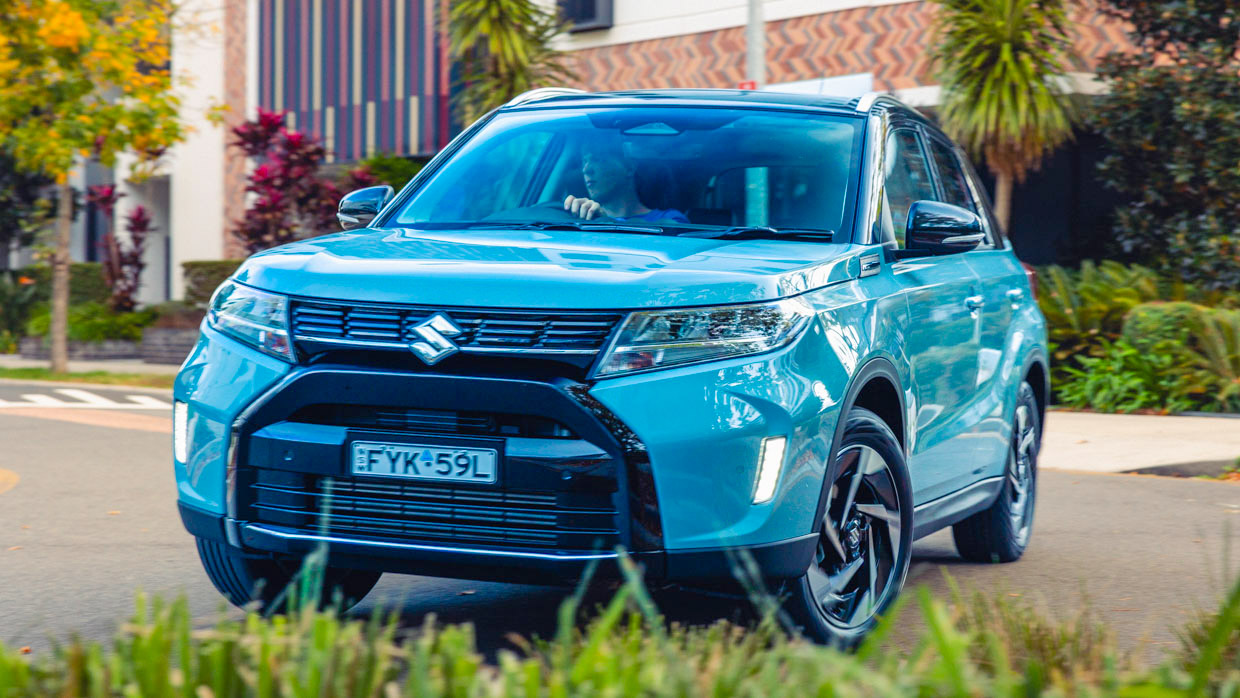
All except the powertrain. Despite the lowly figures on the form guide, the Vitara now seems to offer a semblance of (mild) gusto in the mid-range that’s (mildly) notable in the urban cut and thrust. The electric motor brings some positive effects.
But it’s no paradigm shift. The 1.4 Boosterjet, as demonstrated time eternal, lacks immediacy in throttle response, and remains inconsistent across its operating bandwidth. A little too urgent off the mark, a bit too vapid in its top end…old hallmarks remain.
The Allgrip’s kerb weight, or lack thereof (1315kg), does wonders for the Suzuki’s sense of friskiness, and it doesn’t necessarily struggle to get up to speed, though the engine is unusually gruff for a (usually muted) turbocharged design.
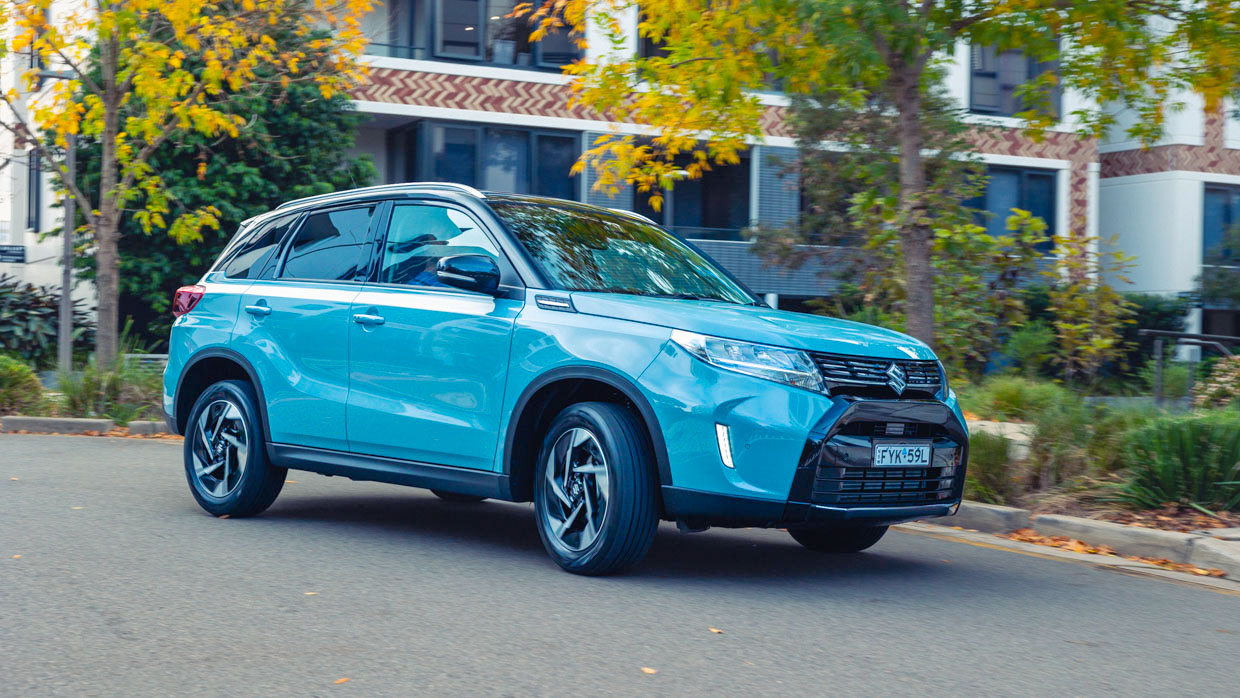
The six-speed torque converter automatic feels old hat, with a yawning ratio spread and lazy upshift calibration. Pulling down from park defaults to M-for-manual where many drivers would expect D-for-drive – no doubt annoying for some users.
Is the Allgrip traction necessary? Around town, in dry running, not really – the powertrain doesn’t drum up enough gusto to tempt wheelspin in anything other than first in rain conditions. It’s perhaps best served for regional owners frequenting broken surfaces.
The ride quality is mixed. It contends well with some bumps, feels brittle and fidgety over others, and even the relatively chubby 55-series rubber can’t filter out smaller imperfections and settle the chassis down to a comfortable state. Not terrible, not great.
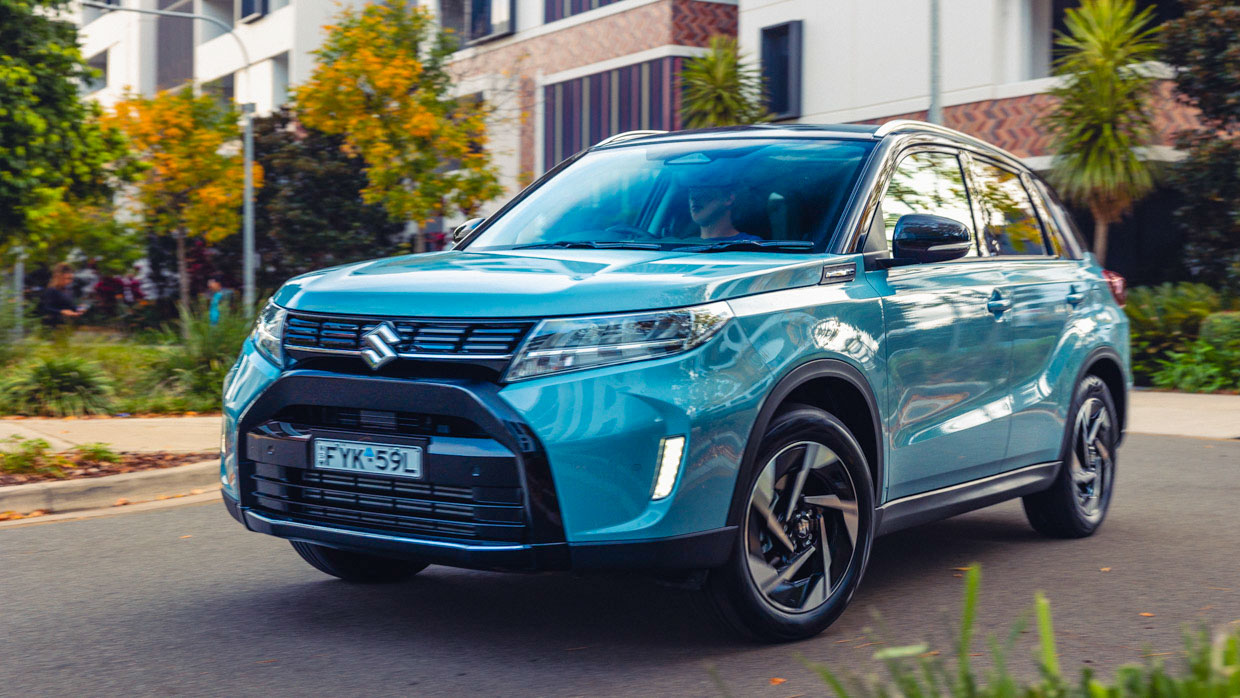
Handling is surprisingly, erm, handy, a positive perhaps more down to light weight and grippy Continental tyres than much in the way of dynamic talent injected into the strut-and-torsion beam suspension tuning.
That said, it’s not much fun. Vitara has, forever in this generation, had a strange front-end/steering relationship that simply refuses to naturally self centre, as most cars do, just off the straight ahead. Chasing steering input to track in a straight line is, at best, mildly annoying.
A rare silver lining on road is that that addition of various safety features to comply with today’s Australian Design Rules hasn’t yielded a bunch of poorly calibrated and incessantly annoying systems as BandAid fixes, as is so evident in so much of today’s price-savvy offerings.
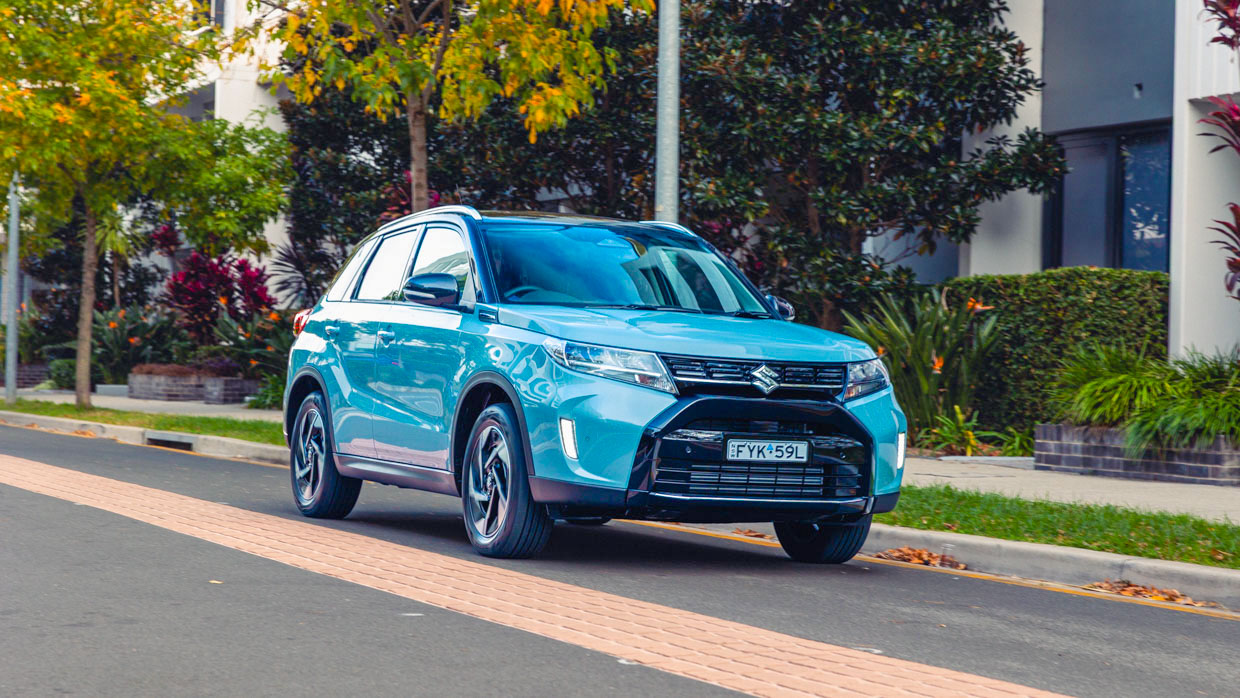
The lane keeping, when it does activate at speed, isn’t too strong armed, and the audible “lanes merging ahead” warning is unnecessary, but for the most part the Suzuki quietly keeps to itself. Nice work.
However, so much of the rest of the Vitara experience is rooted deeply in this generation’s 2015 debut. And it wasn’t all that outstanding to begin with way back when…
One might aptly describe the Vitara cabin experience as a blast from the past. You’d really need a direct comparison to an example of 2015 to discern… You get the picture.
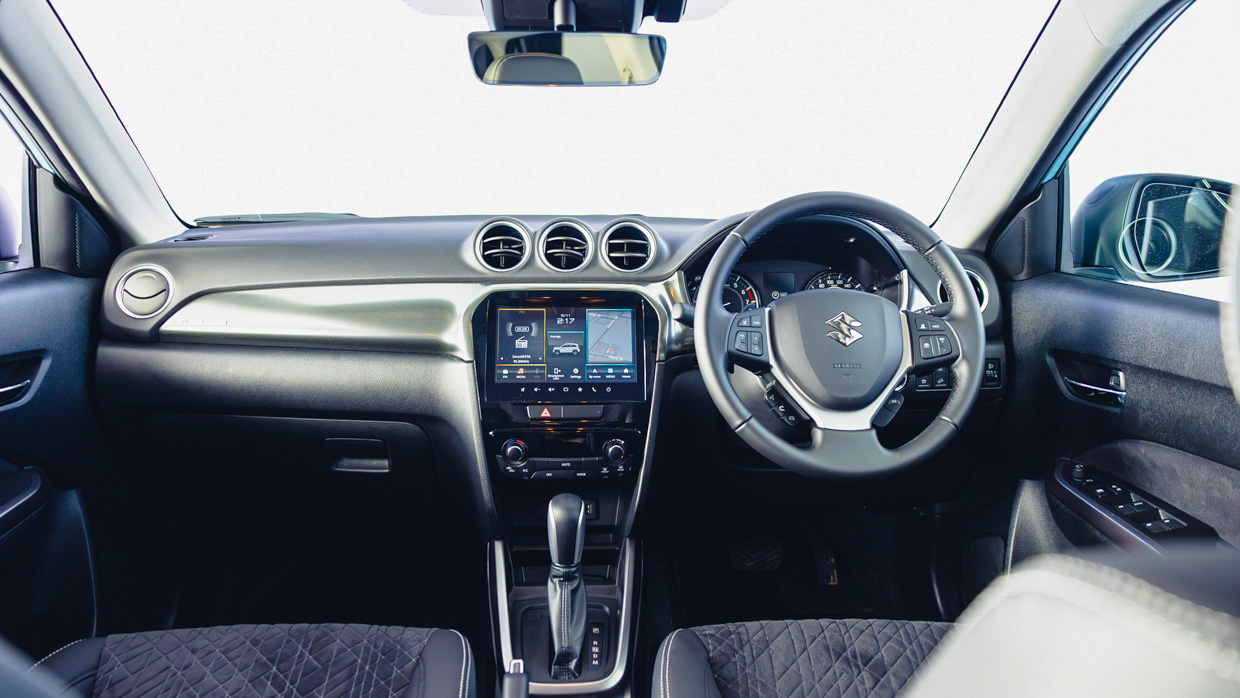
If you care less for flashy tech and big screens – as many do – you might find the Vitara refreshingly old school. The key positive here is that, thankfully, there’s little of that distracting infotainment submenu digging to adjust settings and change features.
Part of this is because Suzuki plonks good-old-fashioned buttons and dials where you expect them to be. And part of it is that, well, there aren’t a whole lot of features that demand adjusting, full stop.
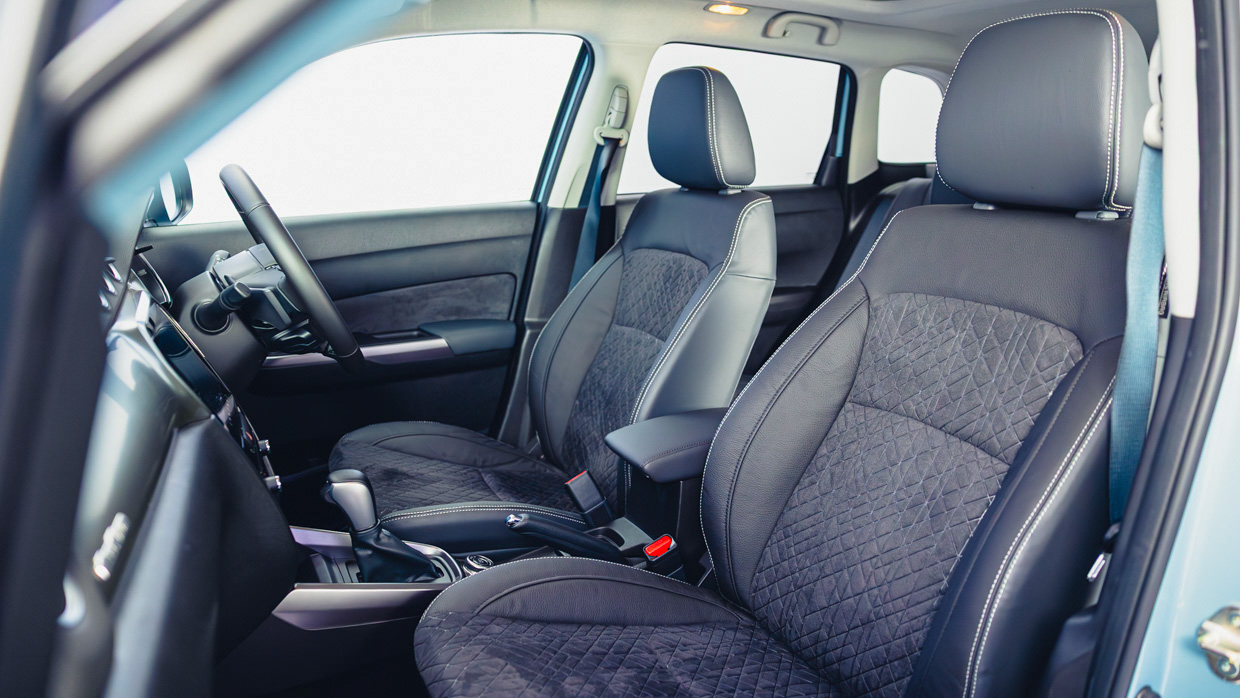
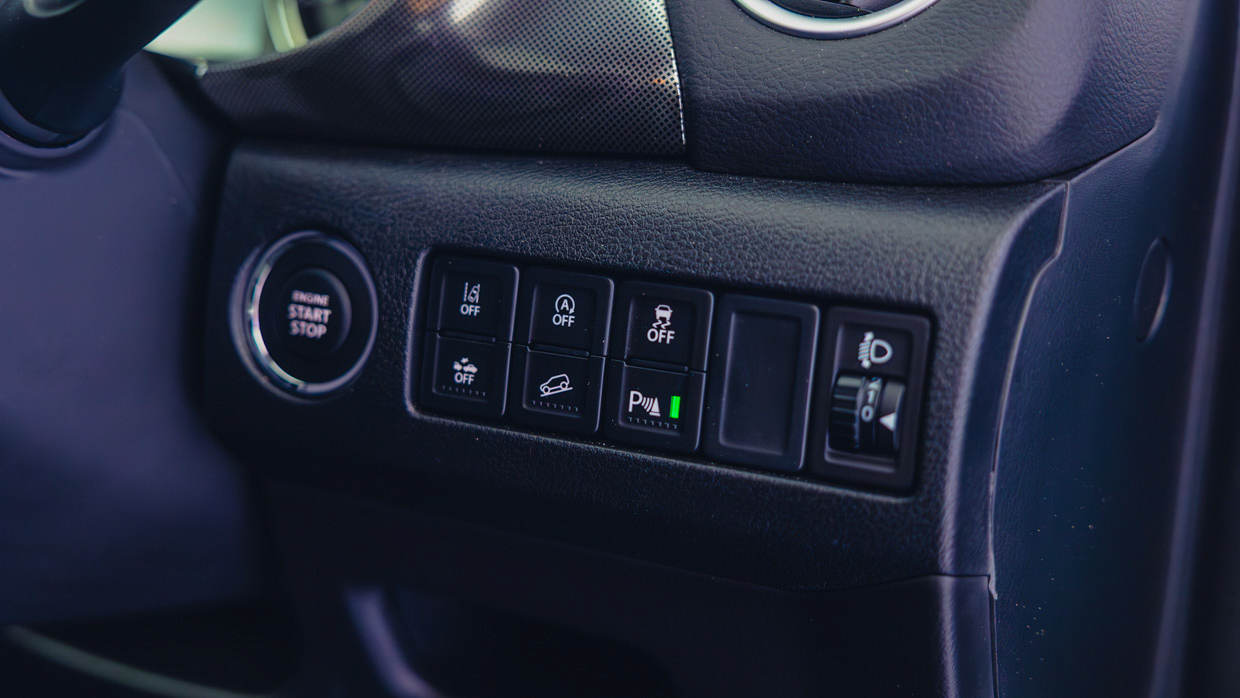
The instruments are analogue. Seat adjustment is mechanical. The air-con unit is a simple single-zone design without complication. But the features count is very slim for a mid-$40K flagship version of a compact SUV (of any advancing age).
It’s not that the 2015’s look, feel, design, ergonomics and vibe are so much disappointing – and in places it is – but Suzuki has put so little effort in attempting to modernise any of it, outside of adding wireless Apple CarPlay and Android Auto to its otherwise ye-olde media system.
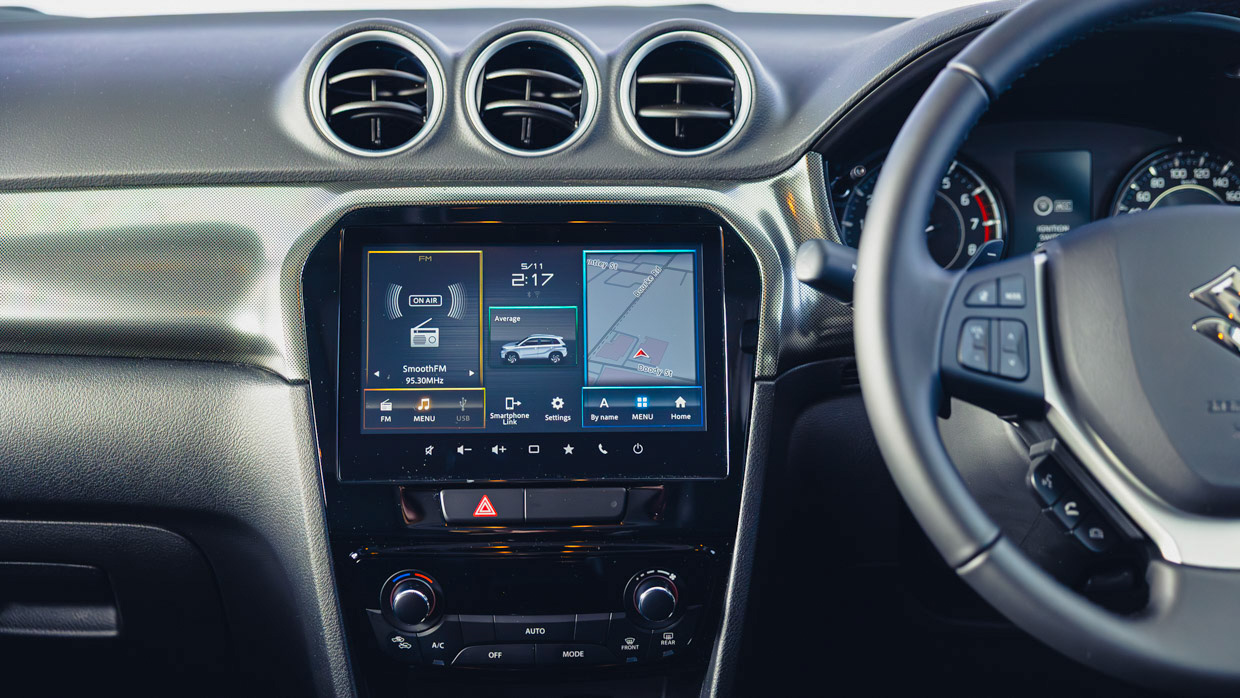
Cabin execution is an odd mix. It locates ballistics-grade hard plastics in the most conspicuous areas, such as the dash fascia and door skin tops, while offering surprising flimsiness where it’s easy to find, such as the door pockets.
Some finish choices, such as the shiny silver dash insert and lashing of ‘classic’ piano black detailing, appear questionable through a 2026 lens, but perhaps the most glaring shortcoming is some of the finish work overhead, where the headlining meets the glass roof.
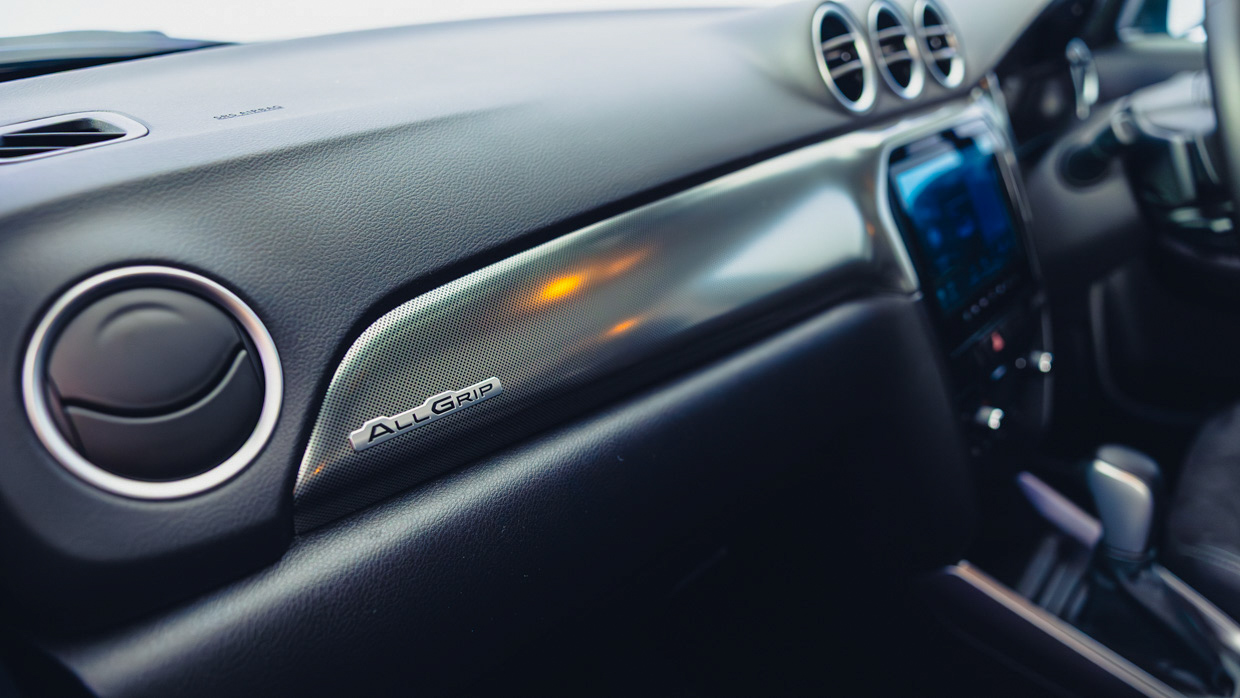
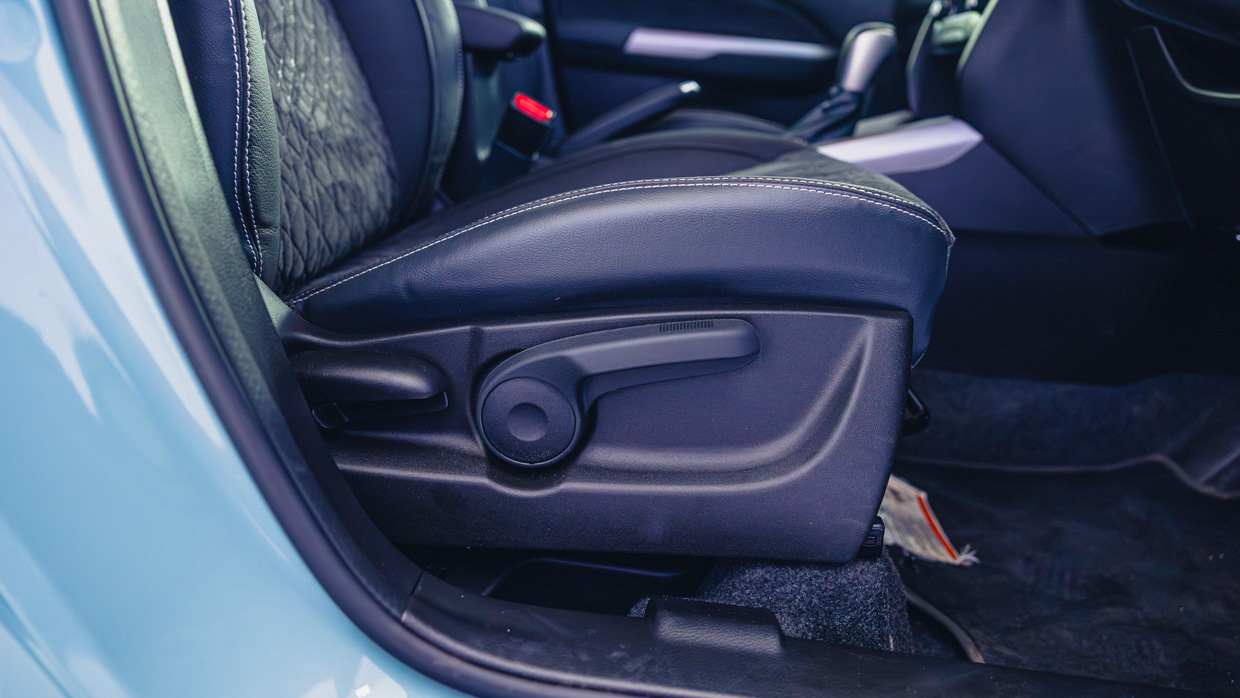
The cloth and faux-leather seat trim, in textured mig-grey, bring some sense of celebration to an otherwise stolid cabin theme, but the real headscratcher is why the fabric of our test car’s driver’s seat base was already starting to wrinkle with a mere 1000km on its odometer.
Nor are the mechanical-adjustable front pews anything to write home about for core comfort and there’s no lumber tunability to speak of.
Elsewhere, storage is modest, it lacks modern tweaks such as inductive phone charging – or a cubby large enough for a modern smartphone – and, almost laughably, the sole device power source is, up front, a single USB-A cable outlet.
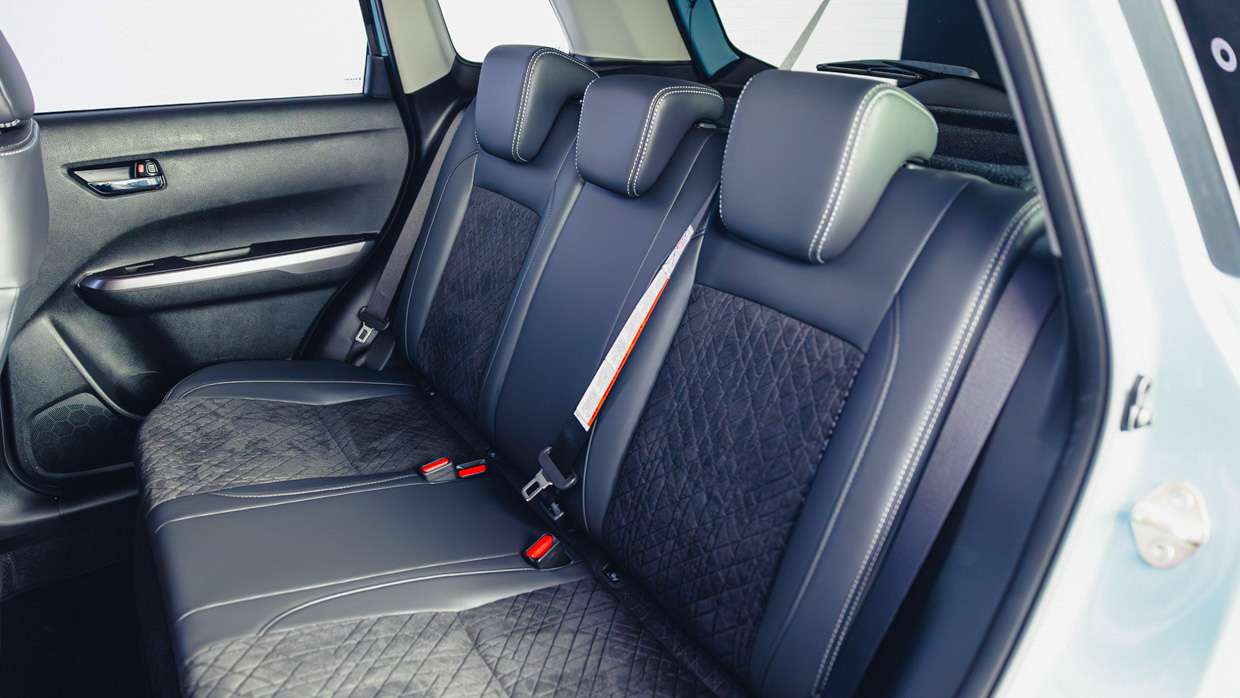
Space in row two is on the tight side, though, much like the first row, the large glasshouse and translucent sunroof scrim afford plenty of daylight, yielding a nice airy ambience.
But appointments wise, rear occupants get nothing – no air vents, no device power – which is far too much of a penny pinch for what’s positioned as the high-grade range variant, one wanting for the sort of money it asks for.
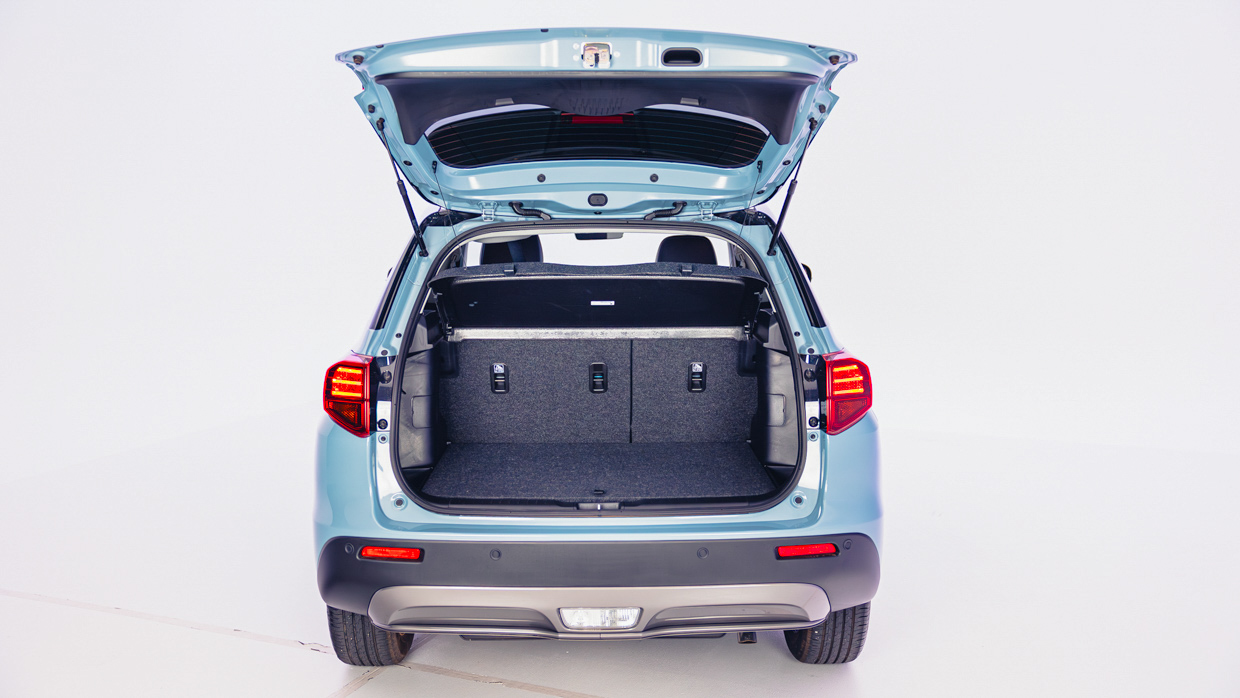
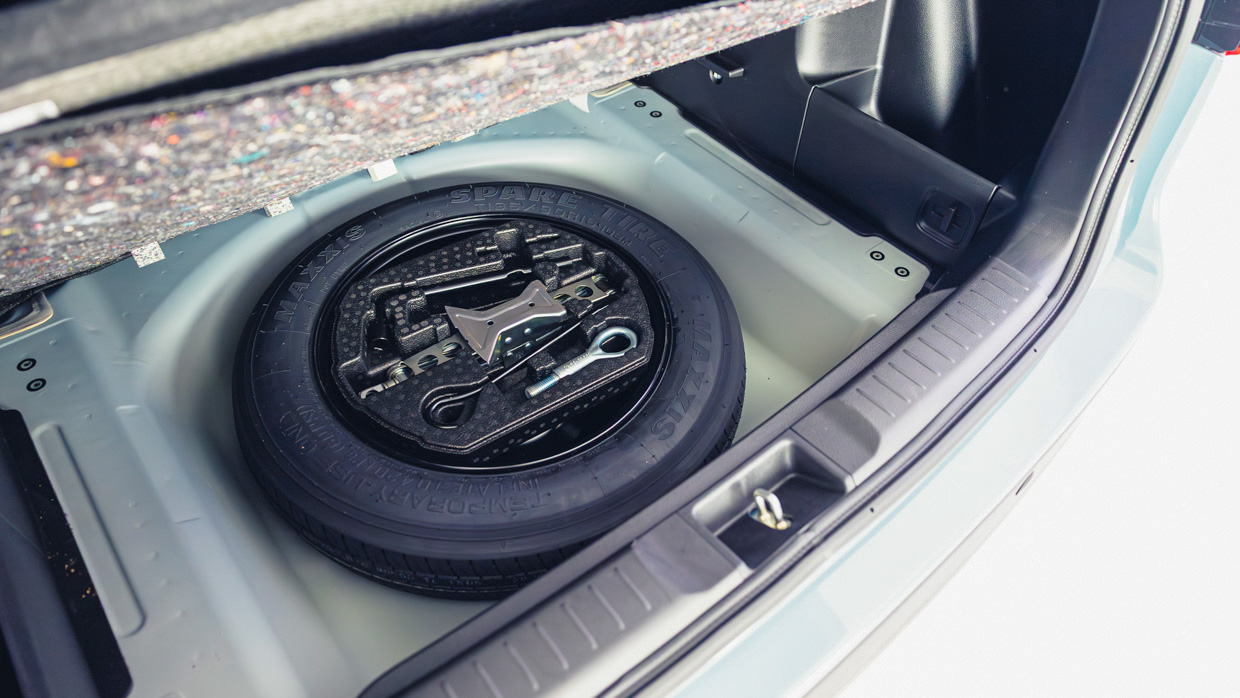
The boot is advertised as 362 litres, expandable to 642L with the rear seatbacks stowed, but it’s functionally a compact space for a compact SUV. It fits a space-saver spare wheel under the boot floor.
The Vitara is covered by Suzuki Australia’s five-year, unlimited-kilometre warranty.
A five-year servicing plan costs $1985, or an average of $397: not cheap against the likes of Toyota. Servicing intervals required every 12 months or 10,000kms for Vitara’s fitting turbo engines.
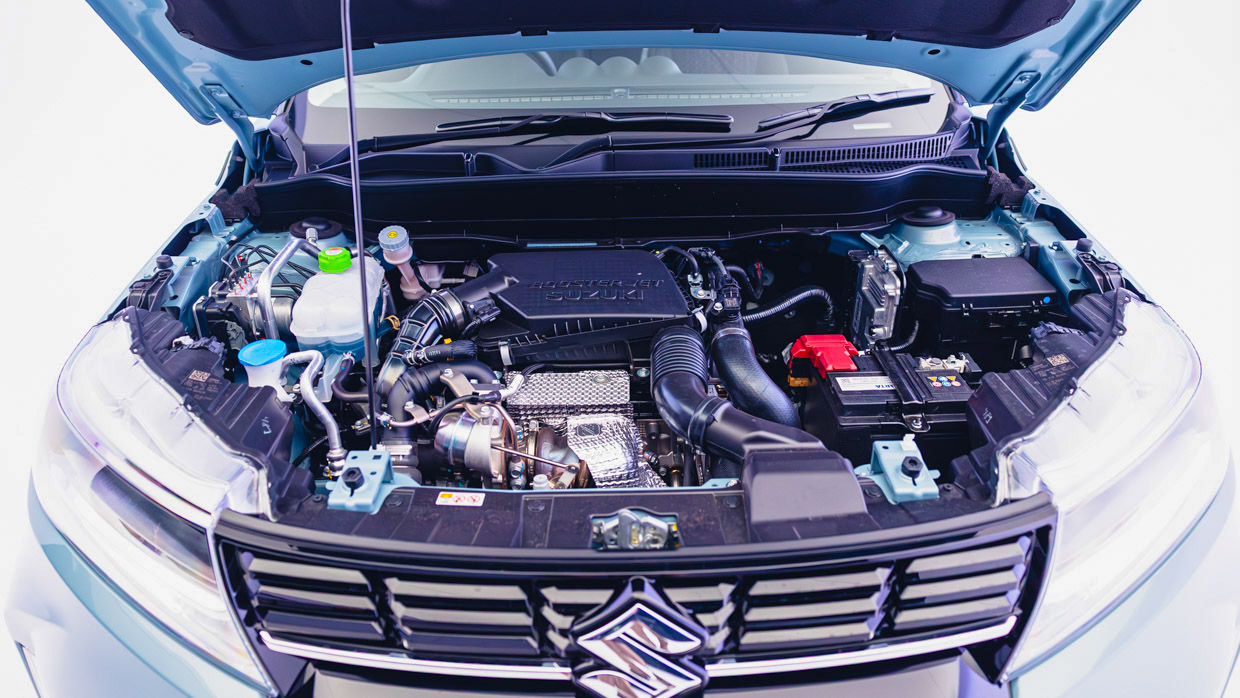
The circa-six-litre fuel consumption is nothing to write home about, especially given the power drop and the demand for pricey 95-octane fuel. Again, its hybrid system is certainly mild by label, mild by nature.
Budget Direct told us the median annual premium purchased for the first time between 1/4/25 and 1/4/26 to comprehensively insure a new Suzuki Vitara was $1307. Individual circumstances and policy terms may vary.
Of course, everybody’s situation is different, and the premium will vary according to make and model, and other things insurers take into account, such as your postcode, driving history, who drives the car, where you garage the car and more.
Please quote for yourself. Subject to meeting underwriting criteria. Insurance issued by Auto & General Insurance Company Limited. See PDS & TMD at budgetdirect.com.au.
Some buyers will rejoice that Vitara, in a form known oh-so-well, is back in showrooms after a hiatus in the sin bin for non-compliance with government ADRs over safety. Other potential buyers might ask: if this version is over a decade old, where’s the new one?
It’s here. It’s electric. It’s called the eVitara. And inside out it appears everything you might expect from Suzuki’s new-generation compact SUV.
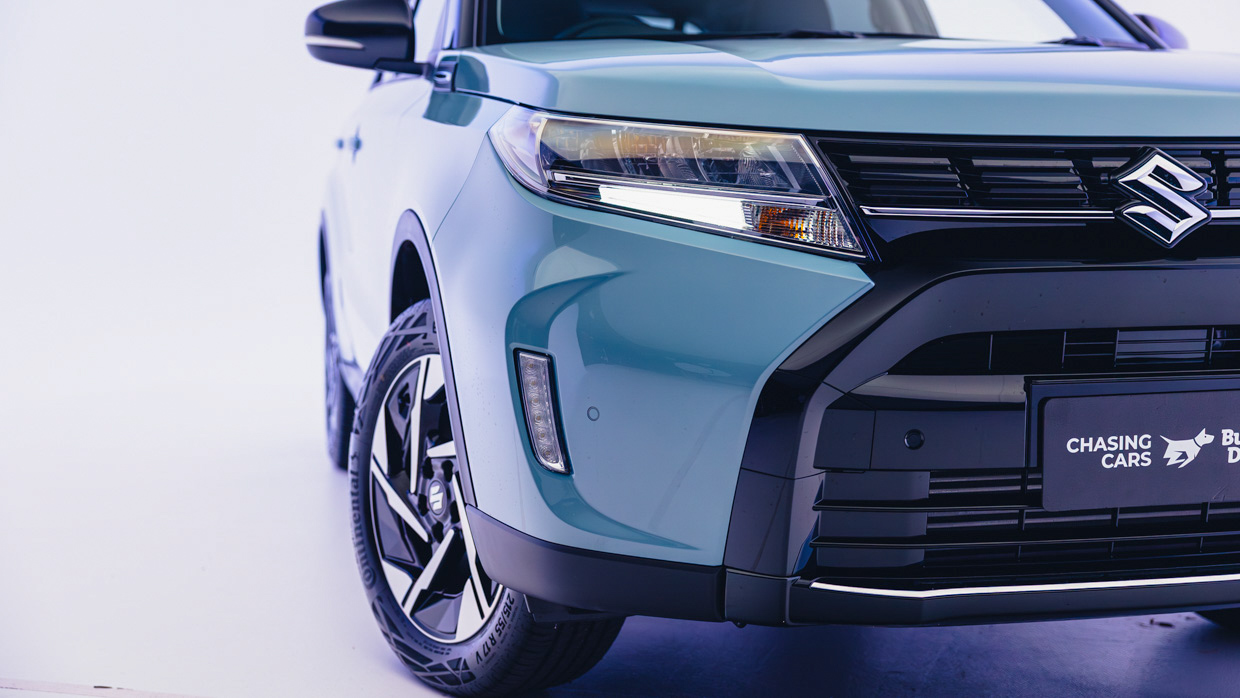
And the fresh-faced stablemate is just one reason why the Vitara hybrid appears too little for too much outlay all too late. And returned with not nearly enough evolution to present competitive relevancy.
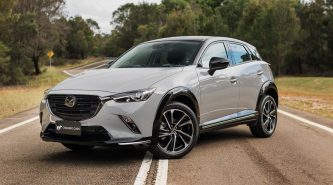
The mild-hybrid Vitara lacks the efficiency, the smarts and cheaper buy-in and ownership credentials of a Toyota Yaris Cross. It lacks the constantly dated polish enjoyed by the equally old yet more contemporary vibes of Mazda’s CX-3.
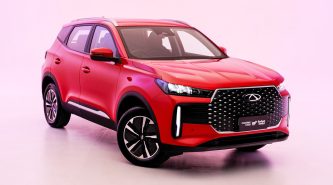
Pricing is up – like everything – but where it now sits is simply too uncompetitive against both these Asian stalwarts and emerging Chinese price-busters such as Chery Tiggo 4. And a significant downgrade in power simply further dulls the Suzuki’s dwindling lustre.
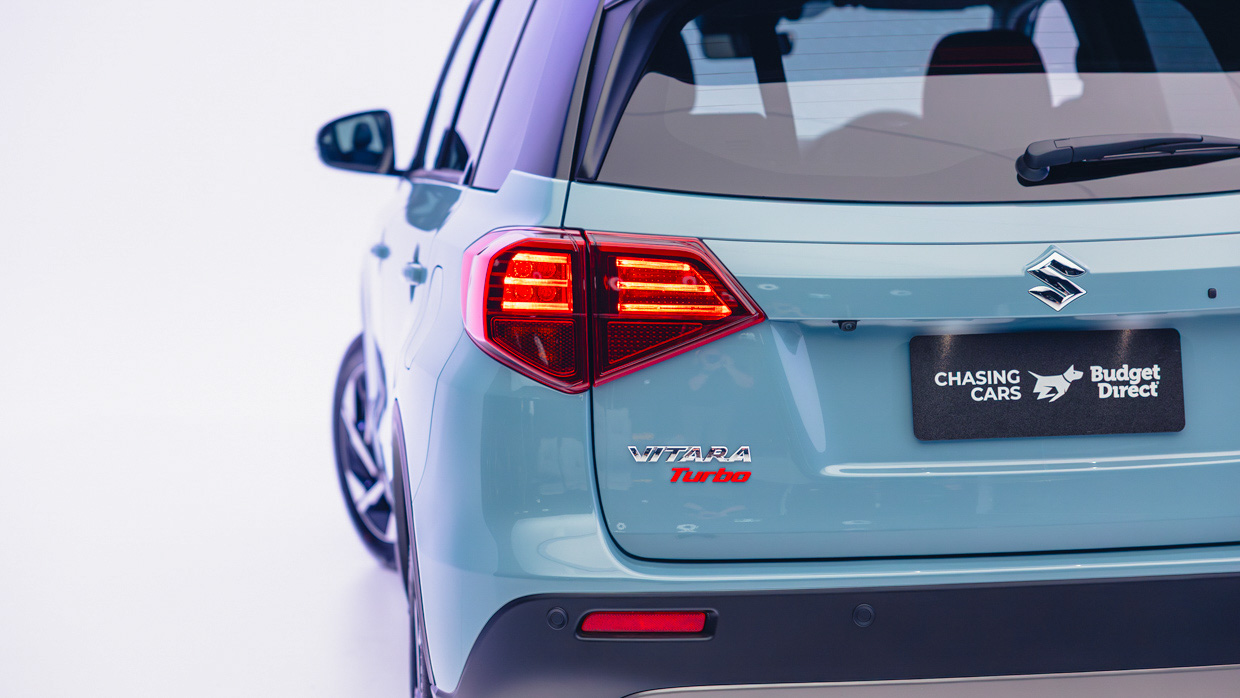
Yes, the Allgrip version offers a rare blend of compact SUV utility with all-paw traction seemingly primed for traditionalist regional owners. But plenty of better, smarter and newer options are out there for similar money.
Key specs (as tested)
About Chasing cars
Chasing Cars reviews are 100% independent.
Because we are powered by Budget Direct Insurance, we don’t receive advertising or sales revenue from car manufacturers.
We’re truly independent – giving you Australia’s best car reviews.
The estimate provided does not take into account your personal circumstances but is intended to give a general indication of the cost of insurance, in order to obtain a complete quote, please visit www.budgetdirect.com.au. Estimate includes 15%^ online discount.
^Conditions Apply
Budget Direct Insurance arranged by Auto & General Services Pty Ltd ACN 003 617 909(AGS) AFSL 241 411, for and on behalf of the insurer, Auto & General Insurance Company Limited(ABN 42 111 586 353, AFSL 285 571).Because we don’t know your financial needs, we can’t advise you if this insurance will suit you. You should consider your needs and the Product Disclosure Statement before making a decision to buy insurance. Terms and conditions apply.
Indicative quote based on assumptions including postcode , 40 year old male with no offences, licence suspensions or claims in the last 5 years, a NCD Rating 1 and no younger drivers listed. White car, driven up to 10,000kms a year, unfinanced, with no modifications, factory options and/or non-standard accessories, private use only and garaged at night.
^Online Discounts Terms & Conditions
1. Discounts apply to the premium paid for a new Budget Direct Gold Comprehensive Car Insurance, Third Party Property Only or Third Party Property, Fire & Theft Insurance policy initiated online on or after 29 March 2017. Discounts do not apply to optional Roadside Assistance.
2. Discounts do not apply to any renewal offer of insurance.
3. Discounts only apply to the insurance portion of the premium. Discounts are applied before government charges, taxes, levies and fees, including instalment processing fees (as applicable). The full extent of discounts may therefore be impacted.
4. We reserve the right to change the offer without notice.