Powered by

-
Car Reviews
Latest reviews
- Car News
-
Car Comparisons
Latest comparisons
- Chasing Deals
Latest reviews
Latest comparisons
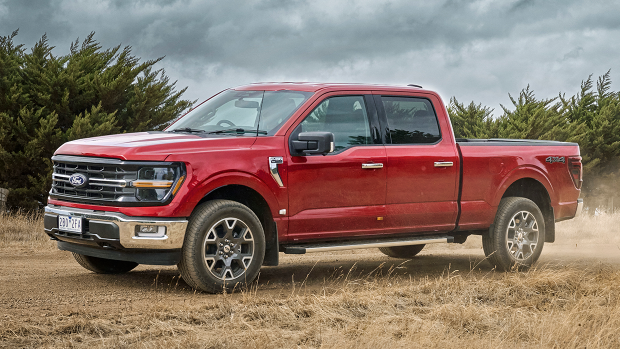
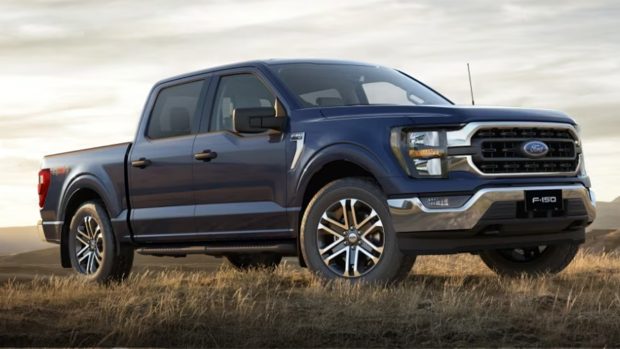
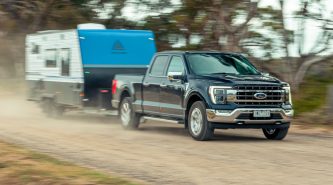
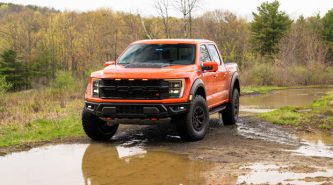
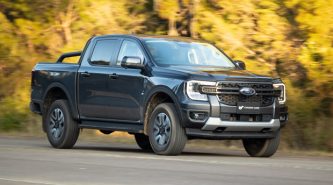
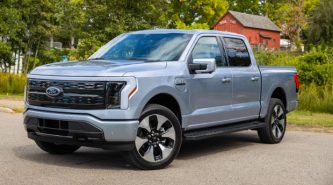
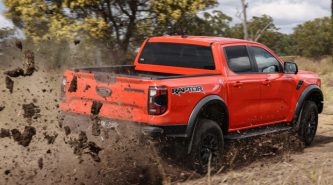
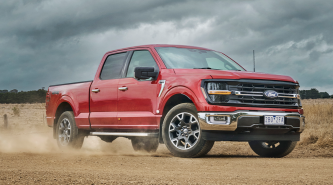
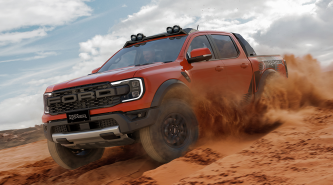
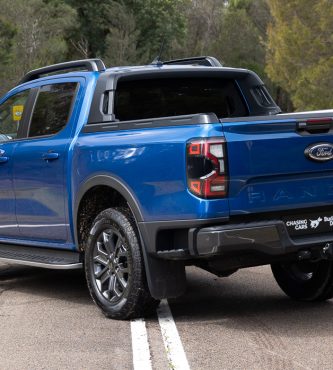
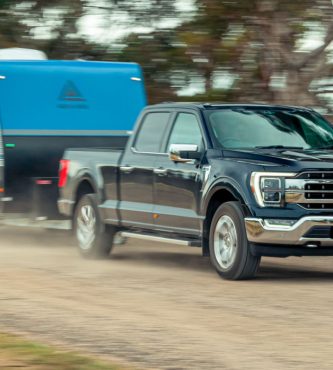
Two massive trucks capable of towing 4500kg, but is there space and commercial sense in Ford Australia offering both the converted F-150 and new Ranger Super Duty?
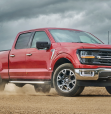
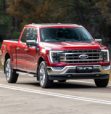
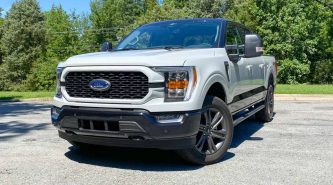
As an updated version of the remanufactured-in-Australia Ford F-150 hits showrooms, it takes me back to late last year when I tested the freshly-minted Ranger Super Duty.
I asked myself – and some of the Ford Australia team – do we now really need the giant American truck here, not least because it’s neither a cheap nor quick process to perform the F-150’s exhaustive right-hand-drive conversion?
Don’t get me wrong. I’m pro-choice when it comes to offering Aussie buyers a variety of models, but the harsh reality of business means anything failing to make economic sense can quickly get boned.
Look to Ford’s now terminated passenger car lineup – Fiesta, Focus and Mondeo – for best evidence there.
As expected, Ford Australia wasn’t about to let a humble hack like me peer into its future product planning playbook.
So despite a 67 per cent drop in RHD F-150 sales last year, they were quick to shut down my fears for the American truck’s future.
“We are committed to the F-150 and our local remanufacturing partnership with (Melbourne’s) RMA Automotive,” responded Ben Nightingale, Ford Australia’s Product Communications Manager.
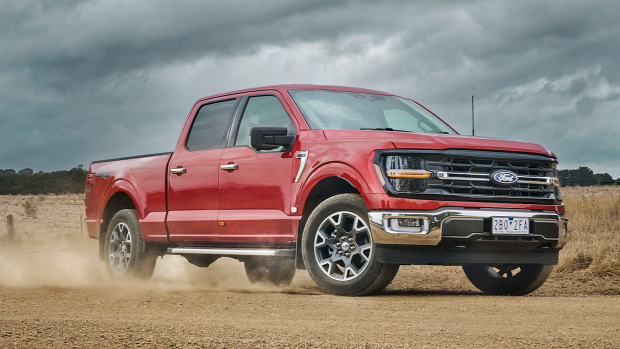
“The full-size pick-up segment in Australia is a distinct market, and buyers in that segment are specifically looking for that full-size American truck experience; the sheer volume of the cabin and the specific driving dynamics you only get from that platform,” he continued.
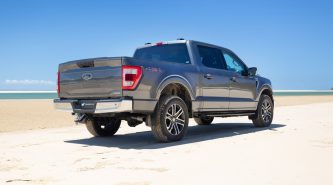
No doubt. The F-150 is an imposing yee-haw type of mega truck, and of course there are buyers only really interested in owning something from the US of A.
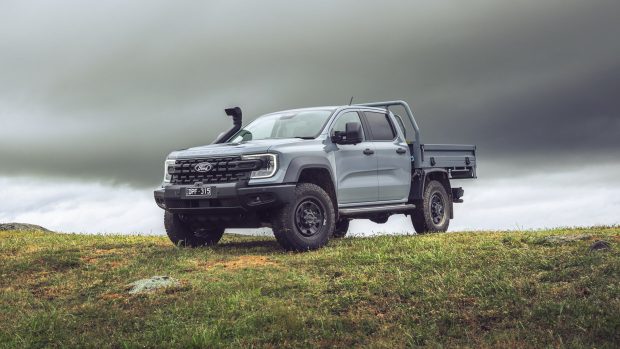
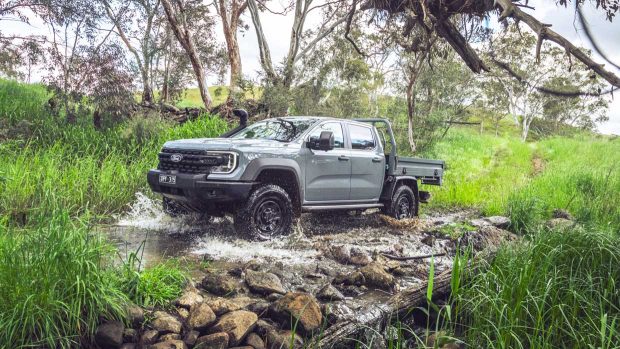
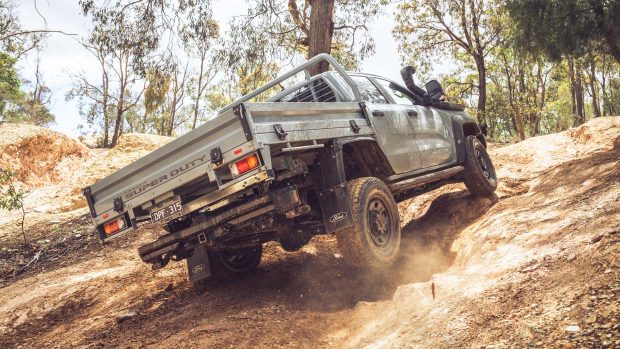
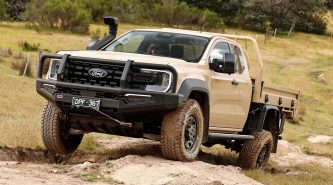
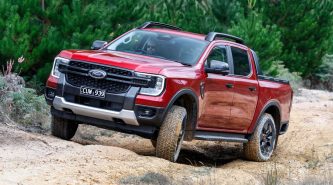
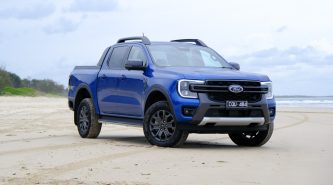
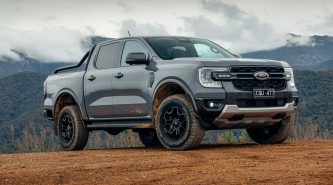
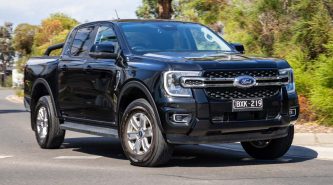
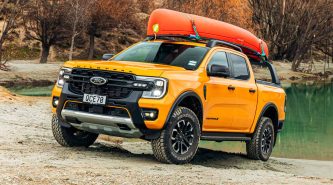
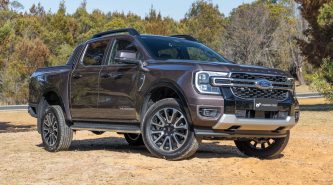
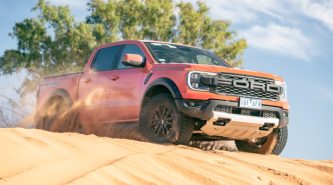
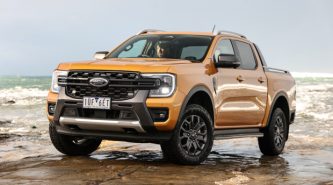
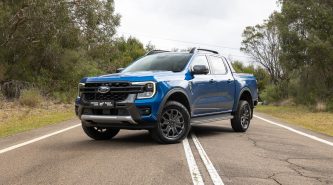
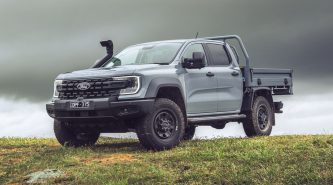
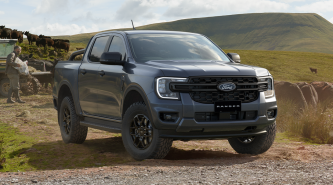
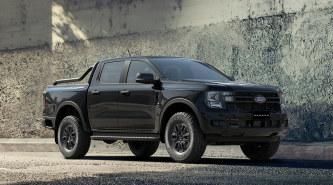
But certain facts remain. The Aussie-developed Ranger Super Duty may not offer the sheer size nor cabin space of an F-150, but it’s hardly a tiddler, and its workhorse abilities surpass the American.
Oh, and it’s a darn sight cheaper too, that gulf only made larger by significant price increases for F-150 in 2026.
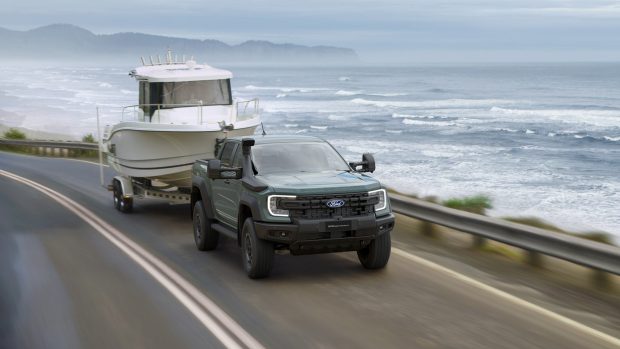
Both Ranger Super Duty and F-150 have a 4500kg maximum towing capacity. But the smaller-footprint Super Duty boasts 4500kg GVM and 8000kg GCM, trumping the F-150’s 3315kg/3360kg (short/long wheelbase) GVM, and 7365kg/7410kg (SWB/LWB) GCM.
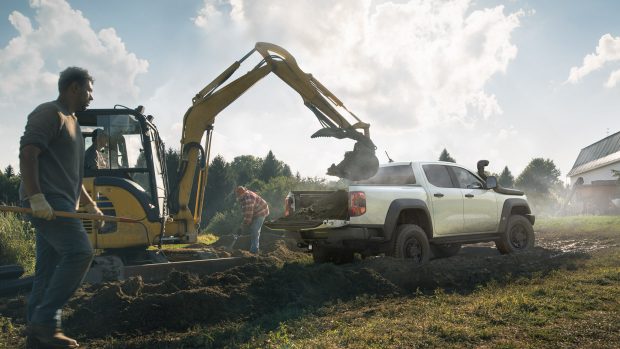
The F-150 has the larger pick-up box, but payload is 878kg (XLT), 794kg (Lariat) or 724kg (Platinum), while the Ranger Super Duty offers mega 1825kg – 1982kg depending on body style.
There’s always a trade-off between a truck’s capabilities and its ride comfort, so the heavier-lifting Super Duty you’d expect would ride like an old cart compared to the more supple F-150’s chassis.
But here’s the thing. The Super Duty isn’t half bad on the ride quality front. Ford – to its great credit – has massaged the drive experience to be more user-friendly than something with so much load-lugging talent should achieve.
The trucks’ powertrains, of course, are very different animals. The Super Duty rolls with a rather underdone 154kW/600Nm 3.0L V6 turbo-diesel, while the F-150 hits the horizon more rapidly with its 3.5L EcoBoost twin-turbo V6 petrol, good for 298kW and 678Nm.
Nightingale points out the importance of engine differences between the two: “The F-150 buyer is looking for a fundamentally different experience,” he said. “They specifically want the scale, interior space and the effortless, quiet highway cruising of the 3.5L petrol V6.
“The Super Duty can certainly play the role of a premium street cruiser, but it’s catering to the buyer who wants maximum diesel capability in a mid-size package. The F-150 remains the undisputed choice for full-size, petrol-powered touring luxury.”
That petrol vs diesel argument won’t change between the two, but it’s easy to see how the Ranger Super Duty could up its interior luxe game to snare buyers out of the palatial higher-grade F-150s.
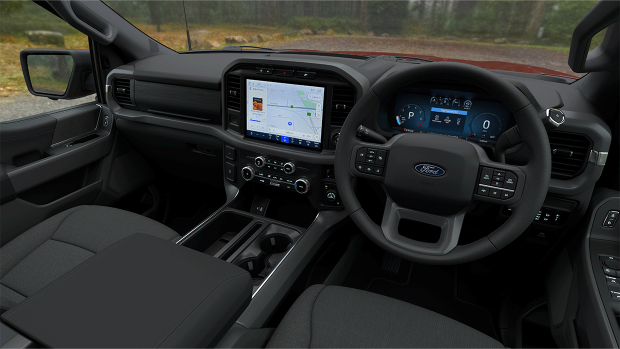
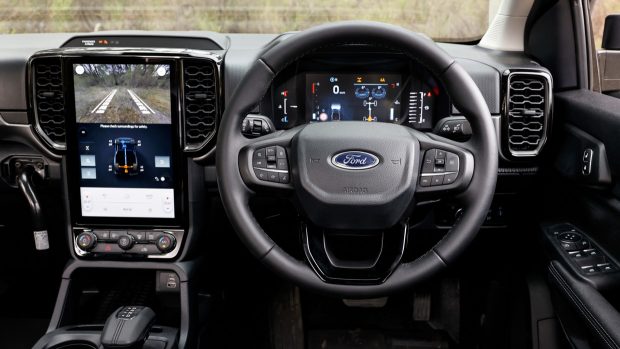
The current Super Duty’s single grade is a bit ‘how ya goin’ on the cabin presentation front, but that’ll change mid-year with the arriving XLT Double Cab grade and its touring-focused refinement.
Think leather-accented heated and ventilated seats, improved NVH (noise, vibration, harshness), upgraded audio and 18-inch alloys. And who’s to say there won’t be higher grades in future?
Nightingale bats away such concerns that a luxo Super Duty could cannibalise many sales away from F-150. “Even a highly appointed Ranger Super Duty won’t bridge the physical gap to an F-150,” he said.
“You simply cannot replicate the interior volume, the width, or the distinct petrol-powered cruising character of an F-150 in a mid-size architecture.”
Regardless, I’m sure I’m not alone in spotting the odd Super Duty in the wild bought as a lifestyle and not a work truck. They absolutely rival the F-150 for presence, yet are (slightly) easier to park in town, and better at navigating skinny bush tracks.
“We can’t deny the street presence of Ranger Super Duty,” said Nightingale. “With its wider track, raised ride height and beefed-up stance, it’s not surprising it’s catching the eye of lifestyle buyers who want the ultimate expression of the Ranger.”
The Ranger SD also has price on its side. The incoming leather-lined XLT Double Cab pickup costs from $99,990 before on-roads, while an F-150 XLT is now $114,950; Lariat $143,950 and new Platinum $163,950 before charges.
That’s a lot of cash left over to buy diesel for a Super Duty, which it drinks at a rate of around 11L/100km. The F-150? It gulps 13.4L/100km of unleaded.
While Ford Australia insists it has space for its brace of 4500kg-capable trucks, a niggling cause for concern has been the F-150’s chequered reputation since it first arrived in late 2023.
The remanufactured truck has endured recalls, reliability issues and a sales pause to remedy such dramas. None has helped the model’s PR.
As previously mentioned, last year F-150 sales were down 67 per cent, next to the full-size truck market dropping 17 per cent in 2025. Ford’s 792 annual sales put the F-150 well behind the Chevy Silverado 1500 (2209), Ram 1500 (2674), and even Toyota’s Tundra (837). In 12 months, the F-150 went from 23 per cent market share to just nine per cent.
As Ranger Super Duty sales are amalgamated with Ranger numbers (which is daft – they’re very different vehicles), we don’t know how many Ford Australia has shifted, and nor are they telling us.
But if Super Duty sales usurp the F-150’s, and the full-size truck market continues to contract, the bean counters may find it increasingly difficult to make the case for Ford’s American biggie on Aussie shores.
Latest news
About Chasing cars
Chasing Cars reviews are 100% independent.
Because we are powered by Budget Direct Insurance, we don’t receive advertising or sales revenue from car manufacturers.
We’re truly independent – giving you Australia’s best car reviews.