Powered by

-
Car Reviews
Latest reviews
- Car News
-
Car Comparisons
Latest comparisons
- Chasing Deals
Latest reviews
Latest comparisons
There’s no beating a luxury van for chauffeured transport and beating SUVs for big-family flexibility. The GAC M8 arrives to do both reasonably well
One of the most surprising developments in Australia’s new car market in 2026 could be the reinvigoration of the passenger van segment, and the new GAC M8 is its latest player.
Since Toyota pulled the iconic Tarago model from local shores at the end of 2019, competition in the MPV space has stagnated, having coalesced around the segment’s only strong seller: the Kia Carnival, which now represents more than 80 percent of people mover sales.
One model mopping up four in every five MPV transactions has — perhaps unsurprisingly — caught the eye of emergent Chinese rivals keen to not only disrupt the Carnival’s success, but also to transplant East Asia’s tastes for luxury vans to Australia.
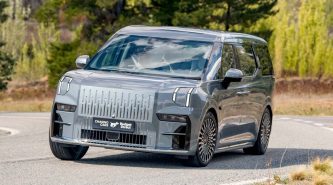
A flurry of contenders seeking the Carnival crown have launched at distinctly different price points: the futuristic, all-electric Zeekr 009 from $115,900 plus on-road costs, while the more basic turbo-petrol LDV Mifa (from $53,990 driveaway) appears to be off-sale for now.
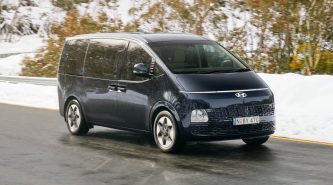
Neither entrant has caused much of a flurry, with just 119 deliveries (Zeekr) and 166 sales (LDV) racked up across 2025 to the end of November. Only the Hyundai Staria (1109) comes anywhere near Carnival’s 9962 YTD units.
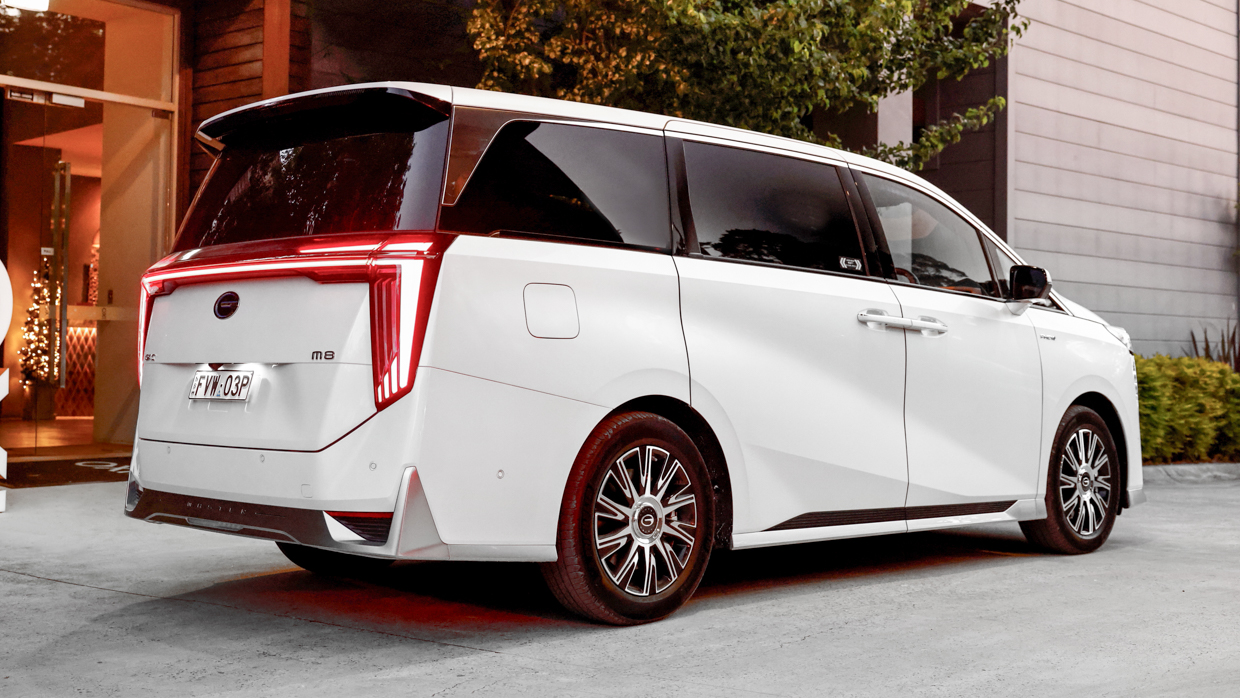
GWM will soon enter the van fray via Wey — its forthcoming premium brand, which will offer the plug-in hybrid (PHEV) G9 MPV in Australia — but new-brand GAC is already here, with its M8 PHEV launching this week from $76,590 + ORCs in two grades.
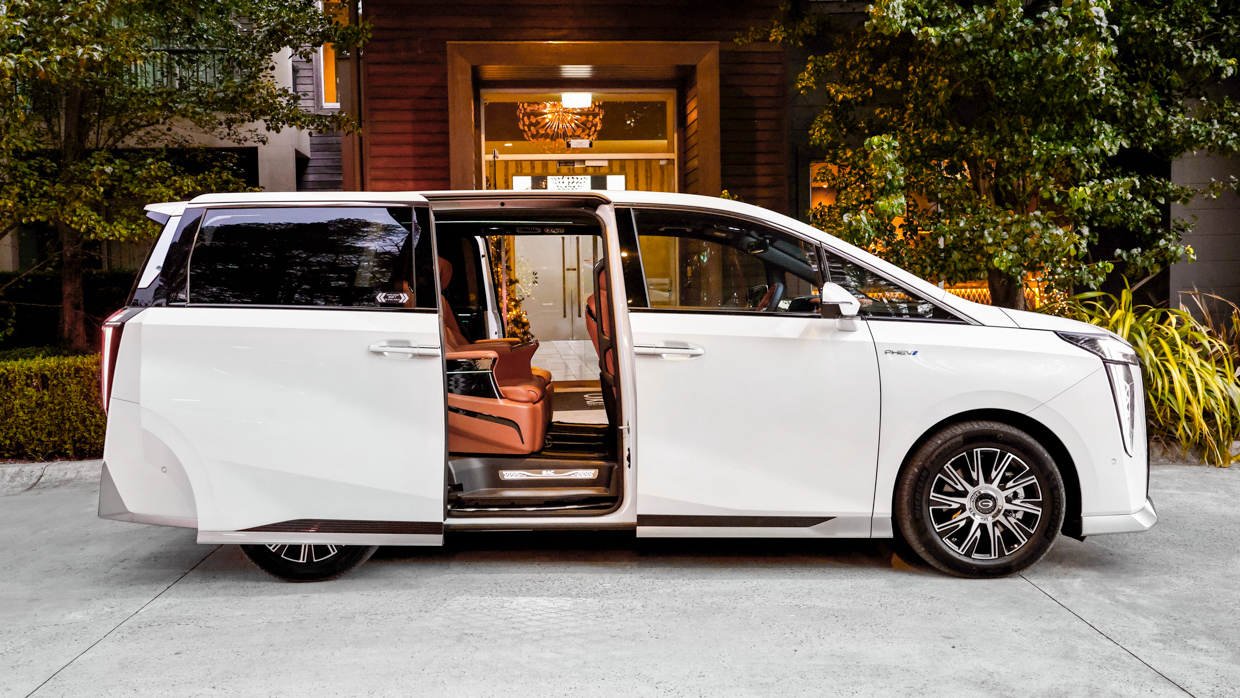
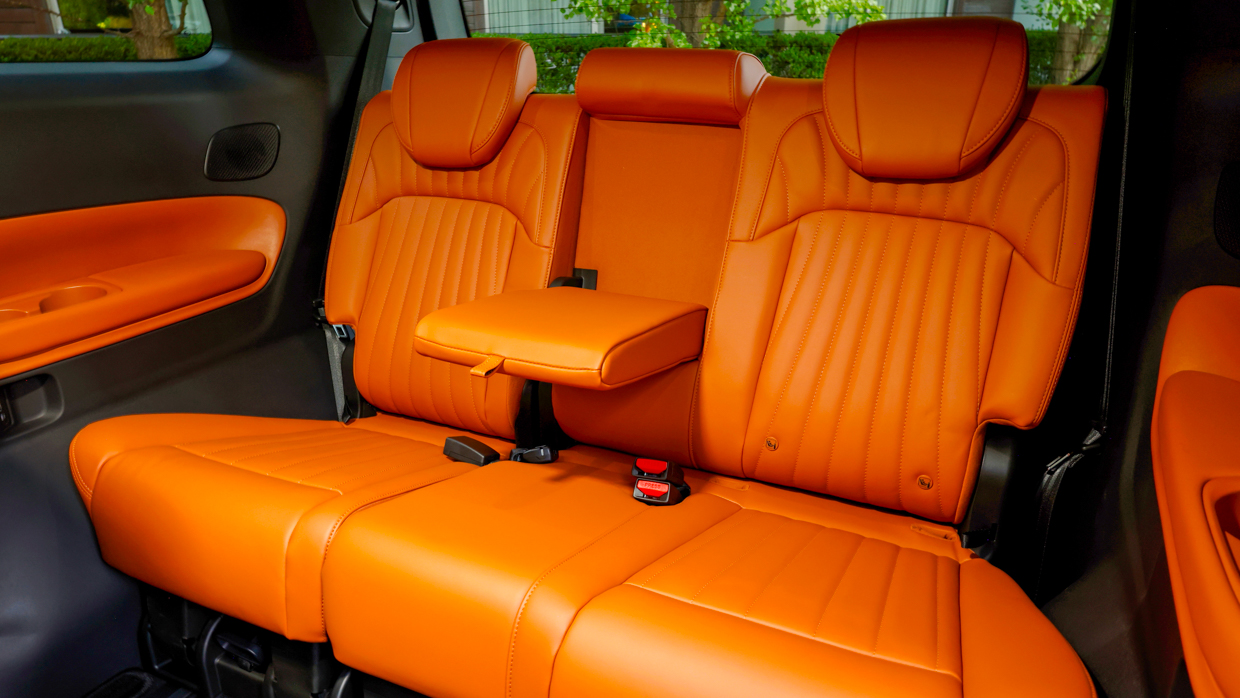
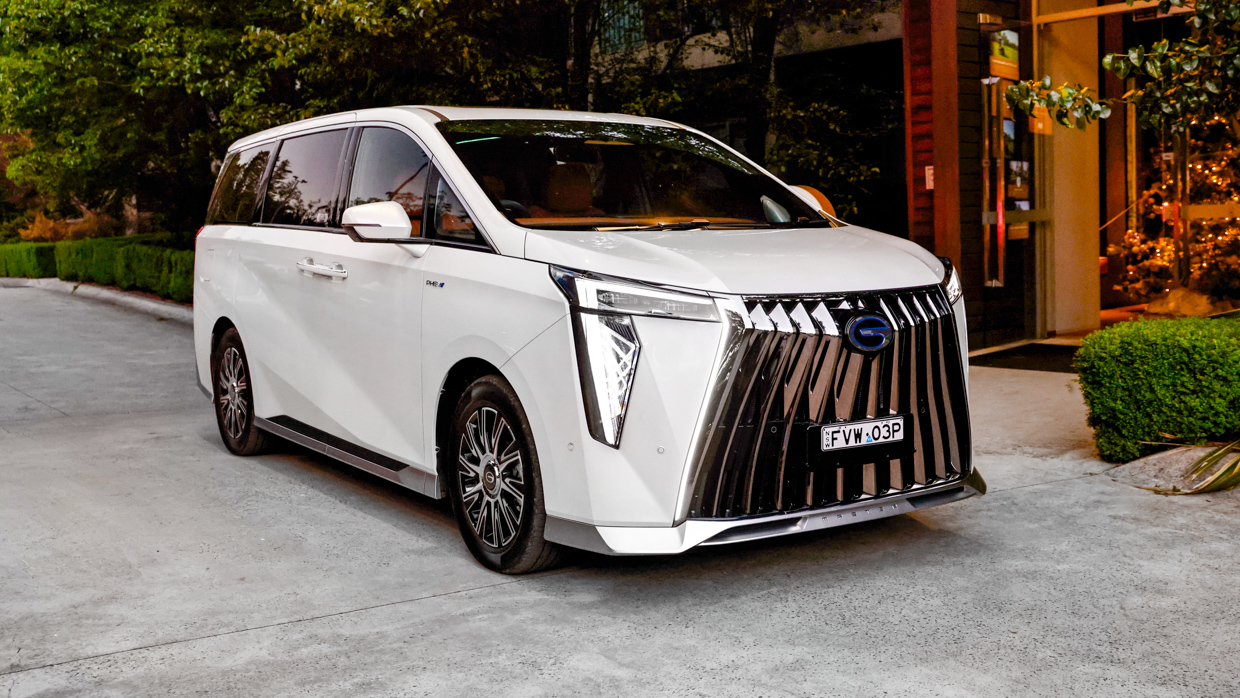
A seven-seater spread across three rows (the first two with leather captain’s chairs in both grades, with a more basic three-seater rear bench), the M8 arrives with a confronting but memorable ‘Master’ design language led by an imposing, Lexus-style grille.
Onlookers might think the grille was, in fact, inspired by the luxury-tier Lexus LM (212 sales this year, from $163,250 + ORCs), but the GAC M8 predates the Lexus. Known as the Trumpchi M8 in its home market, the current, second-gen van was revealed at the 2022 Chengdu Auto Show.
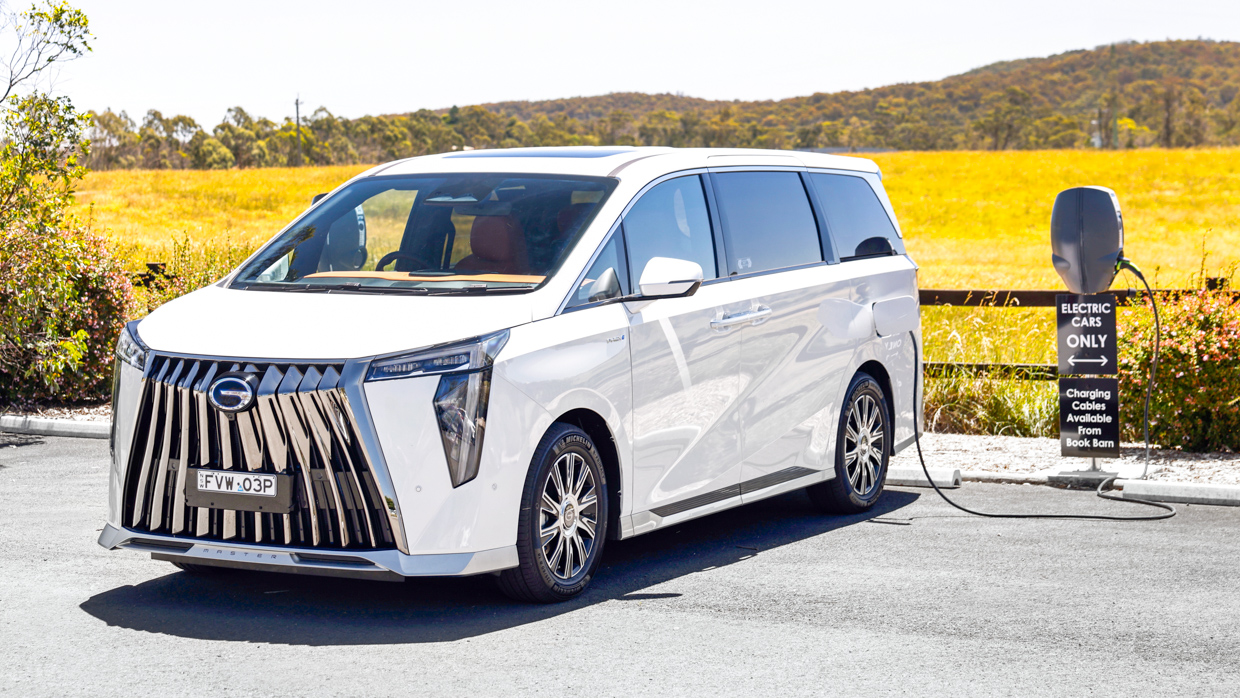
GAC, which has only recently landed in Australia, says that it is the sales leader in luxury MPVs in its home market and has been for more than three years running. In China, GAC’s ‘home brand’ Trumpchi has mid-market positioning and locally, it plans to be neither the cheapest nor the most expensive Chinese entrant.
The decision to bring the posh M8 van to Australia is an interesting one. The M8 is easily GAC’s dearest model locally and in top-tier Luxury trim ($83,590 + ORCs) painted optional black paint ($1200), the model brushes $90,000 driveaway: big coin for a new badge.
But the feature list is generous: not only is the M8 a turbocharged plug-in hybrid with a claimed 1032km total range (including 106km if the battery is charged up), standard spec’ also includes dual power-sliding side doors, three-zone climate control, an eight-speaker stereo, leather seating (first two rows), 360-degree camera and acoustic and privacy glass.
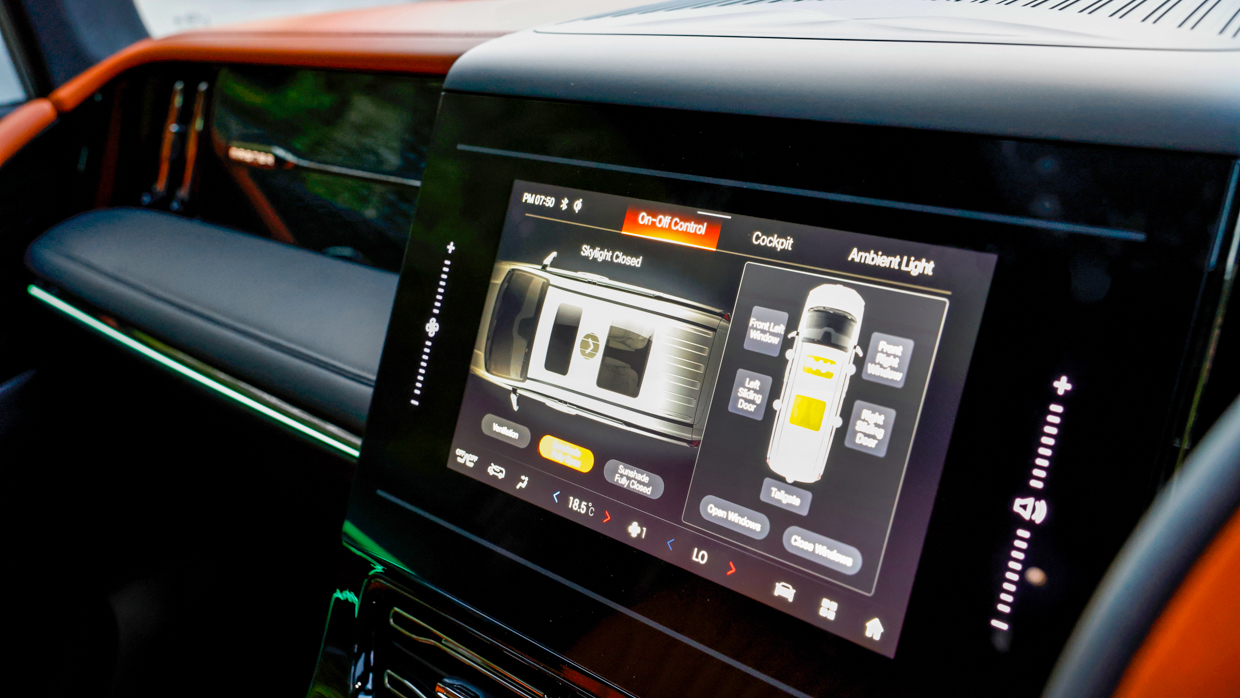
Both grades nab a 12-way power-adjustable driver’s seat with front seat heating/cooling, plus a 12.3-inch digital instrument cluster, 10.2-inch central touchscreen, four-way power passenger seat and at least six USB ports.
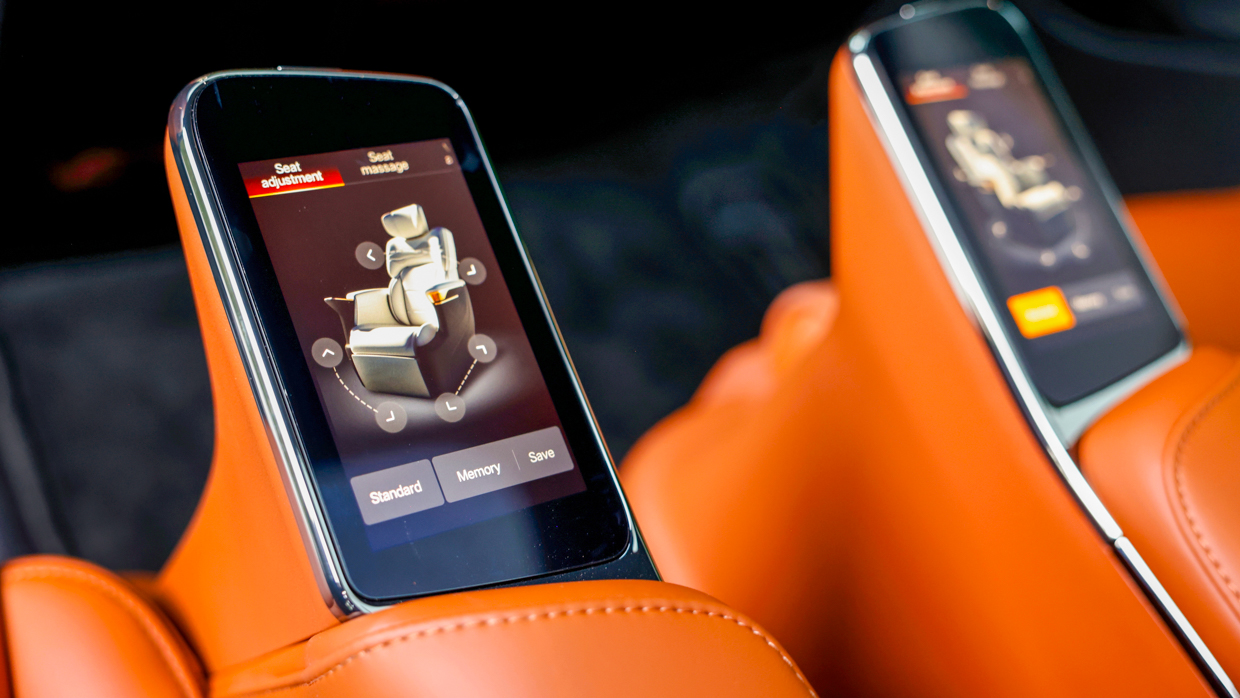
Spending another $7000 to get into the Luxury grade is where the party really starts: while both grades have individual captain’s chairs in the second row, the Luxury ups the ante with full power adjustment, memory, massaging, heating and cooling for those in the back while also upgrading the leather quality to semi-aniline grade.
Luxury also nabs second-row sunshades, ambient lighting, heated steering wheel, a fragrance dispenser, reversing AEB, automated parking functions and the ability to discharge an auxiliary battery to external appliances at 3.3kW for 4.5 hours.
A seven-year/unlimited-kilometre warranty is offered for the M8 PHEV, but Australian service pricing is yet to be disclosed by GAC.
The M8 is not only GAC’s most expensive car in Australia—it’s also its most sophisticated mechanical package by quite some margin.
While luxo-vans have been popular in China (and other Asian markets) for some time, the Chinese domestic market appears to be shifting towards PHEV powertrains in this segment, combining long-distance petrol range with around-town silence.
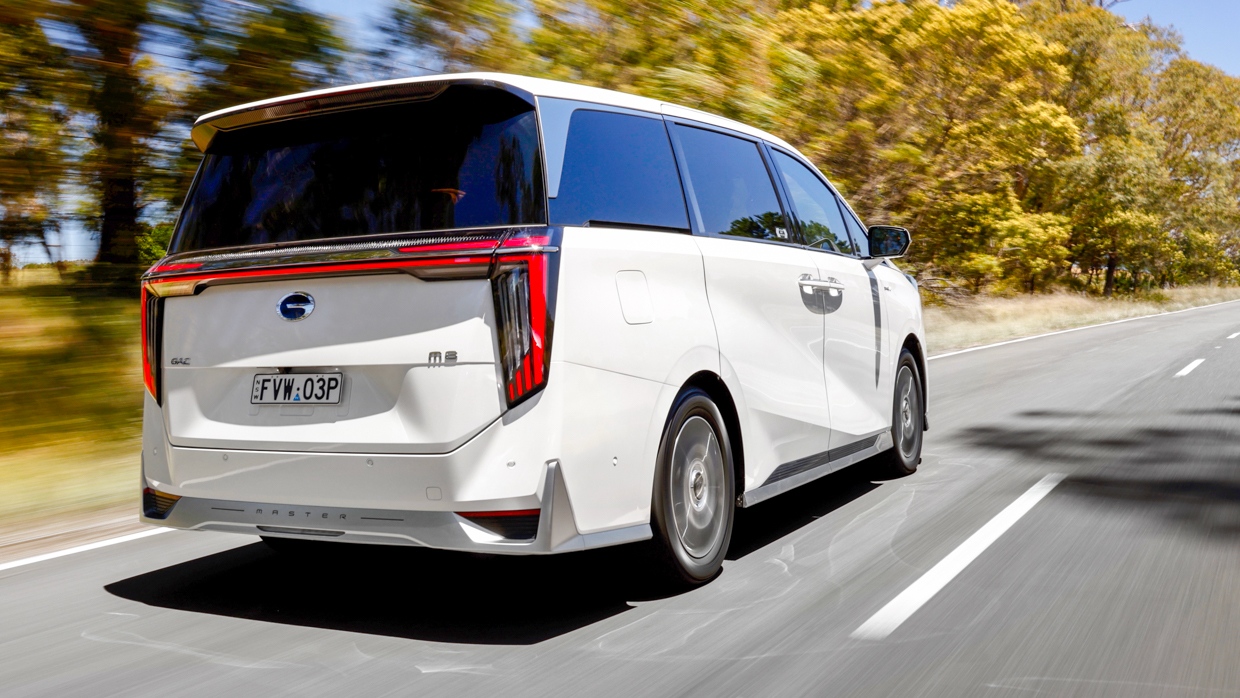
PHEV power suits vehicles like this well and you’ll find the M8 smooth and quick out on the road, especially if you’re used to driving a petrol or diesel people mover.
Under the bonnet, the M8 combines a 2.0-litre turbocharged petrol four-cylinder ‘4B20J2’ engine that itself produces a reasonable 140kW. It pairs to a separate permanent-magnet electric motor outputting a further 134kW.
With fuel in the 56-litre petrol tank and charge in the 25.5kWh lithium iron phosphate (LFP) battery pack, either or both of the M8’s power sources can drive the van’s front wheels through GAC’s two-speed Dedicated Hybrid Transmission. When both the petrol engine and electric motor are working together, combined outputs peak at the full 274kW/630Nm, GAC says.
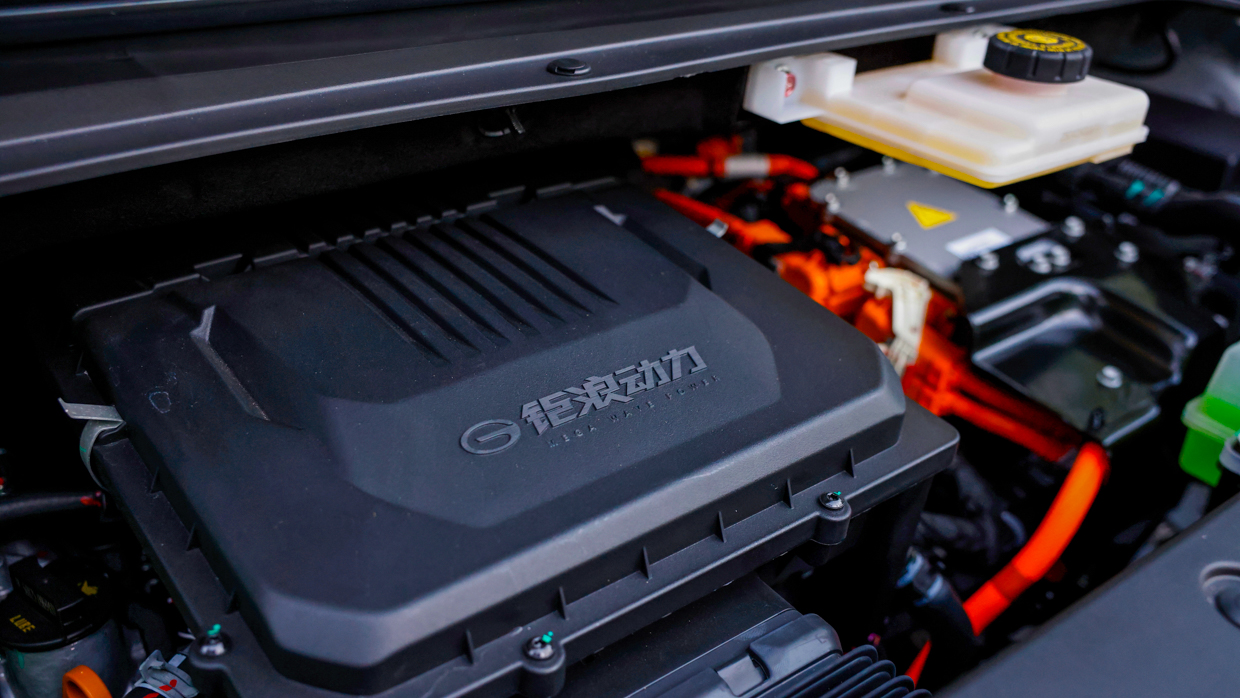
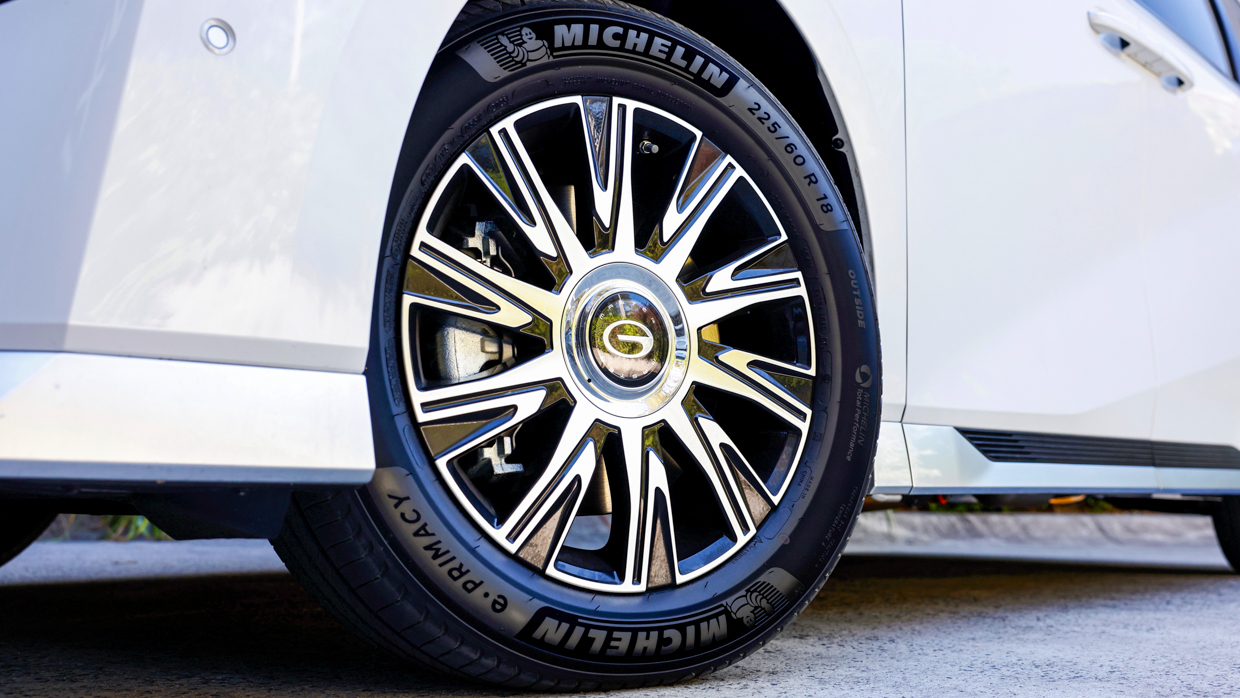
On EV power, the M8 glides along in near-silence — the refined electric motor complimented by standard-fit acoustic glass — plus the Luxury model’s acoustic tyres — and what seems to be sufficient sound deadening in the chassis to make this a limo-like experience.
When available battery power reaches about five percent the 2.0-litre turbo engine kicks on and can directly drive the van, though GAC’s hybrid power unit software tries to keep around two to five percent of battery power charged up to electrically assist the engine under load.
We drove up a 10km incline with the battery nearly depleted and found that the M8 still had reasonable shove on offer. We think few buyers will need more performance.
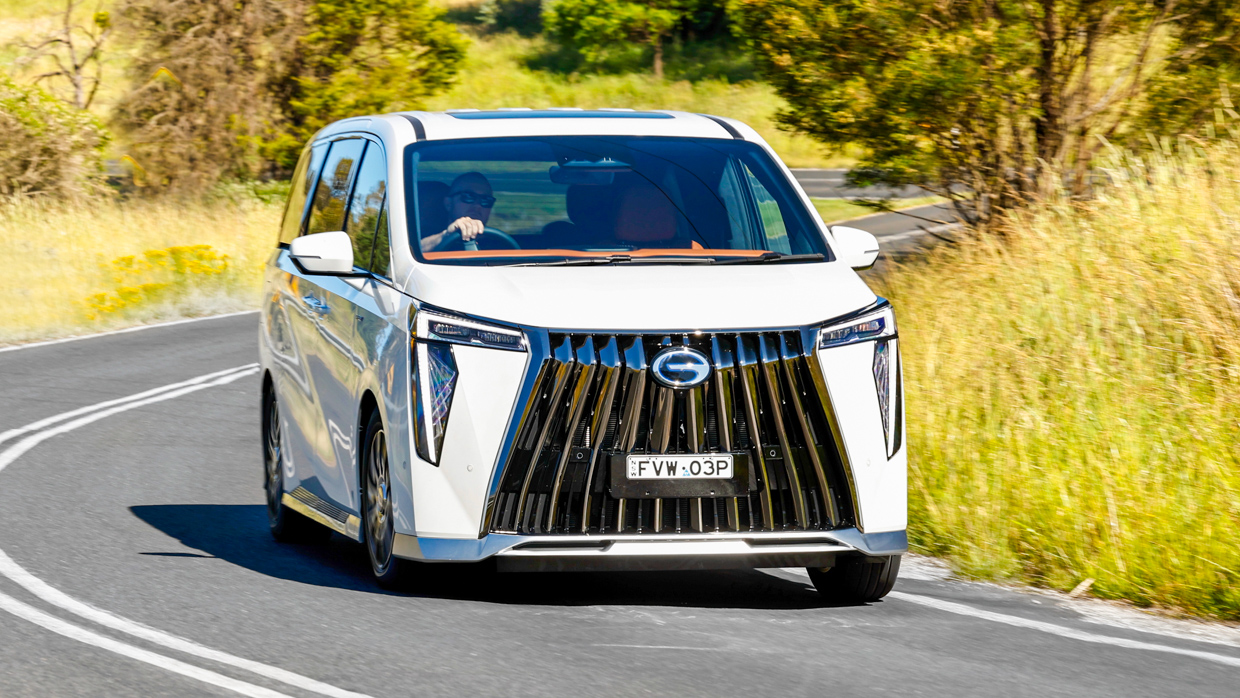
A pleasant surprise was that the M8’s electromagnetically damped suspension provides a level, even and composed ride that makes it possible to work in the second row, on a laptop, even on a broken-up road surface.
GAC claims the dampers also help to control lateral sway and truth be told, we found the M8’s ride and handling to be significantly more able than expected. It’s not fun to drive per se (nor would we expect that of a van) but it can be confidently hustled along.
The Kia Carnival also offers a polished people-mover dynamic experience and only a comparison would show whether the GAC has the edge, but the M8 is certainly more luxe inside.
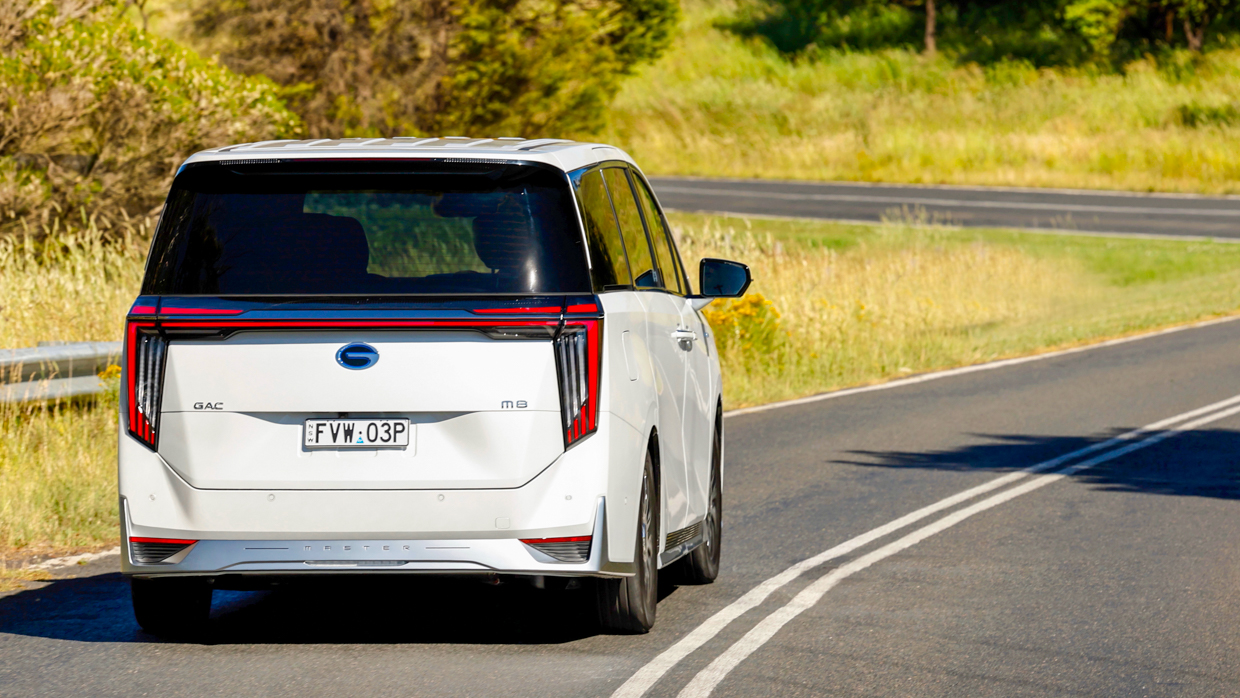
On the safety front, the M8 has an extensive complement of modern technologies, including forwards autonomous emergency braking, lane keep assist, adaptive cruise control, blind spot monitoring, and rear cross-traffic alert.
Disappointingly, reversing AEB is limited to the top-spec model; this potentially life-saving tech’ should be standard range-wide, particularly given the base model is in the realm of $80,000 driveaway!
Our fuel economy results didn’t quite match GAC’s claims but overall, this is still a frugal people mover. Driven gently on country roads and highways, we saw PHEV van-typical consumption of around 28kWh/100km to achieve 90km of range (versus a 106km claim).
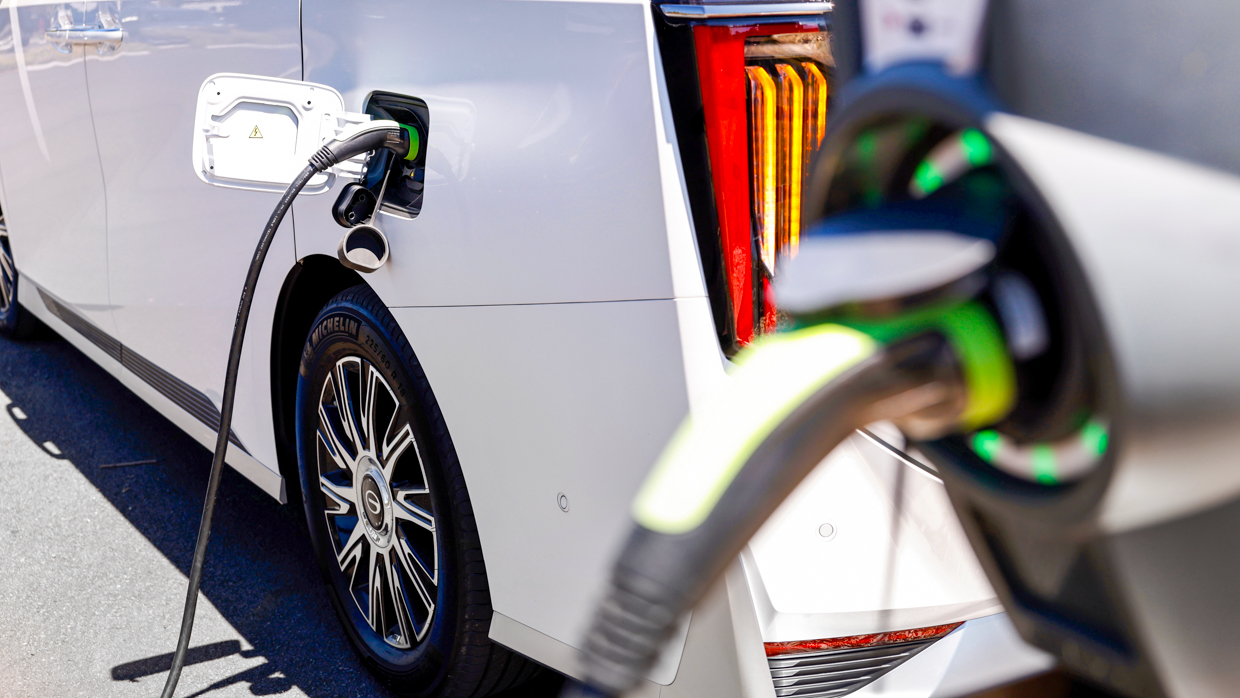
Once the petrol engine kicked on — with the battery retaining a low-digit percentage of power to assist — average fuel consumption settled around 7.2L/100km (vs a 6.0L/100km claim). If our results stayed consistent, the M8 would have a decent total petrol/electric range of 867km.
With external dimensions of 5212mm in length (on a 3070mm wheelbase), 1893mm in width and 1823mm in height, the GAC M8 is a big, square box … and the practicality of that shape carries through into usable interior space.
The focus in here is very much on row two, which, in Luxury spec, is suitably, well … luxe, with big and comfy semi-aniline captain’s chairs proving suitably relaxing (with 58-degree power-recline) for those wishing to take a nap, or supportive for those wanting to work.
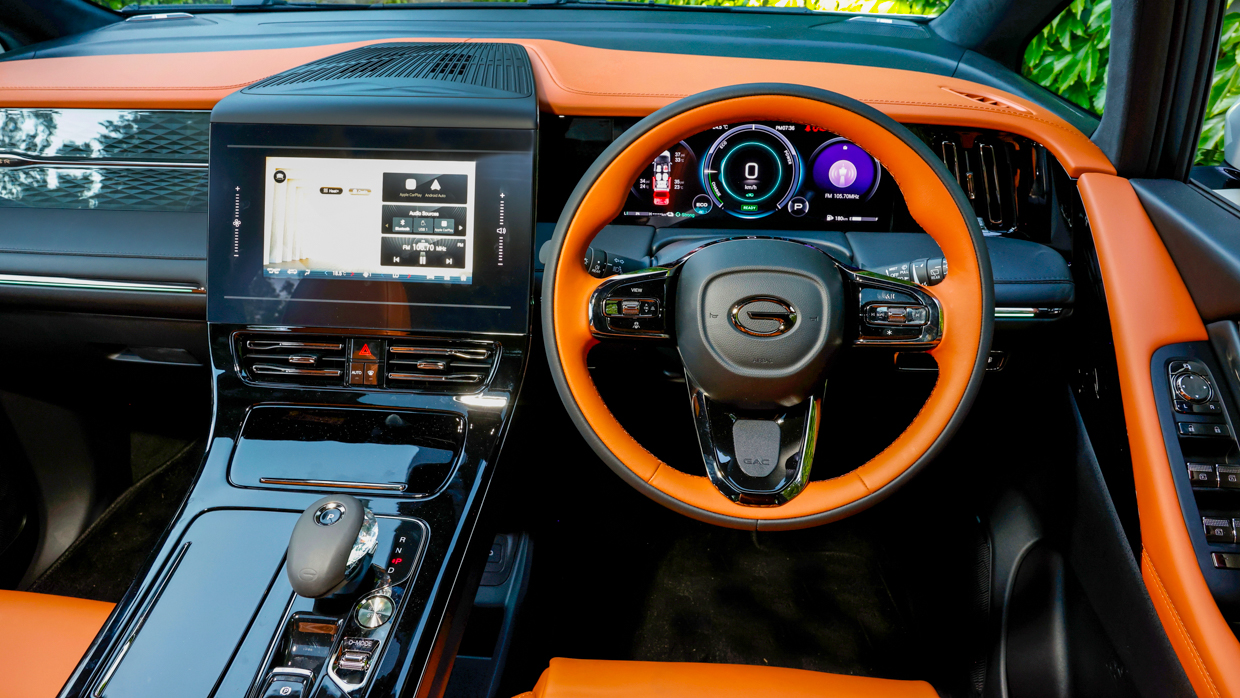
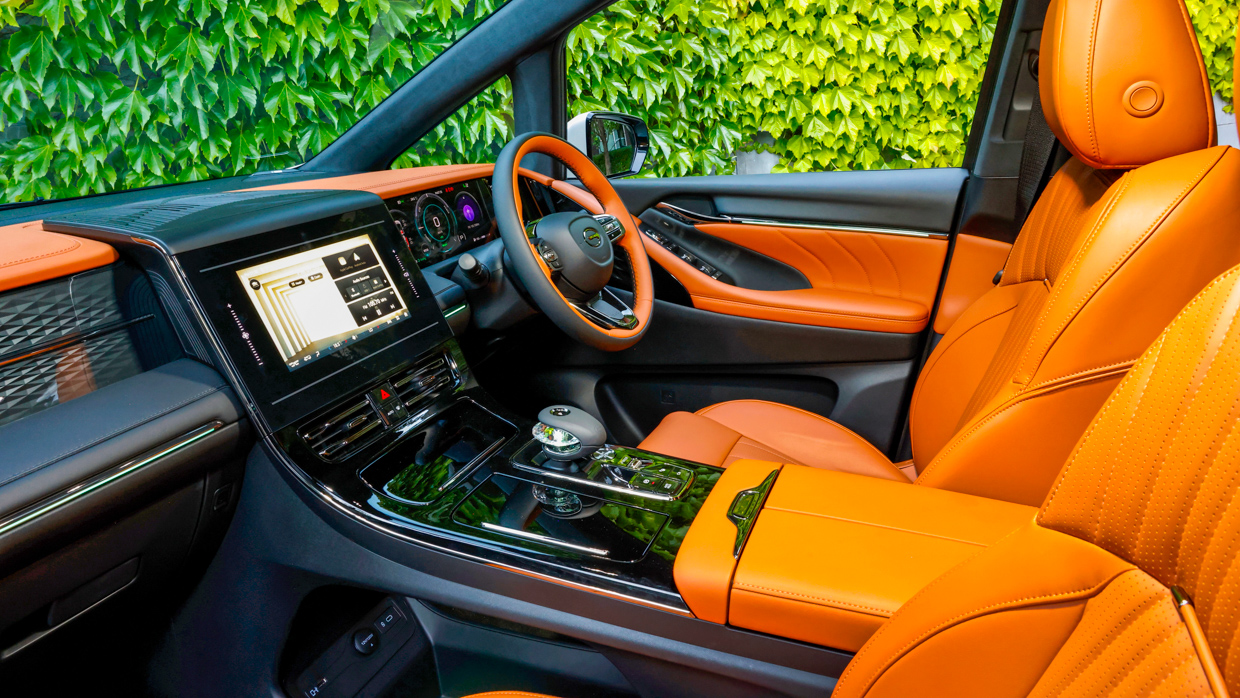
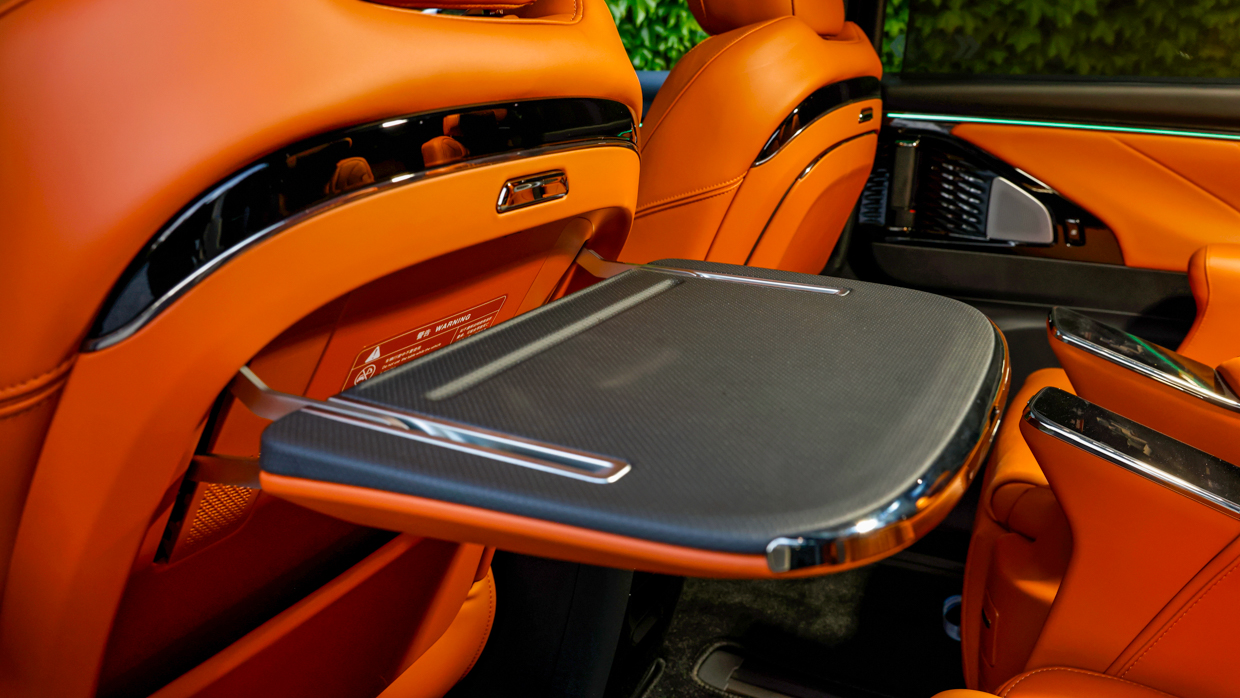
Speaking of work, the Luxury trim’s twin tray tables solidly mounted to the first-row seatbacks proved to be suitable and grippy surfaces for working away on a laptop.
Unlike big, premium sedans like the Lexus ES or Mercedes-Benz E-Class, the GAC M8 (and its van-shaped ilk) can prove to be far better mobile workstations for the well-heeled or hurried. As airport transport, this would be very suitable indeed.
On the Australian launch of the M8, we couldn’t sample the less glitzy Premium trim (which swaps the powered and massaging second-row pews for more working-class, manually adjusted chairs).
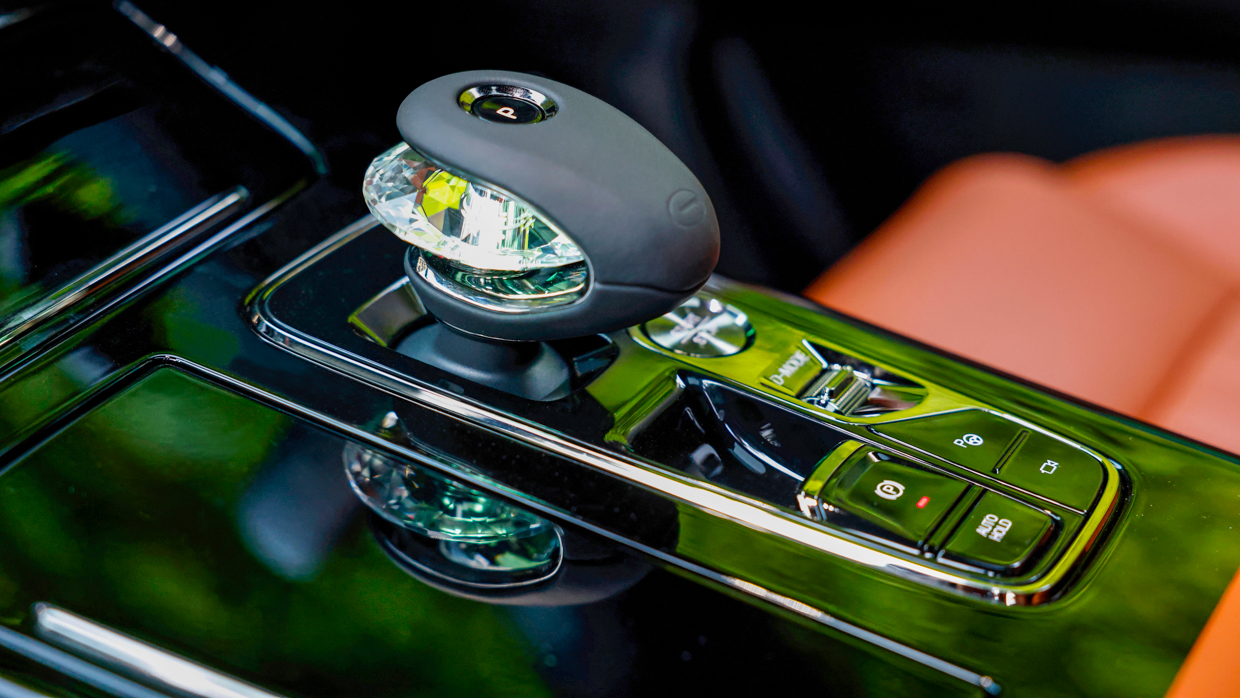
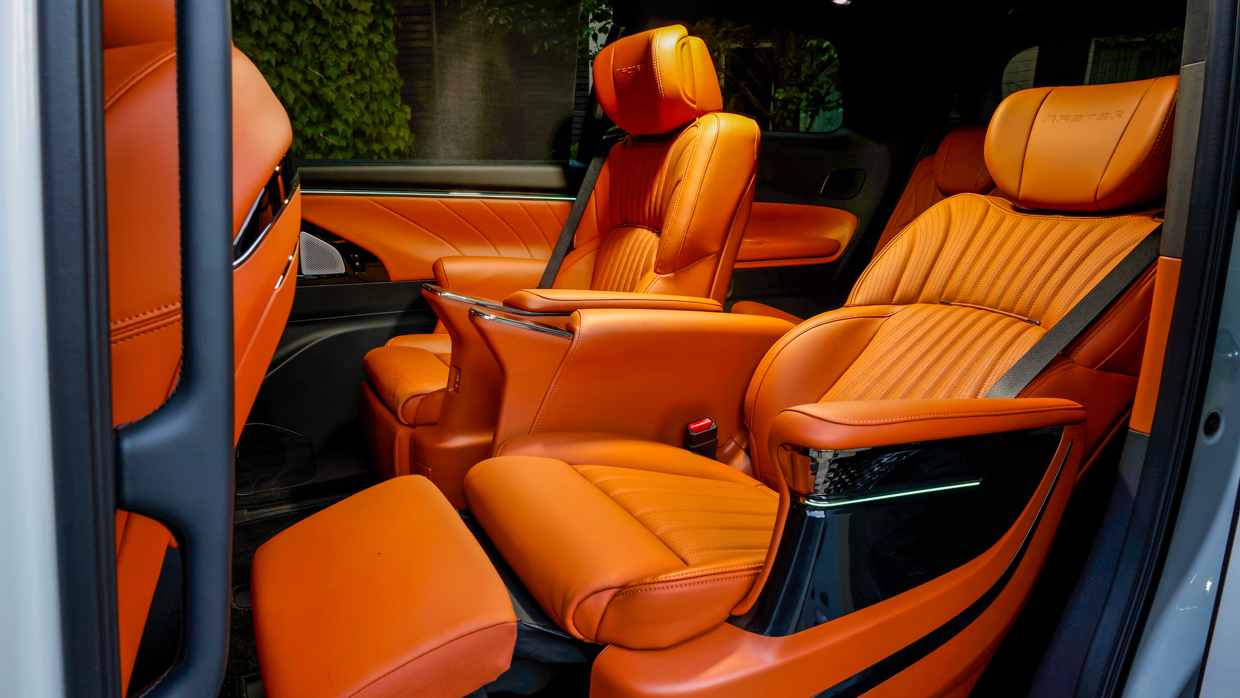
Still, while the M8 Luxury rides comfortably and offers expansive room to stretch out or to work, the overall fixtures and fittings are more ‘upmarket mainstream’ than truly luxurious.
Don’t go looking for lashings of stitched leather on the doors or roof, real woodgrains, reference-grade audio systems or other such trimmings often found in high-end cars because they aren’t here. Given the price, that’s fine.
Certainly, a Lexus LM or Zeekr 009 feel more expensively put together inside but we’re not entirely sure we could justify spending double the M8’s price tag on the LM. The GAC is decent inside. How it holds up over time would require a crystal ball, however.
Up front, the driver’s cab is reasonably comfortable owing to a 12-way powered seat (though the passenger is relegated to a much less adjustable four-way seat). Infotainment, delivered via a 10.2-inch touchscreen and 12.3-inch instrument cluster, is fine rather than outstanding. Wireless Apple CarPlay/Android Auto are fitted.
A slight annoyance is that not all features have been correctly converted from left-hand drive (as used in China) to Australia’s right-hand drive. This includes extensive welcome lighting for the second row, which projects, unseen, onto the roadside, and not the kerb where it would be useful.
Boot space is only just acceptable with all three rows and seven seats deployed, measuring 280 litres to the window line in this configuration. Drop the 60/40-folding third row bench and this expands to a much more useful 1500 litres of room.
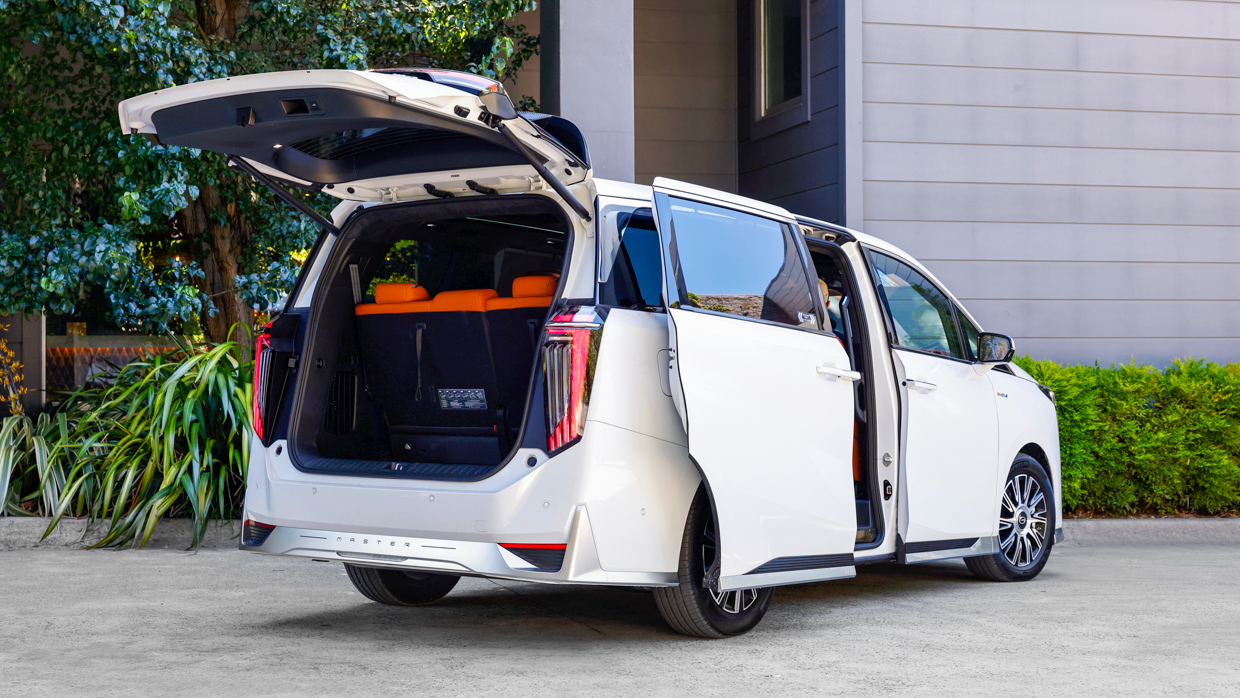
However, keep an eye on the weight of the passengers and cargo you intend to carry: the 2420kg M8 has a GVM of 3000kg for 580kg payload — a figure that could be easily eclipsed by a full complement of seven adults and their accoutrement. A Carnival GT-Line HEV has a payload of 646kg.
Those thinking of hooking up a trailer to the M8 should be aware the GAC has not been rated to tow.
Australia’s people mover segment needed a shake-up, and the GAC M8 does exactly that. This is a pretty convincing, pretty luxurious MPV that, in Luxury trim, allows its occupants to be whisked about in relative refinement and comfort — and at a reasonably fair price.
It is interesting that — except for the slow-selling LDV Mifa — none of the new Chinese MPV entrants have yet challenged the lower-end of the Kia Carnival range, which kicks off in the early-$50K space before on-road costs.
Instead, for now, the concentration appears to be luring families out of pricey Carnivals while also providing a semi-premium MPV option to buyers that may have experienced the ease of van-based long-distance travel in other parts of the world.
While it’s unclear what LDV’s plans are for the Mifa, it appears to be certain that GWM will compete directly with the GAC M8 from next year, providing prospective van buyers with another PHEV option to consider.
It will also be fascinating to see what established brands do in response: will Kia bring some of its Korean-market, higher-luxury Carnival specs to Australia? Will Toyota finally decide to import the cult-hit Alphard to this country rather than letting the grey-market take all sales? Maybe Nissan will do the same with the new Elgrand…
It’s early days. But we think the idea has legs. There’s simply no beating a luxury van for chauffeured transport if getting work done is the goal, while vans are also much more flexible for family duties.
Whether we’ll see a disruption of the Carnival’s market share of a full-swing reinvigoration of vans in Australia, we don’t know. But the GAC M8 shows there is potential for both.
Key specs (as tested)
About Chasing cars
Chasing Cars reviews are 100% independent.
Because we are powered by Budget Direct Insurance, we don’t receive advertising or sales revenue from car manufacturers.
We’re truly independent – giving you Australia’s best car reviews.
The estimate provided does not take into account your personal circumstances but is intended to give a general indication of the cost of insurance, in order to obtain a complete quote, please visit www.budgetdirect.com.au. Estimate includes 15%^ online discount.
^Conditions Apply
Budget Direct Insurance arranged by Auto & General Services Pty Ltd ACN 003 617 909(AGS) AFSL 241 411, for and on behalf of the insurer, Auto & General Insurance Company Limited(ABN 42 111 586 353, AFSL 285 571).Because we don’t know your financial needs, we can’t advise you if this insurance will suit you. You should consider your needs and the Product Disclosure Statement before making a decision to buy insurance. Terms and conditions apply.
Indicative quote based on assumptions including postcode , 40 year old male with no offences, licence suspensions or claims in the last 5 years, a NCD Rating 1 and no younger drivers listed. White car, driven up to 10,000kms a year, unfinanced, with no modifications, factory options and/or non-standard accessories, private use only and garaged at night.
^Online Discounts Terms & Conditions
1. Discounts apply to the premium paid for a new Budget Direct Gold Comprehensive Car Insurance, Third Party Property Only or Third Party Property, Fire & Theft Insurance policy initiated online on or after 29 March 2017. Discounts do not apply to optional Roadside Assistance.
2. Discounts do not apply to any renewal offer of insurance.
3. Discounts only apply to the insurance portion of the premium. Discounts are applied before government charges, taxes, levies and fees, including instalment processing fees (as applicable). The full extent of discounts may therefore be impacted.
4. We reserve the right to change the offer without notice.