Powered by

-
Car Reviews
Latest reviews
- Car News
-
Car Comparisons
Latest comparisons
- Chasing Deals
Latest reviews
Latest comparisons
Frugal hybrid city car struggles to keep up with the times and prove prudent value in its pricey $40K flagship ZR guise
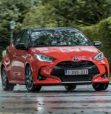
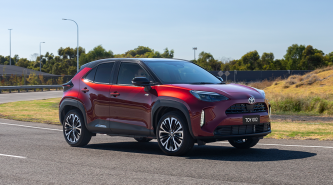
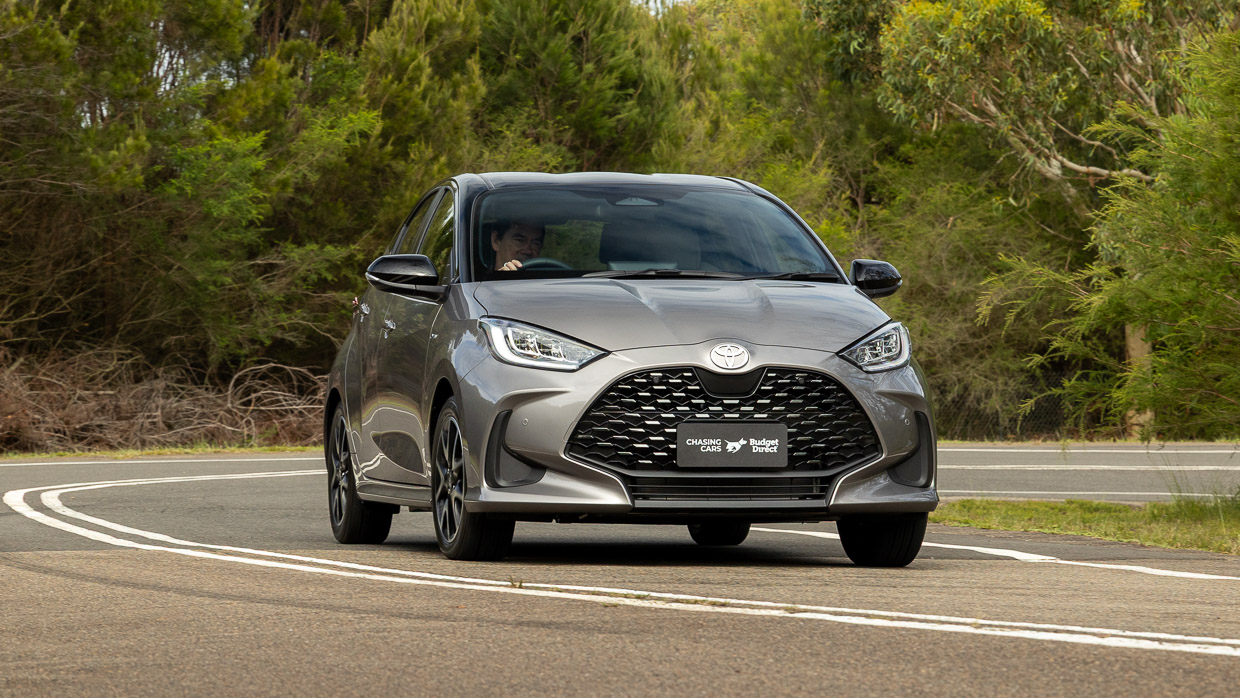
Since when did a Toyota Yaris cost $40,000? From a mid-2025 lifecycle update, to be exact. At least in its highest ZR trim level, with fancy two-tone metallic paint as tested here, with on-roads ($40,023 to be exact).
It’s been many long moons (2011) since the old-gen Yaris ZR lobbed as a frisky three-door petrol manual at — yes — $18,990 before on-roads. But in all fairness, the now five-door, auto, hybrid-only Yaris arrived in 2020 to replace both its namesake and the Prius C.
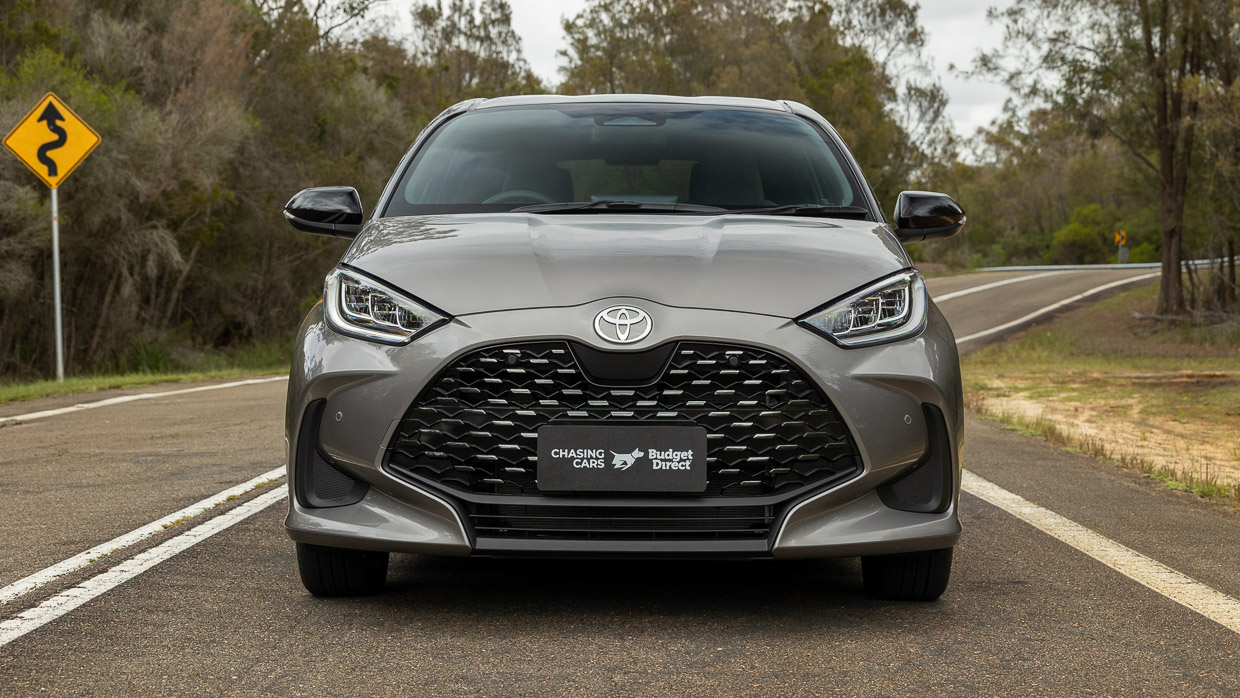
Granted, it is a vastly techier, more contemporary and frugal specimen than either of those cars but in many prospective buyers minds the Yaris ZR should be a cheap and cheerful concept. And the Yaris nameplate is still the most affordable route to Toyota — and Toyota hybrid — ownership.
While industry VFACTs plonks Yaris in the sub-$30K Light passenger car category, the ZR sails well beyond that on price. In this extremely price sensitive category, Yaris sales (2801) for 2025 floundered against rivals Suzuki Swift (3446), Mazda 2 (4346) and a dominant MG3 (8350) that outsold the Toyota three to one.
Unsurprisingly, MG3 is markedly more affordable than Yaris: starting from $20,990 list for the base petrol Vibe and topping out with the direct rival variant to our test subject, the all-you-can-eat MG3 Essence Hybrid+ at $29,990 list, or $33,035 driveaway with premium paint.
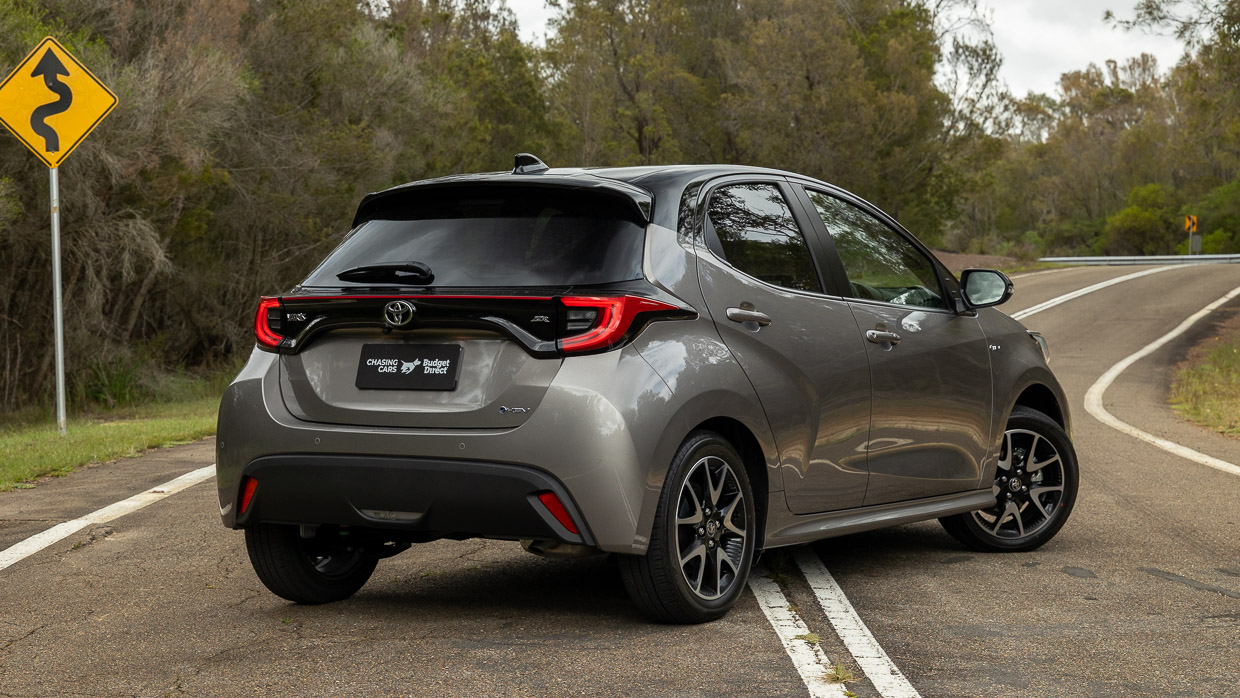
For its circa-$40K on-road ask — seven grand or over 20 percent pricier — the ZR ought to be the Yaris that’s properly lavish and foible-free; quality motoring in a pint size given its serious ask. As we discover, that’s not necessarily the case, in a good many different critical areas.
When this generation launched six years ago, pricing kicked off at $22,130 (petrol manual Ascent Sport), and the fourth-gen Yaris was treated to a minor lifecycle update in mid 2025.
The ZR is now priced from $34,590, sat above the mid-grade SX ($32,390) and base Ascent Sport ($28,990).
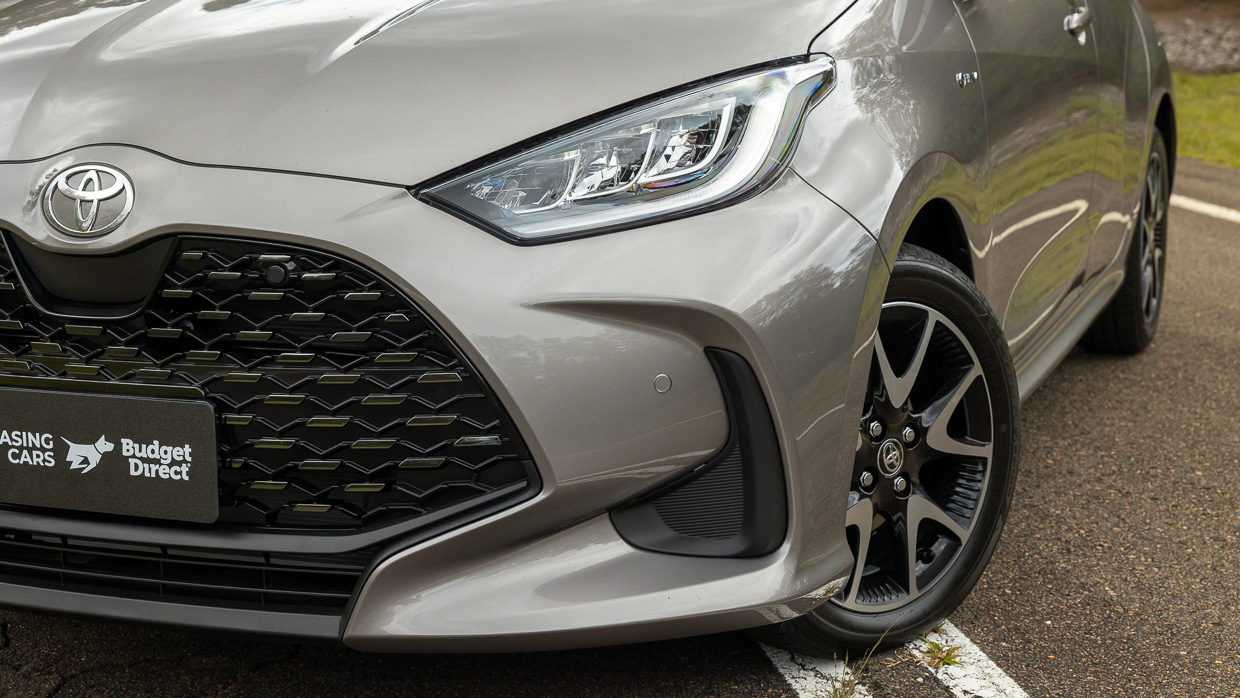
Not many beyond rental fleets will be wooed by the Ascent Sport’s steel wheels and halogen headlights, while even the SX lacks key safety features such as blind-spot monitoring and rear cross traffic alert.
For relatively similar money, the technically-twinned but slightly larger Yaris Cross is also available. Its grade walk consists of GX ($31,790), GXL ($33,990) and Urban ($36,930), plus a GR Sport version ($36,990) and corresponding AWD choices for a $3000 upcharge.
The Yaris Ascent Sport brings standard features such as:
The mid-grade SX adds the following features:
The as-tested ZR flagship adds:
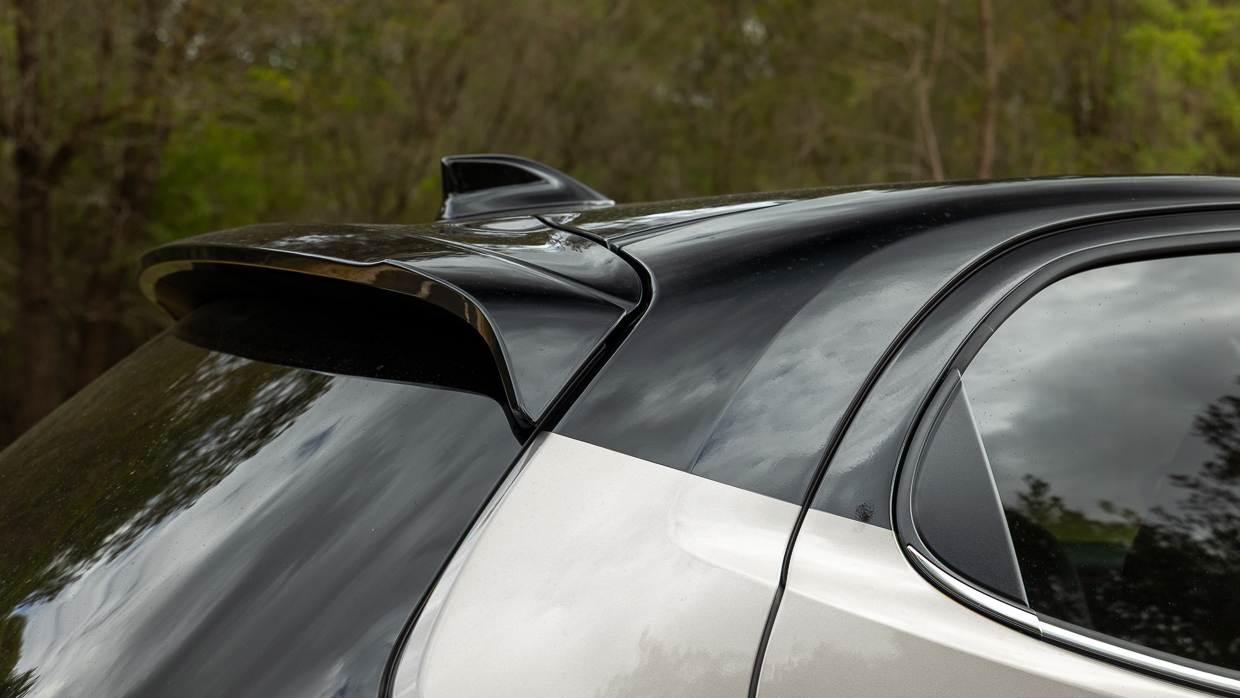
The only options offered are premium paint ($575) and two-tone paint ($1350) as fitted to our test car – Bronx Bronze with Black roof – the latter only available on the ZR grade.
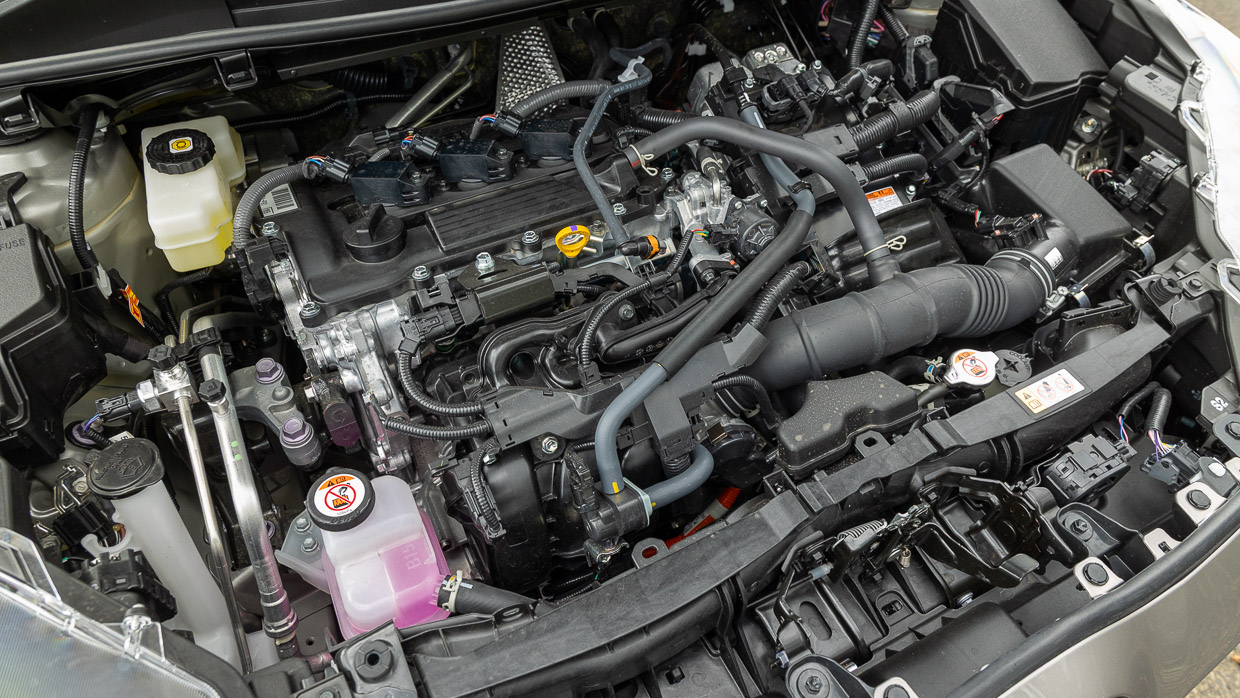
The Yaris fits a 1.5-litre three-cylinder petrol-based hybrid system combining 67kW and 120Nm of internal combustion with 59kW/141Nm of electric drive. Peak combined power is advertised at 85kW and, unusually for Toyota, peak combined torque figure of 141Nm (that’s conveniently also the e-motor’s torque peak).
The front driver fits Toyota’s e-CVT automatic, with the plugless hybrid system’s electric motor drawing from a 4.3Ah lithium-ion battery.
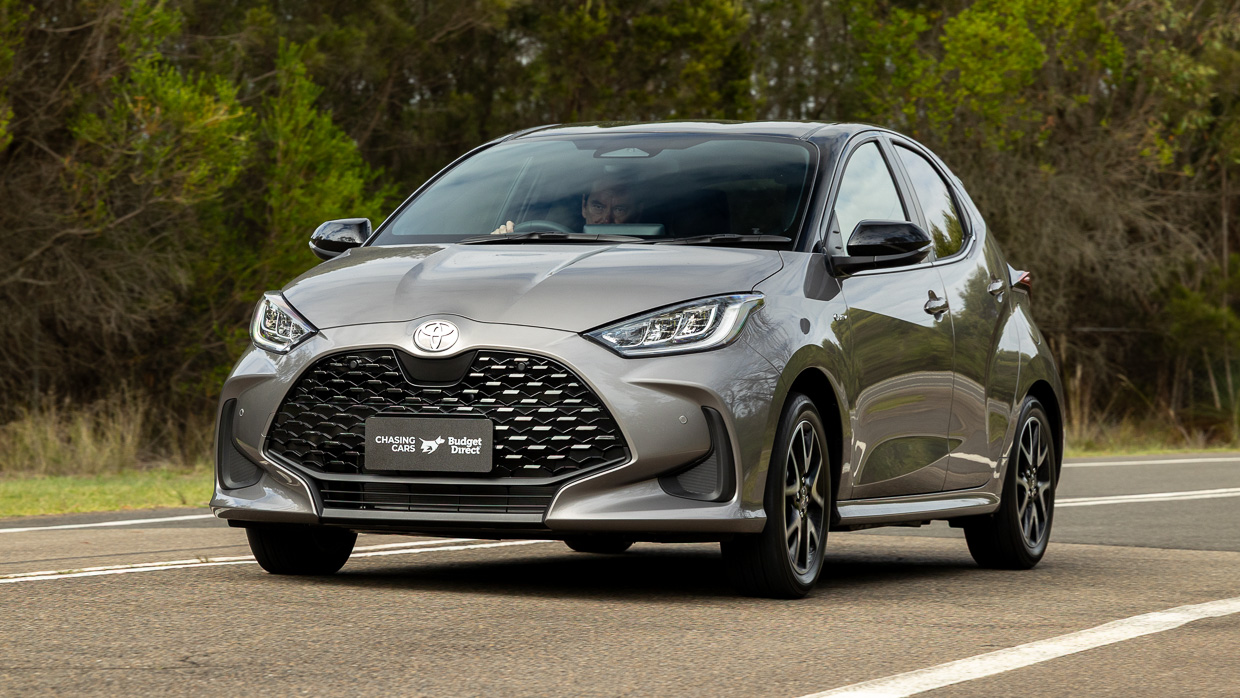
While appearing numerically challenged for output, the Yaris gets along briskly around town, particularly off the mark, when the electric motor does most of the heavy lifting. Much of its enthusiasm owes to the hatch’s light kerb weight: a scant 1130 kilograms.
But dig in and the Atkinson cycle three-cylinder barks away with an unpleasant howl, a sonic hard worker if remarkably inert for actual shove.
It’s fundamentally a decent drive, at least around town. Built upon Toyota’s TNGA-B chassis, the Yaris steers with some engagement and clarity when driven with restraint, though its ride and handling talents do wane when you start to push on.
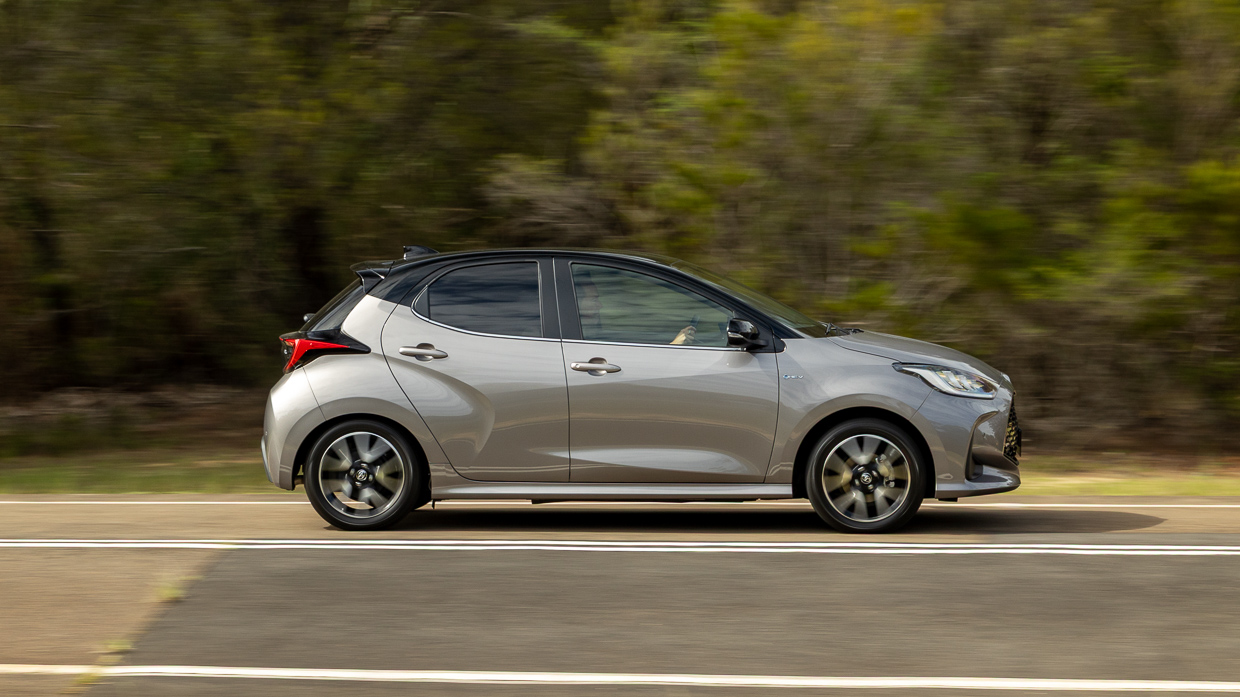
Grip form the 185mm-wide tyres is modest and, dynamically, the front and rear axles don’t feel in sync. Its soft, floaty nature favours ride over handling talent — fine for many buyer preferences –—though a lack of discipline in rebound makes for a bouncy ride that’s unnerving at times.
Nor is it all that happy on the open road. The powertrain is prone to annoying light nipping/shunting on a constant throttle at highway speeds and its chassis wanders on its tyres on some finely corrugated road surfaces. Planted and surefooted — let alone anything akin to ‘sporty’ — the Yaris most certainly is not.
Yes, it’s compact nature makes the Yaris easy living in the tighter confines of the urban jungle. But outside of some basic solidity and a somewhat quiet manner when you’re easy on the throttle, it does feel rudimentary and lacking some polish in its nature.
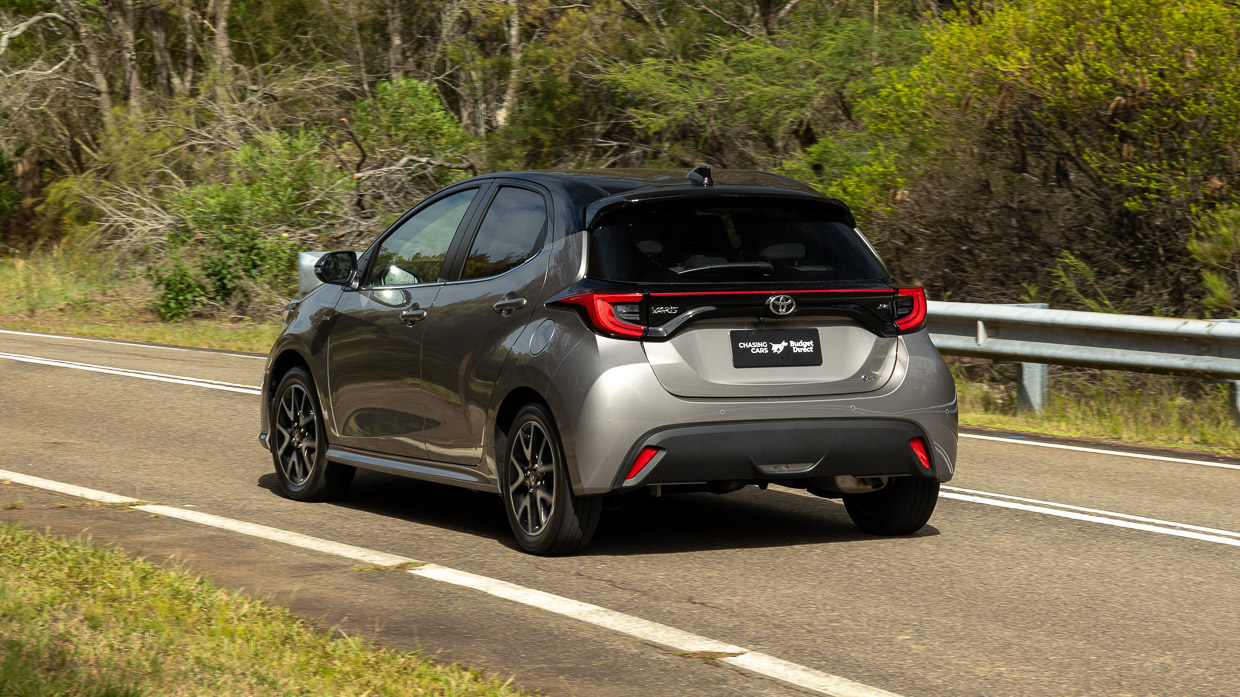
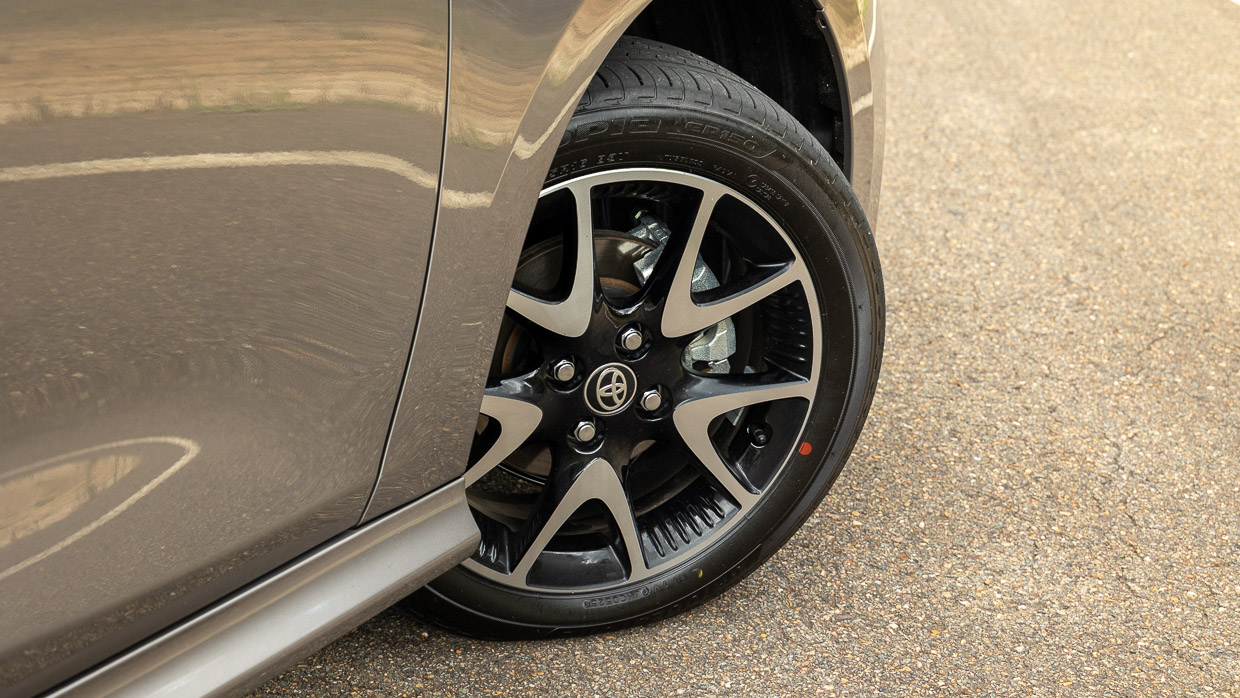
The torsion beam rear end, rear drum brakes, even the 16-inch wheels; this is a mechanical package built to a cost, and one that’s not reflected in its $40K on-road ask.
Sure, this generation is an improvement over its forebears, but the current Yaris doesn’t drive with the sophistication of its larger (TNGA-C platform, IRS-fitted) Corolla sibling.
Despite an early lifecycle update in 2024 aimed at sprucing up Yaris’s tech credentials during Toyota’s paradigm shift to hybrid passenger car power, the fitout and general cabin execution feels underbaked by 2026 standards.
The key ‘highlight’ was the addition of a modest 8.0-inch media touchscreen — up from a paltry 7.0-incher fitted prior — framed in large floating housing that leaves the display appearing smaller than it already is. Rival MG3’s unit is a comparatively vast 10.25 inches.
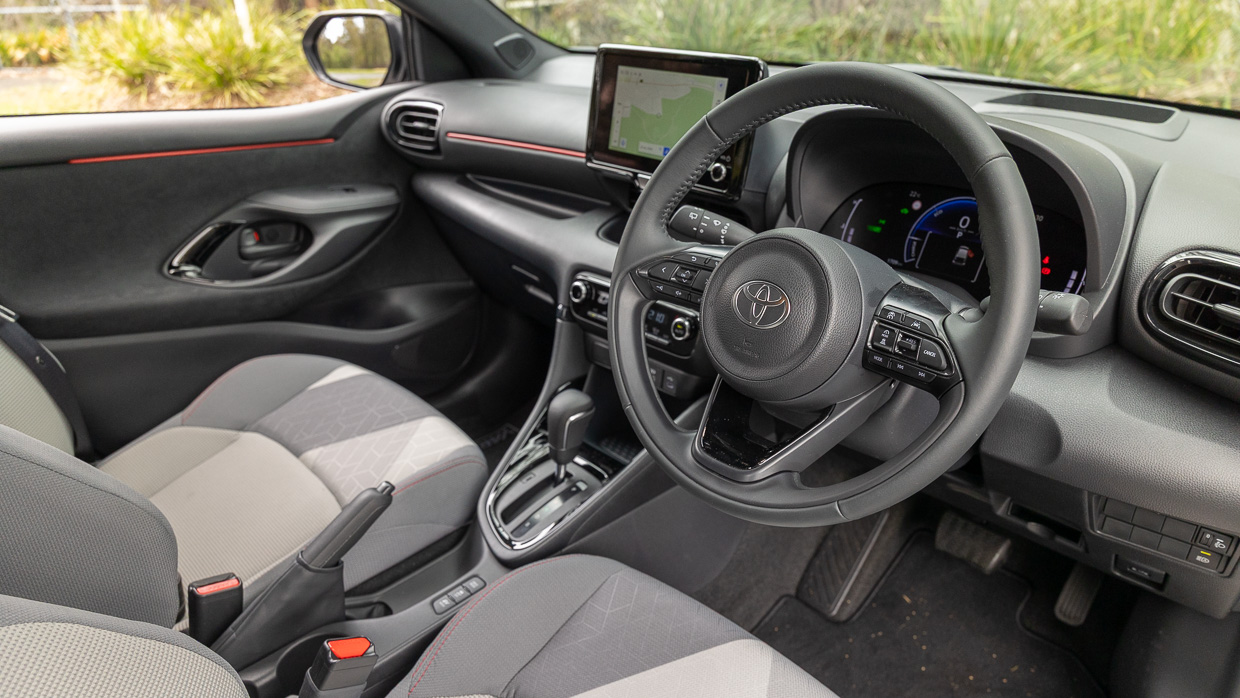
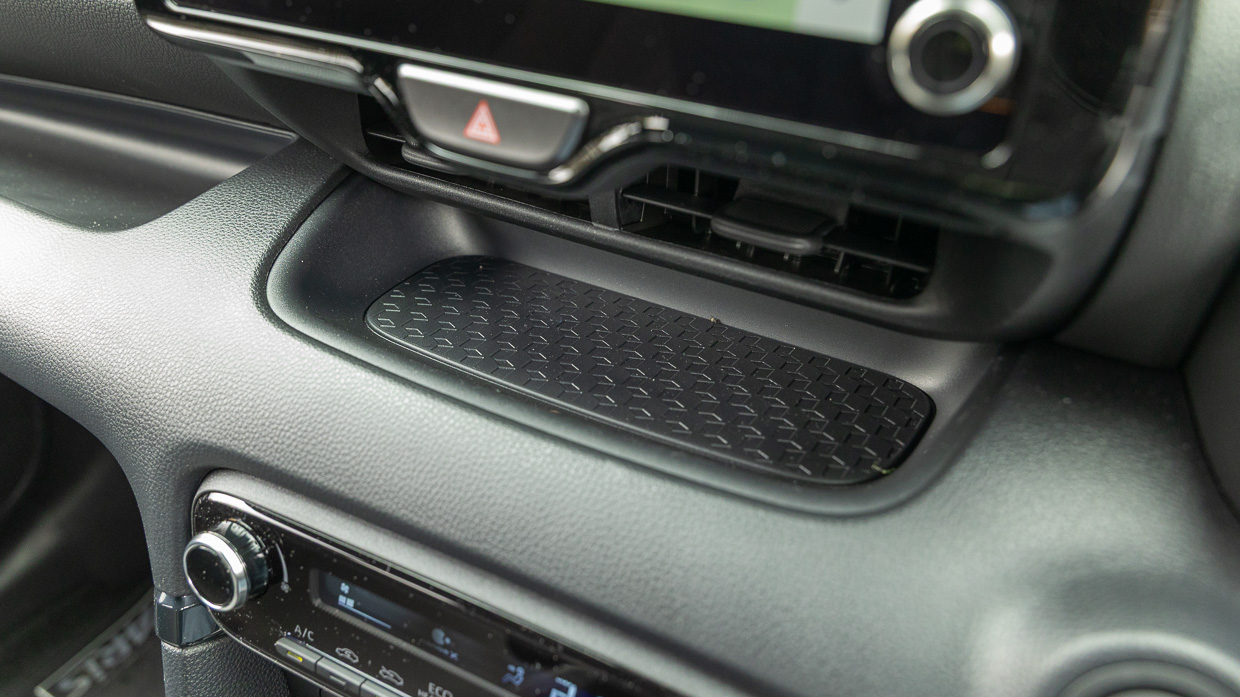
Proprietary sat-nav, plus wireless Apple CarPlay and Android Auto are nice inclusions, but its look and format is dated and it lacks the 360-degree camera of some rivals. The same can be said for the partial digital driver’s display filling the centre-half of the instrument panel with a 7.0-inch screen.
At least the digital window dressing aims to bring a sense of occasion, which is more than can be said for so much of the rest of the interior. Those hoping for a more compact extrapolation of the fetching Corolla ZR cabin will be sorely disappointed.
The seats are comfy and reasonably supportive, in a reasonably ornate multi-tone grey fabric, with fully mechanical adjustment and no facility to tune lumbar. At least the presentable leather-trim wheel is an upgrade from the urethane tiller in the base Ascent Sport.
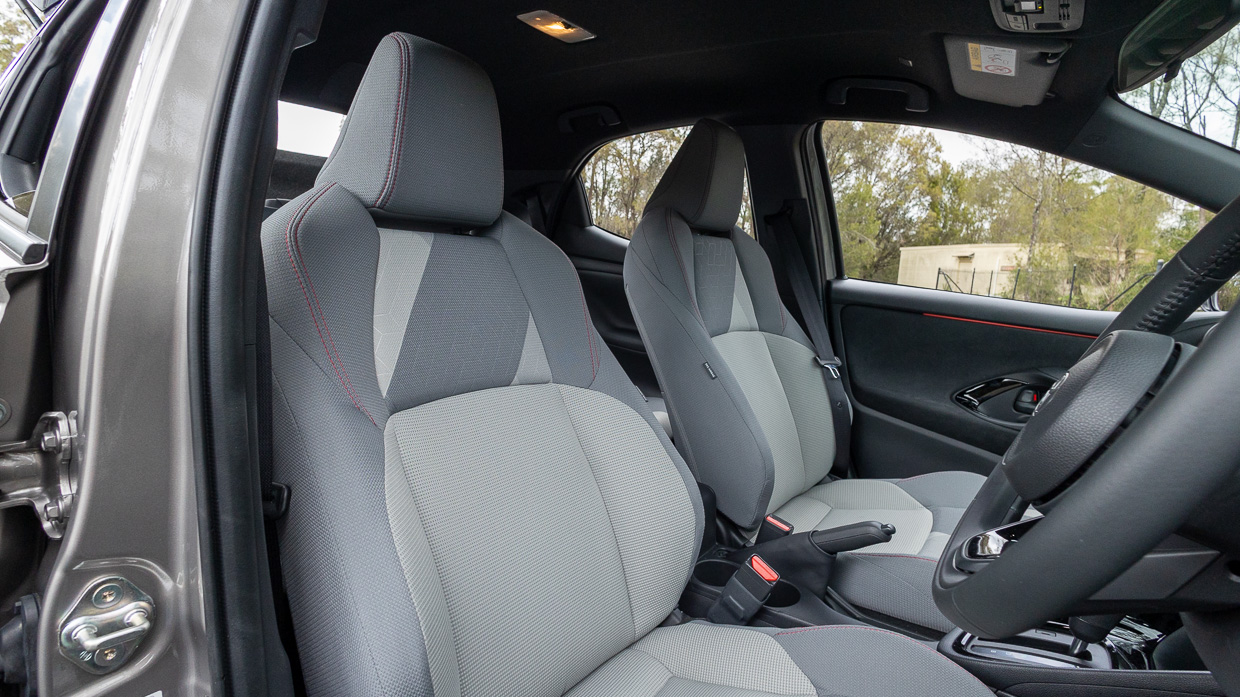
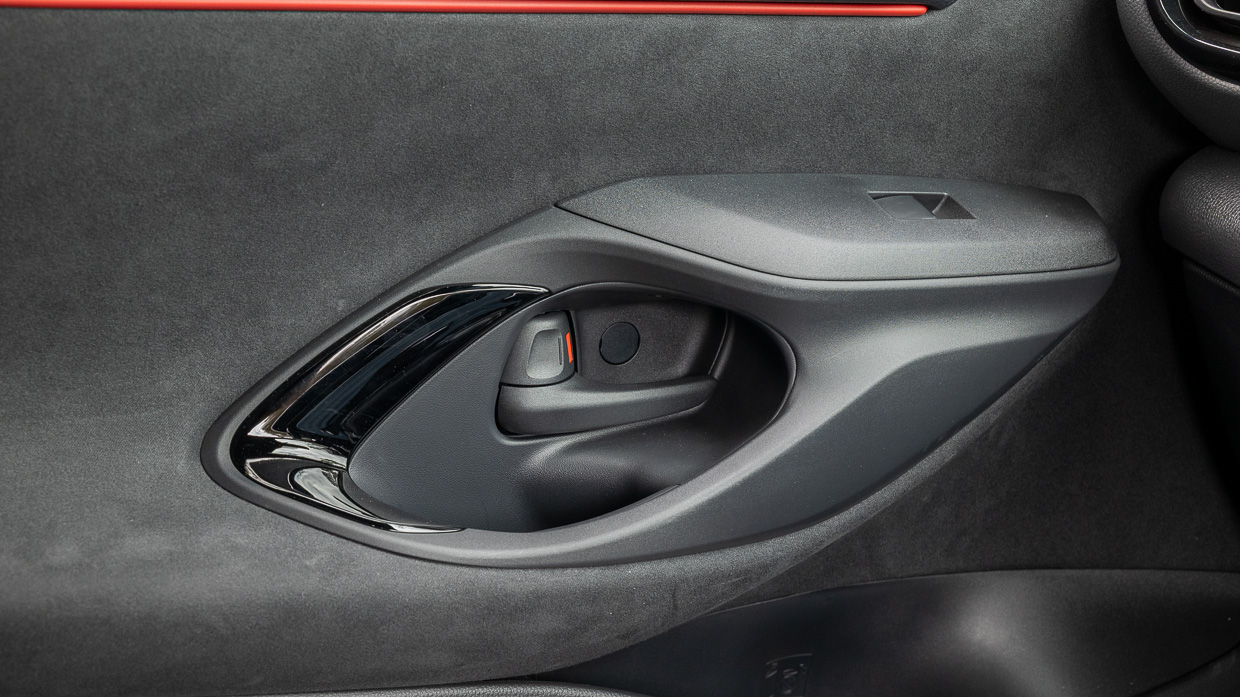
There’s no centre armrest — yes, in the top-shelf variant — but rather a sole cupholder meant to share between the two rear occupants. Further, the ridiculously stylised ‘armrests’ on the front door cards are neither designed to actually rest front occupant arms or to facilitate logical access to the countersunk door handles.
Toyota’s done a bang up job of making the squishy dash top and the abundance of hard plastic surfaces look absolutely identical and the overall look is neither vaguely premium or particularly downmarket.
Still, the cost consciousness is oh-so conspicuous, right down to the blank panels next to the ad-hoc USB outlets that makes one wonder what features Toyota Australia omitted from its $40K light city car.
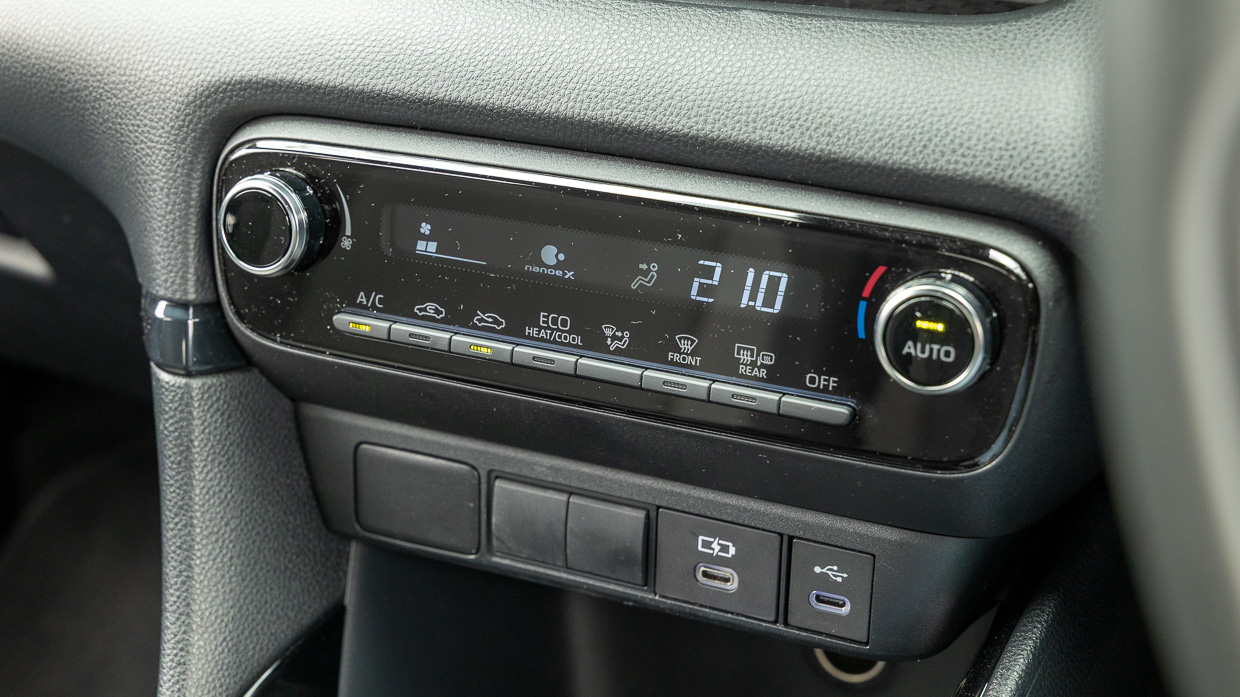
At least the single-zone climate control, with its retro ’90s monochromatic display, is straightforward to use. The ZR also scores a full-colour, well-featured head-up display, including tacho (not displayed in the instrumentation) and lane keeping indicators.
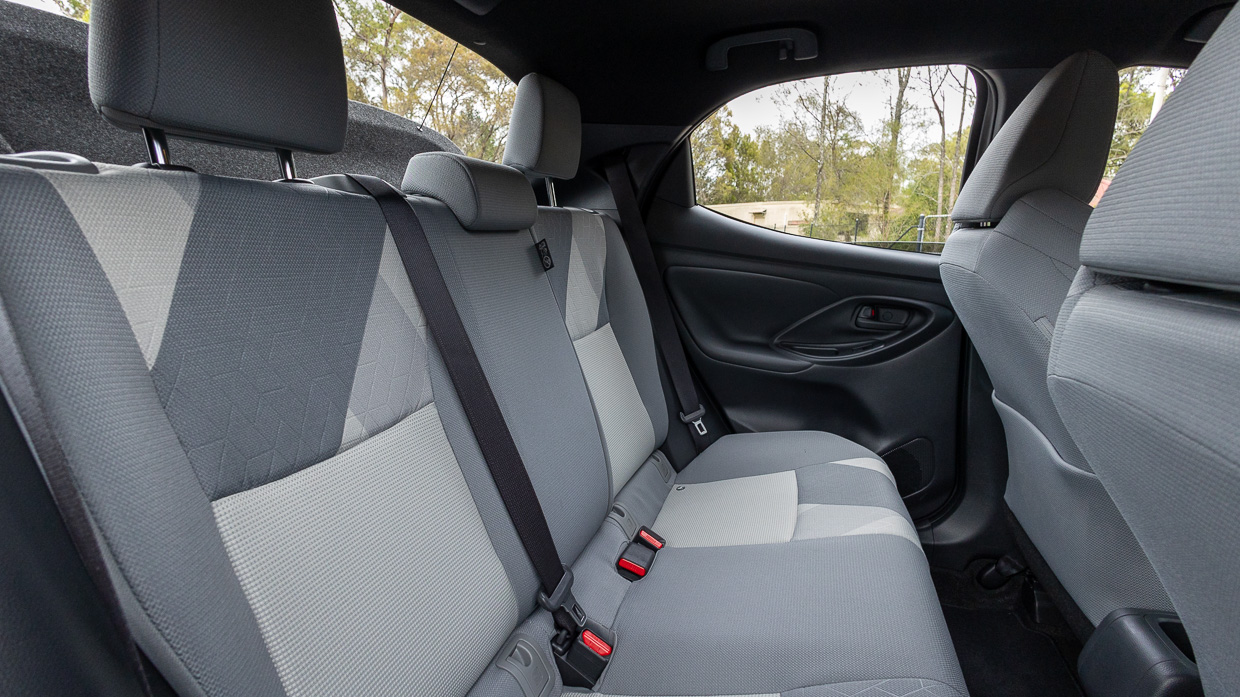
The front occupants have it way better than those in the second row. While there might be conjecture over who gets use of the sole cupholder, there’s no debating usage of air vents, USB power or the centre fold-down armrest. Because there are none.
The only creature comforts in the rear are single bottle holders in the hard plastic door cards, for what is cramped if not necessarily uncomfortable accommodation, at least for short trips. Yaris is best considered an ‘emergency’ four-seater, because it almost dissuades rear occupancy.
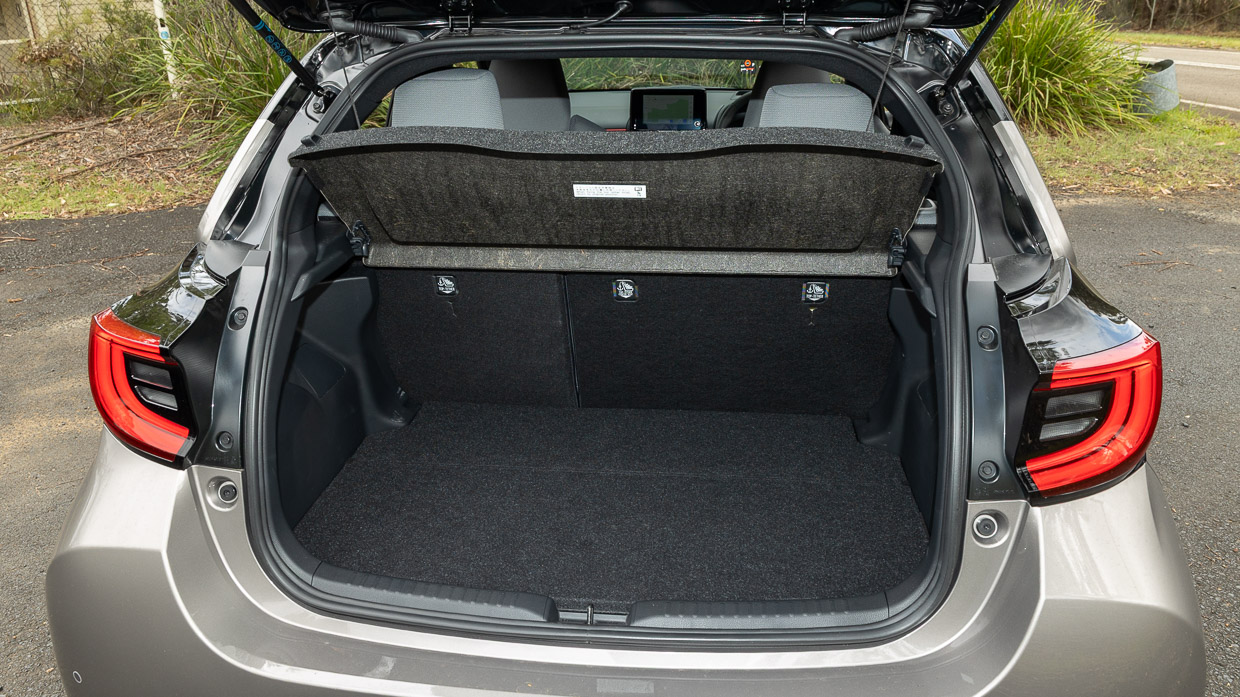
Boot space? It’s 270 litres – better than Mazda 2 Hatch’s 250L – with a 60:40 rear splitfold to liberate more than enough space for a single suitcase. The dual level floor lifts to reveal a space saver spare wheel.
If there’s an area its importer has used as justification for Yaris’s ballooning pricing across two generations, it’s the expanded active safety fitout. There have been two revisions to this current gen in its five-and-half-year lifecycle thus far.
That’s good surety for private buyers and suitable box ticking for fleet and rental car customers. The Yaris retains its five-star ANCAP rating – bestowed back in 2020 – because of it.
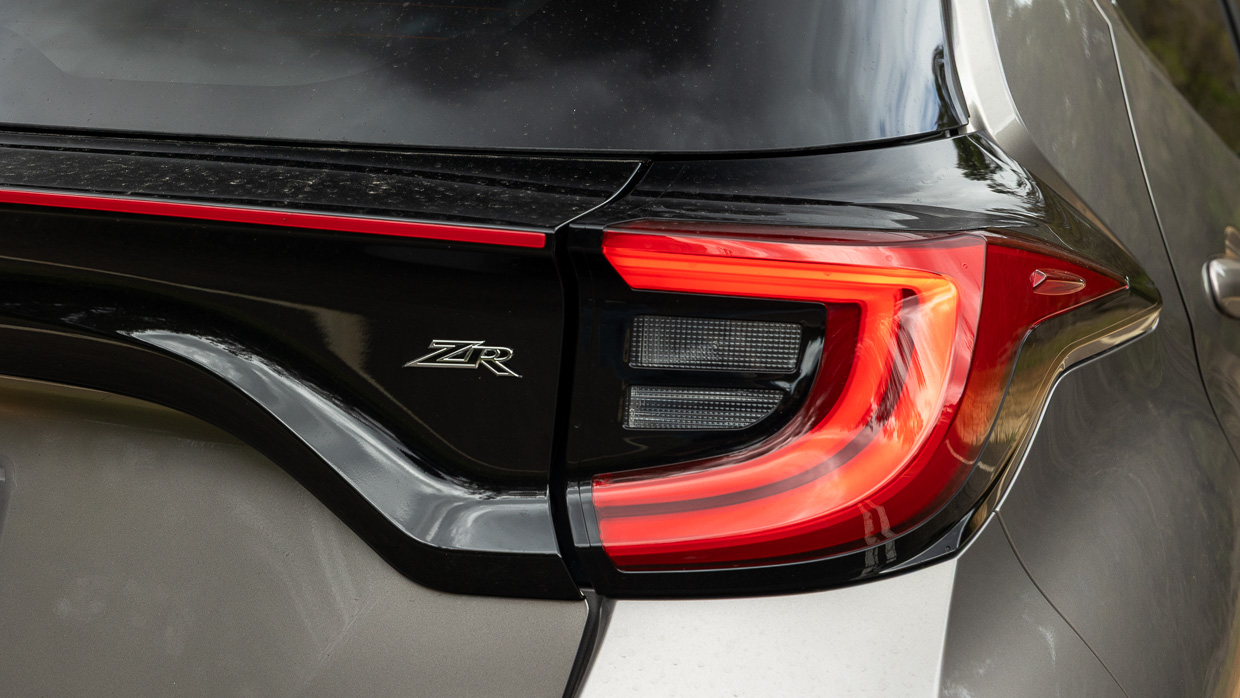
However, only the flagship fits the full active suite that includes blind-spot monitoring, safe-exit assist and rear cross-traffic alert. Yaris’s current five-star rating expires in December 2026.
Standard safety features in the ZR includes:
The Yaris ZR performed without unnecessary triggers or overactive calibration, bar some very occasional incorrect speed advice from the road sign recognition system.
Servicing for the hybrid Yaris is capped at $265 per 12-month/15,000-kilometre visit each interval for the first five years and 75,000kms. Warranty is five years of unlimited kilometre coverage.
The Yaris hybrid didn’t prove nearly as frugal as is claimed, its as-tested 3.9L/100km average around town (at speeds up to 90km/h) significantly higher than its 2.9L urban claim.
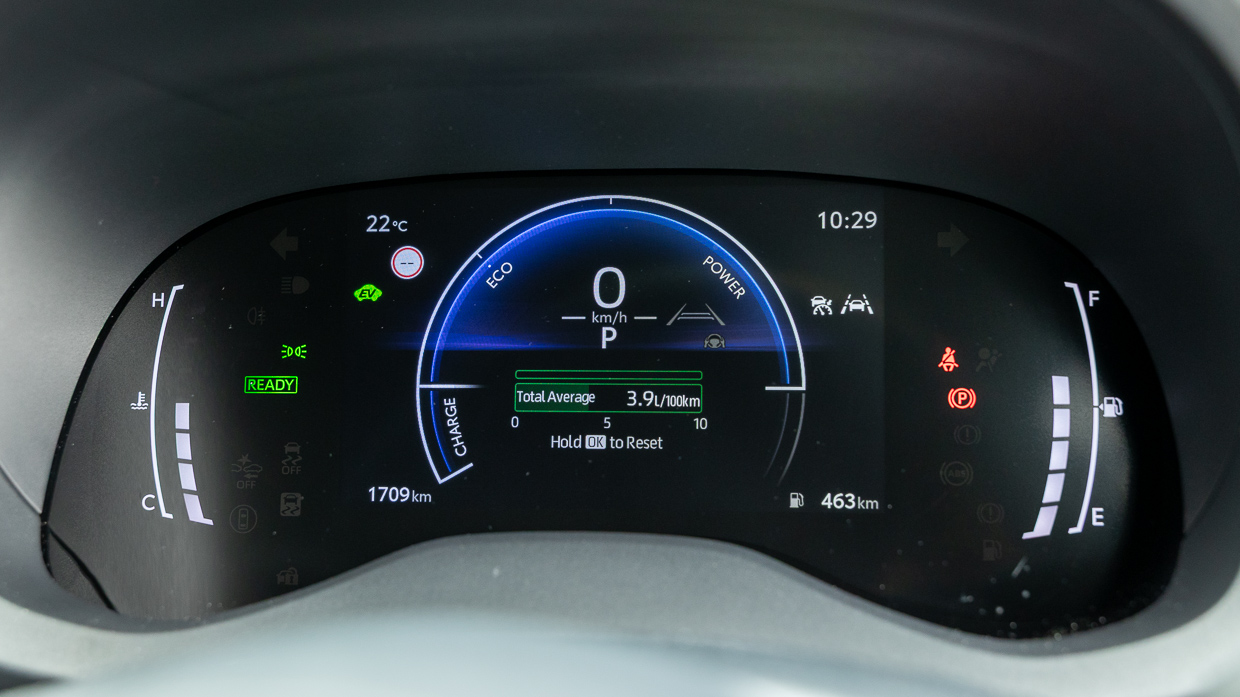
It will run on crappy 91-octane fuel in its modest 36-litre fuel tank, for a theoretical (urban) range of around 920 kilometres or so at its as-tested 3.9L consumption. But, with the onboard computer’s full-tank range claim closer to 650km-ish, evidence suggests that either the tank isn’t actually as large as 36L, or the car is thirstier than it’s willing to display.
Budget Direct told us the median annual premium purchased for the first time between 1/12/24 and 1/12/25 to comprehensively insure a new Toyota Yaris was $1138. Individual circumstances and policy terms may vary.
Of course, everybody’s situation is different, and the premium will vary according to make and model, and other things insurers take into account, such as your postcode, driving history, who drives the car, where you garage the car and more.
Please quote for yourself. Subject to meeting underwriting criteria. Insurance issued by Auto & General Insurance Company Limited. See PDS & TMD at budgetdirect.com.au.
A circa-$35K list price – $40K on road – isn’t unpalatable for a small-stature Toyota. The Yaris’s technical twin, the Yaris Cross crossover outsells the hatch three to one, and the larger Corolla hatch/sedan does almost seven to one. Buyers are willing to pay handsomely for small Toyotas.
But where higher grades of Yaris Cross are funky (not frumpy) and well appointed, and the likes of Corolla ZR are nice to drive, have an upmarket sense of celebration and tout convincing sportiness, the Yaris ZR flagship feels, relatively speaking, too stripped out for its price tag and positioning.
The absence of key features makes the Yaris ZR feel targeted more towards the rental car ranks then for private ownership. And it’s simply not cheap enough to be cheerful.
As a no-brainer alternative, the mechanically and technically twined Yaris Cross Urban delivers where its hatch sibling lacks – big 18-inch wheels, more practicality, and electric driver’s seat, front seats heating, rear disc brakes…even a centre arm rest. And from $41,110 driveaway, the crossover is only marginally pricier to buy and, on paper, barely any more expensive to own.
Through another lens, the Yaris ZR is too pricey to fit the ‘my first car’ mould, and yet lower Yaris grades skimp on safety tech, making them tough for ‘first car’ recommendation. This means the big-dollar Yaris is pitched more towards a much more mature buyer, and one willing to spend a little too much for not quite enough spec and features.
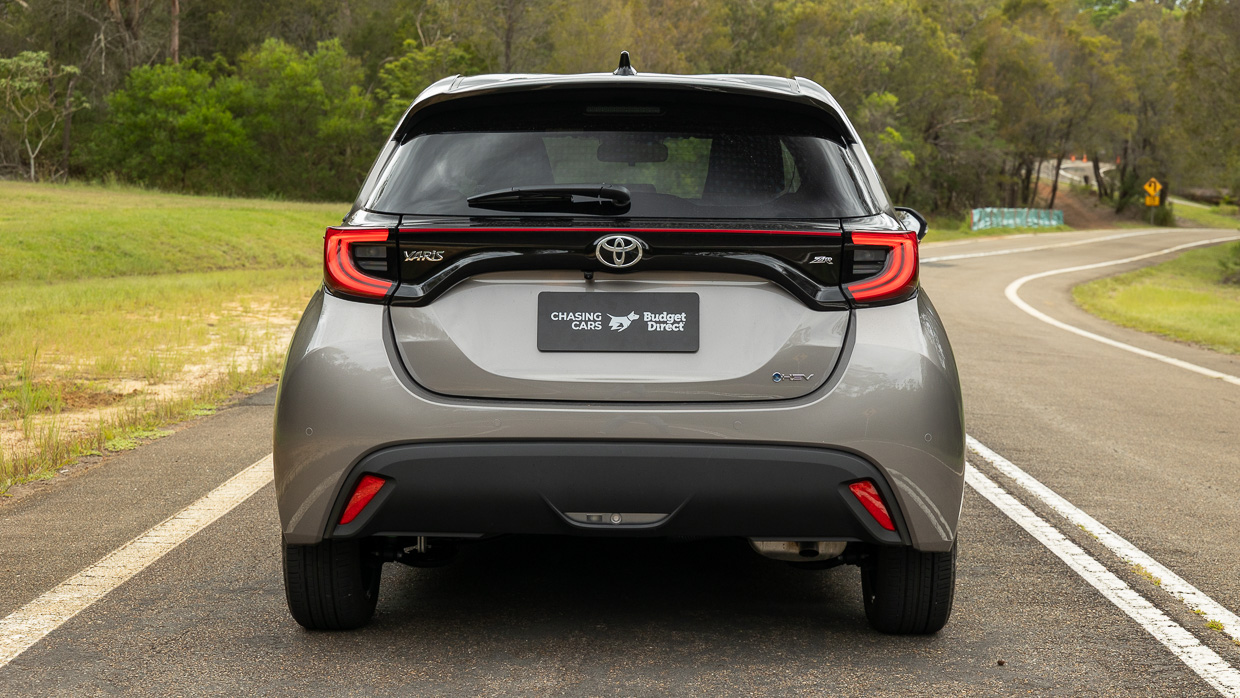
The hybrid Yaris isn’t a bad car. And it’s a decent drive. But six years on it’s really starting to show its age and Toyota hasn’t done quite enough to improve spec and to sharpen pricing in line with its segment competitors and what’s considered affordable motoring in general.
Key specs (as tested)
About Chasing cars
Chasing Cars reviews are 100% independent.
Because we are powered by Budget Direct Insurance, we don’t receive advertising or sales revenue from car manufacturers.
We’re truly independent – giving you Australia’s best car reviews.
The estimate provided does not take into account your personal circumstances but is intended to give a general indication of the cost of insurance, in order to obtain a complete quote, please visit www.budgetdirect.com.au. Estimate includes 15%^ online discount.
^Conditions Apply
Budget Direct Insurance arranged by Auto & General Services Pty Ltd ACN 003 617 909(AGS) AFSL 241 411, for and on behalf of the insurer, Auto & General Insurance Company Limited(ABN 42 111 586 353, AFSL 285 571).Because we don’t know your financial needs, we can’t advise you if this insurance will suit you. You should consider your needs and the Product Disclosure Statement before making a decision to buy insurance. Terms and conditions apply.
Indicative quote based on assumptions including postcode , 40 year old male with no offences, licence suspensions or claims in the last 5 years, a NCD Rating 1 and no younger drivers listed. White car, driven up to 10,000kms a year, unfinanced, with no modifications, factory options and/or non-standard accessories, private use only and garaged at night.
^Online Discounts Terms & Conditions
1. Discounts apply to the premium paid for a new Budget Direct Gold Comprehensive Car Insurance, Third Party Property Only or Third Party Property, Fire & Theft Insurance policy initiated online on or after 29 March 2017. Discounts do not apply to optional Roadside Assistance.
2. Discounts do not apply to any renewal offer of insurance.
3. Discounts only apply to the insurance portion of the premium. Discounts are applied before government charges, taxes, levies and fees, including instalment processing fees (as applicable). The full extent of discounts may therefore be impacted.
4. We reserve the right to change the offer without notice.