Powered by

-
Car Reviews
Latest reviews
- Car News
-
Car Comparisons
Latest comparisons
- Chasing Deals
Latest reviews
Latest comparisons
Charming driving dynamics and a remarkably convincing facelift keep the Kia Stonic feeling young, but higher pricing and running costs make it a hard sell
The Kia Stonic turns eight years old this month. In car lifecycle terms, that means the smallest Kia SUV would normally have been replaced with an all-new model last year – or even the year before.
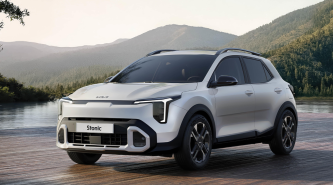
Instead, the Stonic soldiers on wearing a surprisingly successful second facelift for 2026. Unlike the first nip-tuck, this time the procedure was deeper: all-new front and rear styling, longer overall dimensions and a fully reshaped dashboard make for a relatively convincing update.
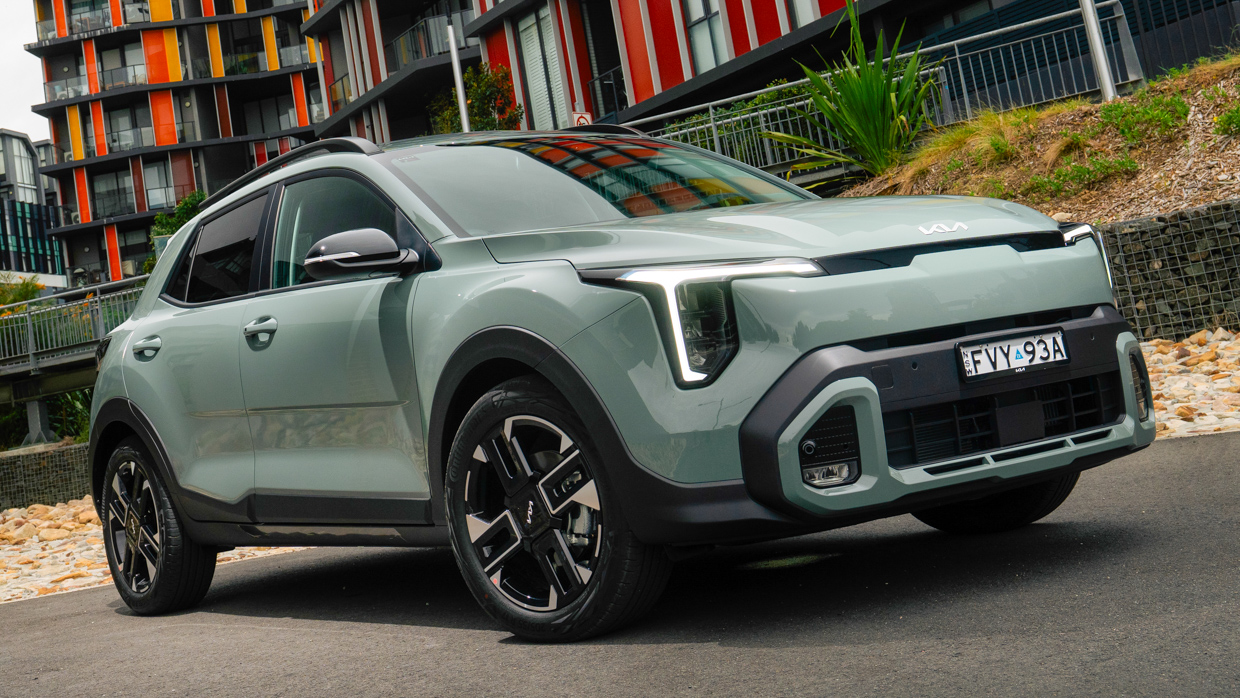
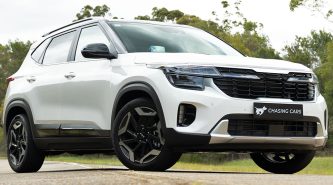
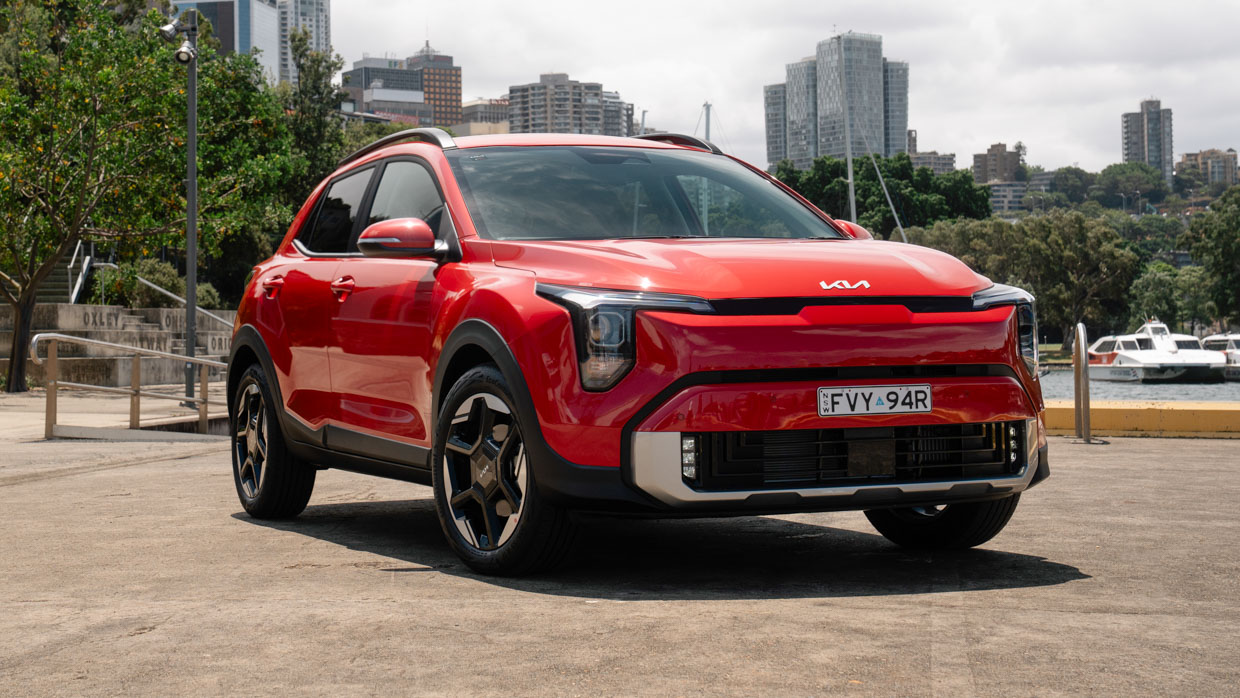
Pictured: the GT-Line
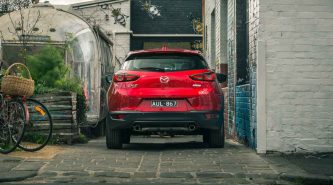
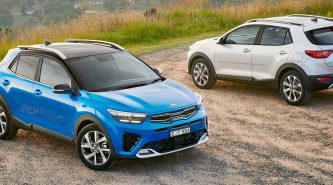
And anyway: in the ‘light SUV’ retirement village, the Stonic is still quite young and spritely. The uber-popular Mazda CX-3 (which outsells the Stonic 2.5-to-1 in Australia) turns 11 next year!
Both the Stonic and CX-3 are getting old under the skin because the light SUV class isn’t paying dividends for car manufacturers like it used to. It’s a shrinking class globally, characterised by declining profit margins. Strict emissions and safety rules have made these supposedly cheap crossovers much more expensive.
The Stonic has not been saved from such price increases. Five years ago, a top-spec Stonic GT-Line cost $30,790; today, the same car (albeit with increased spec’ overall) costs $35,740 plus on-road costs, or 16 percent more – meaning Stonic inflation has outpaced the CPI in Australia.
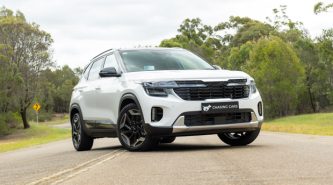
Broadly speaking, buyers have also noticed that they can buy a much larger ‘small SUV’ in the size class above for less money than many ‘light SUVs’ such as the Stonic. Chinese brands haven’t bothered to touch the shrinking light SUV class, but bigger cars like the MG ZS and Haval Jolion currently start at just $26,990 driveaway.
That fact doesn’t bother Kia Australia executives, however. They admit buyers can get more value in next-size-up SUVs, but they say there remains a group of (largely metropolitan) Aussies that want a truly small crossover that can be refuelled quickly (with petrol) and that offers a modicum of enjoyment to drive. Price is somewhat secondary.
So, does the refreshed Stonic tick those boxes? Let’s find out.
Driveaway pricing is available for the three Stonic grades, with prices up around nine per cent compared to the pre-facelift version of this model. However, standard specification rises.
The entry point to the refreshed Stonic range is the base ‘S’ trim ($30,890 driveaway), which now includes 16-inch alloy wheels (in 195/55 R16 tyres), automatic LED headlights and tail lights, roof rails, power-folding door mirrors, power windows (auto up/down for driver only), push-button start, black cloth upholstery and a six-way manual driver’s seat.
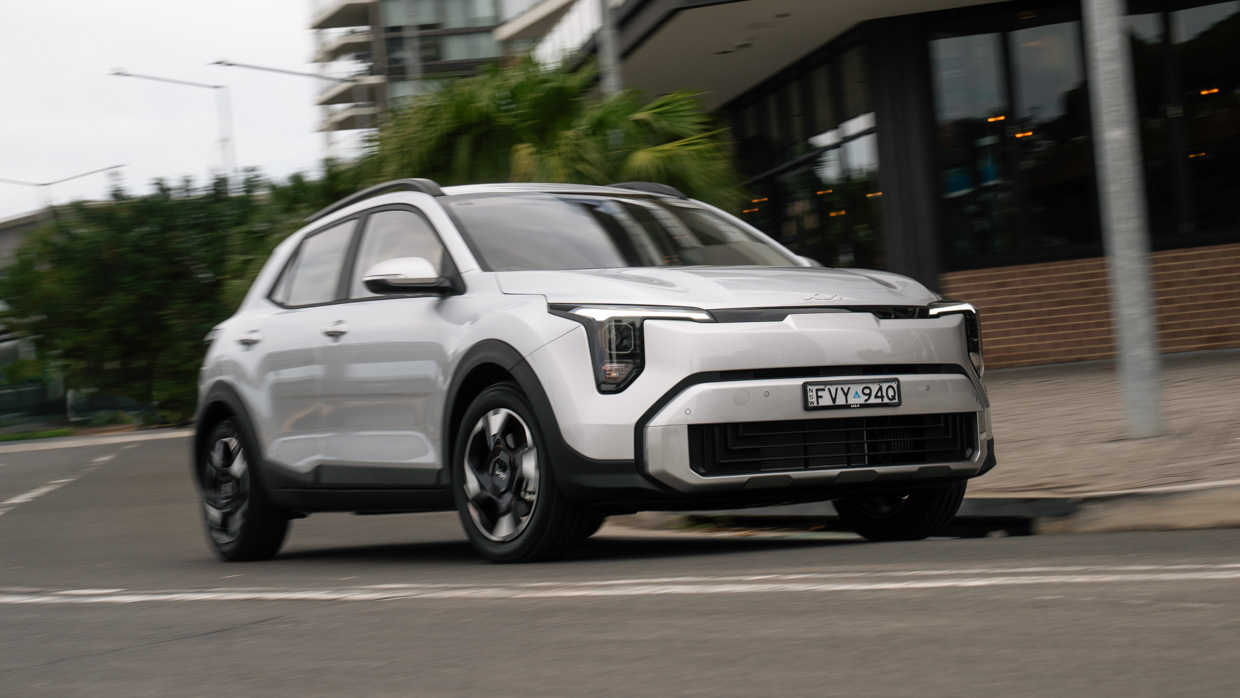
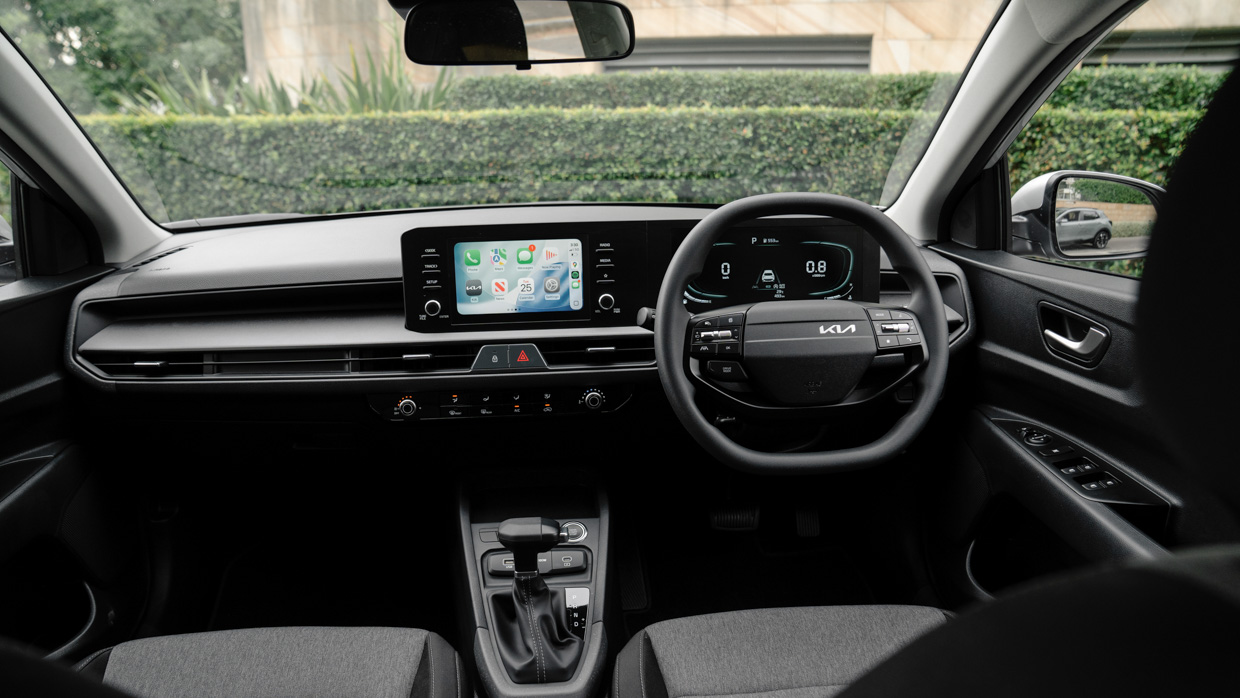
Connectivity for the most affordable Stonic takes in an 8.0-inch touchscreen without navigation but with wireless Apple CarPlay/Android Auto, plus a four-inch instrument cluster and six speakers, while air conditioning is manual and single-zone.
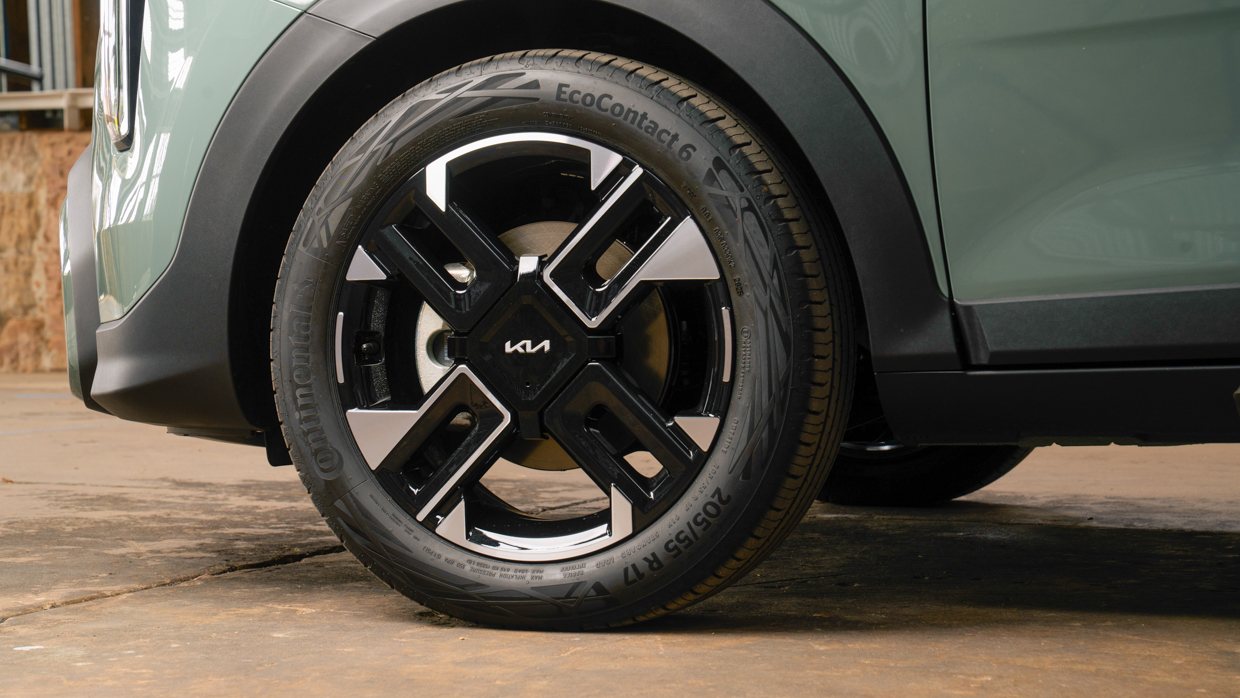
It’s a decent-value $3600 step into the mid-spec Stonic Sport ($34,490 d/a), which has larger 17-inch alloys (in wider 205/55 R17 tyres) while adding Kia Connect services (including remote climate control activation), premium cloth/PVC upholstery, a front centre armrest, solar front glass and rear privacy glass, auto wipers and adaptive cruise control.
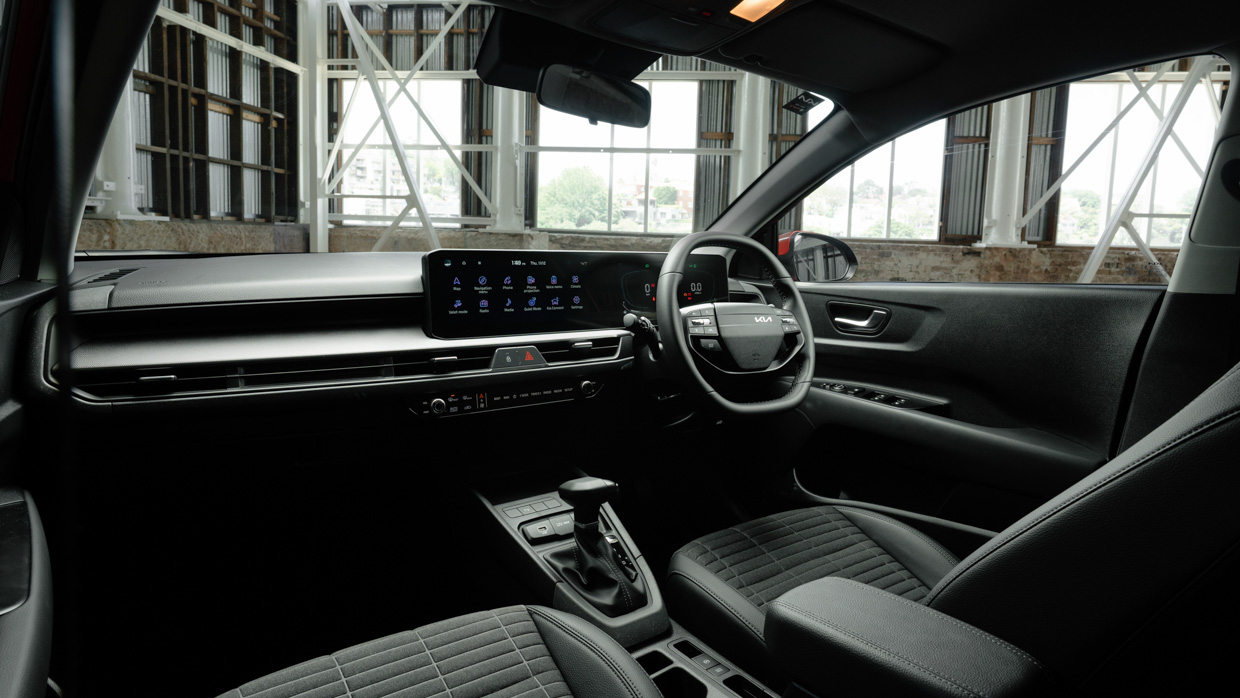
Other ‘Sport’ additions include a bigger 12.3-inch touchscreen (though CarPlay/Android Auto then require a cable due to a back-end technology quirk), plus satellite navigation, DAB digital radio, and artificial leather for the steering wheel and gear shifter.
The flagship Stonic GT-Line ($37,990 d/a) is a further $3500 step. It can be identified via GT-Line specific styling cues and black mirrors; it also picks up superior MFR LED headlights with height adjustment, LED indicators, an opening tilt/slide sunroof, 12.3-inch instrument cluster, wireless device charger (with fan), ambient lighting and heated front seats and wheel.
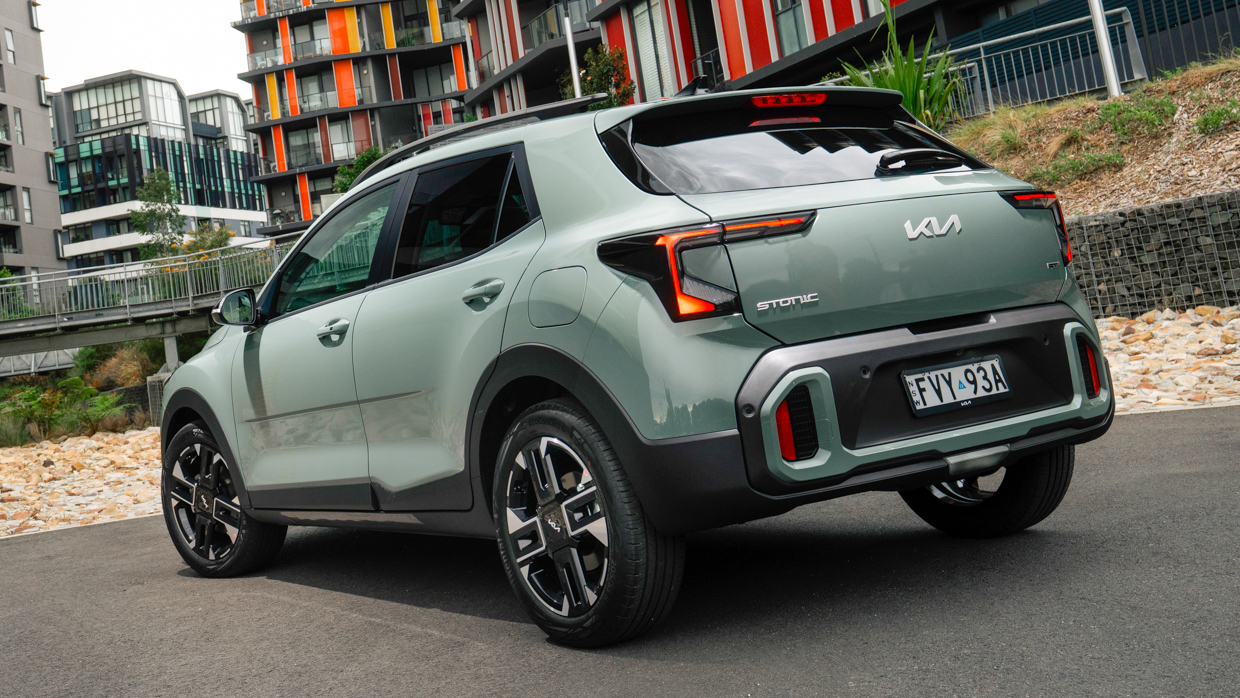
Options are limited to paintwork. The standard colour is Clear White (solid), with pearls Aurora Black and Snow White plus metallics Adventurous Green, Signal Red, Yacht Blue, Astro Grey and Sparkling Silver each attracting a $550 premium. Black is the only available interior colour scheme.
All Stonics have a tyre repair kit as the 48-volt mild hybrid system battery sits (rather inconspicuously) below the boot floor where a space saver spare wheel and tyre used to be.
Mechanically, the Stonic range has been simplified dramatically of late. Aside from the size and width of wheel and tyre (which differs only between the S and the other models), the Stonic is identical under the skin no matter which of the trio of variants you buy.
The dynamic package itself is quite a European one: a turbocharged 1.0-litre three-cylinder petrol engine is standard-fit, now making 88kW/172Nm and supplemented for 2026 by a mild hybrid system (released in Europe in 2020!) that can add a 12kW boost to the engine.

Despite the fact a manual transmission would really suit the Euro-style dynamics and engine, one is not available in Australia. Instead, the sole gearbox is a seven-speed dual-clutch automatic that is spirited on the move but very lethargic from a stand-still.
That’s a shame because the defining characteristic of the Stonic on a test drive may well be the fact it’s hesitant off the line, with the clutch engaging quite slowly. It’s a laggy experience trying to accelerate from rest.
Once the Stonic has kicked into gear, things improve rapidly because the smallest Kia SUV on sale is remarkably fun and rewarding to drive, DCT automatic aside.
That starts with the turbo-triple engine which, while modest in terms of outright performance, is entertaining and willing. The 1.0-litre happily revs out into the higher extremes of its rev range and makes a cool thrum as it does so.
As a result, you can make relatively prompt progress in the Stonic although the feeling of the blended regenerative/friction brake pedal leaves something to be desired when slowing down.
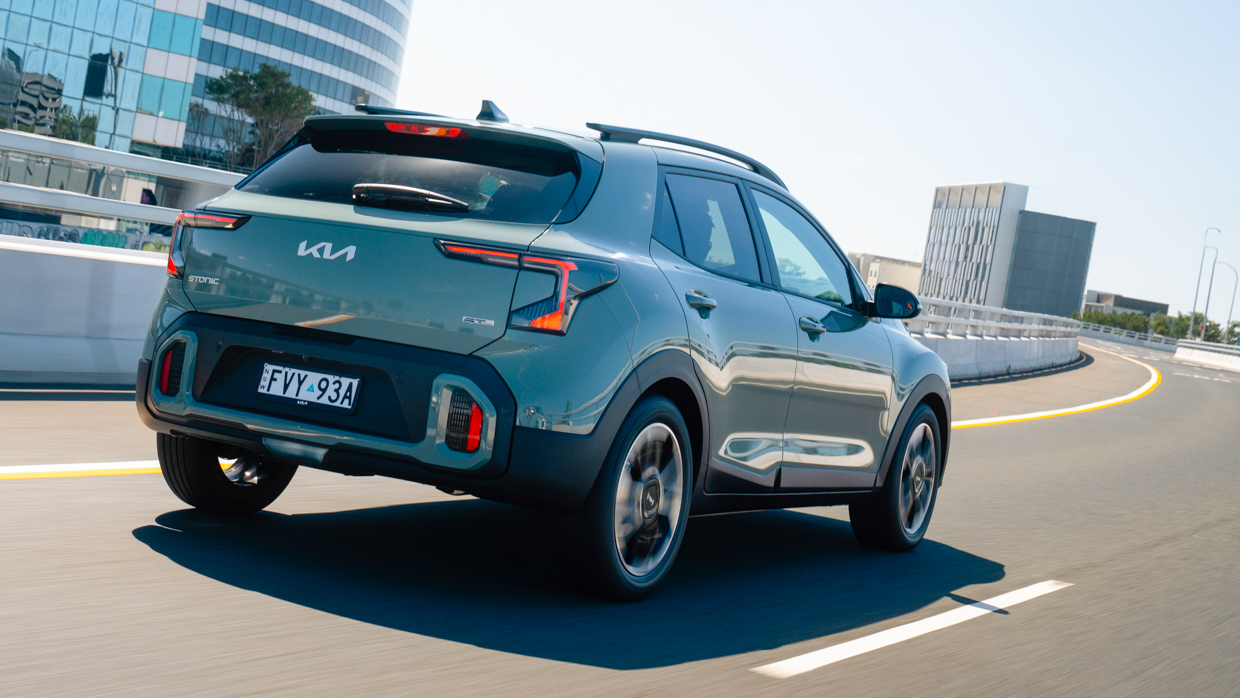
One thing we love is how the Stonic handles corners: you can tell that the chassis balance has been set by people that love driving and who like the feel of European small cars. While the steering is relatively slow immediately off centre, the rack is intuitive and zealous.
What follows steering inputs is a clear sense of the Stonic’s light and chuckable character. The chassis fizzes and sparkles, engaging its (relatively simple torsion beam) rear end admirably in corners, feeling pointy and ready for action.
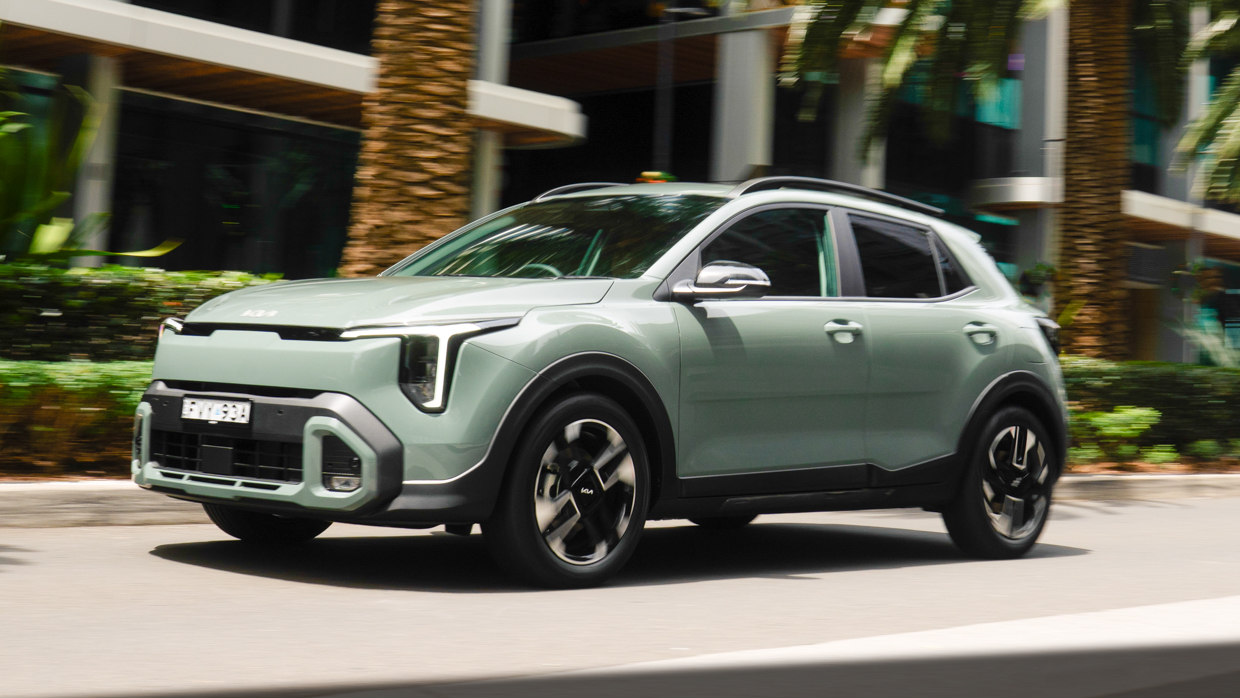
It’s backed up by acceptable ride quality that is cushiest on the S grade’s 16-inch wheels, but which remains decent enough (for such a small car) on 17-inch wheels. Big lumps and bumps do upset this lightweight Kia (1232kg tare mass) but on the whole, it’s settled.
Vehicle facelifts normally don’t make major changes to the interior, so the extent of Kia’s reshaping of the Stonic’s dashboard is unusual. The alterations to the cabin would not have been cheap and indicate that Kia intends to keep this model around for a few more years.
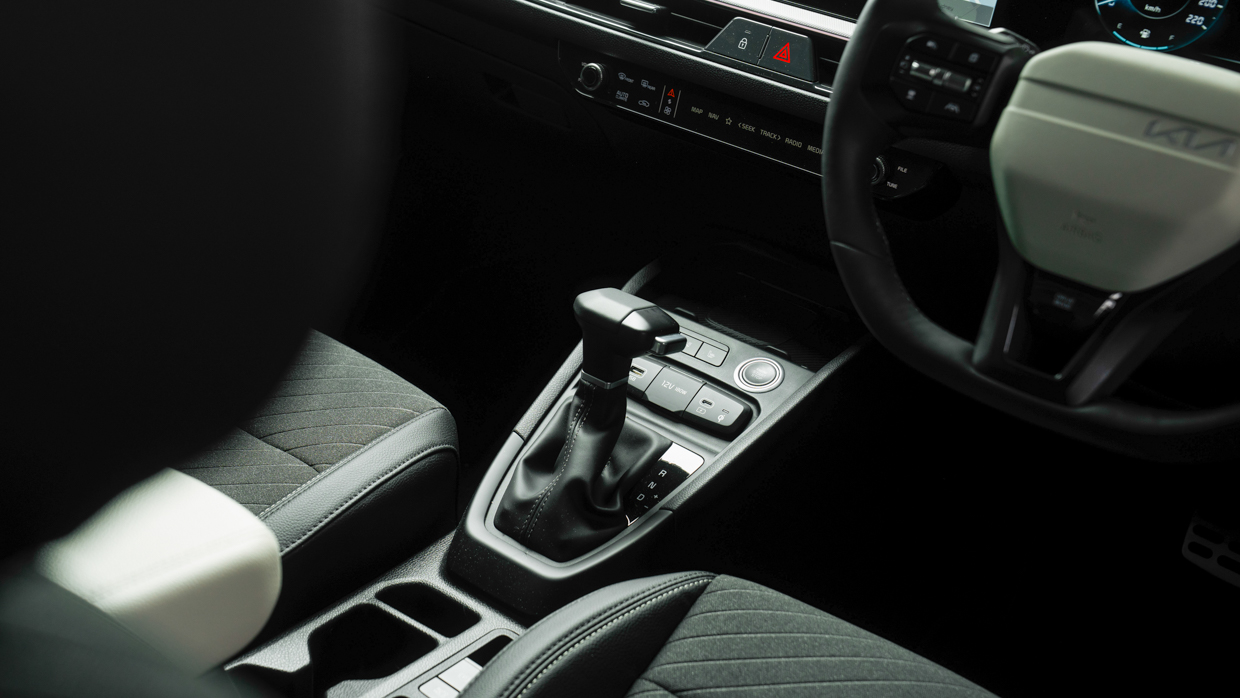
The updated dashboard is much more contemporary and, in GT-Line guise, actually quite impressive for a light SUV. Only the top-shelf Stonic picks up Kia’s flagship twin 12.3-inch screens, which feel premium in this class but even the mid-spec Sport has a 12.0-inch central display.
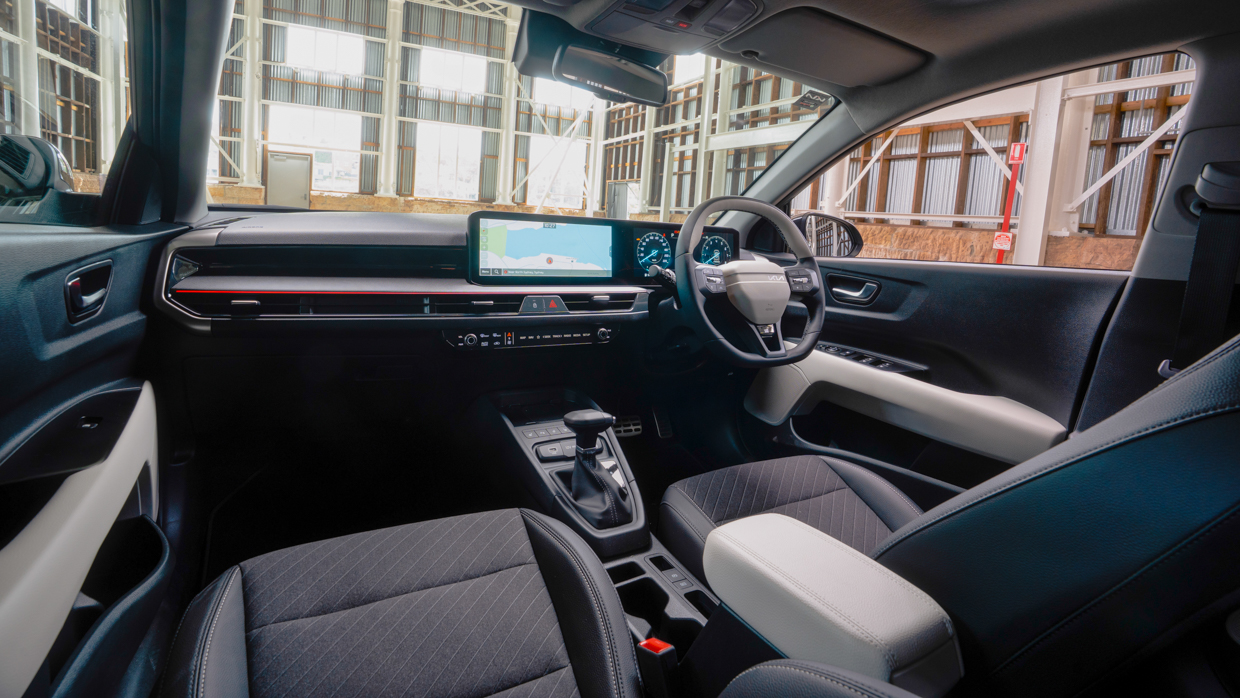
That sense of newness is compounded by fitment of Kia’s avantgarde new steering wheel design which features physical shortcuts and a two-tone colourway for the GT-Line.
The updated Stonic interior remains a generation behind the South Korean brand’s newest and best cabins (like that found in the K4 small car), making for two odd quirks.
In the GT-Line, climate and infotainment shortcuts share a single screen, requiring constant toggling (something that has been discontinued for newer Kia models), while the older electrical architecture bizarrely means that the Sport and GT-Line have wired, not wireless, smartphone mirroring.
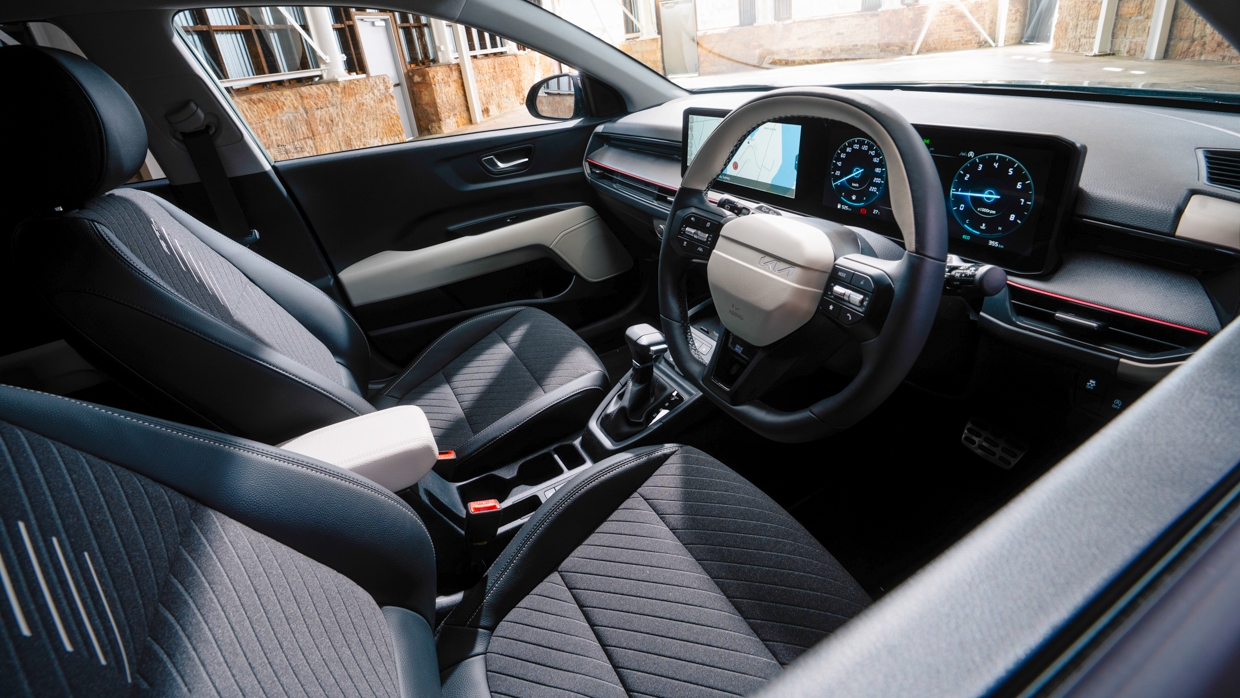
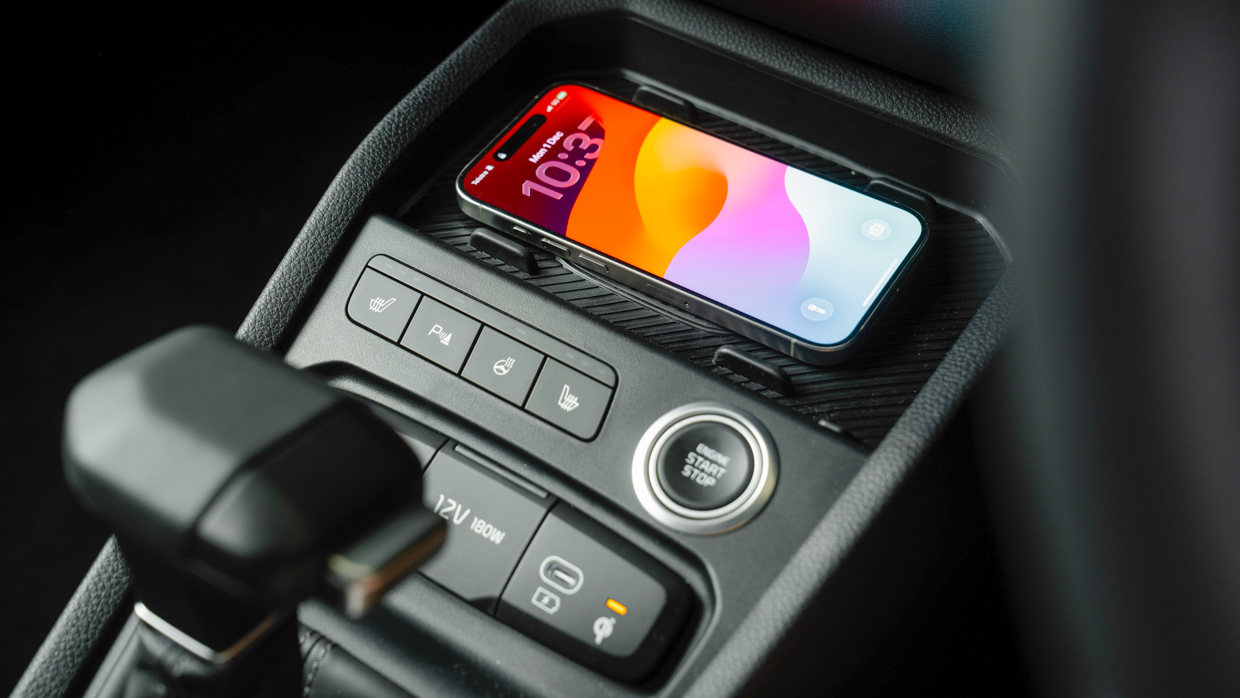
We’re also a touch disappointed that the upgrade budget didn’t stretch to new seats for the Stonic as the old pews continue to be flat and unsupportive—we felt tired after a couple of hours of driving as a result.
Better is the overall packaging of the interior, at least up front, where cubbies and storage areas are plentiful and a centre armrest – something lacking in this class generally speaking – is fitted from the mid-spec upward.
While its facelifted styling has lengthened the 2026 Stonic to 4165mm, its wheelbase of 2580mm remains the same and interior room has not changed.
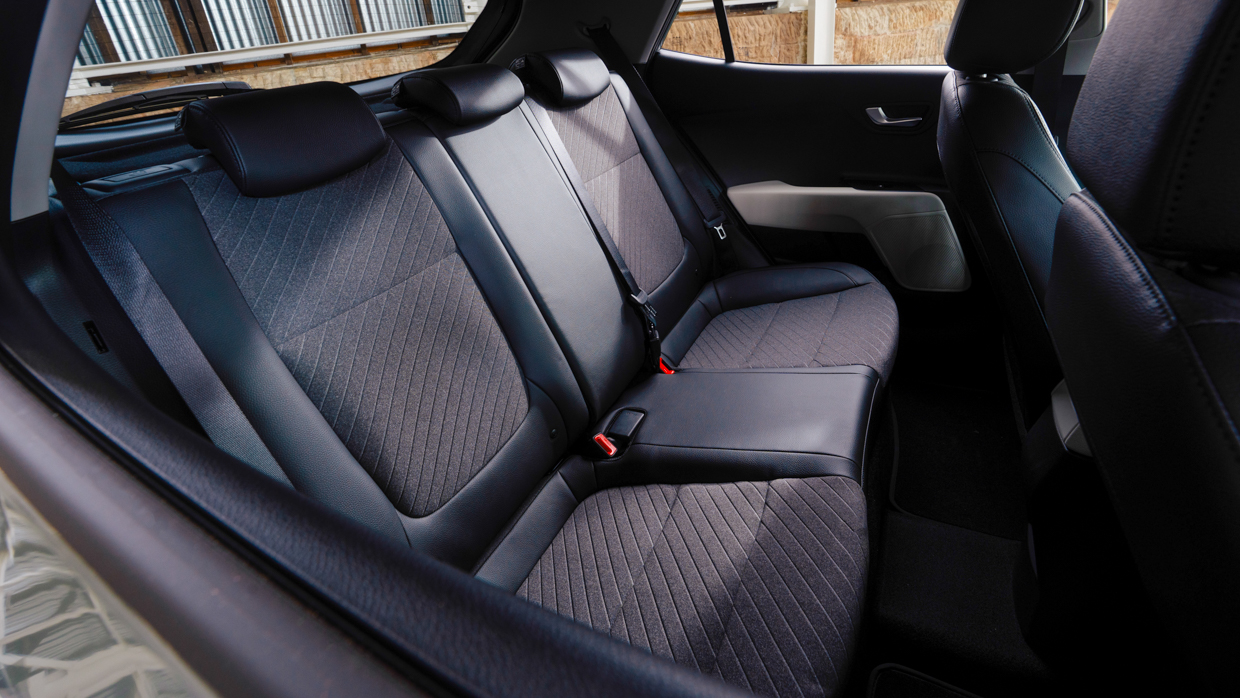
That means the back seat is still on the small side, with Kia acknowledging that not many Stonic buyers will regularly transport adults or older teens in the second row. Still, it’s liveable for six-footers but not much more. Standard-fit USB ports in the back are appreciated.
Partially, the small rear seat is a product of Kia’s decision to make boot space quite generous for the Stonic.
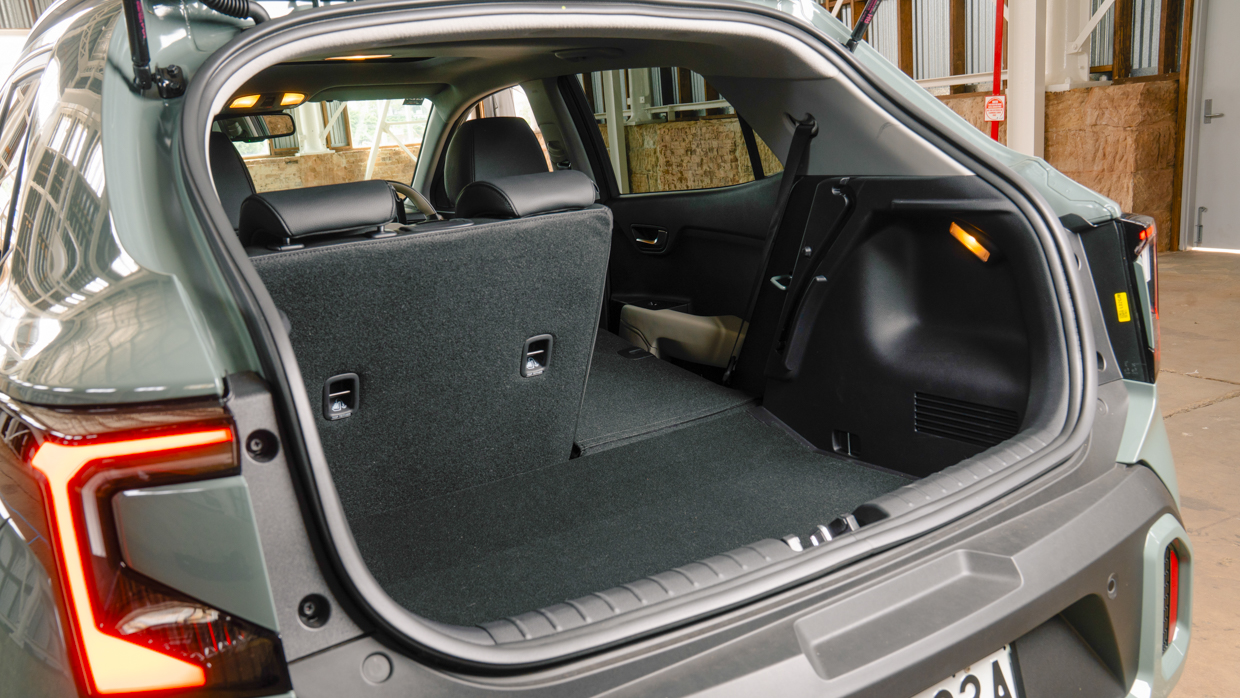
At 352 litres, this car has much more cargo room than key rivals (especially the CX-3), though the deletion of the space-saver spare for tenuous fuel economy gains from the mild hybrid system is a shame.
We think so, but Kia Australia allowed the Stonic’s independent ANCAP crash and safety rating to expire in January 2025 and as a result, this SUV is now ‘unrated’.
Before 1 January 2025, the Stonic held a five-star ANCAP safety rating and in Europe, the Kia Stonic continues to hold a five-star rating based on testing conducted in 2017.
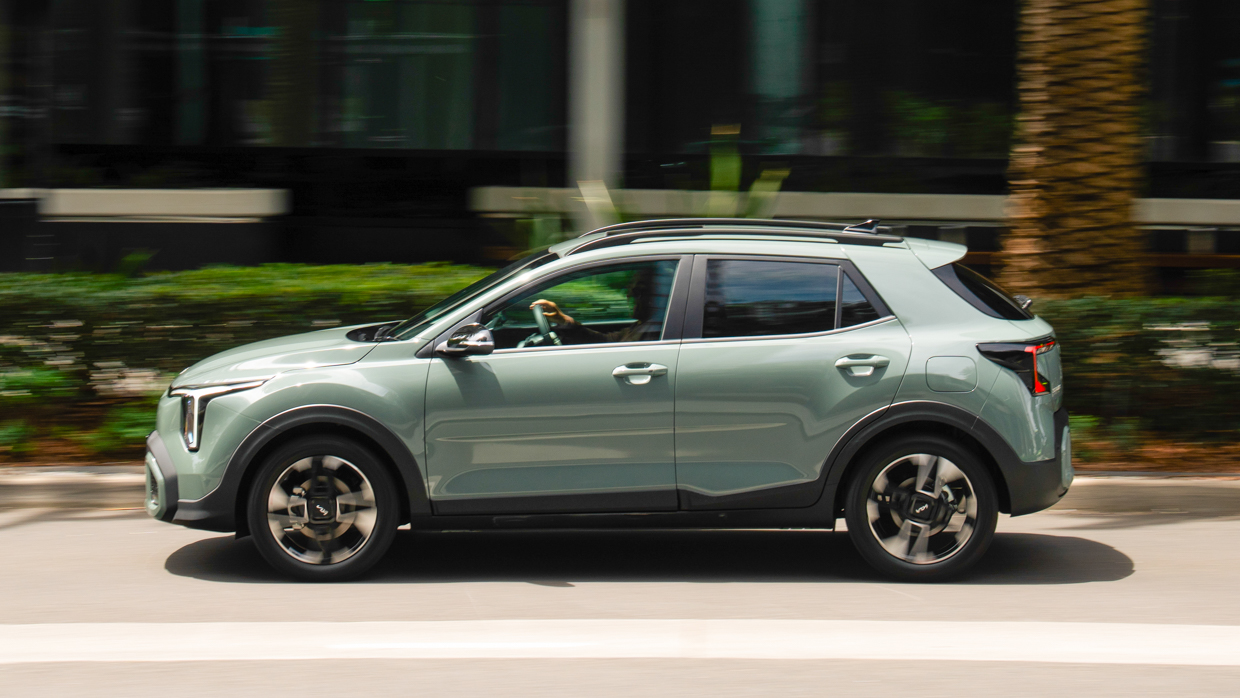
Safety standards have moved on since 2017 but what is clear is that the Stonic is fitted with a wide range of adaptive safety features.
Range-wide safety technologies include six airbags, autonomous emergency braking (AEB) that can detect cars, pedestrians and cyclists, lane keeping assist, driver attention monitoring, blind spot monitoring, front and rear parking sensors and a reversing camera.
All Stonics have three child restraint anchorage points and two ISOFIX points.

From the Sport grade up, AEB that detects cars in junctions is added.
We found the tuning of the Stonic’s lane-keep assist system to be overbearing but this can be switched off with a long press of a shortcut button on the steering wheel.
Unfortunately, the Stonic’s mild hybrid system doesn’t seem to be especially effective in the real world. The culprit for this might be the fact that the Kia needs a good ‘rev’ to get off the line due to the laggardly automatic transmission.
Kia publishes claimed fuel economy of 5.0L/100km for the 2026 Stonic but our testing across about 300km of driving on highways, in town and on country roads saw us record 7.1L/100km. That’s 42 percent above the claim, which isn’t especially impressive.
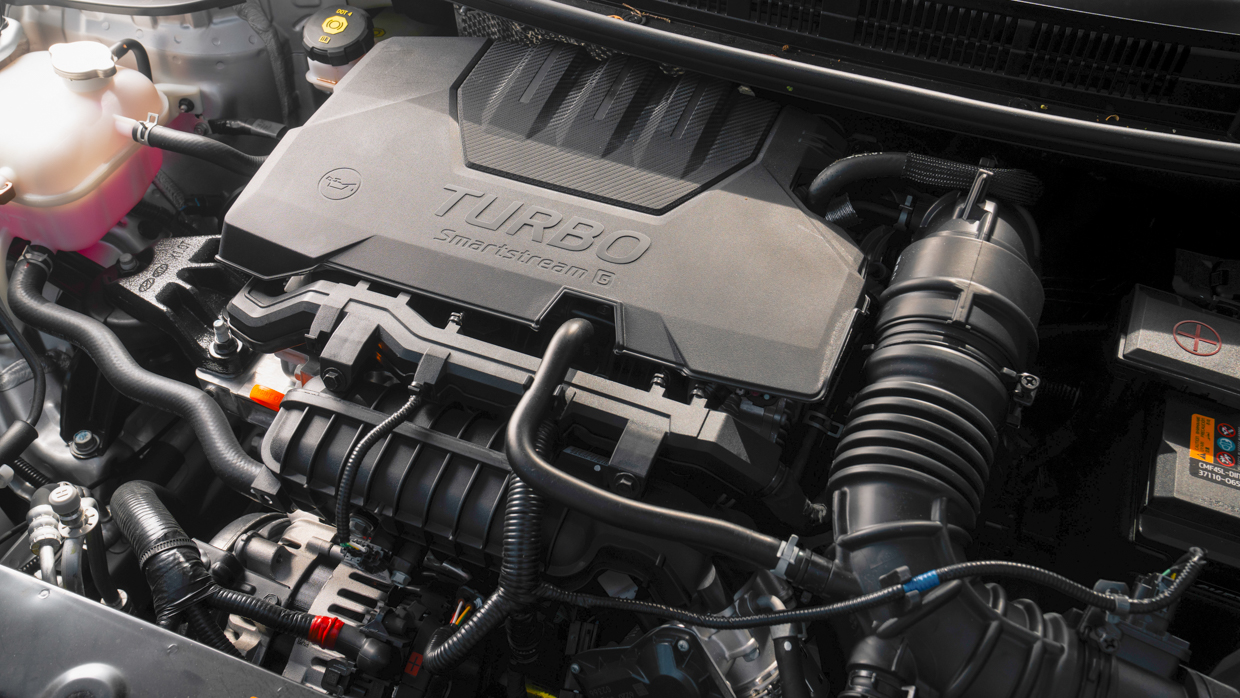
The Stonic has a 45-litre fuel tank, making its real-world driving range of 633km decent enough for this class while it can accept the cheapest unleaded petrol. Premium fuel is not required.
Maintenance demands are relatively significant, however, with the Stonic requiring scheduled servicing every 12 months/10,000km (compared to every 15,000km for some rivals).
Across the first five years/50,000km, servicing costs come to $2179 or about 4.3 cents per kilometre. The Stonic is dearer to service than a Toyota Yaris Cross, for instance.
Warranty is excellent, however, with Kia Australia’s seven-year/unlimited kilometre coverage applying to the Stonic for private, general fleet and government buyers.
All the Chasing Cars road testers who drove the refreshed Kia Stonic found it to be a genuinely likeable and entertaining small SUV – the kind of car you drive just for the fun of it.
That is a very good thing, because that cheerful quality might be a reason to consider buying the Stonic despite its relatively poor ‘price to size’ ratio.
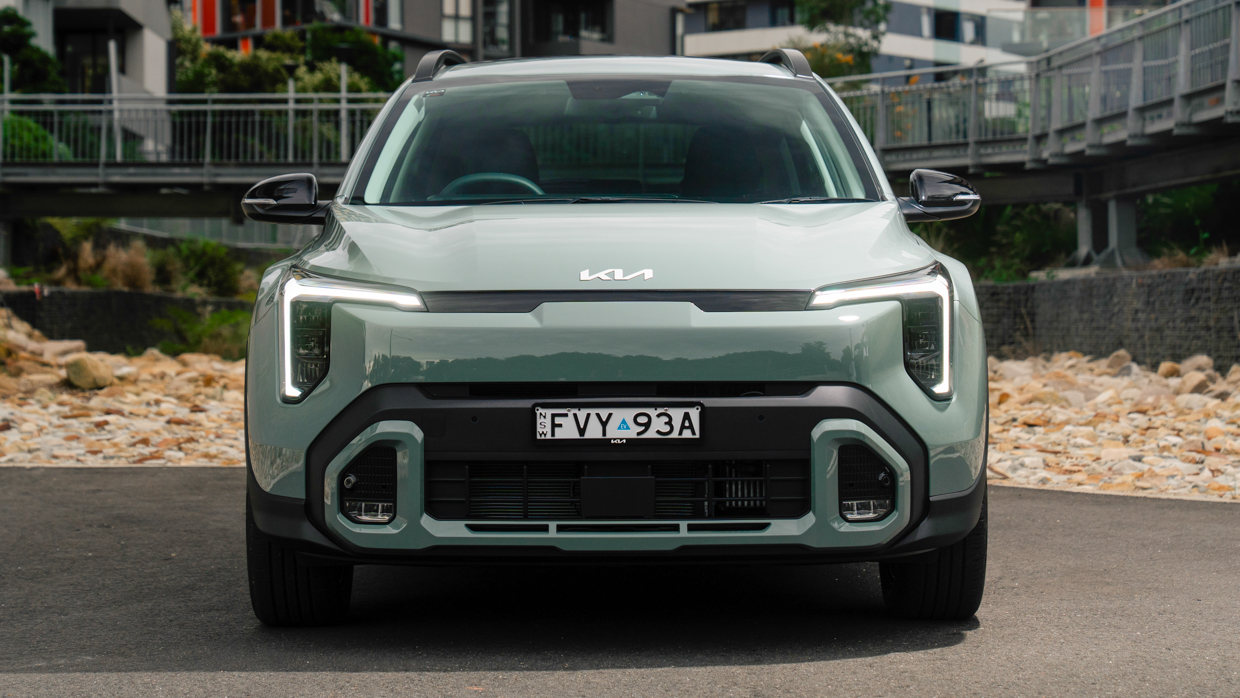
Like many other light SUVs, the Stonic has become much more expensive to buy despite offering an ultimately similar mechanical and practical package to years gone by.
It’s true that the 2026 facelift for the Stonic renews its visual appeal, both inside and out, while also adding some nice new features including car connectivity allowing you to start the air-con from anywhere.
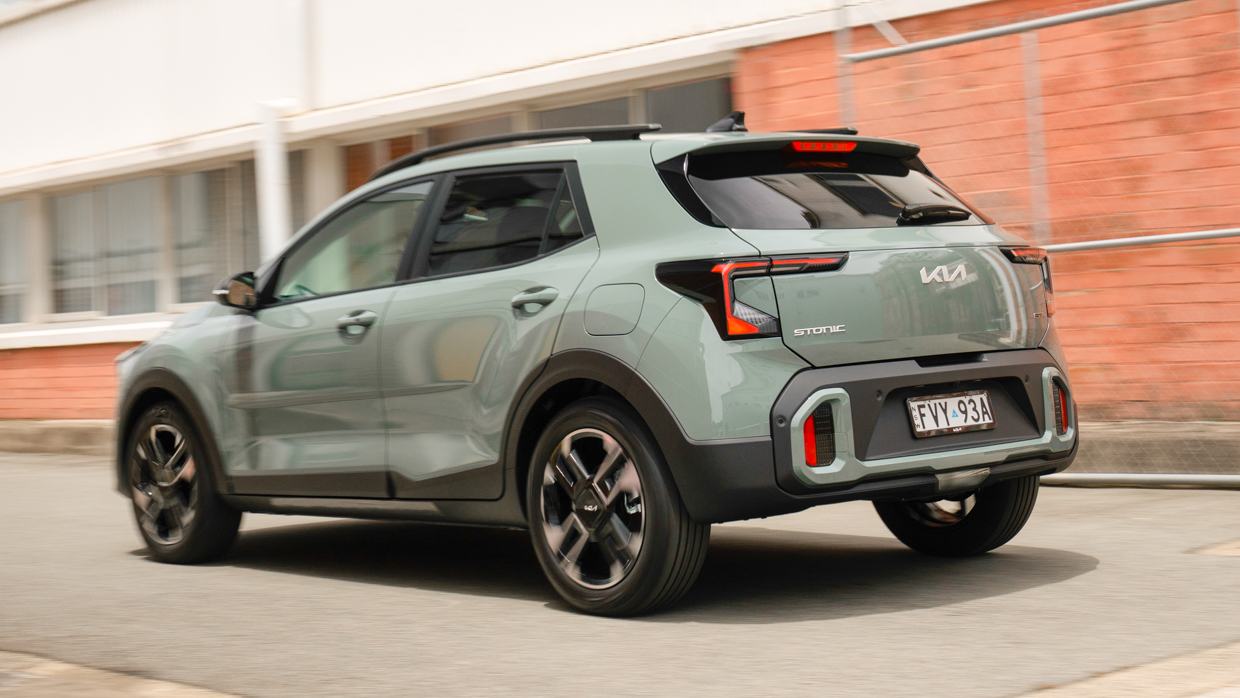
It’s also the case that the Stonic’s charming dynamics make it much more fun than some appliance-like rivals.
However, you’d really have to be enthralled by the diminutive size and fun nature to justify the Stonic over a bigger and cheaper SUV these days.
Key specs (as tested)
About Chasing cars
Chasing Cars reviews are 100% independent.
Because we are powered by Budget Direct Insurance, we don’t receive advertising or sales revenue from car manufacturers.
We’re truly independent – giving you Australia’s best car reviews.
The estimate provided does not take into account your personal circumstances but is intended to give a general indication of the cost of insurance, in order to obtain a complete quote, please visit www.budgetdirect.com.au. Estimate includes 15%^ online discount.
^Conditions Apply
Budget Direct Insurance arranged by Auto & General Services Pty Ltd ACN 003 617 909(AGS) AFSL 241 411, for and on behalf of the insurer, Auto & General Insurance Company Limited(ABN 42 111 586 353, AFSL 285 571).Because we don’t know your financial needs, we can’t advise you if this insurance will suit you. You should consider your needs and the Product Disclosure Statement before making a decision to buy insurance. Terms and conditions apply.
Indicative quote based on assumptions including postcode , 40 year old male with no offences, licence suspensions or claims in the last 5 years, a NCD Rating 1 and no younger drivers listed. White car, driven up to 10,000kms a year, unfinanced, with no modifications, factory options and/or non-standard accessories, private use only and garaged at night.
^Online Discounts Terms & Conditions
1. Discounts apply to the premium paid for a new Budget Direct Gold Comprehensive Car Insurance, Third Party Property Only or Third Party Property, Fire & Theft Insurance policy initiated online on or after 29 March 2017. Discounts do not apply to optional Roadside Assistance.
2. Discounts do not apply to any renewal offer of insurance.
3. Discounts only apply to the insurance portion of the premium. Discounts are applied before government charges, taxes, levies and fees, including instalment processing fees (as applicable). The full extent of discounts may therefore be impacted.
4. We reserve the right to change the offer without notice.