Powered by
-
Car Reviews
Latest reviews
- Car News
-
Car Comparisons
Latest comparisons
- Chasing Deals
Latest reviews
Latest comparisons
New platform makes the K4 more mature to drive than the old Cerato, while the interior is a usability masterclass — but only the GT-Line feels really complete
With this month’s relatively belated arrival of the Kia K4 Hatch — the five-door landed in Australia some 10 months after the sedan — the South Korean carmaker is well-set for a renewed tilt at small car success in 2026.
While small car sales volumes are a shadow of their former scale in Australia, dwarfed three-to-to-one this year by small SUVs, Kia still sees a solid case for selling a remarkably broad range of four K4 variants in two body styles and two engines.
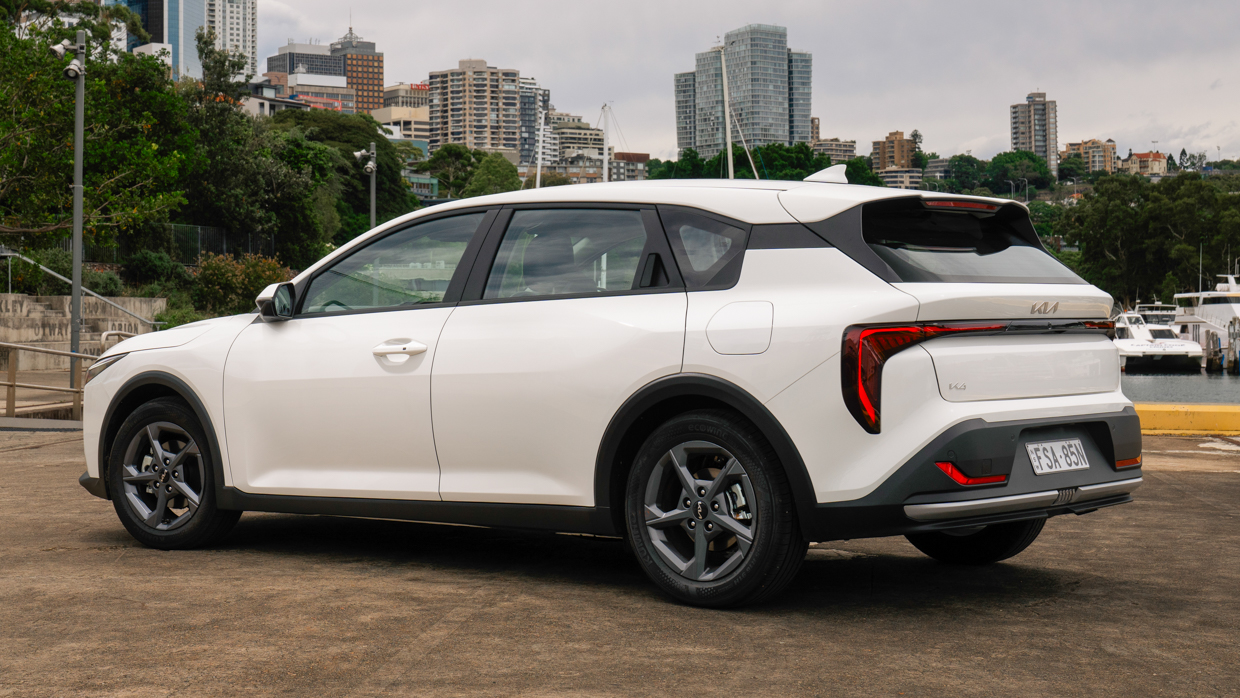
As local safety and emissions requirements have increased, small cars have become more expensive and the K4 is no different: both sedan and hatch range from $33,490 to $47,490 driveaway. Five years ago, the K4’s Cerato predecessor was around 30 percent cheaper.
That’s a common refrain across the segment and not all manufacturers think it’s worth competing now. The Hyundai i30 hatchback was discontinued in October, with its maker citing cost pressures for the European-built model. However, the K4 is built in Mexico.
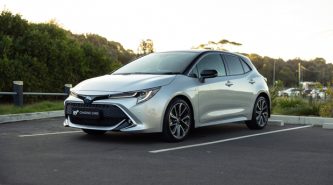
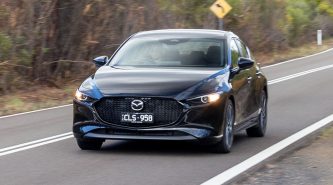
With the five-door i30 removed from the picture, Kia might hope to retake second place in the sub-$45,000 small car segment locally. While the Toyota Corolla remains the dominant seller by some margin, the K4 currently trails the venerable Mazda 3, and the i30.
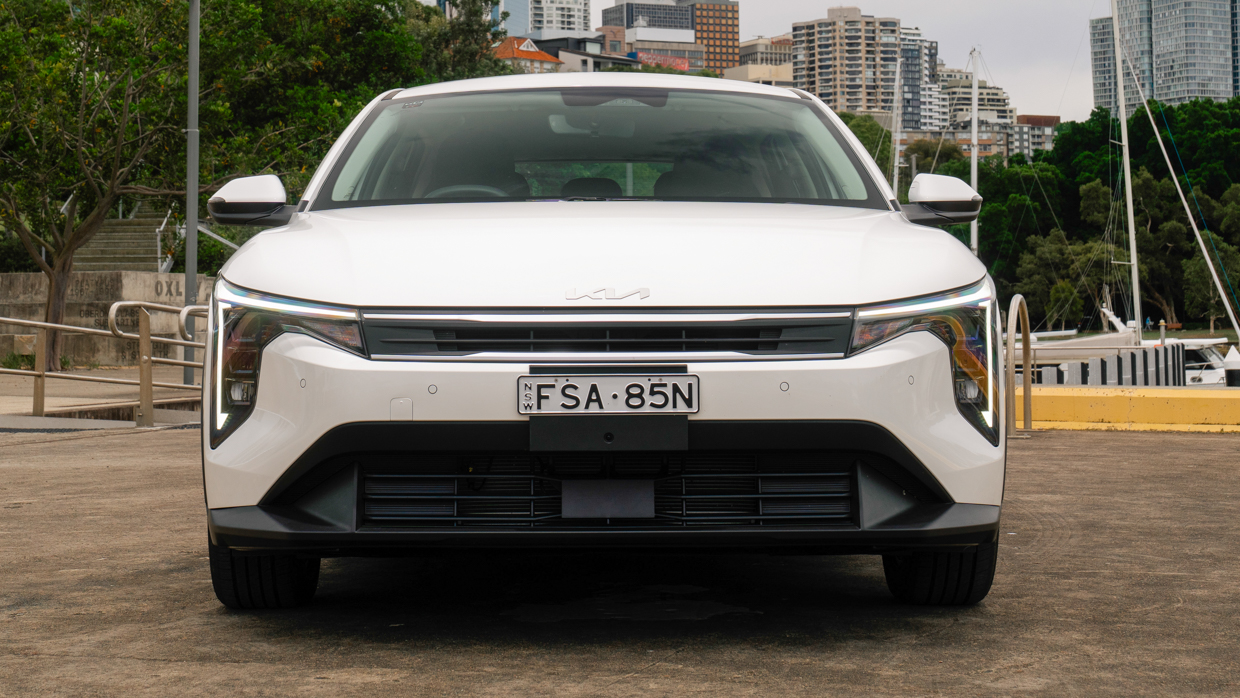
So: having shifted to a more modern Kia platform underneath and sporting a more salubrious and contemporary interior — now with the re-addition of a Hatch body style — does the 2026 K4 have what it takes to win?
Aside from some hatchback-specific additions (such as a removable cargo blind), pricing and specification for the 2026 K4 hatchback mirrors that of the sedan model.
The range is straightforward: S, Sport and Sport+ are mechanically simple with a non-turbo 2.0-litre engine and torsion beam rear suspension, while the premium GT-Line has much more kit, plus a turbo 1.6-litre and more sophisticated multi-link rear suspension.
Another key distinction is that, while most K4 grades carry a five-star ANCAP safety rating, the base model (K4 S, $33,490 driveaway) is rated four stars for safety. Buyers of the S grade can option a Safety Pack ($2000) to upgrade the base car to the full five stars.
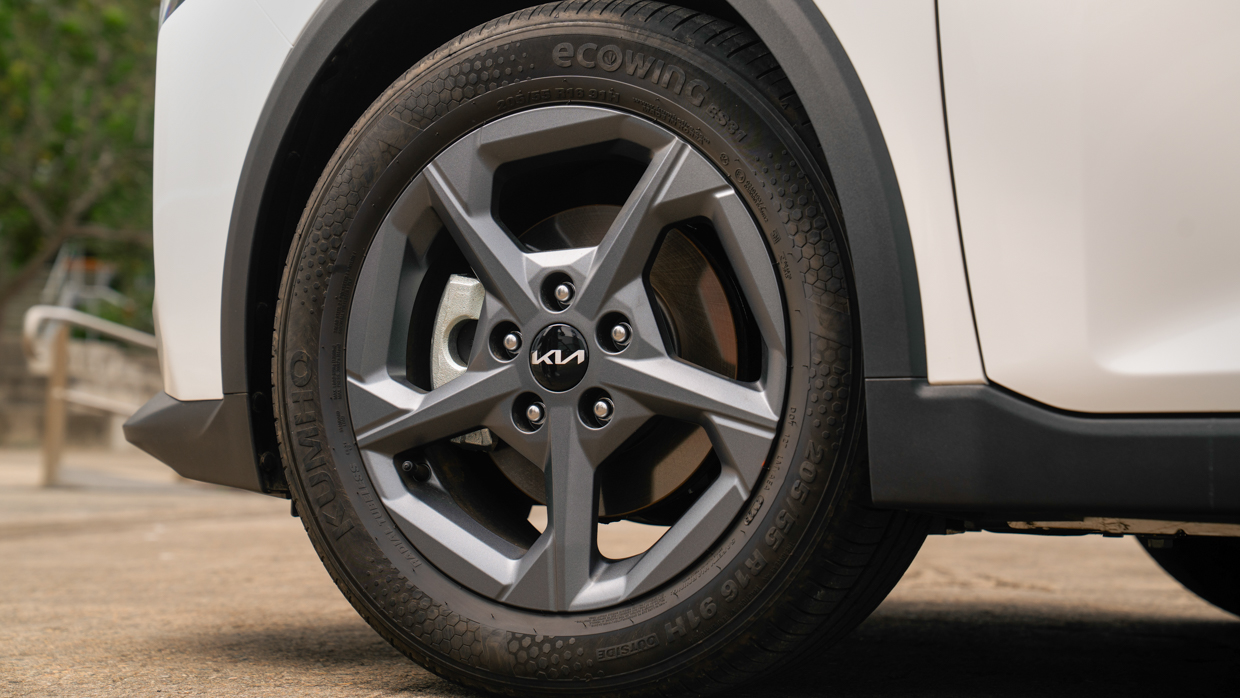
Specification for the base S includes 16-inch alloy wheels, automatic LED headlights, cloth upholstery, six-way manual front seats, matte black exterior accents, a plastic steering wheel, 12.3-inch touchscreen with wireless Apple CarPlay/Android Auto and over-the-air updates, AM/FM/DAB radio, rear air vents and four USB ports.
While all K4 models have basic autonomous emergency braking, front and rear parking sensors, a reversing camera, blind spot and lane keep assist, the K4 S with Safety Pack ($35,490 driveaway) adds higher-grade AEB with junction/oncoming traffic detection, a 12-inch digital instrument cluster, and dual-zone climate control.
It’s then a $3000 jump into the K4 Sport ($38,490 driveaway), with this mid-tier grade adding the aforementioned safety kit, plus larger 17-inch alloy wheels with wider 225/45 R17 tyres, 12-inch instrument panel, dual-zone climate and an auto defogging feature.
A further $3000 buys the K4 Sport+ ($41,490 driveaway), with this tier incorporating PVC upholstery, heated front seats, soft-touch door finishings, satin silver trim, rain-sensing auto wipers, a solar windscreen, illuminated vanity mirrors and glovebox, and a seatback pocket.
The big jump in spec comes from splashing out $6000 over a Sport+ for the K4 GT-Line ($47,490 driveaway), which is in many ways more like a different model entirely. It has a much more powerful engine, larger brakes, more sophisticated suspension and considerably more equipment.
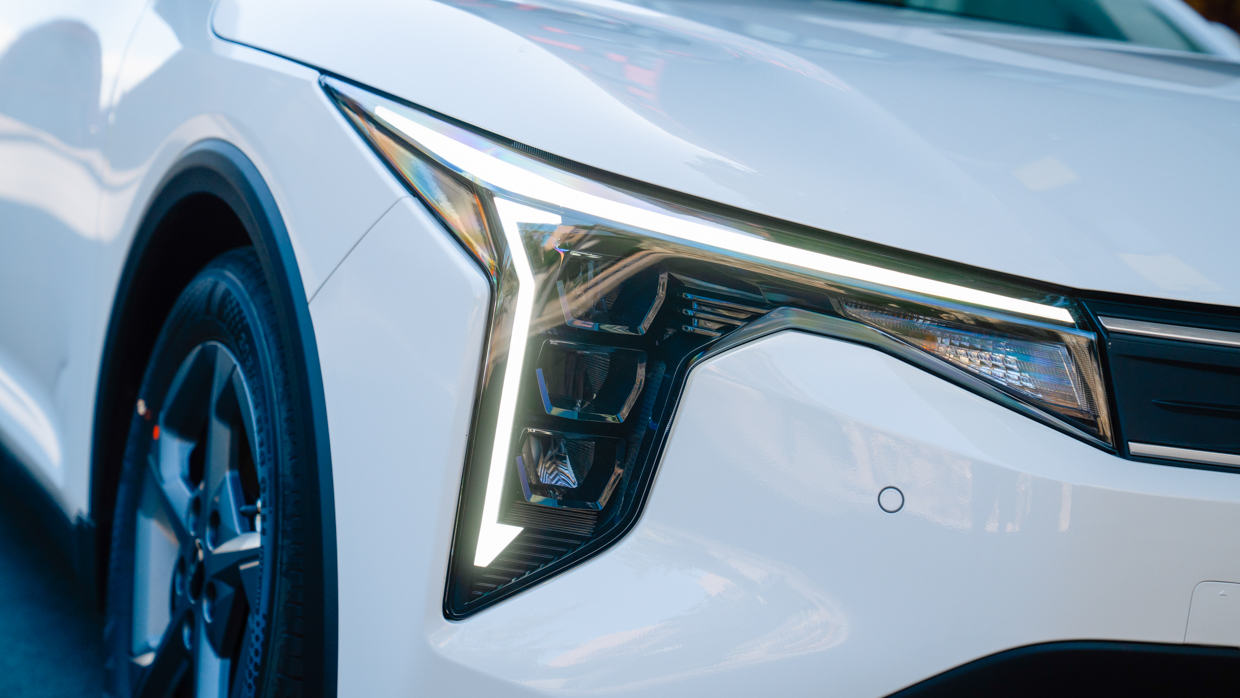
GT-Line exclusives take in 18-inch alloys in 235/40 R18 tyres, high-grade LED headlights, LED taillights and front fog lights, ventilated front seats, 10-way power driver’s seat, an opening sunroof with sunshade, wireless device charging, eight-speaker Harman-Kardon stereo, alloy pedals, ambient lighting, gloss black accents and a body kit.
Options are limited to paintwork. A sole solid colour, Clear White, is no-cost, with pearls Aurora Black and Snow White, and metallics Honeydew, Steel Grey, Interstellar Grey, Fiery Red, Honeycomb and Wave Blue all attracting a $600 premium.
While the new Kia K4 model has replaced the familiar old Cerato, the K4 is a truly new car in many ways — and not just a rebadge. The K4 has a more modern platform with different hard points with updated steering and suspension hardware, while exterior dimensions have also changed.
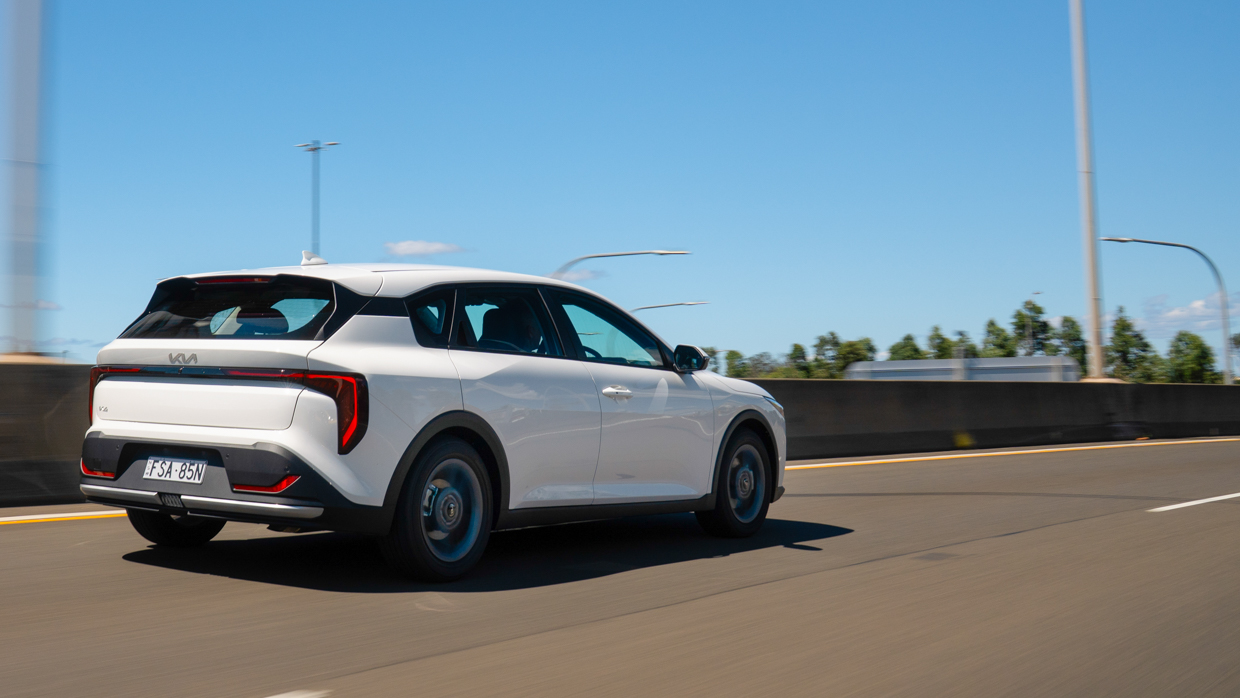
Readers might be surprised to know that the K4 hatchback is smaller than the old Cerato hatch (4440mm long vs 4510mm long) despite having a marginally longer wheelbase than the old model (2720mm vs 2700mm). The hatch is far shorter than the sedan (4710mm).
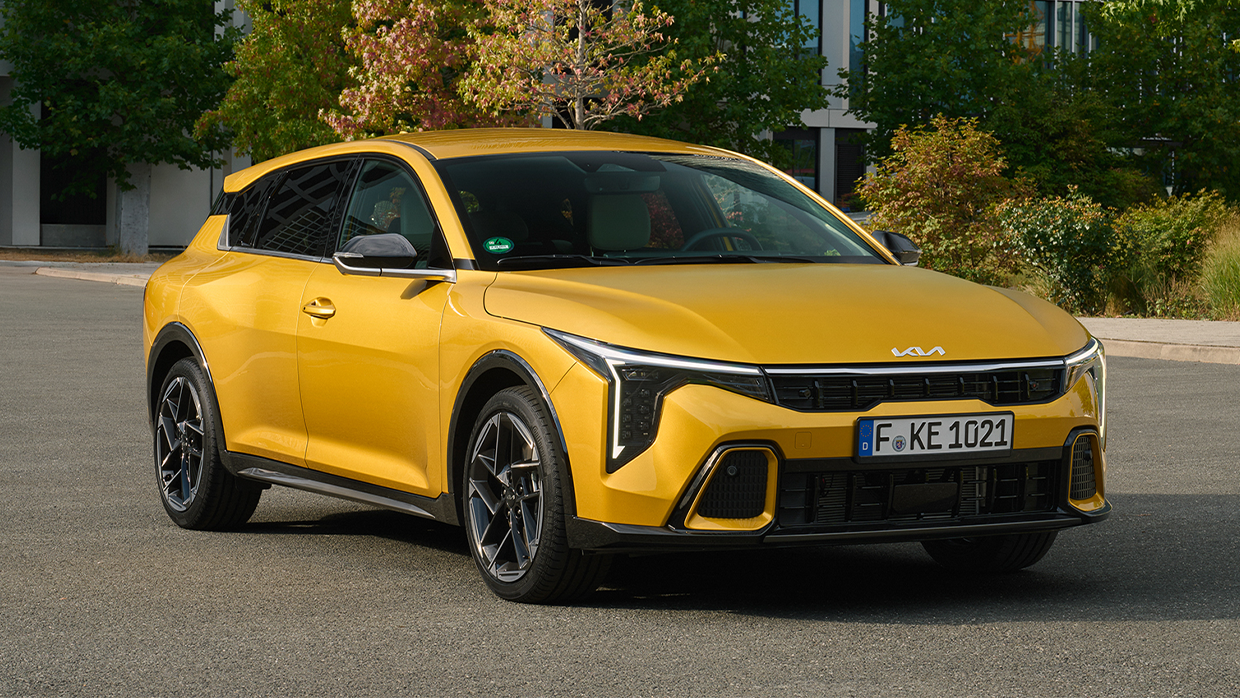
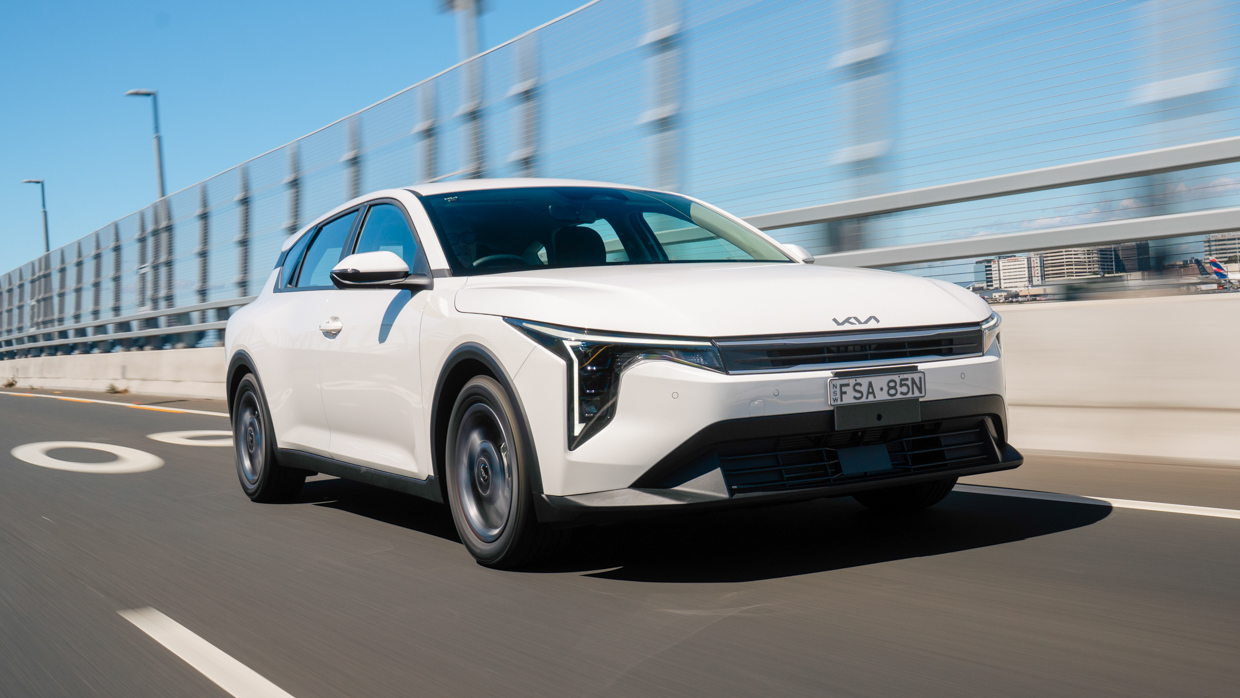
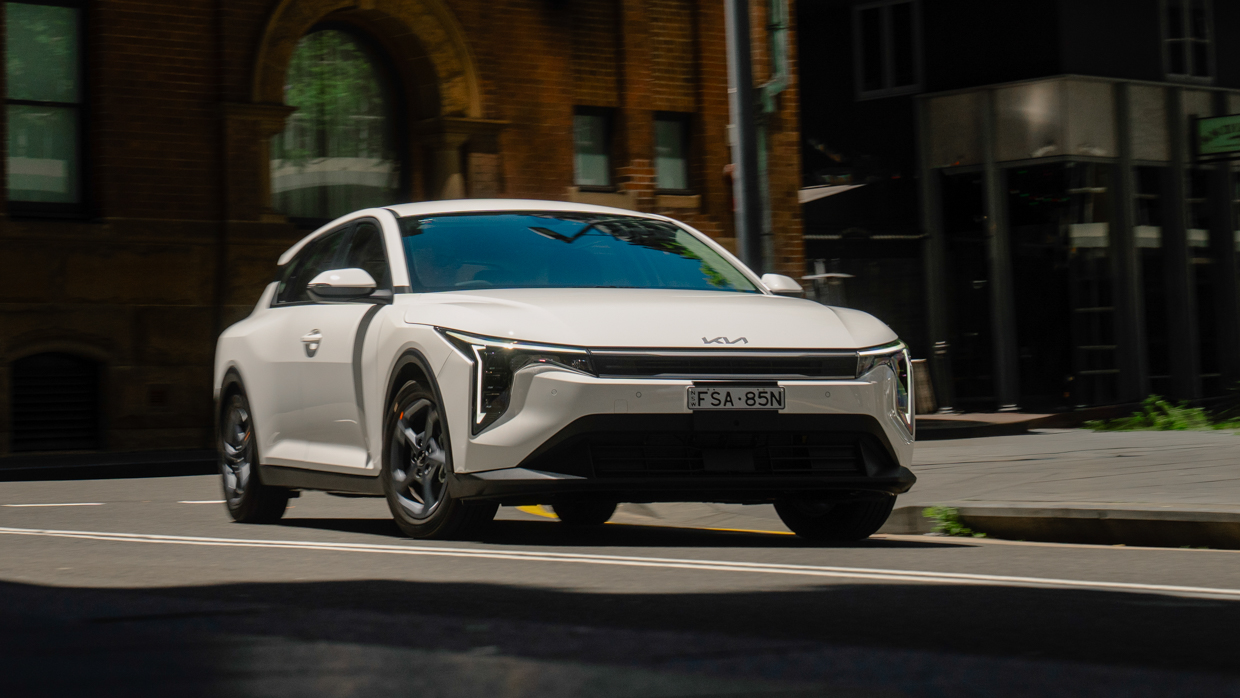
Visually, the K4 hatch has appealing proportions with short overhangs and a reasonably wide track — and the dynamic character of the five-door essentially follows what you’d expect. The K4 is still a small car but it feels noticeably more grown-up and planted than the old Cerato.
In virtually all ways (other than under the bonnet), the dynamics of the K4 take a step forward with a composed and mature ride and handling balance across the range. Despite some clear mechanical differences between the 2.0L and 1.6L (turbo) versions, all K4 hatch trims ride comfortably enough and handle keenly.
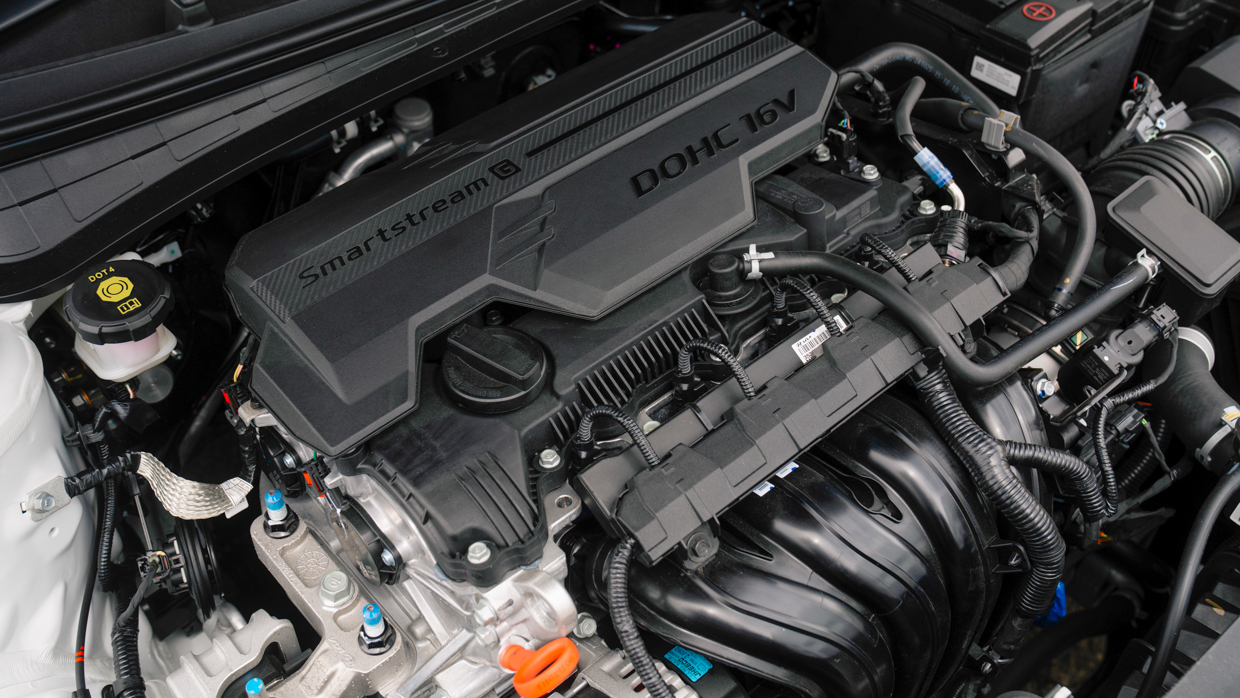
Most Aussie K4 buyers will choose a trim grade paired with the 2.0-litre multi-point injected four-cylinder petrol engine producing 110kW/180Nm. This base engine, now paired with a fuel-efficient but uninspiring CVT auto, provides adequate rather than exciting performance.
The 2.0L’s CVT is one of the better-calibrated units of its type and it does a tidy enough job masking the engine’s limited torque. Still, this is an unhurried drivetrain that prefers to be driven gently; it will suit those that are happy to pootle around town or who spend more time on the highway.
It’s the most affordable S trims (with or without the safety pack) that provide the best ride quality. While the 2.0L engine isn’t much to write home about, the 16-inch alloys and chunky, higher-profile tyres soak up bumps really well with a level of pliancy well beyond the old Cerato. If comfort is the priority, the base model is the pick.
At the other end of the K4 range, the GT-Line transforms the Kia K4 from a competent commuter to a reasonably capable warm hatch. Its 1.6-litre turbocharged petrol four-cylinder engine is direct injected, making 142kW of power and 265Nm of torque across a broad 1700-4500rpm band.
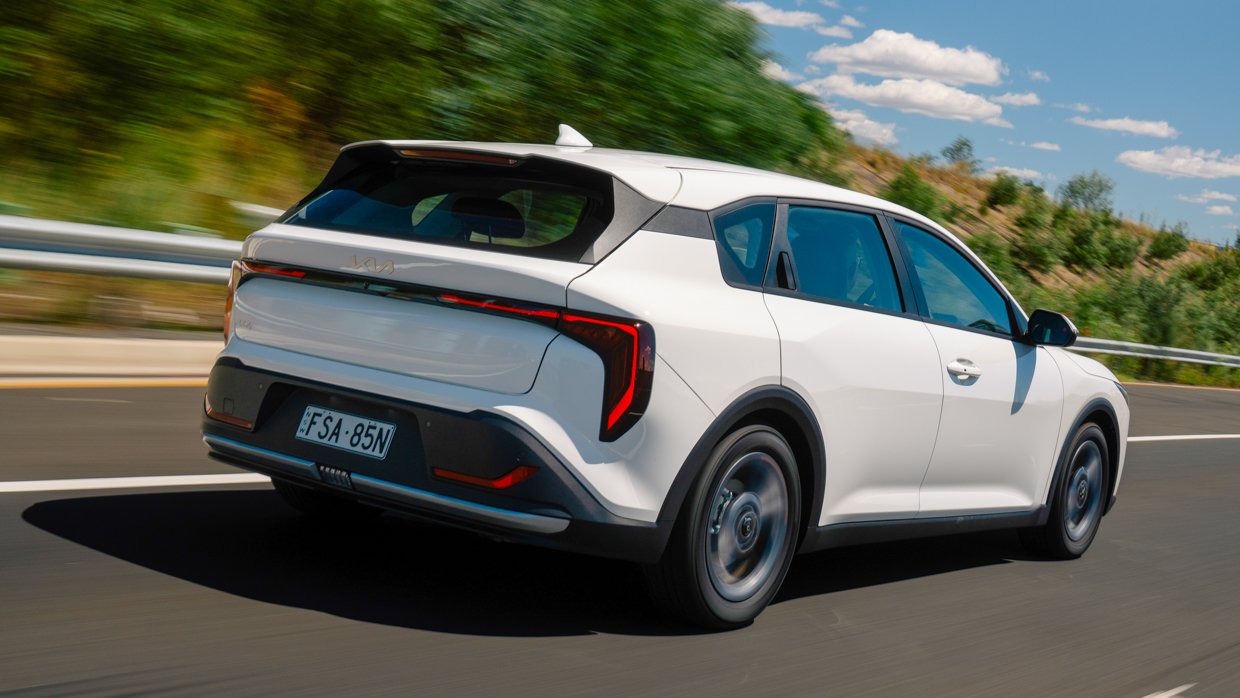
Like the 2.0L, the 1.6-litre turbo option feeds the front wheels only — no K4 AWD is offered — but the GT-Line switches to an eight-speed torque converter automatic transmission that is more decisive than the CVT and avoids the need for the engine to rev out noisily.
On the open road, the GT-Line’s extra muscle is evident everywhere, with much stronger rolling acceleration, making for shorter and more confident performance while overtaking.
While the GT-Line, on 18-inch wheels and lower-profile tyres, can’t match a base S for overall suppleness, its chassis is a class above thanks to its multi-link independent rear suspension that replaces the less capable torsion beam of the other grades.
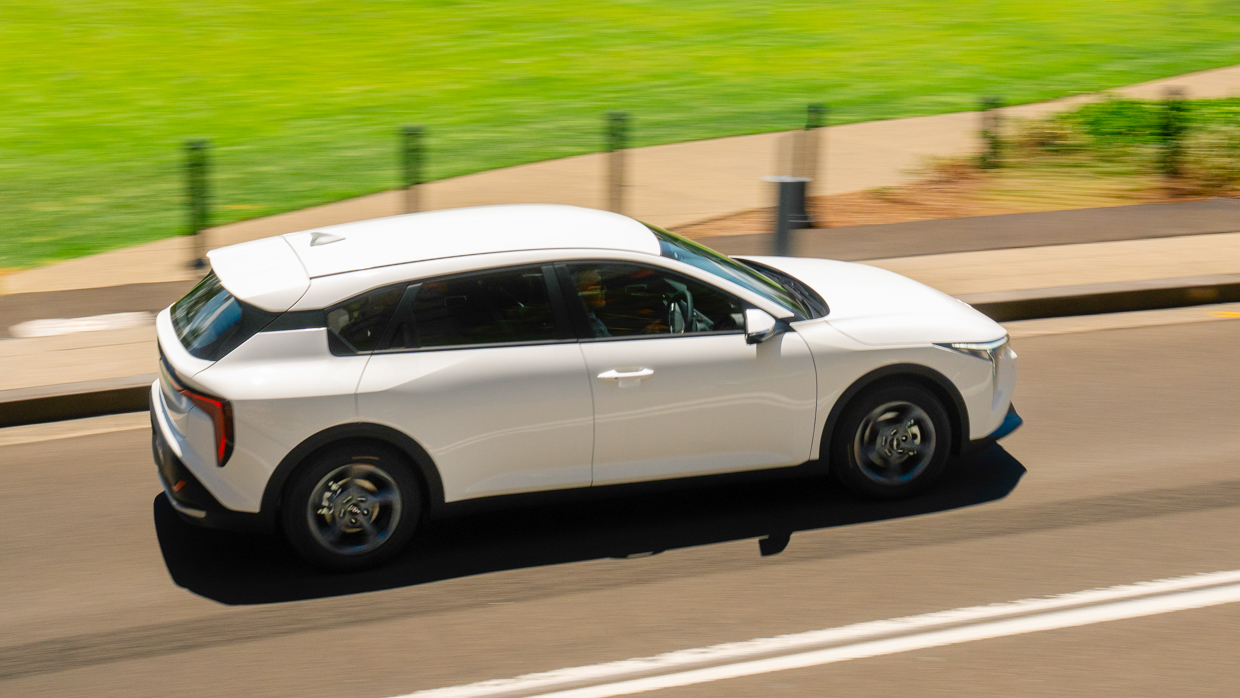
This change pays dividends as speeds rise and roads become bumpier, with the GT-Line demonstrating a more settled rear end when encountering mid-corner bumps. Turn-in pointiness improves and the quickest K4 simply feels more composed when driven with enthusiasm.
Compared to the old 150kW/265Nm Cerato GT model — which Kia marketed as more of a performance car than the ‘warm’ K4 GT-Line — suspension firmness is backed off a little, though there were situations where the old Cerato’s dual-clutch auto was crisper than the new torque converter unit.
While the K4 is still no luxury car — and Kia is content for it to compete with mainstream models like the Corolla and Mazda 3 — this new gen takes a step forward inside not because of premium finishes, but instead thanks to a level of sophistication derived from its fantastic usability.
Like the sedan, the hatch benefits from a fully rethought interior that feels contemporary yet unfussy. All variants share sound ergonomics, with a natural driving position and logical placement of its controls.
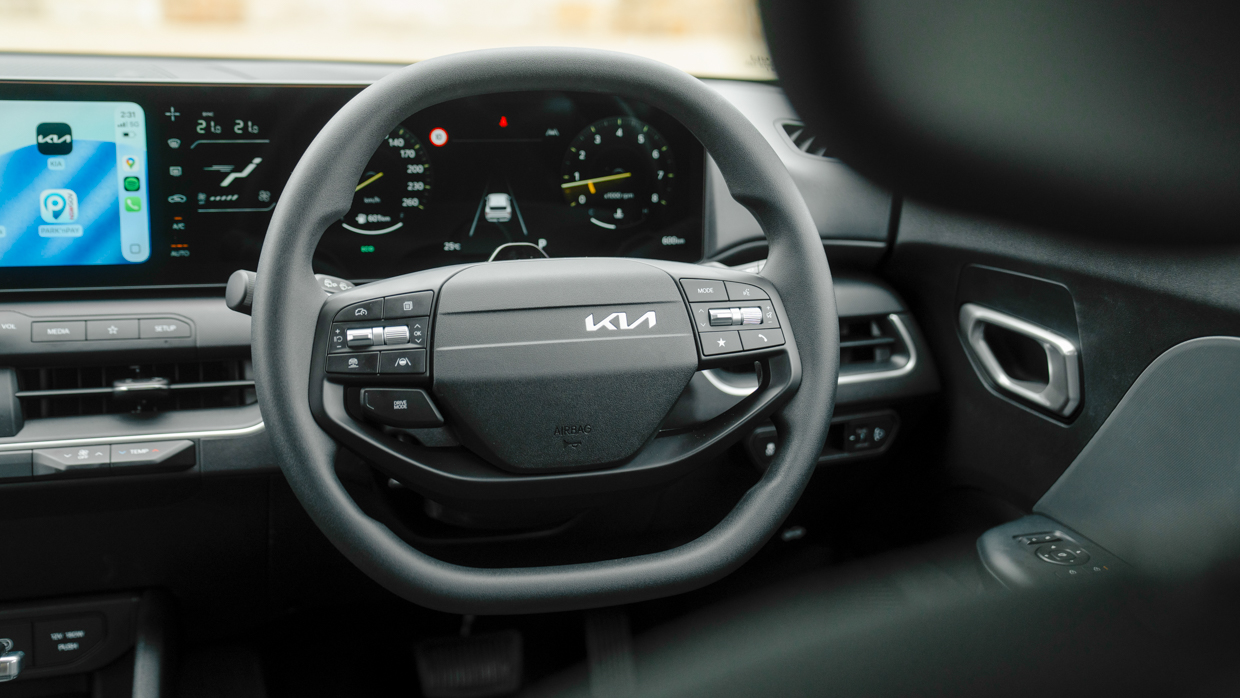
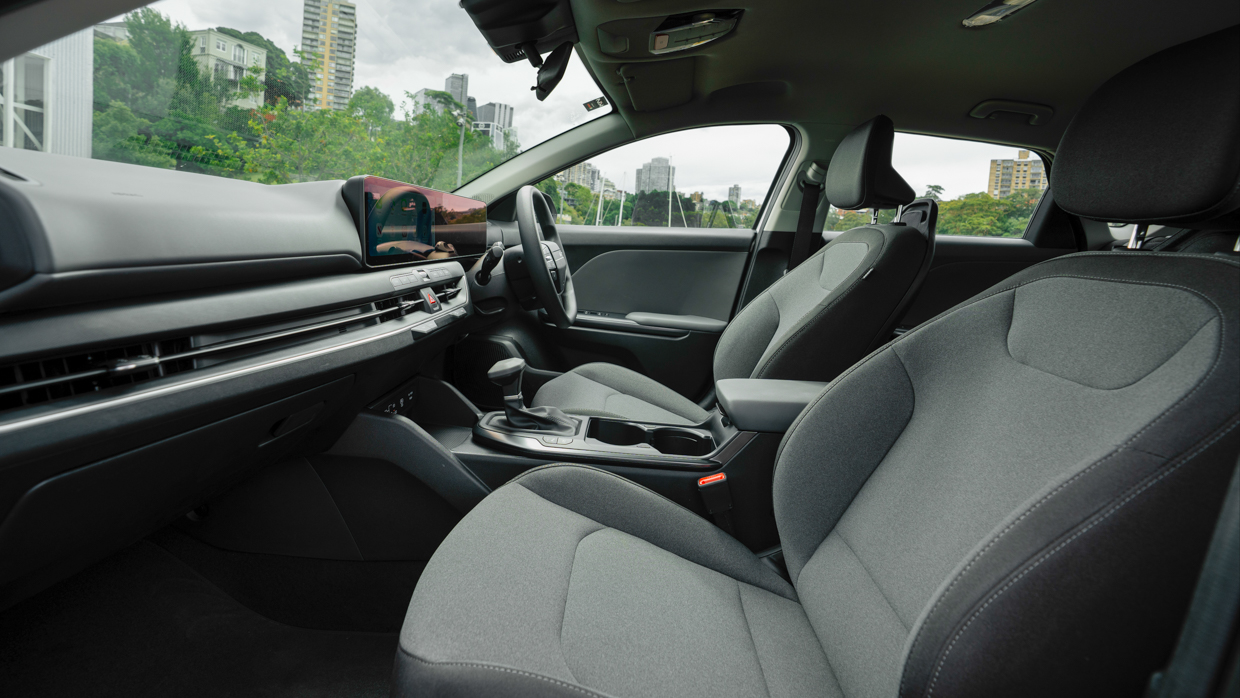
To that point, Kia has deliberately bucked the car industry trend of replacing hard keys with touchscreen-based controls. The K4 makes a point of bringing back clear, large toggles for air-con temperature and fan speed while incorporating physical shortcuts for navigation and audio functions — while there’s also a nicely-finished volume roller.
This is the sort of interior drivers can settle into quickly because everything basically works the way you’d expect. It’s a big plus that the K4 has next to no learning curve inside.
That said, the K4 experience diverges based on which grade you choose. While the basic infotainment package is decent (driven through a high-resolution 12.3-inch touchscreen running Kia’s ccNC software with online connectivity and over-the-air update capability), without the optional safety pack the S has a much more basic instrument cluster.
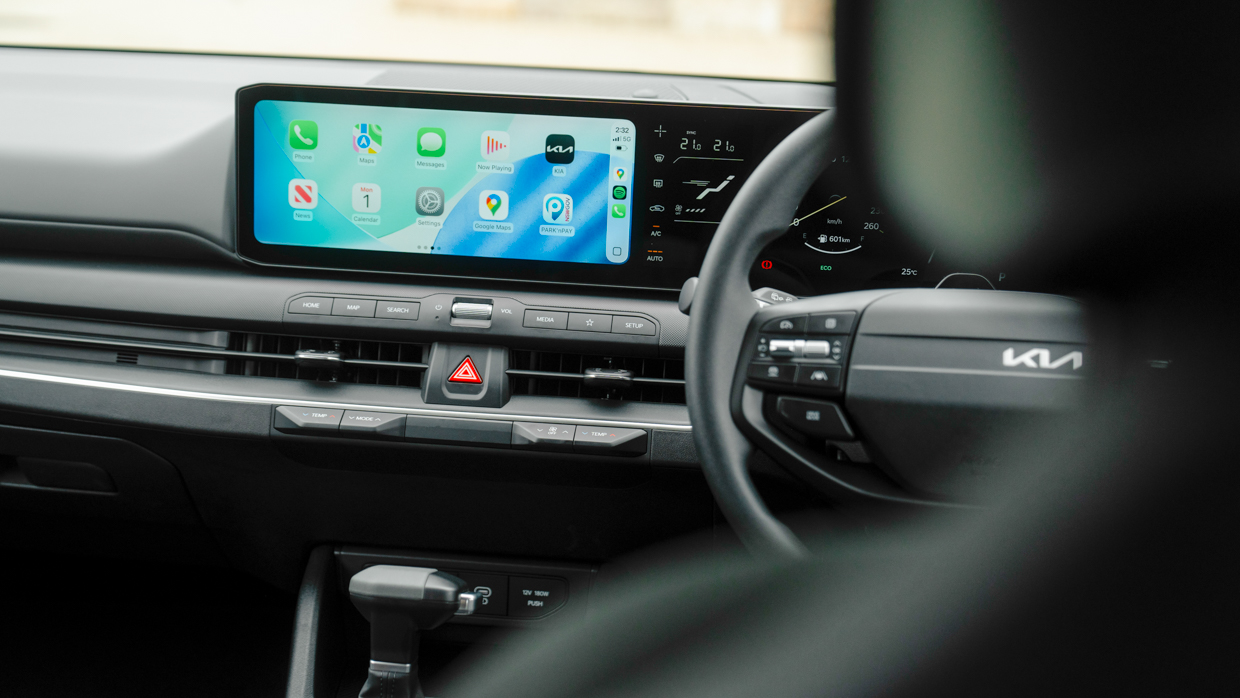
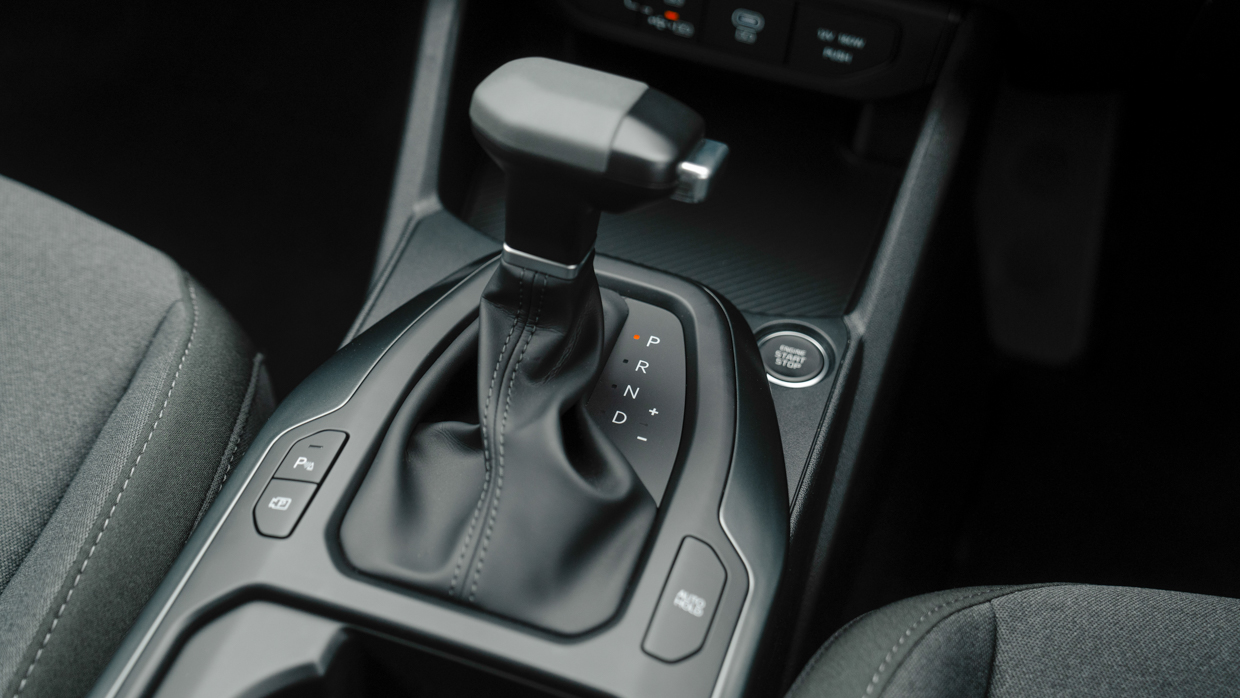
From the ‘S with safety pack’ upward, the K4 picks up essentially Kia’s flagship infotainment, adding a second 12.3-inch display for the driver plus a redundant five-inch climate control adjustment panel. Wireless Apple CarPlay/Android Auto are standard on all grades.
But while ergonomics and infotainment are impressive as standard, the K4 continues to be finished a little more cheaply inside than, say, a Volkswagen Golf or Mazda 3.
Move up from Sport to Sport+ and the K4’s cabin feels a little nicer thanks to heated seats and soft-touch door finishes (which only become standard at this $41,490 driveaway level) but buyers really need to opt for the over-$47K driveaway GT-Line to feel truly special.
The GT-Line alone scores a memory/powered driver’s seat, cooled front pews, a decent-enough Harman-Kardon premium stereo, and luxuries like an opening sunroof, while the flagship grade’s two-tone black/cream steering wheel, alloy pedals and ambient lighting all contribute to a more upmarket feel.
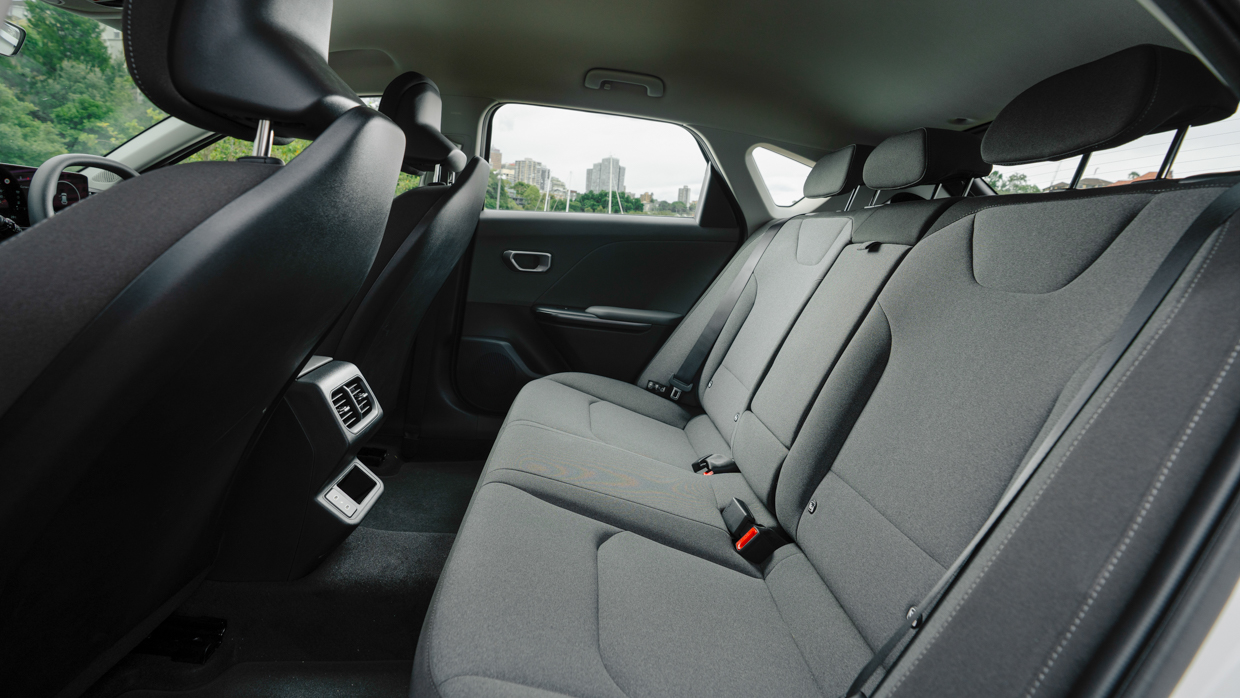
Space is a further strong point. The hatchback sits on a relatively long wheelbase (2720mm), and it offers good headroom and legroom in the second row. Adults will fit comfortably, and they benefit from (range wide) rear air conditioning vents and two USB-C ports as standard, making the K4 solid for family transport or rideshare usage alike.
Practicality is another area where the K4 scores points. With 438 litres (VDA) of boot space, its cargo area is noticeably larger than some key hatchback rivals (particularly the poky Corolla and Mazda 3 five-doors). The K4’s boot rivals small SUVs for outright room.
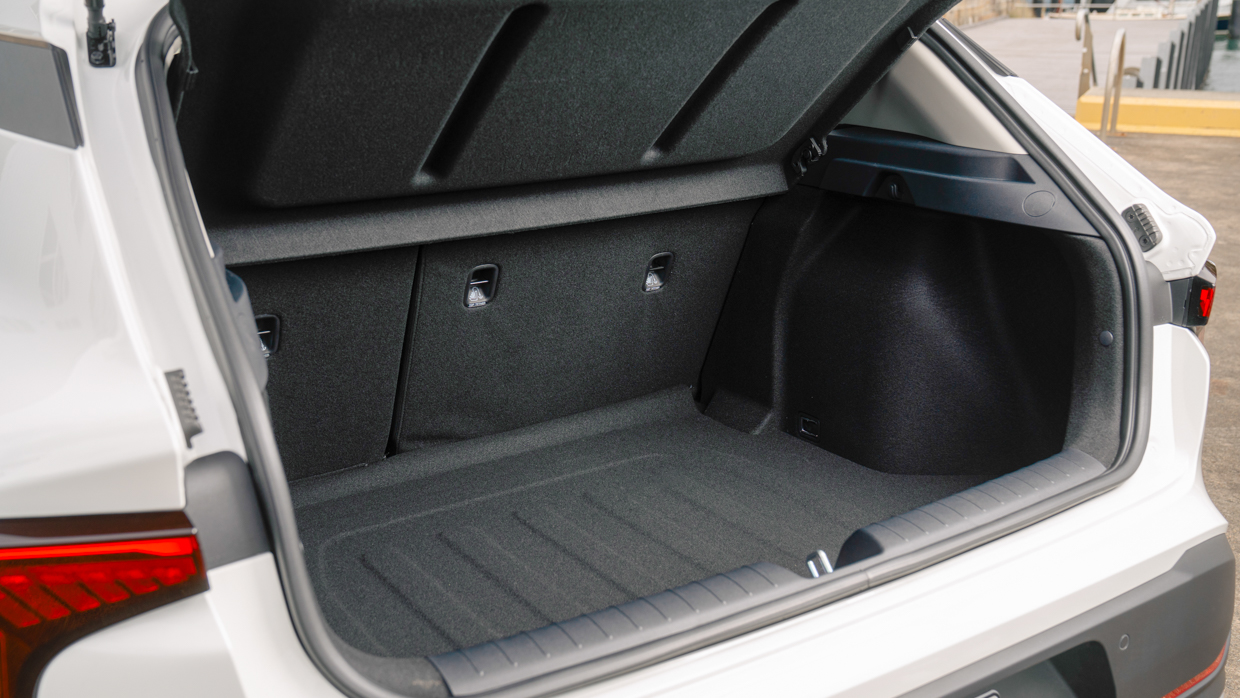
The load area is deep and square, making it easy to stow suitcases or several schoolbags, while the hatch adds a standard-fit parcel shelf to the K4’s space saver spare wheel, which itself is an appreciated inclusion as spare wheels of any kind become rarer throughout the industry.
As mentioned above, the K4 hatchback has a five-star ANCAP crash and safety rating — but the base S grade (if not optioned with the $2000 safety pack) has a four-star rating.
For the five-star rated models, the individual scores recorded by ANCAP against its 2025 testing protocols for the K4 were:
This safety rating will expire in December 2031.
In the real world, most of the K4’s safety systems work well, with accurate adaptive cruise control and lane-keep assist — though we needed to tug the steering wheel while using lane assistance to remind the Kia that we were still holding it.
Annoyingly, an audible speed monitoring warning comes back on every time you restart the K4, but this can be silenced each drive with a long press of the volume roller on the steering wheel. We were surprised that Kia’s excellent blind spot camera system is not available on any K4. Instead, blind spot monitoring is an older-school mirror-based warning light type.
While the 2.0-litre non-turbo engine — fitted to the S, Sport and Sport+ grades — isn’t exactly quick, it is economical in the real world, particularly on the open road. Kia claims 6.1L/100km, but we managed a result in the high-fives in country NSW. In town, expect around 8.0L/100km.
The turbocharged 1.6-litre engine is quite a bit thirstier. It’s rated for 7.4L/100km (21 percent more than the 2.0L), and we managed 8.5L/100km across a combined drive. It will be higher if more of your driving is in town. Both K4 engines accept the cheapest 91-octane petrol or E10.
Five years of scheduled servicing costs $2322 for the K4 2.0L or $2459 for the 1.6-litre turbo, but there’s a key detail that should not be missed. While servicing is required every 12 months for both engines, the turbo can only run 10,000km between visits compared to 15,000km for the 2.0L.
The warranty for all Kias sold in Australia is seven years with unlimited kilometres for private, general fleet and government buyers.
The arrival of the well-rounded K4 hatchback means that Kia is ready to renew its campaign to grow market share in the small car segment. Sales of traditional non-SUVs may be declining — but more than 50,000 Australians still chose a low-riding small car in 2025.
And while the K4 sedan’s substantial length — tailored to North American markets — may make it a suitable medium-car replacement, the more pleasantly proportioned hatchback mean it is an interesting alternative to a small SUV in any case, especially if you can stretch to the pricey GT-Line.
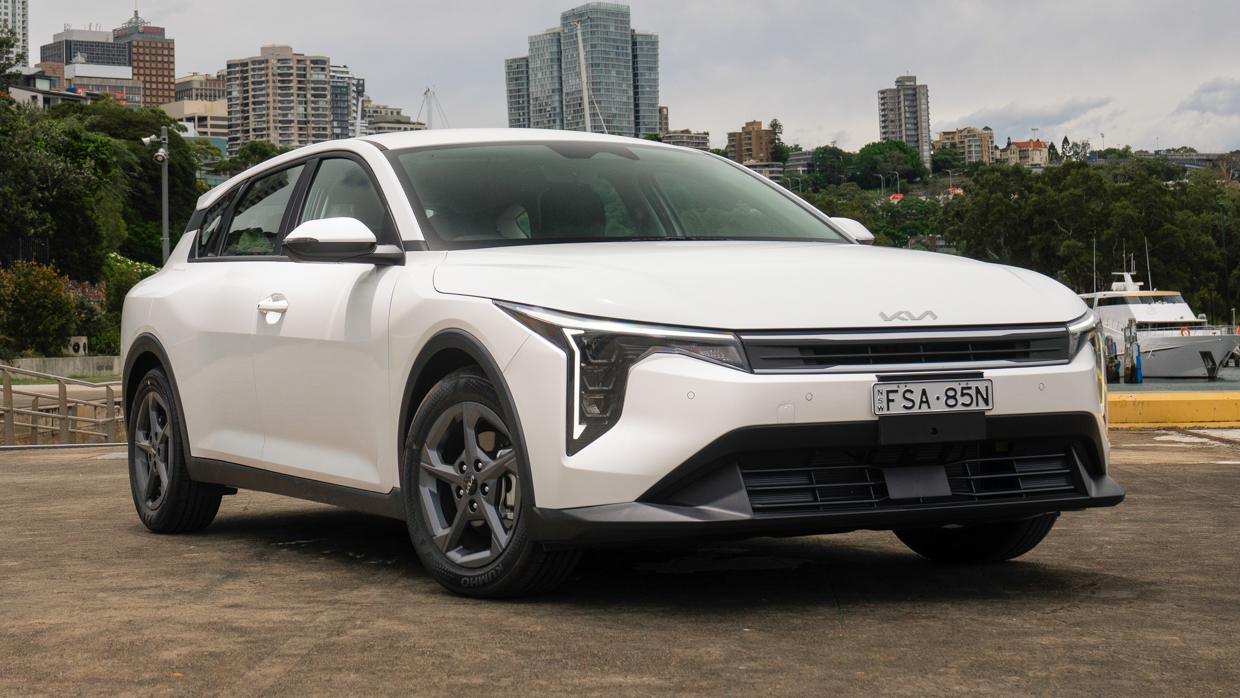
While we like the ride of the 2.0-litre versions on small wheels, the overall polish of the GT-Line gives it a more premium feel that nudges it into contention against a high-grade Mazda 3 or a Volkswagen Golf.
Looking ahead, Kia is understood to be considering the suitability of a hybrid engine for the K4 lineup in Australia, and such an option could become a future sweet spot, forming a middle-ground between the only adequate 2.0L models and the expensive GT-Line while consuming less fuel than either option.
Key specs (as tested)
About Chasing cars
Chasing Cars reviews are 100% independent.
Because we are powered by Budget Direct Insurance, we don’t receive advertising or sales revenue from car manufacturers.
We’re truly independent – giving you Australia’s best car reviews.
The estimate provided does not take into account your personal circumstances but is intended to give a general indication of the cost of insurance, in order to obtain a complete quote, please visit www.budgetdirect.com.au. Estimate includes 15%^ online discount.
^Conditions Apply
Budget Direct Insurance arranged by Auto & General Services Pty Ltd ACN 003 617 909(AGS) AFSL 241 411, for and on behalf of the insurer, Auto & General Insurance Company Limited(ABN 42 111 586 353, AFSL 285 571).Because we don’t know your financial needs, we can’t advise you if this insurance will suit you. You should consider your needs and the Product Disclosure Statement before making a decision to buy insurance. Terms and conditions apply.
Indicative quote based on assumptions including postcode , 40 year old male with no offences, licence suspensions or claims in the last 5 years, a NCD Rating 1 and no younger drivers listed. White car, driven up to 10,000kms a year, unfinanced, with no modifications, factory options and/or non-standard accessories, private use only and garaged at night.
^Online Discounts Terms & Conditions
1. Discounts apply to the premium paid for a new Budget Direct Gold Comprehensive Car Insurance, Third Party Property Only or Third Party Property, Fire & Theft Insurance policy initiated online on or after 29 March 2017. Discounts do not apply to optional Roadside Assistance.
2. Discounts do not apply to any renewal offer of insurance.
3. Discounts only apply to the insurance portion of the premium. Discounts are applied before government charges, taxes, levies and fees, including instalment processing fees (as applicable). The full extent of discounts may therefore be impacted.
4. We reserve the right to change the offer without notice.