Powered by

-
Car Reviews
Latest reviews
-
Car News
Latest news
-
Car Comparisons
Latest comparisons
- Chasing Deals
Latest reviews
Latest news
Latest comparisons
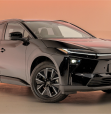
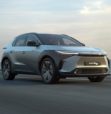
Cheaper pricing and longer range hopes to boost the fortunes of Toyota’s electric ‘SUV’ figurehead
One senses that, in recent times, Toyota Australia’s spectacular success with plugless hybrids has allowed the importer some degree of ambivalence in catering to Aussie BEV buyers. And its electric torchbearing BZ4X has, to date, felt more like a toe in the electric water than anything like a concerted push.
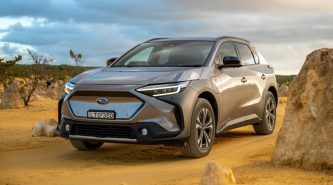
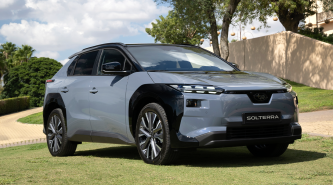
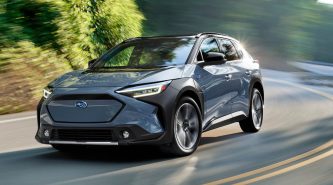
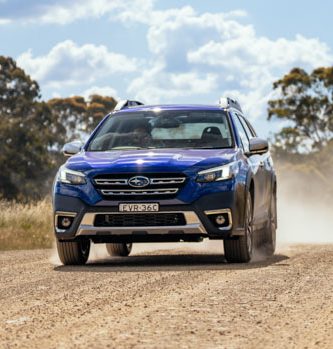
But now, the Big T’s local arm is conspicuously pushing harder for EV market share, including key updates to its medium electric SUV that, in 2025, was outsold by its hybrid SUV, the RAV4, by a factor of 50 (1041 plays 51,947 units). Even if BZ4X managed to outsell its Subaru twin, the Solterra (202 units), by five to one.
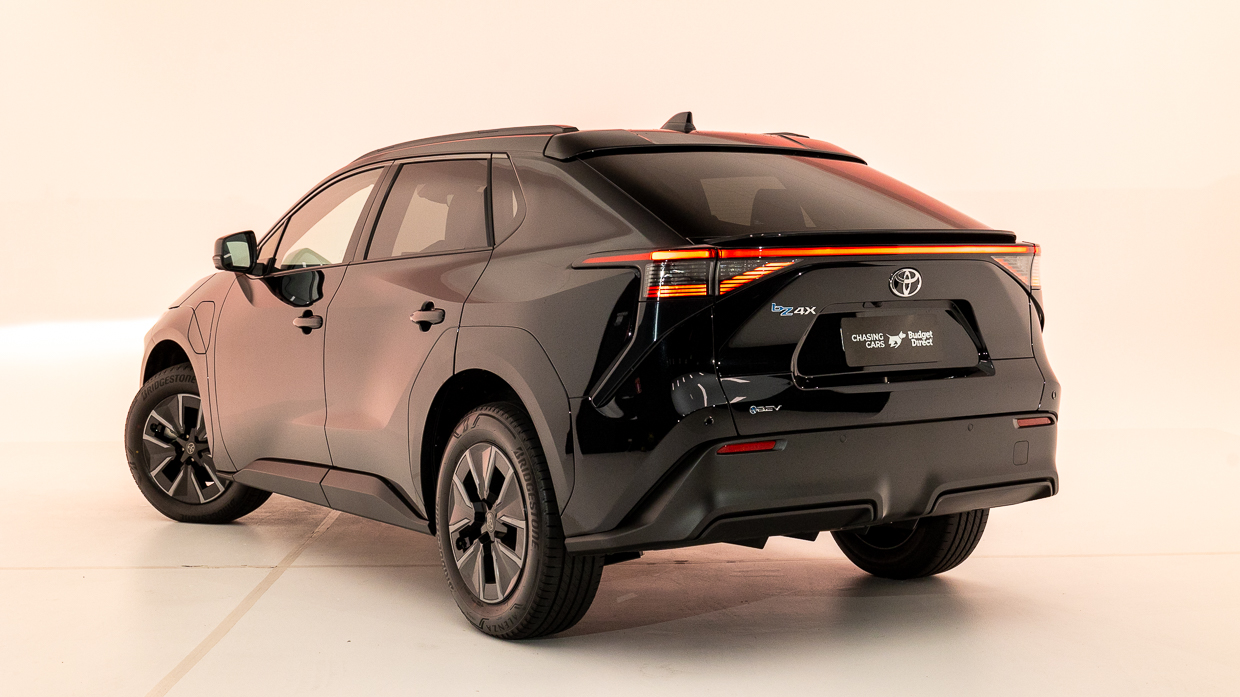
The new MY26 sweetener for the midsize liftback – aside from a more SUV-esque Touring wagon’s arrival later this year – is that entry pricing has been slashed by around $10,000 from MY25, now $55,990 list.
More? A larger 74.7kWh gross (71.0kWh usable) NMC battery is standard issue, replacing the old 64.0kWh unit and lifting the peak range of the entry front-driver version to a claimed 591km WLTP, a substantial boost over the old 436km limit.
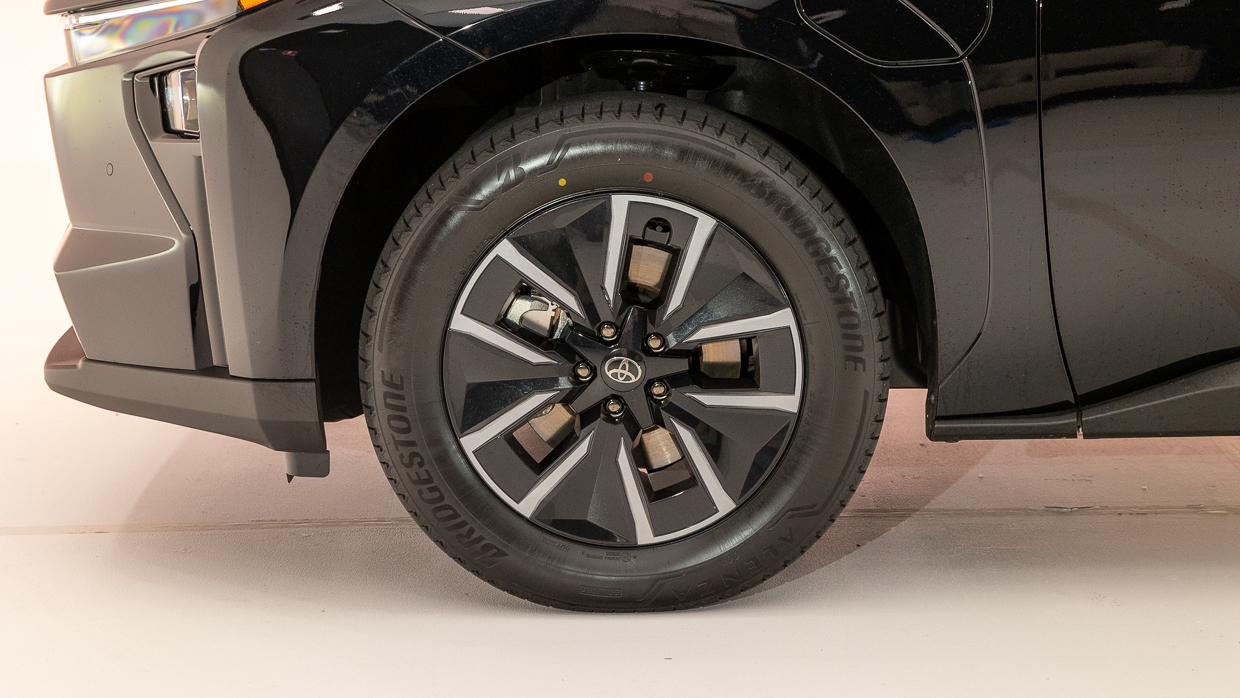
An extra 15kW is plied by the front motor, now 165kW and 270Nm, while the AC charging peak has been boosted to 22kW (from 11kW) for the 400-volt architecture.
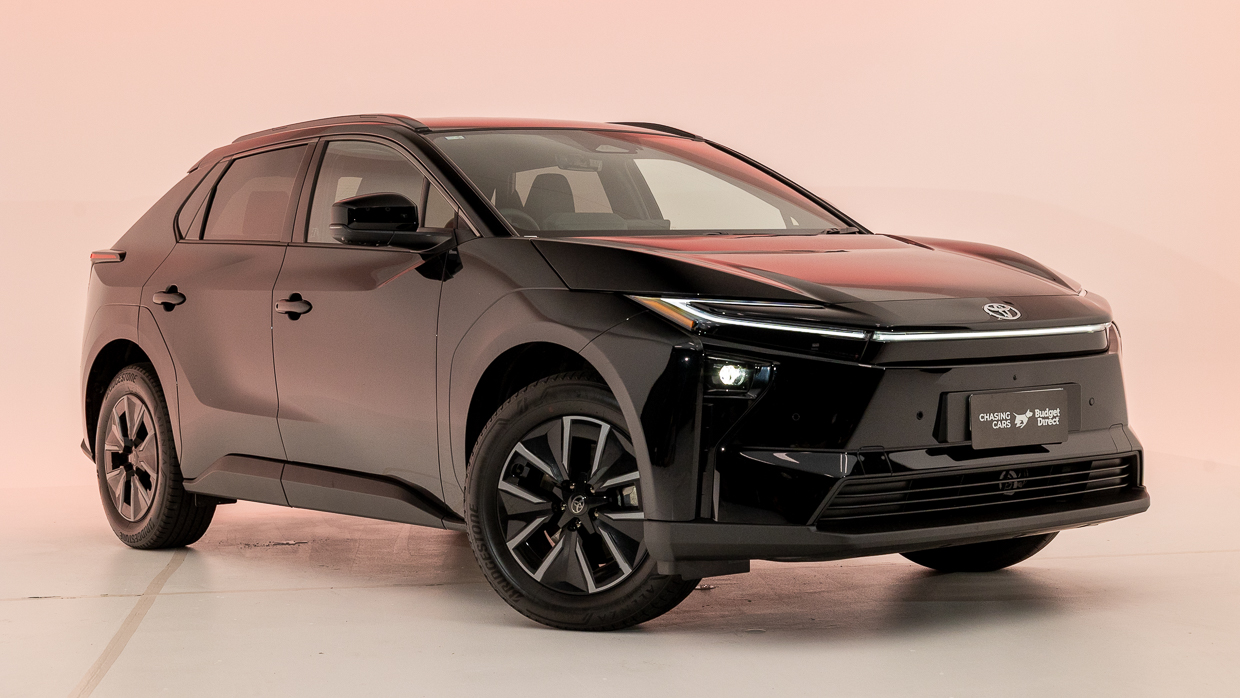
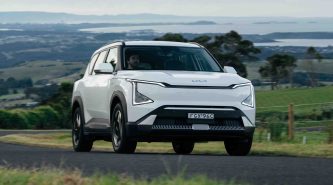
The result? On paper at least, the base BZ4X stacks up better not only against key rivals such as the sales-dominating Tesla Model Y, but also the Kia EV5 and a sea of other China-sourced newcomers such as the Hyundai Elexio, BYD Sealion 7, Zeekr 7X and others in today’s electrified $50K-something sweet spot.
BZ4X’s new pricing haircut slips it neatly into the mix of new-gen RAV4, too, splitting the entry point of the stalwart hybrids and the upcoming PHEV versions of the popular SUV nameplate.
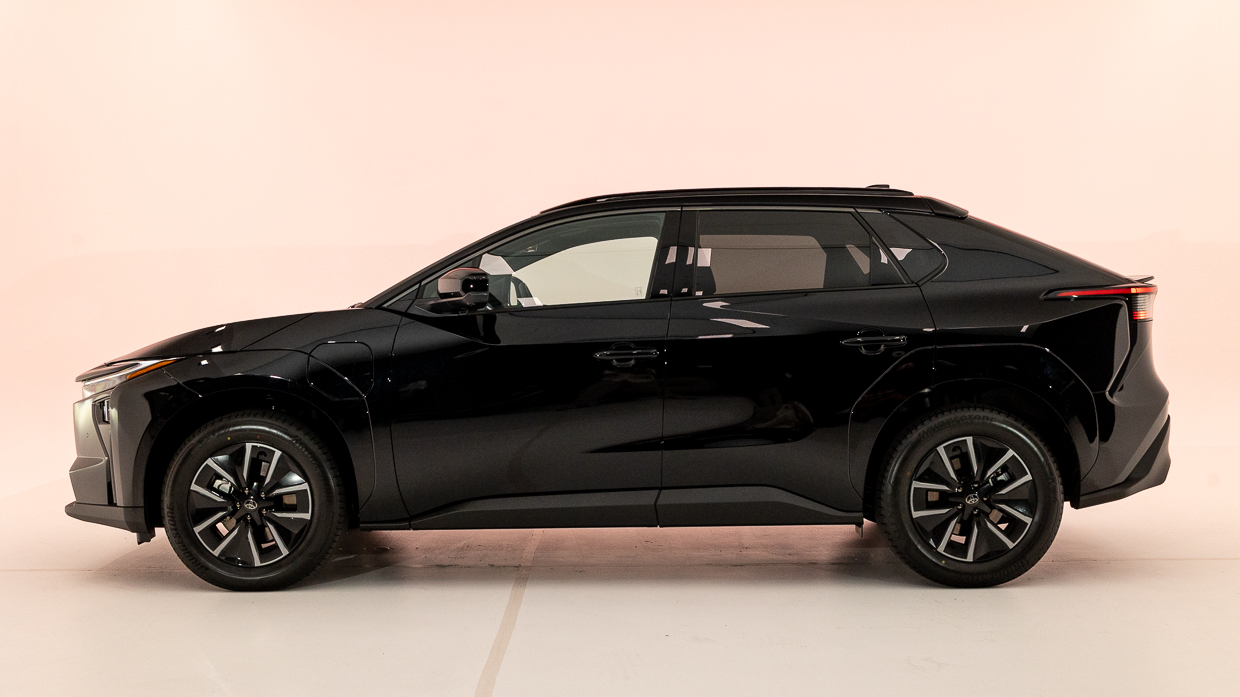
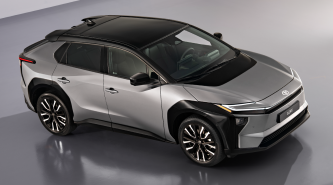
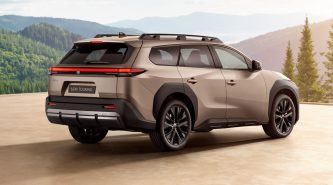
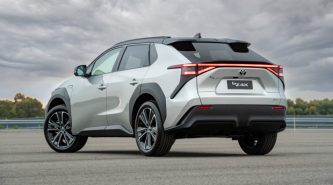
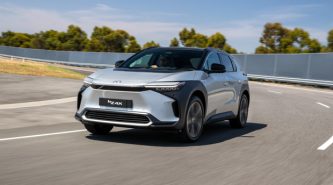
But from design to features to packaging, the BZ4X is a distinctly different pitch to not only its RAV4 stablemate but to pretty much any other SUV-alike electric bar, of course, its Subaru-badged Solterra twin.
The quality of the BZ4X on-road experience hinges largely on the expectation of the user. Because it’s a mixed bag of praise and criticism and results will vary depending on the driver’s taste.
Positives? The BZ4X is utterly serene, and the key byproduct is that it manages to be soothing and relaxing, regardless of whether you’re crawling along in midsummer peakhour or bombing along a midwinter motorway.
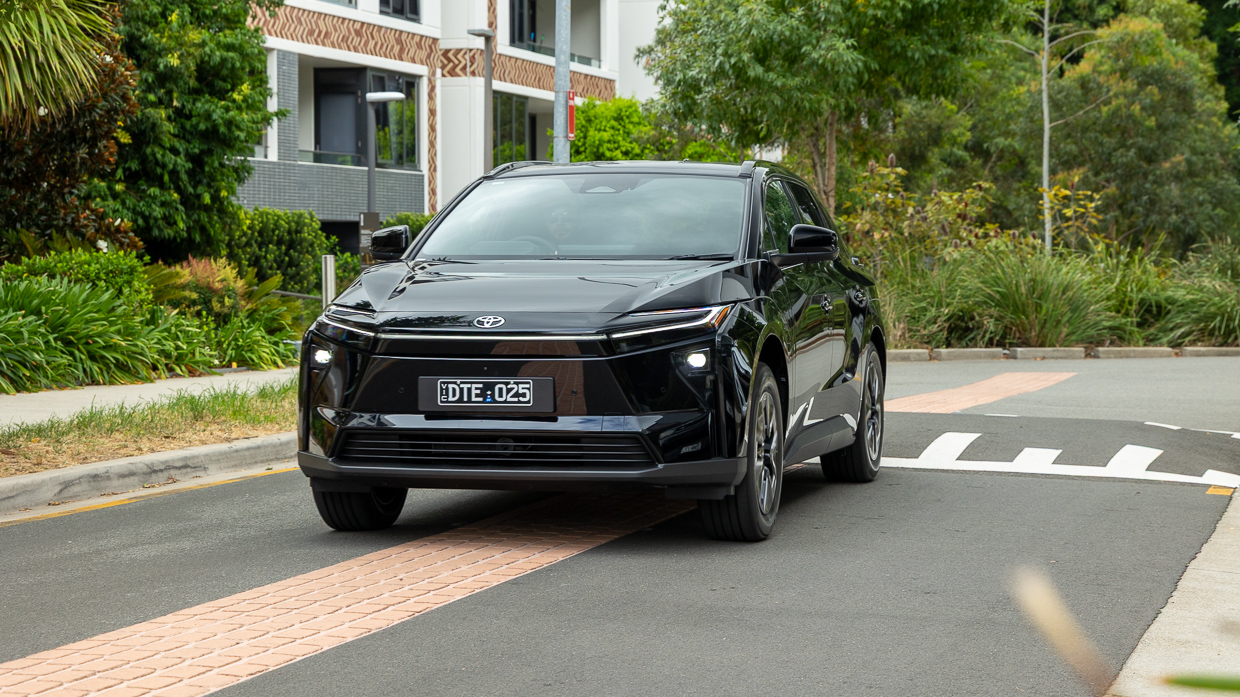
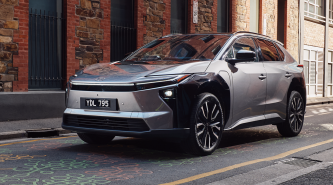
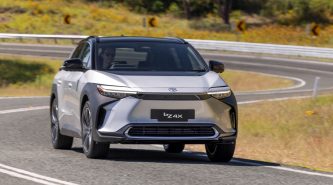
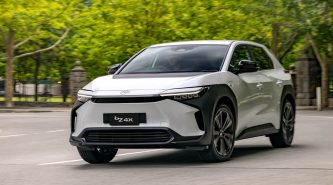
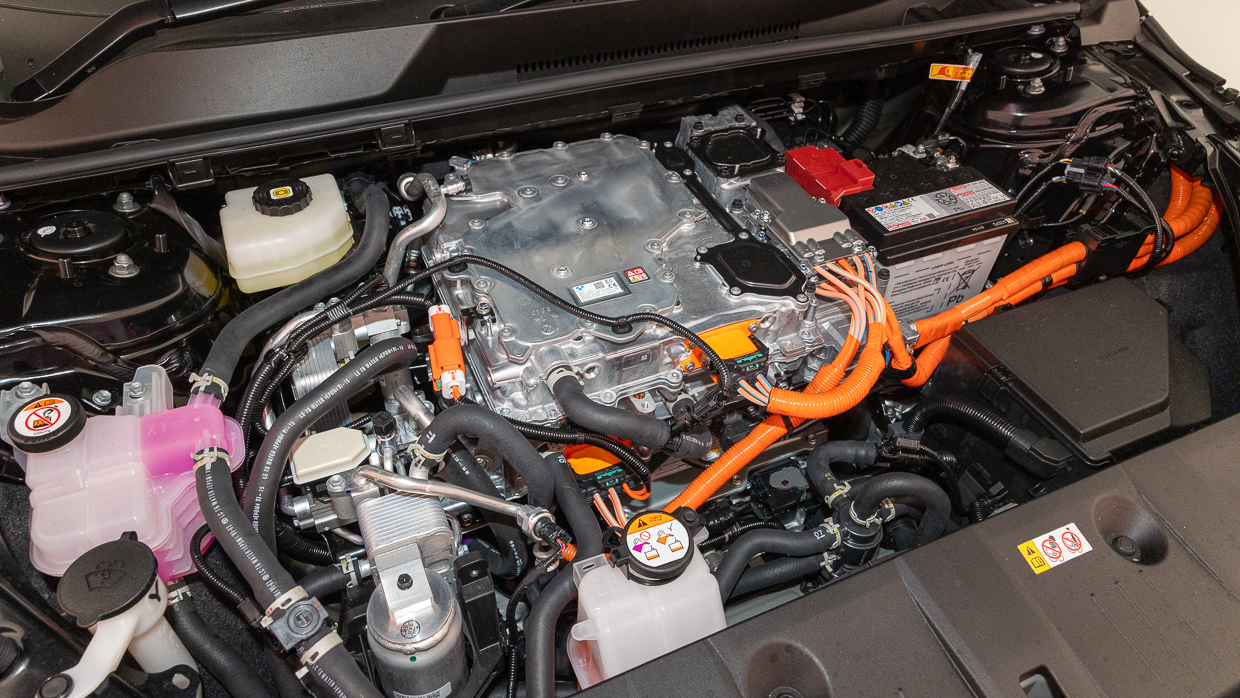
The compliance is excellent, mostly due to the resolve of the damping and partially due to the chubby 60-series tyres on 18-inch alloys. On that, the slabby looking quasi-futuristic form is no oil painting, though at least the no-cost monochromatic black paintwork masks some of the questionable exterior design choices.
Another plus is the power-boosted motor. Despite dragging around two tonnes by the front tyres, the BZ4X is lusty and progressive in its drivability, with an undertow of torque that’s easy to modulate in stop-start drudgery yet ample for overtaking and diving for gaps in moving traffic – no drive mode fiddling required.
It feels more potent and lighter on its tyres than the stats suggest – at least in a straight line – and without any noticeable torque steer. Its progressive and dignified manner underpins the electric BZ4X nicely with a genuine sense of luxury.
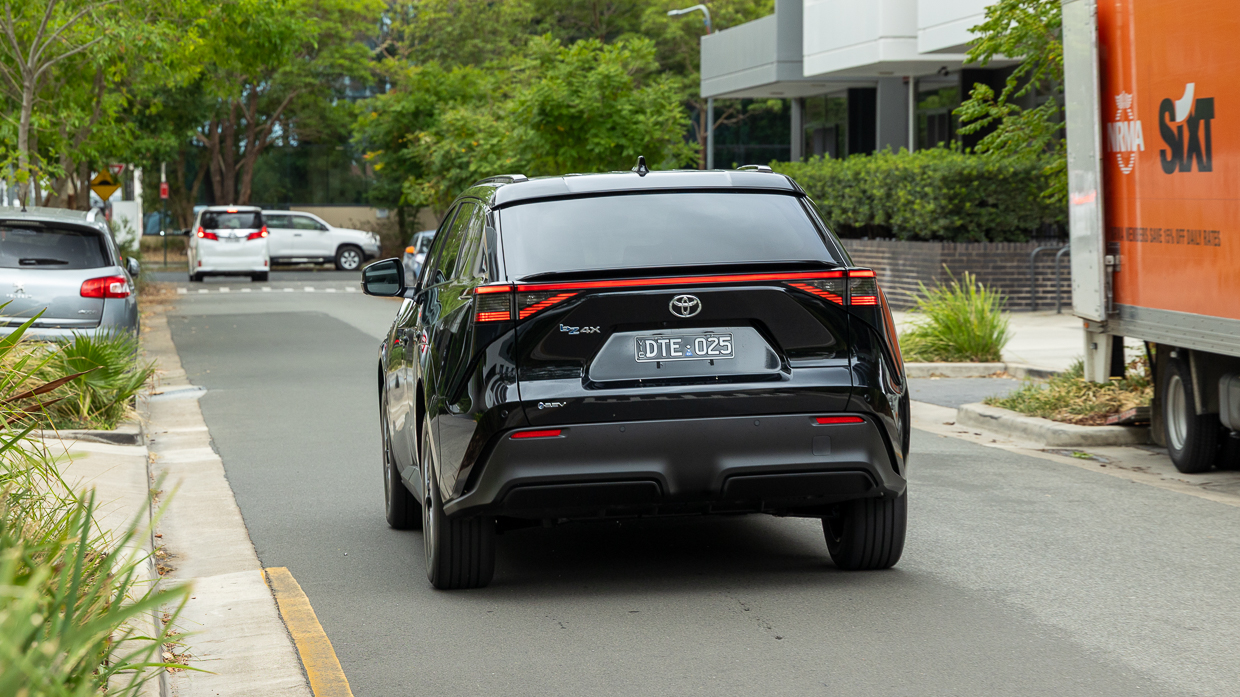
Downsides? Its leisurely nature means the BZ4X is dull to drive, and the nature of its chassis tuning and broad 2850mm wheelbase on economy tyres returns an unwieldy sense if you treat the driving experience with much enthusiasm.
The chassis actually points fine and hangs on okay in corners. There’s just very little about its nature that encourages you to drive the BZ4X for enjoyment. Instead, it numbs you like anaesthetic which, again, is either a pro or con depending on the end user’s taste and preferences.
So leisurely is its nature that the steering feels a little heavy and underassisted even though it’s not that bad. And it’s so quiet that you may find the loud beeping the vehicle emits while reversing – just to remind you that you’ve put the car in reverse – will grate.
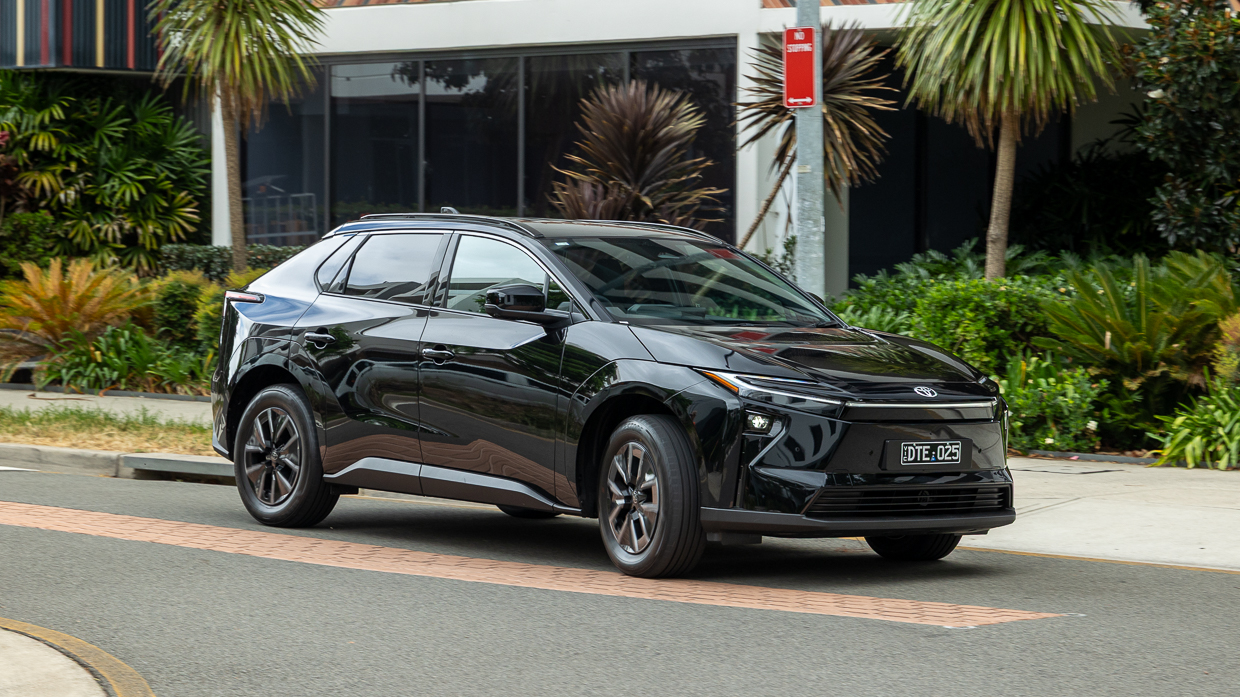
Beeping, which is the blight of most Toyota passenger car ownership, is particularly annoying with BZ4X because it seems louder than most stablemates. It blares when you lock the car remotely – once or nine times, seemingly at random – or as the electric tailgate rises (to remind you that you just, erm, opened the tailgate).
Live in an apartment complex, as many Toyota owners do, and you might find fewer invites for dinner from your increasingly irritated neighbours…
The BZ4X is arguably the most user-challenging interior design in the entire Toyota line-up because it’s most certainly its most unnatural in execution. It’s a collision of design adventure with packaging compromise and traditional Toyota UI tropes that misses the target terribly, despite some notable virtues.
Pinching the ‘instruments over the wheel’ format from Peugeot was questionable at best. Toyota hasn’t improved the execution and the chronic compromises – the wheel blinds the display unless the tiller is located in your lap – remain critical flaws.
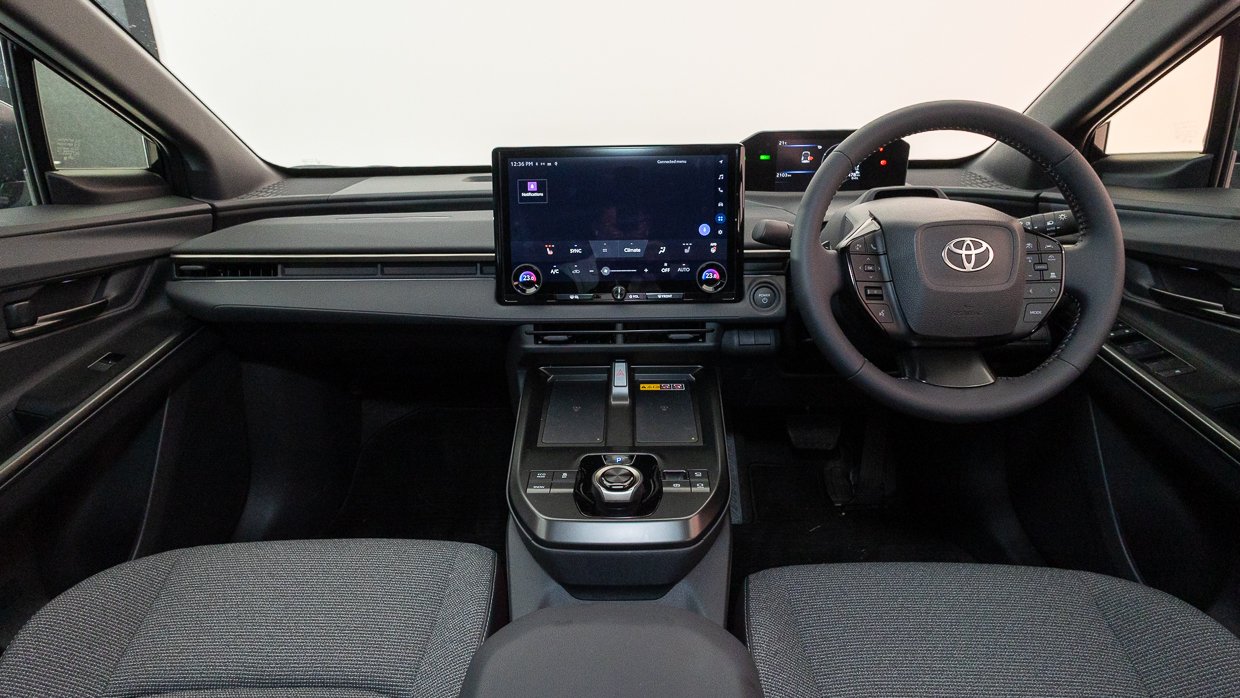
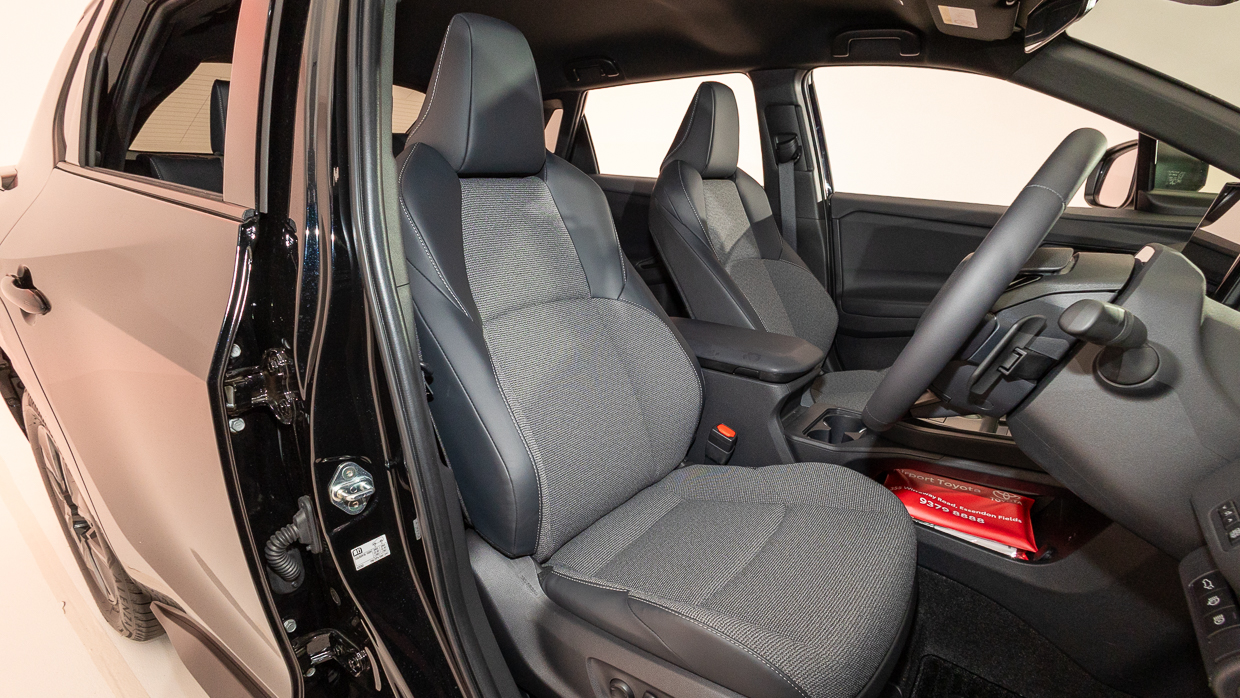
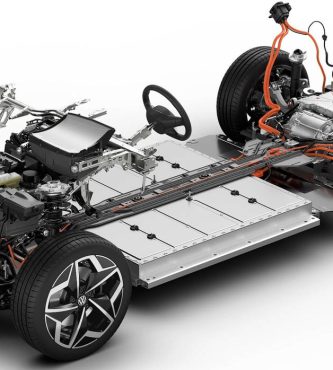
It’s not only the wheel-instrument relationship that throws ergonomics out of whack. The large underfloor battery sets the floor itself conspicuously high, yielding inadequate under-thigh support from the seat bases unless they’re particularly and uncomfortably elevated. It’s tough to tune in a sense of natural posture for taller occupants.
Setting the seat rearward to tune in more legroom is possible, but this leaves many of the controls, such as the touchscreen, almost beyond the driver’s natural reach. It’s an odd place to spend time at the helm, at least without constant fiddling to fine tune adequately natural comfort.
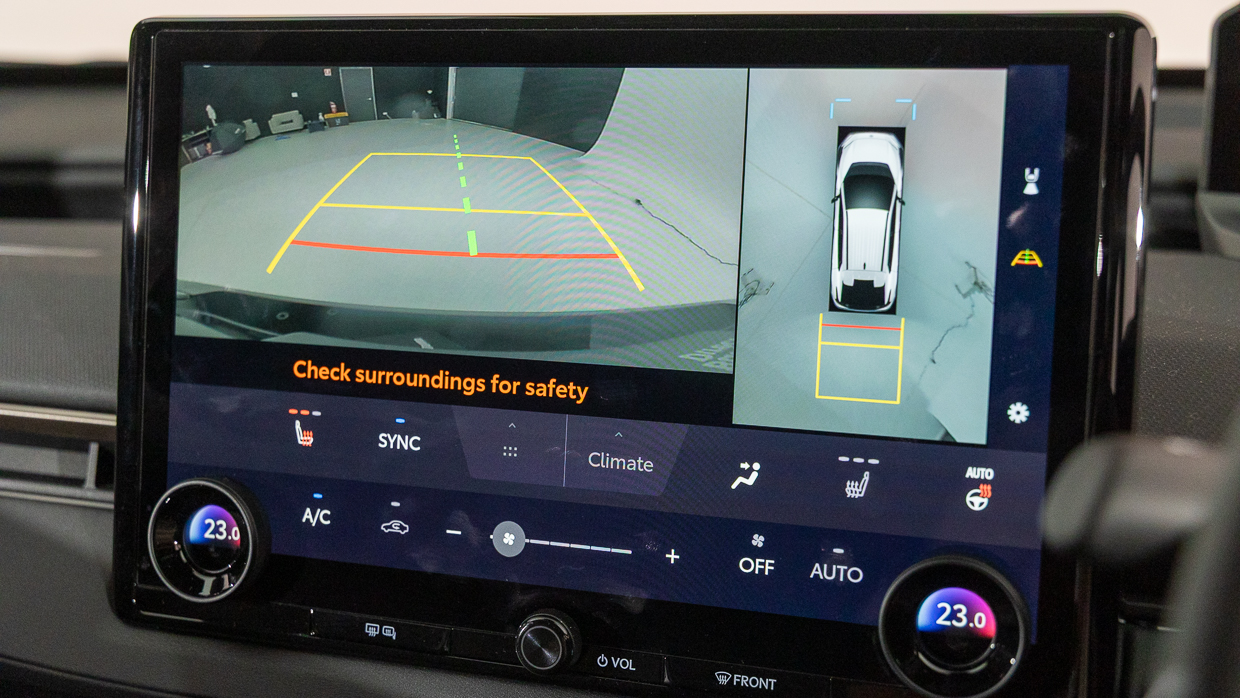
The steering wheel, seemingly inspired by the head of the creature from Aliens, looks weird. The rotary direction controller on the console, with push button park, is weird. In fact, one of the few usability joys in the cabin are the coloured rotary dials for the climate control adjustment that were pinched from Lexus.
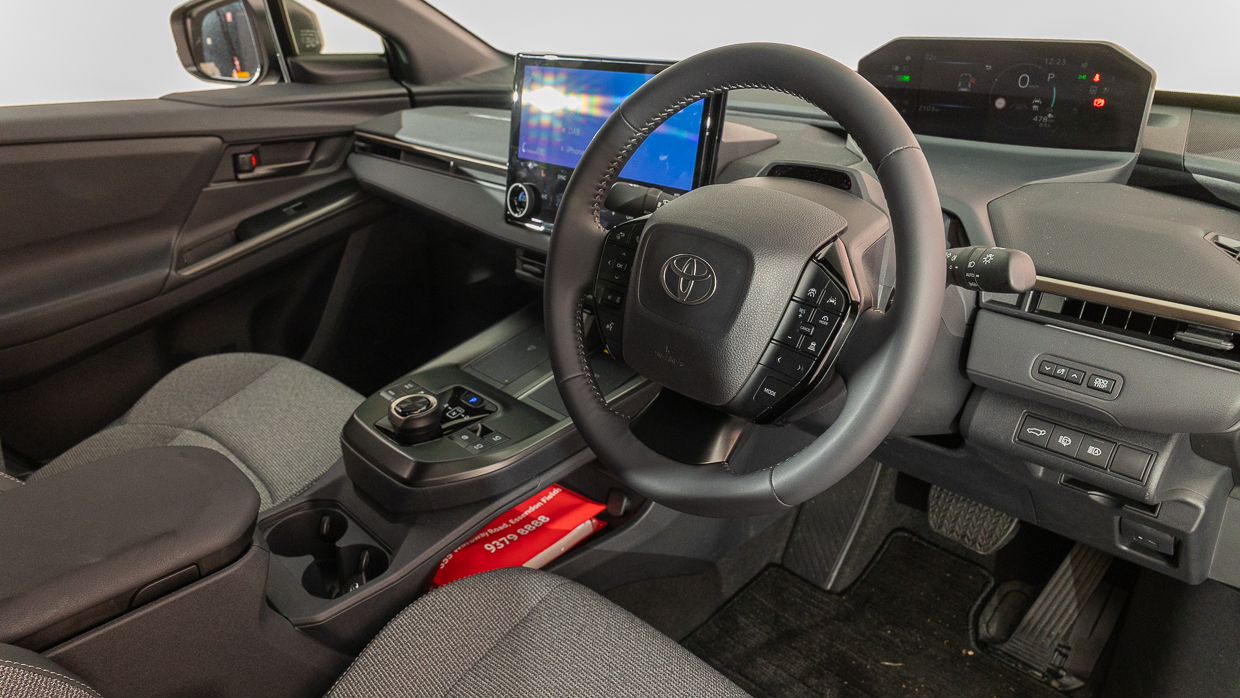
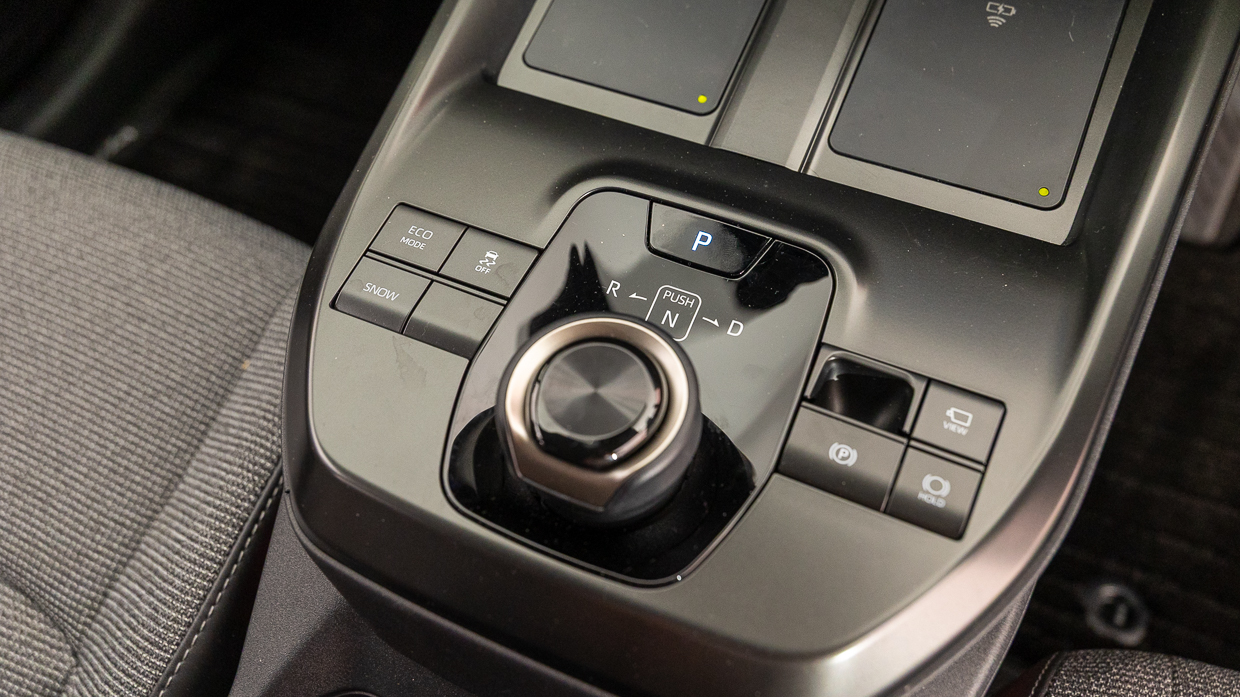
The instruments themselves are clumsy – a distracting econometer set high, the range-to-empty set low and out of view – while the media system, while large at 14 inches, remains the clunky old Toyota format that’s somewhat reliable if vastly out of step in terms of speed and streamlined usability compared with many mainstream rival systems.
The cabin does have a sense of solidity, though the choice of hard plastic and hardy vinyl around the centre console and across the door cards is more HiLux than ‘futuristic EV’. And there’s no glovebox, either.
That much of the switchgear is time-honoured Toyota stuff will, though, be pleasing to some buyers after familiarity.
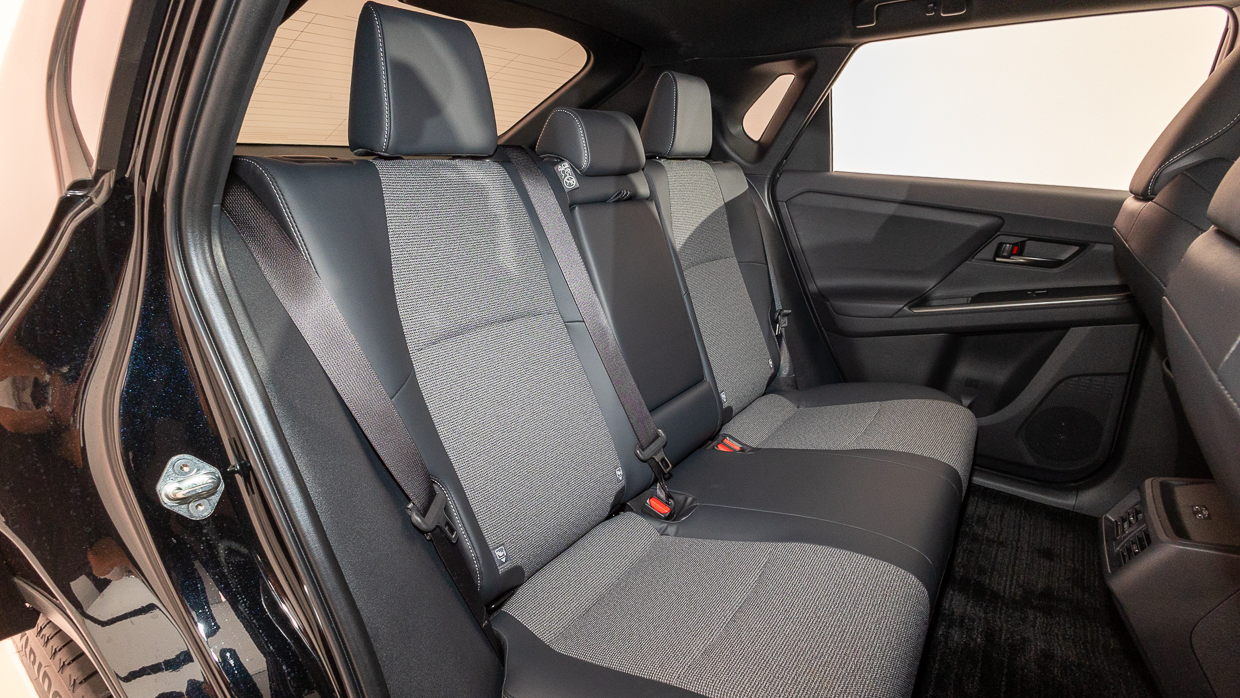
Row two is huge for leg space, with the rear bench trimmed in the same woven cloth that feels quite hard-wearing if vastly comfier and more welcoming in the seat centres than the heat-sink vinyl stuff found in many Chinese alternatives.
Dual USB-C ports, rear air vents and dual cupholders in the arm rest tick essential boxes for accommodation that serves nicely for taller occupants. It only suffers a little for toe room and the same lack of under-thigh support that plagues the occupants up front.
Boot space is a reasonable 452 litres with ample width and depth, though those hoping to load bulky objects more want to hold off on this hatchback format and wait for the proper SUV-like Touring wagon that should offer superior practicality when it’s launched later this year.
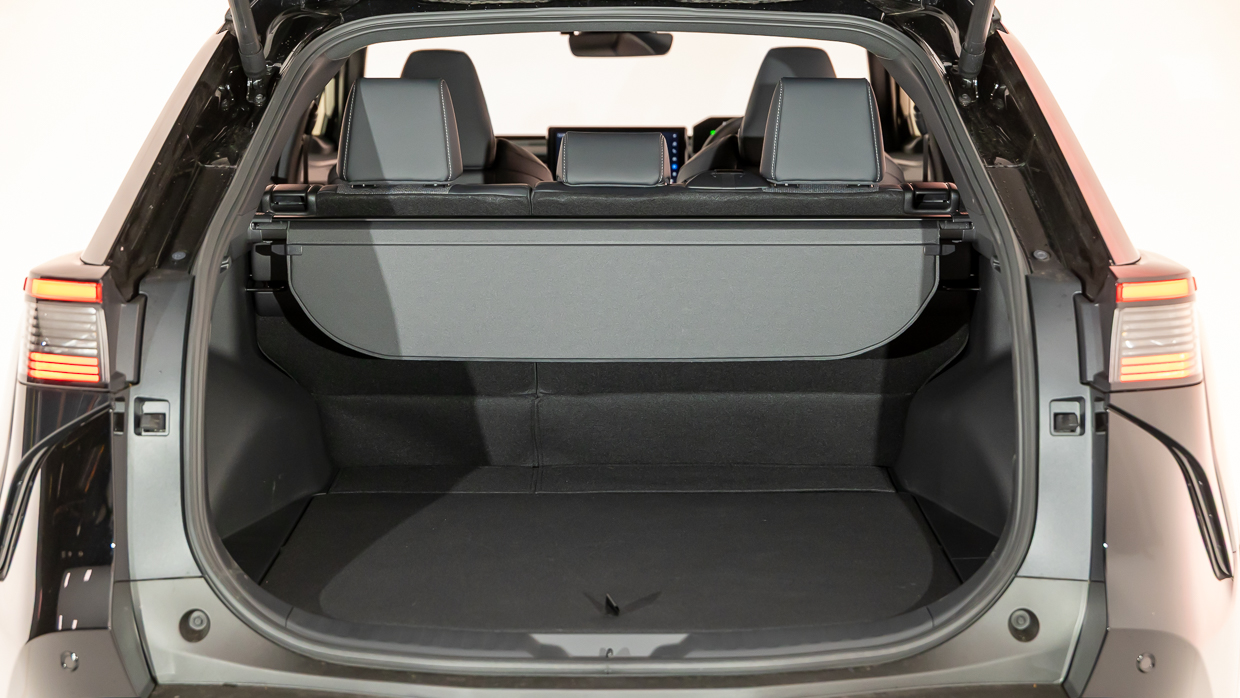
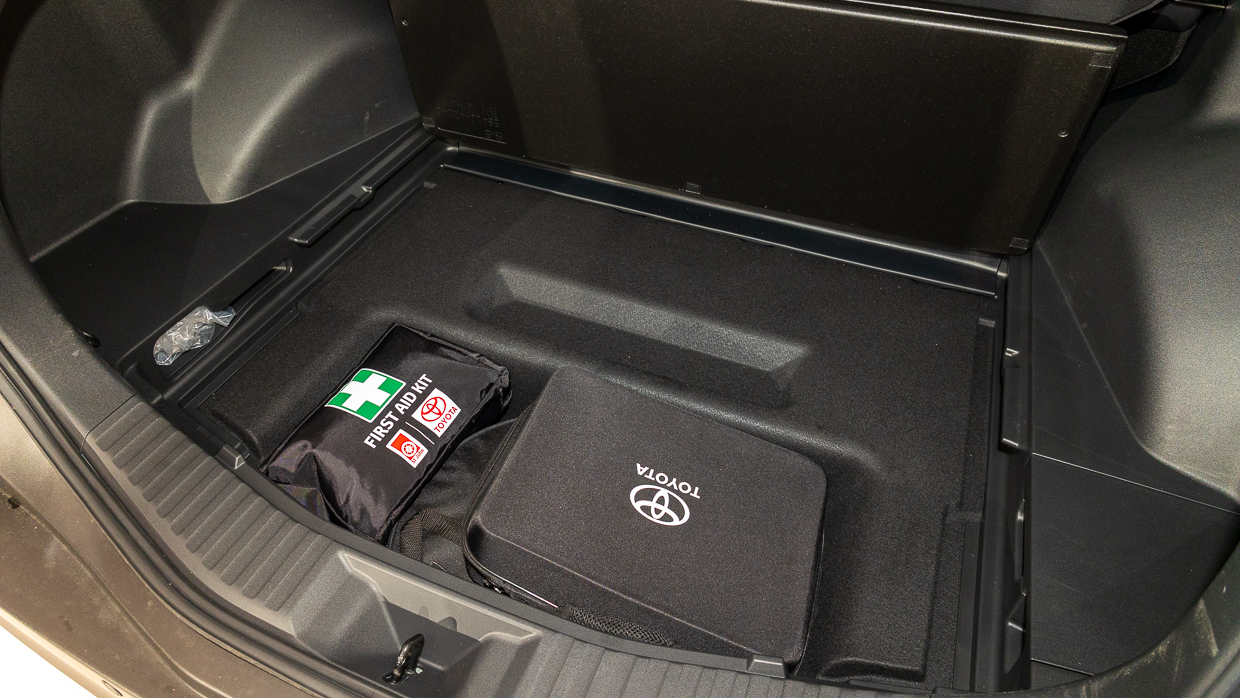
There’s no frunk, and as is customary in EV Land, no spare wheel. A cubby under the floor houses cables and a tyre inflator kit.
Servicing for the BZ4X 2WD is capped at $190 per 12-month/15,000-kilometre visit each interval for the first five years and 75,000kms. Warranty is five years of unlimited-kilometre coverage.
On test, the BZ4X returned average combined consumption close to its 13.8kWh/100km claim, or around 520kms of real-world range. DC charging at its modest 150kW peak is a leisurely 30 minutes (though some Toyota literature lists duration as lengthy as 45min).
Budget Direct told us the median annual premium purchased for the first time between 1/2/25 and 1/2/26 to comprehensively insure a new Toyota BZ4X was $1608. Individual circumstances and policy terms may vary.
Of course, everybody’s situation is different, and the premium will vary according to make and model, and other things insurers take into account, such as your postcode, driving history, who drives the car, where you garage the car and more.
Please quote for yourself. Subject to meeting underwriting criteria. Insurance issued by Auto & General Insurance Company Limited. See PDS & TMD at budgetdirect.com.au.
Toyota Australia’s stronger push with the fully electric BZ4X is both good for brand optics and a handy credit-scoring strategy in the face of increasingly stringent NVES regulations (though, with such a strong hybrid portfolio, it’s vastly better placed in emissions scoreboarding than so many of its rivals).
On singular merit, the BZ4X numbers game stacks up much better now in MY26 guise than last year’s pricier, slimmer-range formula. It’s competitive on paper.
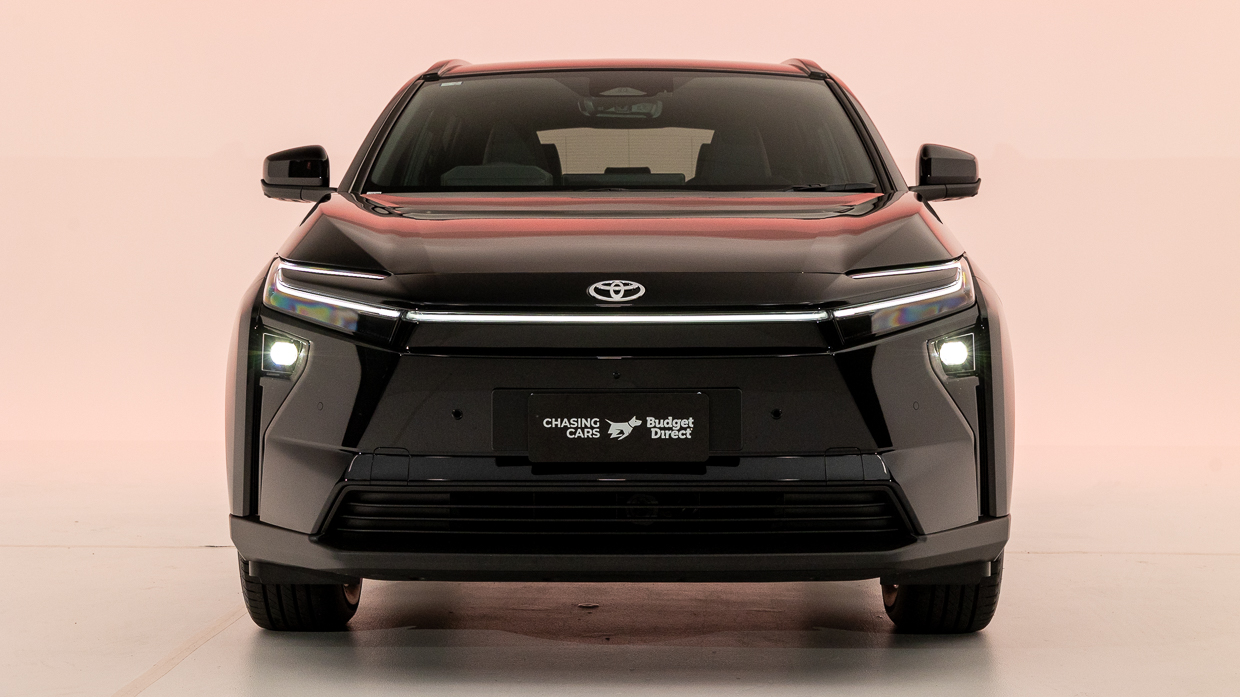
Its design is polarising and its driving character lacks lustre, but neither will bother buyers of certain taste. If there’s one chronic issue with Toyota’s electric, it’s that the daft wheel/instrument/ergonomics home goal nigh on ruins an otherwise fine and acceptable experience.
Arguably the handbrake to BZ4X’s volume-selling appeal is that it’s not in lockstep with what really makes Toyotas so popular and resonant with so many Aussies: convention, tradition, normality and safety in numbers. Is it simply too weird for mainstream success?
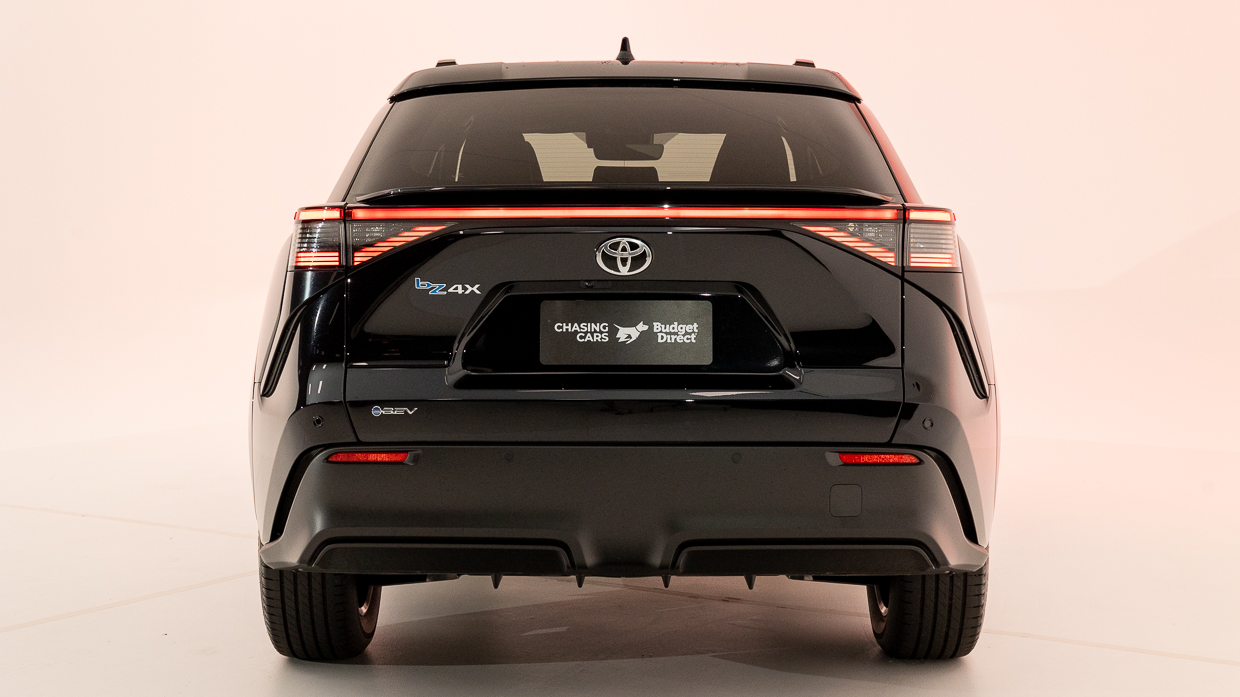
If Toyota’s other midsize SUV, the RAV4, was offered in BEV form targeting just 10 percent of total model sales – not an incredulous proposition – it’d outsell BZ4X five to one…
Key specs (as tested)
About Chasing cars
Chasing Cars reviews are 100% independent.
Because we are powered by Budget Direct Insurance, we don’t receive advertising or sales revenue from car manufacturers.
We’re truly independent – giving you Australia’s best car reviews.
The estimate provided does not take into account your personal circumstances but is intended to give a general indication of the cost of insurance, in order to obtain a complete quote, please visit www.budgetdirect.com.au. Estimate includes 15%^ online discount.
^Conditions Apply
Budget Direct Insurance arranged by Auto & General Services Pty Ltd ACN 003 617 909(AGS) AFSL 241 411, for and on behalf of the insurer, Auto & General Insurance Company Limited(ABN 42 111 586 353, AFSL 285 571).Because we don’t know your financial needs, we can’t advise you if this insurance will suit you. You should consider your needs and the Product Disclosure Statement before making a decision to buy insurance. Terms and conditions apply.
Indicative quote based on assumptions including postcode , 40 year old male with no offences, licence suspensions or claims in the last 5 years, a NCD Rating 1 and no younger drivers listed. White car, driven up to 10,000kms a year, unfinanced, with no modifications, factory options and/or non-standard accessories, private use only and garaged at night.
^Online Discounts Terms & Conditions
1. Discounts apply to the premium paid for a new Budget Direct Gold Comprehensive Car Insurance, Third Party Property Only or Third Party Property, Fire & Theft Insurance policy initiated online on or after 29 March 2017. Discounts do not apply to optional Roadside Assistance.
2. Discounts do not apply to any renewal offer of insurance.
3. Discounts only apply to the insurance portion of the premium. Discounts are applied before government charges, taxes, levies and fees, including instalment processing fees (as applicable). The full extent of discounts may therefore be impacted.
4. We reserve the right to change the offer without notice.