Powered by

-
Car Reviews
Latest reviews
-
Car News
Latest news
-
Car Comparisons
Latest comparisons
- Chasing Deals
Latest reviews
Latest news
Latest comparisons

Our test of the full Hilux range reveals exactly what you might expect from the new-gen model, but that might be the right move for buyers
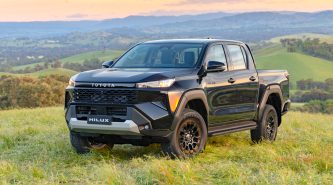
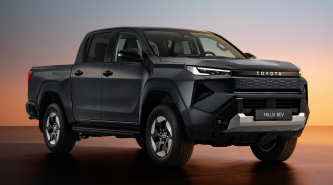
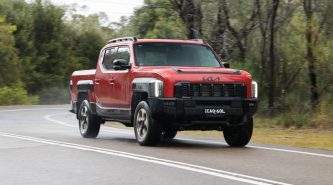
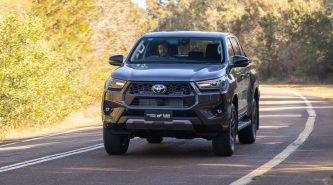
By now you’ve seen and heard about the new-generation Toyota Hilux, and probably come to a conclusion based on the fact that it’s an updated version of the outgoing ute, and not an all-new, ground-up vehicle like the Kia Tasman or BYD Shark 6.
You might think the ninth-generation (or 8.5-gen for the skeptics) isn’t a huge leap, and in a way you’re right. It maintains an identical wheelbase, power outputs, part-time 4×4 system and cabin cell.
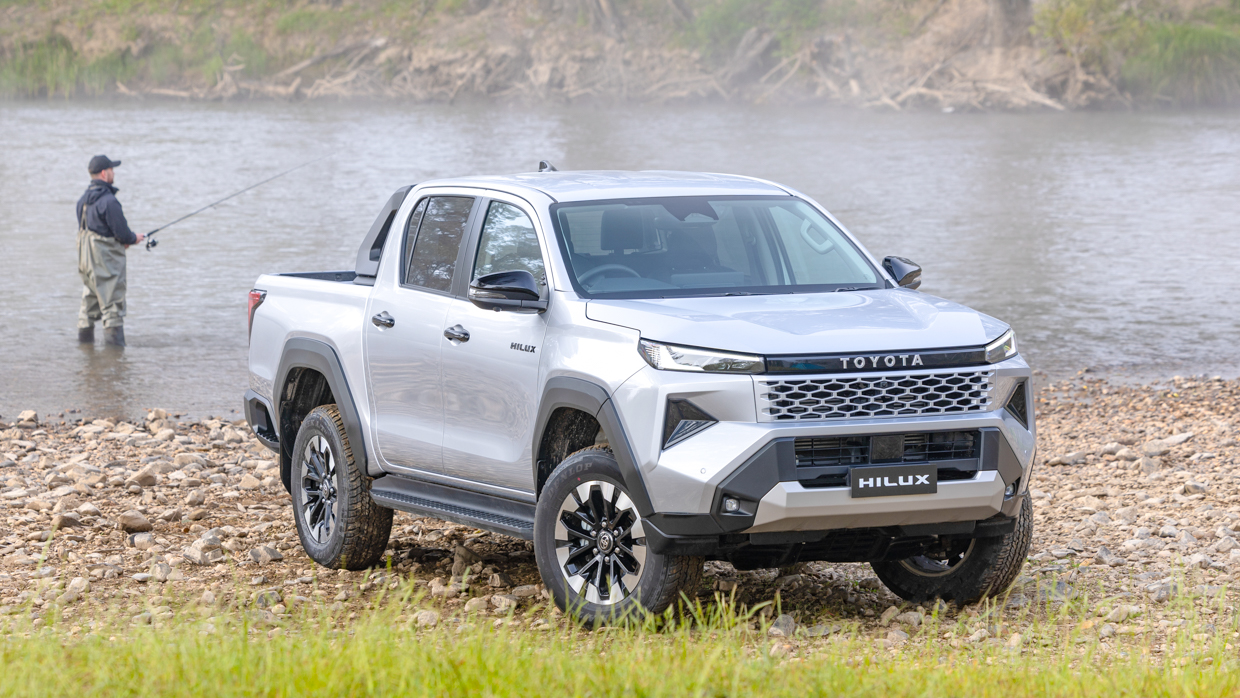
Major changes include a new electric power-assisted steering rack, cabin layout, seating and exterior styling — but not for the doors or roof. Less immediately noticeable changes include revised suspension, added sound deadening, and extra spot welds
Oh, and the prices are up. The entry-point Workmate is now $6260 dearer than before, while popular SR5 grades are between $2730 and $3320 more expensive than the outgoing lineup.
The GR Sport has been dropped from the range, as has the wider track of the last-gen model. It’s now back to a familiar lineup running Workmate , SR, SR5, Rogue and Rugged-X, with pick-up or cab chassis along with single, Extra and double cab body styles, depending on grade. Check out the full pricing rundown here.
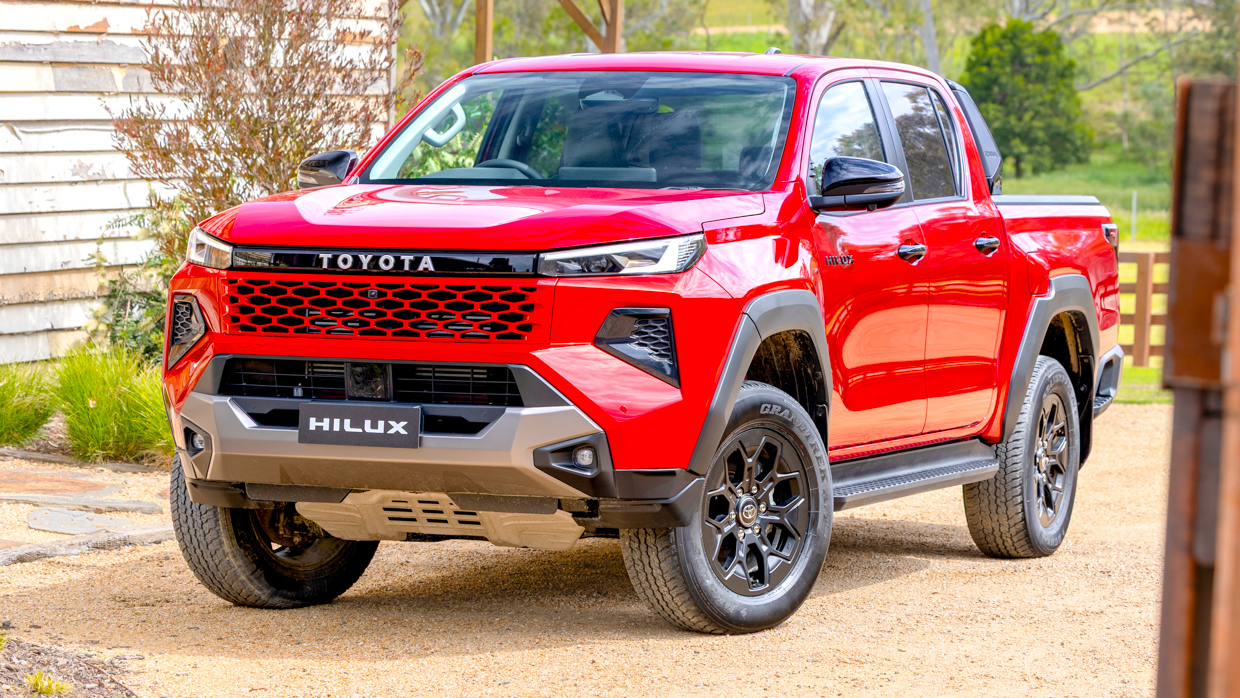
So it’s more expensive and not an all-new ute based on the Prado’s more modern GA-F platform. But Toyota Australia, which claims to know its customers very well, thinks carrying over the tried and true IMV platform is exactly what the ninth-gen Hilux needs.
After all, the Hilux is first and foremost a work vehicle that needs to survive the tough conditions it’ll be exposed to in Outback Australia and the other 180-plus markets it’s sold in — not a comfy SUV for the school drop-off.
Chasing Cars attended the Hilux national media launch in the ACT and NSW South Coast, where we drove the new-generation Hilux double cab in various trim levels.
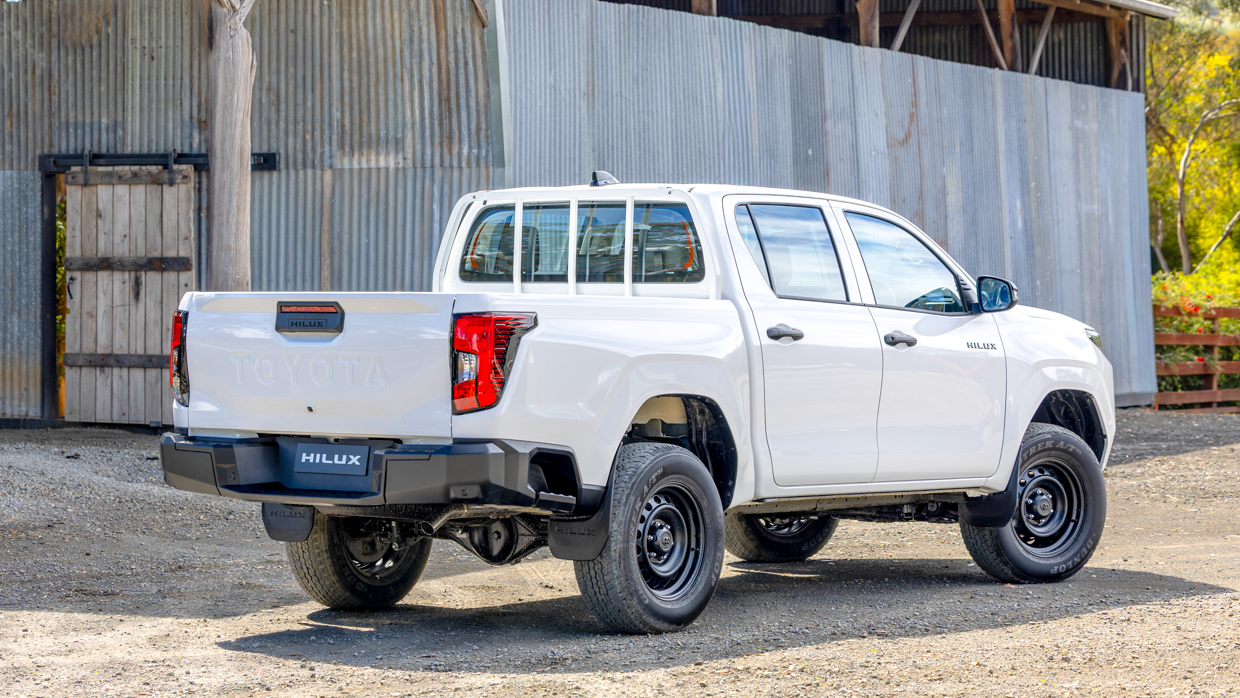
Available to sample were Workmate, SR, SR5 and Rogue variants on tarmac roads and technical bush tracks for a first, definitive taste of the new ute. A review on the Rugged-X will come in due course.
At once the most interesting and least surprising element of the ninth-generation Hilux is the way it drives. It’s enhanced in all metrics, but in one significantly, and that is steering feel.
The new electronic power-assisted steering (EPAS) rack gave Toyota the ability to make the steering lighter around town, while also being weightier and more direct on country roads without being nervous. It’s a game-changer for a vehicle that once had a cumbersome, gluggy rack.
Brakes are upgraded to ventilated discs at all four corners in SR5 trims and above, which contributes to a more consistent feel at the pedal and (we expect) better heat dissipation.
Engineers have applied more insulation to the doors and floorpan, deployed liquid-filled (rather than rubber) engine mounts and added an extra 36 spot weld points to the Hilux’s cabin cell to better balance body/frame rigidity and cut undesirable racket.
Good news is, these upgrades have worked. The Hilux’s once-vocal 1GD engine has been tamed, at least low down, with less vibrations in the cabin. Ask a lot of the 2.8-litre turbo-diesel four-cylinder and you’ll still hear that familiar, deep bellowing soundtrack.
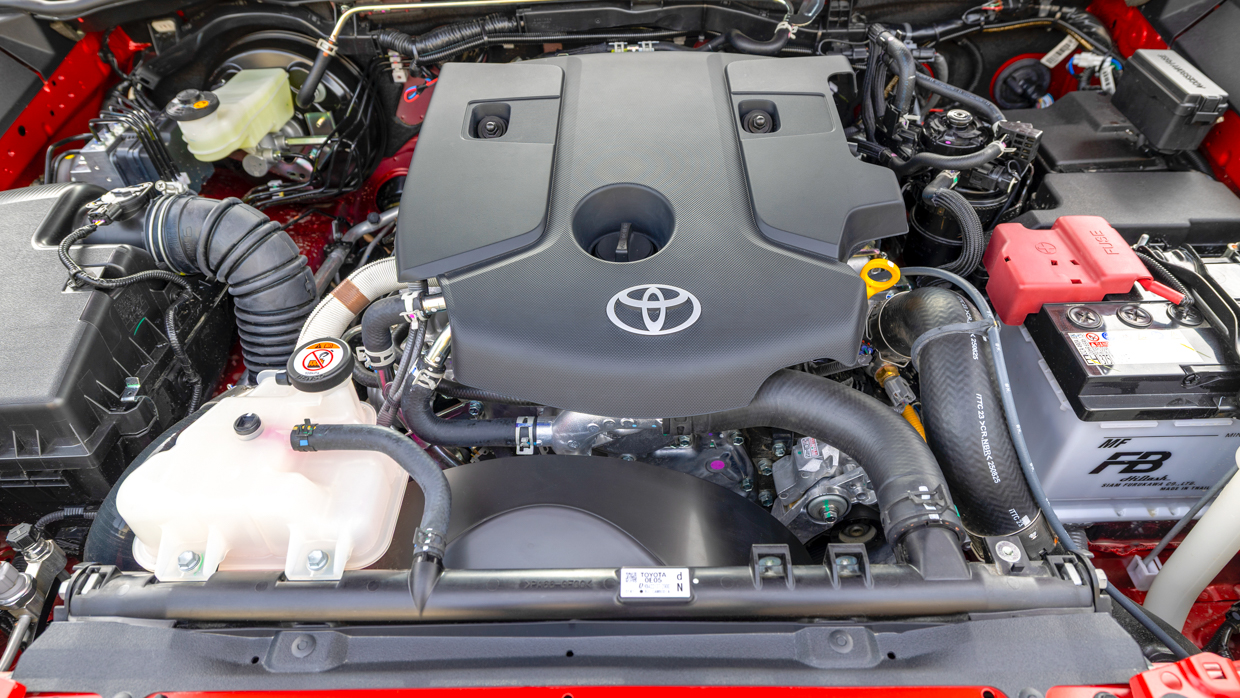
Power is pegged at 150kW between 3000-3400rpm in the six-speed automatic, unchanged from before. Torque is 500Nm at 1600-2800rpm and 420Nm in the manual. While we would have loved to see more grunt, the truth is Hilux’s pace is more than adequate when unladen or lightly loaded.
The six-speed automatic’s shifts are more confident and the torque converter lock-up is quicker in the new Hilux.
We also sampled the six-speed manual — its long clutch and shift throw are surprisingly satisfying, and it now has Toyota’s ‘iMT’ auto rev-matching.
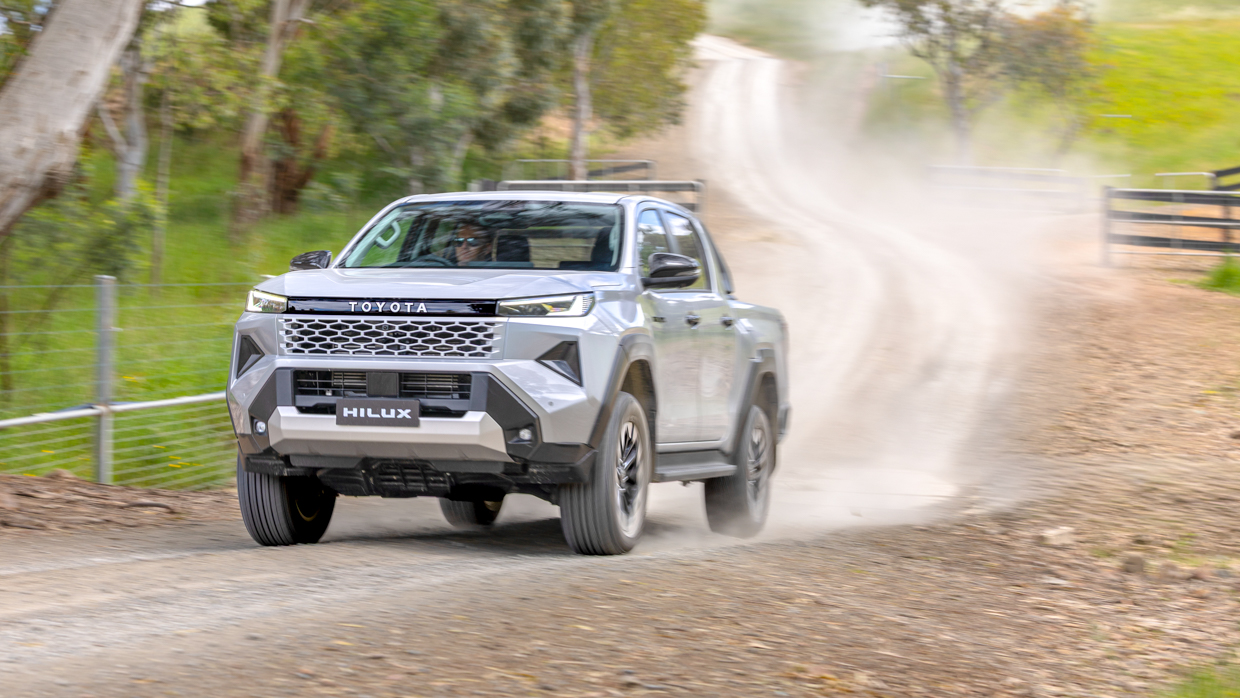
Toyota has dropped the low-grade petrol and 2.4-litre diesel engines while making 48-volt V-Active technology standard on all automatic 4×4 grades, excluding Workmate.
It benefits the experience with longer start-stop periods and lower idle speed (600 instead of 750 rpm), but doesn’t seem to improve real-world economy — we saw 8.2L/100km during country driving.
One of the Hilux’s biggest shortcomings was its busy ride, which is now much improved. The double wishbone front and live rear axle remain, though up front there are new springs, revised dampers and a 20 percent stiffer anti-roll bar, plus new spring rates and shocks at the back.
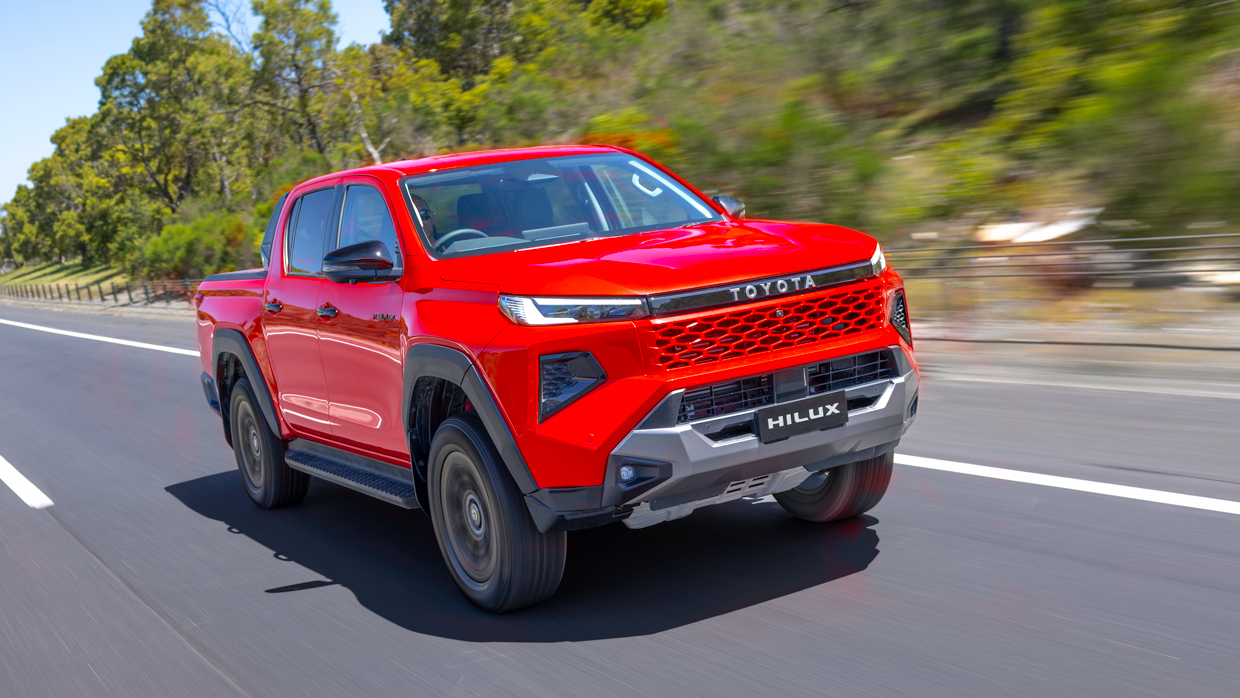
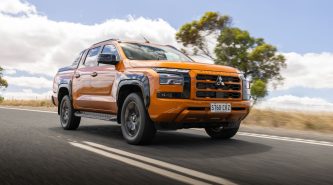
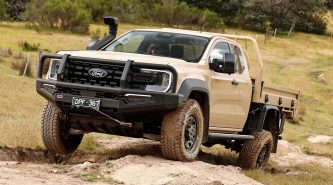
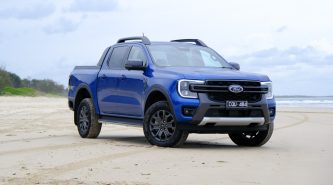
The SR5, Rogue and Rugged-X have a more comfort-oriented ride with better bump absorption when unladen and this really does smooth out the Hilux experience in this new generation. It’s not as good as Tasman or Ford Ranger, but more compliant and consistent than an Isuzu D-Max and better at the limit than a Mitsubishi Triton.
Meanwhile the Workmate and SR still ride like farm equipment when unladen — bouncy and stiff. This is the point, though, as they’re tuned to work best with a 350kg payload, for example when you have a bull bar fitted and two occupants onboard.
Anyarat Sutthibenjakul, Hilux regional chief engineer, said there was no need for tricky frequency selective dampers in the Hilux, which are equipped on the Kia Tasman and give good ride quality along with strong load-lugging ability.
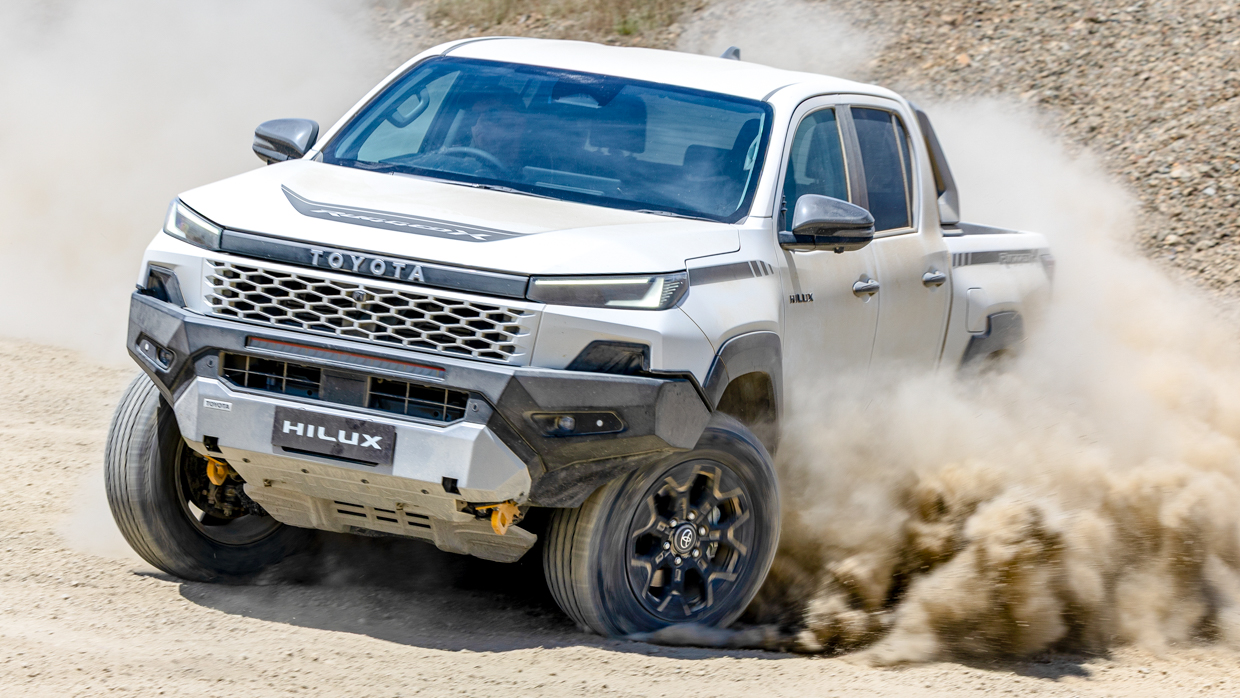
The result is that the new Hilux continues to feel tall and ungainly through corners. The handling is secure at the limit and stability control is well-calibrated, it’s just Toyota’s ute doesn’t breed confidence on country roads.
On dirt it’s a different story, as the old Hilux had the most foolproof and effective off-road traction control in class, meaning you rarely needed to engage the rear differential locked to clear obstacles.
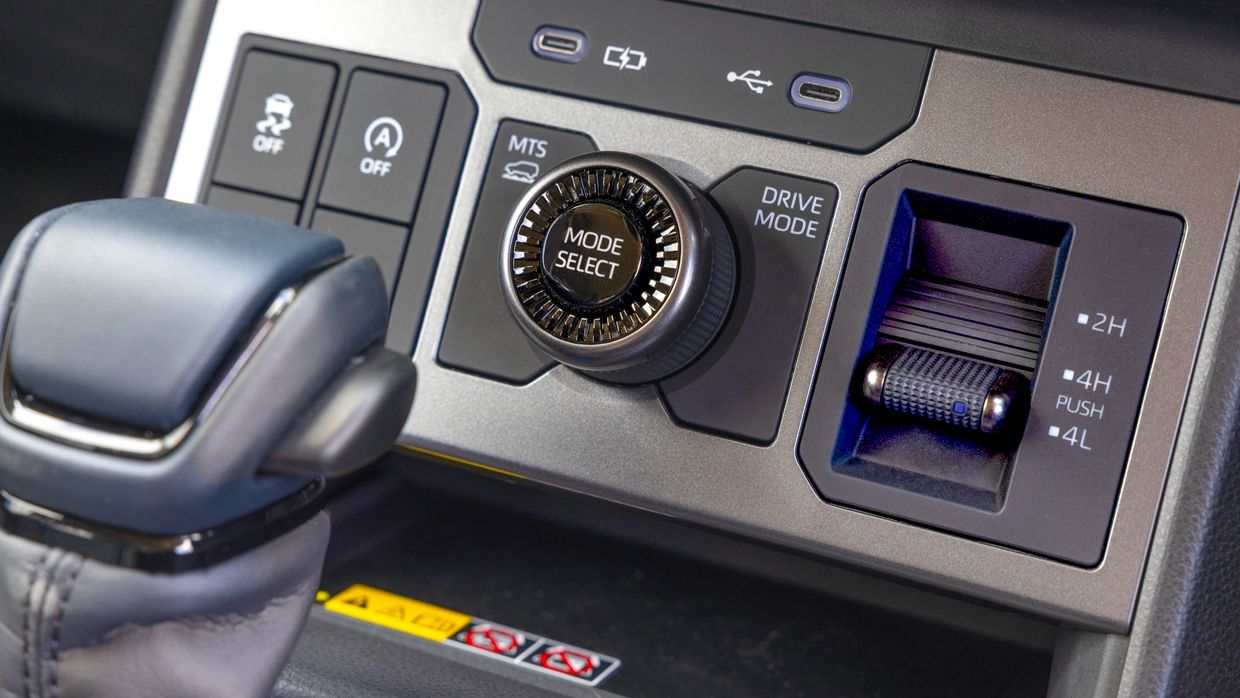
The new Hilux keeps its part-time 4×4 system with 2H, 4H and 4L and must be driven in two-wheel drive on tarmac. Toyota has also slowed the Hilux’s hill descent control speed from around 6km/h to 3km/h.

The new Hilux gets a fresh traction control module which interfaces with the electronic steering rack — it’s smoother and quicker to operate.
It easily tames wheel spin with a tyre off the ground allowing the Hilux to crawl through obstacles, and that’s even without exploring the multi-terrain select (MTS) modes including Mud, Rock, Sand and Auto.
Articulation is also strong in the new Hilux, which seems to benefit from a revised ladder frame using thicker gauge steel on the side rails among other changes.
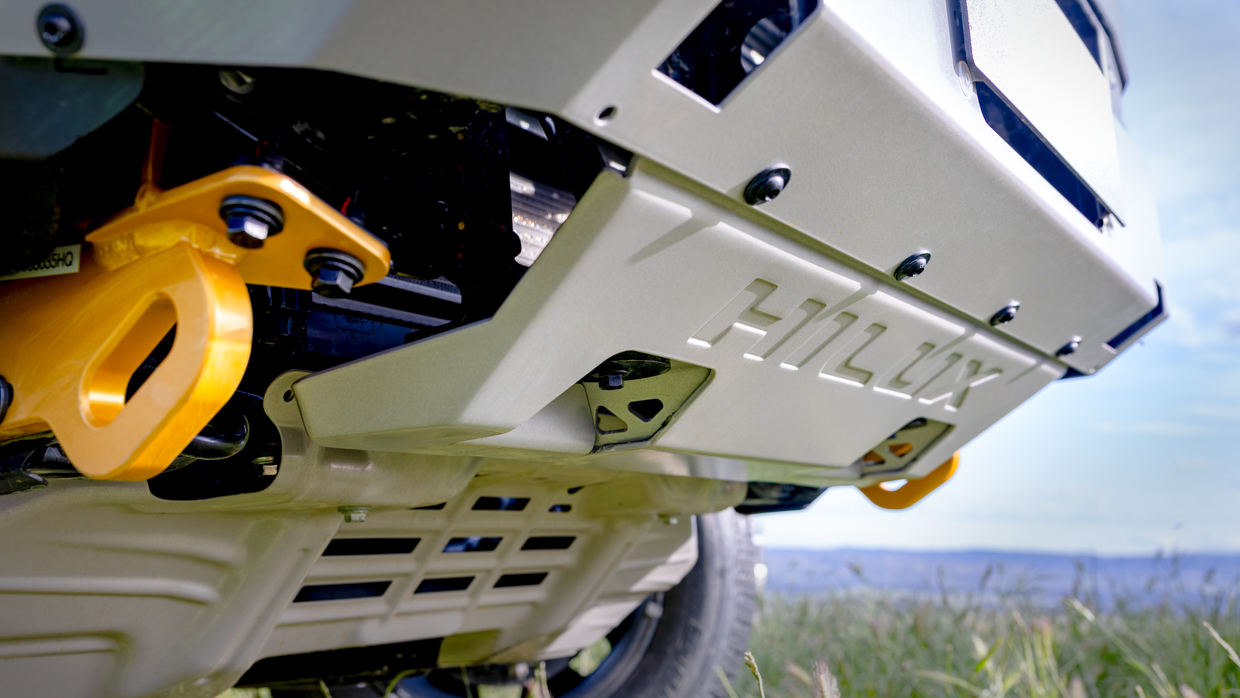
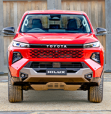
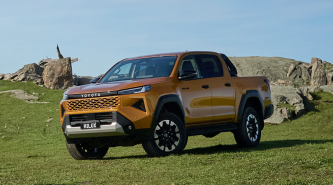
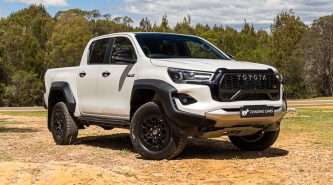
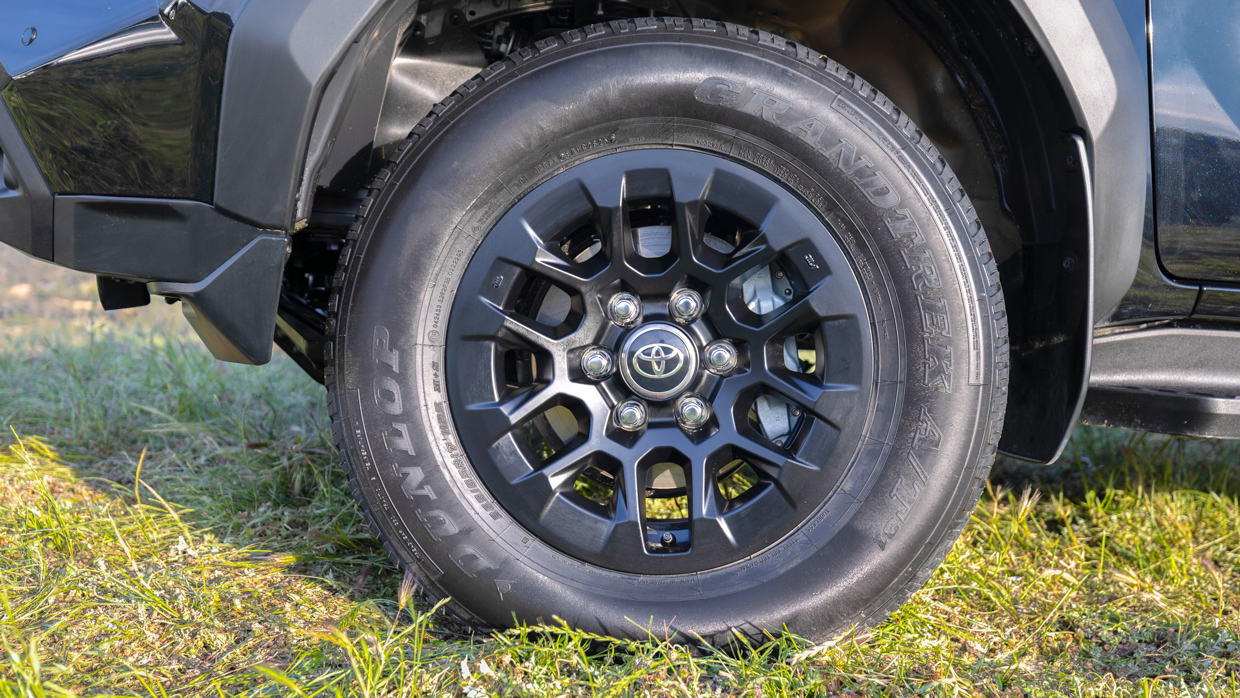
The Rugged-X off-road flagship has a handsome hoopless bull bar, bash plate and recovery points plus a decal package, though the changes pale in comparison to the now-defunct wide-body GR Sport. The Rugged-X even uses the same 265/60 R18 Dunlop Grandtrek tyres as the SR5, though wrapped around matte black 18-inch alloy wheels.
It is expected to have an improved approach angle compared to other Hiluxes (29 degrees) though Toyota is yet to confirm final numbers.
Safety is a key factor for utes, which need ANCAP’s five-star blessing to sell in large numbers to fleets. Although not yet finalised, Toyota says it has designed the Hilux to meet five-star standards and will rate all grades bar the high-grade Rugged-X.
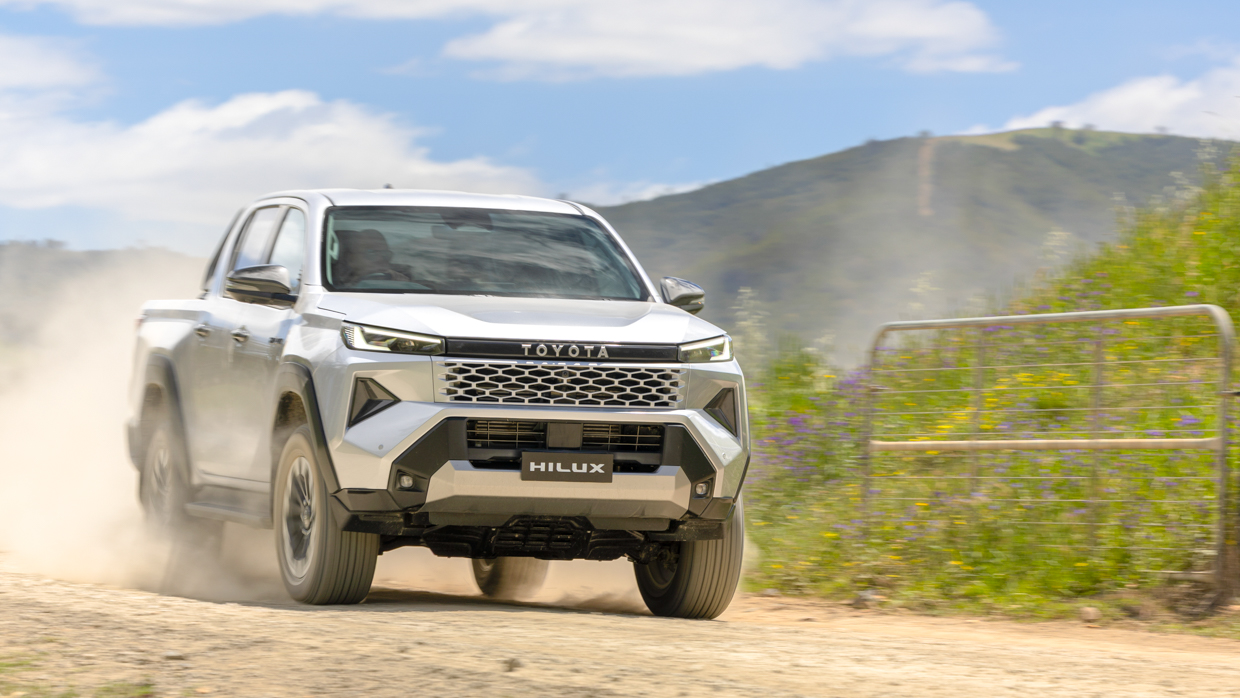
From behind the wheel the active safety assist systems were hushed and mostly helpful. Unlike Tasman, the Hilux’s speed sign alert can be permanently set to visual reminder, so there’s no high-pitched beeping when it reads the wrong sign.
The Hilux also does without a driver attention monitor camera that is otherwise fitted to the likes of Mitsubishi Triton. With the new steering system, the lane-keep assist and lane-tracing programs work much more effectively in the new Hilux.
Once you get past the carryover doors and handles, you could believe this is an all-new Hilux. It is very difficult to identify hard points from the previous generation inside thanks to a serious renovation.
It starts with technology. From Workmate base up, all Hilux trims now feature a big, bright 12.3-inch touchscreen up on the dashboard. This runs Toyota’s current multimedia system, supporting connected navigation, wireless smartphone mirroring, remote control via the companion app, as well as the basics like AM/FM and DAB+ digital radio.

This is done without sacrificing basic usability, as thankfully the new-gen Hilux retains physical HVAC controls. The Workmate has chunky plastic knobs where up-spec cars drive mode selection is found, while SR and up have a more contemporary climate control design. It’s icy cold, too, as we’ve come to expect from Toyota models.
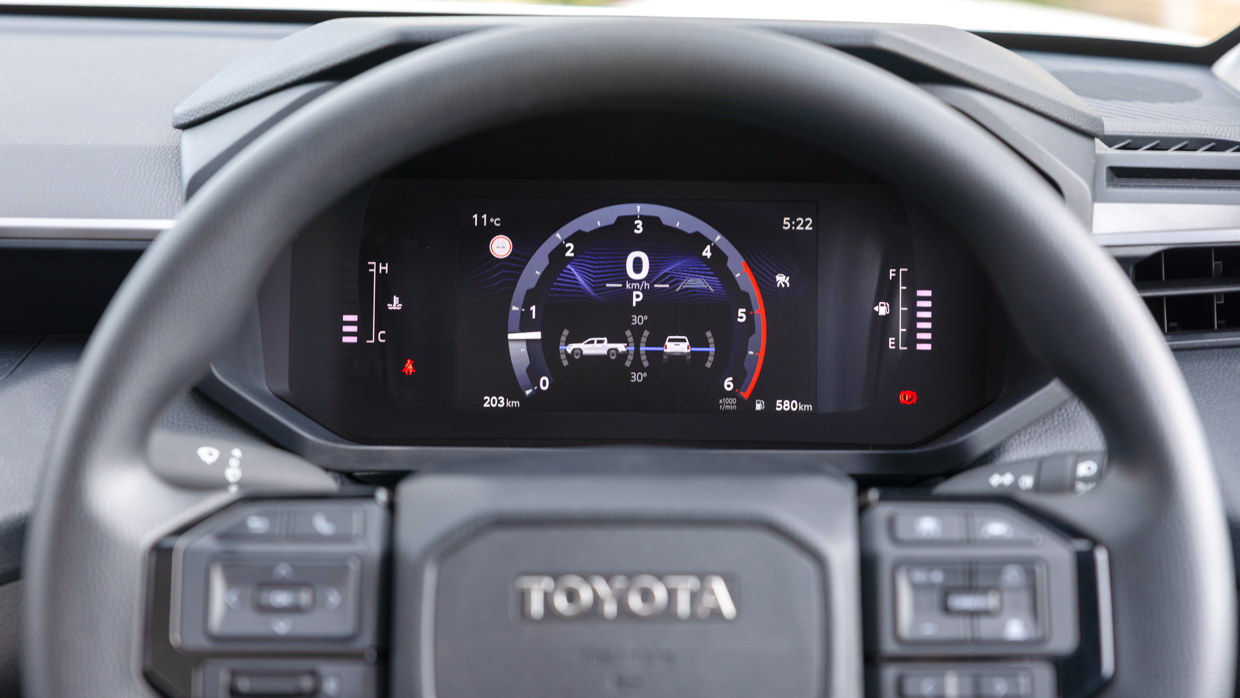
Control hierarchy is pleasingly logical with key off-roading switches and the engine auto stop-start defeat button gathered near the gear selector, just like in the Prado. A digital driver’s display is bright and legible, sized from 7.0 inches in Workmate and SR it climbs to 12.3 inches in high grade cars.
It is worth calling out the materials as the Fisher Price hard, reflective and scratchy plastics of the eight-gen Hilux are gone. There’s a satin finish to many of the plastics inside the new Hilux, as well as a squishy centre armrest from SR and up.
Moving up to SR5 there’s leatherette covering much of the dash fascia, helping keep the cabin quieter and cut-down reflections. Build quality remains sturdy, too.
Even the new cloth upholstery is higher quality and much less scratchy, while the SR5 Premium Pack (a $2500 upcharge) brings more supple black leather-accented upholstery. The Rogue and Rugged-X are separated by ‘Mineral’ Copper oxide-like leather appointments on the seats.
Speaking of, the shapely chairs are all new and make a massive difference. There is ample lumbar support and strong leg bolstering without ever being too tight so they will suit all body styles.
As before, there’s no seat ventilation offered in any Hilux trim (unlike Tasman, Ranger, GWM Cannon Alpha and a few others) and the heating, which is standard on SR5, is only single stage.
Cabin storage is improved as well, with space for up to two cup holders behind the new gearshift (using removable inserts), a deep centre bin, twin USB-C charge points, a 12-volt socket, two more cup holders on the dash, a pair of gloveboxes, and doorbins that will accept a 1.5-litre water bottle.
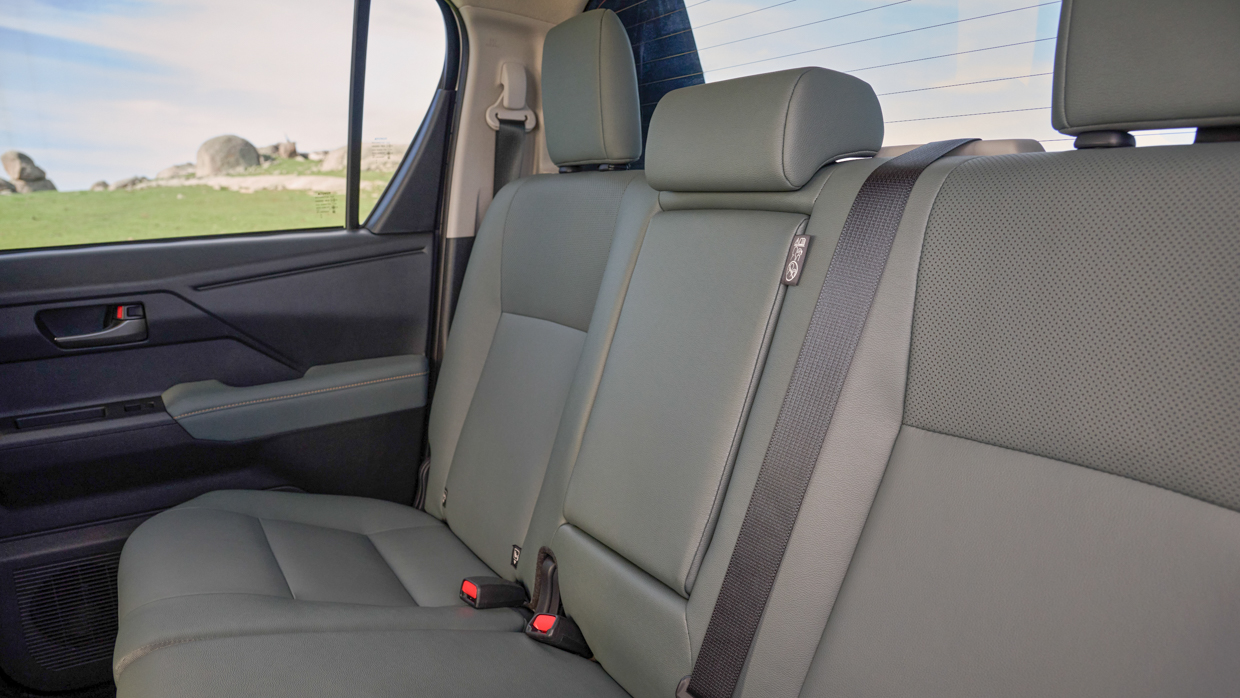
For all the improvements up front, the rear is what lets Hilux dual-cab down. Legroom is cramped, toe-room is compromised (especially on the kerb-side in V-Active models) and there’s little headroom for tall riders. It is still not the best ute for family duties.
The new bench is more comfortable, though, and the front seats sit lower for a better view out. There are also air vents, USB-C charge points, and a fold-down armrest, depending on the grade.
Toyota has not yet supplied tub dimensions for the new Hilux, but given its 3085mm wheelbase is unchanged and it is a scant 5mm shorter overall, we can expect similar dimensions — that means likely no euro-sized pallet between the wheel arches.
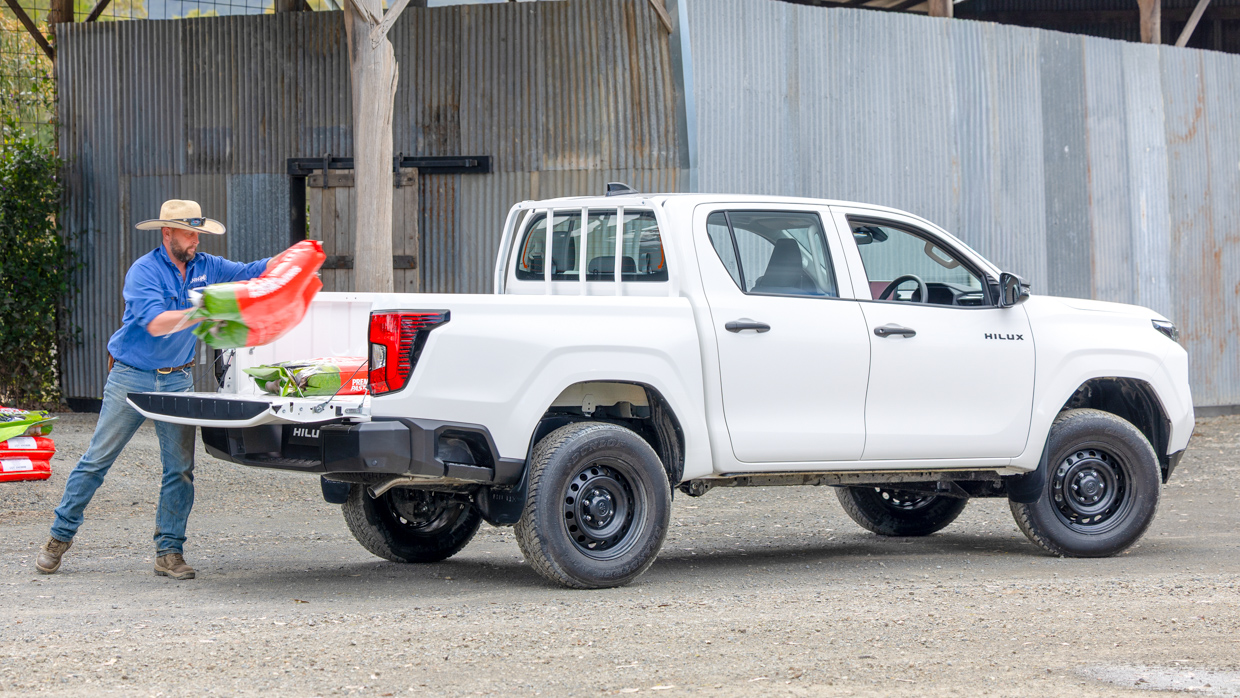
Smarts are kept to a minimum in most grades, with a bare tray and four cast tie-down points up to SR5. The Rogue’s bed is fitted with marine carpet (secured using velcro) and a power roller cover, adding 187kg to the kerb weight, while the Rugged-X gets a drop-in bed liner.
Payloads range from as high as 1260kg (Workmate 4×2 single cab chassis) to 778kg (Rogue 4×4 Double Cab) with the popular SR5 4×4 automatic rated to carry 965kg.
The Japanese brand has listened to customer requests, though, and increased the GCM of all 4×4 grades to 6300kg. This means, when towing the maximum braked 3500kg capacity, leftover payload is improved significantly, leaving 615kg in the SR5 automatic.
Toyota had a tough brief updating the Hilux. Looking in from the outside, the more modern US-built TNGA-F based Tacoma would surely have made a bigger media splash. And where’s the hybrid?
We’ve heard and read complaints from long-term Hilux owners, both about the new ute’s lack of innovation yet also the departure from what used to be. It’s real rock and hard place stuff.
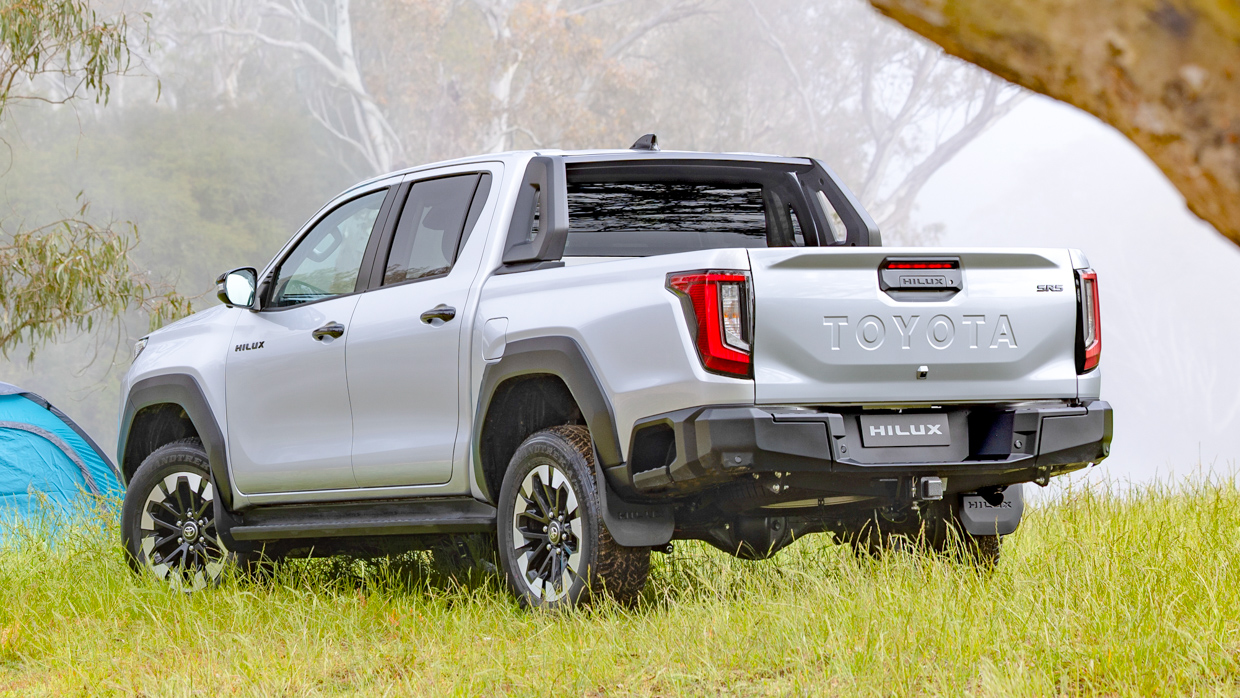
Being fair and honest, the new Hilux feels worth the extra cost in upper-trim vehicles thanks to better technology that doesn’t get in the way, greater ride compliance, improved noise suppression and retained (if slightly improved) go anywhere ability.
A stunning, runaway success the ninth-generation Hilux is not, but it does more than enough to keep the legend alive.
About Chasing cars
Chasing Cars reviews are 100% independent.
Because we are powered by Budget Direct Insurance, we don’t receive advertising or sales revenue from car manufacturers.
We’re truly independent – giving you Australia’s best car reviews.
The estimate provided does not take into account your personal circumstances but is intended to give a general indication of the cost of insurance, in order to obtain a complete quote, please visit www.budgetdirect.com.au. Estimate includes 15%^ online discount.
^Conditions Apply
Budget Direct Insurance arranged by Auto & General Services Pty Ltd ACN 003 617 909(AGS) AFSL 241 411, for and on behalf of the insurer, Auto & General Insurance Company Limited(ABN 42 111 586 353, AFSL 285 571).Because we don’t know your financial needs, we can’t advise you if this insurance will suit you. You should consider your needs and the Product Disclosure Statement before making a decision to buy insurance. Terms and conditions apply.
Indicative quote based on assumptions including postcode , 40 year old male with no offences, licence suspensions or claims in the last 5 years, a NCD Rating 1 and no younger drivers listed. White car, driven up to 10,000kms a year, unfinanced, with no modifications, factory options and/or non-standard accessories, private use only and garaged at night.
^Online Discounts Terms & Conditions
1. Discounts apply to the premium paid for a new Budget Direct Gold Comprehensive Car Insurance, Third Party Property Only or Third Party Property, Fire & Theft Insurance policy initiated online on or after 29 March 2017. Discounts do not apply to optional Roadside Assistance.
2. Discounts do not apply to any renewal offer of insurance.
3. Discounts only apply to the insurance portion of the premium. Discounts are applied before government charges, taxes, levies and fees, including instalment processing fees (as applicable). The full extent of discounts may therefore be impacted.
4. We reserve the right to change the offer without notice.