Powered by

-
Car Reviews
Latest reviews
-
Car News
Latest news
-
Car Comparisons
Latest comparisons
- Chasing Deals
Latest reviews
Latest news
Latest comparisons
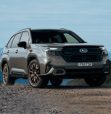
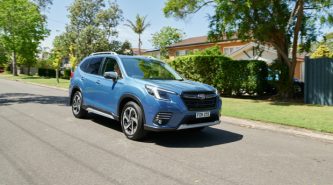
The Forester Sport is the pick for Subaru’s true-believers – but is it special enough to overcome an aging engine that drinks like a full-size 4×4
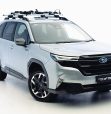
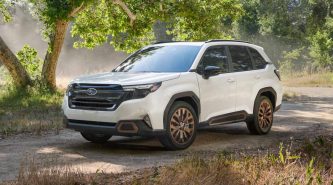
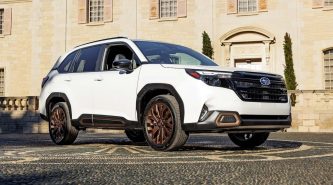
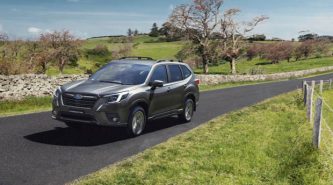
Few options in the midsize SUV segment embody as much personality as the Subaru Forester, with the adventure-focused Sport grade perhaps the purest example.
Trading lush leather on the top-spec Touring for waterproof vinyl along with a few other practical benefits, the Forester Sport remains the most adventure-ready solution until Subaru finally greenlights the Wilderness variants for this model, as it has for the Outback.
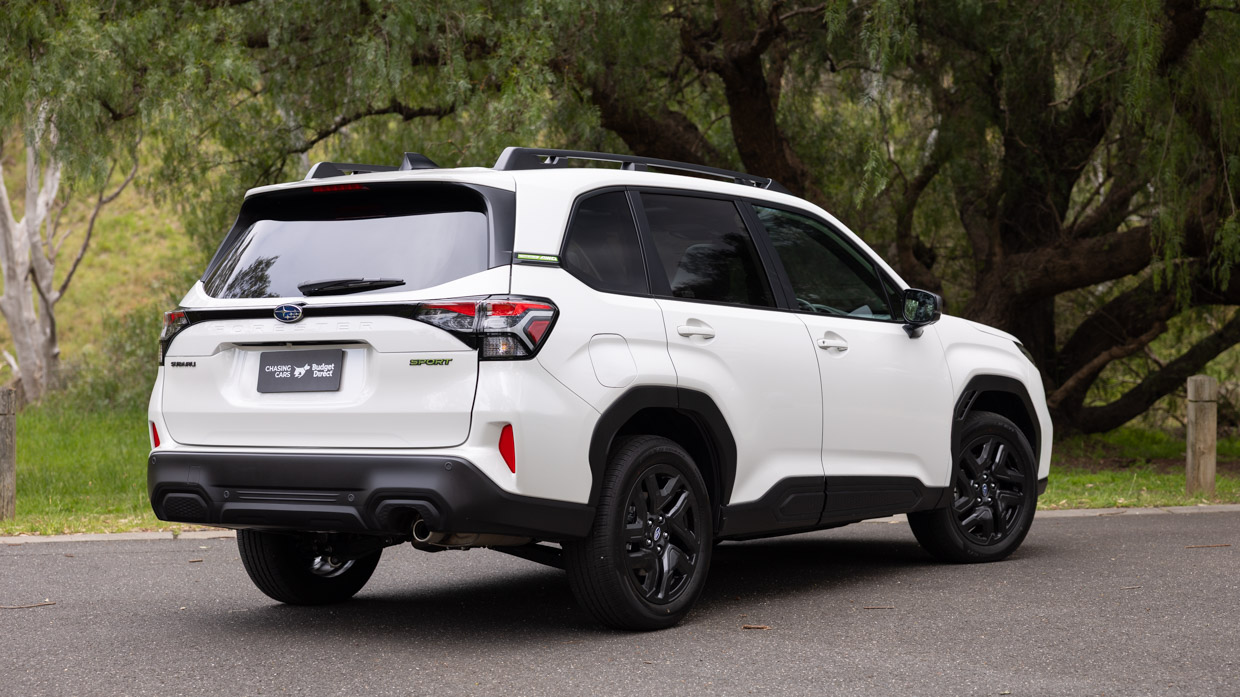
We’ve already covered the hybrid Forester in our recent long-term review, so for this assessment, we’ll be focusing on the more affordable petrol variant to find out if the base engine is thirsty enough to justify the $6500 leap to the petrol-electric option.
Priced at $48,490 before on-road costs, the Forester Sport on test remains affordable in petrol guise, sitting in the middle of the model range.
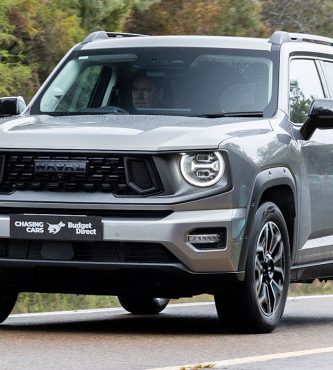
The Forester is a mainstay for Aussie families of the 1990s, and generally sits at the more affordable end of mainstream rivals such as the Toyota RAV4 and Mazda CX-5, but it must now also face a growing field of increasingly competitive rivals from China, such as the GWM Haval H6.
Its closest direct competitor is the Nissan X-Trail N-Trek ($49,160); an opponent the previous-gen Subaru defeated in a head-to-head we published last year.
But, since then, Subaru’s success with the new generation has been less clean-cut.
Even though it’s a generally solid family vehicle, weighed down by pricey hybrid options and carryover parts, the argument for the new-generation Forester has been more difficult to make than first thought – so can it prevail in its most focused form?
The Forester Sport sits above the entry-level 2.5i ($43,490), the 2.5i Premium ($46,490) but below the Touring ($50,990). All but the Premium are available with the hybrid option, adding anywhere from $3000 to $6500 to the sticker price, depending on the grade.
As standard, the Forester Sport is equipped with the following features:
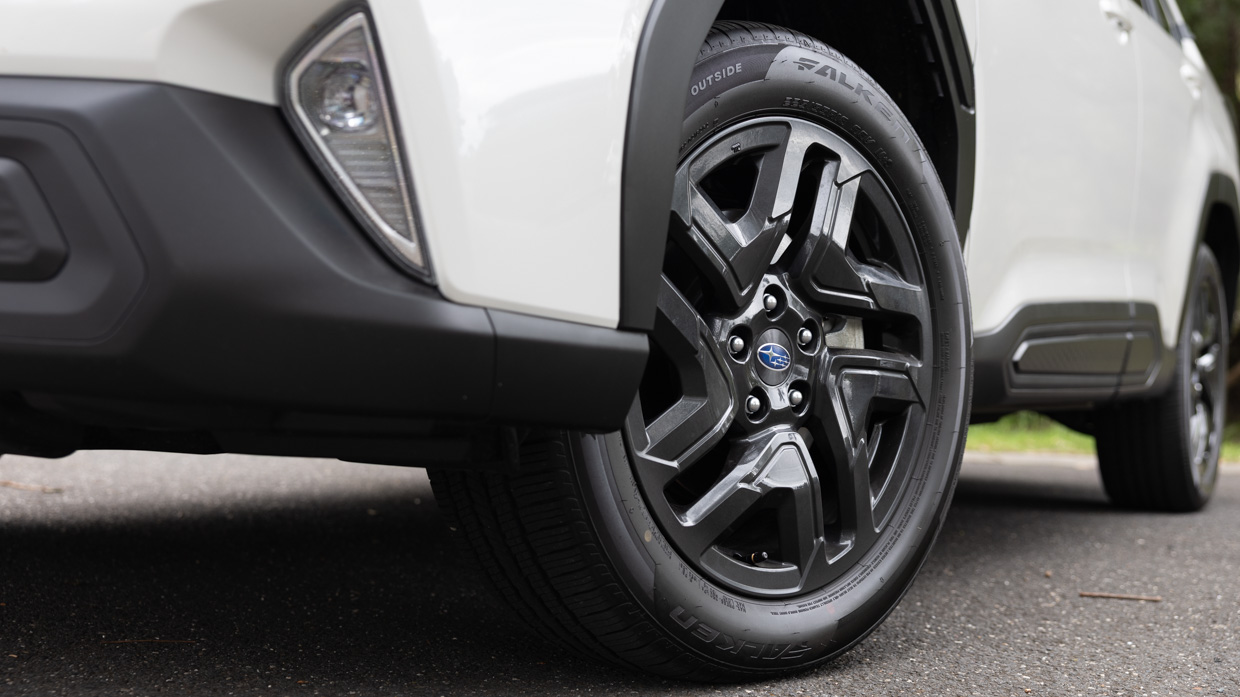
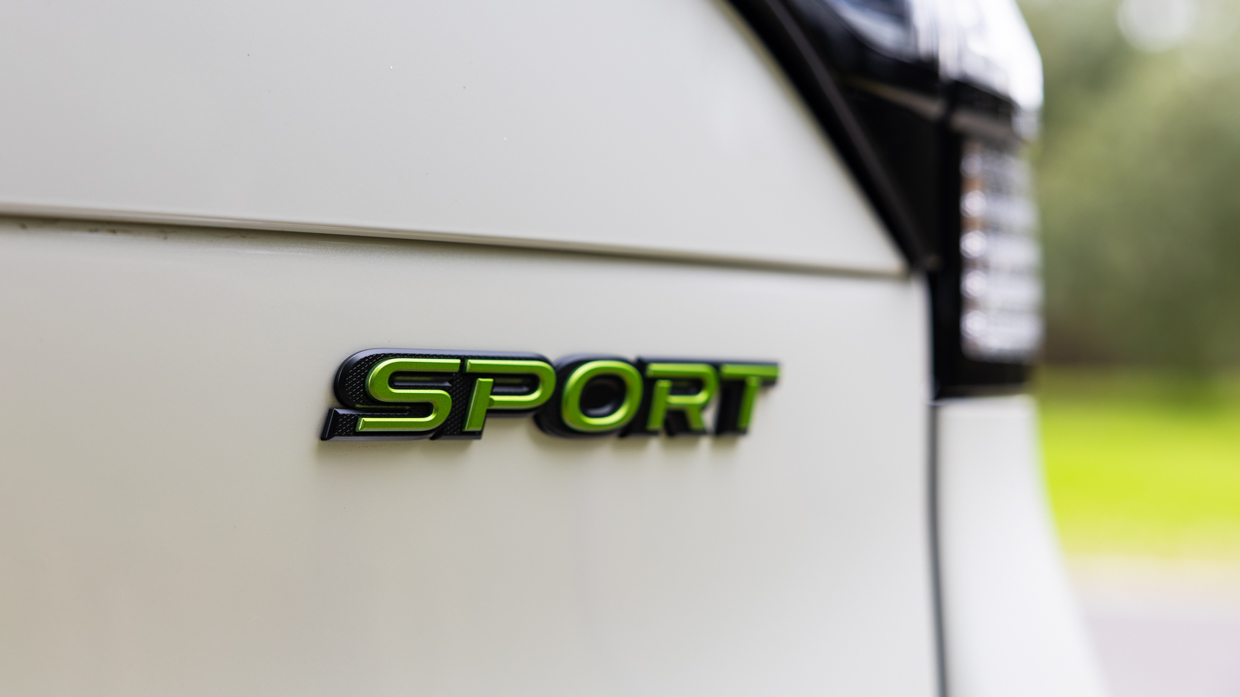
Notable additions over the $2000 cheaper Premium include the sunroof, waterproof synthetic leather upholstery, small styling upgrades and Subaru’s more advanced dual-mode X-Mode off-road drive mode.
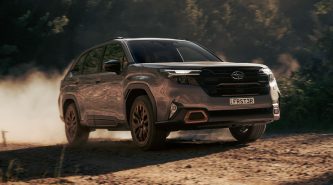
Along with the more frugal drivetrain, the hybrid option for the Sport adds a 12.3-inch digital instrument cluster with built-in maps functionality. It’s also the most visually striking of all the Forester models, with brown stitching on the seats and 19-inch bronze alloy wheels.
From a standing start, there is little that feels new about the way the sixth-generation Forester drives, with the CVT-backed naturally aspirated 2.5-litre four-cylinder boxer once again sending the rev needle into the stratosphere in search of power it doesn’t have.
The situation has improved ever so slightly with the 2.5L’s peak outputs stepping up to 136kW/247Nm, reflecting an 8Nm gain over the old model but with no extra power.
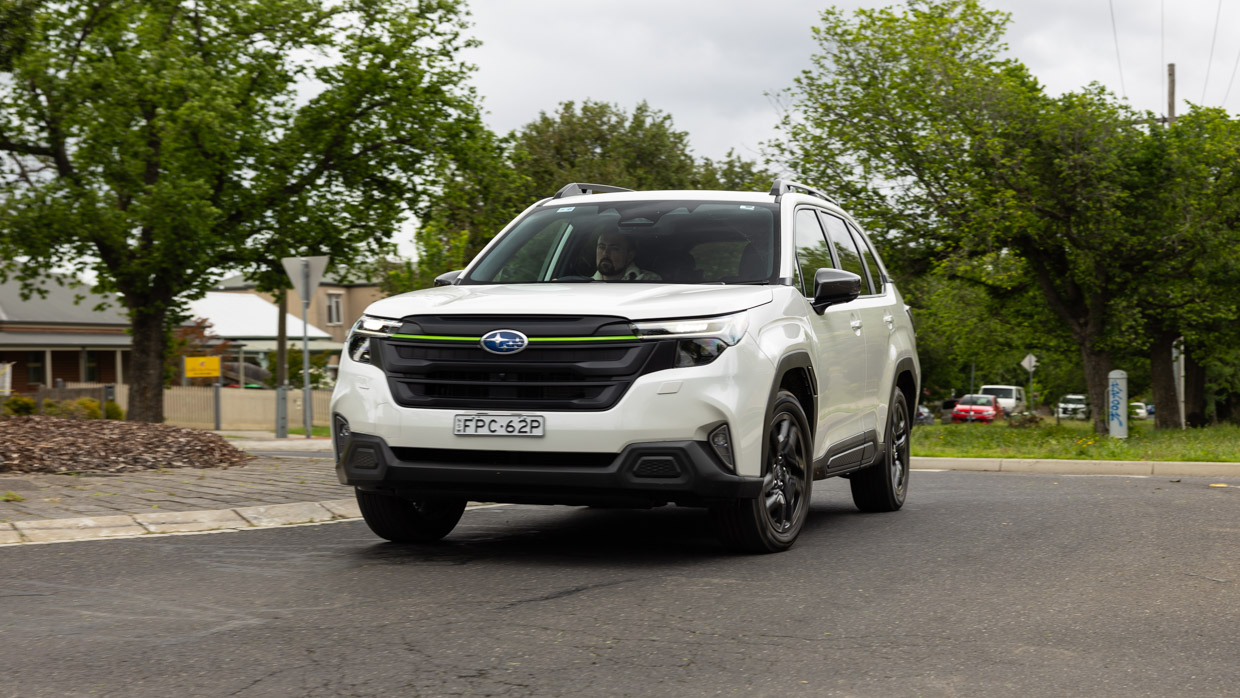
In practice, however, the base petrol stands out as an increasingly loud and rowdy engine, at a time when most rivals have moved onto smaller, quicker, turbocharged and generally more frugal engines.
At least new-gen Forester buyers now have the ability to opt for a hybrid, which adds an electric motor that dulls much of the drama at low speeds, but the upgrade doesn’t come cheap.
Away from the engine, the experience is more positive. The all-wheel-drive system continues to offer a sense of security, predictability, and perhaps even fun, that direct rivals fail to match.
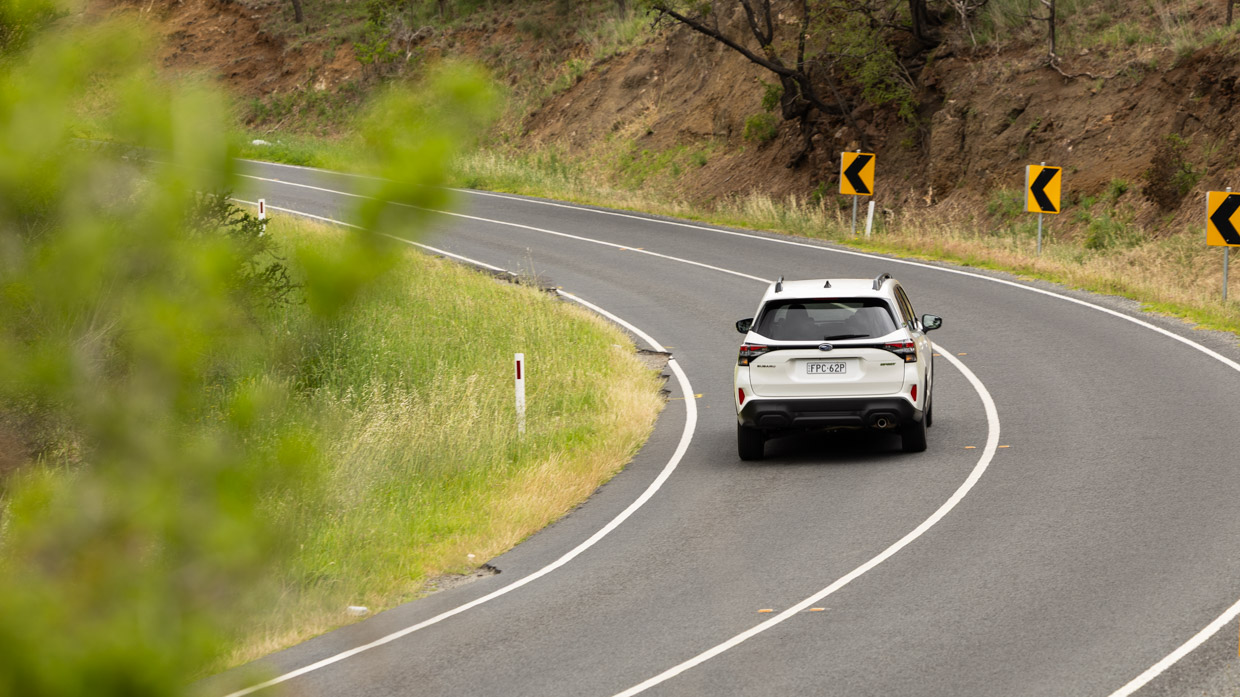
Similar to Audi’s quattro AWD system, the Forester always sends power to all four wheels and the result is a more consistent experience than its rivals. There are some trade-offs for fuel consumption, sure, but drive the Forester in the rain and you’ll feel the difference – even on the bitumen.
Base 2.5i and 2.5i Premium versions of the Forester are equipped with Subaru’s catch-all default ‘X-Mode’ off-road mode. Flexing its superior tuning over rivals, X-Mode still allows some slip as you round a bend, allowing the Forester to carry a comfortable speed instead of ploughing into understeer.
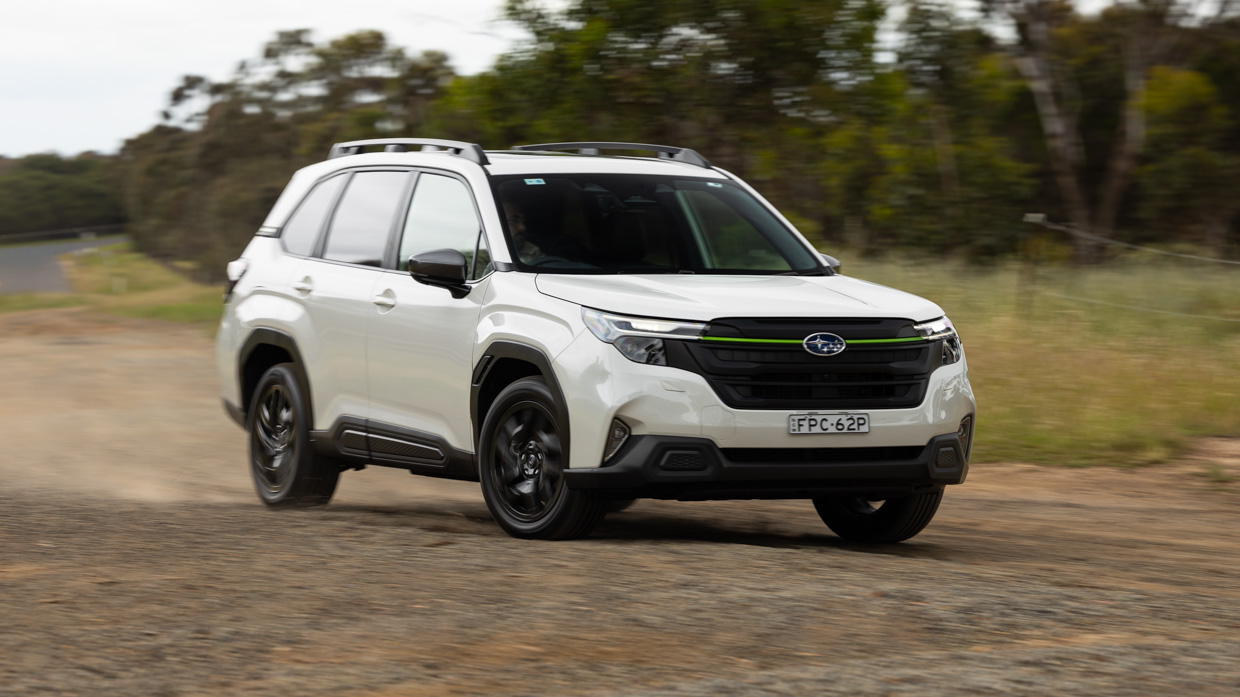
By stepping up to the Sport, buyers net more advanced dual-mode X-Mode, which essentially splits off the basic X-Mode system under a ‘Dirt/Snow’ setting, while also offering a separate ‘Deep Snow/Mud’ option.
The latter is worth considering if you do a lot of snow or beach driving, as it switches off traction control entirely – similar to proper ‘four-high’ in a 4×4 – and keeps torque at its peak to keep the Forester moving.
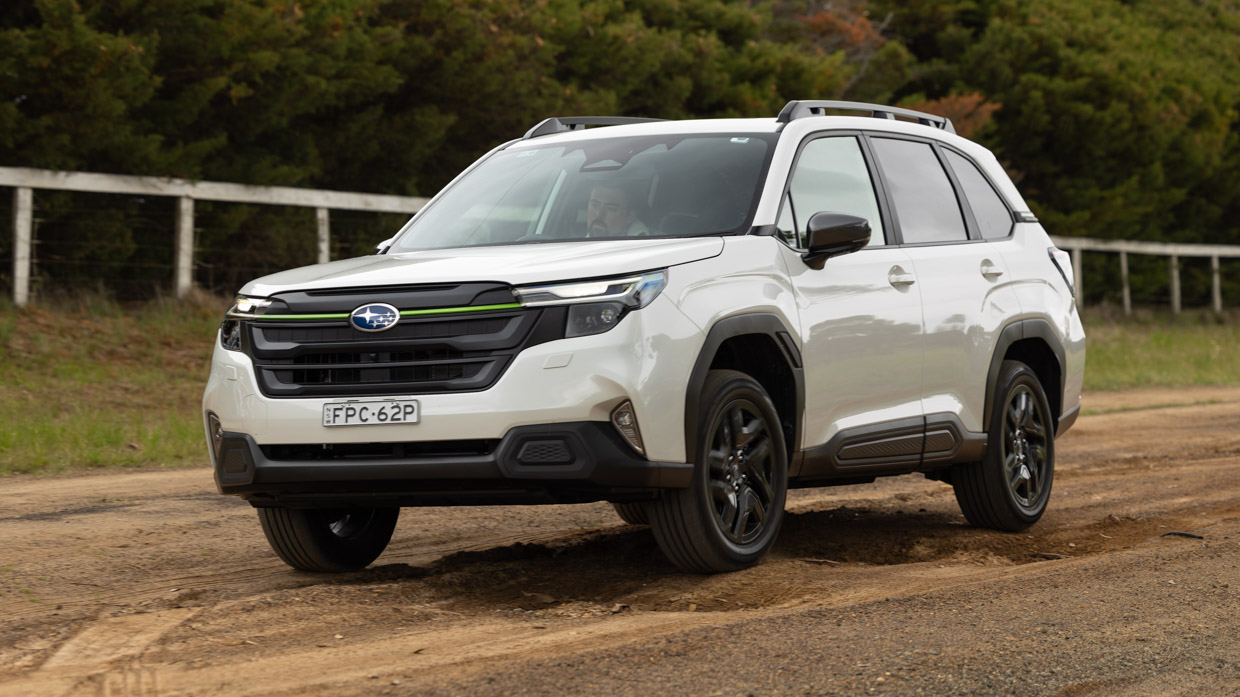
Both on and off-road, Subaru has improved the handling of the Forester, enhancing body control without hindering its comfortable ride. The latter continues to be a defining trait of the Forester and is a major reason it’s so popular among urbanites and country folk alike.
Subaru also doesn’t get enough credit for some of the finer points of its engineered load ratings, which are often twice that of other unibody SUVs.
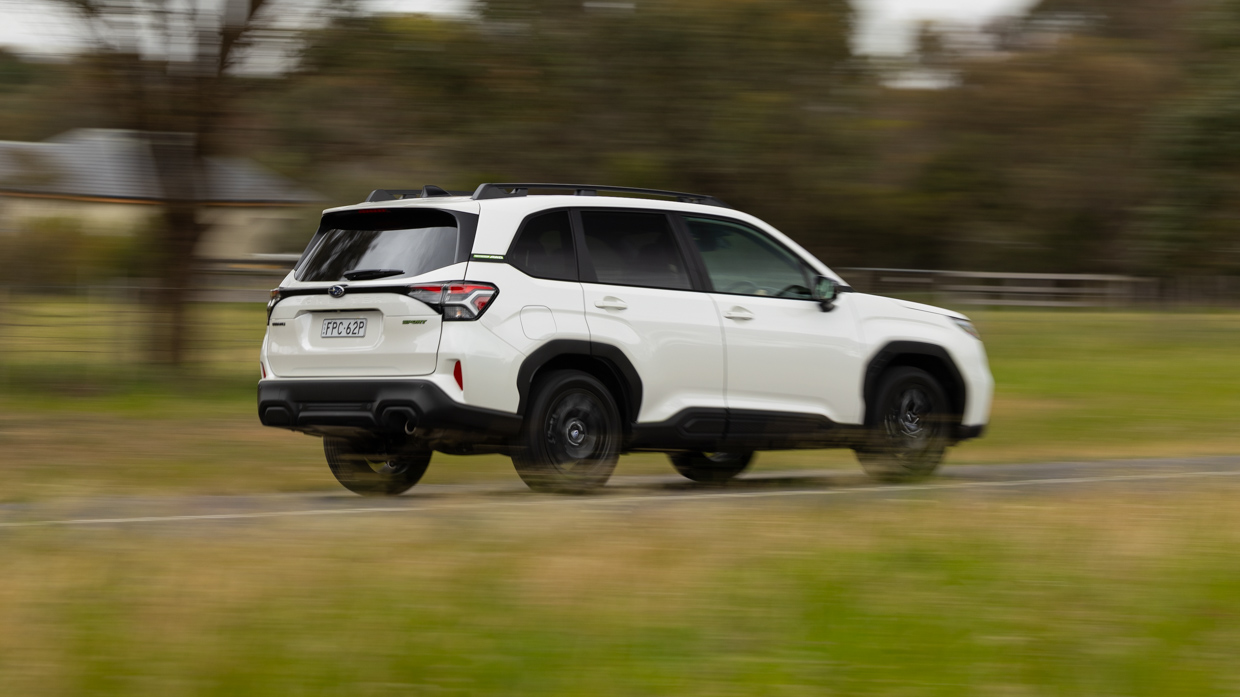
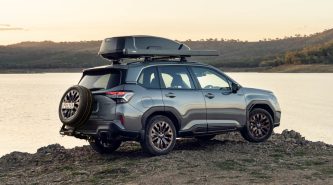
The Forester’s 80kg static roof load (for both static and dynamic) is fine, though disappointing when you learn the Outback Wilderness is rated for up to 363kg. Better, is the 180kg tow-ball allowance – dropping to 120kg on the hybrid – which should carry a full rack of mountain bikes with ease.
That figure hints at the 1800kg braking towing capacity of the Forester, which is a limit we’d avoid going near, given the meagre outputs of the engine.
Visibility through the Forester’s generous glasshouse is still class-leading among midsize SUVs.
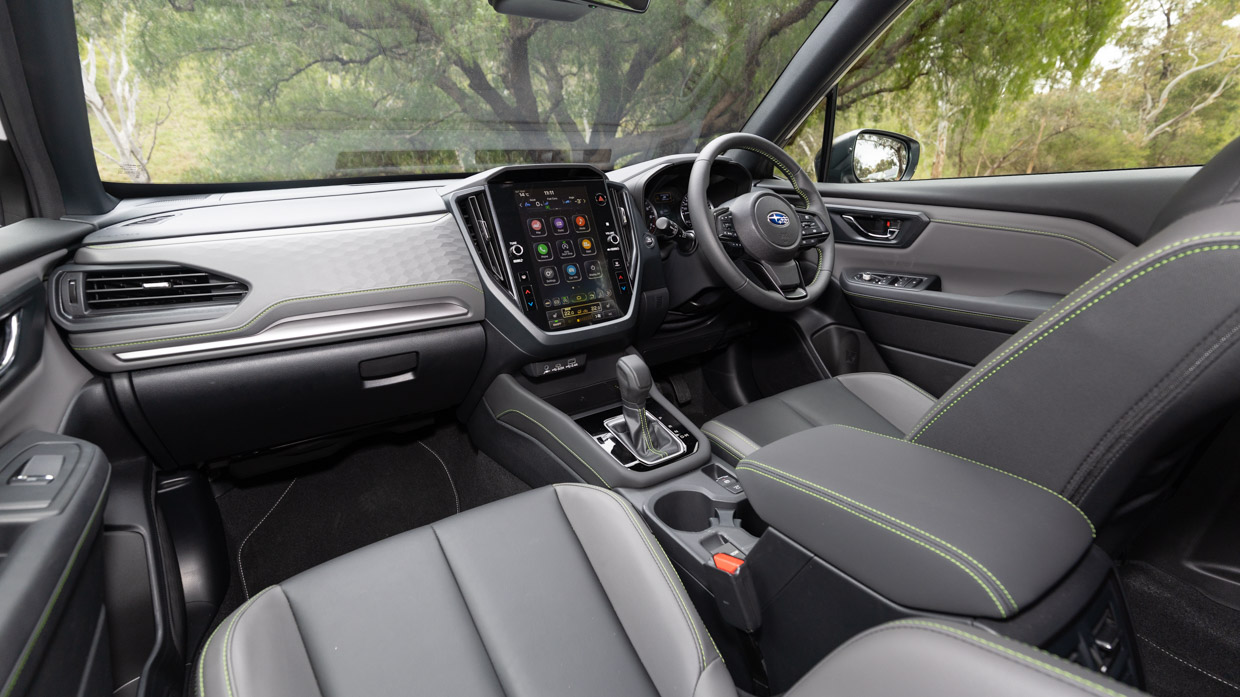
Much of the structure and storage of the Forester’s cabin will be familiar to repeat buyers, but the addition of a huge 11.6-inch portrait touchscreen sitting above a wireless phone charger signals its intention for modern times.
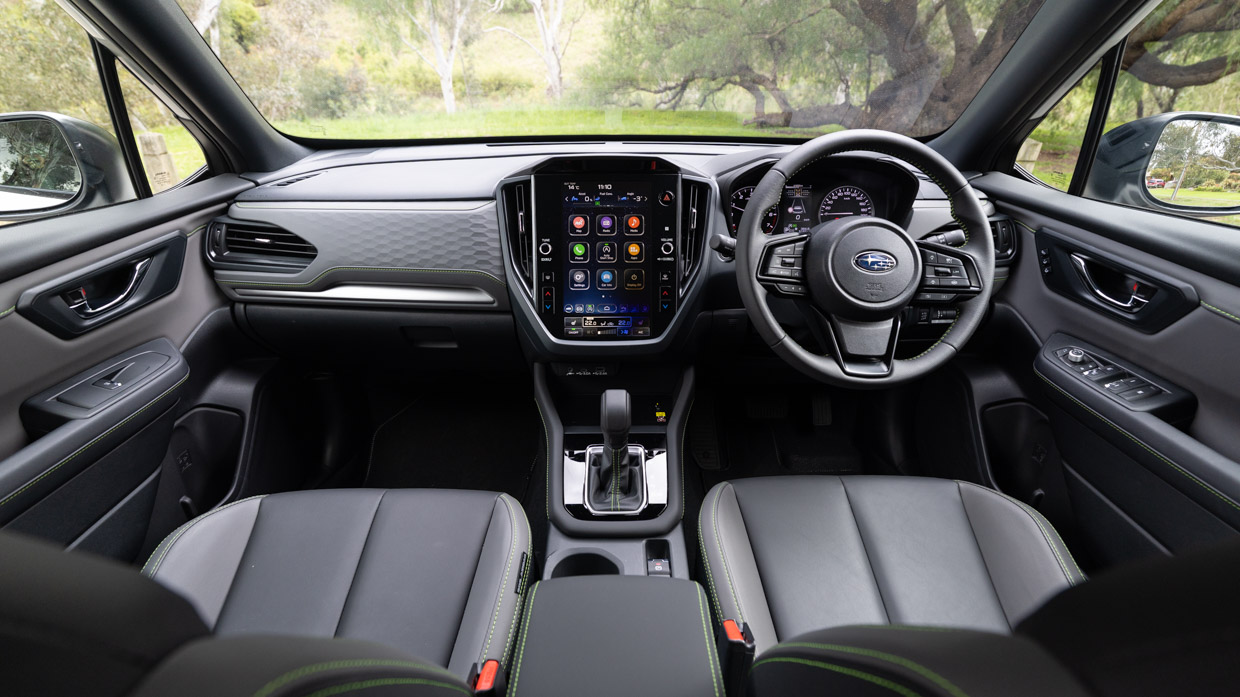
The display provides middling picture quality and the software behind it is visibly old and uninviting to use – though we’d stop short of saying it’s frustrating.
While new to the Forester, the interior design revolving around this screen has been kicking around since 2020, copping criticism from the Subaru faithful over the years for ditching the majority of physical controls for functions such as heating, ventilation and climate.
Perhaps it’s no surprise the inbound, new-gen Outback has moved to a landscape display paired with physical controls.
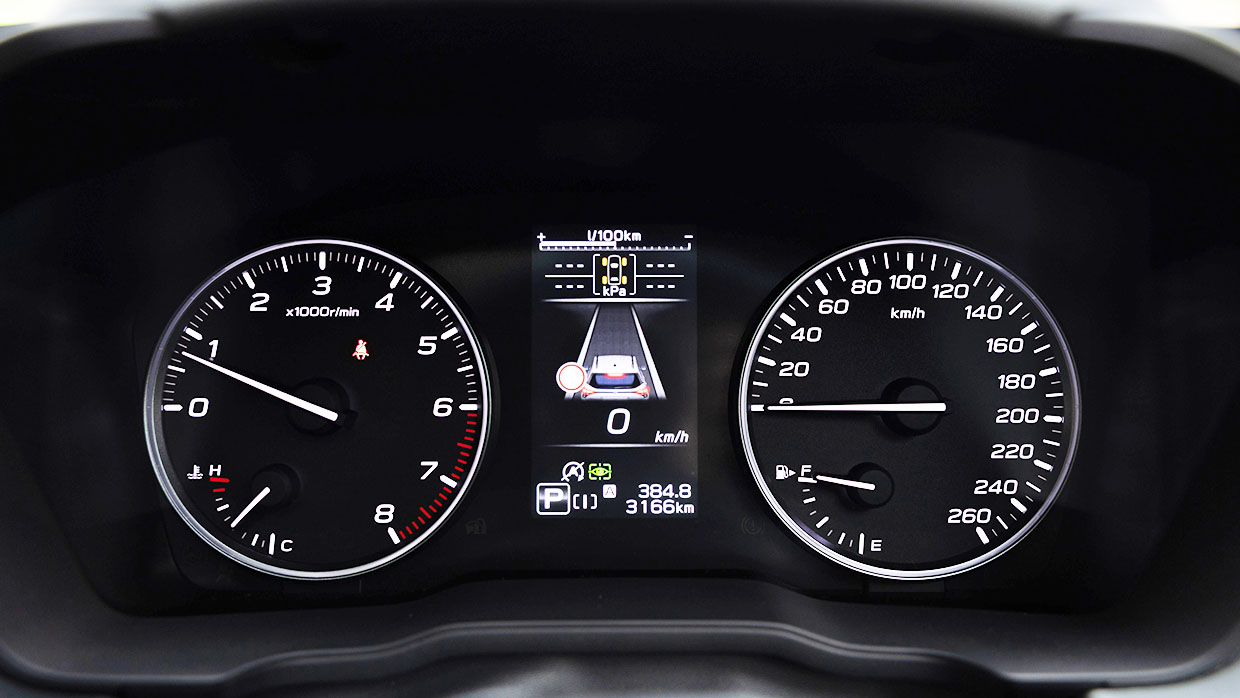
With petrol versions foregoing the 12.3-inch digital driver’s display that helps modernise the Forester’s cabin, the Sport makes do with a tiny 4.2-inch display flanked by two analog gauges, providing limited information on topics such as fuel consumption.
Similarly, the standard six-speaker stereo feels weak and flat in its sound profile. Hybrid versions of the Sport (along with all Touring grades) receive a superior 10-speaker Harman Kardon unit.
But tech and sound aren’t what many Subie buyers will be after; instead, the plethora of deep storage bins in the doors, tactile shifter, and the (road-trip essential!) extendable sunshades are more likely to win their favour. This has not changed.
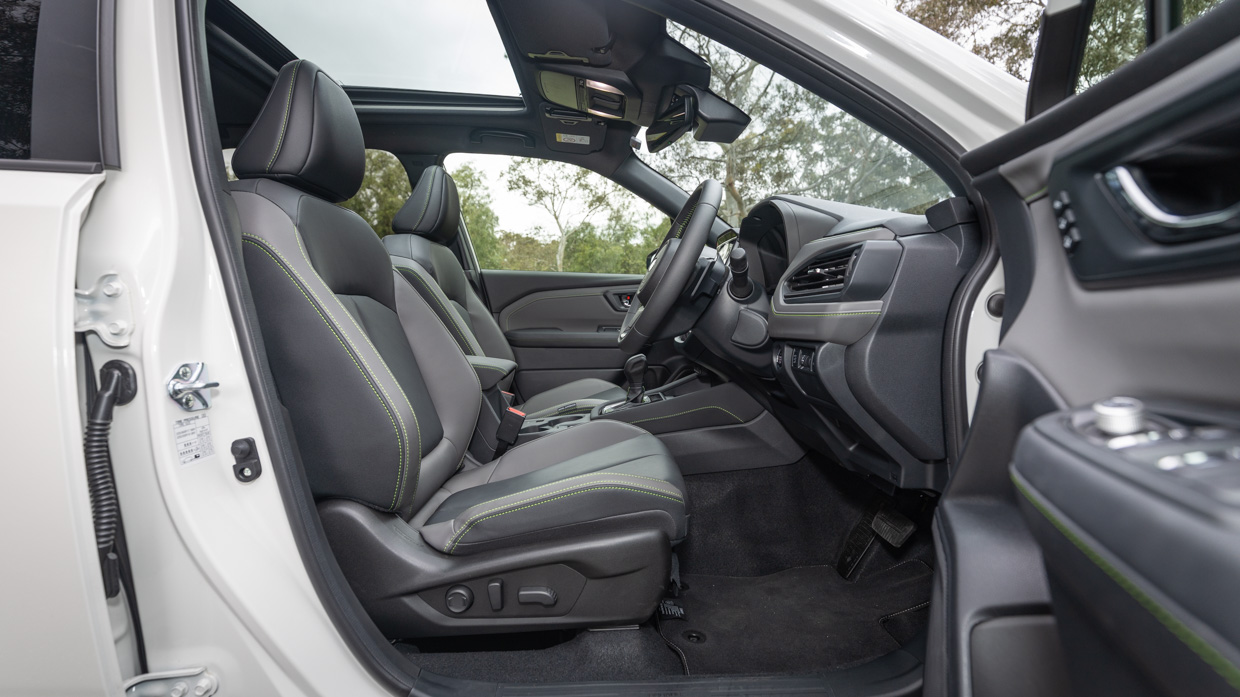
Much of the space is well thought out, with padding to support your knee along the centre tunnel, a chunky leather steering wheel with pleasingly tactile buttons and hard-wearing – if perhaps a little cheap-feeling – materials all around.
A clear fail, however, is the slippery wireless phone charger that will shoot your $2K brick off into the passenger footwell at the first corner.
The seats are comfortable and supportive, with power-lumbar adjustment for the driver, but the material feel and green stitching won’t be to everyone’s taste. With waterproofing front-of-mind, the material is inherently sweat-inducing.
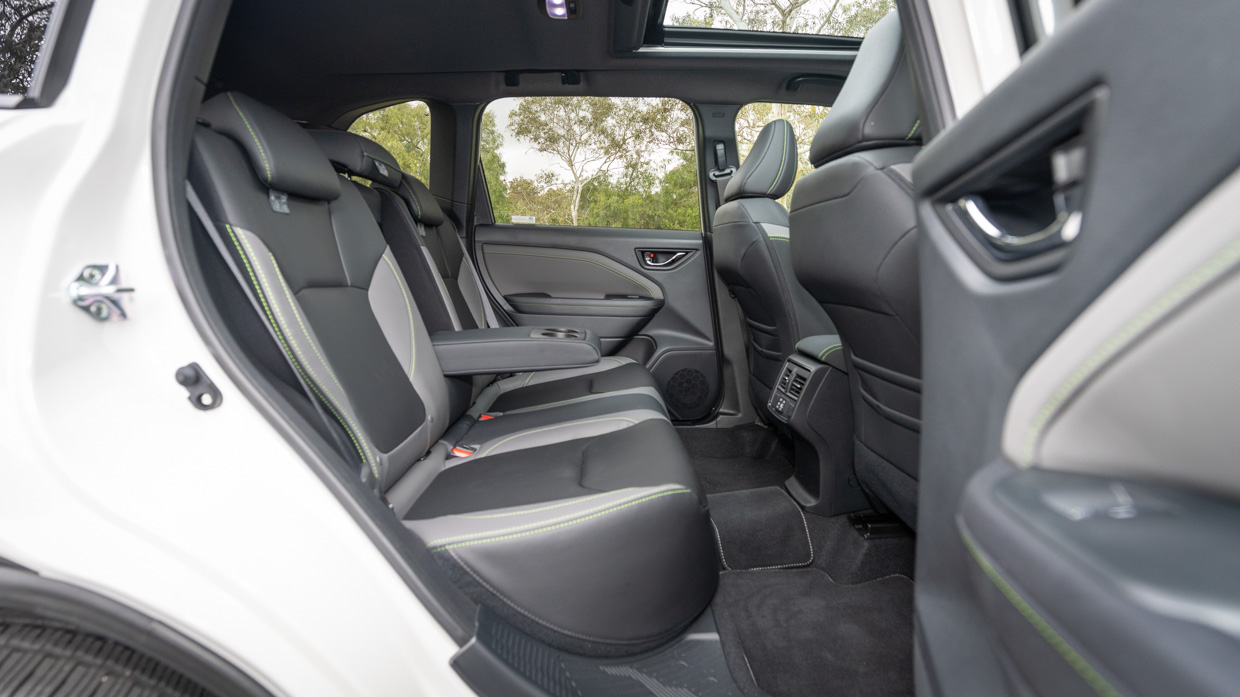
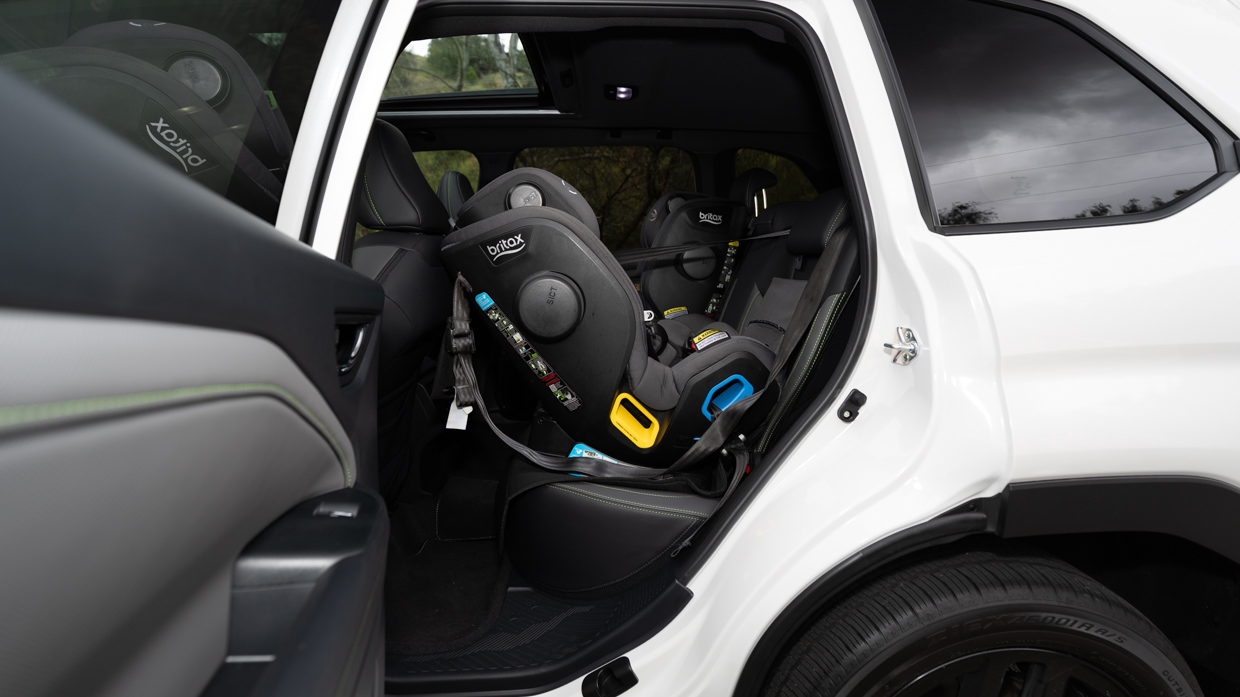
The backseat space of the Forester is ample, with enough width across the middle to actually use the centre seat and enough distance to the front row to comfortably accommodate a rear-facing child seat – even when placed behind my own driving position at 183cm tall.
Likewise, amenities are plentiful with powerful air conditioning fed through large vents in the back seat, USB A and C ports, and huge space available in the door bins.
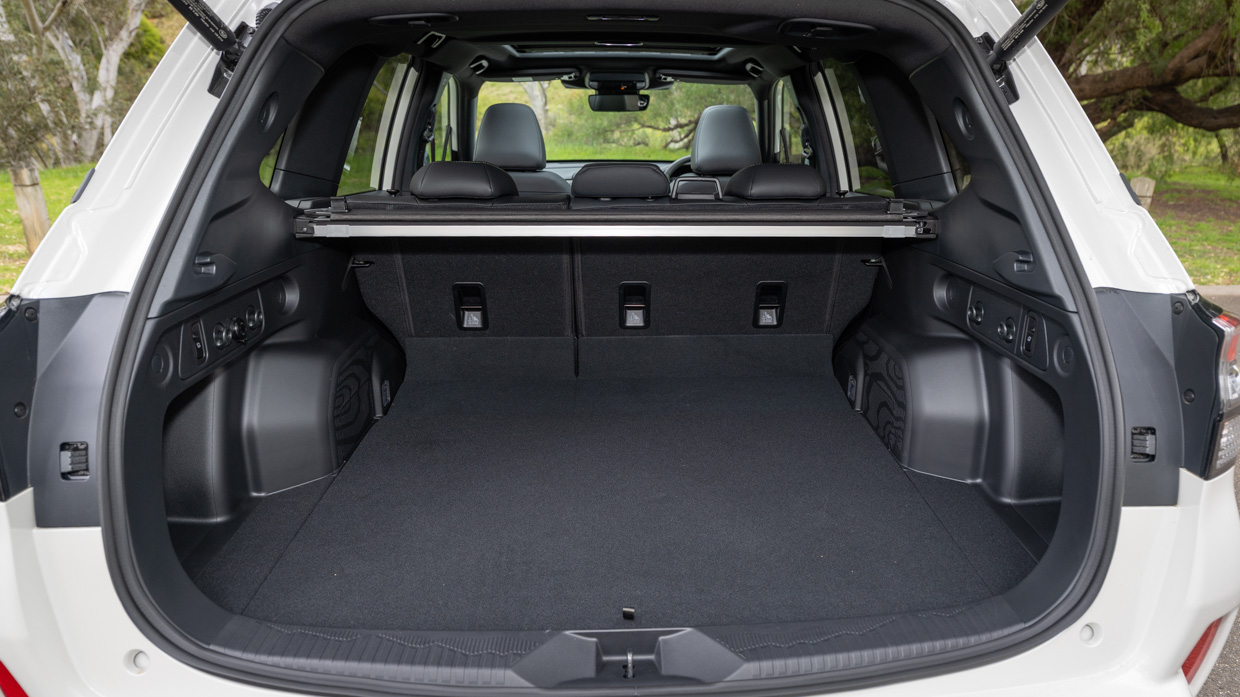
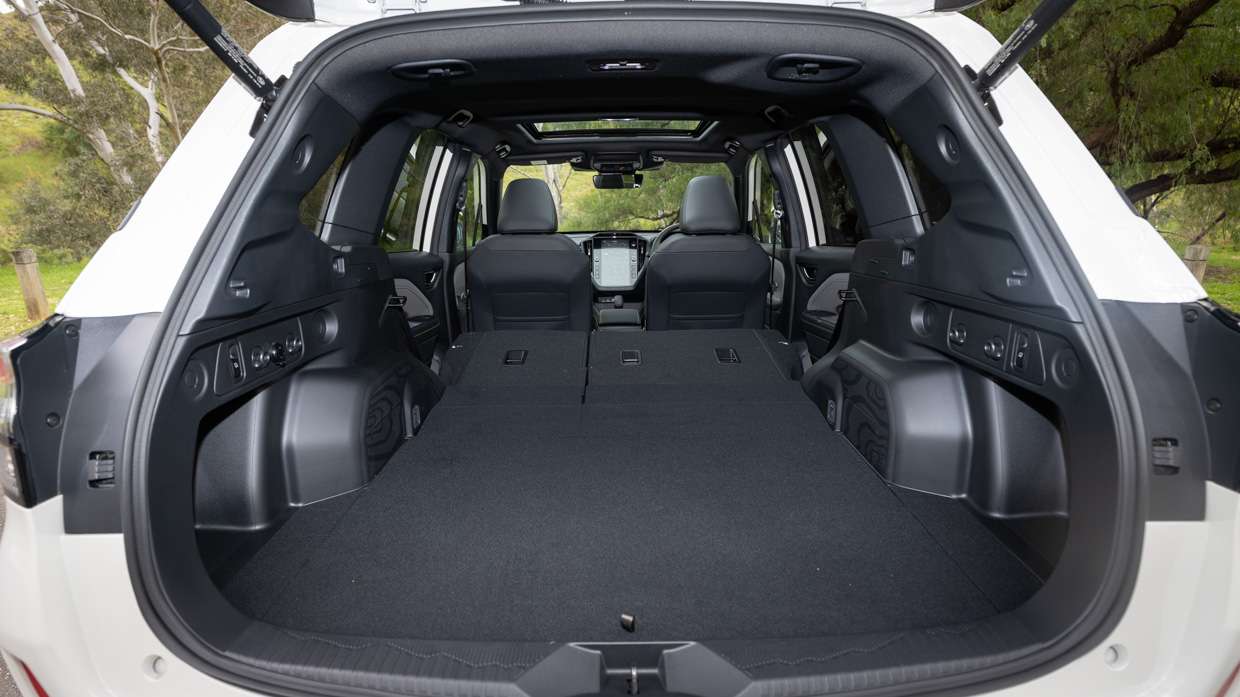
The power tailgate opens to reveal a solid boot area, with the 484L quoted capacity expanding to 1162L when the rear seats are folded flat. Shopping bag hooks, 12v sockets and four tie-down points join the list of amenities.
With waterproof seat material the bragging right of the Sport grade, it’s odd that Subaru has left the vulnerable carpeted boot floor exposed when a rubber mat should really be standard. For now, surfers are better off wearing their wetsuit home than throwing them in the boot.
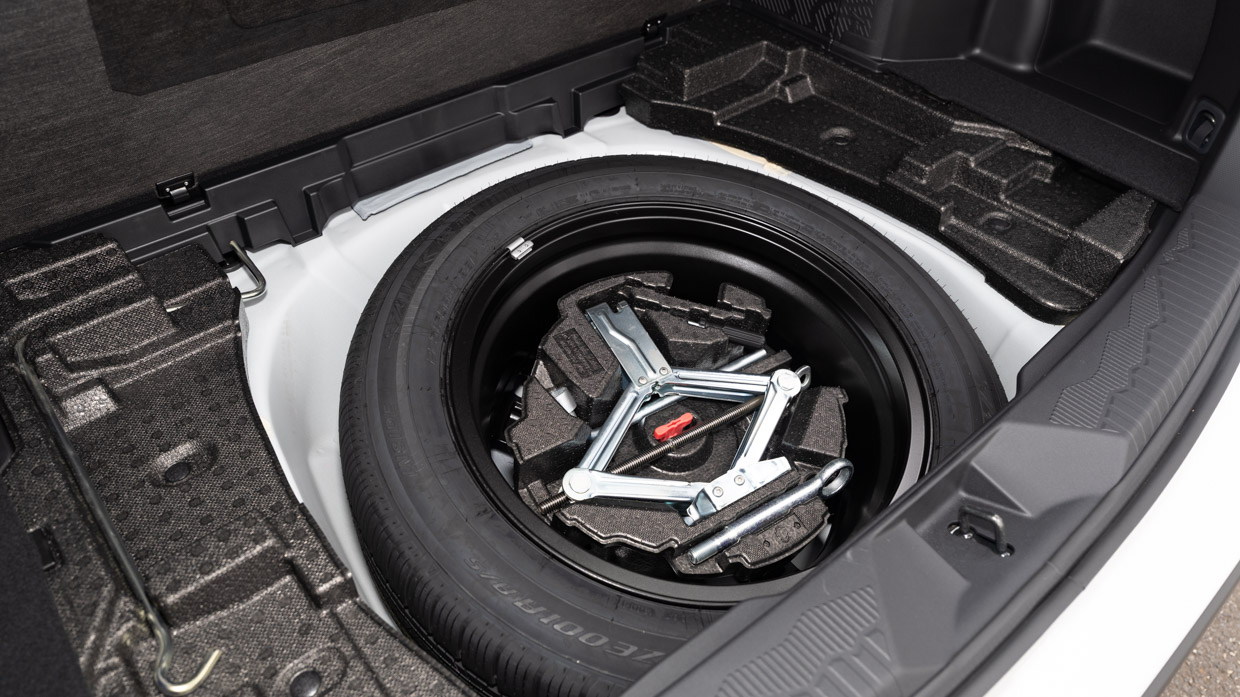
While all hybrid variants forgo a spare tyre of any kind, petrol versions still come fitted with a full-size backup.
The Forester is, and has for a long time, been regarded as a safe family car, with the new generation earning a five-star ANCAP rating back in 2024.
Though it performed well for child occupant protection with a 91 percent rating and similar for vulnerable road user protection at 86 percent, the 83 percent score for adult occupant protection and 75 percent for safety assistance are merely fine from a brand that previously set the standard with the outgoing Outback.
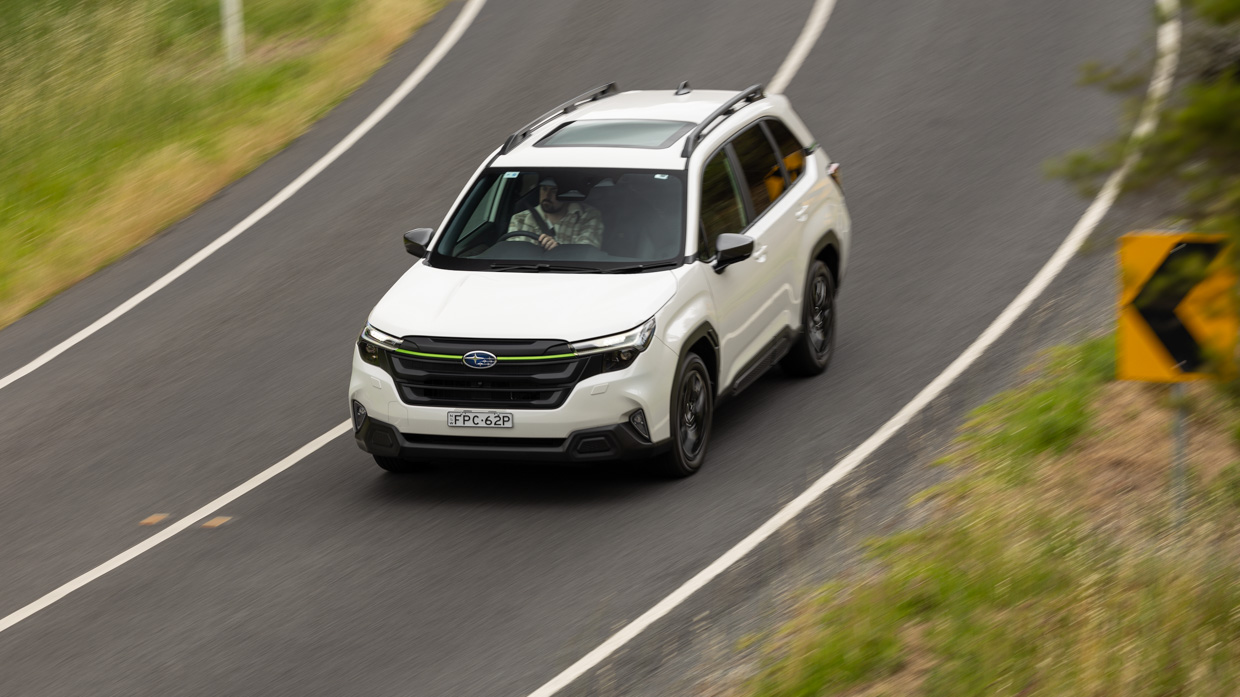
Day to day, the calibration of many of the driver assistance systems is fine but some are overly strict: the lane-keep assistance intervenes far too often and the driver monitoring system fails to grasp that checking your speedometer is part of driving, not a distraction.
The previous-generation Forester lacked some of these features, and in the case of lane-keep, allowed drivers to turn it off permanently via a switch in the roof. No such luck with the new-gen, which activates the aforementioned systems at startup.
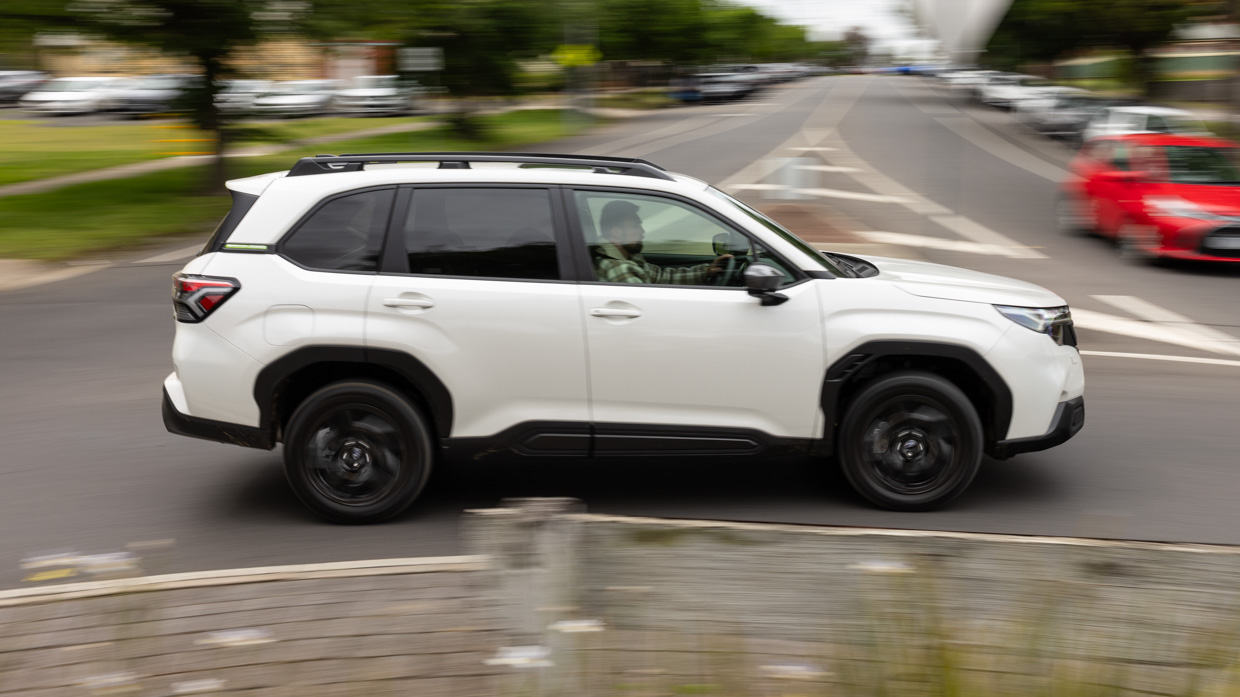
We also experienced numerous false alarms of an impending collision. While not experienced in this petrol tester, our hybrid long-term based in the heart of Sydney often went a step further and activated the automatic braking feature at less-than-ideal times.
Subaru offers the industry-standard five-year, unlimited kilometre warranty on all its models, including the Forester.
You’ll need to take the Forester to the mechanic every 12 months or 15,000km, whichever comes first. Subaru locks in pricing for five years, with a total cost of $2299 over that time for both the hybrid and petrol variants – a touch more expensive than a Nissan X-Trail ($1995) or Mitsubishi Outlander ($1825), for context.
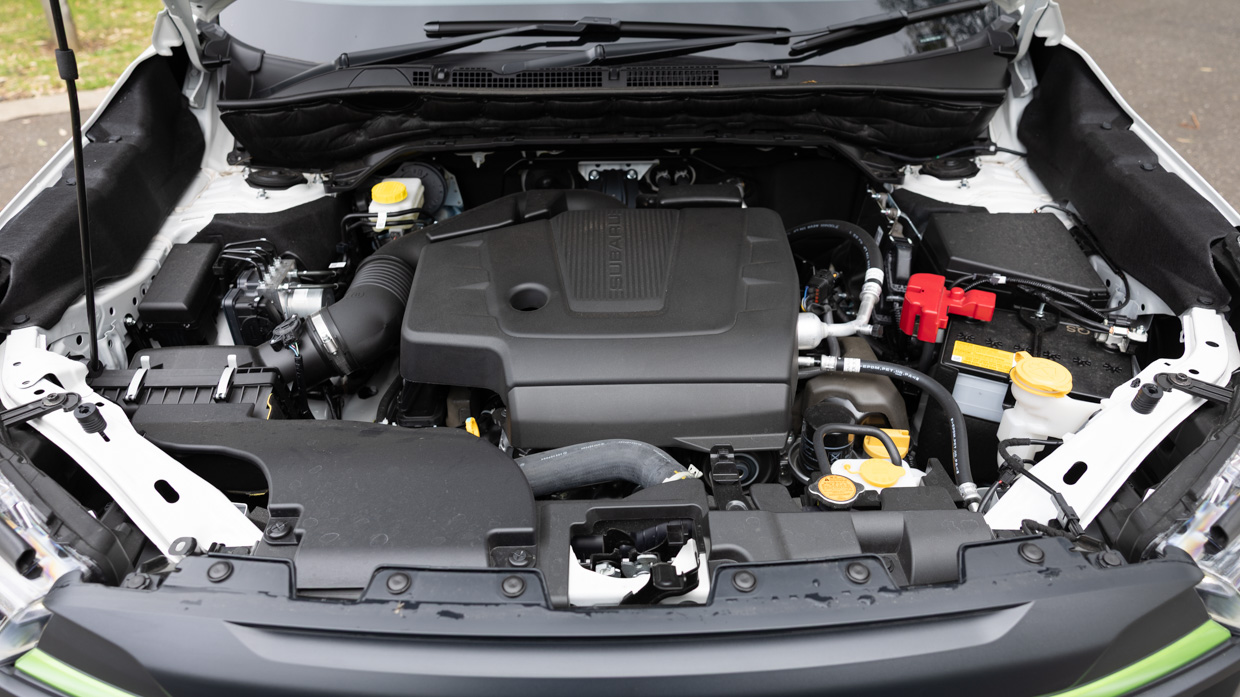
Subaru quotes an official average fuel consumption of 7.9L/100km using 91 Ron fuel as a minimum but we saw far less impressive performance, clocking 10.5L/100km with an even mix of urban and highway driving. That’s similar thirst to a full-size 4×4 wagon.
Although the Forester Hybrid only offers slim savings on paper, with 6.2L/100km quoted, our recent long-term test found it got much closer with a total average of 6.95L/100km with no premium fuel required.
Using our figures and fuel price of $1.85, travelling 12,000km annually, you’ll need eight years to pay off the $6500 upcharge for the hybrid. That said, the hybrid is better equipped and unlocks more driving range thanks to its greater efficiency from the shared 63L tank.
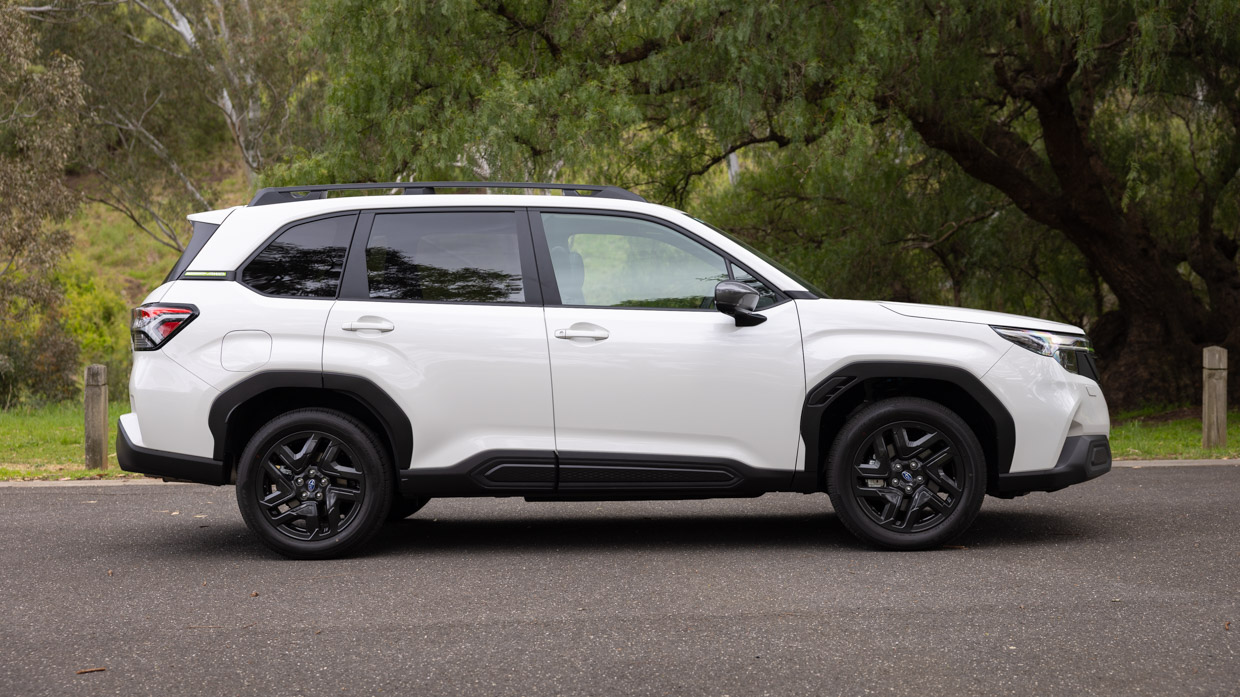
Budget Direct told us the median annual premium purchased for the first time between 1st of December 2024 and 1st of December 2025 to comprehensively insure a new Subaru Forester was $1091. Individual circumstances and policy terms may vary.
Of course, everybody’s situation is different, and the premium will vary according to make and model, and other things insurers take into account, such as your postcode, driving history, who drives the car, where you garage the car, and more.
Please quote for yourself. Subject to meeting underwriting criteria. Insurance issued by Auto & General Insurance Company Limited. See PDS & TMD at budgetdirect.com.au.
The Forester Sport is an enticing deal at $48,490 before on-road costs for those wanting to dip their toe into the world of adventure but who don’t want to deal with the size, hassle or mechanical complexity of a full-size 4×4 wagon or ute.
It’s still affordable in petrol guise, easy to drive, incredibly comfortable and capable when pushed. History has also shown newer-model Foresters to be generally reliable and hold their value over the longer term.
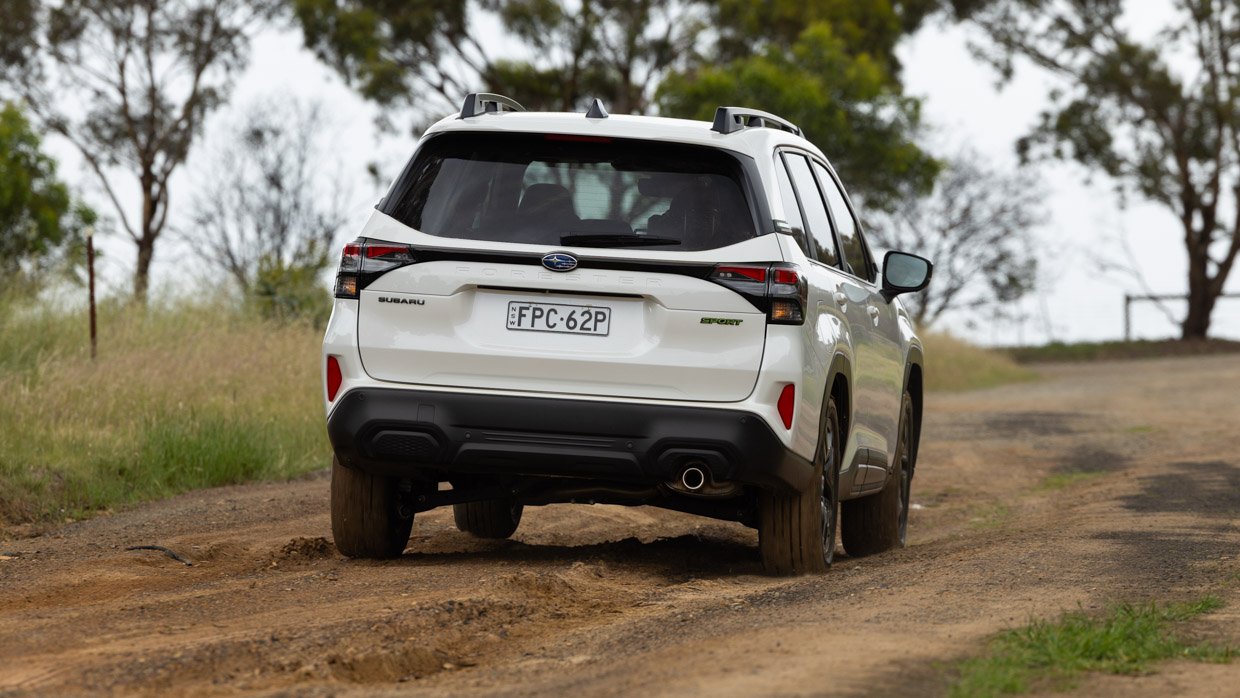
What the petrol-powered Forester fails to do is innovate in almost any way. The standard 2.5L engine manages to be loud, slow and thirsty all at the same time and drags the Forester away from its true potential.
Subaru’s popular turbocharged 2.4-litre option available on the Outback fixed most of these issues for the model, but still isn’t offered here. The hybrid is worth considering, but the $6500 upcharge on the Sport grade is a tough pill to swallow.
The petrol Sport is still a convincing package for the right person, though the $2000-cheaper 2.5i Premium is perhaps even better value. That said, the more advanced off-road system that comes with the Sport is probably cheaper than calling for a tow truck on a snowy mountain.
Key specs (as tested)
About Chasing cars
Chasing Cars reviews are 100% independent.
Because we are powered by Budget Direct Insurance, we don’t receive advertising or sales revenue from car manufacturers.
We’re truly independent – giving you Australia’s best car reviews.
The estimate provided does not take into account your personal circumstances but is intended to give a general indication of the cost of insurance, in order to obtain a complete quote, please visit www.budgetdirect.com.au. Estimate includes 15%^ online discount.
^Conditions Apply
Budget Direct Insurance arranged by Auto & General Services Pty Ltd ACN 003 617 909(AGS) AFSL 241 411, for and on behalf of the insurer, Auto & General Insurance Company Limited(ABN 42 111 586 353, AFSL 285 571).Because we don’t know your financial needs, we can’t advise you if this insurance will suit you. You should consider your needs and the Product Disclosure Statement before making a decision to buy insurance. Terms and conditions apply.
Indicative quote based on assumptions including postcode , 40 year old male with no offences, licence suspensions or claims in the last 5 years, a NCD Rating 1 and no younger drivers listed. White car, driven up to 10,000kms a year, unfinanced, with no modifications, factory options and/or non-standard accessories, private use only and garaged at night.
^Online Discounts Terms & Conditions
1. Discounts apply to the premium paid for a new Budget Direct Gold Comprehensive Car Insurance, Third Party Property Only or Third Party Property, Fire & Theft Insurance policy initiated online on or after 29 March 2017. Discounts do not apply to optional Roadside Assistance.
2. Discounts do not apply to any renewal offer of insurance.
3. Discounts only apply to the insurance portion of the premium. Discounts are applied before government charges, taxes, levies and fees, including instalment processing fees (as applicable). The full extent of discounts may therefore be impacted.
4. We reserve the right to change the offer without notice.