Powered by

-
Car Reviews
Latest reviews
- Car News
-
Car Comparisons
Latest comparisons
- Chasing Deals
Latest reviews
Latest comparisons
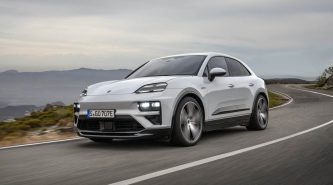
Porsche’s biggest-selling model has gone all electric. We test the flagship Turbo to find out if it’s still the benchmark for SUV dynamics
The original Macan wasn’t a controversial model in 2014, with purists already – if reluctantly – acclimatised to the idea of a Porsche SUV by the 2002 Cayenne.
Porsche’s long-awaited second-generation Macan, however, has gone all electric, ditching the four- and (especially) six-cylinder engines that formed an essential part of its character.
After initially being bullish about the move to electric despite the Macan’s entry price swelling by about $30,000 in Australia, Porsche has since confirmed future plans for a combustion-powered midsized SUV set to adopt a different model name.
If once upon a time you could get into a Macan for less than $80,000, the current starting price is $129,800.
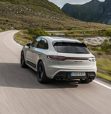
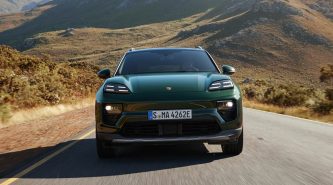
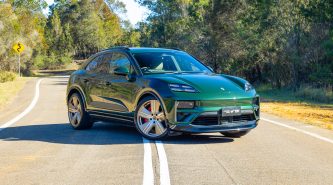
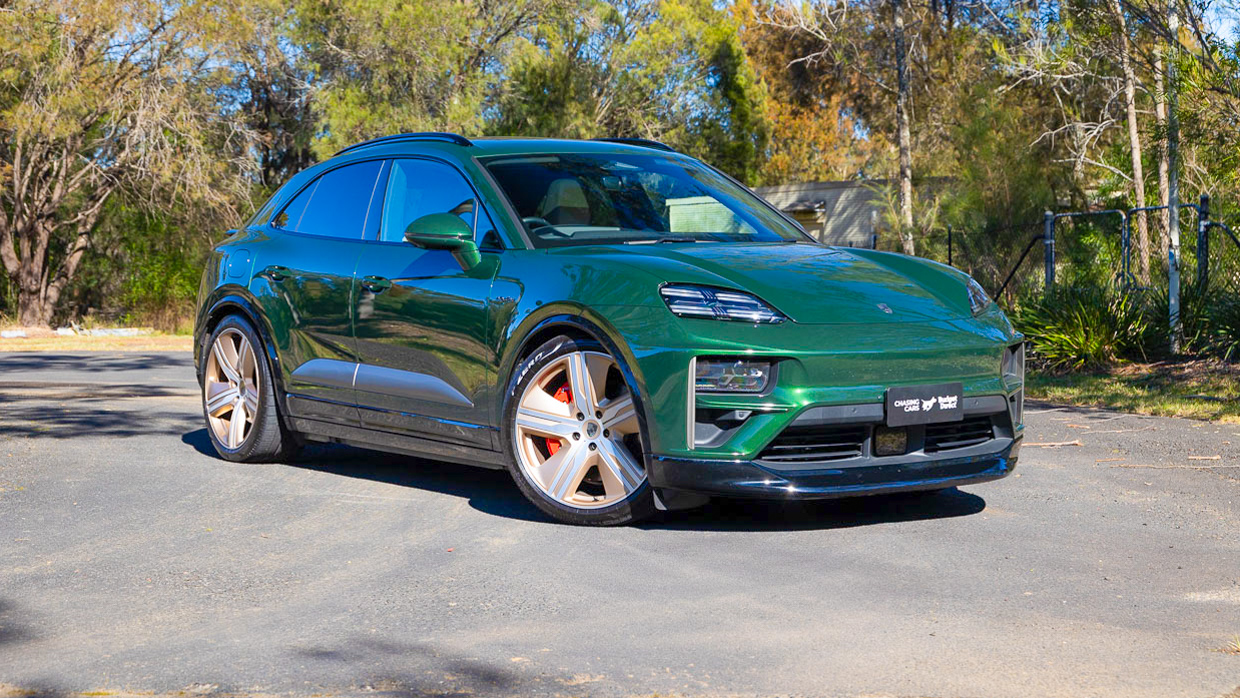
Here we’re testing the flagship (for now) Turbo that costs $187,600 before on-road costs.
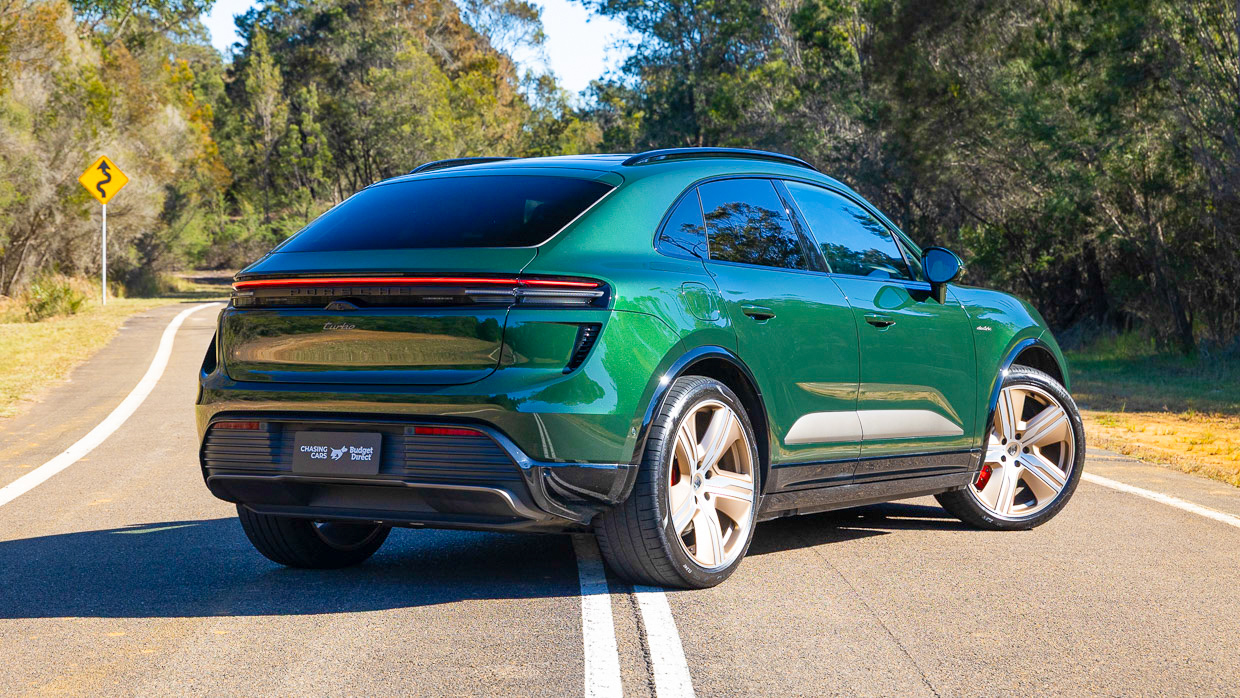
Key things we explore in this review: Does the Macan still set the benchmark for SUV dynamics as with its combustion predecessor? And does the Macan justify its premium over the technical twin, the Audi Q6 e-Tron, with which it shares a new battery platform dubbed PPE (Premium Platform Electric)?
Starting prices are very much just that in Porsche-showroom world; it’s possible to spend tens of thousands in outlay by adding options and customising your vehicle.
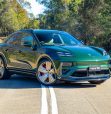
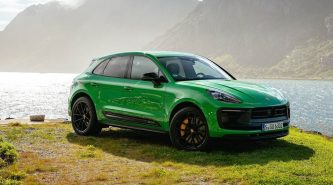
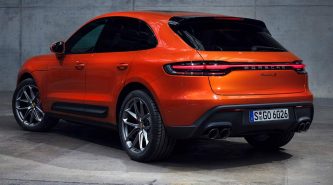
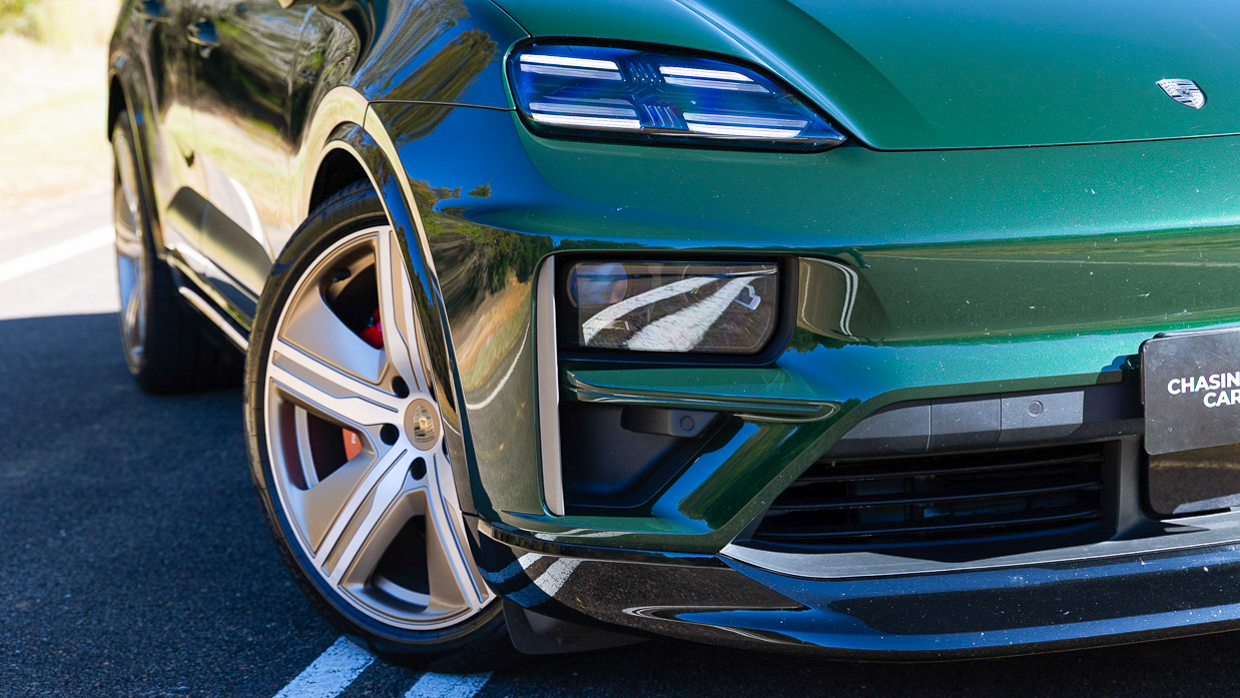
Our Macan Turbo test car, for example, adds nearly $30,000 to the bill with an array of extras, which include Legends’ Oak Green metallic paint, extended leather interior, and 22-inch Exclusive Design wheels painted in ‘Neodyme’ gold.
Dealer and other charges will take the driveaway price to about $206,000 before you even add options, though.
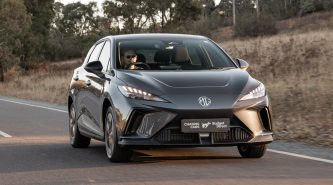
You’ll find a more generous standard equipment list on the comparable — though cheaper — Audi SQ6 e-Tron (from $156,400). The upside for Macan buyers is that the Porsche is less off-the-rack, allowing for greater personalisation of both the exterior and interior.
Standard Turbo features include 20-inch wheels, Matrix LED headlights, heated steering wheel, air suspension, 18-way electric adaptive sports seats, rear-axle steering, torque vectoring, and Sports Chrono Package with Track Endurance mode.
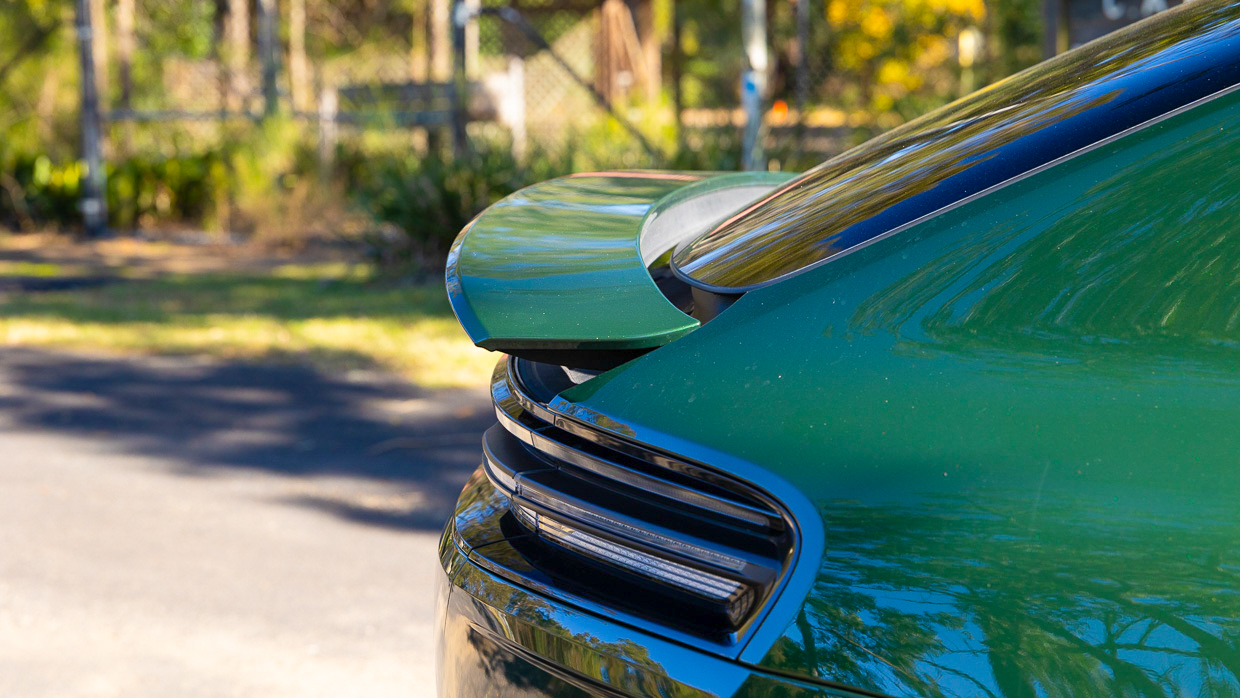
The Turbo is very much the leader of the Macan pack in both tech and performance.
Very quickly. Porsche quotes 3.3 seconds for the 0-100km/h acceleration run, with the Macan Turbo producing 470kW on overboost and up to 1130Nm from its dual electric motors.
That wipes a second off the time of the former twin-turbo V6-powered Macan GTS, while that also gives the Porsche an advantage over the 4.4-second SQ6.
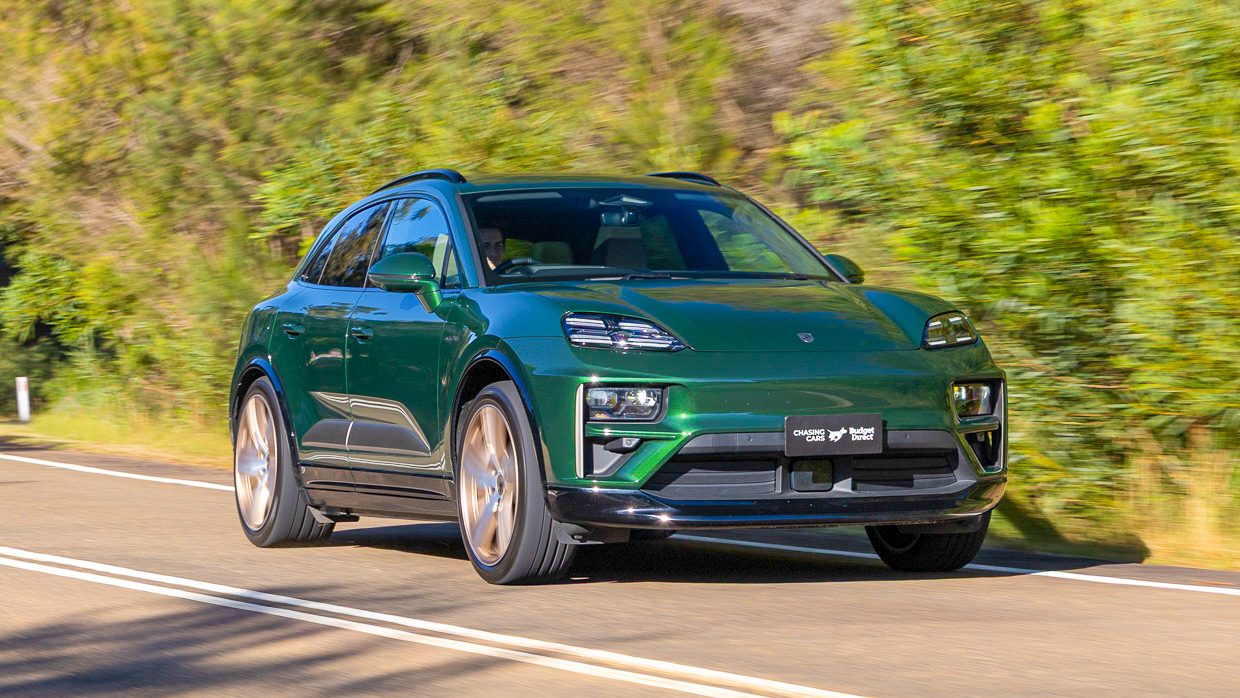
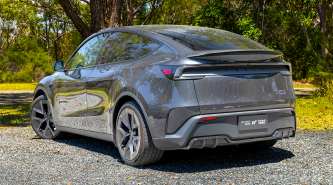
On the flip-side, the Turbo is little quicker than the 3.4sec of a vastly cheaper Tesla Model Y Performance.
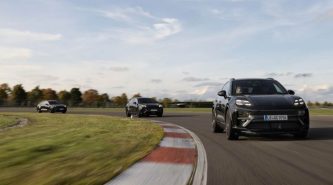
You’d want the Porsche for any track-day opportunity, though.
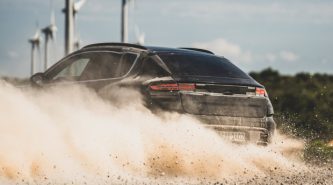
While the electric Macan adds hundreds of kilos in weight compared with a petrol Macan, its centre of gravity is claimed to be lower. Super-disciplined body control, precise steering, predictable behaviour, and fantastic brakes all provide the driver with the utmost confidence to blast through a sequence of corners with relatively minimal effort.
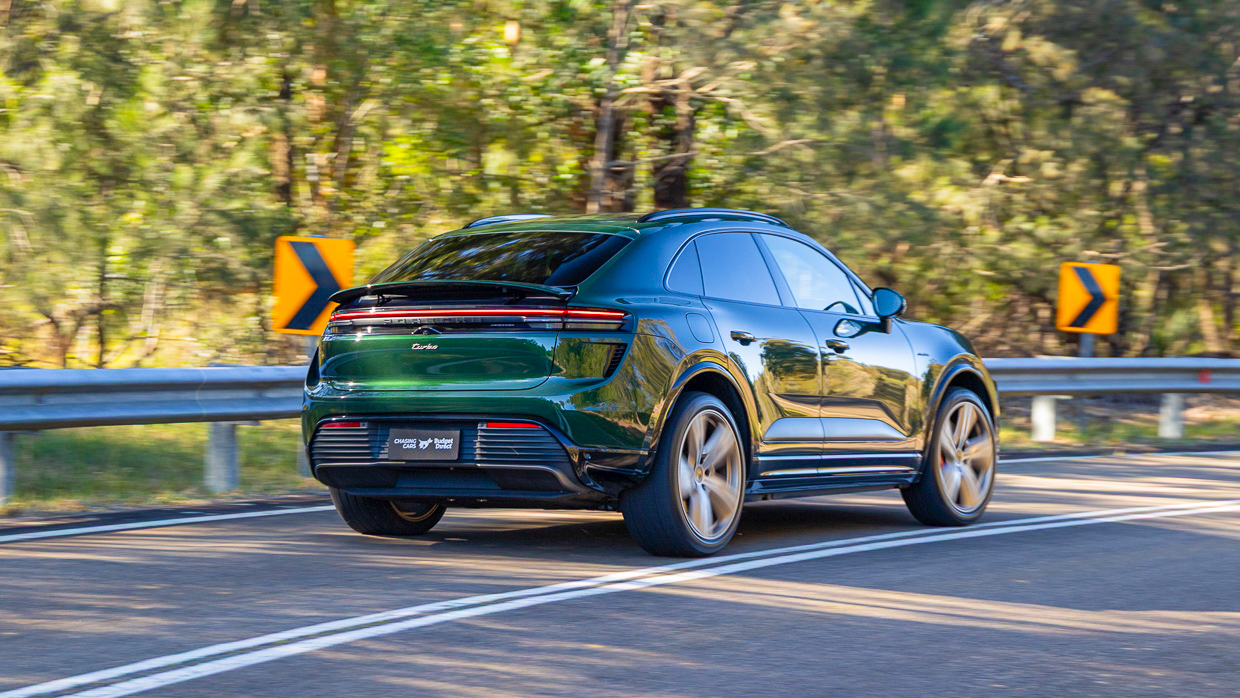
Lower-speed agility (and daily driving) is enhanced by the wheelbase-shortening four-wheel steering, where the rear wheels turn opposedly to the fronts; the system then aids stability at higher speeds by turning the rear wheels in the same direction as the front wheels.
Bringing the SQ6 back into the equation again, it’s very much history repeating here — with the electric Audi humbled just as the SQ5 was by the combustion Macan.
The Porsche completes its all-round superiority with a more compliant everyday ride despite the huge 22-inch wheels of our test car (versus 21s on the SQ6). Road noise can give cause for complaint, though.
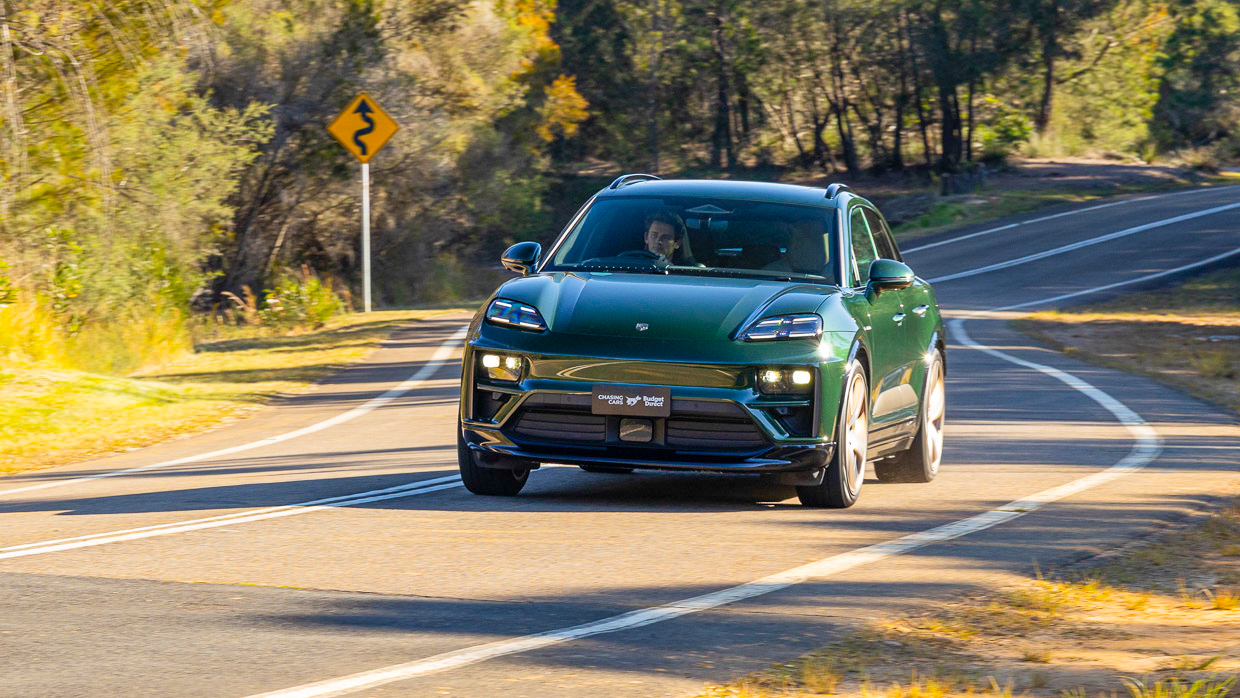
Porsche could still learn a sound trick or two from the Hyundai Ioniq 5 N… the warbly ‘Electric Sport Sound’ generator that’s active in Sport and Sport-Plus modes — and which may or may not have been inspired by a 1950s B-movie UFO effect — is a bit weird.
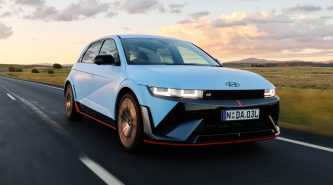
The 5 N is generally the elephant in the room here – another performance electric SUV that’s also maniacally rapid yet costs almost half the price (at $115,000 list). With slightly smaller dimensions and a circa-200kg weight advantage (if no lightweight itself), the 5 N feels even more entertainingly agile, and can mimic the sound of an i30 N engine and gearbox, too.
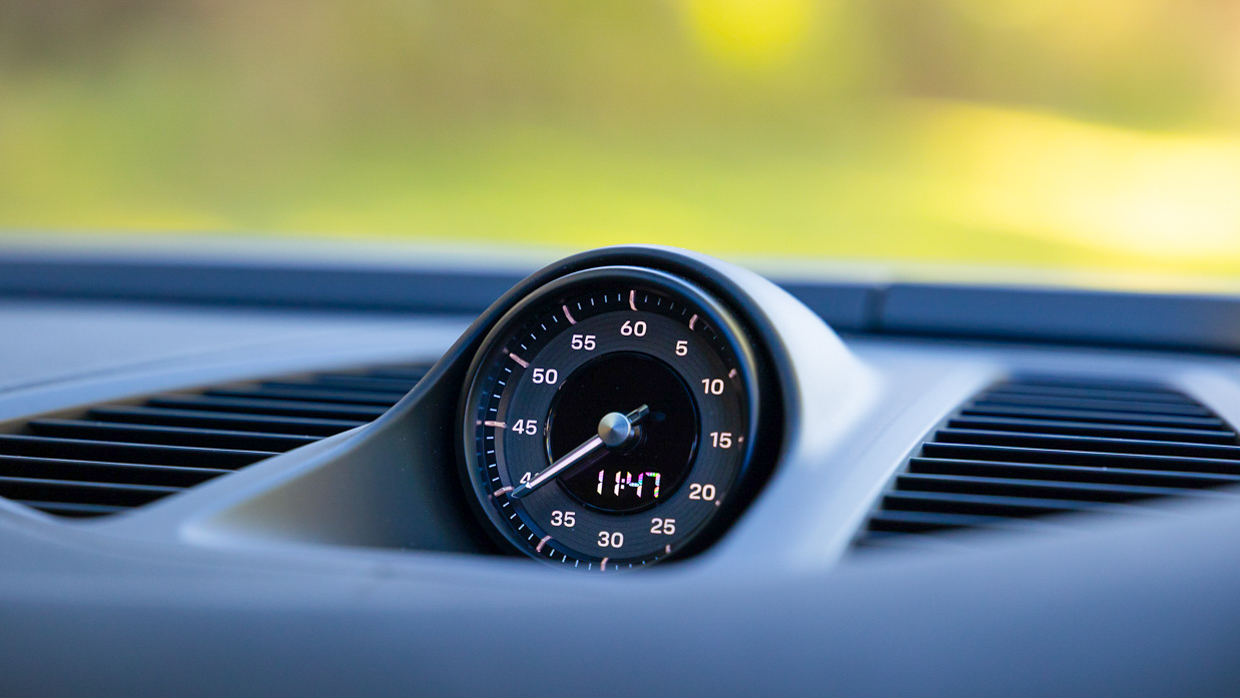
The only analogue display you’ll find in the Turbo is the Sports Chrono package clock that sits top and centre of the dash.
A trio of digital displays is spread across the central dash area, comprising (from right to left) digital driver screen, infotainment touchscreen, and front-passenger infotainment touchscreen.
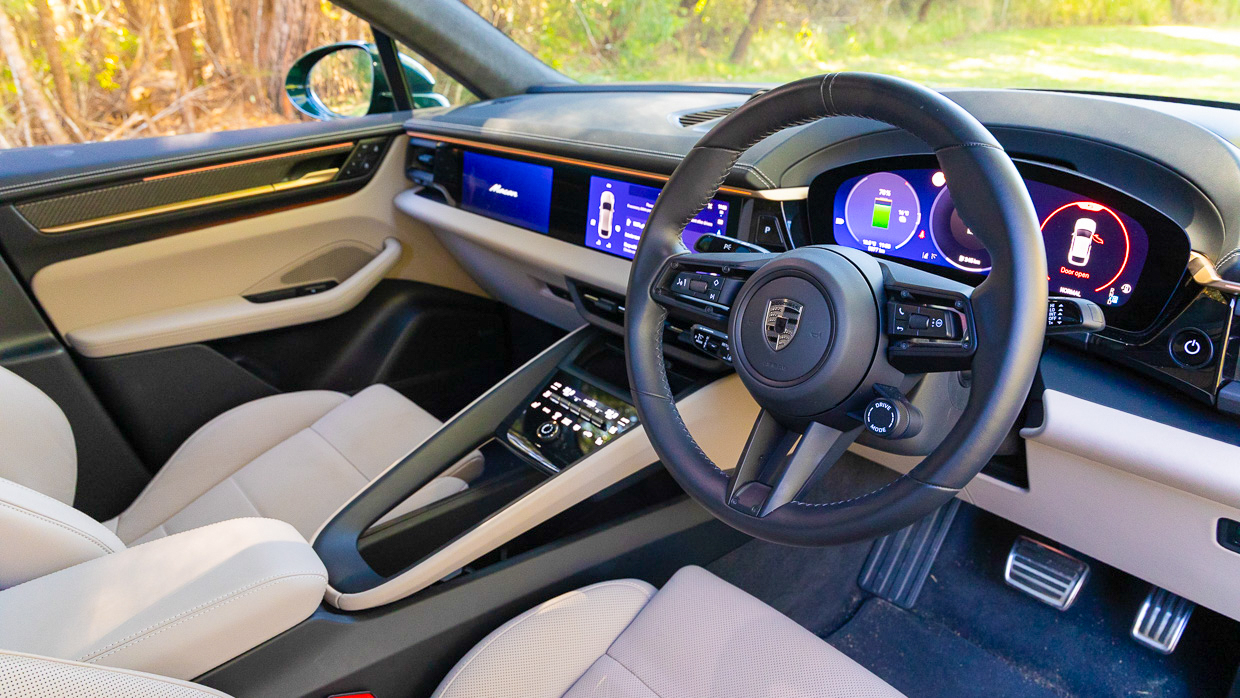
The Macan’s interior design carries off the sports-luxury vibe more successfully than the SQ6’s cabin, looking slightly more traditional yet without being anything less than contemporary visually.
A classier look is partially achieved by a steering wheel that eschews the trend for flat tops and bottoms, staying fully round while also being relatively thin rimmed for a performance vehicle.
It still features a welcome ergonomic function with its Drive mode dial.
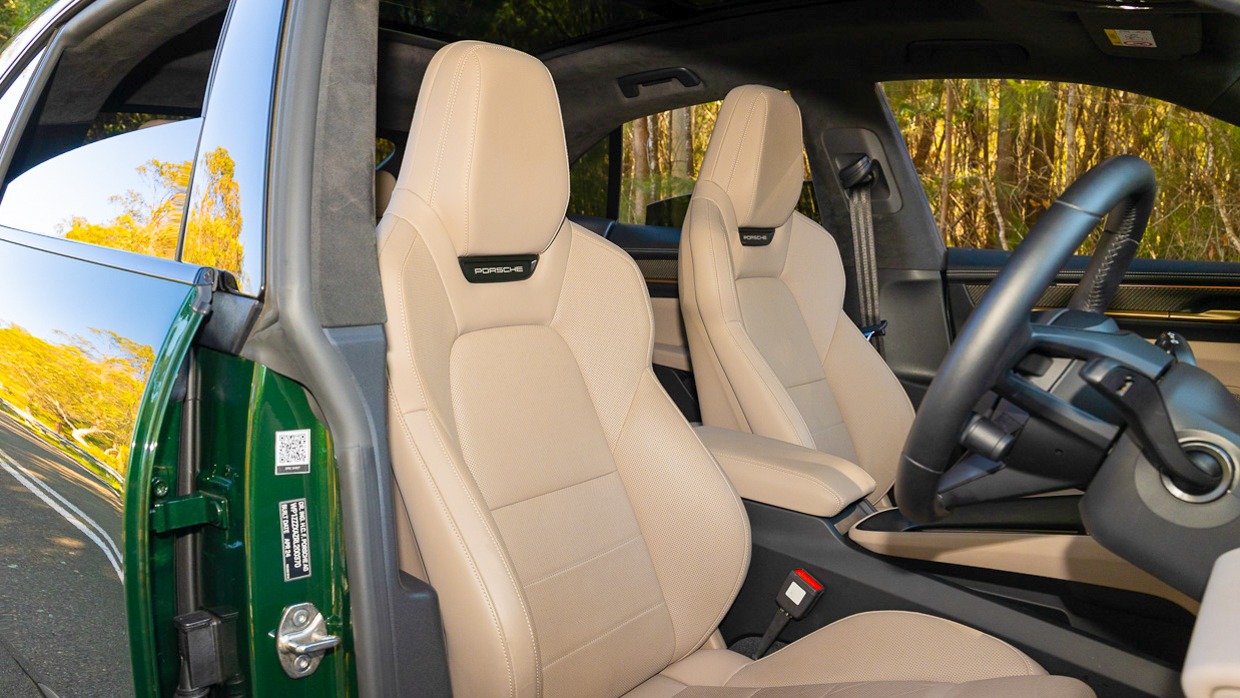
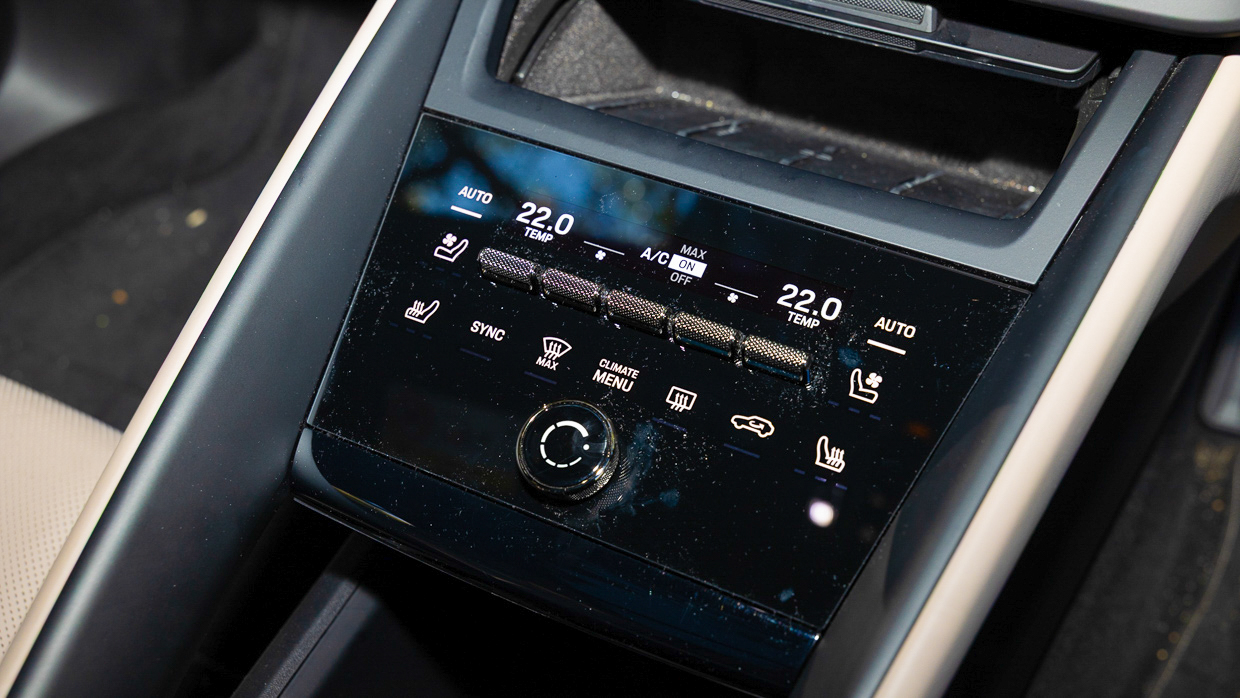
The Turbo’s standard Adaptive Sports Seats are terrific, with individual adjustment of both thigh and torso bolstering especially useful for choosing between a more relaxed driving position or a racier, hugged-in feel. Generous height adjustment also means drivers can opt to sit Cayenne high or Cayman low.
Storage space isn’t great but generally the electric Macan offers a more practical and spacious interior than its petrol/diesel predecessors.
The packaging is far from the best seen from a midsized electric SUV, however, with restrictive rear-seat legroom if occupants up front or rear are above-average height.
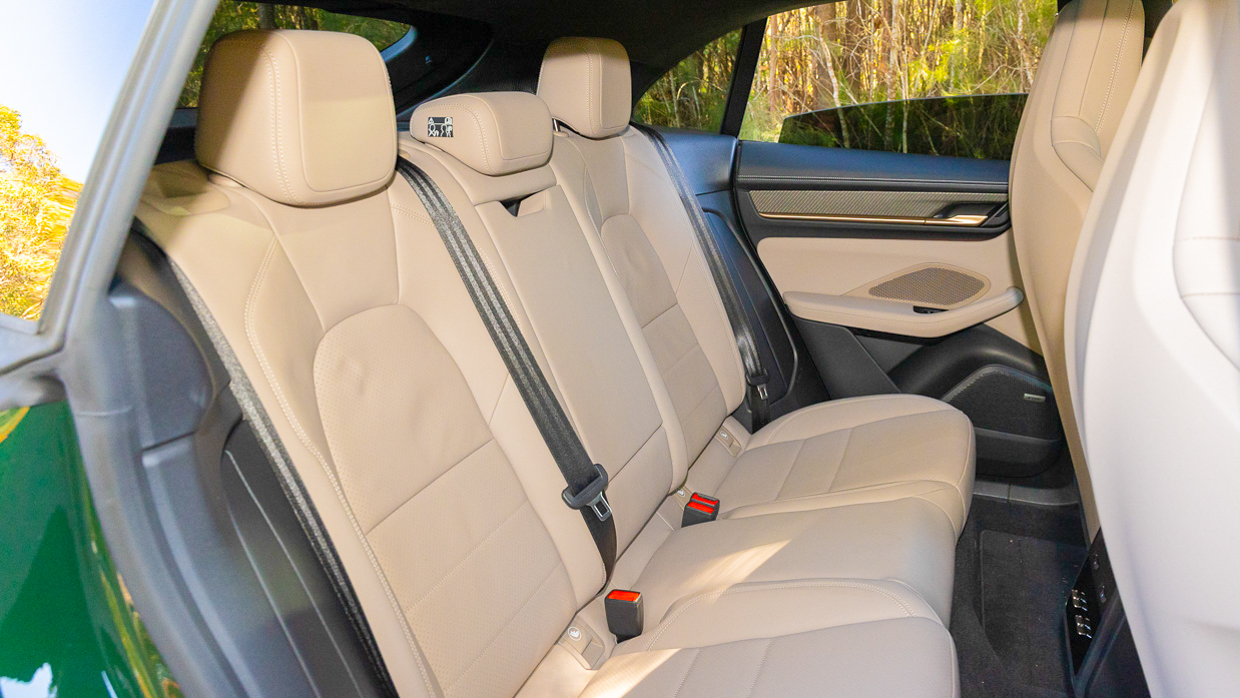
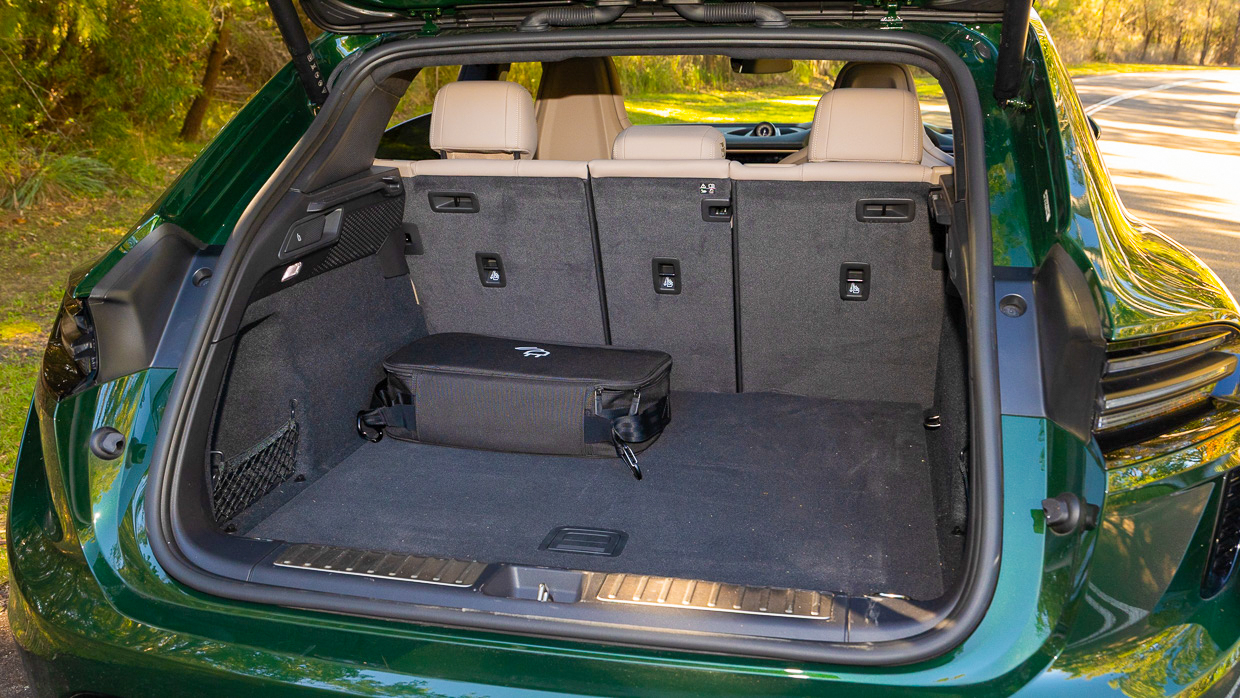
There’s a bigger boot capacity than before, and the electric Macan adds the bonus of an 84-litre frunk under the bonnet.
The electric Macan earned a full, five-star safety rating from Euro NCAP in 2024, and its scores in individual categories were high – especially for adult and child occupant protection (both 90 per cent). Currently no Porsche models are rated by ANCAP.
Porsche’s factory warranty is a miserly three years with unlimited kilometres, two years shy of even the industry average. Porsches have a reputation for being built exceptionally well, however.
Unlike more mainstream rivals, Porsche doesn’t offer capped-price servicing. Maintenance is due every 24 months or 30,000km (longer than typical) and will cost roughly $3000 over a five-year period.
Budget Direct told us the median annual premium purchased for the first time between 1st of December 2024 and 1st of December 2025 to comprehensively insure a new Porsche Macan was $1935. Individual circumstances and policy terms may vary.
Of course, everybody’s situation is different, and the premium will vary according to make and model, and other things insurers take into account, such as your postcode, driving history, who drives the car, where you garage the car and more.
Please quote for yourself. Subject to meeting underwriting criteria. Insurance issued by Auto & General Insurance Company Limited. See PDS & TMD at budgetdirect.com.au.
A large 95kWh (useable) battery lends the Macan Turbo a WLTP-quoted range of 591km, and WLTP efficiency is a claimed 16.1kWh/100km.
Achieving those kinds of figures would rely on owners choosing not to drive the Macan Turbo as its engineers intended. With a mix of freeway, country roads and some dynamic driving as part of our day-long test trip, we ended up at 24kWh/100km — and an as-tested range of 398km.
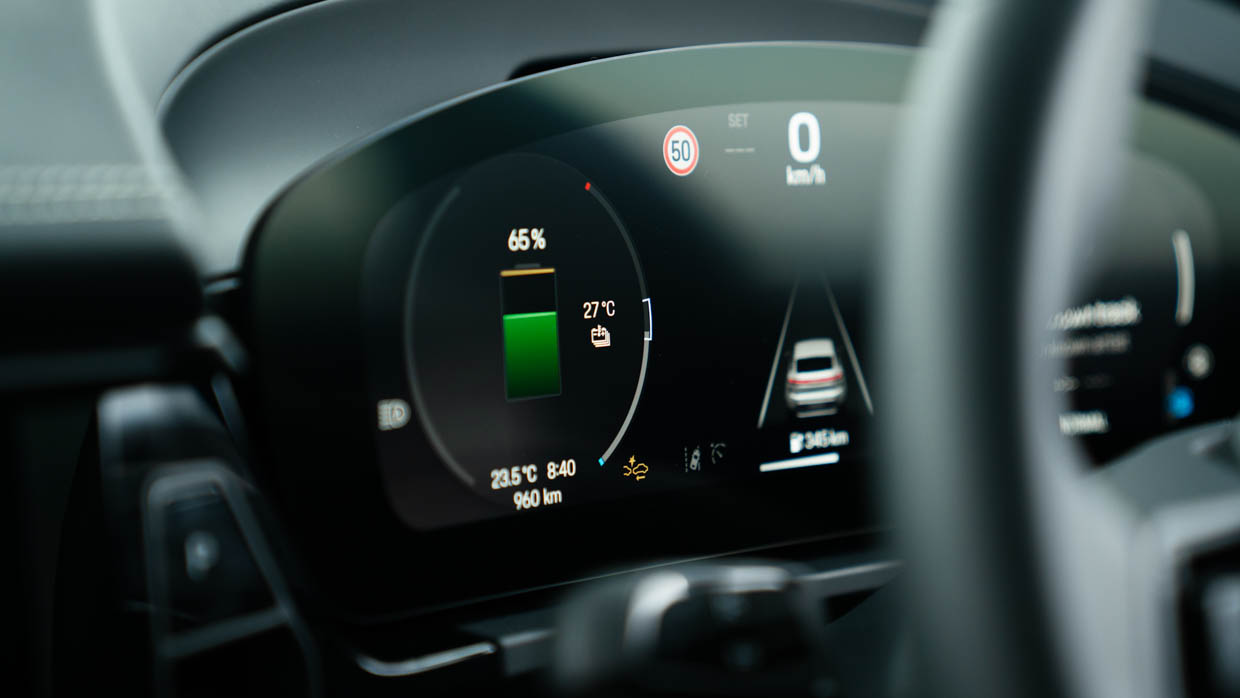
For perspective, the Turbo still edged the SQ6 in our twin test, with the Audi producing respective figures of 25.5kWh/100km and 372km.
Porsche says the electric Macan’s battery can be recharged from 10 to 80 per cent in around 21 minutes using rapid (DC) 270kW charging thanks to its underpinning 800-volt platform.
Further, it takes about 10 hours and 15 minutes from flat to 100 percent using 11kW AC charging.
Although identical figures to its Audi tech twin, our experience at the same fast-chargers saw the Porsche emerge as the electron-consuming champ.
The electric Turbo takes the Macan past $200,000 for the first time, an eye-widening price for a midsized family SUV regardless of the model’s performance and tech.
For a vehicle notably larger than before, getting on towards 4.8 metres in length, the Macan’s interior packaging isn’t great, either.
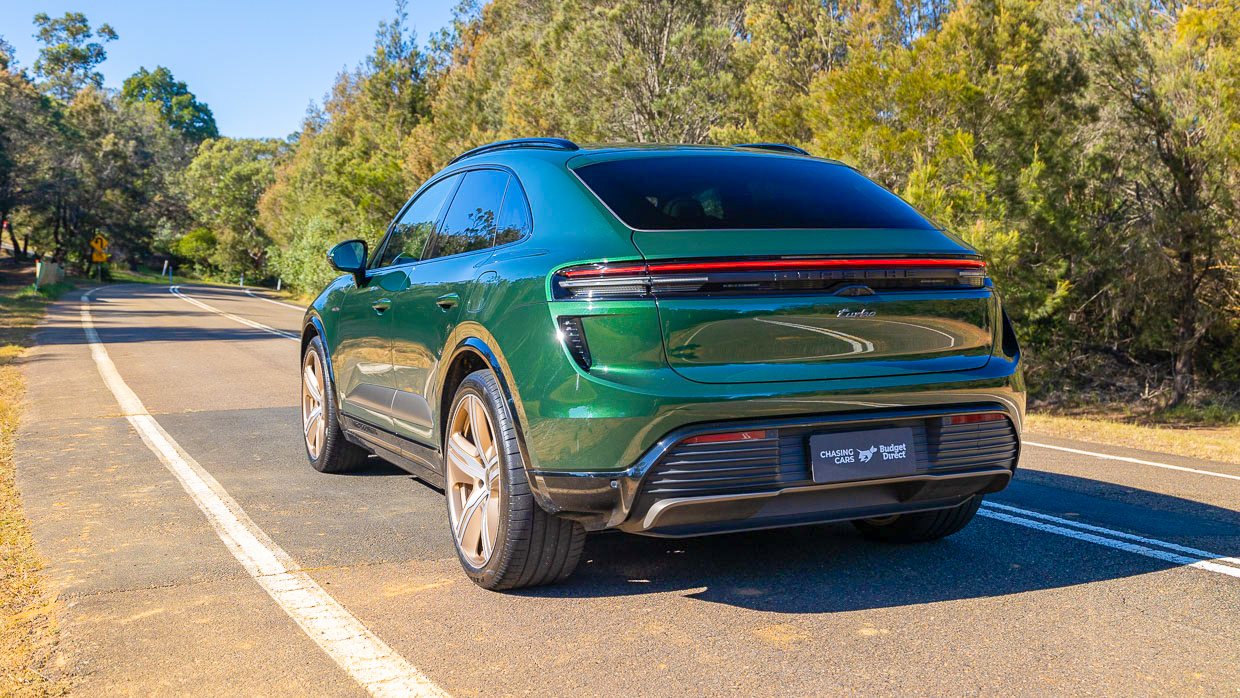
Yet there’s plenty that’s special about this SUV. The cabin presentation/quality is superb, while its ride-handling is without peer among luxury electric SUVs. Just don’t mention the Hyundai Ioniq 5 N.
Key specs (as tested)
About Chasing cars
Chasing Cars reviews are 100% independent.
Because we are powered by Budget Direct Insurance, we don’t receive advertising or sales revenue from car manufacturers.
We’re truly independent – giving you Australia’s best car reviews.
The estimate provided does not take into account your personal circumstances but is intended to give a general indication of the cost of insurance, in order to obtain a complete quote, please visit www.budgetdirect.com.au. Estimate includes 15%^ online discount.
^Conditions Apply
Budget Direct Insurance arranged by Auto & General Services Pty Ltd ACN 003 617 909(AGS) AFSL 241 411, for and on behalf of the insurer, Auto & General Insurance Company Limited(ABN 42 111 586 353, AFSL 285 571).Because we don’t know your financial needs, we can’t advise you if this insurance will suit you. You should consider your needs and the Product Disclosure Statement before making a decision to buy insurance. Terms and conditions apply.
Indicative quote based on assumptions including postcode , 40 year old male with no offences, licence suspensions or claims in the last 5 years, a NCD Rating 1 and no younger drivers listed. White car, driven up to 10,000kms a year, unfinanced, with no modifications, factory options and/or non-standard accessories, private use only and garaged at night.
^Online Discounts Terms & Conditions
1. Discounts apply to the premium paid for a new Budget Direct Gold Comprehensive Car Insurance, Third Party Property Only or Third Party Property, Fire & Theft Insurance policy initiated online on or after 29 March 2017. Discounts do not apply to optional Roadside Assistance.
2. Discounts do not apply to any renewal offer of insurance.
3. Discounts only apply to the insurance portion of the premium. Discounts are applied before government charges, taxes, levies and fees, including instalment processing fees (as applicable). The full extent of discounts may therefore be impacted.
4. We reserve the right to change the offer without notice.