Powered by

-
Car Reviews
Latest reviews
-
Car News
Latest news
-
Car Comparisons
Latest comparisons
- Chasing Deals
Latest reviews
Latest news
Latest comparisons
While the Aion V is a bit more expensive than key rivals, its large battery and long equipment list mean it demands consideration, even if it’s nothing special to drive
Amid the onslaught of new automotive brands coming to Australia — most of them Chinese — Guangzhou’s GAC says it has a major edge over rivals. That edge is all about experience.
Part of that comes from old age: GAC can trace its lineage making cars in China to 1948. Mainly, it’s about the fact that, for 20 years, GAC has held one of just two vaunted joint venture (JV) partnerships in China with Toyota.
No surprise, then, that the marketing accompanying GAC’s entry to Australia talks up the firm’s reputation for quality. The undertone here is that if GAC is good enough for Toyota, it’s good enough for Australia.
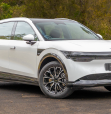
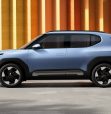
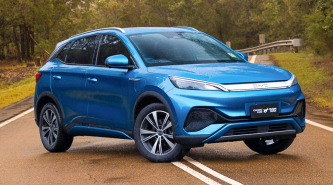
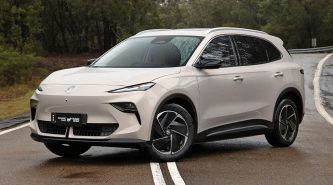
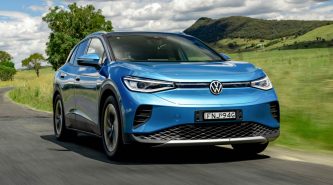
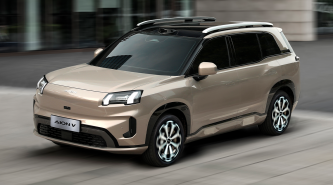
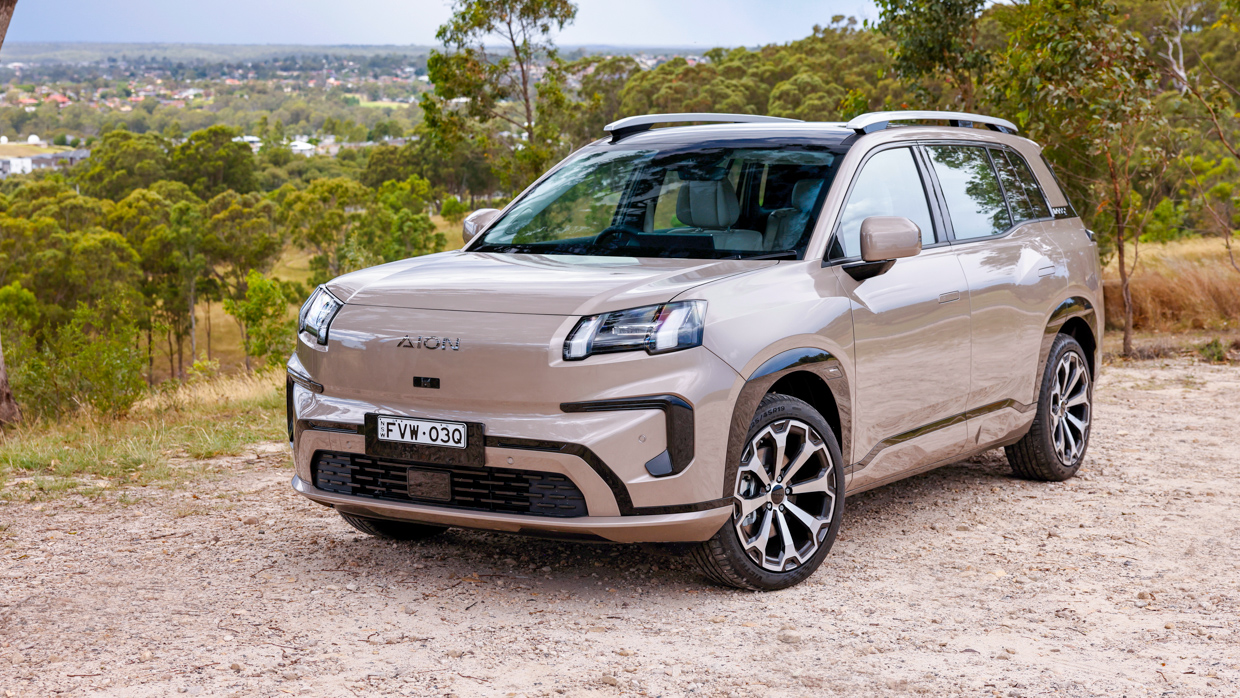
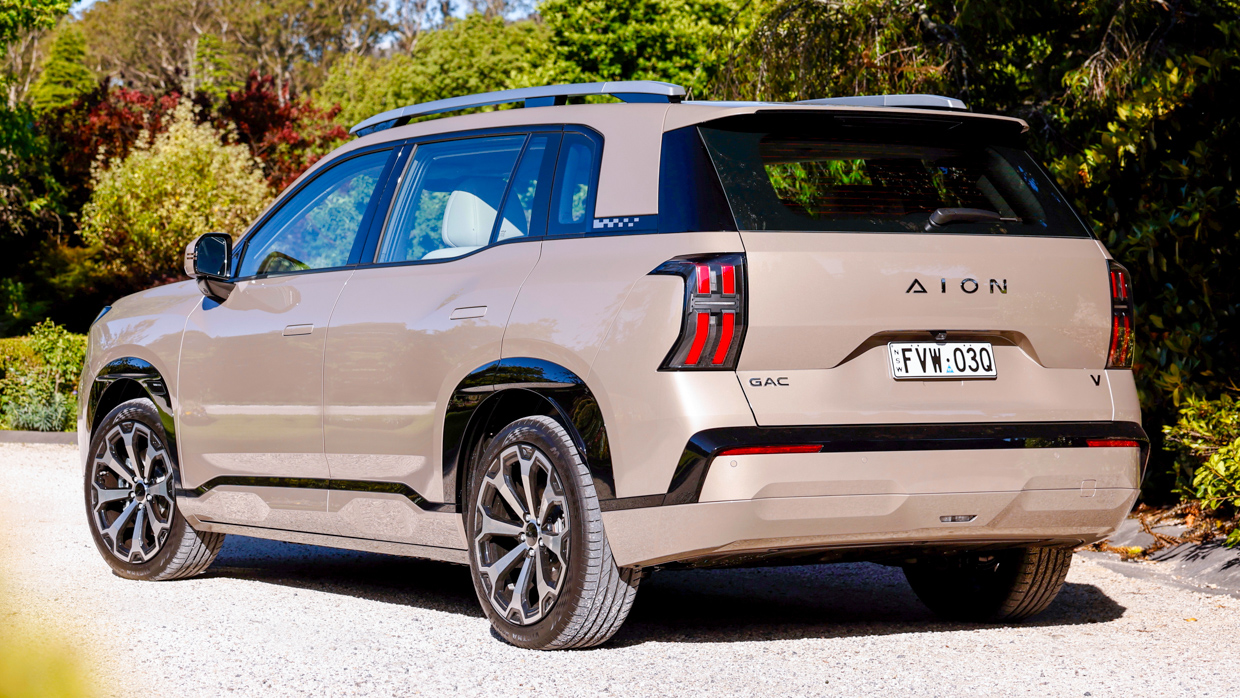
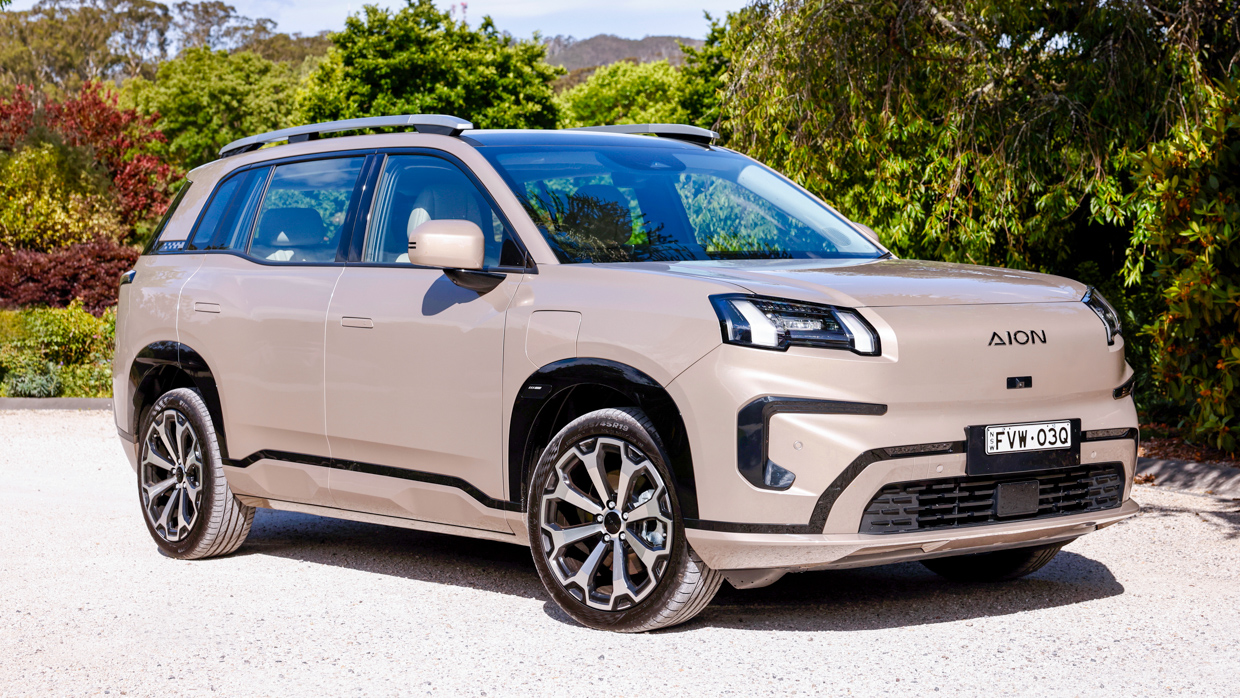
The first of three initial GAC models to launch locally is the Aion V electric midsize SUV — a boxy, practical rival to everything from the smaller BYD Atto 3 and MG S5 EV to the similarly-sized Volkswagen ID4.
Hailing from GAC’s faintly upmarket electric sub-brand Aion, the V leads the launch trio that includes two models from GAC’s ‘home brand’ (called Trumpchi in China…), being the Emzoom petrol small SUV and M8 plug-in hybrid (PHEV) minivan.
By the end of 2027 the GAC lineup in Australia will have swelled to 10 models, with future cars confirmed to include the S7 PHEV large SUV, a more premium electric midsizer from GAC luxury marque Hyptec, and a PHEV dual-cab ute backed by a petrol engine.
As a fully electric offering priced from a fairly affordable $42,590 plus on-road costs, the Aion V launches into a growth segment in Australia with attainable EVs appealing to both cash buyers and user-choosers attracted to cheap pre-tax novated lease incentives.
The Aion V arrives at a good time, because its two chief rivals are each missing something important. The BYD Atto 3 (from $39,990 + ORCs) is now a familiar product but it’s ageing and has modest range. The MGS5 EV (from $40,490 driveaway) rides and handles very well but its spec is not especially lush and, again, range is nothing to write home about.
On paper, the Aion V looks like it might be a solid alternative. Its relatively large 75.2kWh lithium iron phosphate (LFP) battery affords 510km WLTP range (compared to 420-425km for rival BYD and MG cars), while the GAC’s specification list is more luxe…particularly in the Luxury grade ($44,590 + ORCs) that we tested.
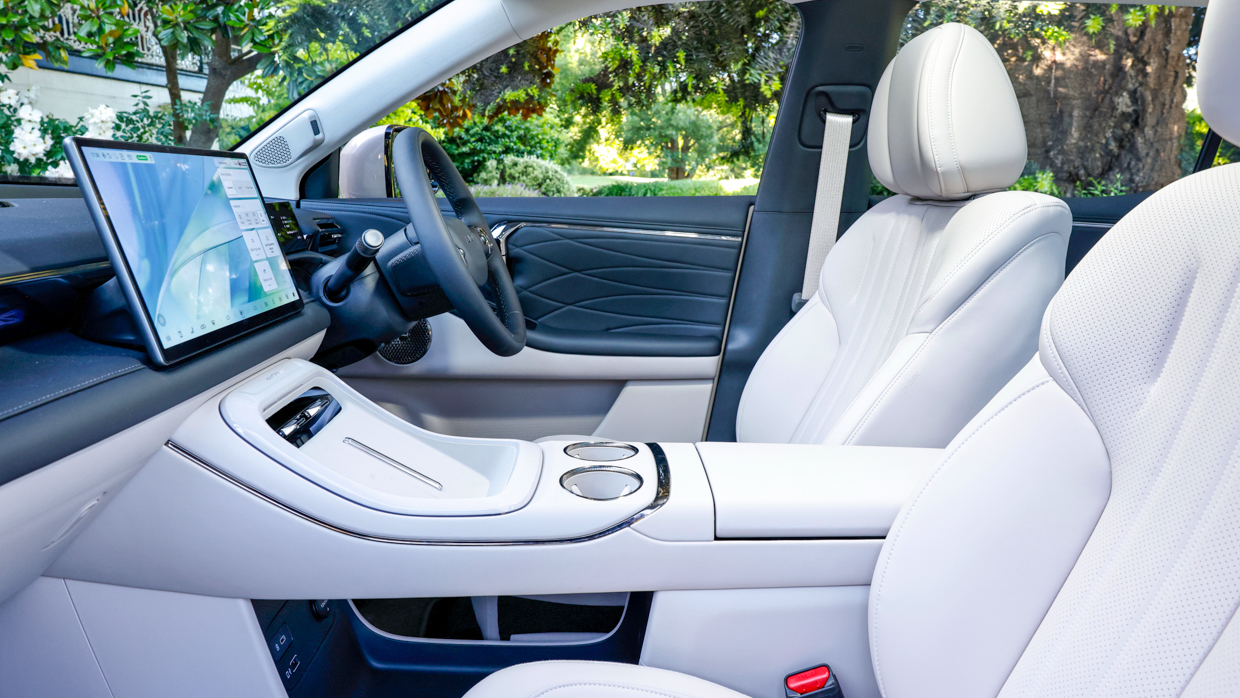
Standard range-wide are 19-inch wheels, heated and cooled front seats, wireless device charging, a 14.6-inch touchscreen, wireless Apple CarPlay/Android Auto, 8.8-inch digital instrument cluster, power tailgate, nine-speaker stereo, 360-degree camera and a panoramic glass roof (non-opening) with sunshade.
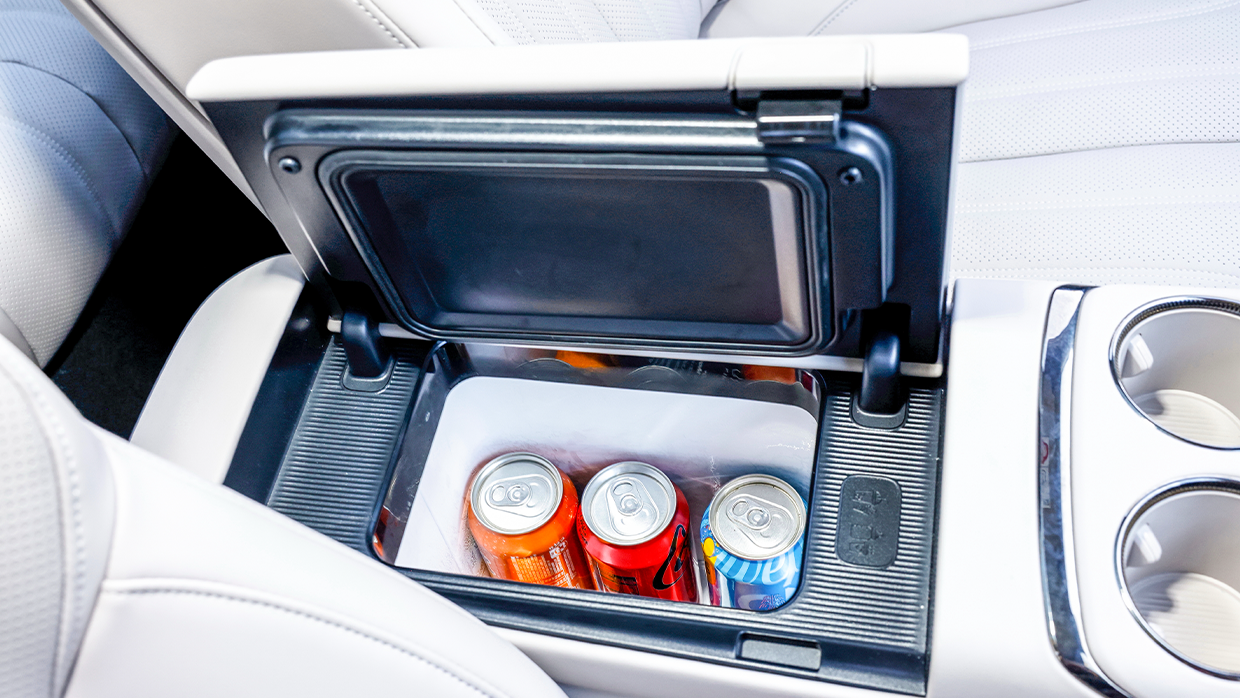
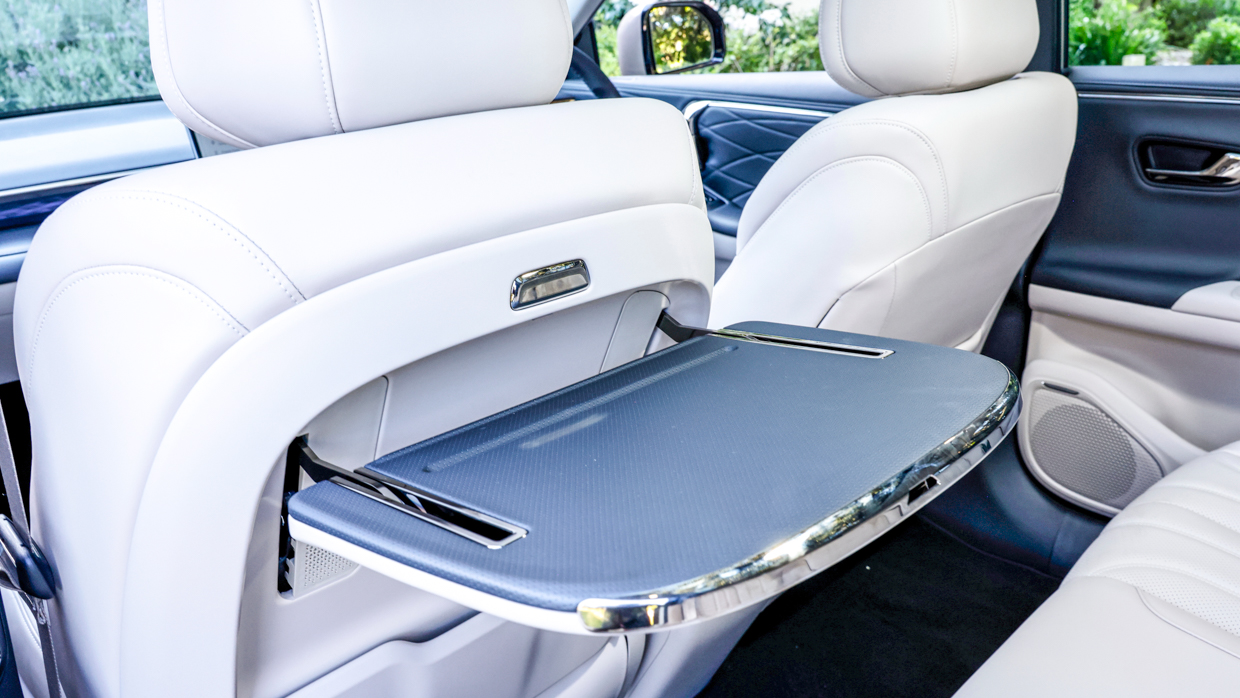
The extra $2000 spend to jump into the Luxury makes sense as this swaps vinyl seating for genuine leather (quite rare at this price), while adding massaging to the front seats, a tray table for the nearside rear seat passenger, and a 6.6-litre fridge up front (that can take 12 cans).
Not only is the Aion V rangier than its key Chinese rivals, but it promises good charging performance, too. Its ‘Magazine Battery 2.0’ LFP pack can tolerate peak DC speeds of 180kW and from 10-80 percent it sustains an agreeable 131kW for 24-minute top-ups on the highway. At home or the office, 11kW AC wallbox charging is supported.
Warranty coverage for the Aion V is eight years/unlimited kilometres for the vehicle and eight years/200,000km for the battery pack. Service intervals are relatively frequent for an EV (12 months/15,000km), with maintenance costs yet to be confirmed.
The Aion V is largely ‘fine’ to drive without excelling in any way. In that sense, it’s more like an Atto 3 than the more engaging cars from this segment—the MGS5 EV, the Skoda Elroq, or the Volkswagen ID4.
One of the ways GAC has extracted impressive efficiency from the Aion V is by keeping performance quite modest. Front-wheel drive only, the Aion V makes 150kW/210Nm in both variants with a 0-100km/h time of around nine or 10 seconds.
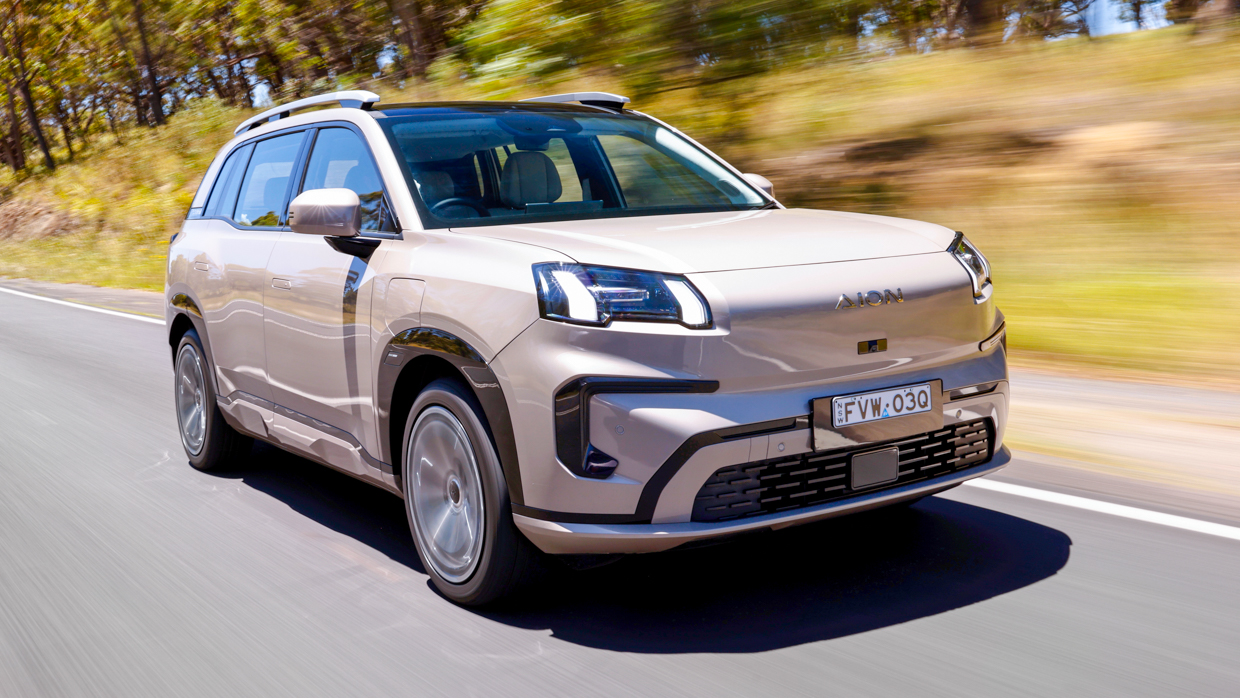
The upsides include, as we say, efficiency (15.2kWh/100km as tested — some way off a Tesla Model Y, but good enough for 494km real-world range), but also relaxation. The Aion V is simple and approachable to drive and it won’t scare anybody.
It makes for a solid family car, but the Aion V would also suit eco-conscious young drivers or older people, particularly given its easy step-in height.
Adjustable regenerative braking offers a degree of customisation while the artificial weighting of the electric power steering can also be made lighter or heavier depending on preference. However, there isn’t much feeling through the steering wheel — the Aion V is no sports SUV.
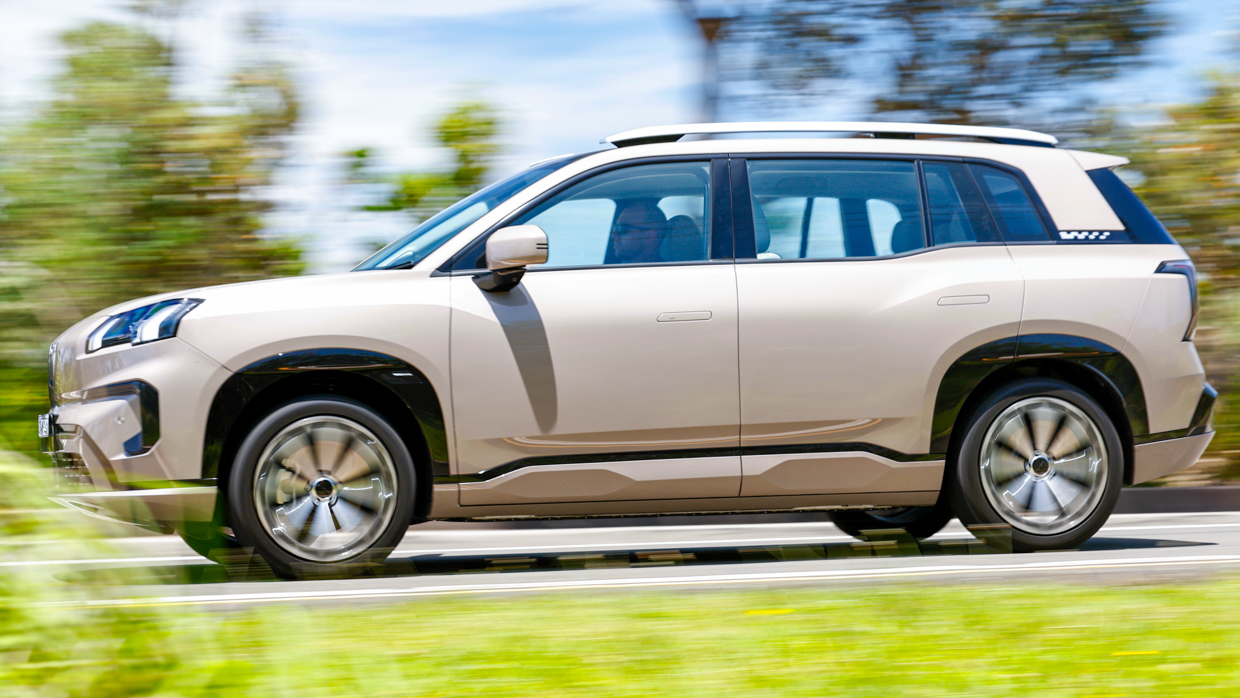
Pleasingly, the Aion V rides quite comfortably, despite standard fitment of low-profile 19-inch alloys (in 225/45 R19 Maxxis Victra tyres). Around town, potholes and expansion joints don’t upset the GAC too much, though there is a bit more road noise than we might like.
The Aion V is remarkably light for a midsize electric SUV, tipping the scales at 1880kg (tare).
But there are shortcomings to the Aion V’s ride which become evident on Australian country roads. Often combining degraded coarse-chip surfacing with mid-corner lumps and bumps, Aussie B-roads upset the GAC’s composure and reveal an underdamped rear suspension.

The Aion V tends to ‘bottom out’ and hit its rear bump stops as it comes off a compression, leading to a lurch in the cabin — and the body can ‘pogo’ once or twice as it shakes off the impact. The best cars in the segment simply don’t do this.
These sorts of dynamic issues are possible to fix. This can require more expensive shock absorbers or simply superior tuning of the ones already fitted to the car. Rival carmaker GWM is trying to do this right now to its cars via the establishment of an Aussie tuning program.
During our testing of the Aion V, we noticed that the audible speed monitoring would stay ‘off’ when we turned the vehicle off.
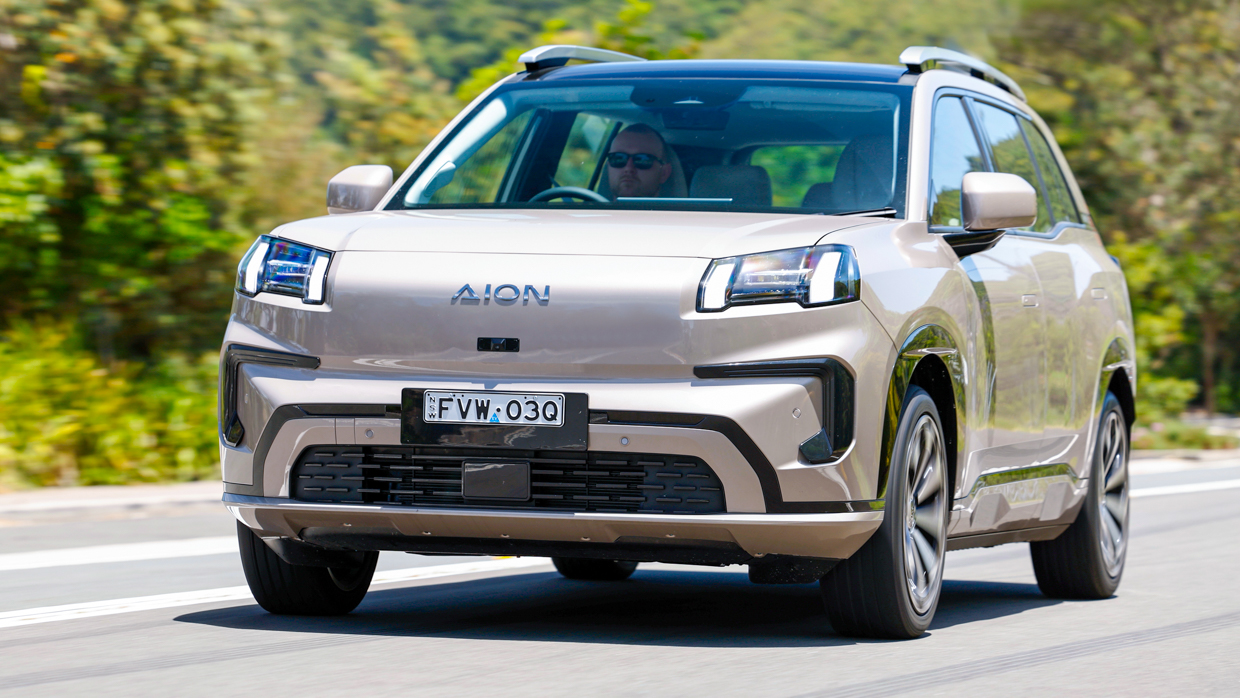
However, the lane-keep assist does return to ‘on’ each time, and this can be a touch over-sensitive. It can be disabled via the touchscreen.
If you’re a fan of the softly-trimmed and minimal cabin aesthetic common to some (most?) new Chinese vehicles on the Australian market, you’re in luck — because the Aion V sticks closely to this recipe, albeit with a twist in the form of extroverted Jaffa orange upholstery.
And in the Luxury, that upholstery is genuine leather, at least on the seats. That alone is a pleasant break from the near ubiquity of un-premium PVC (vinyl) that has become the de rigueur seating material in nearly all SUVs of this size and price.
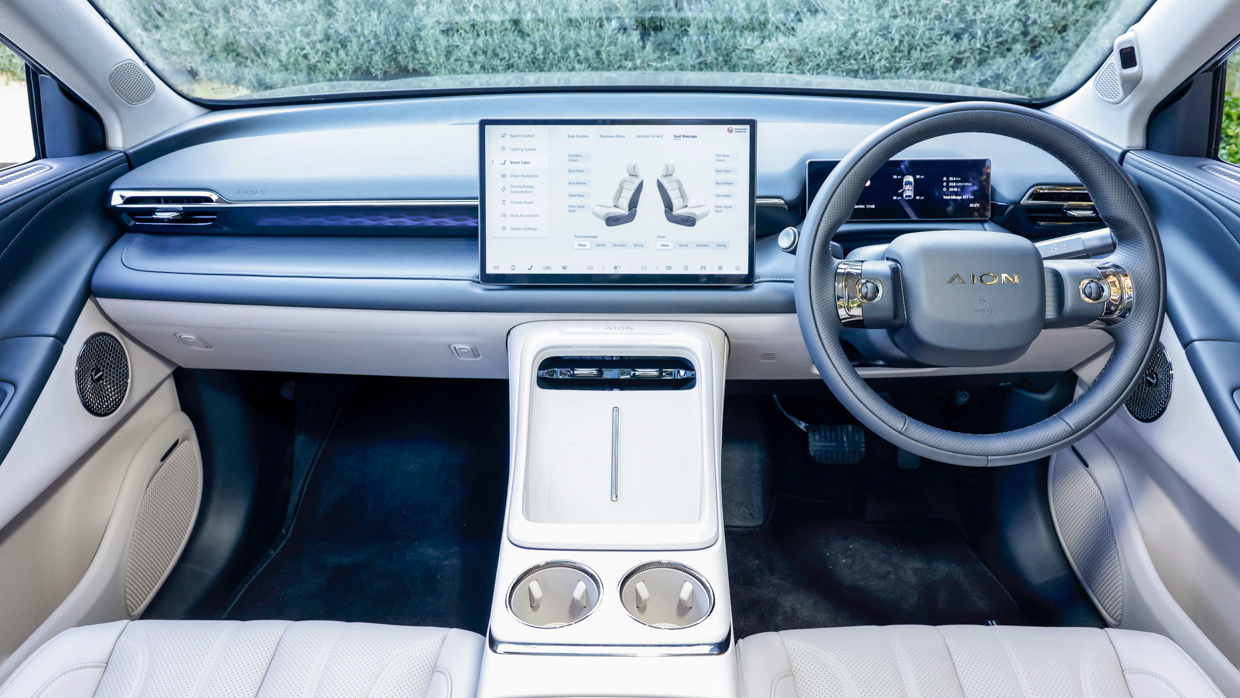
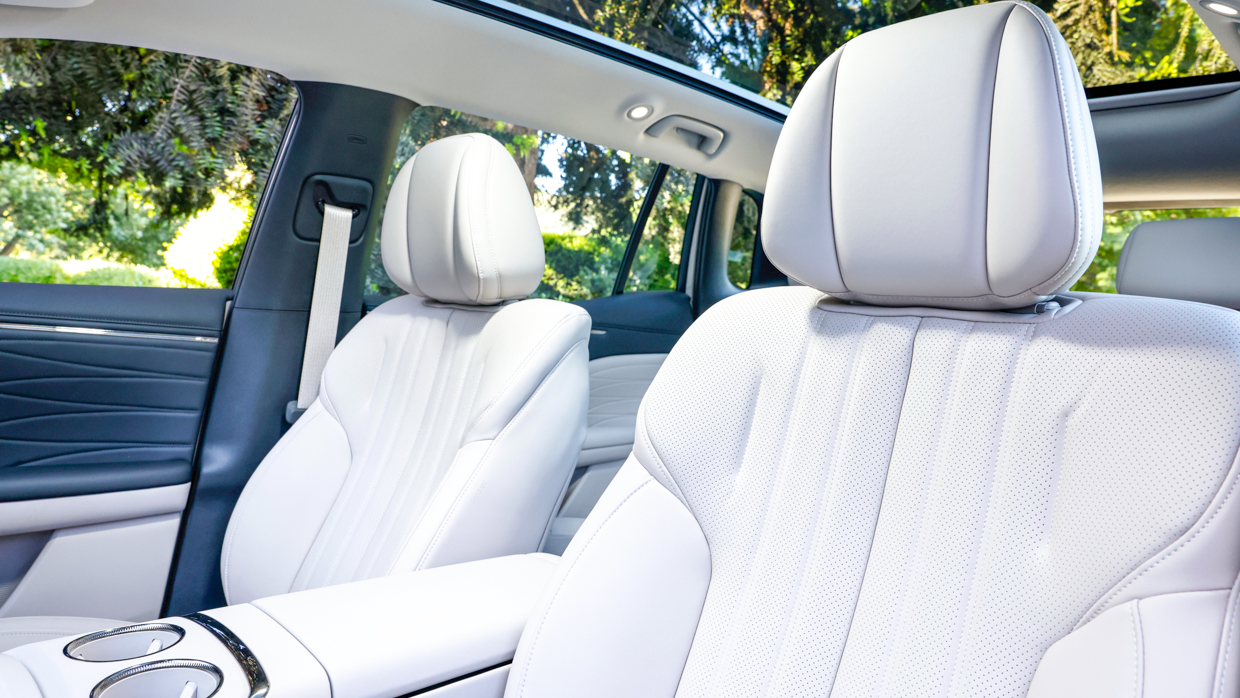
After a couple of hours in the saddle, we had found the Aion V comfortable enough to sit in (despite a lack of seat tilt adjustment), and the standard heated/cooled front seats remain temperate no matter the weather. Cabin temperatures are more manageable than some rivals because the standard-fit glass roof is fitted with a power sunshade.
Inclusion of a reasonably sized drink cooler/heater in the centre console for the Luxury spec’ is a nice gimmick at this price. It’ll fit a dozen cans and GAC says that, at a setting of four degrees celsius (within its range of minus-15 degrees to 50deg C), the fridge uses just 0.5kWh of battery power — less than one percent — in 24 hours.
Tech-wise, the Aion V’s interior is a much-of-a-muchness against other cars in this segment. The central touchscreen is reasonably big (14.6-inches) and it’s bright enough — and we found the wireless CarPlay connection to work consistently. Audio quality from the nine-speaker stereo is good if not great.

We do like the low-profile digital instrument cluster sitting just beyond the avantgarde two-spoke steering wheel. That wheel includes some physical shortcuts, but buttons are otherwise in relatively short supply, with the touchscreen doing climate control duty.
Beyond the leather/massage seating in the Luxury, material quality is otherwise mid-market with soft-touch doors yielding to harder plastics below the beltline. That’s okay: not every vehicle has to be a luxury car. Oddment storage was fine though large bottles won’t fit in the door bins.
Measuring 4605mm in length (on a 2775mm wheelbase), the Aion V is half a size larger than the Atto 3 or MGS5 EV and you can really feel the advantage in the huge back seat — the kids have heaps of room to stretch out back here, with limo-like legroom and a reclining function, while rear air vents keep things cool.
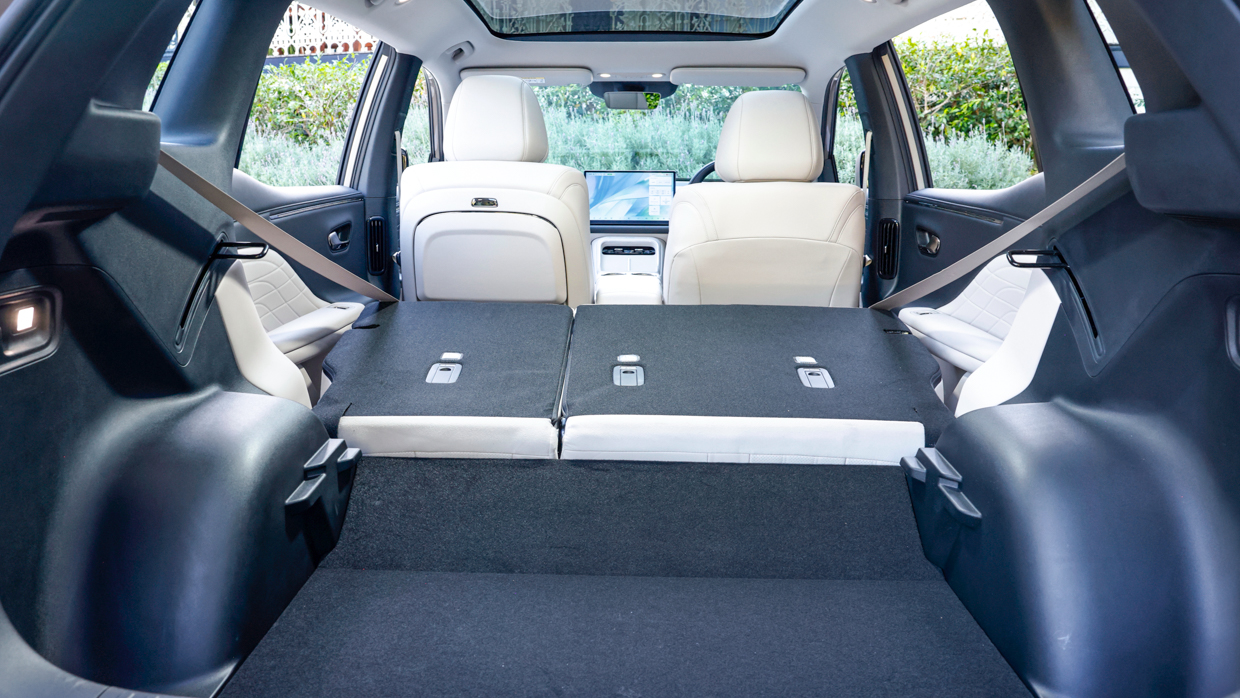
Boot space is average for the class at 427L with all seats in place (and with row two reclined a touch), while the back seats can fold forward to create an acceptable 978L.
More impressive is that (at no cost) a space-saver spare can be optioned to sit beneath the boot floor in the Aion V. Any kind of spare is a super-rare inclusion in the EV space.
While we’d like to see GAC polish the Aion V’s suspension to deliver superior control on country roads, the fact is that the Aion V is acceptable to drive. It’s a relaxing and laid-back experience that will suit people looking for a practical and roomy midsize EV.
It’s also difficult to ignore the value for money on offer here. While GAC has already said it doesn’t intend to participate in price wars — and while the Aion V is not the outright cheapest car in its segment — the long list of equipment and long driving range makes it very competitive against rivals.
Naturally, many buyers will feel trepidation at the thought of giving an all-new brand a ‘go’. The coalescence of so many unfamiliar marques in the Australian market, seemingly all at once, does lead to a sense that not all will survive.
Our crystal ball is still out of service, so we can’t predict GAC’s future locally, but its status in China and long-running partnership with Toyota would seem to be relevant factors for consideration.
If you were already considering an EV purchase in this segment, we’d recommend putting the Aion V on your test-drive shortlist, especially if you aren’t that interested in sporty dynamics and particularly if you plan to buy via a novated lease.
About Chasing cars
Chasing Cars reviews are 100% independent.
Because we are powered by Budget Direct Insurance, we don’t receive advertising or sales revenue from car manufacturers.
We’re truly independent – giving you Australia’s best car reviews.
The estimate provided does not take into account your personal circumstances but is intended to give a general indication of the cost of insurance, in order to obtain a complete quote, please visit www.budgetdirect.com.au. Estimate includes 15%^ online discount.
^Conditions Apply
Budget Direct Insurance arranged by Auto & General Services Pty Ltd ACN 003 617 909(AGS) AFSL 241 411, for and on behalf of the insurer, Auto & General Insurance Company Limited(ABN 42 111 586 353, AFSL 285 571).Because we don’t know your financial needs, we can’t advise you if this insurance will suit you. You should consider your needs and the Product Disclosure Statement before making a decision to buy insurance. Terms and conditions apply.
Indicative quote based on assumptions including postcode , 40 year old male with no offences, licence suspensions or claims in the last 5 years, a NCD Rating 1 and no younger drivers listed. White car, driven up to 10,000kms a year, unfinanced, with no modifications, factory options and/or non-standard accessories, private use only and garaged at night.
^Online Discounts Terms & Conditions
1. Discounts apply to the premium paid for a new Budget Direct Gold Comprehensive Car Insurance, Third Party Property Only or Third Party Property, Fire & Theft Insurance policy initiated online on or after 29 March 2017. Discounts do not apply to optional Roadside Assistance.
2. Discounts do not apply to any renewal offer of insurance.
3. Discounts only apply to the insurance portion of the premium. Discounts are applied before government charges, taxes, levies and fees, including instalment processing fees (as applicable). The full extent of discounts may therefore be impacted.
4. We reserve the right to change the offer without notice.