Powered by

-
Car Reviews
Latest reviews
-
Car News
Latest news
-
Car Comparisons
Latest comparisons
- Chasing Deals
Latest reviews
Latest news
Latest comparisons

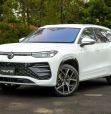
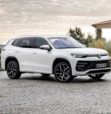
Top-spec Tayron promises GTI performance with space for seven but is this flagship too rich?
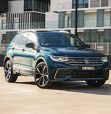
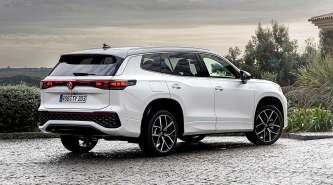
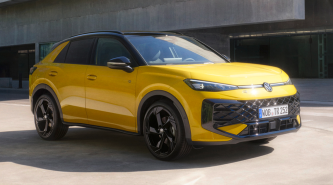
Late last year, Volkswagen renewed many of its model names in Australia, with big improvements to usability and material quality coming to Golf Mk8.5 and Tiguan. A new nameplate entered the fray in the Tayron, which took over from the defunct Mexico-built Tiguan Allspace and which we have on test.
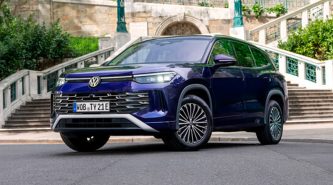
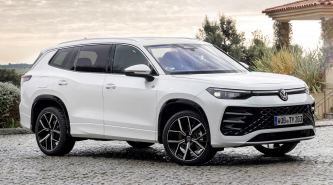
The three-row large SUV is bigger than the Allspace model that it replaces, measuring just under 4.8 metres long.
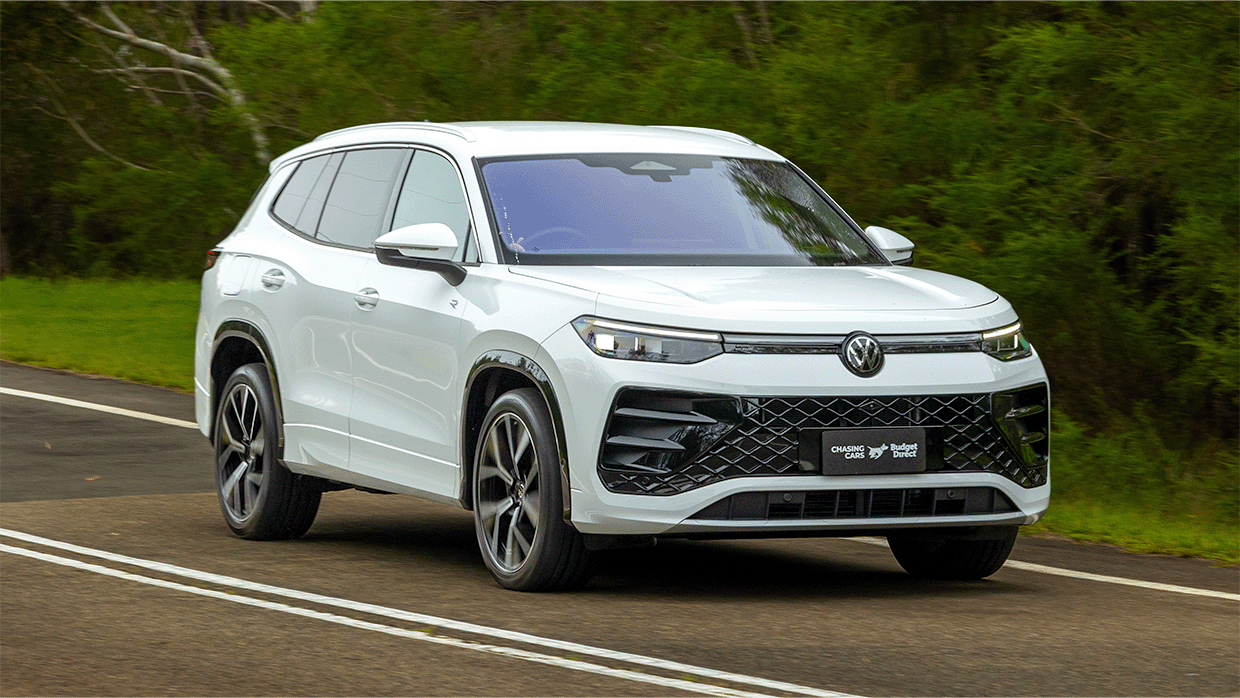
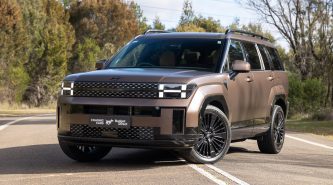
This makes for improved cabin space and a better chance for the Tayron to compete with the Hyundai Santa Fe, Kia Sorento, Mitsubishi Outlander, BYD Sealion 8 and more in a growing segment.
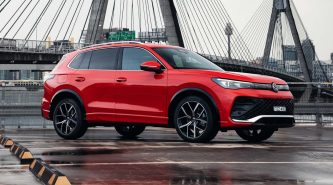
At launch, VW’s new sub-Touareg SUV impressed us in mid-spec 150TSI Elegance trim. Now it’s time to sample the model more broadly, starting with the flagship 195TSI R-Line, which asks for $74,550 before on-road costs.
It marks a steep $14,160 premium over the well-priced 150TSI Elegance and $25,600 above the entry-level 110TSI Life.
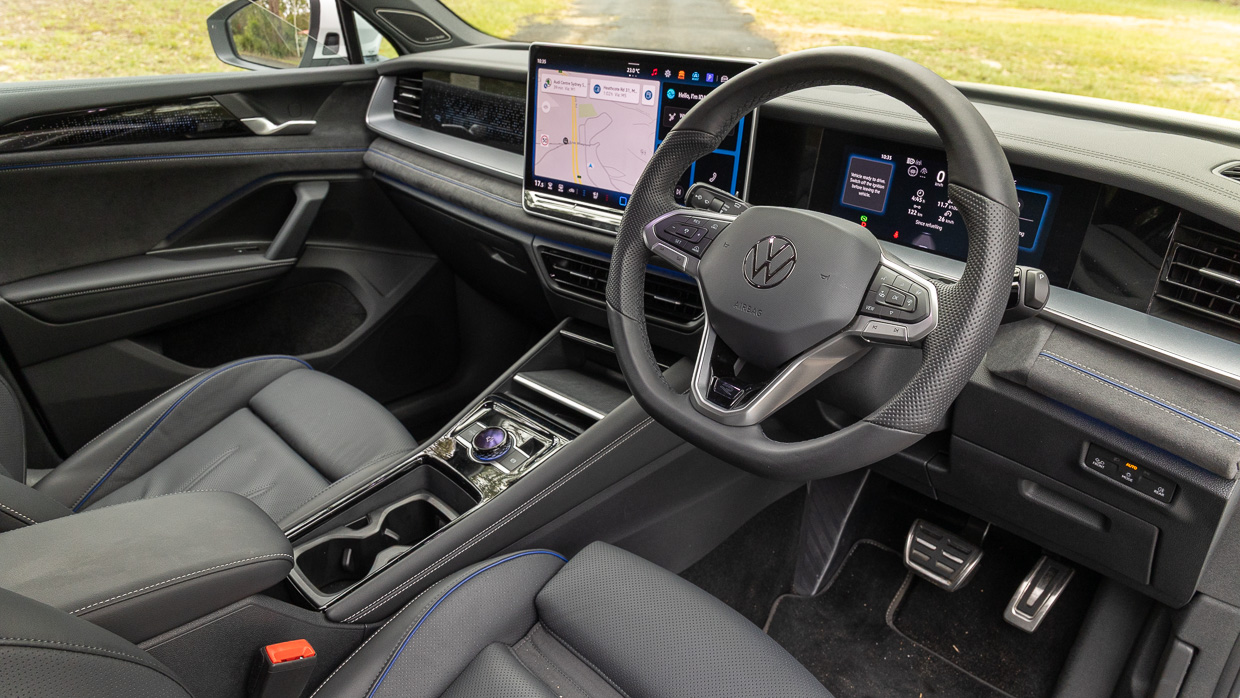
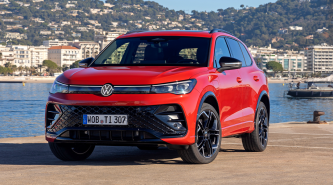
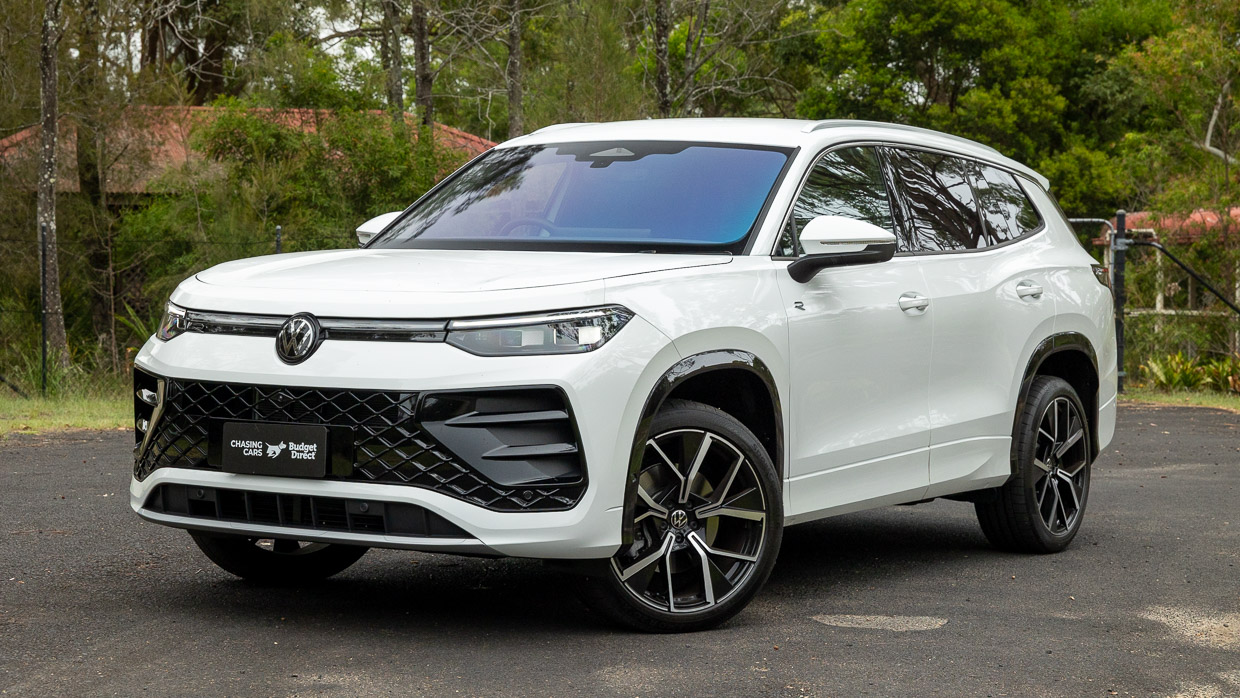
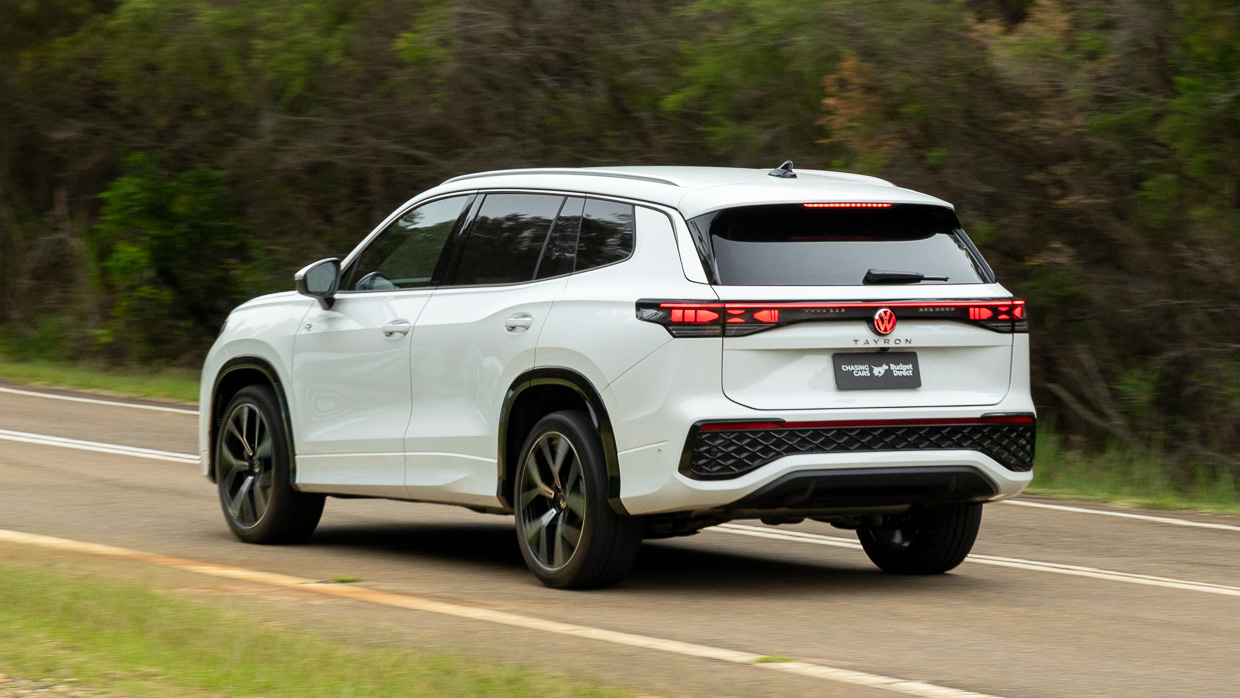
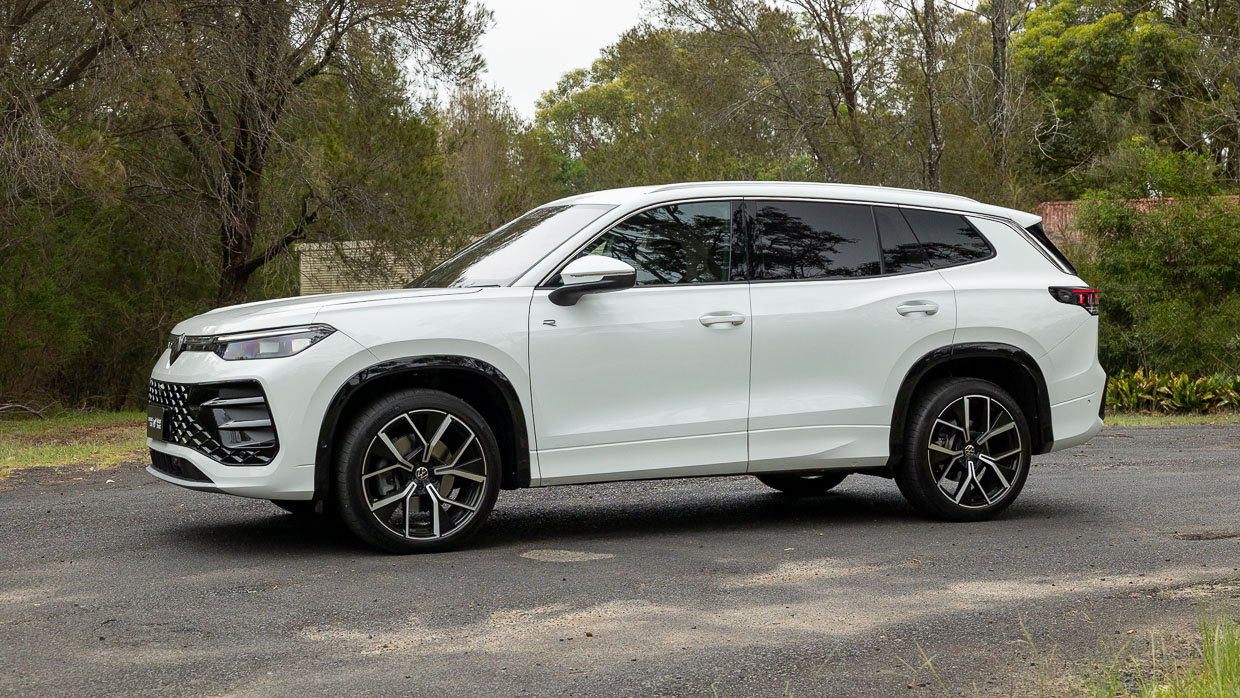
The fully loaded R-Line fits a 15.0-inch touchscreen, 16-speaker Harman Kardon sound system, and 20-inch alloy wheels as standard. There are also trick HD Matrix LED headlights, high-grade LED tail lights, 15-stage adaptive dampers, power tailgate and keyless entry.
Options include premium paint ($800), a Black Style pack that darkens the alloy wheels, mirror caps, roof rails and exterior trim costs $1500, plus a panoramic sunroof ($2100).
Worth noting, MY26 Tayrons have increased in price over 2025 stock, despite no changes to specification.
A pair of plug-in hybrids, the 150TSI ($62,390) and 200 TSI ($76,550) eHybrids will round out the Tayron line-up when they arrive in the second quarter with “more than 100km” of claimed electric driving range.
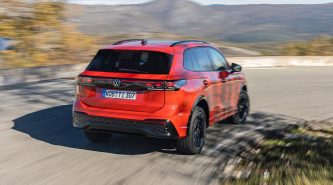
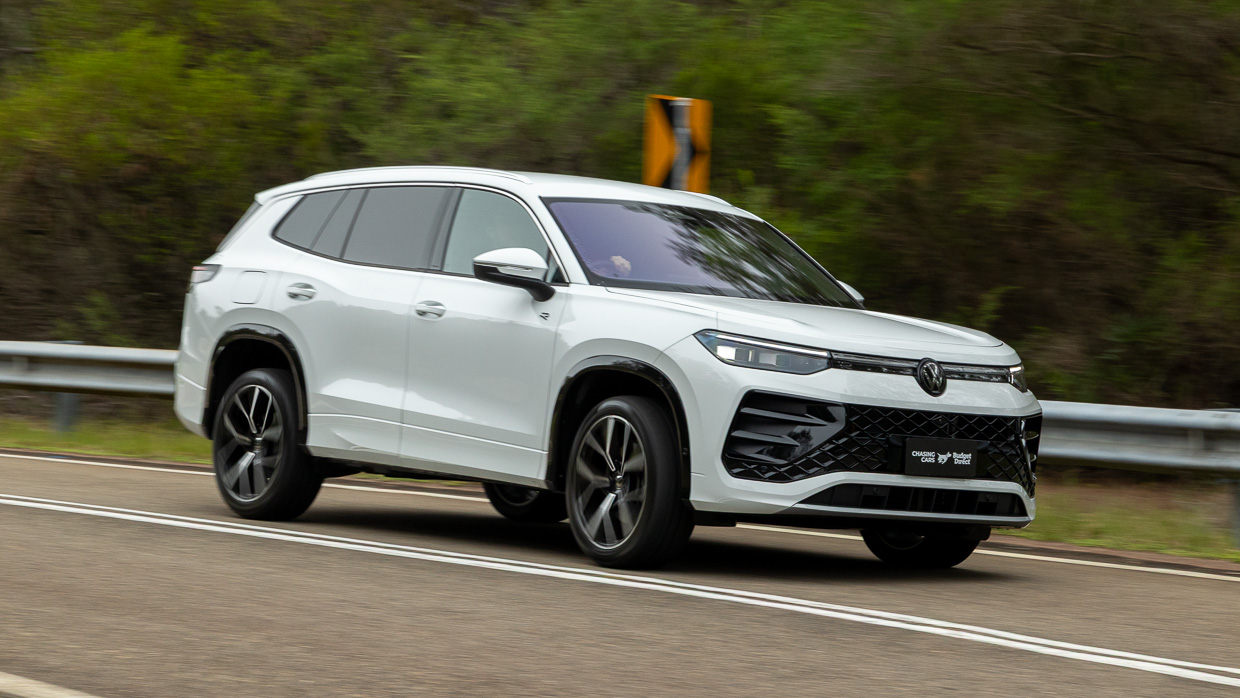
Given this is the sporty variant in the Volkswagen Tayron line-up you expect dynamic sparkle, but the 195TSI R-Line goes beyond expectations once it hits twisty roads.
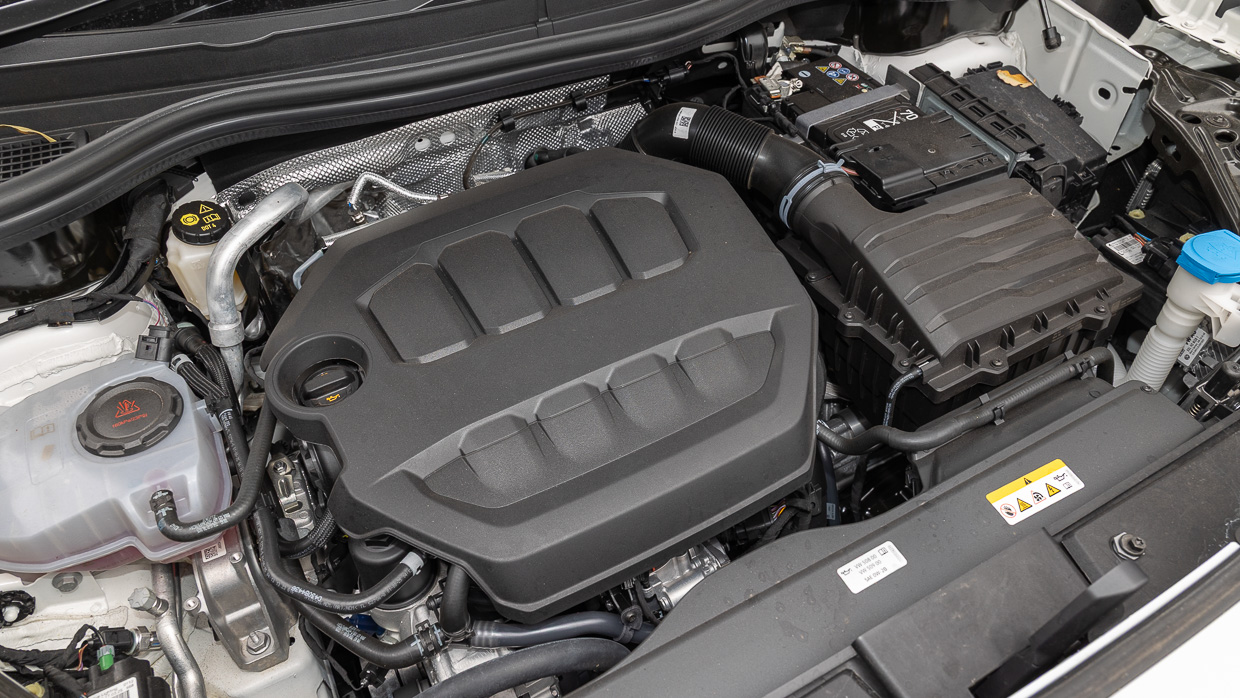
There’s a good amount of punch from the 195kW/400Nm 2.0-litre turbo-petrol four-cylinder, and the Tayron’s ‘wet’ seven-speed DSG automatic is just so refined these days: quick when you want, and smooth otherwise.
Volkswagen claims a 0-100km/h sprint of 6.1 seconds, which is rapid for an 1844kg seven-seater. With grunt sent to all four wheels and with quality 255/40 R20 Continental SportContact 6 tyres fitted, the Tayron has plenty of traction as well.
Compared to the old Tiguan Allspace, the Tayron is more stable and mature with a grippy, four-square stance. Partly you can thank the 13mm wider tracks and lower overall height. The MQB Evo platform’s new ‘DCC Pro’ twin-valve adaptive dampers play a big part, too.
Settings are myriad with Eco, Comfort, Individual, Sport, Off-Road and Snow. We tried the first four which are easily accessible via a push and twist of the centre rotary dial, or via the ‘modes’ shortcut on the touchscreen.
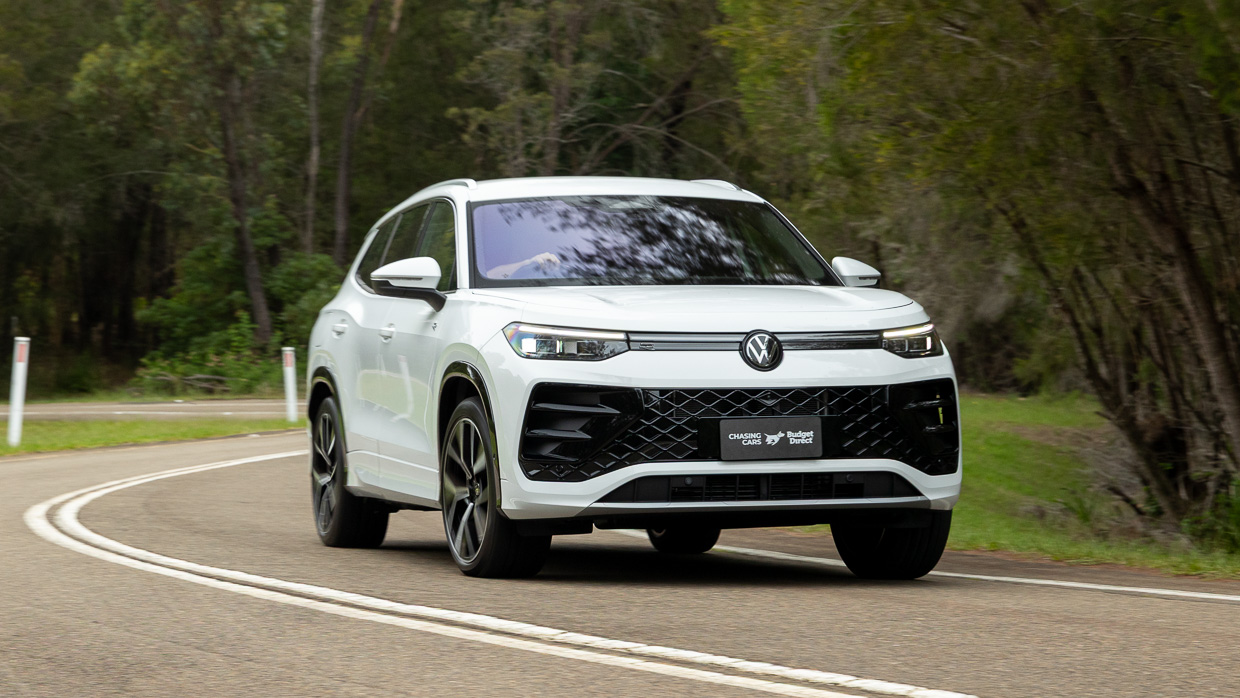
Despite the number of settings, you don’t have to go searching for the Tayron’s talents. Even in Comfort, this large SUV readily reminds of its sportiness with a 2.1-turn lock-to-lock progressive steering rack which has a firm, direct feel.
That steering is great in town as well, where you can slice through 90-degree intersections without moving your hands from nine and three.
Not all is perfect, however, as the R-Line package’s big alloy wheels make the ride clunky. Sharp-edged bumps such as concrete expansion joints and pot-holes jolt into the cabin more than in a Kia Sorento.
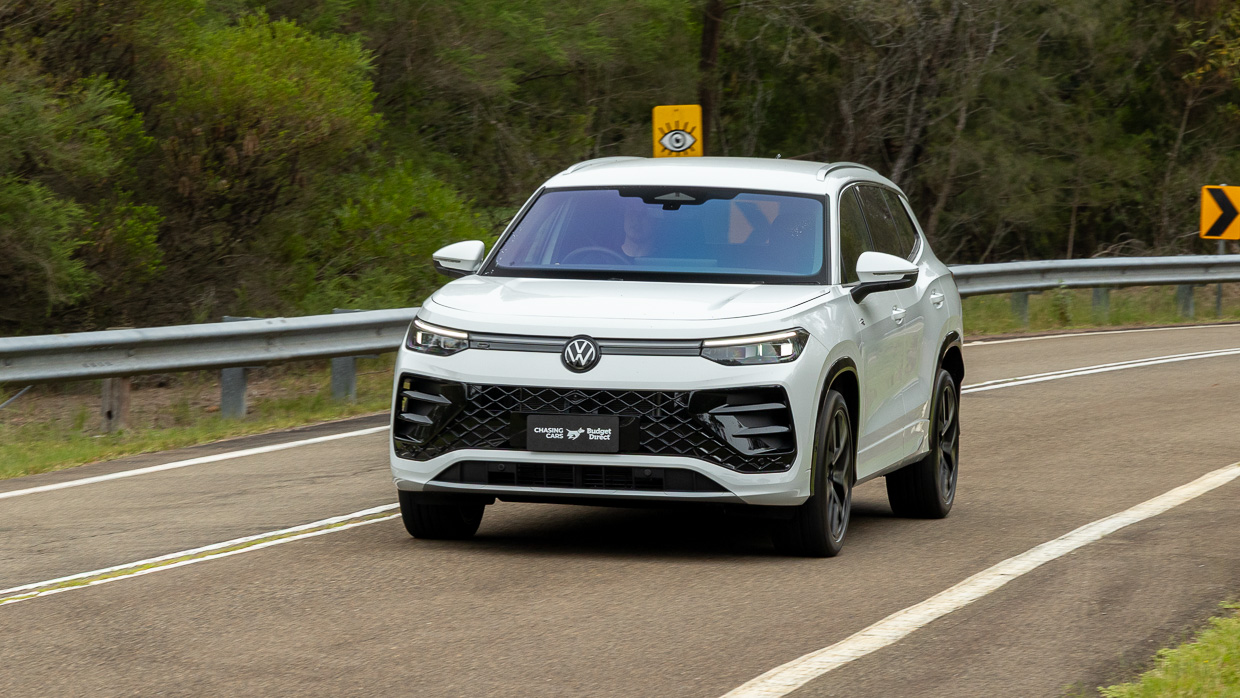
The suspension is noisy as well, especially at the front, where big bumps elicit clunks from what sounds like the dampers or top mounts. We have noticed this in various products on this platform including the Tiguan, Skoda Superb and Kodiaq.
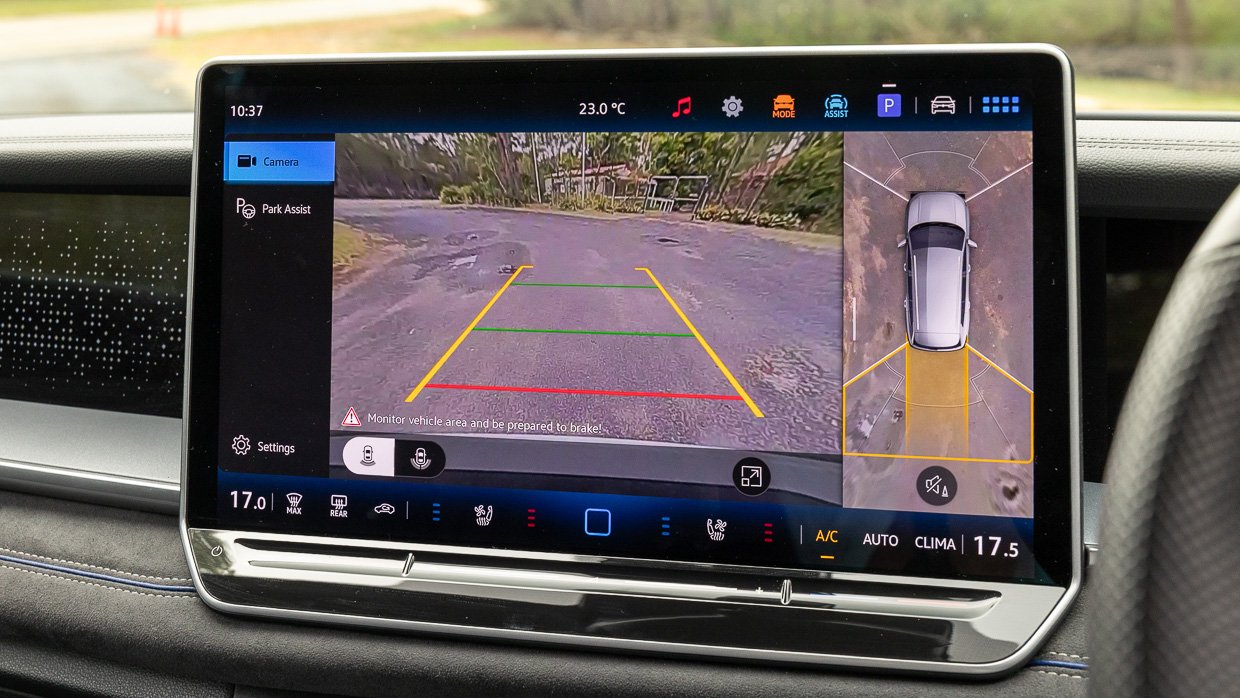
Some driver assist systems could do with finessing. The parking sensors are over-sensitive in city environments, bleating at their maximum when still a long way from kerbs and other vehicles.
The Tayron’s autonomous emergency braking (AEB) and forward collision warning (FCW) systems threw up a few false positives on test. There’s no sensitivity adjustment for these assists, either.
At two separate times the entire safety suite seemed to malfunction while driving along. They righted themselves quickly enough, but they still create unnerving experiences.
Other safety features are well tuned, including the clear 360-degree camera, impressive adaptive cruise control, and smooth lane-trace assist. The Tayron is fitted with nine airbags.
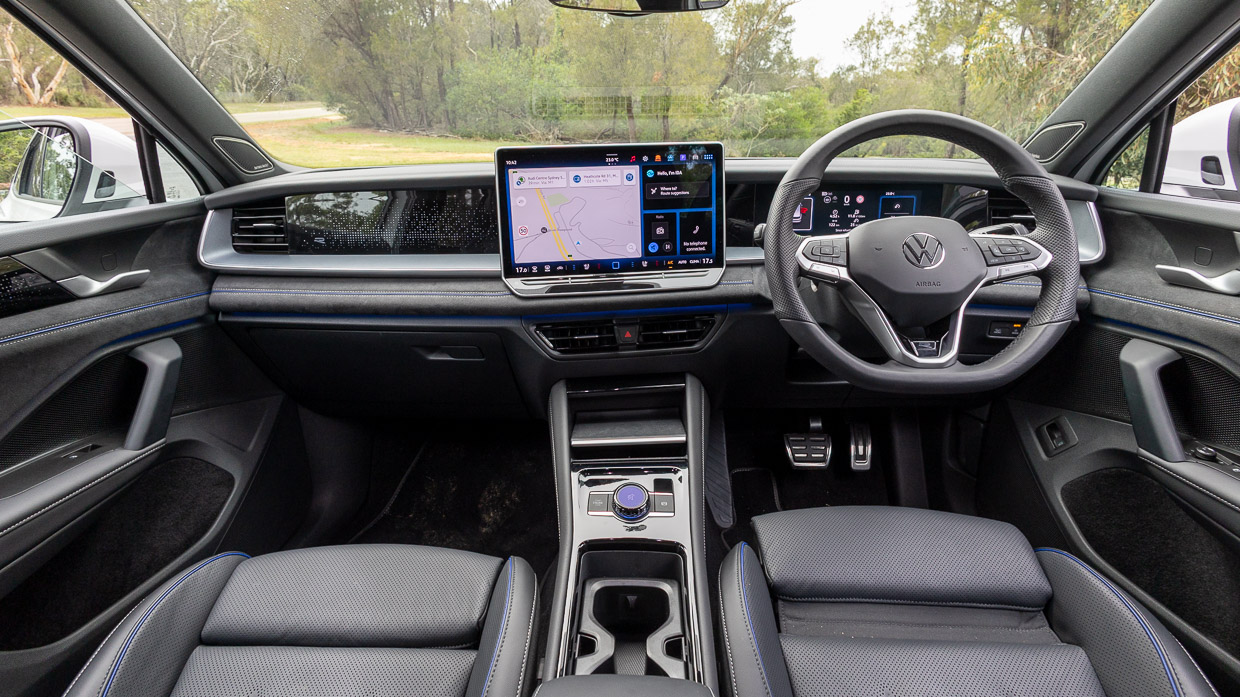
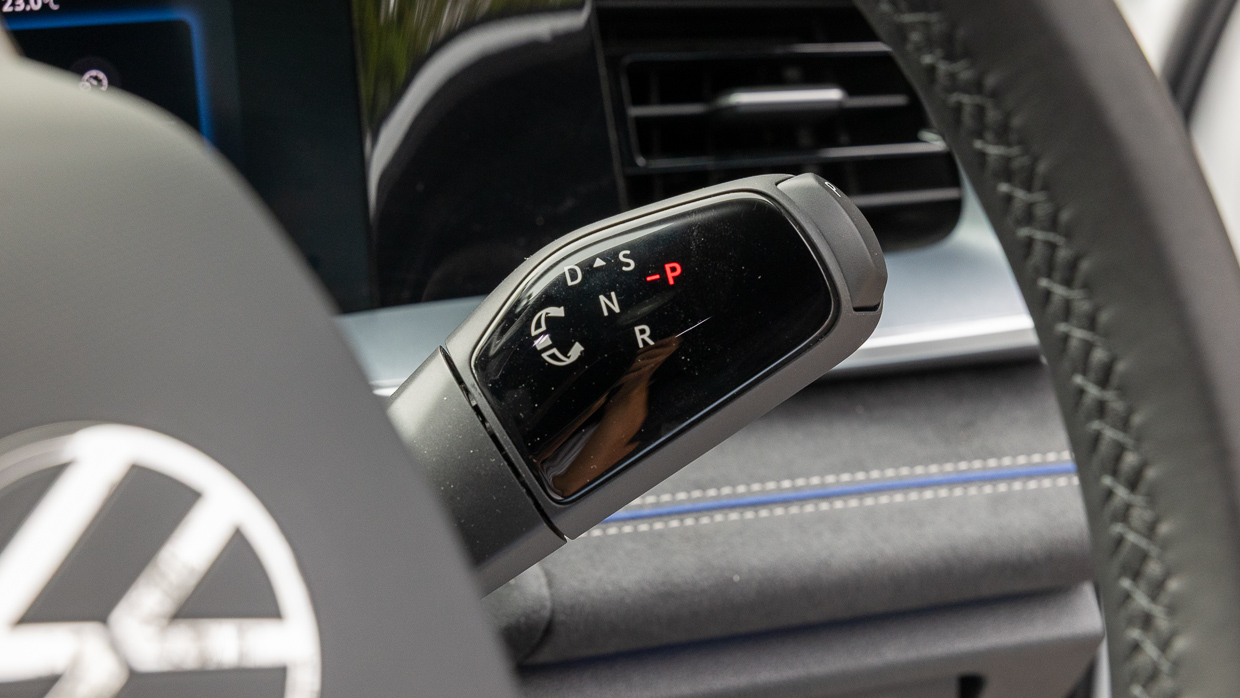
Volkswagen’s new EV-inspired control layout in the Tayron takes some getting used to. Gear selection is done via the right-hand stalk, while the left is loaded up with indicators, wipers and high-beams.
Where you could previously disable VW’s lane-keep assist with a tap on the end of the left stalk and a steering wheel button, it’s now two taps in the touchscreen. Progress? We’re not so sure.
Though the Tayron is longer and wider than the Tiguan Allspace it replaces, the newcomer rides on the same wheelbase as its predecessor, which limits improvements in cabin spaciousness.
Put simply, the Tayron is still more of a five-plus-two than a full-serve seven-seater. It sits above a Mitsubishi Outlander, Nissan X-Trail and Chery Tiggo 8 for cabin space, yet below the Kia Sorento, Hyundai Santa Fe and Toyota Kluger.
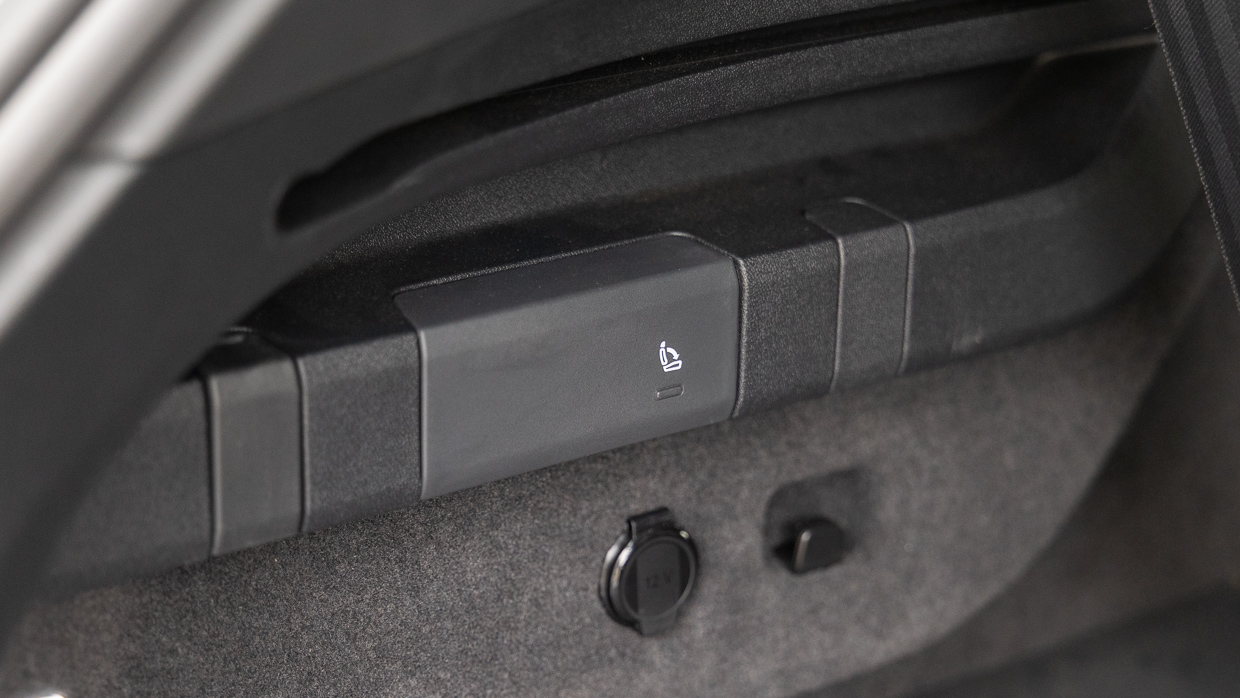
The third-row is kiddie space only if the slide-and-recline second row is in a comfortable position for adults. There’s not much back there aside from a pop-out cup holder and 12-volt socket behind the left-rear seat.
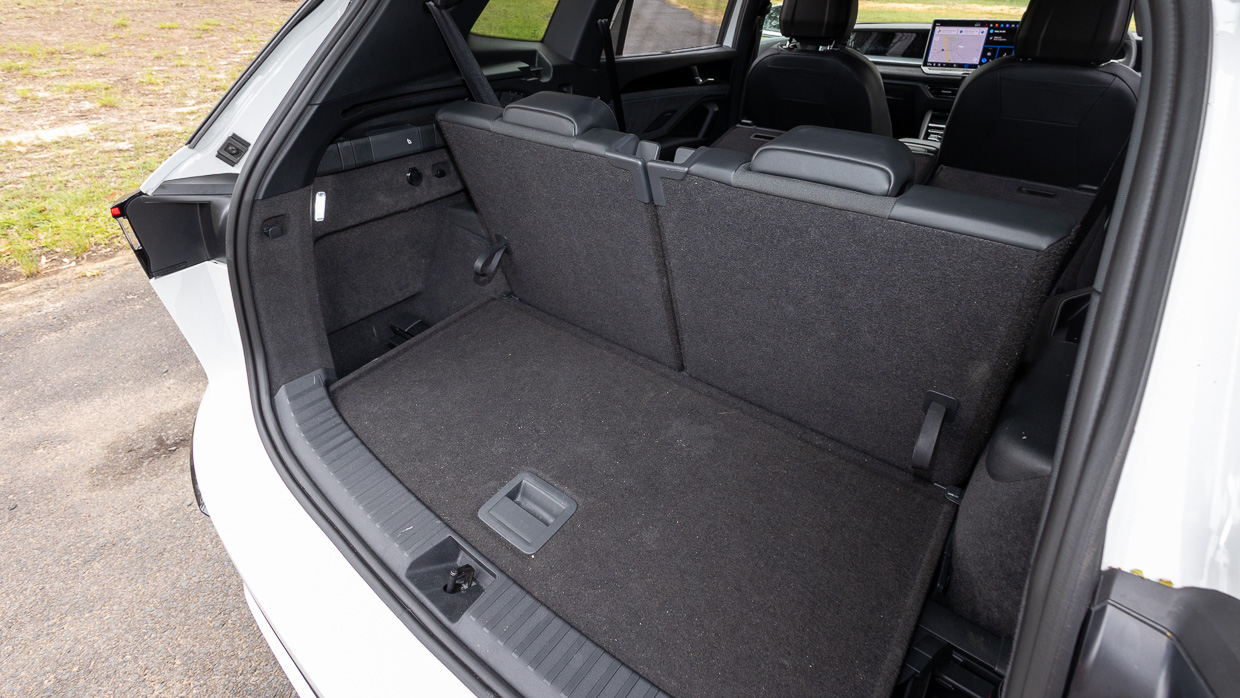
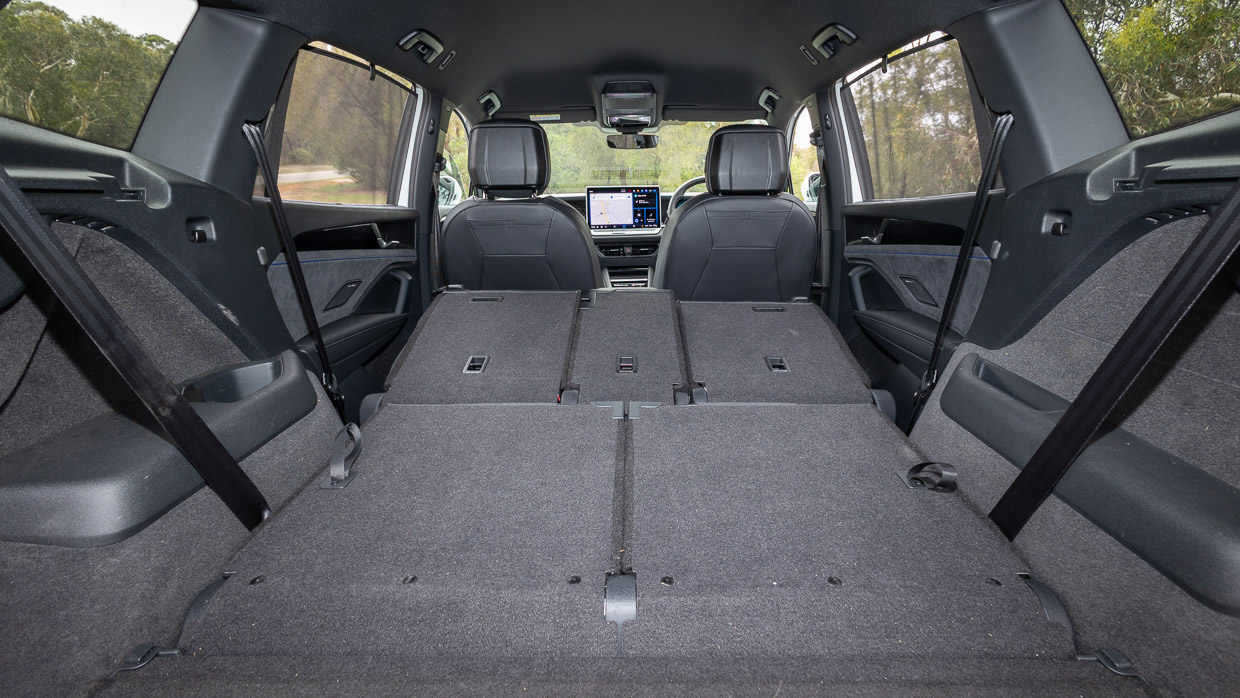
The trade-off here is great boot space even with all seats up. It will easily swallow six school-bags if needed. There’s also more space under the floor where you can stow the luggage cover and find the space saver spare tyre.
Folding the third row isn’t too hard and the second row is very easy, thanks to pull-tabs in the boot. The Tayron’s boot increases from 345 litres to 850L and then 1584L, according to Volkswagen.
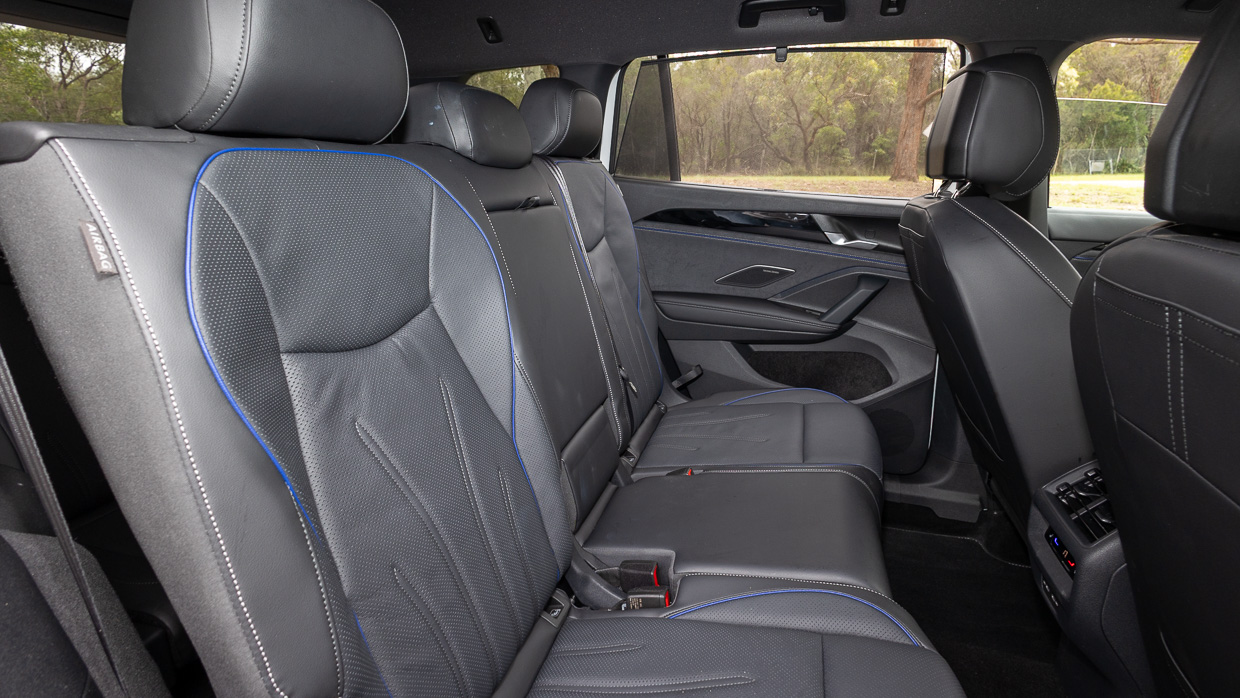
Space in the middle is ample for adults. The squab and backrest are supremely supportive and appointed in quality black leather. There is a transmission tunnel but it’s narrow, so you can fit three across the bench in relative comfort.
Amenities include a pair of USB-C charge points, separate climate zone, two air vents, a storage pocket and fold-down armrest with pop-out cup holders. The door tops are unfortunately hard plastic, but they include built-in sunblinds — a nice touch.
Equally appreciated is a return to door-bin attention to detail, with Volkswagen making sure each of the Tayron’s cubbies are carpeted to cut down rattles.
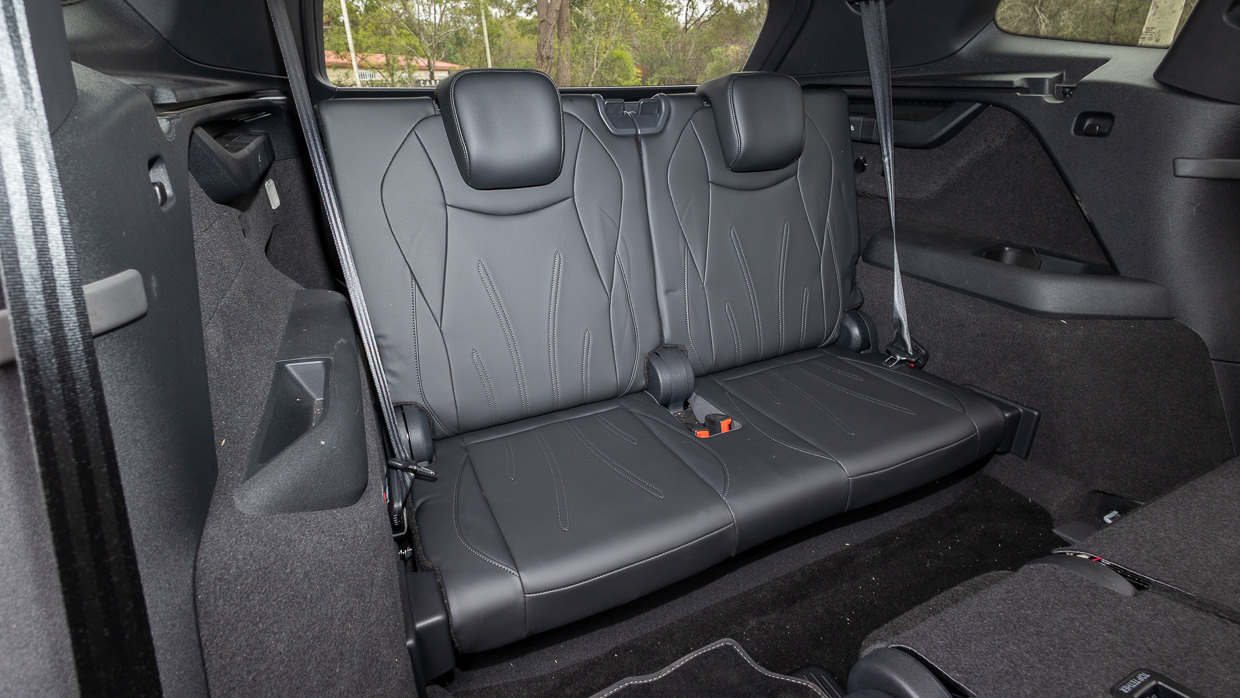
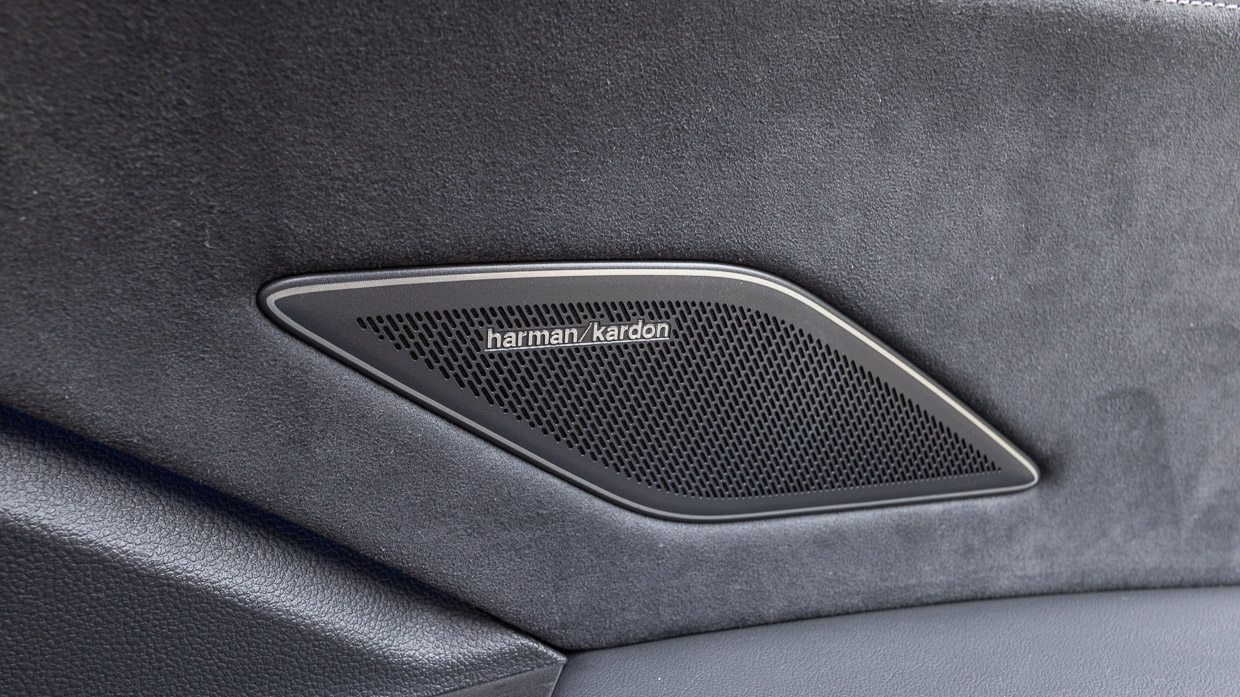
Generally speaking, the materials in the front seat have jumped well above the Allspace. You need to look closely to identify any scratchy plastic in the front seat with plenty of soft, stitched upholstery to take the edge off.
The door inserts are a real highlight, with suedecloth and leather appointments. The R-Line steering wheel is great as well; just the right thickness with dimpled leather for the hand-grips and a return to real buttons, not those awkward capacitive touch ones.
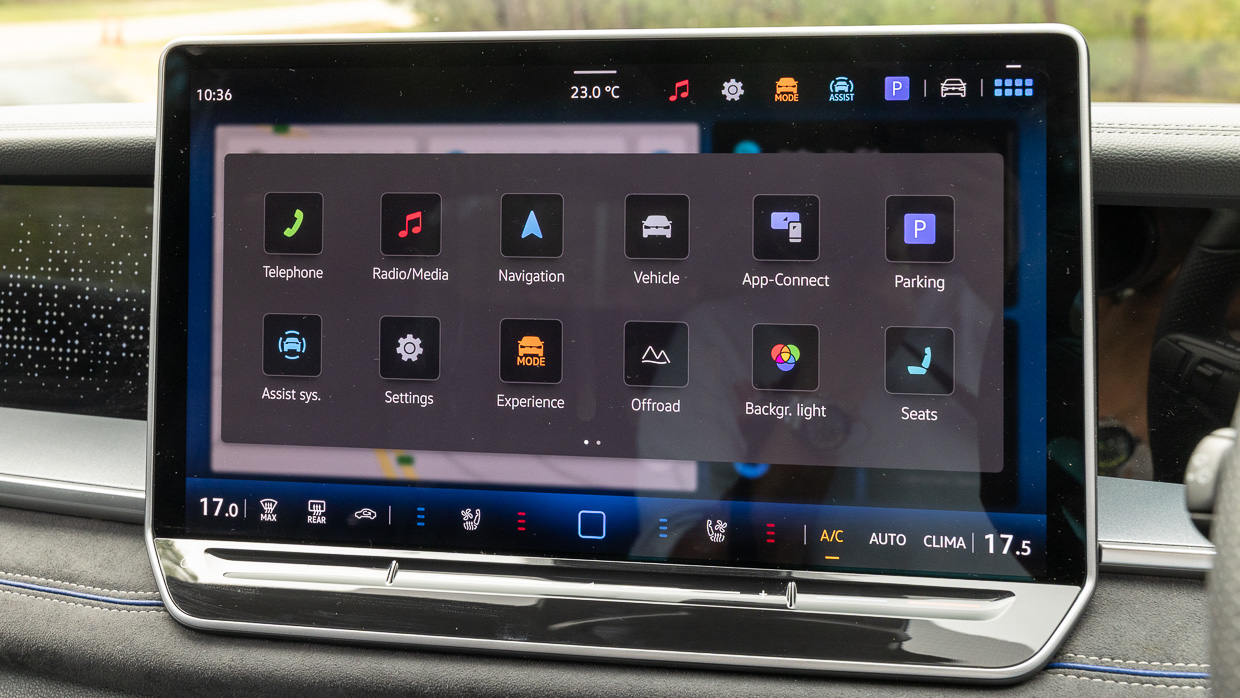
Usability is generally an improvement on what we saw in the Mk8 Golf thanks to a big, bright 15.0-inch touchscreen with illuminated temperature sliders at the bottom and persistent climate control functions (recirculate, auto, A/C) lining the screen even when wirelessly mirroring Apple CarPlay or Android Auto.
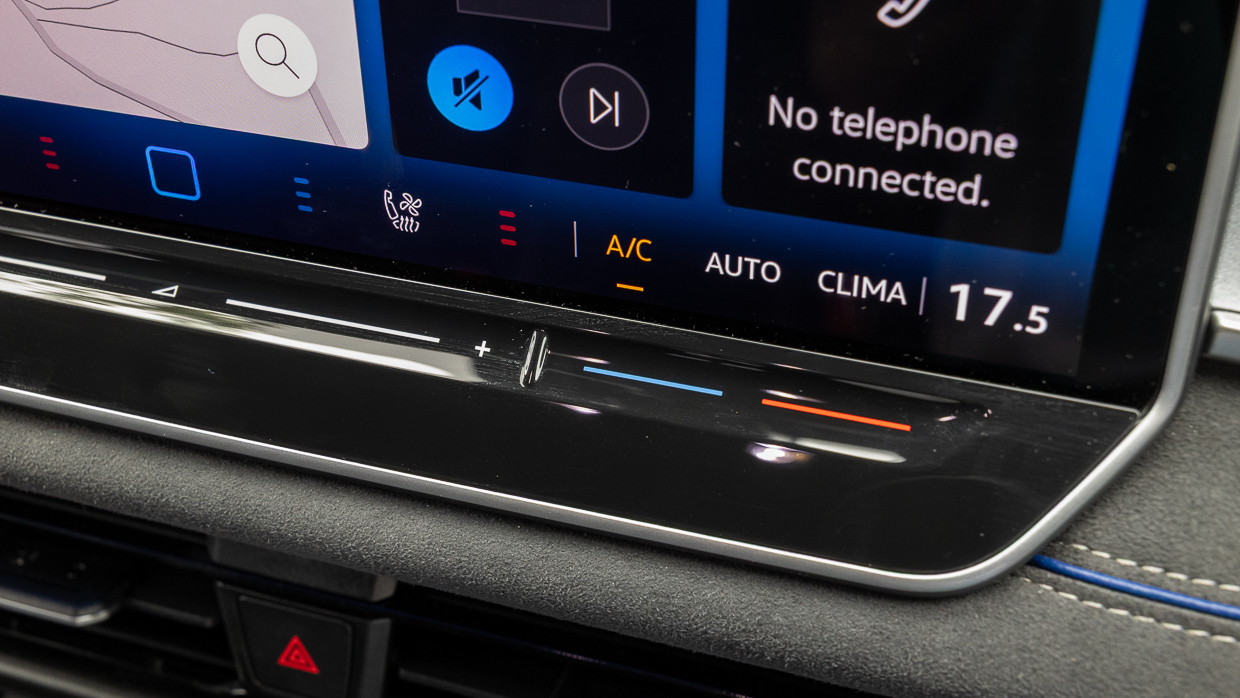
There are more shortcuts at the top of the screen for drive modes, and a customisable one for quick settings (ESC Sport, auto stop-start, and others) plus a pull-down menu for media shortcuts.
In a way, this is good, but there’s also quite a steep learning curve. We think Skoda’s use of multi-function dials in the Kodiaq is more elegant.
When mirroring navigation apps, turn-by-turn directions play nice with the driver’s display, too, which is good to see. The 10.25-inch display itself is bright, clear and can show a full map.
The natural voice commands work well. For example, you don’t need to say ‘turn on the seat air conditioning for the right side’, simply ‘I have a sweaty back’ and the R-Line’s standard ventilated seats will engage.
The seats are a highlight, too, the ‘ErgoActive’ power adjust items feature heating as well as ventilation. There’s even a massage function which is just as powerful as you find in Audi products.
Build quality is a bit patchy, however. Along with some trim rattles on the move we noticed the leather wasn’t taught on the seats and the generous side bolsters had already creased.
Fuel economy is good for a petrol-only seven-seat SUV with this level of performance. We saw 9.0L/100km on a typical Sydney commute, 7.5L/100km on the motorway and around 12L/100km in slow urban traffic.
The Tayron requires premium 95RON unleaded petrol.
Volkswagen’s five-year servicing pack costs $3461, with intervals of 12 months and 15,000kms. That’s about par for the brand, but pricey in the context of three-row SUVs.
Warranty is a fairly typical five years of unlimited-kilometre coverage.
The flagship Tayron R-Line is an impressively dynamic three-row family SUV with a good turn of pace and up-to-date technology.
For corner-carving parents who want to fly under the radar, there isn’t much better than the relative ‘Q-car’ Tayron 195TSI R-Line with its deceiving pace and precision. Though we wish the ride was a little silkier, even acknowledging this is a sporty model.
Better built, better appointed and more surefooted, the Tayron’s third row is still a kids-only space — even if that means a big boot.
As it stands, the thinking person’s choice remains the mid-spec Tayron 150TSI — especially with its current $59,990 driveaway campaign, making it cheaper than the smaller Tiguan. As the sweet spot of its lineup, this mid-spec Tayron remains a bit of a no-brainer.
Key specs (as tested)
About Chasing cars
Chasing Cars reviews are 100% independent.
Because we are powered by Budget Direct Insurance, we don’t receive advertising or sales revenue from car manufacturers.
We’re truly independent – giving you Australia’s best car reviews.
The estimate provided does not take into account your personal circumstances but is intended to give a general indication of the cost of insurance, in order to obtain a complete quote, please visit www.budgetdirect.com.au. Estimate includes 15%^ online discount.
^Conditions Apply
Budget Direct Insurance arranged by Auto & General Services Pty Ltd ACN 003 617 909(AGS) AFSL 241 411, for and on behalf of the insurer, Auto & General Insurance Company Limited(ABN 42 111 586 353, AFSL 285 571).Because we don’t know your financial needs, we can’t advise you if this insurance will suit you. You should consider your needs and the Product Disclosure Statement before making a decision to buy insurance. Terms and conditions apply.
Indicative quote based on assumptions including postcode , 40 year old male with no offences, licence suspensions or claims in the last 5 years, a NCD Rating 1 and no younger drivers listed. White car, driven up to 10,000kms a year, unfinanced, with no modifications, factory options and/or non-standard accessories, private use only and garaged at night.
^Online Discounts Terms & Conditions
1. Discounts apply to the premium paid for a new Budget Direct Gold Comprehensive Car Insurance, Third Party Property Only or Third Party Property, Fire & Theft Insurance policy initiated online on or after 29 March 2017. Discounts do not apply to optional Roadside Assistance.
2. Discounts do not apply to any renewal offer of insurance.
3. Discounts only apply to the insurance portion of the premium. Discounts are applied before government charges, taxes, levies and fees, including instalment processing fees (as applicable). The full extent of discounts may therefore be impacted.
4. We reserve the right to change the offer without notice.